Costa Rica in March – Part 4

Costa Rica in March – Part 4

This blog is an account of our two night stay at Talari Mountain Lodge near San Isidro de El General.

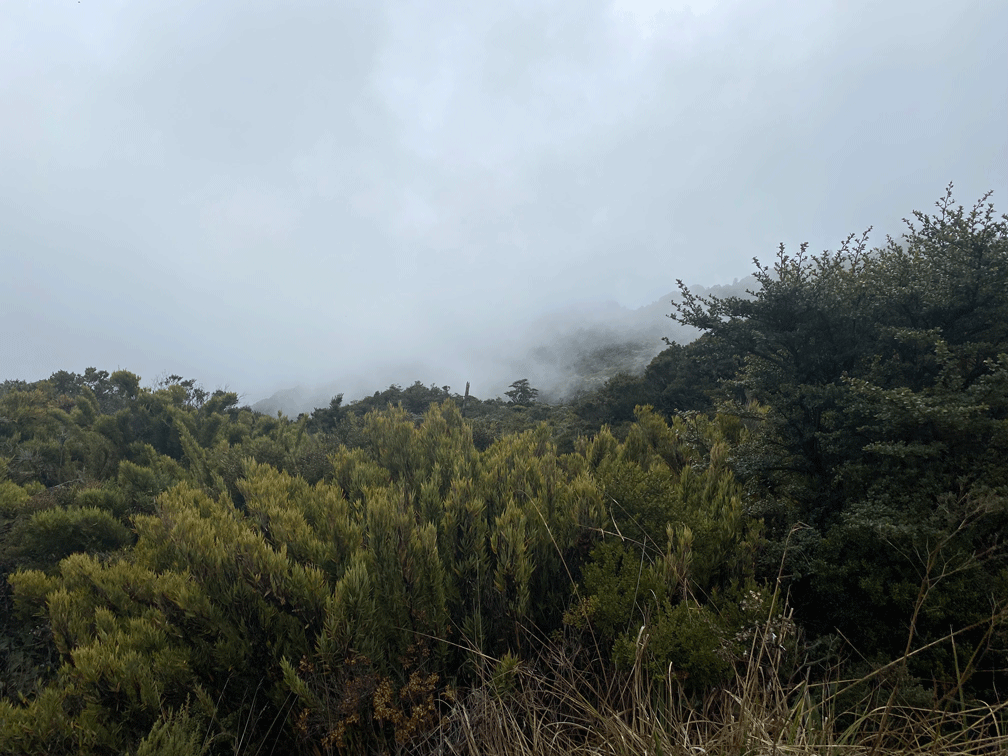
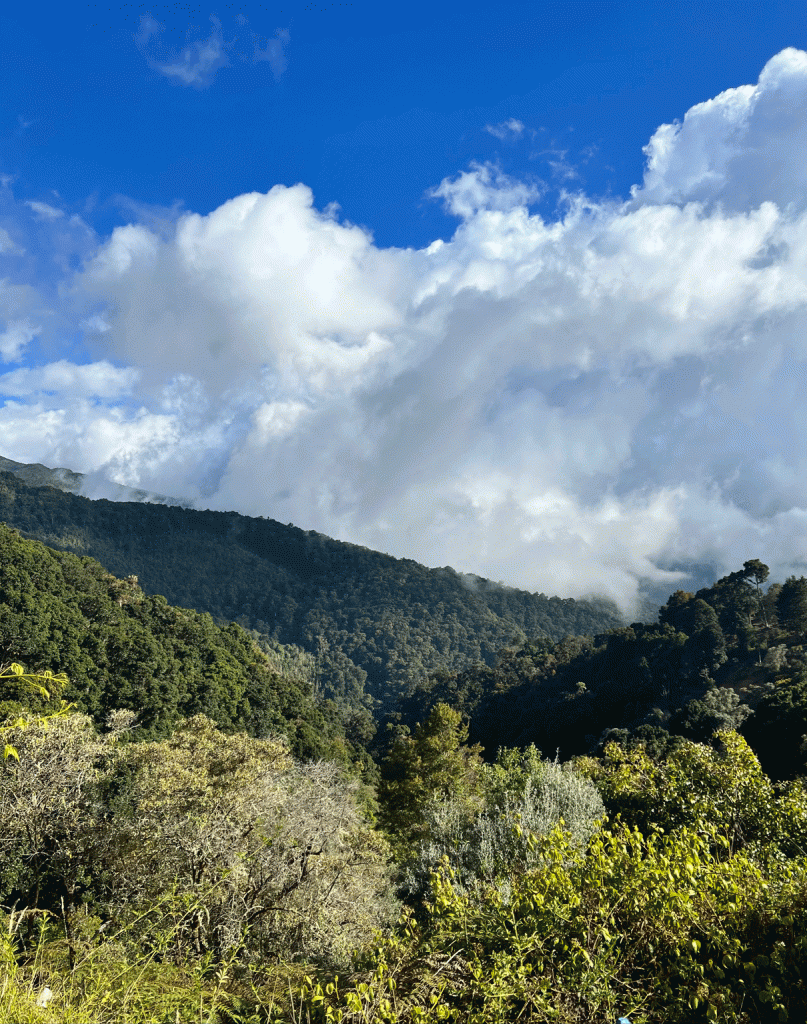
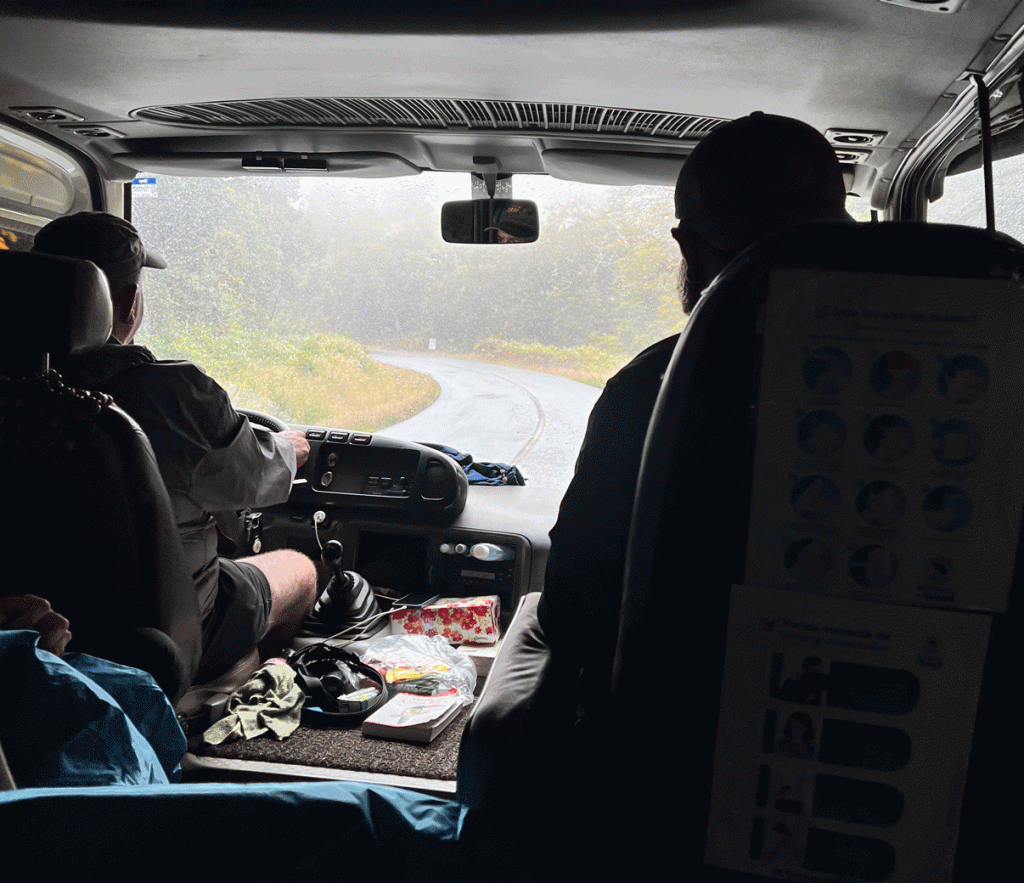
We left Trogon Lodge and worked our way south on the Inter-American highway. Our first birding stop was on a roadway to a communications tower at about 3400 metres, near Cerro de la Muerte. This area was close to treeline and was covered with shrubs and dwarf bamboo. Clouds enveloped the surrounding hills.

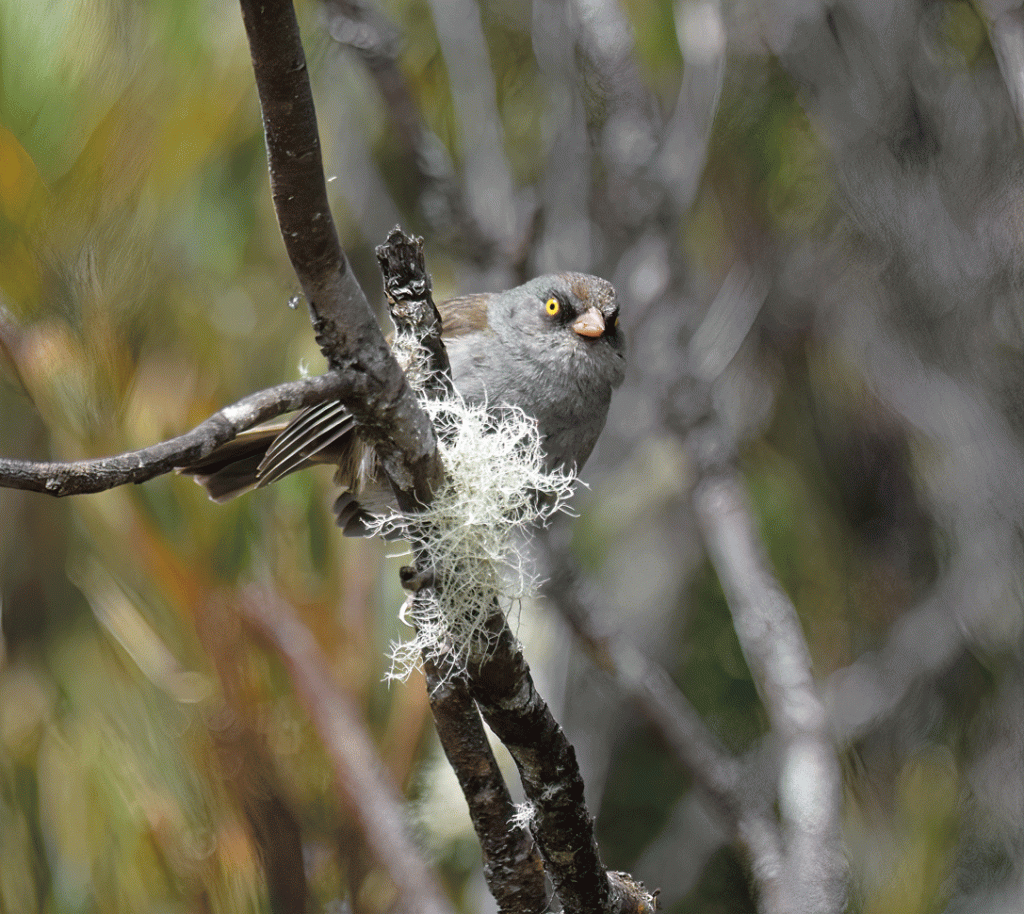
This area was home to the Volcano Junco. The yellow eyes of this endemic bird made it seem angry.

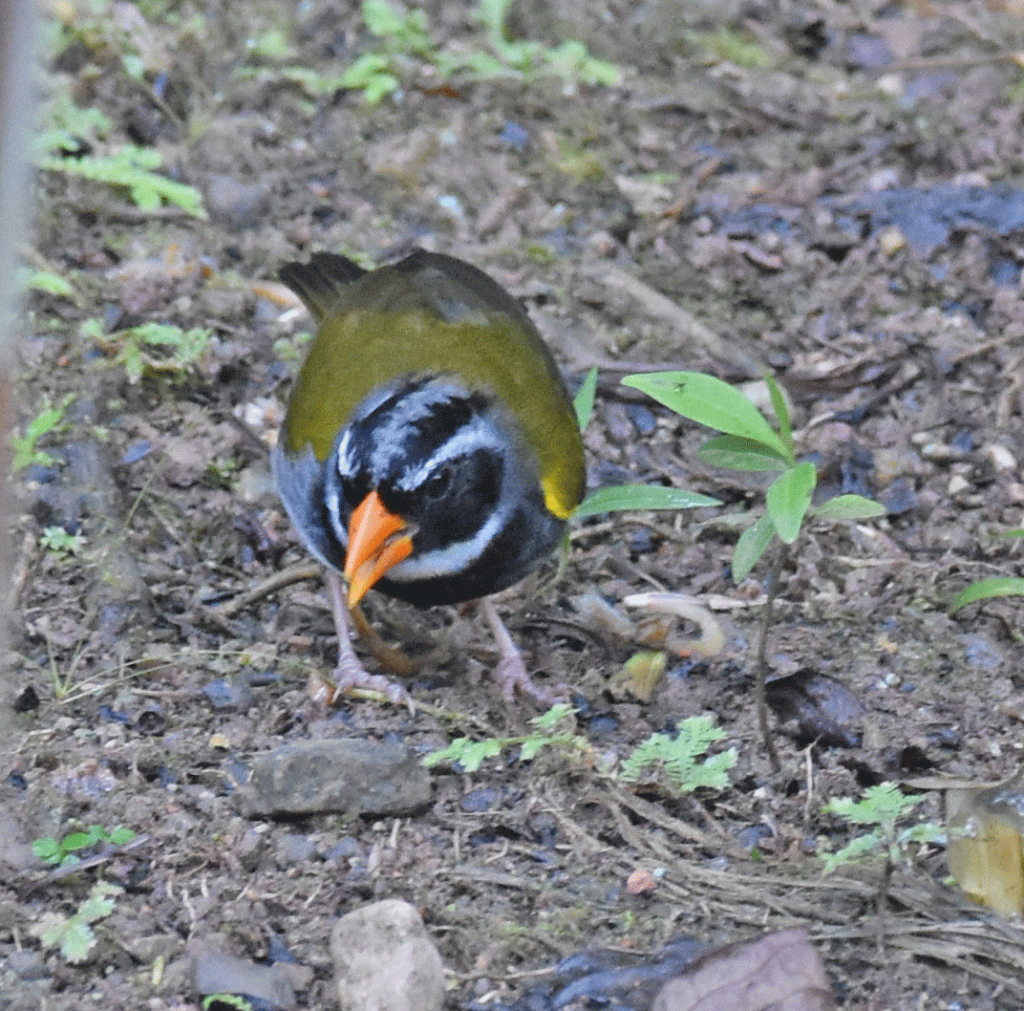
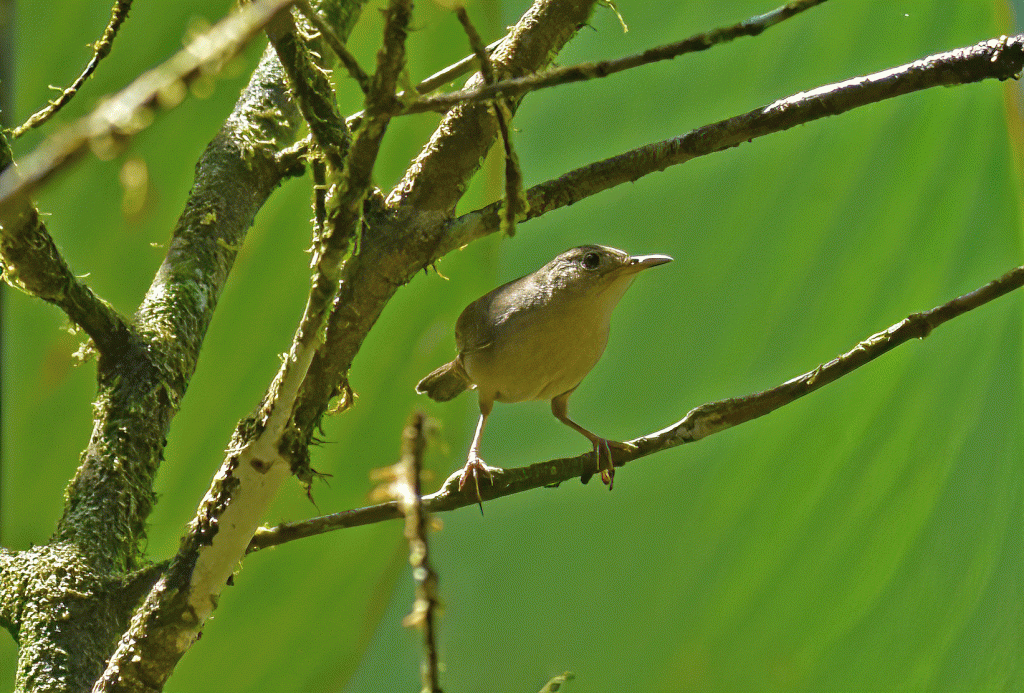
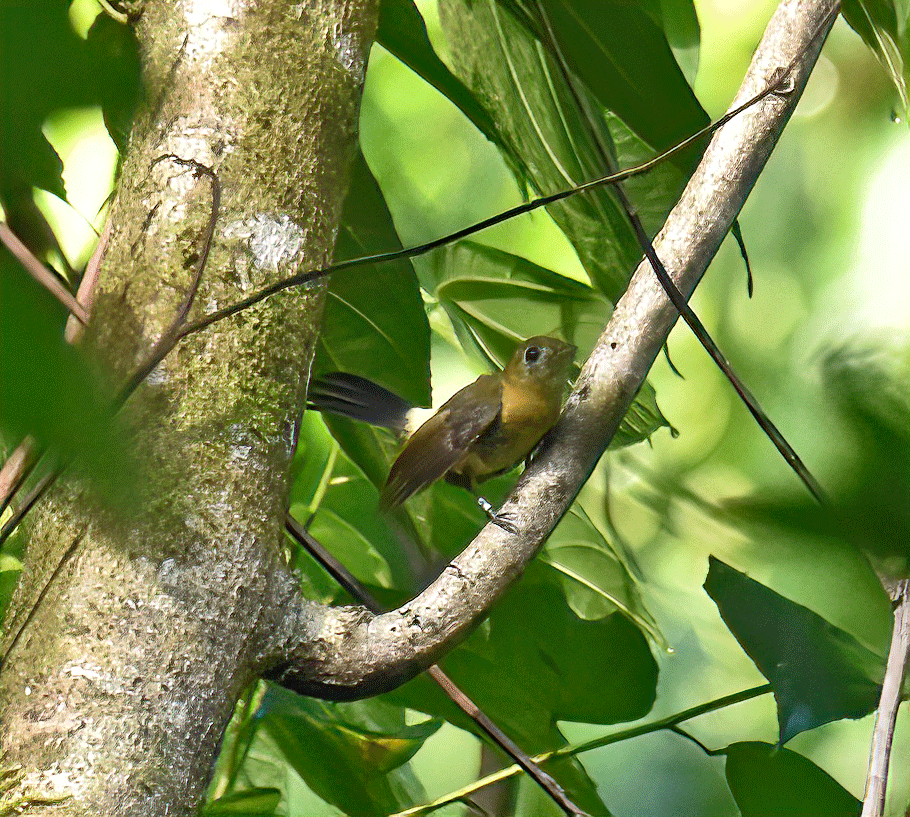
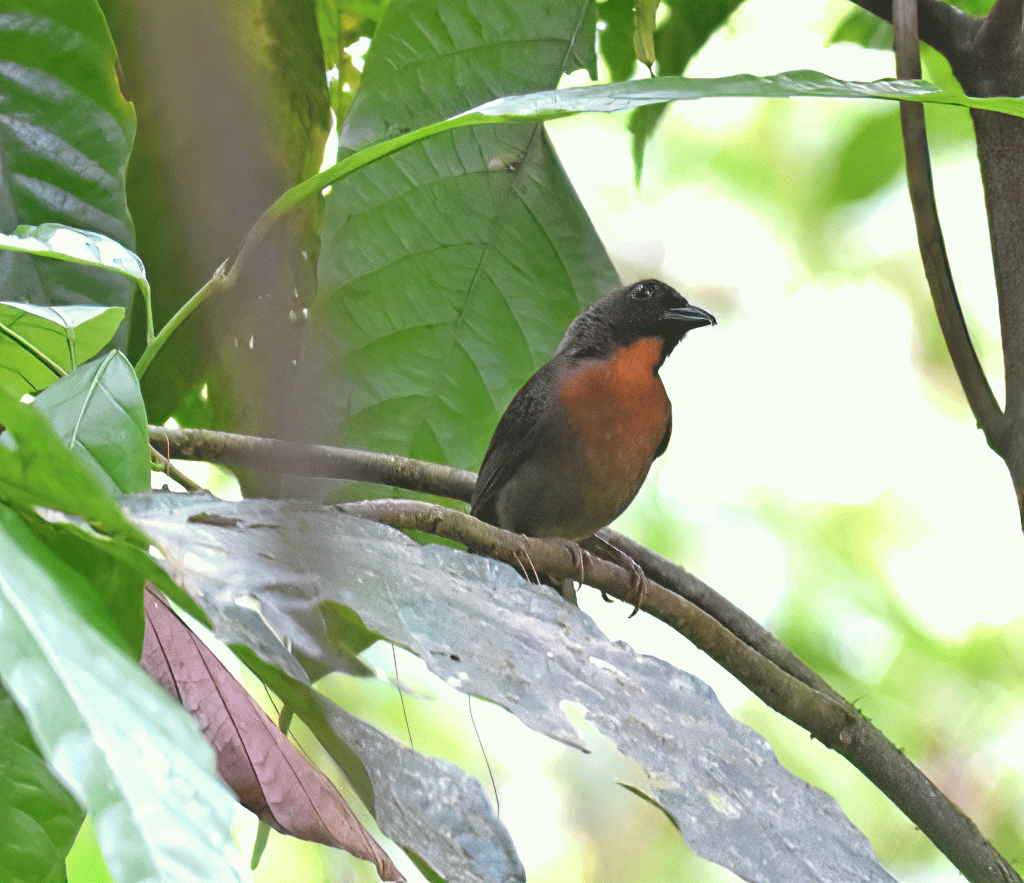
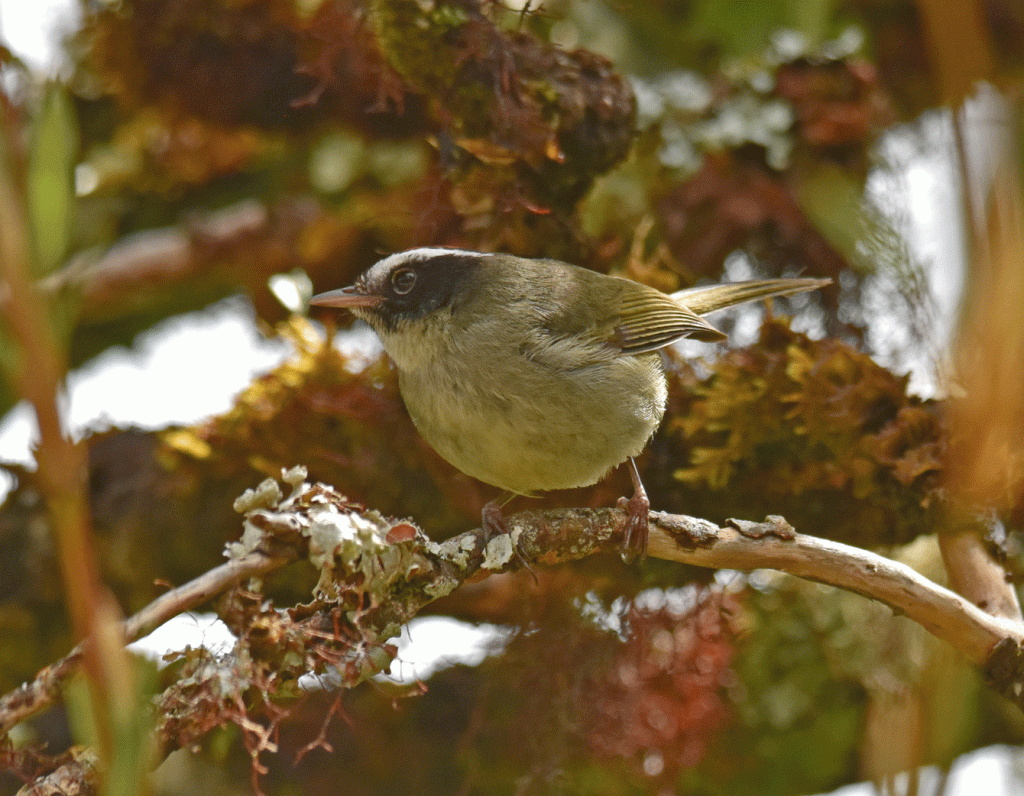
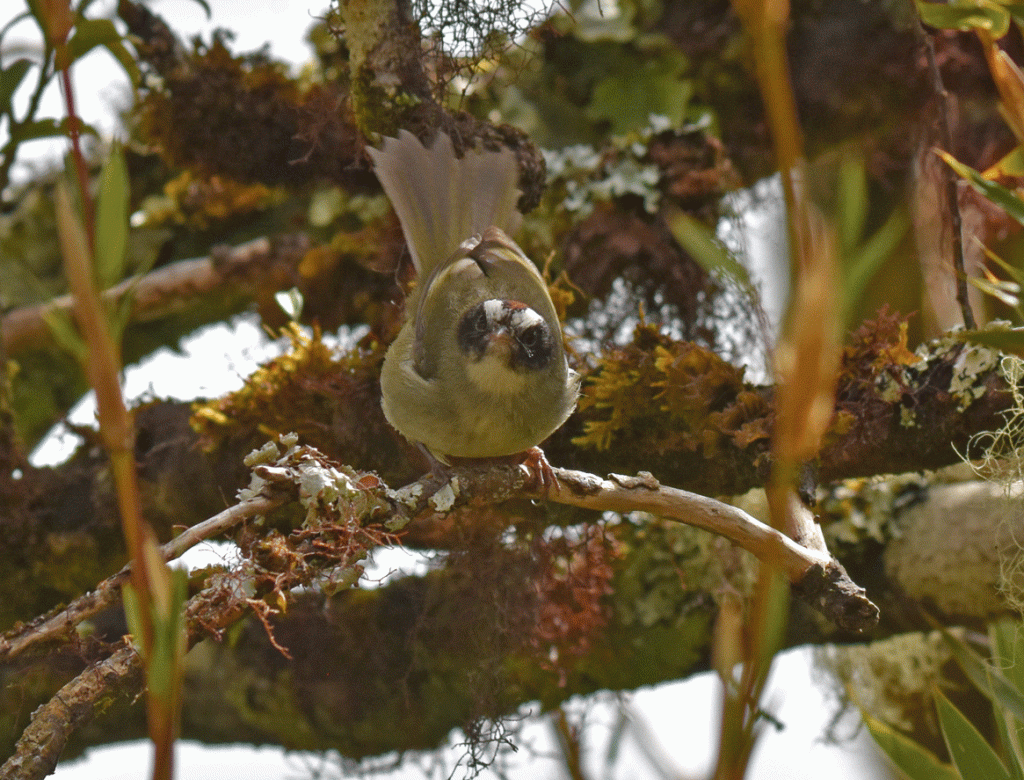
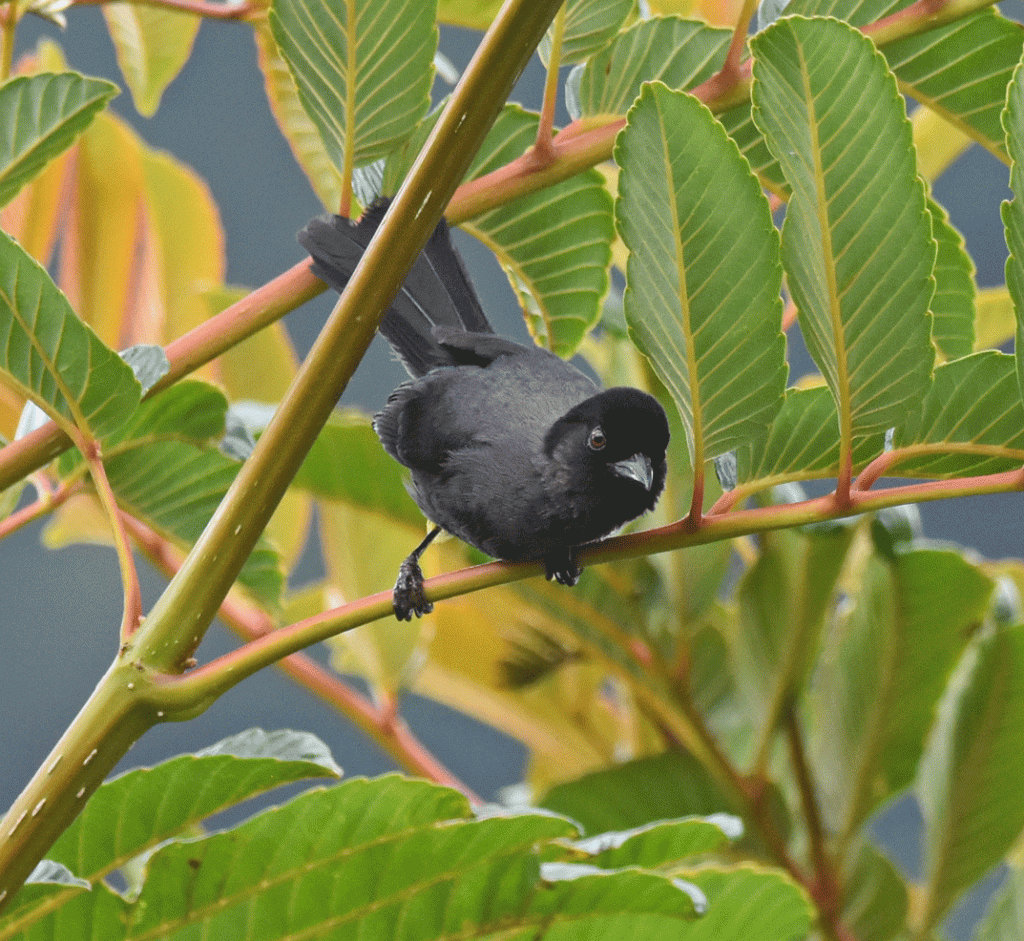
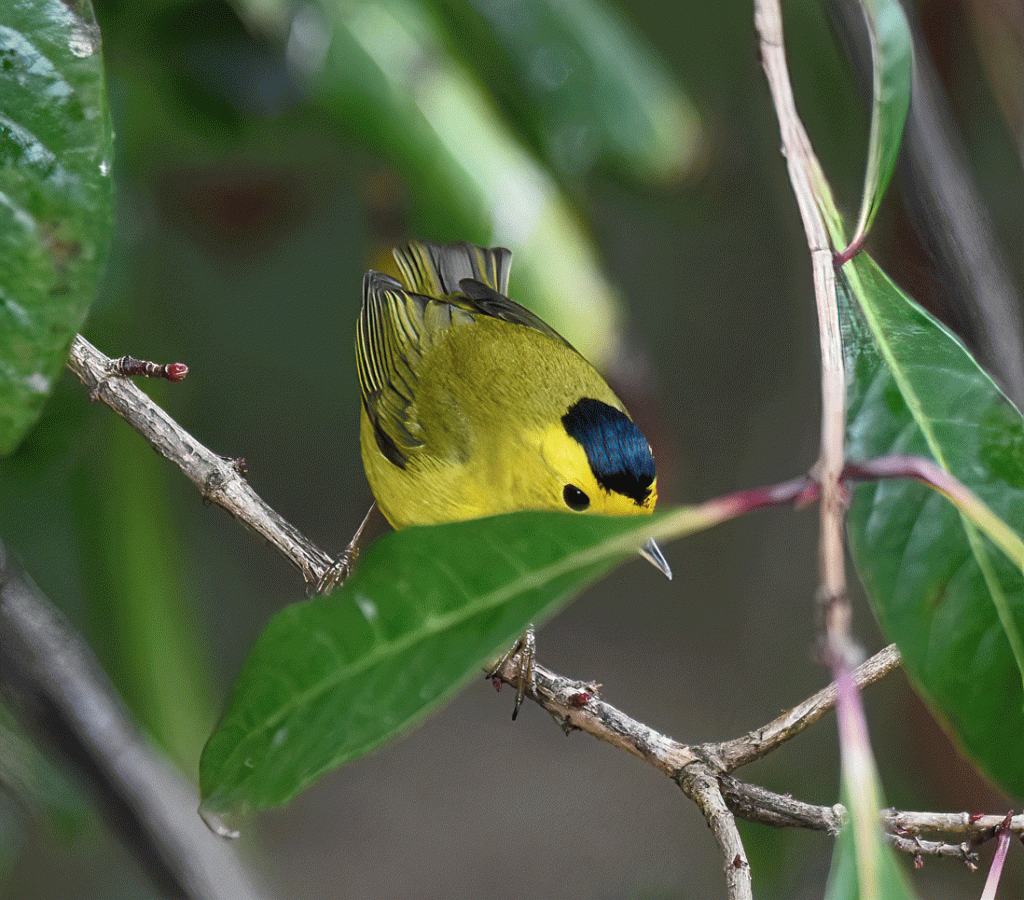
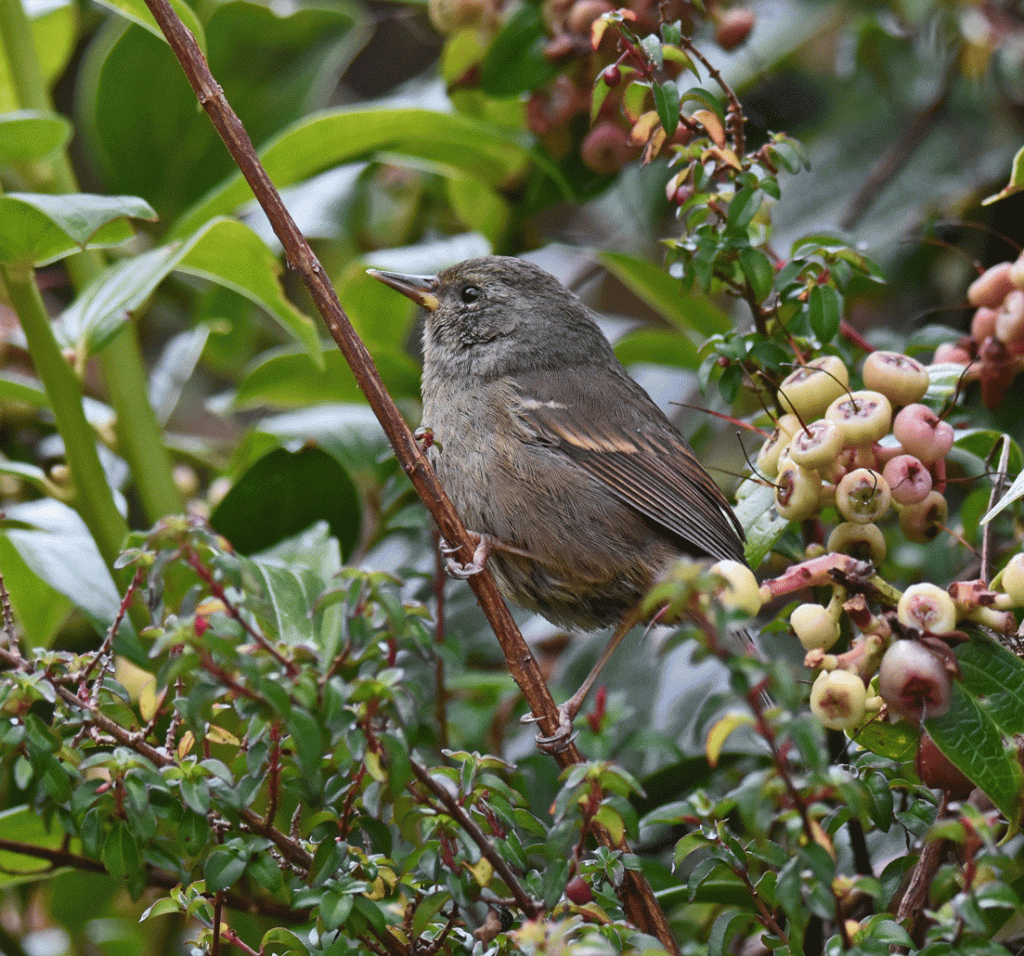
This Black-cheeked Warbler lived in the same habitat, and is also an endemic bird to the region. It also shared the “angry bird” look when viewed head-on. (See the second photo)

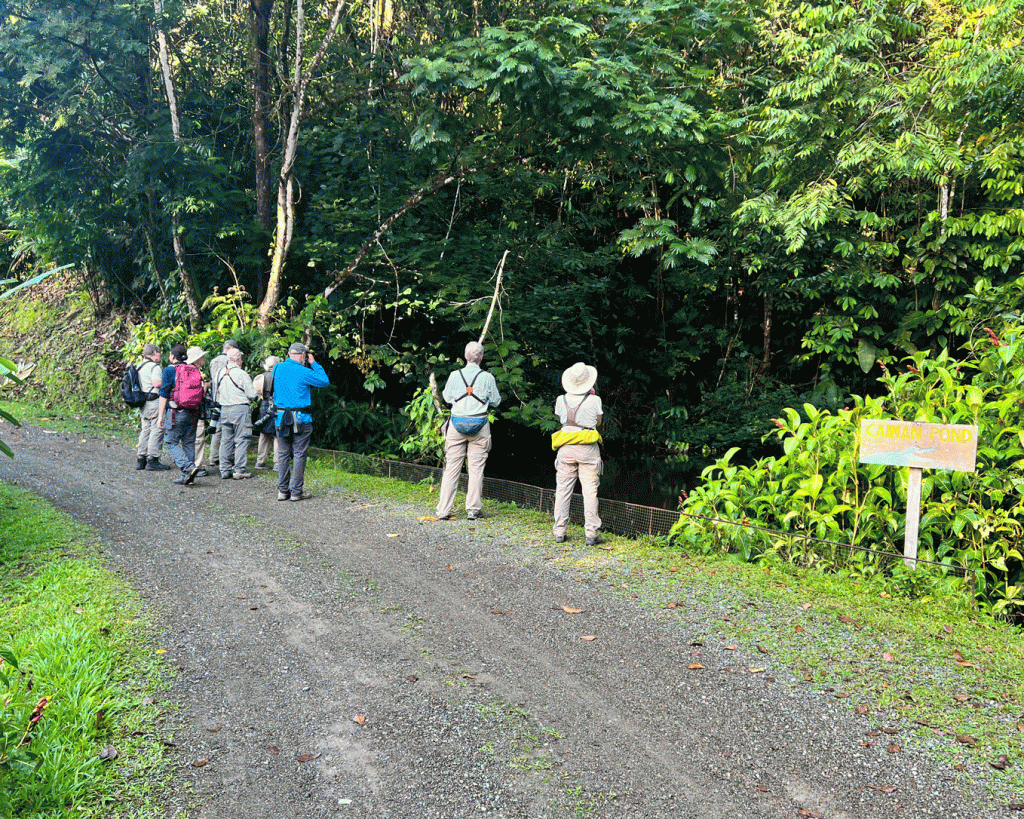
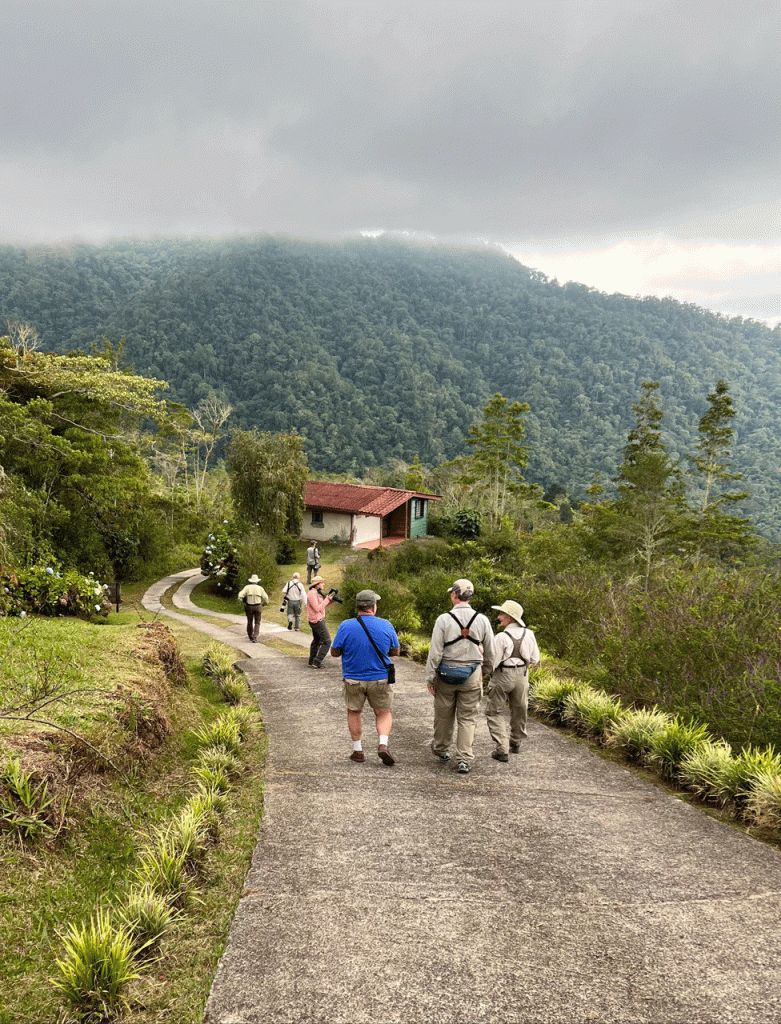
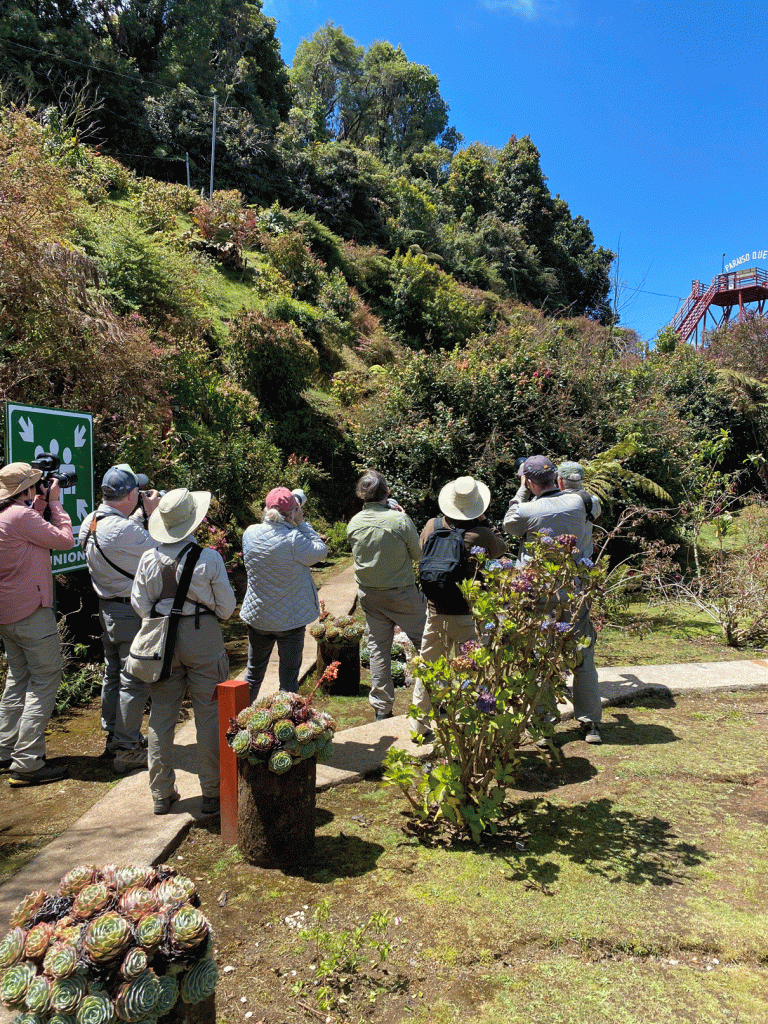
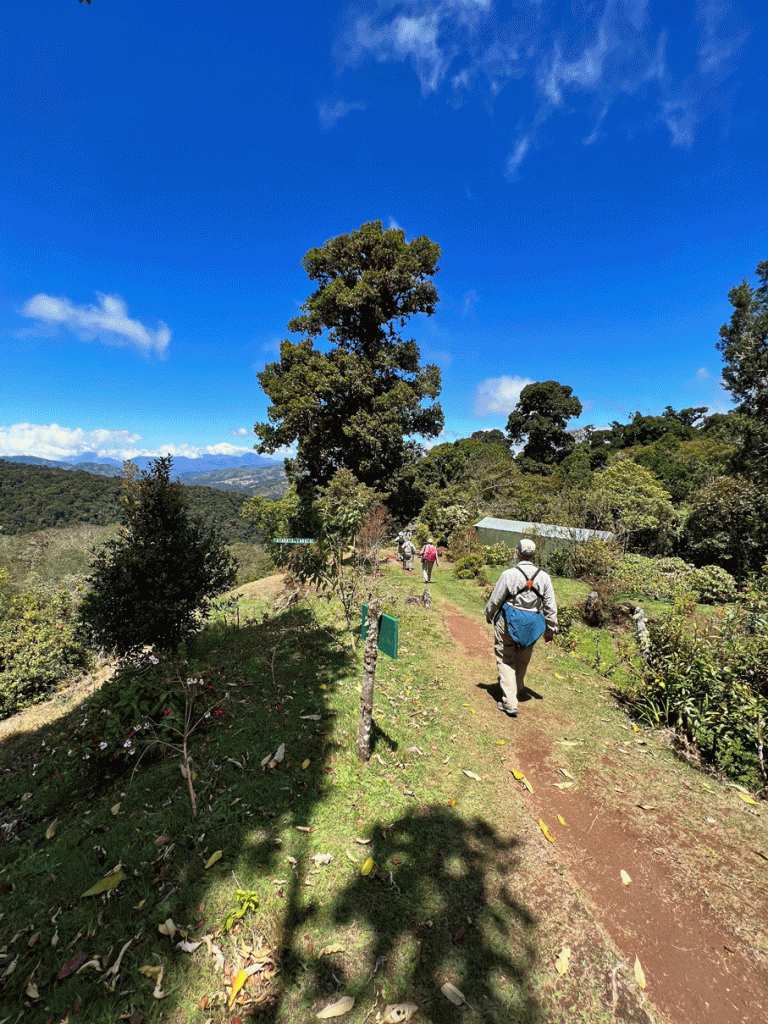
After trying to persuade a wren to show itself, (it was not cooperative), we hopped back on the bus and headed south to lower elevations. We stopped at a small lodge called Bosque del Tolomuco. The owners have worked hard to cultivate bushes and plants that attract birds, especially hummingbirds. In the photo below, some of the group is walking down the steep driveway from the main area.

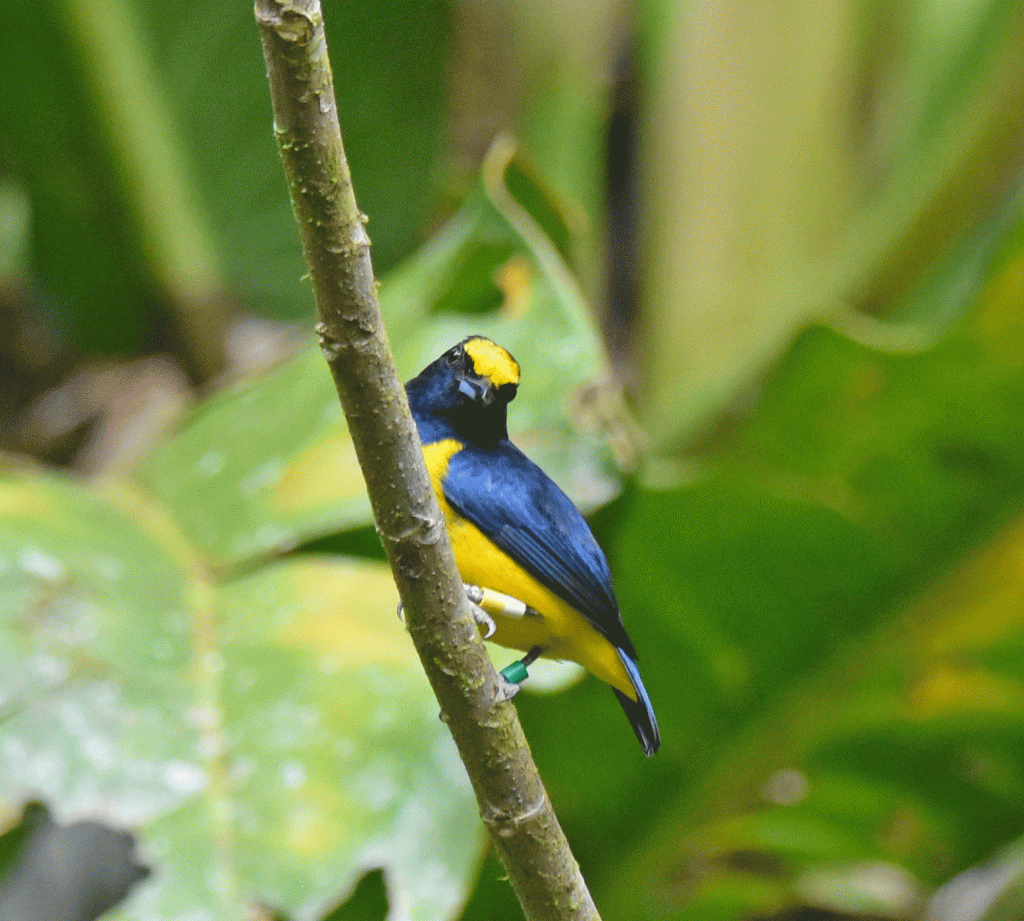
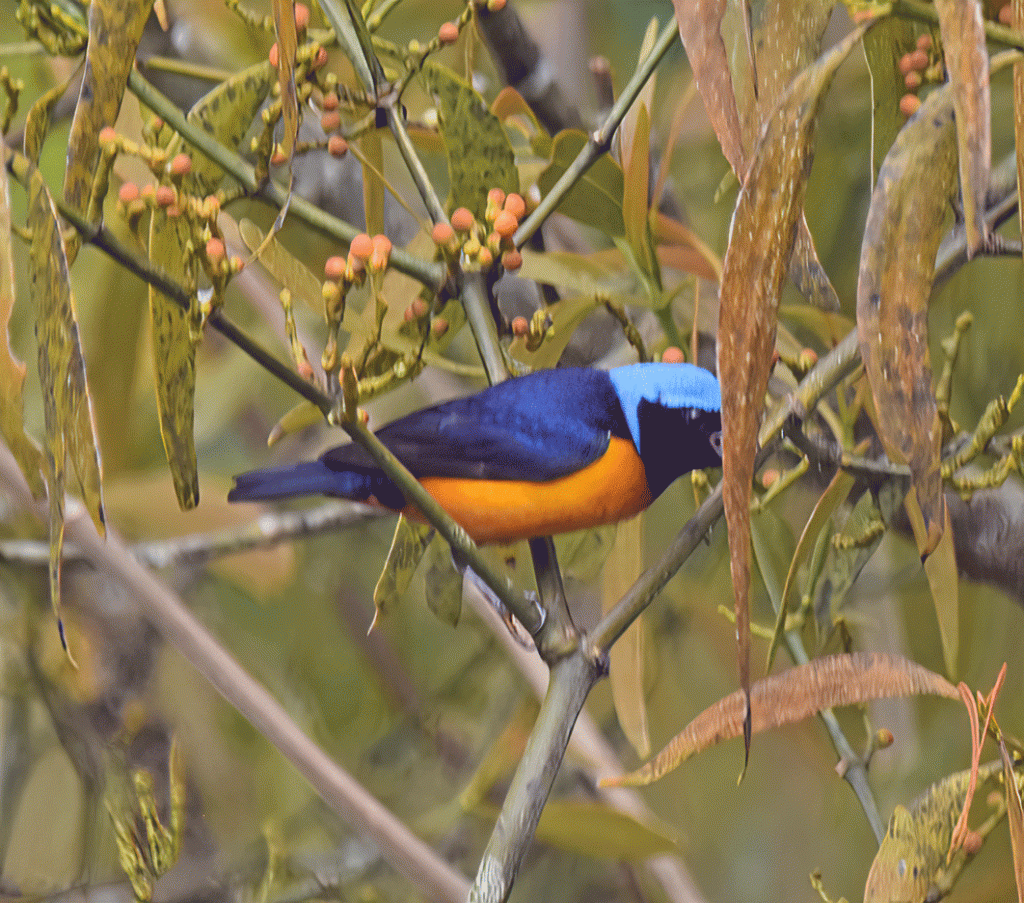
In the trees down by the hut, we saw a group of these Elegant Euphonias. This is one of the males.

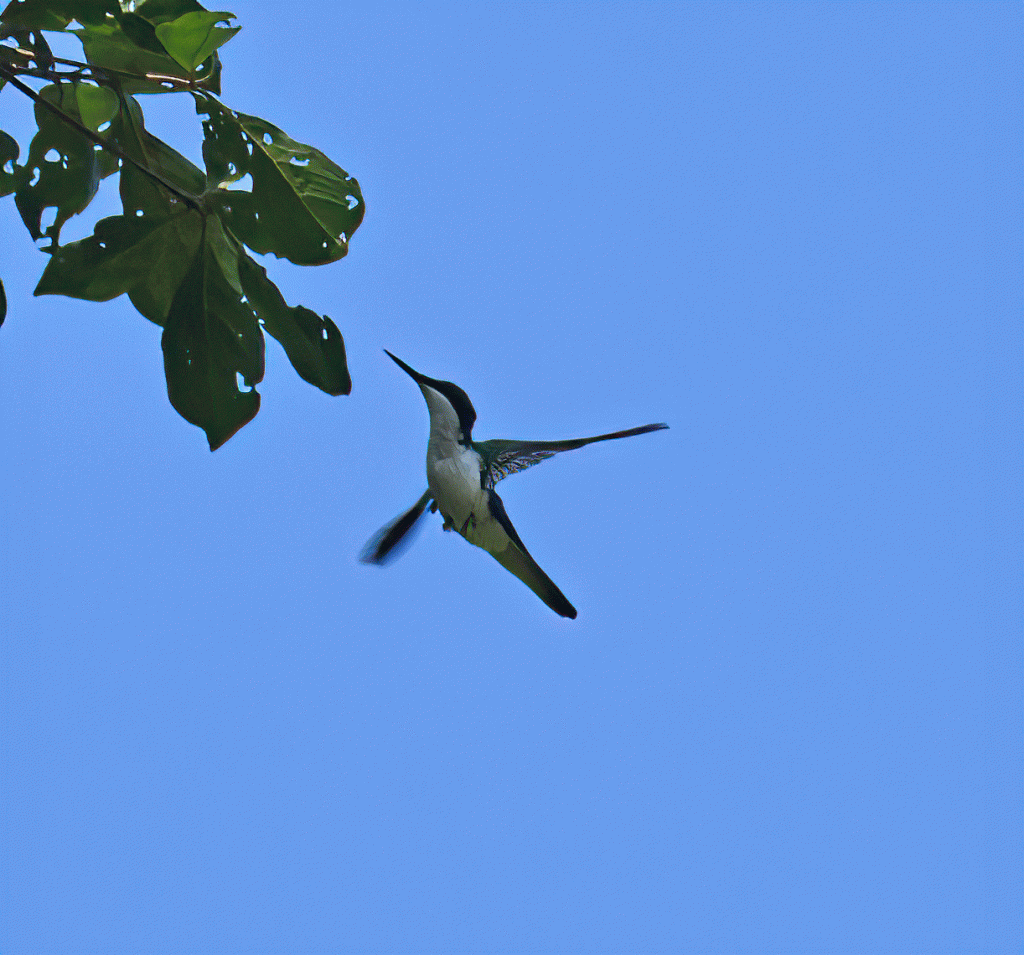
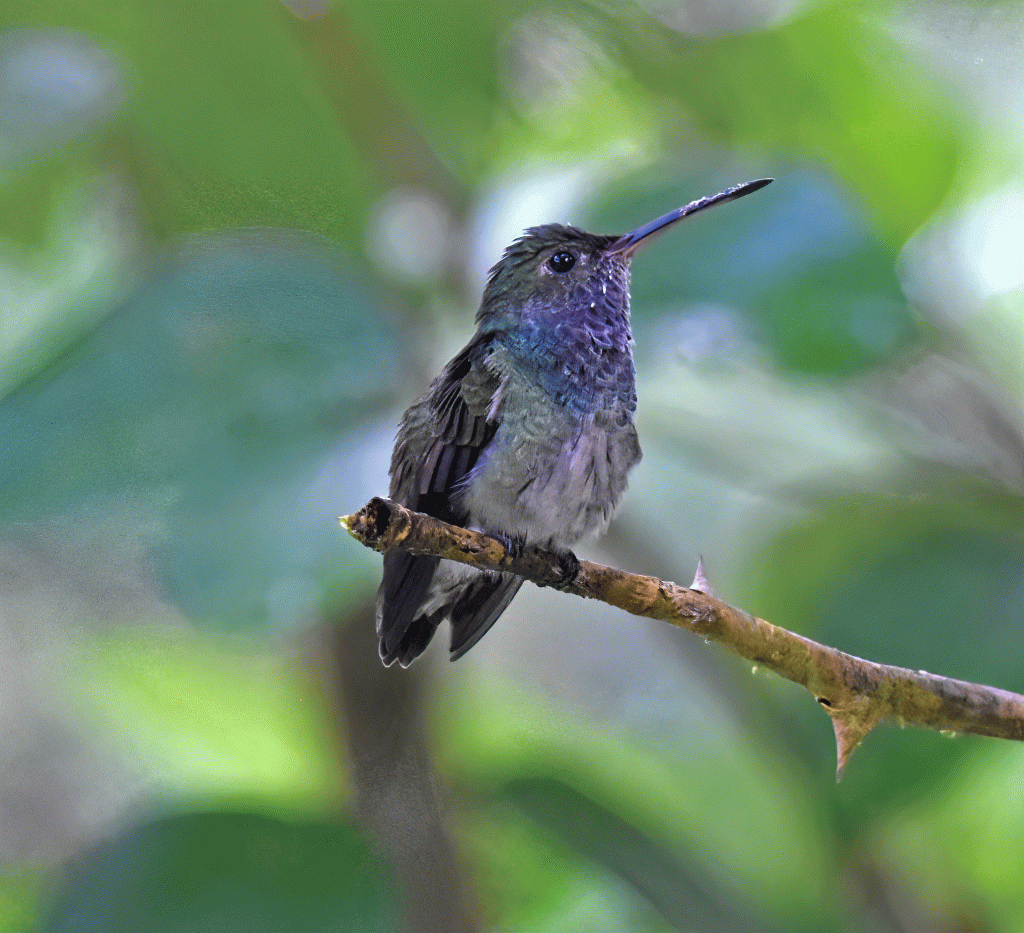
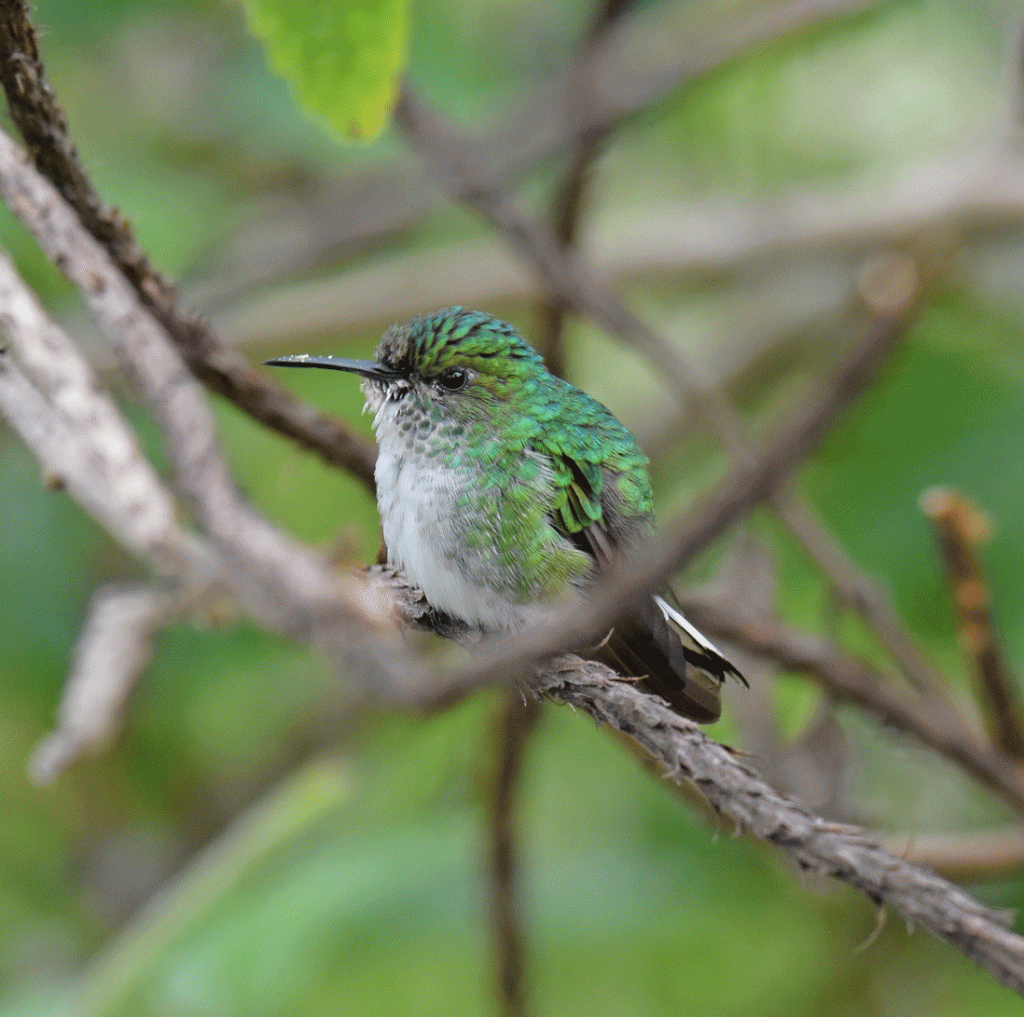
The bushes on the side of the driveway were full of hummingbirds. Here’s a small White-tailed Emerald, a hummingbird that is only found in Costa Rica and Panama.

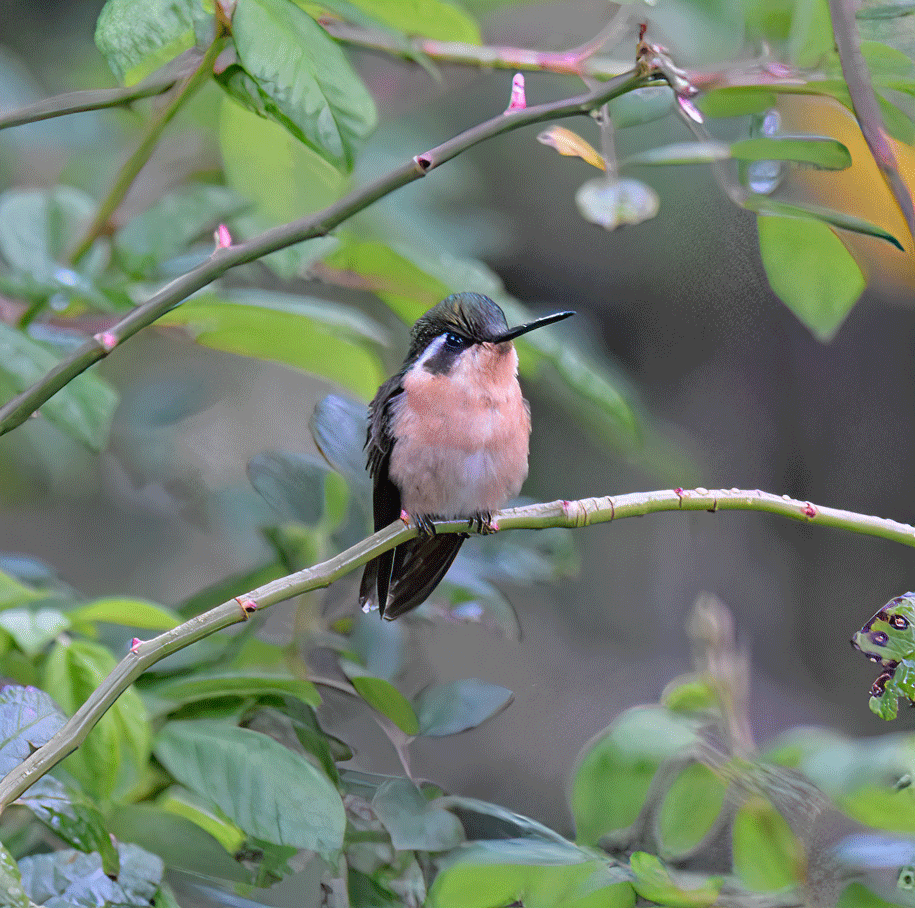
Here’s a male White-throated Mountain-Gem. (There was a photo of the female White-throated Mountain-Gem in the previous blog.)

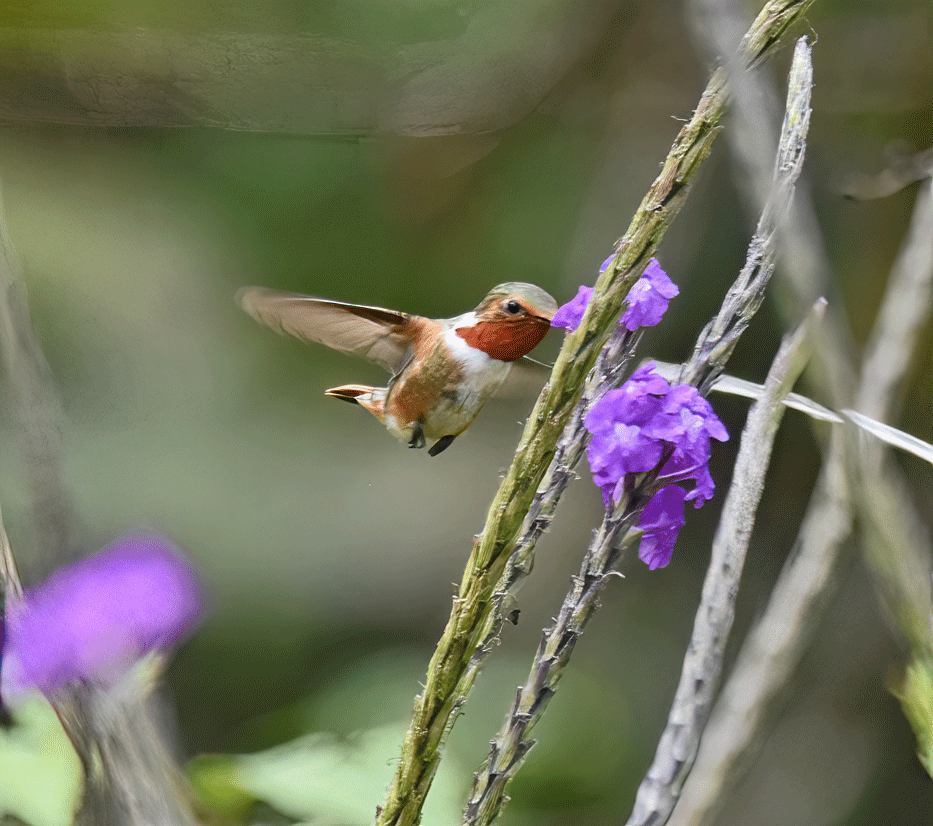
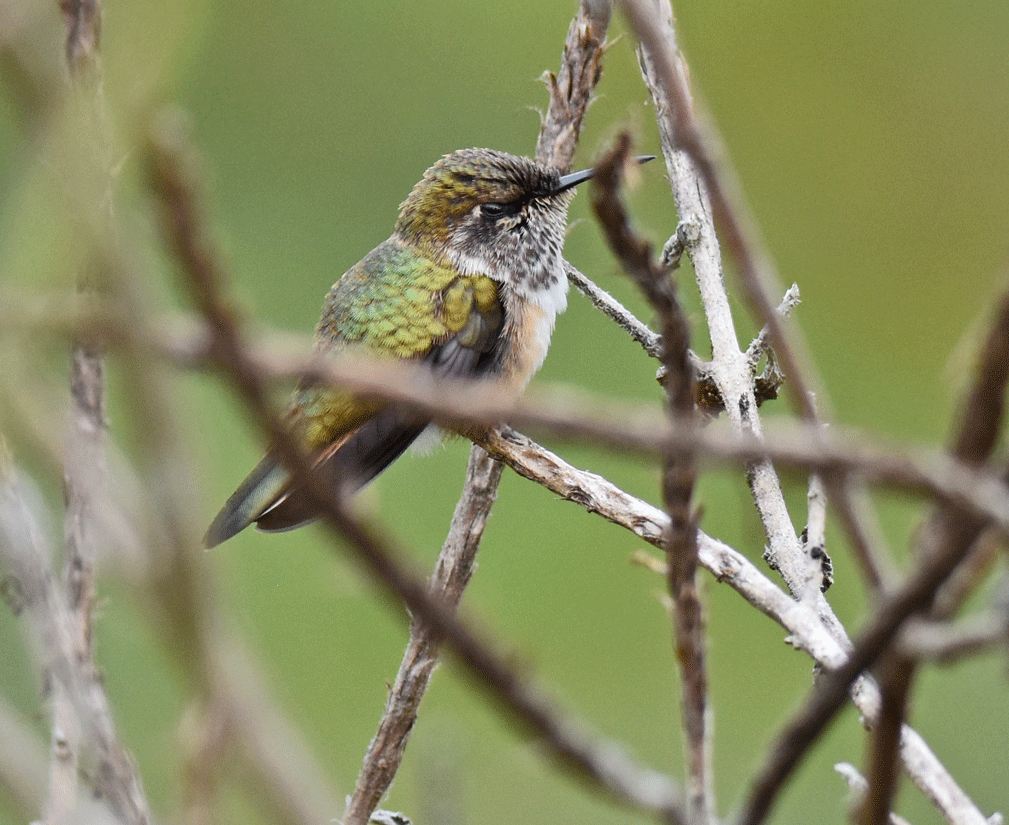
This Scintillant Hummingbird is very small, only 5 – 11 cm long. The male has a beautiful orange-red throat.

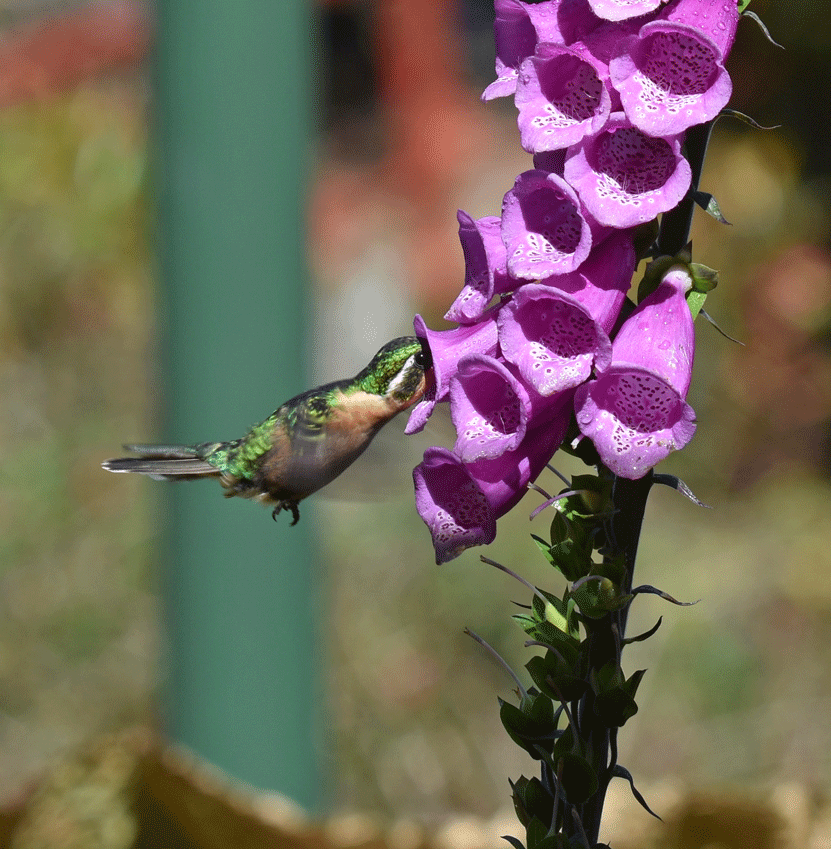
The garden was home to many hummingbirds that are only found in this region, and this female Volcano Hummingbird is another one of them.

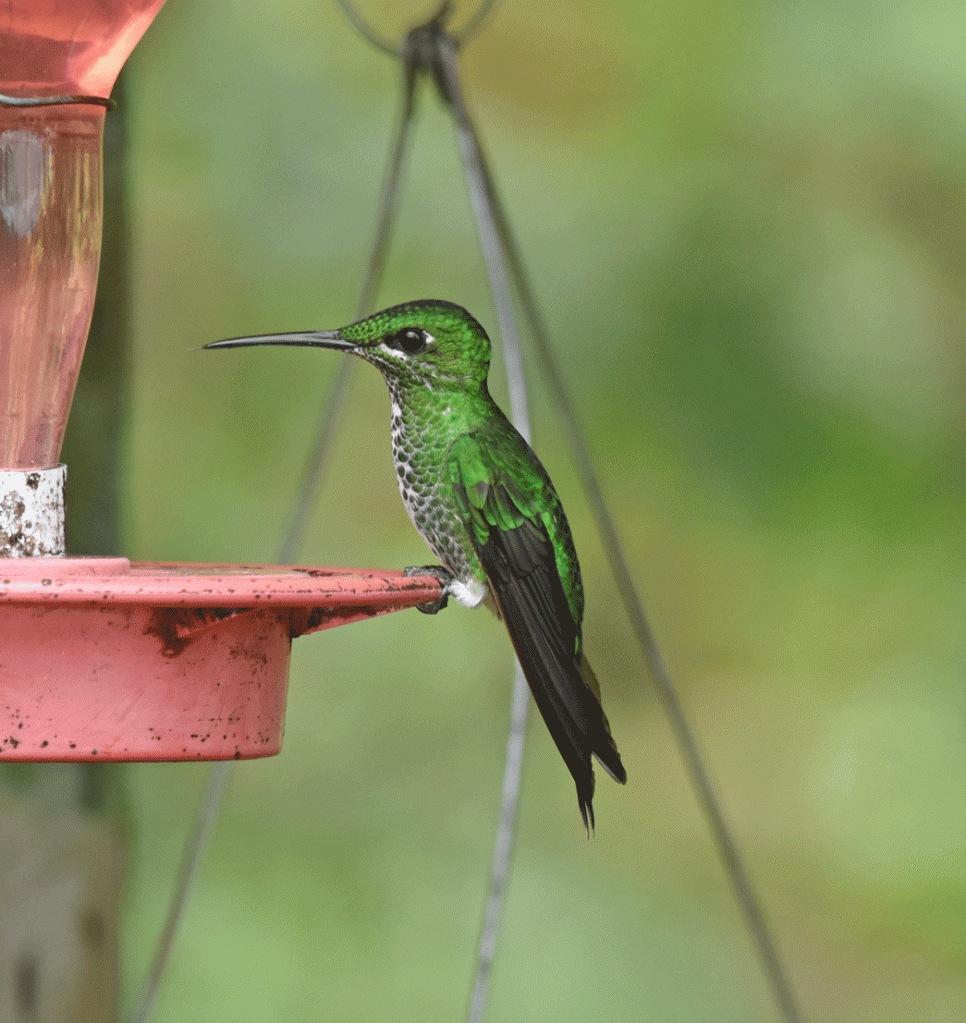
Green-crowned Brilliants prefer to perch to feed rather than hover.

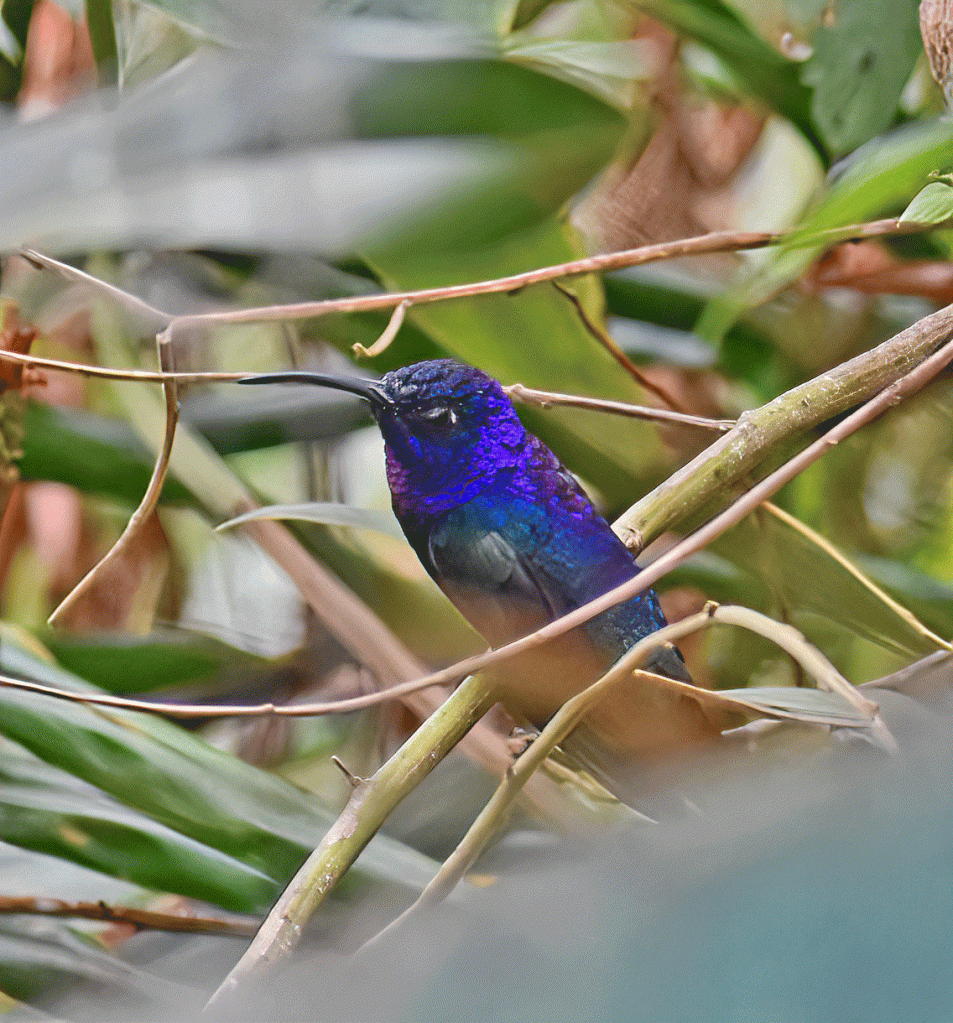
This Violet Sabrewing zipped in and out so much that it was difficult to get a photo. Its wings were really pointed.

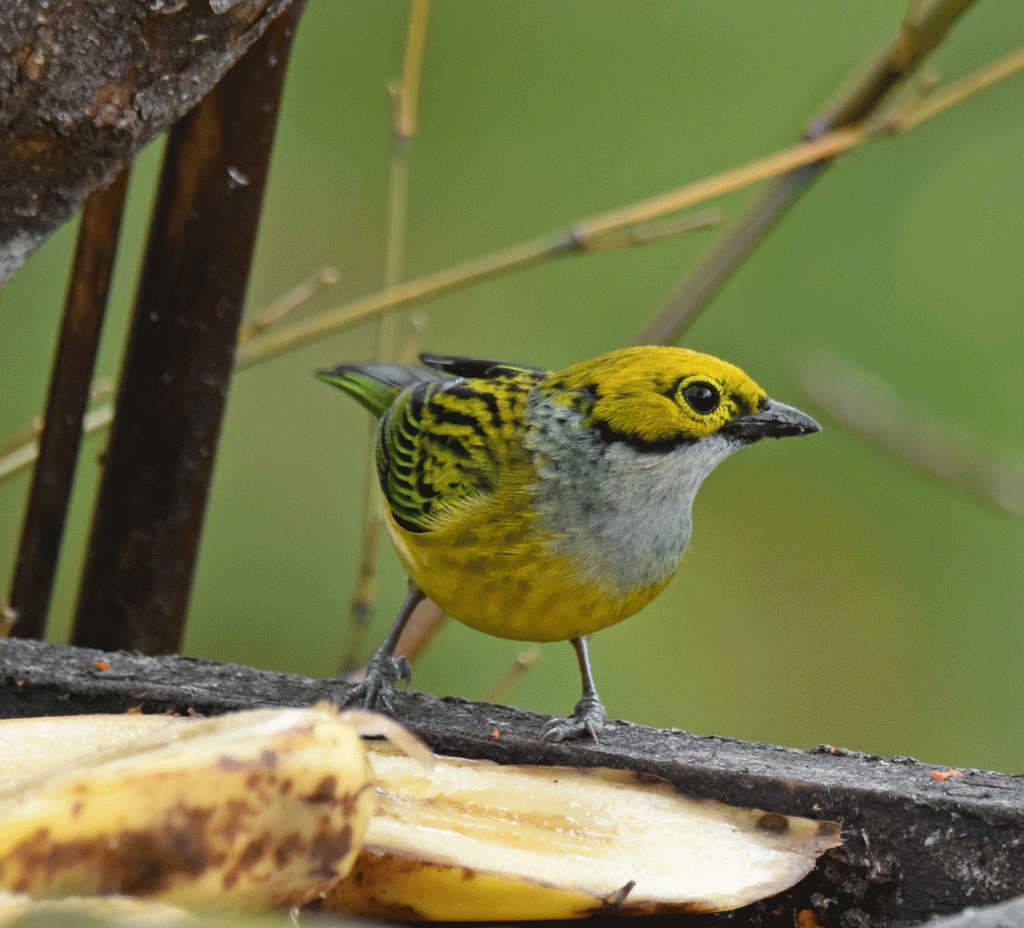
This is a Silver-throated Tanager which liked to visit the fruit feeders.

The bird on the left is a Speckled Tanager.

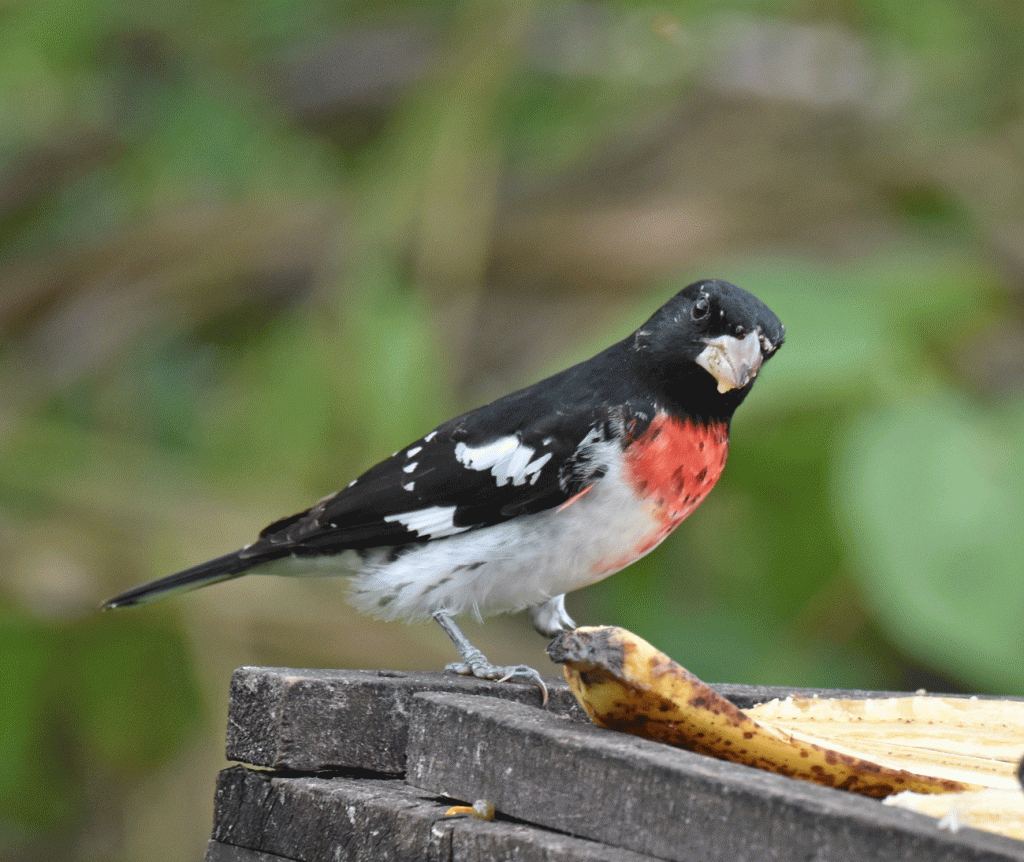
A Rose-breasted Grosbeak also visited the feeder for a few moments.

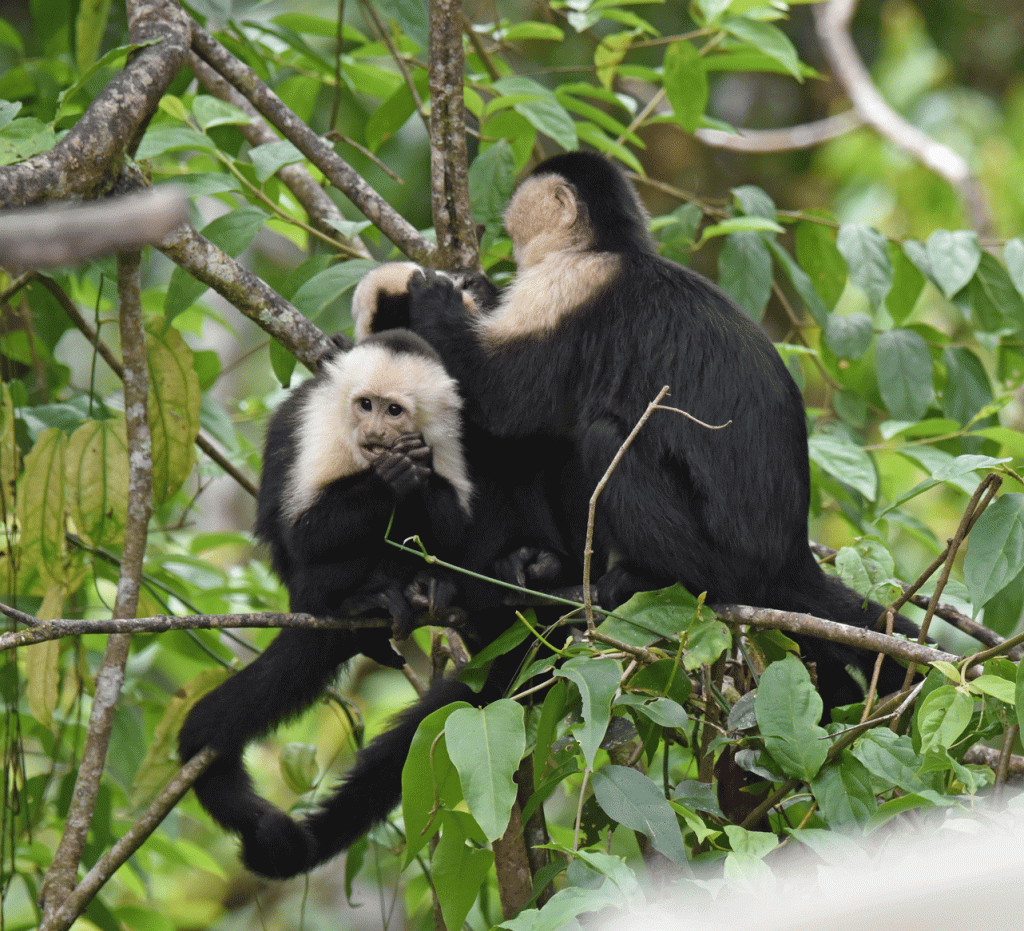
And we were lucky enough to see these capuchin monkeys, grooming each other in a tree near one of the outbuildings.

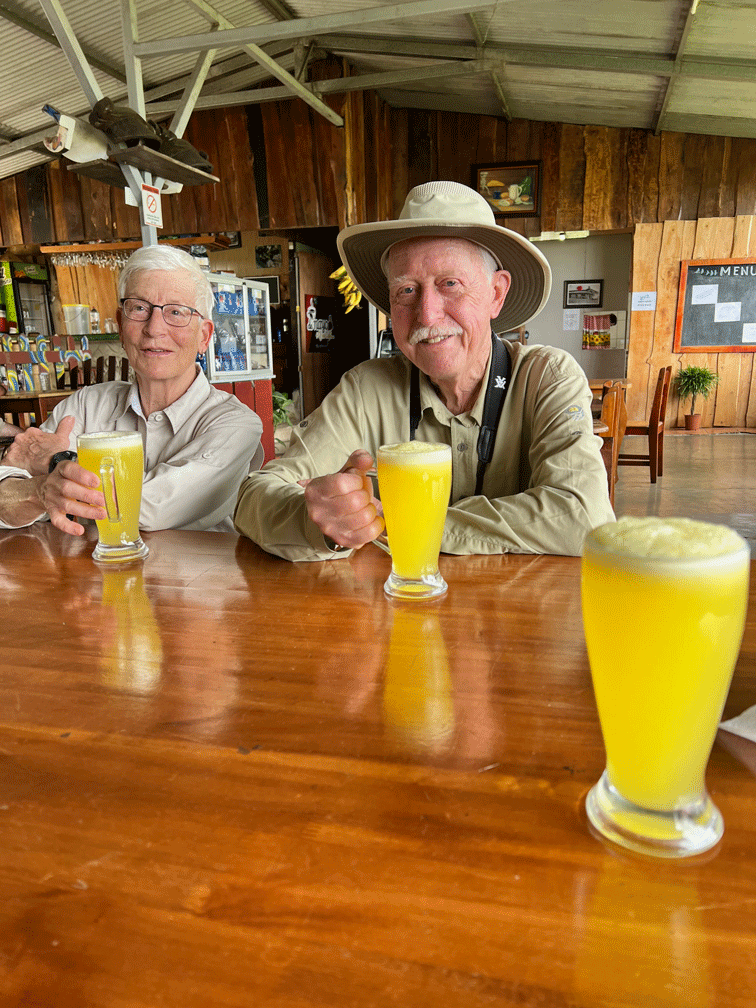
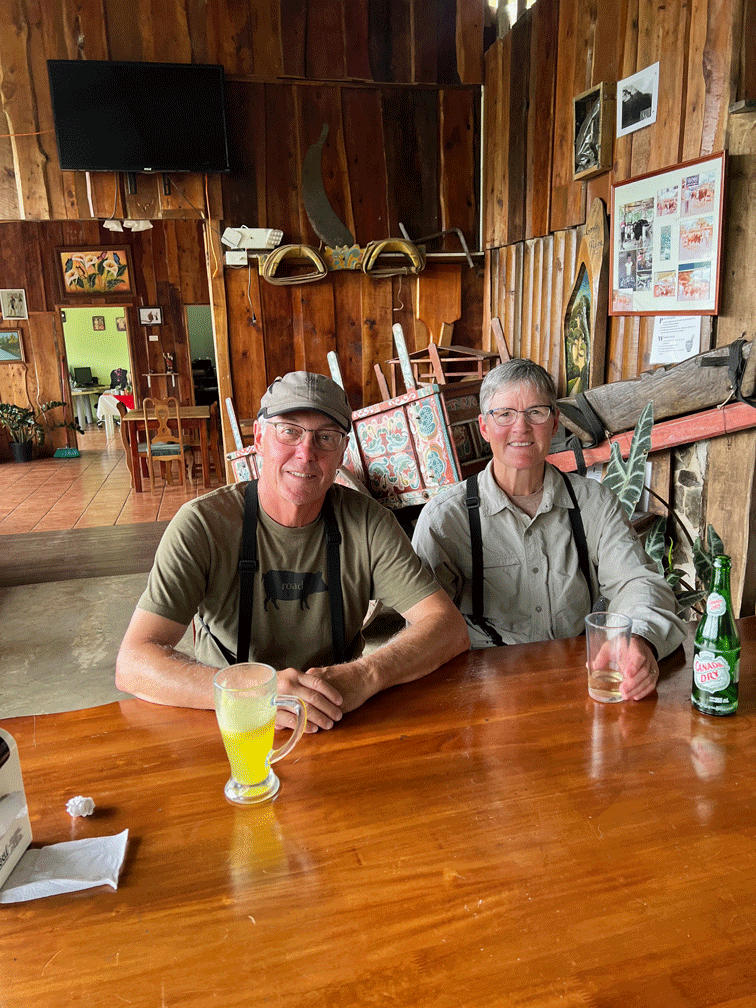
The next stop was lunch at a rustic restaurant (Traphiche de Nayo). Here’s a photo of our Cranbrook friends with their freshly squeezed pineapple juice.

And here we are with a view of the other side of the restaurant. Behind us are artifacts and a poster explaining the traditional ox-driven sugar cane press.

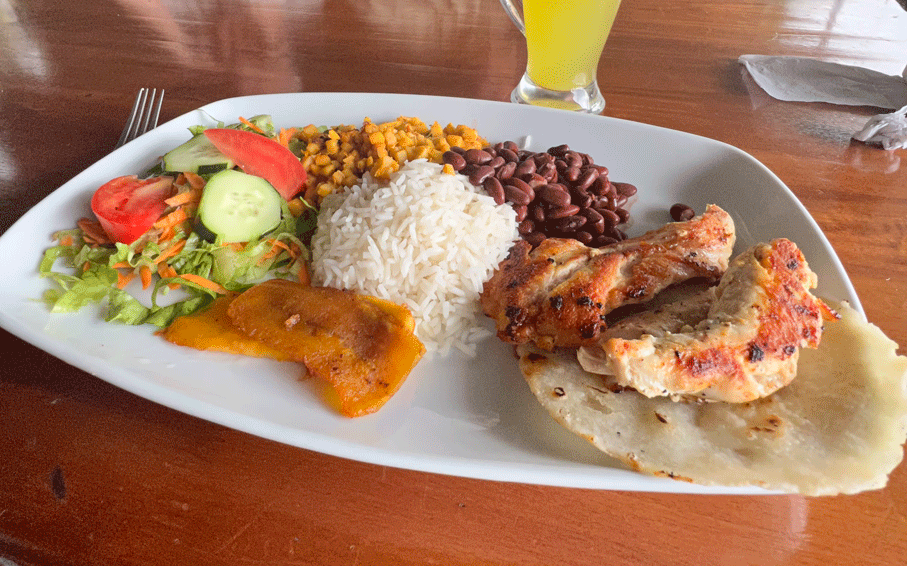
Doug chose the “Costa Rican” plate with chicken. The only concern we had about the food throughout the whole trip was that the portions were so big. We resorted to sharing a lunch on some of the days.

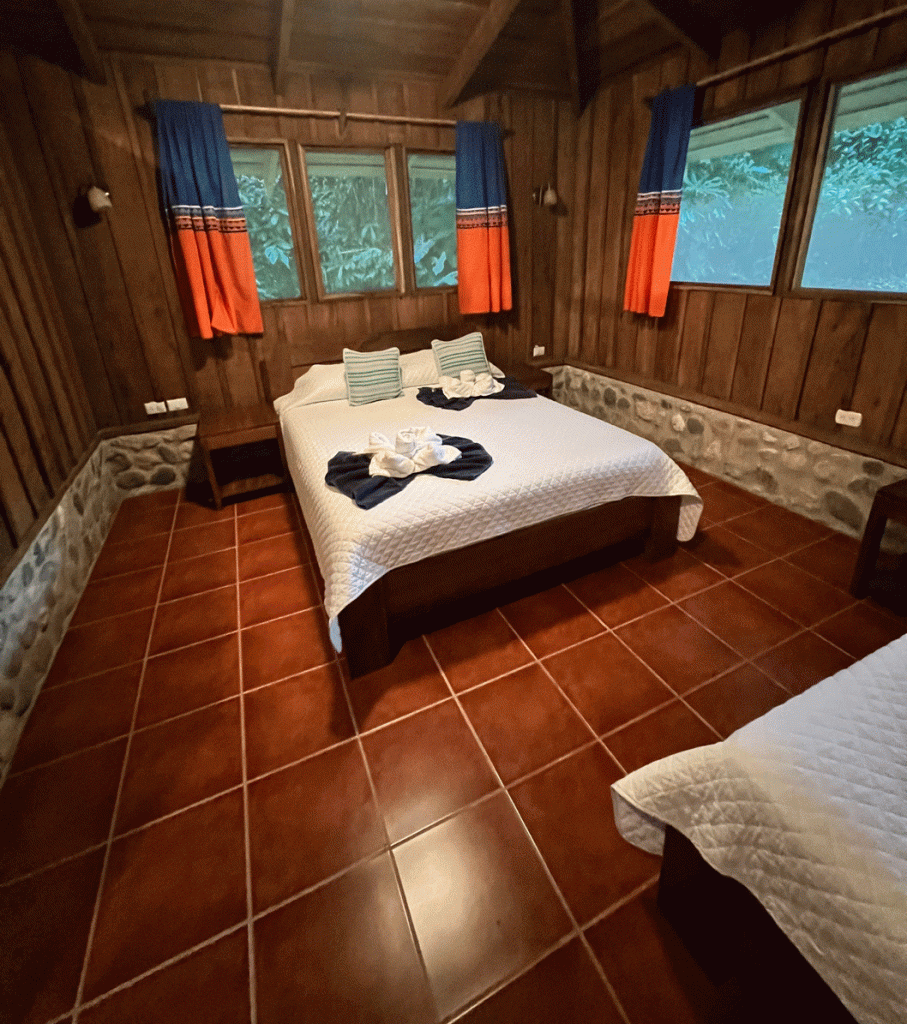
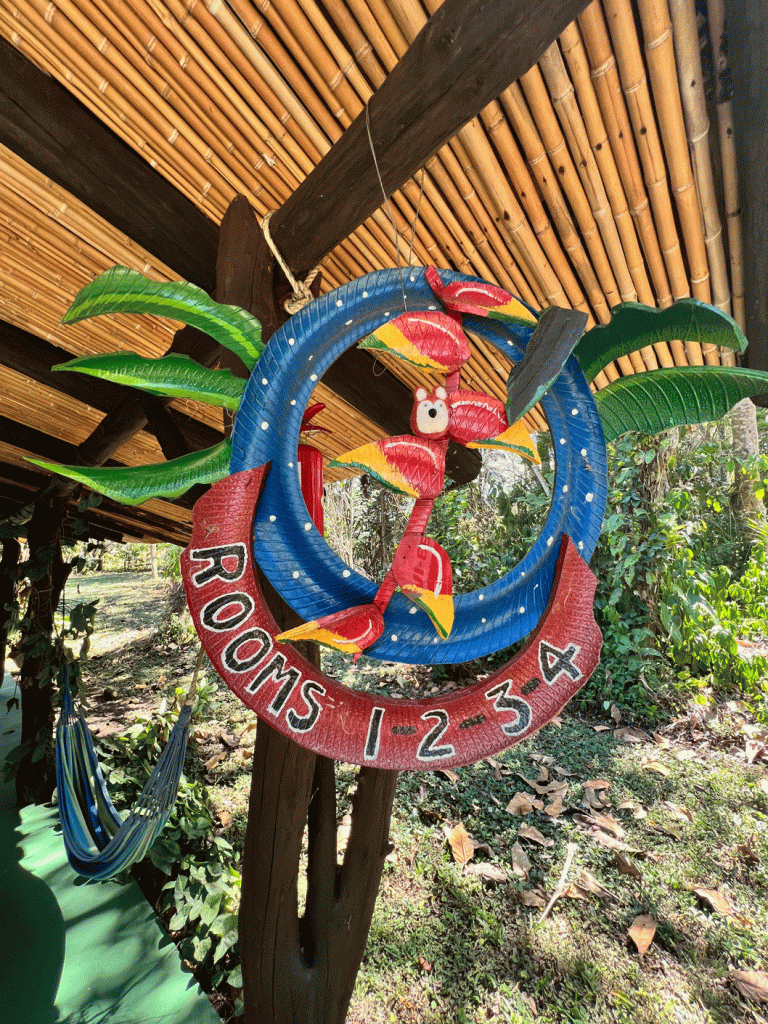
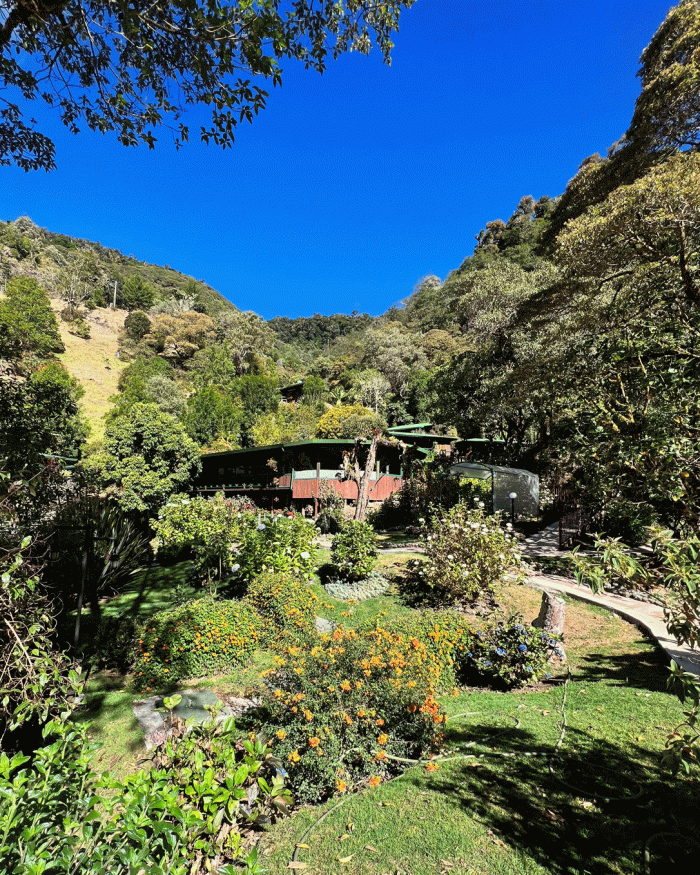
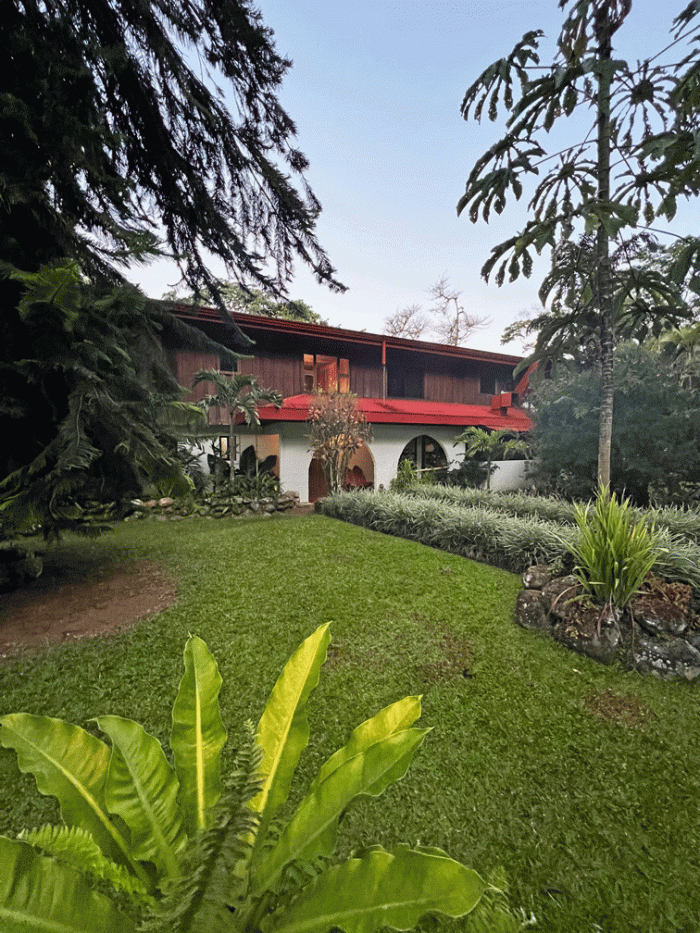
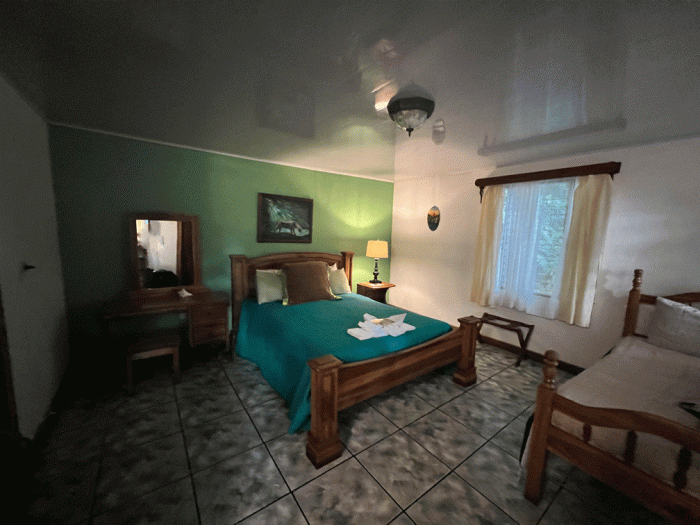
That afternoon we reached Talari Mountain Lodge. The rooms were simple, yet comfortable. The signs were made of reused tires, which were cut into shapes and decorated.

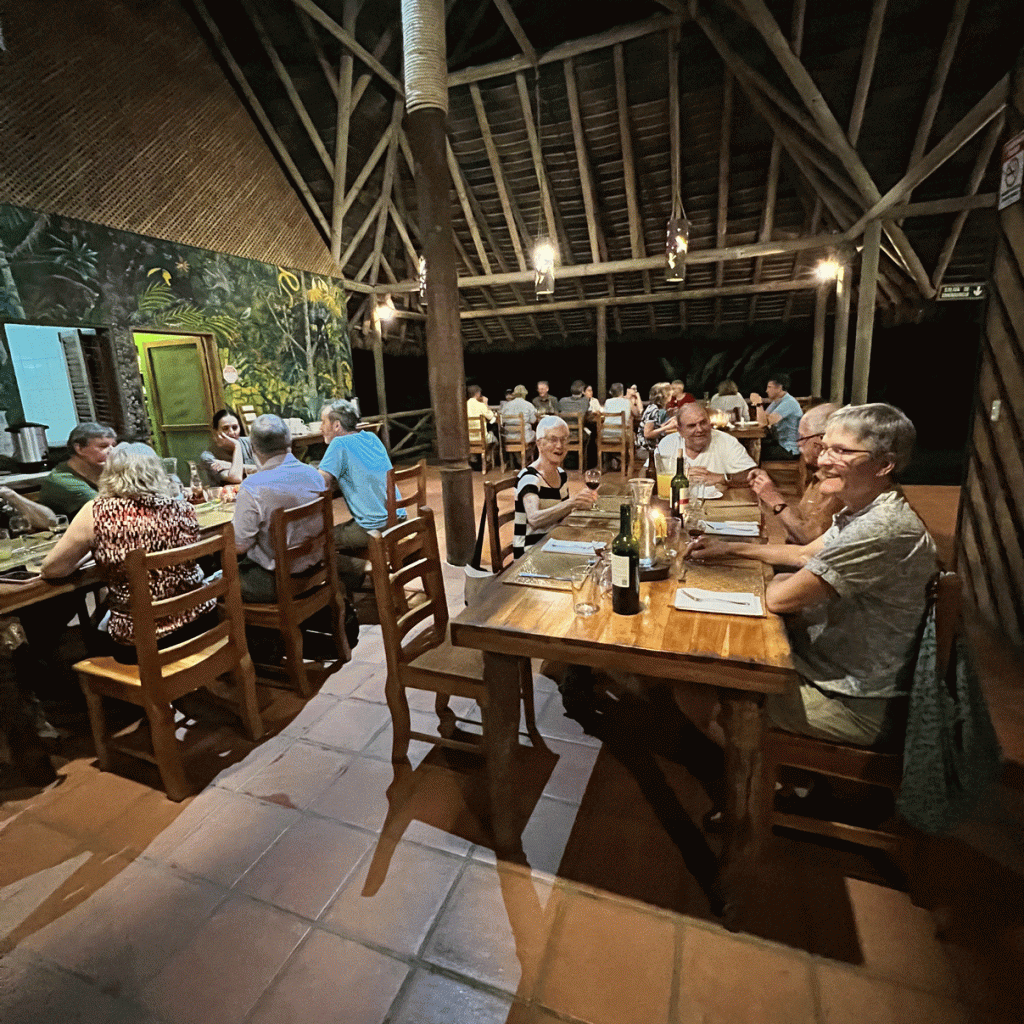
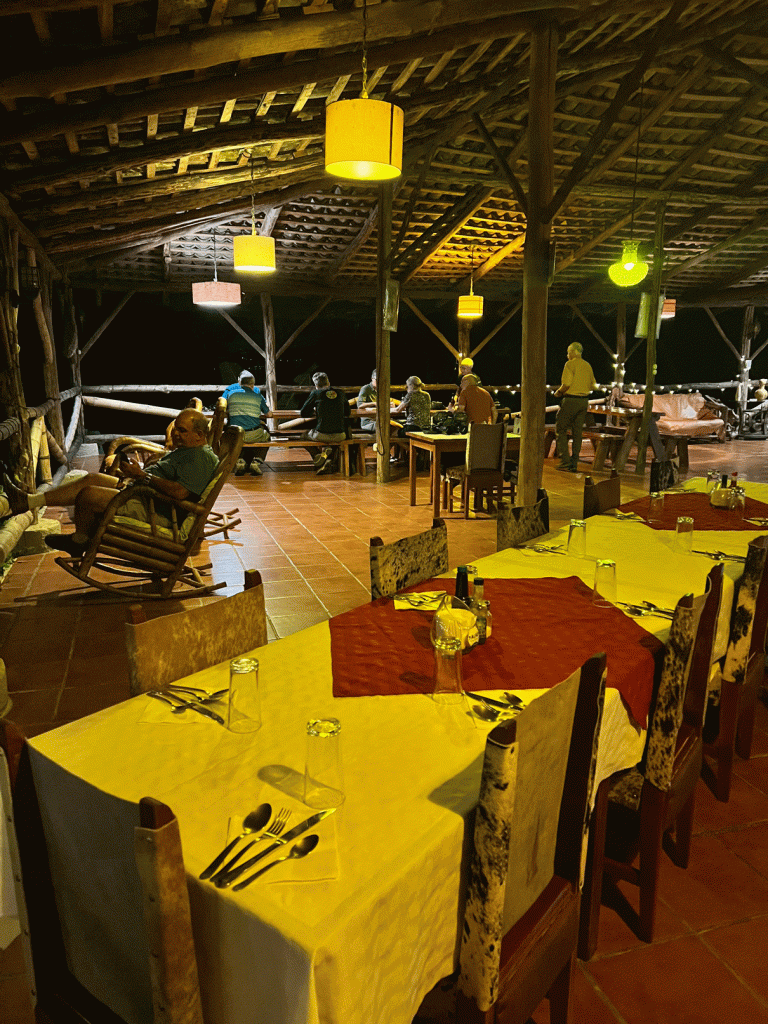
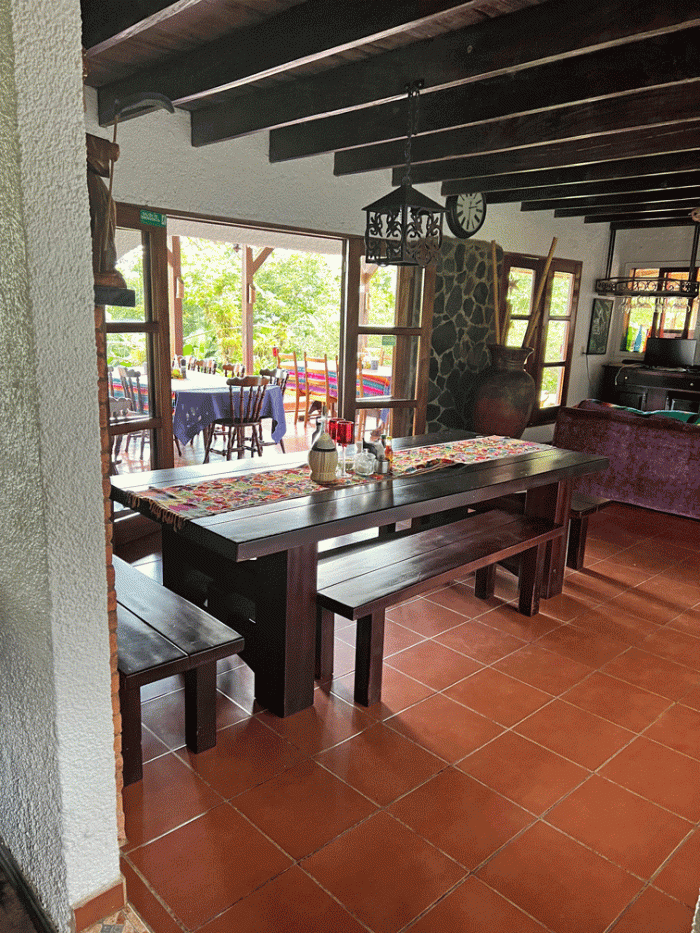
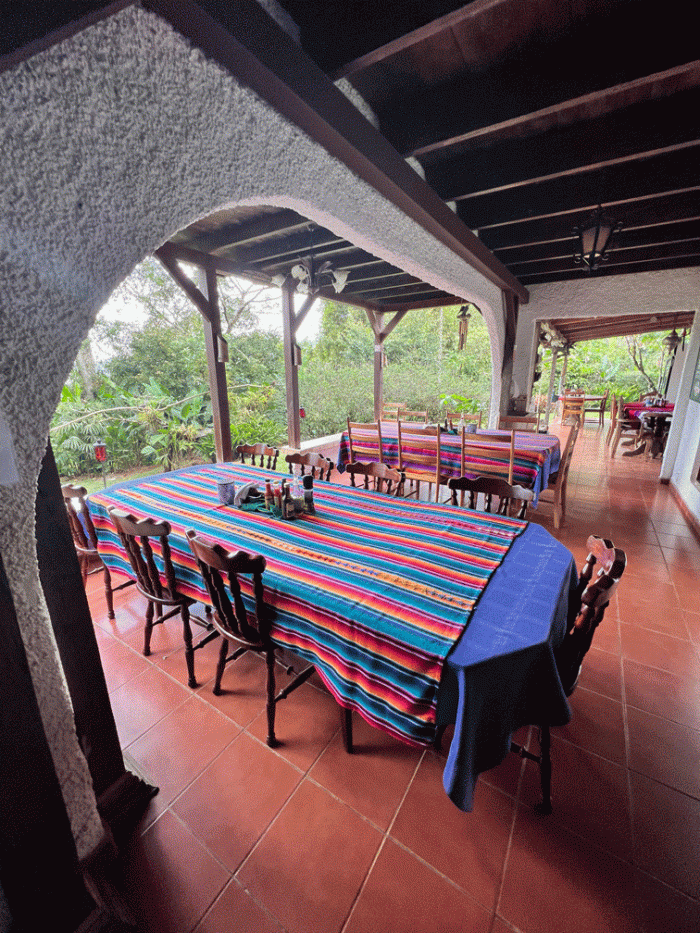
We ate in a huge open air room. Here the group is getting ready to go over our daily list of bird sightings.

The next morning, we went out birding as usual.

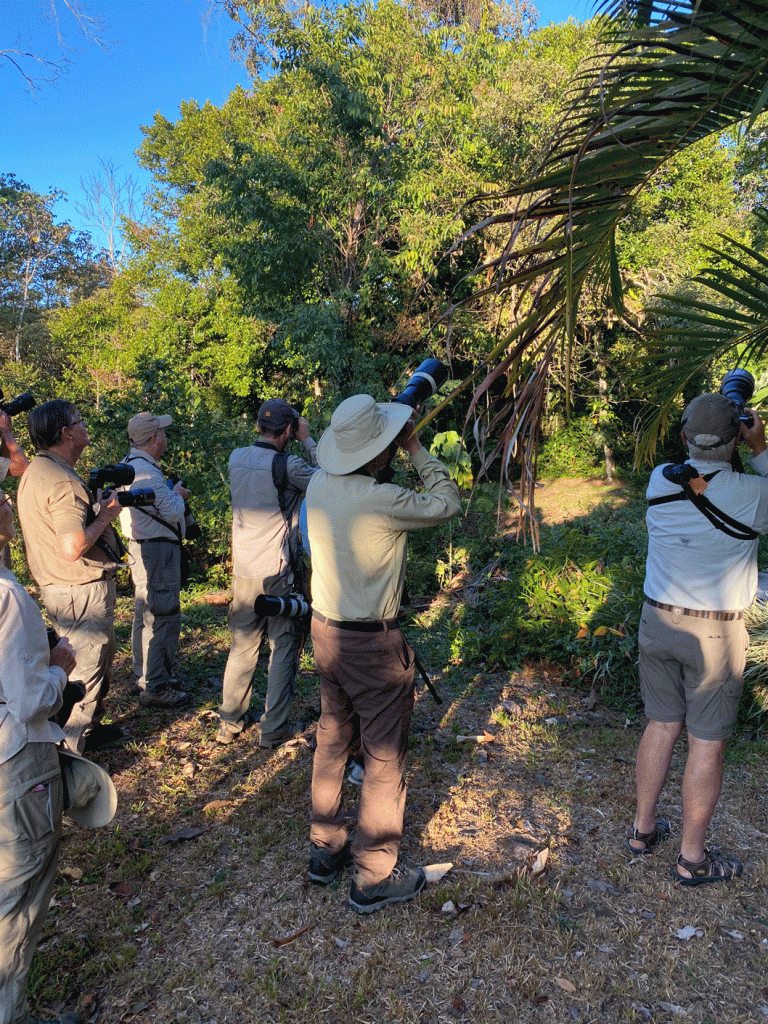
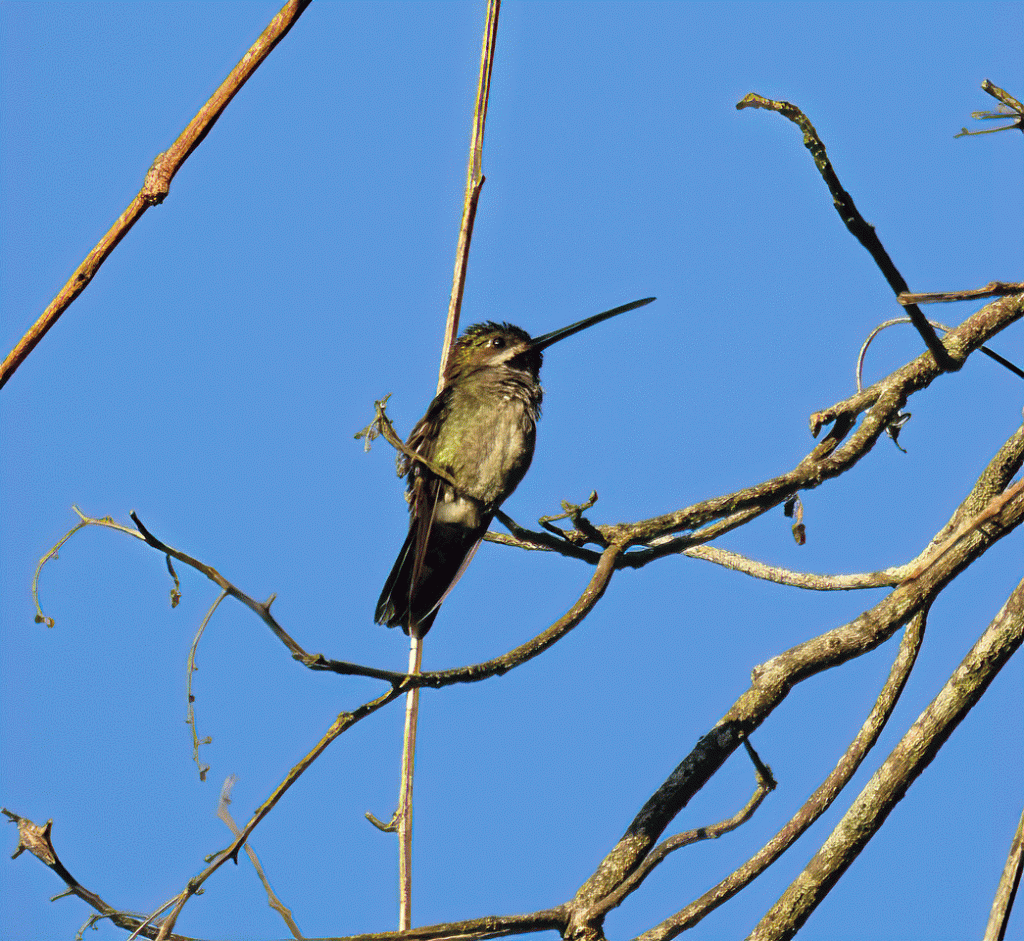
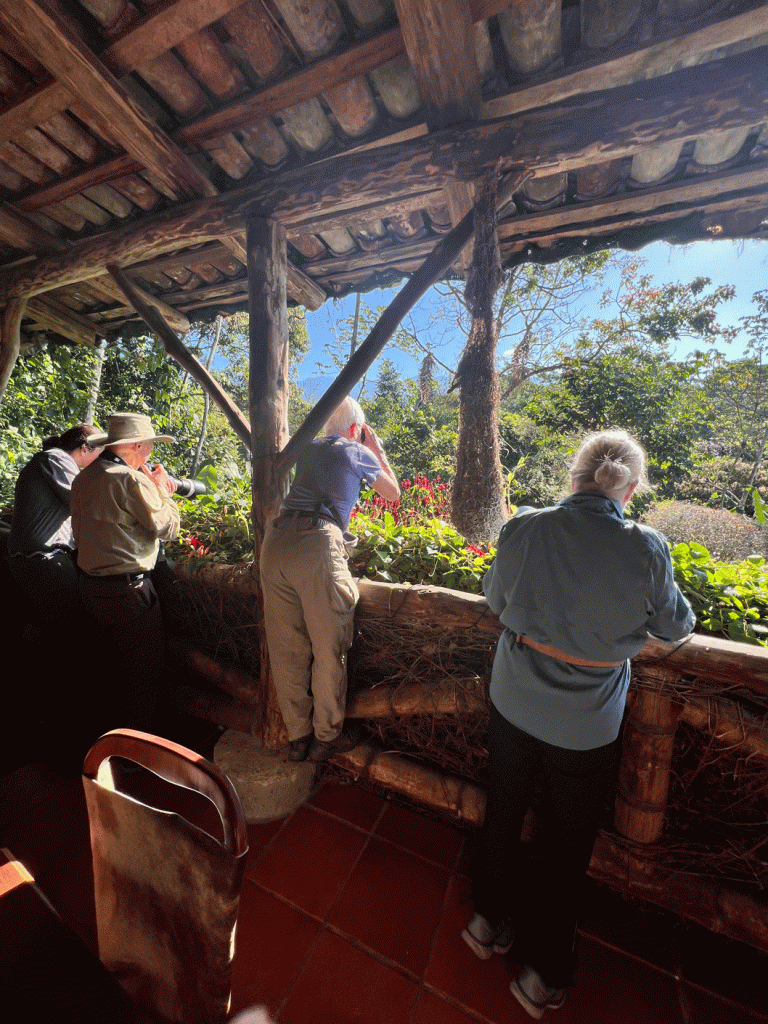
Perhaps the photographers were trying for a photo of a Long-billed Starthroat in the photo above.

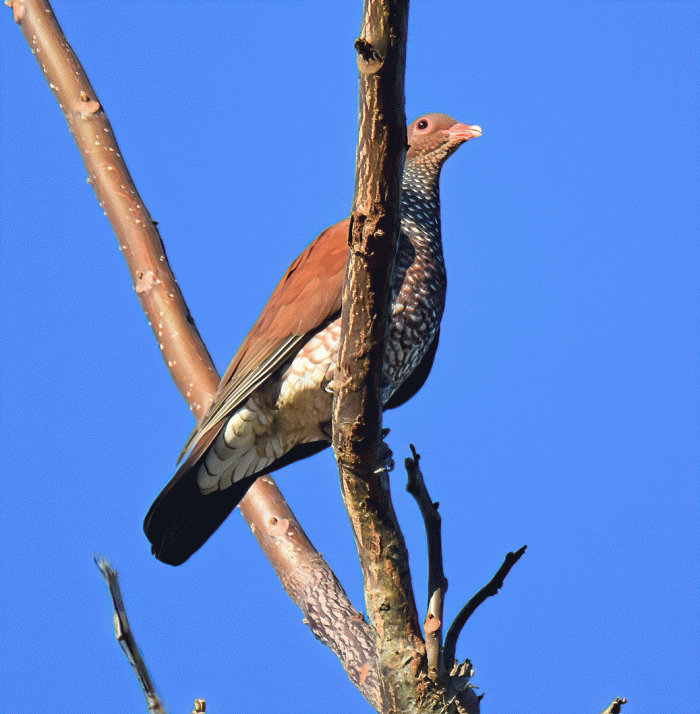
A couple of Scaled Pigeons were also nearby. Here’s one of them.

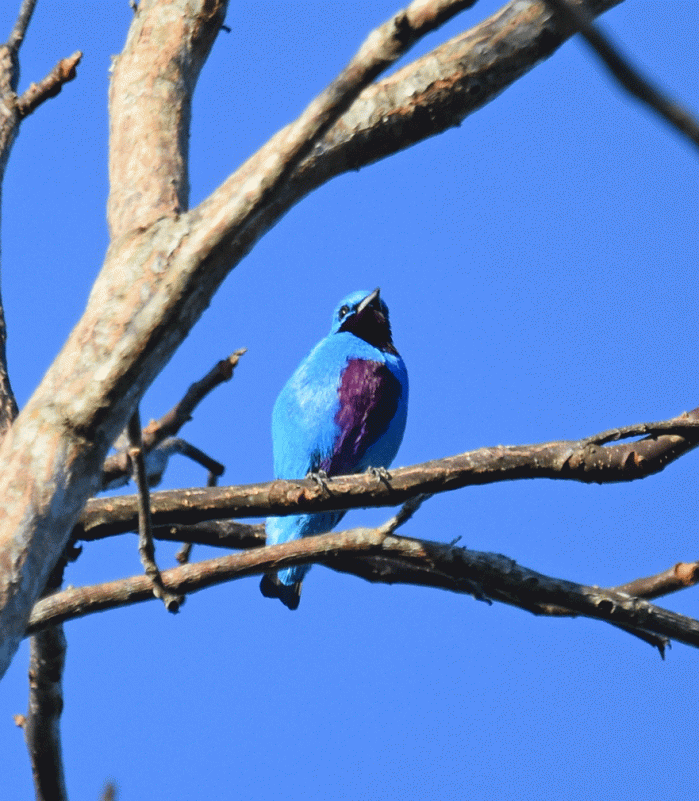
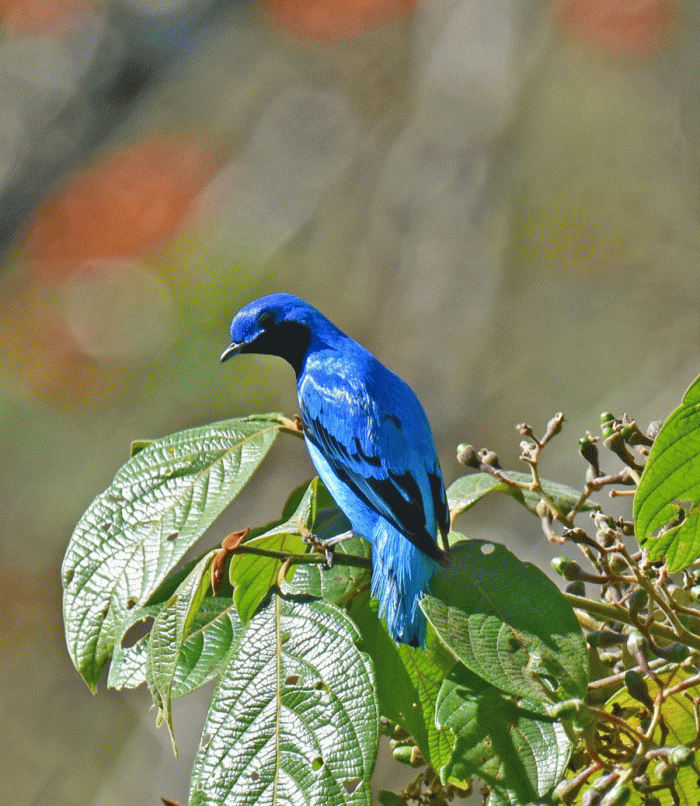
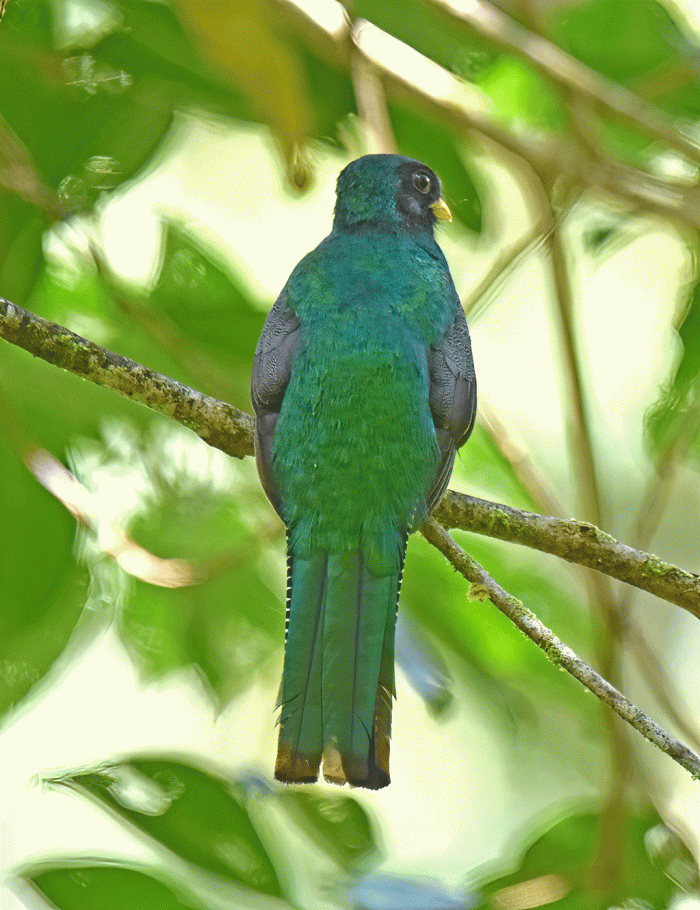
Also up in the treetops was a Turquoise Cotinga.

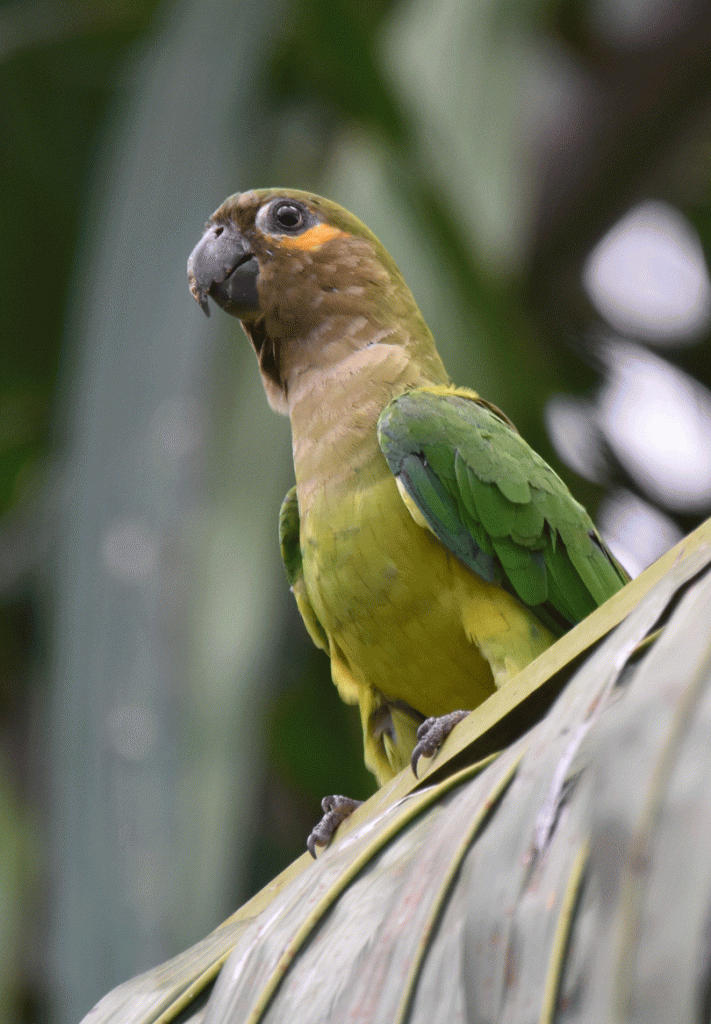
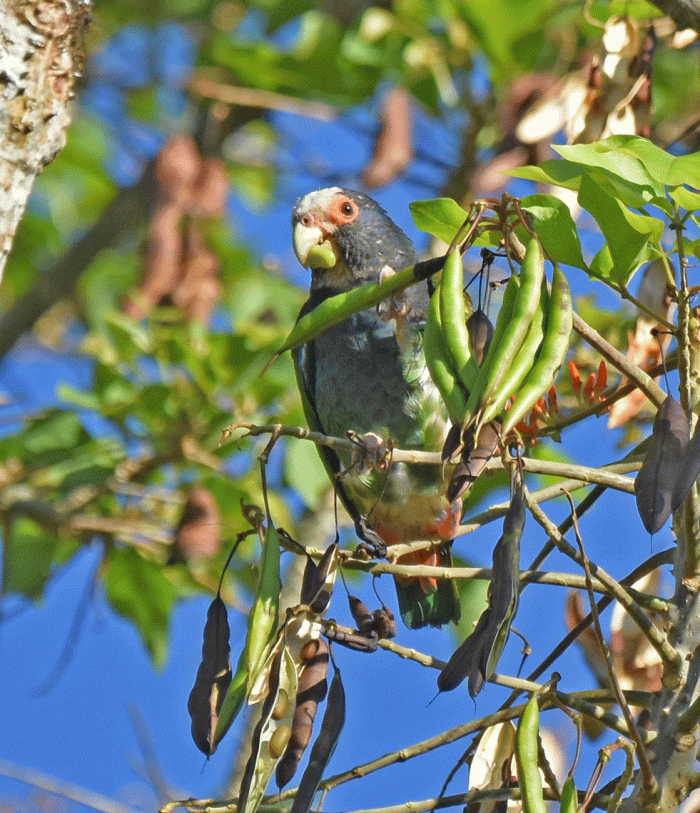
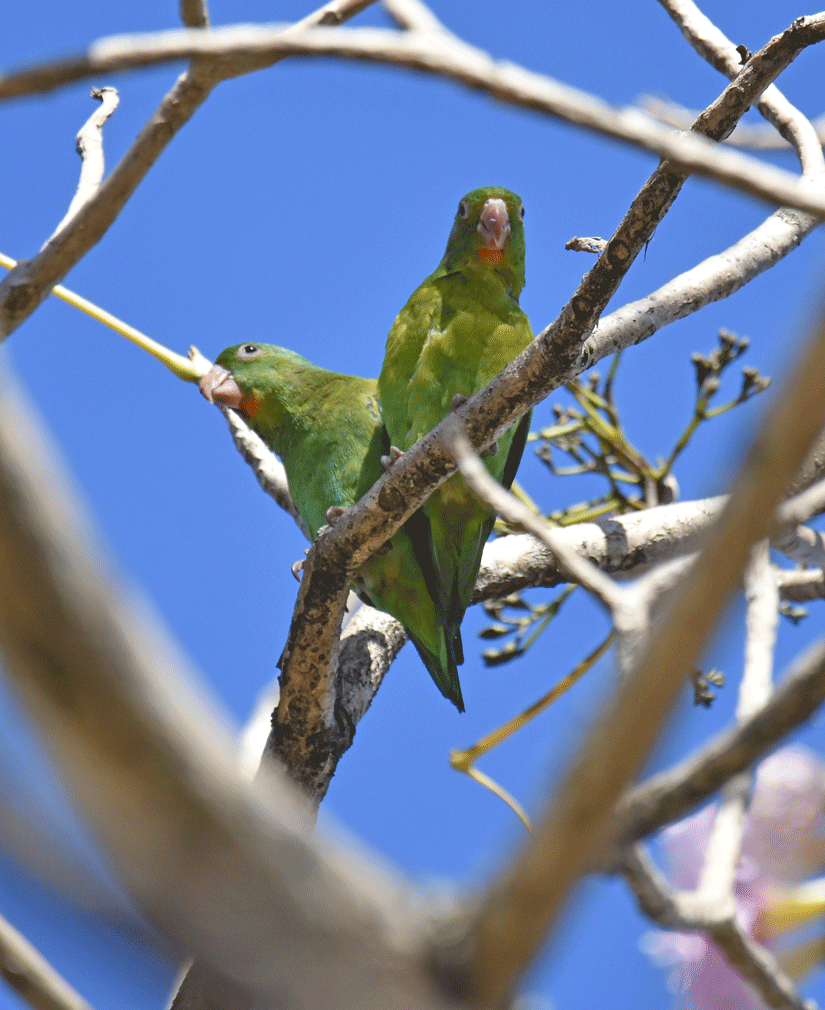
We had never seen a White-crowned Parrot before coming here, although they are fairly common in the lowlands and middle elevations of Costa Rica.

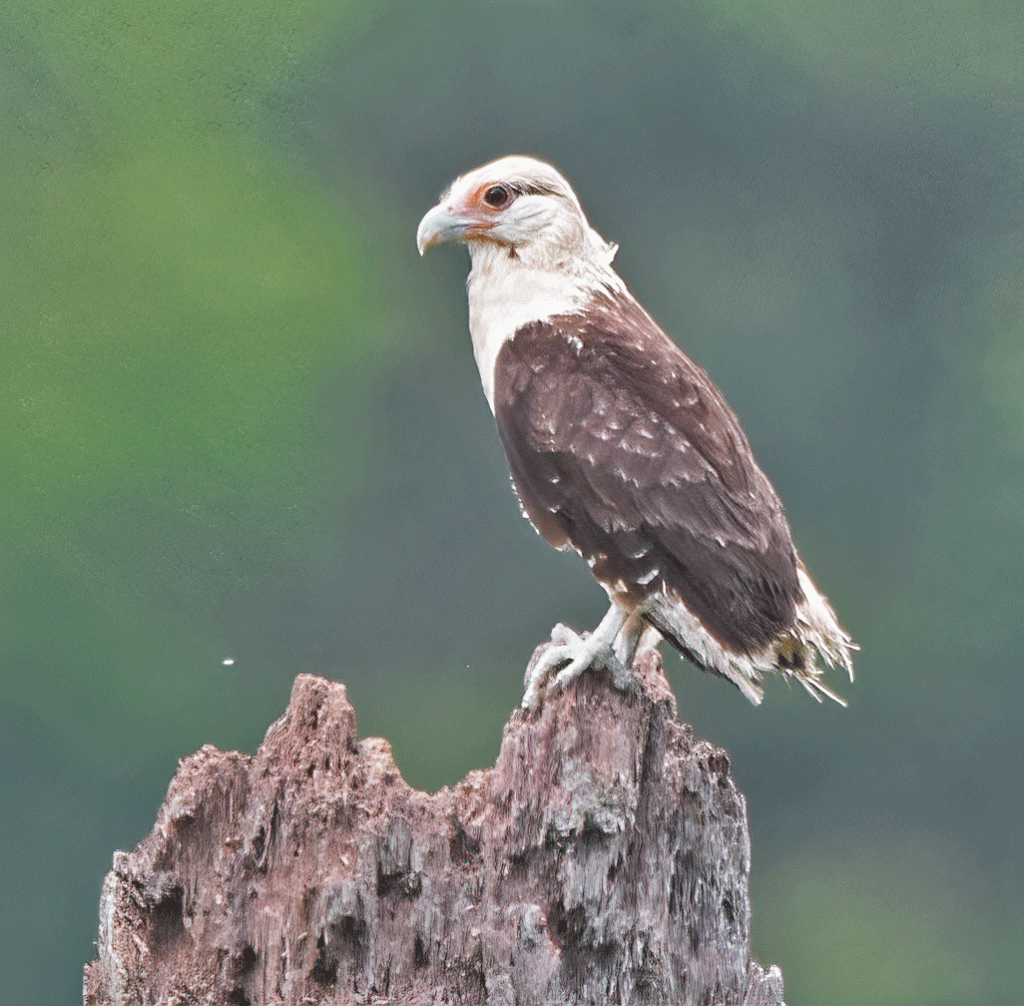
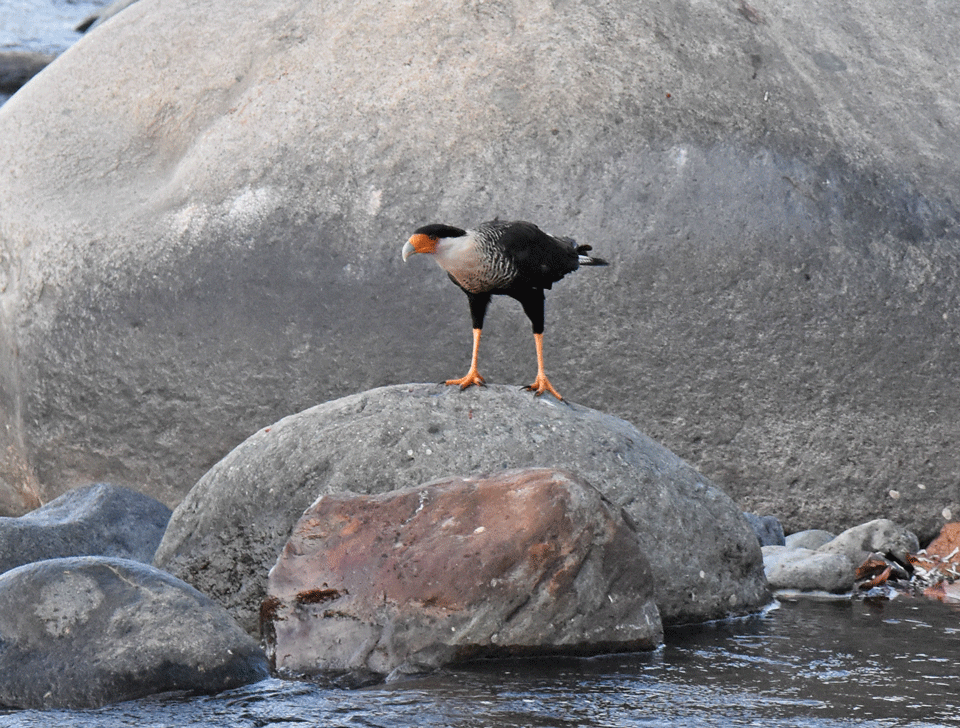
Talari Mountain Lodge is on the Rio General, so we could look down at the riverbank. Here is a Crested Caracara. It was competing with a Black Vulture for some sort of prey and at this moment, the vulture was the one with the food.

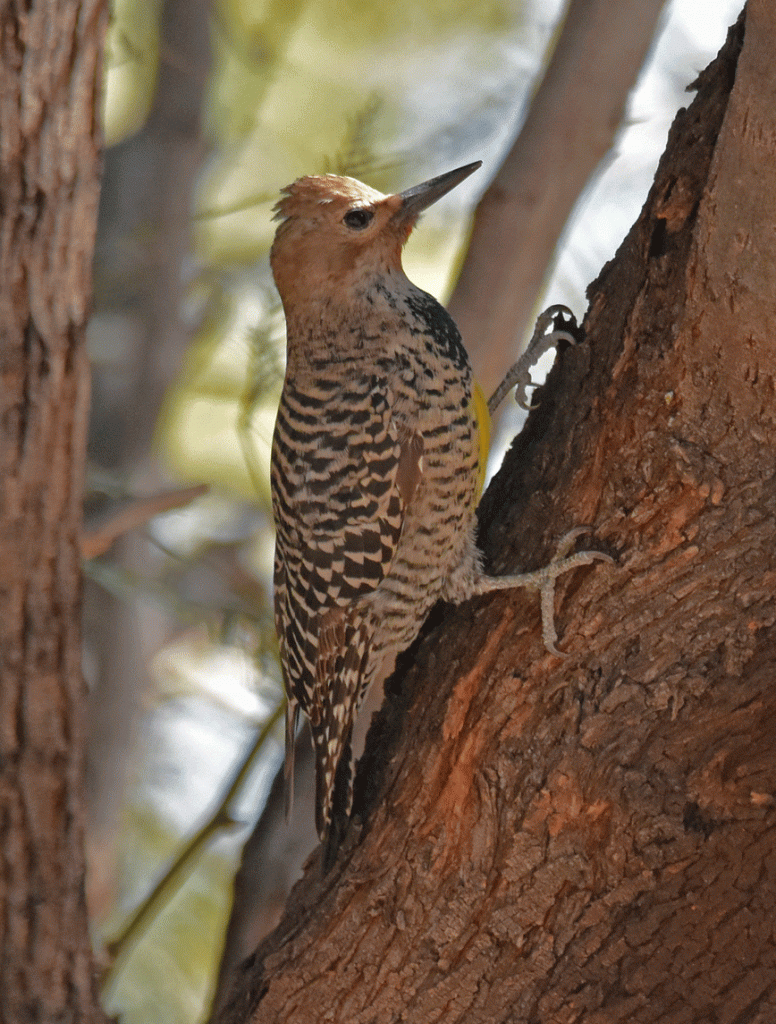
We found this Pale-billed Woodpecker in a tree near our cabins. It is similar in shape and size to the Pileated Woodpeckers that we have in Canada. Its distinguishing characteristics are its pale bill, its red head and the white “V” on its back.

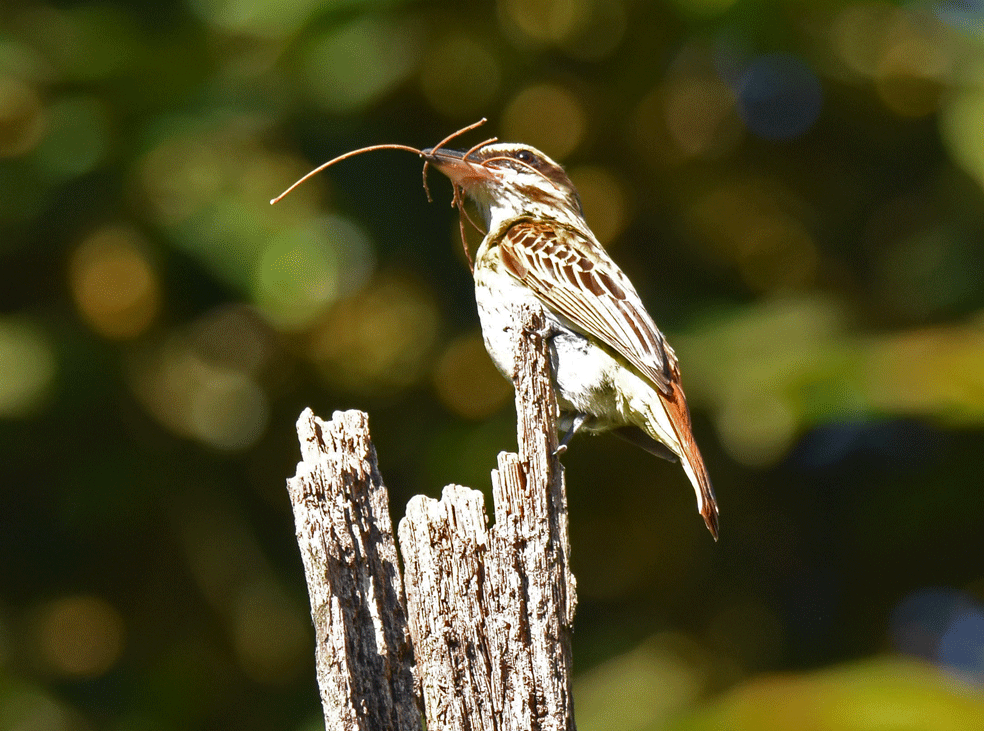
This Streaked Flycatcher was gathering nesting material.

The dining room was situated on a hillside that gave us views of the forest on two sides. We spent some time looking for hummingbirds in the flowering bush below, but only caught glimpses.

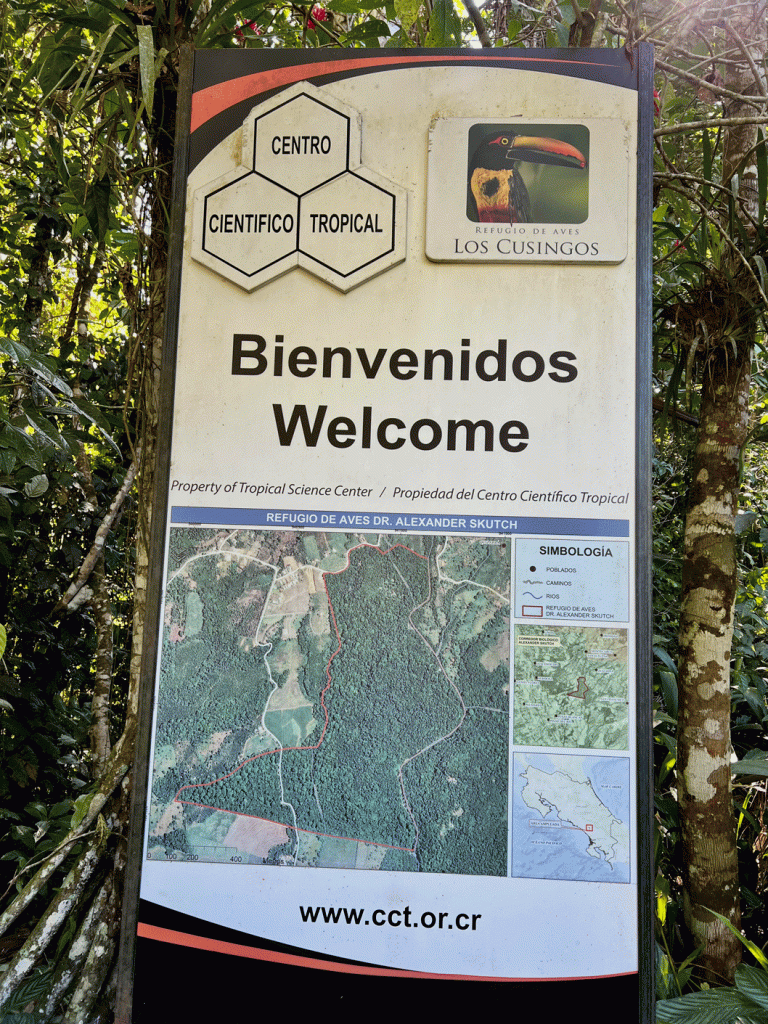
After breakfast on the first morning at Talari Mountain Lodge, our bus driver drove us a short ways to Los Cusingos Bird Refuge.

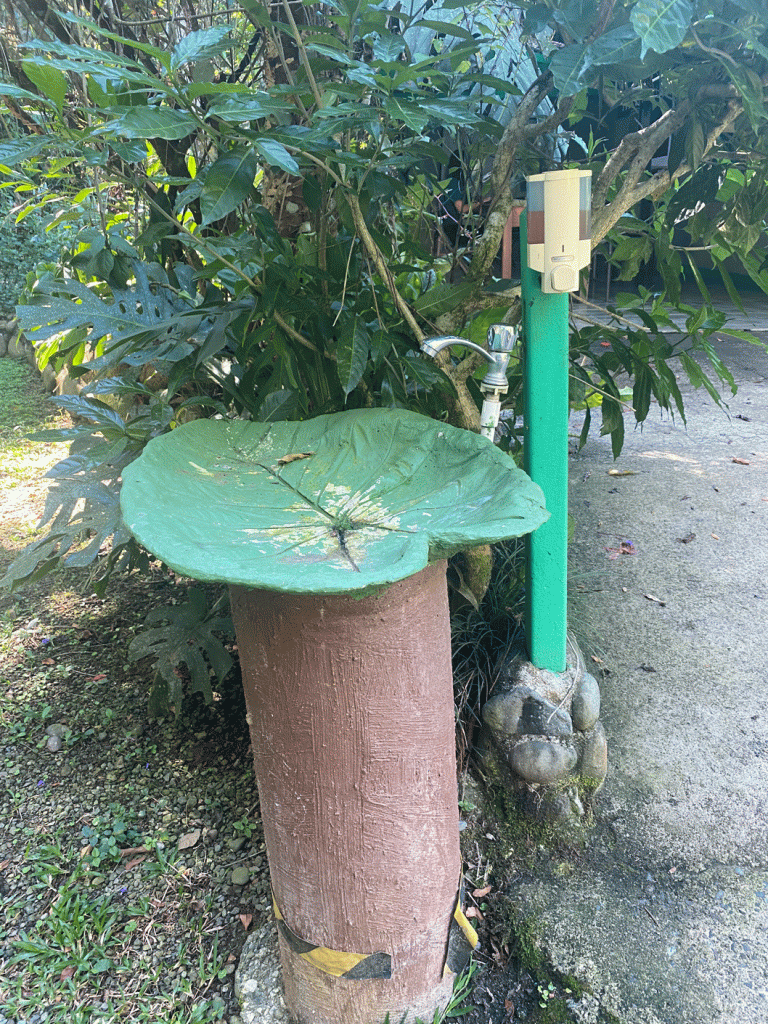
We saw outdoor hand-washing stations everywhere we went in Costa Rica. The one at the entrance to the refuge was unique.

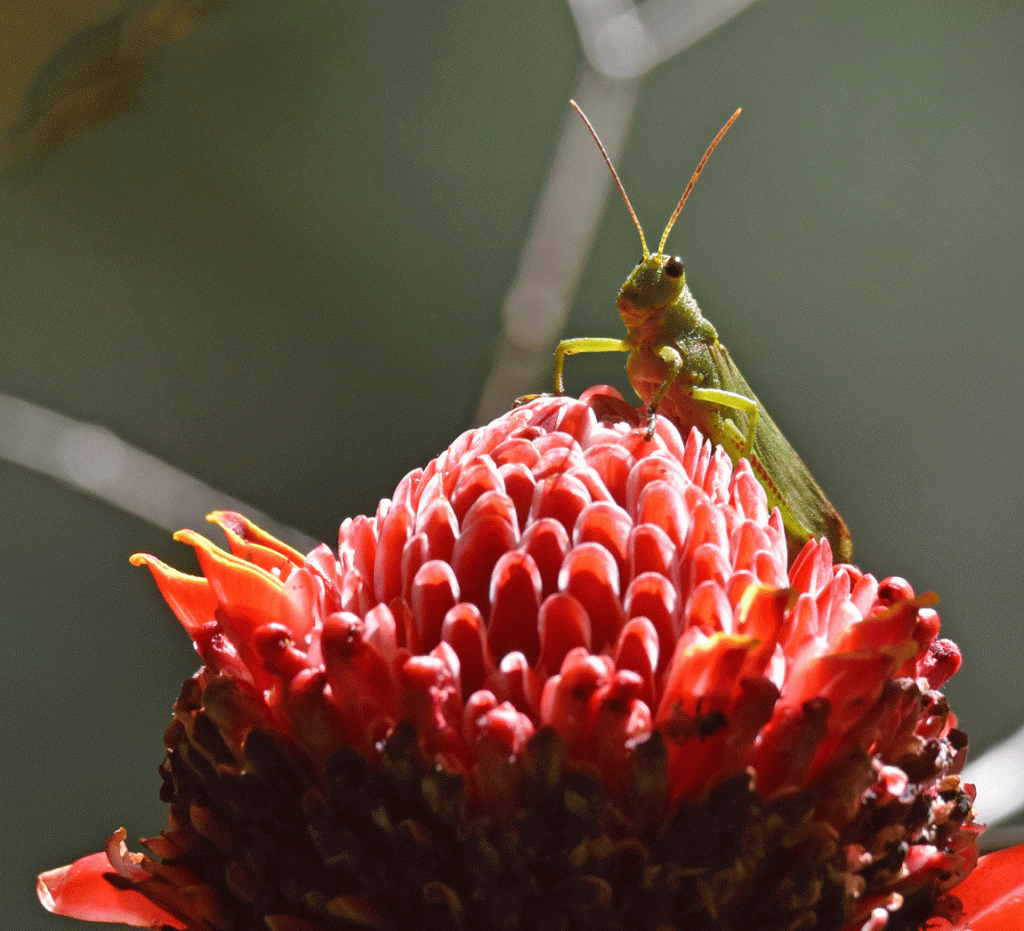
This morning, a grasshopper caught our attention.

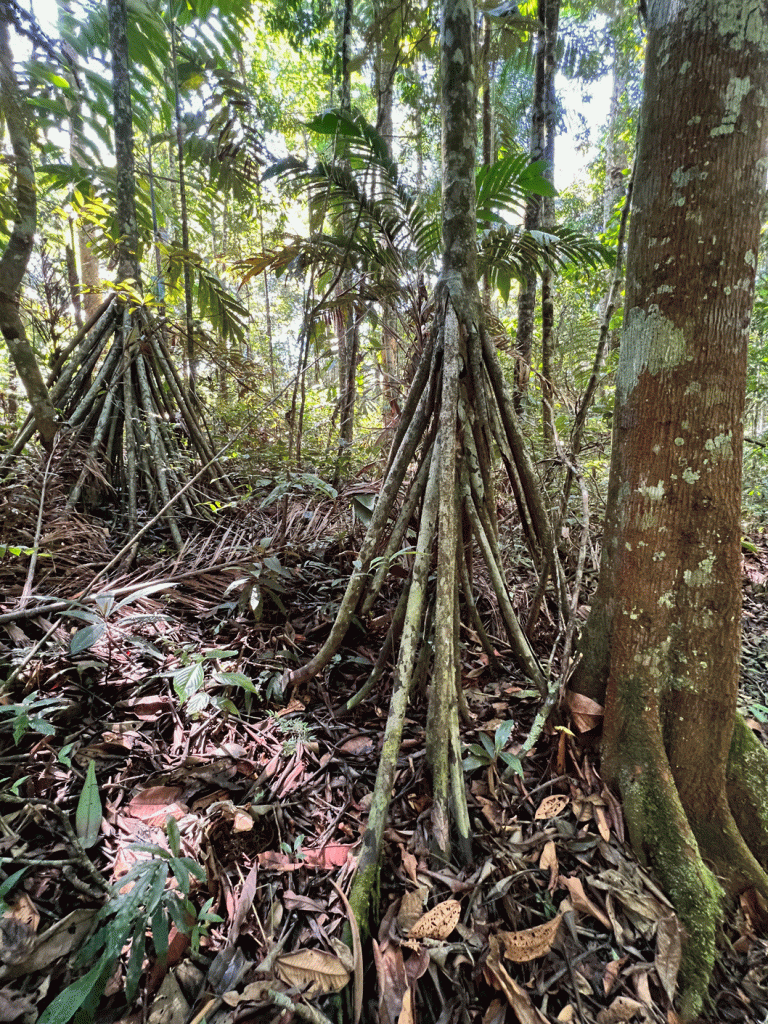
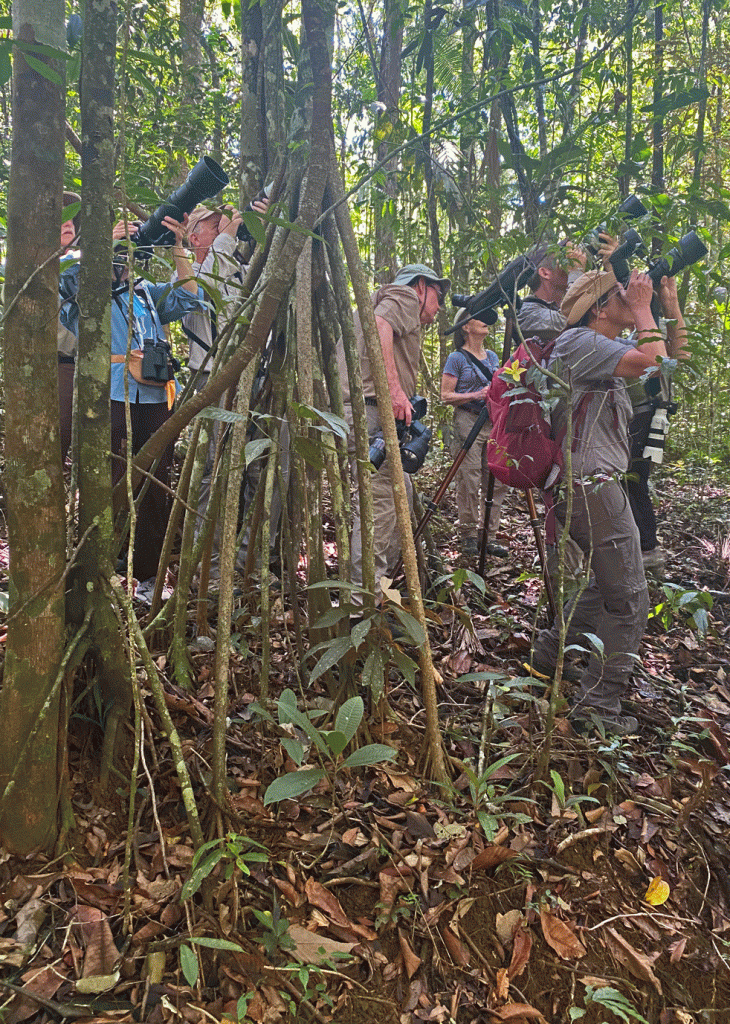
The forest at Los Cusingos was full of these peculiar-looking trees. They are Socratea exorrhiza, the walking palm or cashapona, and they have unusual stilt or buttress roots. The roots allow the tree to cover a wider area for collecting nutrients in the nutrient-poor tropical forest soil, and they prevent the tree from falling over.

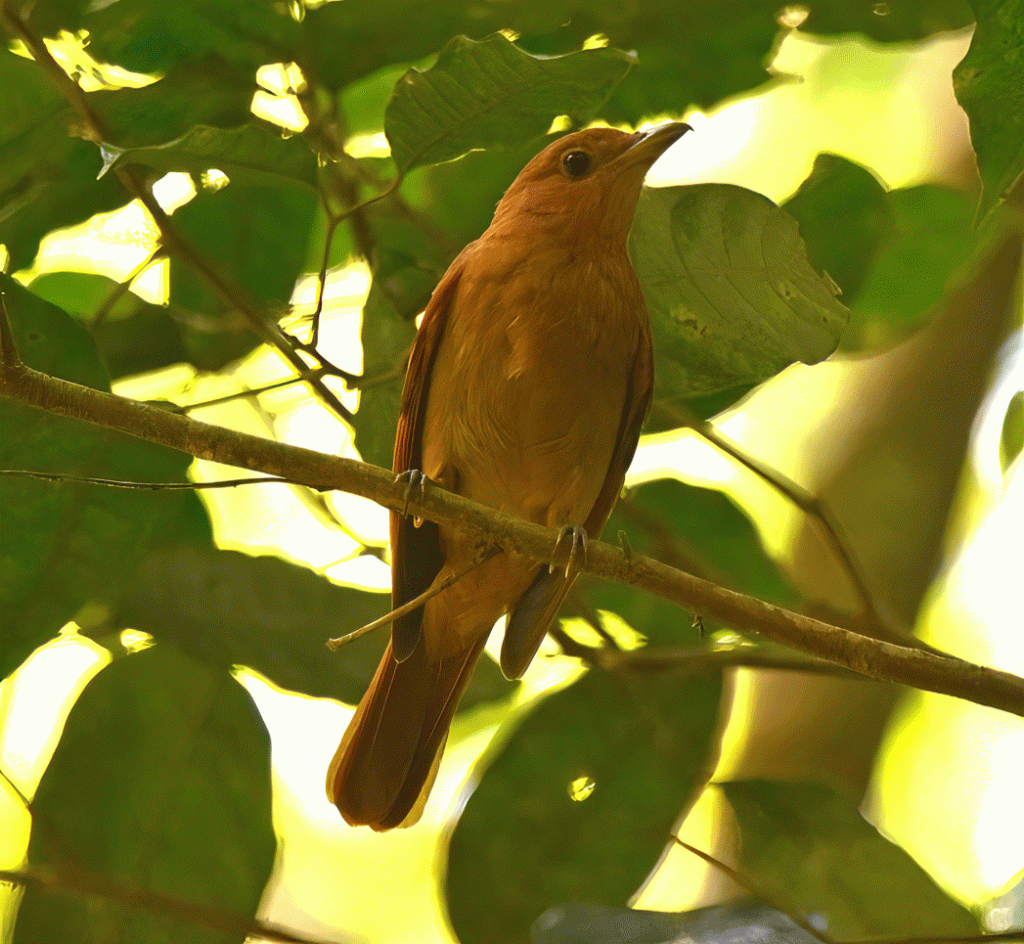
Near the canopy of the forest, our guide spotted this Rufous Piha. The piha is in the cotinga family.

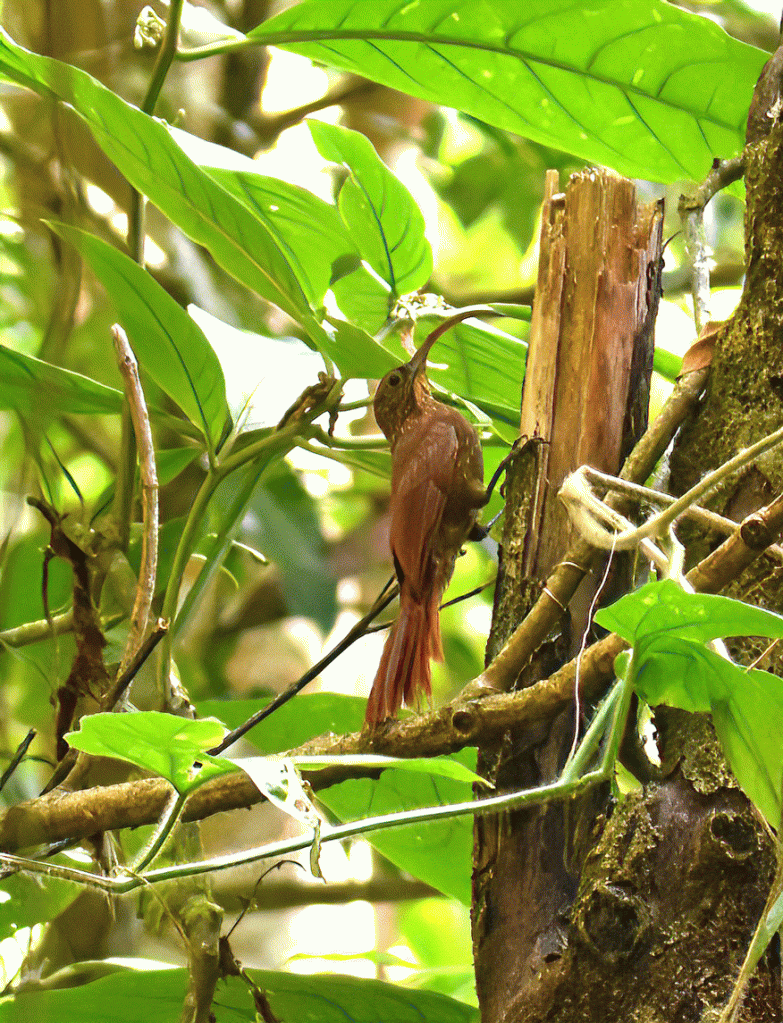
This Brown-billed Scythebill is a kind of woodcreeper, with a strongly decurved bill.

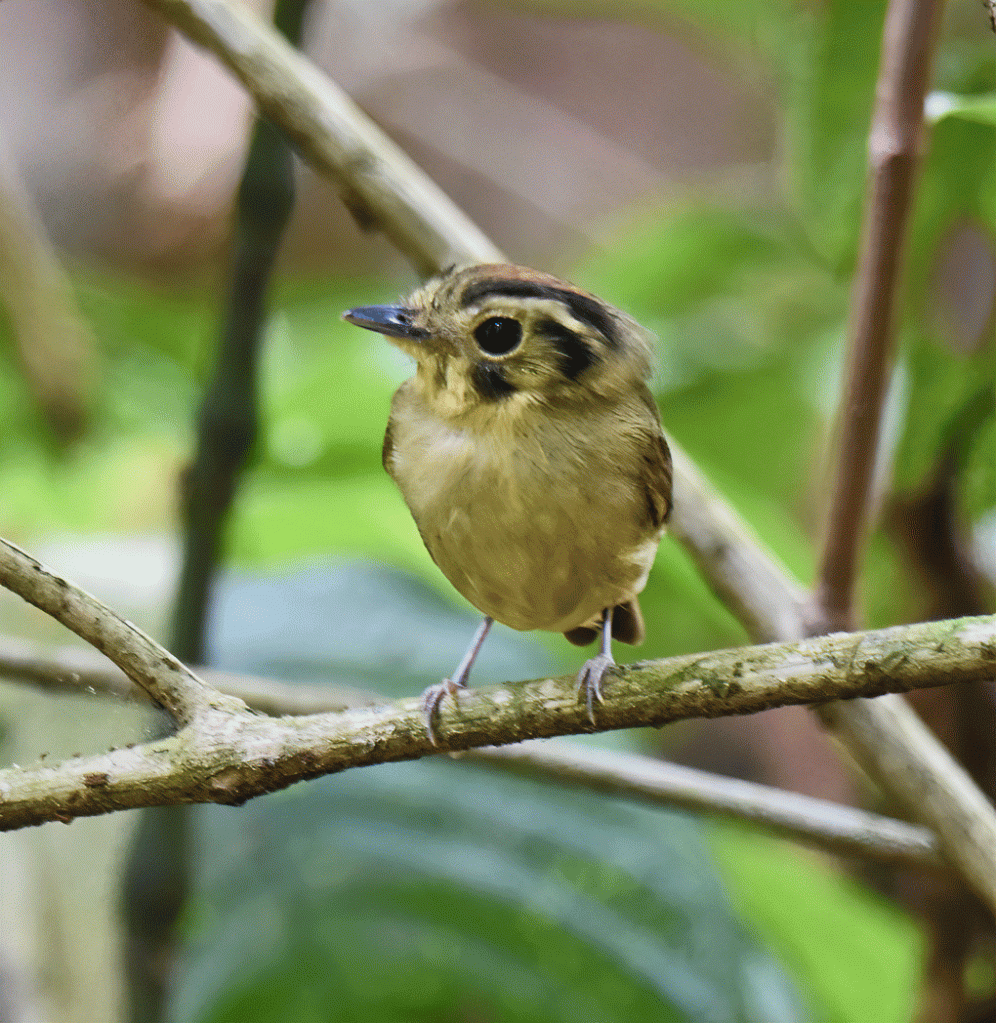
This Golden-crowned Spadebill also has a name derived by the shape of its bill. Its an uncommon flycatcher in Costa Rica, so we were lucky to see it.

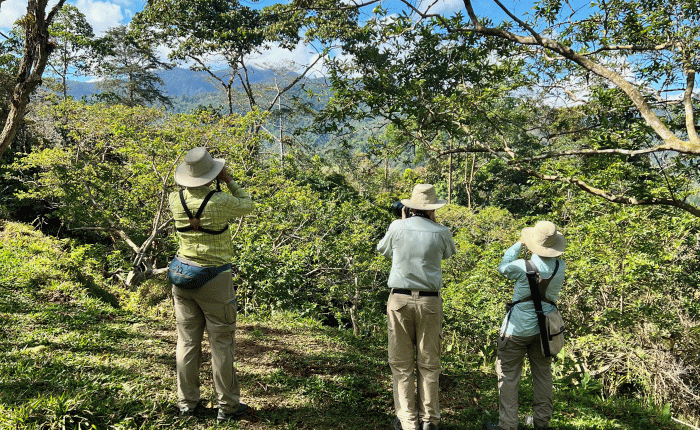
Here’s a photo of the group taking pictures of the Golden-crowned Spadebill. You can see how tricky it is to get a camera focussed on a small bird with so many trees and people nearby.

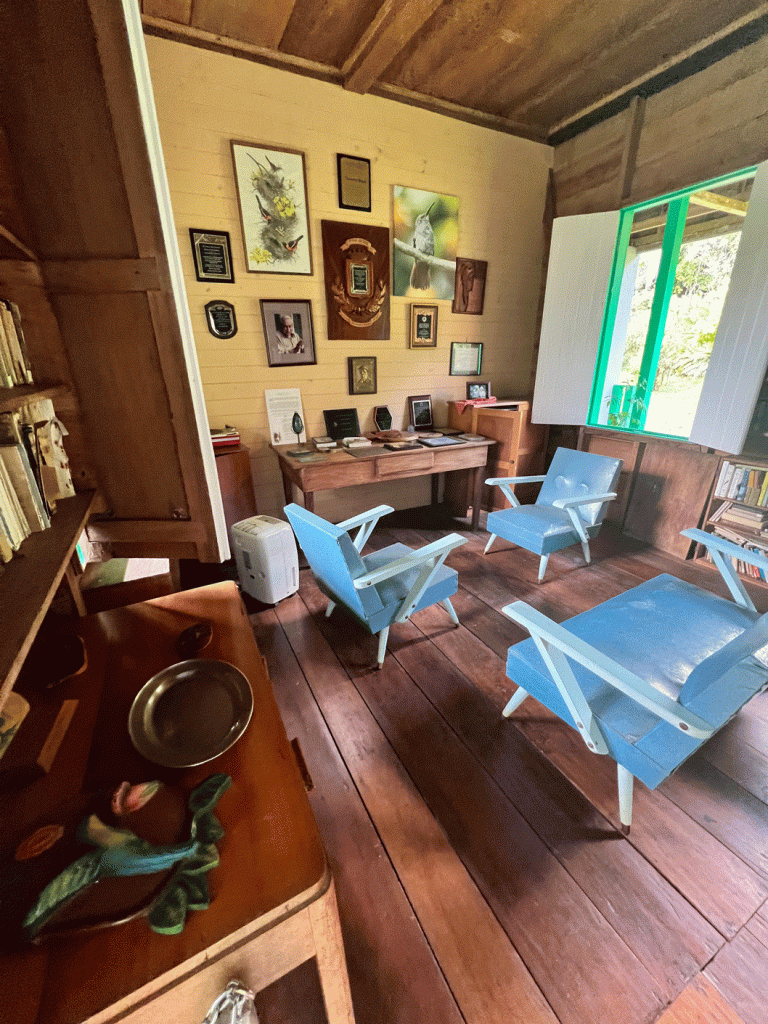
After our forest walk, we spent some time looking at the former home of Dr. Alexander Skutch, a pioneer researcher of neo-tropical birds. His whole 78 hectare (192 acre) tropical forest property has become a bird sanctuary and his home has become a museum.

The simple house was built in the 1940s and didn’t have running water until the 1990s. Dr. Skutch was almost 100 when he died in 2004. His house has been left the way it was when he died. There were bookshelves in almost every room.

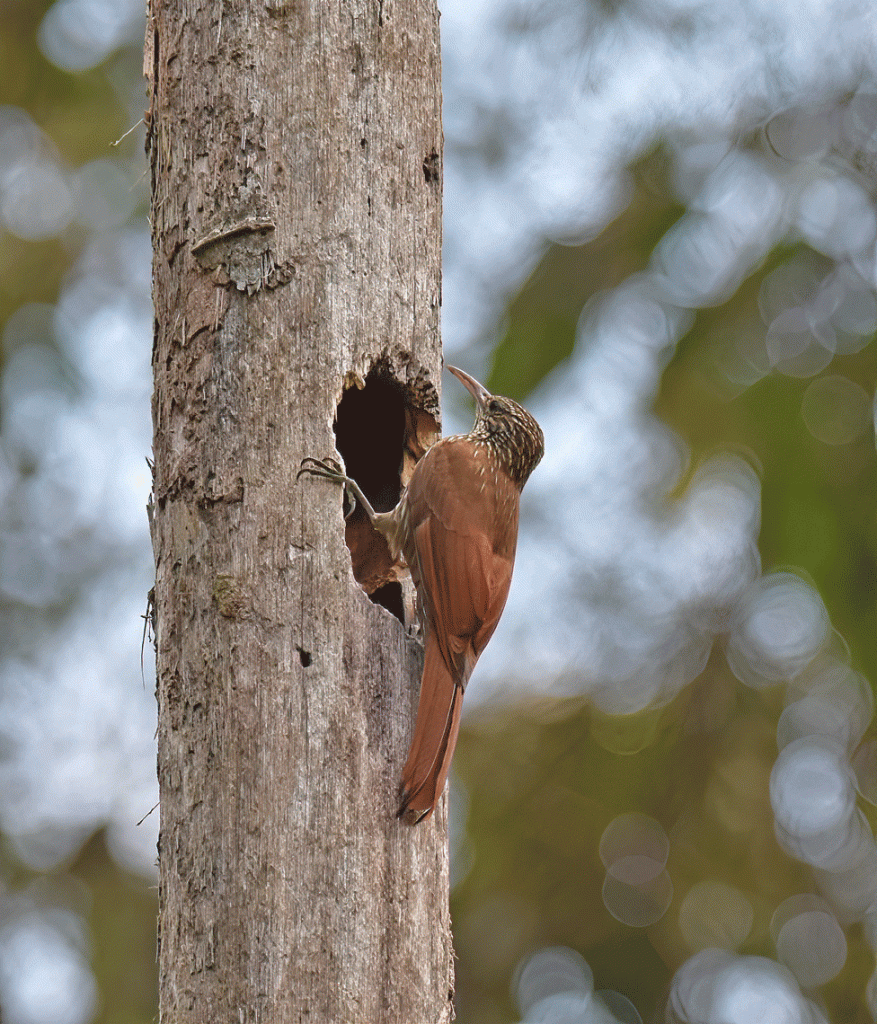
Near the back of the house, we noticed a Streak-headed Woodcreeper investigating an opening in a hollow tree.

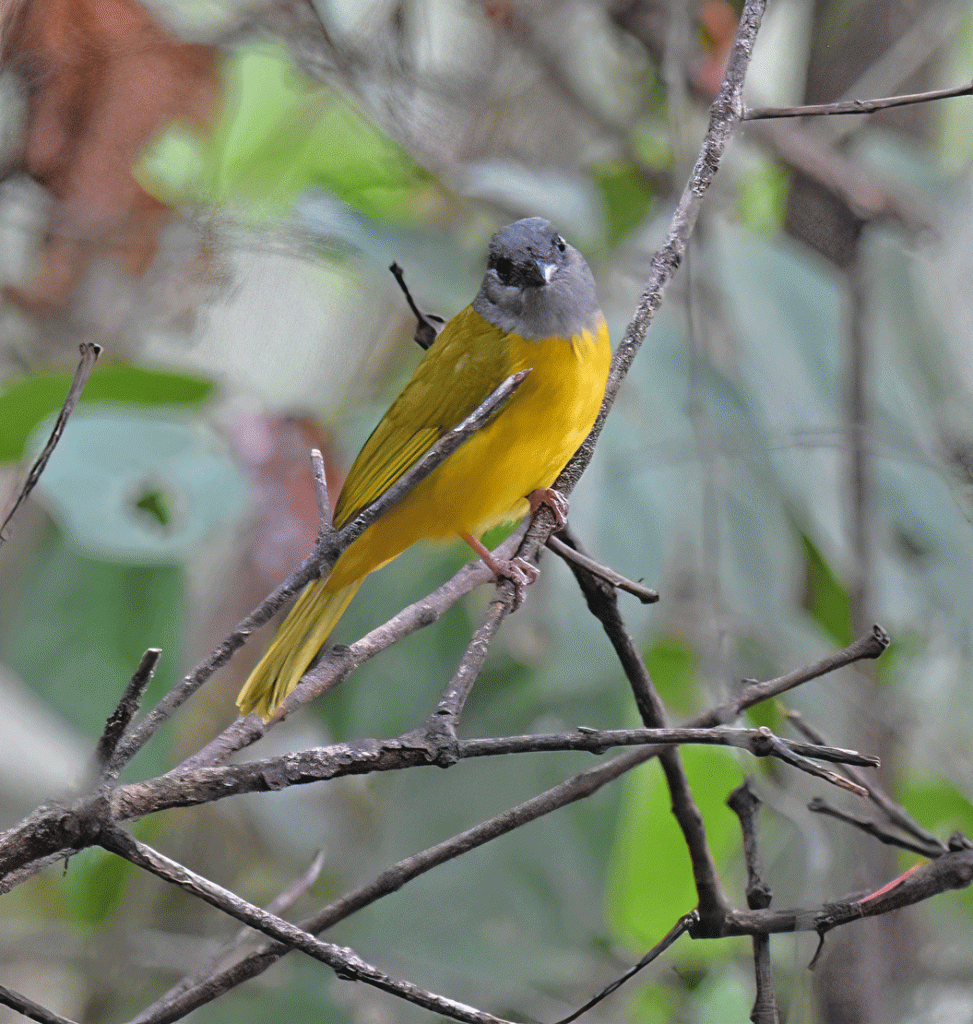
This Grey-headed Tanager was in the front yard.

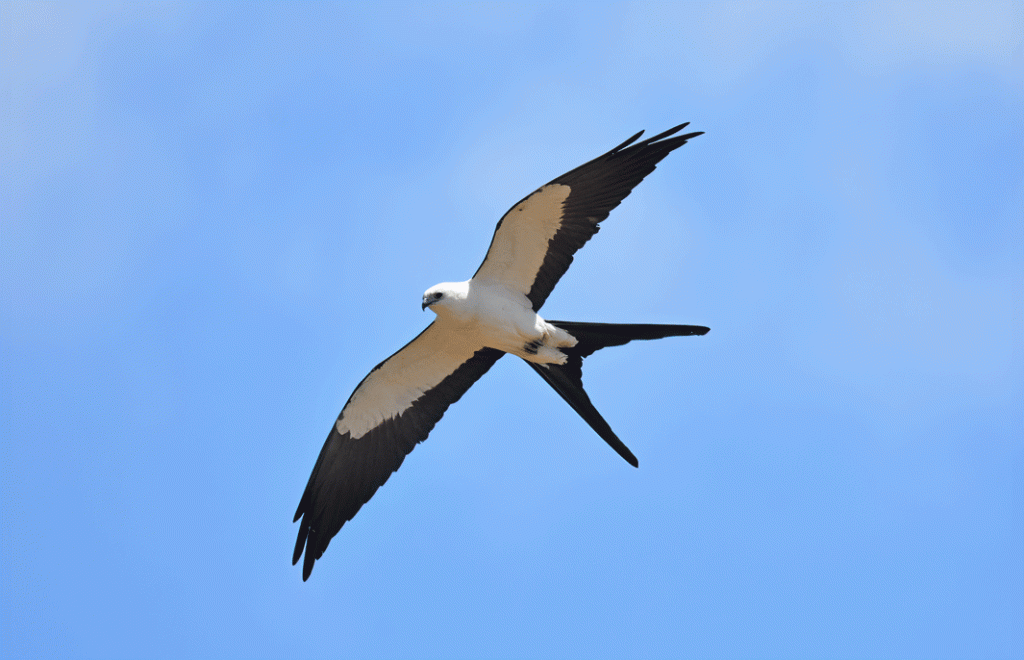
When we were working our way up the road towards the parking lot, we had a quick glimpse of a Swallow-tailed Kite. (This photo, however was taken the next day, when the bus stopped by the side of a road on our way to our next lodge.)

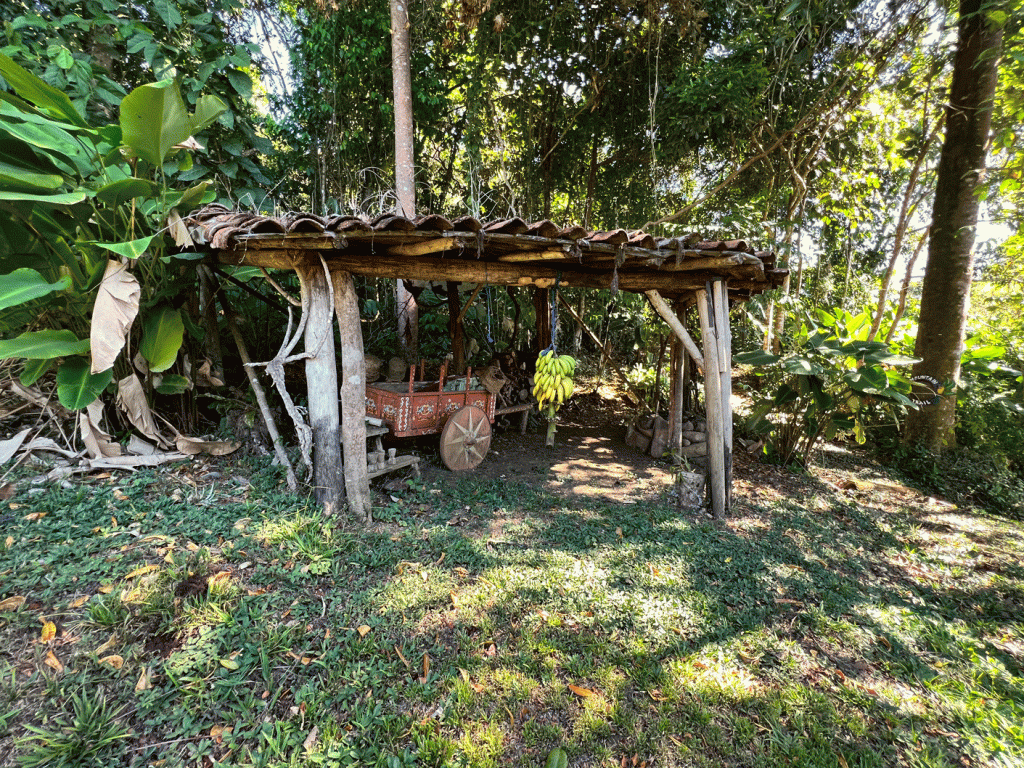
That afternoon we were back at Talari Mountain Lodge, and went up the mountain trail that starts right beside this shed with a old sugar cane cart.

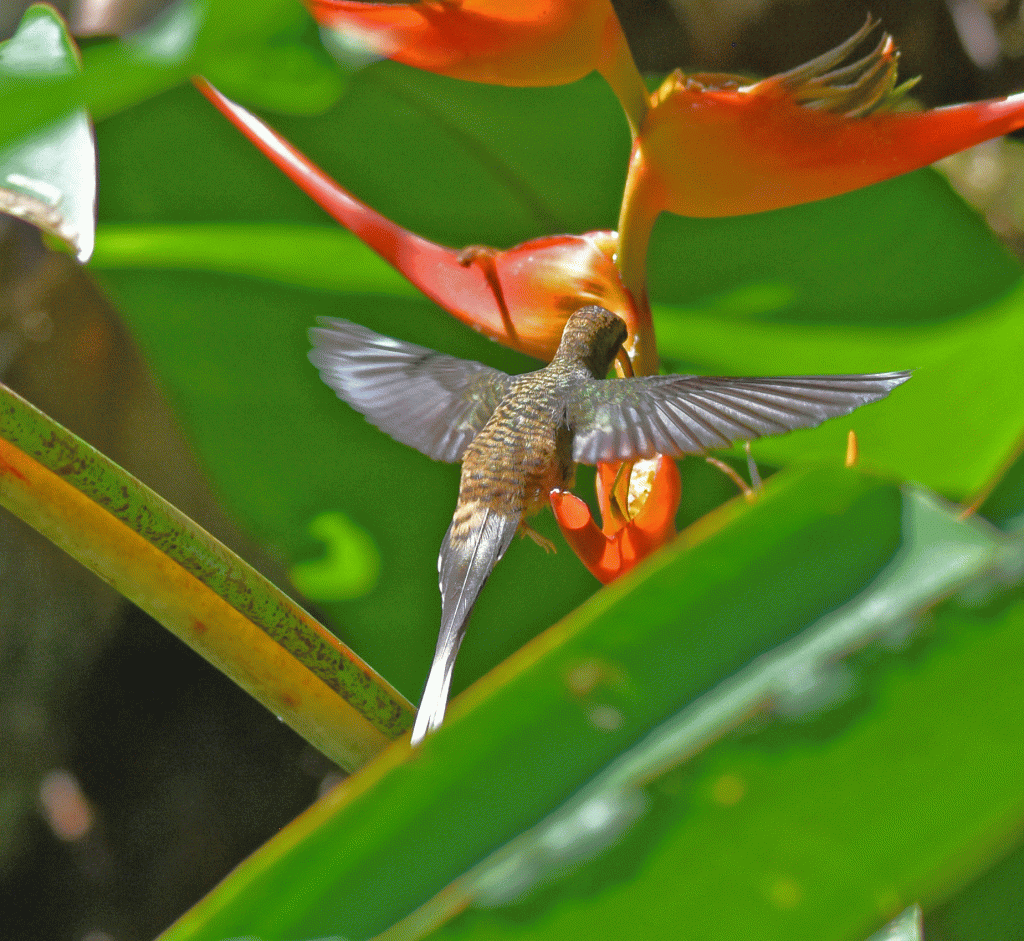
We saw Heliconia plants in many place in Costa Rica. Heliconia rostrate, the hanging lobster claw or false bird of paradise is a perennial plant native to Costa Rica and is also found in parts of South America.

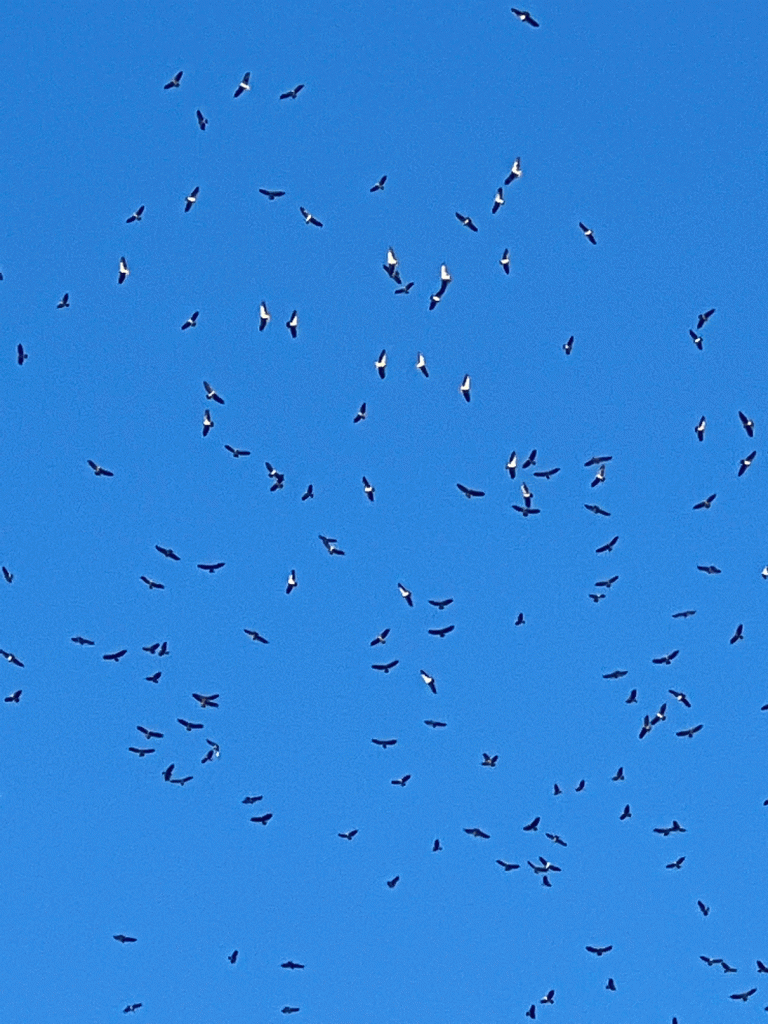
Towards the end of our birding hike in the afternoon, we noticed a number of hawks high in the sky. Soon the sky was filled with thousands of Swainson’s Hawks migrating north from their winter homes in South America. There must have been a thermal above the lodge, because the hawks circled around for several minutes before heading north. The photo below only captures a fraction of the sky.

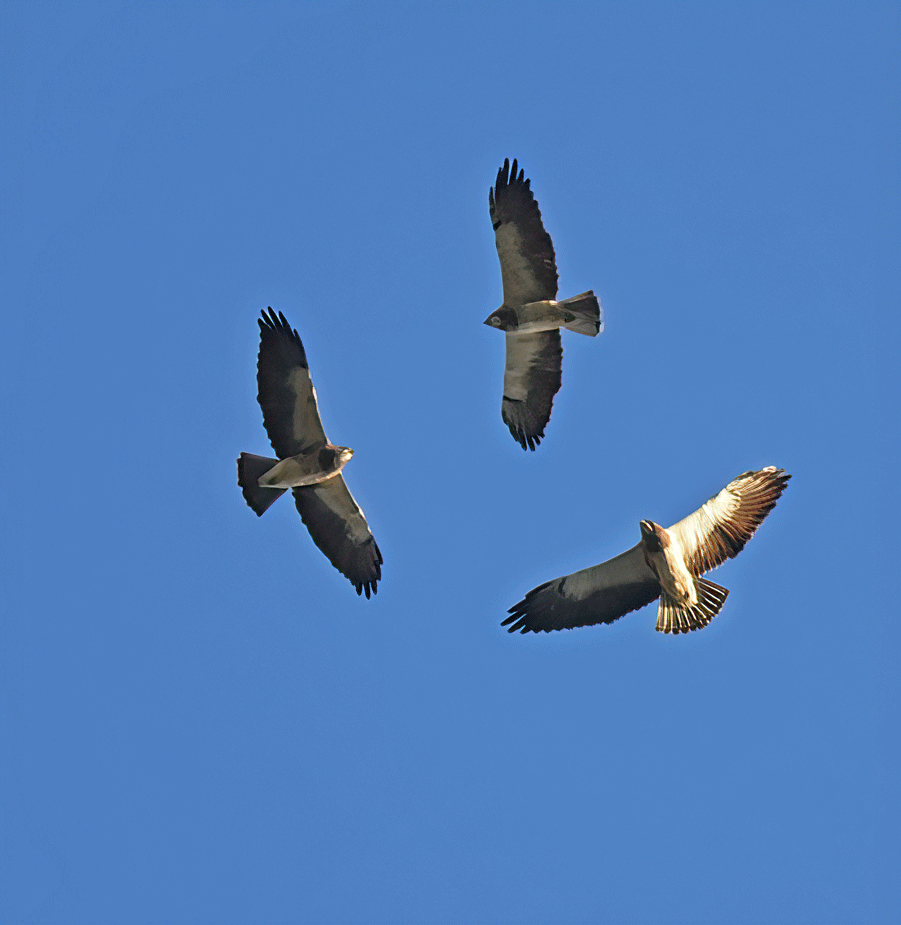
Here are three of the hawks from a cropped and enhanced photo that Doug took. These are all showing “light adult” plumage.

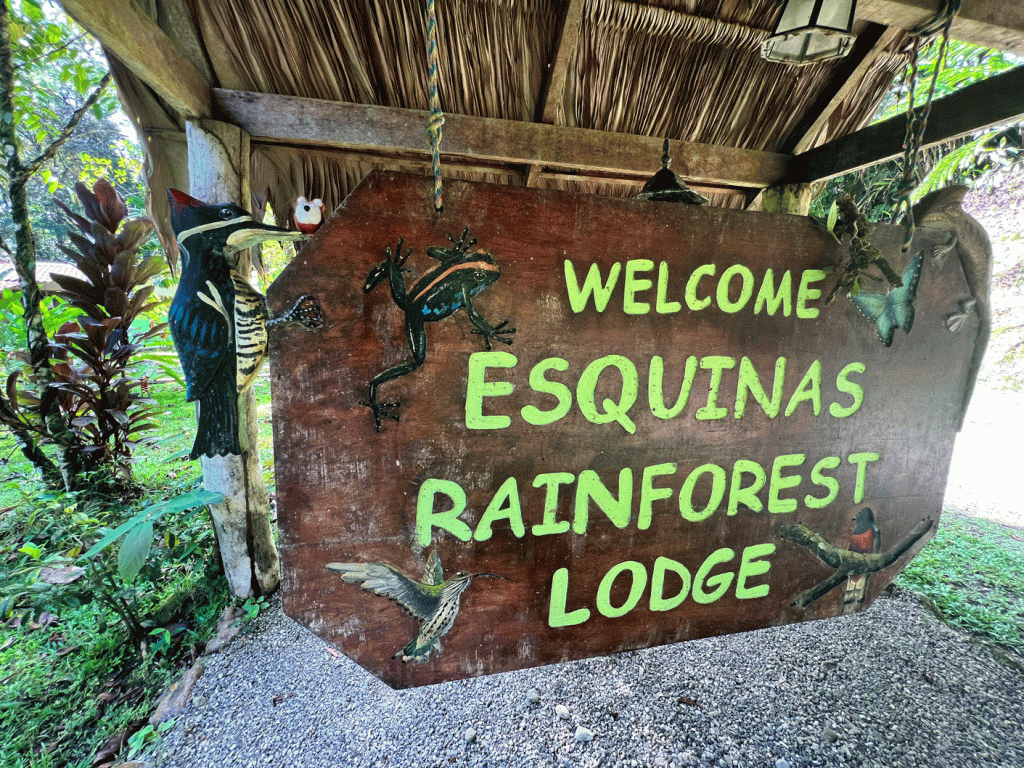
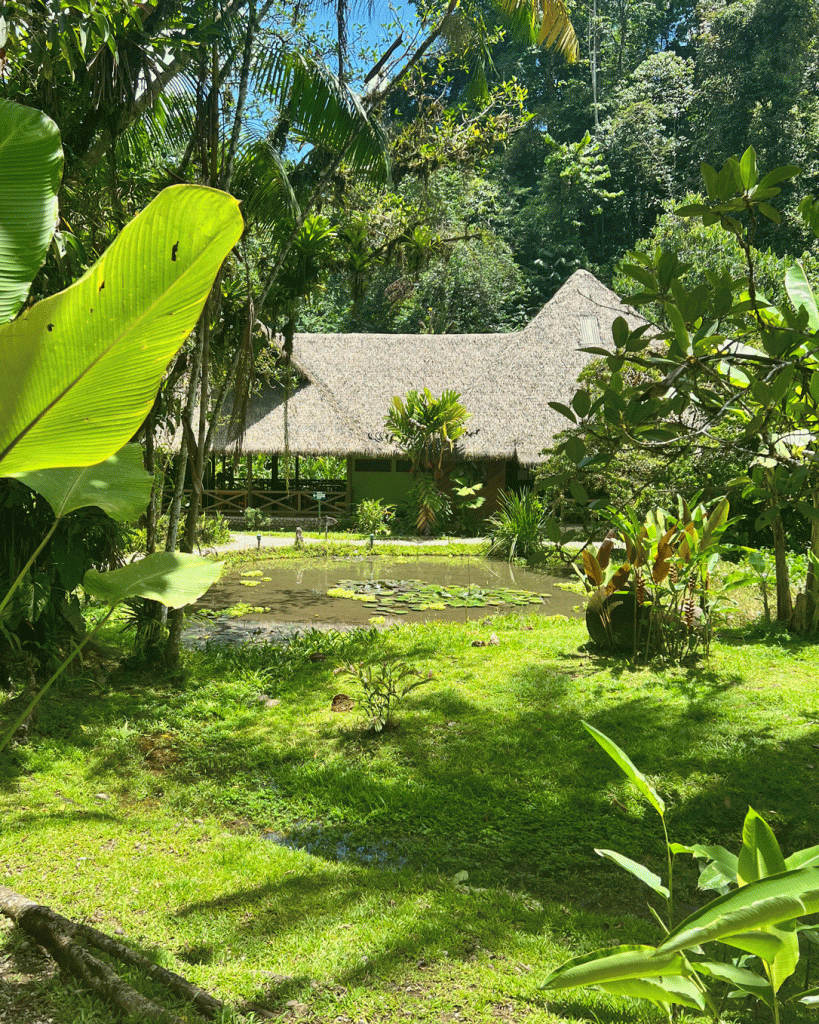
We headed to Esquinas Rainforest Lodge the next morning, which will be the topic of our next blog.

Costa Rica in March – Part 3

Costa Rica in March – Part 3

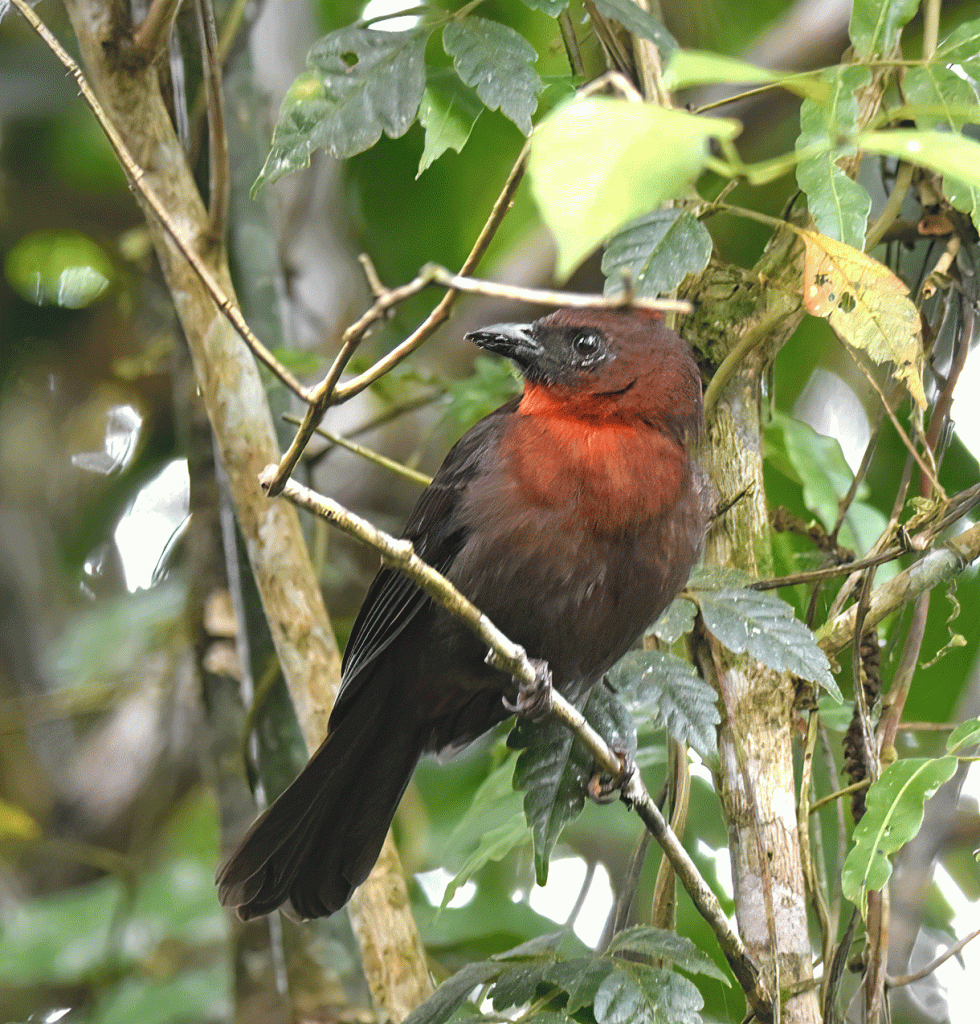
This post includes our bird-watching activities on the two days that we stayed at Trogon Lodge in Costa Rica. The first bird photograph, however, is from our final morning at Rancho Naturalista. We went birding by ourselves and this Red-throated Ant-Tanager perched in good light.

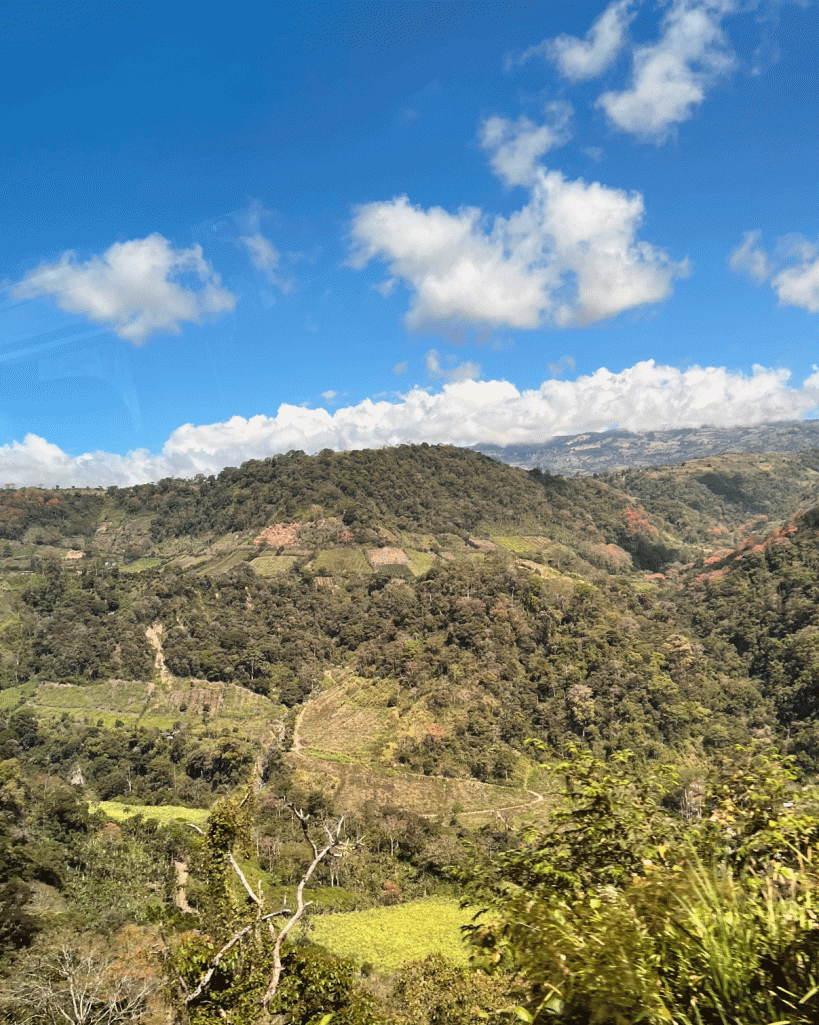
This is a view of the hilly countryside in the Reventazon Valley, taken out of the bus window.

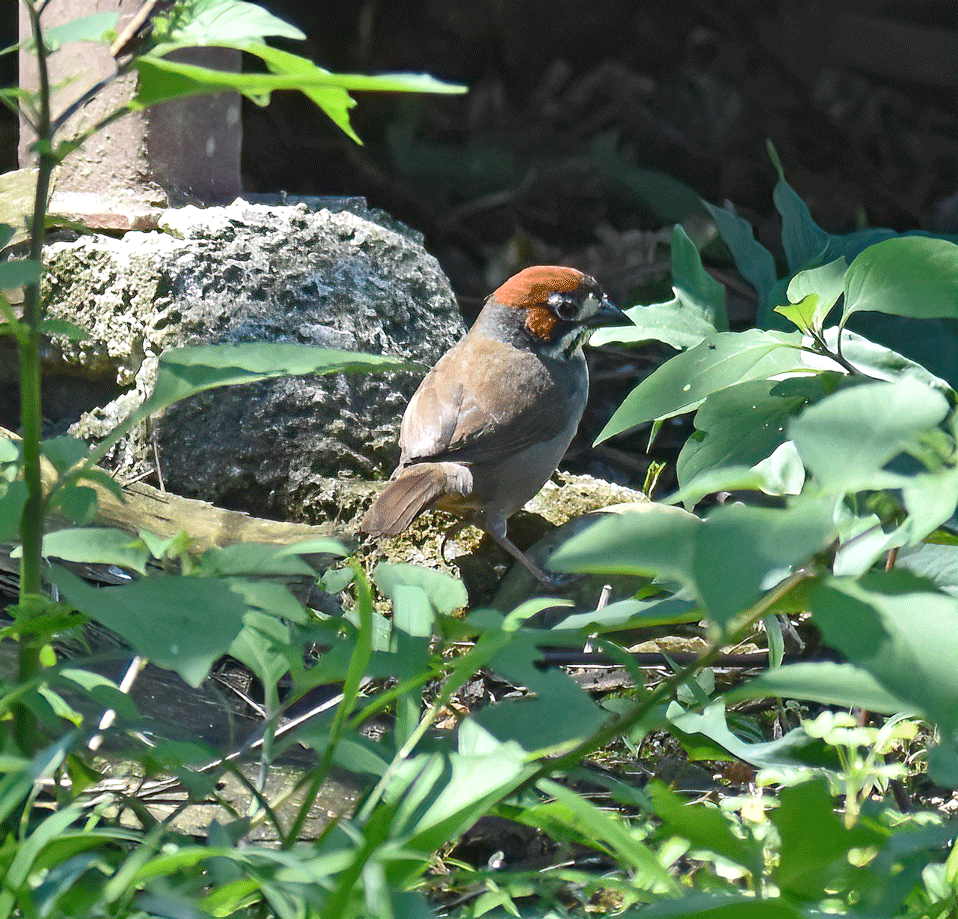
We drove to the town of Ujarras, one of the few places that a rare endemic ground-sparrow is found. We wandered down a country road and before long, a couple of the Cabanis’s Ground-Sparrows were seen hopping around a small yard.

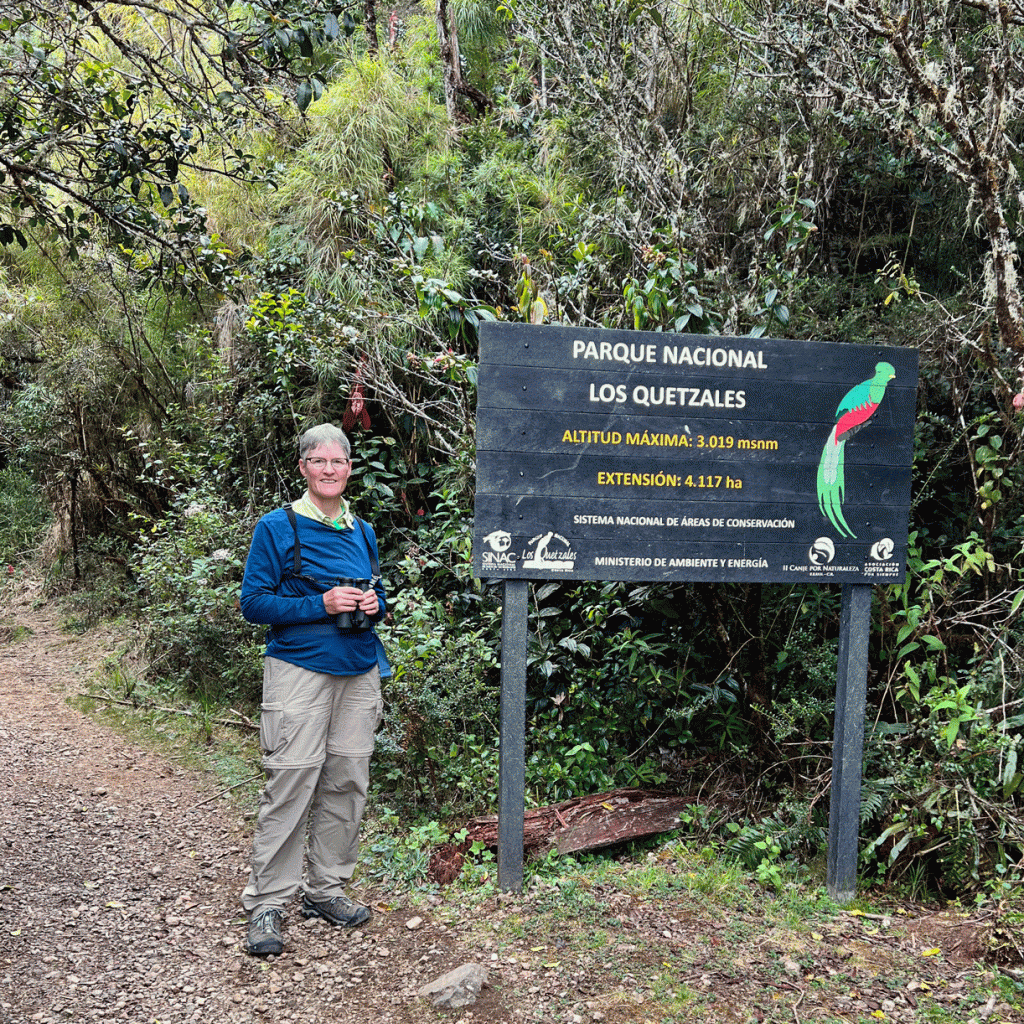
We continued on our route to our next lodge in the Talamanca Highlands, stopping at a few spots to look for birds. One stop was in Los Quetzales National Park. The Resplendent Quetzal was the main draw of the area, but we didn’t see any this day.

The quetzal was promised for the day after, so we enjoyed looking for other high elevation birds. Mostly, the birds were hard to photograph, but Doug was able to catch this Yellow-thighed Brushfinch before it flew away. Its yellow “thigh” is just visible on its right leg.

The road cut through steep forested terrain. The bus stopped for a few moments for us to get photos of the vista.

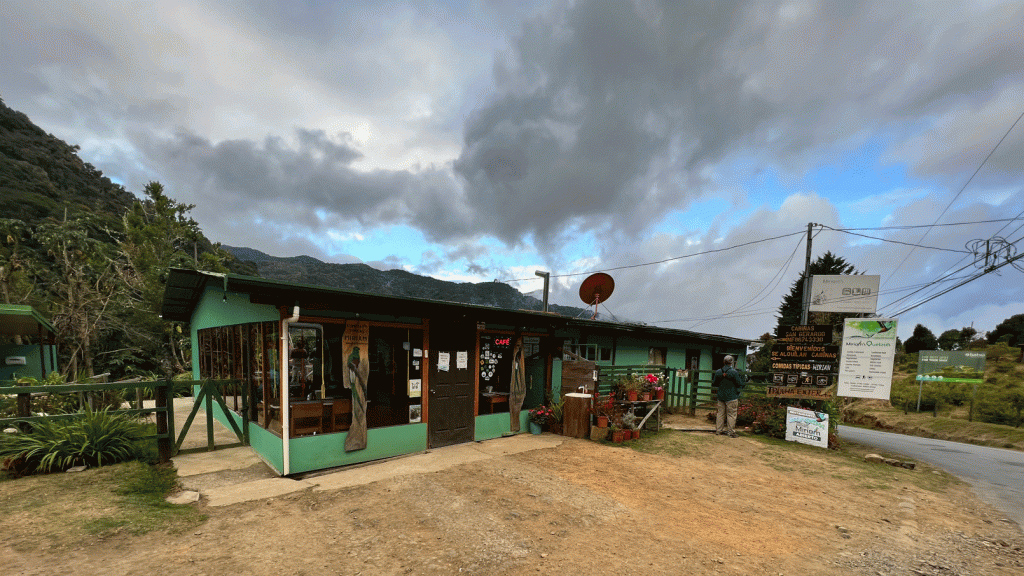
We stopped at a small restaurant in the Savegre Valley. For the price of a cup of coffee, we could look at the birds that gathered at the feeders and in the garden. The restaurant was on the edge of hillside, so we were above or even with the birds. No straining of necks was required!

There were plenty of Talamanca Hummingbirds. This is one of the bigger hummingbirds and can be 12 – 24 cm long. It is closely related to the Rivoli’s Hummingbird that we see in Madera Canyon in Arizona.

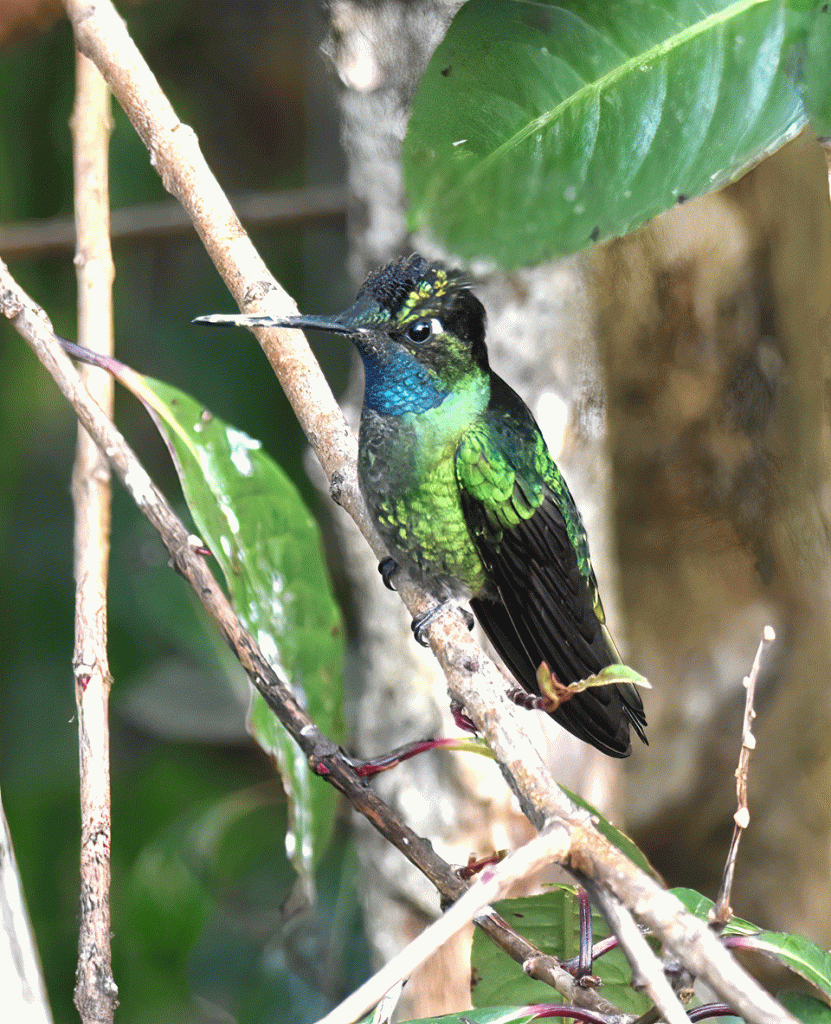
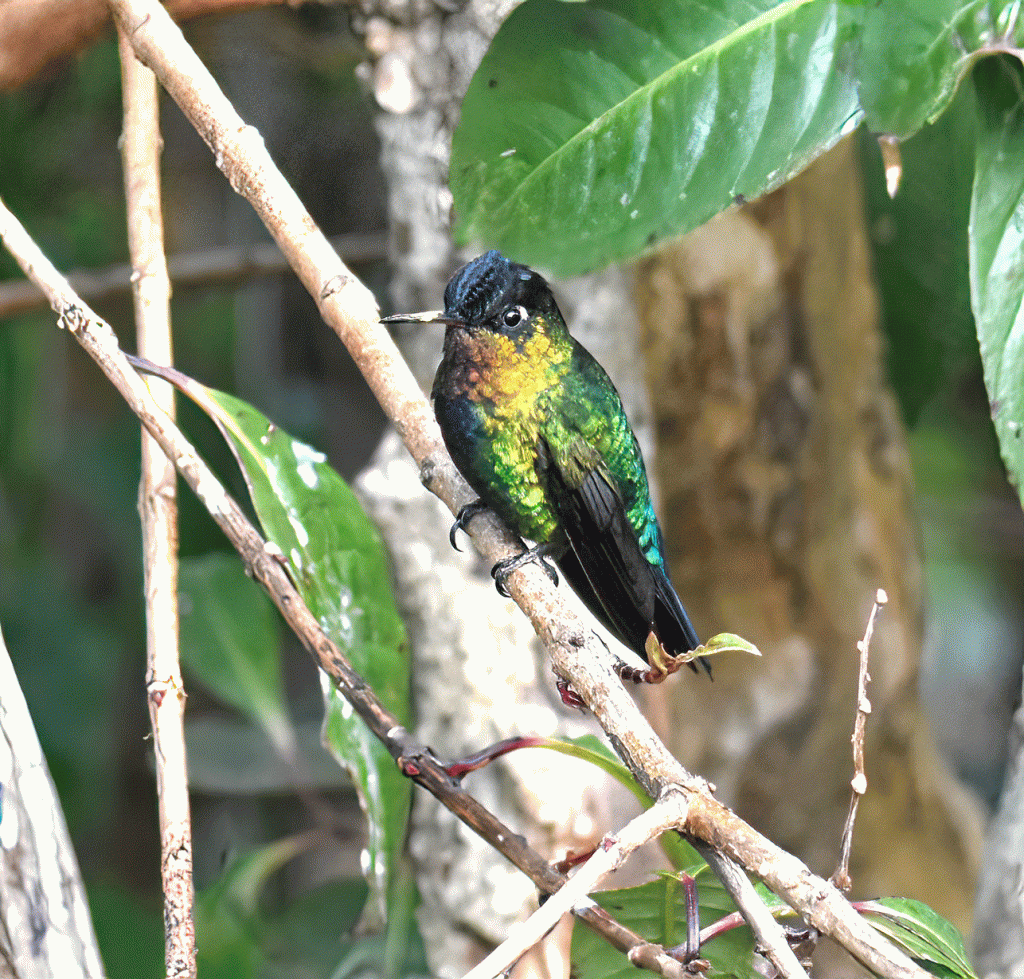
Another amazing hummingbird is the Fiery-throated Hummingbird. In certain light the throat is a mix of red, orange and yellow.

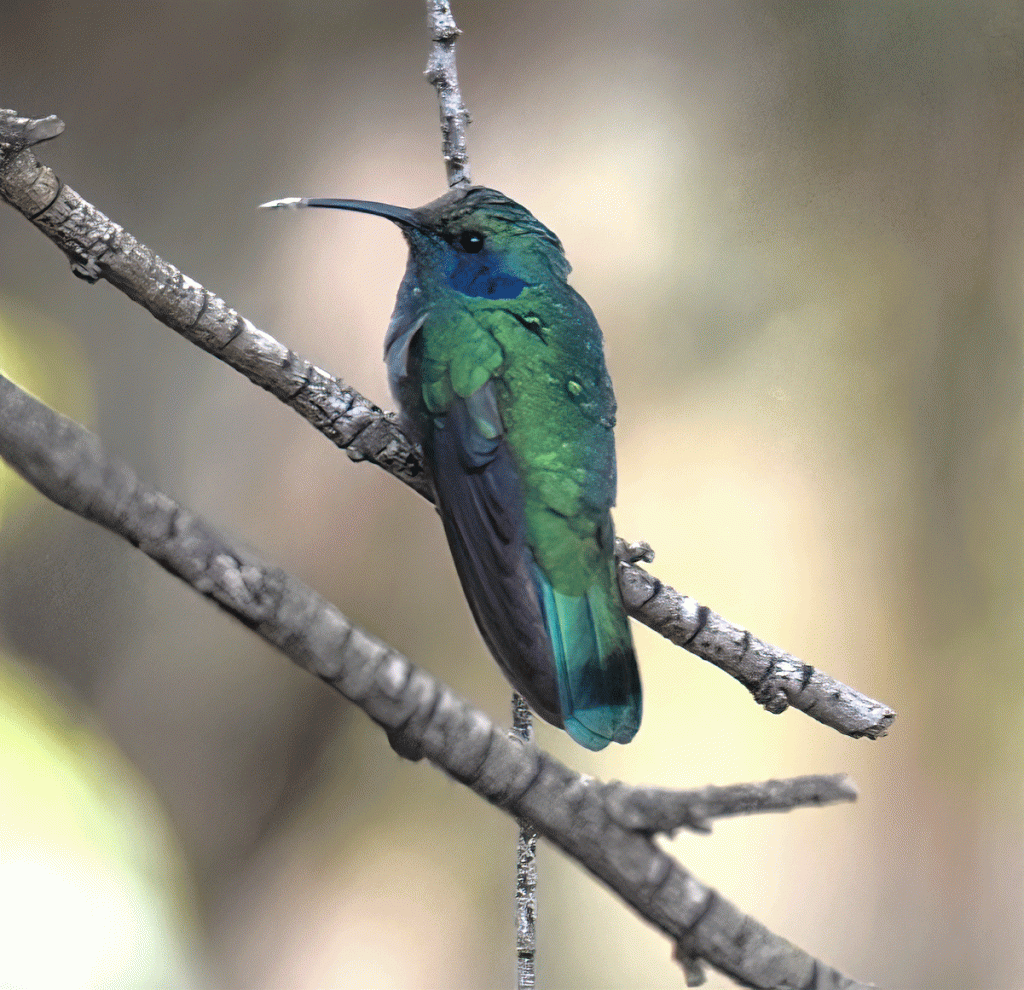
Another fantastic hummingbird is the Lesser Violetear. It’s a very small hummingbird of only 5 – 11 cm long. The violet (or in this case bluish) patch on each side of the face give it its name.

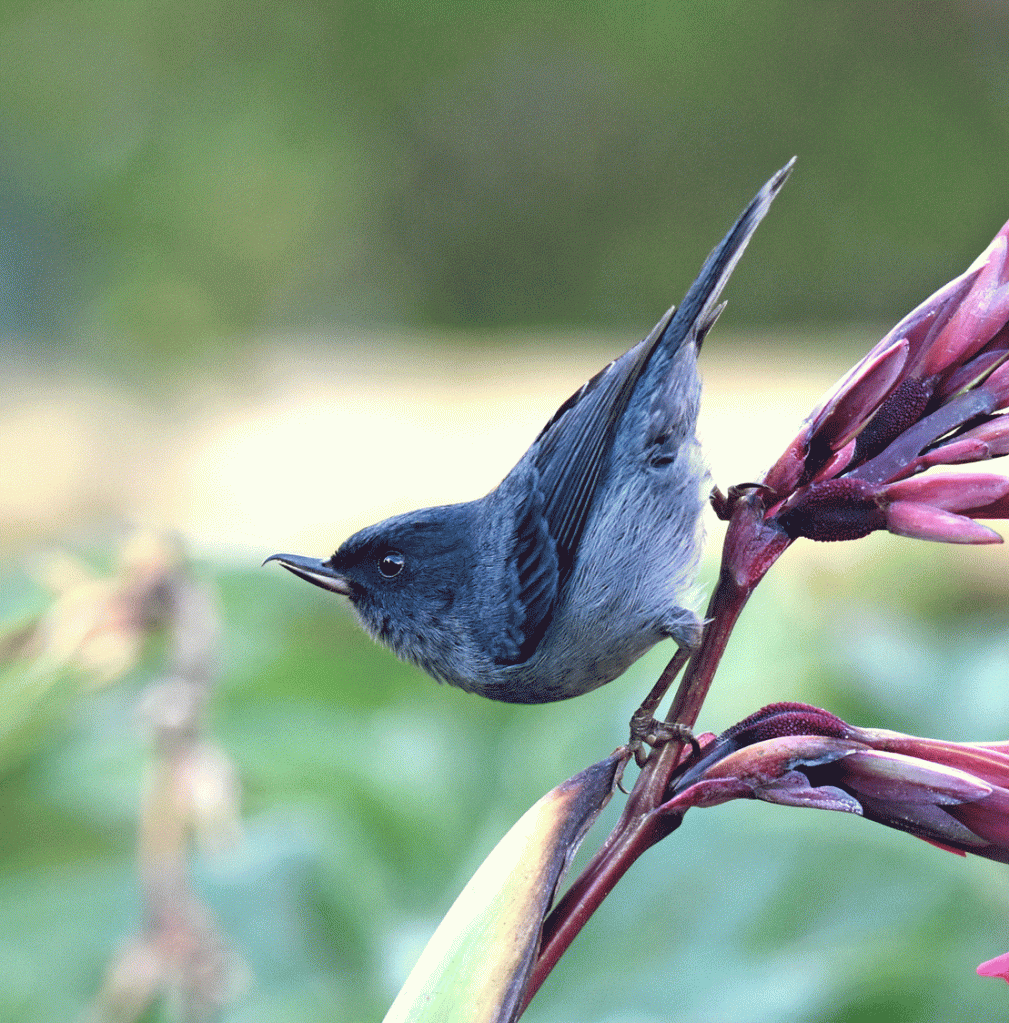
This male Slaty Flowerpiercer was about the size of a hummingbird but chunkier. Flowerpiercers are nectar robbers that poke a hole through the flower base to draw off nectar without helping the flower transport pollen.

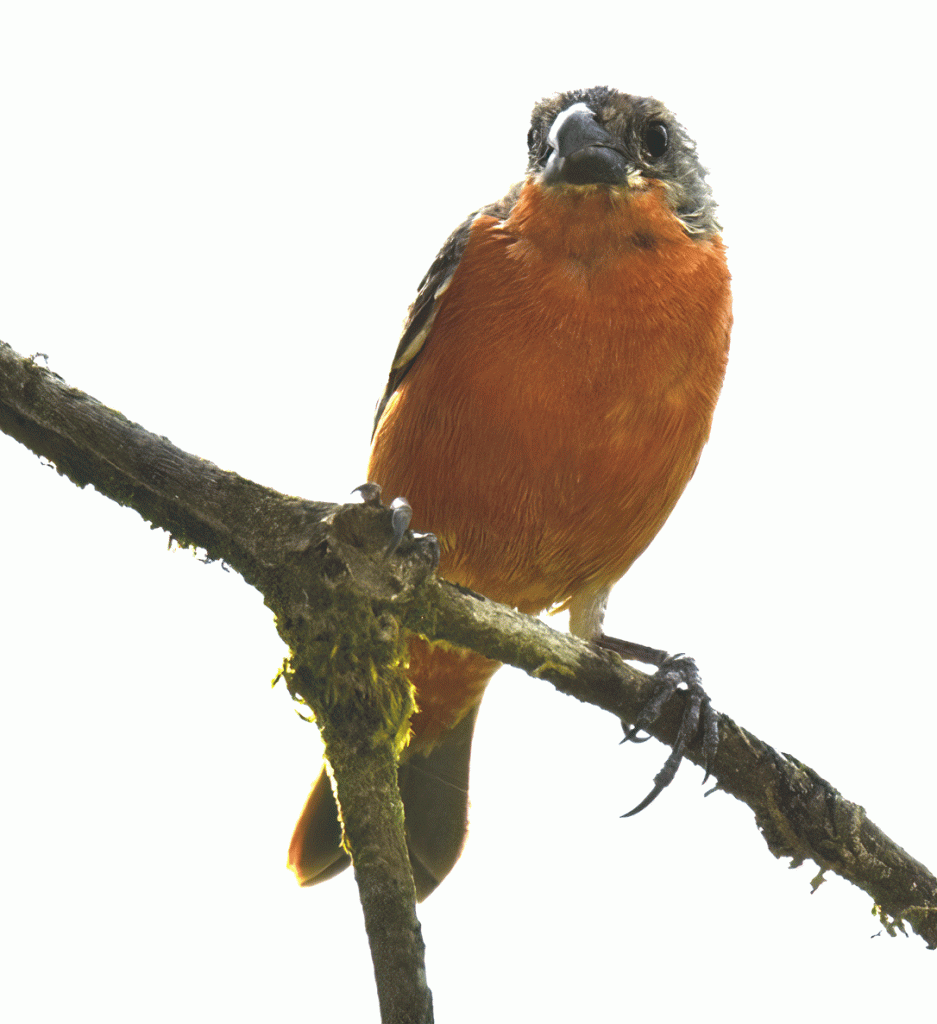
This Flame-coloured Tanager was hopping around the garden.

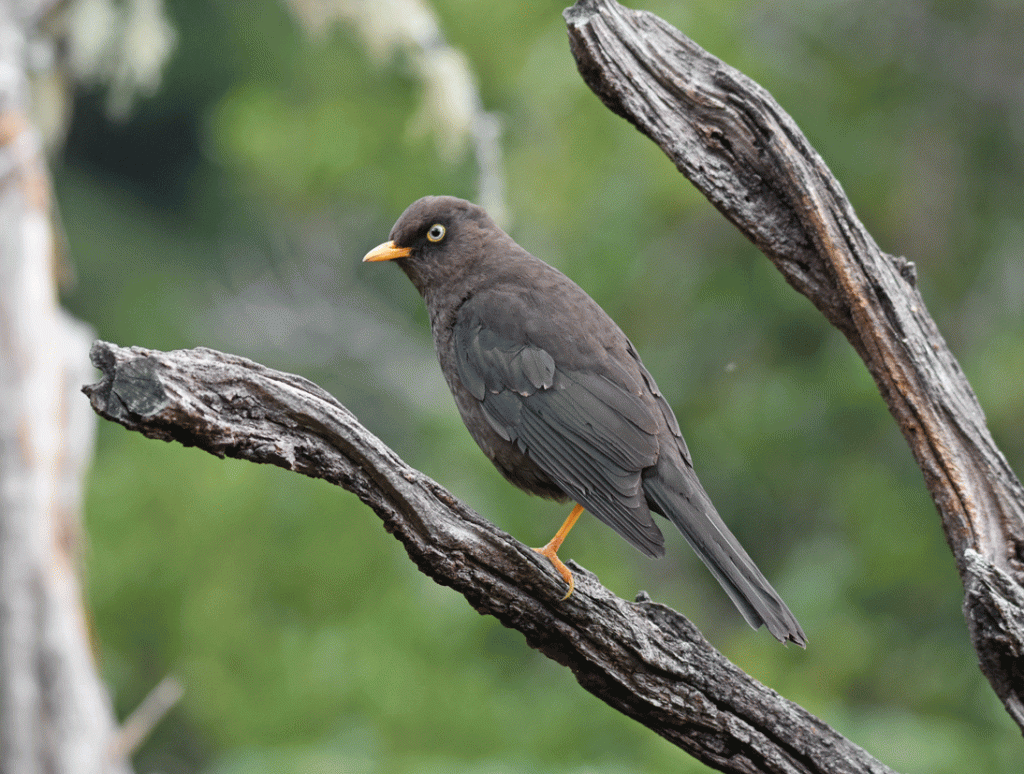
Not every bird is as bright as that tanager, but we also want to include the “less flashy” birds. Here is a Sooty Thrush, which is a little bigger than the American Robin that we have at home in Canada.

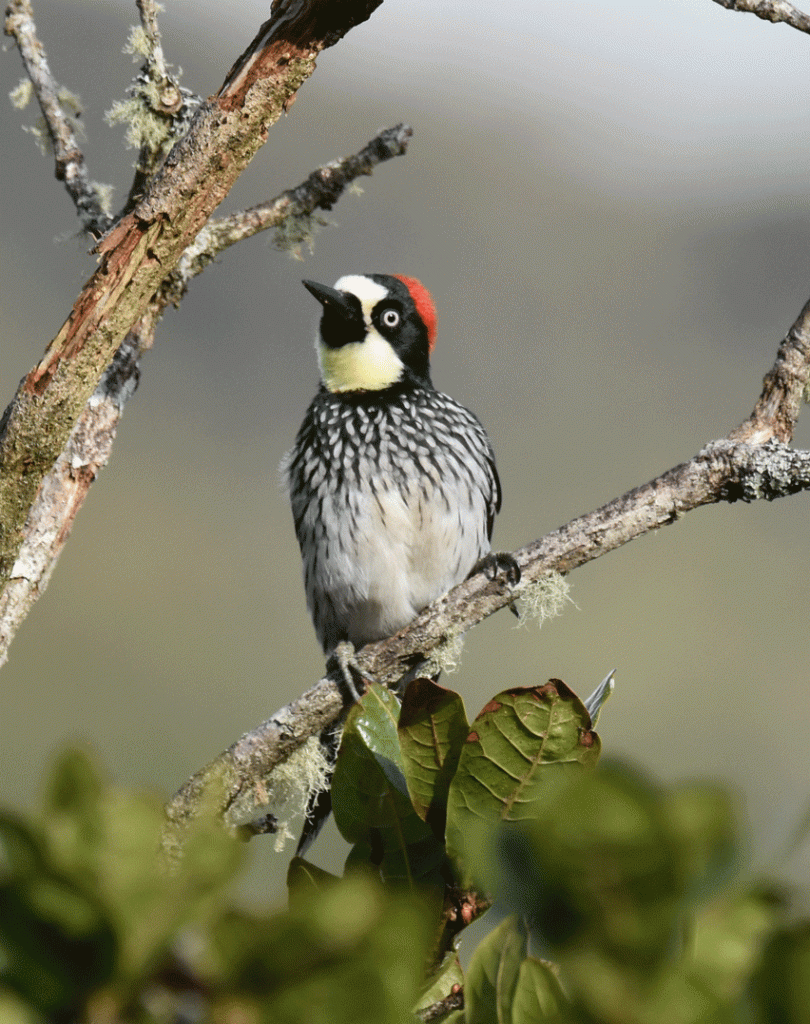
We see this comical looking species at Madera Canyon in Arizona quite often, but this Acorn Woodpecker posed so nicely, that it needed to be included as well.

Another bird we see often is a Wilson’s Warbler, but we rarely get a view of one from above. The male’s black cap is really easy to see in this photo.

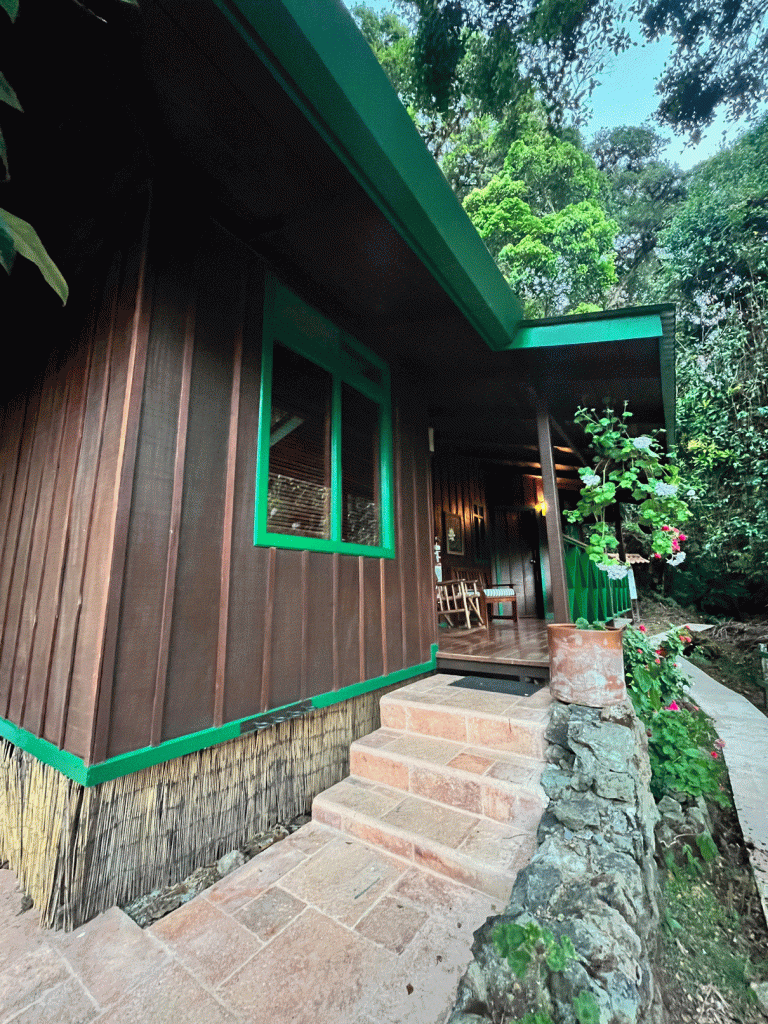
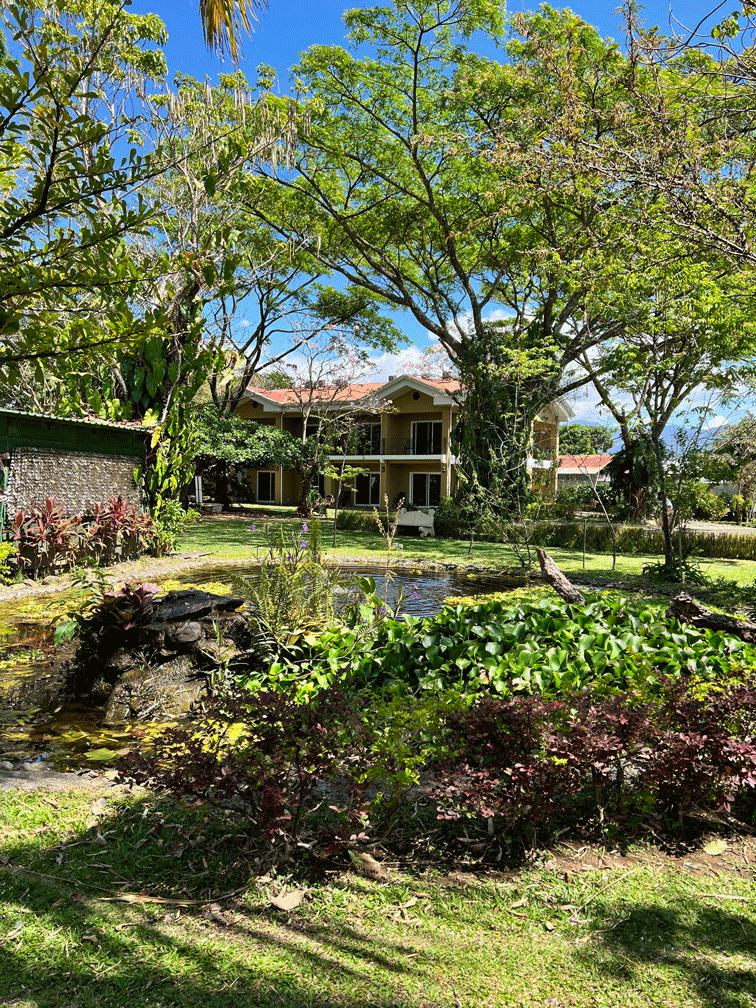
After a long day of birding, we arrived at Trogon Lodge, just as the light was fading. Here is a view of our cabin. Our room was on the right.

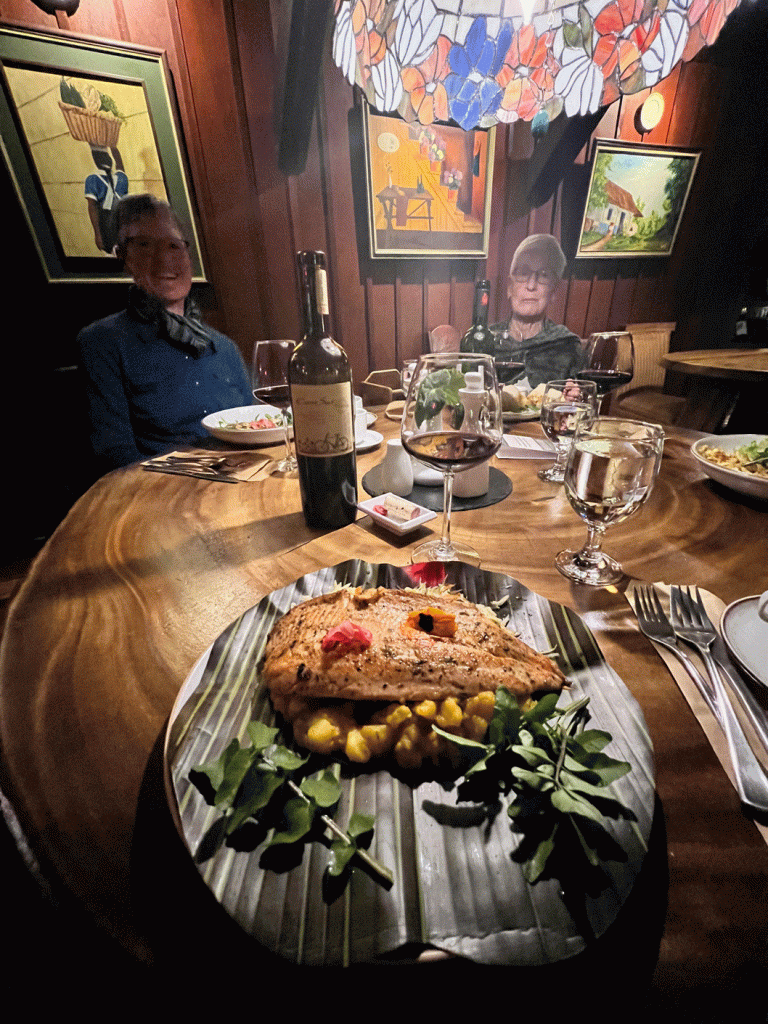
The lodge had a fancy restaurant and we ordered from a menu. Most of the other lodges that we stayed at had set meals and everyone received the same food.

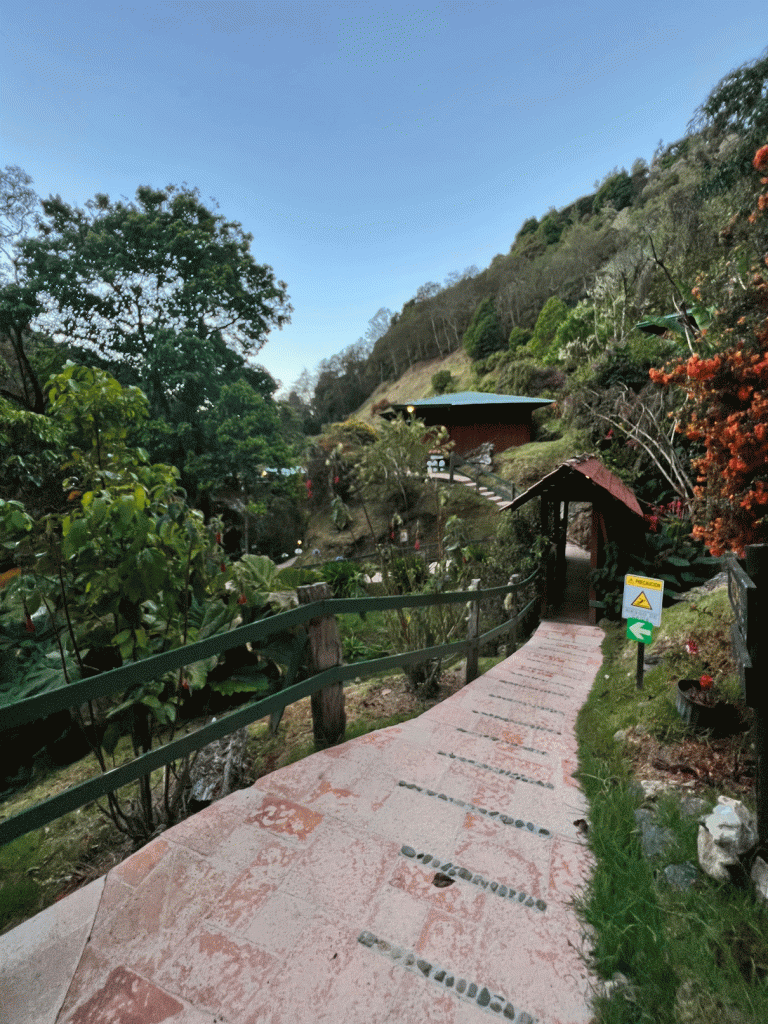
This is the view of the path from our cabin the next morning. The lodge is set at the bottom of a steep valley.

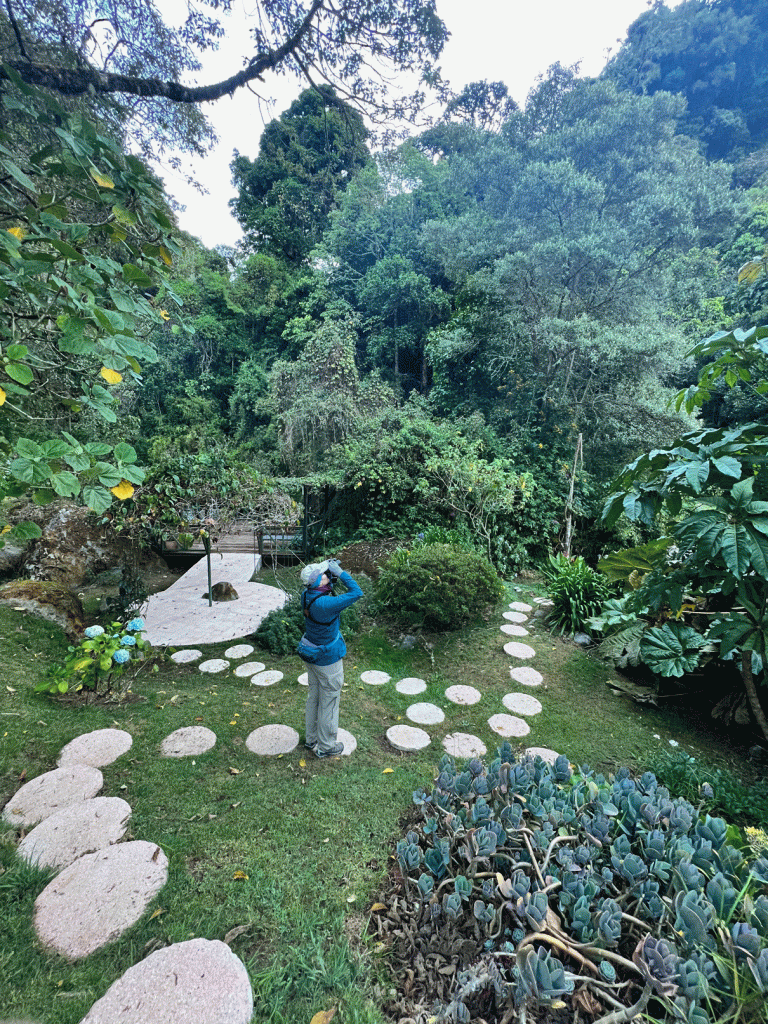
We did manage to catch a glimpse of a Resplendent Quetzal on the grounds. Here, Wendy is scanning the treetops in hopes of seeing it again.

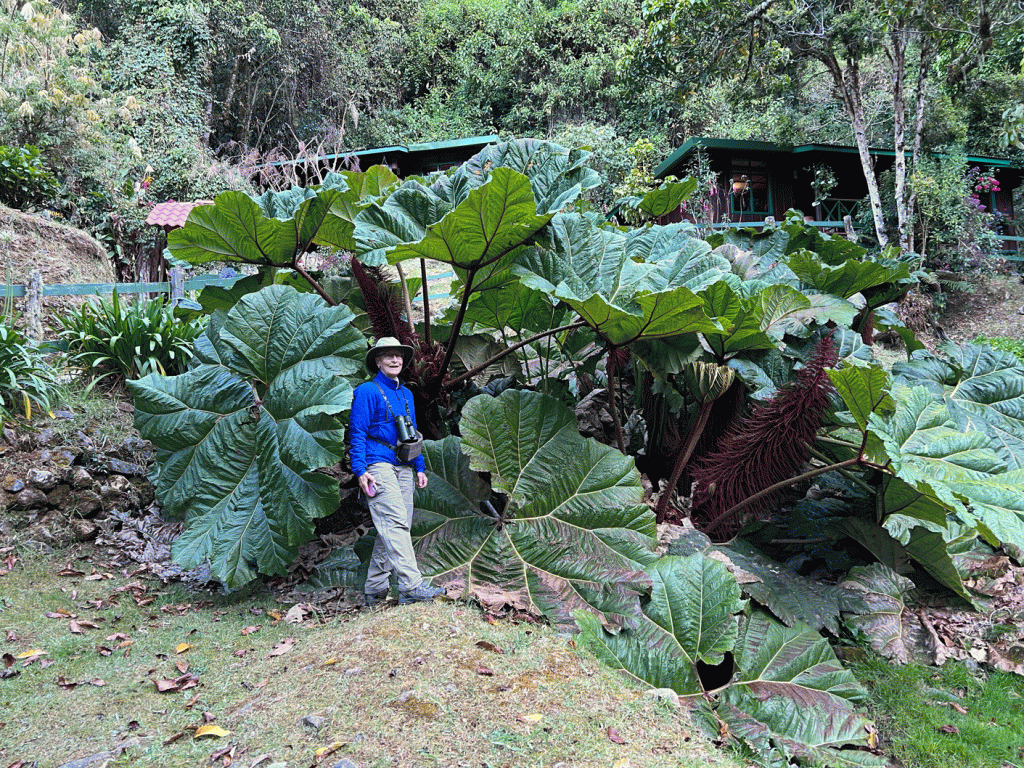
This rhubarb-type plant dwarfs our friend.

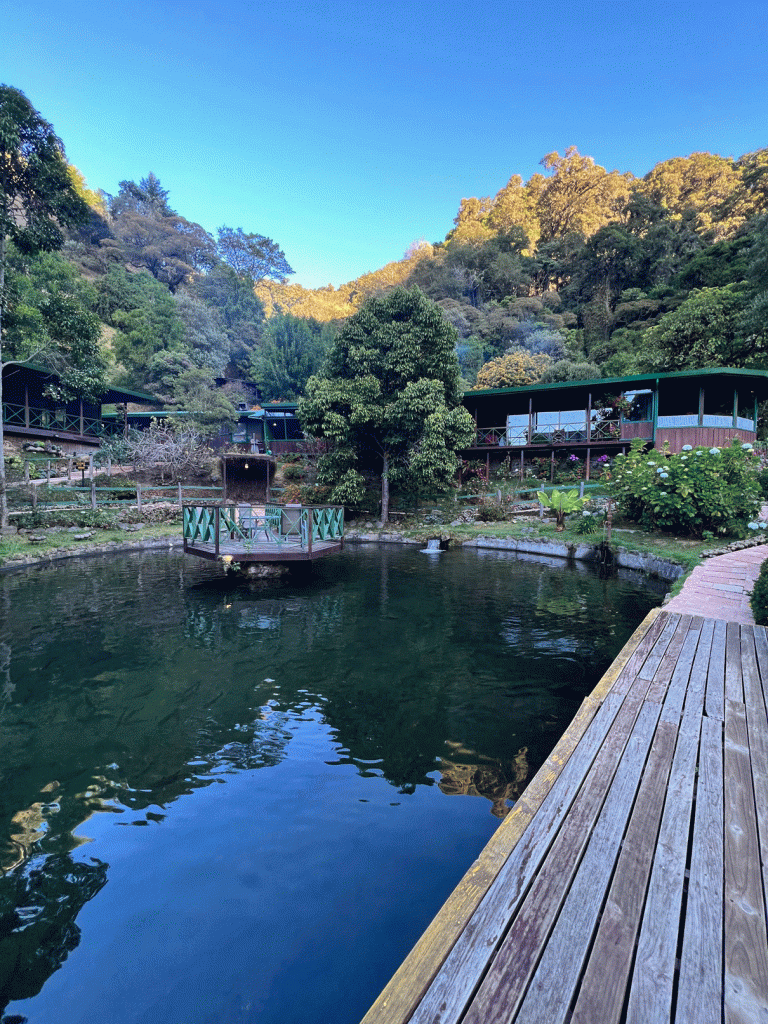
Here’s a view of the restaurant and the trout pond in the foreground, just as the light was hitting the hillside above. We enjoyed fresh trout for each of the dinners we had at the lodge. The trout ponds are fed by a cool mountain stream.

They also grow their own lettuce.

Here’s another view of the gardens and the surrounding hillside.

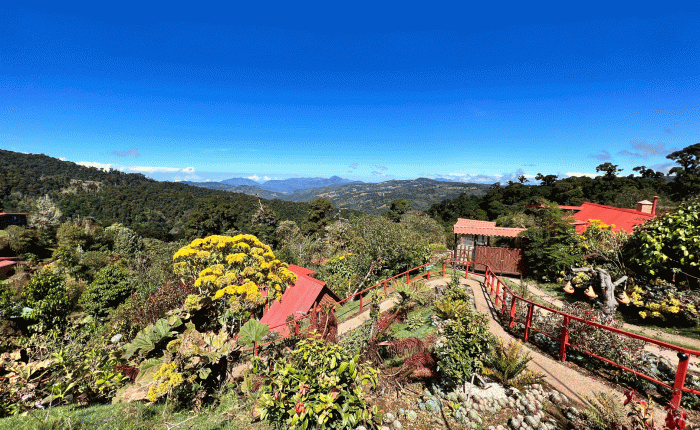
Later that morning, the bus took us up out of the valley and to even higher elevations. Pariosol Quetzal Lodge is at 2650 metres (just under 9000 feet), and like most places in the area, is situated on the side of a hillside.

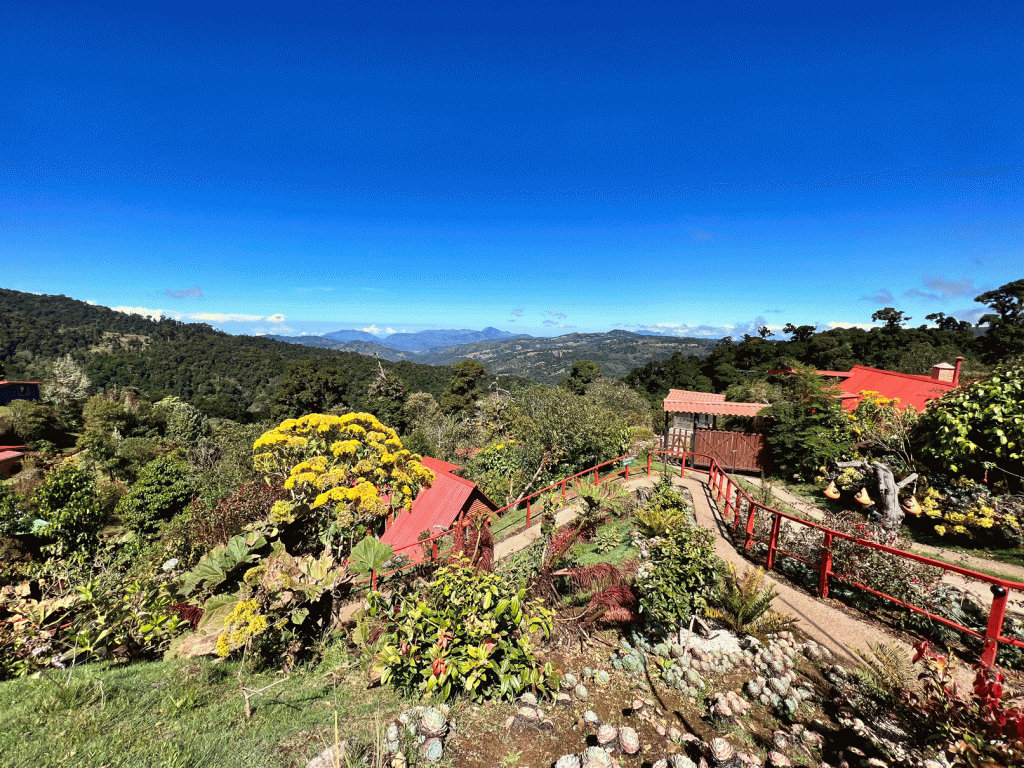
We took the trail down to a viewing platform with nearby gardens. Here’s the view looking out from the platform.

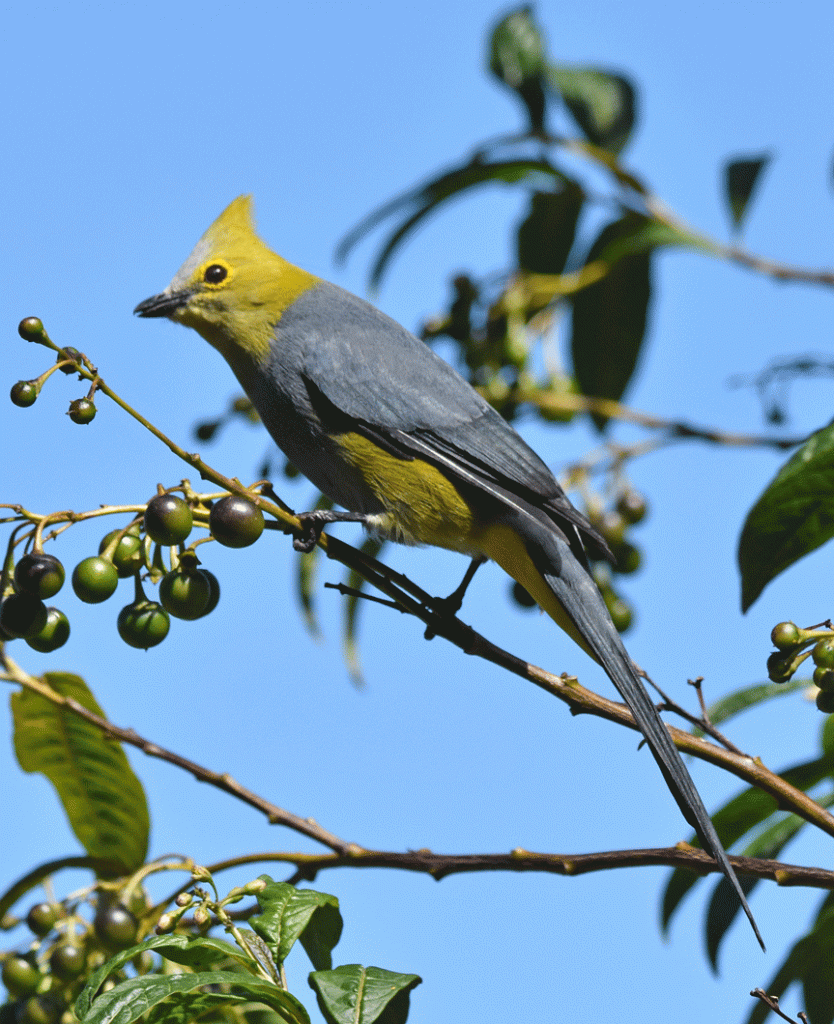
A Long-tailed Silky-flycatcher was one of the first birds to show up.

The nearby flowers allowed for good photo opportunities. This hummingbird is a female White-throated Mountain-gem.

Here’s another photo of the female White-throated Mountain Gem, taken in the nearby garden. (The male has the white-throat.)

Here’s the whole group (except Wendy who is taking the photo) looking at the birds that visited a fruit-filled bush.

One of the “birds in the bush” was this male Golden-browed Chlorophonia. He shows only a little bit of his “golden brow,” so perhaps he’s immature. A beautiful bird, nonetheless.

Wendy spotted this Peg-billed Finch in the same bush. This type of finch is considered rare in Costa Rica so it was a lucky find.

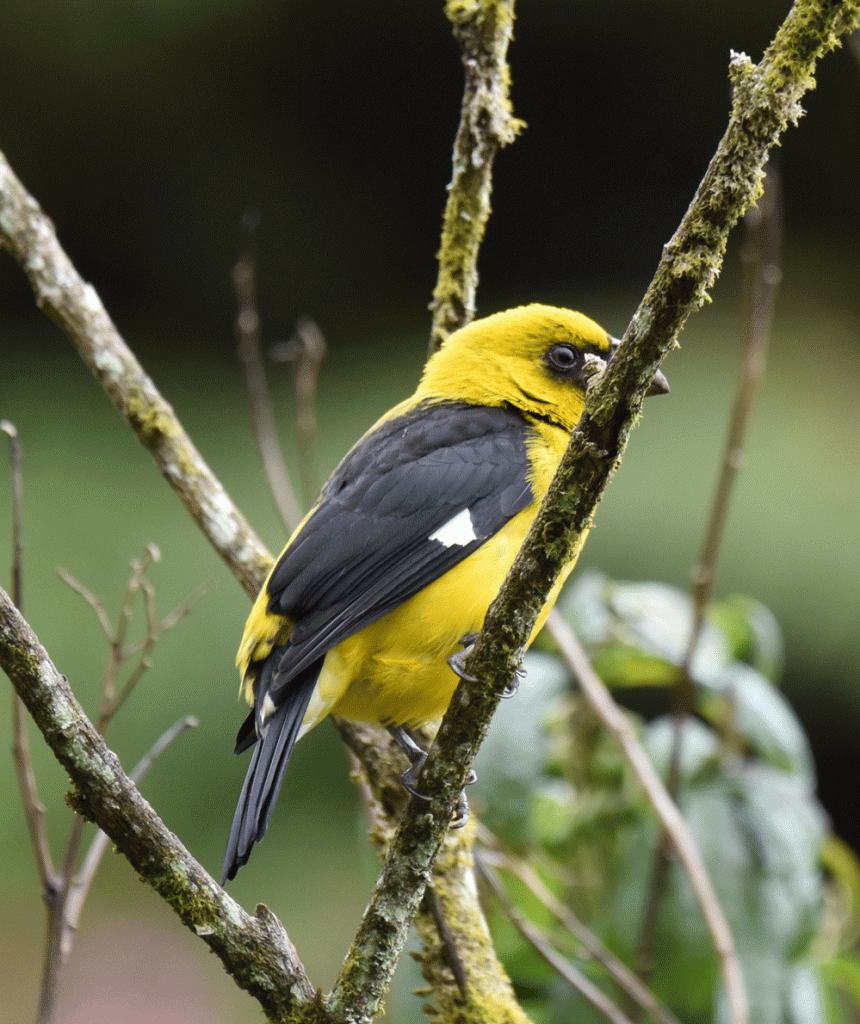
And this Black-thighed Grosbeak flitted among the bushes on the hillside to the left of the fruiting bush. The white spot on the wing is distinctive.

We explored the rest of the gardens and walked a little ways down the path. We met people who had walked a few hours down into the valley and all the way back up.

We saw this Black-billed Nightingale-Trush beside the trail.

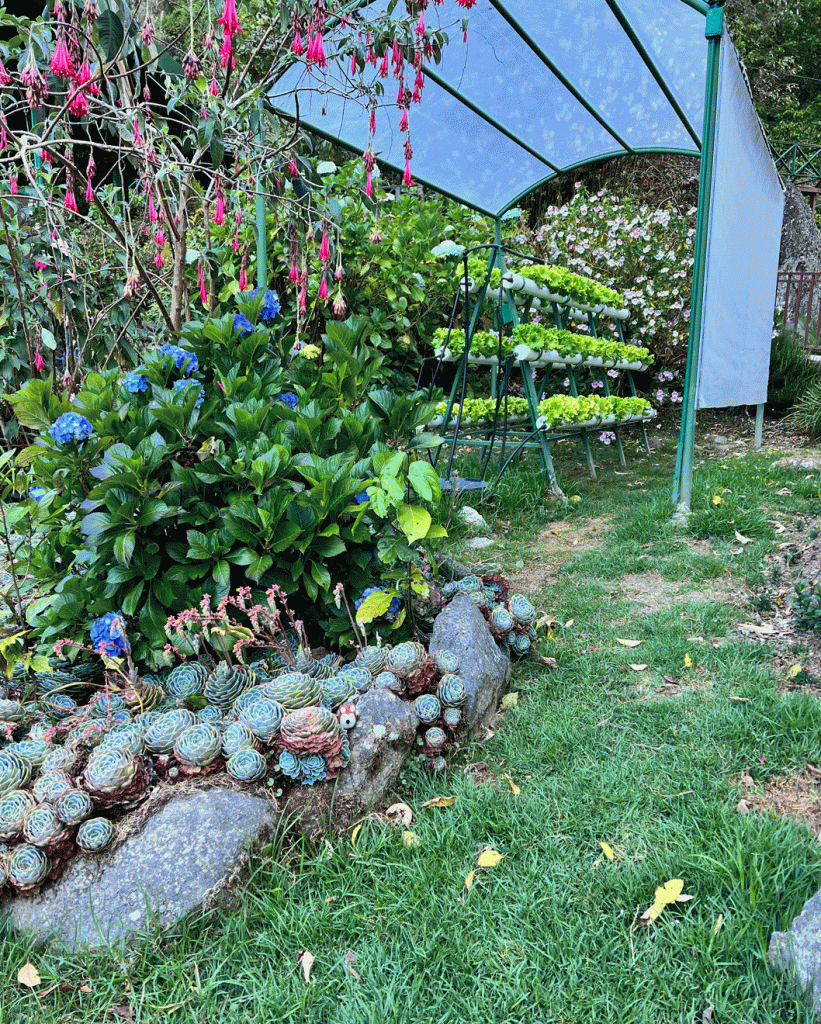
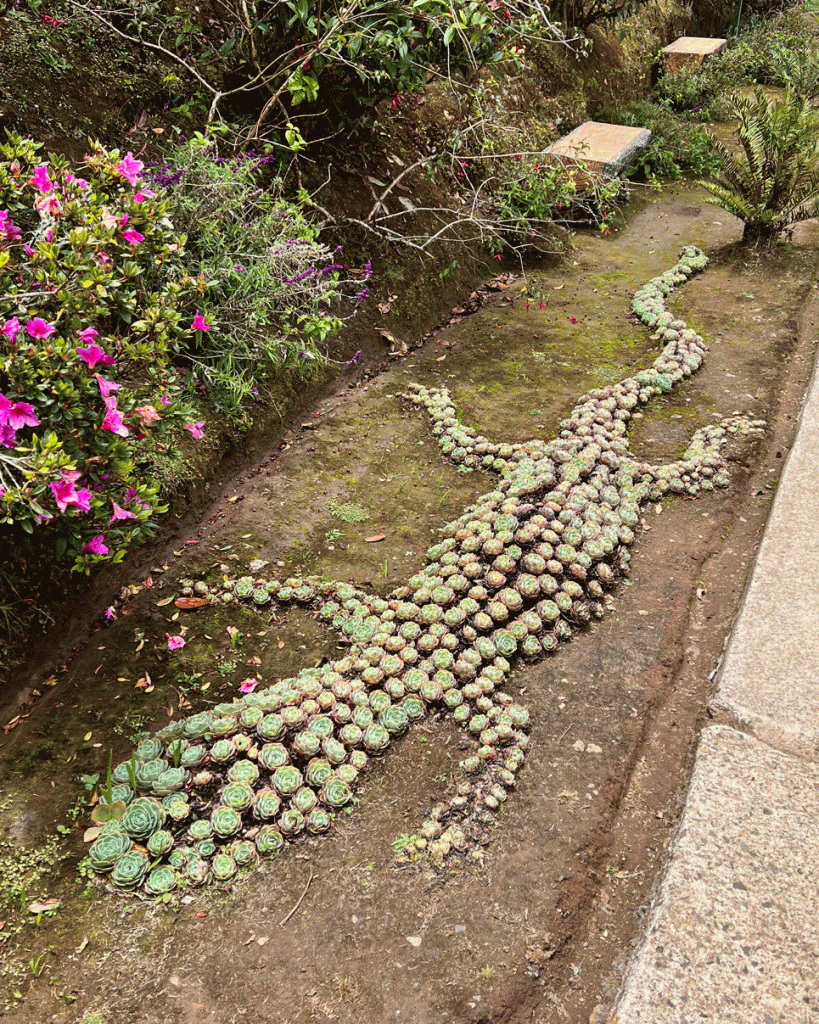
On our way out of the garden we stopped to take a photo of these succulents, planted in the shape of a lizard.

Our bus took us to a nearby location which we call the “Quetzal Stake-Out.” The lodge and their birding guides have a partnership with a farmer who planted the quetzal’s favourite tree over twenty years ago. Now they can provide tours to those who want to see the Resplendent Quetzal up close. Here’s a view of some of the rest of the farm.

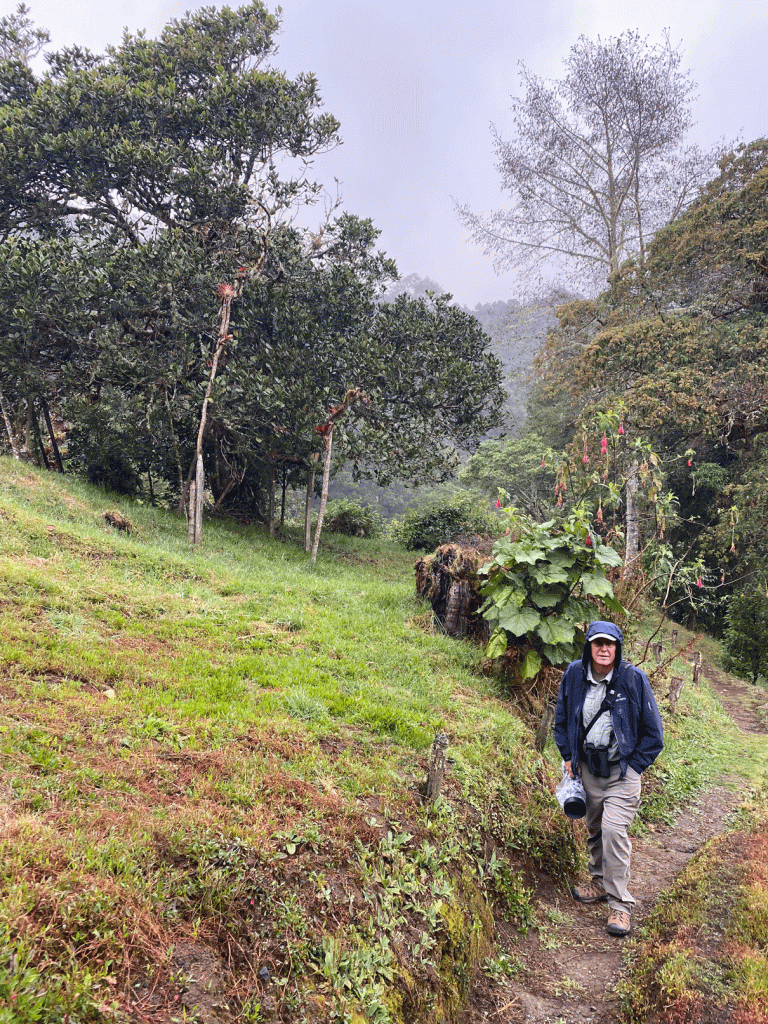
Here’s the special tree, an aquacatillo, which has avocado-like fruit. Quetzals pluck the fruit from below in mid-flight. Also note the perches that have been provided. And you can tell by Doug’s clothing that it was raining, although it was more like a drizzle that is typical of the cloud forests.

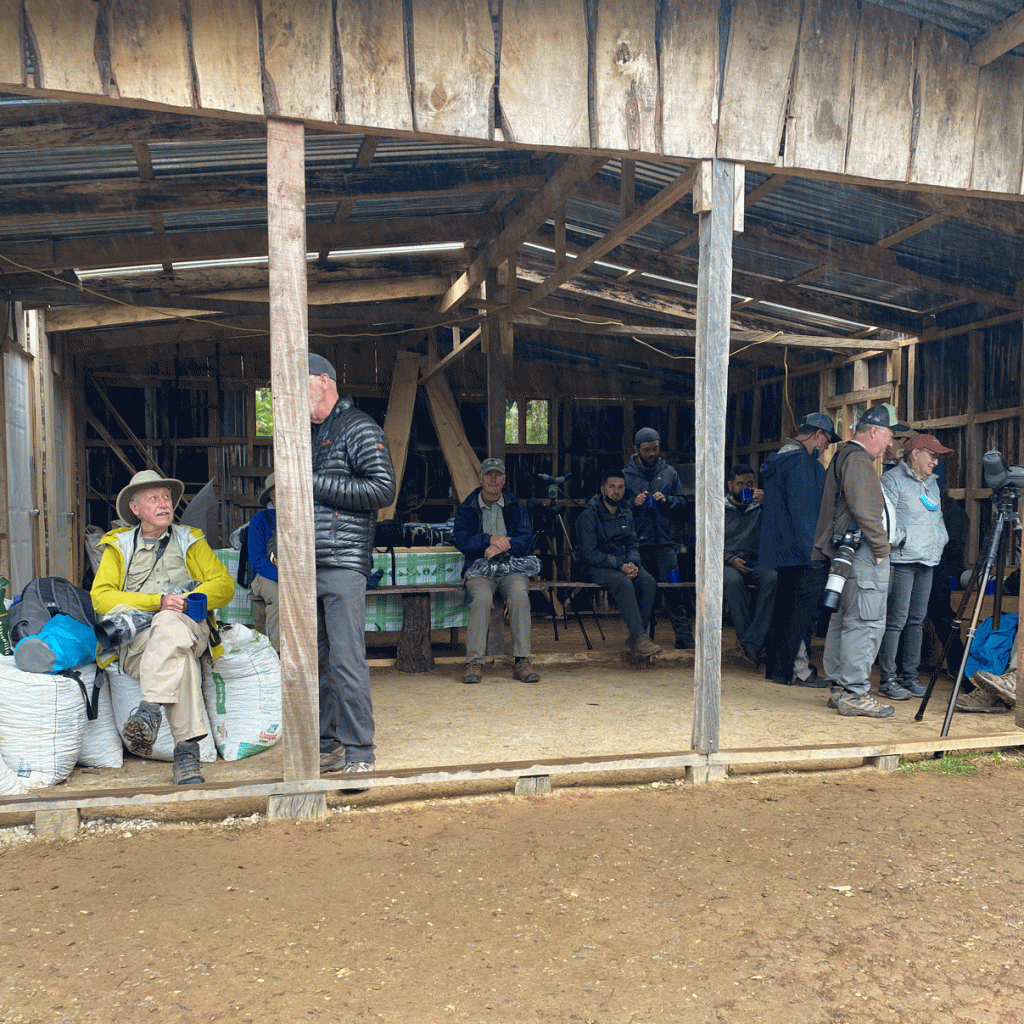
We had a quick view of the quetzals as we were hiking up the trail, but we were assured that we’d get a better view later in the afternoon when the quetzals generally fed. They made us coffee and there was a bathroom, so we were relatively comfortable while we waited in the shelter.

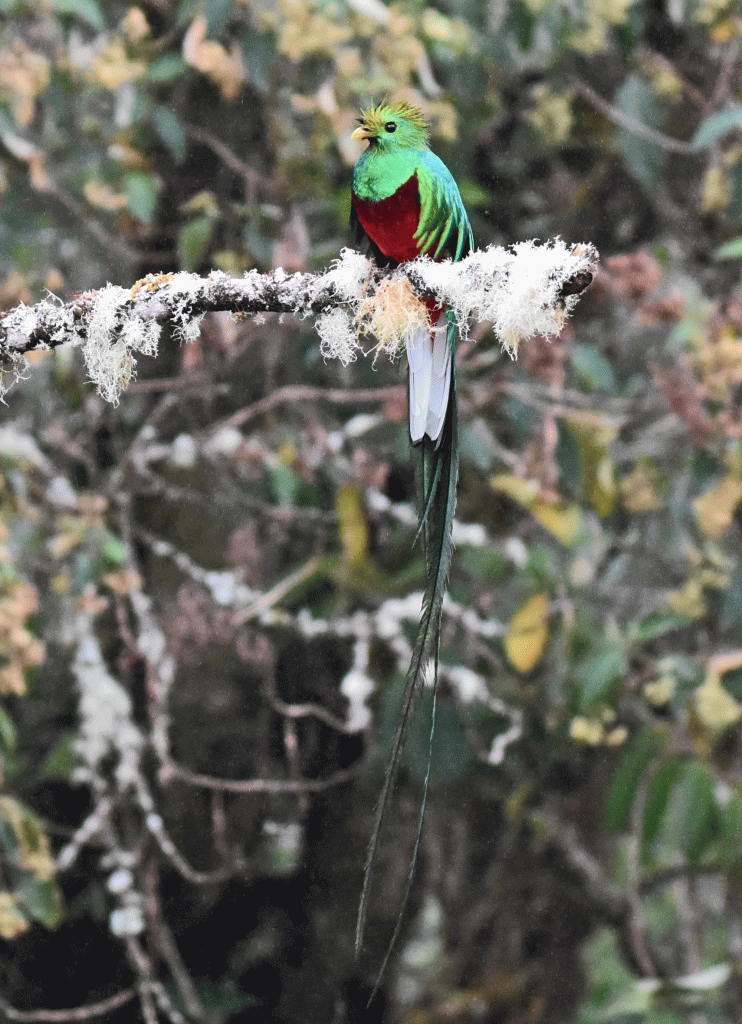
It was worth the wait. Here is a front view of the male, Resplendent Quetzal.

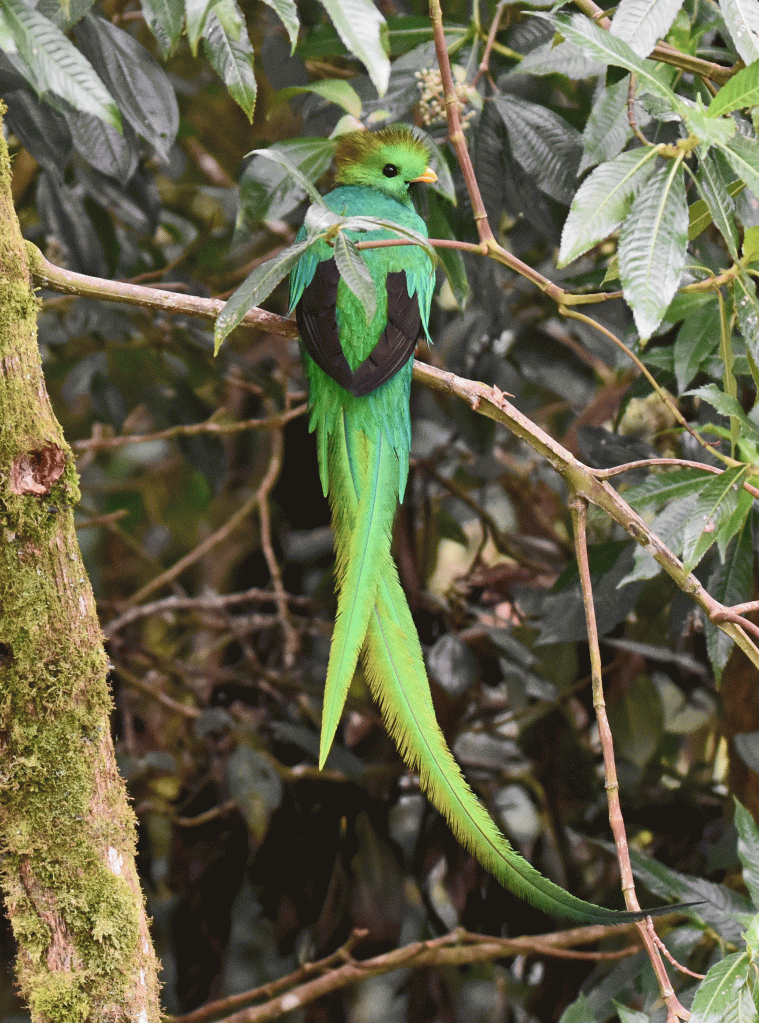
And a look at the male’s backside. Doug took over thirty photos of the quetzals. We saw them flying and picking fruit, but Doug’s photos were a bit blurry. It was an exciting experience that we will always remember.

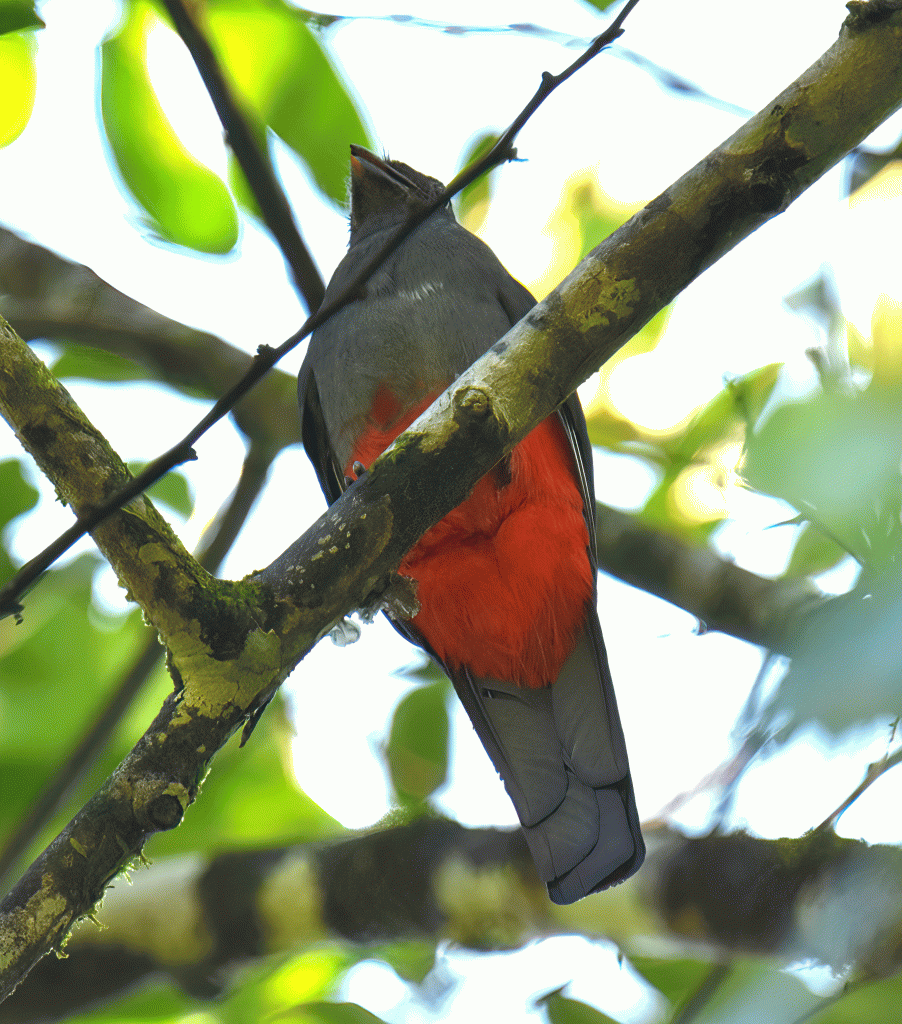
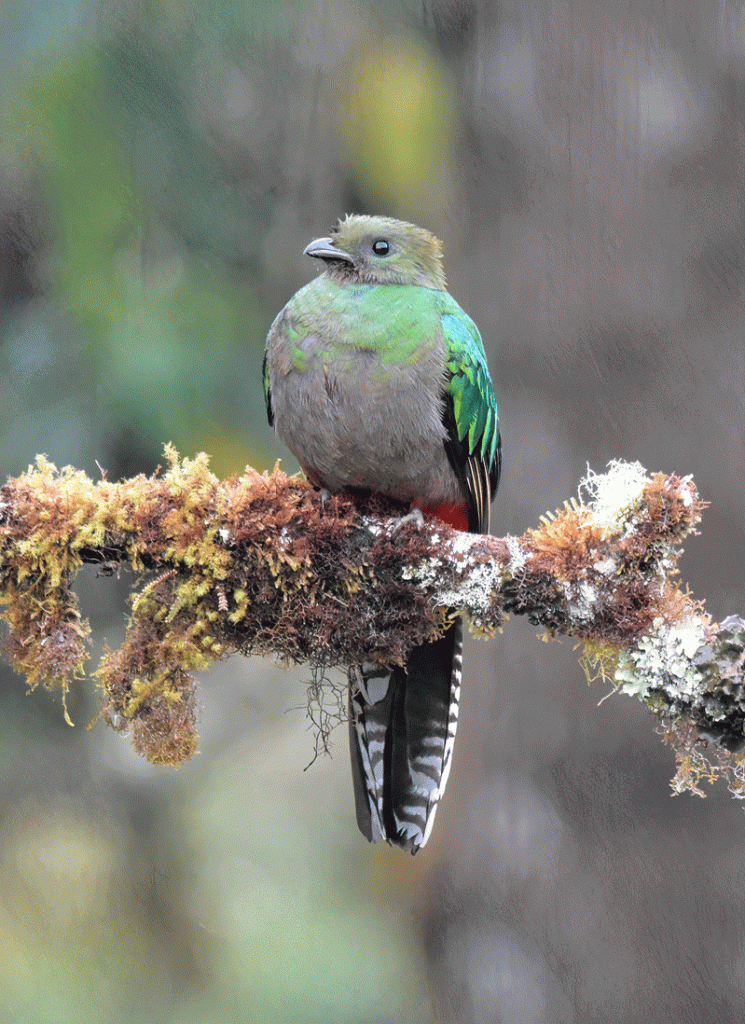
Here’s a front view of the female Resplendent Quetzal. The female, without the fancy tail, looks more like other trogans, because quetzals are part of the trogon family.

Satisfied with our sightings, we headed back in the rain to Trogon Lodge.

The next morning, we had a final view of Trogon Lodge and the surrounding hillside.

Our next night was at Talari Lodge in the Pacific Foothills, but we had lots of country to see before we got there. Part 4 will be posted soon.
Costa Rica in March – Part 2

Costa Rica in March – Part 2

We stayed three nights at Rancho Naturalista, a birding lodge in the Central Caribbean foothills of Cartago province. Here is the main lodge, where we had our meals and where some of our group had rooms.

From the entrance, we could walk through to our dining area.

We ate outside on the covered veranda.

This is the lounge where we met to go over our birds lists. We saw over 130 species of birds around the lodge as well as in the general area.

Our room was in a separate cabin, a short walk from the main lodge.

Every morning, we would start our birding with our coffee or hot drink, up on the deck overlooking the garden.

Here’s a view of the garden and one of their hummingbird feeders. White-necked Jacobins were the most plentiful hummingbird.

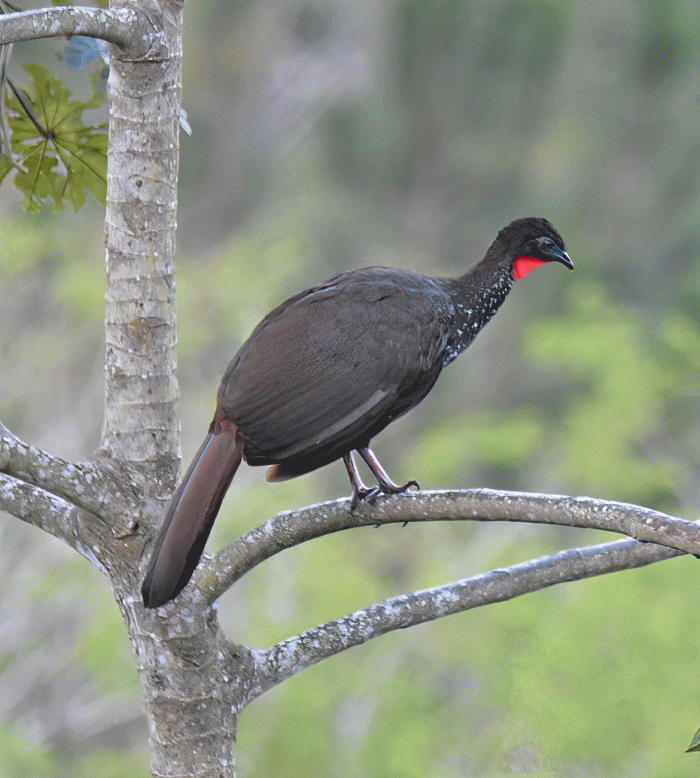
The deck also overlooked the mountains and the valley below the lodge. This is a Crested Guan, which mostly stays in the trees which is surprising for its size. It was feeding on fruit in a tree about a hundred metres away from the deck.

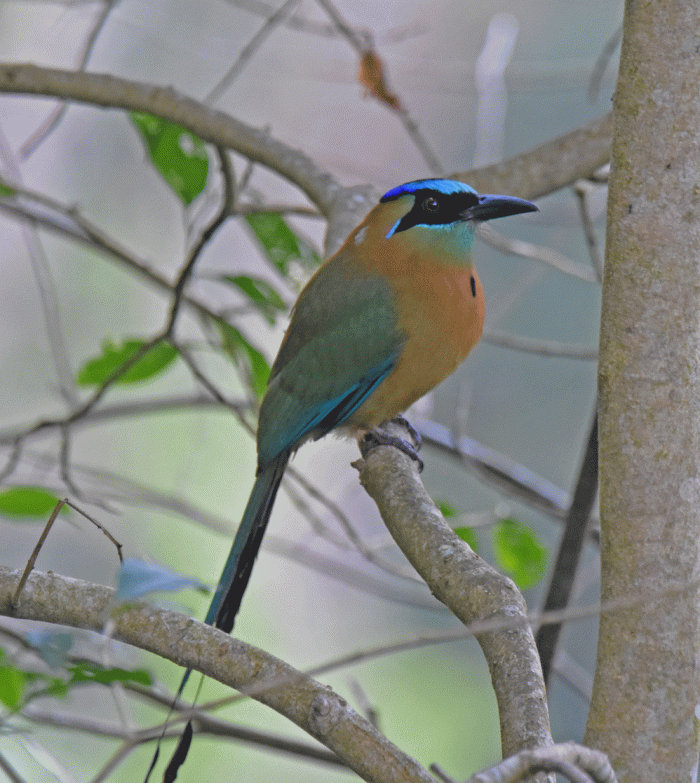
This is a Lesson’s Motmot, a species we saw several times on the trip. Most motmots have long racquet-tipped tails which they swing like pendulums.

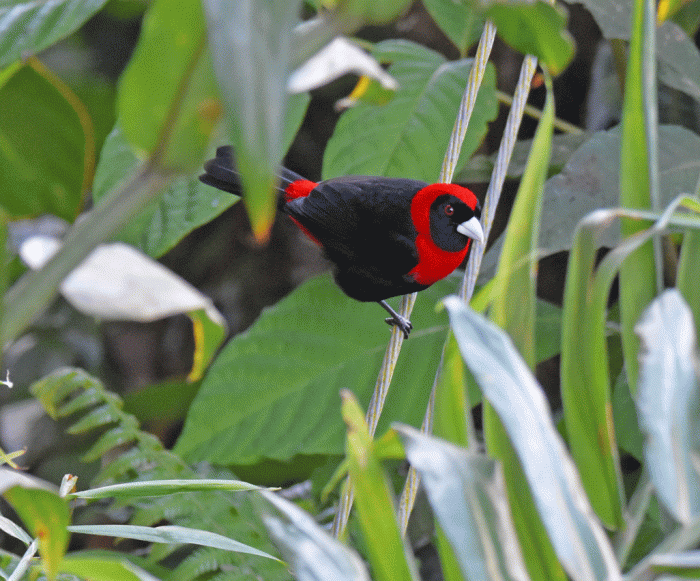
It was a treat to see this Crimson-collared Tanager because while they are fairly common throughout the Caribbean lowlands and foothills, we only saw them twice on the trip.

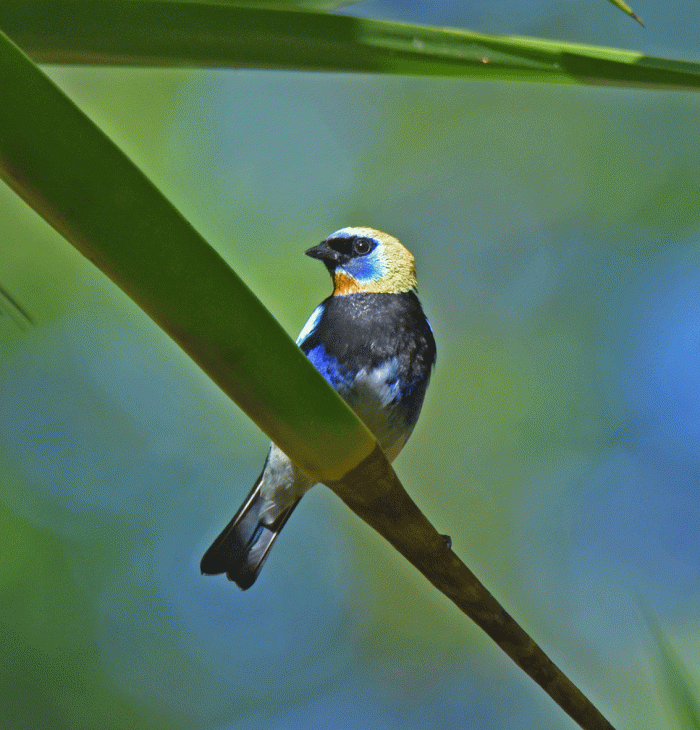
We saw many Golden-hooded Tanagers throughout the trip and enjoyed looking at each one with their distinctive colouring.

One morning after breakfast, we walked up farm roads to a more open pasture area.

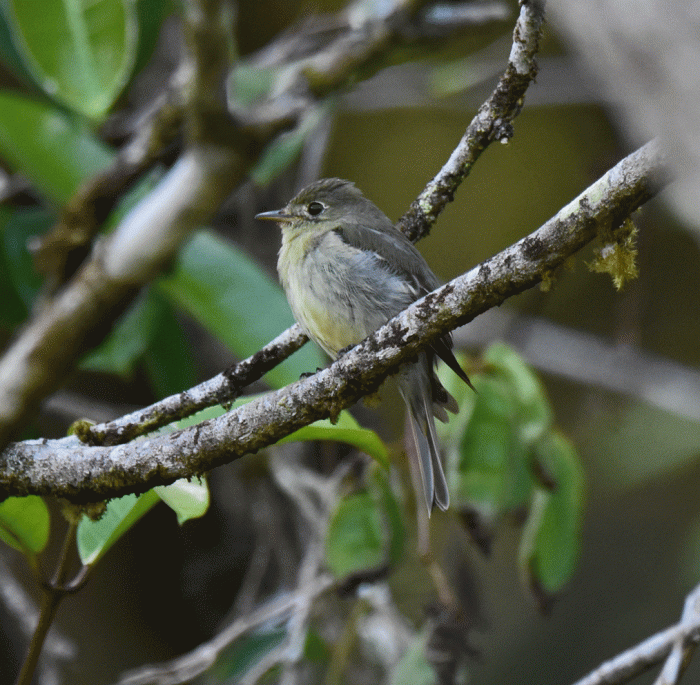
We found a spot that had good views of the surrounding trees, because we were hoping to see a cotinga. We waited quite a while with nothing happening, so Wendy walked up a bit from the group, following the sound of a small flycatcher. She recorded its call so she could study the recording to help identify the bird. On a whim, she played the recording back and the bird responded by flying closer and perching nearby. Soon after, Doug joined her in the shade and she played the recording again. The Yellow-bellied Flycatcher perched close enough for Doug to get this photo. Yellow-bellied Flycatchers are the most common migrant empid. flycatcher around, spending its winters in the tropics and its summers in Canada, but they are not found southeastern BC where we live.

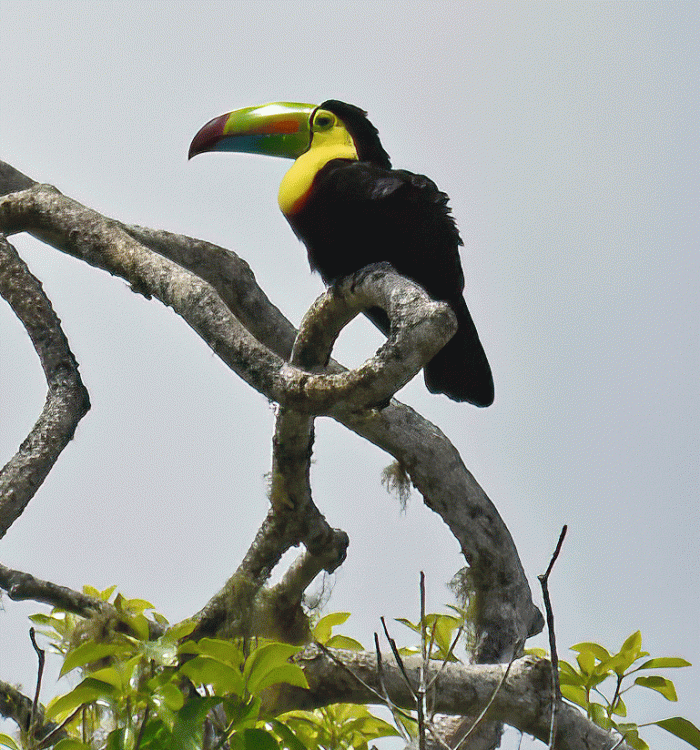
We spotted a Keel-billed Toucan way up in a tree along the skyline.

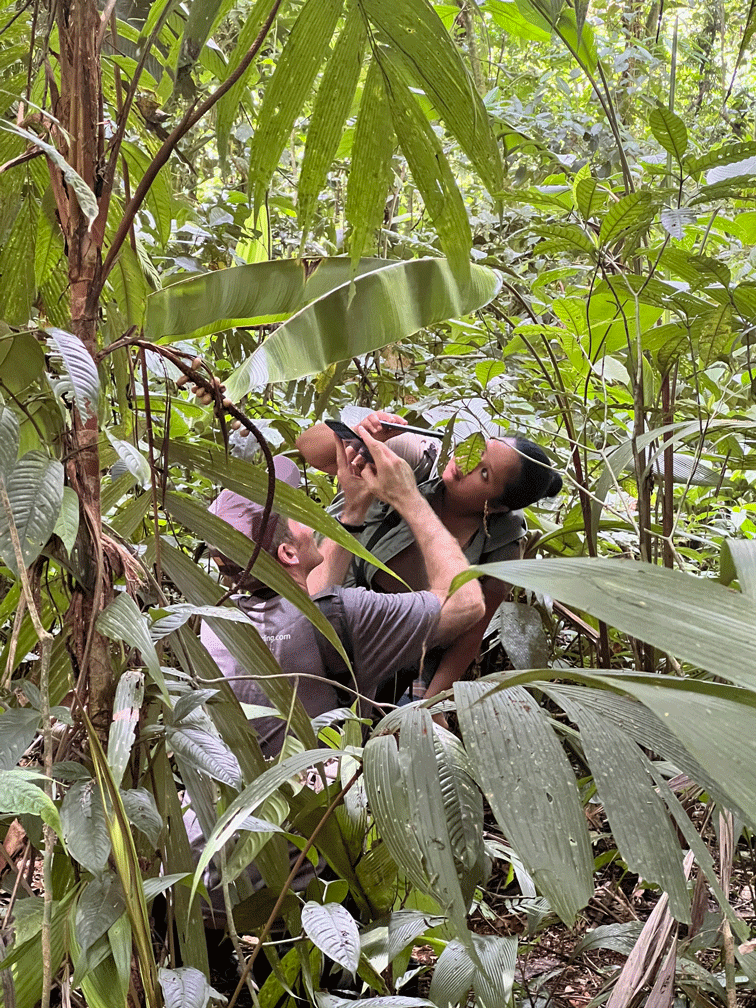
The toucan was so far away (about 200 metres) that the best view of it was through the scope. In the photo below, Wendy is taking a picture with her iPhone through the scope (digiscoping.) The photo was okay, but not as good as the one that Doug took with his telephoto lens.

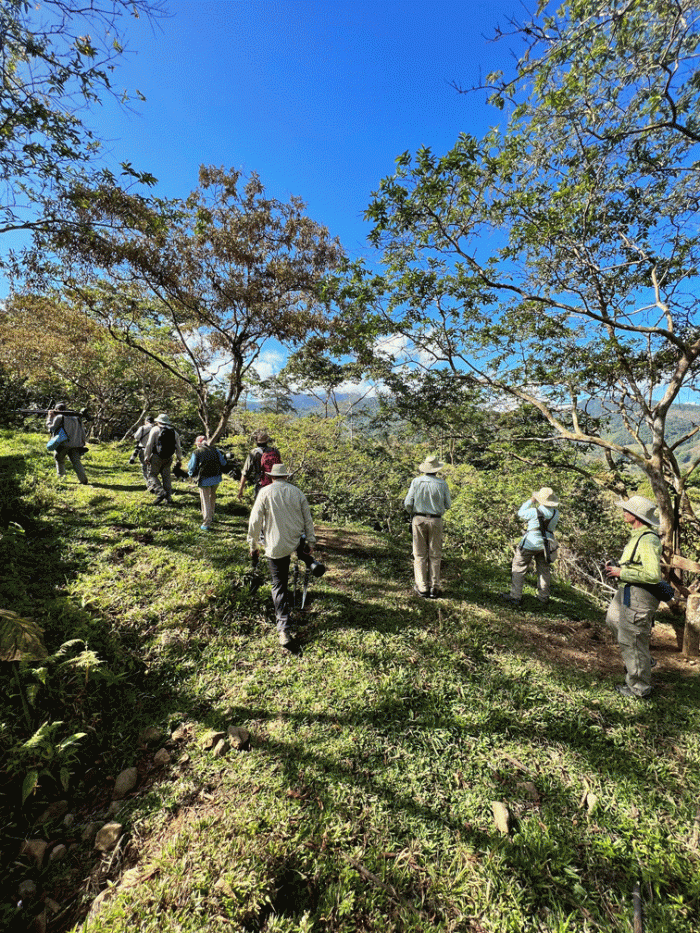
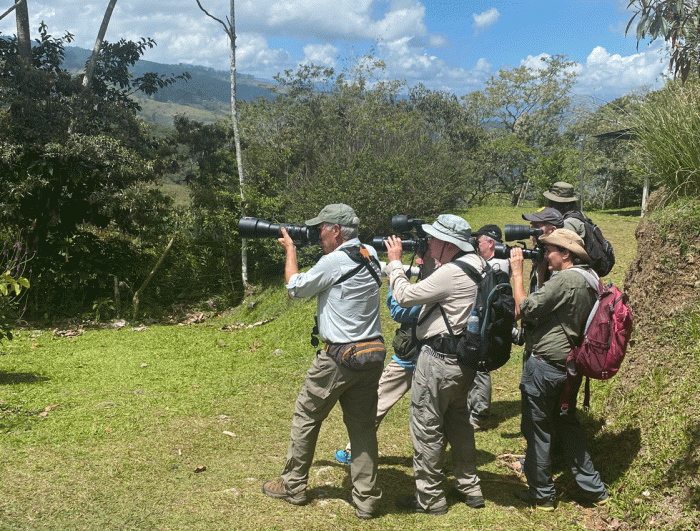
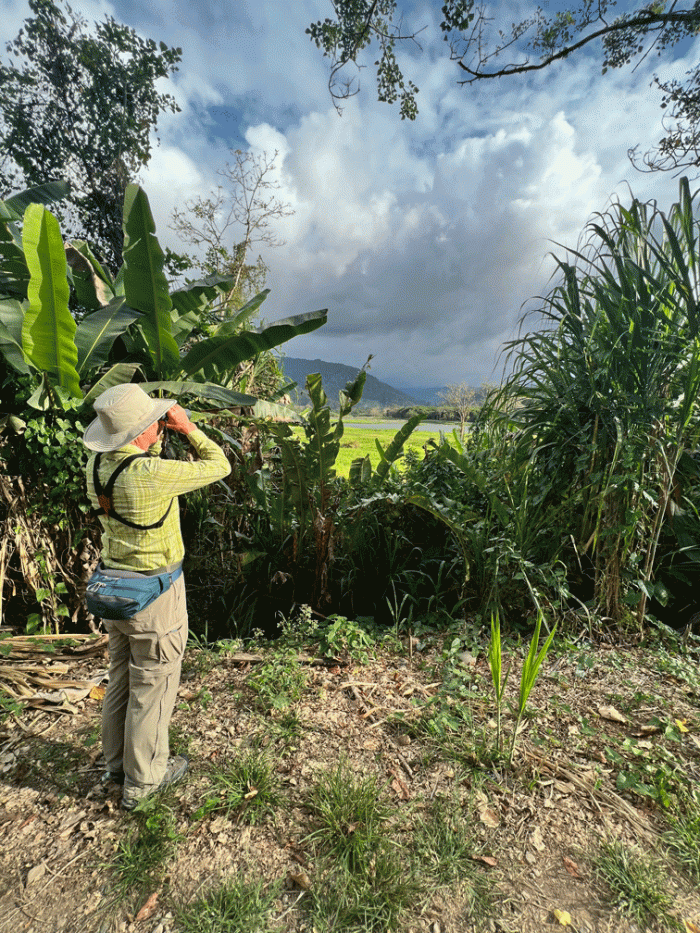
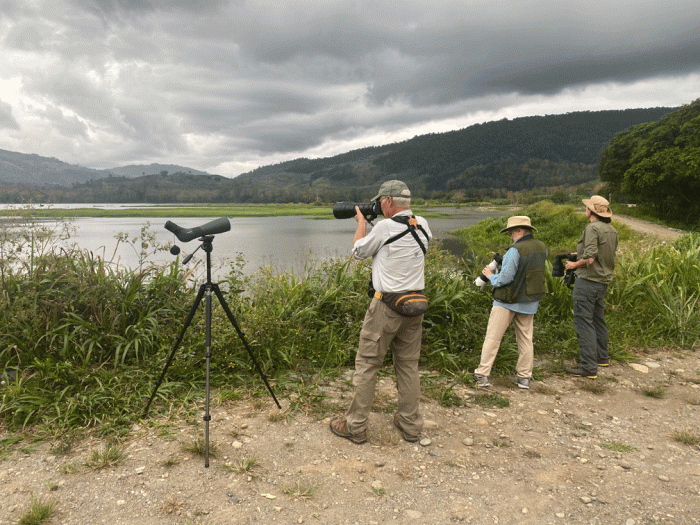
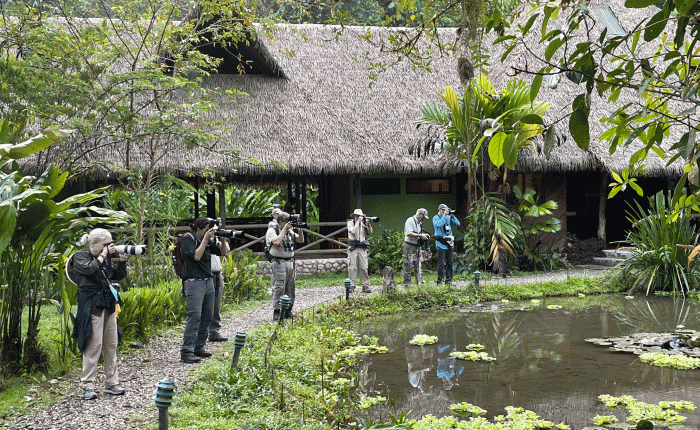
We walked down from the pasture and along the road and then up to a house off the main road. They had planted verbena bushes to attract hummingbirds. Here is a photo of the photographers trying to get that perfect shot.

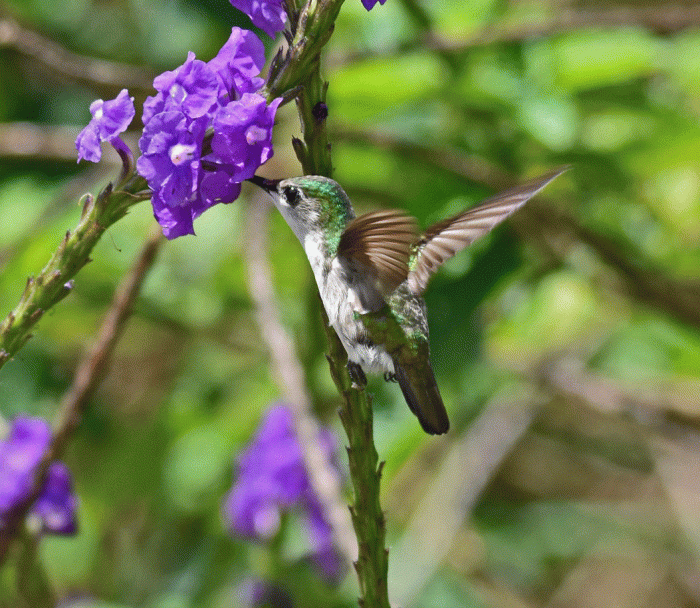
This is Doug’s photo of a Rufous-tailed Hummingbird, sipping from the purple verbena flowers.

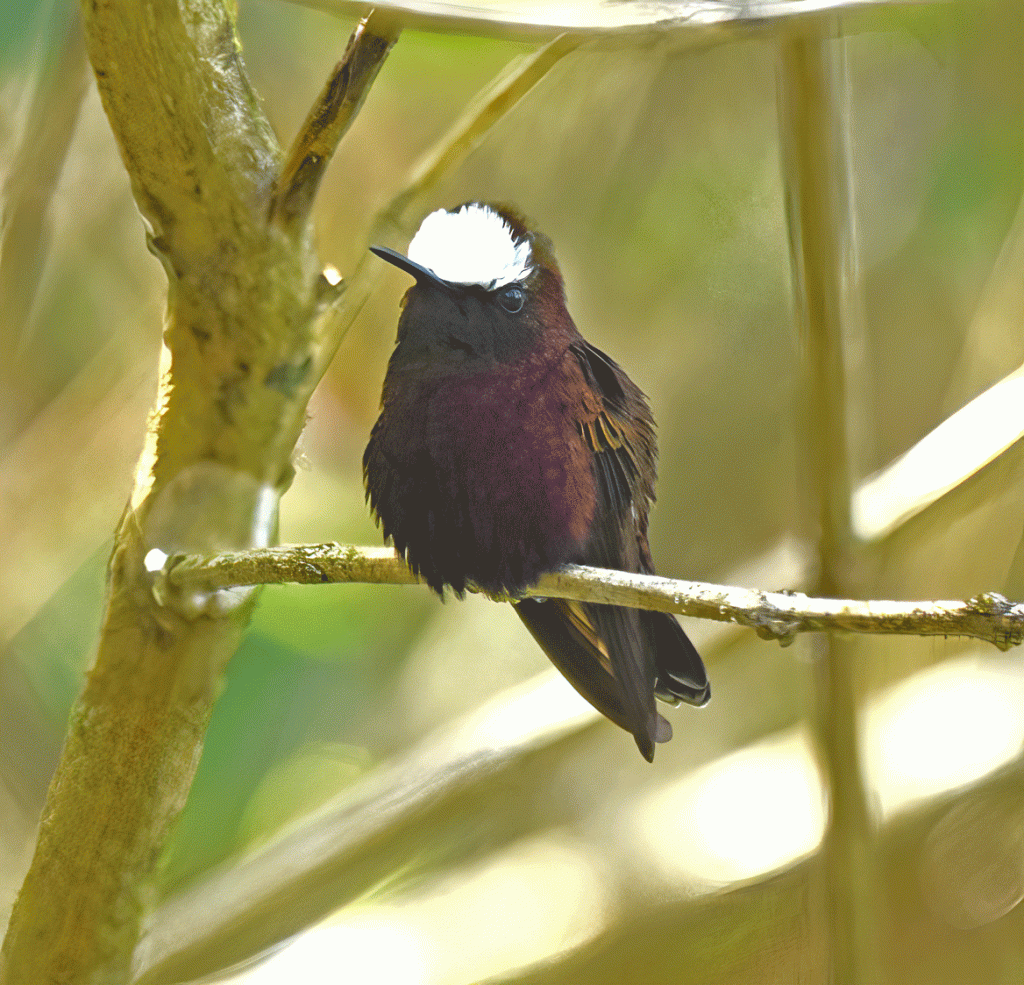
This little hummingbird is aptly called a Snowcap. It’s a little smaller than the Rufous Hummingbird that we have in the summer in BC. It also liked to visit the verbena flowers and the perches of the nearby bushes. We also saw a Black-crested Coquette, but it was very skittish and difficult to photograph.

After lunch, we took a bus ride to the La Angostura Reservoir.

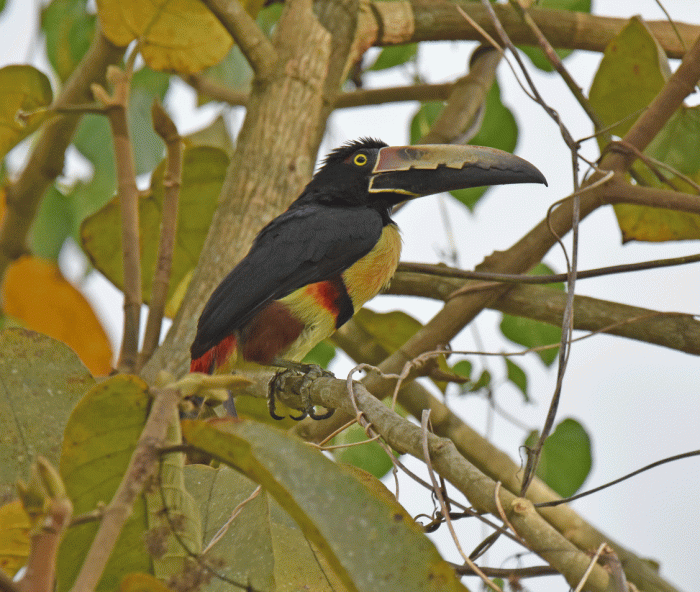
We saw a Collared Aracari in a tree alongside of the road. It is in the same family as the toucan but a little smaller (about 40 cm).

As we worked our way along the road, we had better views of the water. There were distant views of Great and Snowy Egrets, Great Blue, Little Blue and Green Herons along with a Limpkin (a new bird for us.)

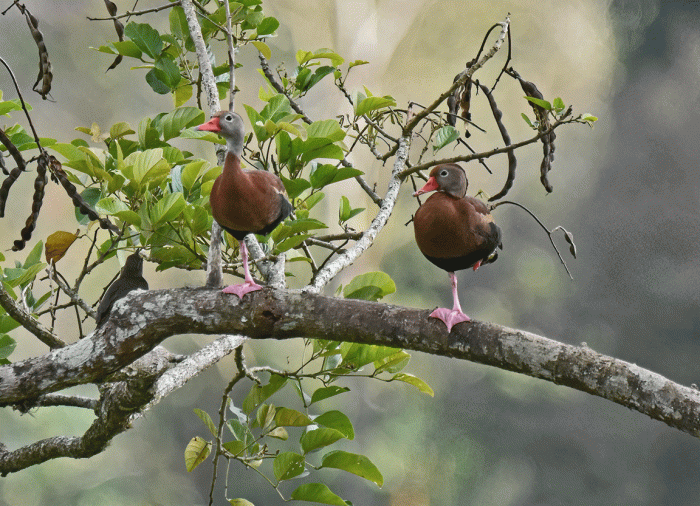
These Black-bellied Whistling Ducks looked comical perched in a tree. They nest in large hollows or holes in trees and often perch in trees.

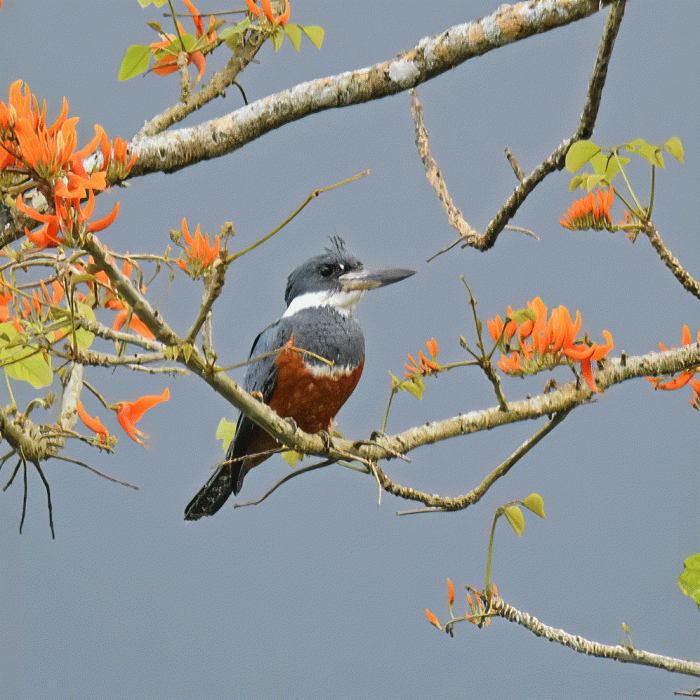
This female Ringed Kingfisher perched near the water. Ringed Kingfishers are the largest kingfisher in the Americas (about 40 cm in comparison to the Belted which is 33 cm).

After breakfast the next day, we stopped at a spot on the road that overlooked a ravine. We were almost even with the upper branches of a tall fruit-bearing tree. We waited for about half an hour before a cotinga arrived. This beautiful blue-coloured cotinga is called a Lovely Cotinga, and was a new bird for us. It’s a rather chunky bird, that is just a little shorter than an American Robin.

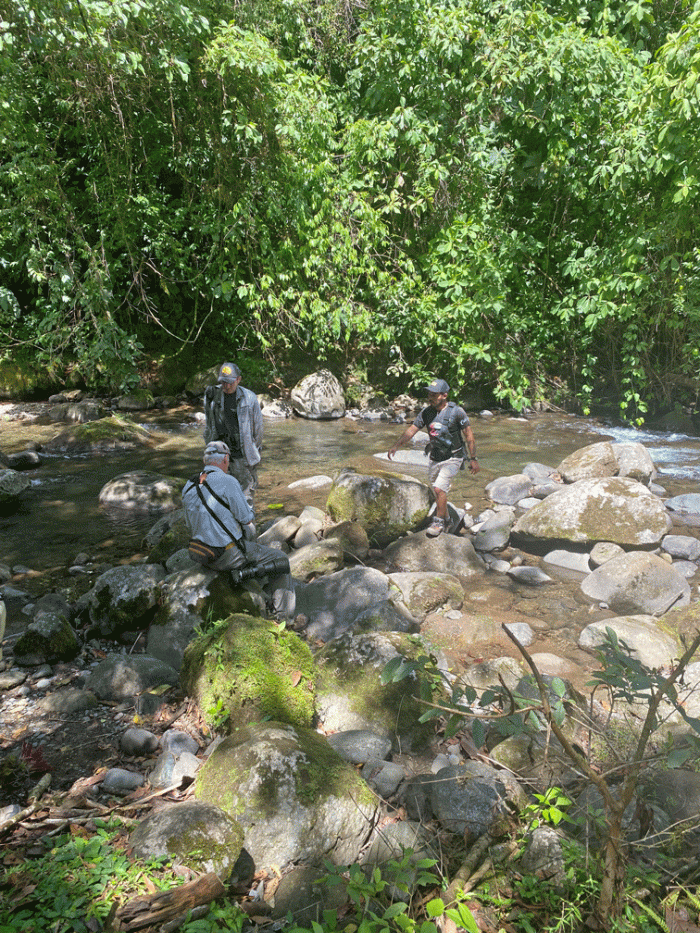
The bus took us to another birding spot where we walked on a road beside the Tuis River. There was one place where we could access the river and check for Black Phoebes and American Dippers. (which we saw)

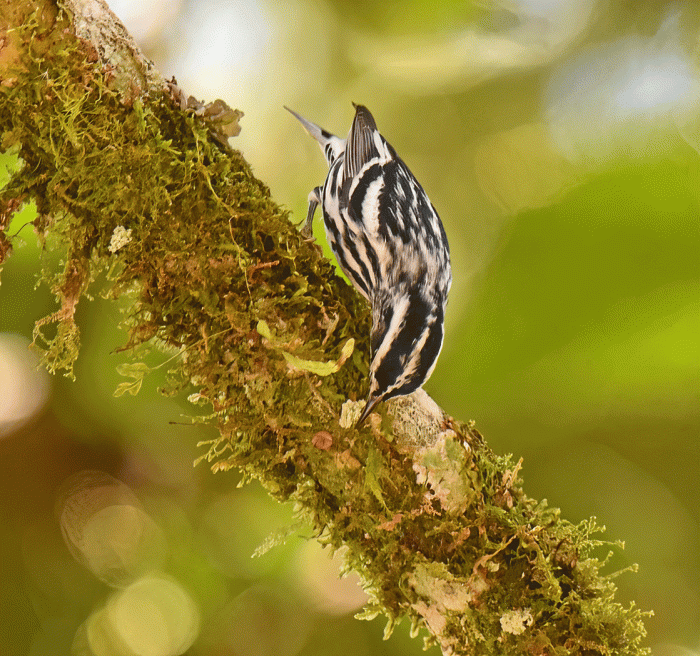
This Black-and-White Warbler was feeding along the sides of a branch of a tree near the riverbank.

This Collared Trogan allowed us good views of its beautiful back, but we couldn’t convince it to turn around and show us its reddish belly.

On our way back to our lodge, the bus took us to another birding “hotspot;” a bridge crossing a small, swiftly moving stream. A pair of Sunbitterns had made a nest on a branch over the stream which was about thirty metres from the bridge. We also saw a pair of Torrent Tyrannulets foraging at the stream’s edge. We waited awhile, but the Sunbittern stayed on the nest. It was fortunate that the birds chose to build a nest so close to a bridge and we would have been extremely lucky if it also chose to display its beautiful wings.

Later that afternoon, we took a trail from behind the cabins into the rainforest surrounding the lodge and walked along the edge of a ravine.

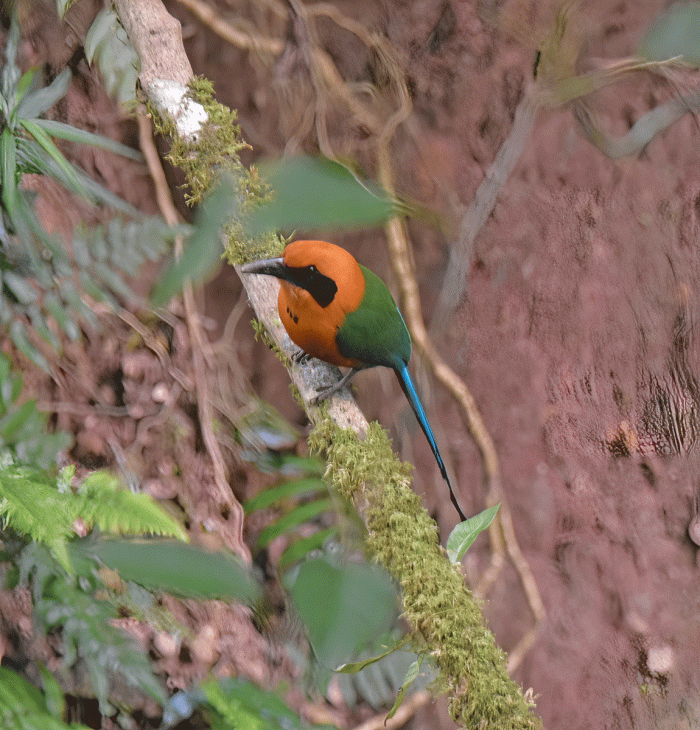
Below us, our local guide spotted a pair of Rufous Motmots on a branch overhanging the ravine. Here’s a photo of one of them. Motmots tend to stay still for long periods while they scan their surroundings for suitable prey – large invertebrates and small reptiles and amphibians. It is unusual to take a photo of a bird from above and it was tricky to get a view that was unobstructed by leaves and branches.

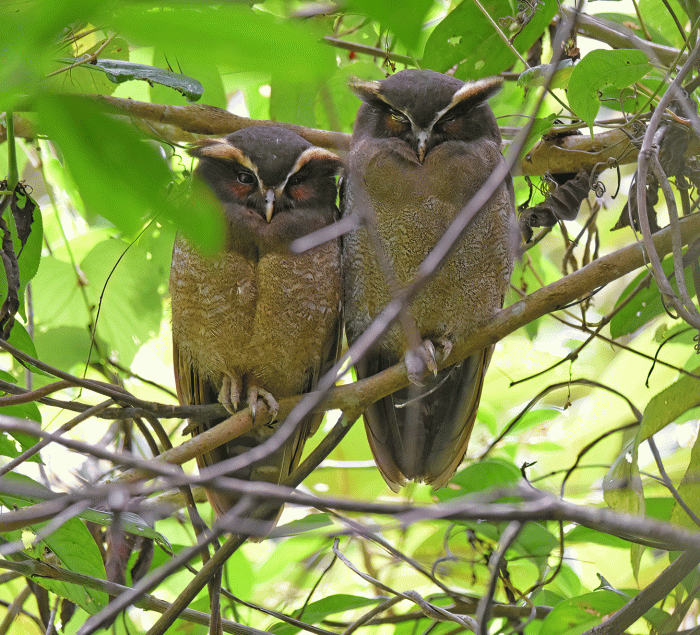
Further along the trail, our guide found a spot where two Crested Owls were roosting. We were quite a ways from them on the trail so they weren’t bothered by us, although it might be hard to tell from their expressions. They were the same species that we saw two days before.

After seeing the owls, we headed down another trail to the “Hummingbird Pools.” The trail winds along the sides of a steep canyon and ends at a viewing platform where you can see the pools in the stream below. We saw a hummingbird (a Crowned Wood-nymph) bathing in the shallow pools, and other birds also came to drink at the stream, but it was too dark to take good photos.

The next day we headed to the Talamanca Highlands and our next blog will be about our next few days at higher elevations.

Costa Rica in March – Part 1

Costa Rica in March – Part 1

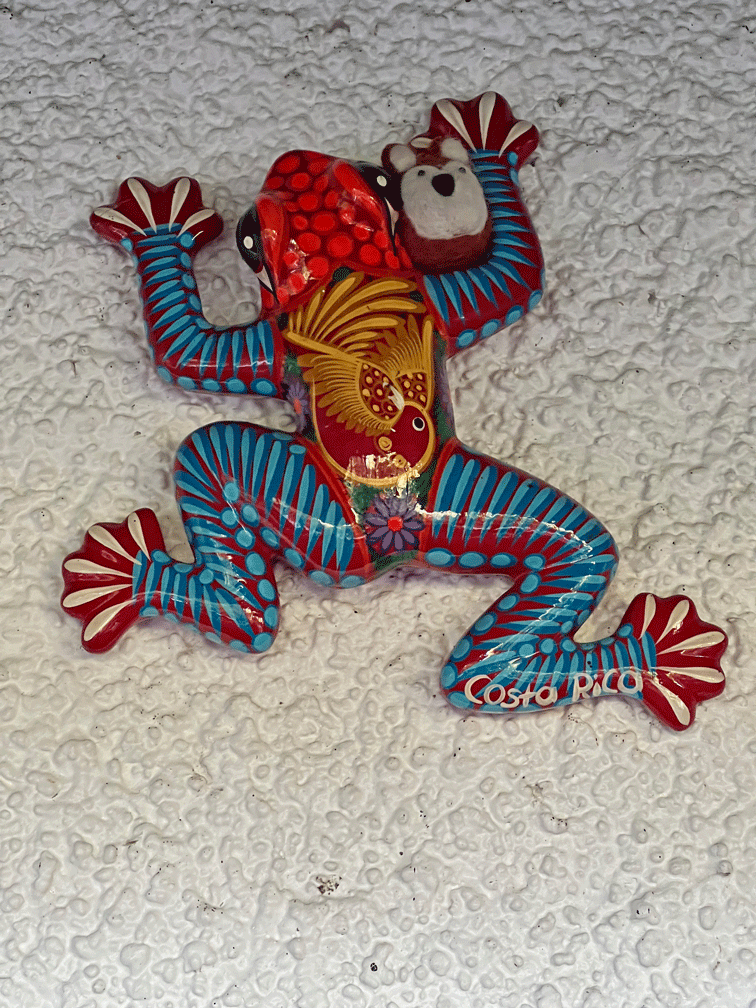
This March, we travelled to Costa Rica and joined an eleven-day “Birding with a Camera” tour organized by Tropical Birding. In keeping with our “Travels with a Fox” theme, we brought along our little fox mascot. In the photo below, the fox is tucked into the arms of a decorative frog which was on the wall of one of the lodges. The little fox will be included in various photos throughout the blog, but not pointed out, so it will be a bit of a “search and find” exercise.

This blog covers the first three days in San Jose, Hotel Robledal and the road trip to Gualipes.

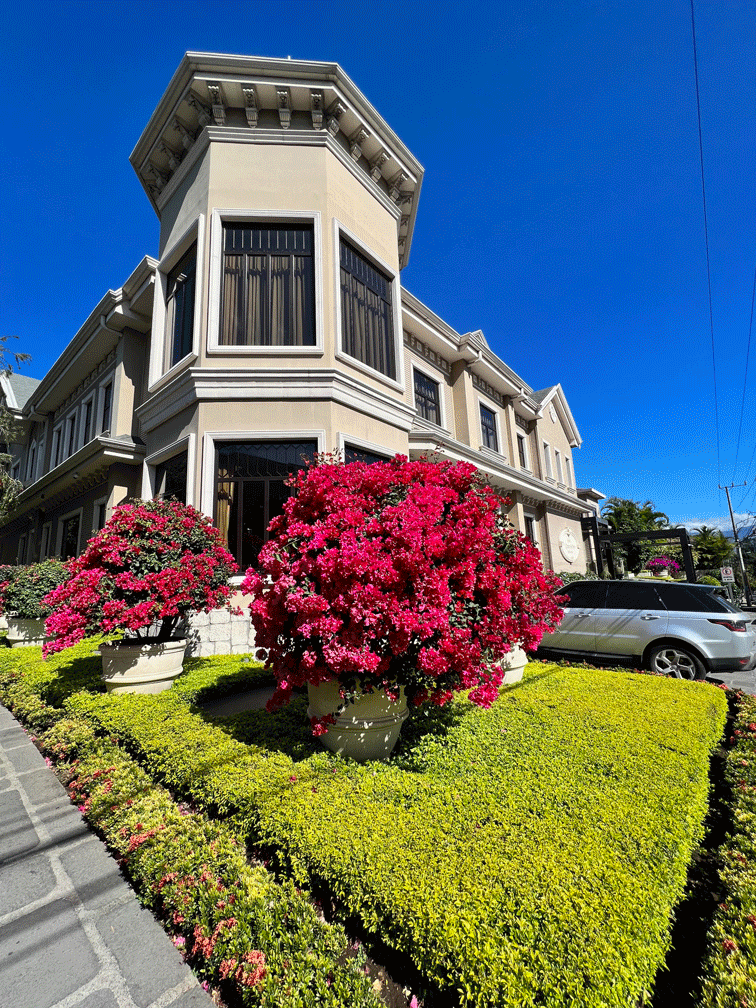
We spent a few days in San Jose before the tour to acclimatize. We stayed close to the city centre in Hotel Grano de Oro, one of the best hotels in the city.

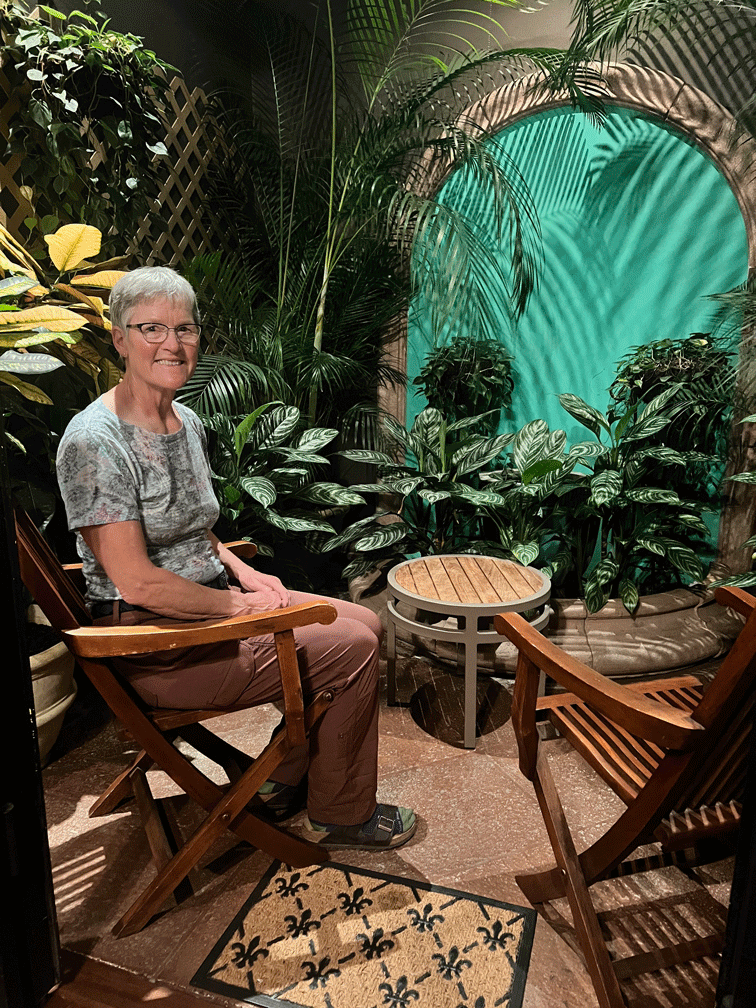
Our room on the second floor had a terrace with overlapping roofs that allowed air to come in but no rainfall.

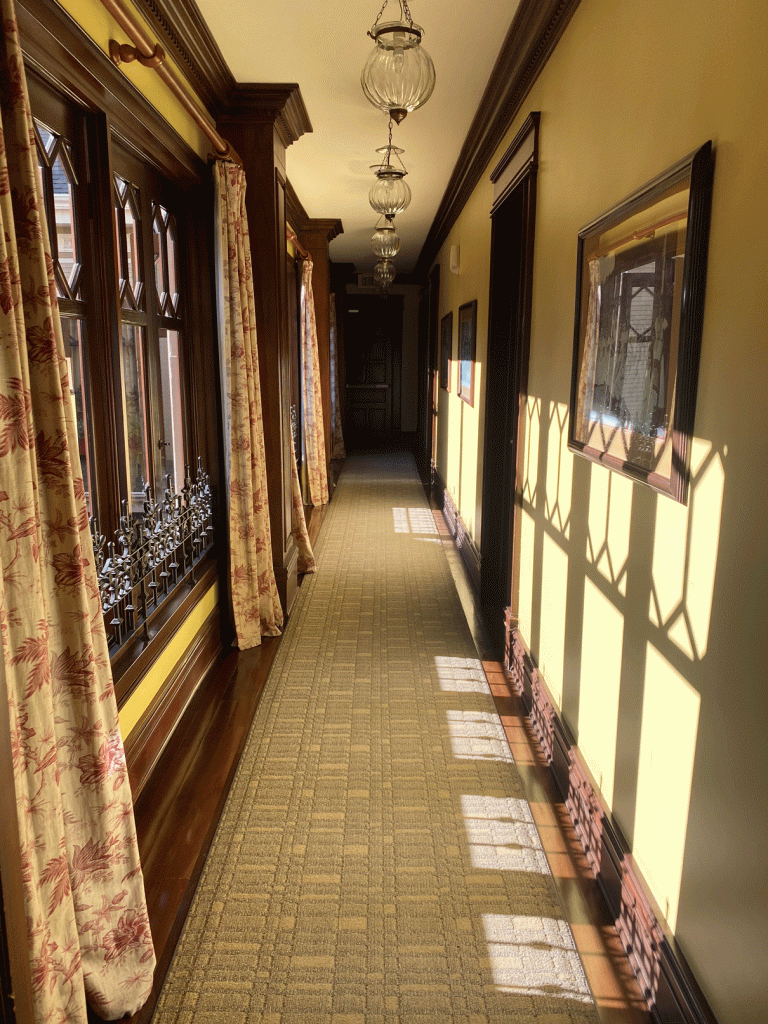
Here’s a view of the hallway right outside our door. The restaurant is below in the central courtyard, which allowed for good airflow when the windows were open. There was no air-conditioning, yet it was comfortable.

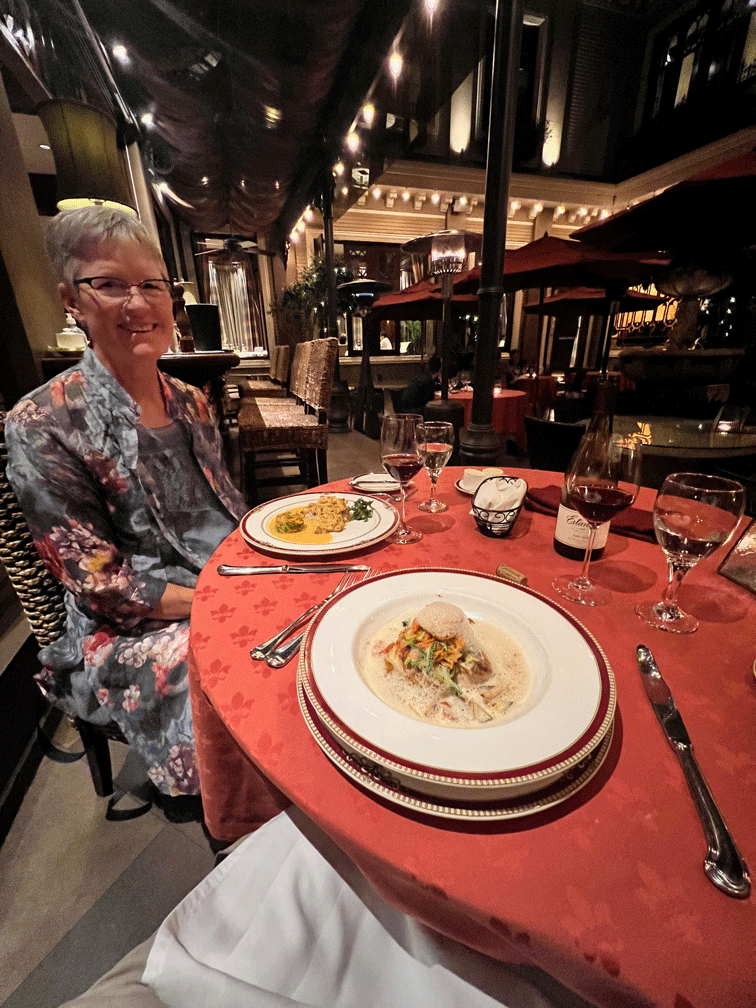
The food was amazing. The photo below was taken after 8 pm on the night we arrived, so there were less people there than the next night when we ate earlier. The hotel only has 37 rooms, so we were never crowded.

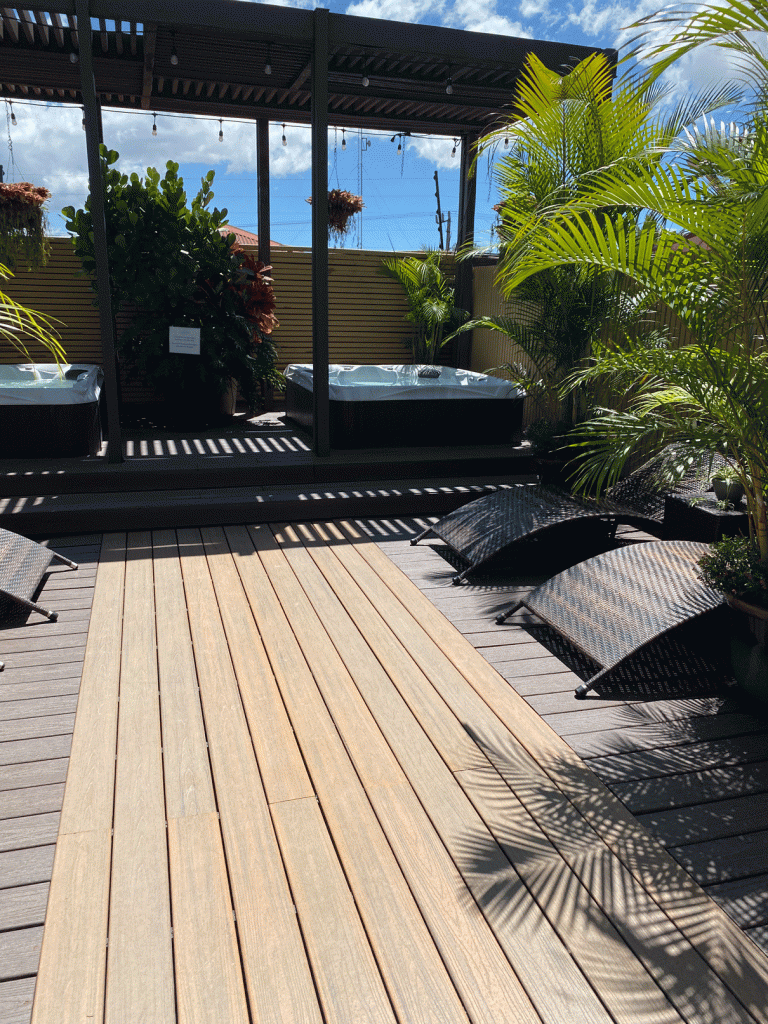
One day we reserved a spot for a hot tub on a roof-top terrace.

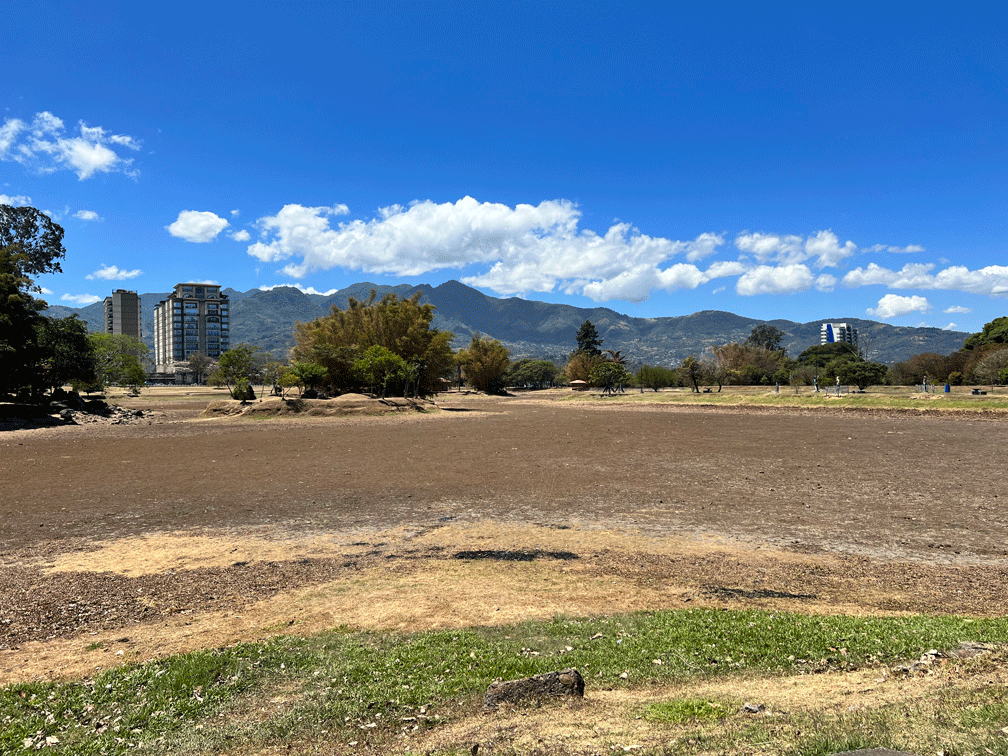
The Sabana Metropolitan Park was a fifteen minute walk away from the hotel, so we went there one morning for some birding on our own. If you do an internet search about this park, you will see images of a beautiful park surrounding a large lake. The lake is now totally dried up and looks like it hasn’t had water in it for quite awhile. But is was a large open space and we got some exercise and saw some birds.

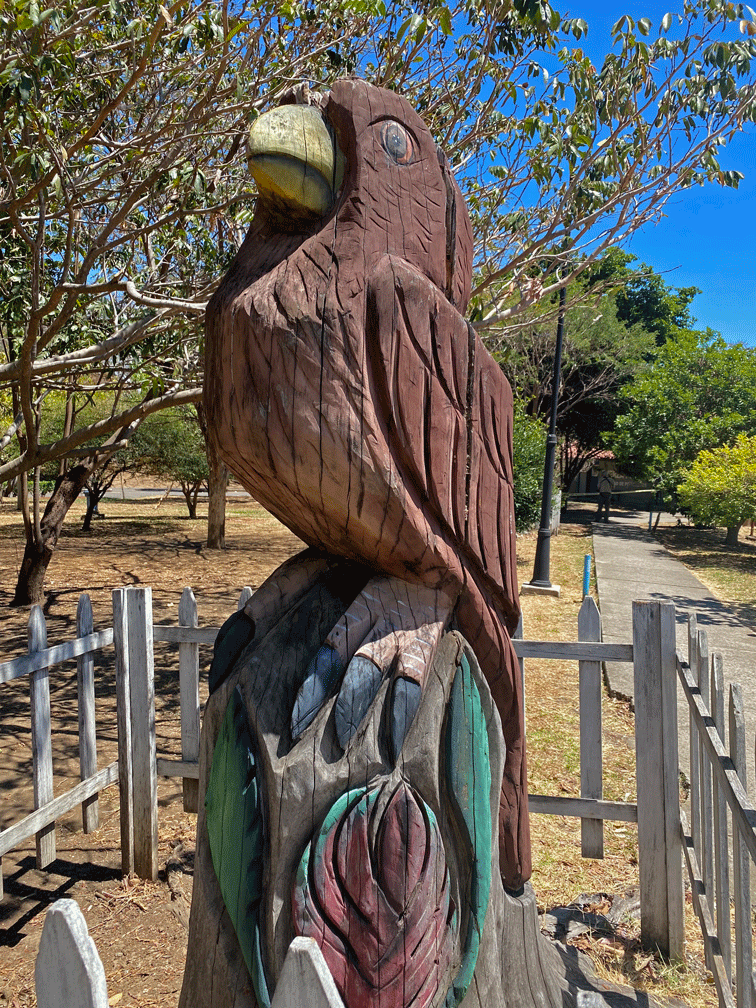
Here is a weathered wooden statue carved from a stump. Most of the structures in the park were done in the 1970s and they are showing their age.

We located a pair of noisy Orange-chinned Parakeets. Because we were looking up at them, we could see their orange “chins” easily. Although we had seen this species in a previous trip to the tropics, it was the first time that we had found and identified these birds by ourselves.

We searched out a Rufous-collared Sparrow because we had read that although it was a common sparrow throughout the middle and upper elevations, it was not found in forests. It turned out that we saw plenty of these sparrows throughout the trip, but we think the first one that we saw was pretty special.

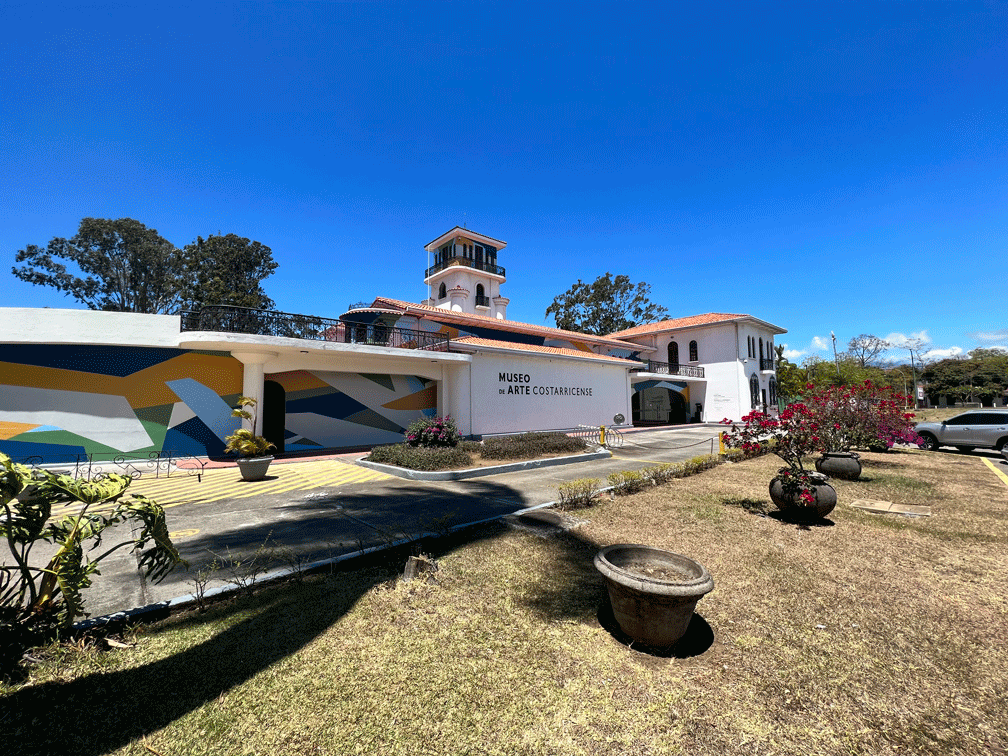
The Sabana Metropolitan Park is on land that used to be an airport. Adjacent to the park, is the Costa Rican Museum of Art, which is housed in the old terminal building. The building was opened as an air terminal in April of 1940 and its neo-colonial style was typical of Latin American architecture of the time. It served as an international air terminal until 1958.

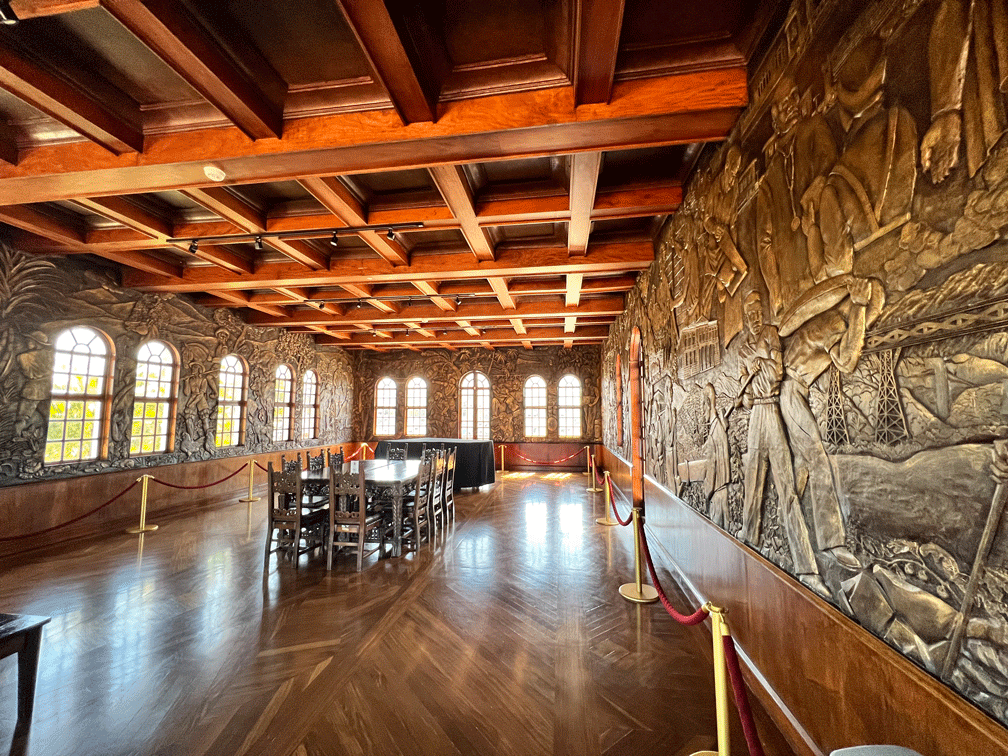
We visited the museum one morning. Below is a photo of the Golden Room which used to be the diplomatic room of the former airport. The stucco mural covers all four walls and depicts Costa Rican history from pre-Columbian to 1940. It also includes plants and animals of the region.
There are other permanent displays outside in the sculpture garden. We like to call this one, “Bumpy Soccer Field” or for Latin America is could be “Bumpy Football Field” but its real name is “Heterotopia.” There seems to be a lot of deep thinking involved in this kind of art.
We also walked the other direction from our hotel towards downtown, to the Central Market. It is an enclosed city block and is full of all kinds of shops. Wendy bought a couple of handbags, but mostly we were there to experience the place.

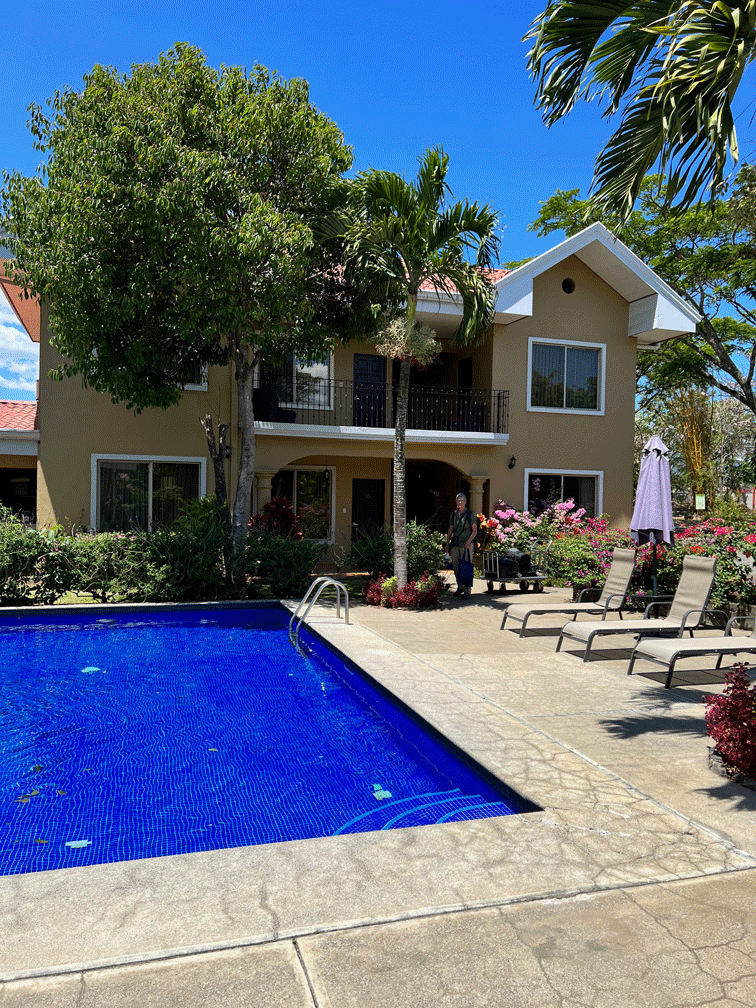
Soon it was time to join the group at Hotel Robledal that was located close to the airport in Alajuela. We enjoyed a cool swim in the pool.

The grounds were home to many birds.

There were two Feruginous Pygmy-Owls roosting in the trees just outside our balcony.

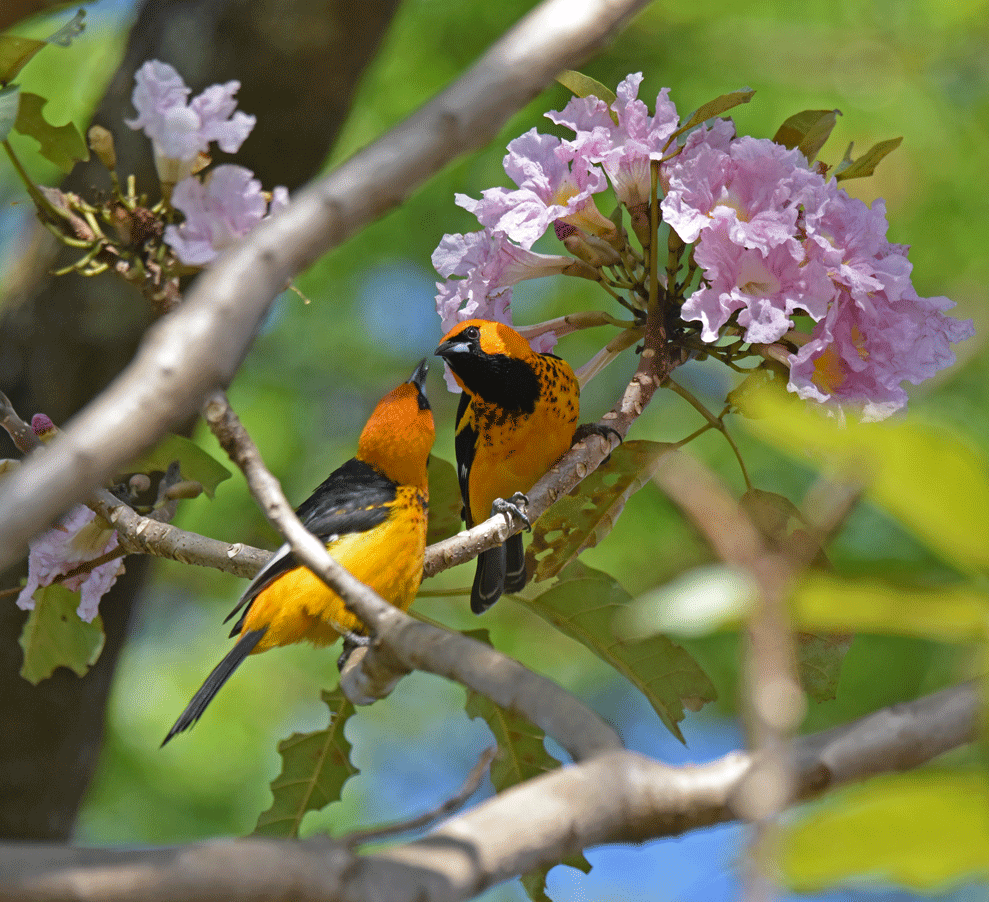
These Spot-breasted Orioles were new to us. Both males and females have similar colouring.

We took a long detour on our way to our first lodge, that took us over the Central Mountains to Guapiles and the Caribbean region of Costa Rica. Near Guapiles, we visited a private home that had set up a bird-viewing area for visiting birders.

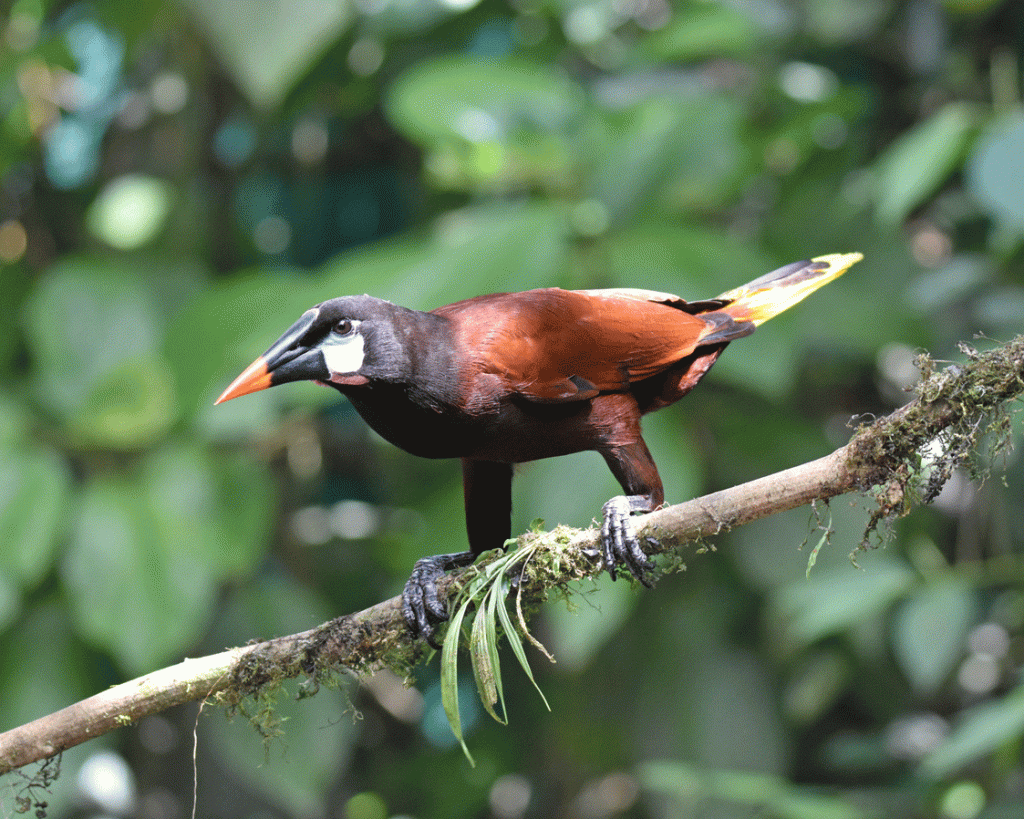
We got very good views of a Montezuma Oropendola. Oropendolas produce bizarre gurgling and rasping noises. They nest in colonies and produce long pendulous nests.

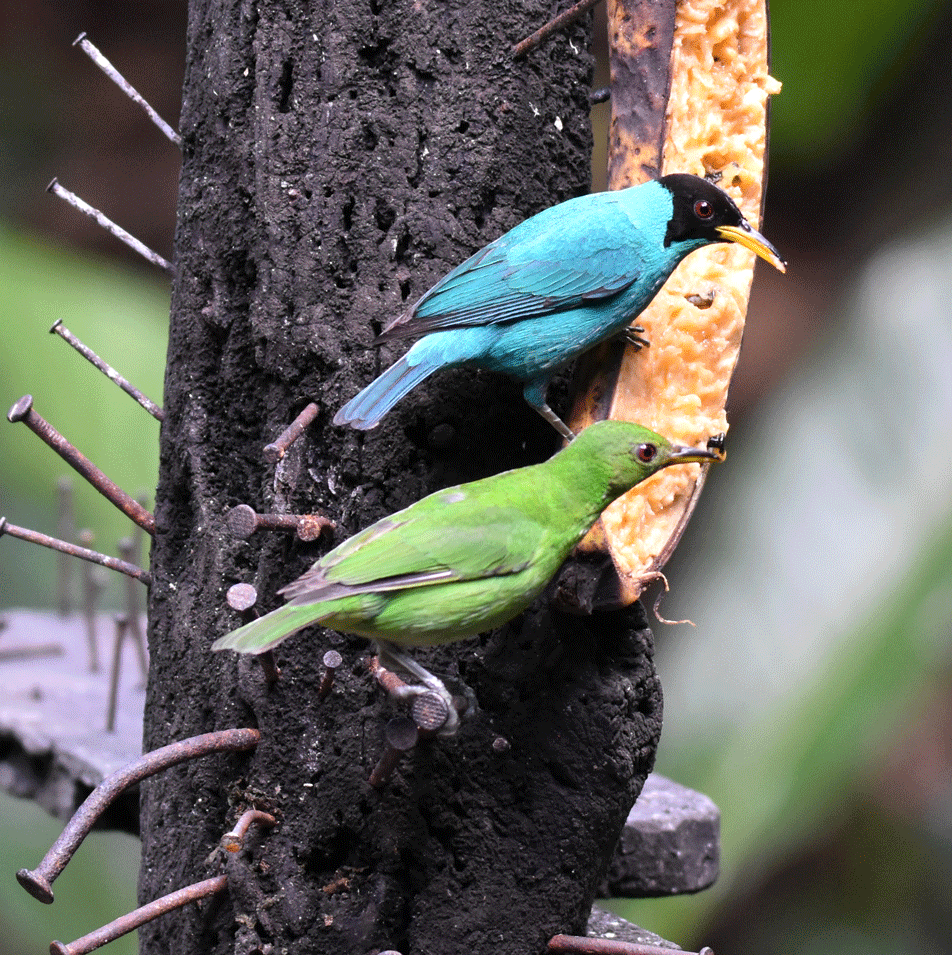
Here are two Green Honeycreepers. The species is named for the female one (the green one), and not the black-headed blue one (the male).

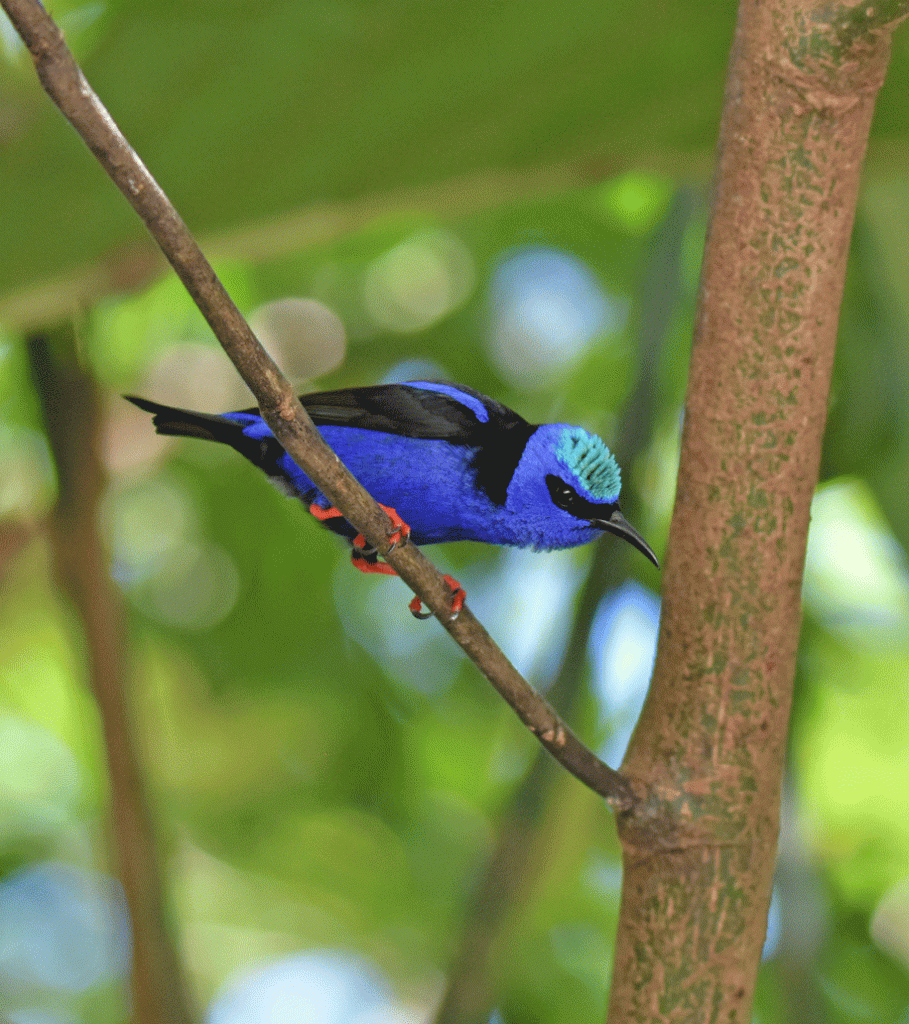
This pretty bird is a male Red-legged Honeycreeper. Honeycreepers feed on fruits, insects and nectar.

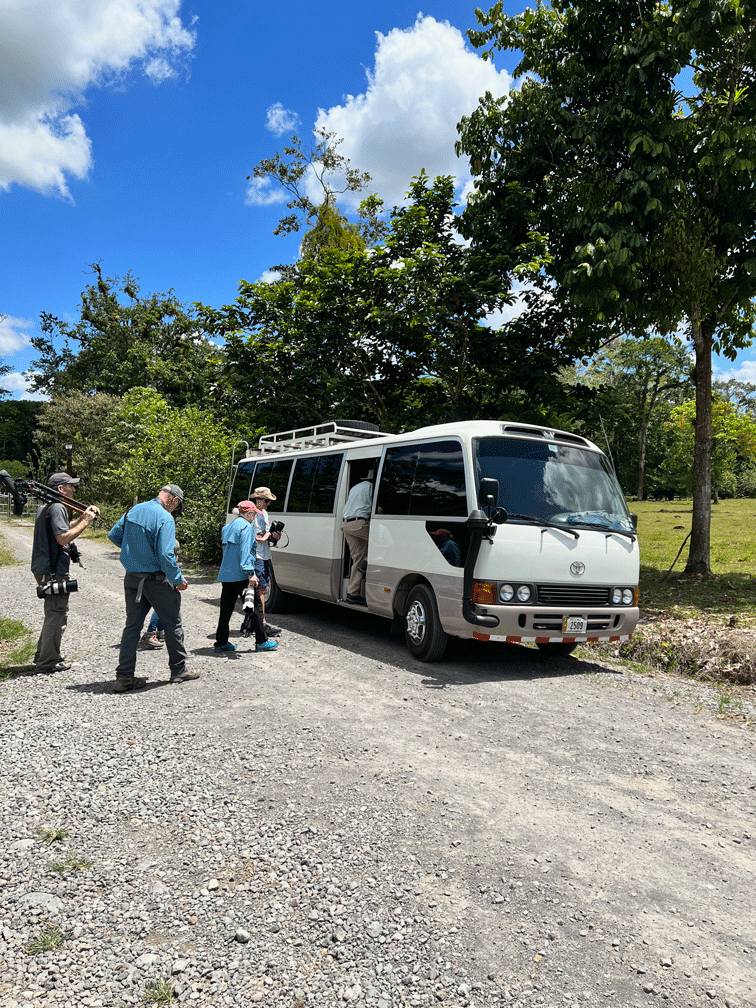
A guide from the “Guapiles Feeder Place” (our name for it), came with us and we loaded into our bus and headed out to a nearby location.
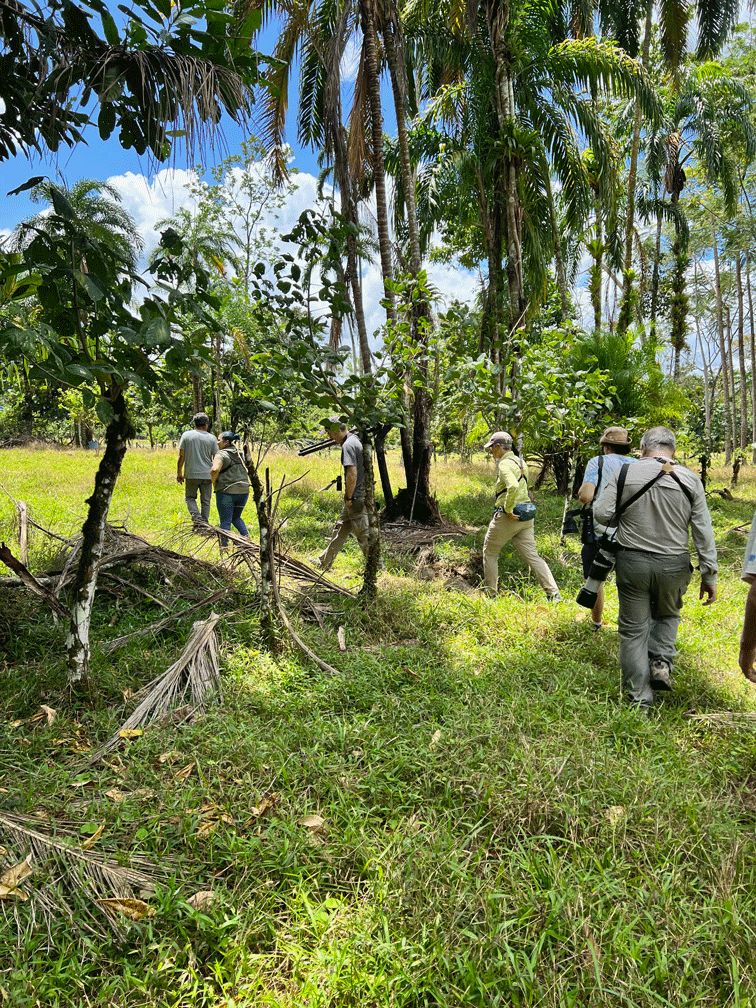
We tromped through some rutted fields to an owl roosting location. We saw a pair of Crested Owls, but they were quite obscured behind branches. Two days later we had a better view of the same species, so the later photo will be on the blog.
We took another forest trail so we could see Honduran white bats (Ectophylla alba) also known as Caribbean white tent-making bats. These bats build “tents” out of Heliconia plant leaves that they first cut carefully with their teeth. Here the local guide and our tour guide are looking at the roosting bats.

Here is a photo that Doug took with his cell phone. They are really tiny bats with wingspans of no more than 10 cm. They are frugivorous, preferring one species of fig which means that habitat loss will greatly impact the population numbers.

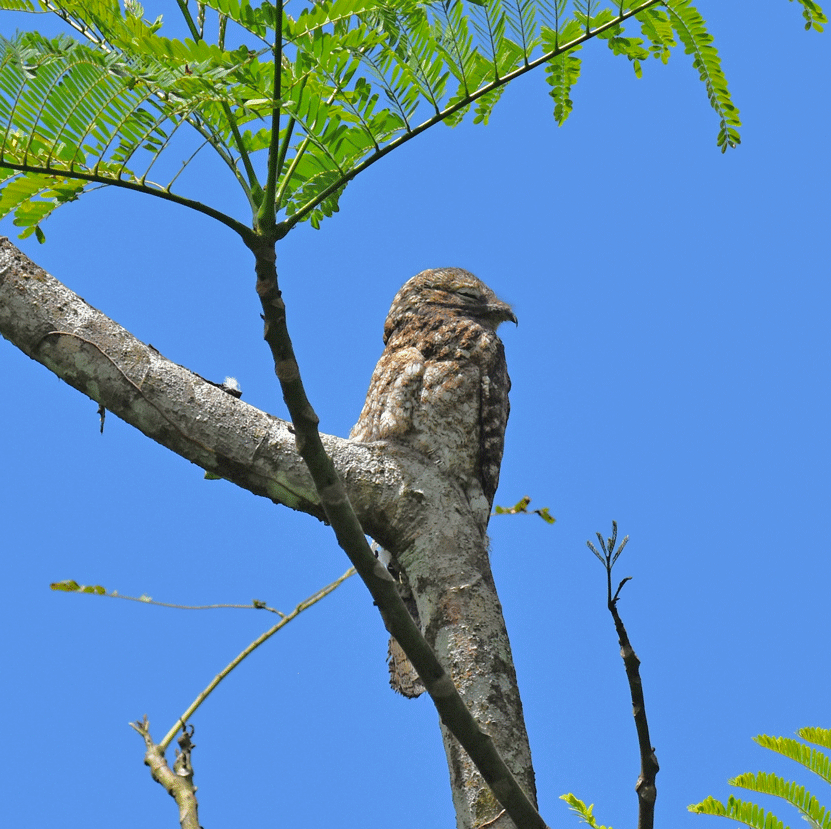
Our local guide took us to another location that was a known roosting spot for a Great Potoo. The nocturnal potoo looks so much like a stub of a branch that it isn’t concerned about being harassed while it sleeps the day away.

We continued our route to our first lodge: Rancho Naturalista in the Central Caribbean Foothills. The next blog will be about our adventures there.

Birding in Arizona: February 2022

Birding in Arizona: February 2022

This blog is mainly about the birds we saw in February. Although the first several photos are actually from January.

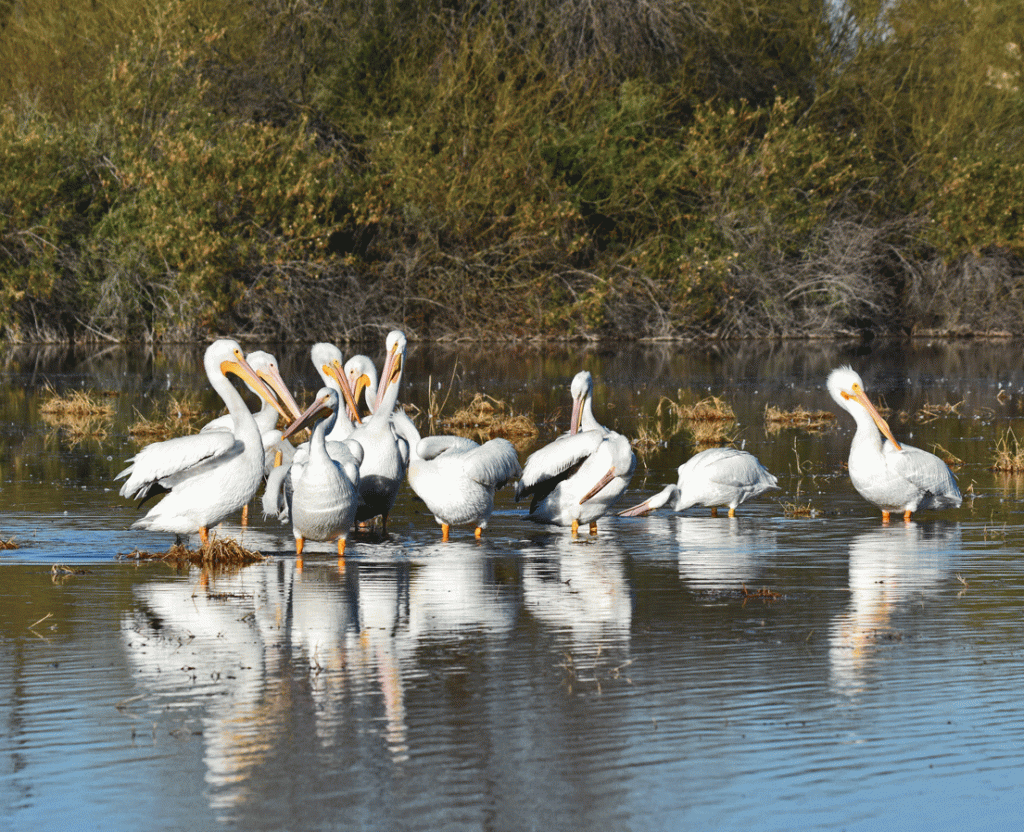
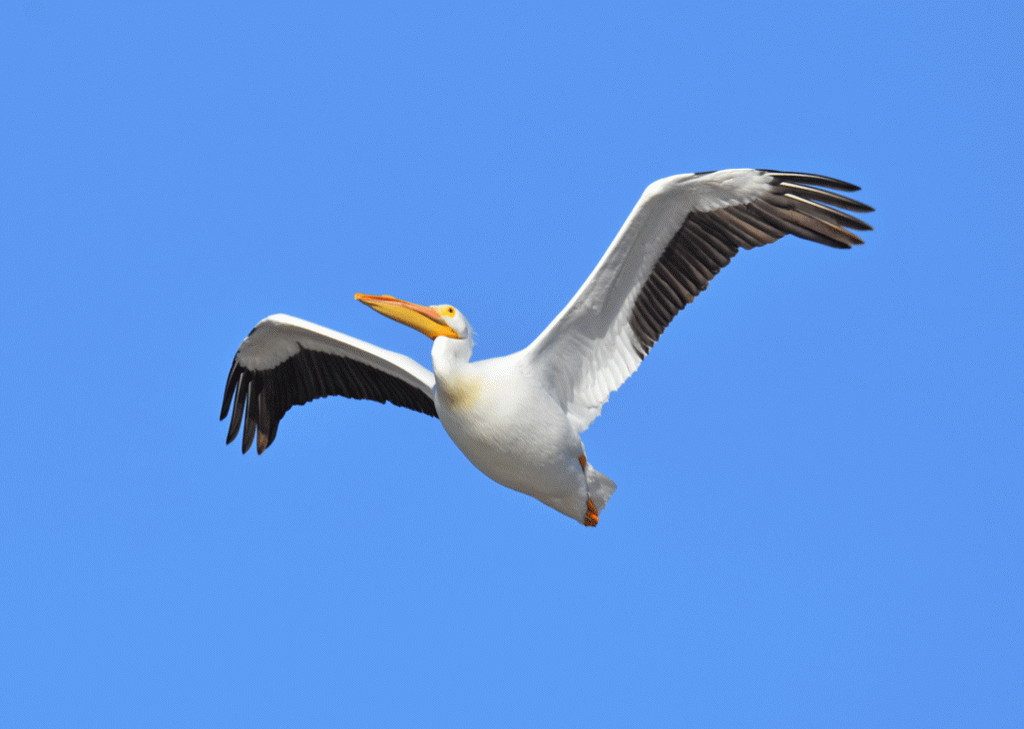
We drove up to the Phoenix area on January 24th to bird at the Riparian Preserve at the Gilbert Water Ranch. These American Pelicans were basking in the morning light.

We were glad we went early enough to see them, because they soon flew off. One flew overhead when we exploring other trails. They are very distinctive and comical-looking birds.

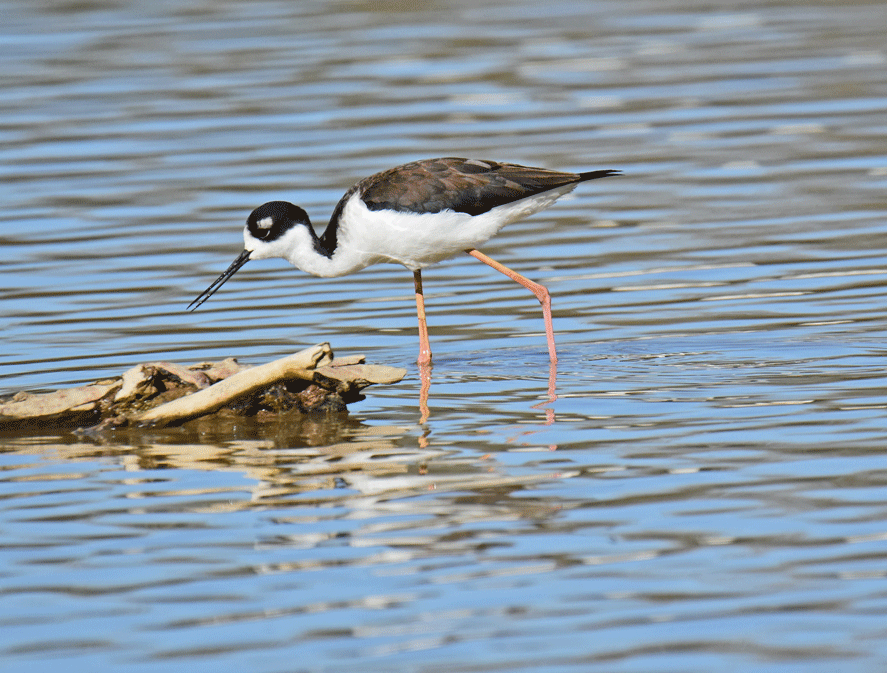
There was plenty of shallow water at the Preserve. We saw at least thirty Black-necked Stilts, but this one was the closest. Black-necked stilts walk delicately on their extraordinarily long red legs.

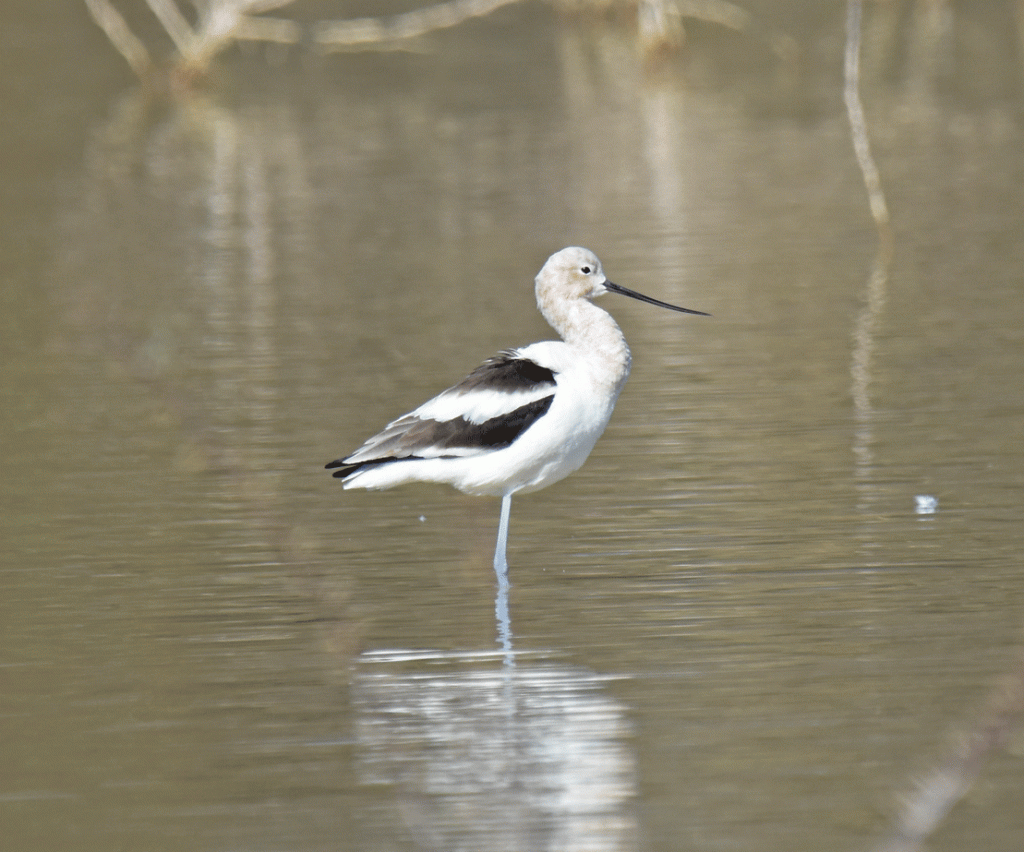
American Avocets can be seen in BC, but when we see them there, they are in breeding plumage with rusty heads and necks. Both males and females have the same plumage, but females’ bills are strongly upturned. The bird in the photo is likely a male avocet since his bill is rather straight.

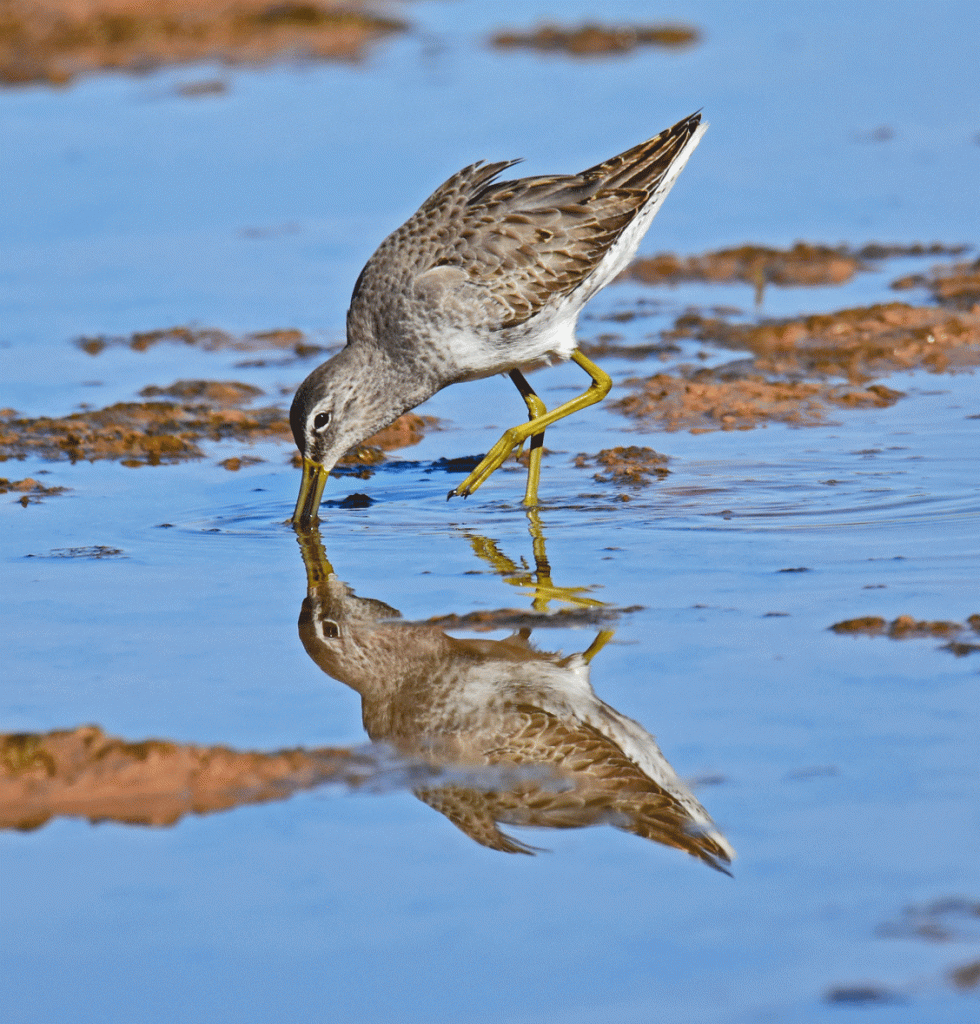
We also saw over forty Long-billed Dowitchers. They also prefer shallow muddy pools.

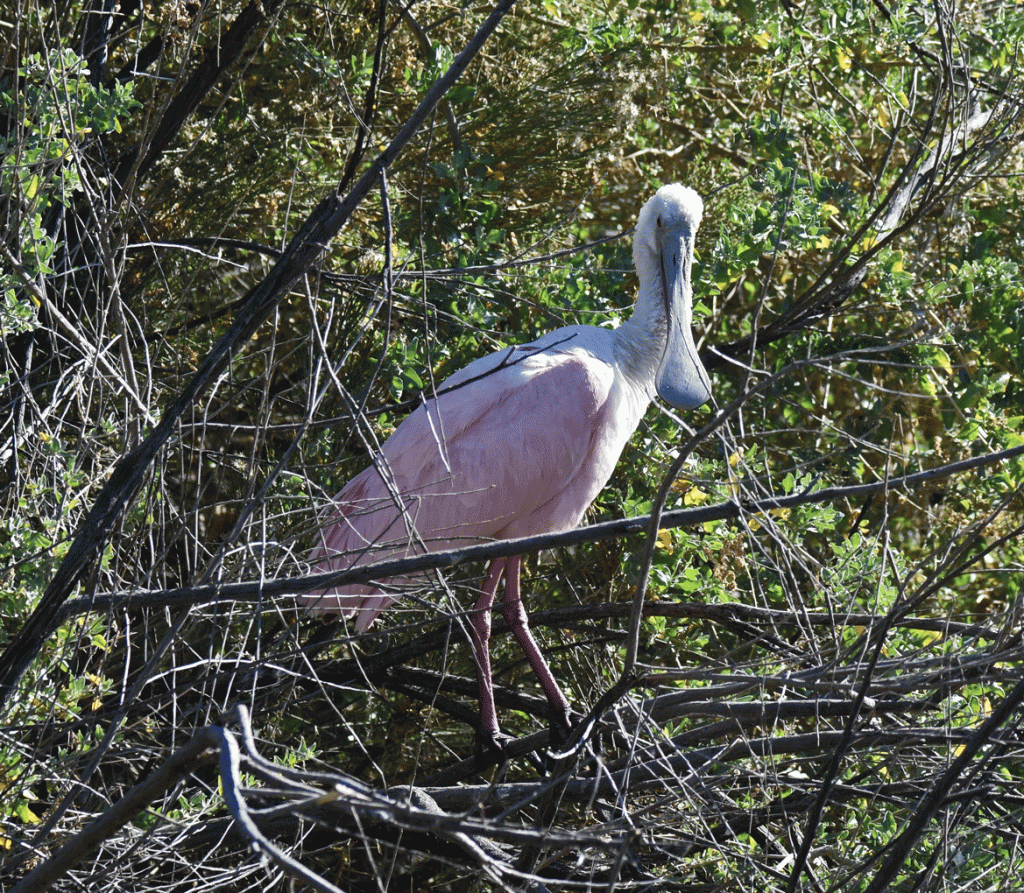
The most exotic bird in the Preserve was the Roseate Spoonbill. It sticks around, mostly roosting in the same area. Most of the time it was sleeping. Doug was lucky enough to catch a photo in the few minutes it was awake. Normally spoonbills are found along the Sea of Cortez in Mexico, or along the coast of Florida, so this one was a long way from its regular home.

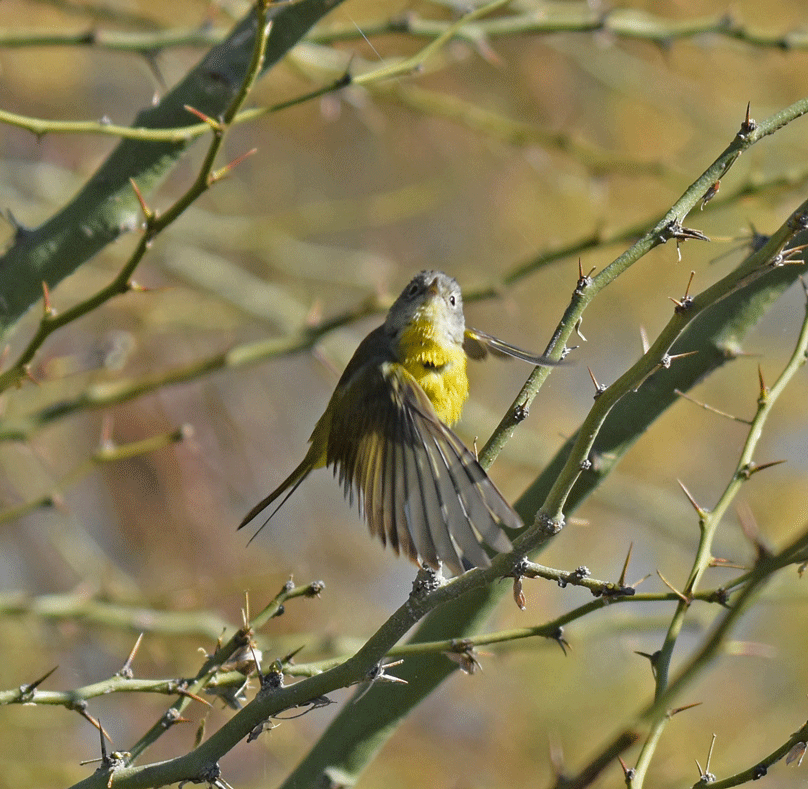
A Nashville Warbler usually spends its winter in Mexico and farther south, but we suppose this one thought Arizona was a fine place to spend some time. Doug’s camera caught him with a curious expression.

We had reports of sightings of a LeConte’s Thrasher in the salt flats northwest of Tucson. So we went to see if we could see one too. It was a very harsh and arid environment with lots of bare sandy ground interspersed with saltbrush and creosote bushes. Here’s the view with the eastern mountains in the background.

And here’s looking in the other direction, with the western mountains in the background. A whole lot of nothing…and no LeConte’s Thrasher.

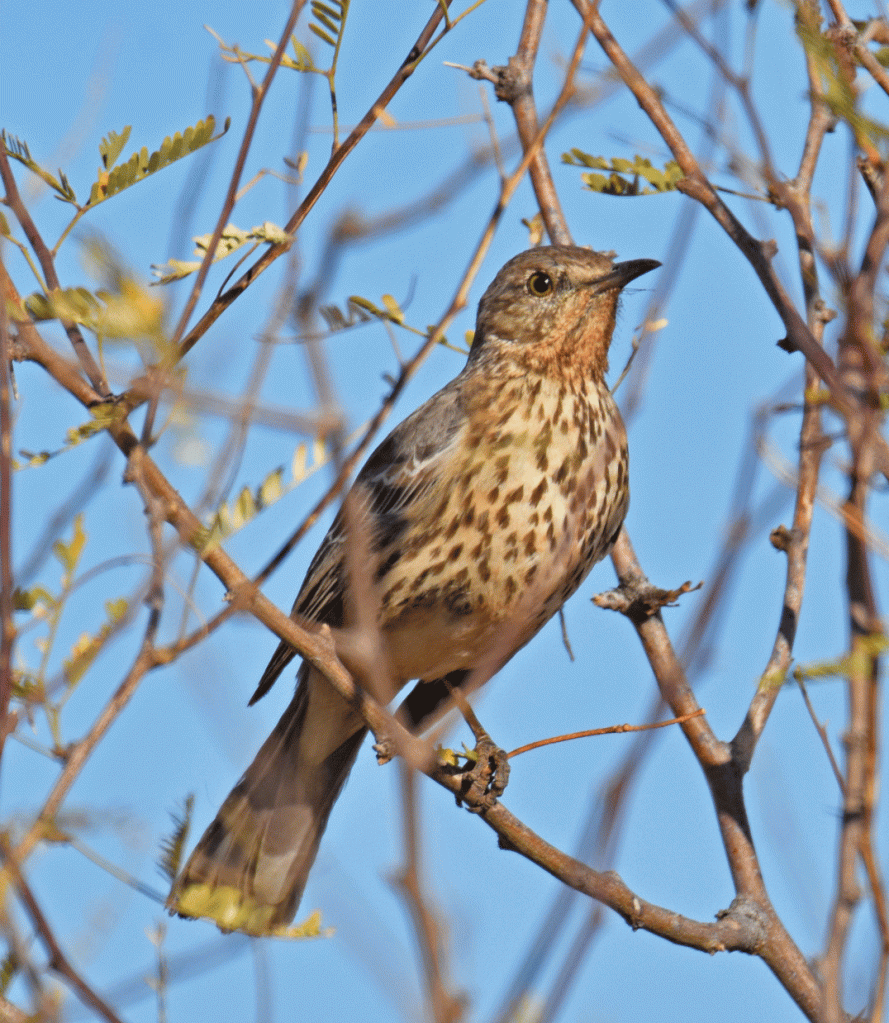
But we did see a new kind of sparrow to us (Sagebrush Sparrow) and this Sage Thrasher sang and posed.

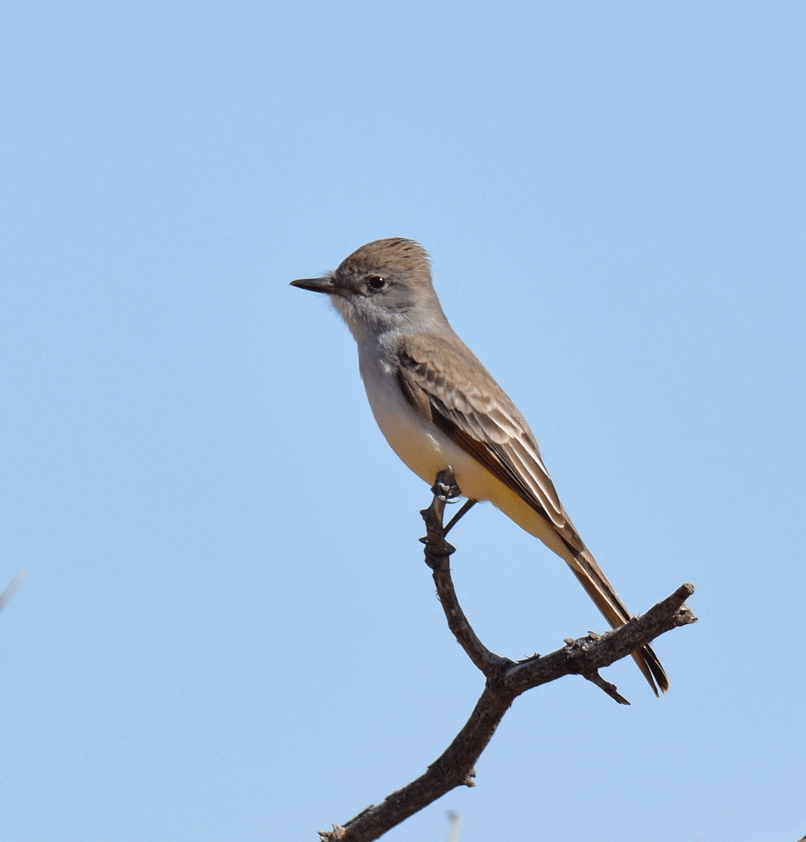
We also had a good view of an Ash-throated Flycatcher.

If you look closely at the crook in the saguaro, you can see a tangle of sticks with a Great Horned Owl sitting on top. There were no trees in the area, so the saguaro was the best roosting spot around.

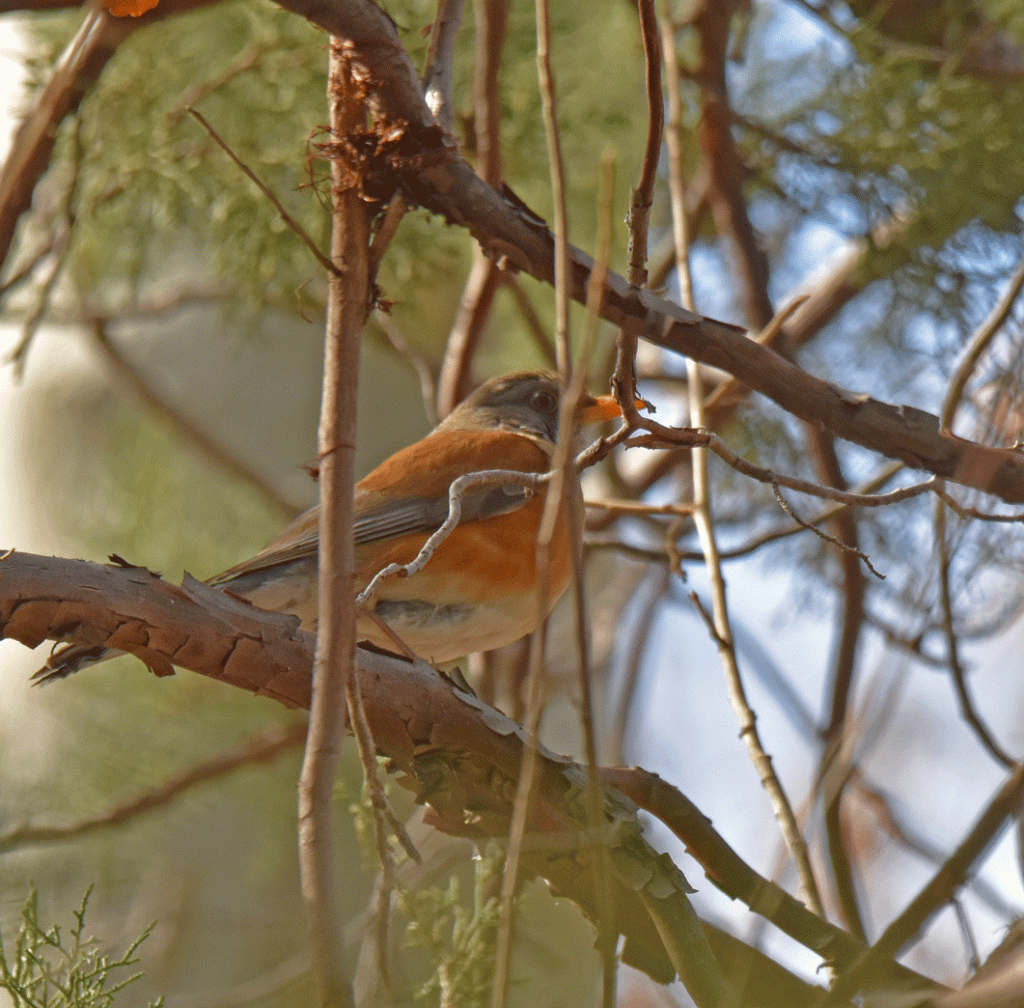
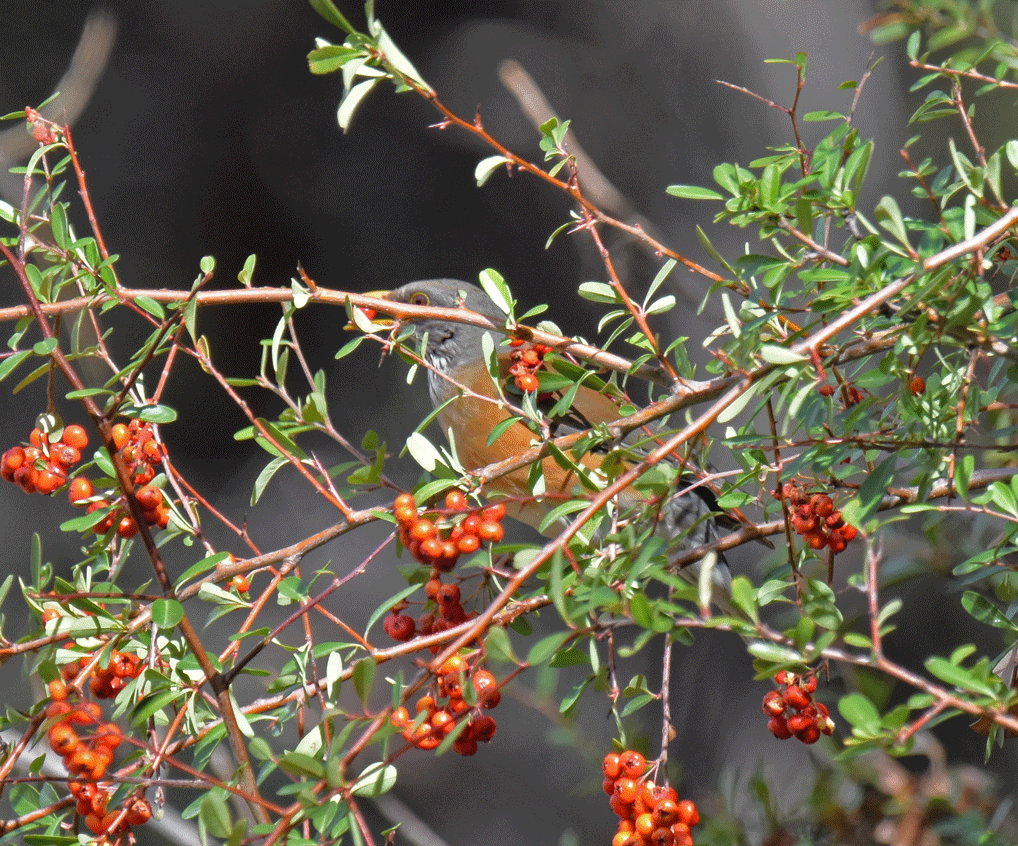
We birded at Madera Canyon a couple of times in February. It’s a much more hospitable environment. This Rufous-backed Robin was enjoying the berries in the pyracantha bush (a non-native shrub that grows to 3 metres or more.) The Rufous-backed Robin is a bit more secretive than the American Robin that we are familiar with in Canada. Notice that along with rufous colouring on its back and wings, it has an all-dark face without white markings around the eye.

This photo shows the berries on the bush really well, but it also shows a bit of the white with black-streaked throat. Not all birds pose for the camera; sometimes they stay hidden in the branches.

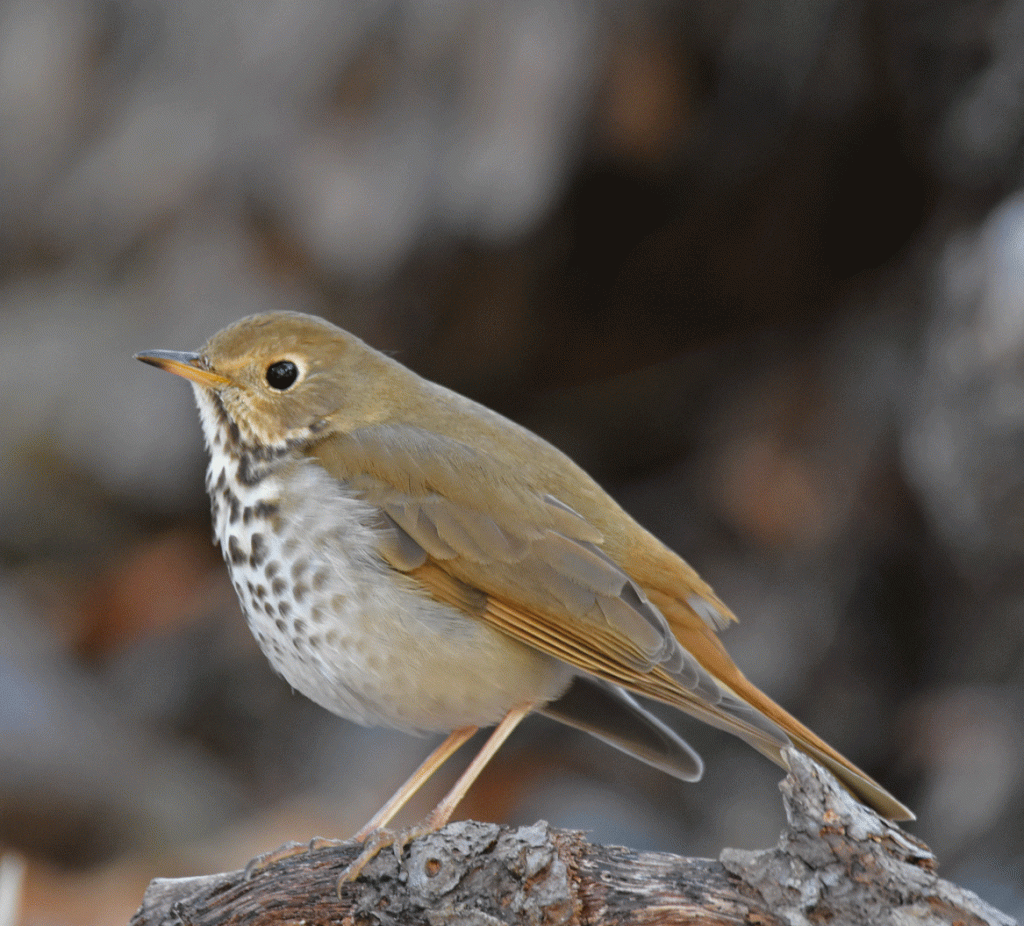
At Madera Canyon we can usually count on a Hermit Thrush to perch up on a rock, or in this case a branch.

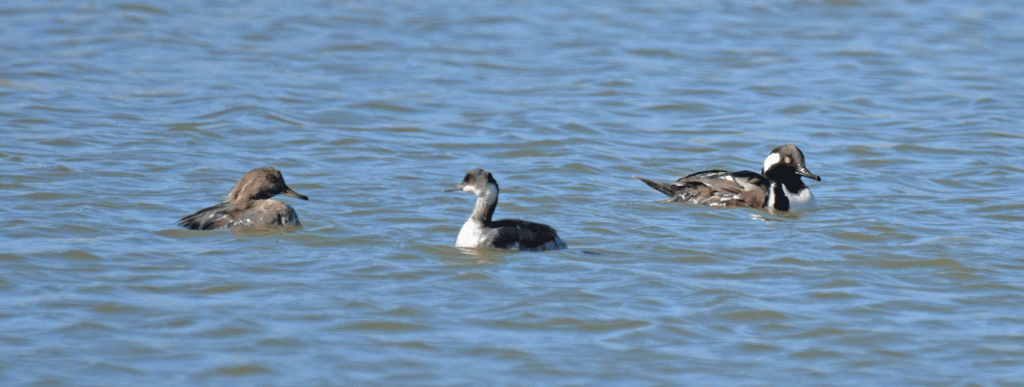
On our way back to Tucson from Madera Canyon we usually stop at Canoa Ranch Conservation Park. This time there was an Eared Grebe and some Hooded Mergansers. An Eared Grebe doesn’t develop its wispy yellow plumes (which give the impression of ears) until April.

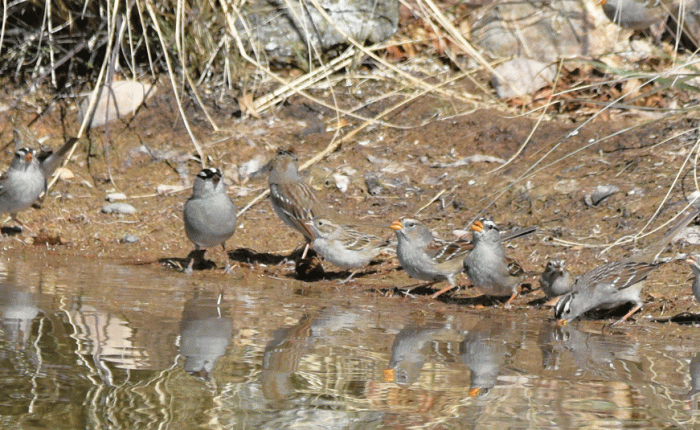
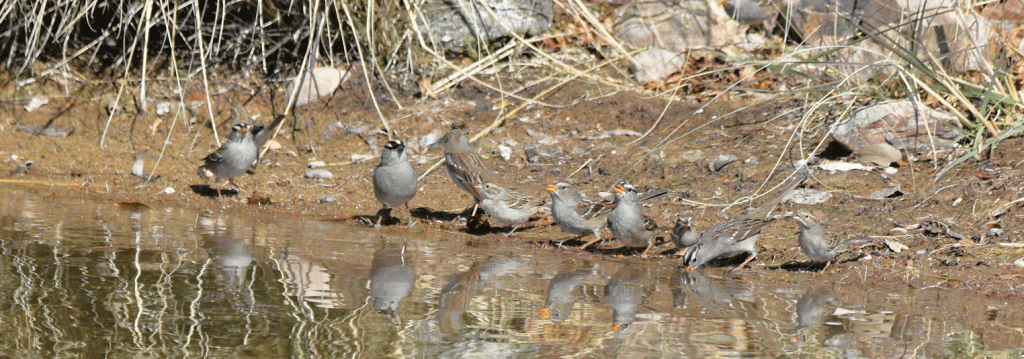
There are at least a hundred sparrows at Canoa. White-crowned sparrows are the most numerous, and are the bigger birds in the photo below. The smaller sparrows in the photo are Brewer’s Sparrows. We’ve also seen Lark, Lincoln’s, Savannah, Song and Rufous-winged Sparrows. Persistent (or lucky) people could spot a couple of Clay-coloured Sparrows among the large flocks, but we have not put in the effort required, especially for a bird we can see very easily in the summer in BC.

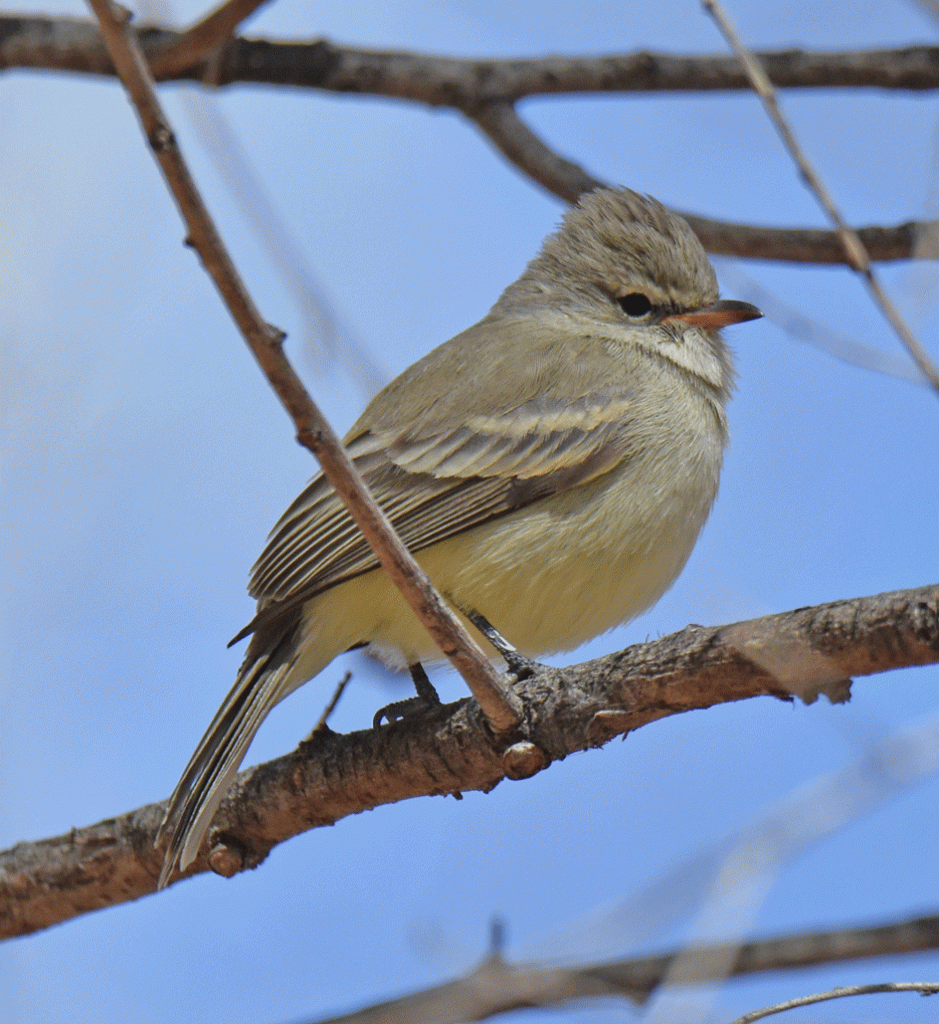
Another favourite birding destination is Tubac. At the end of February we were fortunate enough to get good views of a Northern Beardless-Tyrannulet. It’s a very small bird of just less than 4 1/2 inches or 11 centimetres long. Even though there is “Northern” in its name, it is only found as far north as southeast Arizona.

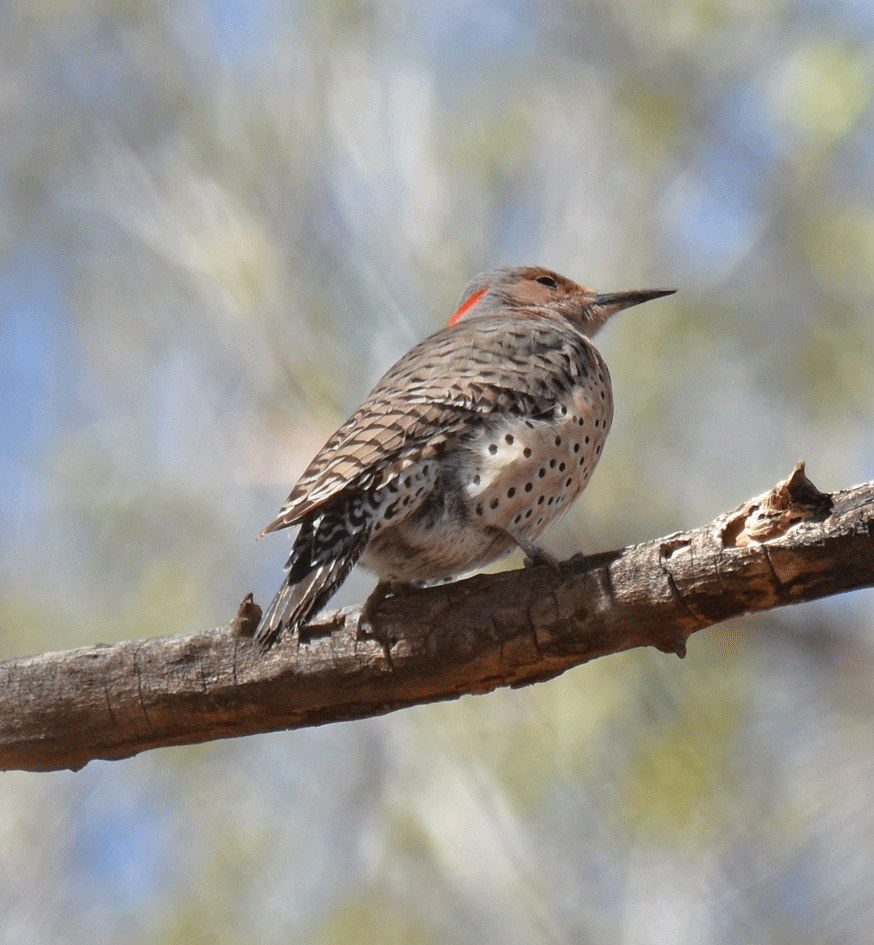
Also on that same day in Tubac, we saw a yellow-shafted sub-species of Northern Flicker. This photo doesn’t show the yellow undersides of the wings (which we saw when it flew), but the red nape crescent, gray crown and brown face are visible.

These were some of the 143 species that we saw in February 2022. In the next few weeks we will be birding in Costa Rica, so we can assure you that there will be many bird photos to view in the upcoming blogs.

Arizona Adventures: February 2022

Arizona Adventures: February 2022

At the beginning of February we travelled to Page, Arizona. No visit to Page is complete without a stop to view Horseshoe Bend. The city has put in a new parking lot and the National Park Service has rerouted and improved the trail. Yes, there is a $10 parking fee, but the upgrades are worth it. We had been here a couple of times before, and didn’t miss the old sandy trail over the hill.

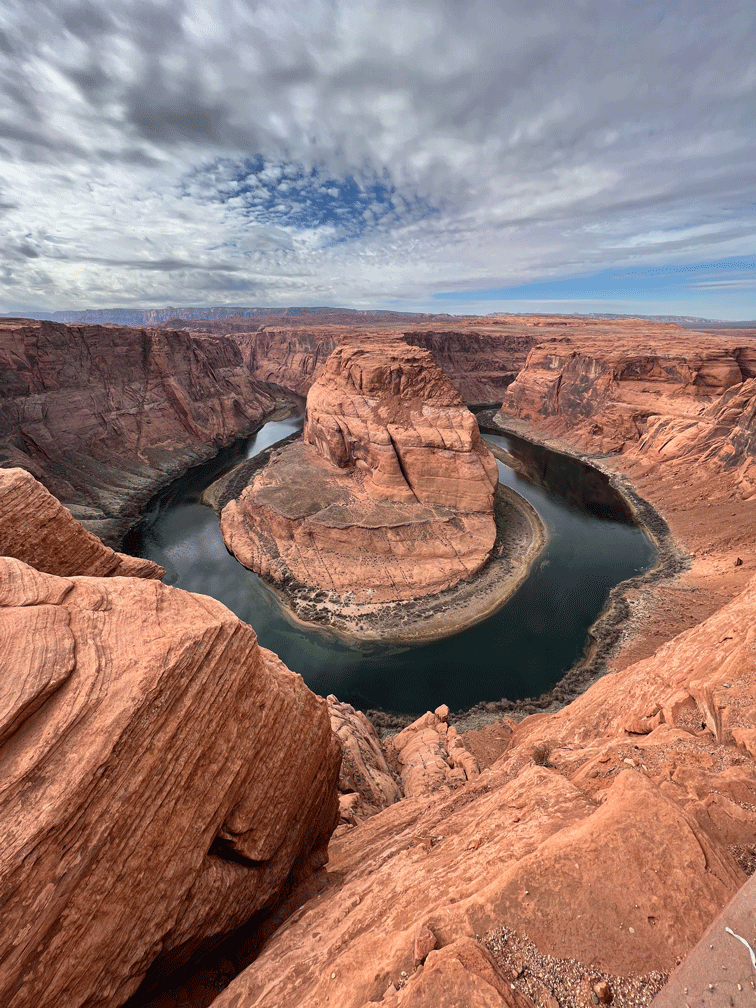
Horseshoe Bend is an amazing natural phenomenon, widely photographed and publicized, yet still awe inspiring. The Navajo Sandstone cliffs tower over 1000 feet above the river.

Here is the typical full horseshoe view.

Here’s a different view. It’s amazing to think about how the water could cut through those huge sandstone cliffs that tower over 1000 feet above the river. The Navajo Sandstone was formed 190 million years ago when a large part of the western United States was blanketed in sand dunes.

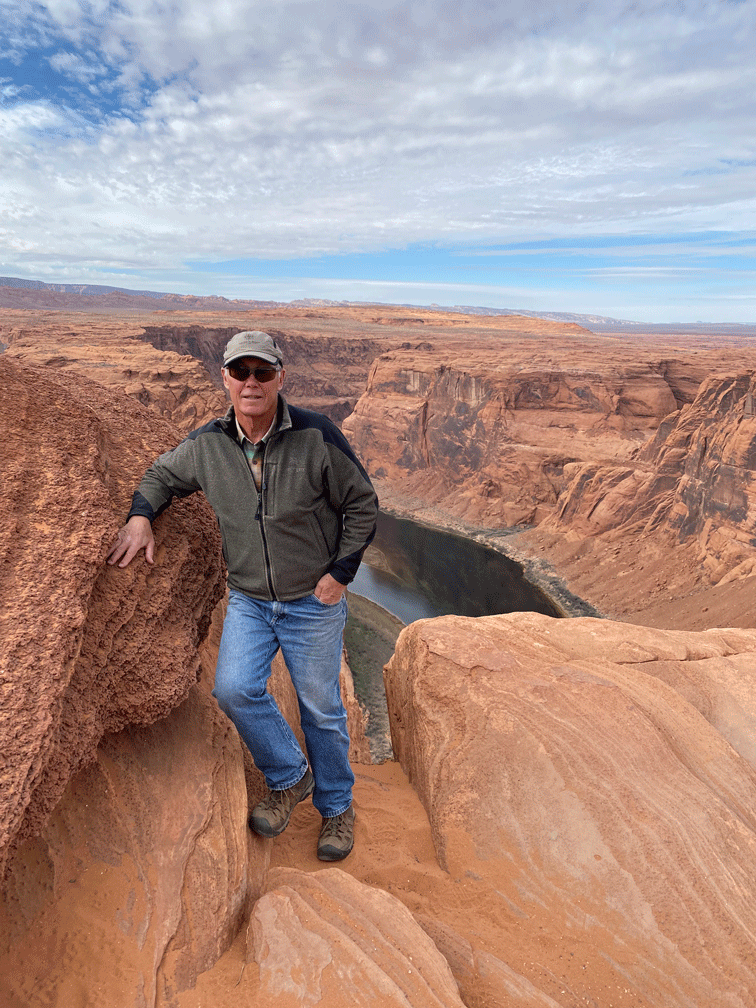
Doug looks pretty calm that close to the edge.

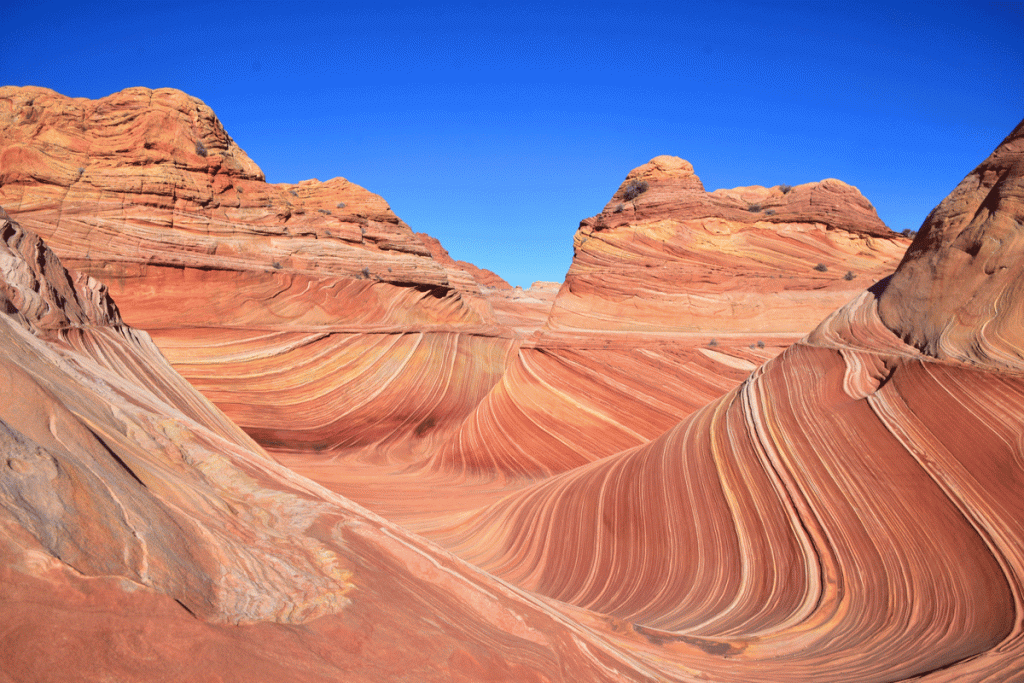
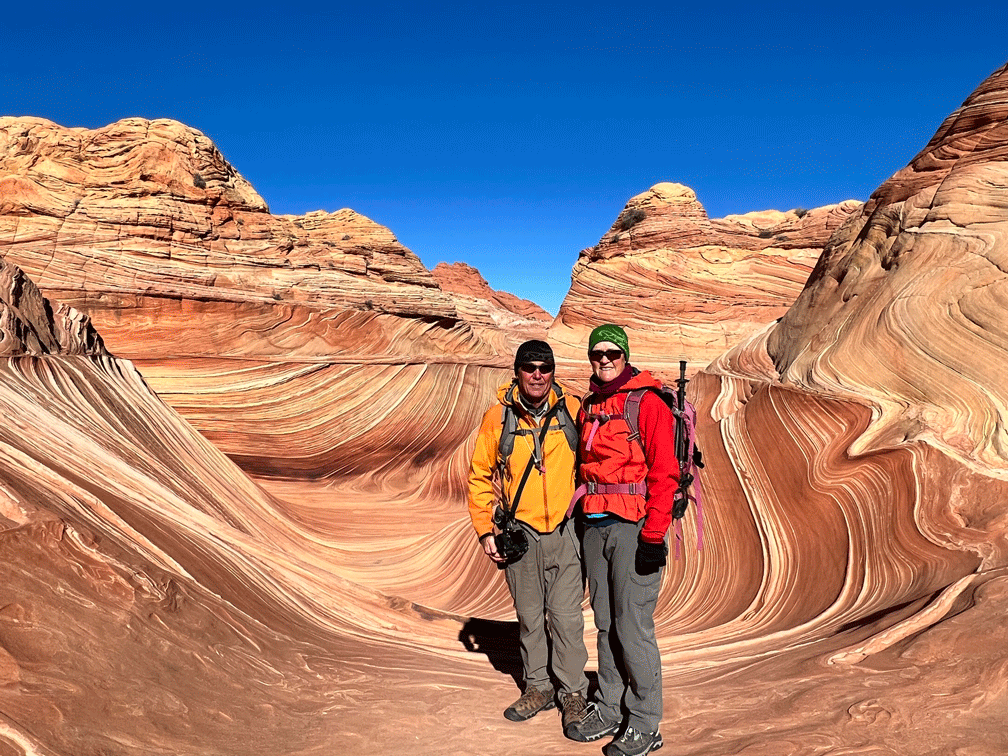
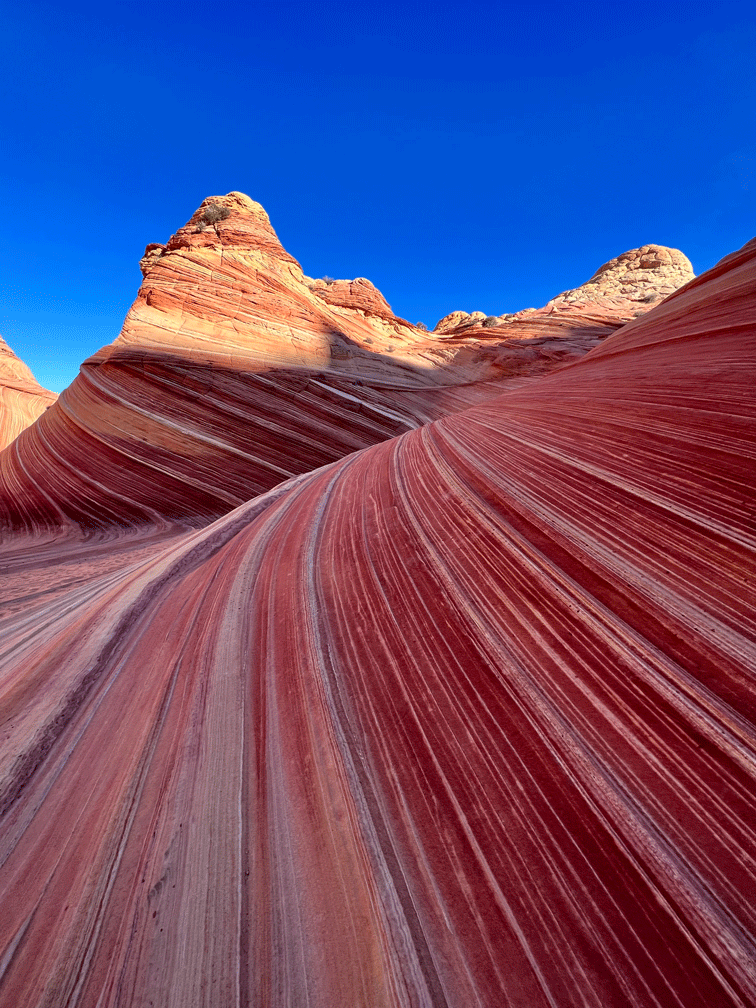
Page was our staging stop for our hike to “The Wave” in the North Coyote Buttes area. We posted a whole blog about our adventure that day, but here are a few photos to remind you or in case you missed it.

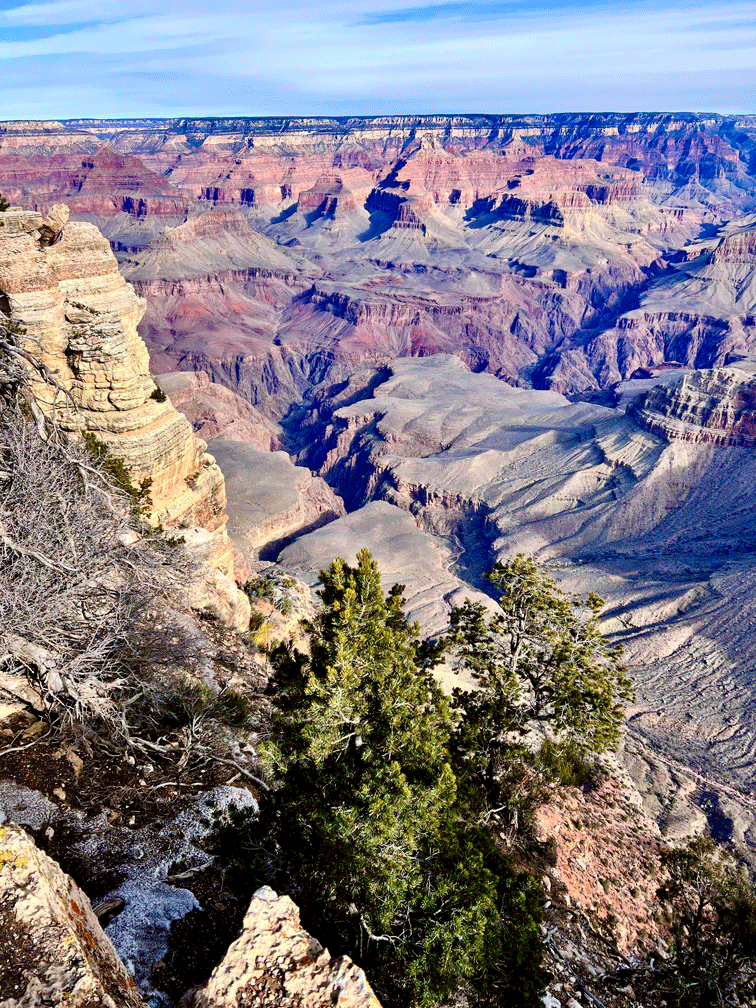
On our drive back to Tucson we decided to take a detour to the Grand Canyon. We’d only made one other visit. There are a few remnants of snow in the foreground of the photo below .

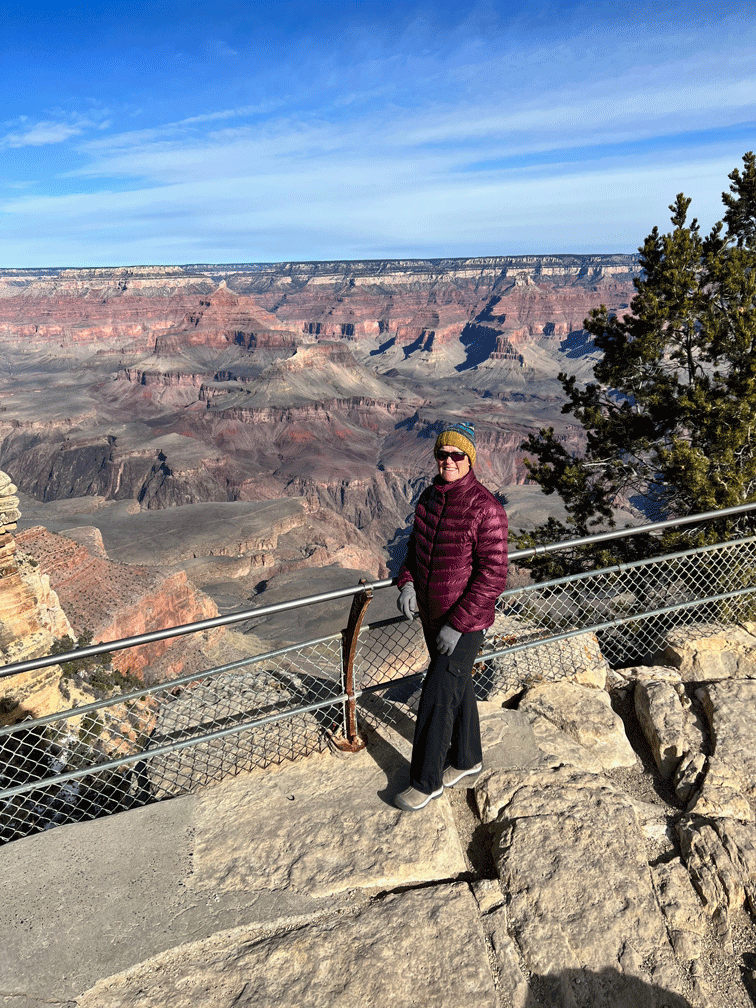
It was really cold that day, (-9C when the photo was taken), but Wendy had the winter gear.

On our loop back we drove the 89A into Sedona. Mostly when we’re driving through this area, we’re pulling the 5th Wheel, and can’t drive the narrow, winding road, so it was only the second time we had driven the road.

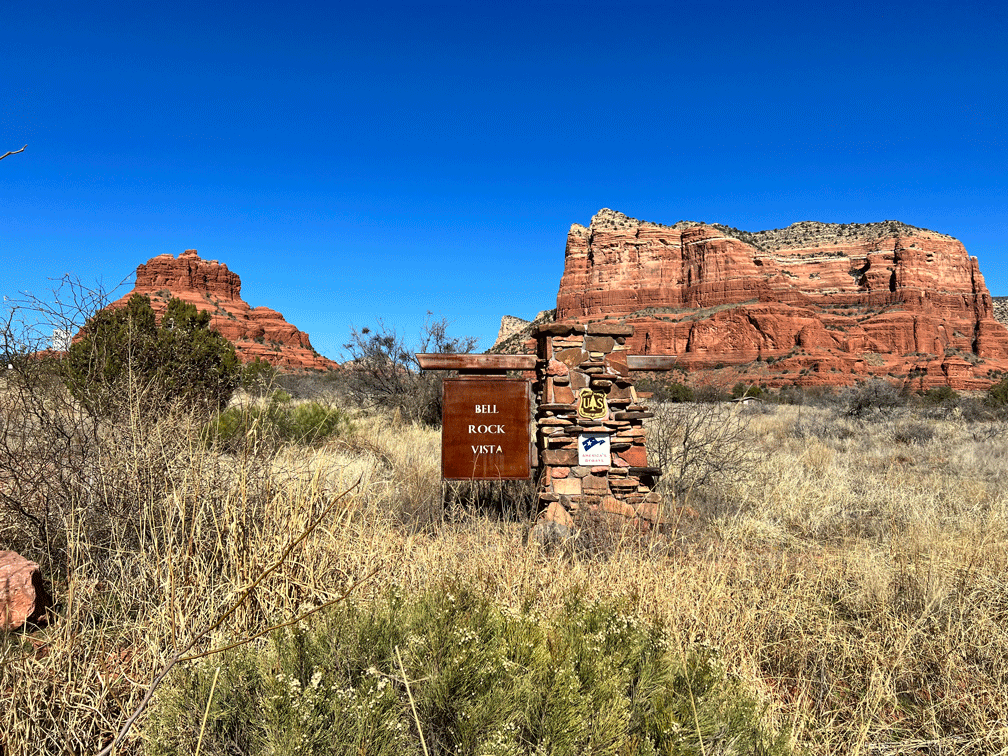
We had hoped to go for a short walk on the Bell Parkway, but we couldn’t find a parking spot, so we stopped at the side of the road and grabbed a photo. It reminded us of why we don’t visit the Sedona area anymore. It’s beautiful but too crowded.

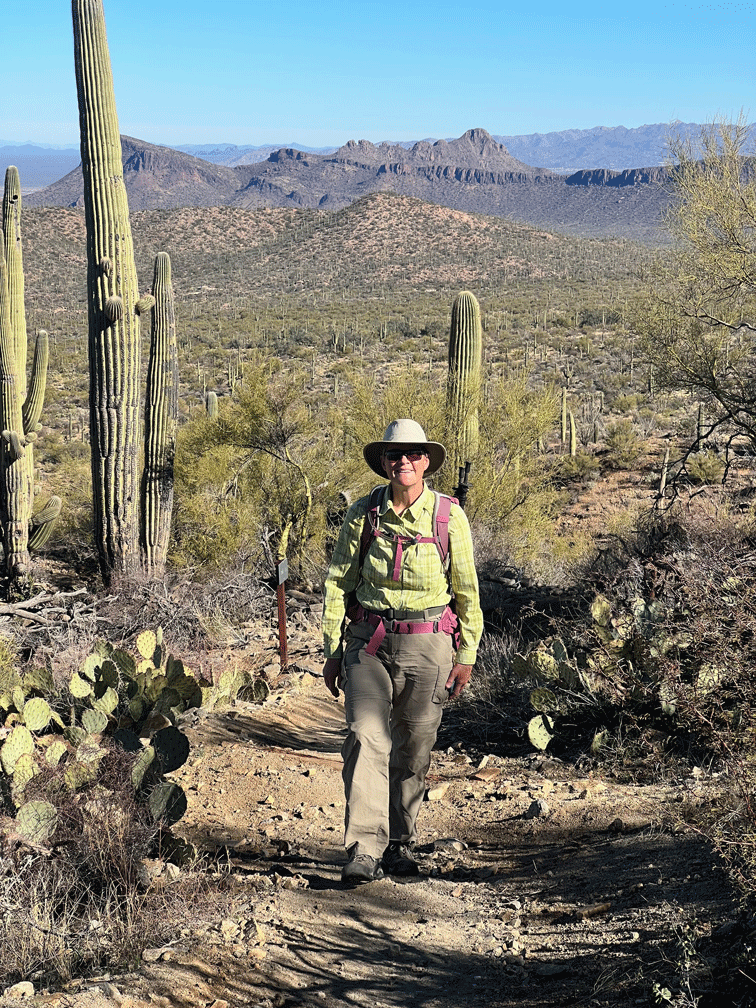
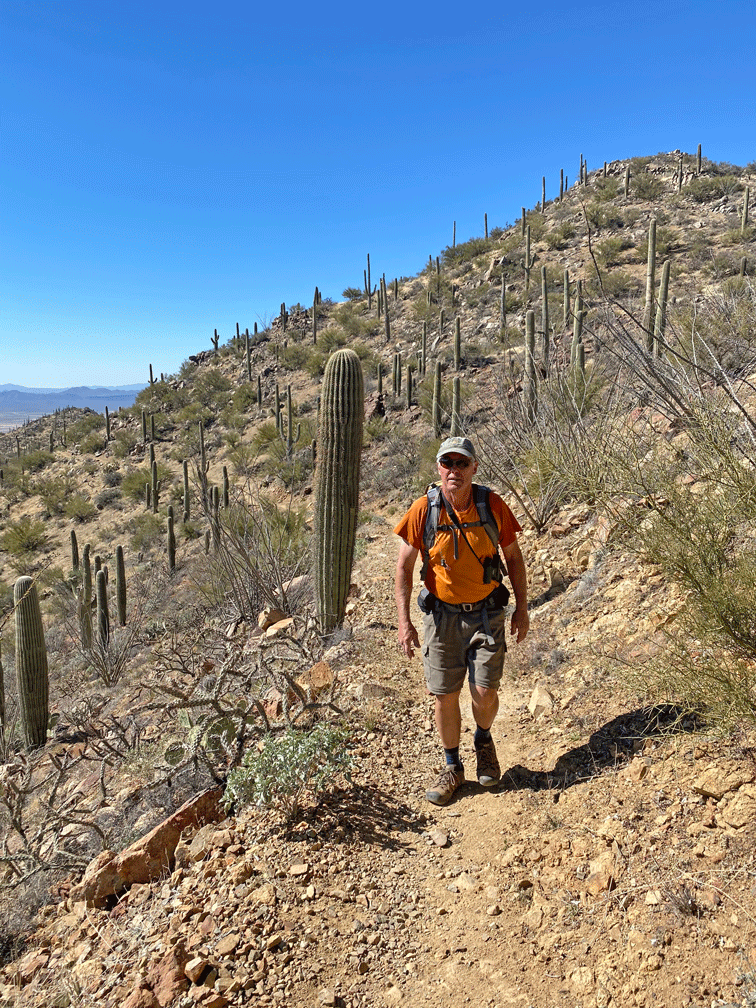
On February 8th, we did our annual hike to the highest mountain near our place. It’s only 4,688 feet, but with over a 2000 foot elevation gain. Our favourite starting point is at the Sandero Esperanza trailhead on the Golden Gate road.

The other big peaks in the area, Panther Peak and El Sombrero are in background of the photo below.

The trail joins the Hugh Norris trail at the ridge. There’s a break in the climbing while we traverse.

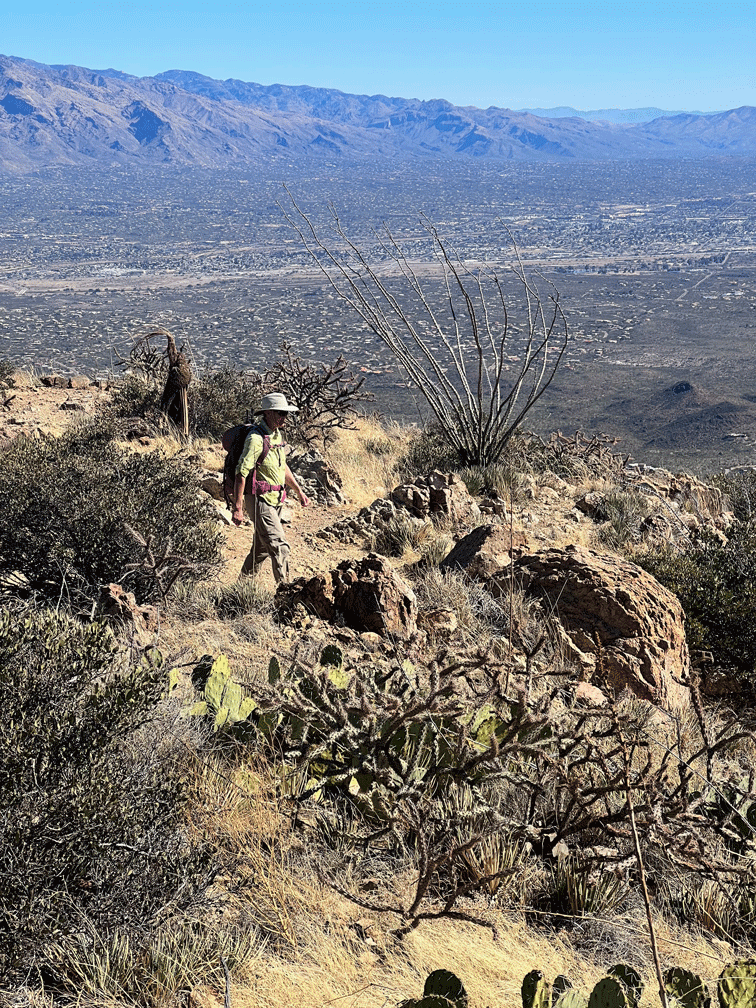
We had our lunch at the top, along with a dozen others. Here’s the view looking southeast at Tucson from very close to the top.

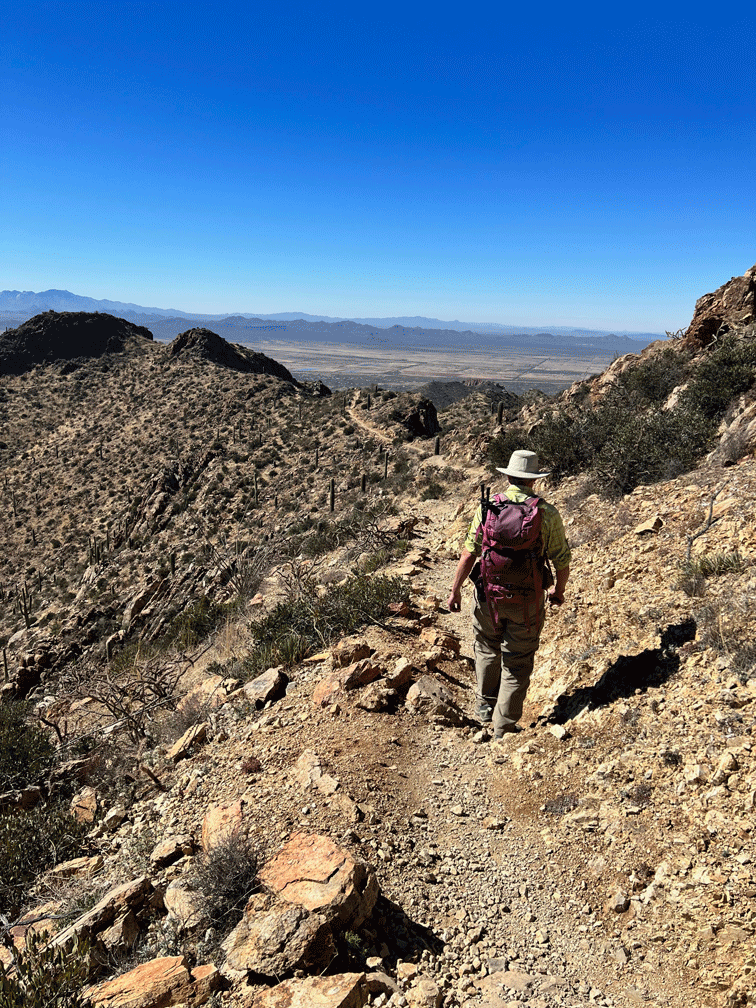
This photo was taken a few minutes later. The view is of the Avra Valley in the west.

It was a special treat to enjoy the Desert Museum later that week with our friends from Cranbrook.

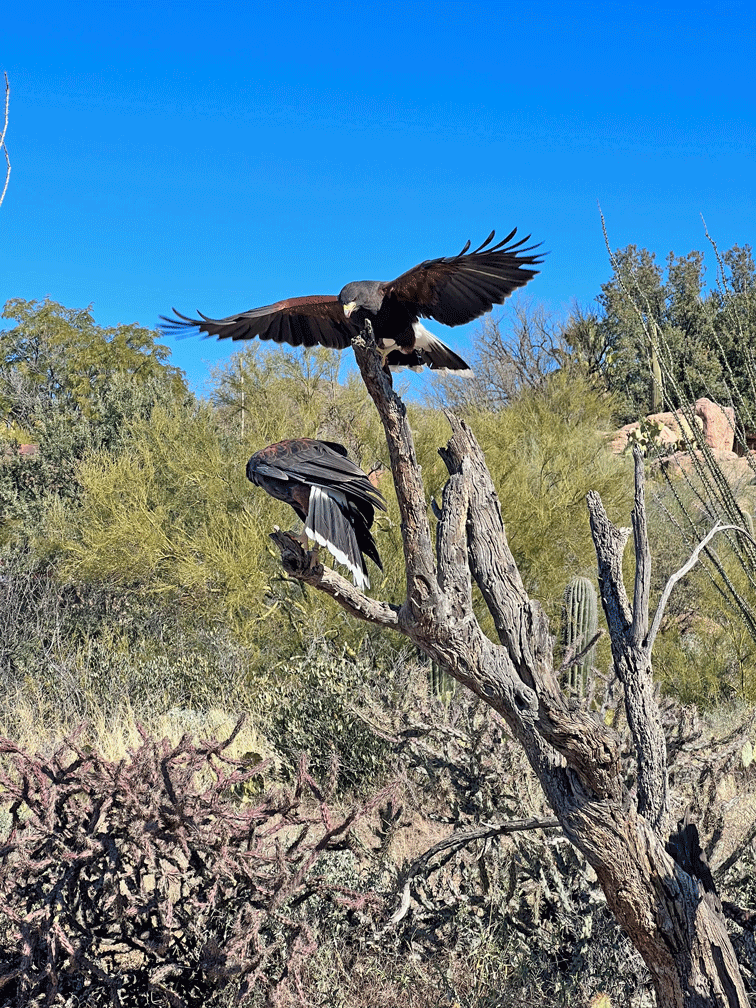
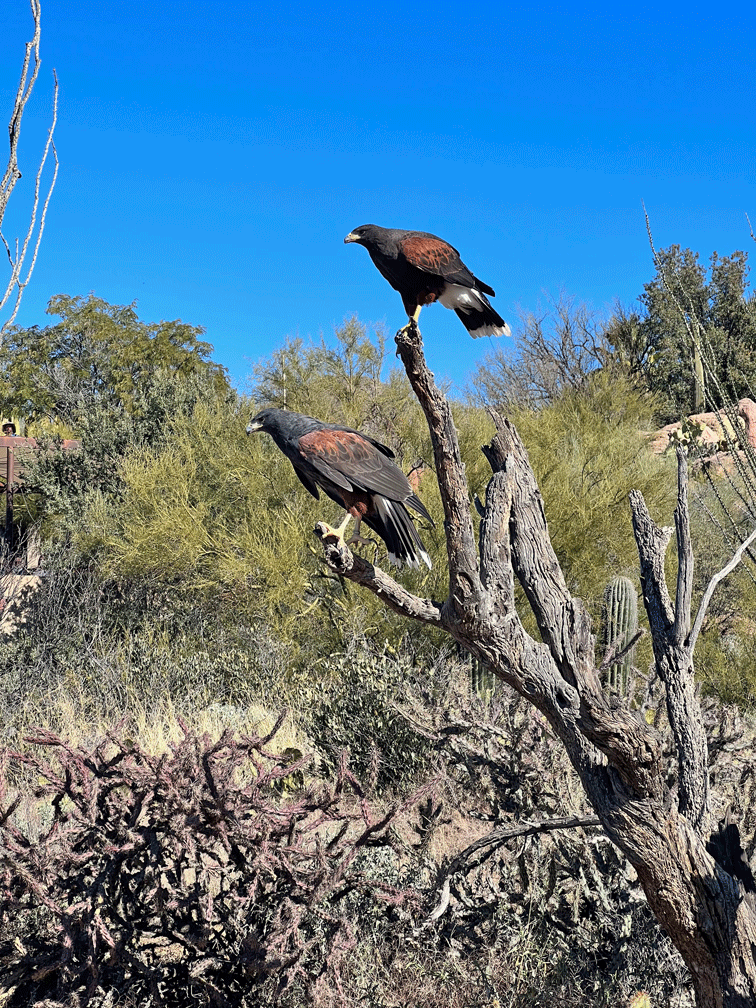
Raptor Free Flight is a “must see” at the Desert Museum. Doug took these photos of a couple of Harris’s Hawks with his iPhone. The birds get really close.

We have found that watching the raptors in this controlled setting has helped us better identify them in the wild.

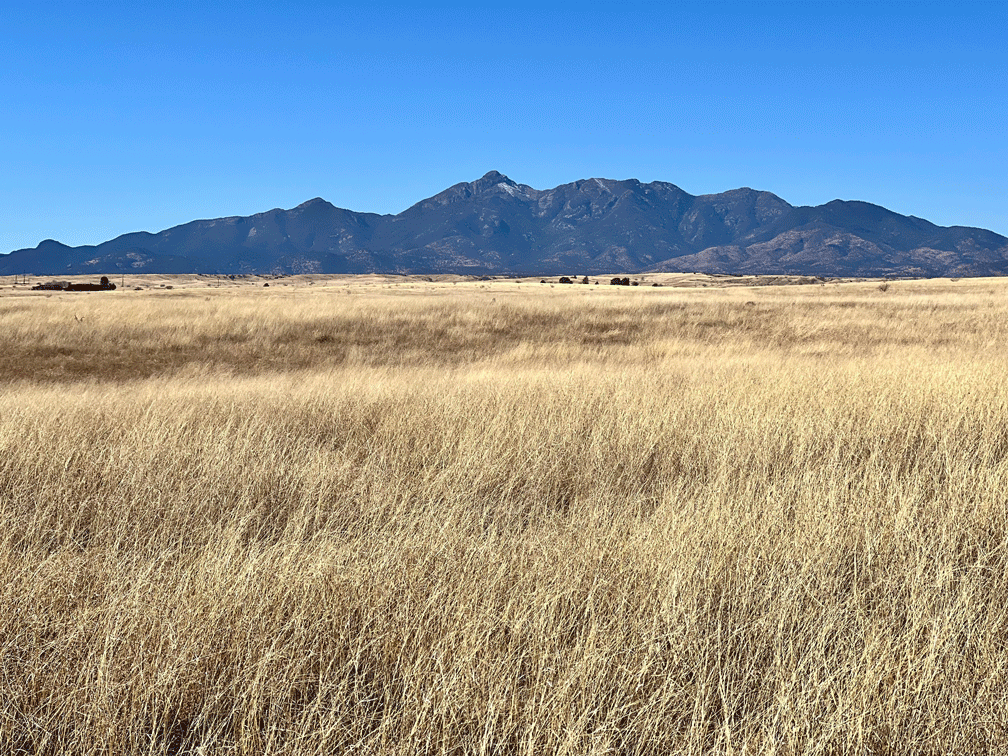
There are many different environments close to our place near Tucson. So another day we decided to explore the Las Cienegas National Conservation Area, hoping to see different sparrows and longspurs. We saw lots of sparrows and a White-tailed Kite, but no longspurs. But there were some beautiful views.

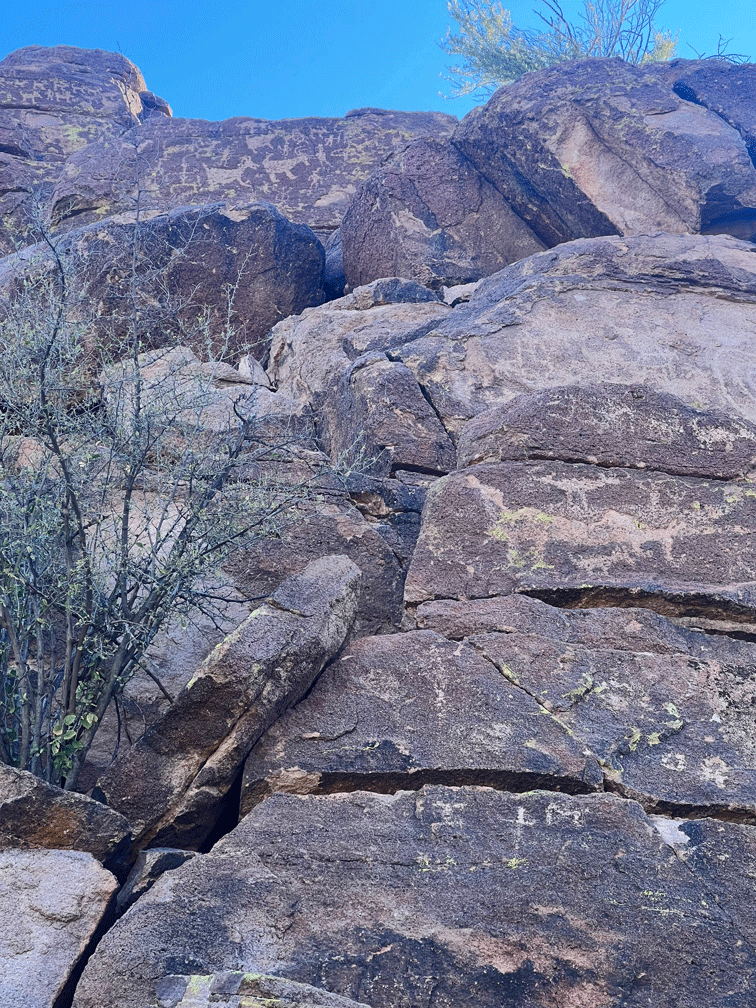
On February 15th, we hiked along the wash beside the petroglyphs that the Picture Rocks Road and community are named. The petroglyphs are carved into the rock by the early Hohokam people.

The petroglyphs are on the rock bluffs on the right in the photo below. This portion of the trail isn’t in the national park, and you can see tracks of motorized vehicles in the sand. The wash is called Picture Rocks Wash, as you might expect.

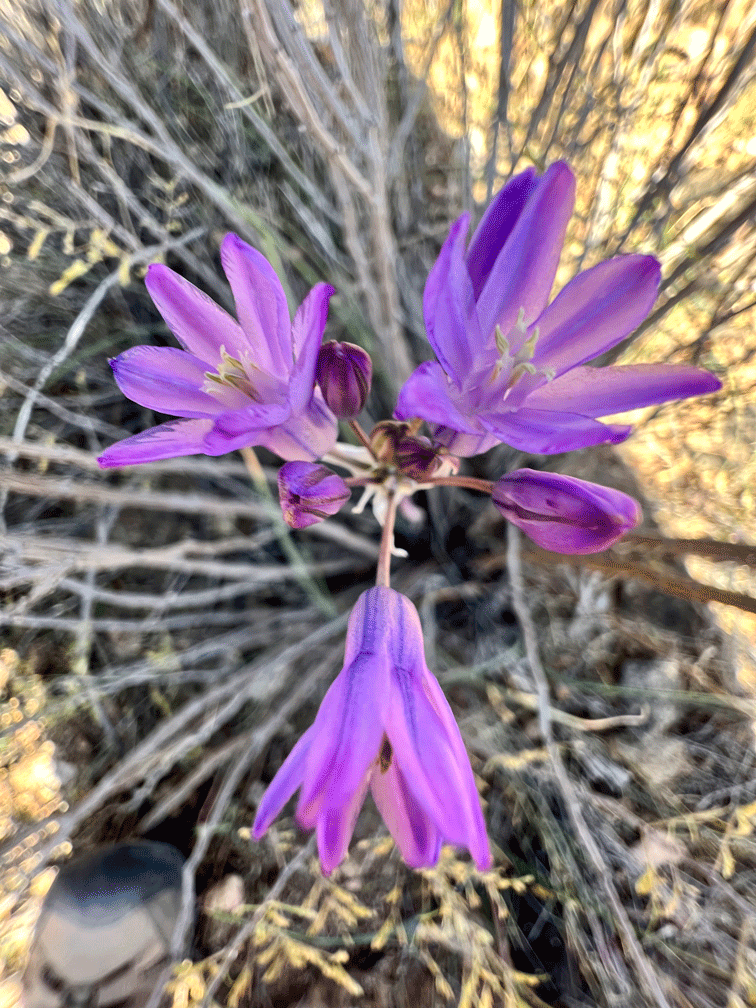
Farther along the trail we discovered several pretty pinkish-purple flowers. They had long thin leaves that reminded us of chives. This photo is enlarged; the group of flowers were about the size of a quarter. We think it is Taper-tip Onion, a native plant to Arizona.

The Modern Quilt Guild’s annual big show, QuiltCon was in Phoenix this year in the middle of February. A friend who used to live in Cranbrook joined Wendy. She was spending a few weeks in the area. The men went birding at Gilbert Water Ranch, so the quilters had plenty of time to view the quilts.

Wendy asked her friend to stand beside this quilt, to give it a sense of scale. The quilt was called, “Pride and Joy,” and won first place in the piecing category. At the end of the show it was also awarded the People’s Choice Award. Veruschka Zarate made it as a self-portrait of herself and her two little boys.

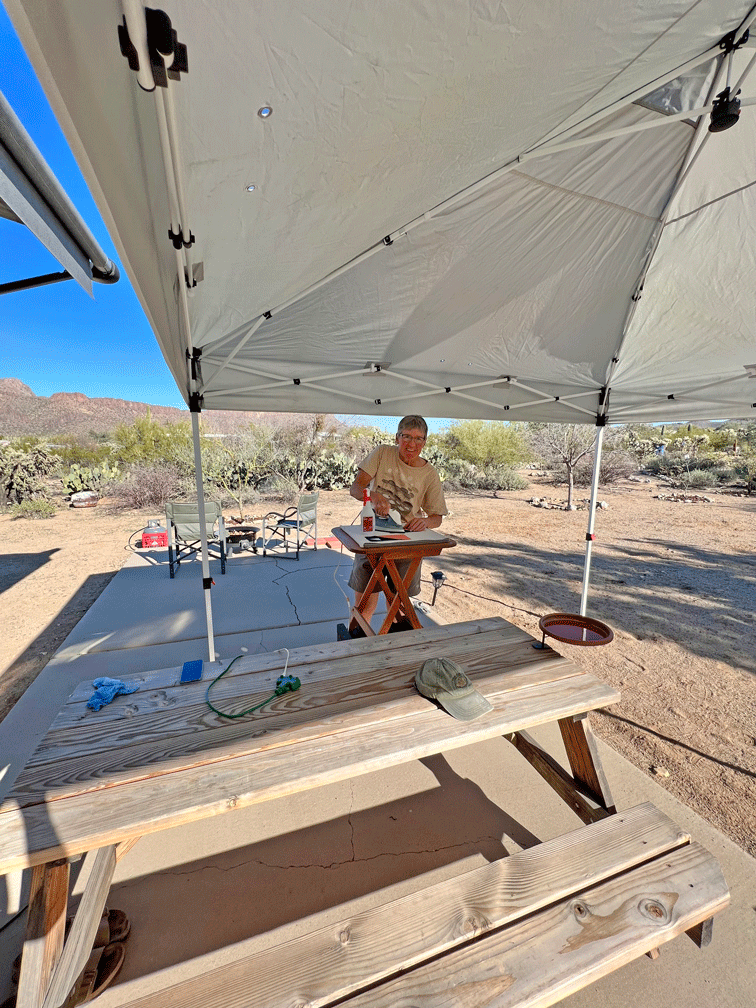
Which brings us to quilt-making at the Fifth Wheel. Wendy tries not to run an iron inside when the air-conditioning is on, so this outside pressing station was set up. It works fine unless it’s windy.

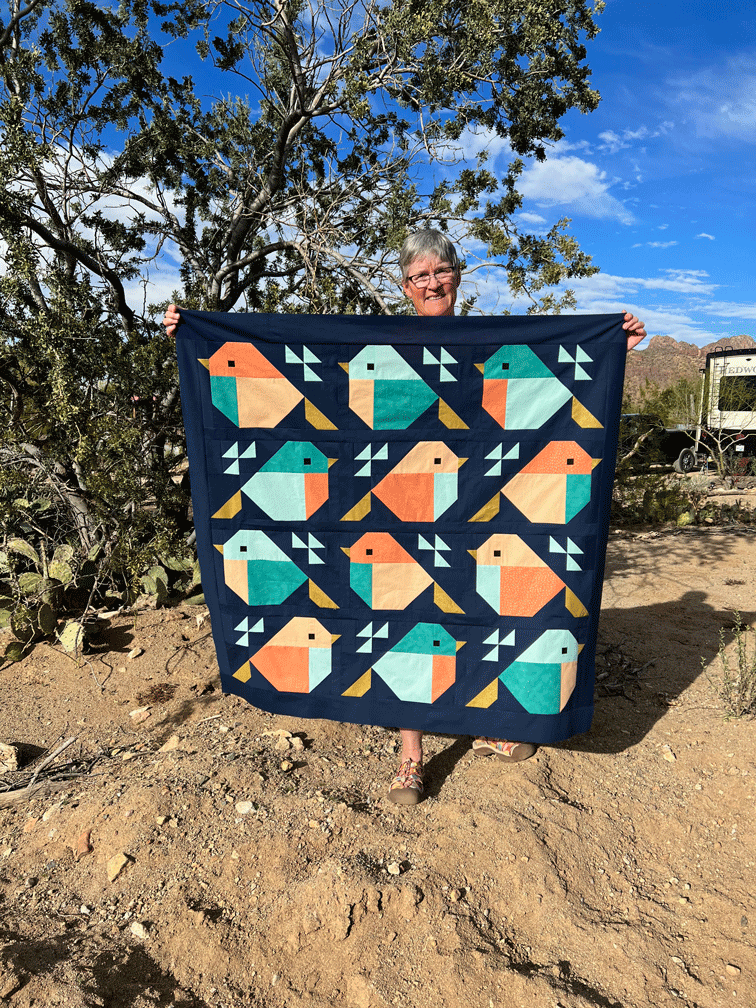
Wendy completed this quilt top called “Sparrows” for our new grandbaby. The quilting will probably have to wait until she returns home because her machine here is pretty small.

And now to our flower section. This cutey was taken at the Desert Museum on February 11th. It’s always amazing to us to see flowers blooming so early in the year.

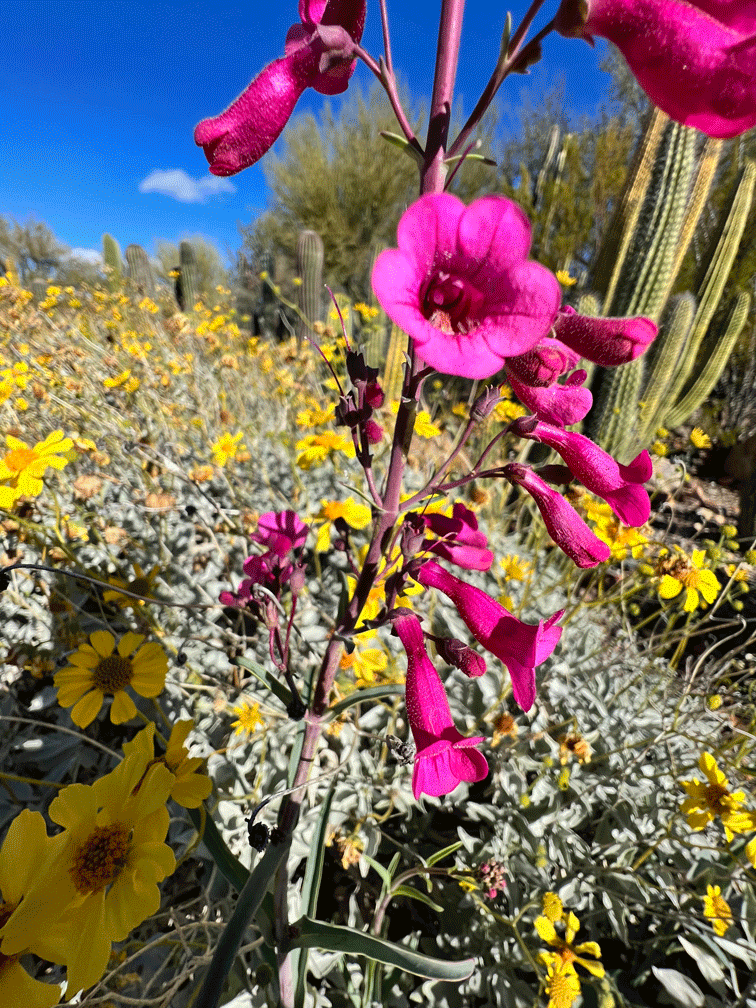
By the third week in February there were many flowers blooming at the Desert Museum. The stately pink flower is a penstemon and the yellow flowers are brittlebush.

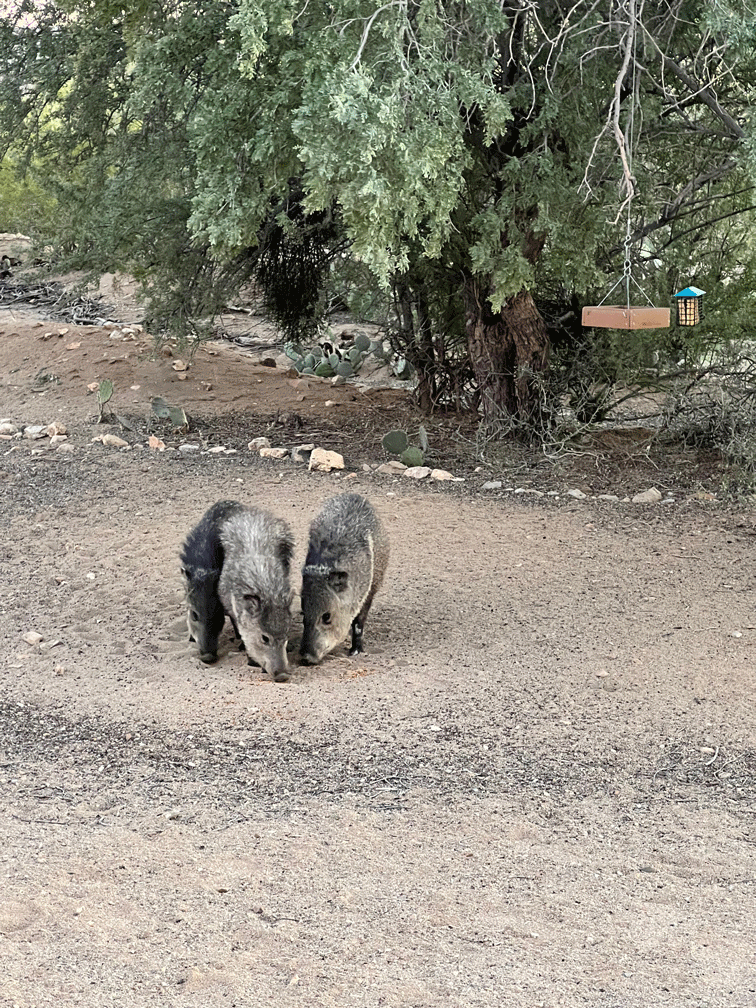
The only mammal photo this month is of Collared Peccaries. They are locally known as javelinas. The “collar” on the javelina on the right is more prominent. When we first came here three years ago, we were excited to catch a glimpse of a javelina in the wild. Perhaps the plentiful rain last summer allowed their population to soar, because they have now become “problem animals.” In many places, javelinas are diurnal, but in the suburbs of Tucson they are more nocturnal or crepuscular (active at dawn and dusk).

This photo was taken on one of the rare times that we saw them in the yard in daylight. After this sighting, Doug followed them to see where they got through the fence. So the fence was reinforced again with wire dug into the ground, and rocks blocking weak areas. Checking for tracks in the morning and fixing spots that they have pushed their way through has become one of Doug’s daily routines.

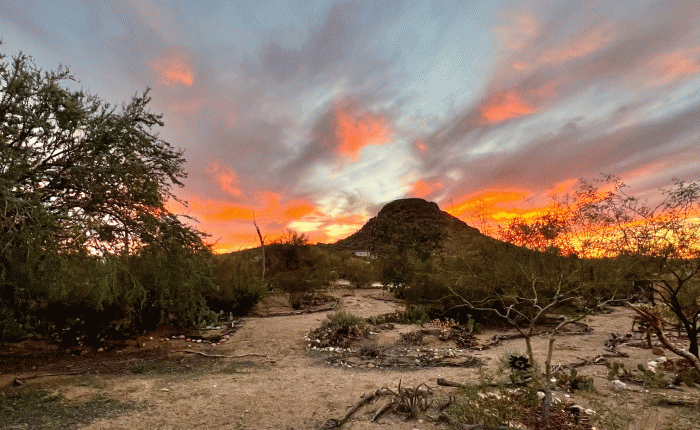
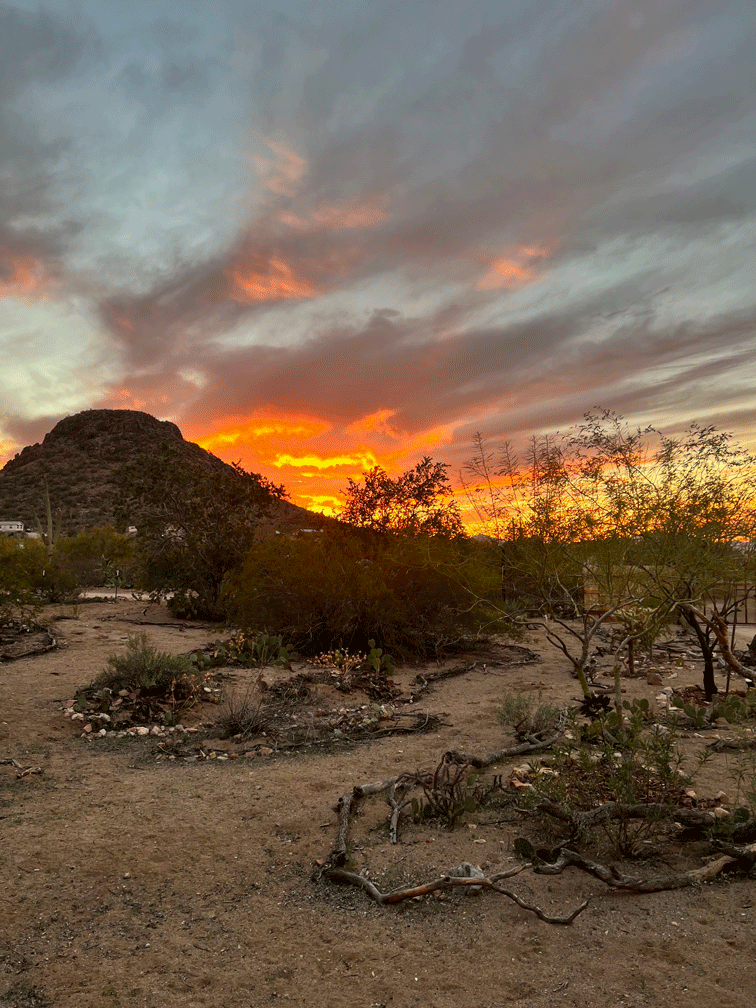
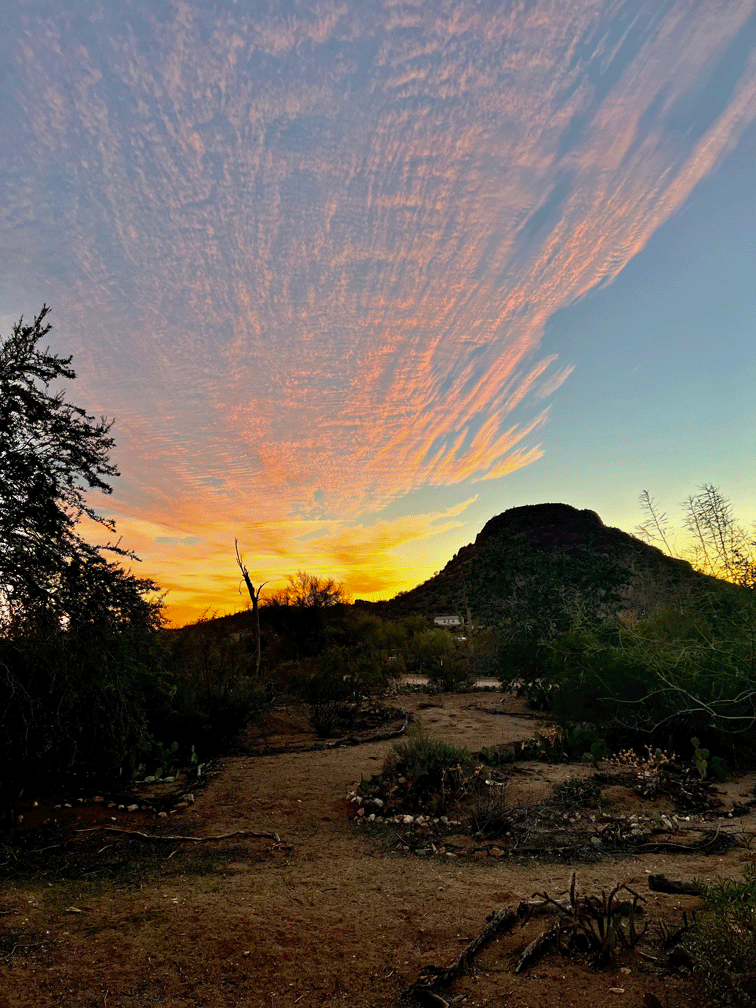
Here are a few sunset photos from our place. The good thing about clouds is they help make the best sunsets. There’s another sunset photo on the banner that you can see if you view the blog on your computer.

The next blog is all about birds.

“The Wave”: Feb. 2, 2022

“The Wave”: Feb. 2, 2022

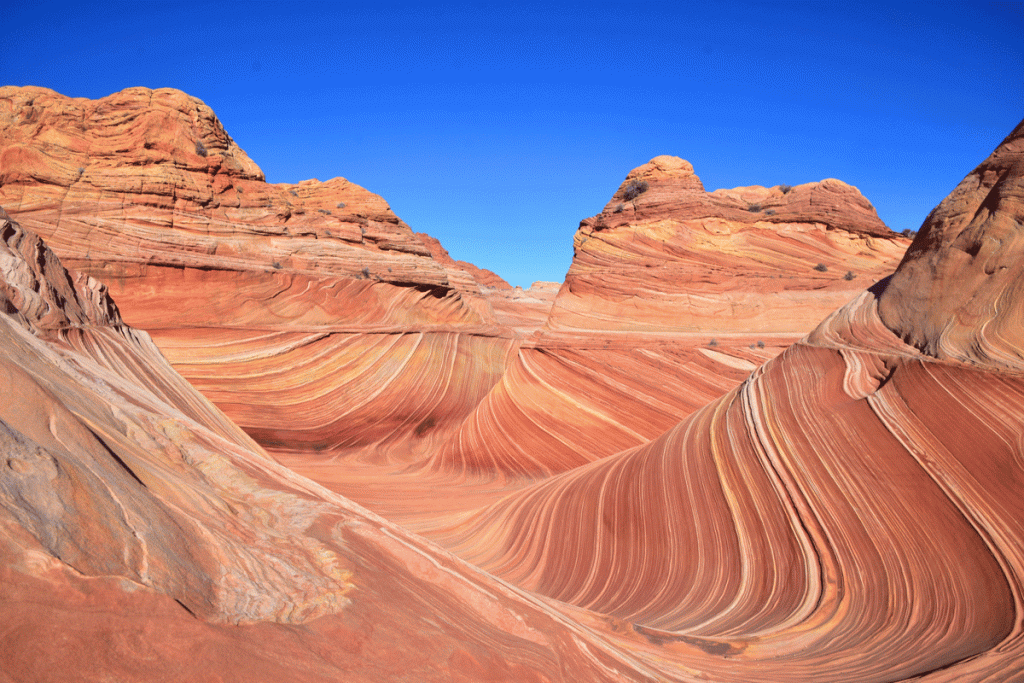
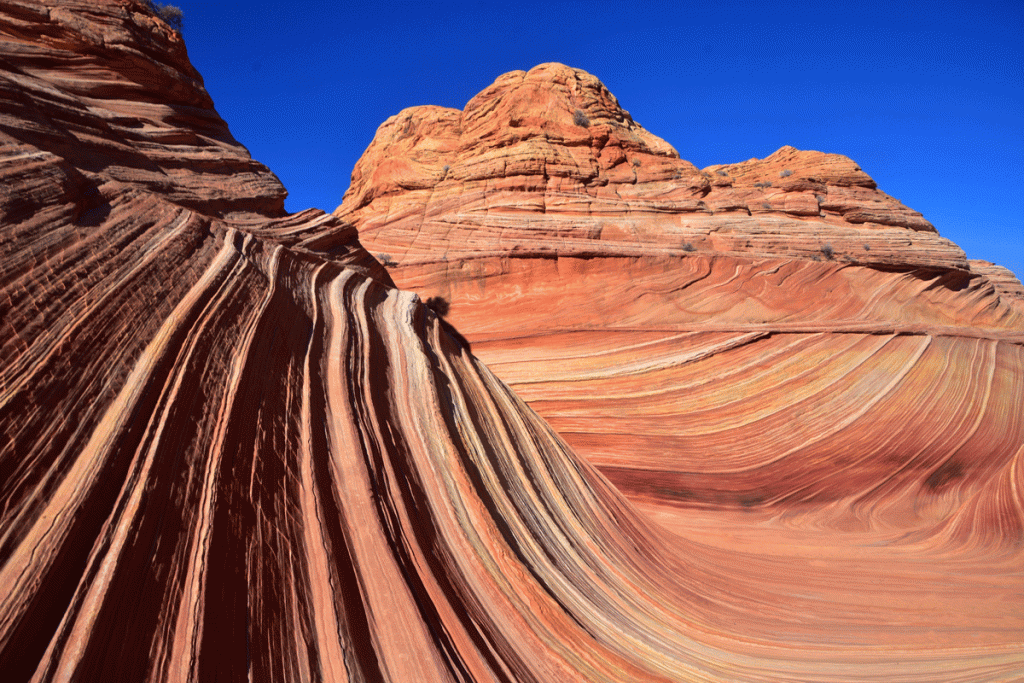
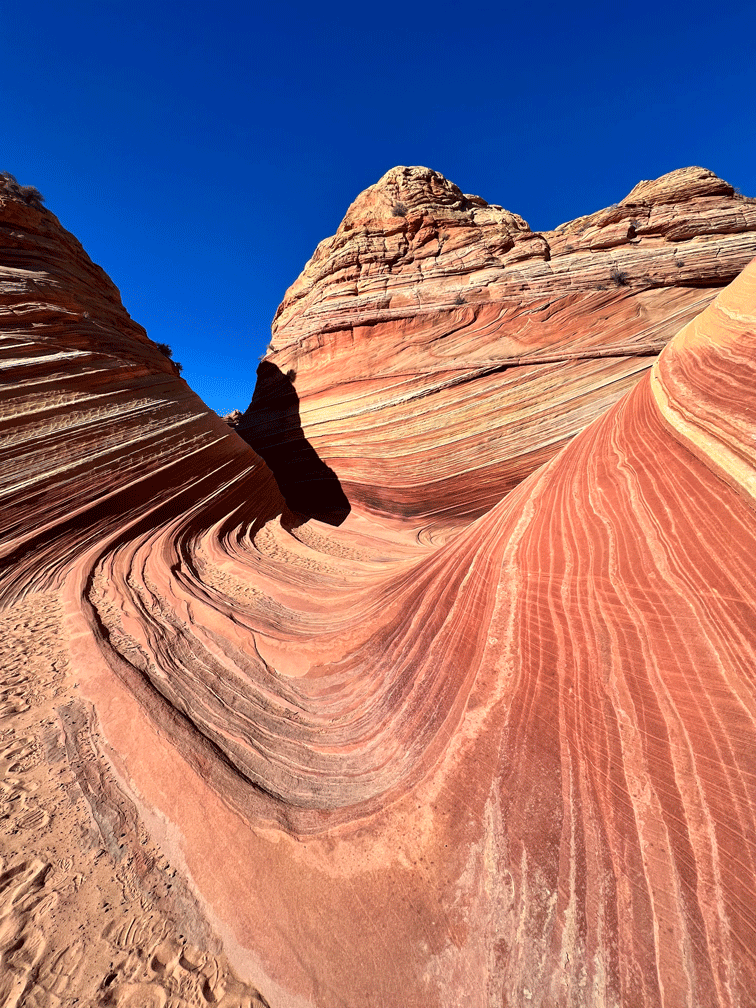
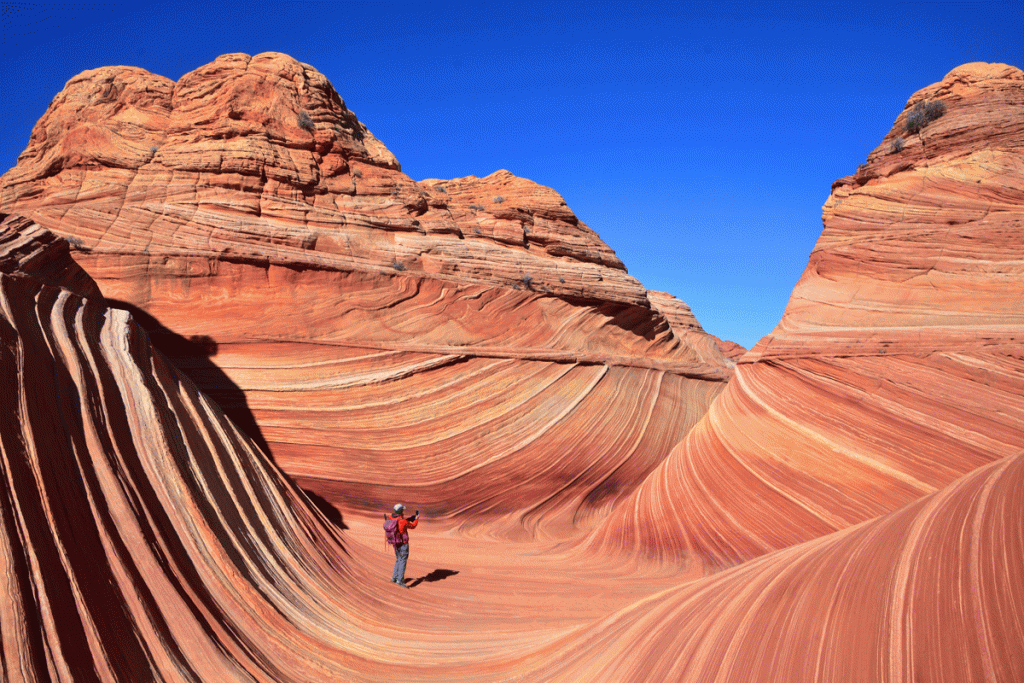
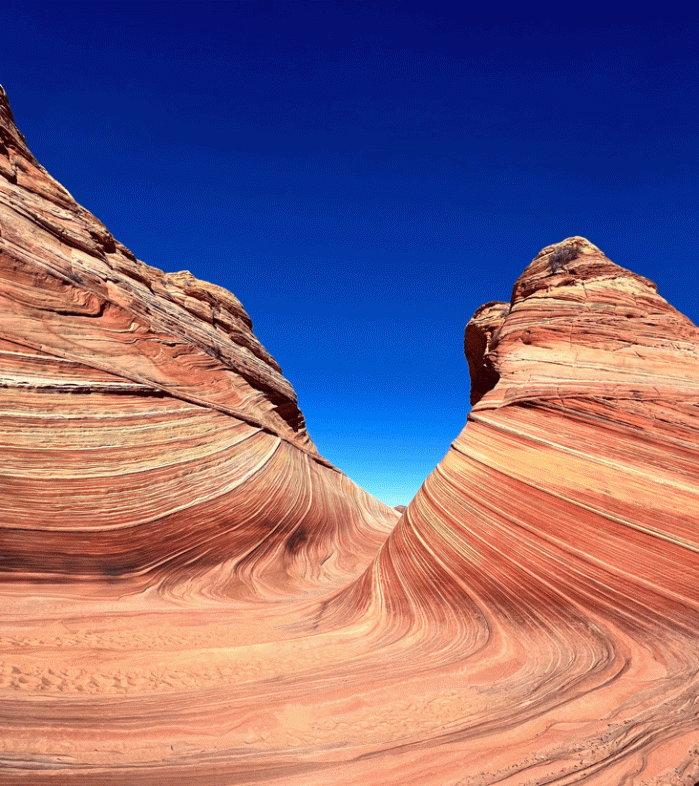
The Wave is a premier photographic destination in the US southwest. It is so popular that is requires a permit issued by lottery, limiting the number of visitors that are allowed per day. We obtained ours on-line from the US Bureau of Land Management after being unsuccessful over a dozen times. So we were really happy to get a chance to go. Although “The Wave” is in northern Arizona, it is accessed through Utah. It is only one of many interesting rock features in the North Coyote Buttes, but it is the most famous.

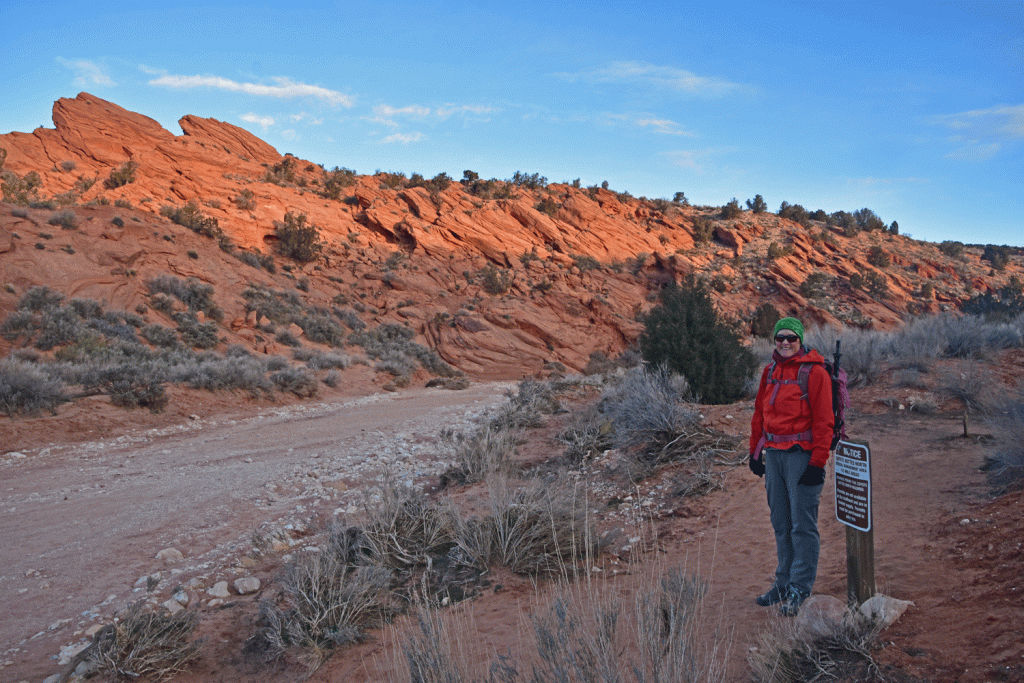
February 2 was clear and cold (-6 degrees C) for the start of our ten kilometre (6 mile) round trip hike. The route has the same start as the Wire Pass trail that we have hiked a number of times. Here’s the spot that it leaves the wash.

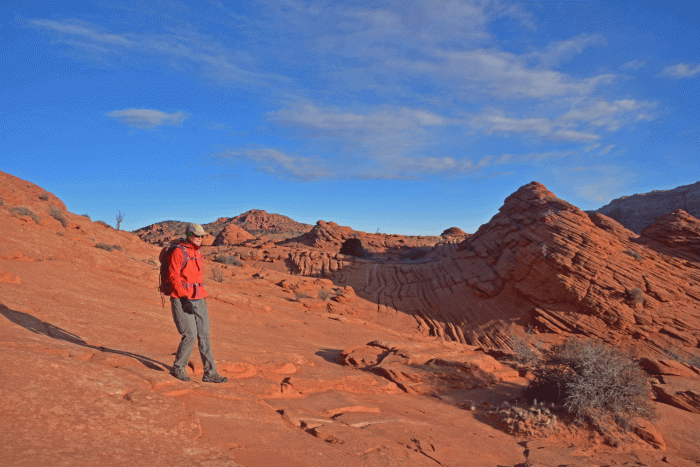
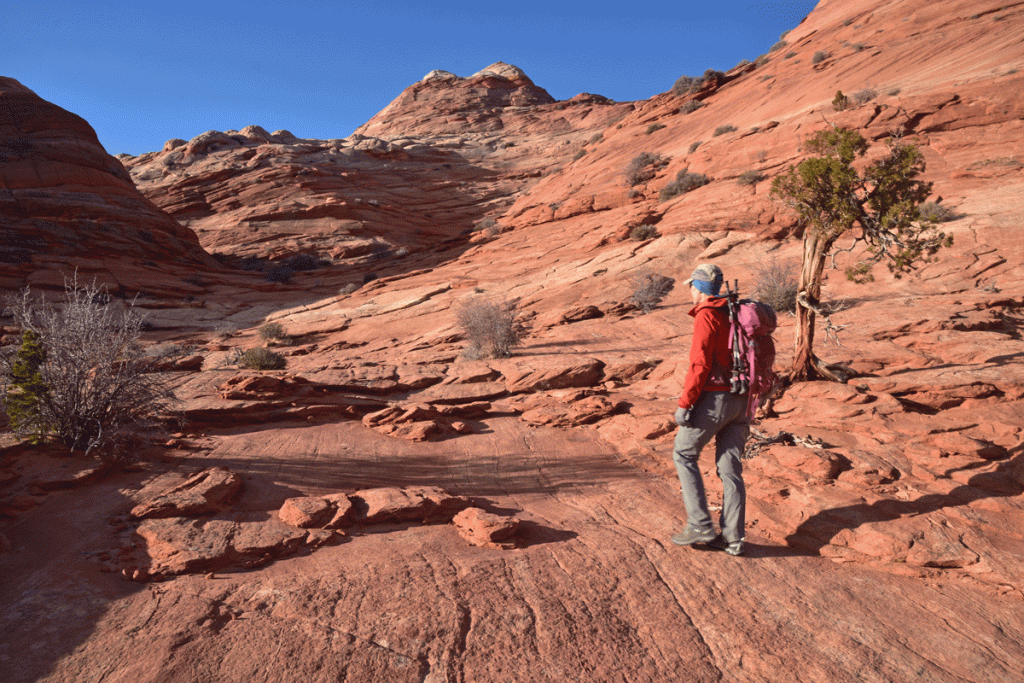
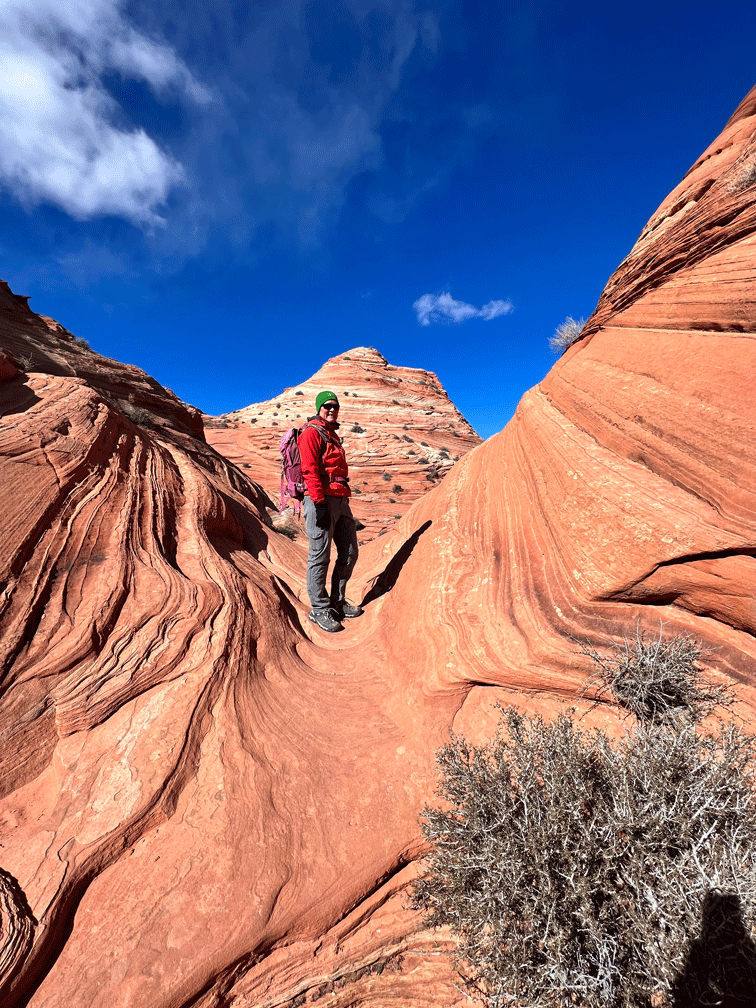
Soon we were in the sunshine on the slickrock. There is no trail, but the route is defined in some places by signs like this one.

We chose to wear our hiking shoes because they have good grip on the rock.

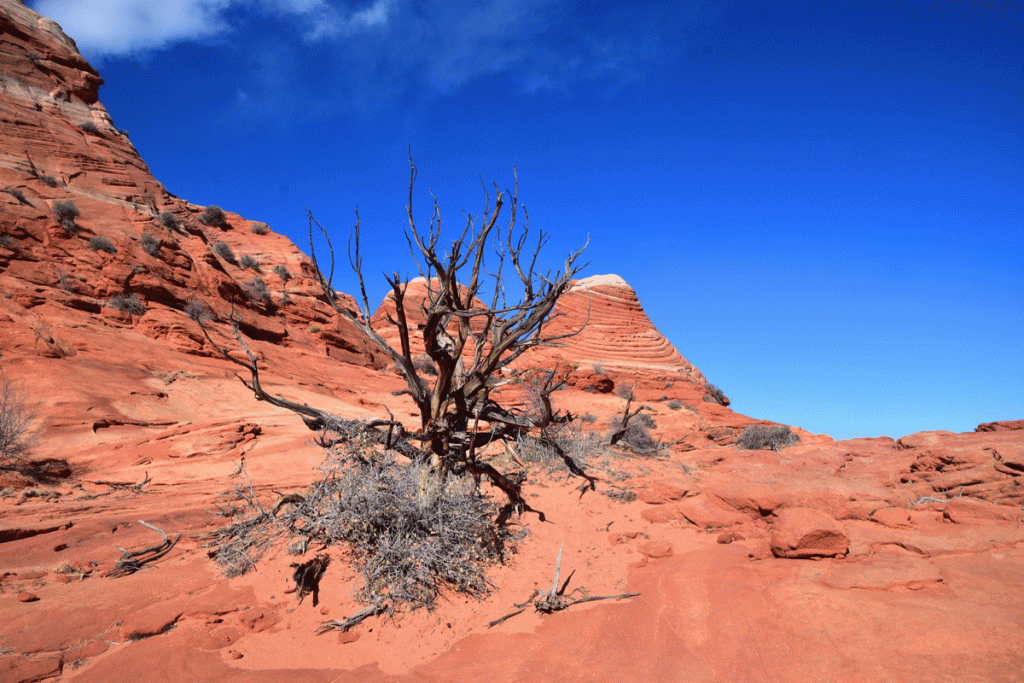
We wondered how this juniper tree could survive.

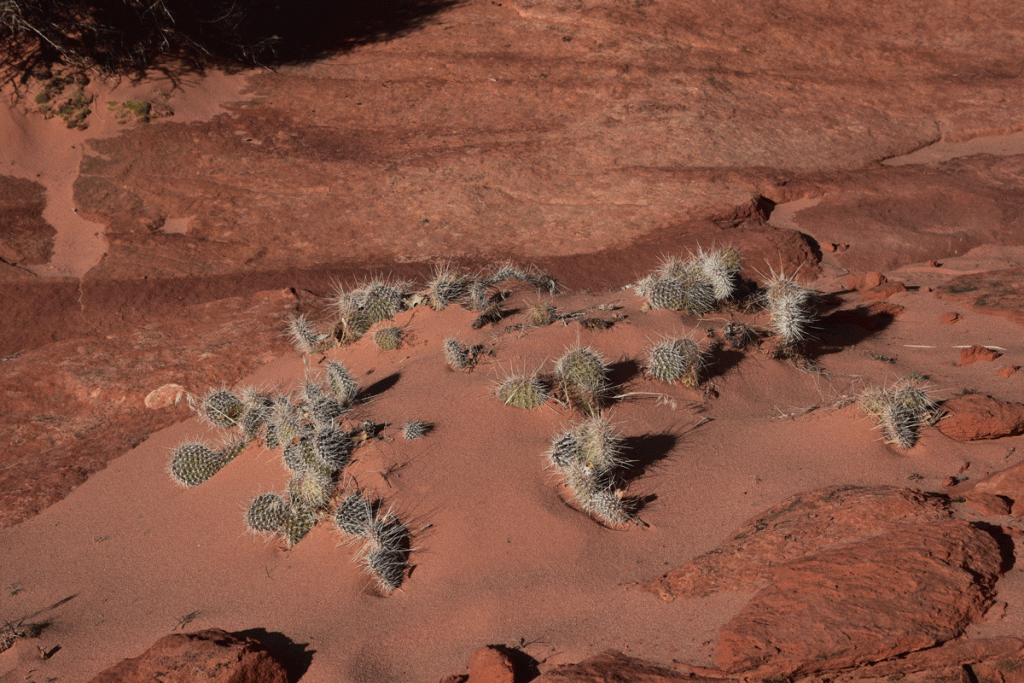
Or these cacti.

Soon we were at the sand dunes, where the route descends from the rock. Wendy was attempting to find areas where the sand wasn’t as deep. We both ended up in the same place.

The rock that we just came down is in the background. Next, we followed the tracks up a cone of sand.

Soon we were back on rock.

After bypassing a bit of ice, we worked our way up. Soon we turned a corner and we were at “The Wave.” There was still quite a bit of shadow when we got there around 10:00.

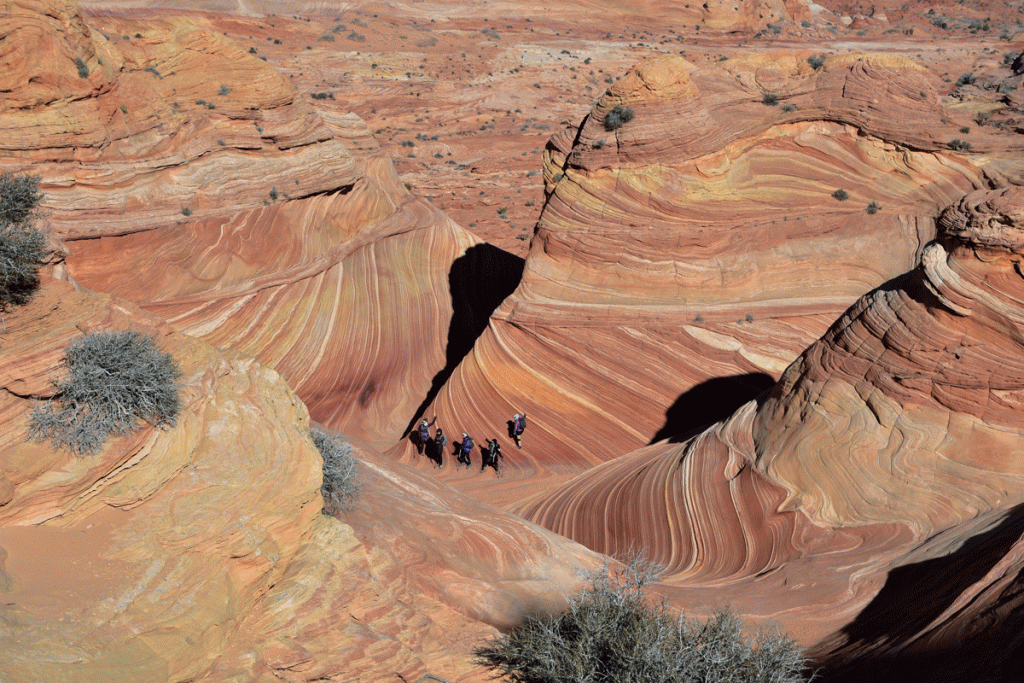
We walked up the ridged sandstone and took a photo looking back. A water drainage carved the two main chutes eons ago, so now the wind continues the erosion.

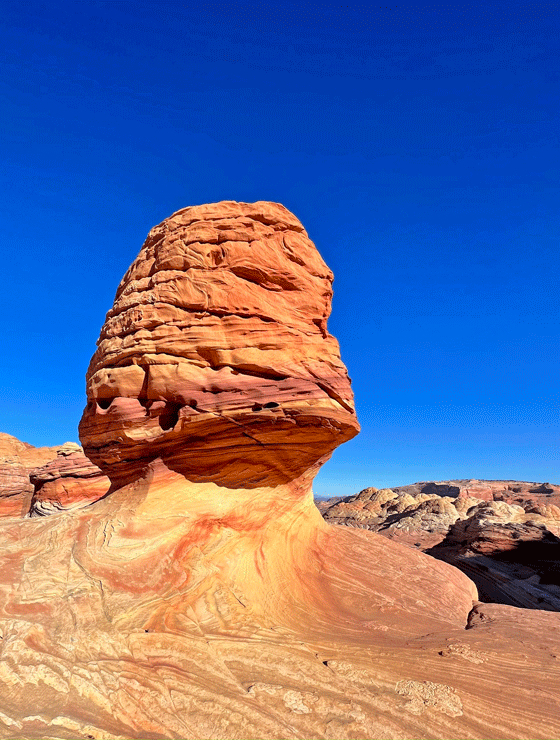
The colours of this toadstool just above “The Wave” were amazing.

We had our snack huddled out of the wind and looked at other formations while we waited for the main area to become sunlit.

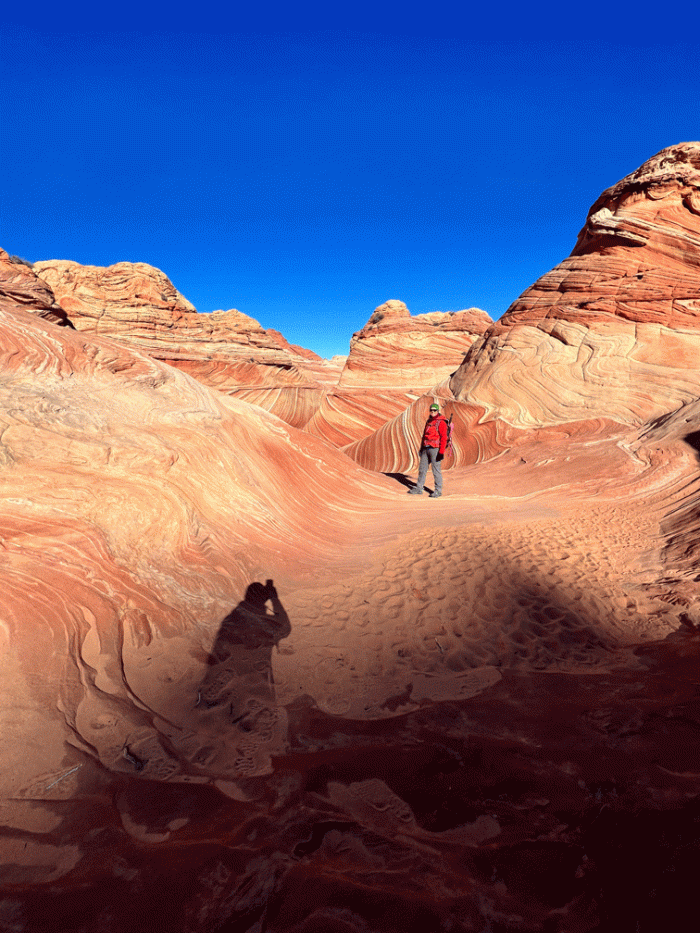
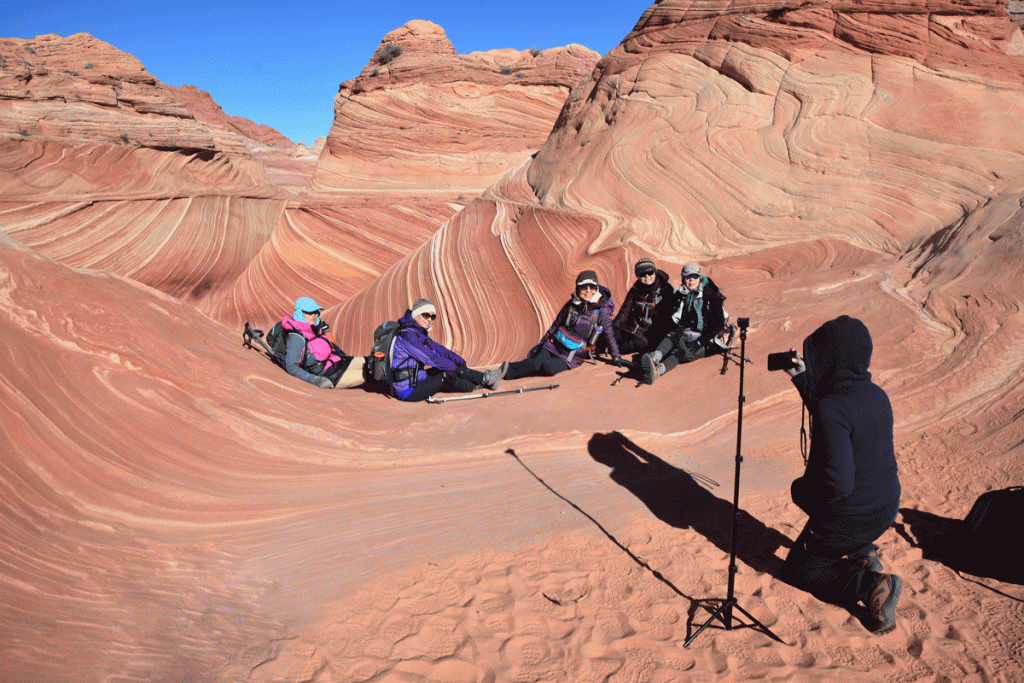
We returned to “The Wave” to have another look, and then stalled around a little longer, because there were people below. This photo has a cool effect, with the appearance of a “ghost” photographer.

We had plenty of time, so we could wait. The people below us give a sense of the scale of the place.

When they reached our level, it was time for more photos.

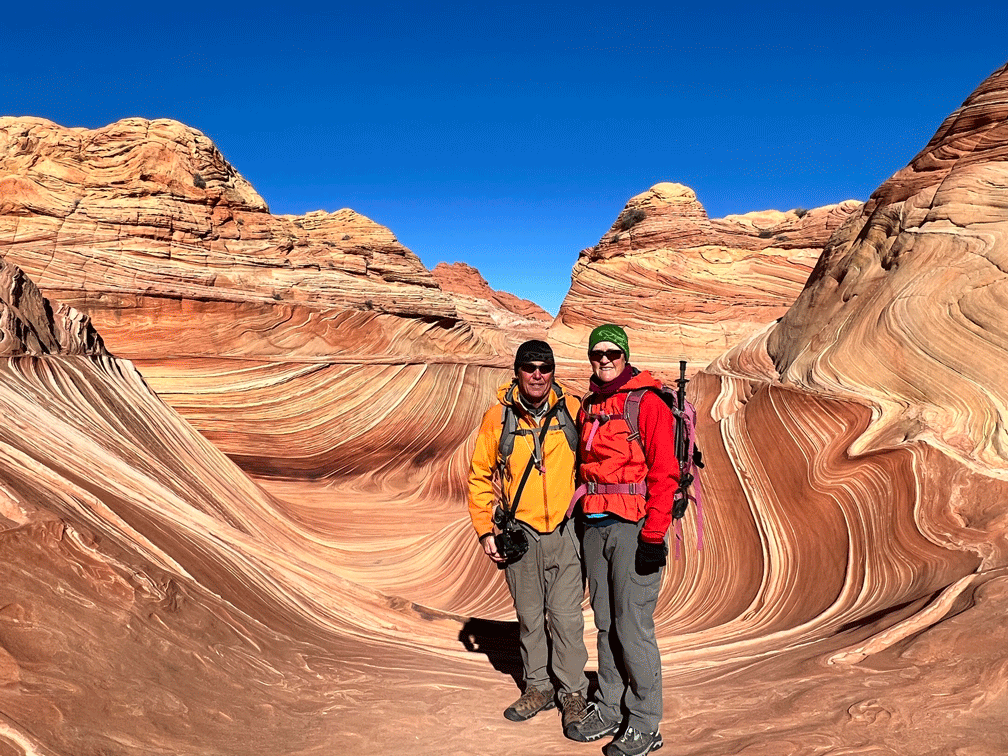
So we asked the nice guy to take our photo too. Although it was sunny, it was also windy and cold.

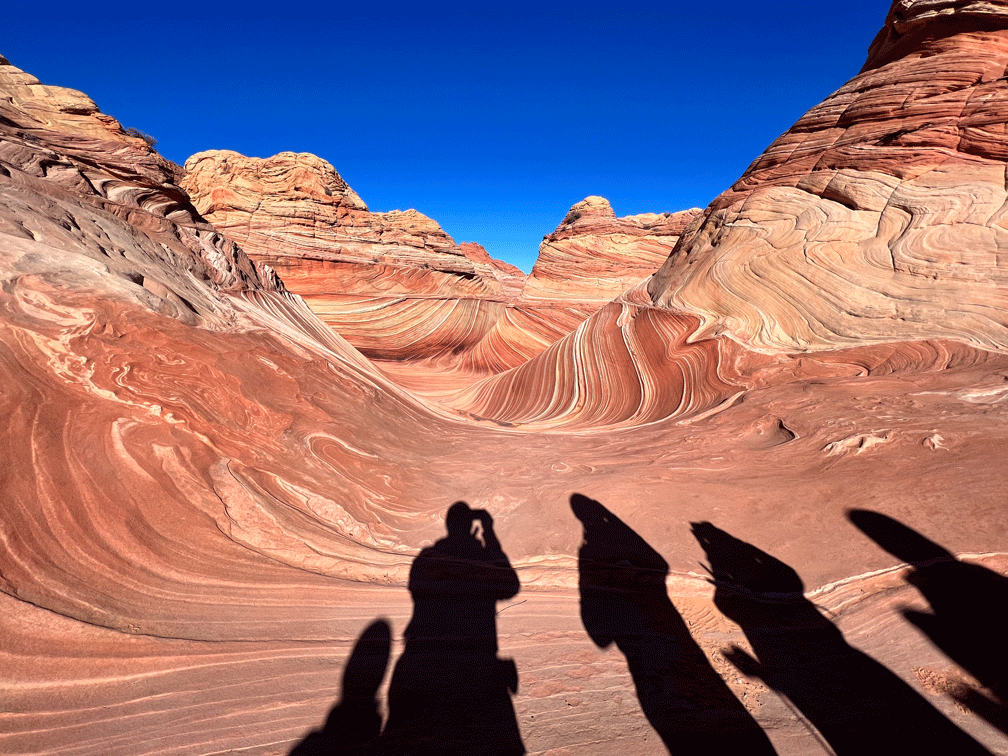
It was hard to keep the shadows out of the photos, so Doug took one including them.

Soon the spot was empty, so we took more photos! Different angles, different light, different cameras … And we also tried to soak up the beauty.

We walked down through “The Wave” to get this view.

We continued down and turned left into the cleft that is in shadow in the photo below.

We explored the area and walked about another five hundred metres until we came to a drop. We had a good look at the canyon below.

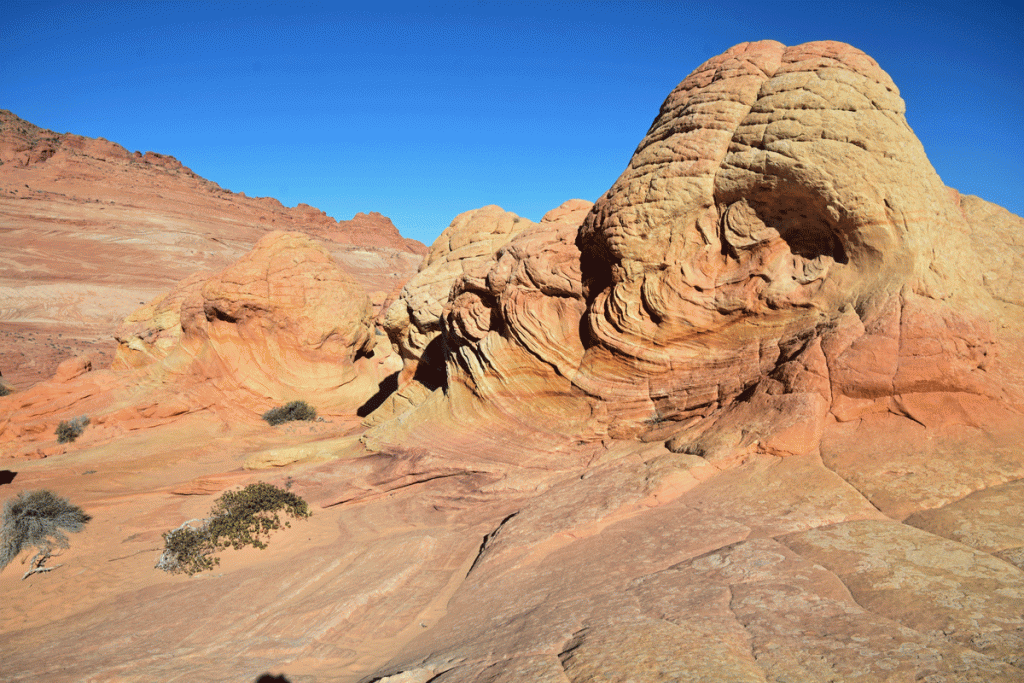
When we circled back, we also climbed up and along, which gave us this view of the toadstools. The one to the right of centre is the colourful toadstool that was in a previous photo.

In this view from higher up, “The Wave” is on the left side.

So when we returned again the light was slightly different and we were at a different angle so of course we took more photos.

More posing.

It was about 11:30 when we did our final walk down “The Wave.”

The photo below is the view that Wendy is capturing on her camera in the above photo.

And this was our final look at “The Wave” as we headed back.

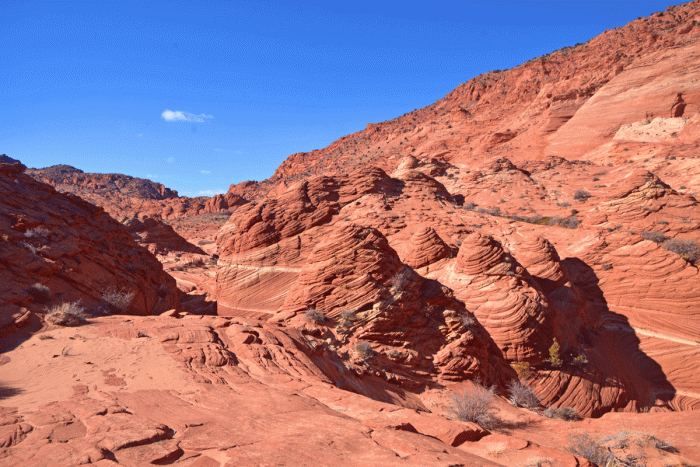
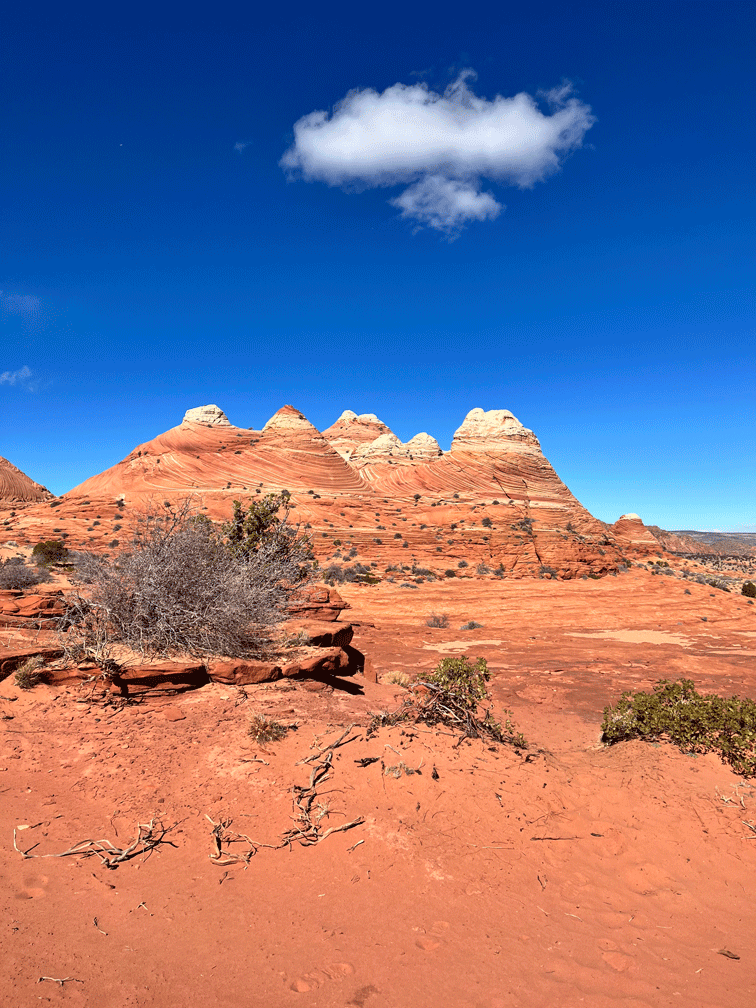
Within a half an hour, we were down, through the sand dunes and up again on the slick rock. Here’s a view of “The Teepees,” some interesting rock formations that we could see from the route.

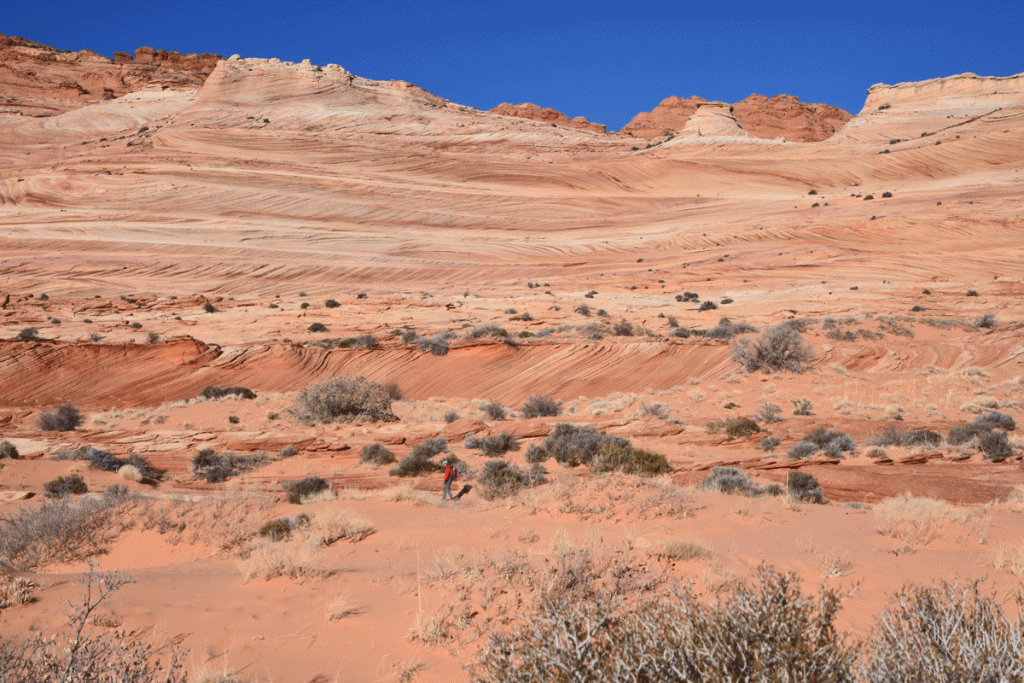
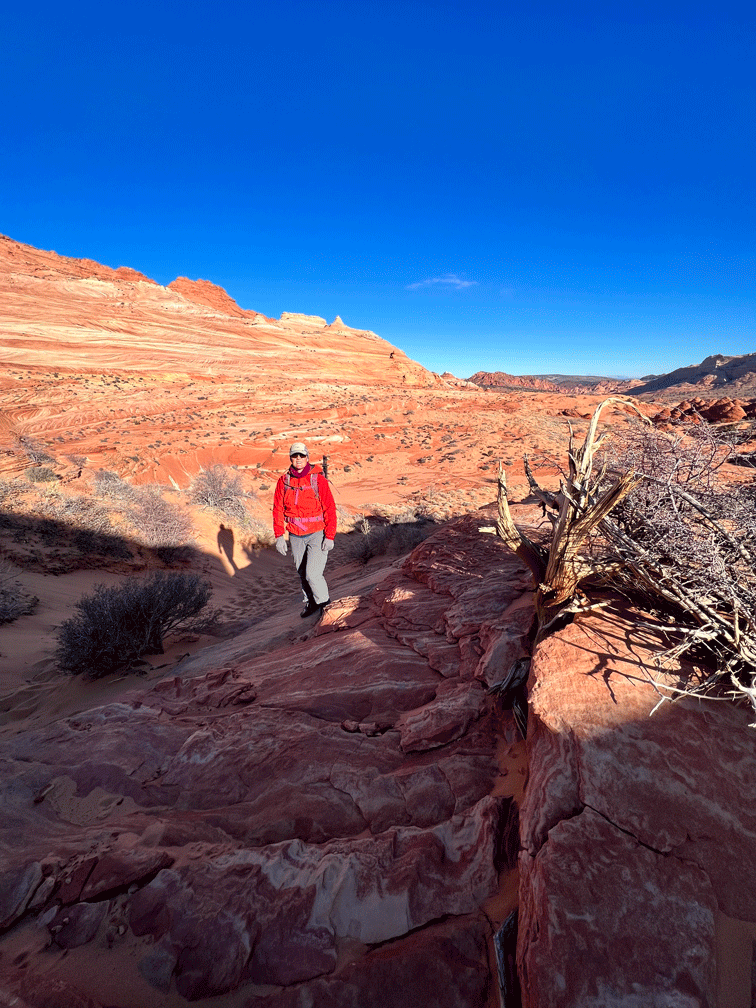
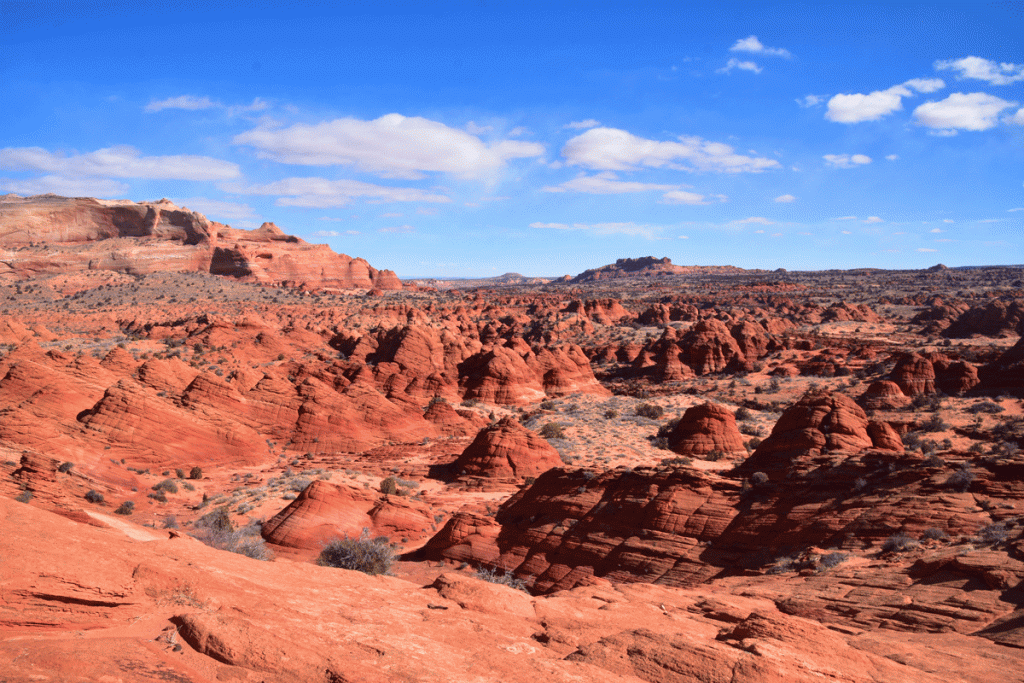
Our hike back to the trailhead was full of interesting scenery.

About a half hour from the trailhead we finally found a place to have lunch that was not too windy. We made it back to the truck around 2:00. It had only warmed up to 2 degrees C! Hot showers in our hotel in Page were next on our list.

We hope you have enjoyed our virtual tour of “The Wave.” It was a once in a lifetime experience for us.

Birding in SE Arizona: January 2022

Birding in SE Arizona: January 2022

We’ve seen more birds this January in Arizona than any other year. Some of it was luck, some of it was because we went out more often, and some was because we did our research and went to places that special birds had been seen.

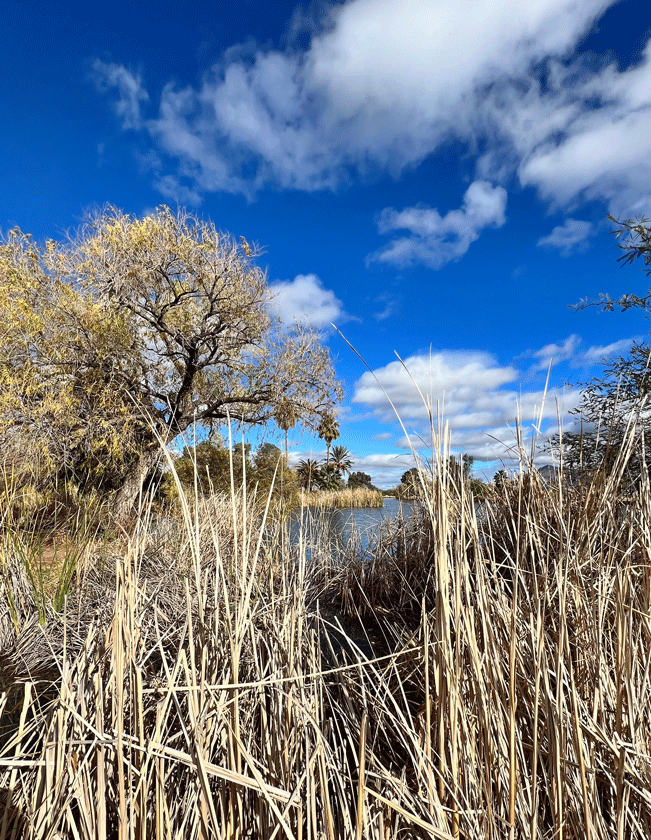
The first photos are actually from the last day in December at Christopher Columbus Park. We’ve shared many photos of Silverbell Lake, but here’s another one from a different angle.

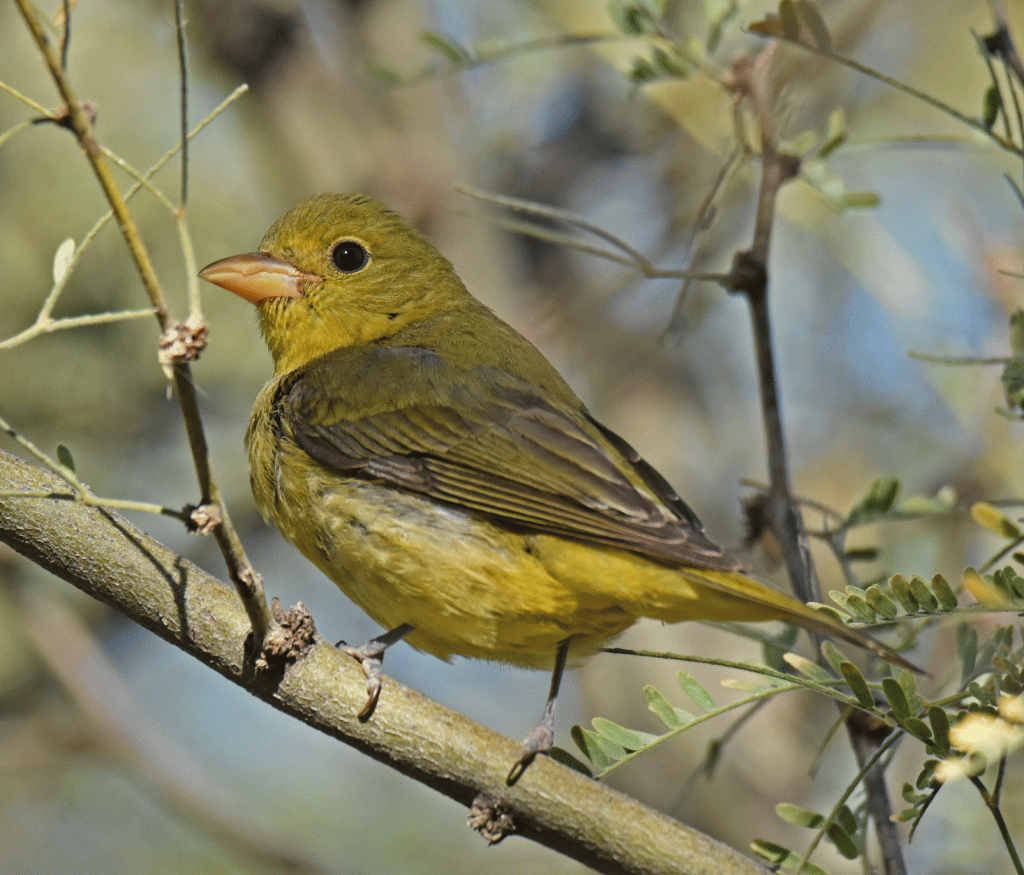
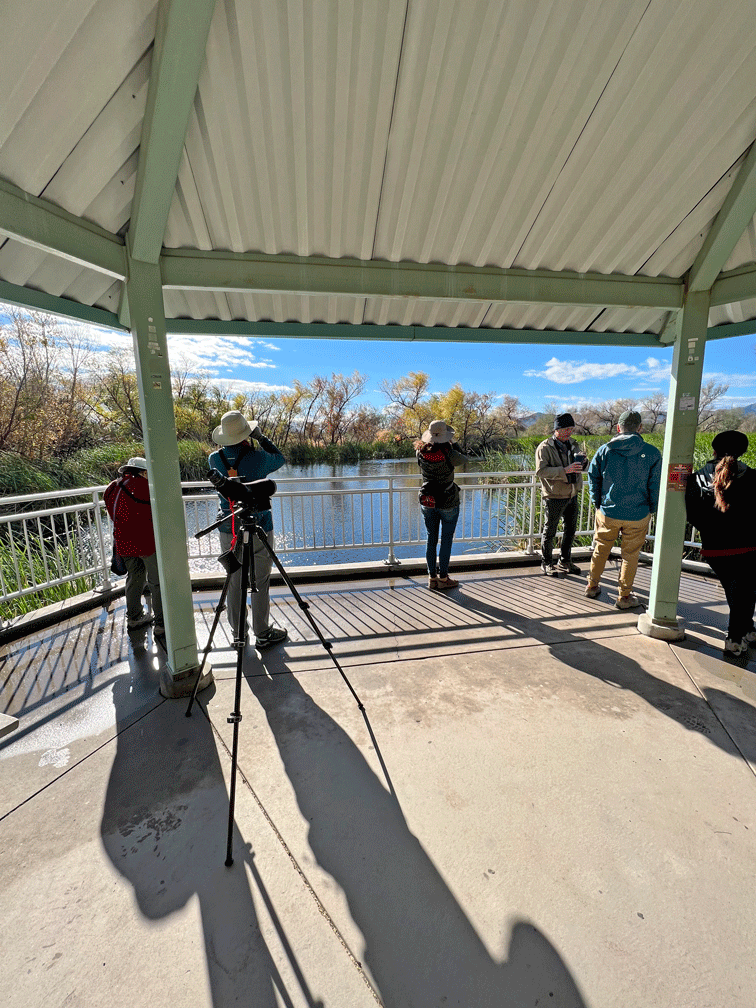
This time we were searching for a Scarlet Tanager. We spotted the female after another birder directed us to the grove of trees where it was last seen. Once Doug got his camera on it, that was the sign to the others that we’d seen it and soon there was a group catching glimpses of the bird.

The female Scarlet Tanager isn’t scarlet, it’s yellowish. It is distinguished from the more common Summer Tanager by the dark wings. Unfortunately, by the next day, she had decided to fly to somewhere new, and couldn’t be relocated.

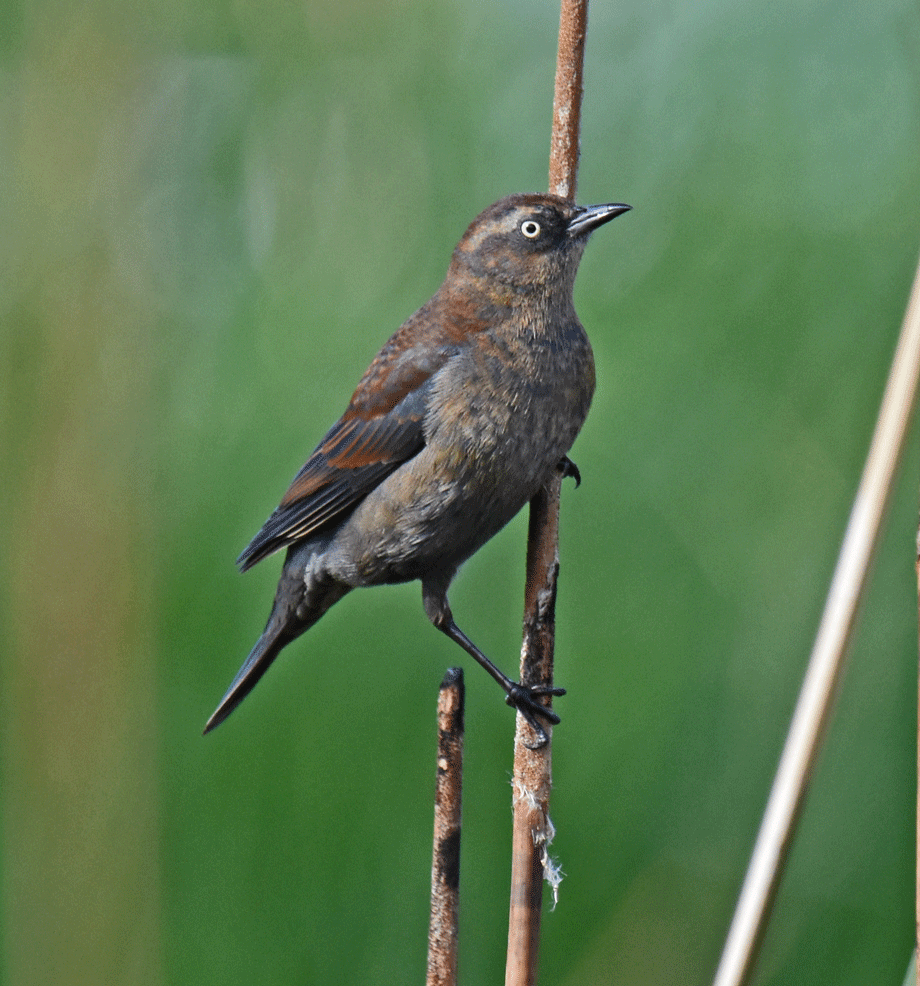
On January 1st, we went to Sweetwater Wetlands to try to see a Rusty Blackbird. Lots of other birders were wanting to see it as well. In the winter, Rusty Blackbirds are found in the eastern US. In the summer, we might see one near where we live in BC, but we never have.

We were lucky enough to get a good view of it perched on a stalk, before it disappeared into the reeds. This bird, however, has hung around, so in February we’ll try to see it again.

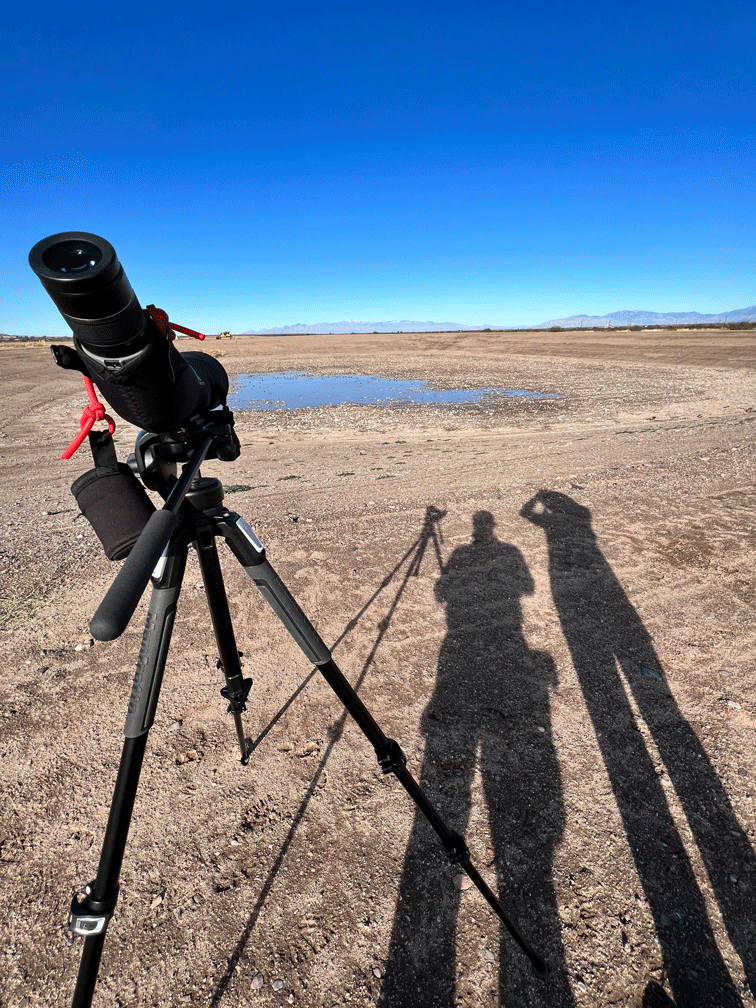
We visited the Green Valley Wastewater Reclamation Facility to see a Dunlin, a shorebird that spends its summers in the arctic and its winters on the coast. There were two that had stopped for awhile in their migration. They were along the shore of this pond. The scope was required to be able to tell them apart from all the other shorebirds gathered at the shallow water. The facility has several ponds, some with more water, and some that were dry depending on the schedule. Not the most natural setting, but in Arizona and most places in the world, birds will gather at any water.

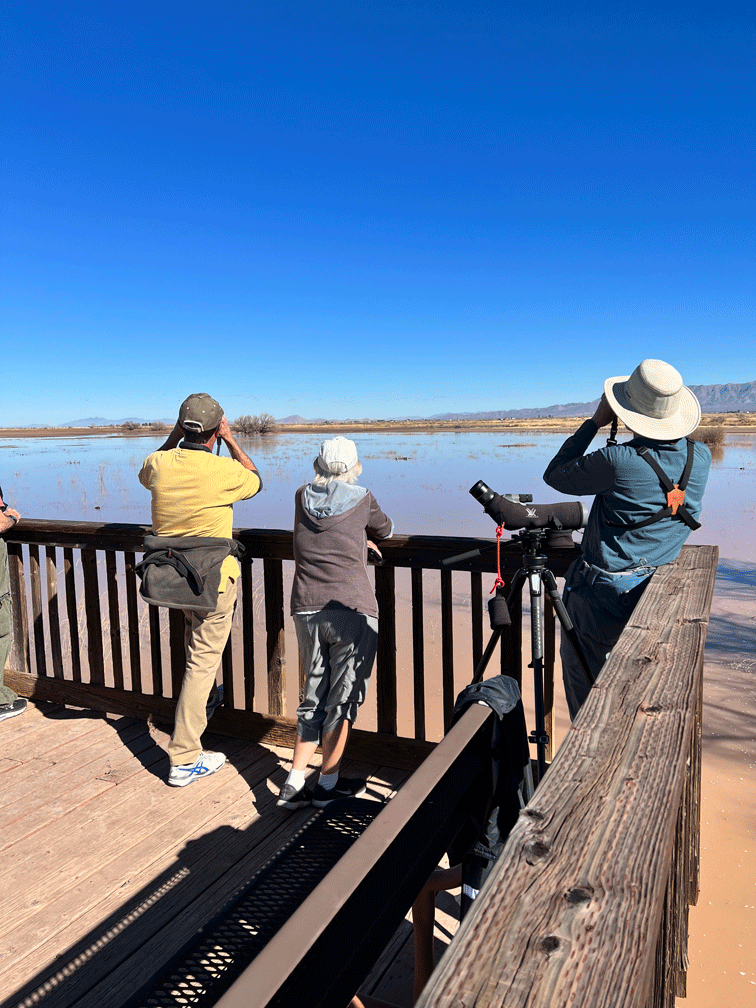
On the first Friday in January, our friends from Cranbrook joined us at Whitewater Draw, a major Sandhill Crane roost about two hours southeast of Tucson.

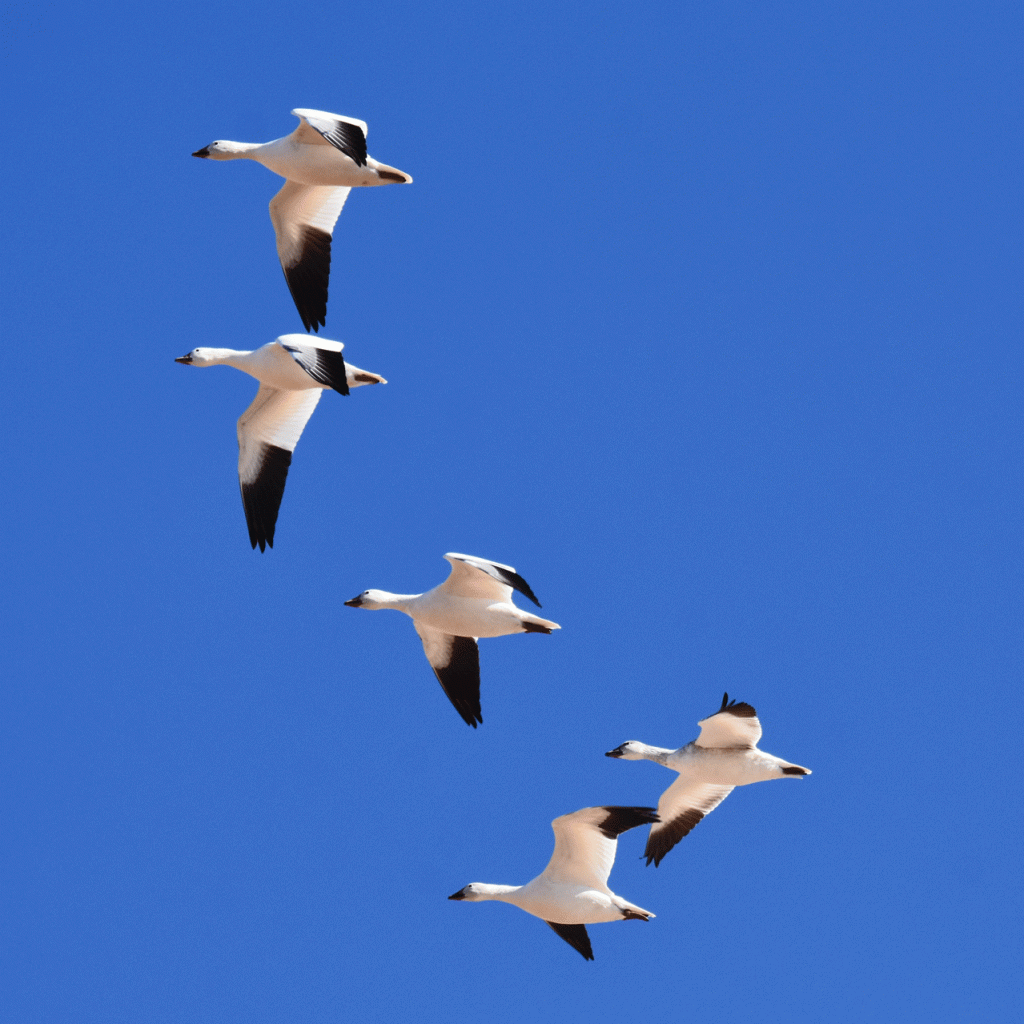
While we were waiting for the Sandhill Cranes to come back from feeding on the fields in the north, a flock of about 120 Snow Geese circled the pond, before landing back in almost the same spot on the far shore of the pond.

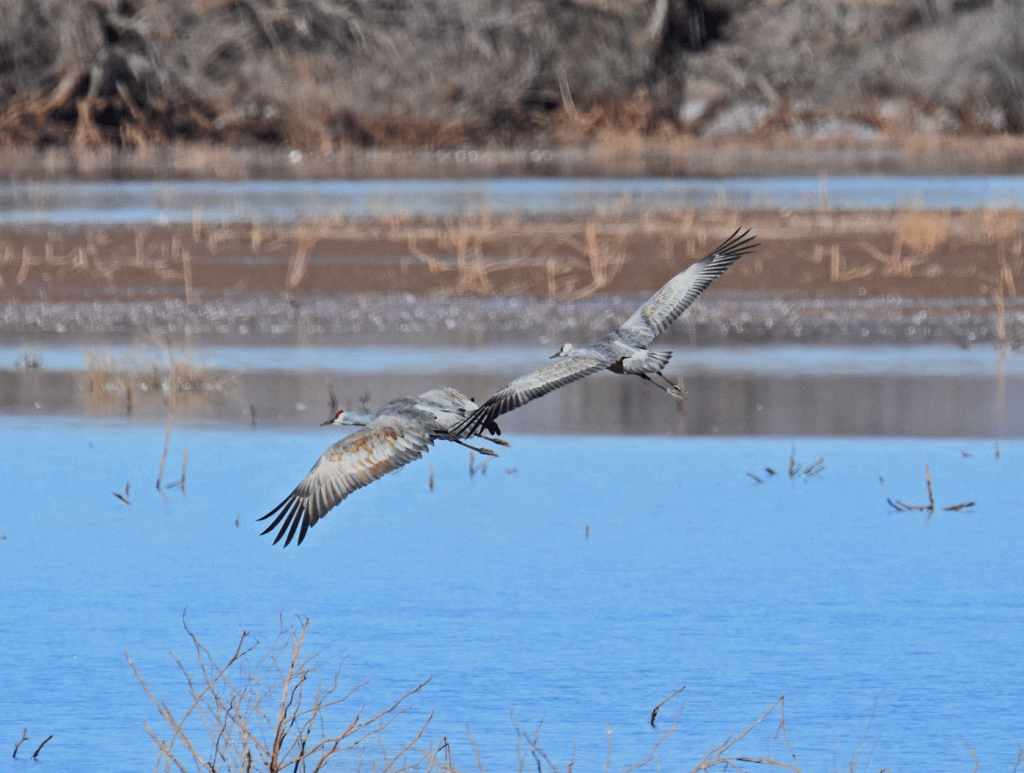
We saw these two Sandhill Cranes earlier in the day. They were some of the last to leave their overnight roosting spot.

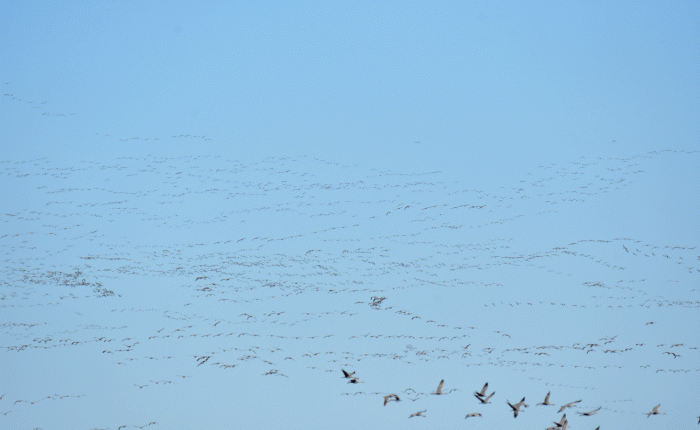
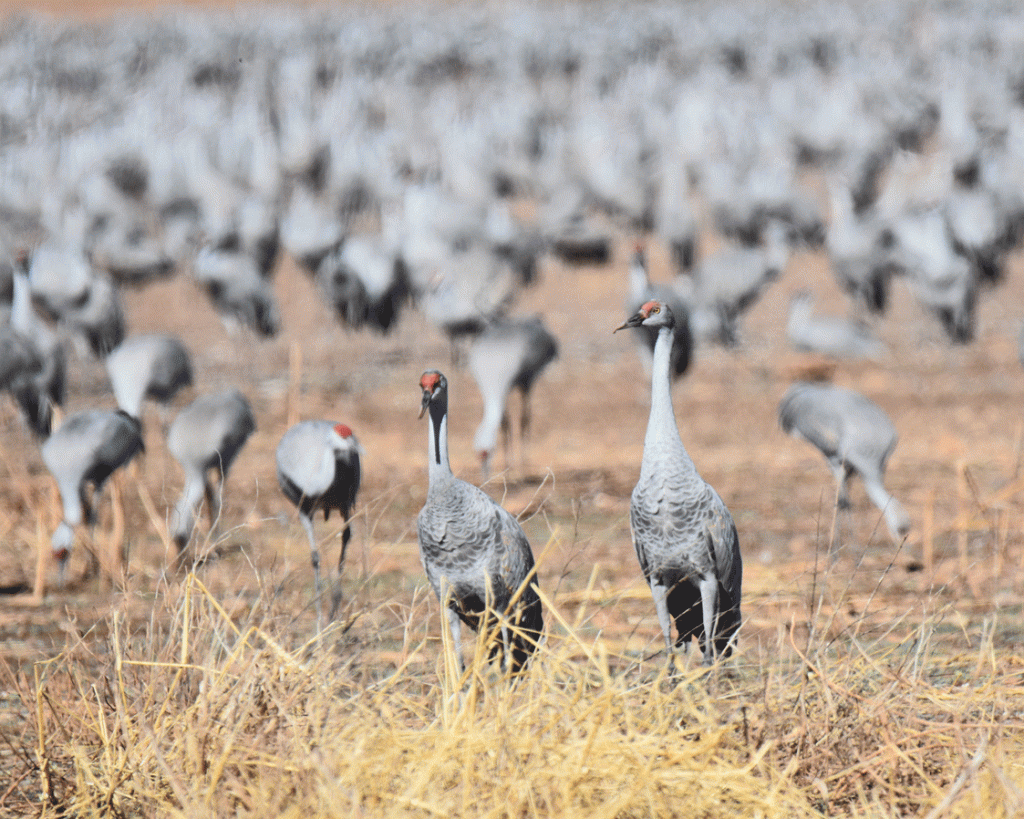
The biggest flocks arrived around 11:30. A photo can’t capture the huge numbers or the constant movement. We estimated there were ten thousand Sandhill Cranes, but there could have been double that. Many of them landed on nearby fields, out of range of our scope.

The ones that landed nearer the viewing platform made a huge racket. Many people, most who were not birders, came to experience the cacophony and awesomeness of the vast numbers of cranes.

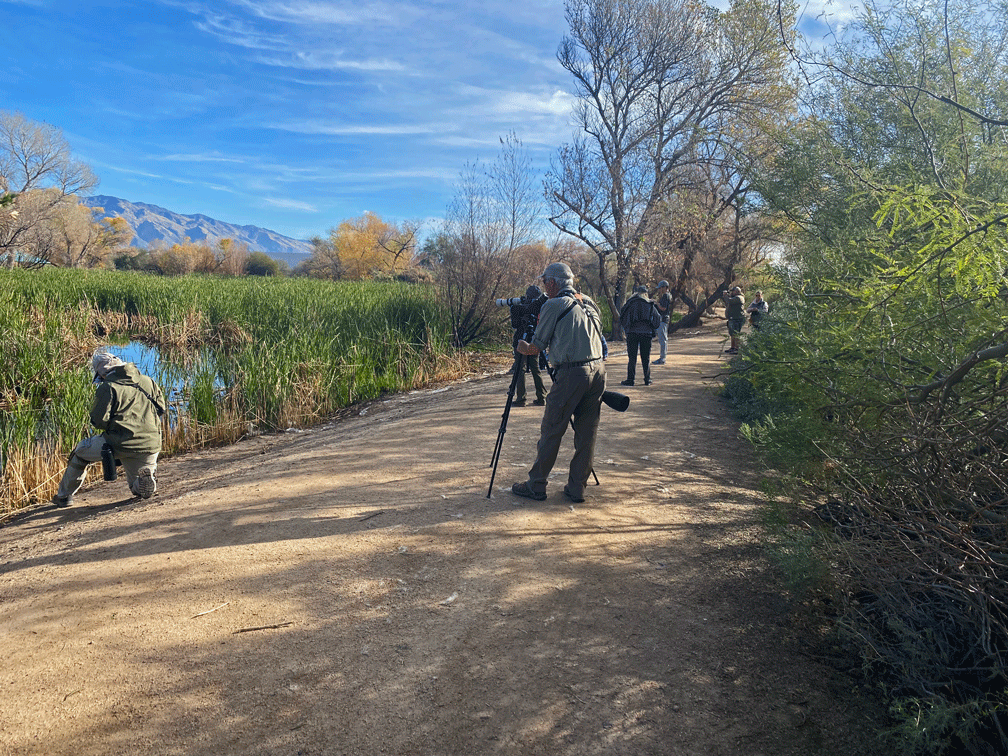
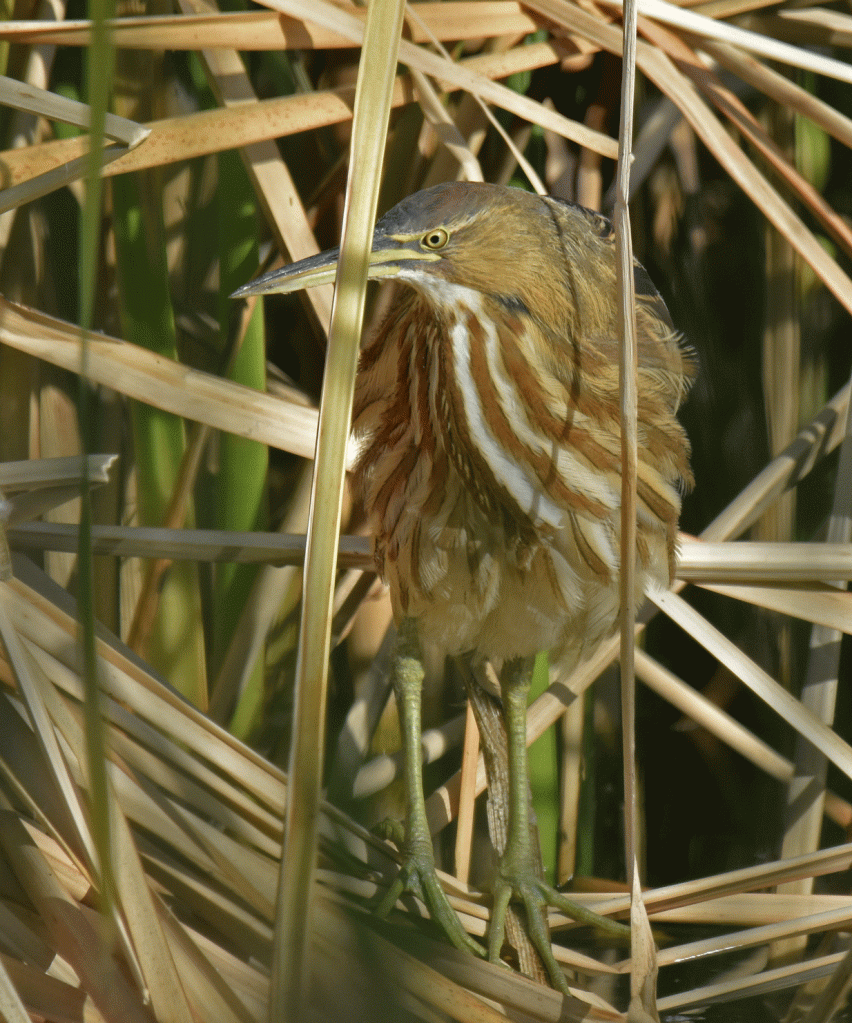
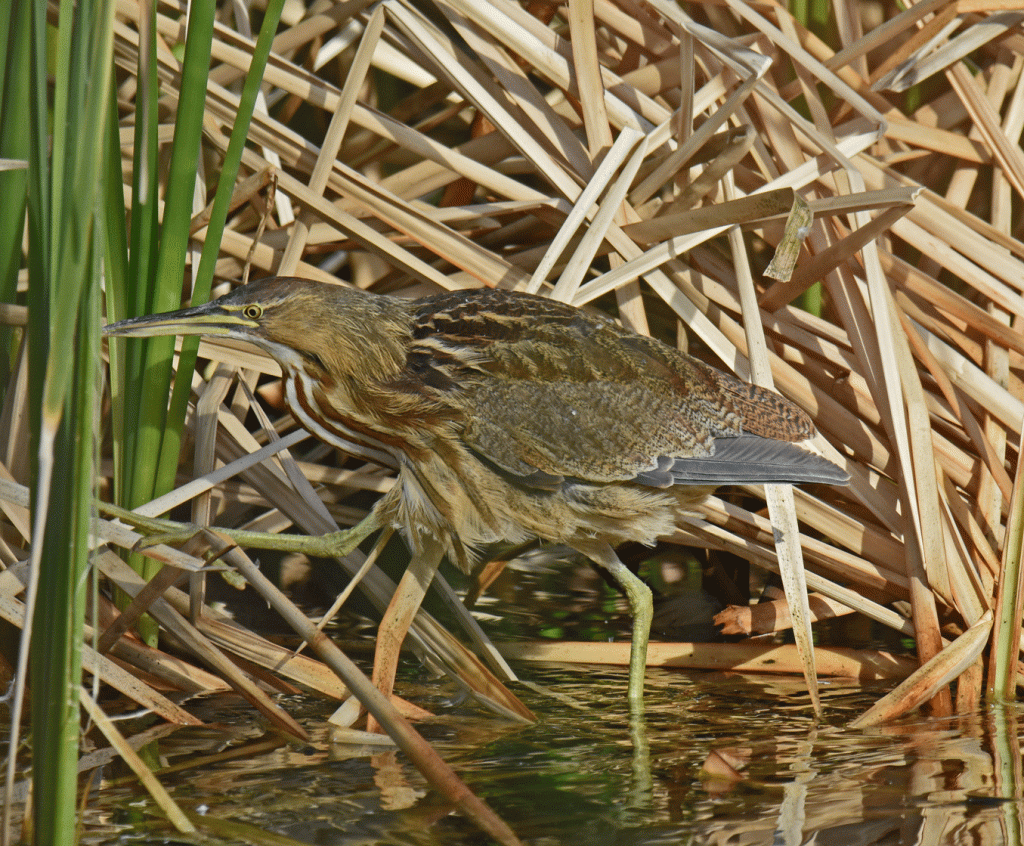
The secretive American Bittern that lives at Sweetwater Wetlands has been easier to see since the first week in January. Prior to this we had only seen it once. This January, we’ve had three good views of it. It moves slowly and doesn’t seem to notice the cameras, so if one photographer finds it, others have an excellent chance to see it too.

The American Bittern’s bold stripes help it to be camouflaged among the reeds.

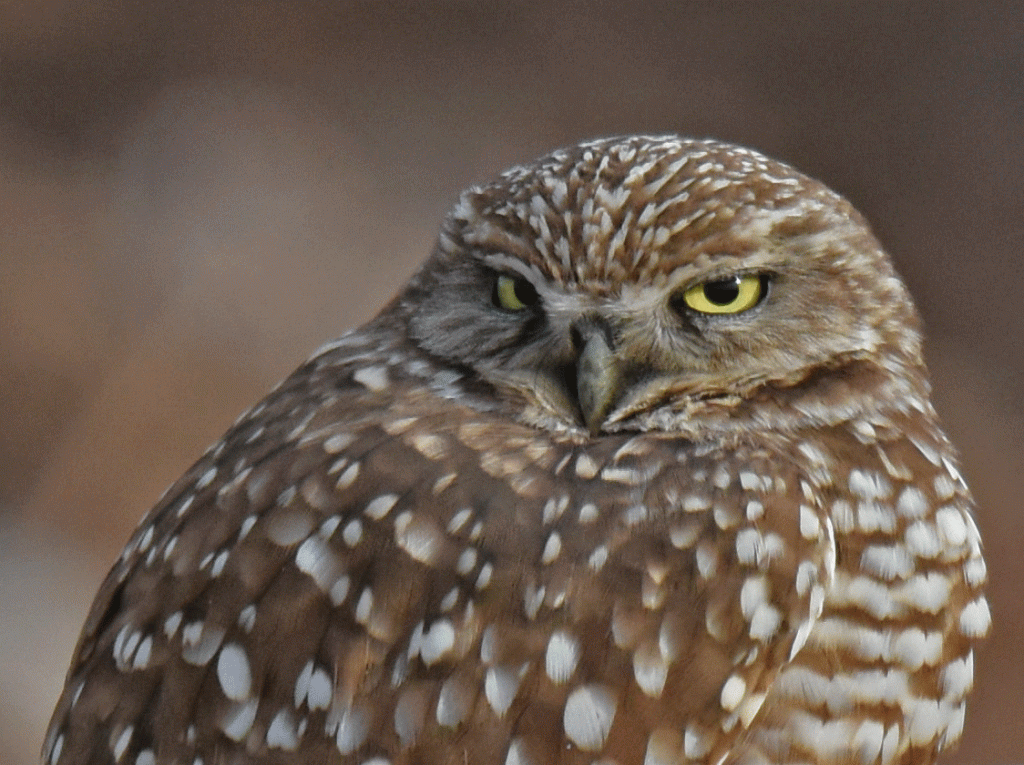
We had never seen a Burrowing Owl, so when we discovered that they were quite common in the fields about a half hour from our place, we went in search of one. Driving alongside fields is not our favourite way to look for birds. The fields were full of ravens, but that seemed to be all there was, until Doug spotted a suspicious-looking lump which turned out to be an owl. It sat still and didn’t seem to notice us, and Doug was able to get several photos. When we left, it was still there.

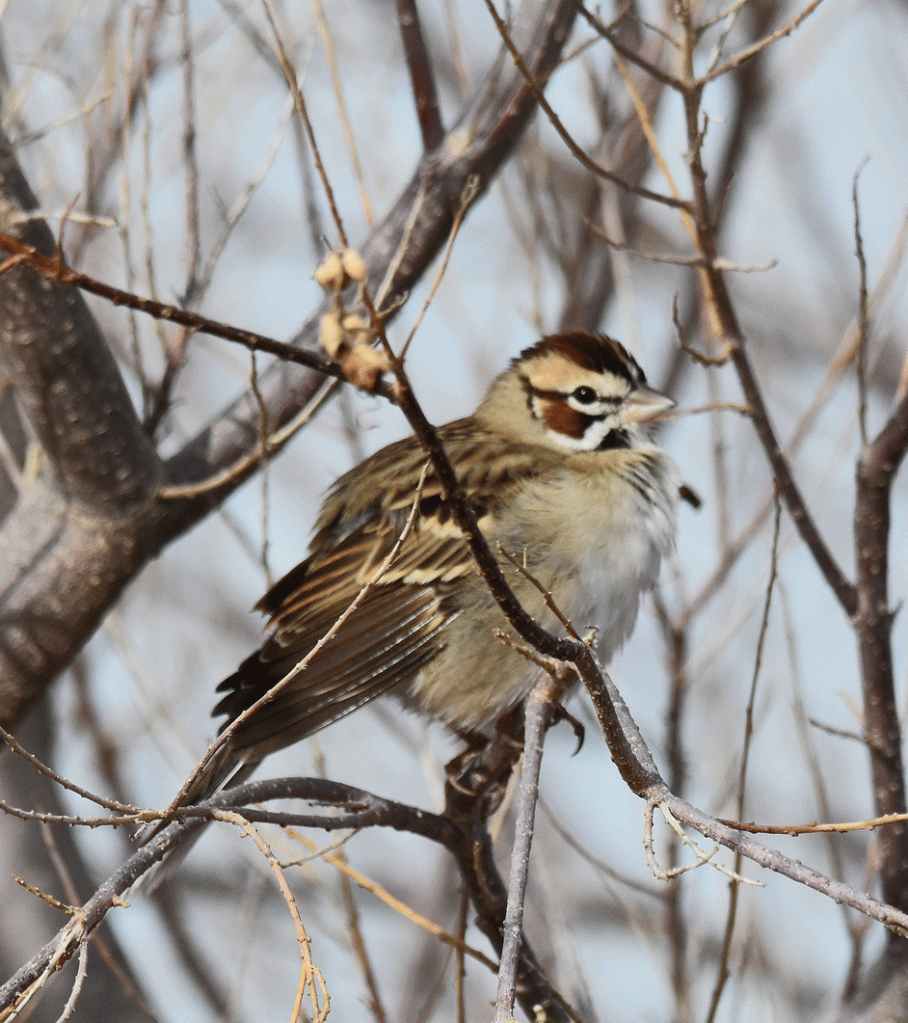
Here’s a Lark Sparrow, all fluffed up as protection from the chilly air, at a spot near to where we saw the Burrowing Owl.

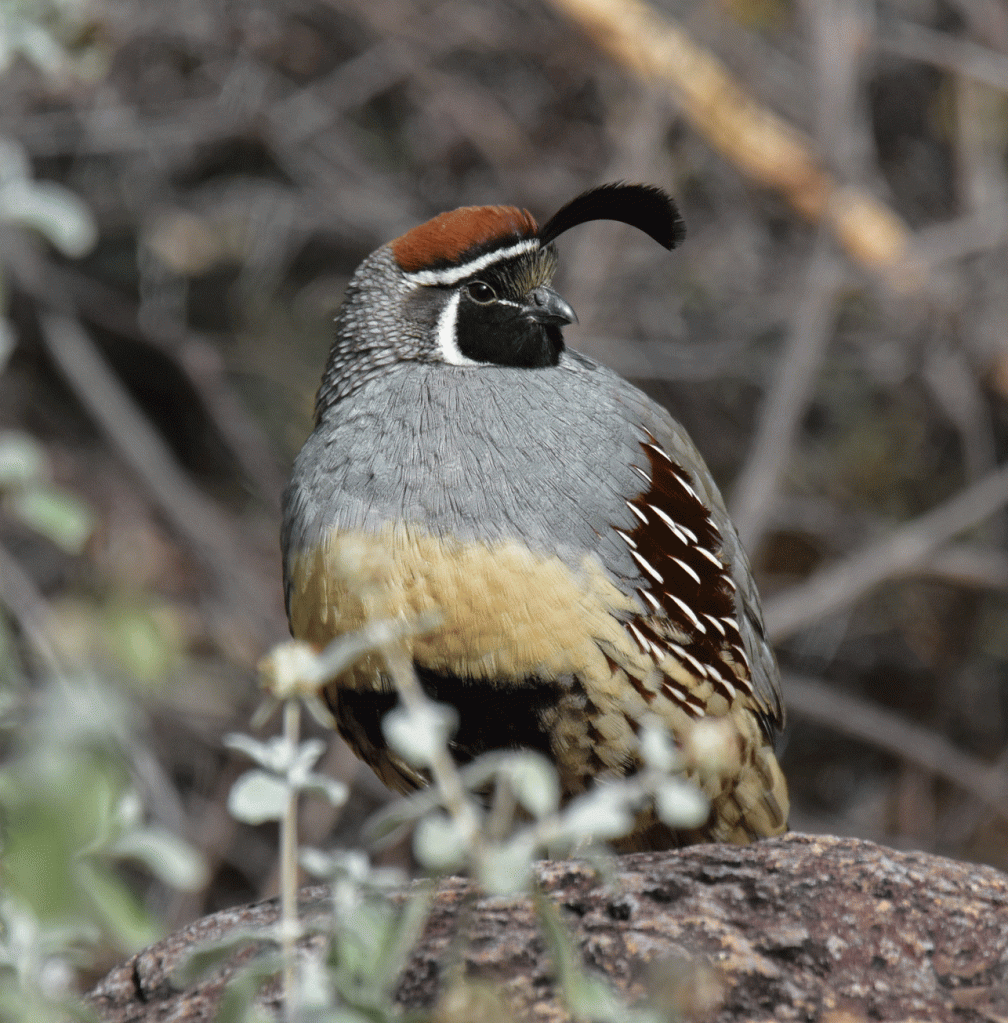
We have Gambel’s Quail in our yard everyday, but this one was in perfect light at the Desert Museum.

We finally saw the rare Rose-throated Becard on a trail in Tubac, high up in the cottonwoods. The female makes the nest, which is a very large mass of vegetation with an entrance low on one side. It’s the dark spot high in the trees in the photo below. We saw the female close to this nest but it was impossible to get a photo. So we thought the photo of the nest would have to do.

But we went back a couple of weeks later, and this time we were much luckier. The female Rose-throated Becard doesn’t have a rosy throat, however. She does have rufous sides to her wings and what looks like blush on her cheeks.

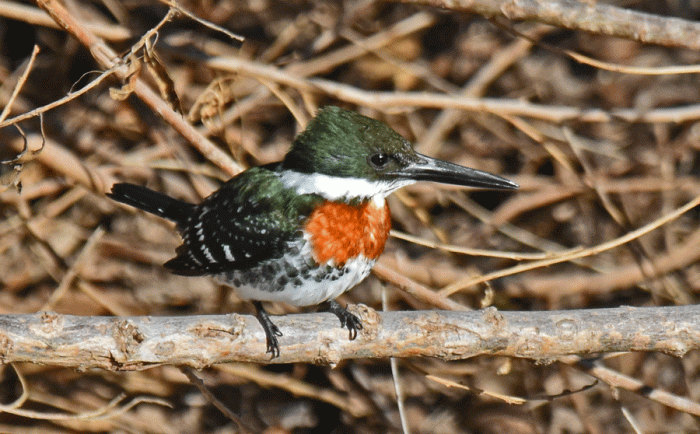
The bonus bird for this trip to Tubac was a male Green Kingfisher. He posed on a branch just below the bridge. We’ve only seen one in Arizona a number of years ago. It was an unexpected bit of good luck.

We went back to Kennedy Park to see the Williamson’s Sapsucker. This time, she was lower on the tree and Doug was able to get a good photo. Usually it is hard to see the bit of yellow on her belly.

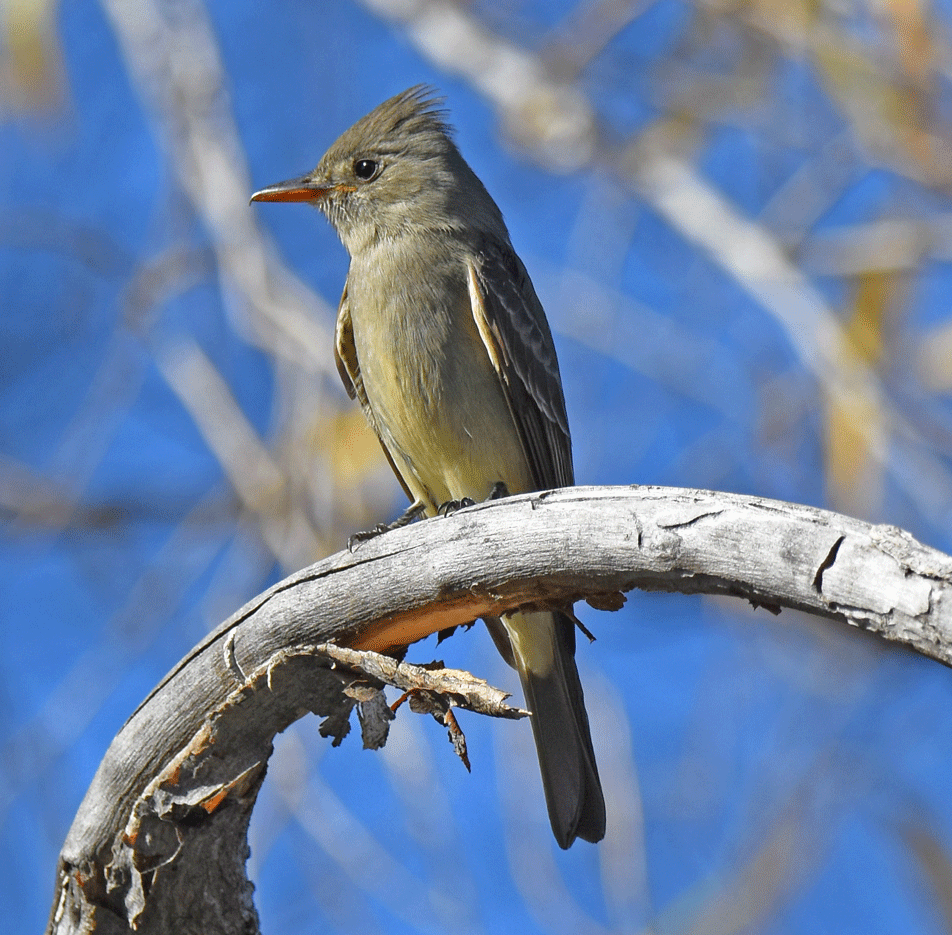
This Greater Pewee posed nicely. The photo shows its bi-coloured bill well. It’s a little bigger than the Olive-sided flycatcher that we are familiar with in BC. It is found in Arizona and eastern New Mexico in the summer and normally winters in Mexico. This one seems pretty happy to fly-catch above a golf course pond in central Tucson.

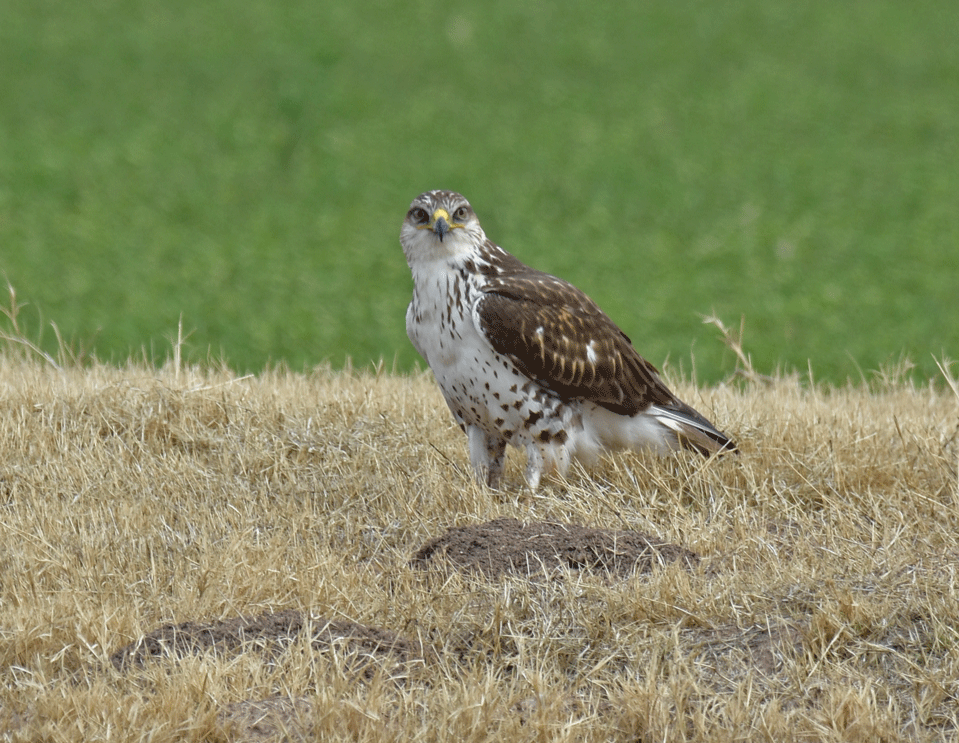
Another lucky find was this Ferruginous Hawk. We had just left a spot that had Horned Larks (too small for a good photo) and Doug kept his camera nearby. So when we spotted it perched on a pole he was ready. He got a photo of it flying into a nearby field, and an even better one of it on the ground. There hadn’t been any sightings of this species of hawk this close to Tucson, so several birders from the area came to see it, some even the same day as our report was submitted.

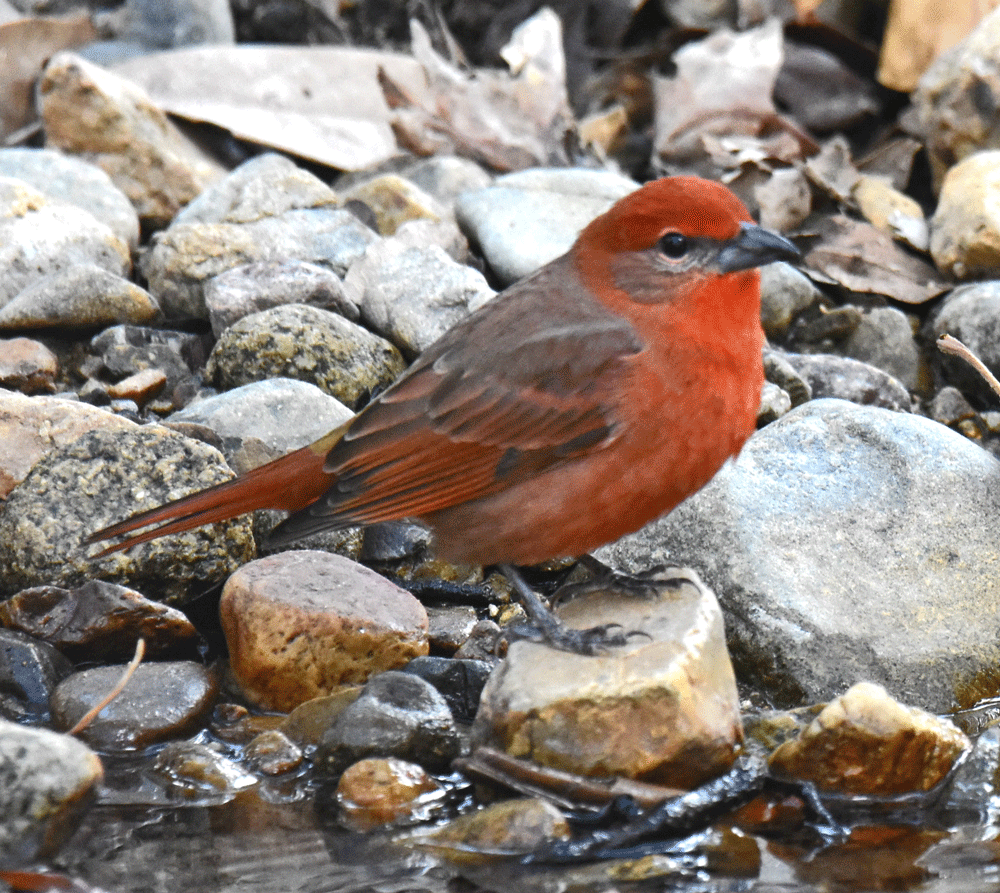
We found these Hepatic Tanagers drinking in the creek in Madera Canyon. The male is reddish (hepatic = relating to the liver, in this case, liver-coloured.)

The female Hepatic Tanager is yellowish, similar to the female Summer and female Scarlet tanagers. Note the dark bill (similar to the Scarlet Tanager and unlike a Summer Tanager) and the greyish wings (unlike the Scarlet Tanager and similar to the Summer Tanager).

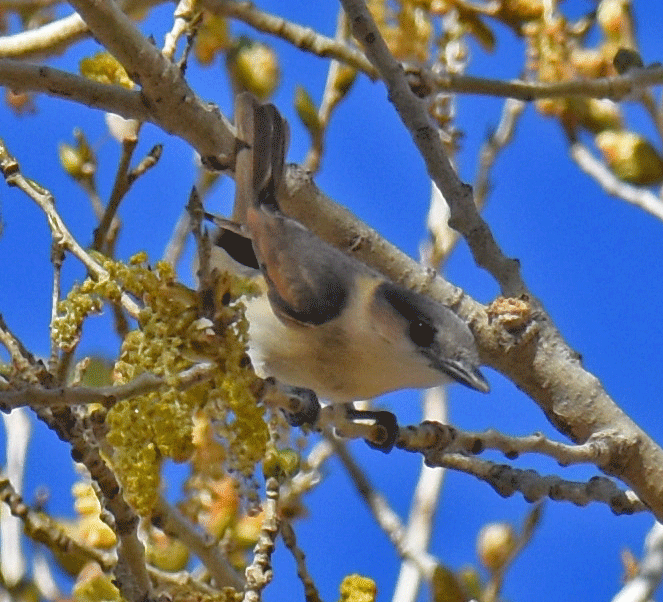
This Bridled Titmouse was bathing in the same stream as the tanagers. Bridled Titmice are the desert equivalent of a chickadee and just as cute.

Our final bird photo for January is of a Swamp Sparrow. They are pretty hard to find in the western US in winter except along the coast. This one found a small patch of swamp at Christopher Columbus Park and has been there for three weeks now.

This is only a selection of the birds that we’ve seen. We pretty much do some birding everyday, and birds are plentiful here so we see a lot of them.

Our next blog will be a special edition about our hiking trip to “The Wave” in northern Arizona.

Arizona Fun – January 2022

Arizona Fun – January 2022

We’ll cover the end of December and all of January in this blog post.

We rode at the Tortilla Preserve several times, but we only stopped for photos twice. Here’s another shot of Wendy riding by “Strongarm” in late December.

And one of her riding down one of the washes in late January.

On to our hiking. December 13 was one of our last really warm day of the year, so we hiked the “Wild Mustang” trail in the Tortilla Mountains.

Doug did really well with his not yet six-month knee replacement.

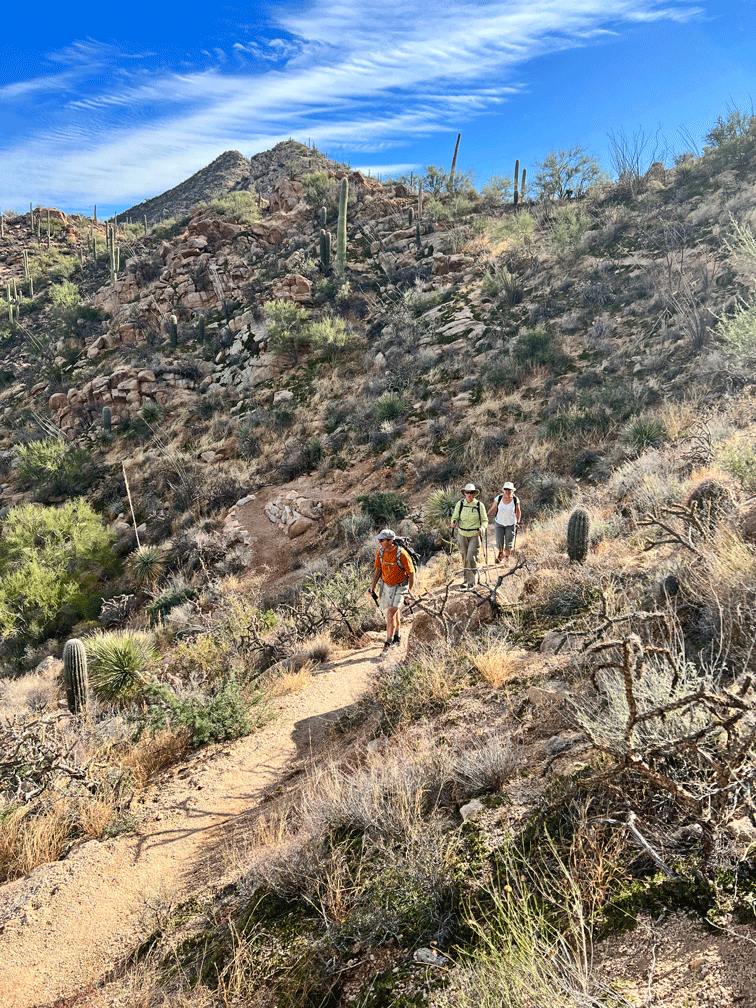
The next week, we showed our friends from Cranbrook one of our favourite loops in Saguaro National Park. We hiked up the Hugh Norris trail, to Sendero Esperanza to Dobe Wash and back to the trailhead following the Bajada trail.

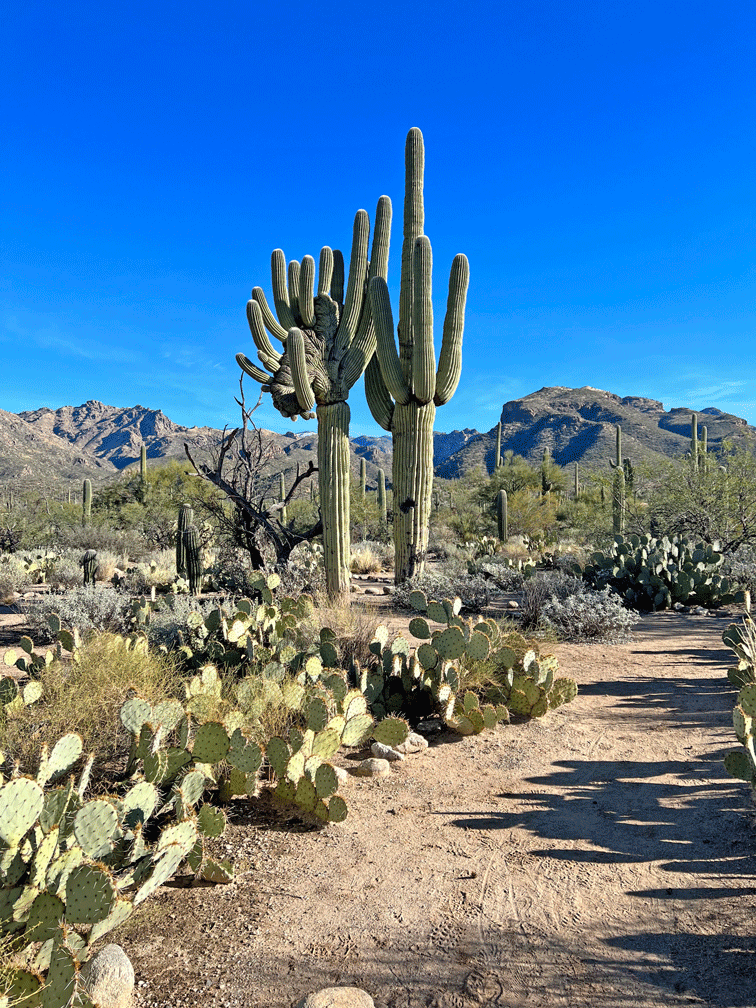
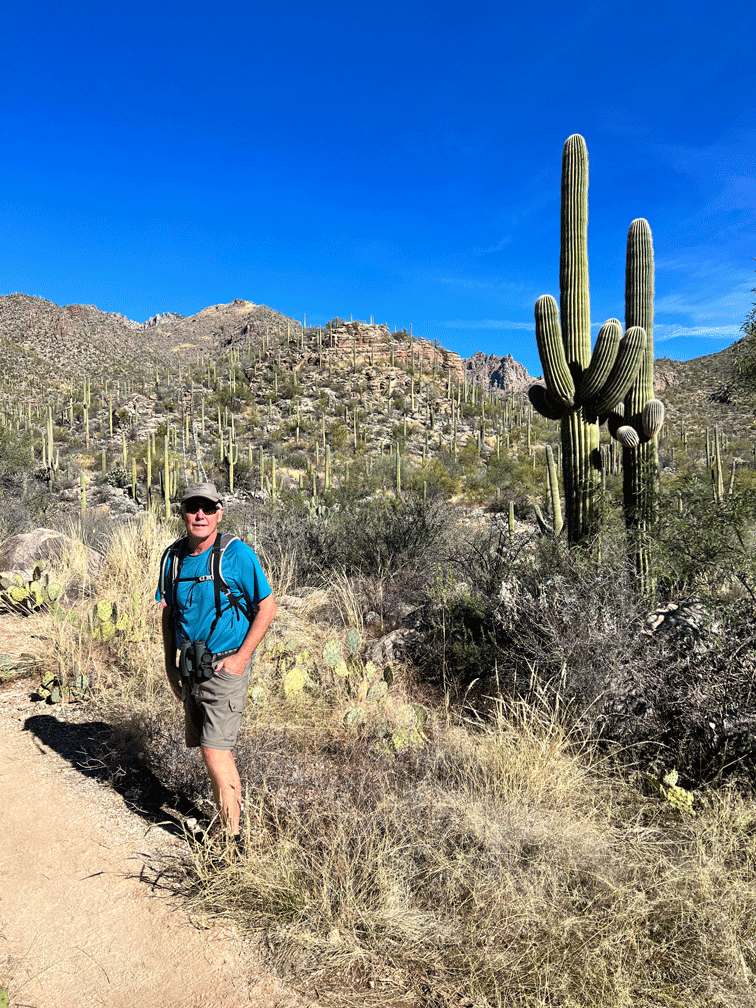
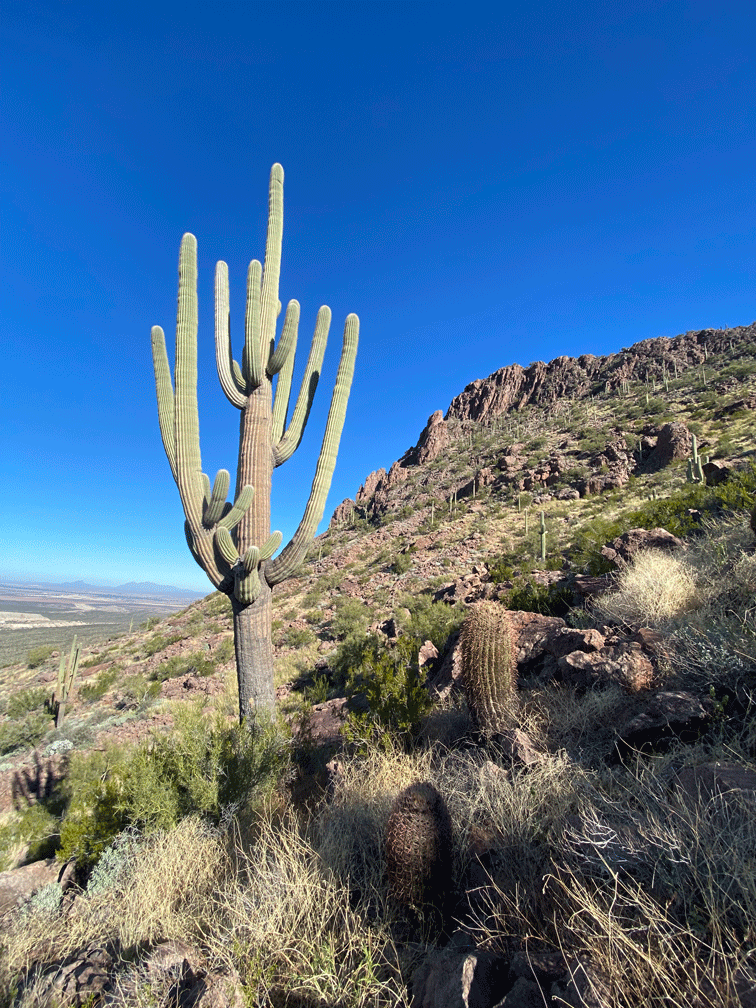
We hiked again in Sabino Canyon, and this time took the short side trip to see this amazing crested saguaro.

Another blue sky day in the mountains.

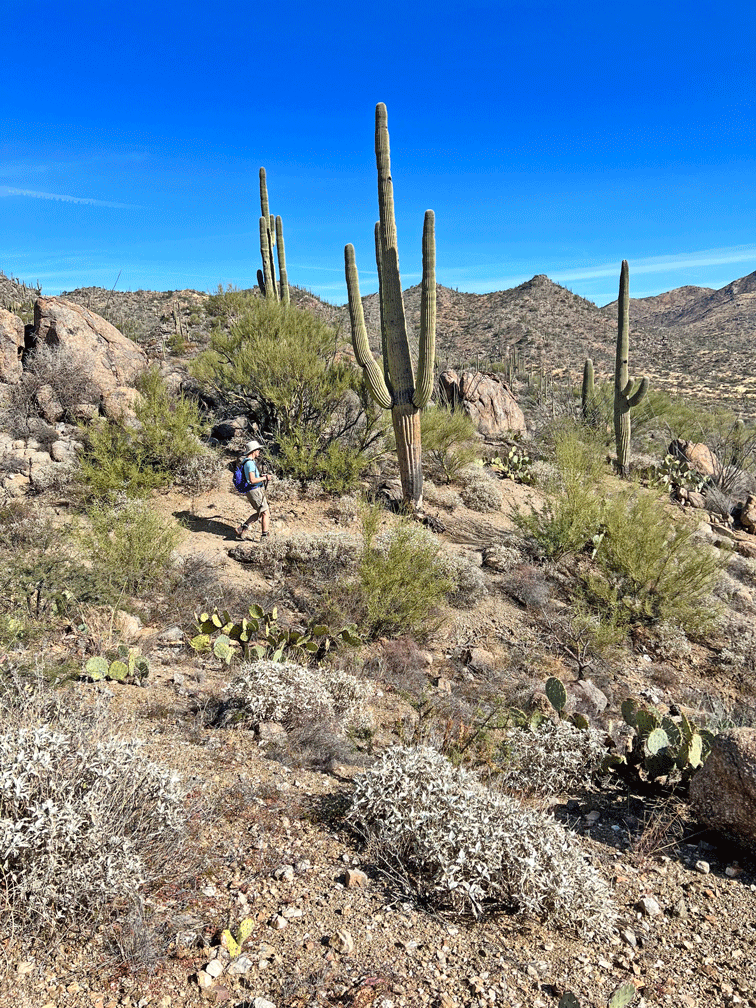
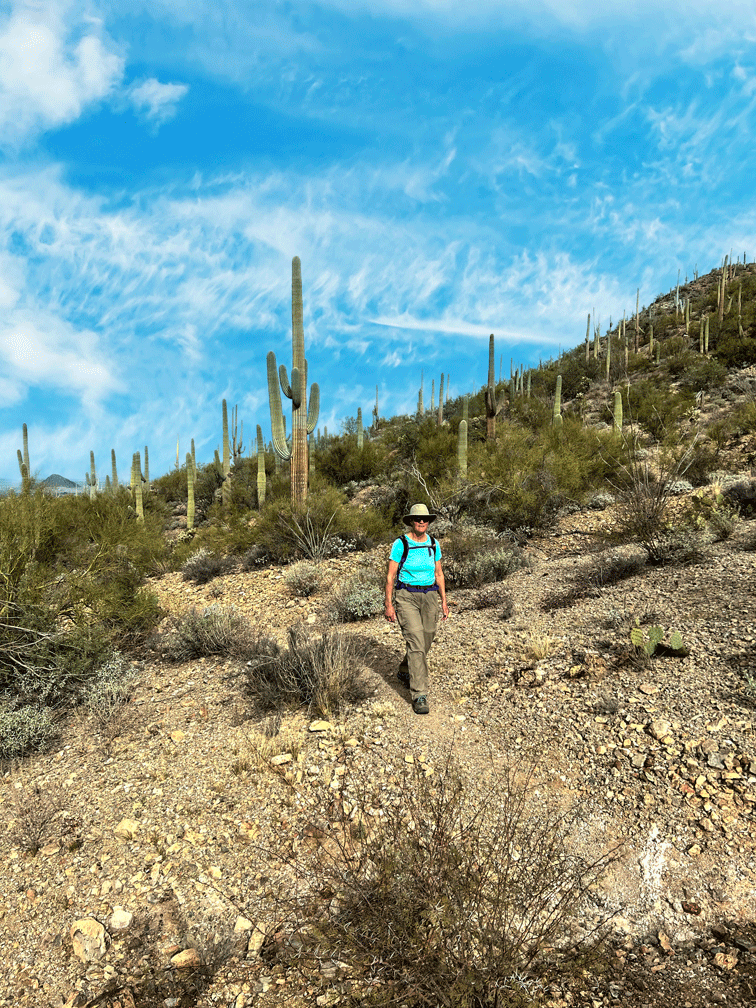
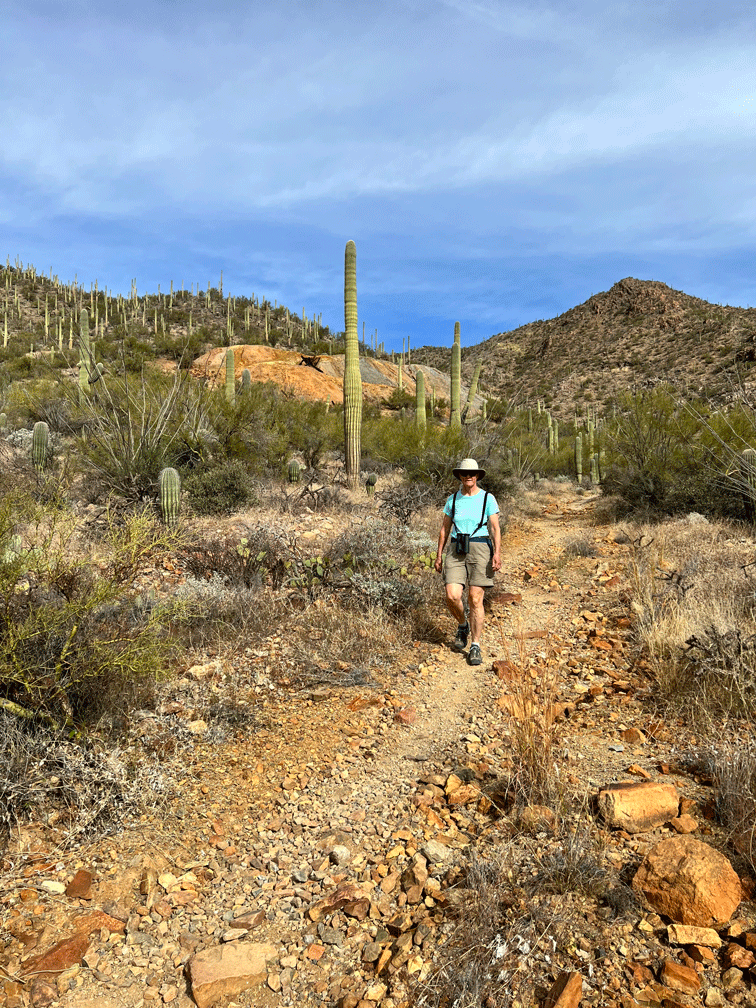
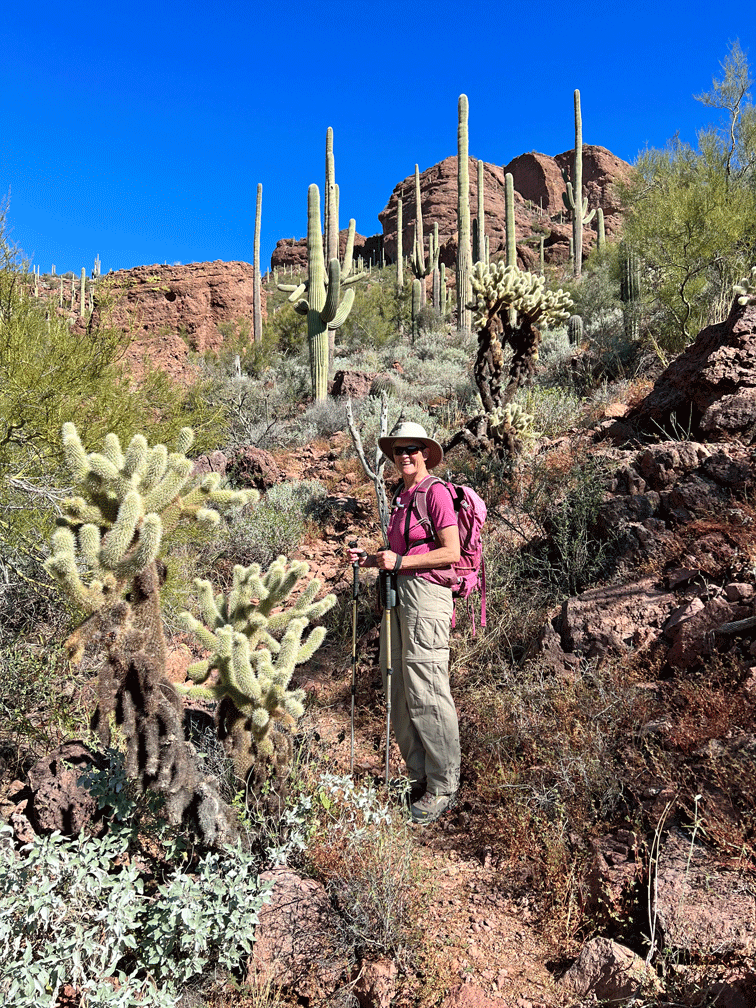
Here’s a photo of Doug walking up Prophecy Wash, a hike very near our place in Saguaro National Park. Panther Peak is the prominent mountain in the background.

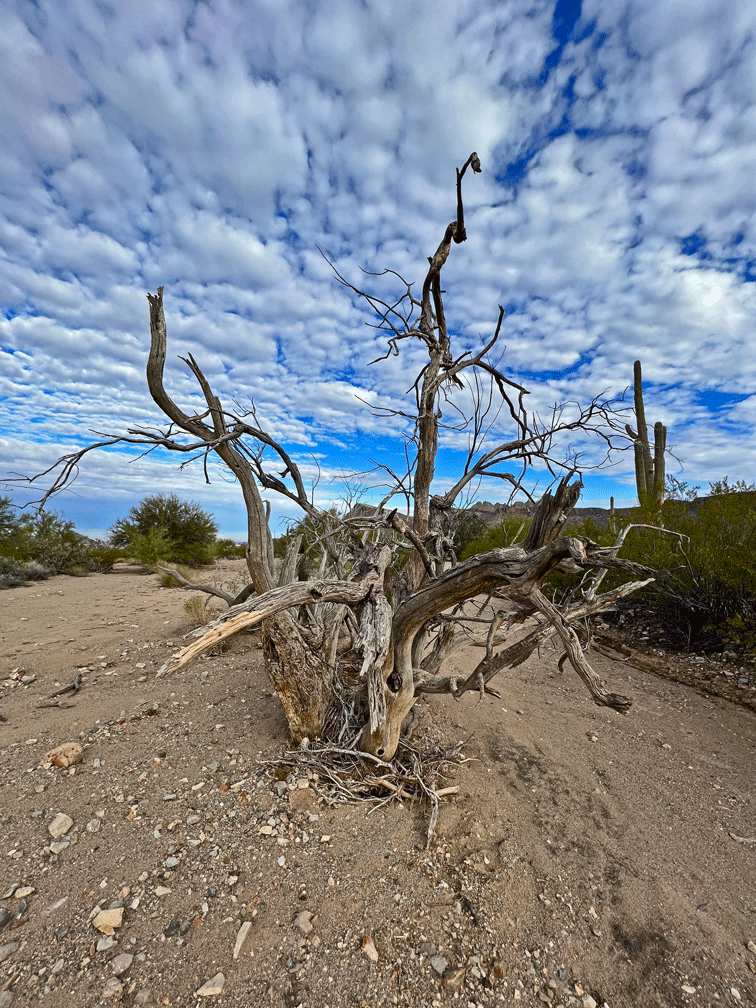
This jumbled ironwood snag was in the middle of the wash.

We hiked out of the wash and over a small ridge so we could join the Picture Rocks Wash to make a loop.

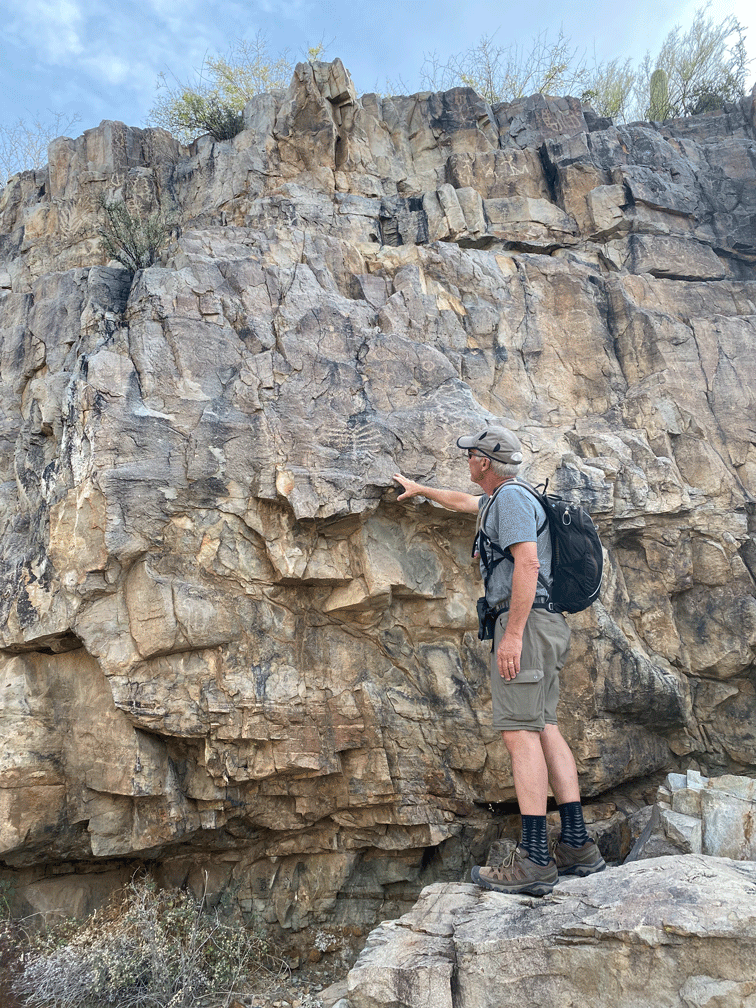
Another day, we hiked up King Canyon in Saguaro National Park. There are some interesting petroglyphs just below the trail convergence.

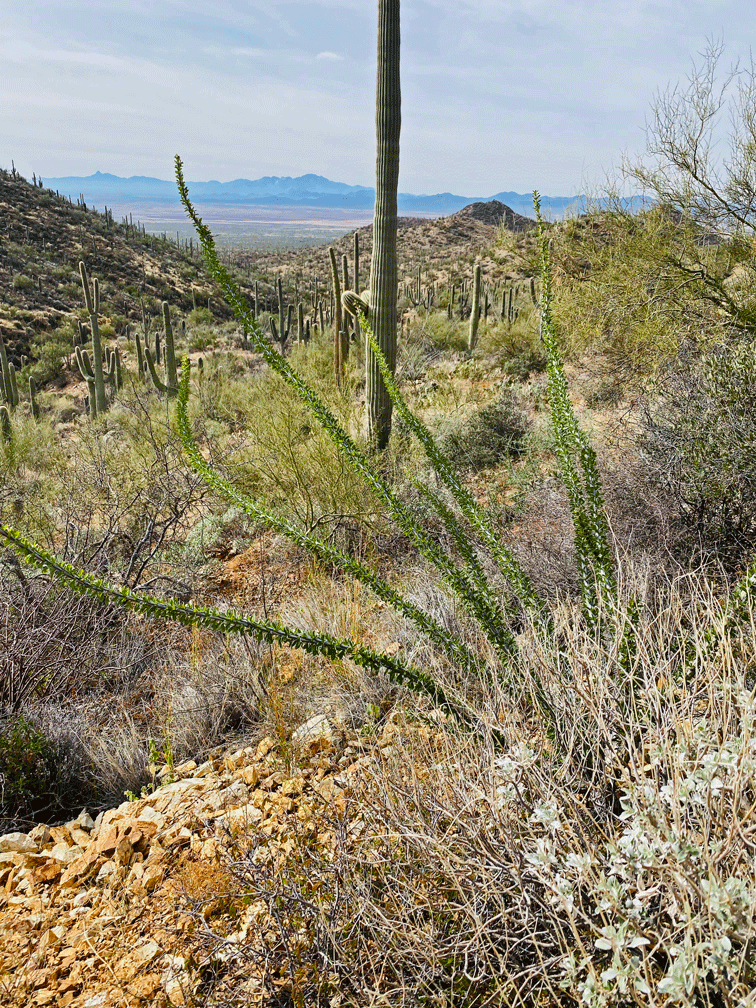
The same day, we hiked over to the Gould Mine trail to make a loop. Here’s the view over to the Avra Valley and the mountains beyond. In the foreground is an ocotillo in full bud. Ocotillos will leaf out within a few days of a soaking rain.

And here’s a view looking up the trail. The old mine tailings are visible in the background. There were several mines in the area that became Saguaro National Park, and many of the trails follow the old mine roads. The land was declared a national monument in 1933 and became a national park in 1994.

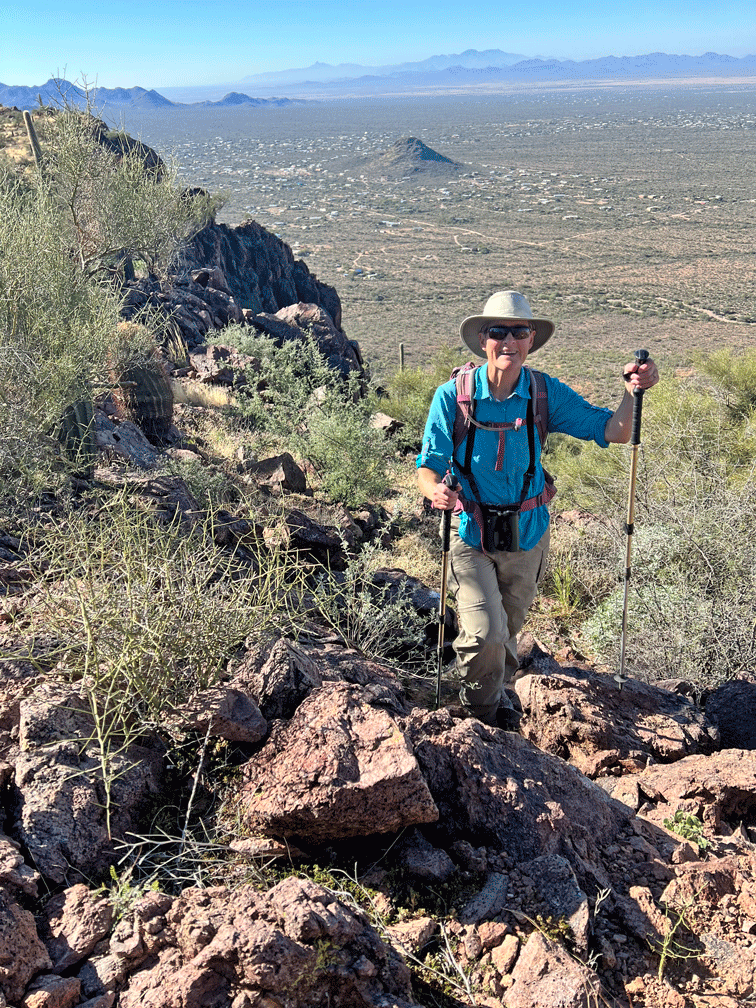
We continued our theme of nearby hikes, with a climb of Panther Peak. We set off on foot from our place. Within fifteen minutes, we were walking below our favourite saguaro grove. Panther Peak is in the background.

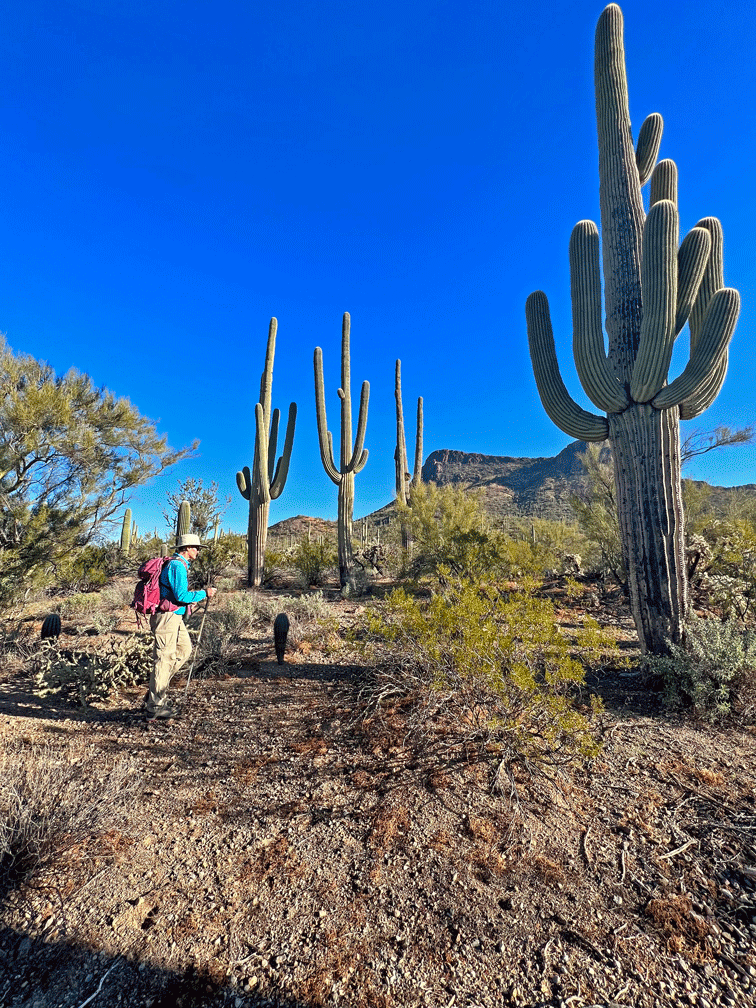
Well, maybe this is the favourite saguaro of the hike… So many nice ones! The grass had grown really well over the summer monsoon season and made the way up our normal route more difficult because we couldn’t see the markers or any remnant of a trail.

Here’s Wendy with only a few more steps needed to reach the main ridge. If you had binoculars, you could see our trailer from this point.

We chose to go down the official trail, after meeting a hiking group at the top that had used it to climb up. Canyon wrens’ calls echoed on the steep sides.

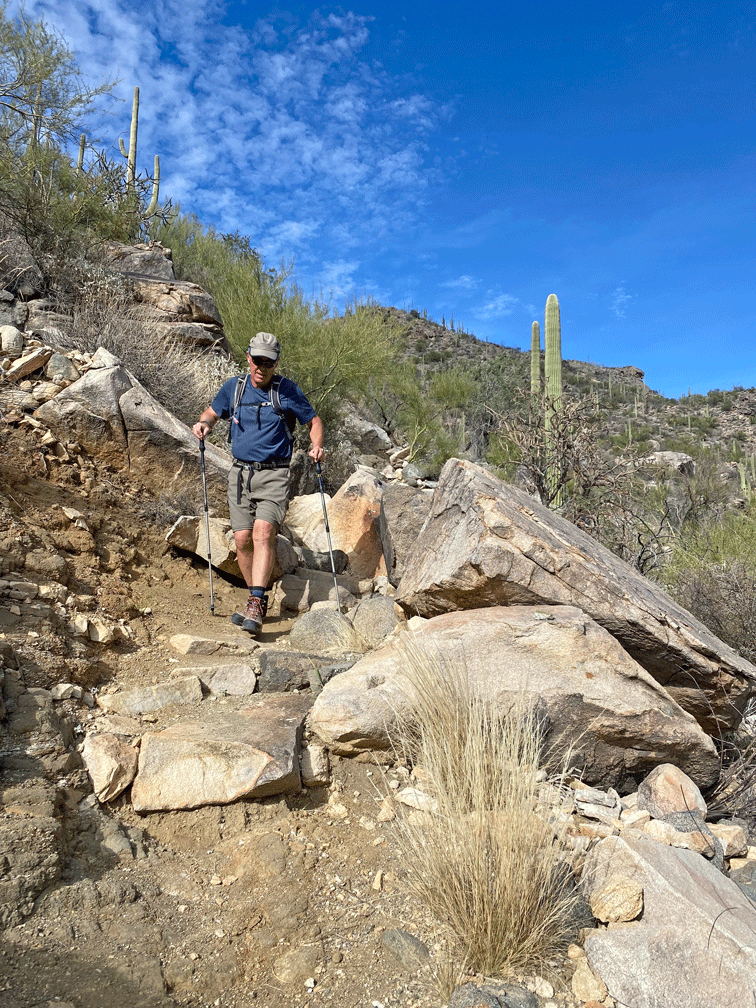
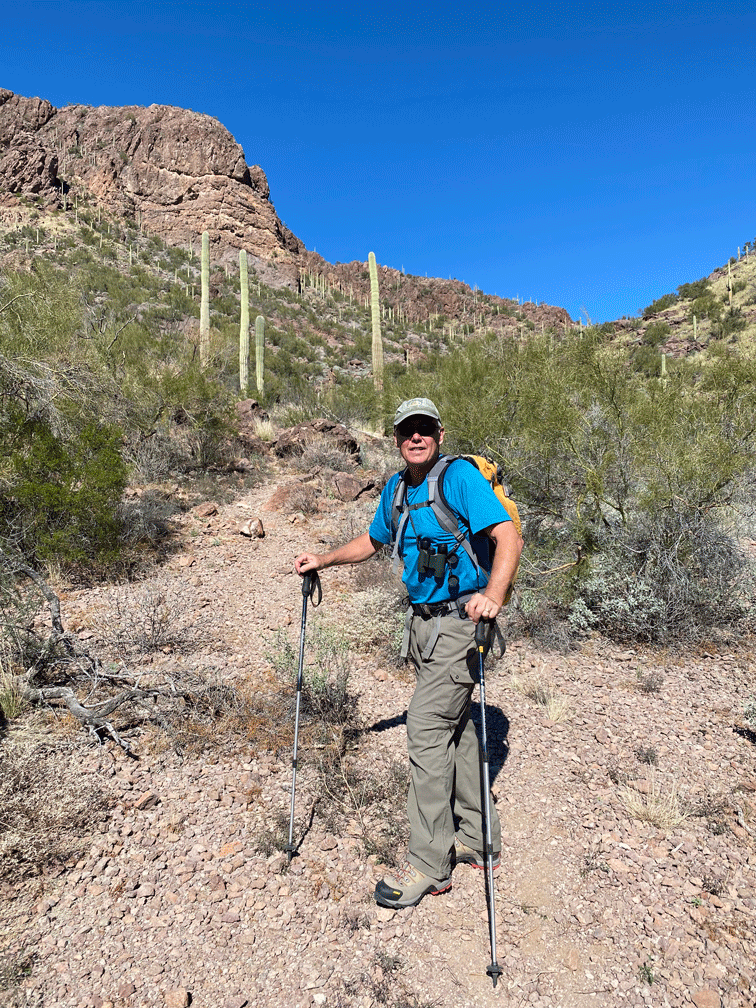
Here’s Doug, with a view of the gully that we descended. It was much easier than the rocky route we used to ascend and it made for a nice loop. The trail ended up in a wash that we had explored in previous years, so it wasn’t hard to find our way home.

The next week, we climbed the mountain right beside Panther, one the locals call “El Sombrero.” Its official name is Safford. We found the rocky gully on the approach to be rougher than last year, which we attribute to the heavy summer rains.

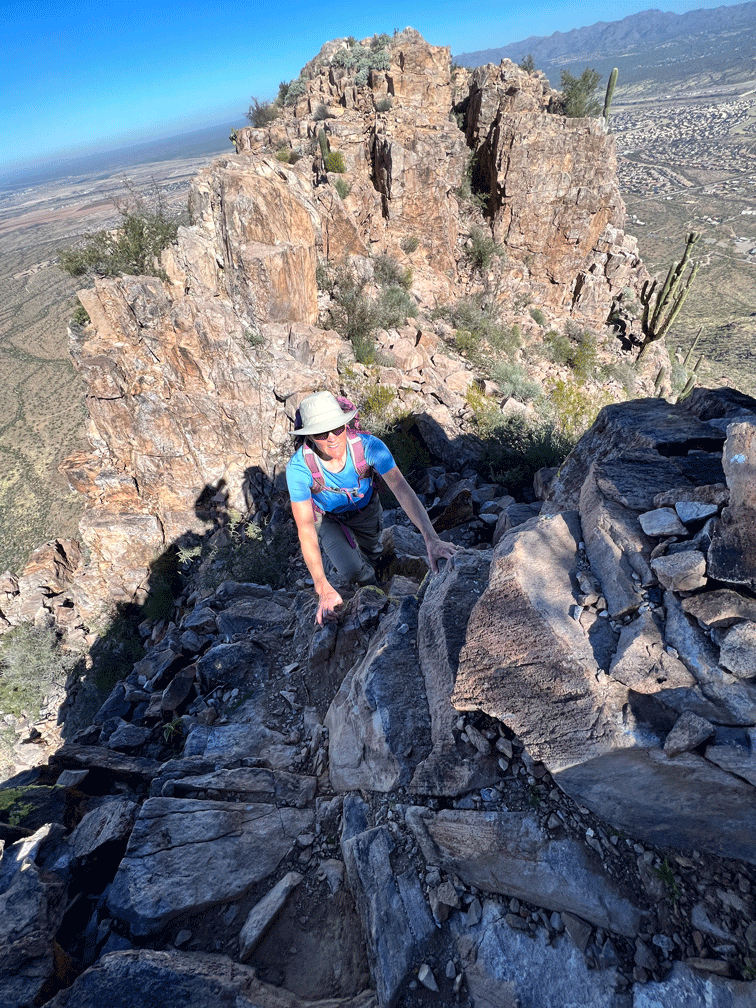
The top of the mountain has a few moves that require hands, so we stashed our poles for the final ascent. The town of Marana is in the background.

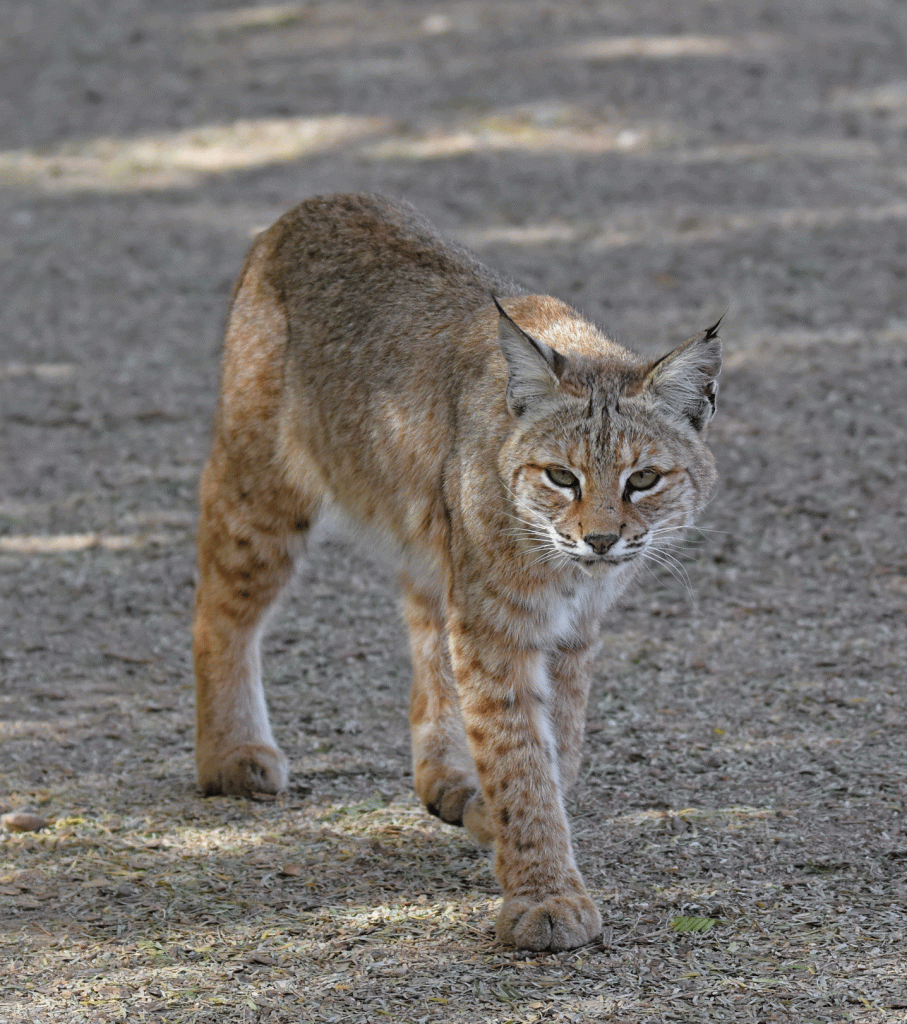
Here are some animals that we’ve seen this month. (The birds will be in a blog post of their own.) This bobcat lives in the Sweetwater Wetlands where we go birding frequently. It is very comfortable around people. This time, it walked right by us.

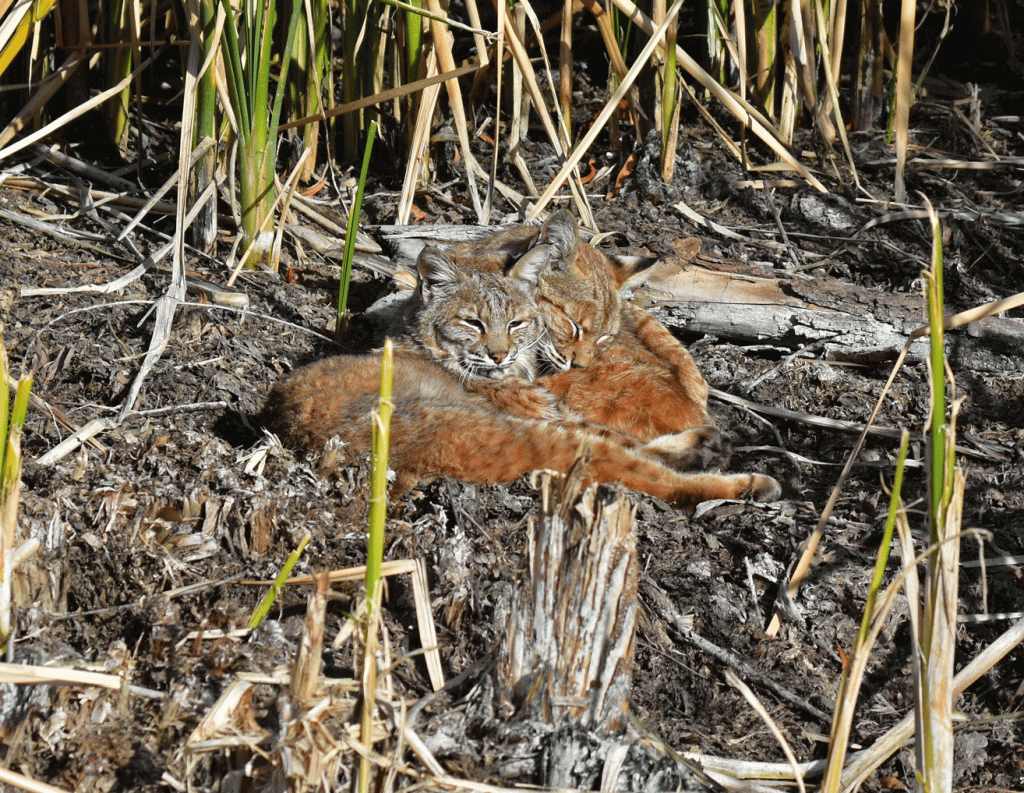
Another day, these bobcat kittens lounged in the sun. There was water separating them from the path, so they seemed very relaxed.

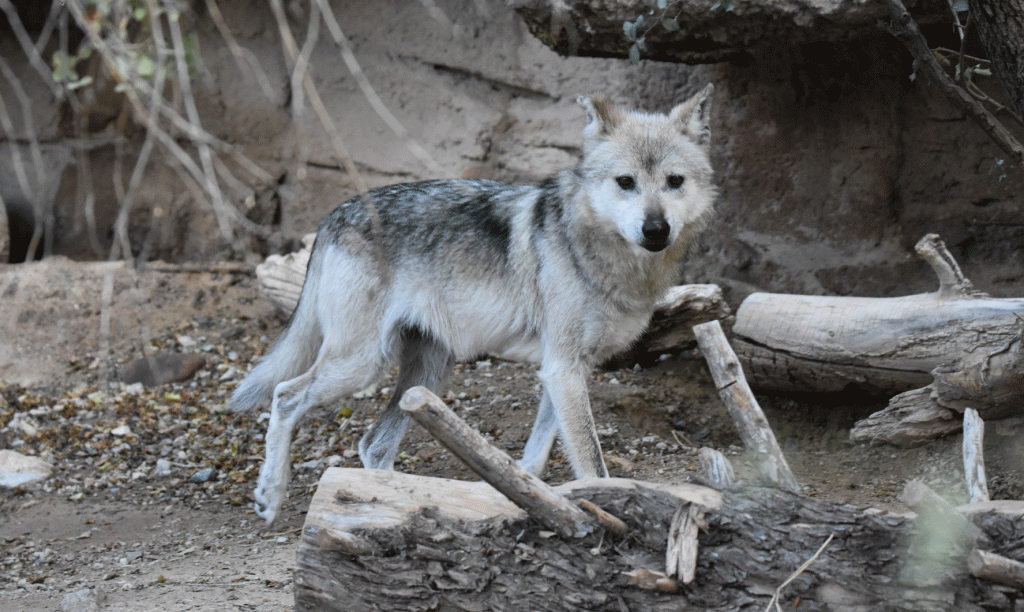
This Mexican wolf was active at the Desert Museum. All of the animals have come to the museum as rescues.

It’s always interesting to see flowers blooming in January. This one was at the Desert Museum, and is in the honeysuckle family.

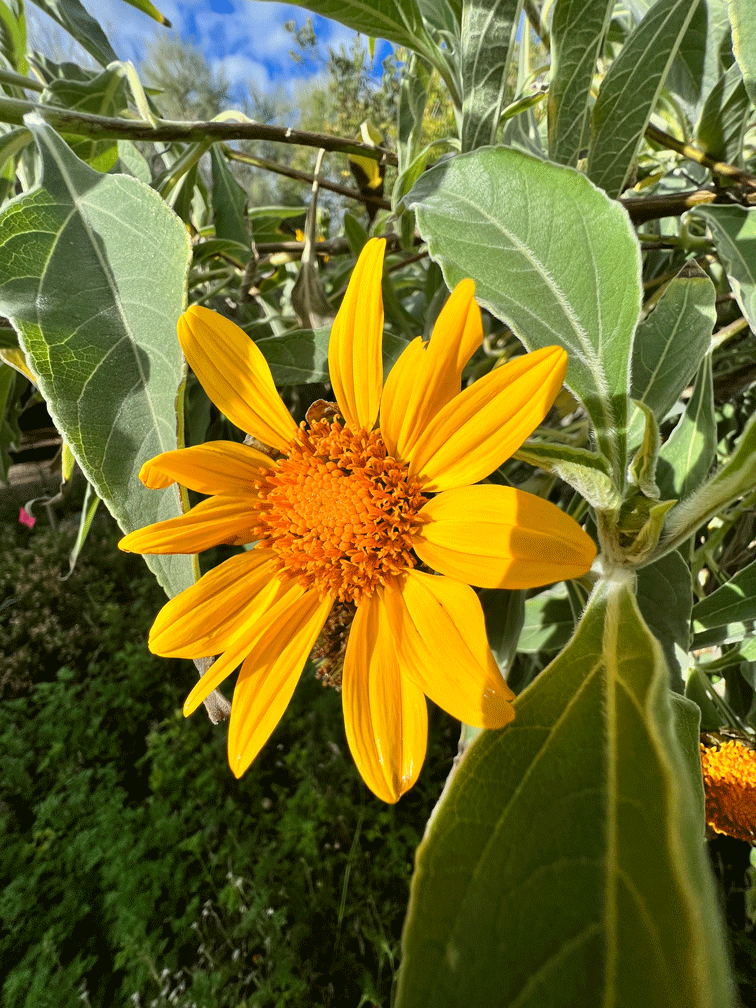
This sunflower is one of the first to bloom on the huge bush in the pollinator garden at the Desert Museum.

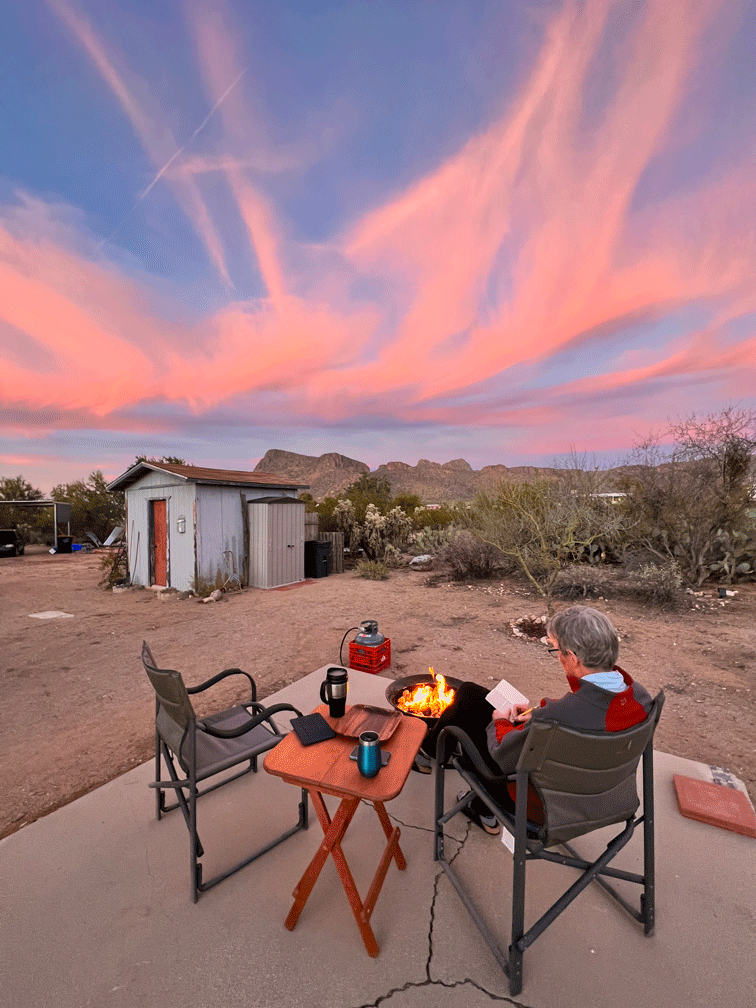
Now to our “At Home” shots. On pleasant days we have our happy hour in front of our propane fire with the eastern view of Panther and Sombrero. This night the sky was the feature,

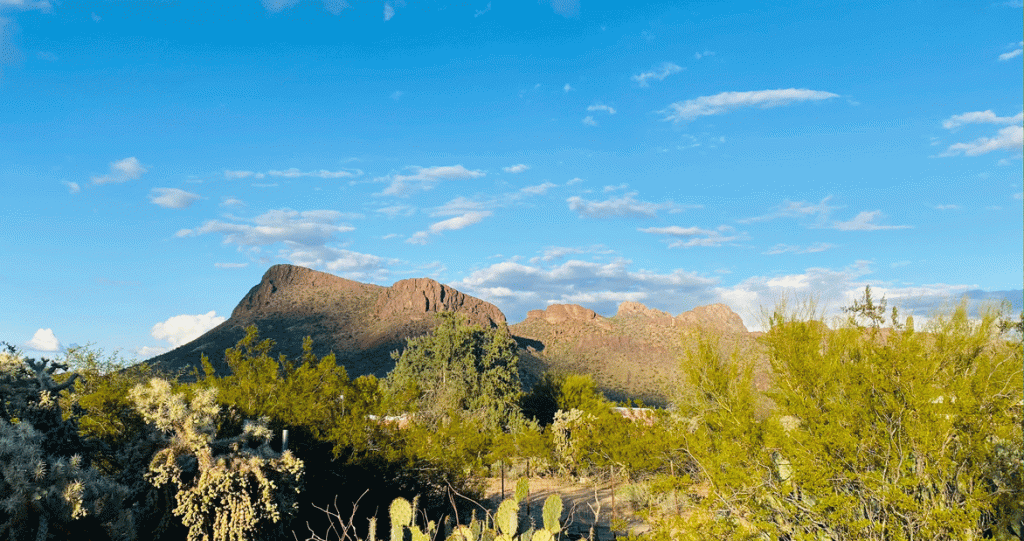
Another day we were earlier, and this was our view of the mountains.

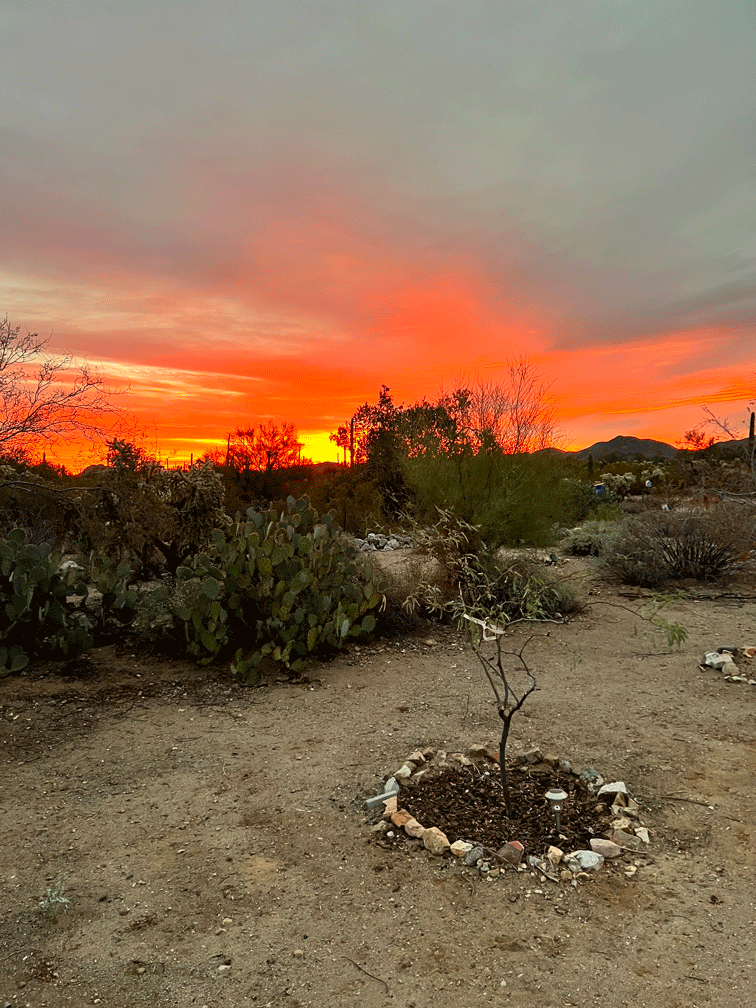
So we’ll end with our sunrise and sunset pictures – one of each.

Sunrise

Sunset

The next blog post will have photos of places we’ve birded and of course, lots of photos of birds.

Birding in Arizona: Nov. – Dec. 2021

Birding in Arizona: Nov. – Dec. 2021

This blog will be all about our birding adventures.

Sometimes it’s really hard to find a certain bird because birds have that tendency to fly anywhere they want. But sometimes it’s really easy. This Wood duck was in a pond at Reid Park, in the centre of Tucson. The hardest part was locating him among the hundreds of other ducks (Mallards, American Widgeons, Ring-necked Ducks) but he was very distinctive. He cooperated by swimming close to the edge of the pond. Wood ducks have been known to winter in the area, but they still make it into the “Rare Bird Alert” on our eBird app.

This White-faced Ibis must have thought he was in Mexico already and he hung out in the Santa Cruz River near the bridge that we drive over most days on our way into Tucson. Another easy “rare” bird.

Probably the easiest rare bird we saw this November was a Williamson’s Sapsucker. She chose to hang out in the pines behind the scoreboards in a southwest city park. She was preening herself way up in the tree, so we were able to see her well enough, but the photos are not “blog worthy.” We’ve never seen this species before, even though they spend their summers in Ponderosa Pine forests near where we live in the summer.

The Arizona-Sonora Desert Museum is a great place to see birds. Most are wild birds that enjoy the habitat that the grounds provide, but some are captive birds that are trained to participate in the museum’s “Raptor Free Flight” program. Below are two photos of a Gray Hawk; one as it’s landing and one as it’s taking off during the program. Gray Hawks sometimes make their way into the Tucson area and we were lucky enough to see one in the wild last spring.

This Rufous-winged Sparrow was also at the Desert Museum. The little rufous patch on its shoulder is easy to see in this photo. This species is only found in southern Arizona and northwestern Mexico.

The Desert Museum is also a great place to see hummingbirds. Most of the photos on previous blogs are of hummingbirds that we’ve seen in the gardens of the museum or somewhere else in the wild, but the following ones were taken in the Hummingbird Aviary. This one is a female Anna’s Hummingbird.

The long, flared gorget of this male Costa’s Hummingbird sparkled in the sunlight.

Rufous Hummingbirds are only in the Tucson area during migration. They are the most common ones that we see at home in BC.

Another great place to see birds and hummingbirds in particular is the Tucson Audubon Society’s Paton Center for Hummingbirds in Patagonia, AZ.

It’s the only place that we’ve seen the Violet-crowned Hummingbird. When we visited towards the end of November, it was the only hummingbird we saw there. (Although there were plenty of other interesting birds.)

Madera Canyon is always a dependable place to see some interesting birds. The creek in the canyon had a good amount of water this fall after the wet monsoon season this summer.

This Hepatic Tanager looks a lot like a Summer Tanager, but has a dark bill and a darker face. It’s found in pine-oak forests, which includes Madera Canyon, but they don’t venture much farther north than the Arizona border.

We always love to see Painted Redstarts, and there are many of them that spend their winters in Madera Canyon. They are also a southern bird.

This White-breasted Nuthatch posed in its typical downward facing position. They are found year-round throughout the US and southern Canada. They make quite a racket, so it’s usually easy to find them in a tree.

Perhaps this Hermit Thrush spent its summer up in Canada, although they are known to stay in this area all year. This one posed nicely so we could get a good look at him.

We like to think that the Ruby-crowned Kinglets that we see here in Arizona, spent their summers in Canada, but there is no way of knowing. Usually, the ruby crown is hidden, but this fellow had it on display for us. He was also at Madera Canyon.

We often see a Northern Cardinal when we go birding, especially in the Tubac area. Doug had fun catching this female cardinal in flight.

We go birding at Sweetwater Wetlands regularly. Sometimes, we can get a good view of a bird but have a hard time identifying it. This Ring-necked Duck is a good example. It was by itself, and not in breeding plumage.

And sometimes a bird likes to hide in the reeds and we are lucky if we see one. This Sora ventured out for brief moments allowing Doug to get a few photos. We were examining the reeds very diligently this day, because an American Bittern had been seen in the area over the previous days. We didn’t see the bittern, or perhaps I should rephrase that to say: we have yet to see the bittern, because we will keep looking.

There are also some birds that are in a known location that almost every birder wants to see, but they are still hard to find. We visited Catalina State Park with the intention of seeing some Long-eared Owls. Luckily, a kind birder saw us coming down the trail and walked back with us to the spot where he had seen an owl. He told us someone had showed him the spot, so he was passing it on. We have to thank the first birder who found their day’s roosting spot and let someone else know. Here Wendy is looking at a “lump” in the far mesquite which is actually a Long-eared Owl.

This is the best photo that Doug could get. The tangle of branches made focussing the camera very difficult.

Long-eared Owls are one of the few species that roost communally, which means that if you can see one, you might be able to see others. Since someone had shown us the location, we showed another six or seven people. One of the birders that we showed the first one to, soon found another two owls, and then a fourth. With difficulty, we were able to identify the “lumps” as owls. The owls were so far away that they were unaffected by the attention.

Also that day, we got good views of Lawrence’s Goldfinches. They winter in southern Arizona and northern Mexico, and they are only otherwise found in California. Here’s a photo of a male.

This female Tennessee Warbler was a bit tricky to find because it looks very similar to an Orange-crowned Warbler. There were plenty of Orange-crowns around so it meant looking carefully at each one. It was extra special because it was the first one we had ever seen.

This Northern Parula was in the same grove of trees at Christopher Columbus Park that we saw the Tennessee Warbler. Its normal range in the eastern US. Because it is so distinctive, we were able to see it on three different days.

Warblers love the trees along the Santa Cruz River near Tubac. One of the times were went there, we were lucky enough to see a Chestnut-sided Warbler, but she flitted so quickly among the leaves that all the photos were blurry. We’ve wandered into these cottonwoods numerous times in search of the Rose-throated Becard, but we have yet to see it. But we will keep trying.

Arrivaca Lake is a beautiful spot south of Tucson. We’d never been there and wanted to explore a new area. Like many lakes in Arizona, it is dammed which means it has virtually no shoreline. It would be ideal to bird it from a kayak or canoe, but very difficult on foot. We’ll probably never see the Green Kingfisher that has been spotted there. But we had a bit of an adventure climbing the ridges around the lake and we had a nice look at a Belted Kingfisher.

We will take a break from writing a blog, but not from looking at birds, so there will more photos when we post again at the end of January.

Merry Christmas and Happy New Year!