Boat and Bike Tour #1

Boat and Bike Tour #1

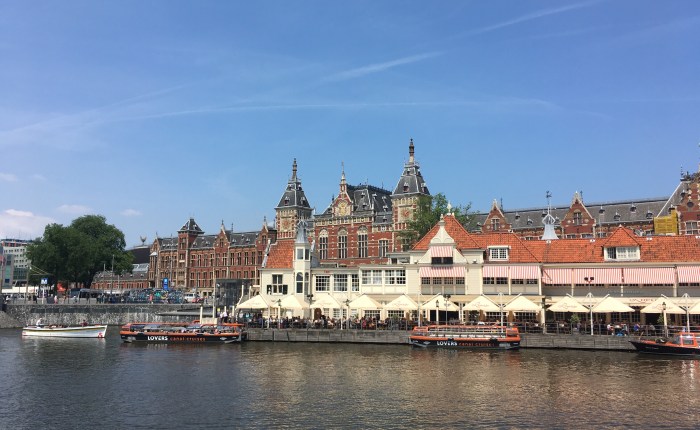
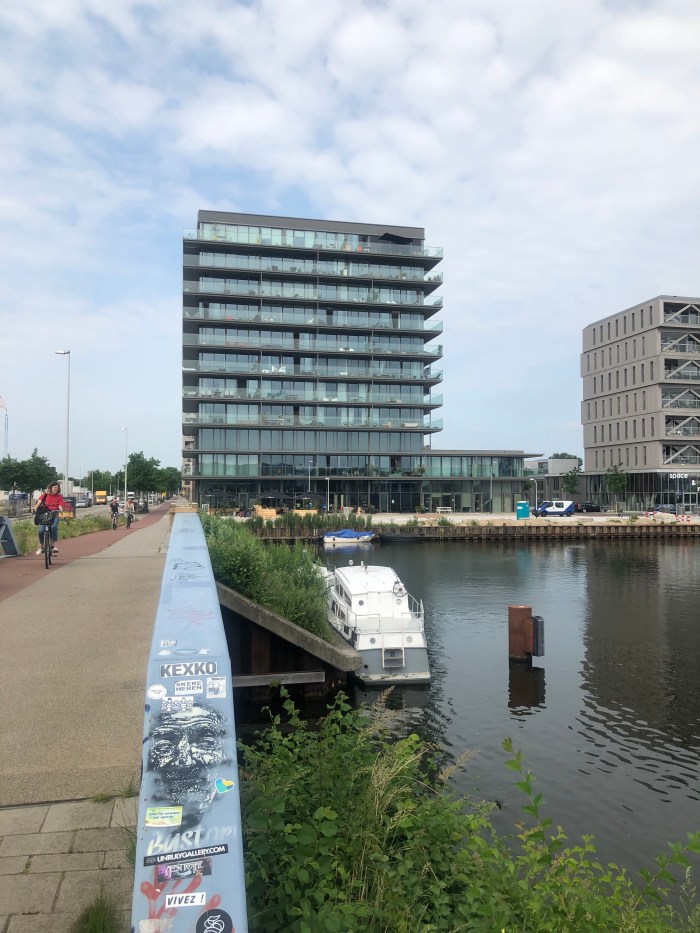
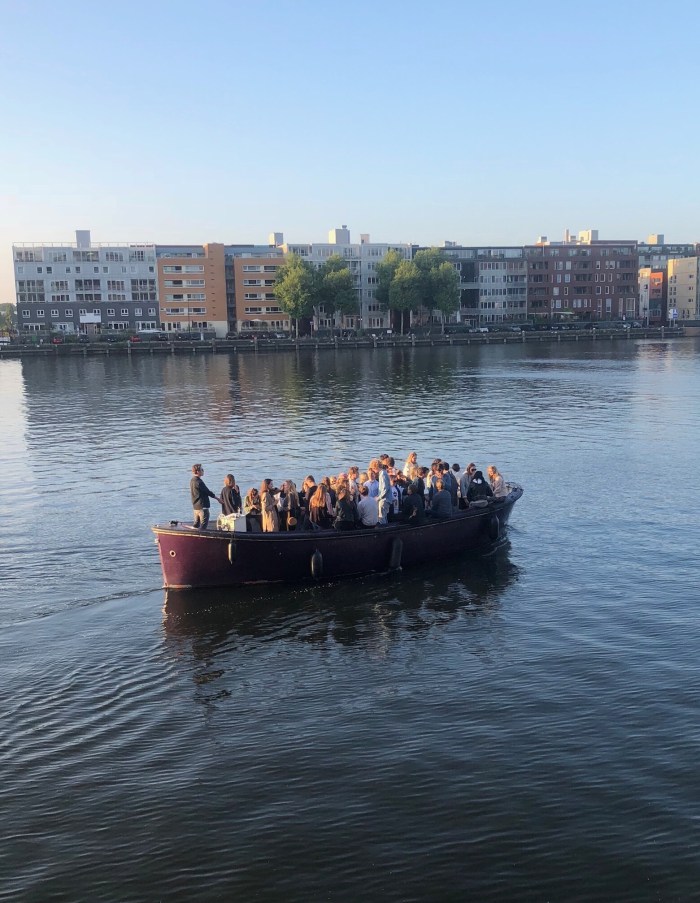
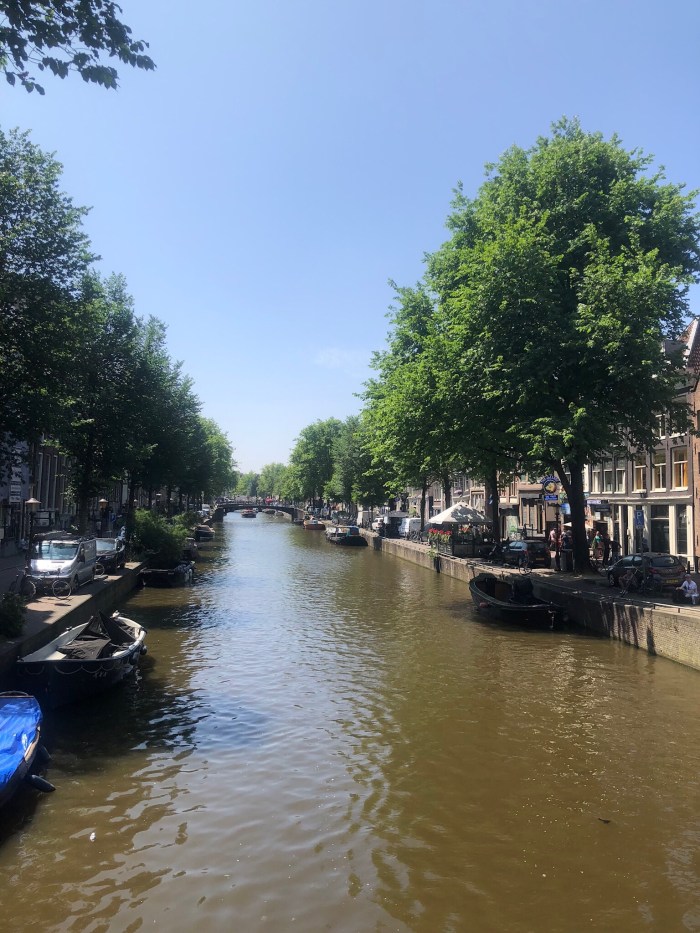
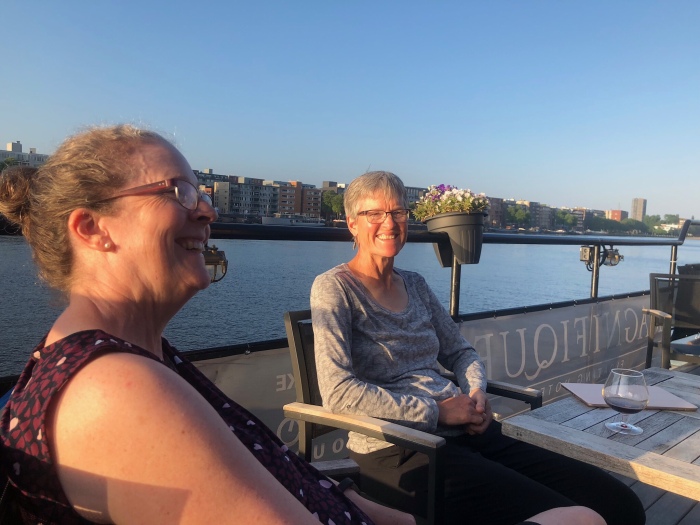
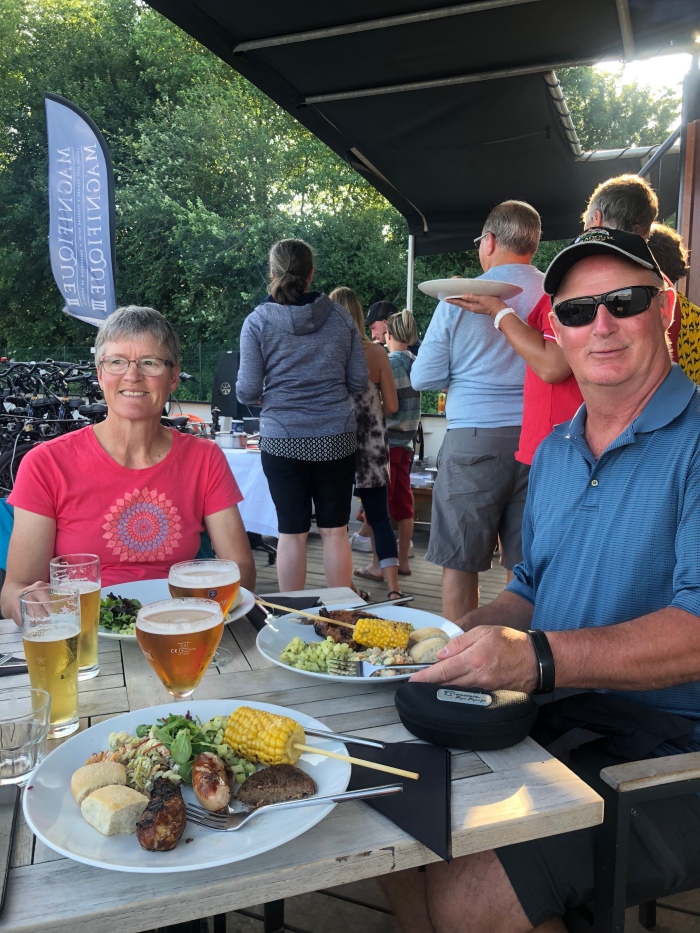
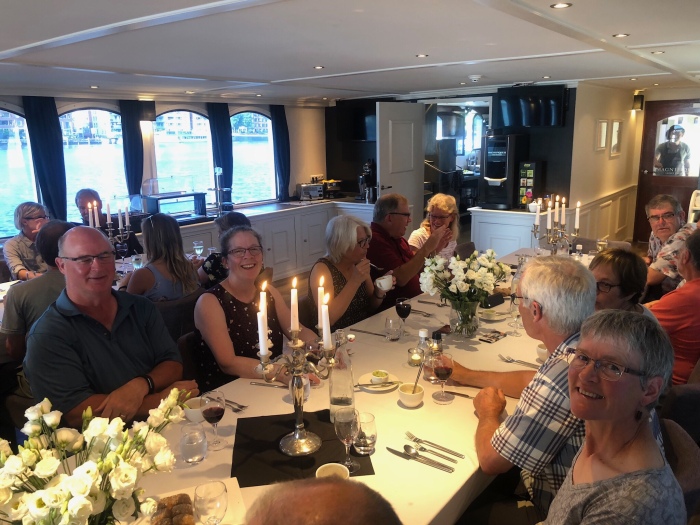
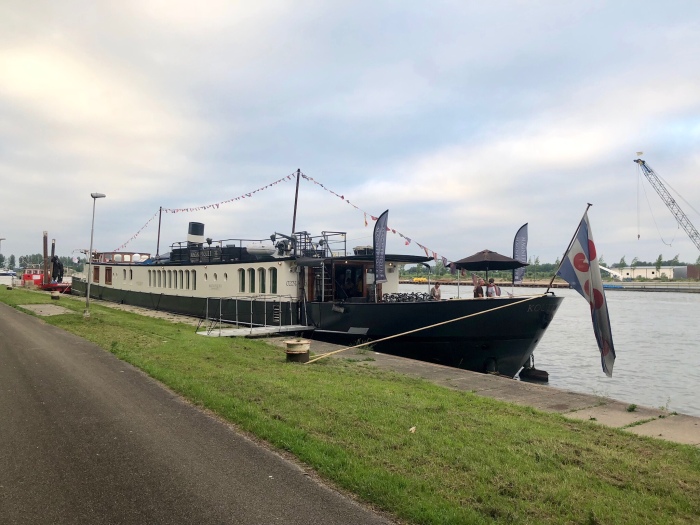
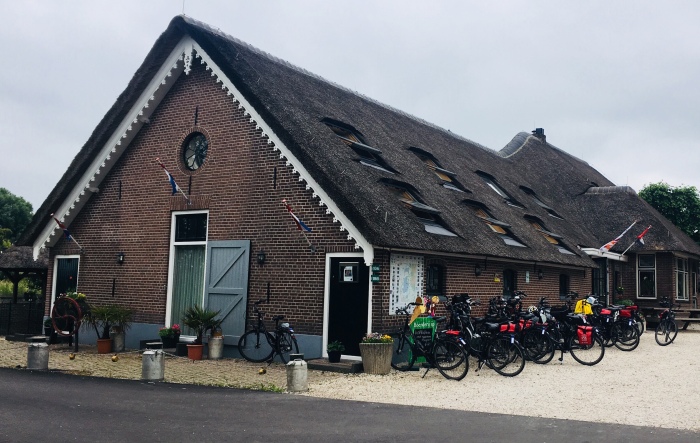
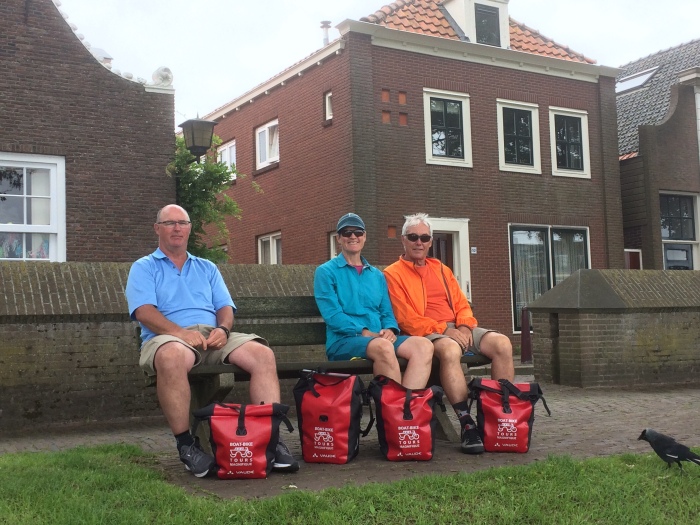
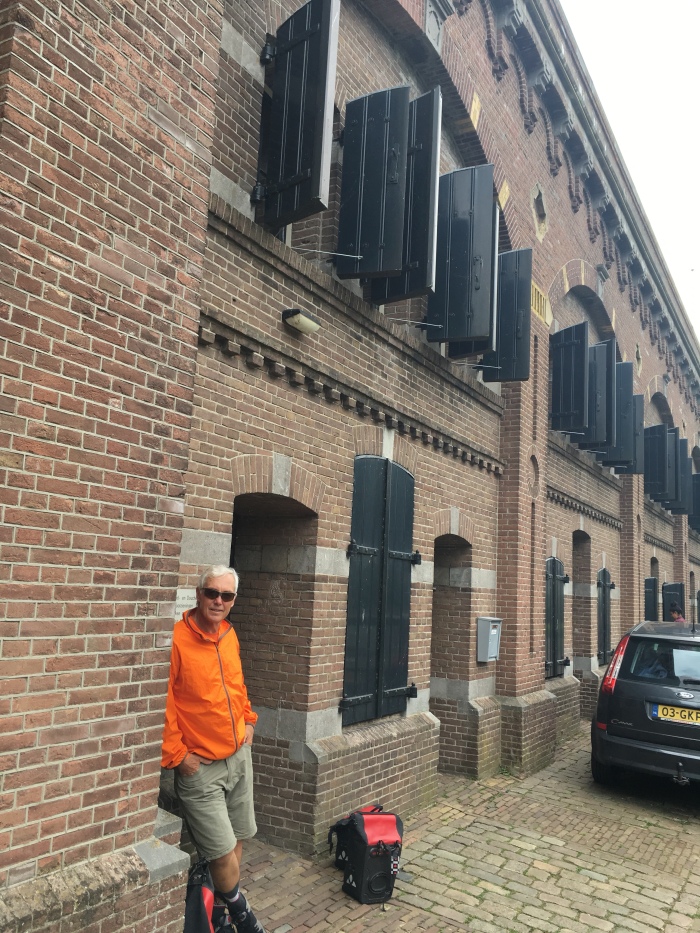
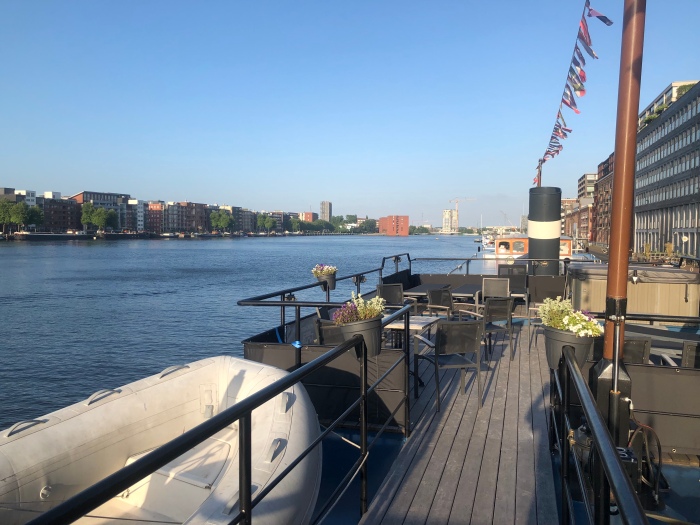
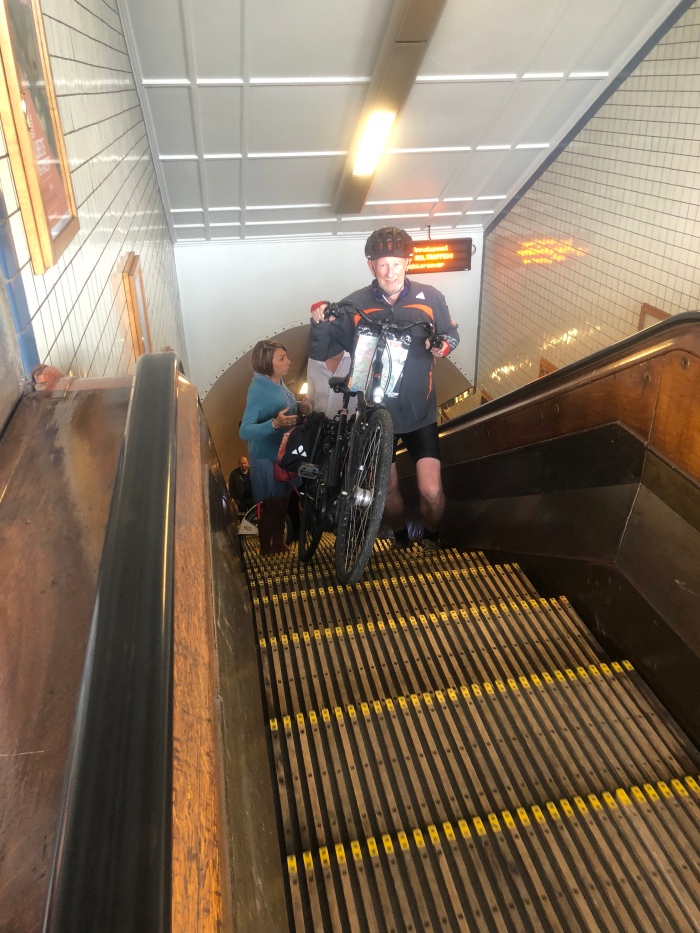
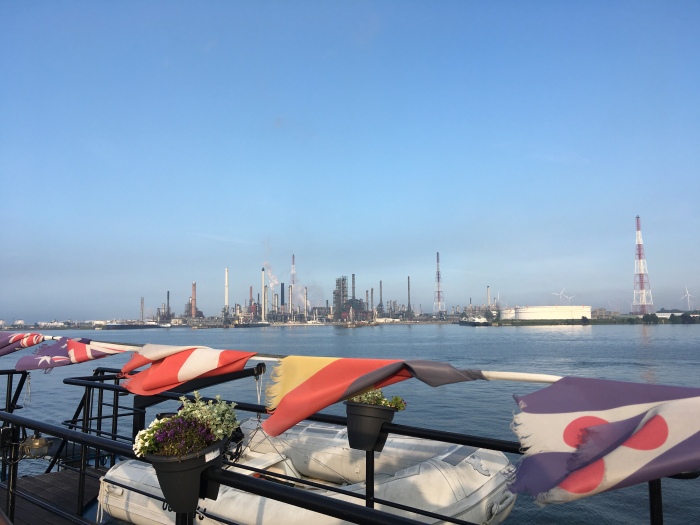
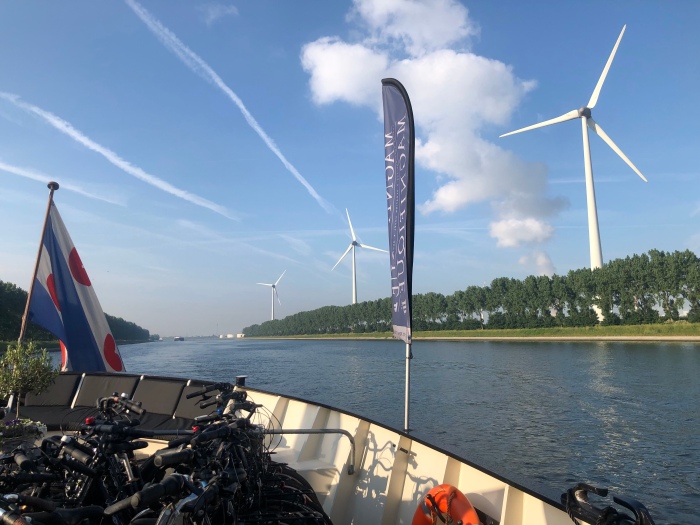
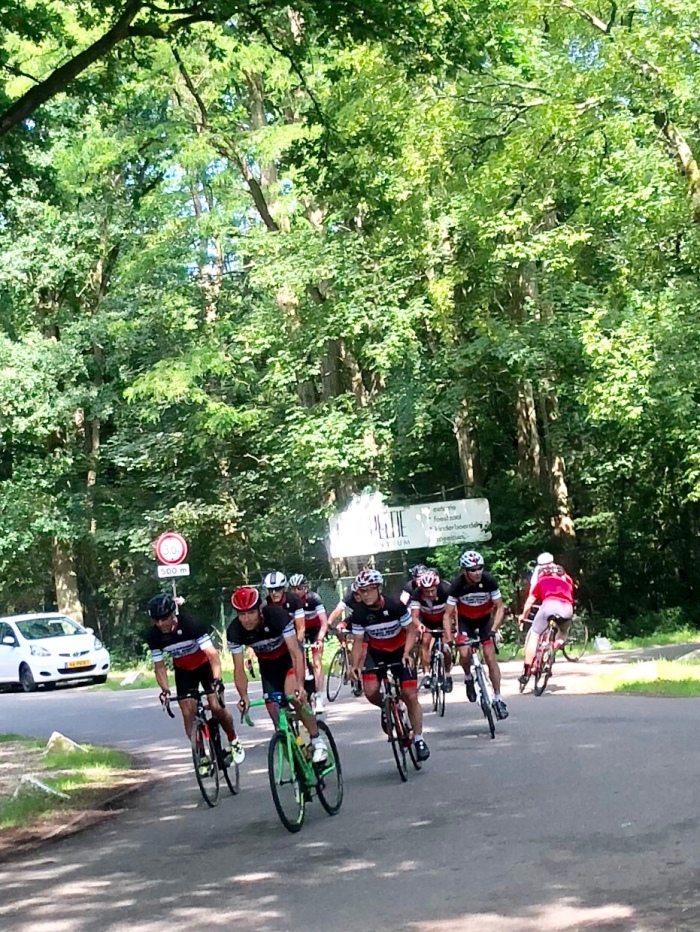
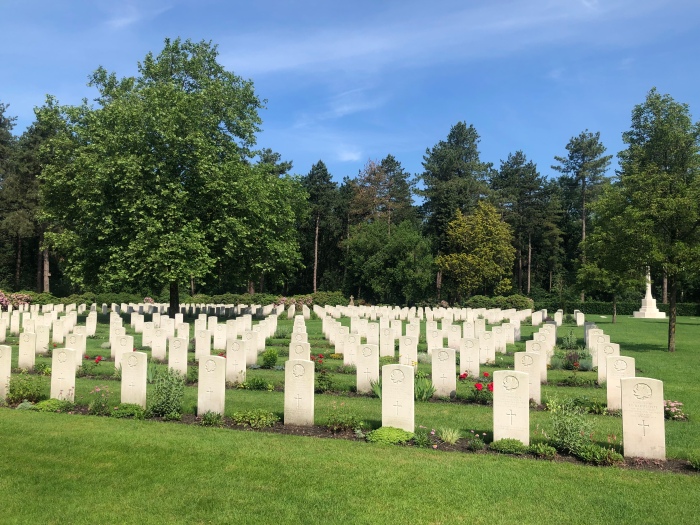
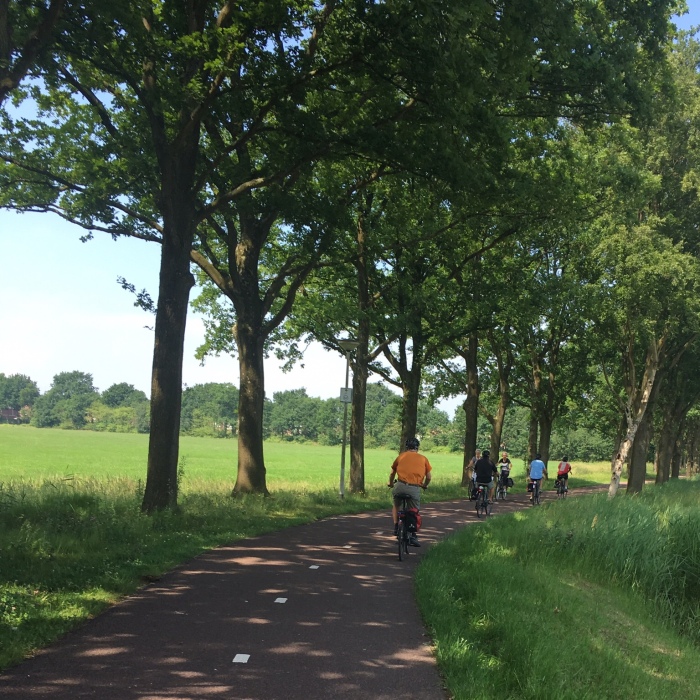
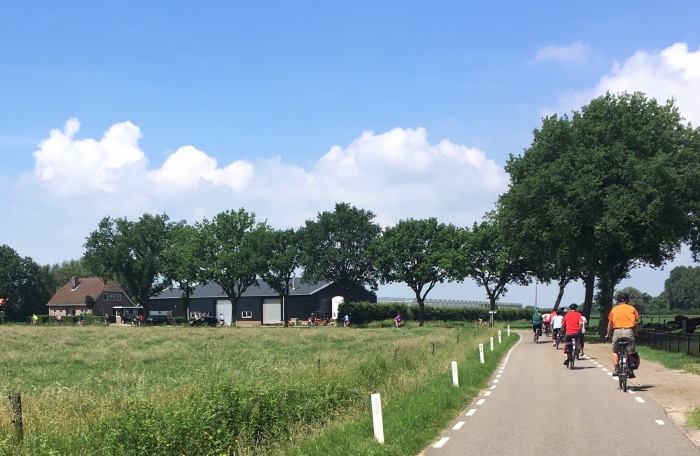
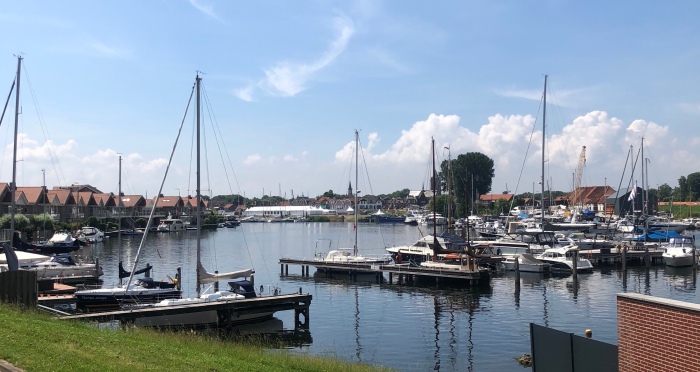
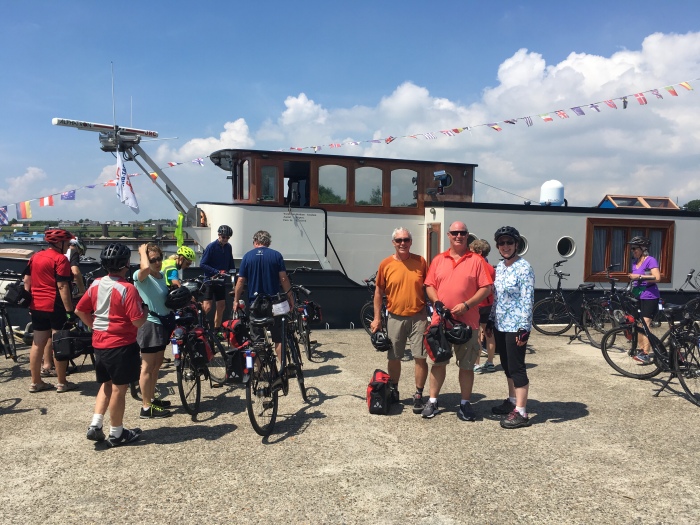
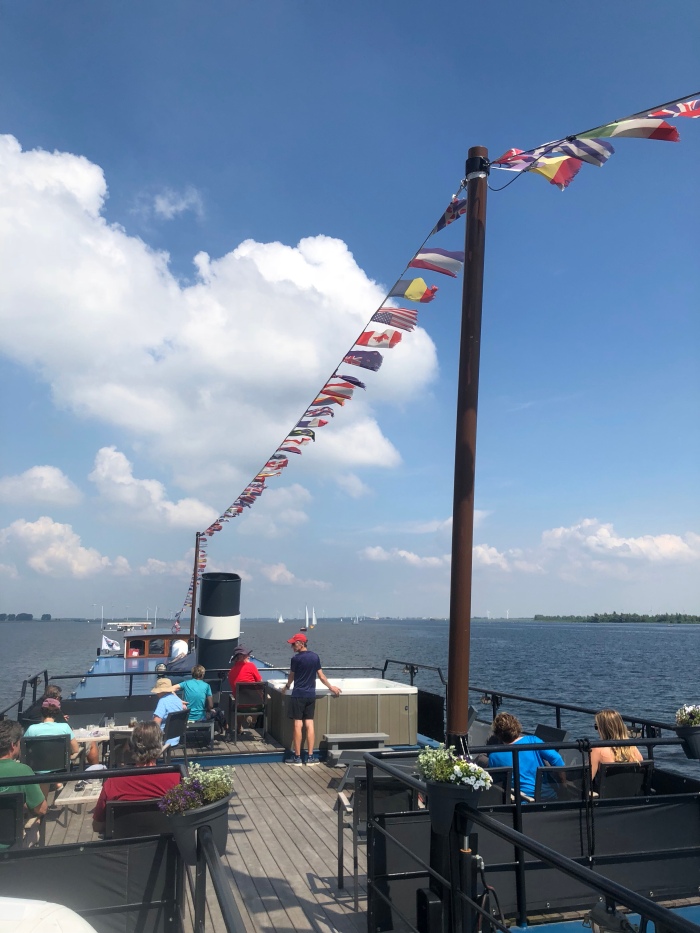
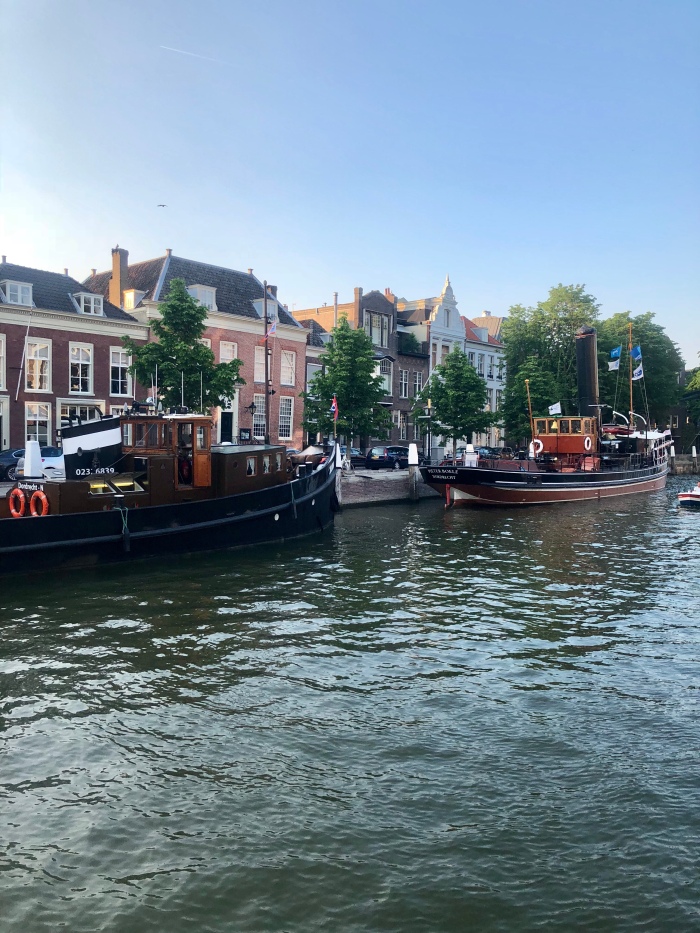
We signed up for a seven night “Boat and Bike Tour” that had us travelling from Bruges, Belgium to Amsterdam, Netherlands; some of it by bike while our floating home followed and some of it on the barge. We saw so much country and took so many pictures, that we will divide the posts into three sections of two riding days each.

Thursday (Day 1): Bruges to Ghent, Belgium

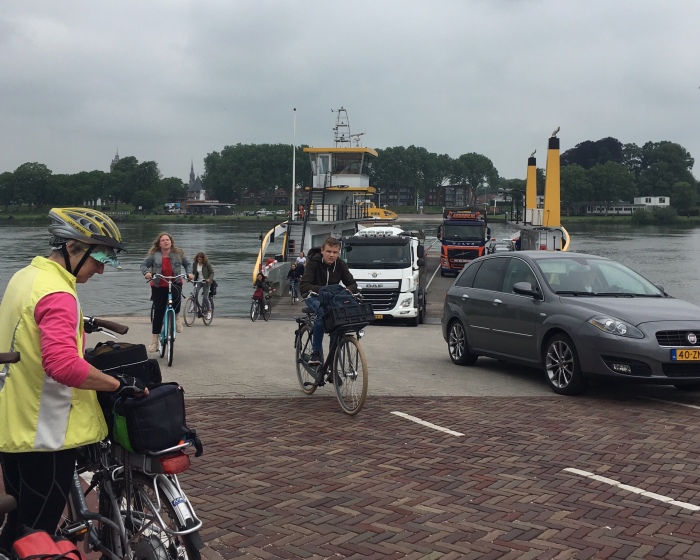
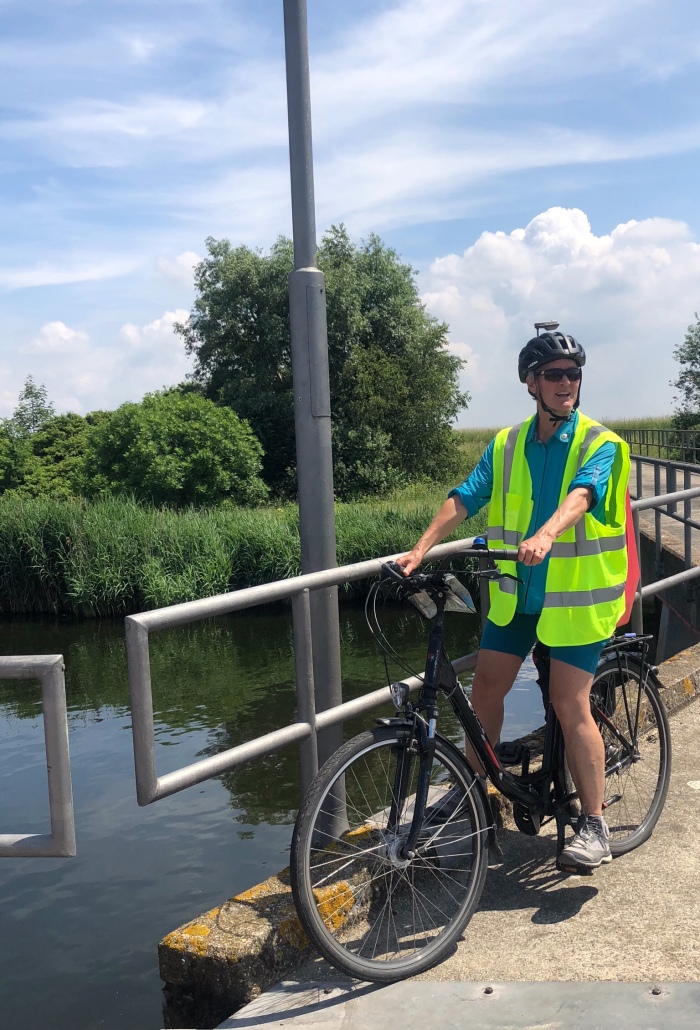
Thursday started off rainy, first with a light shower, then thunderstorms. By the time we were meant to leave the barge, it was raining quite heavily. We delayed a little bit hoping it would let up, giving Wendy time to grab a shower cap for her helmet.

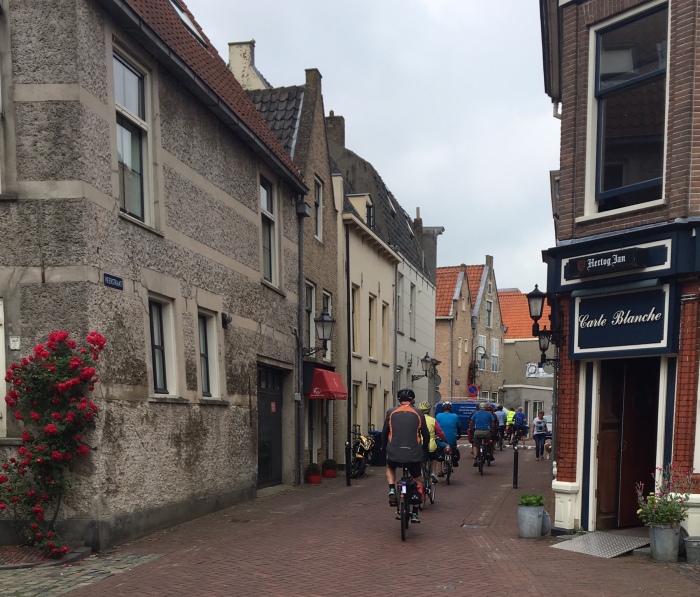
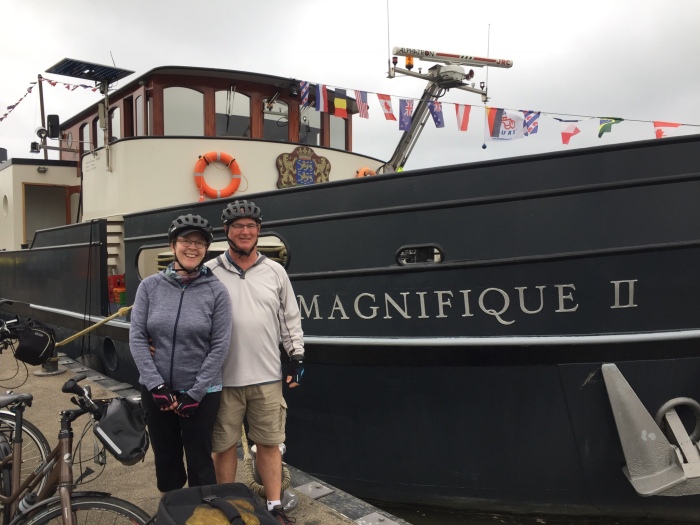
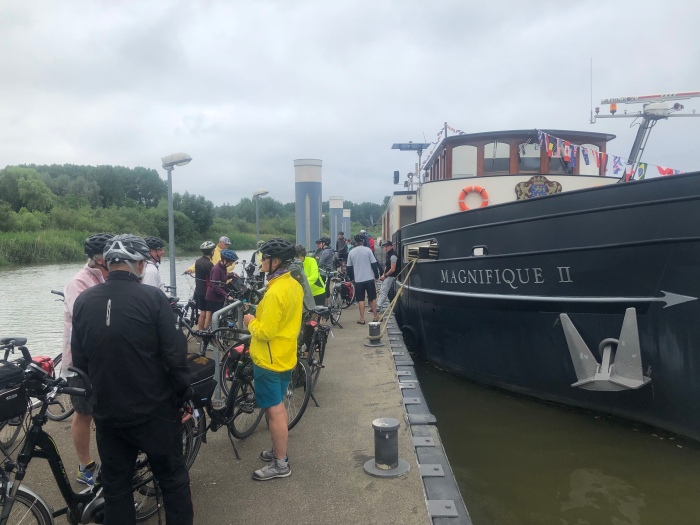
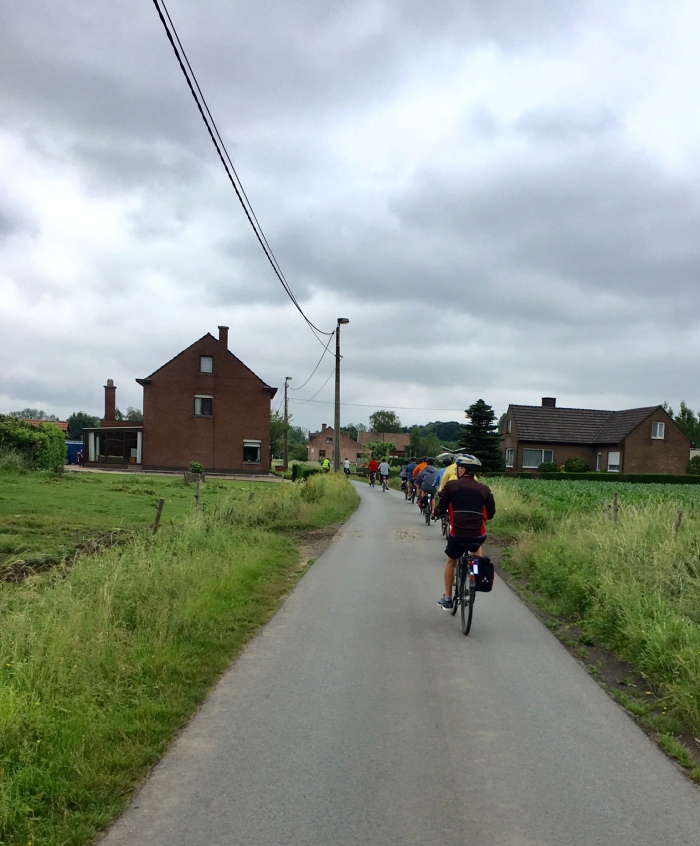
Here you can see Wendy in the front and Doug in the navy jacket as we head out. Bill and Joanne sensibly stayed on the barge and got off and started riding farther along in Aalterbrug.

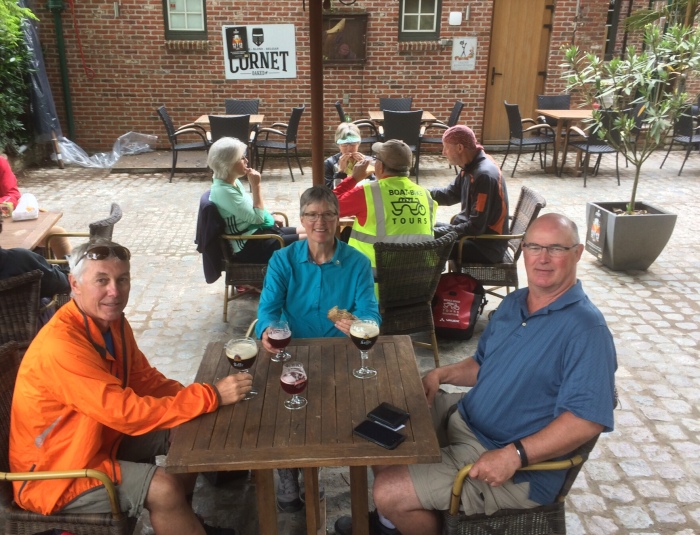
It only rained for about an hour and by lunchtime we were dry. We stopped at a cafe in the middle of nowhere. If you ordered a drink, they were happy to let you sit at their tables and eat your lunch. (And use their bathroom) Joanne and Bill joined us here, but had to finish their drink quickly in order to join the first group.

We travelled through some pleasant farmland.

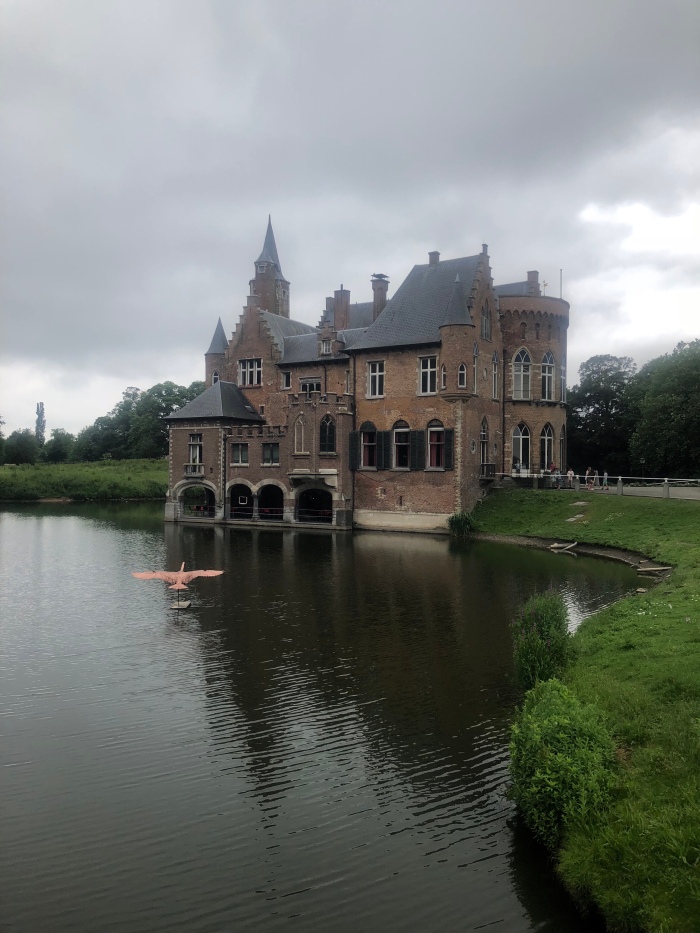
We had a quick photo stop at this private castle (Castle Lovendegem).

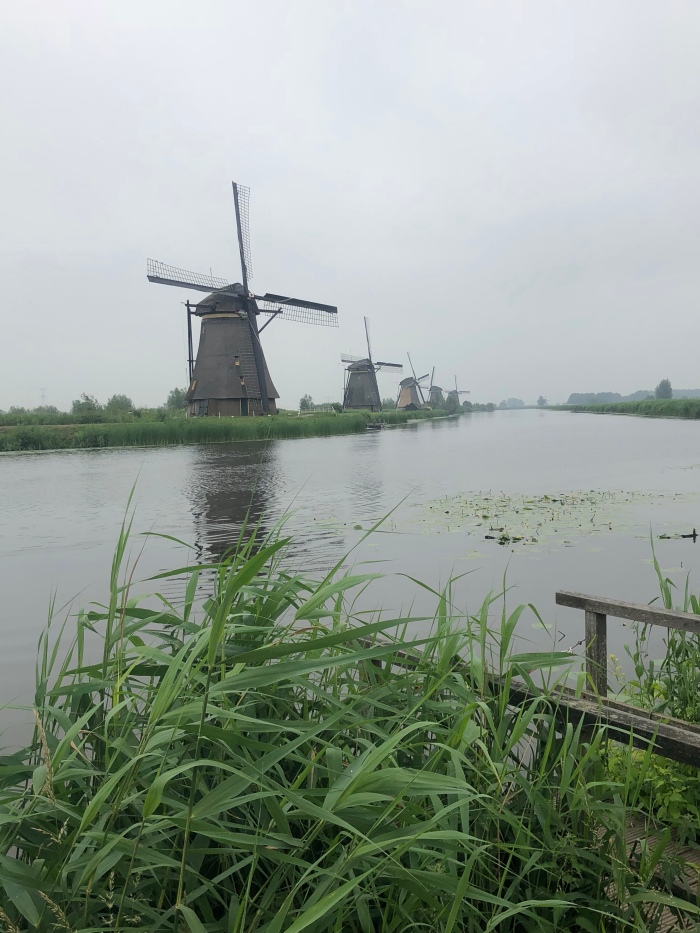
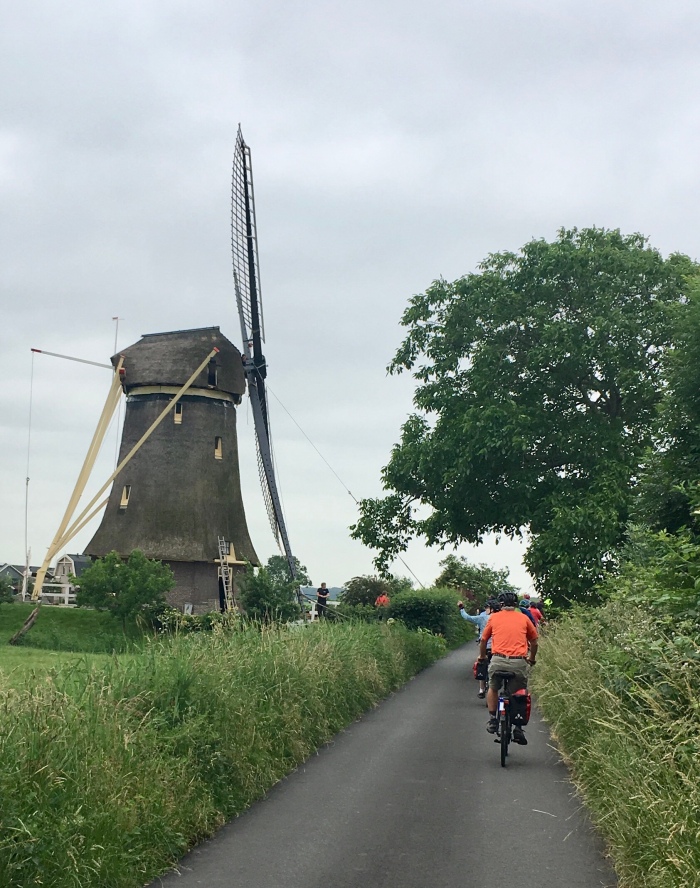
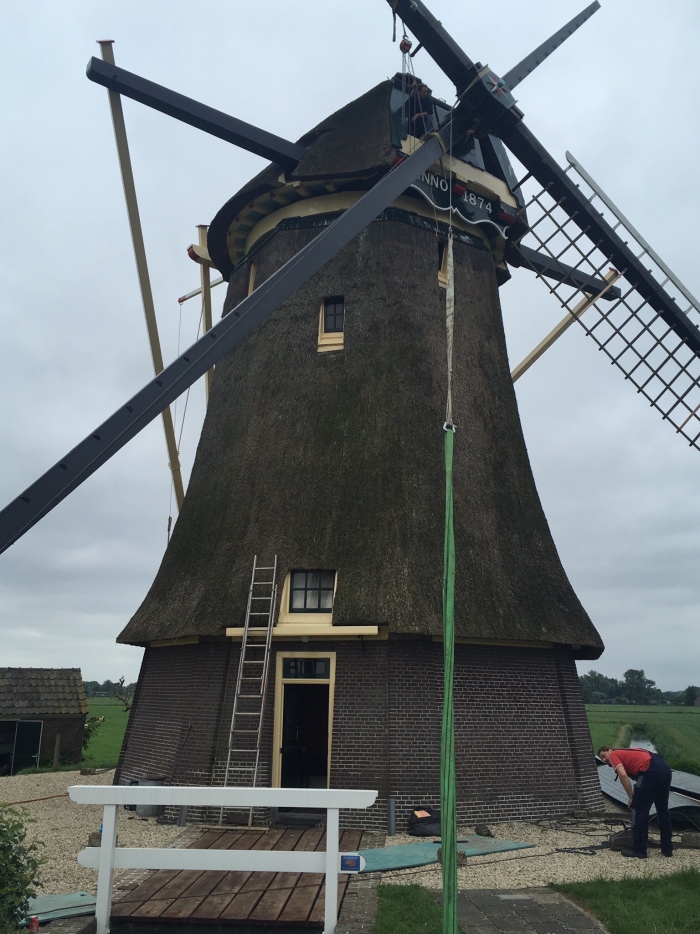
It was starting to heat up by the time we reached this windmill, the first of our trip. It was no longer in use and was used as a private residence.

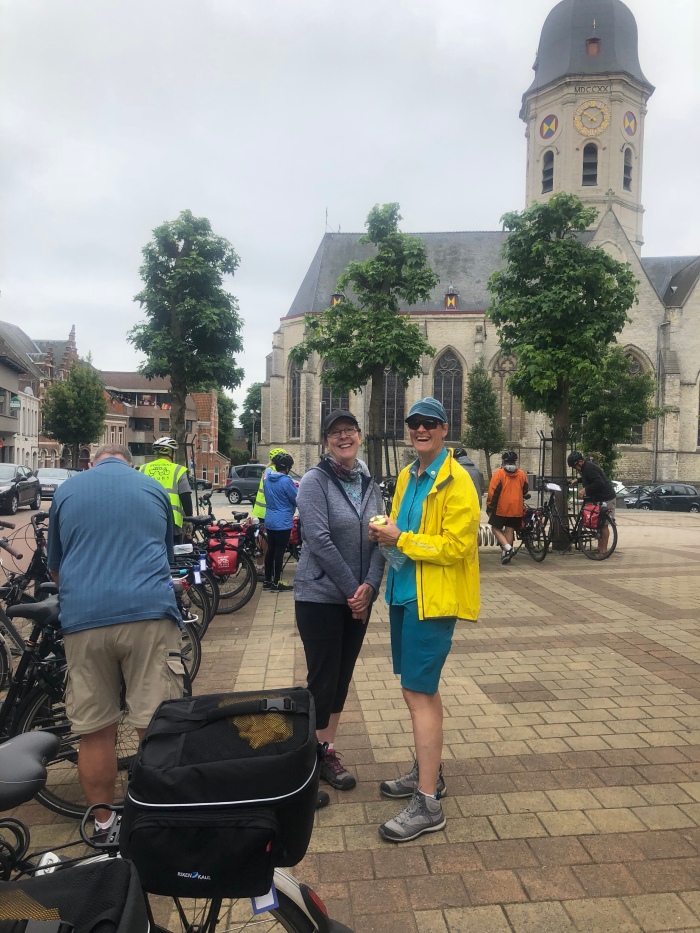
We had our first chance to navigate traffic when we came into Ghent. We left our bikes at the square by St. Michielsburg and had an hour or so to explore the city centre.

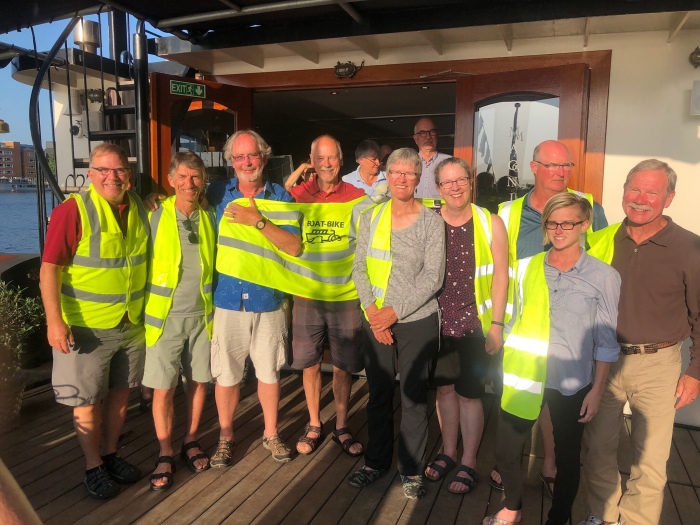
Bill was asked to be the “sweep” which means he goes last and has a radio to use in case people get separated. He willingly put on his vest.

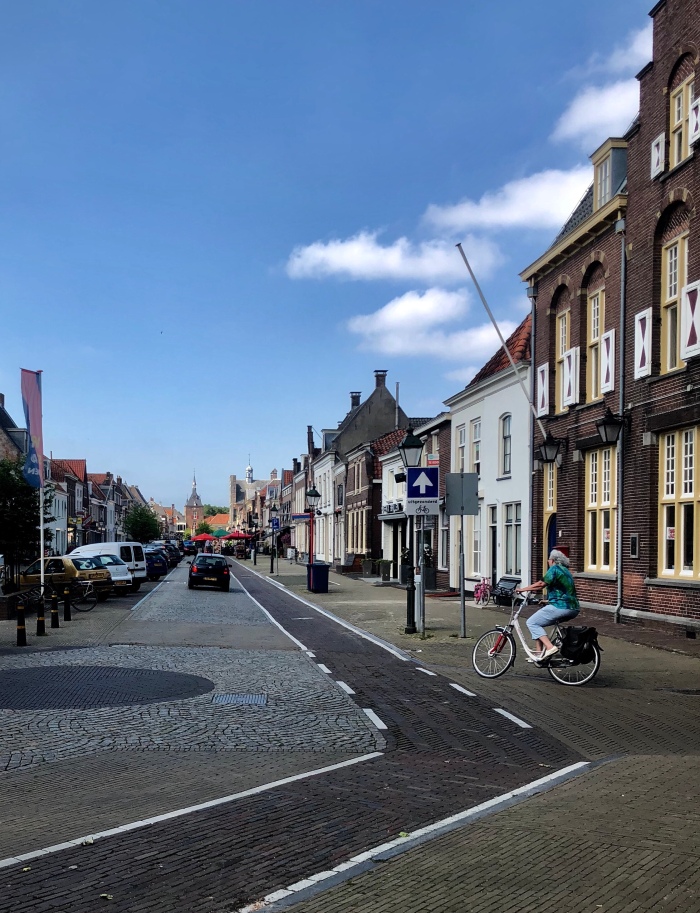
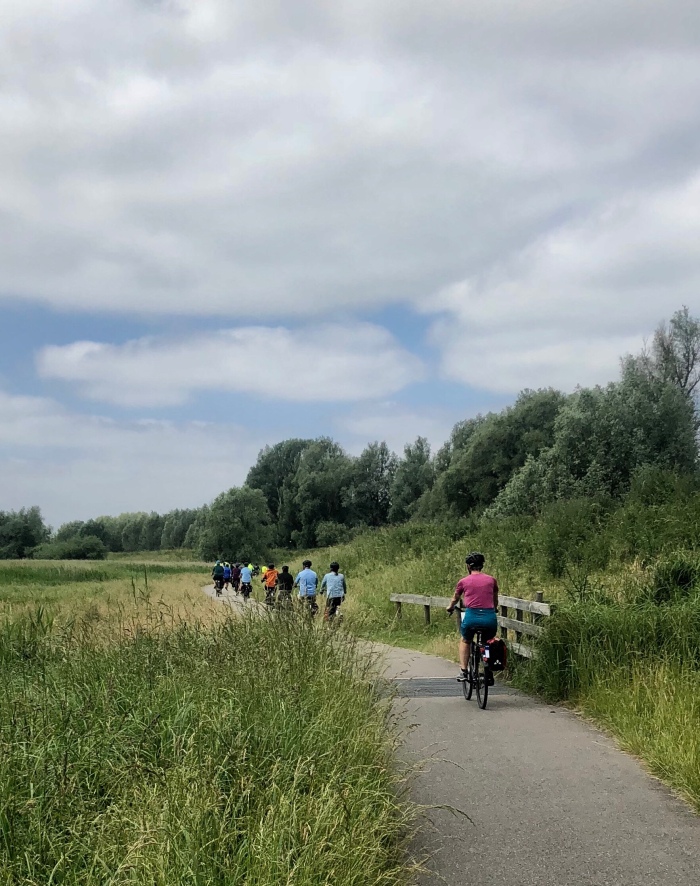
Wendy took this picture of the group going over a pedestrian and bike bridge but realized that it was unsettling to the sweep to have people behind him. She learned her lesson and took the next two photos without stopping, just slowing down a little.

We got back to the barge around 6:00 that night. Fifty six kilometres for Doug and Wendy and thirty four kilometres for Joanne and Bill.

Friday (Day 2): Ghent, Belgium to St. Amends, Belgium.

It was foggy and damp on Friday, but not cold, so we all headed out at the standard 9:00. It rained a bit just as we stopped to see another private castle.

There were poppies all along the trail but Wendy was able to get ahead on a cobblestone farm road and quickly took this photo before the whole group passed her.

We rode along a dike for awhile.

Soon we were in Dendermonde. Although this square seems to be circled by the original houses, they were all rebuilt after the First World War. Most of the houses were destroyed or burnt in the war, with only 84 houses left undamaged.

Dendermonde is small enough that you can meet the mayor in the town square. He was biking between meetings and stopped to say hello. He encouraged us to visit the renovated city hall and the display at the visitor centre. Here’s Joanne in front of an historical map of Dendermonde.

We also met a local who joined us for a beer. He was an interesting guy who ran marathons.

We hiked about a half an hour more to the spot that the barge was docked. Doug, Wendy and Joanne hopped on and Bill continued on. Here’s Bill’s photo of one of the spots on his 14 kilometre ride along the river.

And Bill’s view of the barge when we caught up to them a few hours later in St. Amands.

Bruges, Belgium

Bruges, Belgium

To reach Bruges, we flew to London, then to Brussels, and then took a train to Bruge. The train was so smooth that Wendy could work on the blog as we traveled.

Our apartment in Bruges was up on the first floor in an old building that had been renovated. The high ceilings and ornate furniture gave it an elegant feel.

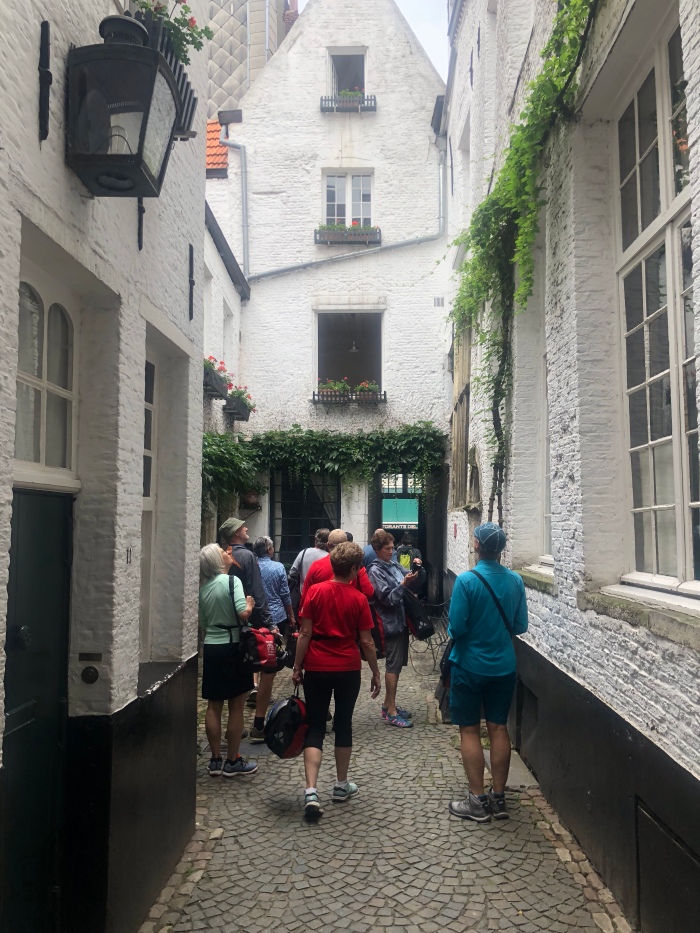
We were on a street in the centre of town, just down the block from the Market Square. Here’s a view of the street in the early morning, before the tour buses arrived. The second one is taken later in the day, looking the other direction. You can see The Belfry above. The market square is just beyond it.

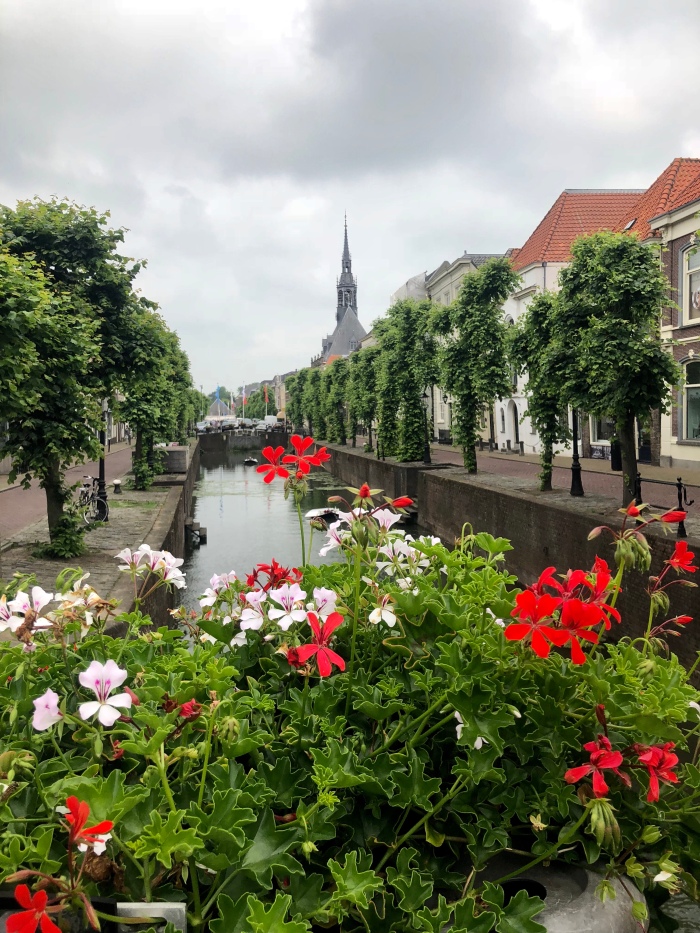
This is a view of the canal closest to our apartment, taken in the evening. The next morning, we took a canal tour in one of the boats that you can see peeking out under the tree. We had a beer on the patio that you can see in this picture on our last day in Bruges.

The first full day in Bruges started with a canal tour. Doug was lucky enough to score a seat right in the front of the boat. There’s another view of the Belfry on the second photo.

Here’s the Minnewater bridge and a view of the swans in Minnewater Park.

There are modern art installations throughout Bruges. The theme is Liquid City: how flexible, liquid and resilient can a historic city like Bruges be? The Blue Whale was made from plastics apparently retrieved from the sea as a reminder to everyone to use less plastic. The first photo was taken from our canal tour, the second on our own walk on our last day in Bruges.

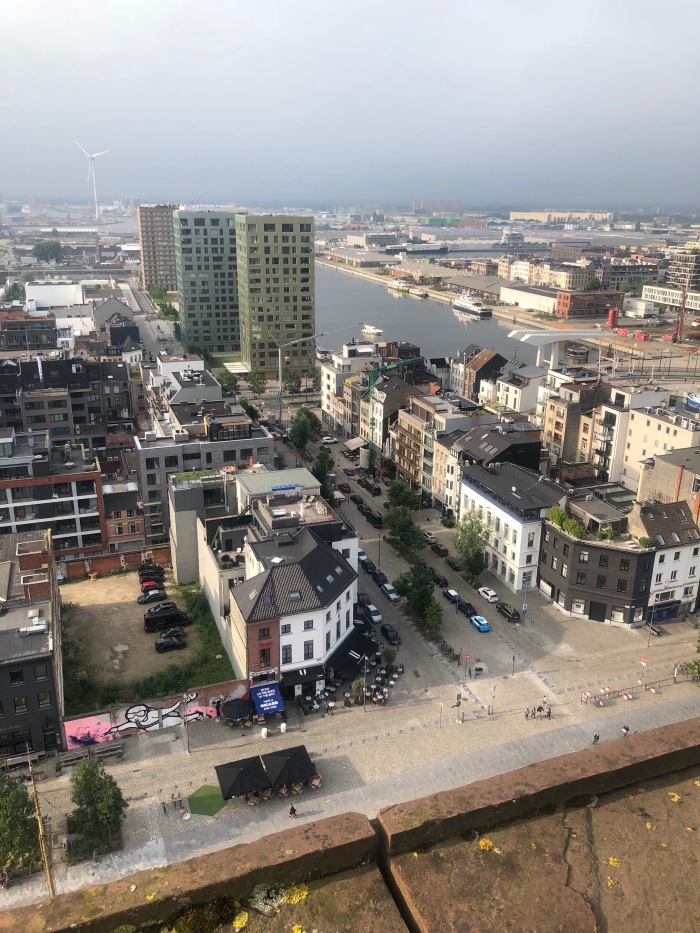
After the canal trip, we headed over to the Belfry. Three hundred sixty six steps later, we were at the top. Here’s the view of the Market Square below. You can see some of the bells in the second photo. The bells sound every quarter hour, so we were at the top to see and hear the bells ring and also at the level below to see the mechanism in action.

Then another walk around town…

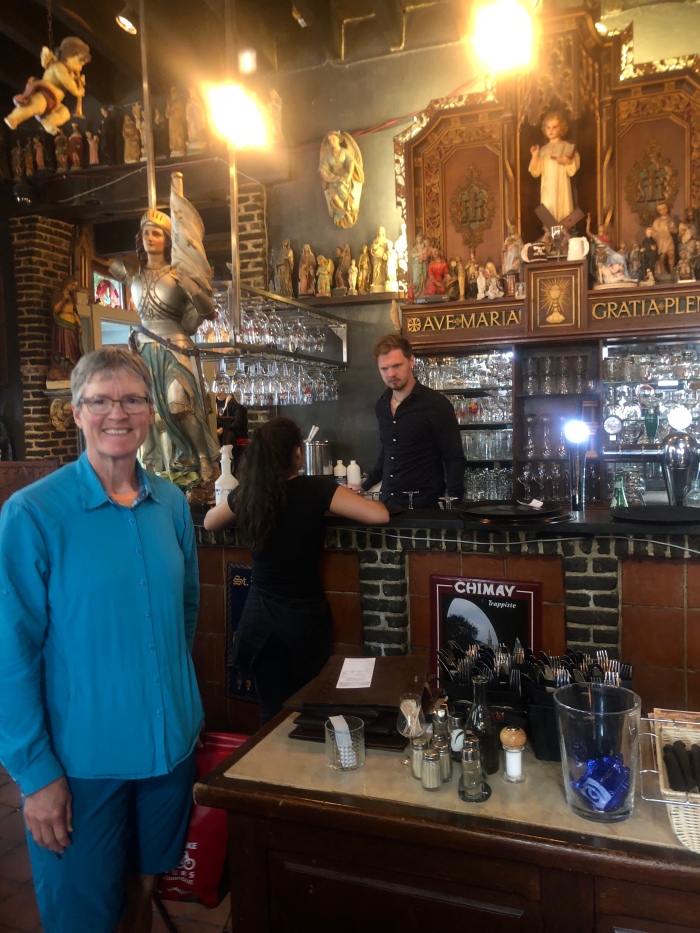
… that ended at “The Beer Wall,” that had a display of beer bottles and glasses, all made in Belgium. The seating was covered but open air. Notice the unique sign designating the toilets just above Doug’s head in the third photo.

So far we were making it through the “tick” list: canal ride, swans, the Belfry and Belgian beer. Now for the waffles. The window of the House of Waffles was just next door to our apartment, so we picked up our order and went upstairs to eat them. The second photo is Joanne with her Double Chocolate Supreme waffle.

After that decadent “lunch,” Doug, Bill and Joanne went downstairs to the Torture Museum. Yes, you read that right, our apartment was two floors up from the museum. Here’s Bill posing with their “tourist attractor.”

Wendy went on her own walking tour. Here’s a view with a canal boat just like the one we were on, and some views of the amazing architecture (and more canals).

Wendy got a good view of Saint Anne’s Church, with its 1624 Baroque edifice. The next day, we all walked by it.

Next: brewery tour! Joanne had booked our tickets to De Halve Maan (The Half Moon) back in April. Here are a couple of pictures from the tour and one of us enjoying the included beer at the end.

And our day wasn’t finished yet! Our tick list so far: canal ride, swans, the Belfry, Belgian beer, fresh waffles, brewery tour. The only thing missing was a meal of mussels and fries. Doug and Bill dealt with that one. The other photo is of the meal that Joanne and Wendy had: white asparagus and smoked Atlantic salmon.

Wednesday is market day and we were lucky enough to be there. You can just see a portion of the central monument behind the striped umbrellas, if you want to contrast it with the almost empty Market Square photo earlier in the post taken from the top of the Belfry. We bought our lunch there and ate it on a nearby bench.

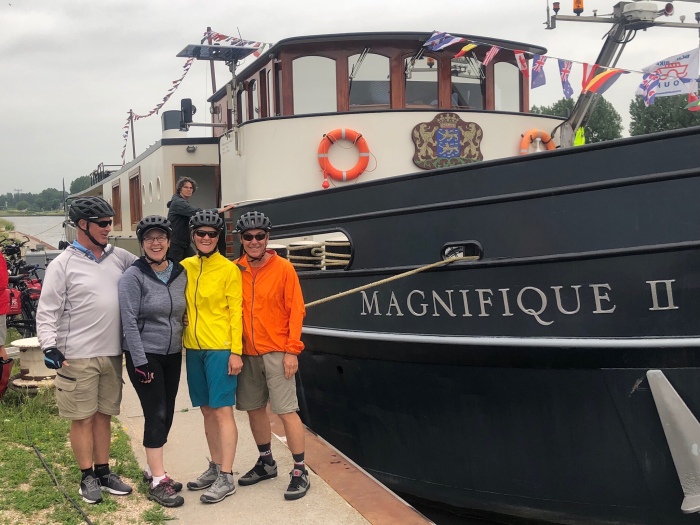
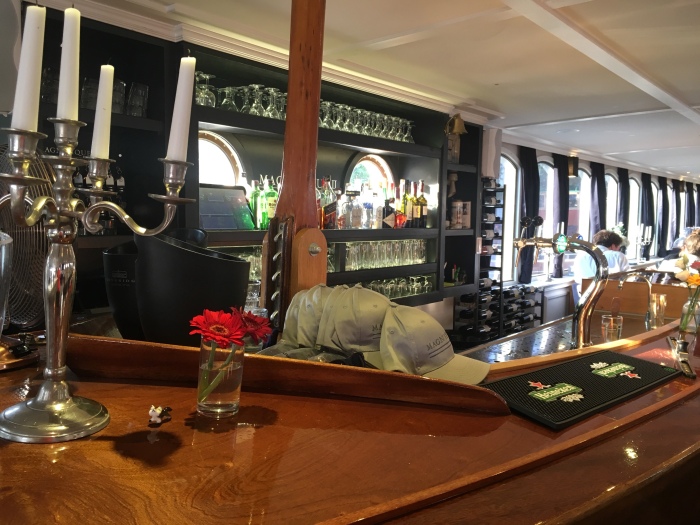
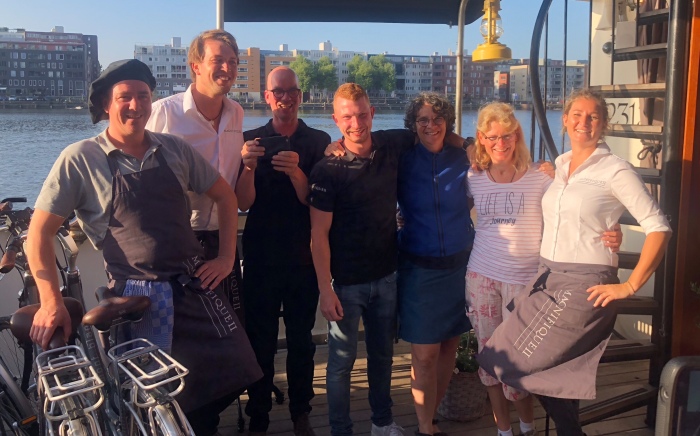
Later that day, we were able to check in to our barge, “The Magnifique II.” Our boat and barge tour from Bruges to Amsterdam is the topic of our next blog.

Glasgow, Scotland

After visiting Stirling, we carried on to Glasgow. Our place there was in the city centre, less than a 10 minute walk to the main shops and restaurants. We were staying in an “infill” house, on a lane, in an area of one way streets. After we found our spot and parked the car, we left it until we drove to the airport.

It was bright, modern and spacious.

Of course, we walked to the grocery store most days. The biggish Tesco was on Sauchiehall St., a pedestrian mall for these few blocks.

On our first full day in Glasgow, Doug and Wendy went to visit Doug’s aunt, who he hadn’t seen for over twenty five years. Our visit coincided with Auntie’s birthday so it made it extra special. We also had the chance to meet Doug’s cousin, whom he had never met.

We visited her at her place in East Killbride, once a small village and now a suburb of Glasgow. Here’s a view of the village centre.

East Killbride is about a half hour train ride from Glasgow, which meant we got to experience Glasgow Central. The train ran right on time and it let us see a bit of the countryside.

While we were out of town, Joanne and Bill explored Glasgow on foot. Here’s a view of Glasgow Cathedral.

Glasgow is known for its art scene. There are murals throughout the city and Joanne and Bill found this one, titled: “Honey, I shrunk the kids!”

That night we recounted our day over beers and artisanal pizzas at Shilling Brewing Co., a brewery in the city centre.

The next morning, as we walked to see the sights, we got this view from the pedestrian overpass of the M8, the main highway that cuts right through town.

We headed over to Kelvingrove Park.

The rhododendrons were in bloom. You can see the University of Glasgow in the background.

The Kelvingrove Museum is adjacent to the park. We spent a couple of hours there and could have spent longer. The Spitfire was Doug’s favourite display. Wendy enjoyed the nature exhibits, especially the stuffed birds.

Here is a display of the life stages of the gannet.

Then on to the transportation museum, just a 10 walk away. Here’s Doug in front of the car he learned to drive on, called an Anglia, which was known as a Ford Cortina in Canada.

That day was our last one in Scotland. Next post will be about Bruges, Belgium and our bike/barge tour to Amsterdam.

Stirling, Scotland

We drove from the Glencoe area, on winding roads on the shores of Loch Lomond and on to Stirling. Stirling Castle was next on our list of things to see. This is a view of the James V’s palace from within the castle wall.

The palace is covered in remarkable sculptures. Look for the sun-like face in the shield of the centre figure. The upper figure holds a cross-bow. This photo is a closer view of the same wall (south) that was in the previous photo.

We walked along the outer castle wall. Unfortunately the views were obscured by haze.

The flowers growing on the castle wall were quite lovely.

Inside, the palace has been restored to look as if it did in James V’s time. The tapestries are reproductions that were done by hand that took four years to complete. Note the abundance of unicorns. Nowadays, the unicorn is Scotland’s official national animal.

Here’s a view of one of the ceilings in the palace. All the carvings are reproductions and painted as they believe they looked when the palace was new. The next photo below is of an original carving. There are many of them on display in another room.

And everyone needs a quintessential photo with a knight. Note that the knight is mounted on a pedestal, so is shorter than Bill, who is about 6 feet tall.

Doug captured a good view of the restored chapel, which is used for services nowadays. Wendy is at the far end, taking a photo of the hand embroidered cloth. See her photo of one of the medallions after this one.

After touring the castle, we headed down the hill, and found a cozy pub that served “artisanal” burgers along with traditional fare. Bill had “bangers and mash,” which actually is sausages and mashed potatoes.

We had enough time to go to the Wallace Monument, erected to recognize William Wallace, (“Braveheart” to filmgoers.) We took a shuttle up the Abby Craig (hill) to the base of the monument, then walked up to the top of the tower. We chose to walk all 246 steps in the narrow spiral staircase in one go, saving the displays that were partway along for the downward journey. Here’s a windy view at the top.

There was a display of Scottish heroes and heroines. The bust pictured below is of Sir Walter Scott.

We walked down the trail to the parking lot. You can see the Wallace Monument behind Joanne.

There were a number of wood carvings staggered along the trail and they were meant to signify a certain time period. The bear and other furry creatures denote the Ice Age, the pig is for Scotland’s first farmers and Joanne is posing with the carving for People and Invaders of Scotland.

Whew! All the pictures in this post were taken in one day. We saw a lot of castles on our trip to Scotland and we may have saved the best one for last. Next stop, Glasgow.

Walking in the Glencoe area

We came over to the mainland from Skye by ferry to Mallaig, the terminus of the Jacobite Steam train. The Glennfinnan Monument and the Glennfinnan Viaduct were on the way to our next place, so we had to stop. The viaduct is well known to Harry Potter fans and is the first and longest mass concrete viaduct in Britain.

We walked about 15 minutes in from the main road to find a good spot to take a photo. While we were waiting for the train, we entertained ourselves by taking photos of Lil’ Fox. Doug is really liking the portrait mode on his new phone.

We were not alone. Here’s a photo of some of the crowd leaving after the train had passed. We walked down the path to the other side of the viaduct in time for the second train to pass. (Okay photo, but no room for it here.)

We had booked a cottage in Ballachulish, a village just west of the community of Glencoe. Here we are walking back with our groceries. The cottage is managed by the guest house and is just around the corner out of the photo. Note the restaurant and bar across the street, just past Bill’s head in the photo.

Here’s a view from in front of our place on a day with better weather.

And here we are sitting on the deck of “laroch.” You can see our cottage across the street. (Between Bill and the other gentleman in the photo.) Even though we had cold beer in our fridge, we couldn’t resist stopping after our hike.

Now about the walking (as they call it here.) We chose to do lots of short hikes, but the Glencoe area is better noted for longer treks, like the West Highland Way. We started out at the Glencoe Visitor Center and did a short loop trail right from the door.

This is the view up the valley from the bridge over the River Coe on the trail to Signal Rock.

This photo was taken from our lunch spot up Glencoe, one of the most famous and iconic of all Scottish Glens. (We walked a short way along the path to Glen Etive by the Lairig Eilde.)

This one is taken from the same spot, looking west down the valley.

Here’s a view of Wendy walking along a path, which according to the sign was “Glen Etive by the Lairig Gartain.” We didn’t go the whole way.

We turned the car around and headed back to Glencoe. It was still early, so time for a short hike at Glencoe Lochan, a lake built by Lord Strathcona for his Canadian wife to help her feel a little bit of home. It did feel a bit like walking in Stanley Park in Vancouver.

Here’s a taste of our second afternoon walk just minutes from our place in Ballachulish, with good views up to the highlands of Glencoe.

And an interesting variegated broom growing wild.

The next day we hiked on a forestry commission trail near Inchtree…

and over to a view of the falls.

After our lunchtime ale in North Ballachulish, we walked on a trail from the old ferry and back along the shore of Loch Leven.

This time our afternoon walk was up the hill behind the town. This is a self-closing gate because of its angled construction. We saw quite a few of them in the area.

A good view of Loch Leven.

The forests here were so evenly spaced because they’d been planted probably about fifty years before.

We stumbled on to a ruin in the forest.

On our way to Glasgow in the morning, we stopped to take a last look at the Highlands.

To the Isle of Skye

We travelled northwest to Culloden, just outside of Inverness, en route to the Isle of Skye. We toured the amazing interactive visitor centre commemorating the battle that took place here in 1746, but were unable to take photos. After listening to the audio guide inside, we went out to the battlefield. The photo below is of the memorial erected about 100 years later to the commemorate the gallant Highlanders (Jacobites) who fought for Scotland and Bonnie Prince Charlie. Around 1600 men were slain, 1500 of them Jacobites. In the second photo you can see the memorial from across the moor.

We drove through Inverness and along Loch Ness towards Urquhart Castle. We stopped at the Fiddler’s Highland Restaurant in Dummadrochit, just minutes from the castle. The weather was still gorgeous so we ate outside. Here’s a photo of Doug (to prove that he is actually with us, he’s usually behind the camera.)

Urquhart Castle was next. It’s on Loch Ness and very popular, but worth seeing especially in the sunshine.

A view through a “window” to the loch beyond.

As we got closer to the Isle of Skye, the skies became cloudier. We made a quick stop at Eilean Donan Castle for a photo.

We drove across the bridge to the Isle of Skye and followed the meandering road up the island to Portree. The island is only about 80 kilometres long and 45 kilometres wide but has about 700 kilometres of coastline. After dinner, walked down to the harbour. The pink guest house was the first to be painted brightly.

The weather was unsettled when we drove north. We had hoped to see the Old Man of Storr, but it was too cloudy and rainy to bother getting out of the car. It didn’t seem like it was raining much when we got to Lealt Gorge, so we took the short trail to the coast for the view of the interesting rock formations. We were quite wet from the Scottish mist blowing sideways by the time we were back in the car.

We could see Kilt Rock behind a 200 foot waterfall. Kilt Rock is a basaltic headland that gets its name because it resembles the pleats of a kilt. If you look closely on the patch of green on the cliff just beyond the falls, you might make out some nesting fulmars.

It was raining with intent by the time we reached the weird rock formations of the Quiraing. You can see the steep one lane road behind us. There were “passing points” at regular spots along the road. It means that one car pulls over and waits so that no one needs to back up. Bill did an awesome job driving.

We walked long enough to get some more photos of the formations through the mist and then lowered our heads and headed back into the blowing rain.

We continued on the narrow road over to Uig, travelling through rolling terrain of heather and whatever else the sheep can eat. Here’s a Blackface sheep calmly lying by the side of the road, on the wrong side of the fence.

We still had the afternoon ahead of us, so we drove another half hour to Dunvegan Castle and Gardens. The castle is the ancestral home of the chieftains of the Clan MacLeod for 800 years, and is still used as a residence.

The interior was ornate, with some rooms set up as they may have been used and some set up with displays.

We toured the impressive gardens even though it was pouring rain.

Back in Portree, we enjoyed a pot of mussels as an appetizer.

Although it was wet the next day as well, we had booked a tour at the Talisker Distillery, a 40 minute drive away, and it was mostly inside. We couldn’t take photos during the tour, but here’s a shot of the empty sample glasses with a jug of water and pipettes to allow visitors to add a few drops to the Talisker Storm whisky.

We spent the afternoon lounging in our apartment, reading and looking out at the rain. Just after dinner, the rain stopped and the sun came out. People poured into the streets and we joined them. Here’s one of several good pictures with the nice light.

The next morning we left Skye by ferry. Here’s the harbour at Armadale.

It was hard to leave “the misty isle” in such good weather, but we were glad to have sunny skies for the ferry ride to Mallaig and the mainland.

Speyside, Scotland

The good weather held for our stay in Aberlour in the Speyside region of Scotland. On our way north, we stopped in Pitlochry to visit the picturesque Edradour Distillery. Edradour is the only distillery that still uses the traditional methods to produce single malt scotch whisky. The distillery was on a hillside beside a clear running brook. John, our guide for the tour, entertained us with his knowledge and his dry sense of humour.

We arrived in Aberlour in the afternoon and walked a few doors down to the grocery store to pick up our dinner.

And back to the garden for wine and cheese.

The next morning we drove a short way to Balvenie Castle. It was built in the 13th century

There was an oyster catcher perched on a high wall, the first of many that we saw in the area.

We took a short jaunt up the hill to see the Highland cows, also known as “hairy coos.”

Then on to the next attraction: the Speyside Cooperage.

We joined a very informative tour of the facility where they repair and refurbish oak casks. It was fascinating to watch the coopers work. They would take out the damaged staves and find a replacement stave from the barrels that were too damaged to repair, but still had a some useable staves. The staves that were not good enough to be used for a barrel were repurposed into furniture or candle holders, etc. Nothing was wasted.

After lunch back in Aberlour, we walked from our doorstep to the River Spey and along an old rail bed.

It was two miles to Craigellachie and the Copper Dog Pub.

Our thirst quenched, we continued on the trail for a few more minutes, then turned on to a spur trail that led to the Craigellachie Bridge. This cast iron bridge was built in 1812-1814 by Thomas Telford and was the first bridge across the River Spey. (They used ferries before that.)

It was a pleasant walk back to Aberlour past fields of grazing sheep.

The next day, we drove half an hour north to Elgin and the Elgin Cathedral.

Across the street is the Biblical Garden. The garden apparently has every plant mentioned in the bible. It’s maintained by the Moray College horticulture students who were working in the garden during our visit.

A few minutes away was Spynie Palace where the Bishops from the Cathedral relaxed. We climbed the five story tower (David’s Tower). The second photo is taken from inside the tower, each window indicates another floor. If you look carefully you can see the screen above the highest window, at the level of the final floor, put in place to keep the birds from flying down.

We drove out to Lossiemouth on the North Sea, for lunch and a wander along the shore.

But we hadn’t finished yet! Dallas Dhu Historic Distillery was next. We followed an audio guide through the distillery. Here are Bill, Joanne and Wendy in front of the wash still. The windows allowed the still master to watch that the fermentation “foam” stayed between the two windows.

The next day, we headed to the Isle of Skye, and planned to stop at Culloden and Urquhart Castle. We truly are tourists now.

Edinburgh, Scotland

Edinburgh, Scotland

Our trip to Scotland was planned to celebrate our retirements. We had to wait for the youngest member of our group to retire, but it’s been well worth the wait. Our cute flat in the Stockbridge area of Edinburgh was close to everything. It looked ancient on the outside, and it was by Cranbrook standards, but it was modern inside.

Our jet-lagged bodies needed fresh air and exercise, so we chose a walk along the “Water of Leith,” a riverside trail close to our flat.

Sometimes we were close to the water with birds everywhere.

Sometimes we were above, with fantastic views.

We followed the route to the Scottish National Gallery of Modern Art. Here’s a photo of Doug standing in front of the gallery. Behind him is a landscape which unlike the traditional landscape actually is a landscape. It’s titled “Landform,” and is the modern art equivalent of an expansive front lawn.

We walked past St. Margaret’s Cathedral on our way to a pub in Haymarket for lunch.

After our lunch of meat pies, we were back to the Water of Leith, past Stockbridge to the Royal Botanic Gardens. Many of the rhododendrons were in bloom.

So were the azaleas.

Joanne has a degree in forestry and was interested in the labels on all the unique trees. This one is a dawn redwood (if we remember correctly.)

The next day, we attacked Edinburgh Castle by taking a taxi up the hill and being there before it opened. We took advantage of our Explorer Pass to avoid the ticket lines. Here are Joanne, Bill and Wendy waiting in line.

Without rushing, we got up to the viewpoint by Meg’s Mon a and had the place to ourselves for a few minutes.

Here’s a view from a view of the city from a few steps away. Notice the dog cemetery (for soldiers’ dogs) in the foreground.

Here’s the square outside the National War Museum Scotland with a statue of the Earl of Haig (that had been moved from the Esplanade) and the hospital behind.

Inside the Royal Apartments

‘Lil Fox’ found a friend.

Outside the castle, we joined the crowds coming up the Royal Mile.

We were pleased to find a garden just down an alley from the main street that provided a calm retreat and beautiful views.

We walked down to the Palace of Holyroodhouse, but it wasn’t open since there was a Royal visitor staying there. We walked all the way home, making it eleven kilometres by the time we were back at our lodgings. After dinner, we took a short jaunt to the park nearby to look for birds. We saw this grey heron who was not at all upset by our presence.

And this mother coot and her babies.

We’d had a couple of full days in Edinburgh with gorgeous weather but it was time to travel north. Next stop: Speyside.

On our way to Scotland

We thought we wouldn’t be writing a blog for our upcoming trip to Scotland, but so many people were hoping we were, so we did some research. Turns out there’s an app for Wendy’s iPad, so we’ll give it a go.

So we stay true to our name, “Travels with a Fox,” we will be bringing a fox with us. Lil’ Fox is a tiny fox that can fit in your hand. Wendy has had him since she was a child.

This blog post is really about seeing if this will work. So far, it seems pretty slick. So stay tuned.

Sedona and the Verde Valley, Arizona

Sedona and the Verde Valley, Arizona

We stayed at the Zane Grey RV Resort, just outside Camp Verde, in a site surrounded by trees and flowering shrubs. It was close to Montezuma’s Castle, a National Monument. Montezuma’s Castle is another example of an ancient ruin being misnamed when it was first discovered. Southern Sinagua farmers built the five-story, 20-room dwelling sometime between 1100 and 1300. It had its maximum occupation in the 1300s and was occupied for another century, then abandoned. We did a little birding there on a breezy day since it was relatively sheltered and beside a creek.

Here’s a view of our campsite, taken from the back of a vacant site across the road. The second photo is of the “castle” at Montezuma’s Castle NM.


We also visited the hillside community of Jerome. In the early 1900s, Jerome was a booming mining town of 15,000 perched on the mountainside. It was basically a ghost town by the 1960s. Hippies moved in in the 70s and now Jerome is a thriving community of 500 filled with shops, galleries and restaurants. We first visited the Jerome State Historic Park, in the preserved Douglas Mansion. The short video presentation about the history of Jerome was worth the price of admission. We then drove farther up to the main town and were lucky enough to get a parking spot.

Here’s a view of a partial building; behind it is a glass-blowing workshop. The Jerome Chamber of Commerce had some interesting displays in their little museum.

After being windy and cool, the weather improved enough for mountain biking and hiking. On Saturday, we drove up to Sedona (about 45 minutes) to hike to Cathedral Rock. There was no room in the parking lot when we got there at 9:00. We should have known better; hiking in Sedona is very popular. Luckily we consulted our hiking guidebook and map and found a “back way” in. (Baldwin trail to Templeton to Cathedral Rock trail) After half an hour of hiking, we were looking down at the jammed parking lot that we had first attempted to park. The climb up to the saddle was another half hour and was more of a scramble on slick rock than a hike. With some strategy, Doug was able to get his quintessential photo of Wendy near the edge. The photo doesn’t show how crowded it was. The route we took also allowed a great view back to Cathedral Rock in the afternoon light.
We enjoyed our lunch in a quiet spot near Oak Creek, very close to this vortex site. Vortex sites are places where some people believe energy crackles most intensely. And we had to include a cactus in bloom.

We got up earlier on Sunday and drove through to West Sedona and up to Boynton Pass Road and the Fay Canyon Trailhead. This trailhead was only just beginning to fill at 8:30 when we started our bike ride on the Aerie Trail. We made a loop around Doe Mountain and connected to the Cockscomb trail. The trail was a bit rocky but “rideable”, with the more technical sections at the beginning of the loop, and some nice flowy sections and fun “whoops” near the end.

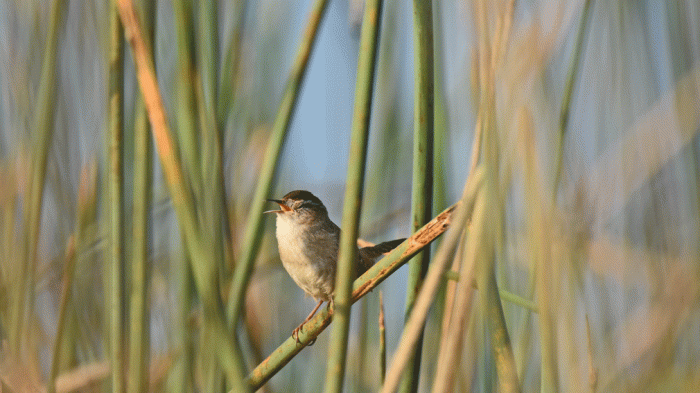
Since we had already secured a parking spot, we walked across the road and hiked the short Fay’s Canyon trail. Highlights were seeing a rattlesnake up close (without consequences) and identifying a black-throated gray warbler.

Another day, we rode starting at the Bell Rock Trailhead and repeated most of a route that Wendy had ridden with friends a couple of years ago, when Doug was not yet able to get back on his bike. We rode up the Bell Rock Pathway and joined the Llama trail. We didn’t mind walking the canyon section of Little Horse. Then we cruised back via the Bell Rock Pathway.

Here are a couple of views from the Llama trail.

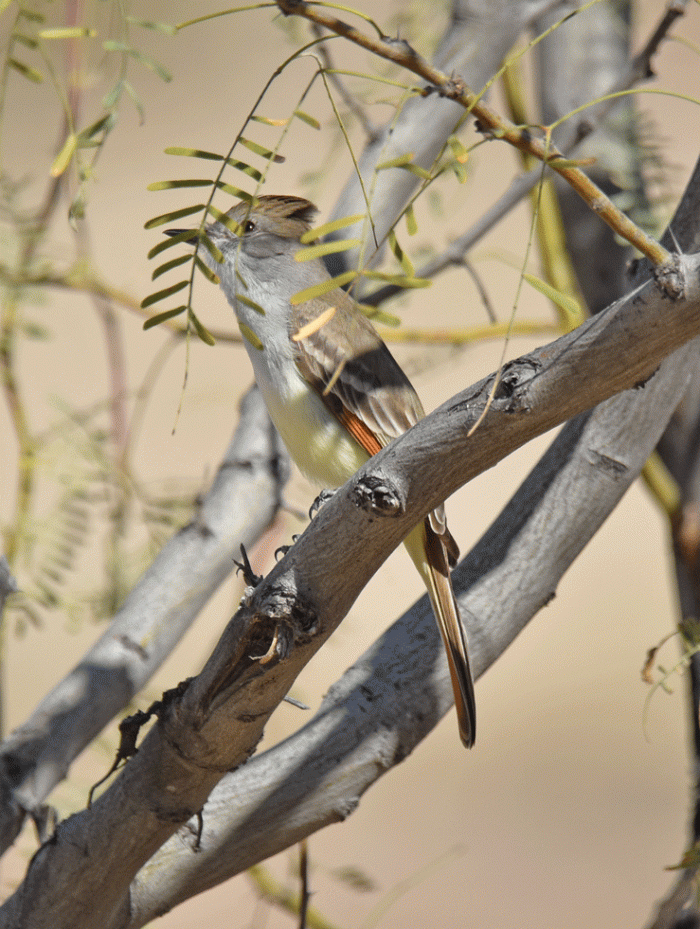
We found a hike that was closer to our RV park in Camp Verde and was also considered a “hotspot” for birding: West Clear Creek trail. The trail passes a popular swimming hole, where people can jump of the red rock cliffs into the deep pools. No photos of Wendy jumping in (we didn’t come to swim) but you could check out the “Bull Pen” swimming hole on-line if you’re interested. We did cross the creek twice; one crossing had mid-thigh water with a rocky bottom and luckily a gentle current. We saw some nice birds: our first really good look at an ash-throated flycatcher and a pair of summer tanagers were the highlights.

West Clear Creek has water in it all year and flows into the Verde River.

ClearCreek_pano

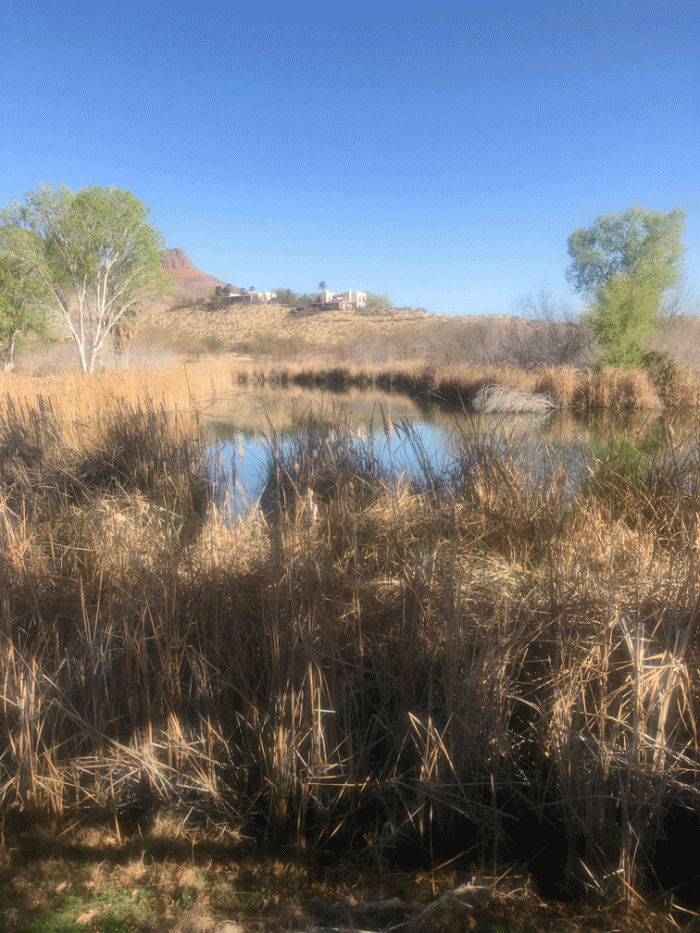
We travelled about half an hour northwest to Dead Horse Ranch State Park in Cottonwood, AZ to be on site for the Verde Valley Birding and Nature Festival. We both went on field trips for all four mornings of the festival. There were afternoon and evening sessions offered, but we were almost saturated with viewing birds from our morning sessions (about 45-55 species each day).

Here is our group at Travasci Marsh, reached by a trail system right in Dead Horse Ranch State park. The highlights of this trip were seeing a yellow-breasted chat and Bullock’s oriole.

VVBF_group

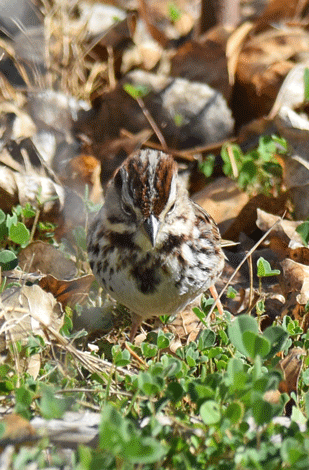
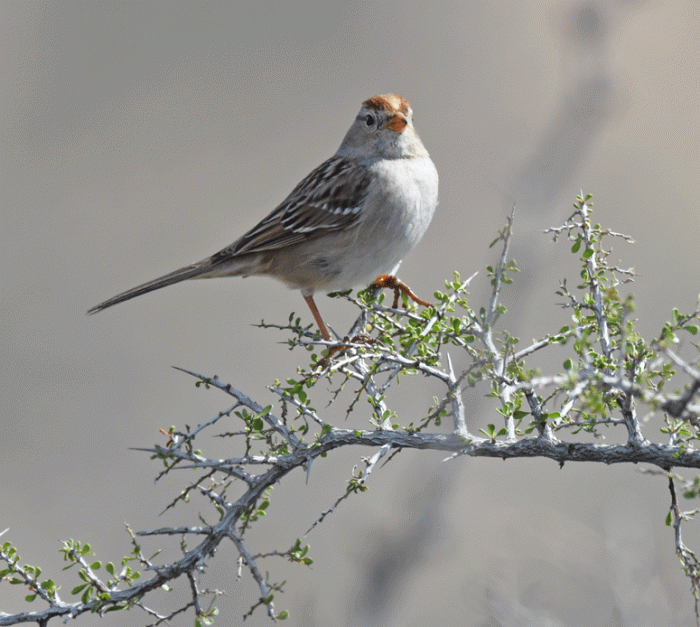
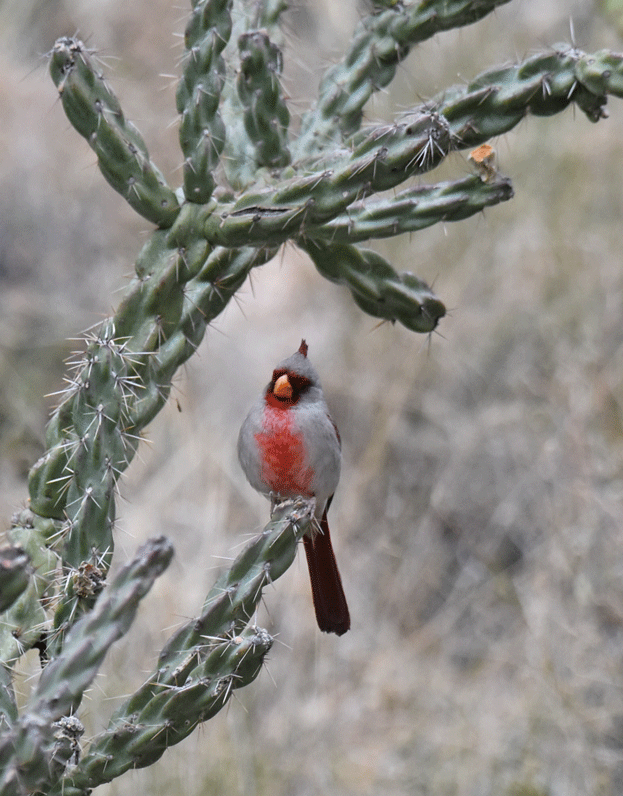
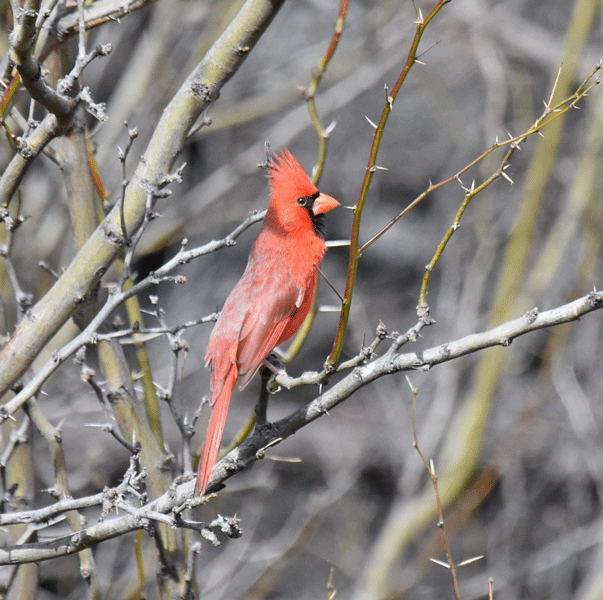
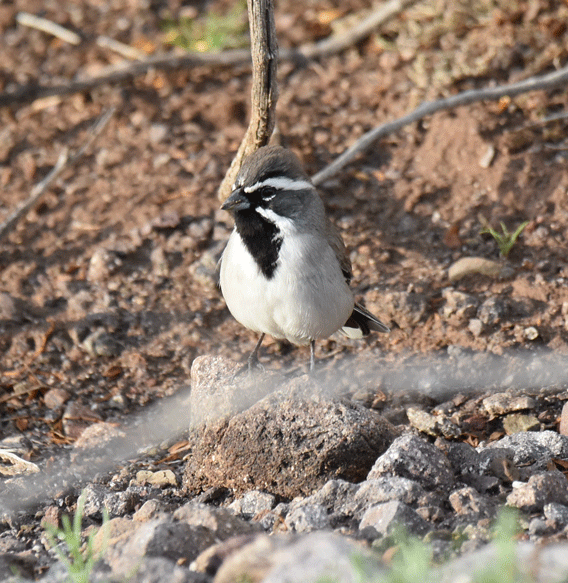
We also had good bird viewing at our trailer. The previous campers at our site had sprinkled bird seed on the ground in the dirt beside the picnic table and between the bushes and brush. Our regular visitors were Gambel’s quail, green-tailed towhees, sparrows (Brewer’s, chipping, white-crowned, black-throated and lark), and house finches. One day as we were sitting out, a pair or northern cardinals flew into the nearby bushes. Doug was patient enough to capture these photos of the male (bright) and the female (with attitude!).

And there were always the hummingbirds. We purchased this cute window feeder at the Mesa market. Amazingly, the hummingbird’s tongue can reach to the end of the tube. We also had little verdin feeding from them. Here’s a black-throated hummingbird feeding outside our window of the trailer.

Hummer

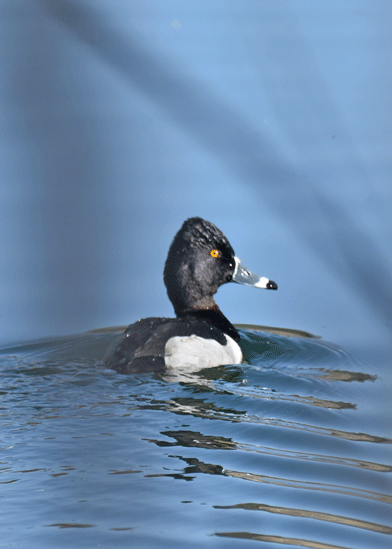
Here are some highlights of the birds we saw. A great blue heron in flight.

gbhe

Male (red) and female (yellow) summer tanagers.

A male lazuli bunting and a male Bullock’s oriole.

We listened to chatter of the yellow-breasted chat on all four days until the last day when one finally showed itself. (left bird). The more drabber bird on the right is the ash-throated flycatcher, another bird that we heard more than we saw.

And here are a few LGJs “little gray jobs”. The gray flycatcher on the left is identifiable by it’s tail-wagging behaviour. The gray vireo (right bird) was more elusive, but Doug was quick enough to get this shot.

We had a great time birding at the Verde Valley Birding and Nature Festival. Each of our guides was knowledgeable, each had their own style and strength, and we learned and picked up things from them all. We visited four different birding locations: Montezuma Well, Sedona Wetlands, Bubbling Ponds Preserve IBA and Tavasci Marsh, all places that we will return to on our own when we come to this area again.

We are on our way home now and can hardly believe that we’ve been away for over six weeks. Our new fifth wheel feels like home and has met and exceeded our expectations. Stay tuned for our summer adventures in “Big Red.”