February in Arizona – Part 2

February in Arizona – Part 2

This post is all about our birding adventures. Be prepared for many photos of birds.

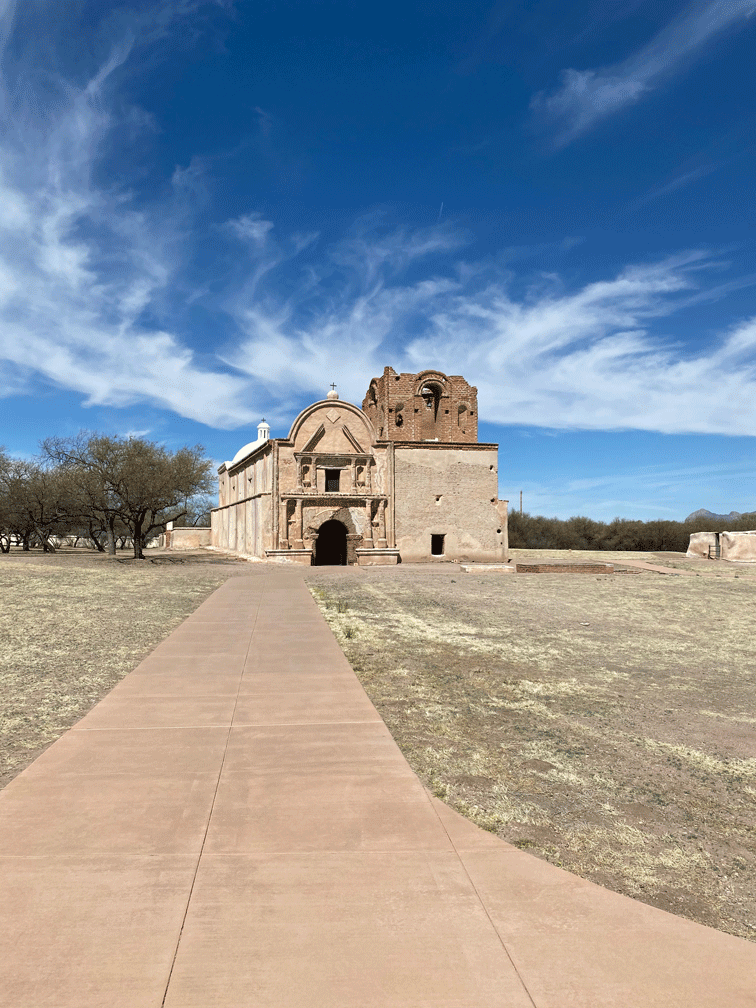
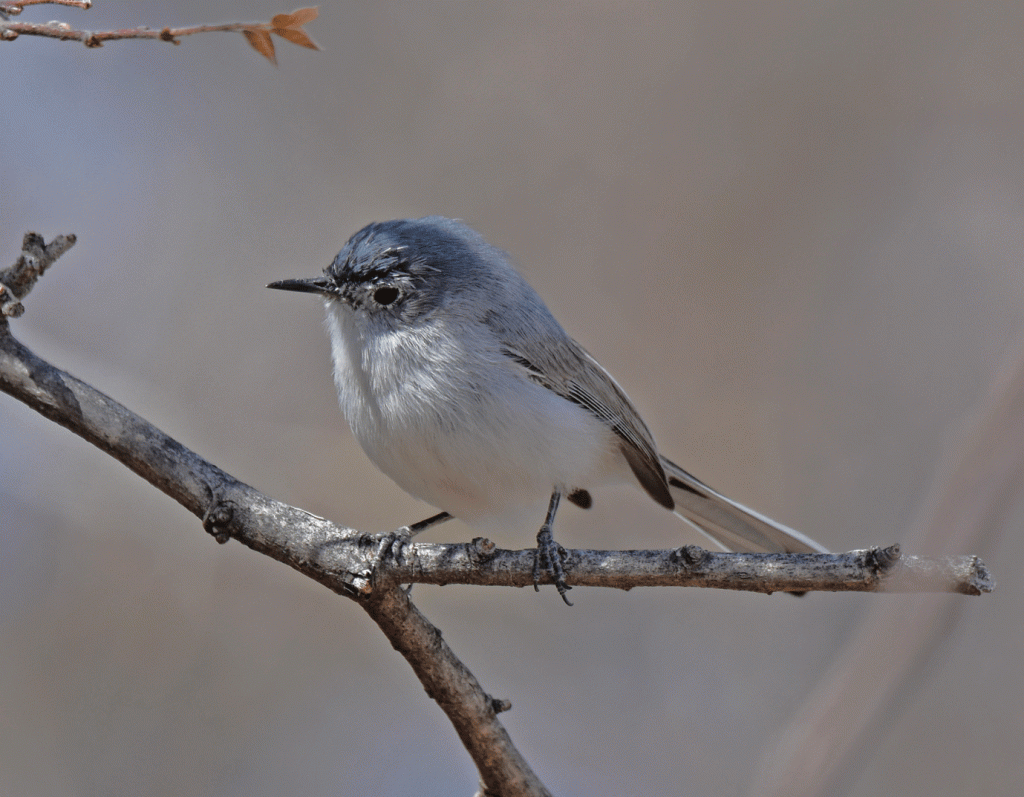
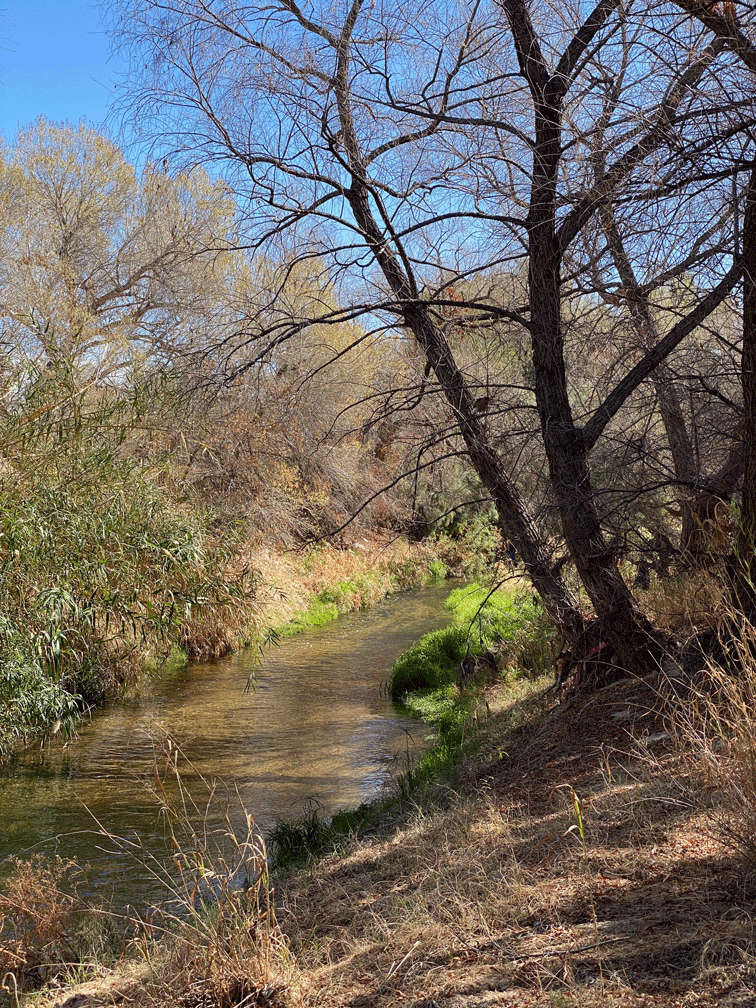
We returned to the Tubac area, to a location a bit south of Turmacocori National Historic Park to an access point to the Anza trail called Santa Gertrudis Lane. This is the view of the Santa Cruz river. The tall cottonwoods are just starting to green up in early February.

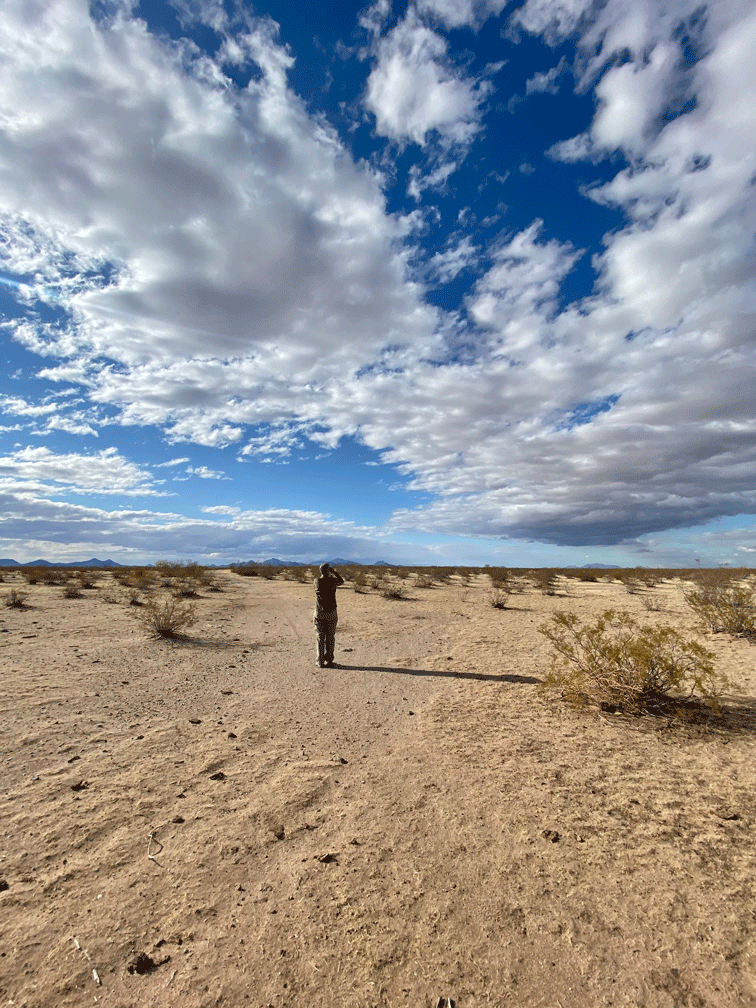
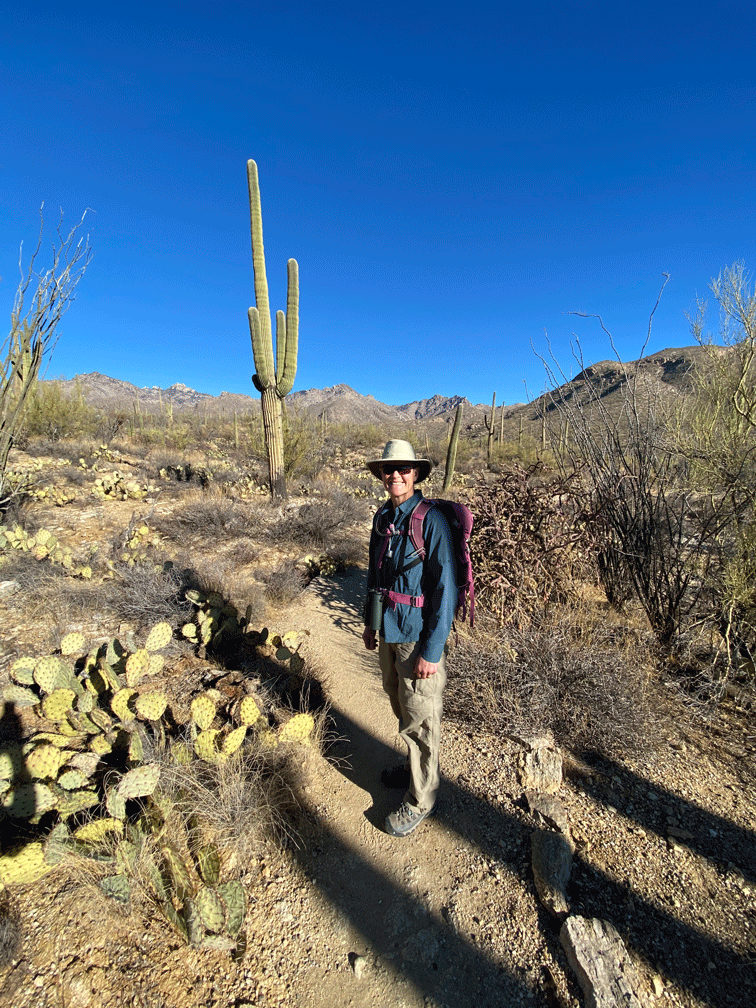
We were here to see any birds that we could, but specifically, the Rufous-backed Robin. We have yet to see one, although we have seen a few American Robins. Wendy is probably looking at an Abert’s Towhee, which are numerous and robin-sized.

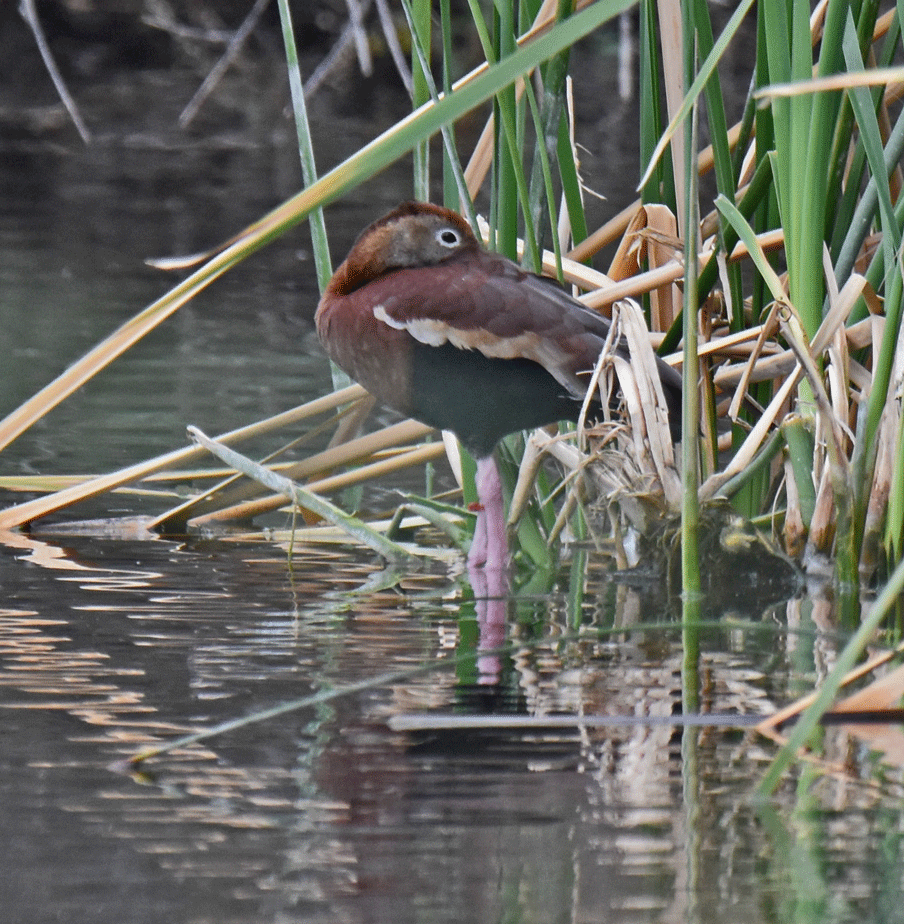
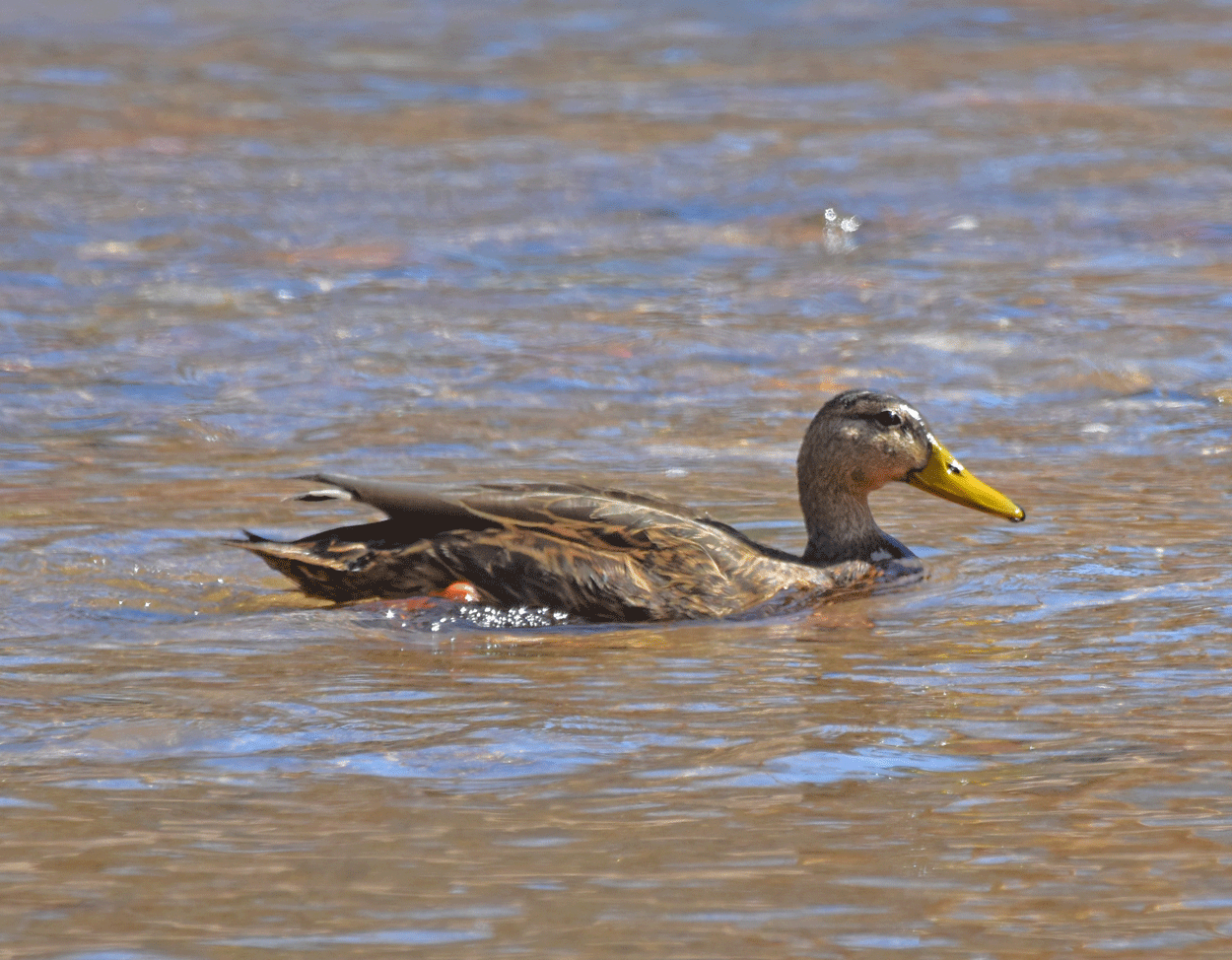
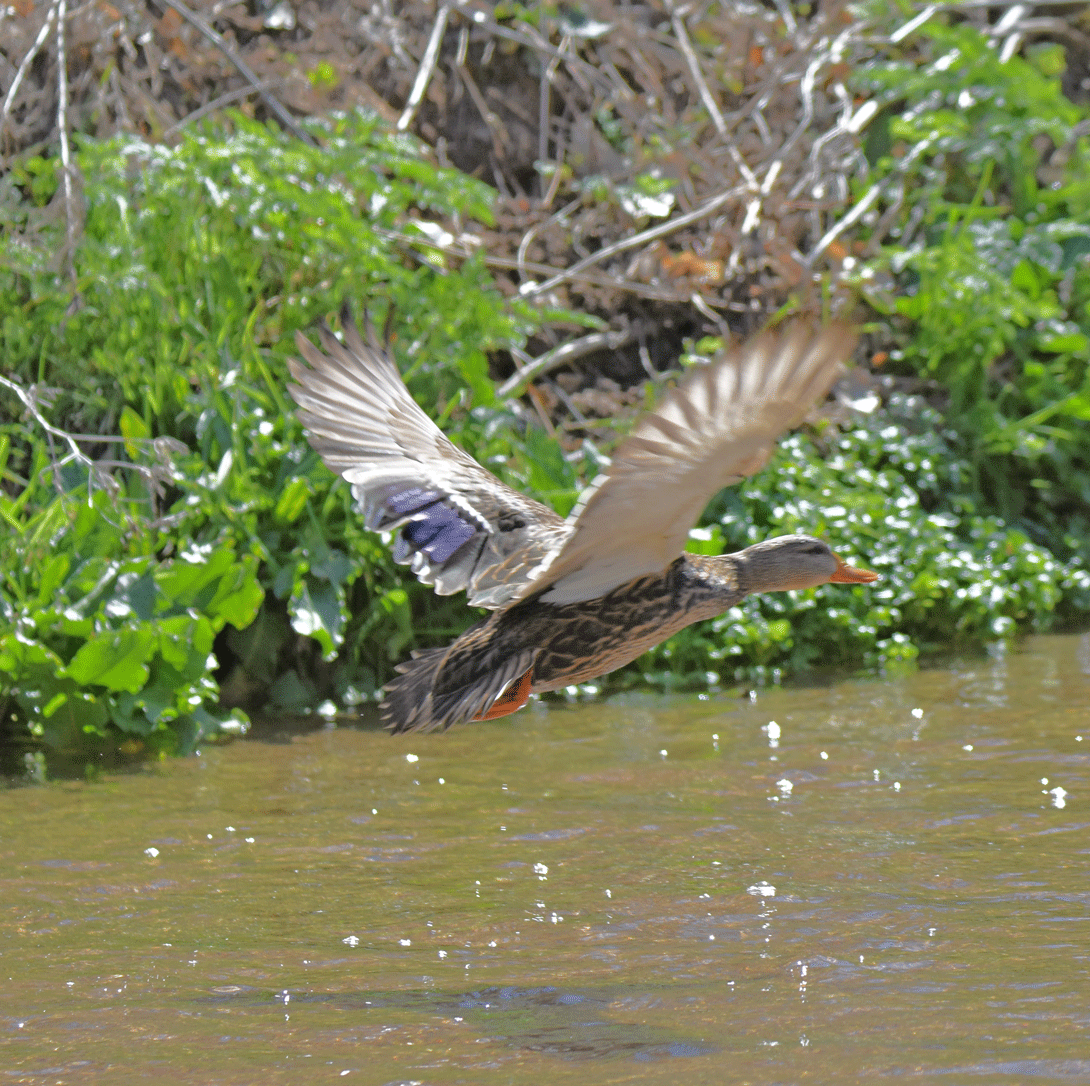
We got a good look at this Mexican duck. Both the male and female resemble a female Mallard and is included as a subspecies of mallard in older field guides. The male below has a distinctive yellow bill and his wings in flight show narrow white bars rather than the bold white bars of a Mallard.

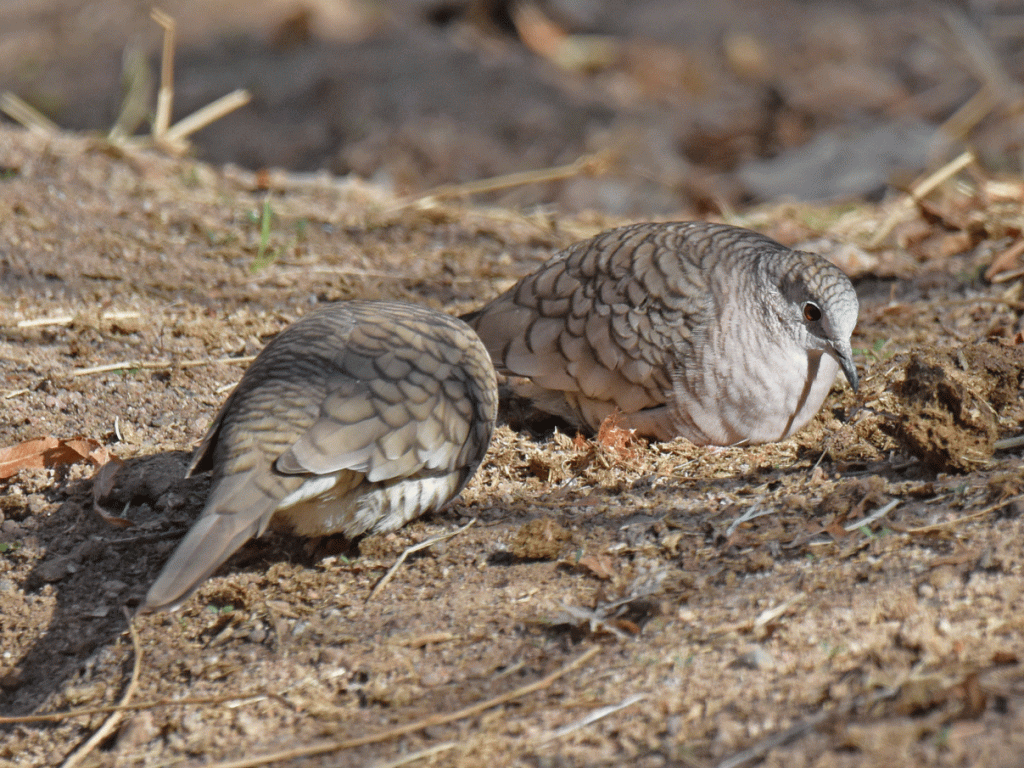
These Inca doves were foraging near the riverbank. They are very small and slender doves with dark-edged feathers that give them that scaly appearance.

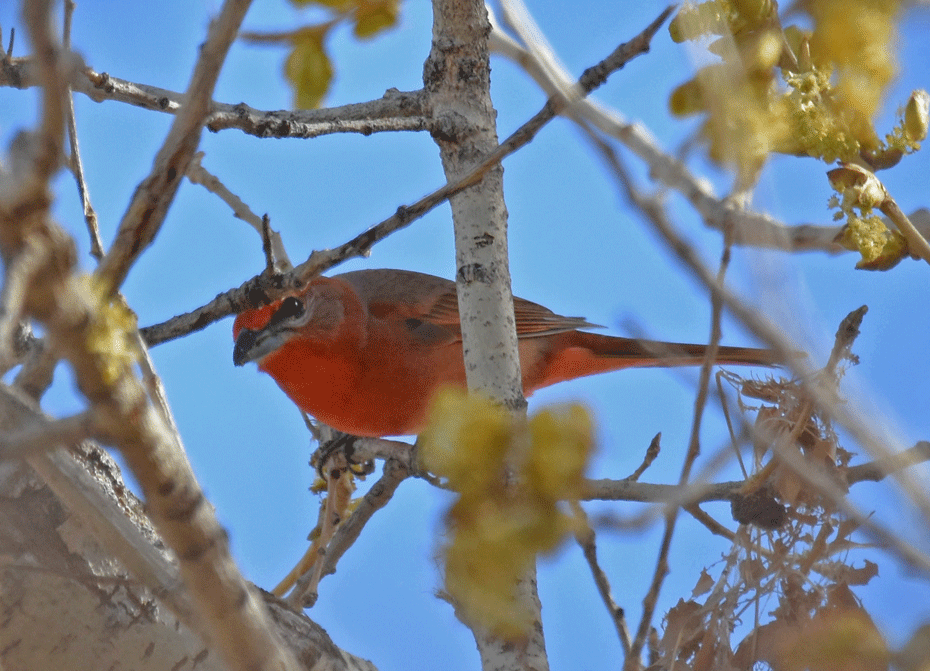
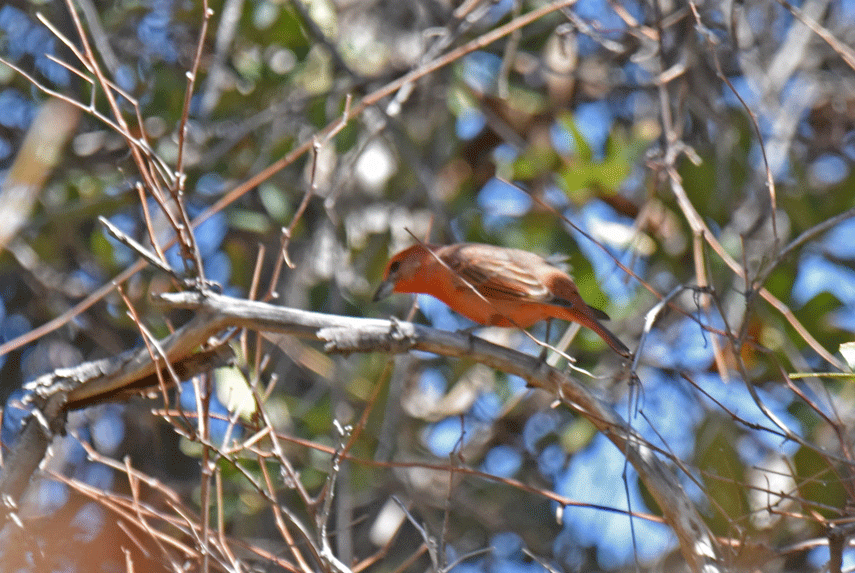
While searching for the robins, we were rewarded with a view of this male Hepatic Tanager. Mostly they winter in Mexico, so this fellow is at the northern edge of his range.

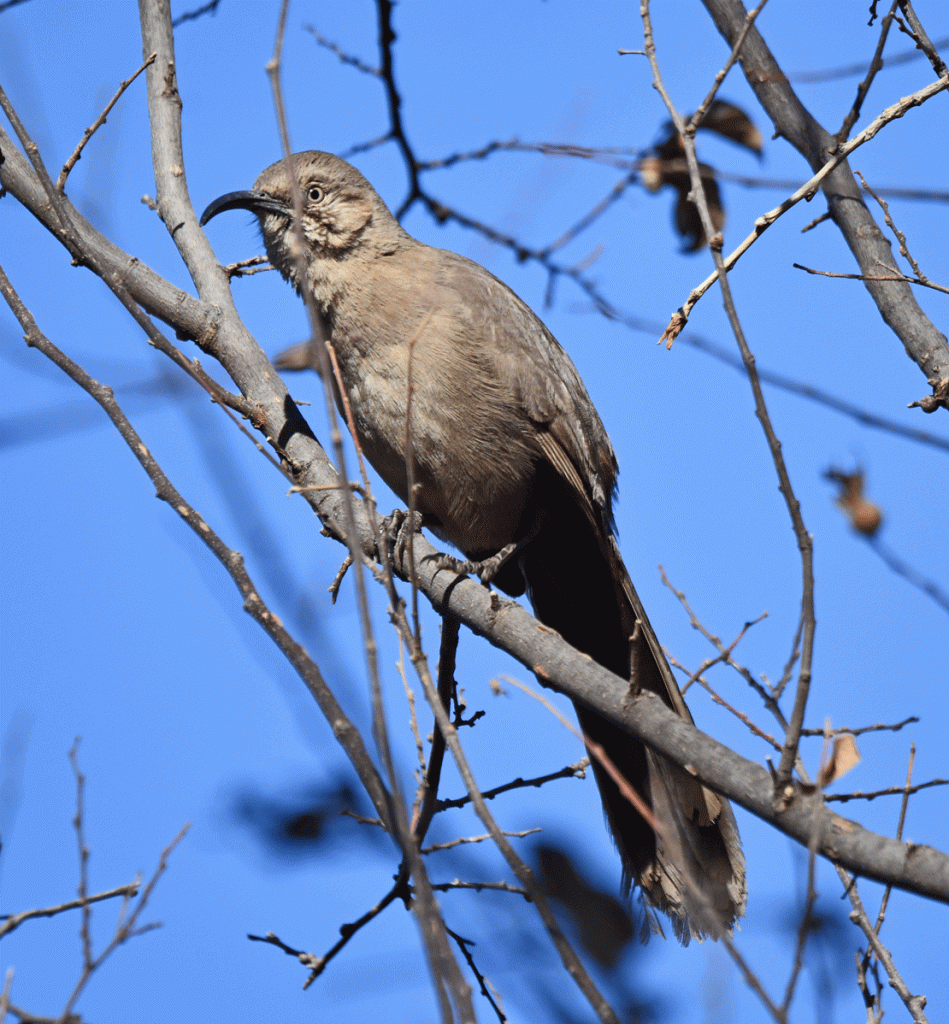
Another time we accessed the Anza trail between Tumacacori and Tubac at Clark Crossing Road in Carmen. We got a quick look at this Crissal Thrasher. They are a secretive bird and like to forage in dense brush. This was the third time we had ever seen one and Doug’s first photo.

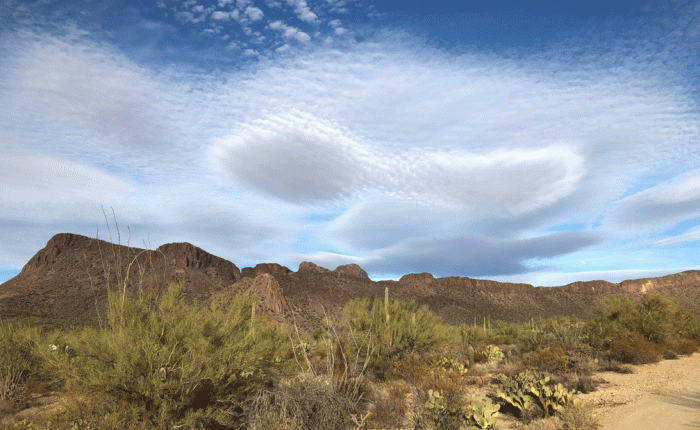
One of the times that we birded at Santa Gertrudis Lane, we also accessed the Anza trail in Tubac. We were hoping to see a special little bird way up in the cottonwoods. Not this time, but we have this view for you of the cottonwood trees and blue sky instead. Just being in nature is reward enough.

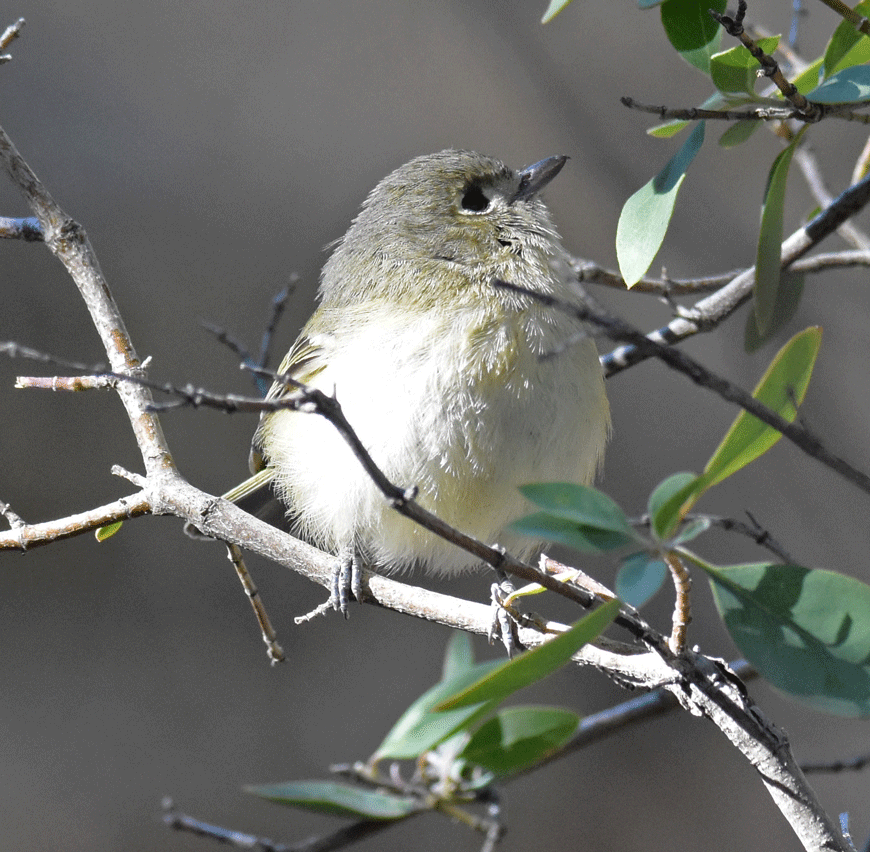
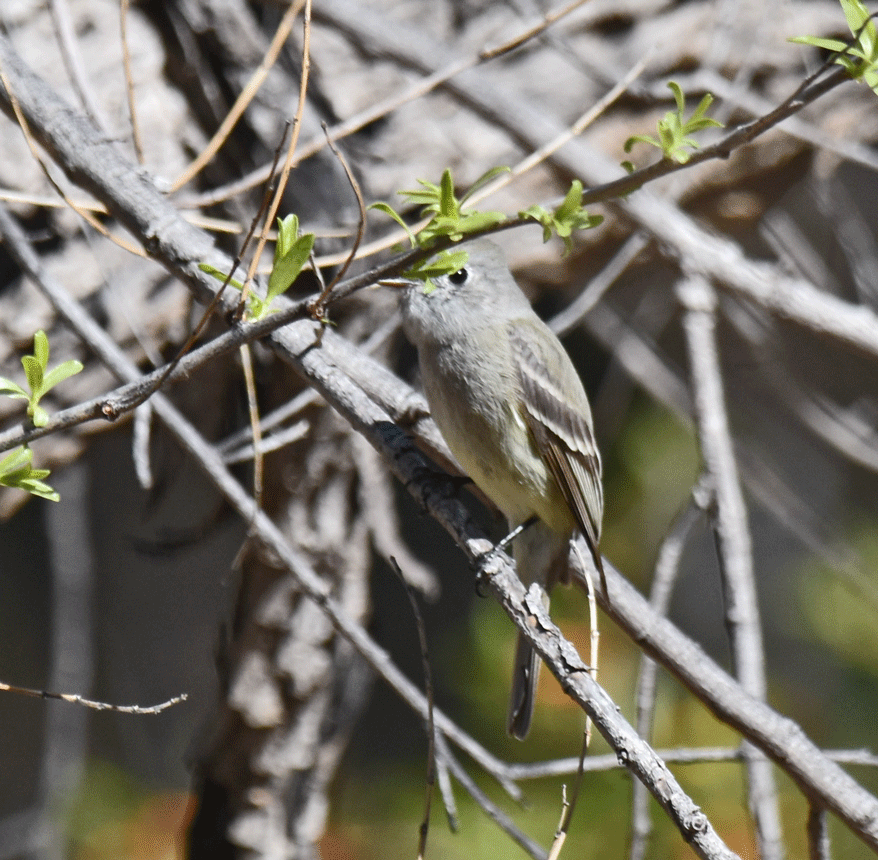
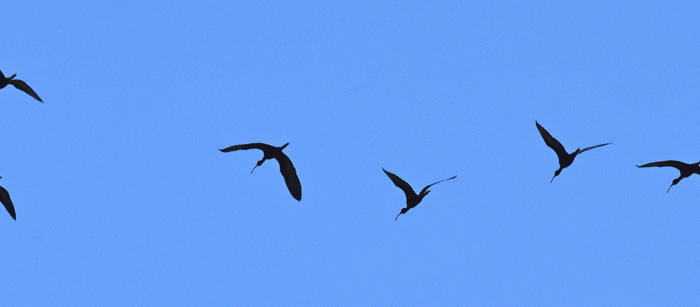
We had good views of this Hutton’s Vireo when we hiked a trail in Madera Canyon. Hutton’s Vireos look very similar to Ruby-crowned Kinglets, but they are stockier and have a thicker, hooked bill, among other subtle differences. This time, there was a Ruby-crowned Kinglet and a Hutton’s Vireo in the same tree, so we could easily compare them. It also helped that it was a shorter tree, so the birds weren’t that far above us.

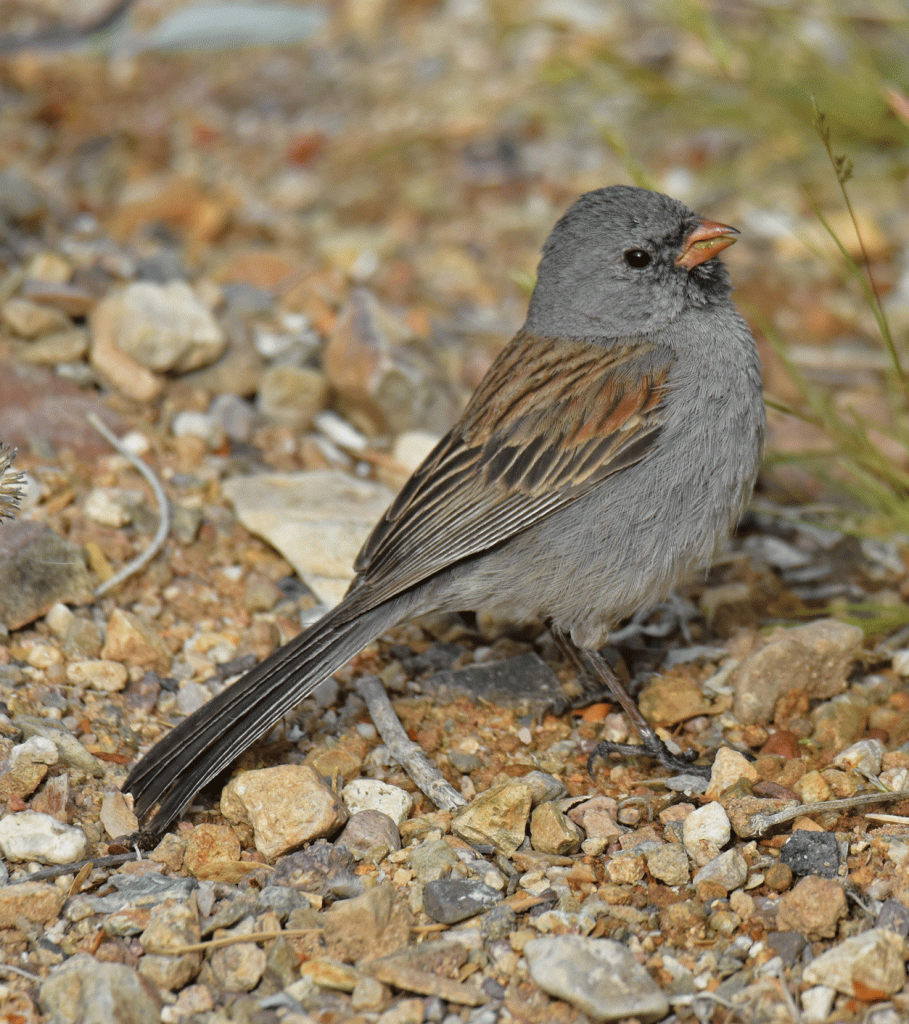
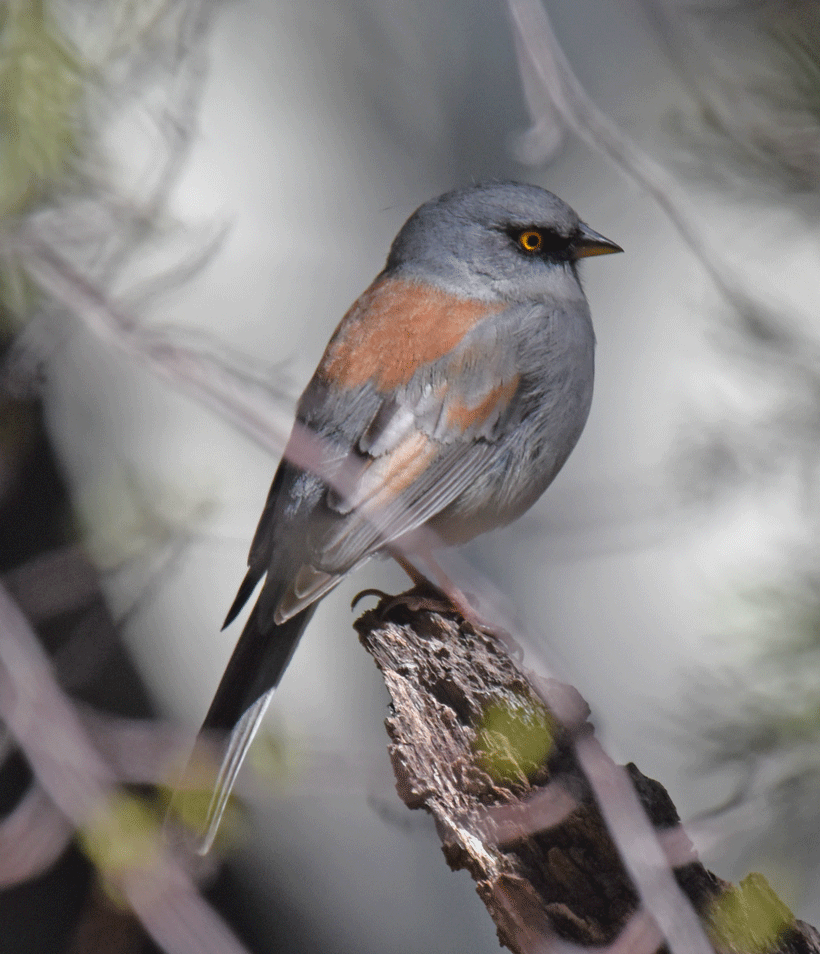
Also along the same trail near the Madera Canyon Picnic Area we saw a flock of Yellow-eyed Juncos. Their habits are very similar to the Dark-eyed Juncos that we have at home in Canada, but instead of hopping they walk along the ground when they are foraging. They are found year-round in the southeast corner of Arizona and southwest corner of New Mexico in open pine forest of the mountains.

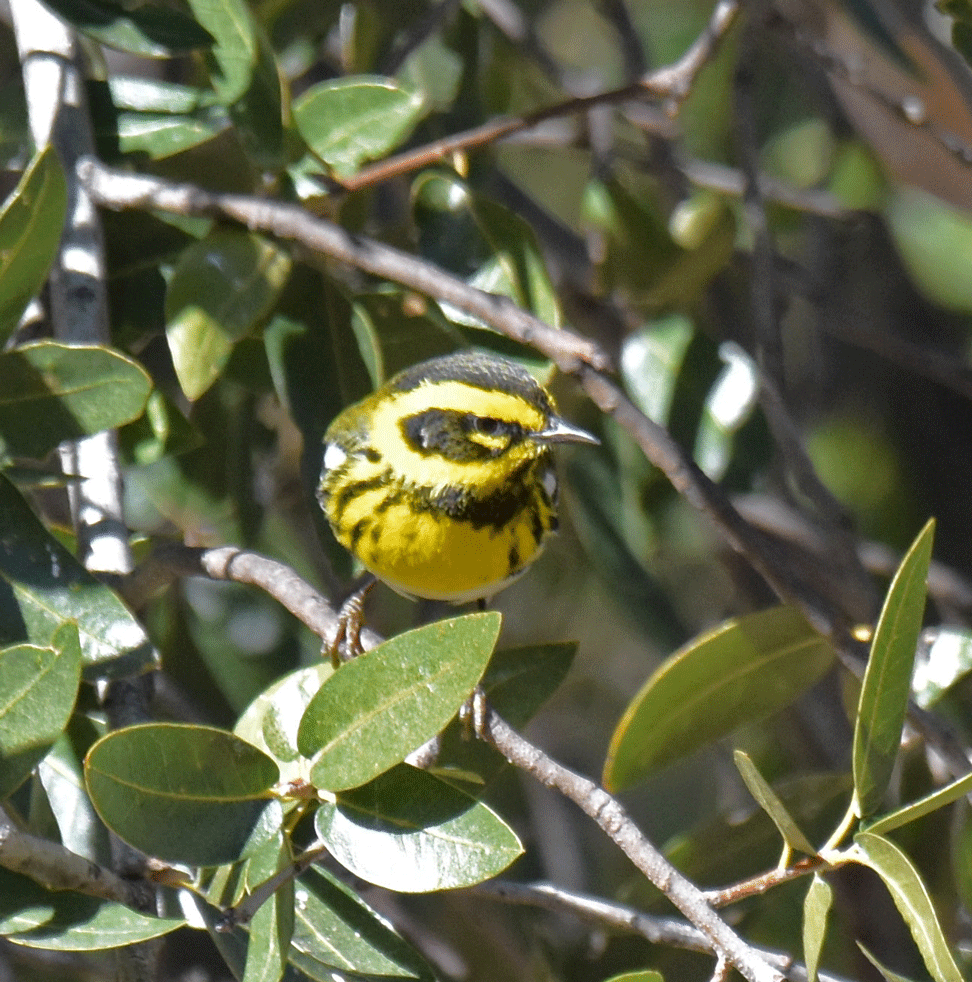
We were also rewarded with a good look at this Townsend’s Warbler. Townsend’s Warblers will be up in the Cranbrook area later in the spring.

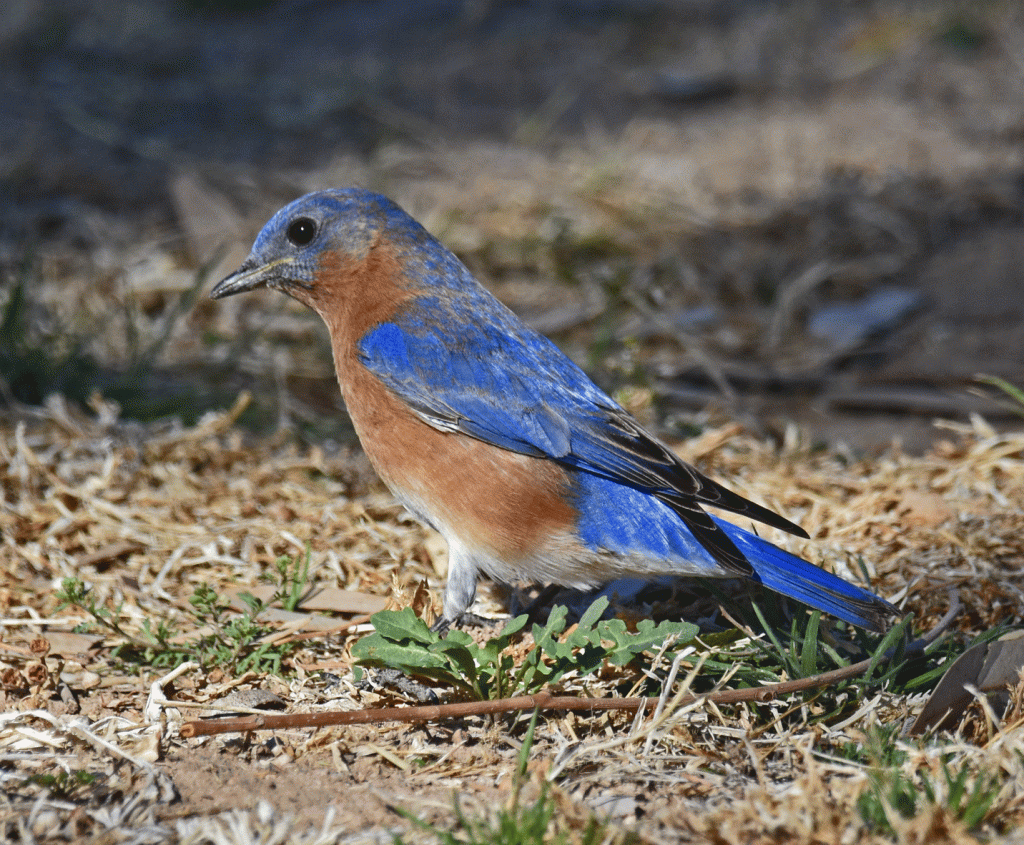
A new birding area for us was Fort Lowell Park. It’s an urban park full of ball-fields and large dried-out lawns, but it has a pond and mature trees and attracts a variety of birds including rarities. There were a few Eastern Bluebirds among the Western Bluebirds. You can tell that this one is an Eastern Bluebird by the rufous throat and sides of neck as well as its white belly.

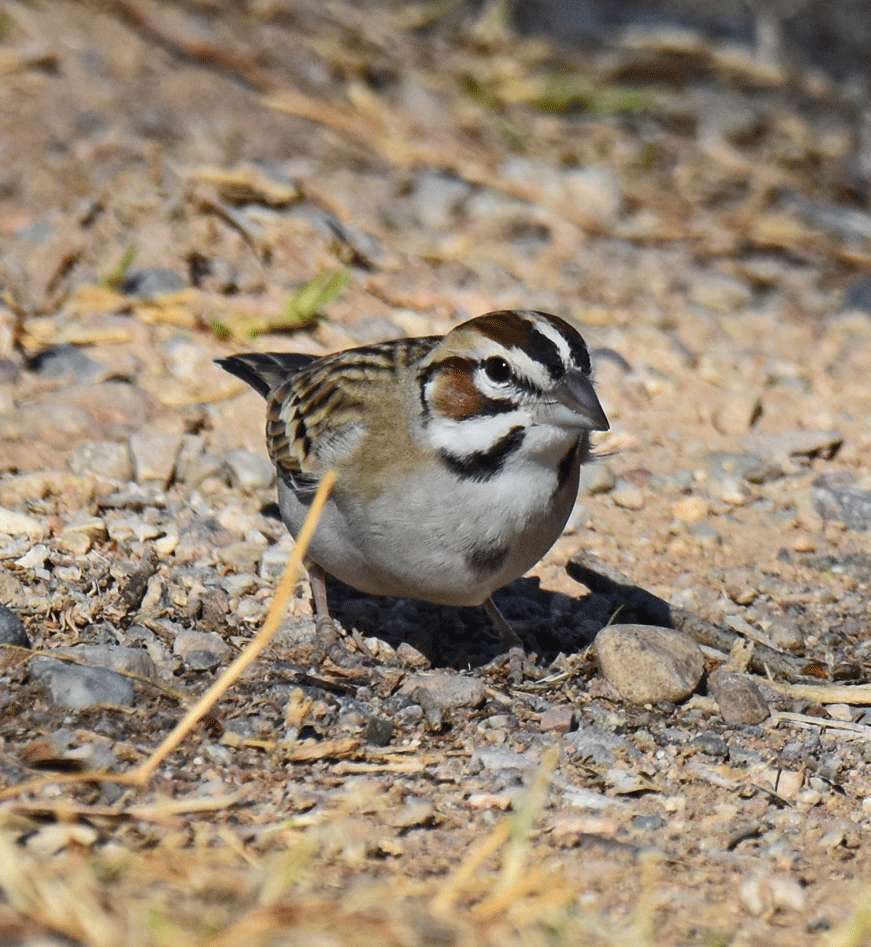
There were plenty of Lark Sparrows and Doug was able to get a close-up shot.

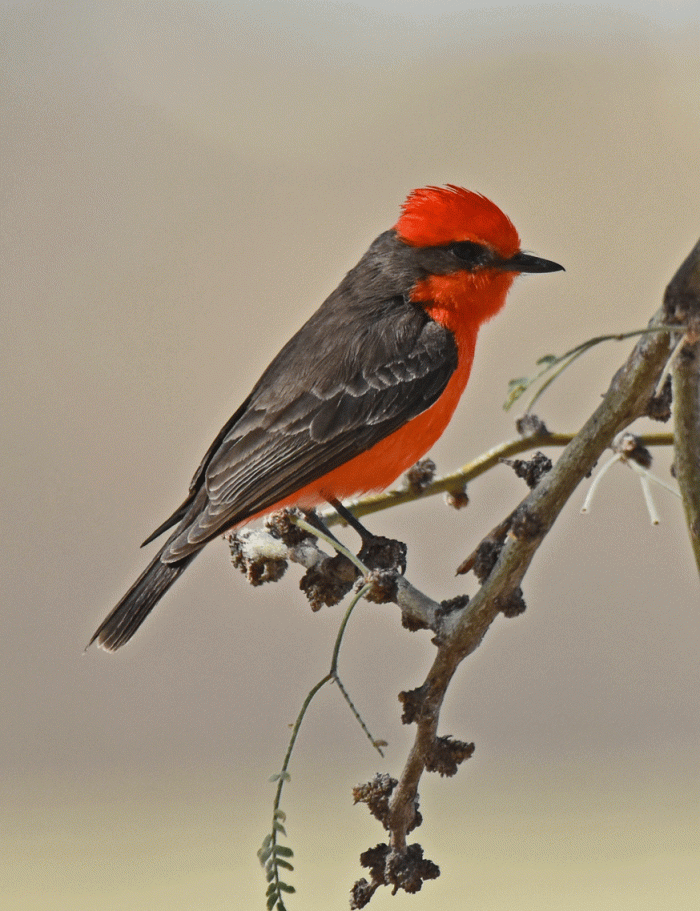
We also enjoyed watching this brilliant male Vermilion Flycatcher. These flycatchers seem to prefer ball fields and are often along the fences. This time it perched on a tree for a more natural shot.

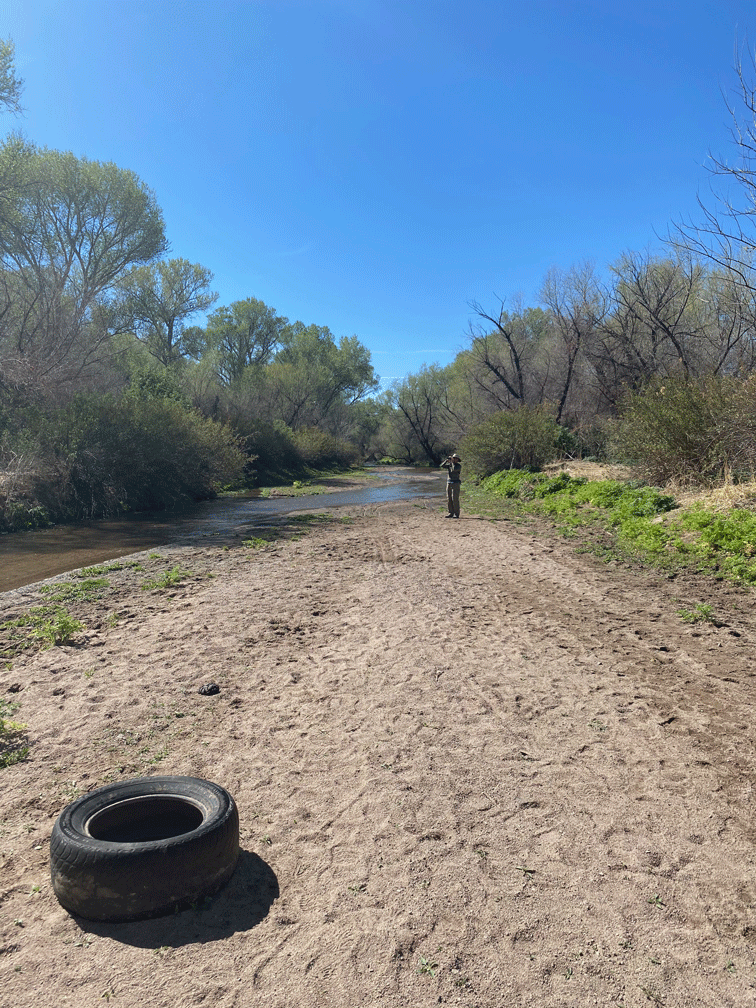
The Santa Cruz River flows from Mexico through Tucson, and although some sections don’t have any water, treated waste water is added to sections within Tucson. We accessed the river bank by walking along “The Loop” shared pathway and cutting down some informal trails. The day that this photo was taken, we were searching for a Gray Hawk and came upon this scenic view, (as long as you look in the right direction and avoid looking at garbage and debris that has been deposited after a flood.) There was a Cooper’s Hawk sitting in the middle of the tree, which Doug took many photos of with his bigger camera, but that decided to fly off just as he took this one with his iPhone. You can just make out the hawk in the photo below if you know where to look.

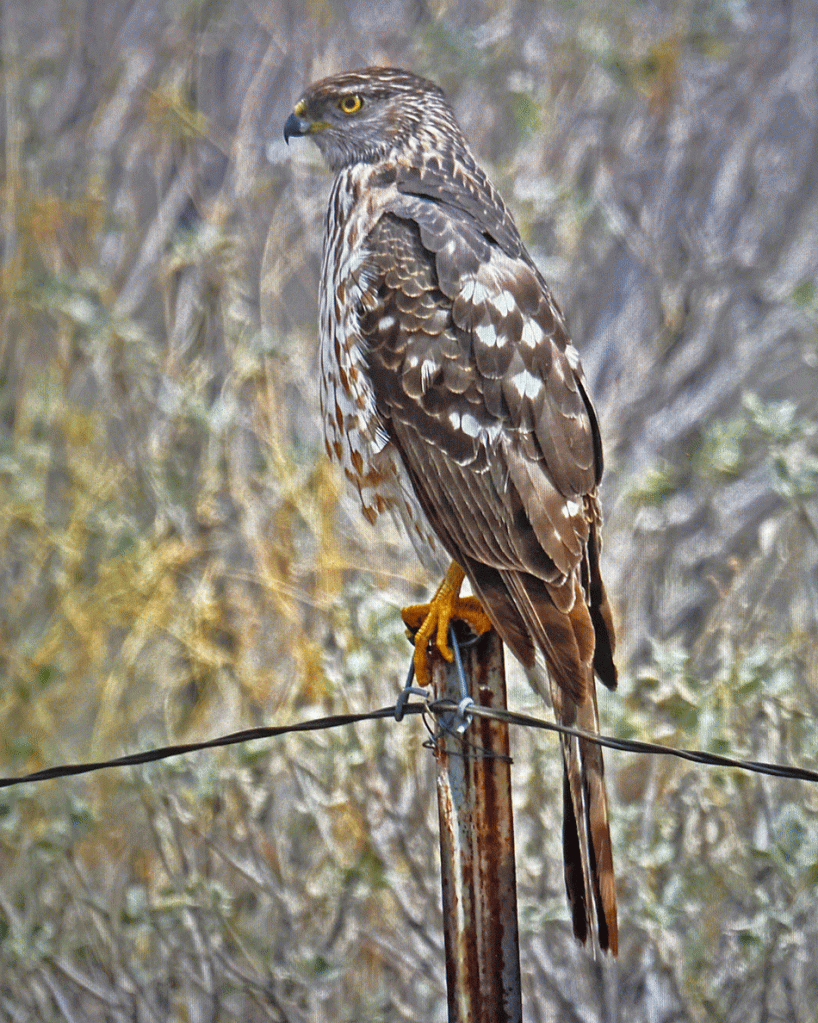
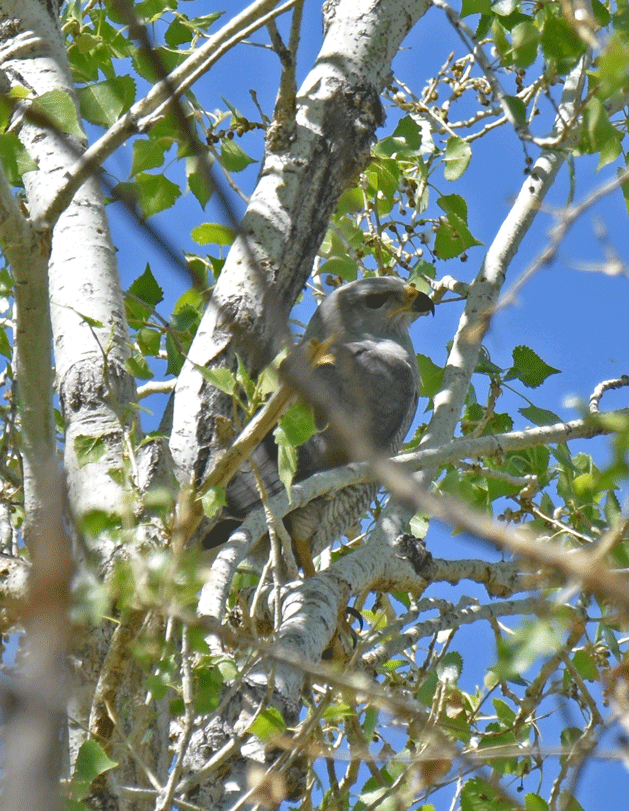
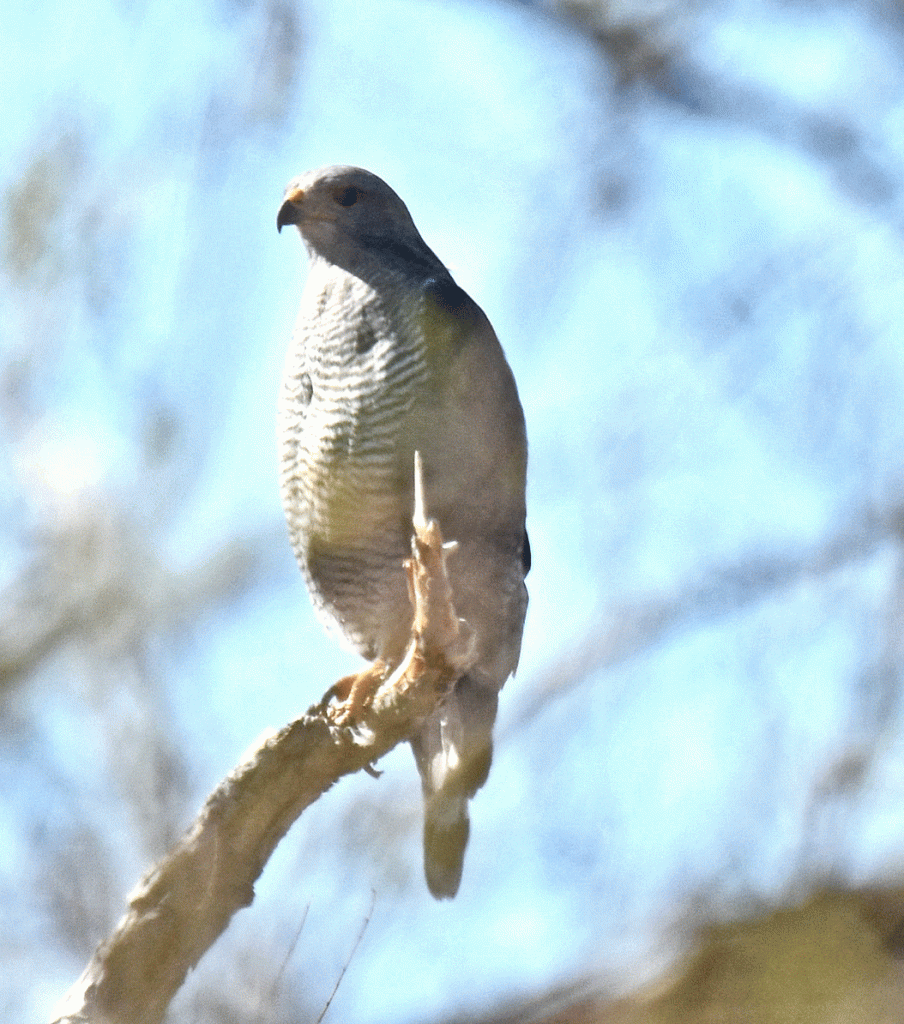
So no Gray Hawk that day, but about a week later we returned and found a different access to the water and were rewarded with some quick views, mostly of the Gray Hawk flying away. It stopped long enough in a distant tree for Doug to get this photo. Gray hawks are rare and very local at only a few locations near the Mexican border. Apparently there are only about 100 nesting pairs in the United States.

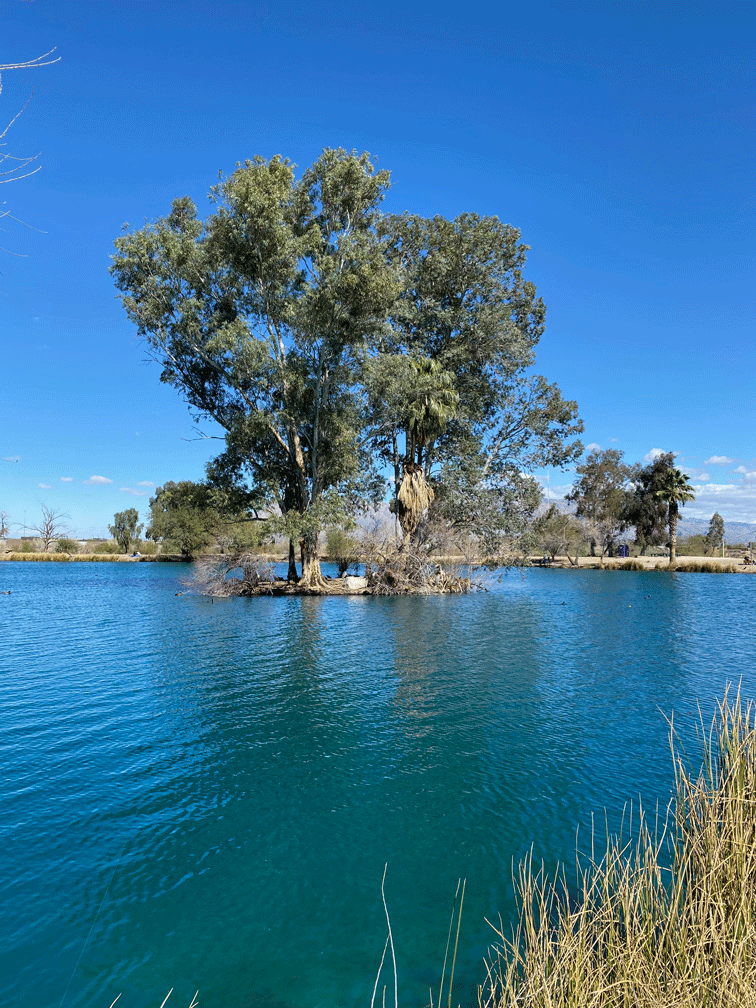
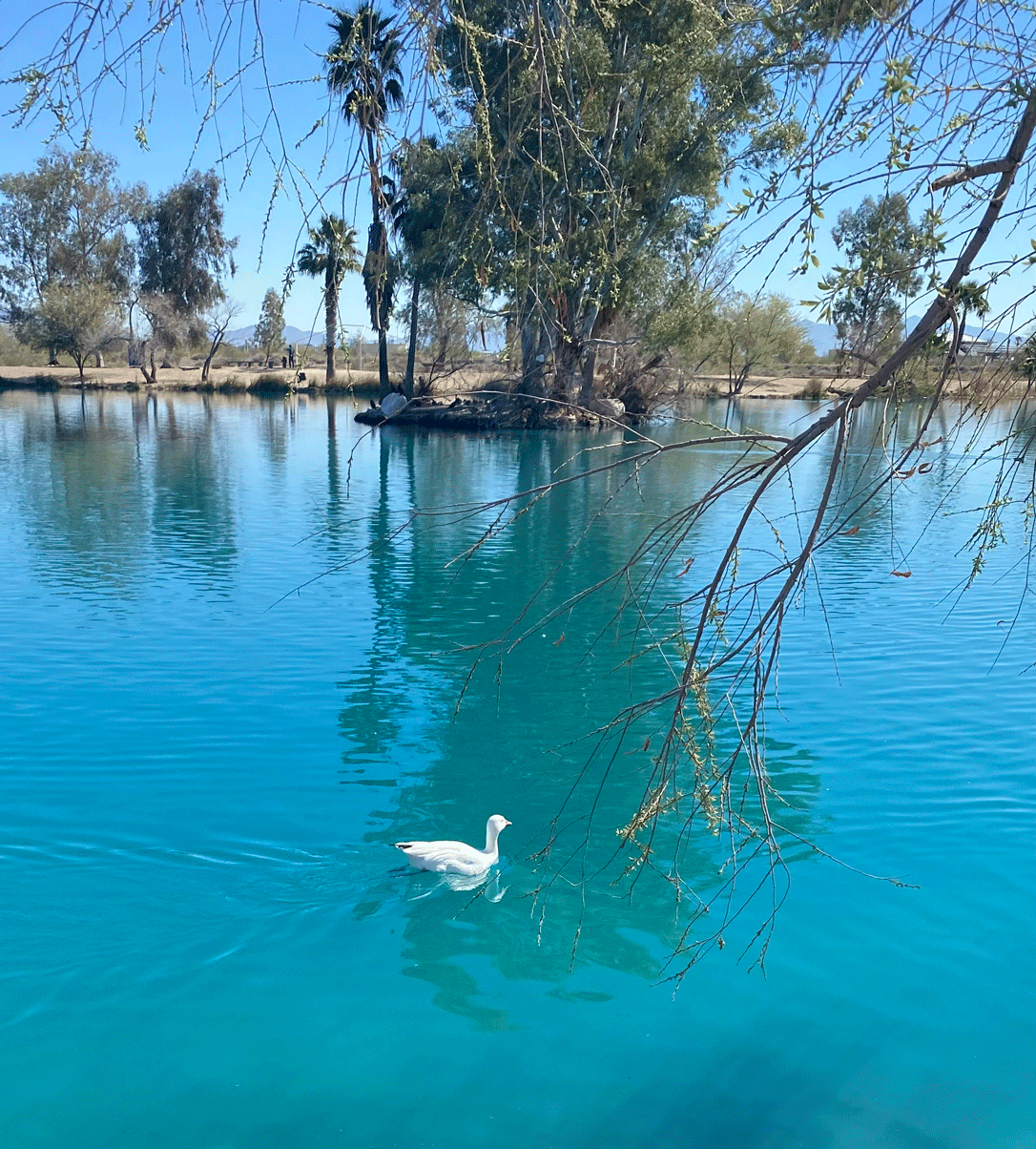
After our success with the Gray Hawk, we drove a short ways to Silverbell Lake in Christopher Columbus Park to see the birds there. The lake has been artificially coloured (not sure why) and is full of fish (or we think so because of all the people fishing from shore.) The pretty goose in the right photo also looks surreal, and sort of is, because its a Snow Goose that has decided to take up residence.

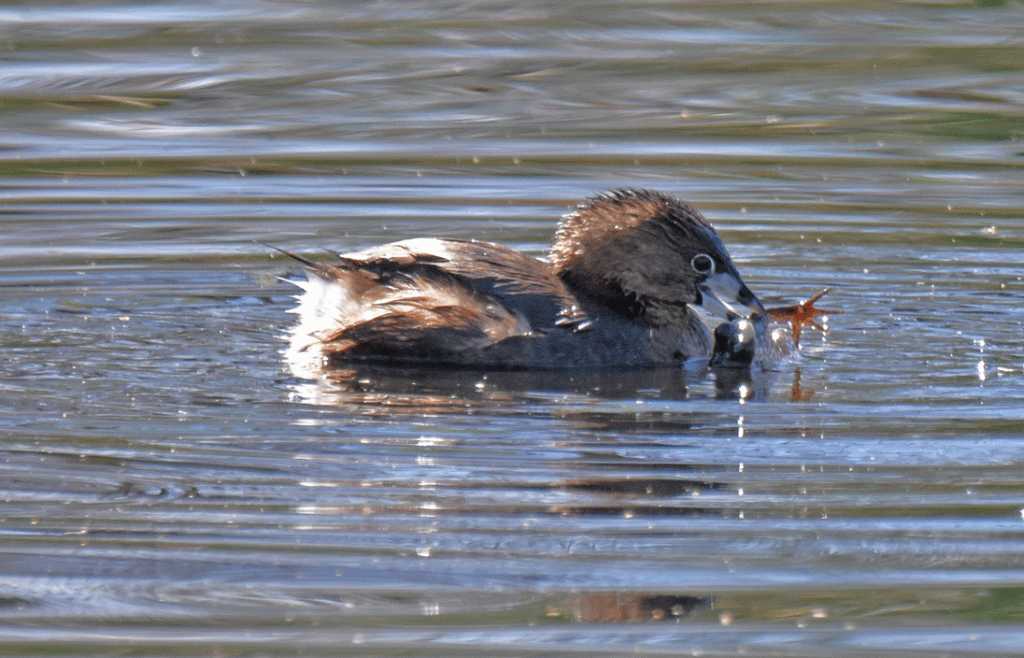
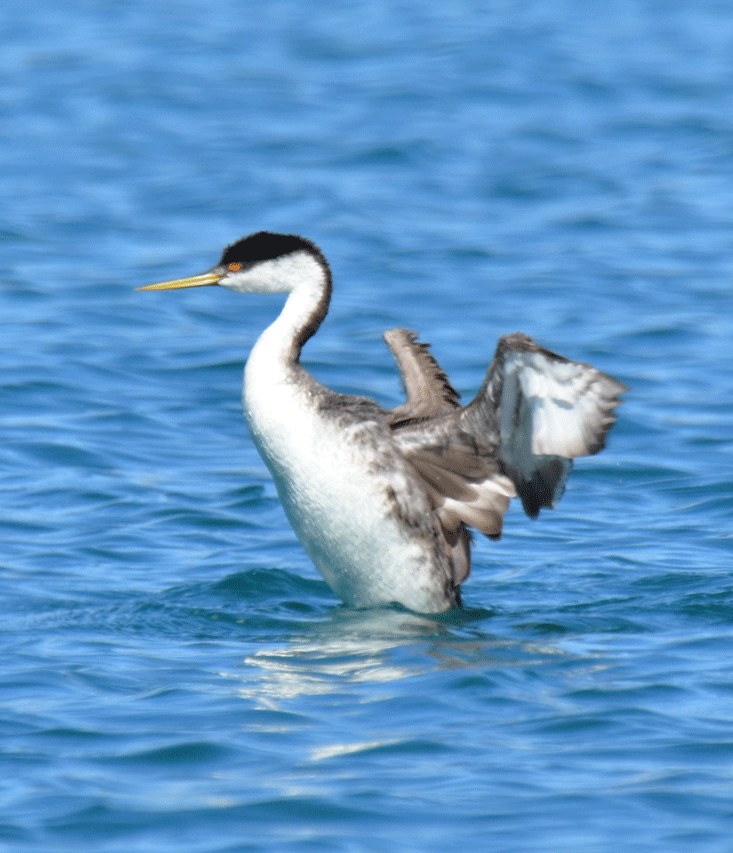
A Western Grebe was also enjoying the lake.

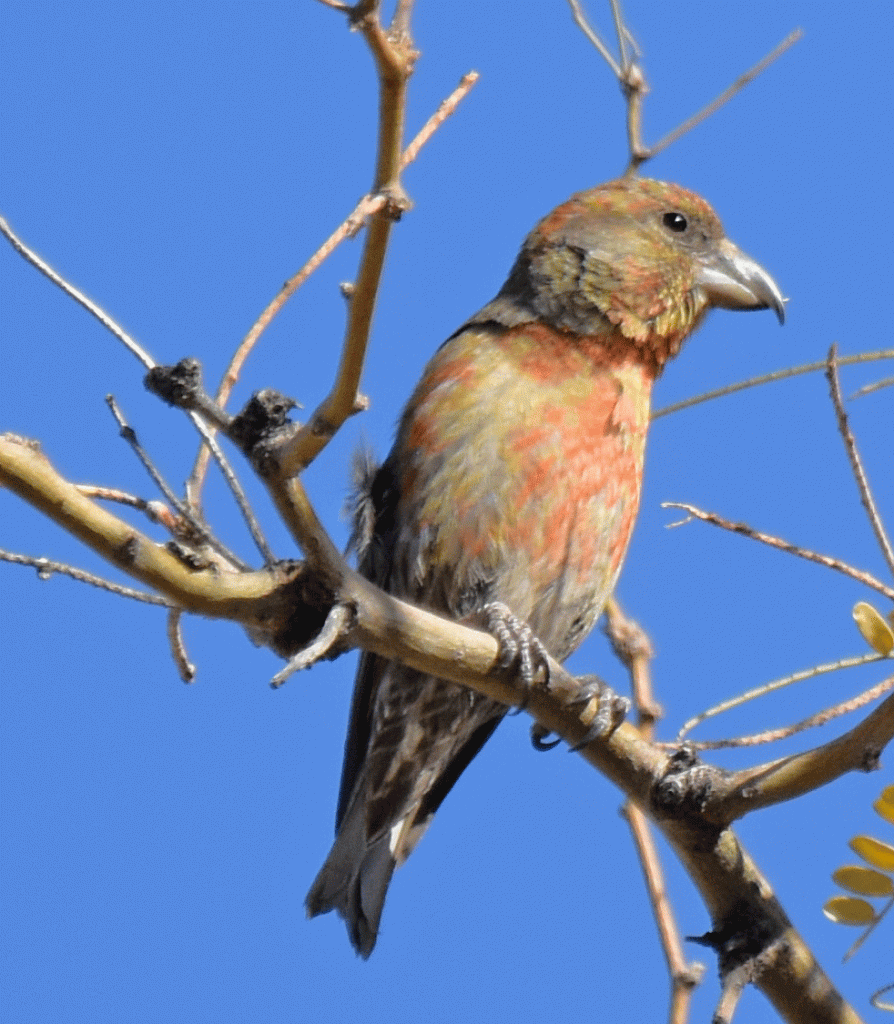
We made another visit to Reid Park in central Tucson. We were there especially to see a couple of Red Crossbills,…

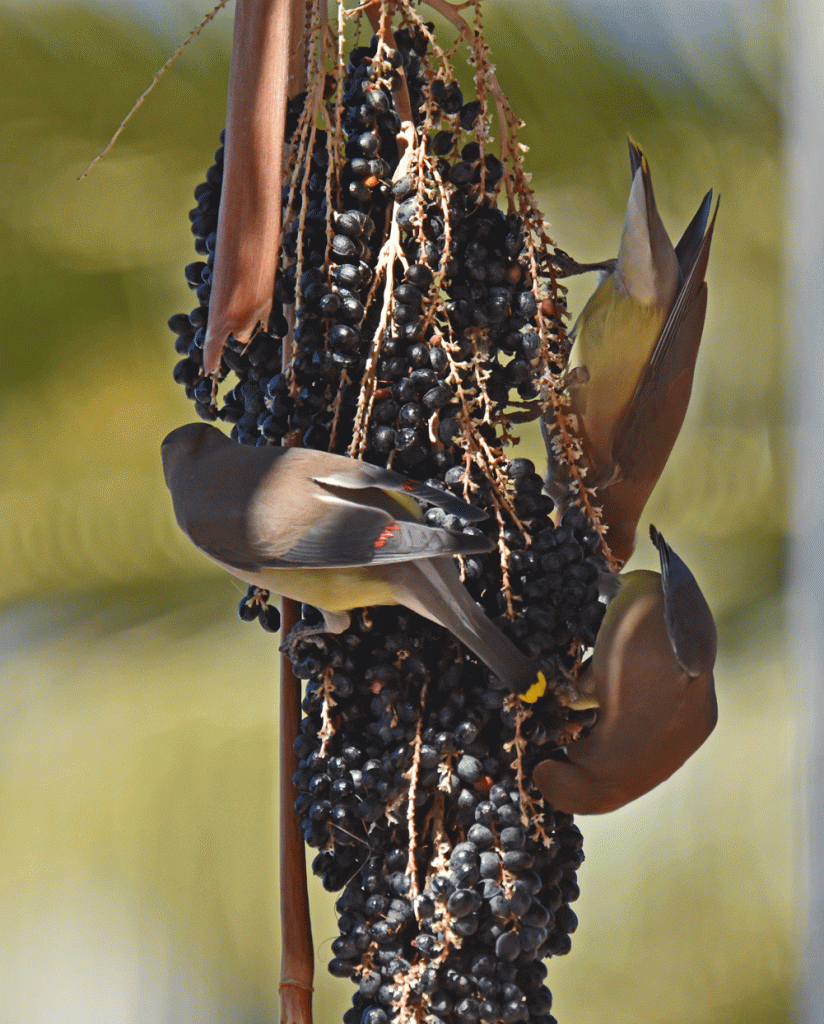
… but were also impressed with these Cedar Waxwings feeding on Palm Tree fruit.

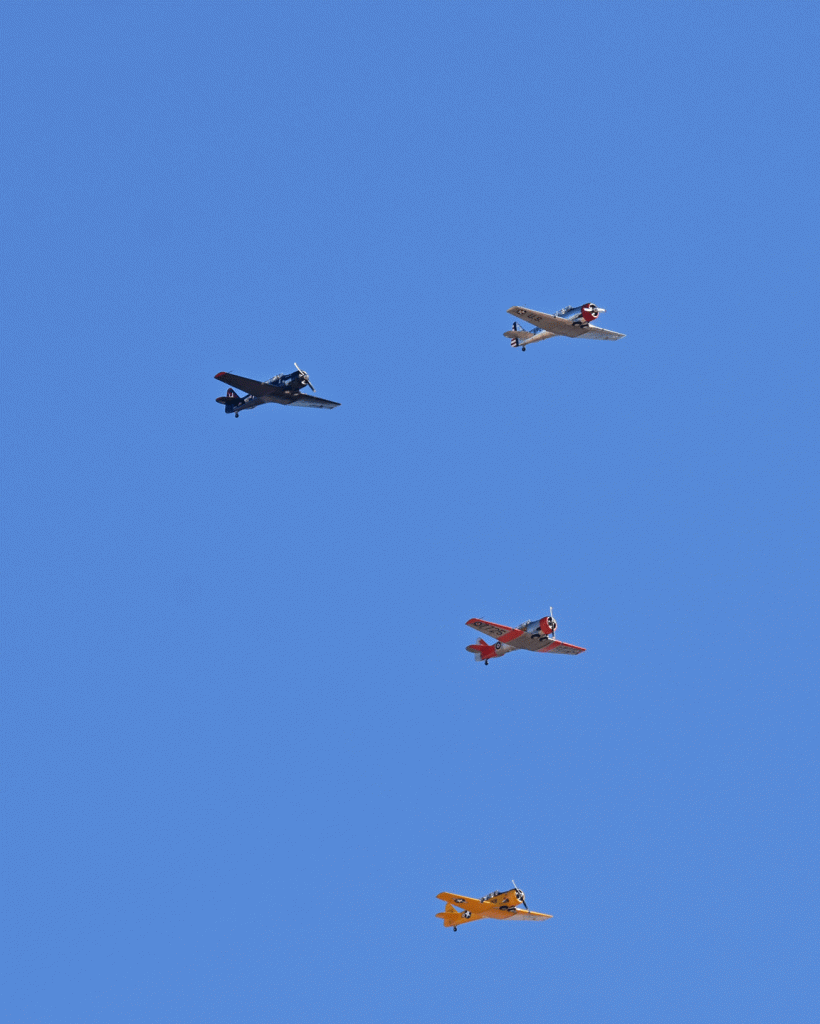
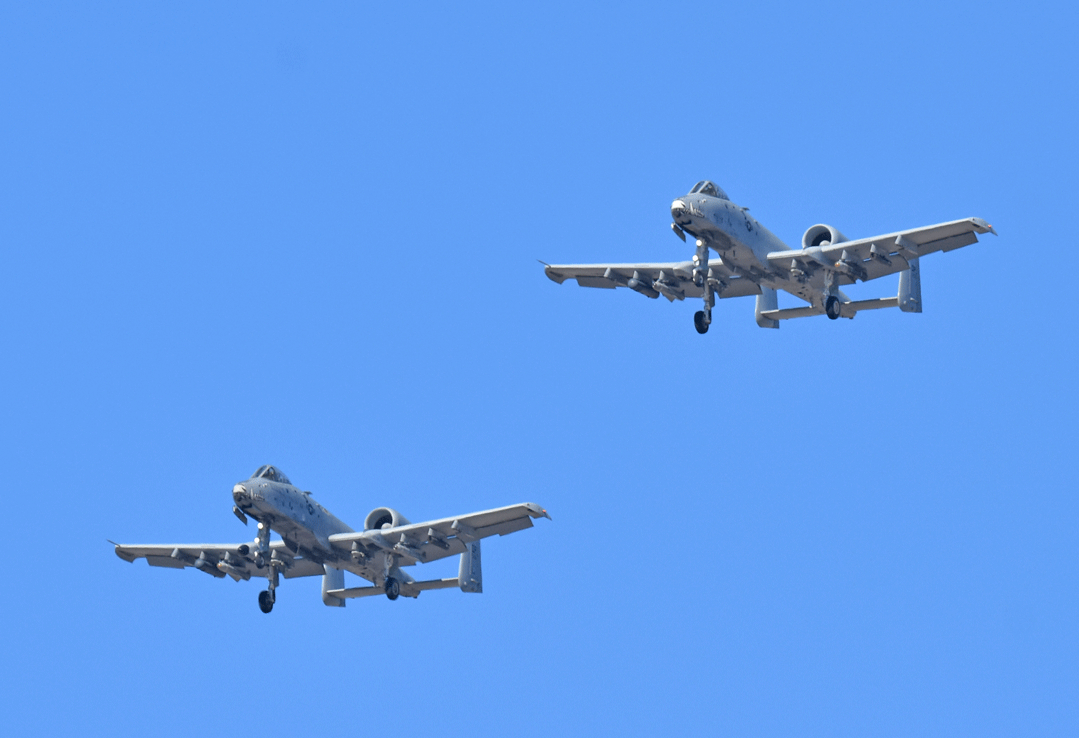
Doug is always keen to go to Reid Park because there is a good chance of catching military aircraft flying over on their way to or from Davis-Montham Airforce Base. Here are some photos of those other “birds.” The two aircraft on the left are A10s, known as “Warthogs.” The A-10 is a very distinctive-looking, slower flying aircraft, designed for ground attack. The aircraft on the right is a EC130-H Hercules, which is cargo plane designed for electronic warfare. If you look closely you can make out the wire antenna array beyond the tail, which is designed to jam electronic signals.

We also looked to birds every time we visited the Arizona-Sonora Desert Museum. One early morning in February we were lucky enough to see a couple of roosting Black Vultures. The vultures were sitting on the structure that housed the museum’s captive vultures, separated from them by only a few metres and a wire netting. It’s unclear about why they were there; were they working out an escape plan, or taunting the captive ones? A maintenance worker told us they had been there for about three nights. Vultures wait until the air warms up enough so they can use the rising air thermals to gain height. When we looked for them a half hour later, they were gone.

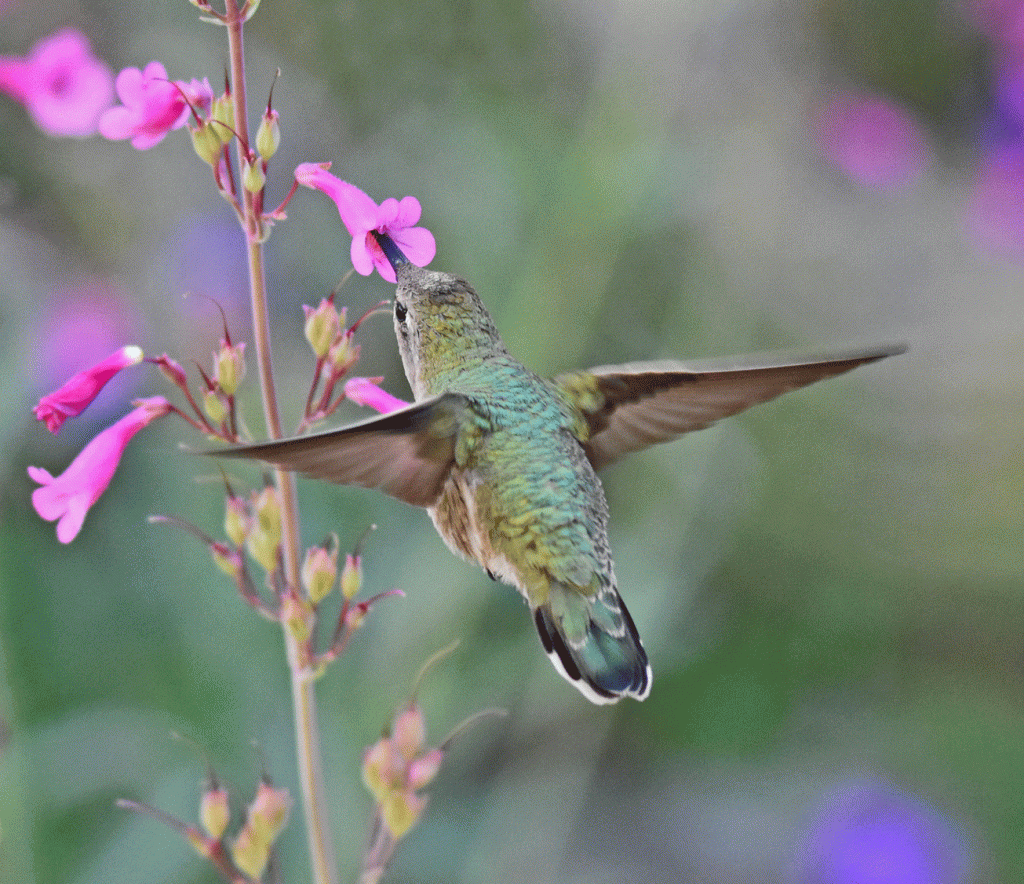
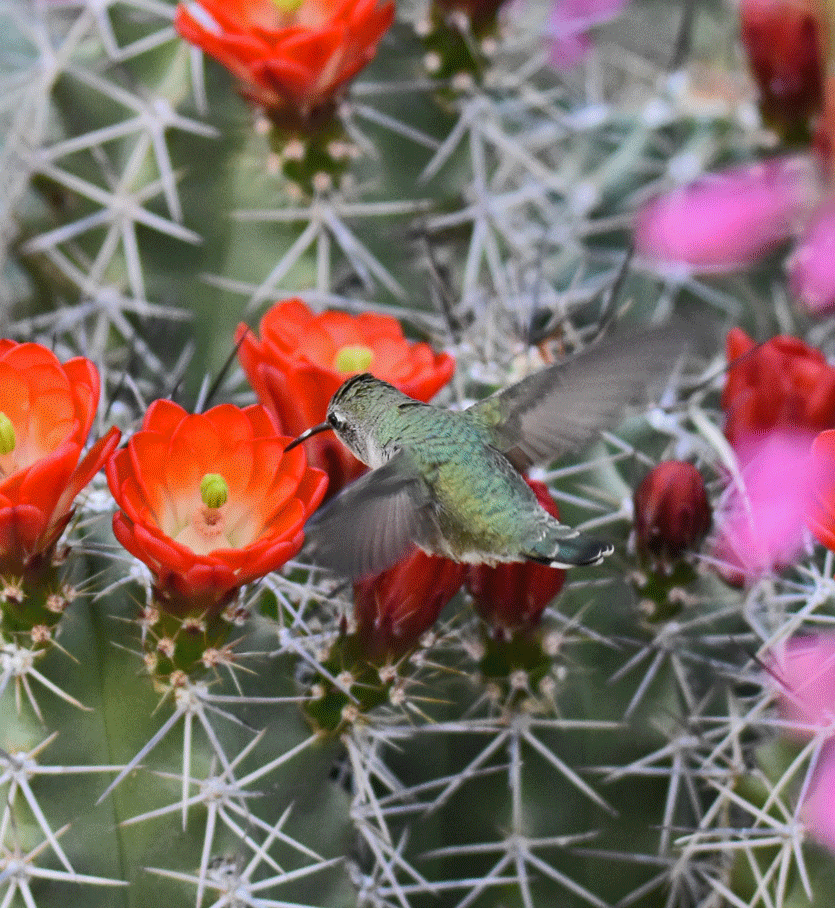
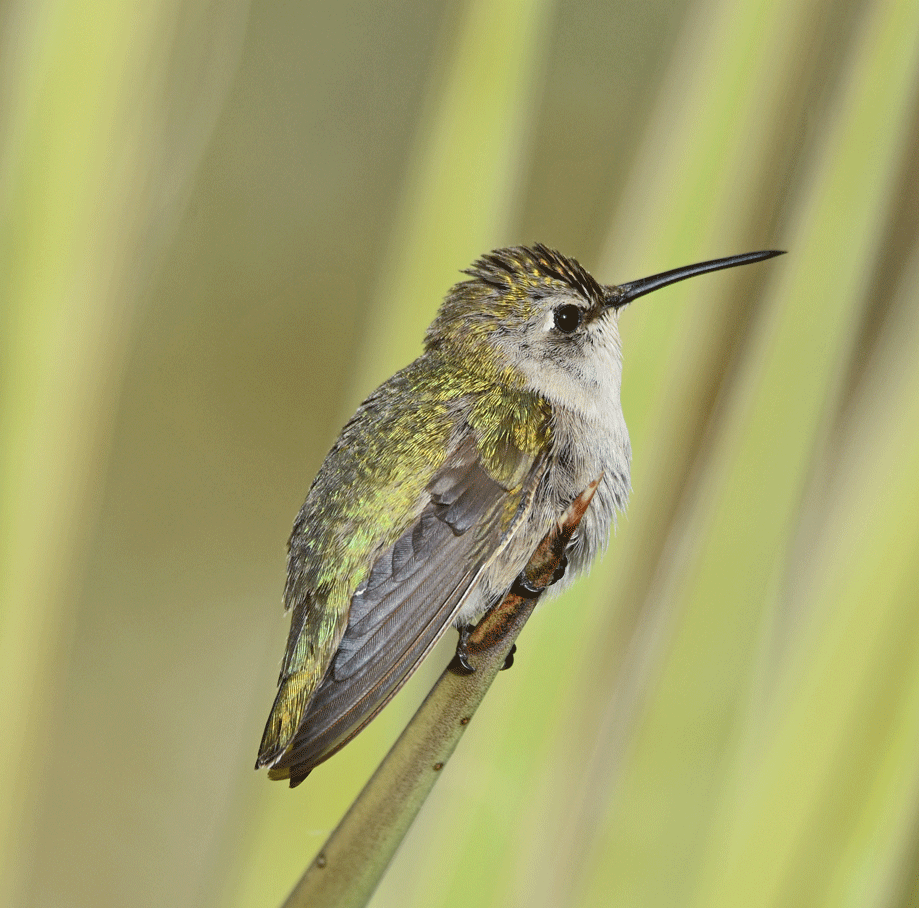
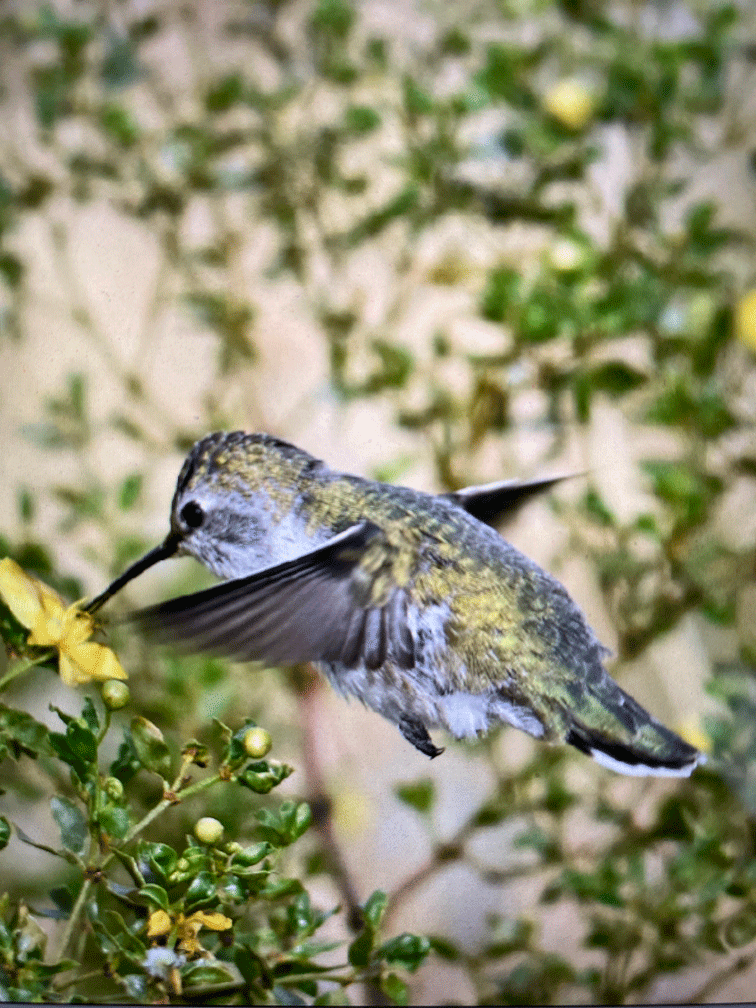
The hummingbirds love the gardens at the Desert Museum, especially since many of their favourite flowers are planted there. Here’s a close-up of a female Costa’s Hummingbird.

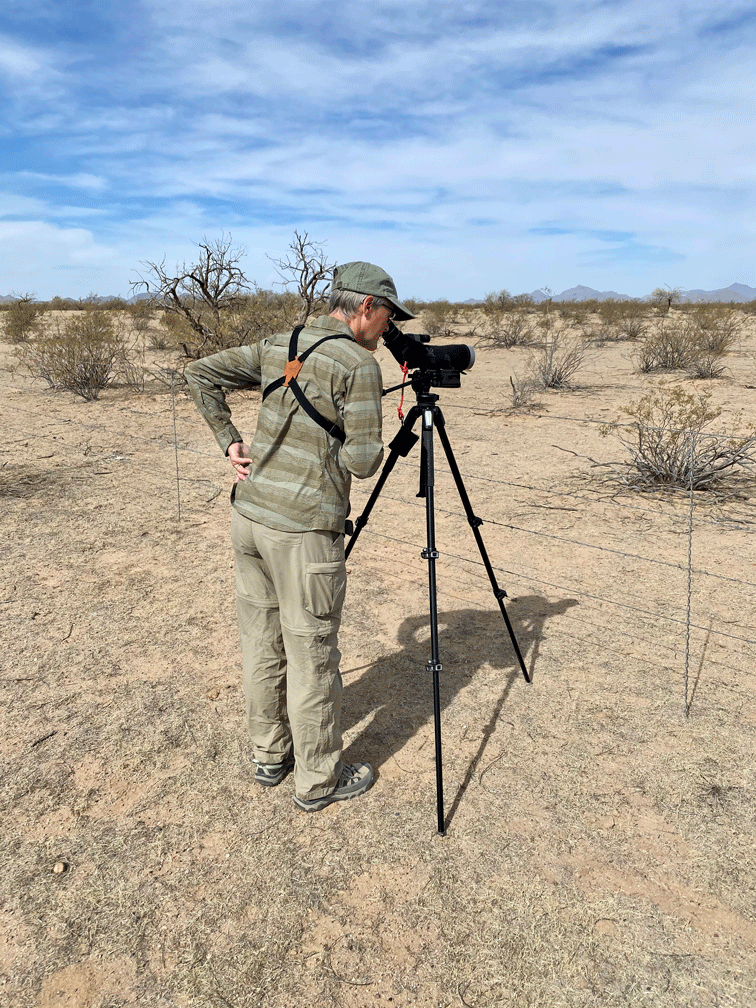
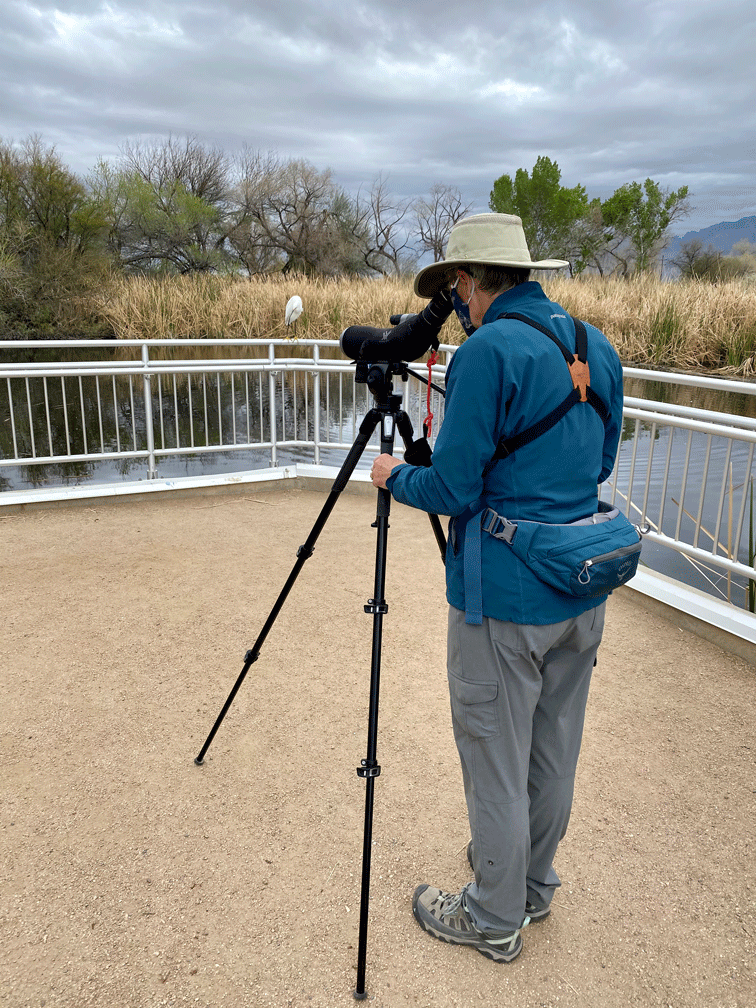
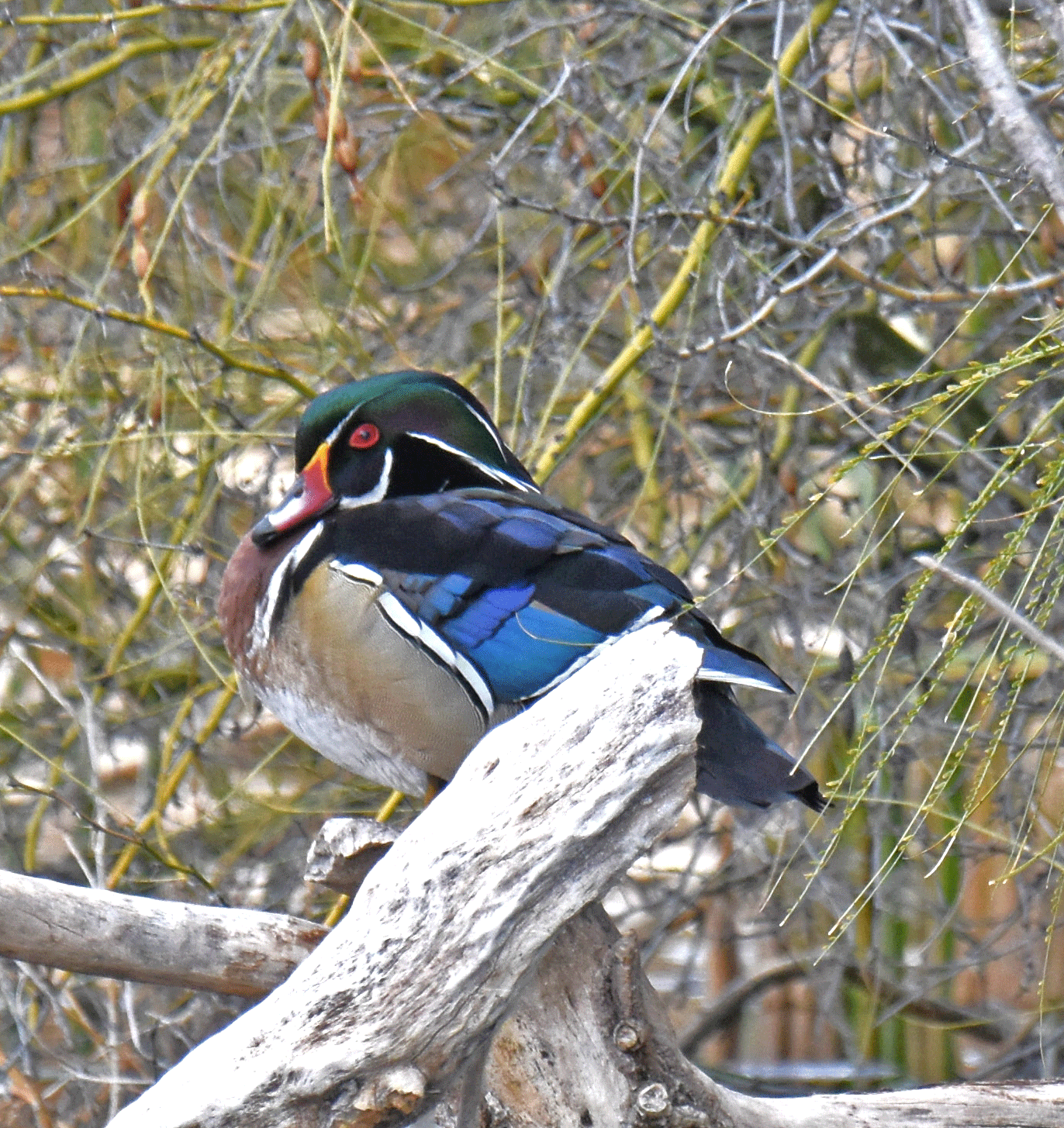
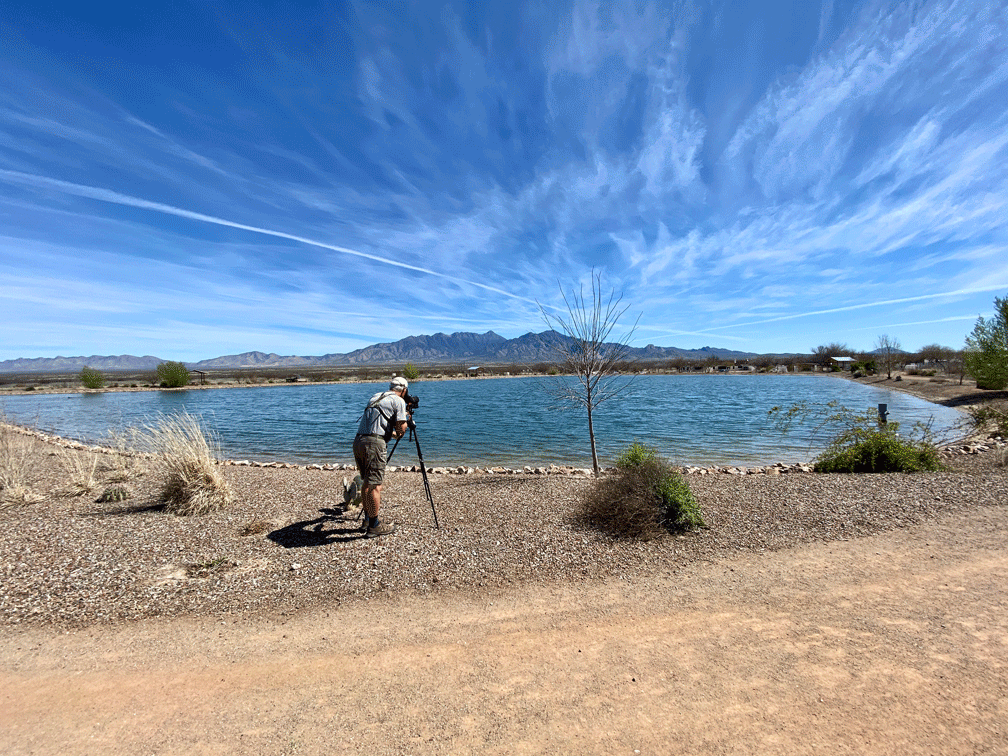
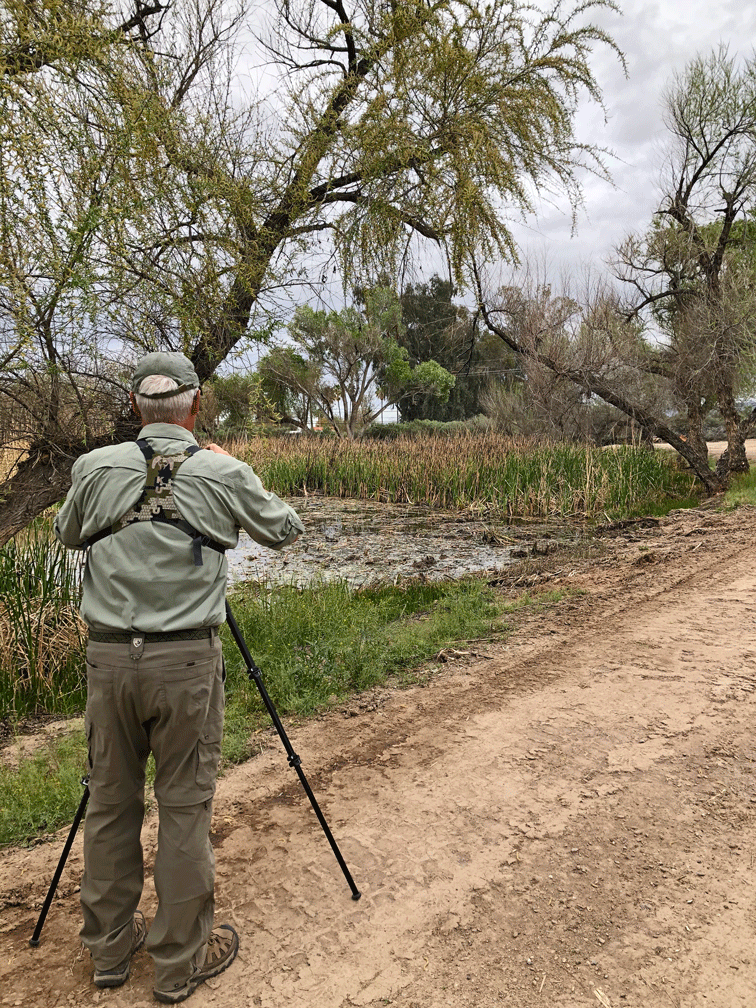
One last location to describe. We went to Sweetwater Wetlands several times in February. On this particular cooler, cloudy day, the Snowy Egret was putting on a good show and seemed quite comfortable standing on the railing. We took plenty of pictures of it, but still wanted to see the other birds in the pond. You can see Wendy looking through the ‘scope and with the unperturbed Snowy Egret on the railing. We were rewarded with a good view of this male Wood Duck.

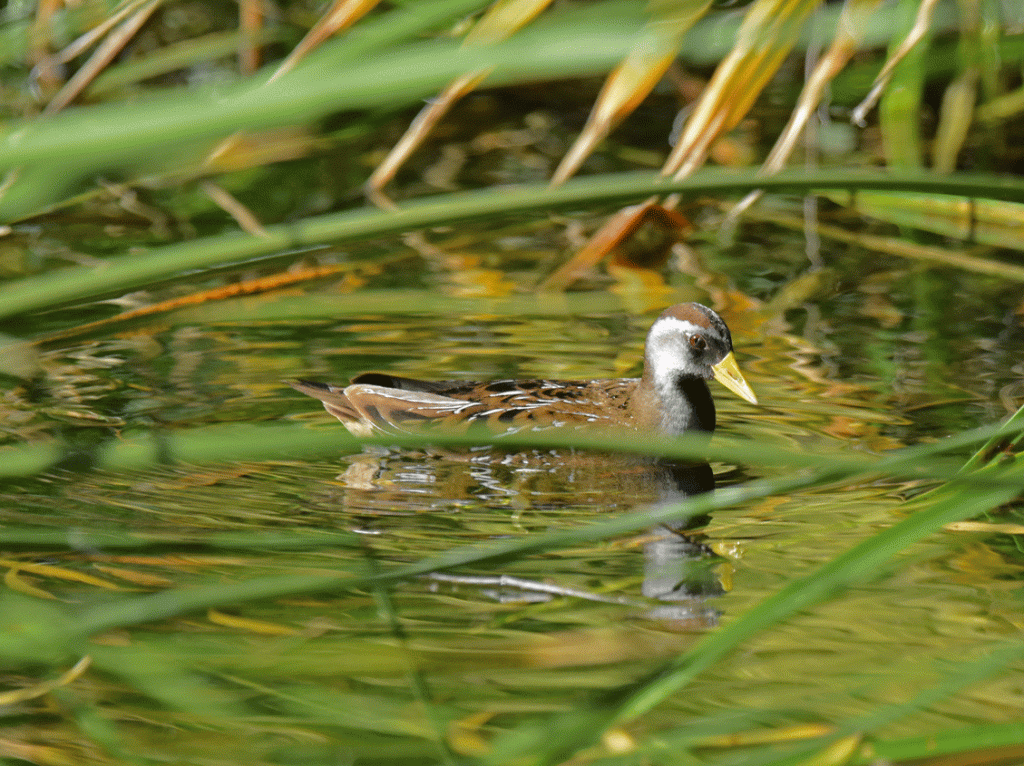
On another day, Doug caught this Common Gallinule vocalizing. Gallinules are in the same family as American Coots, but unlike coots, they are generally solitary. They also never make it as far north as BC.

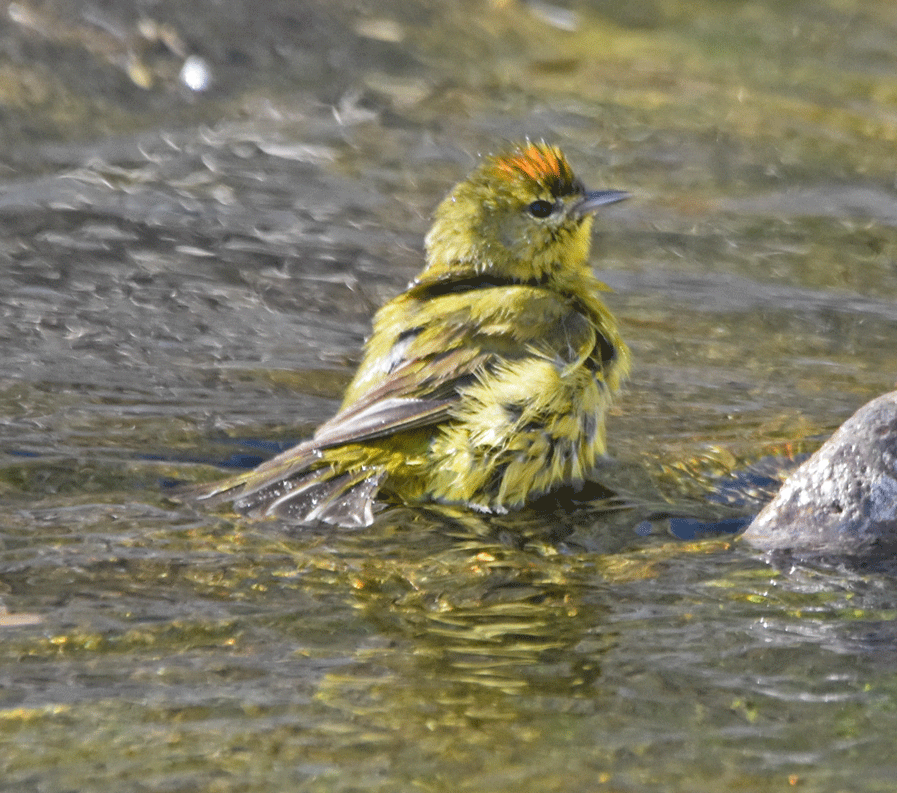
This little bird was enjoying a bath in the stream at the entrance to the wetlands. Its the most unusual sighting of an Orange-crowned Warbler that we’ve had.

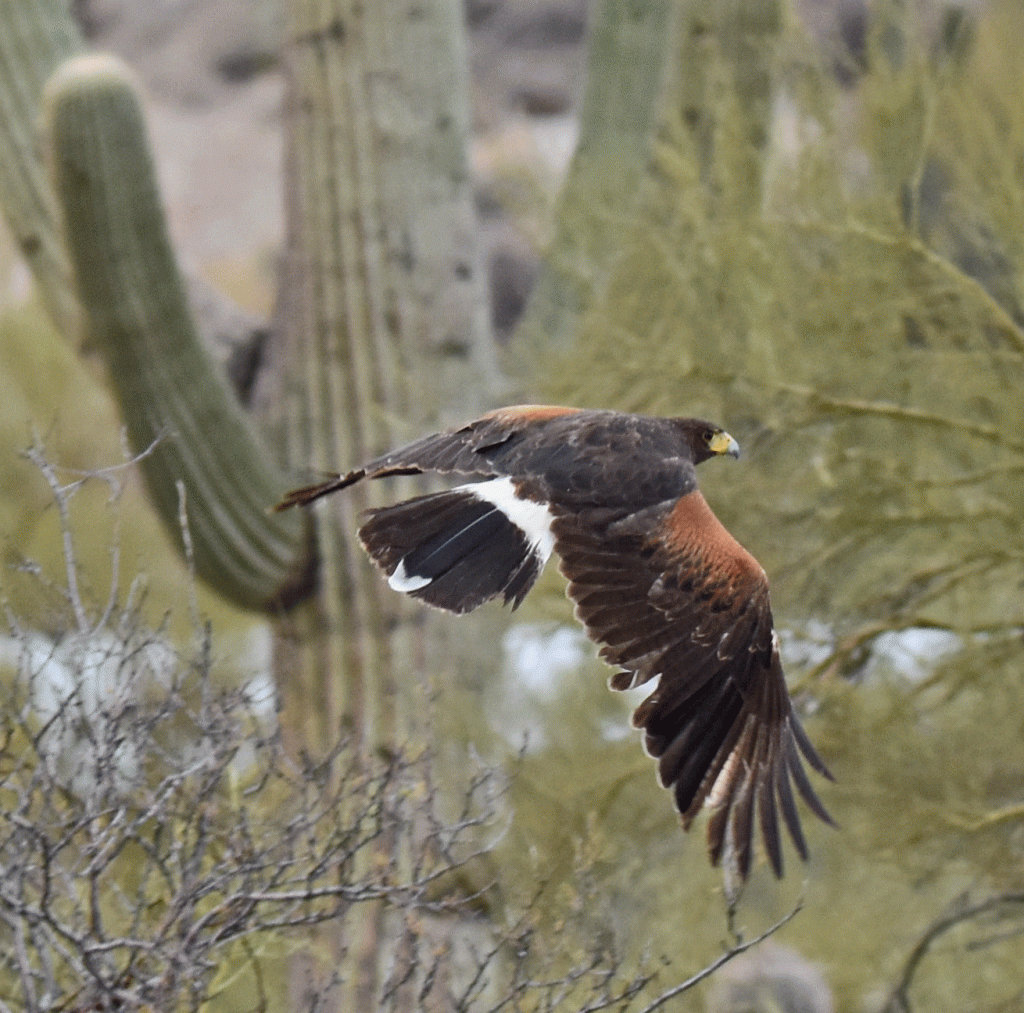
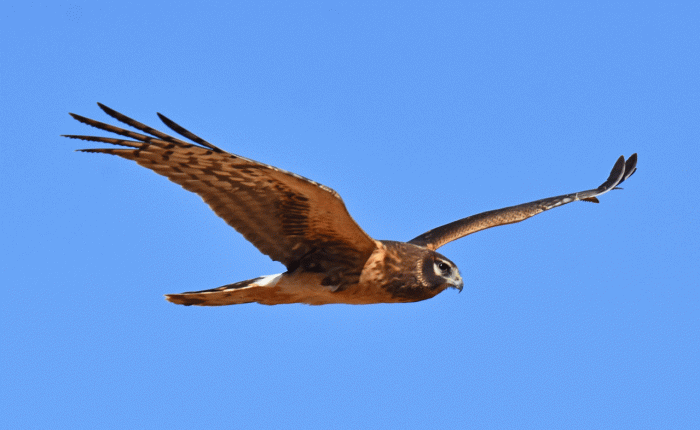
Almost every time we visit the wetlands, we see a Northern Harrier. This time it was hunting right near us and Doug was able to catch it in flight. Notice the distinctive white rump.

There is plenty of wildlife at the wetlands. This young raccoon was startled when it saw us. Its buddy had just darted out of the reeds and scampered by and it was deciding whether to follow or retreat. It chose to return to the reeds.

We see so many birds here. We hope you’ve enjoyed the accounts of our February sightings. We already have some fantastic photos for the March blog post, coming in a couple of weeks.

February in Arizona – Part 1

February in Arizona – Part 1

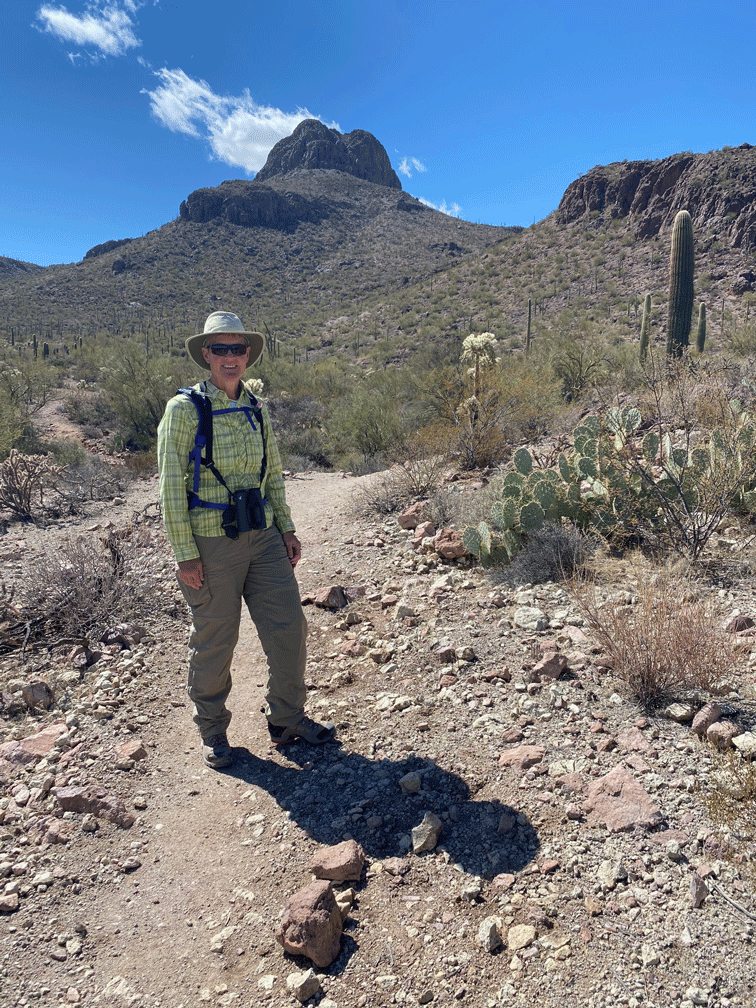
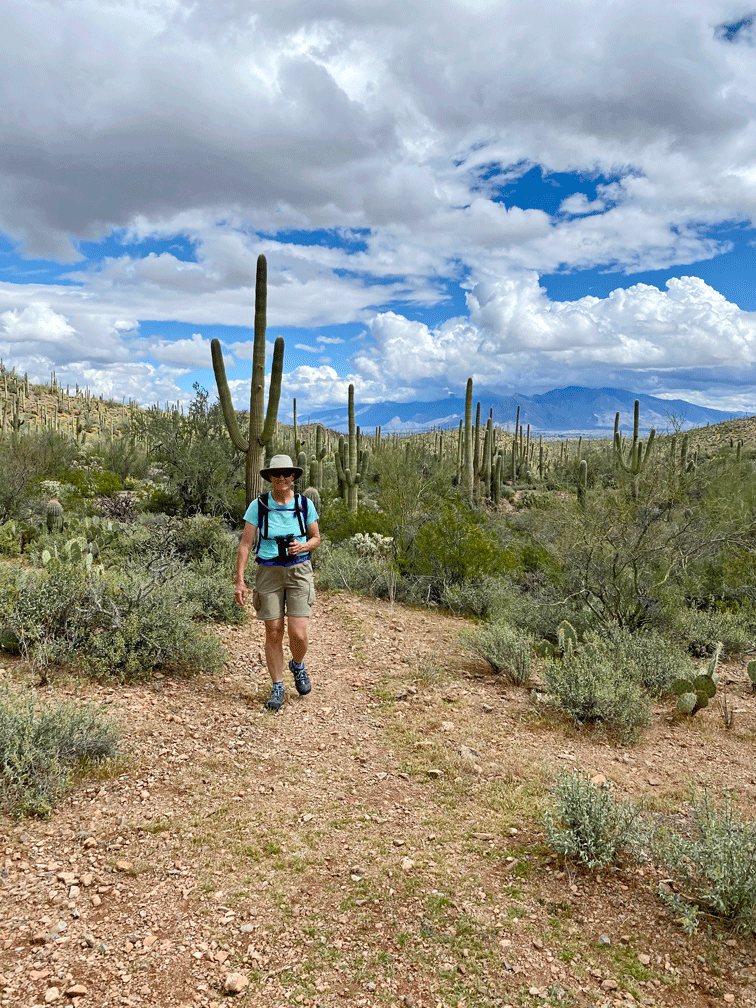
This blog is about our hiking and biking and happenings around our place here in Picture Rocks, just outside of Tucson, AZ. Part two will be all about our birding adventures.

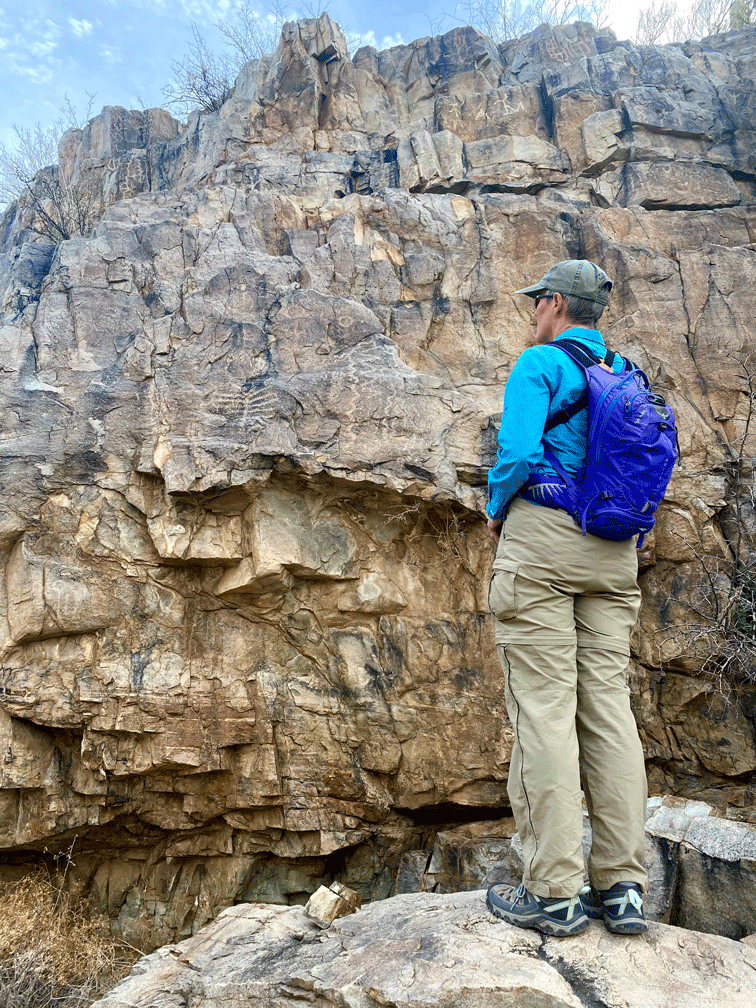
Our first hike of the month was a short one to some petroglyphs up King Canyon. The petroglyphs were created by the Hohokam people who lived in the deserts of southern Arizona and Northern Mexico from about 200 AD to 1500 AD. The petroglyphs cover both sides of the canyon, so the photo below show only a portion of them.

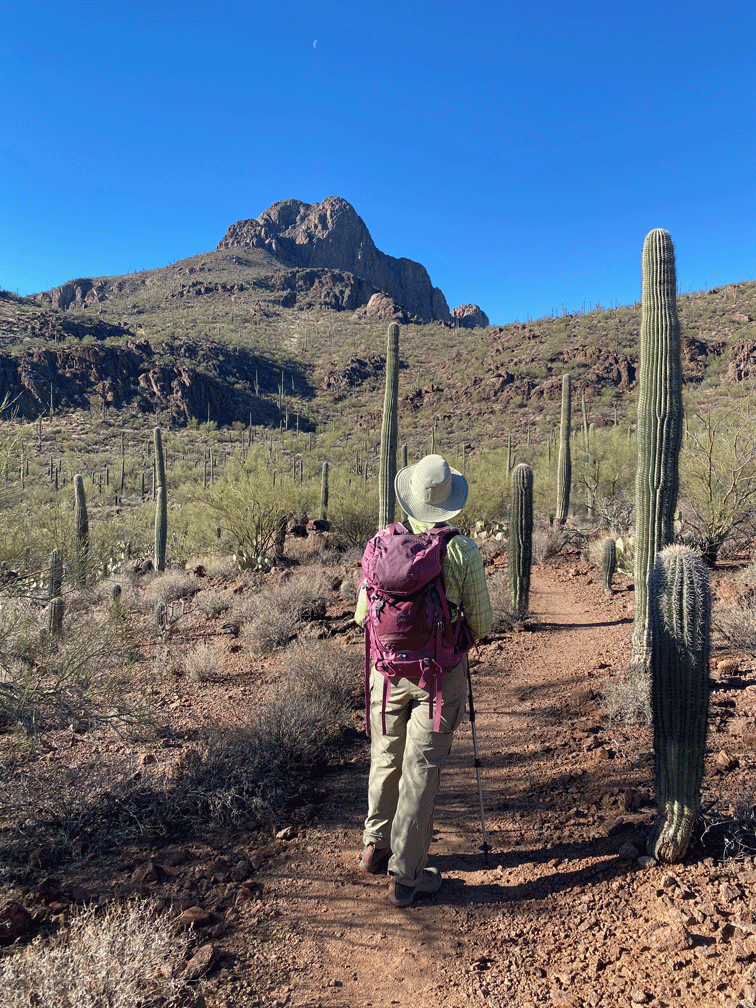
We revisited a peak that we can see from our place. Its official name is Safford, but is referred to as “Sombrero” because of its resemblance from the east to that type of hat. The photo below is of Sombrero from close to the trailhead.

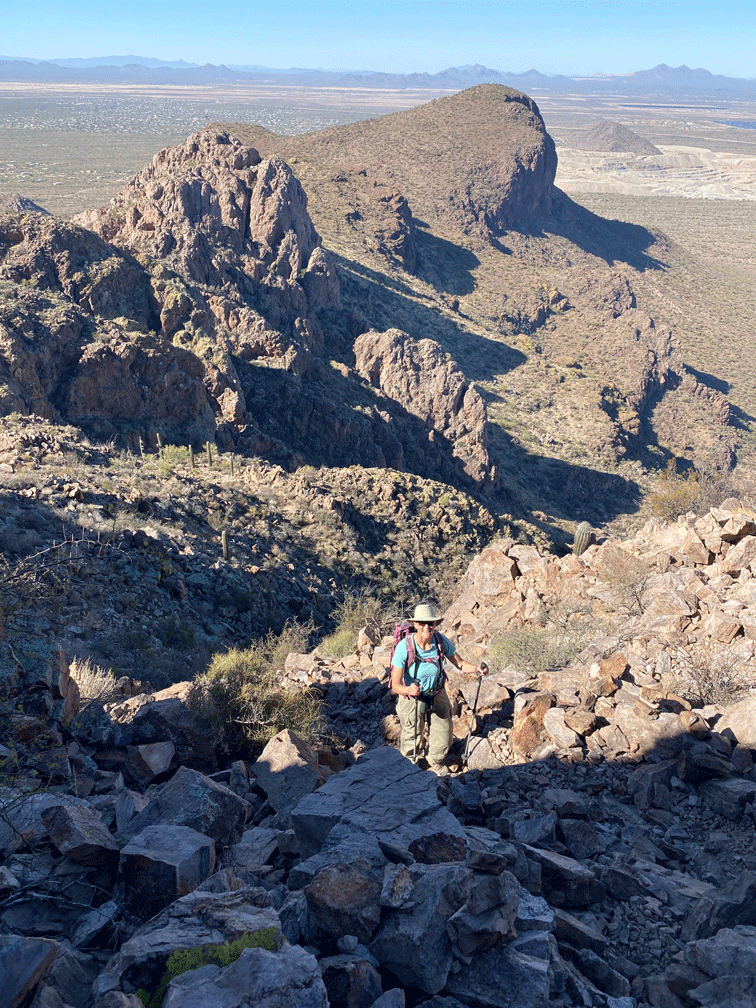
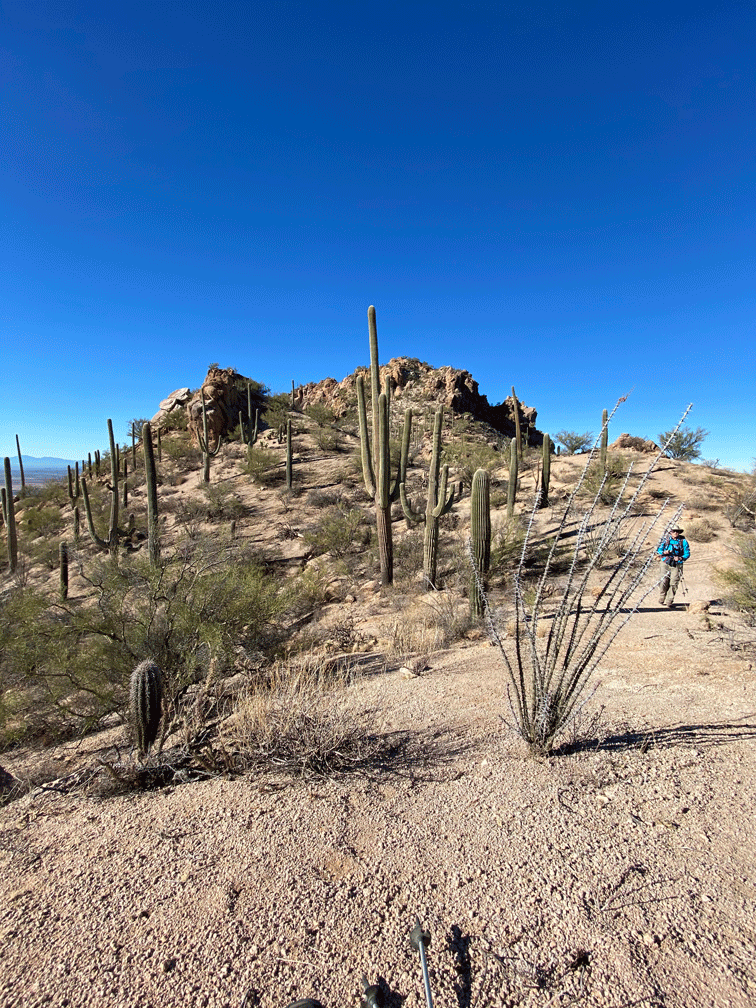
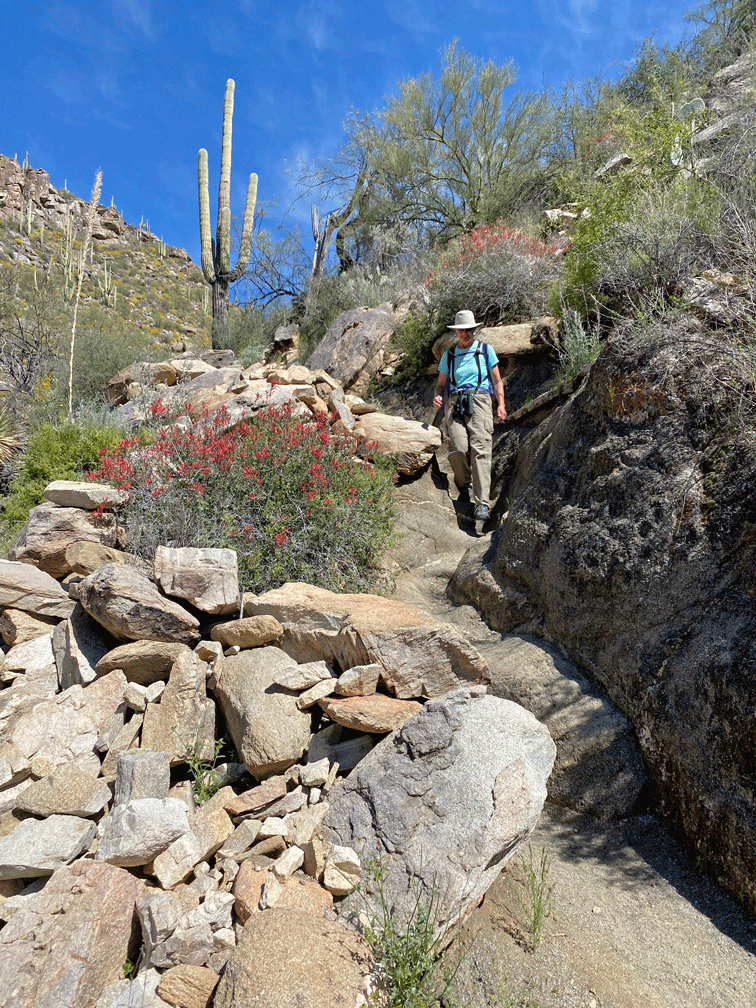
The trail winds around the mountain and up a weakness to the summit. Here Wendy is starting up the final gully. The prominent mountain behind her is Panther Peak, with its saguaro studded ramp.

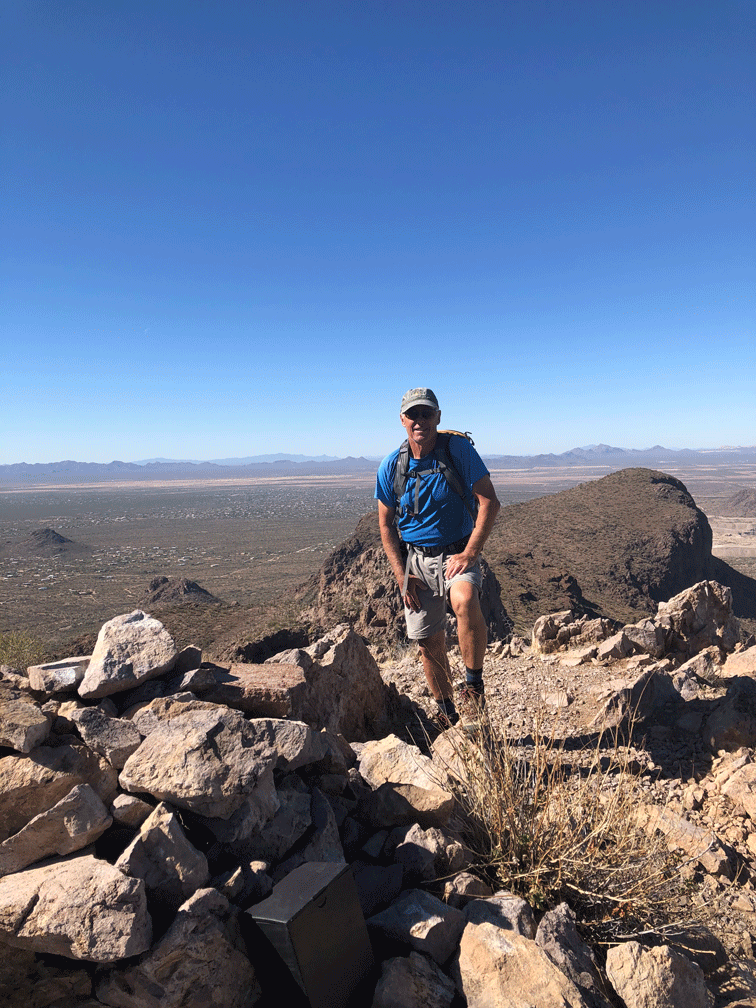
Here’s Doug at the summit. We could locate our fifth-wheel with our binoculars.

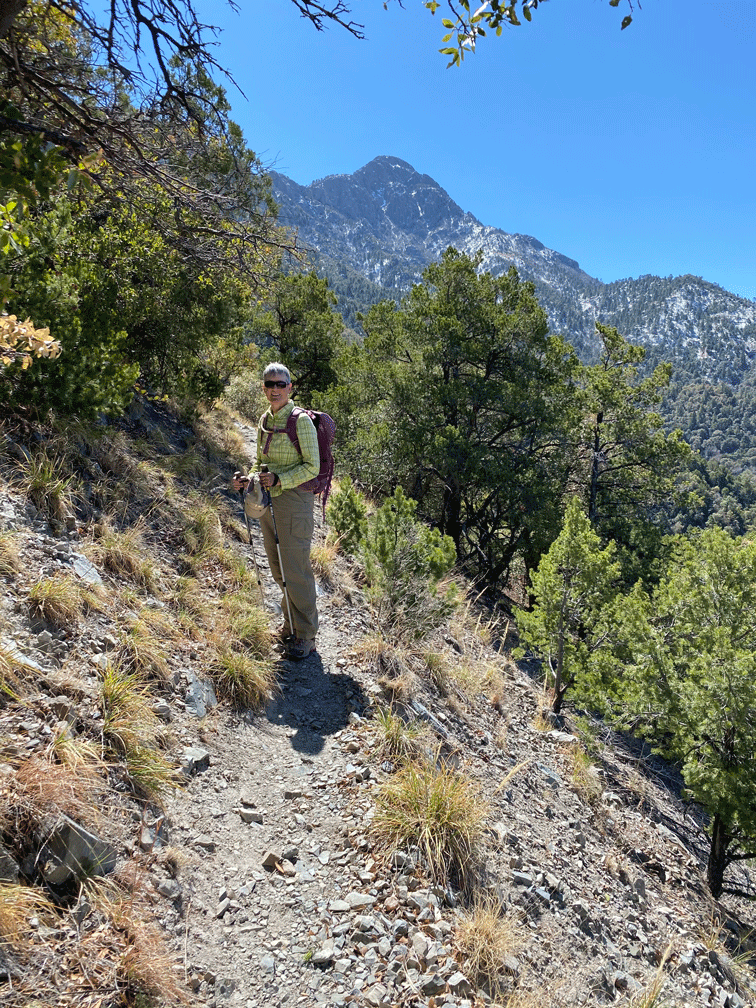
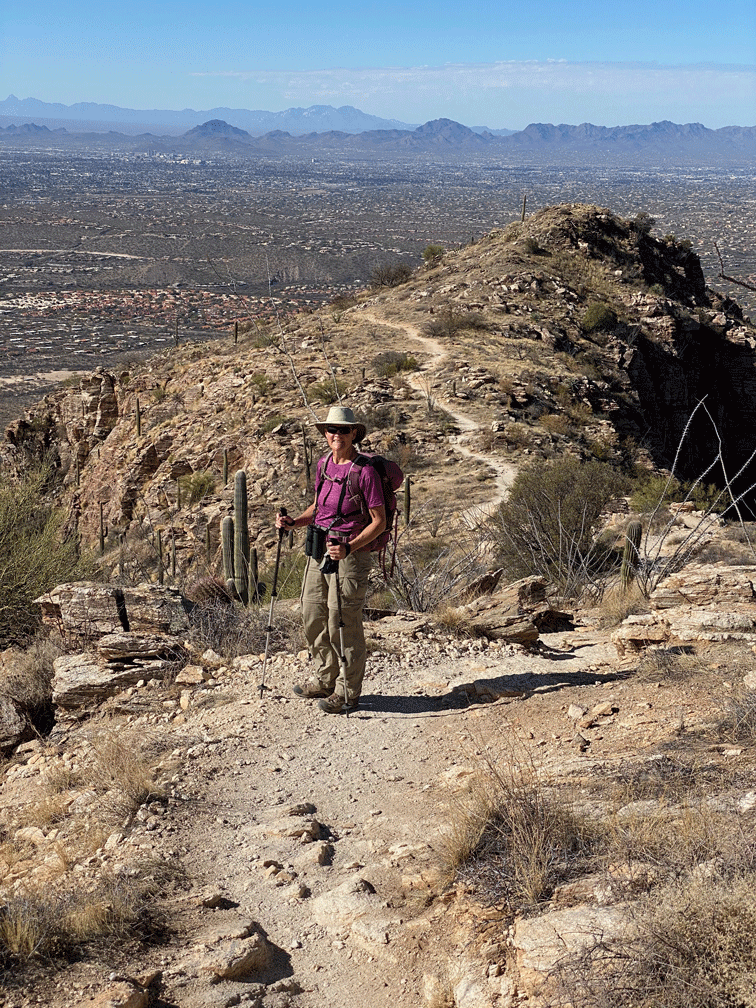
Another February hike was Blackett’s Ridge in Sabino Canyon Recreation Area in the Santa Catalina Mountains. The out-and-back trail climbs with several well-graded switch-backs to the ridge and then continues gradually over false summits to the high point. The photo below is looking west over Tucson to the Tucson Mountains. By the time we were back to the truck, we had hiked 10 kilometres.

Another day we discovered a shorter (5 km) hike on the Lower Javelina loop in the Tortolita Mountains.

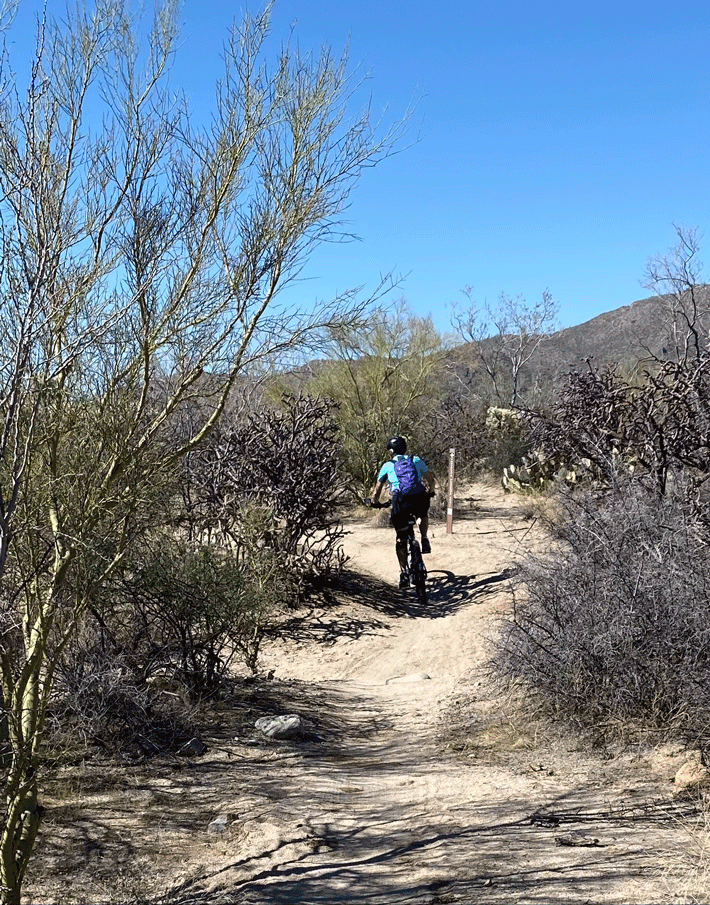
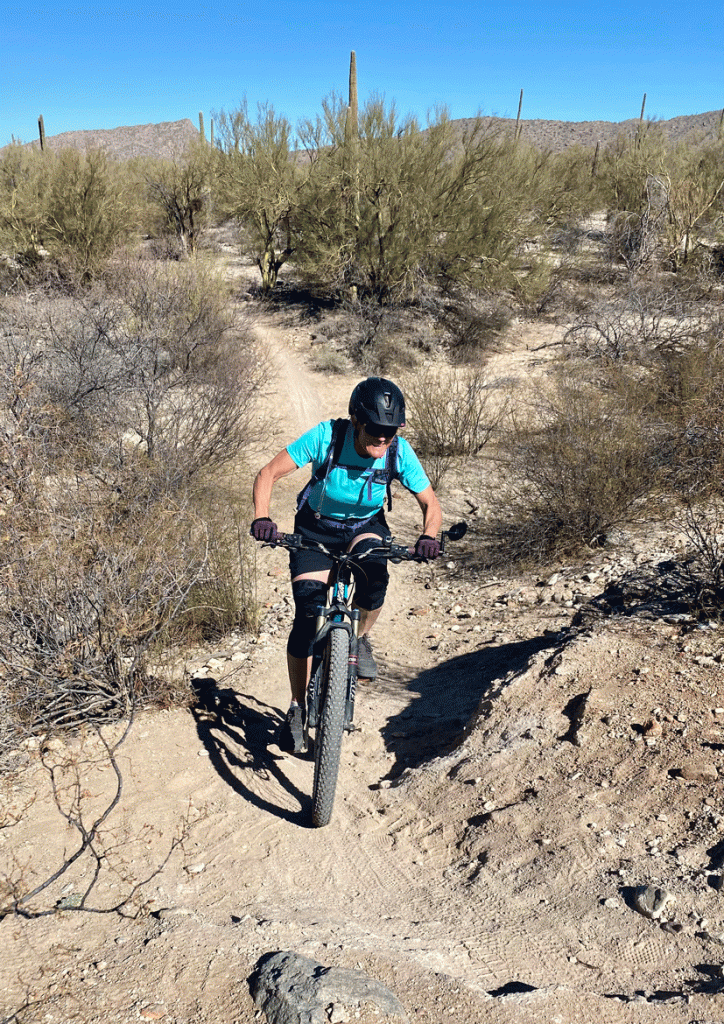
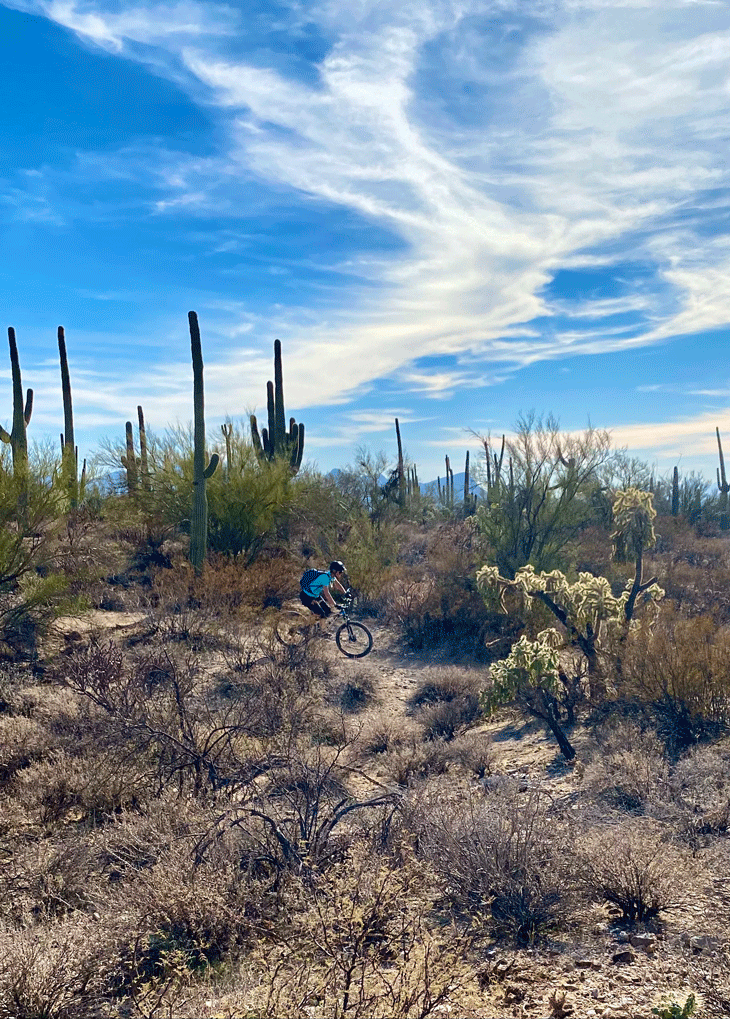
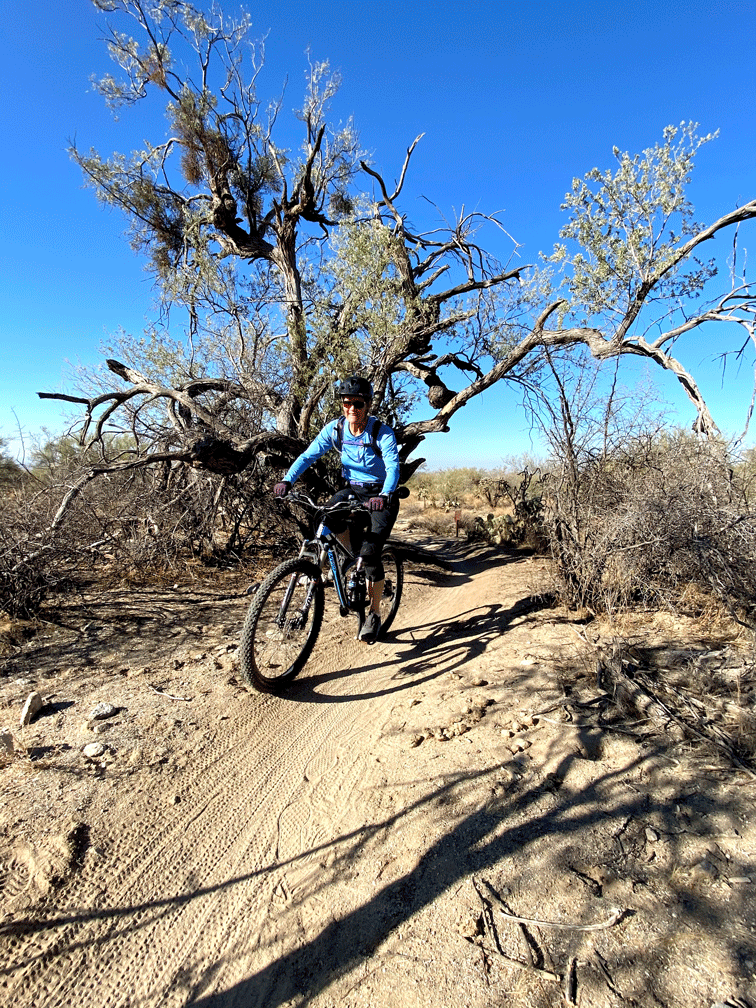
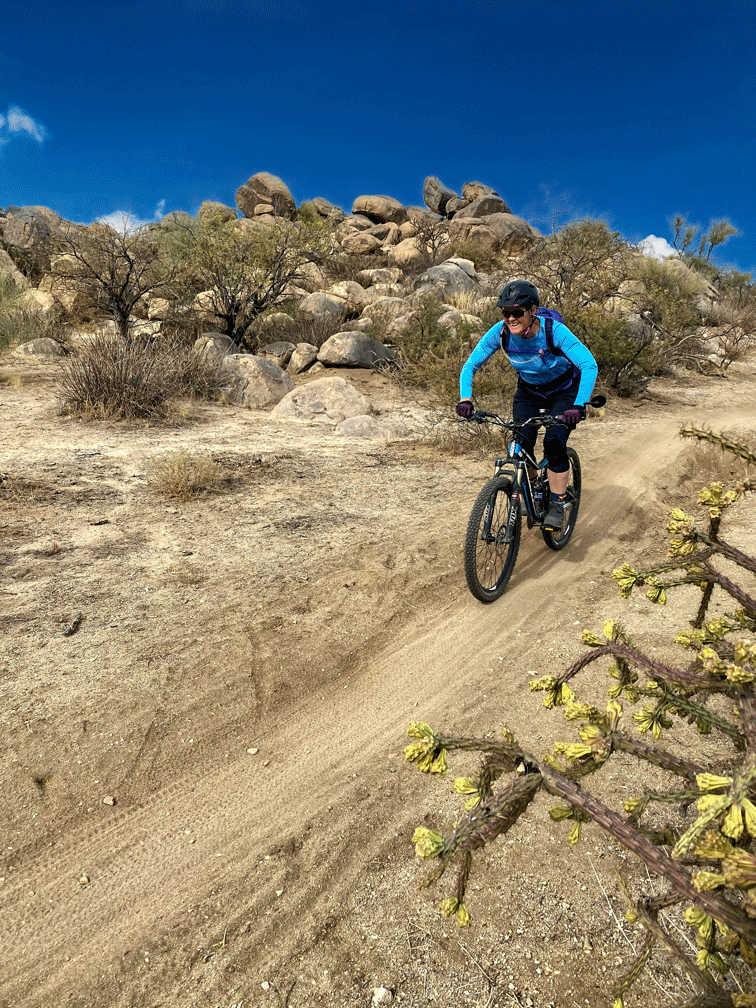
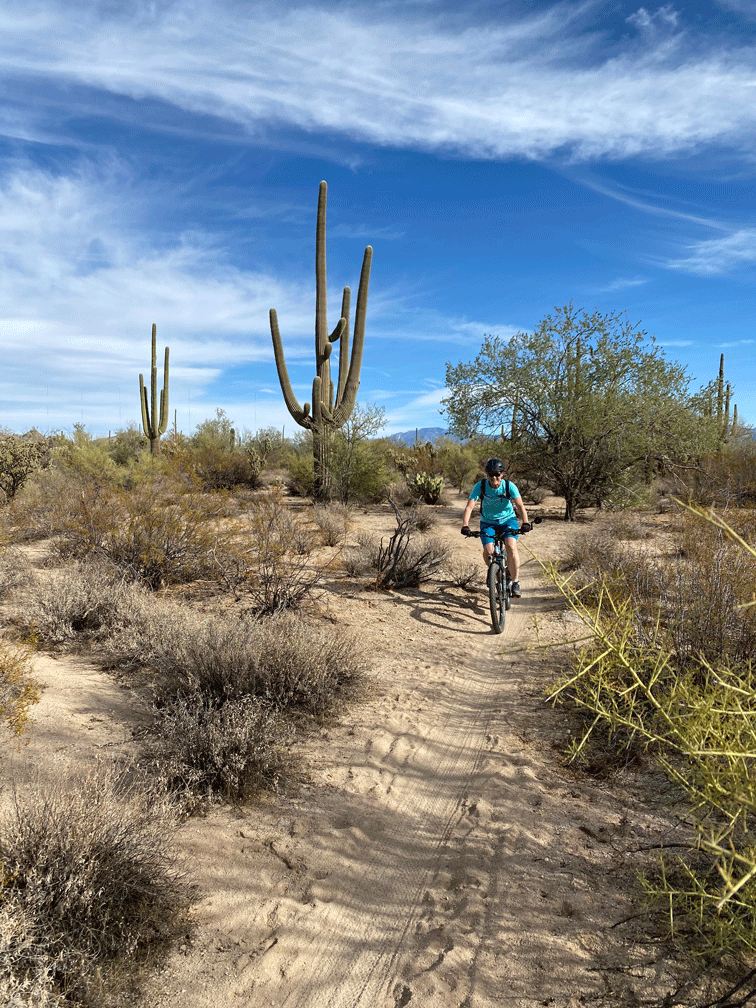
We continued to do lots of mountain biking in February. Mostly we rode the 15 kilometre loop at the Tortolita Preserve. Here are more photos of the trail.

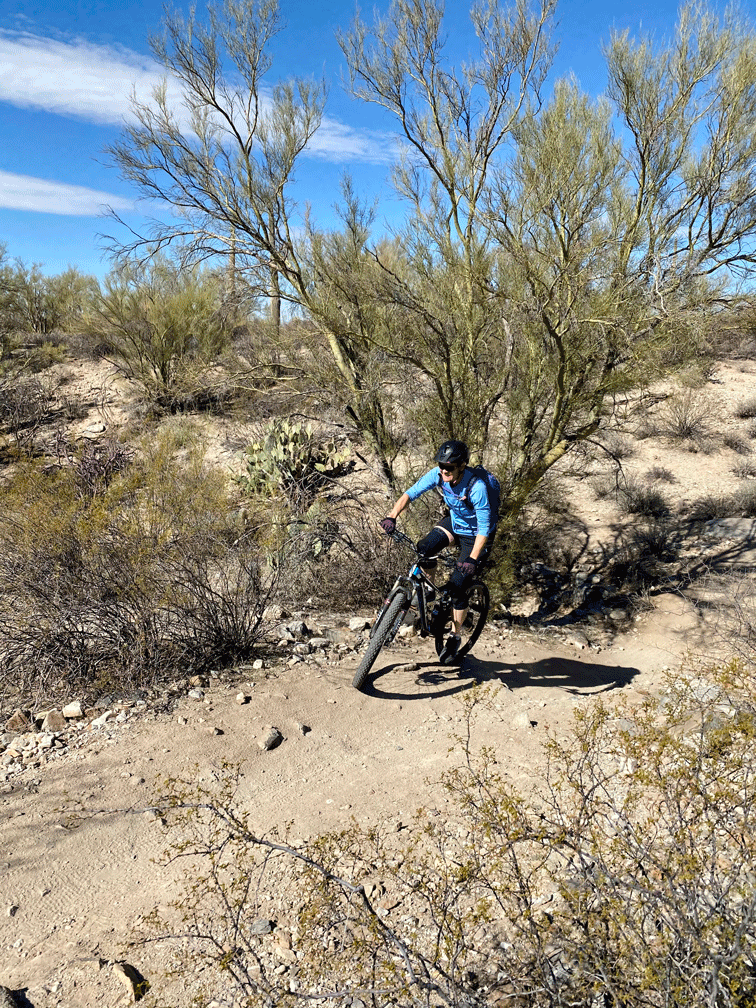
Here, Wendy is making her way up out of a wash, with a healthy-looking Palo Verde behind her.

This section is the trickiest. It doesn’t look very steep from the photo, but when a rider is approaching from the wash below, the edge appears as a wall. Wendy’s strategy is to get as much speed as possible so that she only has to stand on her pedals for about two rotations, and then make the quick turn at the top.

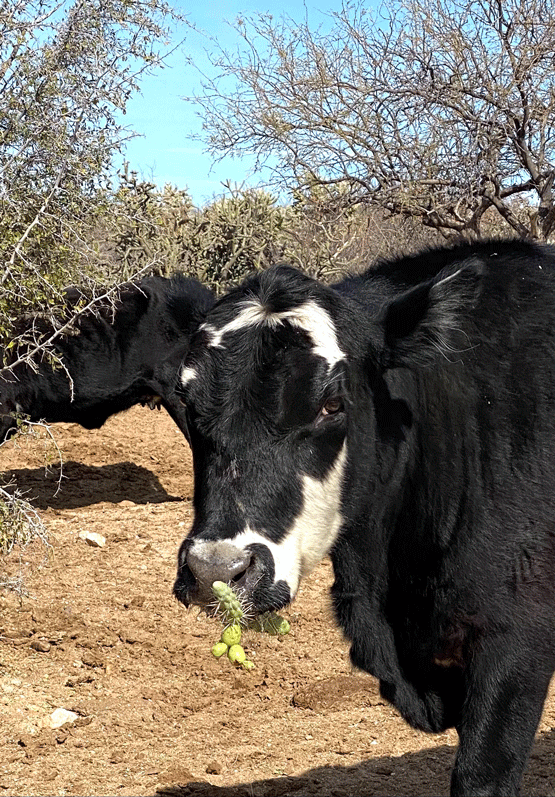
We also rode our mountain bike in Honeybee Canyon and we have included some photos of the area in previous posts. One time in February, we met a this cow that had had a close encounter with a cholla cactus. She was lying down when we passed by on the way back, but got up quickly when Doug approached with a plan to flick it off.

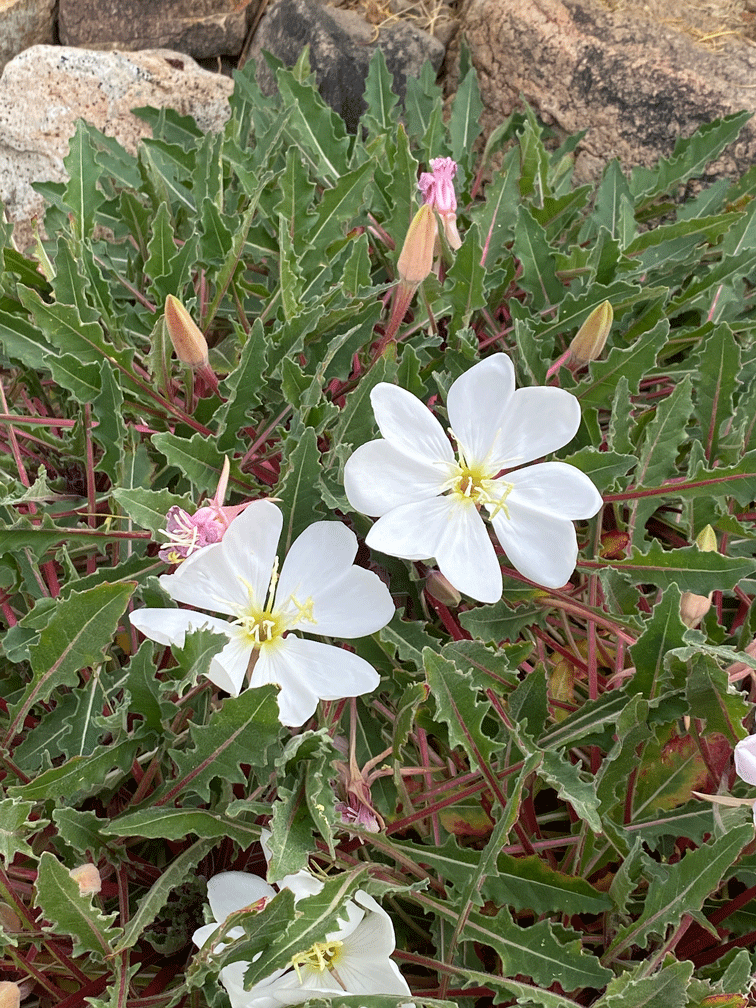
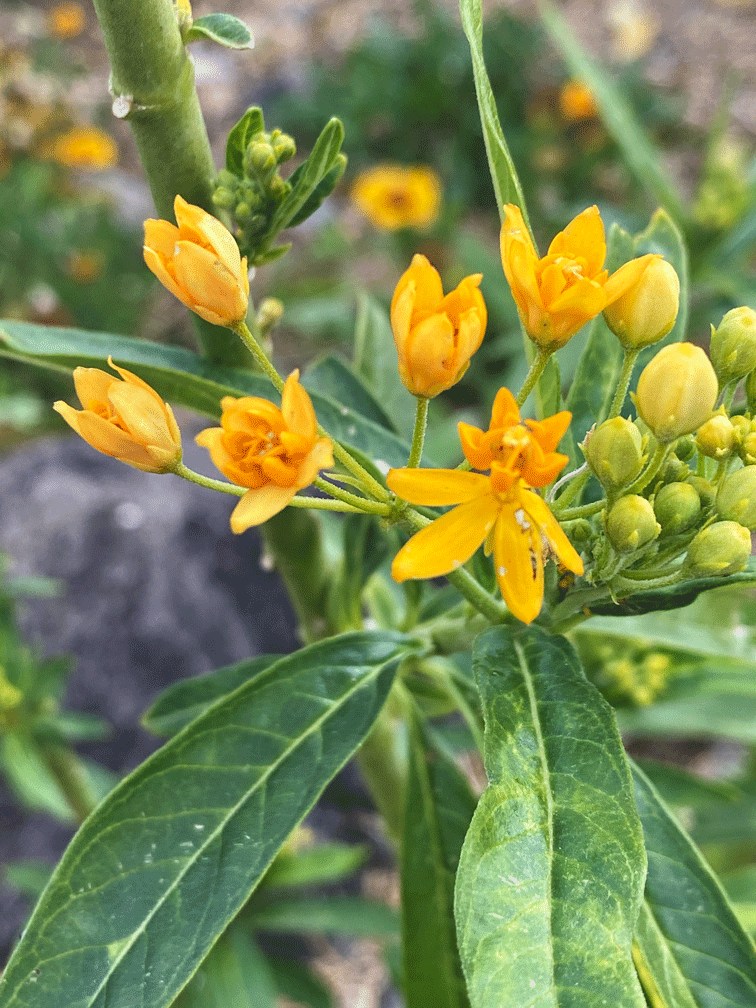
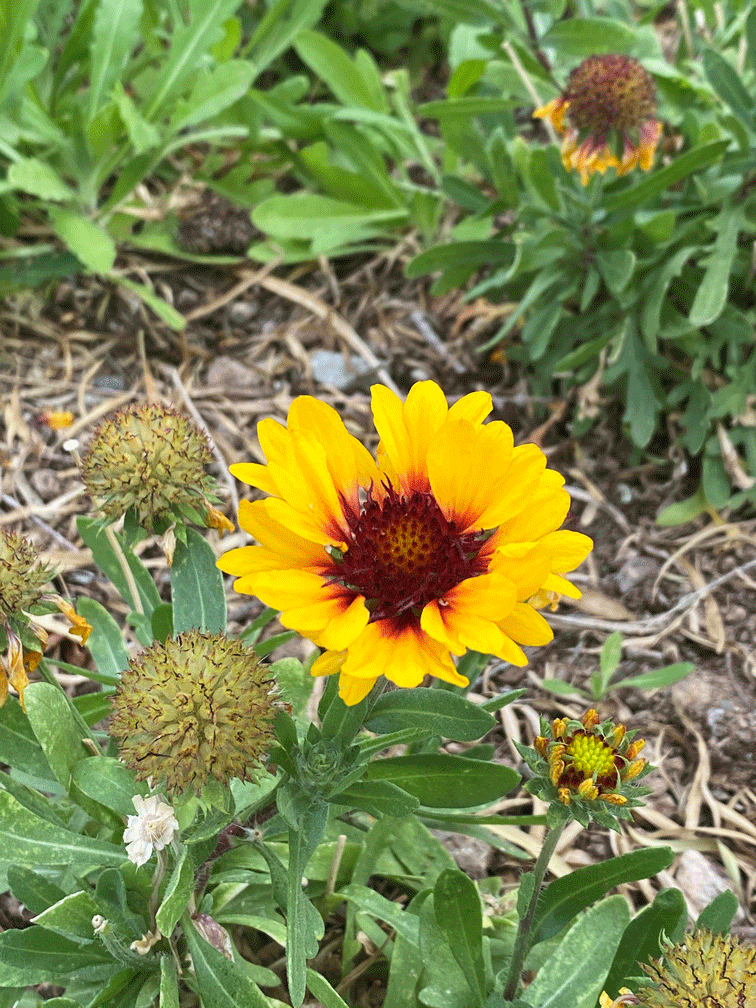
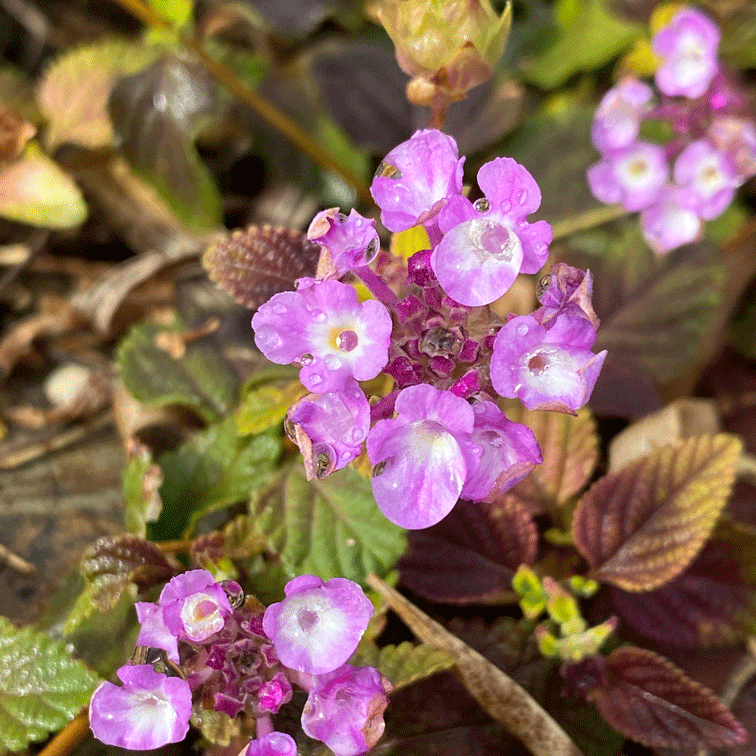
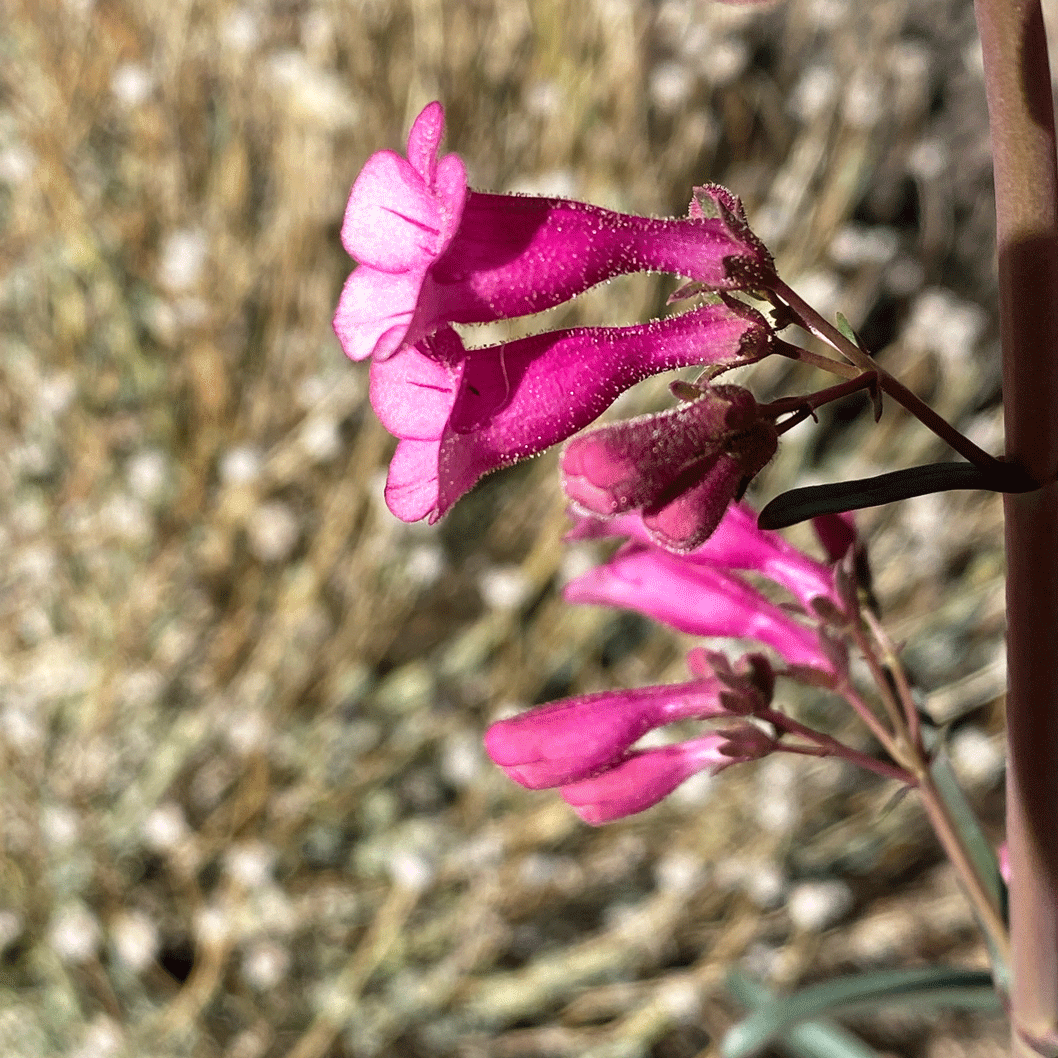
We visited the Arizona Sonora Desert Museum several times. It was amazing to see flowers blooming in February. Clockwise from top left: Tufted Evening Primrose, unknown, Blanketflower (gaillardia), Desert Beard-tongue (penstemon), Creeping Lantana.

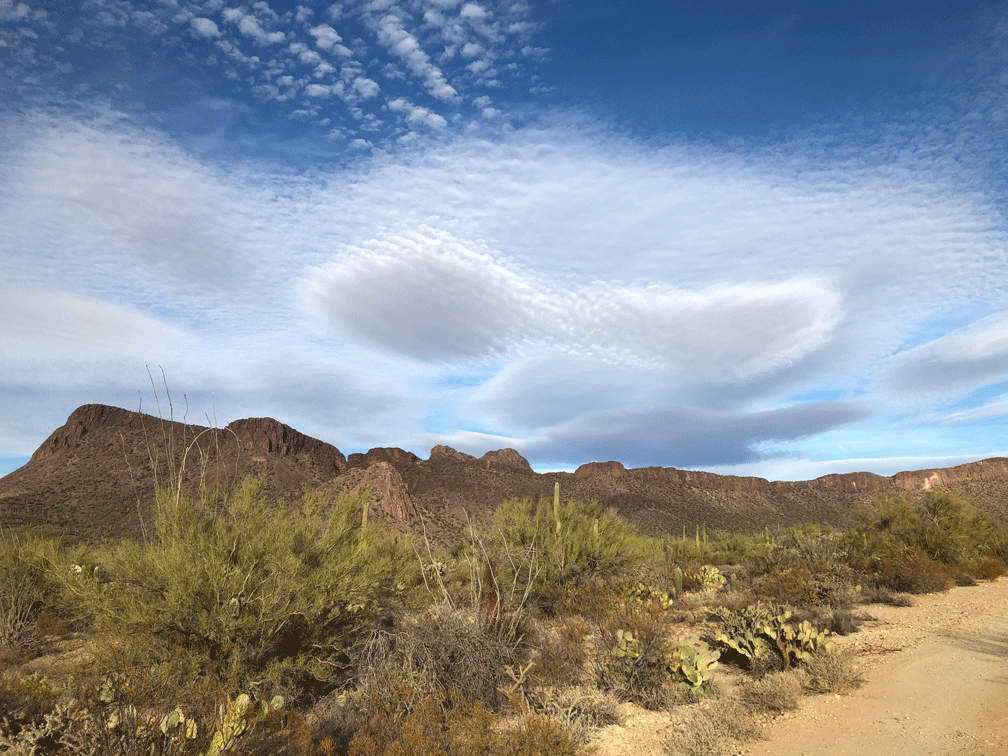
Almost everyday before dinner we do a loop walk around the neighbourhood. Often the sky is cloudless, but sometimes the clouds form in interesting ways.

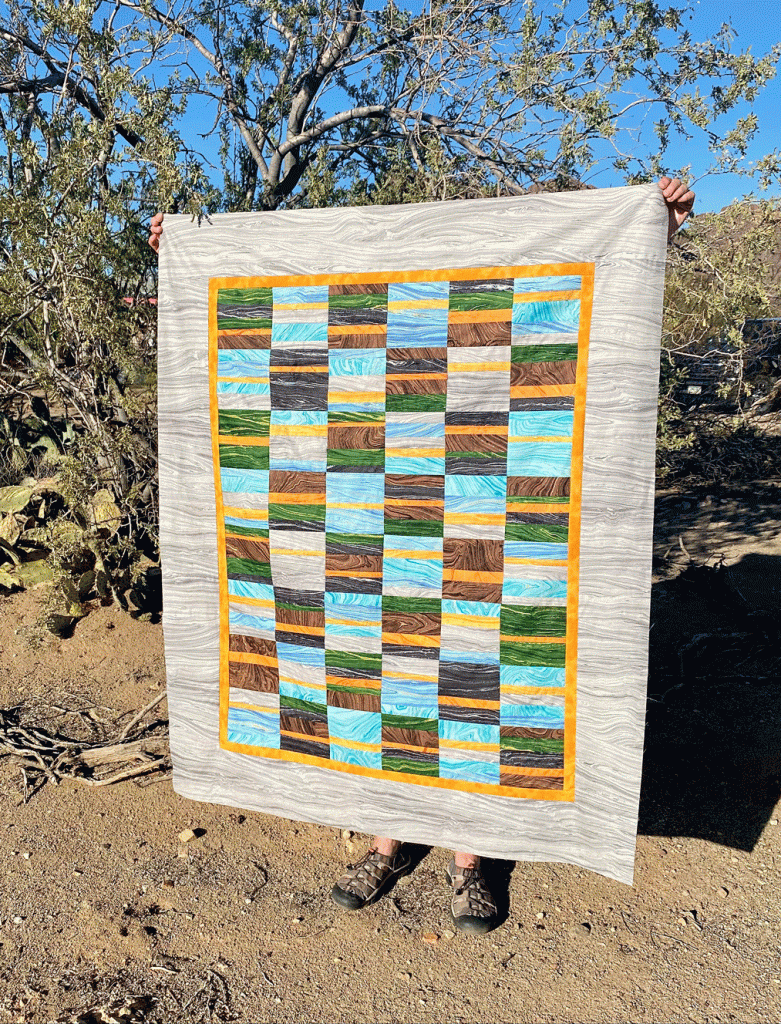
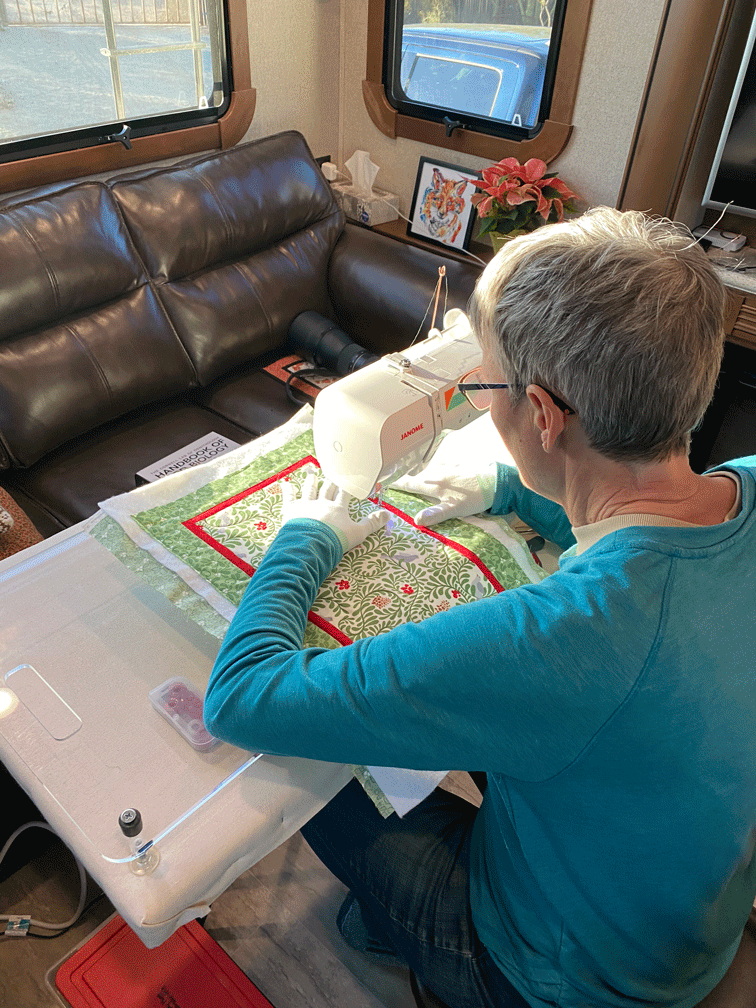
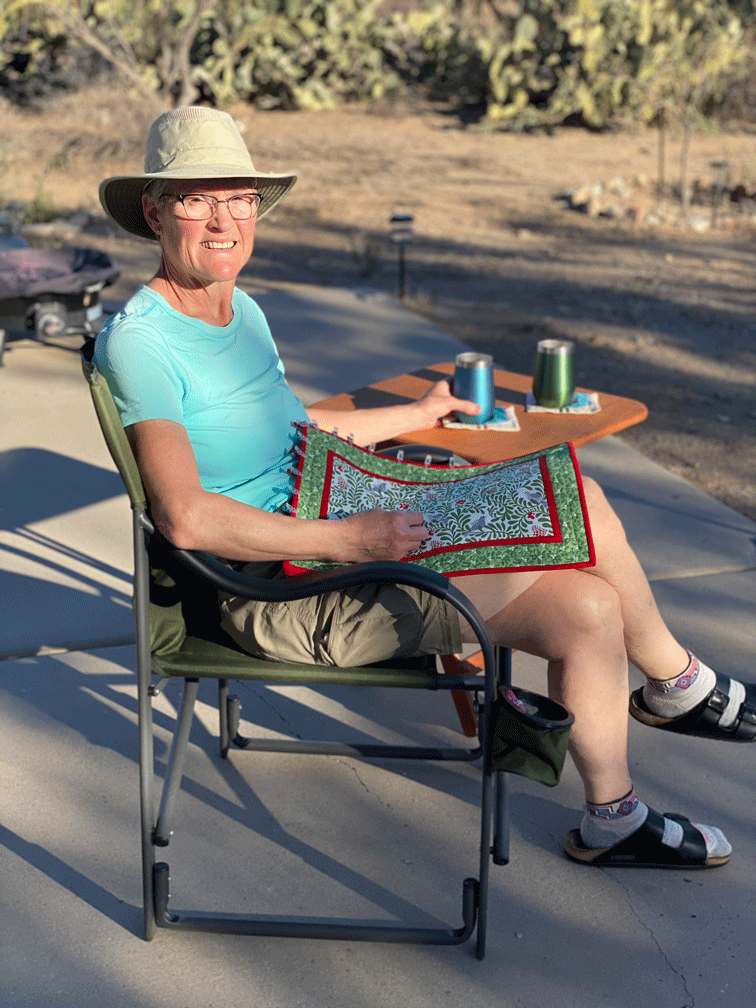
Wendy had time to design and piece this small quilt top. She made it using “sand-scape” fabric that she bought in the south-west a few years ago.

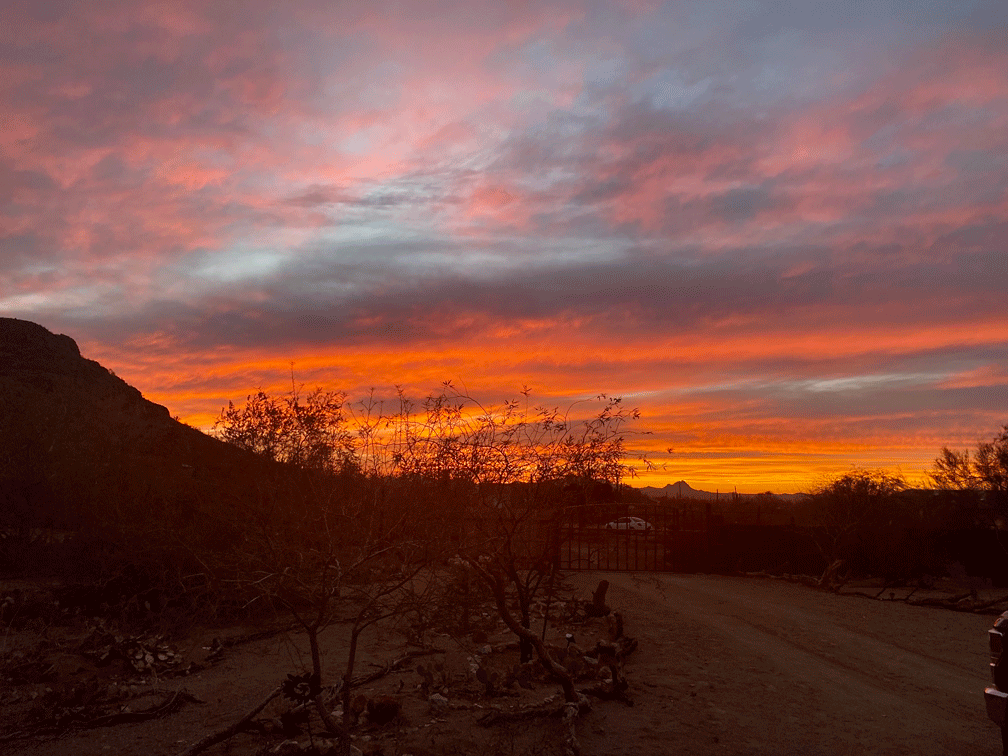
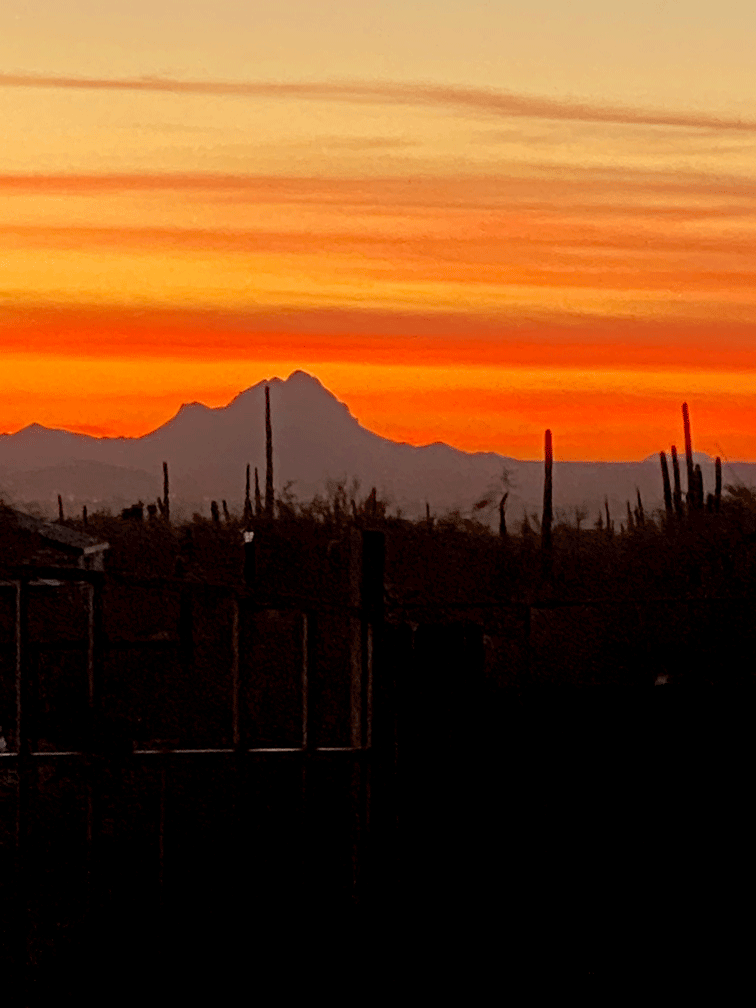
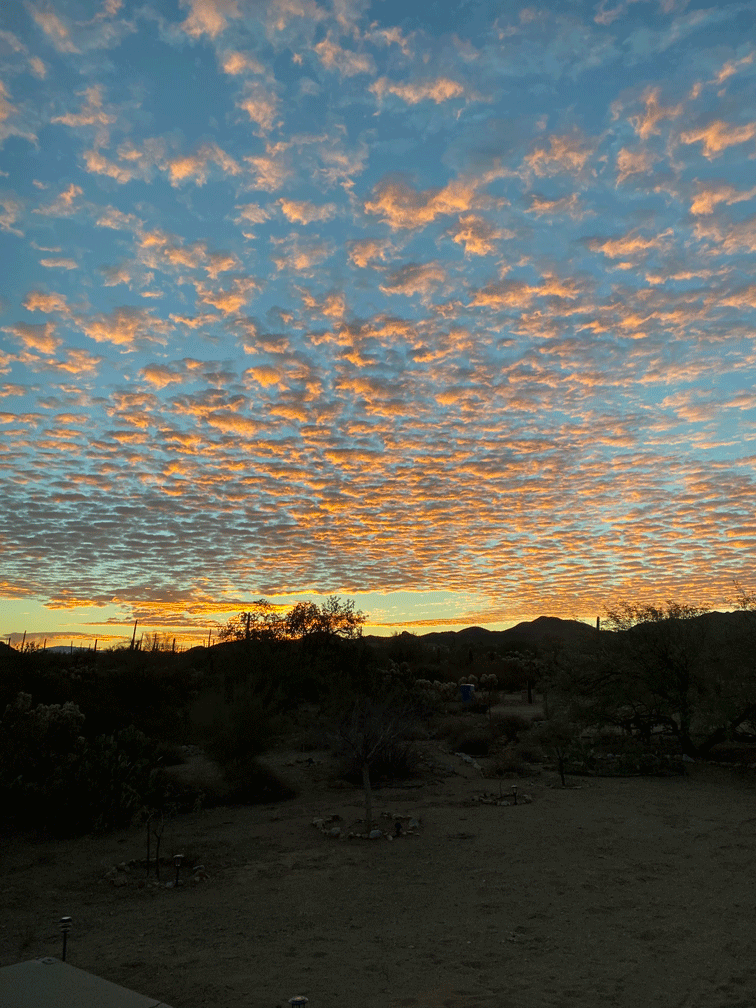
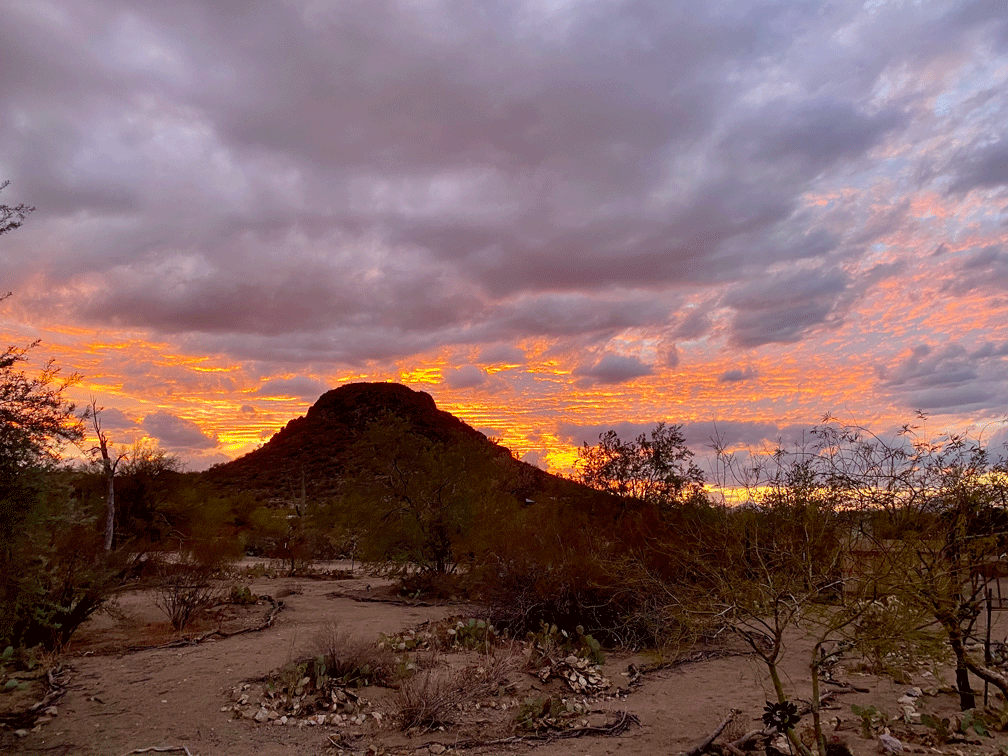
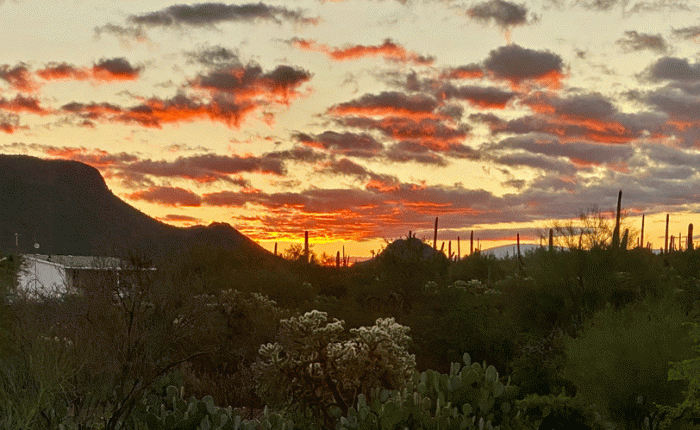
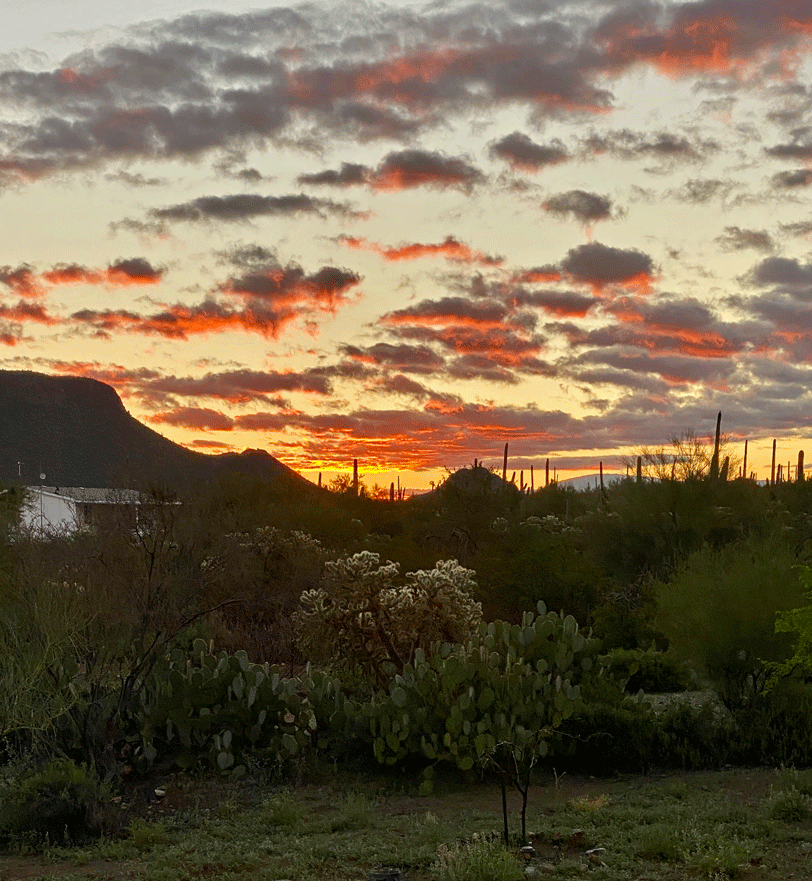
We have beautiful sunsets, not every night, but this one in the middle of February was outstanding.

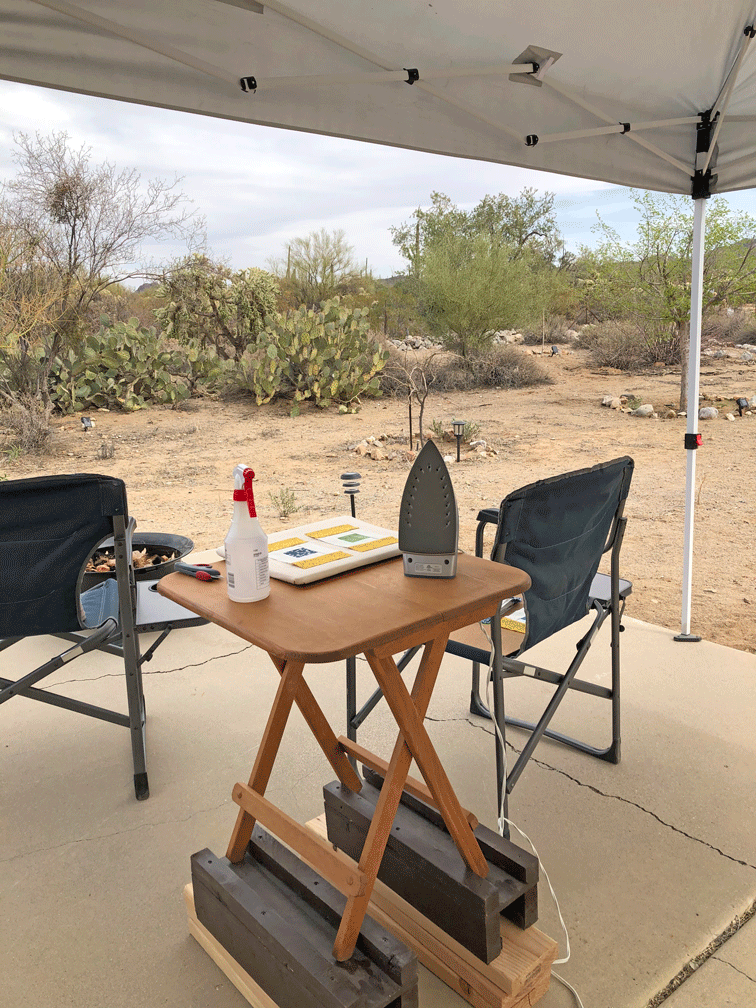
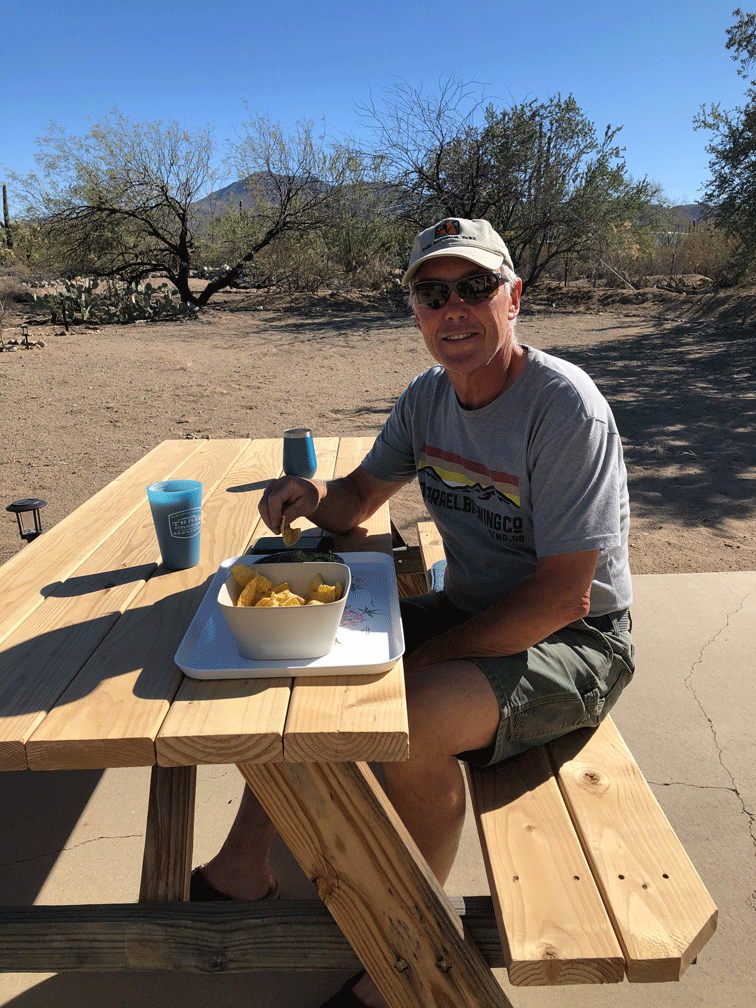
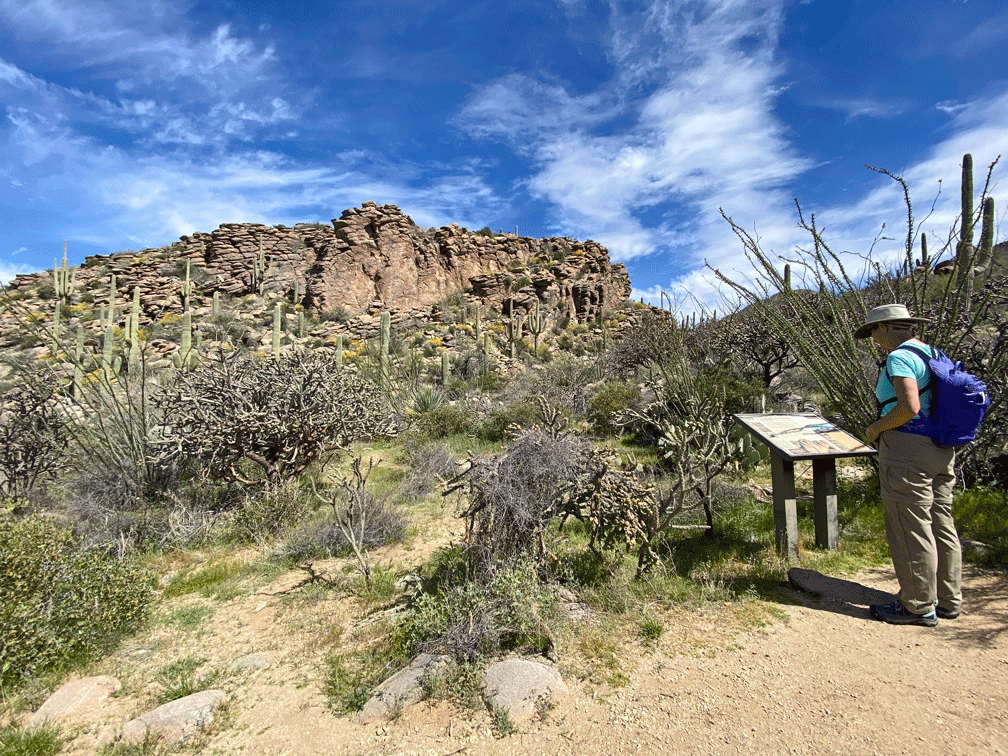
Doug replaced the top and seats of an old picnic table that our landlord had and we are enjoying using it. This photo was from the afternoon of Valentine’s Day when we decided to go “out” for guacamole, chips and beer.

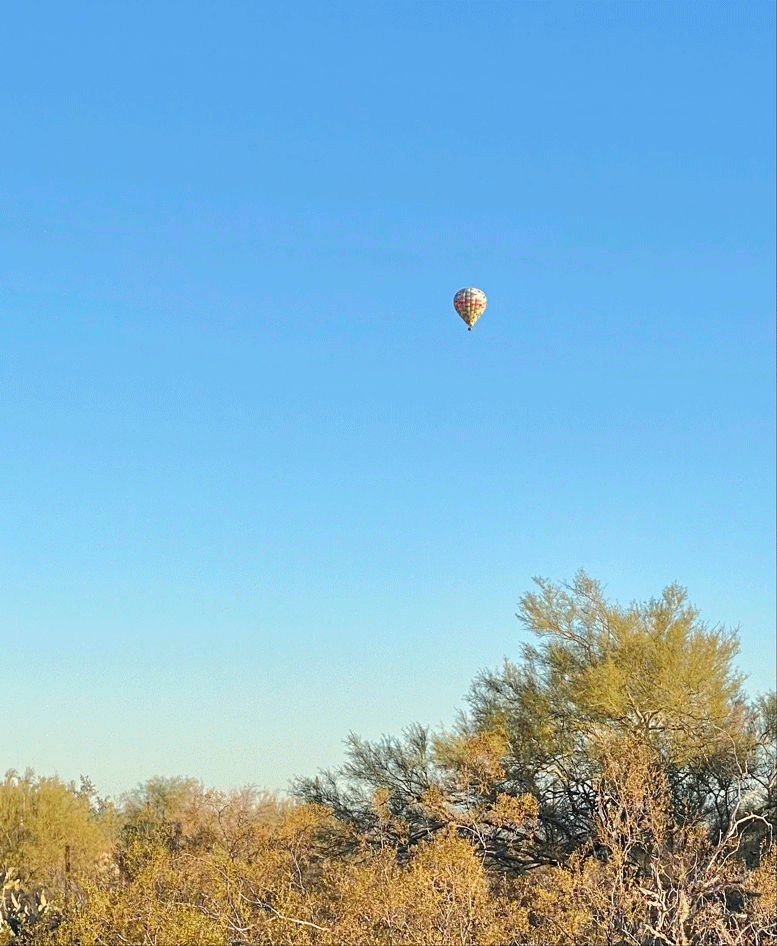
On calm mornings, we often see a hot-air balloon hovering over the mountains. On this occasion, the balloon came quite close. We were leaving to go birding, so Doug had his camera handy.

Check out February in Arizona: Part 2 to see our newly discovered birding locations and many bird photos.

The Saguaro Awards

The Saguaro Awards

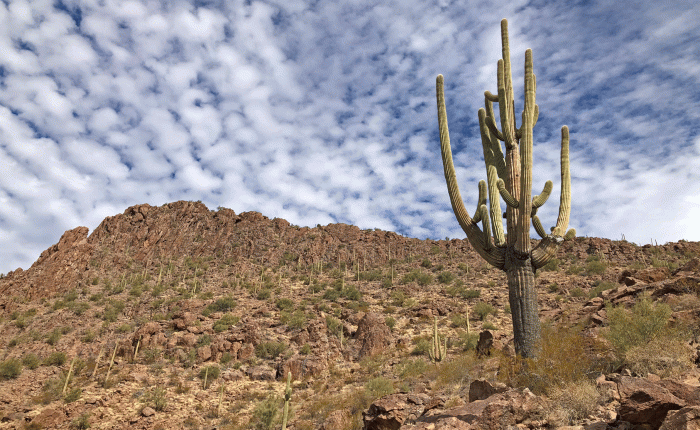
This whole blog post is dedicated to the saguaro cactus. We live among the saguaros and have taken many, many photos of them. The saguaros in this blog were photographed since we came down here in December.

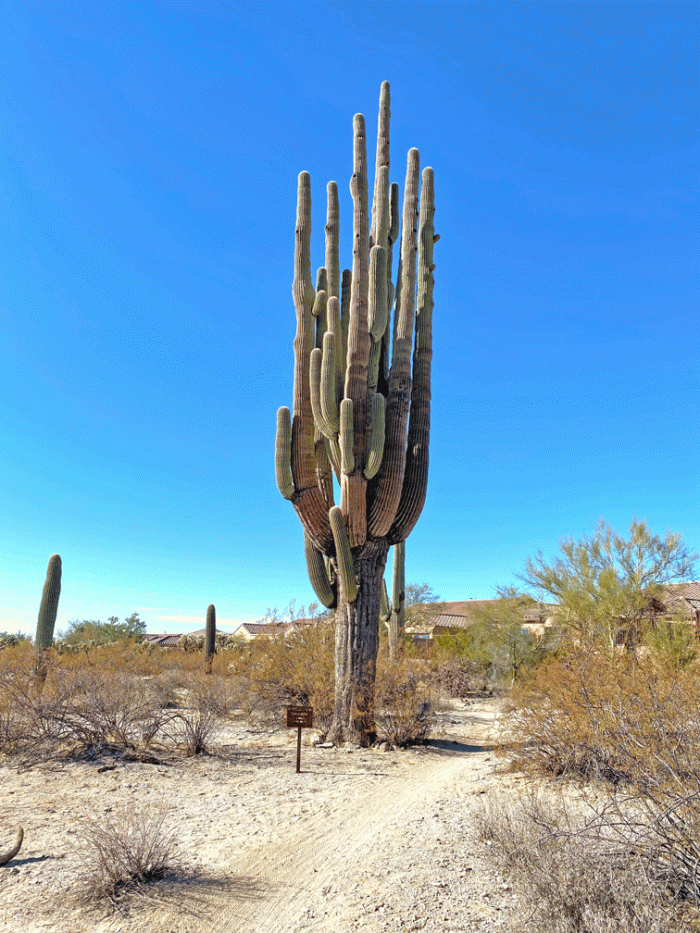
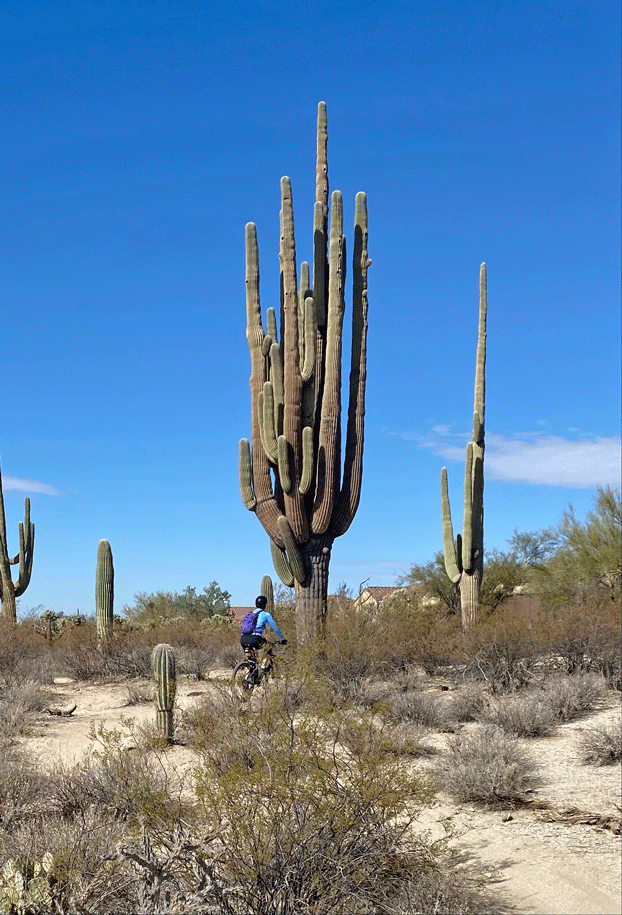
We’ll start with the most famous. This cactus in the Tortolita Preserve has its own sign: “Strong-Arm Saguaro.” Its one of the biggest we’ve seen.

We ride our mountain bikes past it often. This photo gives you a better sense of how big it is.

If the saguaro on the left had a sign it would be, “Small-Arms Saguaro.”

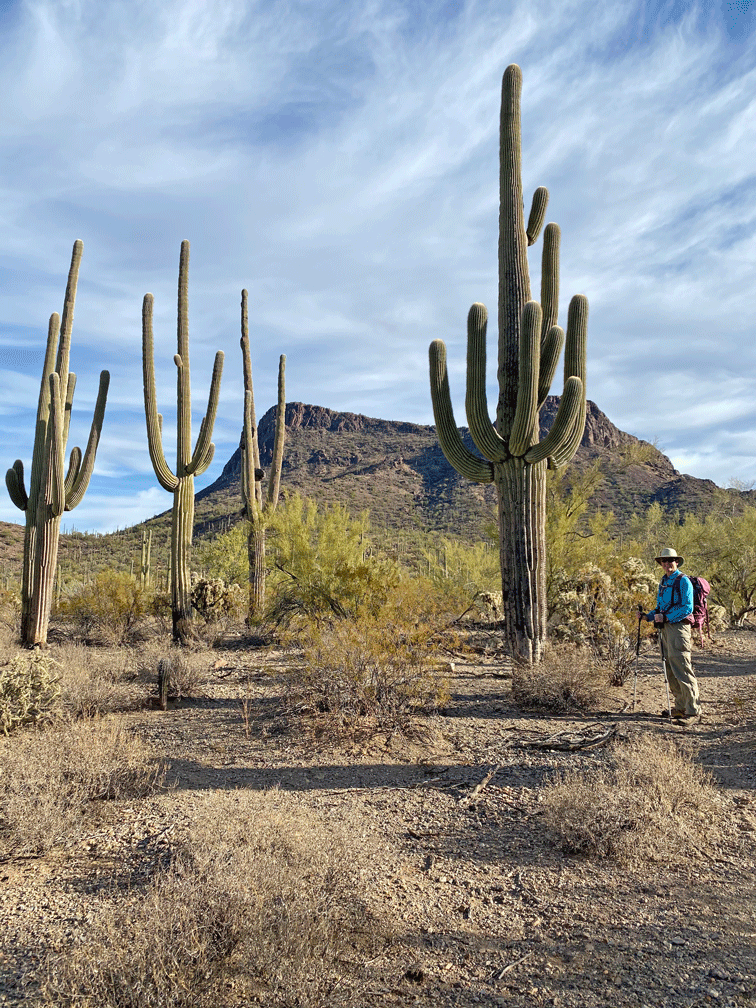
These saguaros are within a fifteen minute walk from our place. They win, “Favourite Saguaro Grove.” Saguaros have a relatively long lifespan. Some could live 175 to 200 years. After about 75 years, it may sprout its first branches, or arms.

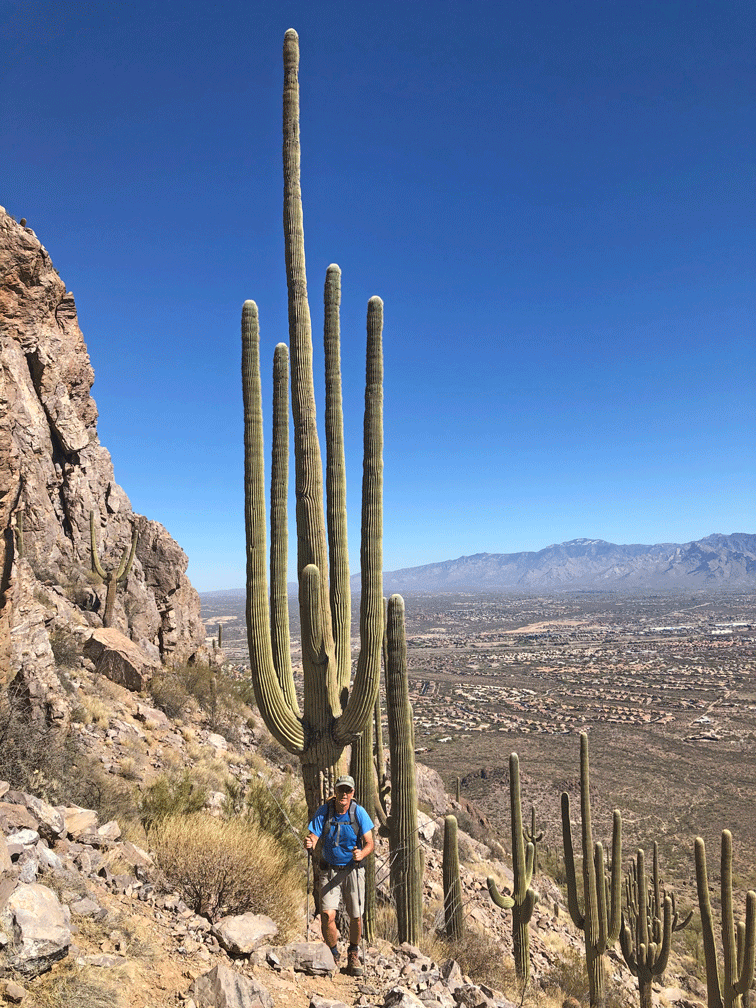
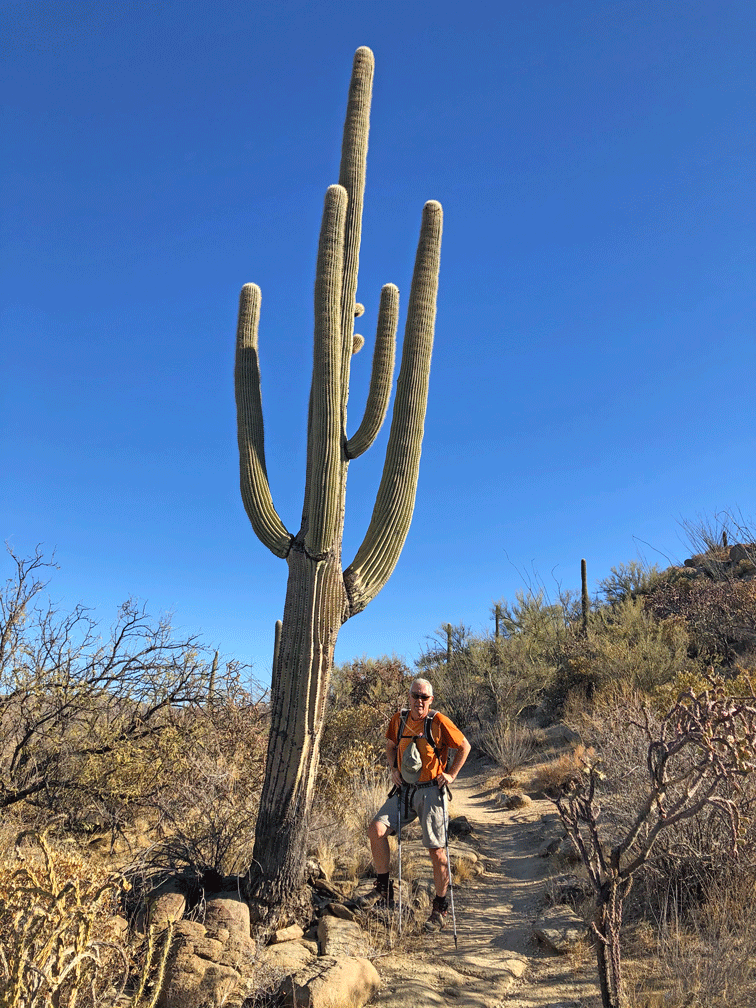
This one is one of the tallest we have seen. Also, it is on the trail to Sombrero Peak, so it wins: “Tallest Saguaro at Elevation.” A saguaro rarely reaches 15 metres in height and occasionally 12 metres. More commonly they are 10 metres tall. If Doug is used as a scale, (he is about 2 metres tall), this one seems to be 14 or 15 metres tall.

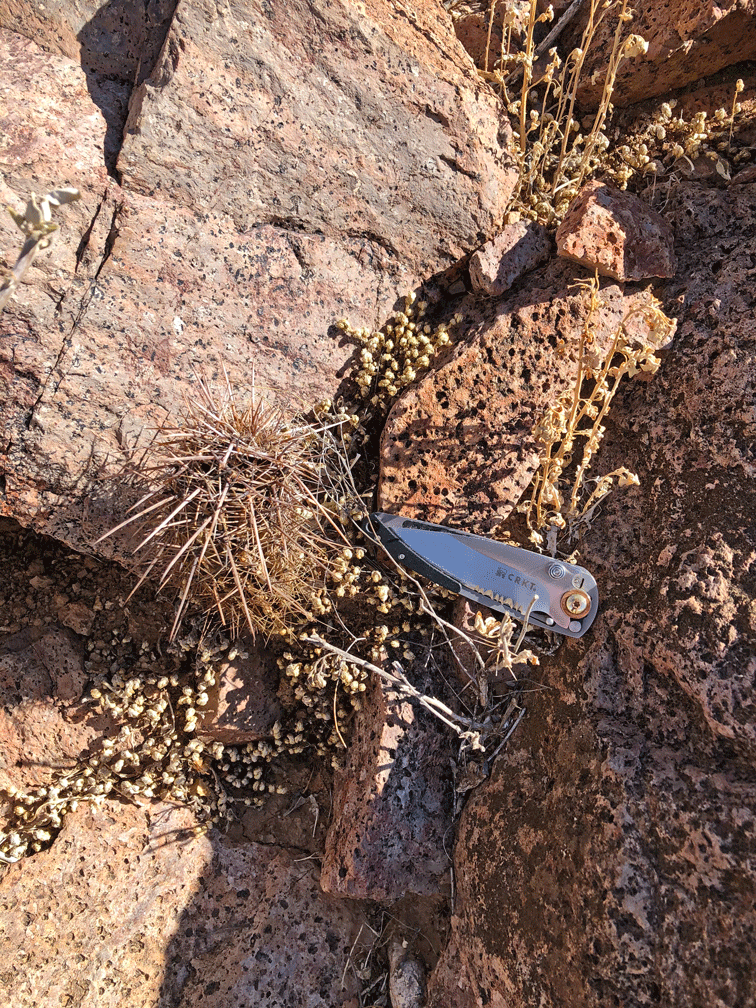
Saguaros grow from a seed and they struggle for their first years. The knife is in the photo below is about 10 cm long, so this little one isn’t much bigger than that. A 15 cm saguaro is estimated to be 9 years old, but growth is dependent on the amount of water it receives. This little one was growing alongside the rough trail to Panther Peak. It wins: “Smallest Saguaro on the Trail.”

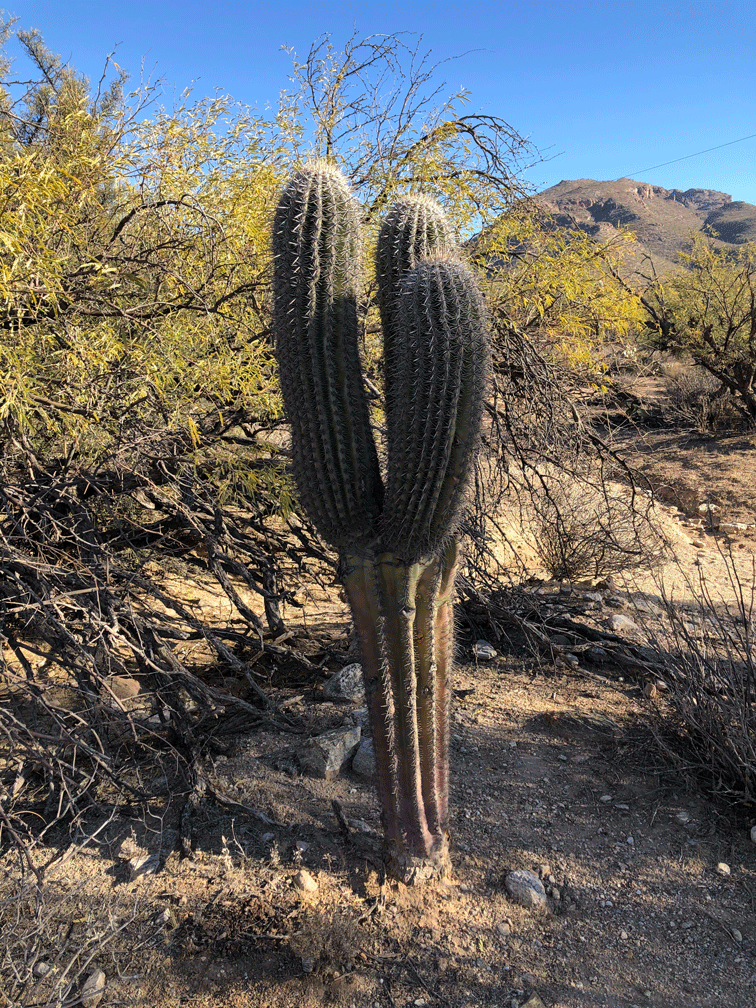
Most saguaros have one main stem with arms that branch out. Sometimes something causes two leaders to develop. This is the only one that we’ve seen with three. Its name is “Triple Top.”

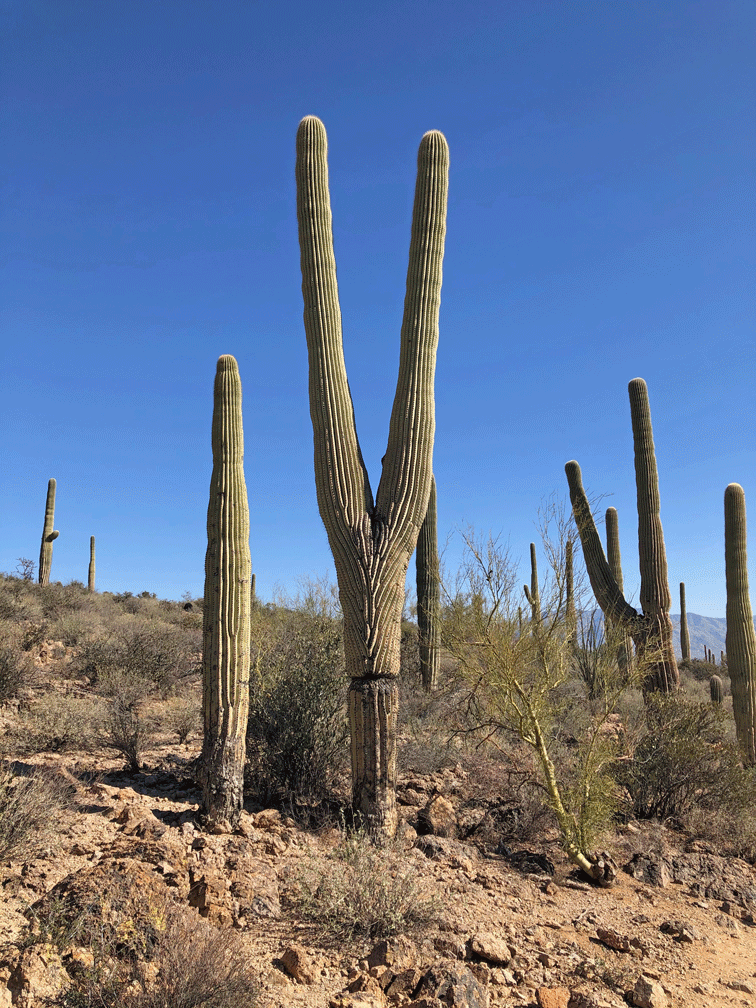
This saguaro is also unusual. The previous saguaro’s arms were all growing from the same level. This one has a “V” split, similar to how trees in Canada sometimes develop. Its the only one we’ve seen in our travels. Meet “Victory Saguaro.”

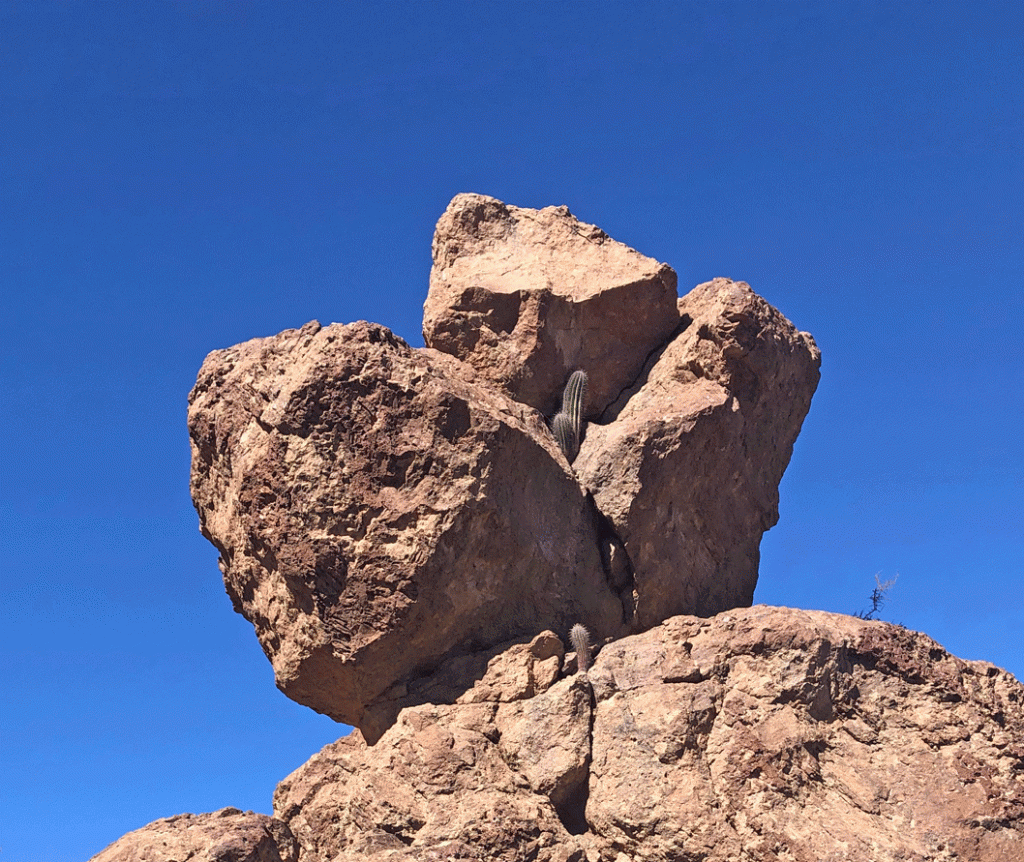
This group of saguaros have earned the award: “Growing in the Least Hospitable Place.” We viewed them from the trail to Sombrero Peak. The tallest one is probably 20 centimetres high.

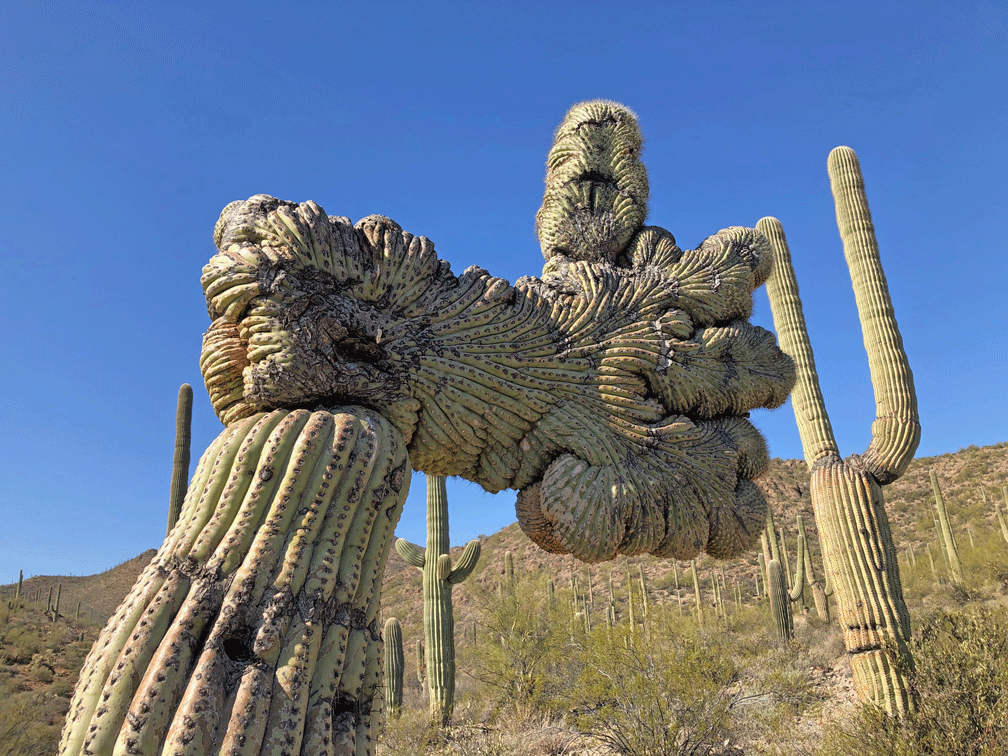
Some saguaros grow in rare formations called cristate or “crested saguaro.” It is believed that its only found in one in every 10 000 saguaros. We’ve seen less than ten. This one is right beside a trail in the Sweetwater Preserve, where we’ve hiked several times. It was going to be the winner of the “Crested Saguaro” award, until we found another more interesting one. But its still pretty special, and we take its photo every time we pass it. It is awarded, “Favourite Crested Saguaro.”

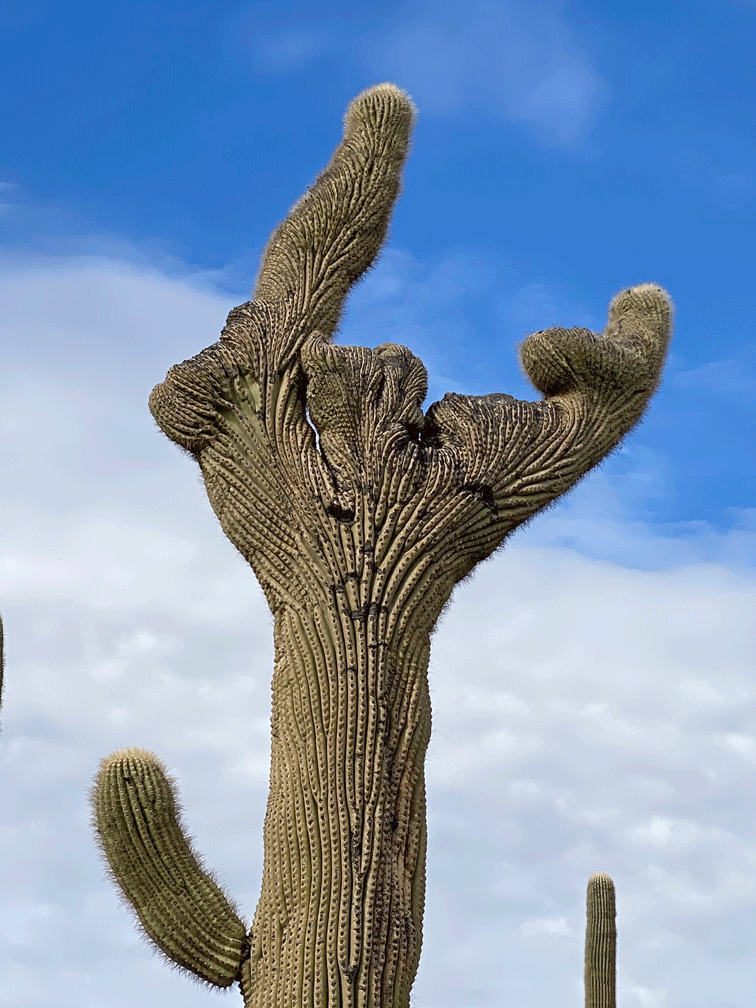
This is the winner of the “Most Unusual Crested Saguaro” award. In all the other crested saguaros that we have seen, the abnormal growth is along the top. This one has grown sideways. Its also not very tall, perhaps 3 metres high.

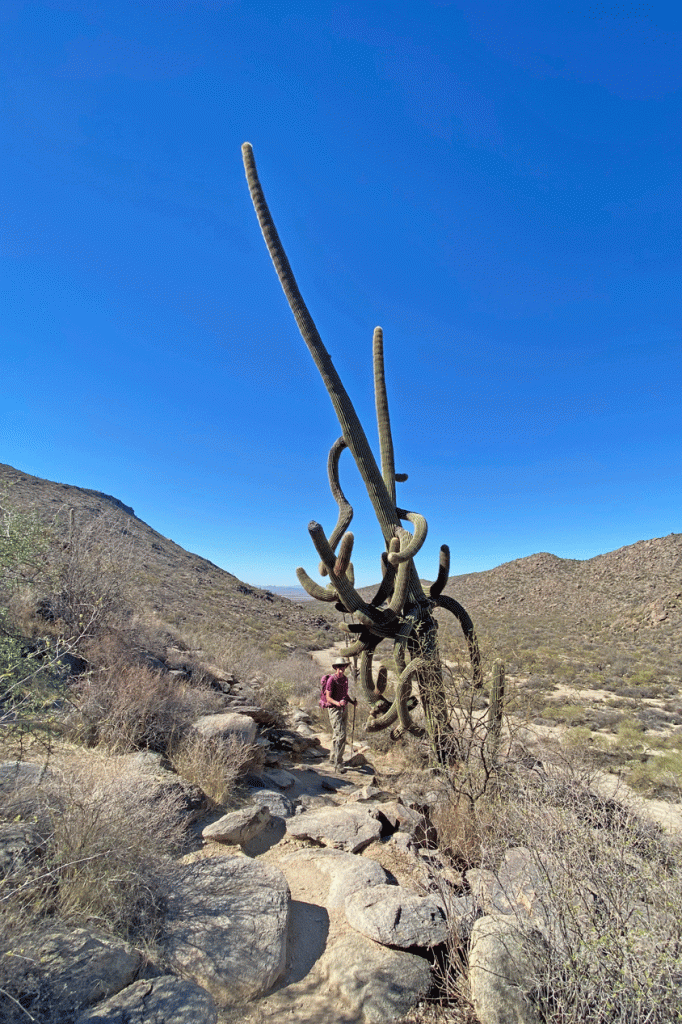
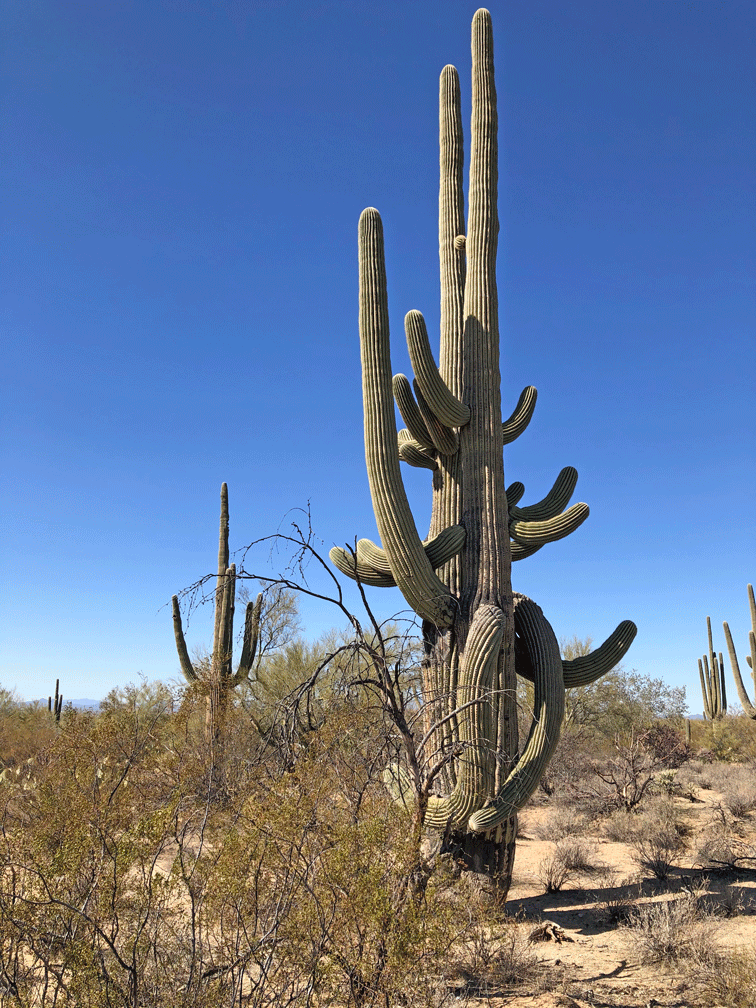
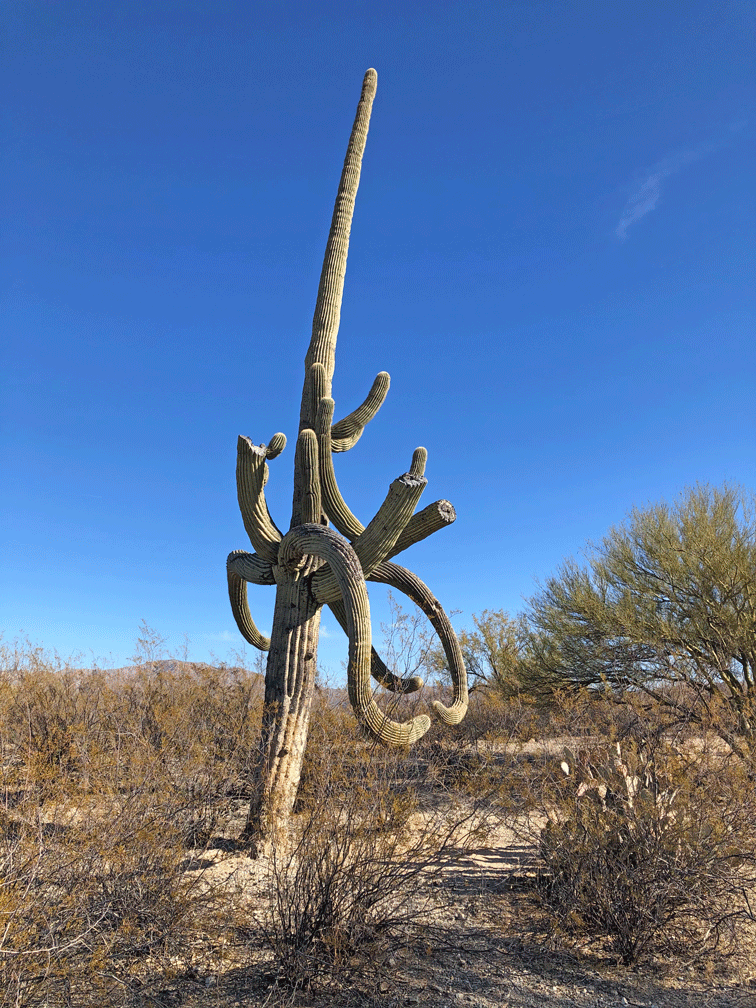
This is the “Grotesque” Category. Sometimes the saguaro arms grow in strange ways. Here are our favourites.

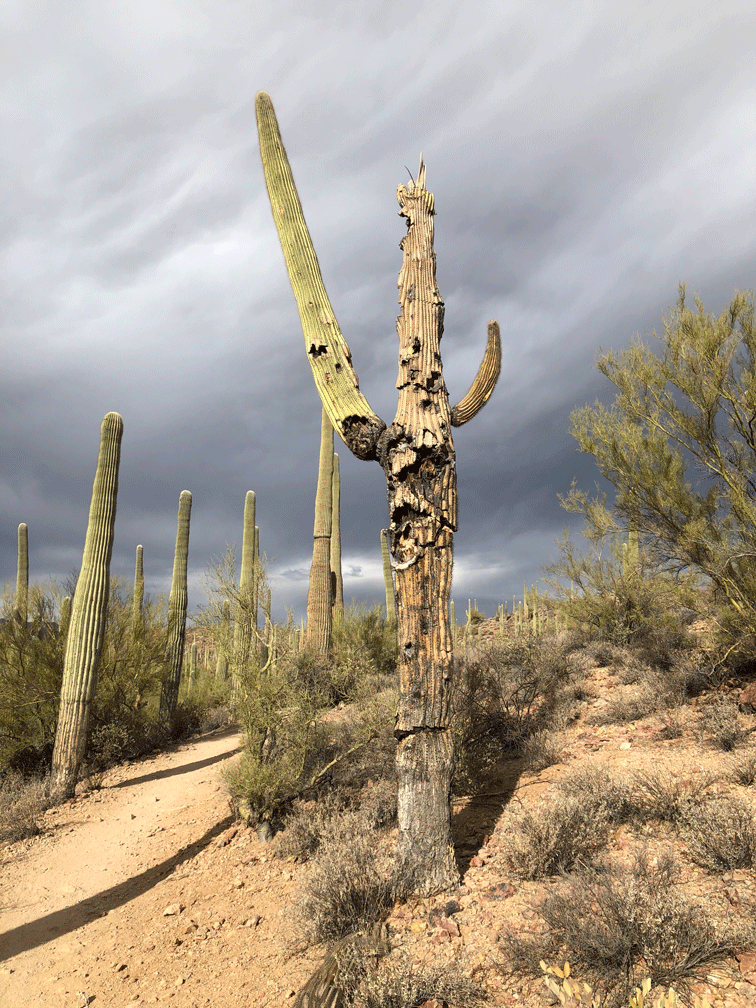
Saguaros can still live when parts have been destroyed. This one is awarded with: “Beat up but Still Alive.”

But the following saguaro is awarded: “Beyond Beat Up but Still Alive.” Obviously the central section must still be intact enough to provide nutrients to the one living arm.

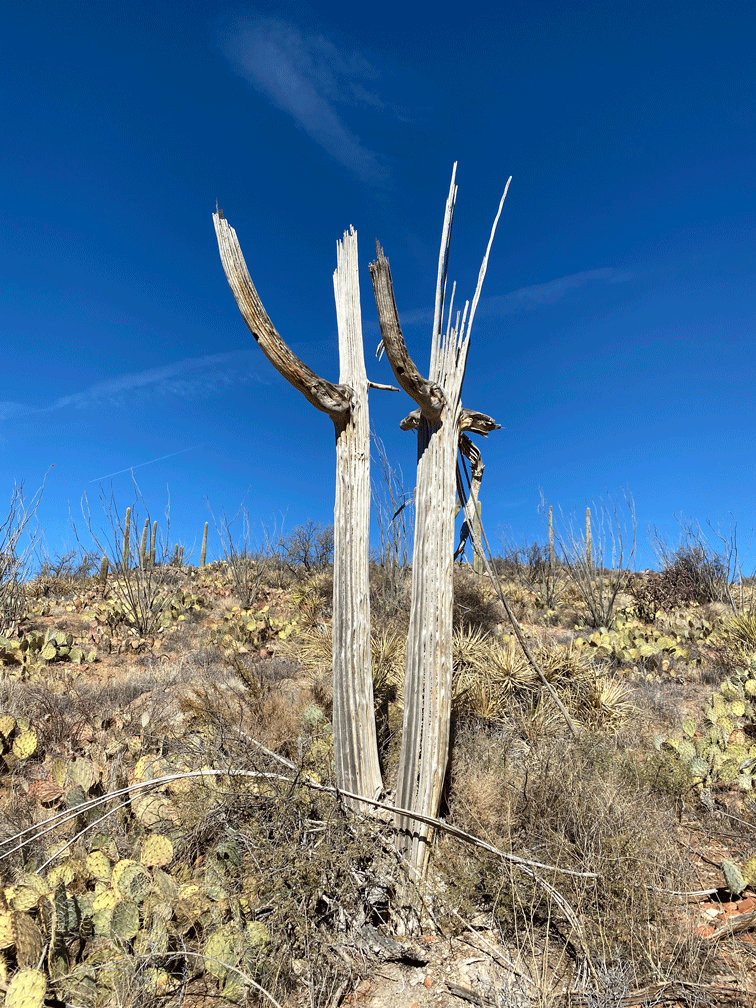
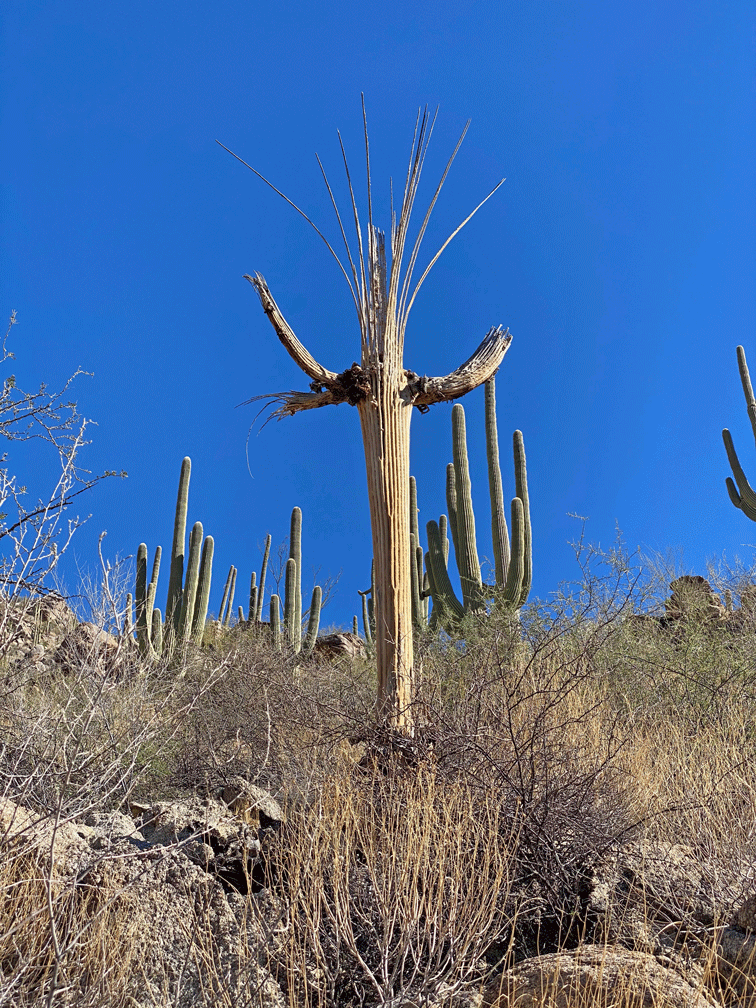
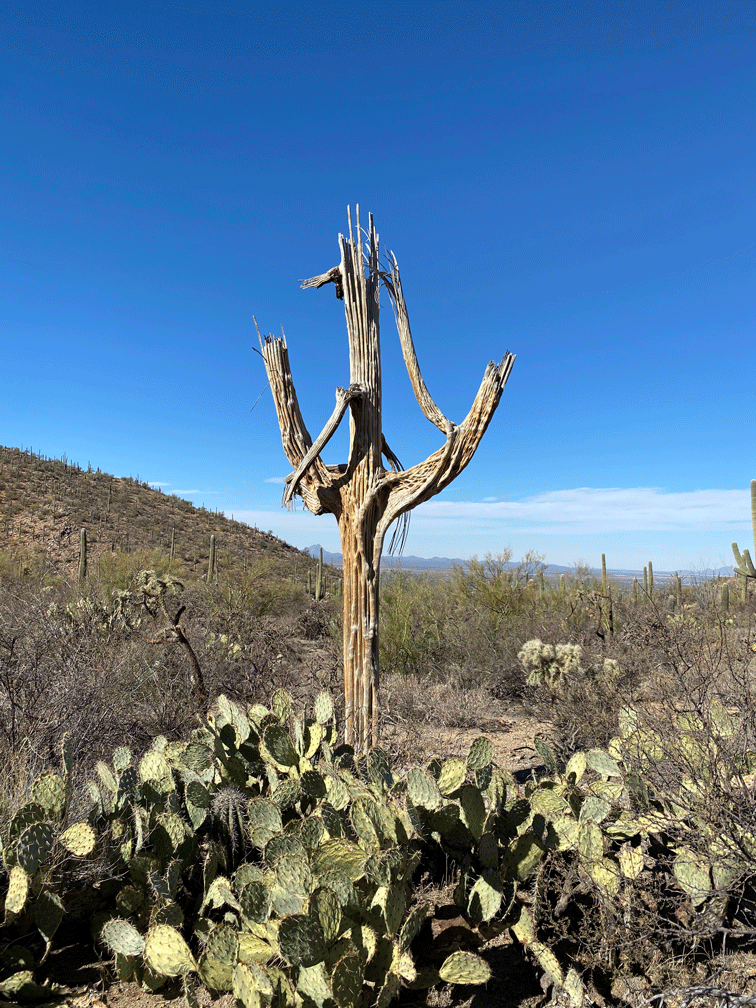
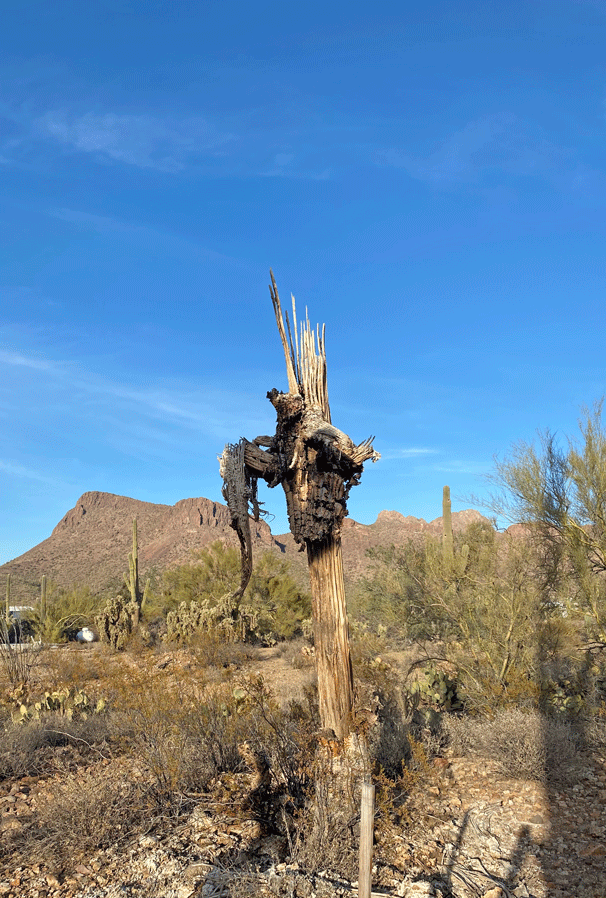
When saguaros die, their outer shell disintigrates and eventually falls off, leaving the framework of long, woody ribs.

This one is along our daily loop walk so earns, “Friendly Neighbourhood Saguaro Skeleton.”

We saw these two saguaro skeletons on a ridge in the Tortolita Mountains. Their award is: “Together in Life and Death.”

This skeleton in the Tortolita Mountains is beautiful, so is awarded: “Splitting Pretty.”

The “Best Saguaro Skeleton” award goes to this one, found in Saguaro National Park (West).

Perhaps you’ve had your fill of saguaros, but if not, our next blog posts will for sure include photos with saguaros. They can’t be avoided around here!

January in Arizona (Part 1)

January in Arizona (Part 1)

Happy New Year. We’re enjoying our time here in Arizona. This blog will focus on hiking and biking and part 2 will be about birding.

A few days after Christmas, we walked right from our door to the top of Panther Peak. It took us a couple of hours get to the top. Here’s a view looking east towards Tucson, from just below the summit.

Here’s a view of Panther Peak, taken on the way down.

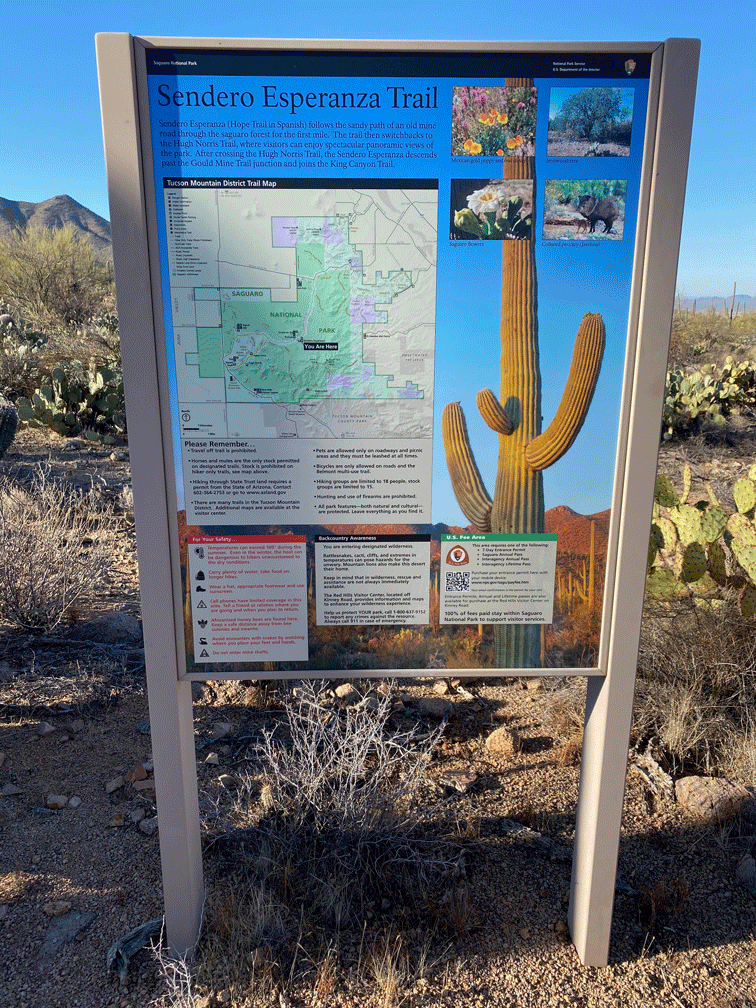
The next big hike was to Wasson, the peak just south of our place. It is possible to walk right from our door, but we chose to make the short drive to the trailhead. The last time we climbed Wasson, we approached it from the other side. This time we hiked up the Sendero Esperanza.

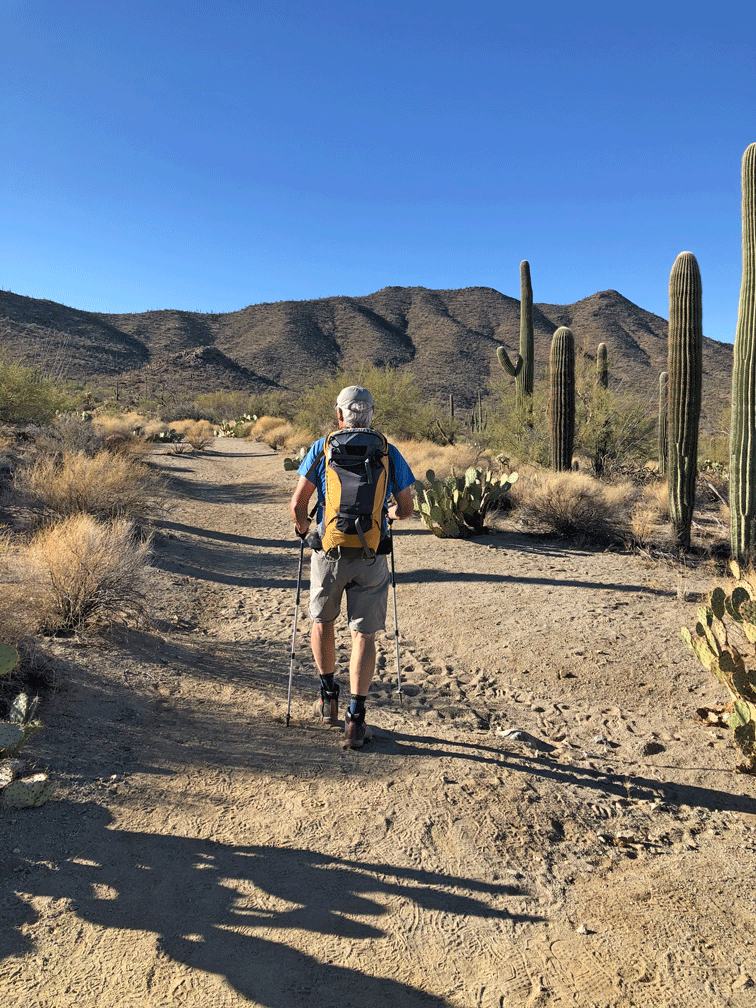
The hike starts off on the flats, following an old mine road towards the ridge.

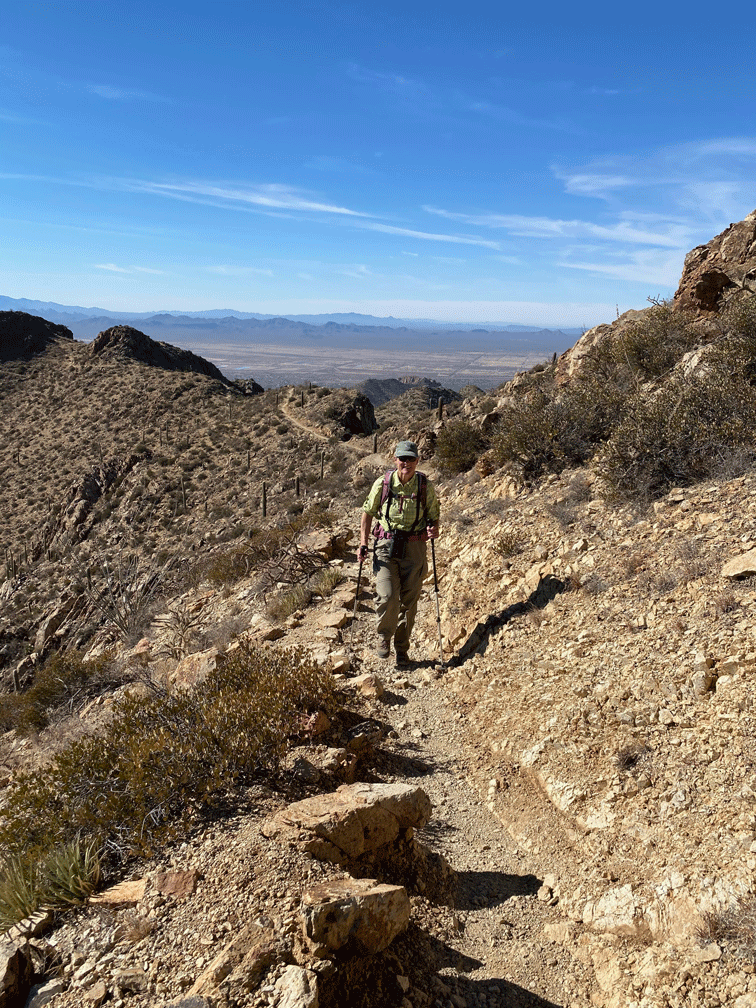
Up on the ridge, we joined the Hugh Norris trail to the summit. Here’s a view of the trail along the ridge.

Whenever we approached other hikers, we popped our masks on, as did the few people we met.

Another day, we hiked in the Tortolita mountains. We started in the wash and hiked up to the Wild Mustang ridge. The trail to the ridge skirted these impressive boulders.

Here’s a view looking southeast. If you had a high powered telescope and the inclination, you could probably look across the valley to see the houses near our place.

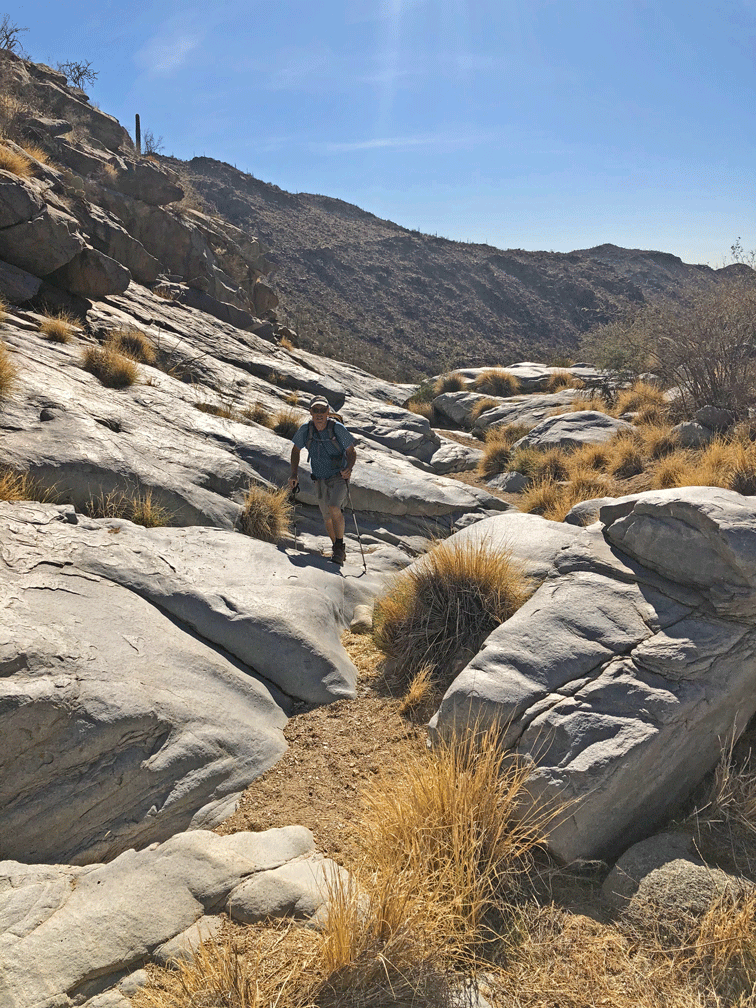
We stepped off the trail to this great lunch spot on water smoothed granite.

Those were the three “big days” of hiking. We also did several shorter hikes, mostly within a 20 minute drive.

This trail in the Sweetwater Preserve is called Rollercoaster, but it’s much gentler than the Rollercoaster trail in the Cranbrook Community Forest. Bikes are allowed on these trails and there are parts like this one, that we think are fine for riding, but they tend to lead to rocky, unappealing sections.

Another local hike is in Saguaro National Park. Ten minutes to the trailhead, then an hour and a half hike. This time we took the Ringtail trail to Picture Rocks trail to Box canyon trail to make a loop.

We did a lot of mountain biking at the Tortolita Preserve. We had a memorable ride on Christmas Day, especially since it was a replacement for the skiing that we used to do that day.

Here are a few pictures of the trails, taken on different days.

Here’s one of Wendy making her way up out of a gentle wash.

This part is called the “Palo Verde Tunnel”.

The signpost called this, “Old Timer Ironwood.” Ironwood trees can grow to be 150 years old. Their wood is so hard because of all the minerals in it.

We also rode at Honeybee Canyon a couple of times. This “pile of rocks” was our turn-around spot this day. It made it a two hour ride of just over 20 kilometres.

Doug loves taking photos with the rocks as background. This is a different pile of “exfoliating granite boulders.” This weathering produces good sand for the trail riding.

Here’s some photos from our place. When there are scattered clouds, it makes for a great sunrise.

And the clouds improve the sunset as well. Both photos are from our patio.

Here’s what the Redwood and our patio look like in the sunshine.

It’s a big event when rain is in the forecast. Most of Arizona is in a severe drought this year. Here’s a view from the Desert Museum of a thunderstorm developing. We made it home before the rain hit.

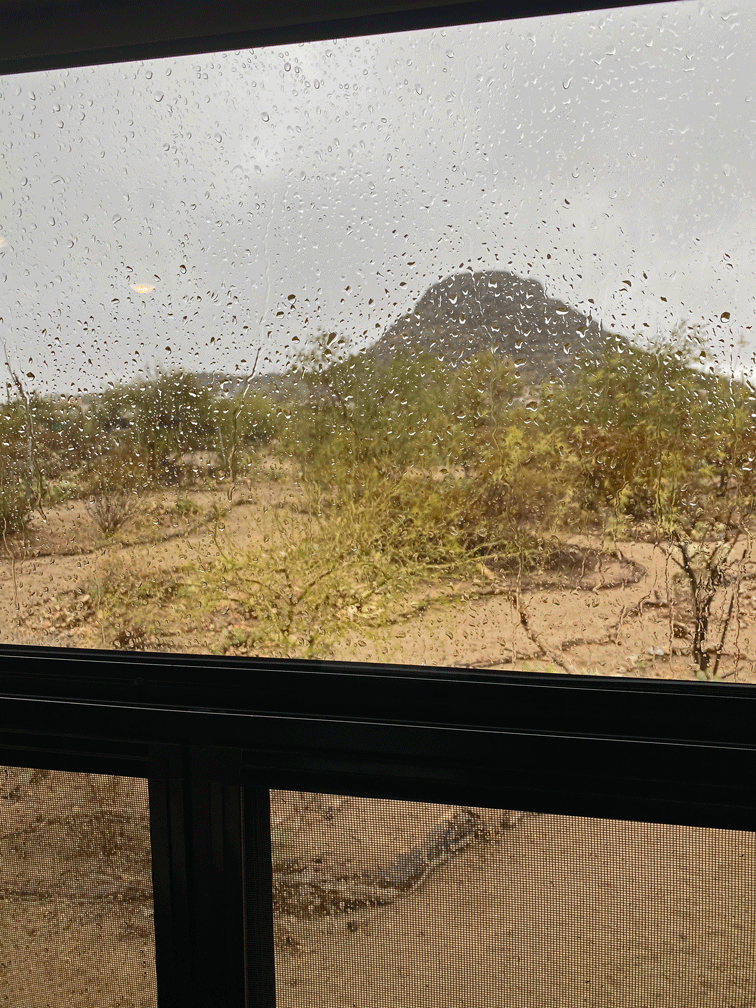
We actually had a day or two when it rained most of the day. Here’s that view, from inside of course.

And one night the snow level was quite low. This is a view of Wasson Peak from our yard, the next morning.
Wendy used her inside time to advantage and finished this small art quilt. It’s about 11 by 19 inches (28 by 49 cm). She started it at a workshop in Sisters, OR in the summer of 2019. She used a variety of fabrics and different techniques including narrow insets, appliqué, hand-quilting and free motion quilting.

Have a look at January in Arizona – Part 2 for details of our birding adventures.

January in Arizona (Part 2)

January in Arizona (Part 2)

This blog is all about our birding adventures.

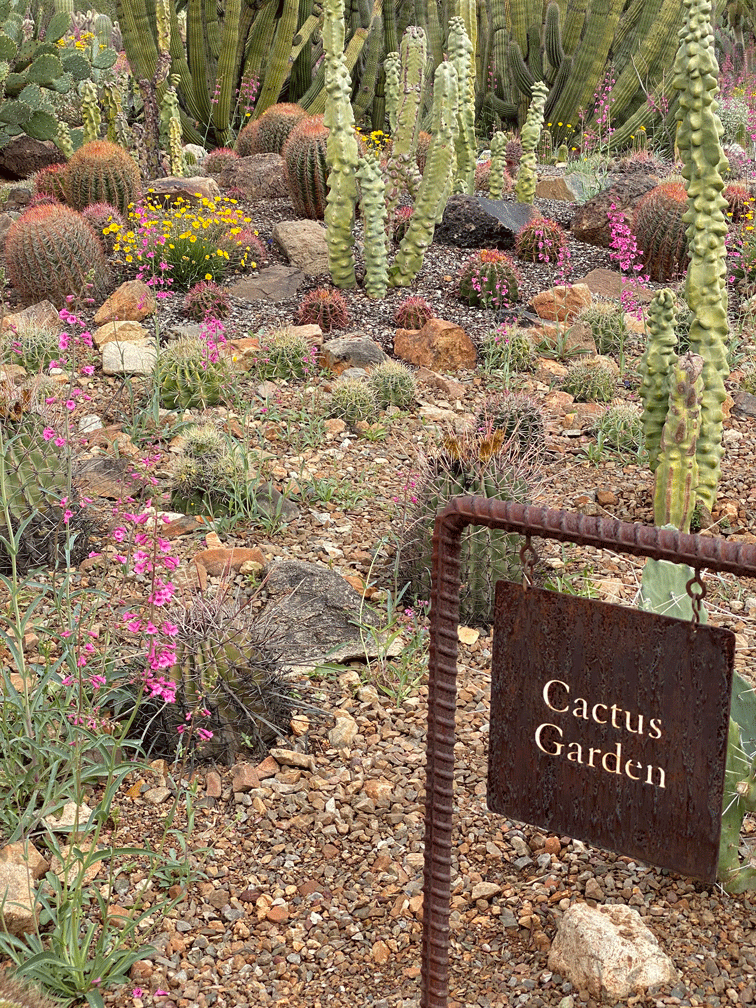
Since our last blog post, we’ve visited the Arizona Sonora Desert Museum a half a dozen times. We book the 8:30 time slot, when it’s not at all busy. We wear our masks the whole time we’re there, even when we’re completely alone. Here’s a view of the entrance to the cactus garden in the morning light.

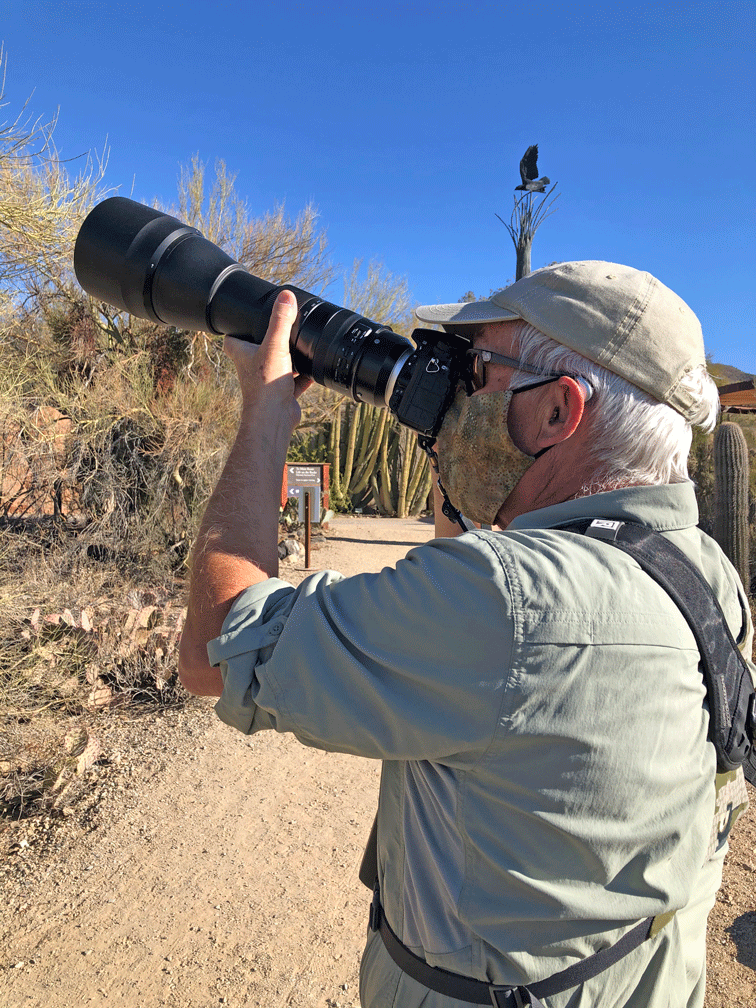
When there aren’t many people around, it’s ideal for taking photos of birds.

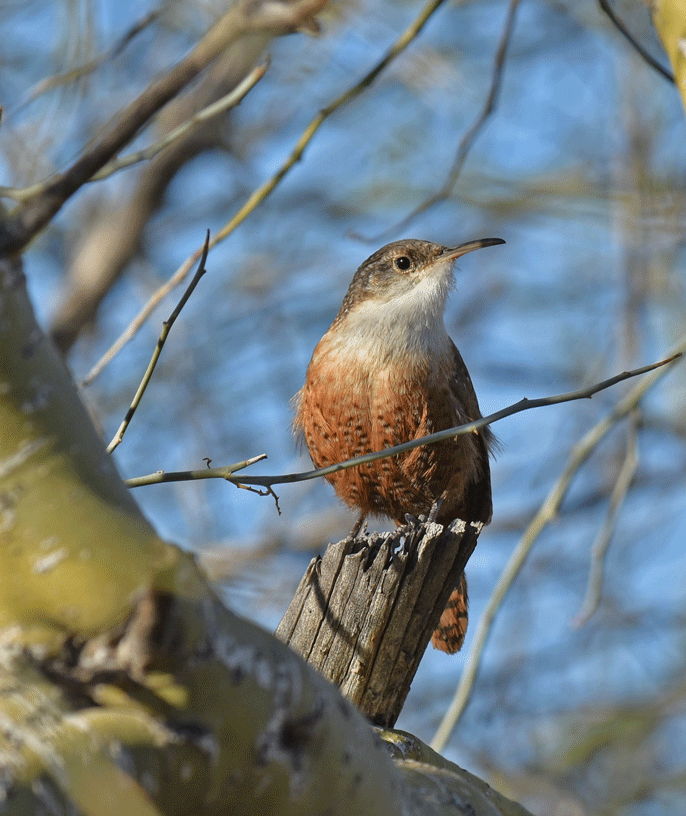
We were lucky to get a long viewing of this Canyon wren. We were surprised to see it there. Usually we hear them when we’re hiking in the mountains and we might catch a glimpse of them on the rocks.

One morning, a maintenance worker alerted us to the location of a Great horned owl.

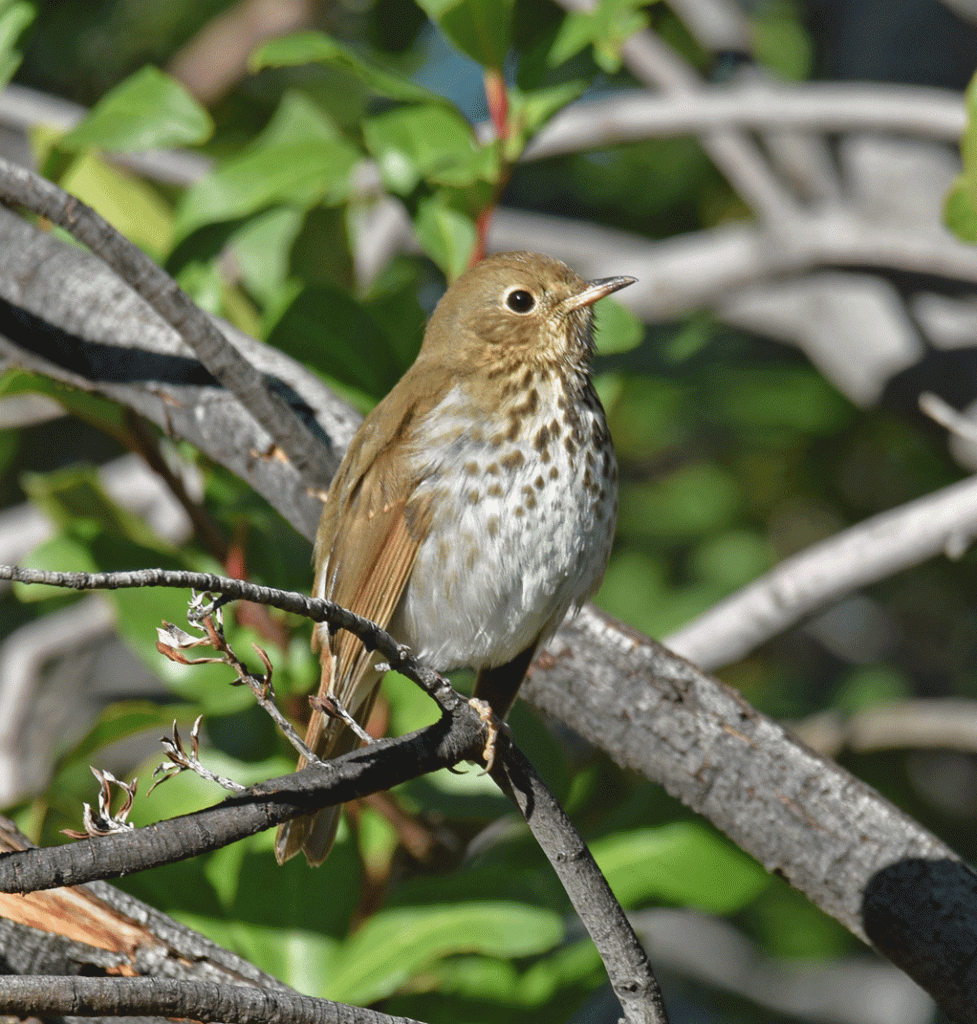
This Hermit thrush posed in the sunshine.

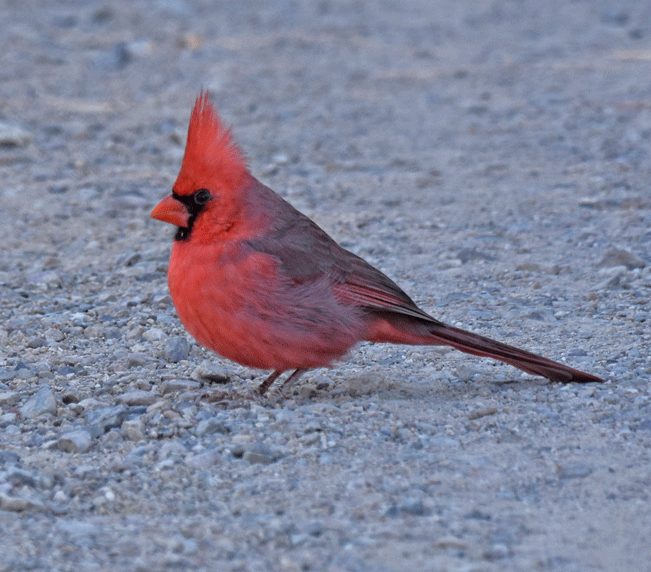
This male Northern cardinal hopped along the walk and we were able to creep up closer and closer.

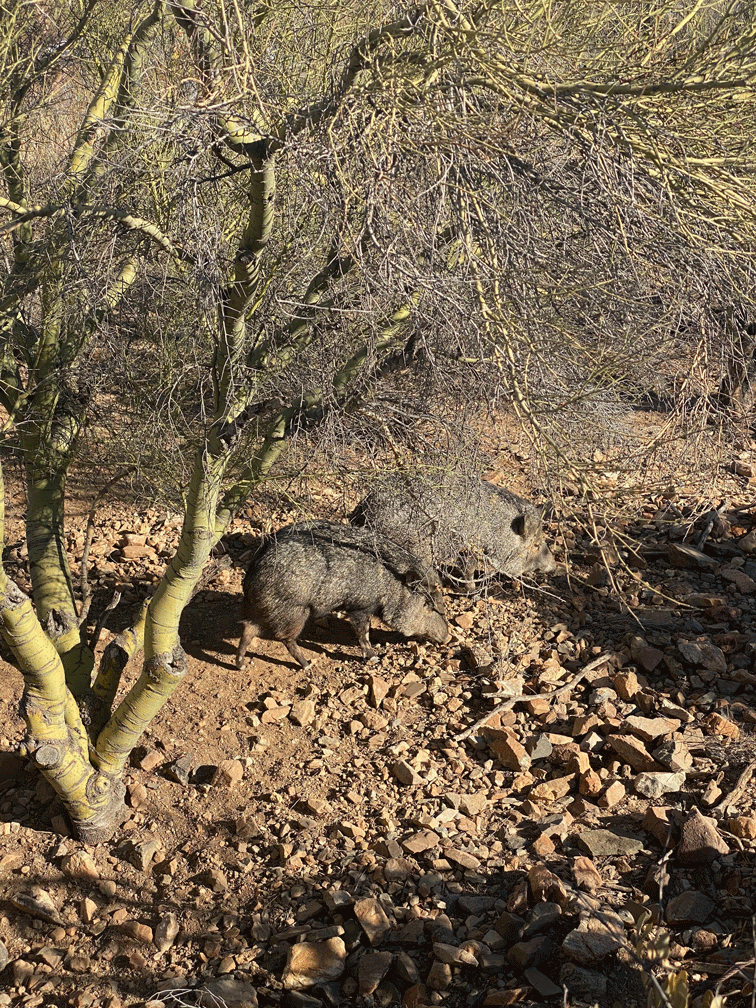
We also had plenty of good views of the javelinas.

We’re usually leaving the museum by 10:00, when the next group of visitors are arriving. We’re making good use of our season pass.

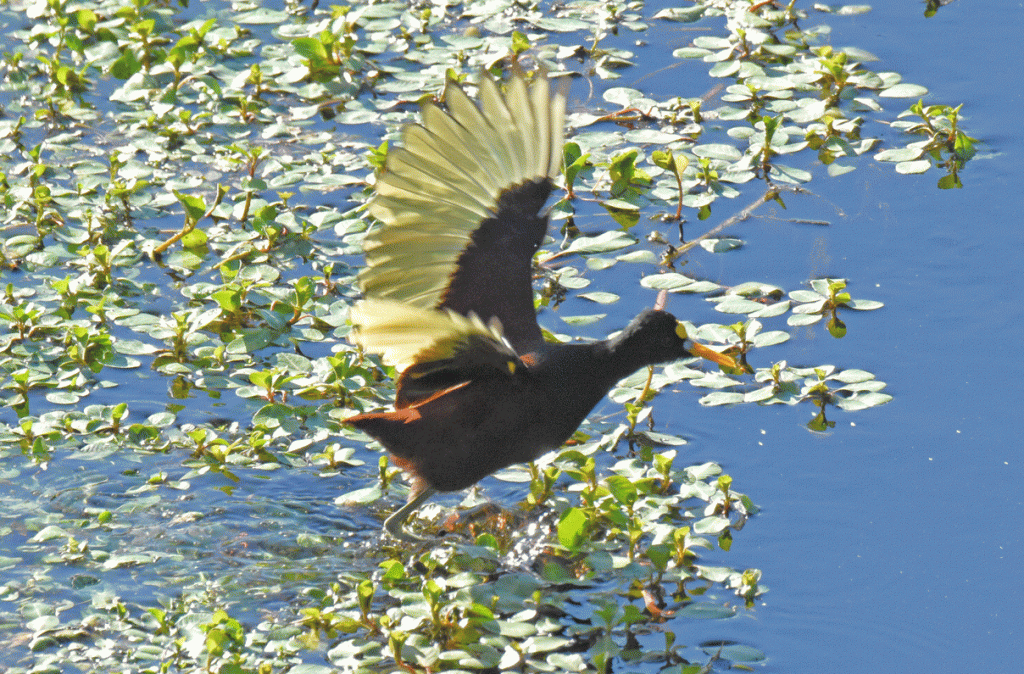
Another birding spot that’s really close to us is the Santa Cruz River at Ina, where we had seen the Northern Jacana in December. We returned in January and this rare bird was still hanging out there. Doug was lucky enough to catch it moving its wing to show the flashy yellow flight feathers.

Doug caught this Great Egret just as it was landing.

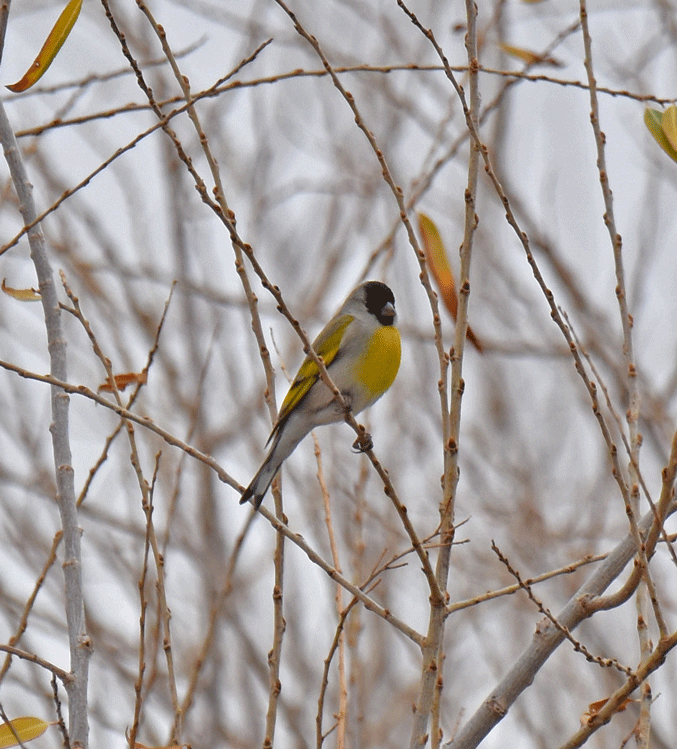
Another time, a flock of little birds perched for a few moments in a nearby tree and Doug’s photo allowed us to identify the Lawrence’s Goldfinches. They have been known to winter around Tucson, but they are usually seen in Southern California.

And we got a good look at the resident Great Blue Heron.

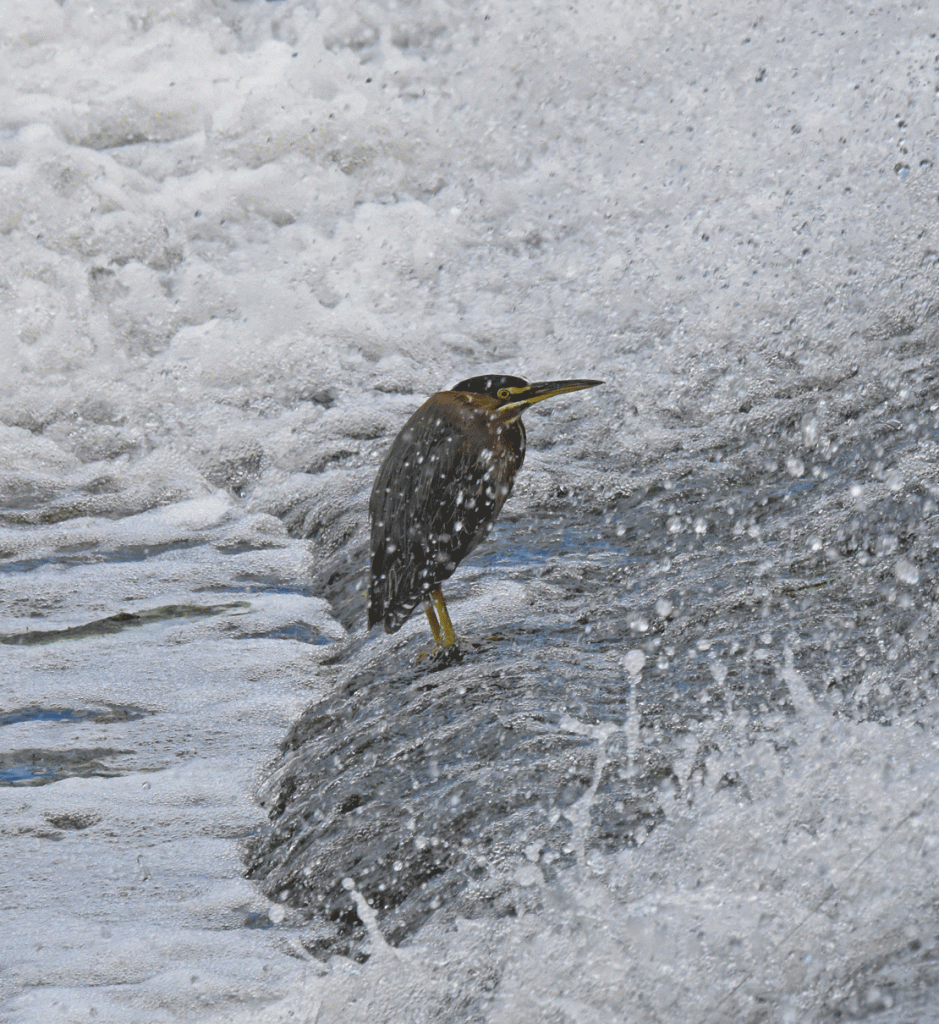
There is also a Green Heron that hangs out under the bridge. After the heavy rains, the concrete drop resembled a waterfall and it seemed happy to stand in the spray.

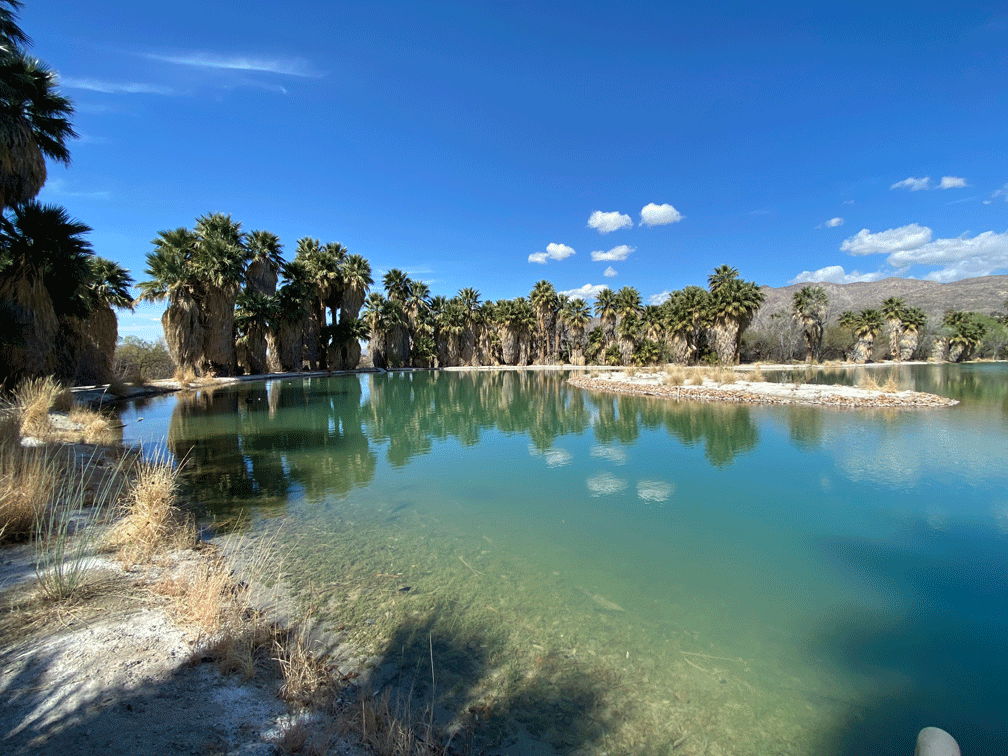
We also went to the Sweetwater Wetlands several times. This January view reminds me of the colours in September at home in BC.

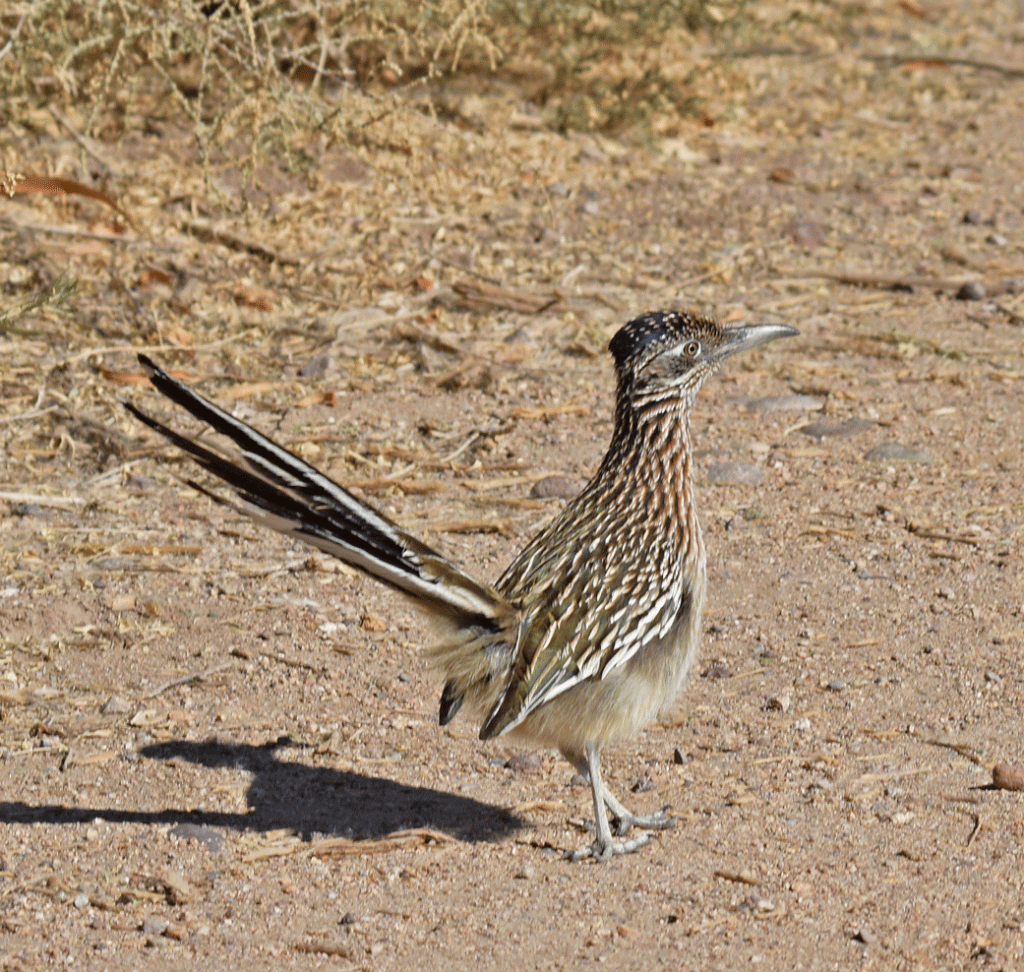
This Greater Roadrunner was out near the parking lot one morning.

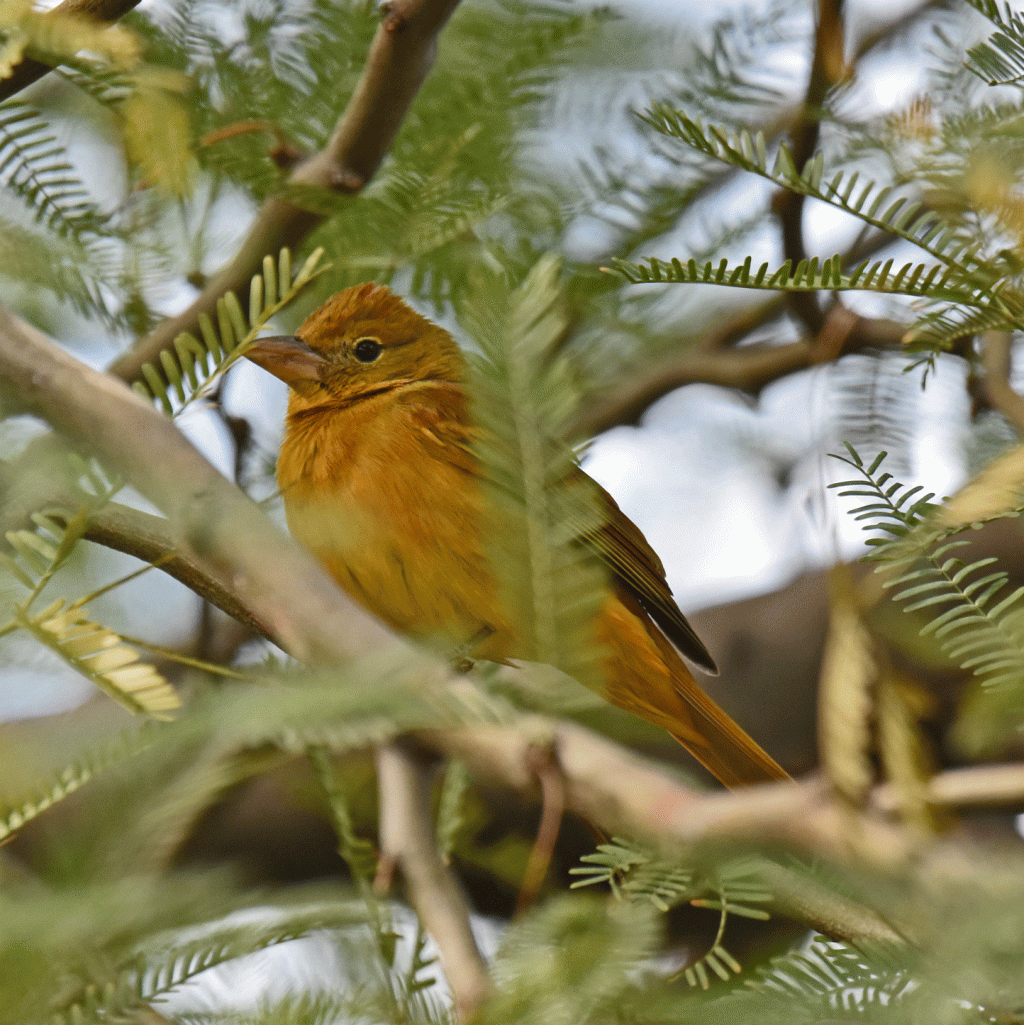
Reid Park is in the middle of Tucson, so it’s about a half hour drive for us, but still pretty local. We got a good look at this female or immature male Summer Tanager…

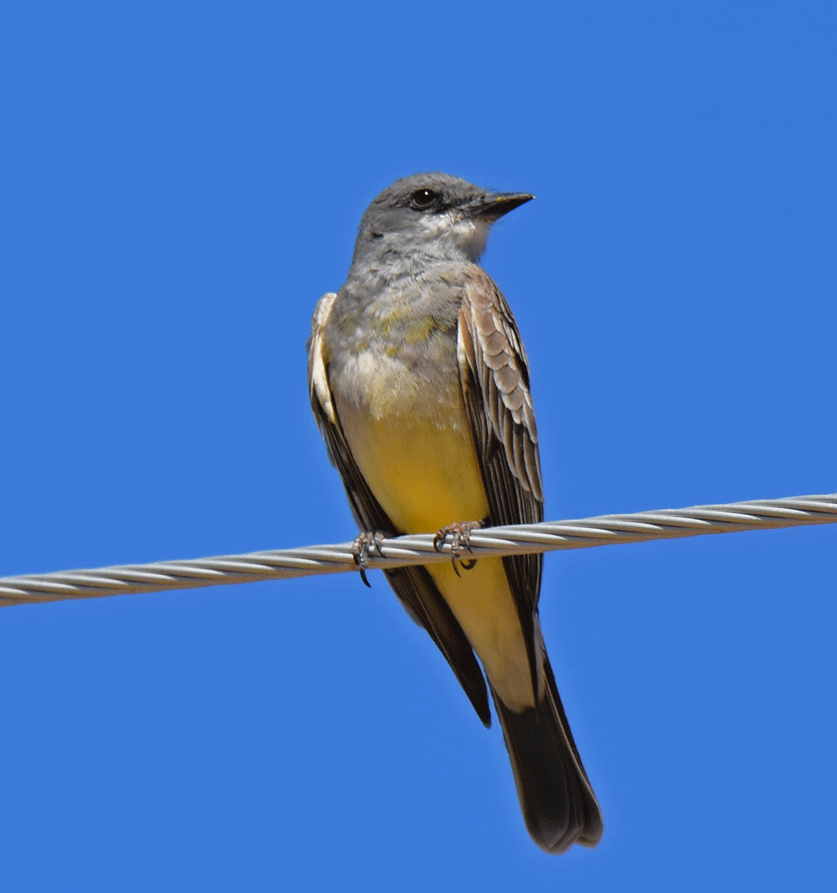
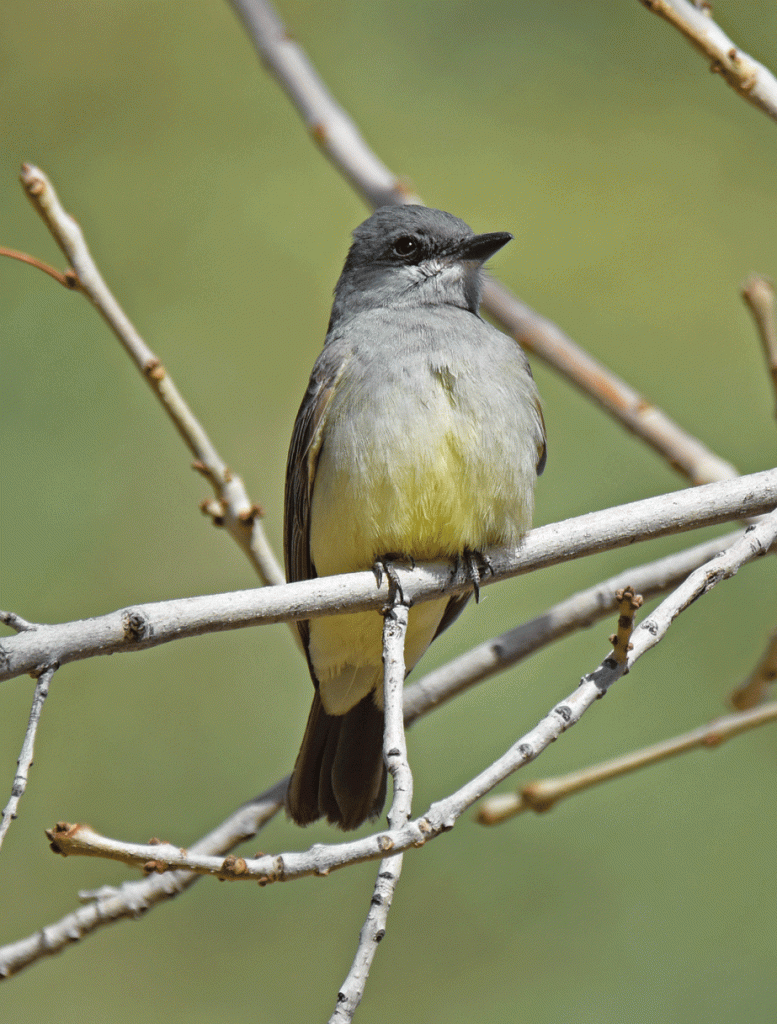
…and our first ever sighting of a Cassin’s Kingbird.

We saw a Greater Pewee at the same park last year, but this time it wasn’t as high up in the trees. Notice how bright the underside is of its two-toned bill.

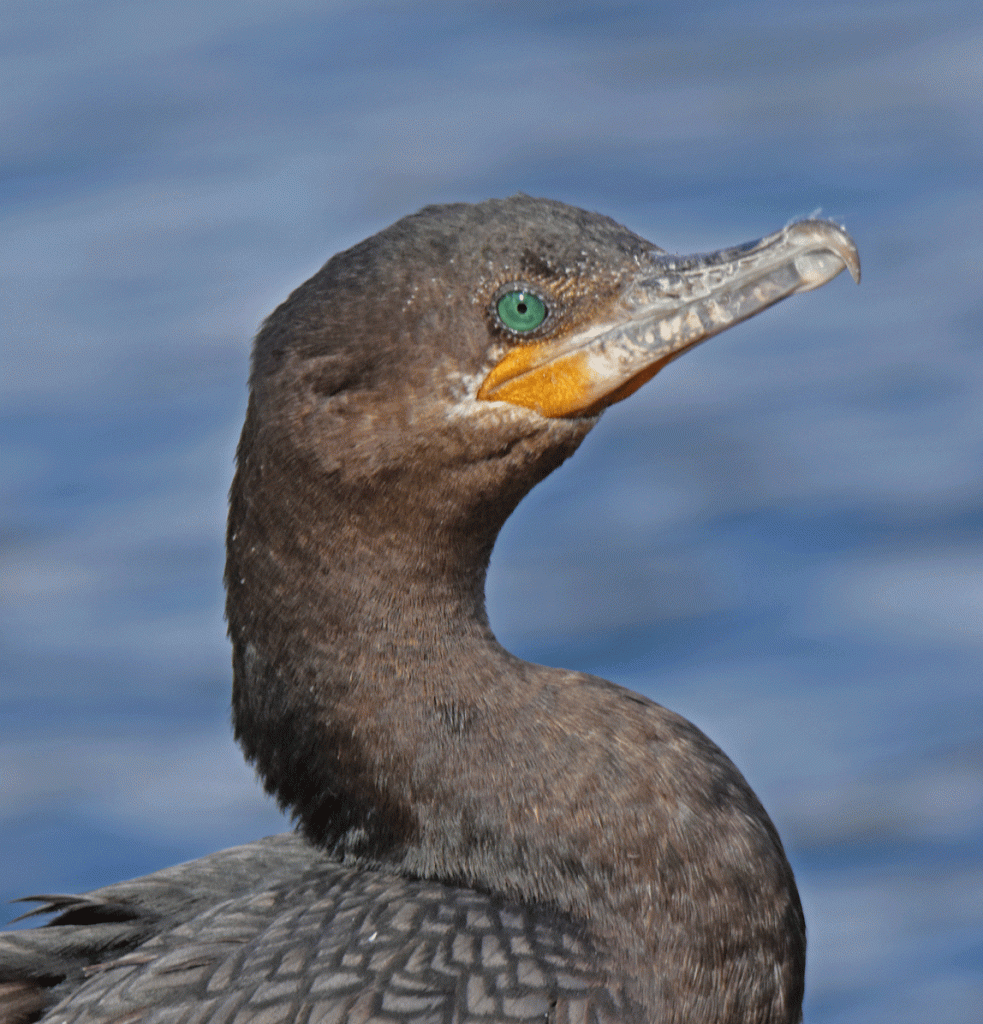
There were at least thirty Neotropic Cormorants perching along the pond edge. Here’s a close up view of one of them. That eye is amazing!

One January morning, we left before sunrise for a two hour drive southeast to Willcox because we wanted to see the Sandhill Cranes take flight. As we approached Willcox, we saw thousands of cranes in the air and we thought maybe we were too late. We arrived at Lake Cochise (a fancy name for a waste-water pond) around 8:00, and there were still at least two thousand cranes hanging out.

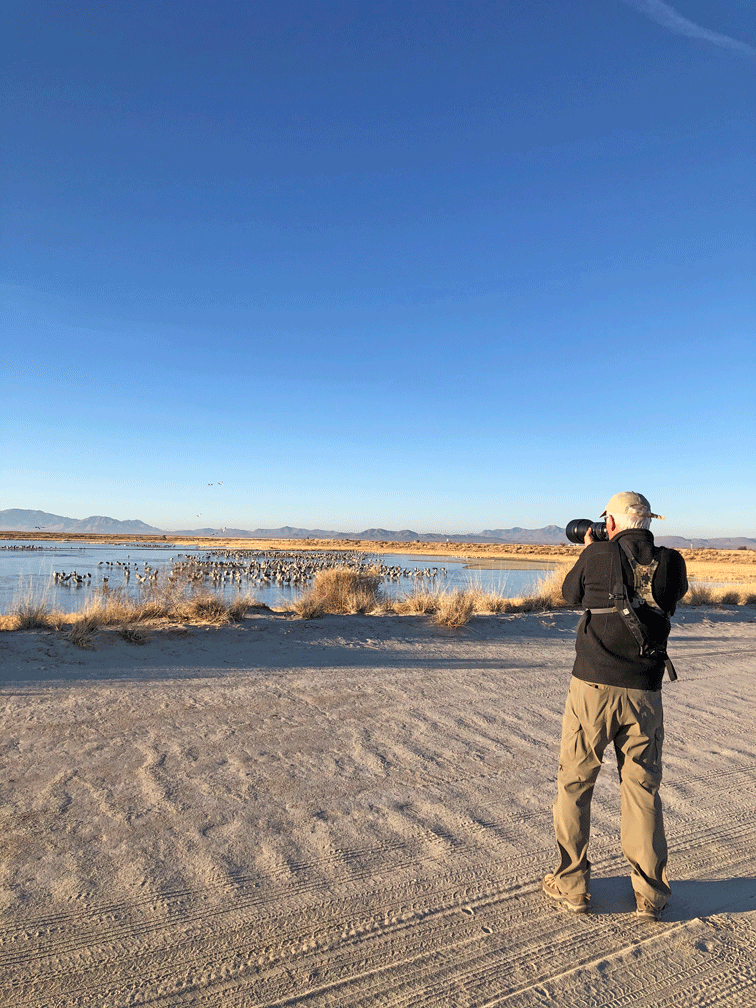
We were the only people there on that cold morning. The pond was mostly frozen. Doug took over a hundred photos. Here he is in action.

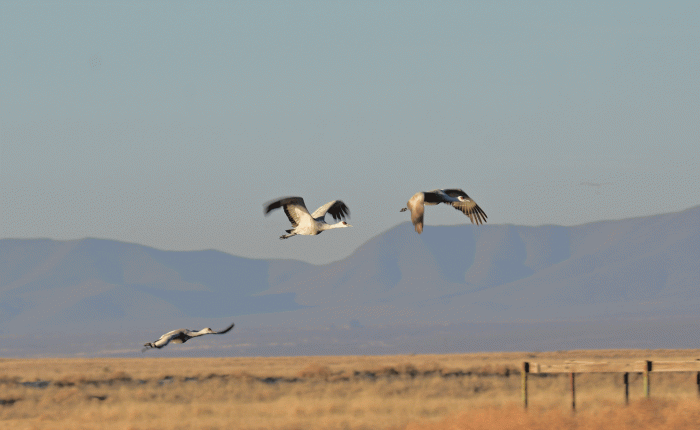
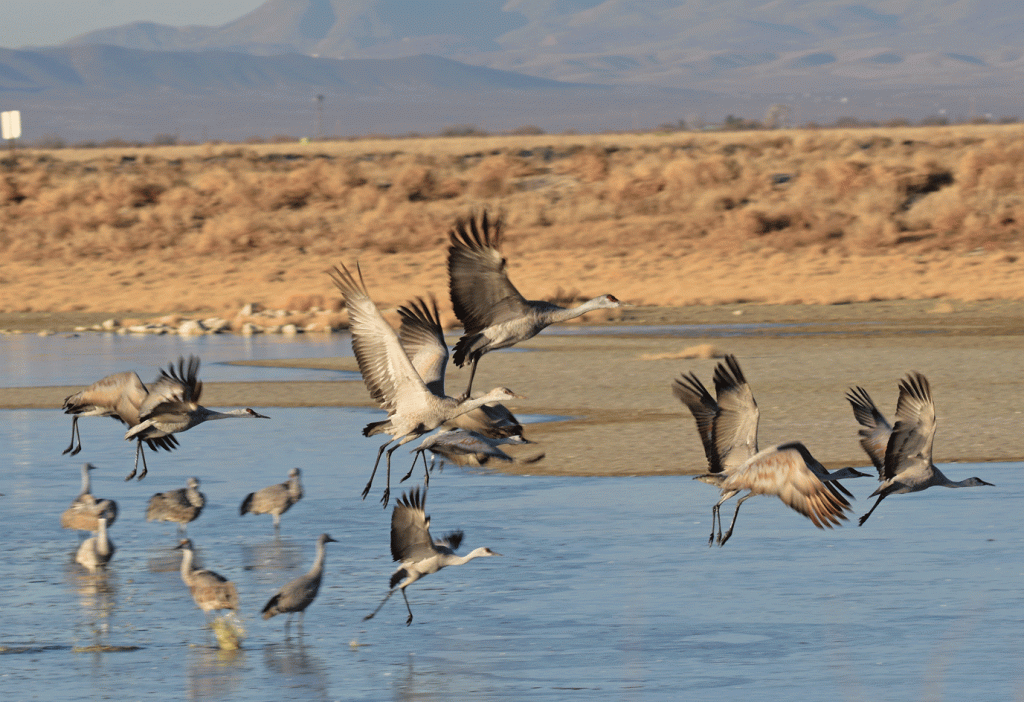
Here’s a flock of Sandhill Cranes lifting off. They circled around and headed for their feeding grounds.

Doug caught this group as they flew by. By nine o’clock, almost all of them had left.

After we checked out the birds at the nearby golf course pond, we drove south to Whitewater Draw Wildlife Area near McNeal. We arrived around 11:30, just as thousands of cranes were wheeling down from the sky.

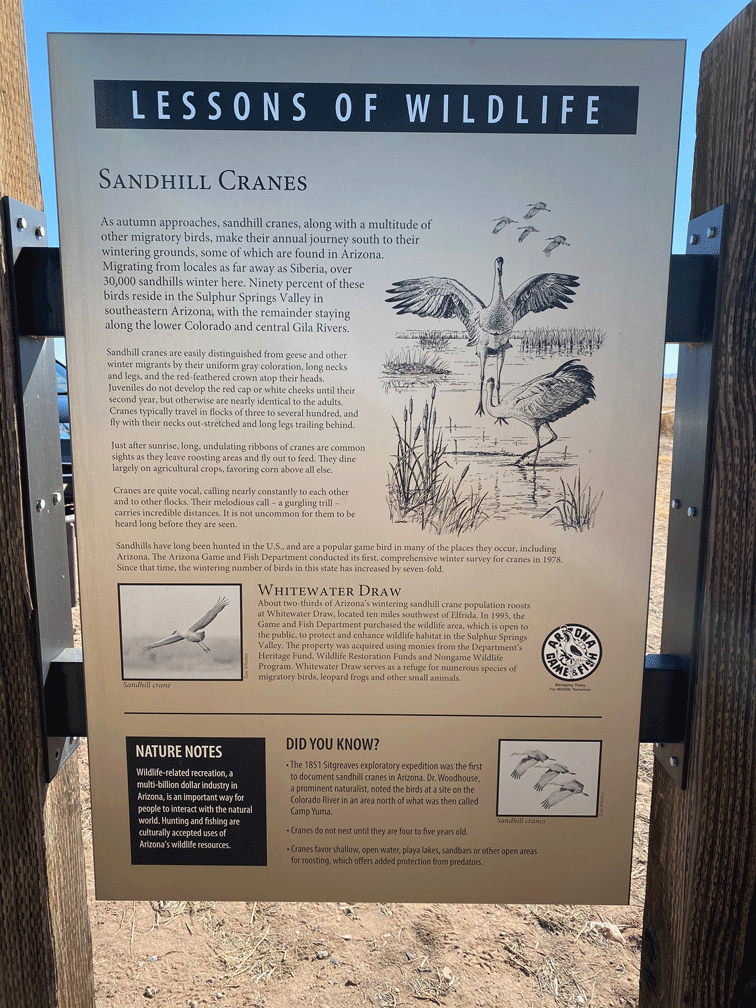
Here’s a photo of the sign, if you’d like more information.

Once the cranes landed, they didn’t do much, except make a racket. It was impossible to count how many were there, perhaps 20,000 or more. And it was also impossible to capture them in one photo. There was also a flock of about 50 Snow Geese in among them.

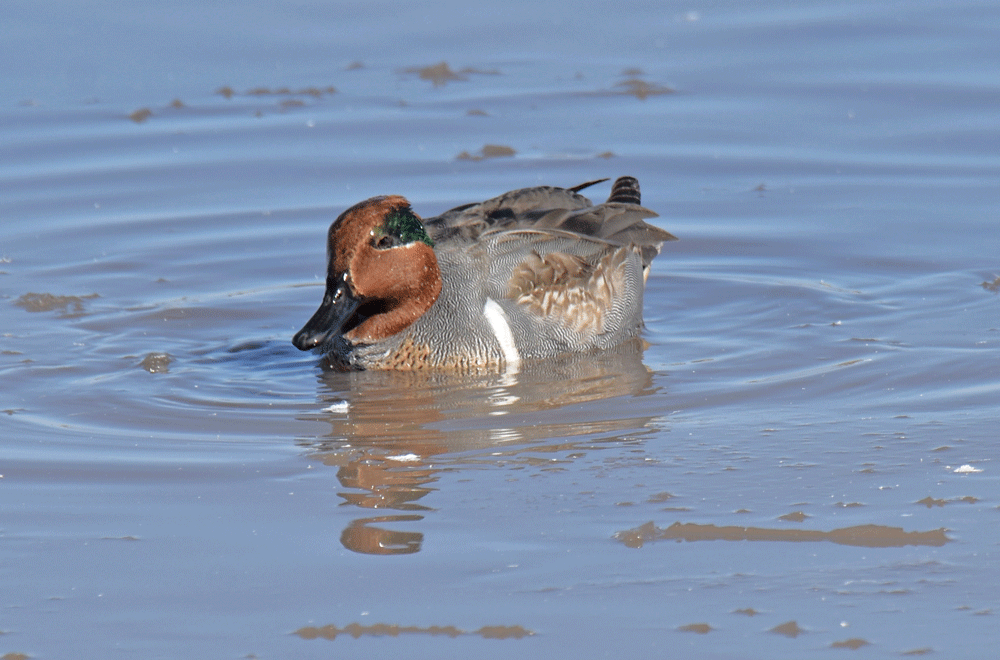
And there were some waterfowl close to the edge of the pond. Here’s a male Green-Winged Teal.

This male Northern Shoveler was waddling along the ice. We don’t often get a view of the whole bird like this.

On another day, we drove south about an hour to Tubac. We’d been there a couple of times last year, hoping to see a Rose-throated Becard, without success. Again the becard stayed hidden, but we had an enjoyable outing and saw over thirty species.

Doug took this photo of a Gray Flycatcher. Gray Flycatchers have the distinctive habit of wagging their tail gently downward.

We hope you’ve enjoyed all these bird photos. Next month’s blog is likely to have just as many. Birding in Arizona is amazing!

Merry Christmas from Arizona

Merry Christmas from Arizona

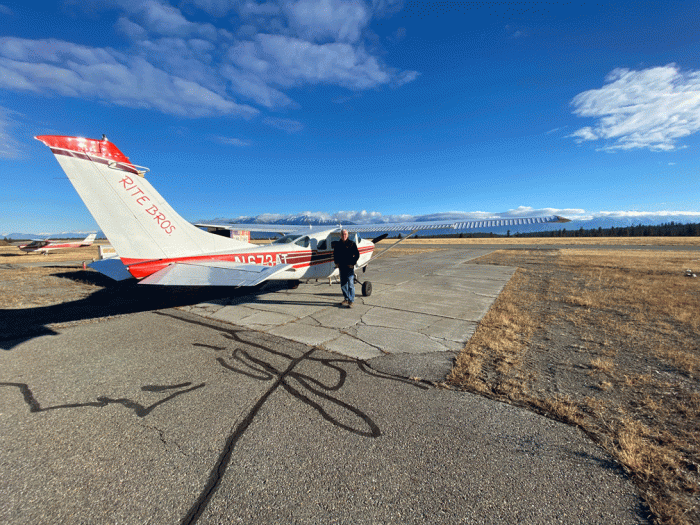
We’re in Arizona now, at the same place we were last year. Logistics were a little different this year, because we were allowed to fly into the US, but not drive over the border. We ended up chartering a small plane to fly us to Kalispell, and getting our truck and trailer shipped to us there.

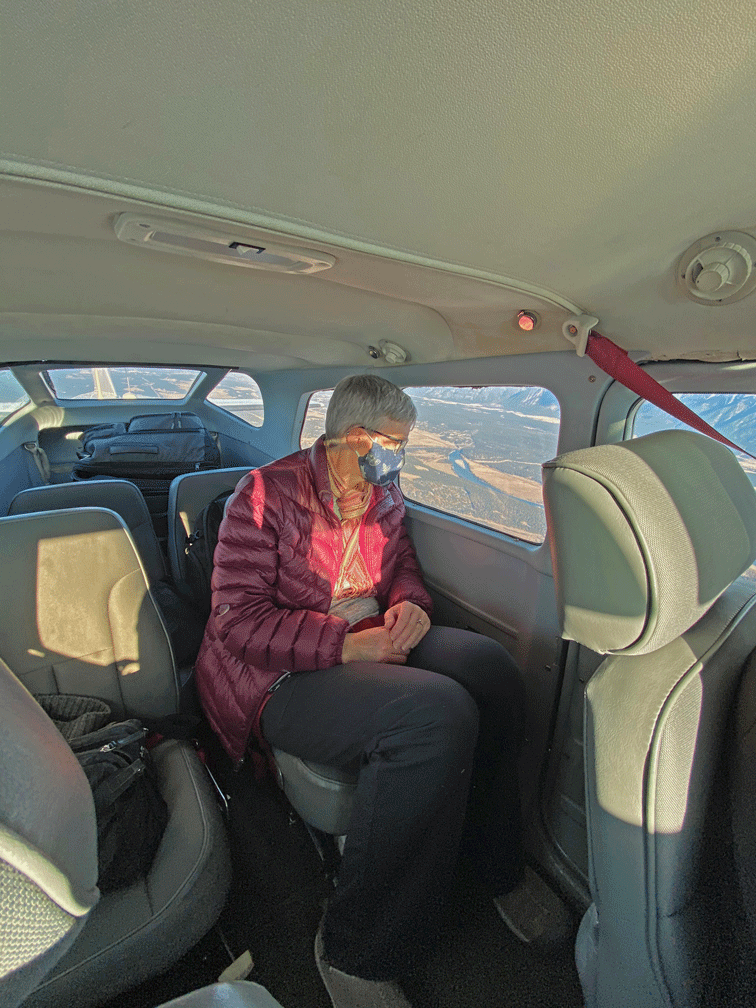
It was a gorgeous clear morning in early December; perfect flying weather.

Wendy spent most of the fifty-five minute flight looking down, and taking photo after photo.

Here’s a view looking towards the Steeples. Fisher Peak is in the clouds.

The next morning, our truck and trailer were delivered to our hotel in Kalispell and we headed south.

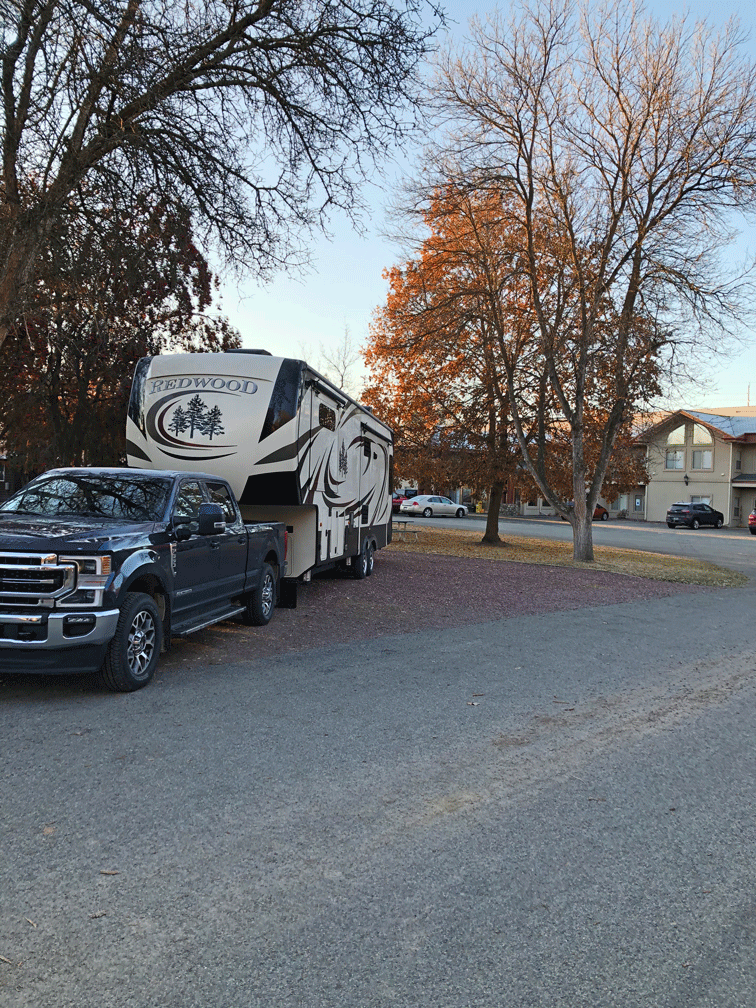
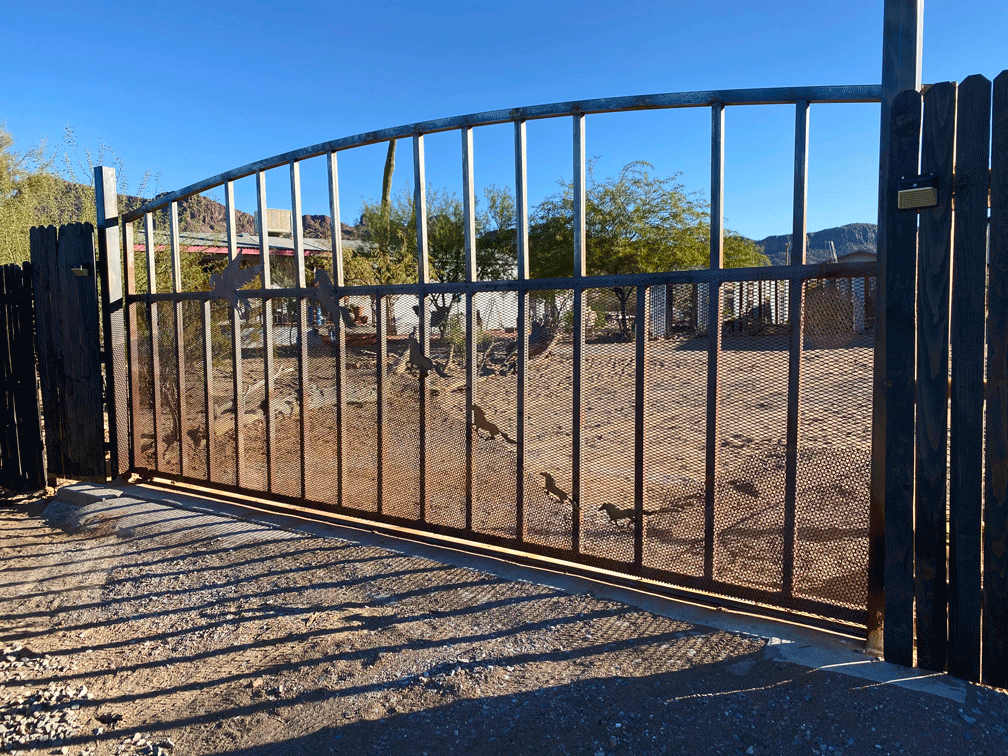
After three long days of driving (Kalispell, MT to Idaho Falls, ID to Mesquite, NV to Tucson, AZ) we reached our winter residence. Our landlord had put up a new, and much larger gate, which made it really easy to pull in and get set up.

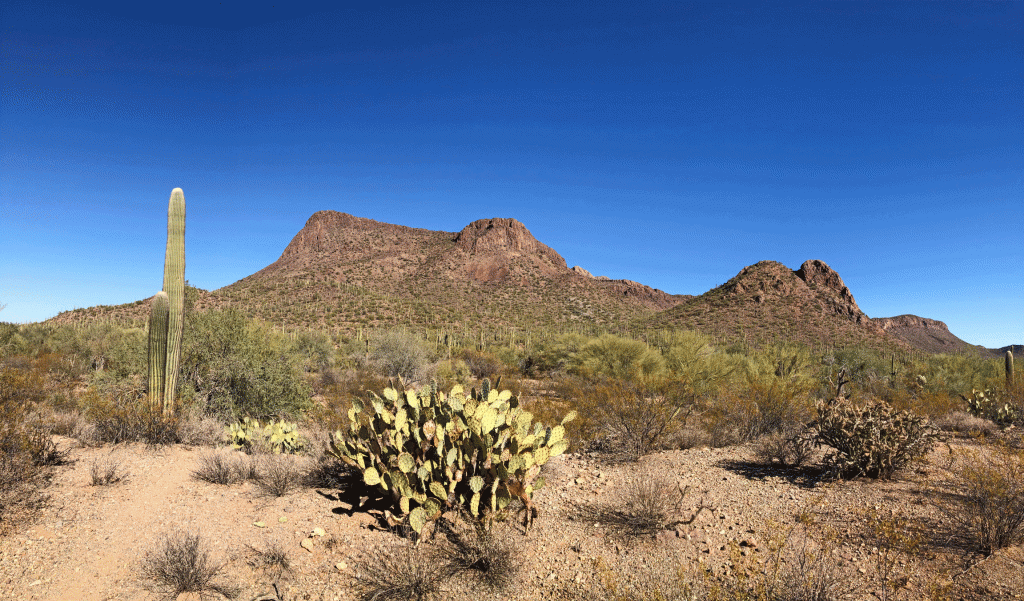
The day after we arrived we took a short walk down the road and into the State Trust Land. We took this photo of our local mountains, with Panther Peak on the left side of the ridge.

For our first real hike, we returned to the Tortolita Mountains. We chose to hike the same trail as our last hike in the spring, which was along the ridge to Alamo Springs. Here’s Doug standing near a magnificent saguaro.

On another cooler morning, we returned to the Hugh Norris trail and made a loop by going down the Sendero Esperanza, to Dobie Wash and back to the parking lot. (about ten and a half kilometres)

For our next hike, we combined birding and hiking at Sabino Canyon. Although we saw over a dozen species of birds, there were fewer than we had expected, probably due to the fact that there was no water in the canyon. When we were here in 2019, the creek was full to overflowing; this year there has been little rain, especially in the fall. It was a gorgeous location however.

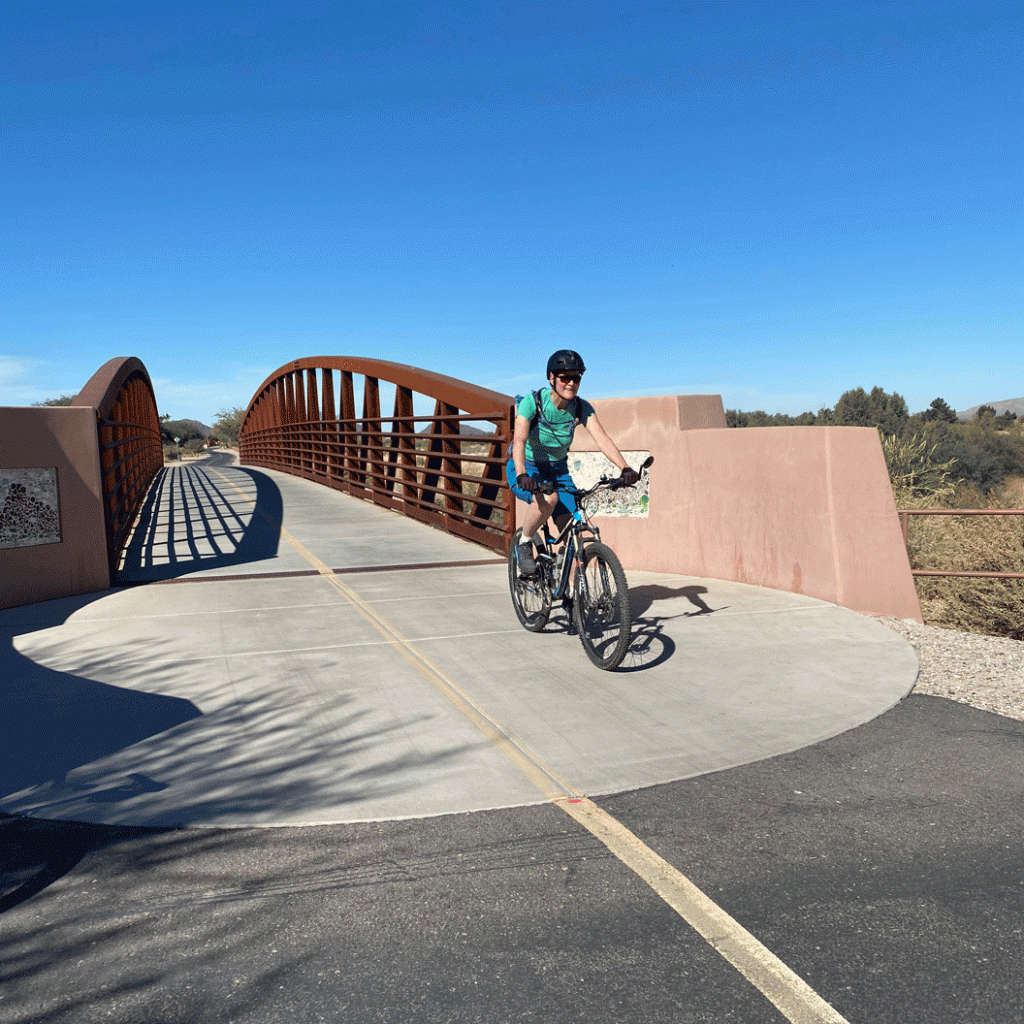
We soon got into our routine of alternating between hiking, birding and biking. We did our first three rides on “The Loop,” a paved pathway that loops around Tucson. It’s not ideal to ride the pavement with our knobby tires, but it helps us get in shape for the single track trails.

We found some nice single track in the Tortolita Preserve. It’s a 15 kilometre loop that we can drive to in about half an hour. It’s not too technical; just enough to keep you on your toes and allow you to feel you’ve accomplished something. There are some steep washes to go down into and hope you have enough speed and strength to get up out of, and soft sand along the edges of other parts of the trail. And of course the ever present cactuses. But it’s quite enjoyable.

We also returned to the Desert Museum. We found that if we arrived at opening on a weekday, it’s virtually empty – of people, not birds or animals. The first time we went, the coyotes and javelinas were very active.

Here’s a couple of views of the cactus garden at the Arizona Sonora Desert Museum.

And another one.

The second time we went to the Desert Museum, we focused on birding. Doug got a good photo of a Costa’s hummingbird sipping from a creosote flower.

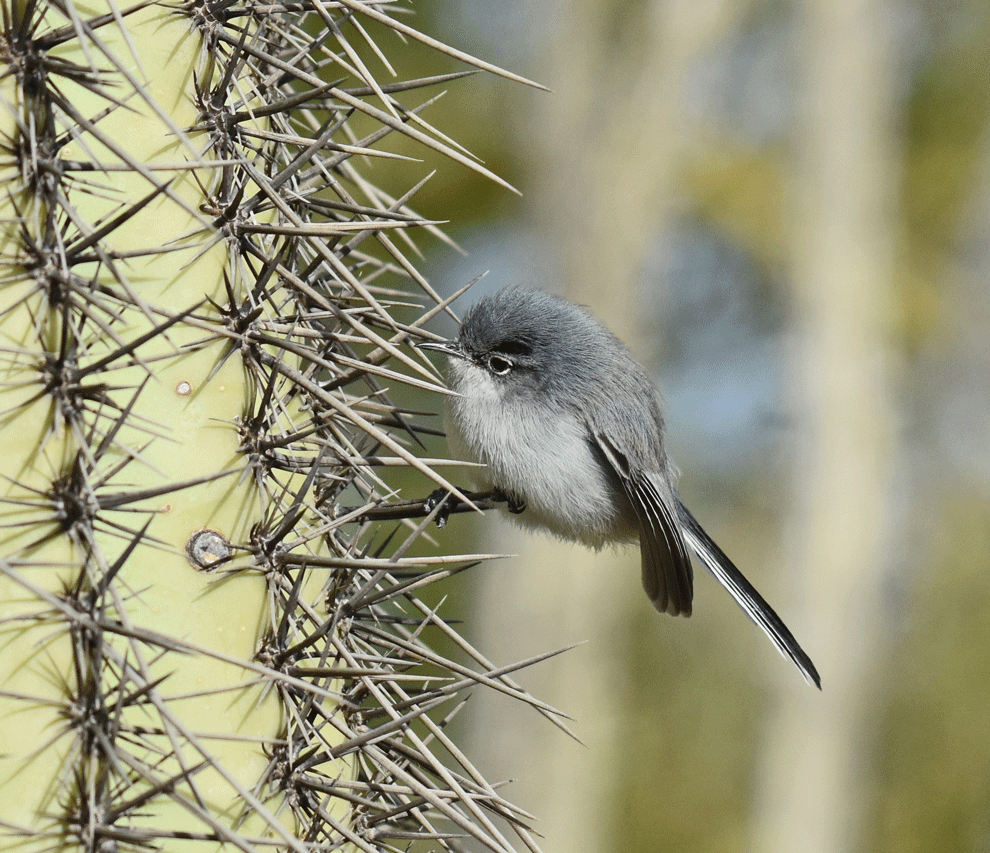
This is a cute Black-tailed gnatcatcher hunting for bugs on the spikes of a saguaro.

We also went birding at the Sweetwater Wetlands, which uses treated waste water to provide habitat for wildlife and viewing opportunities for people. This Sora was in a shallow stream near the entrance.

Treated waste water is also added to the Santa Cruz River. There is a steady flow under the bridge that we cross every time we drive into Tucson, which provides suitable habitat for some interesting birds. We often can spot a Great egret or a Great blue heron as we drive across.

One morning we set out to look for a rare bird that we had learned was spotted there. We thought it might take us the whole morning to see it, but within five minutes, we had a good view of a Northern jacana. We spent several minutes looking at it, and Doug was able to catch the male in flight.

If you look closely at the photo, you can notice the jacana’s extra long toes. These toes allow it to walk on floating vegetation.

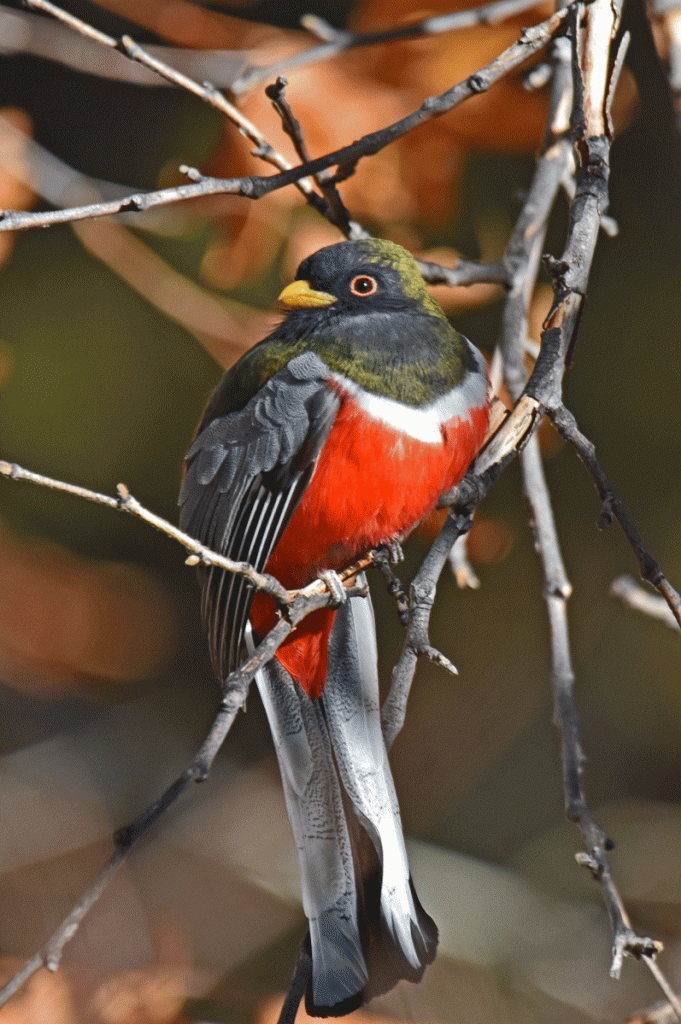
We had such good luck seeing the jacana, that we thought we’d try for another rare bird. There’s a male Elegant trogon who hangs out in Madera Canyon that we tried unsuccessfully to see a number of times last season.

So one early morning we arrived at his known “hanging out” spot. There was no one else around. Within ten minutes, we spotted the trogon perching on branches of low shrubs and flying from his perch down to the water in the canyon and up again. We were thrilled to see him, but when he flew out of view, we decided to take the trail downstream to look for other birds. It turned out the trogon had the same idea and we had a number of other good views of him along the trail, until he flew into the high branches of the tallest trees.

We continued birding to our turn around spot and came back up to the parking lot. Just as we reached the pavement, we caught another glimpse of the trogon. This time he perched in the sunshine and even came closer to us.

Enjoy this photo of an Elegant trogon. It’s like he is dressed in his Christmas finery of red and green.

Later the same day, we visited Canoa Ranch Conservation area. Wherever there is water in the desert, you’ll find birds. The pond was full of waterfowl; American wigeons, Ring-necked ducks, Northern pintails, Redheads and of course, American coots.

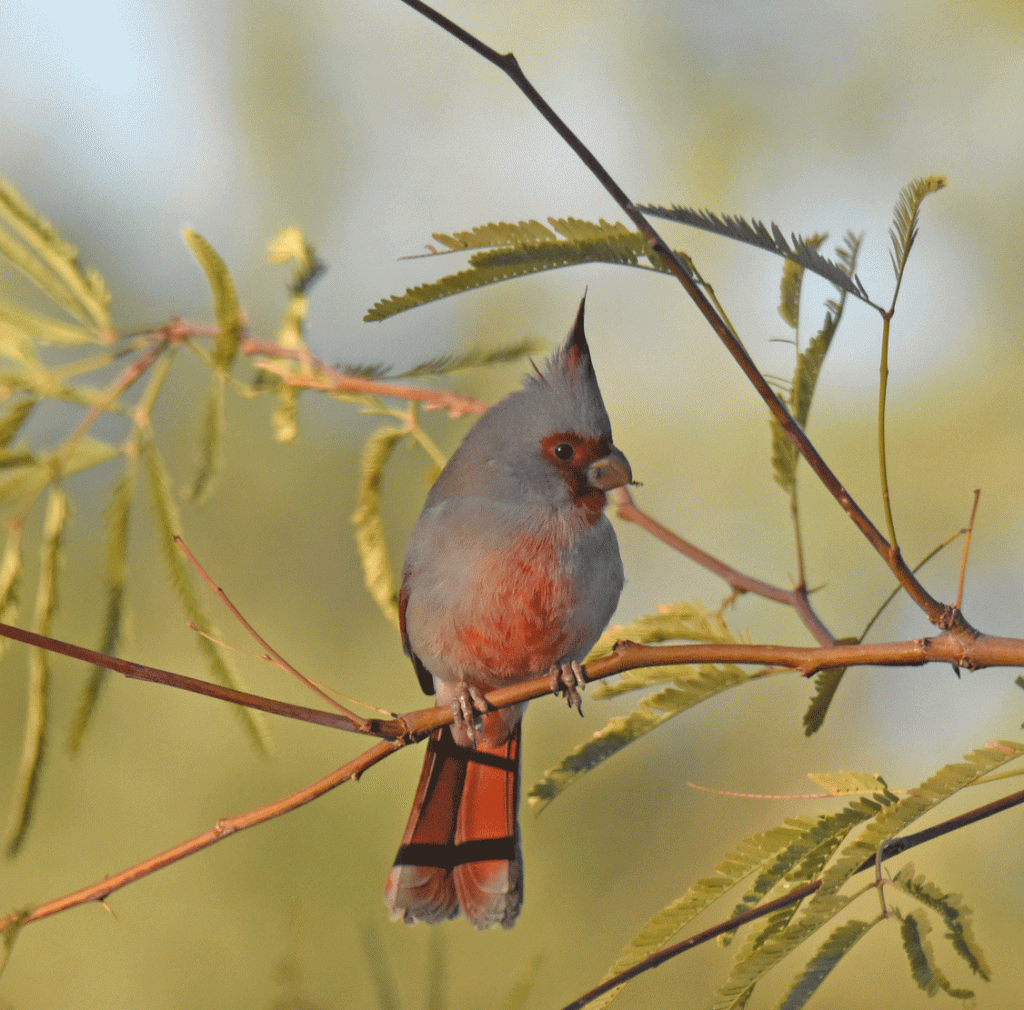
We also have plenty of birds to look at at our own place. Doug got a good shot of this male Pyrrhuloxia, through our back window.
Wendy also had some time to sew and quilt some festive placemats.
She finished the binding outside in the sun.

On December 21st, we viewed the conjunction of Jupiter and Saturn. We could clearly see the moons of Jupiter and the rings on Saturn, through the spotting ‘scope, but our photos taken through the ‘scope couldn’t show the detail. You can make out the “bright star” in the early evening sky in the photo below.

Merry Christmas from our wee spot in Arizona.

And happy new year!

Close to Home

Close to Home

Instead of “Travels with a fox,” this blog could be renamed “Close to home with a fox,” although it’s a bit of a stretch, because we’re in our camper and have forgotten to invite any fox mascots. We figured you might be interested in our other way of camping.

We drove about an hour and a half from our house into the mountains. We knew a spot by a creek that would probably not be occupied, unless by cattle. And there were no other campers, but we did have to do some cow pad removal and gravel restoration of some specific sites.

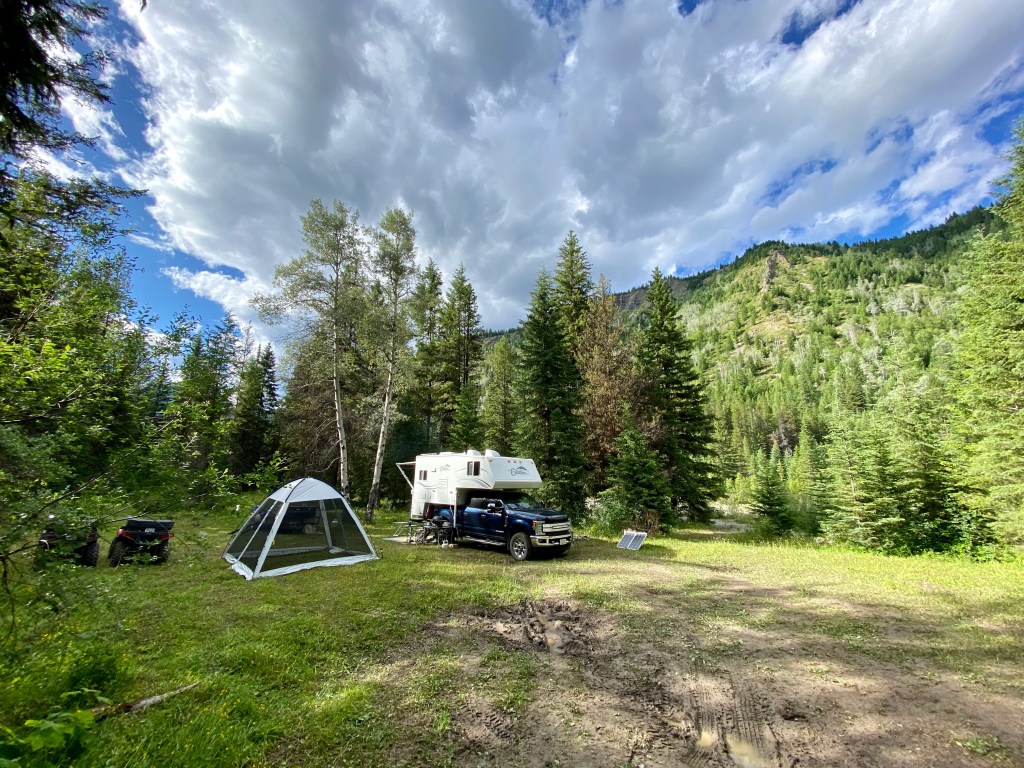
Here’s a photo of our camp fully set up: bug tent beside the camper, portable solar panel connected, outside cooking area, and shower tent (out of view.) We also brought our quads along.

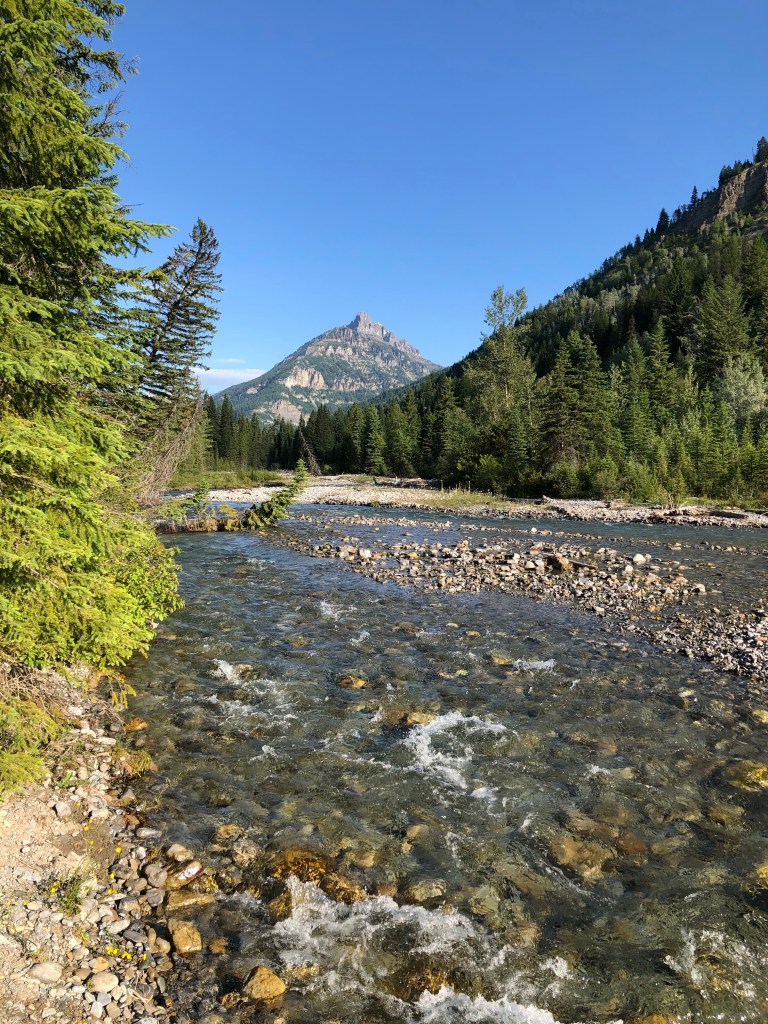
We camped right beside the creek. Here’s a view from the water just steps from our camper.

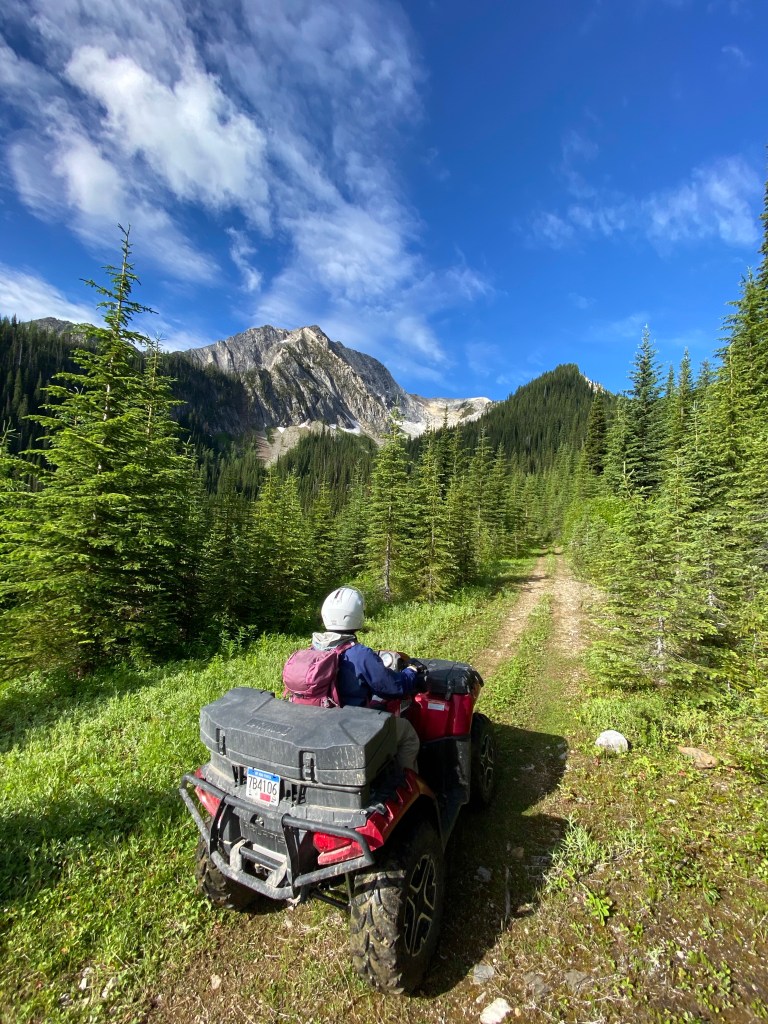
The next day, we used our quads to access a hiking trail we knew. We drove up the Forest Service Road, past Summer Lake and on to an old road. When we first discovered this road thirty-six years ago, we could drive up the four kilometres in our full-size pickup. Now most of the road is thick with alders, but there were a few views along the way.

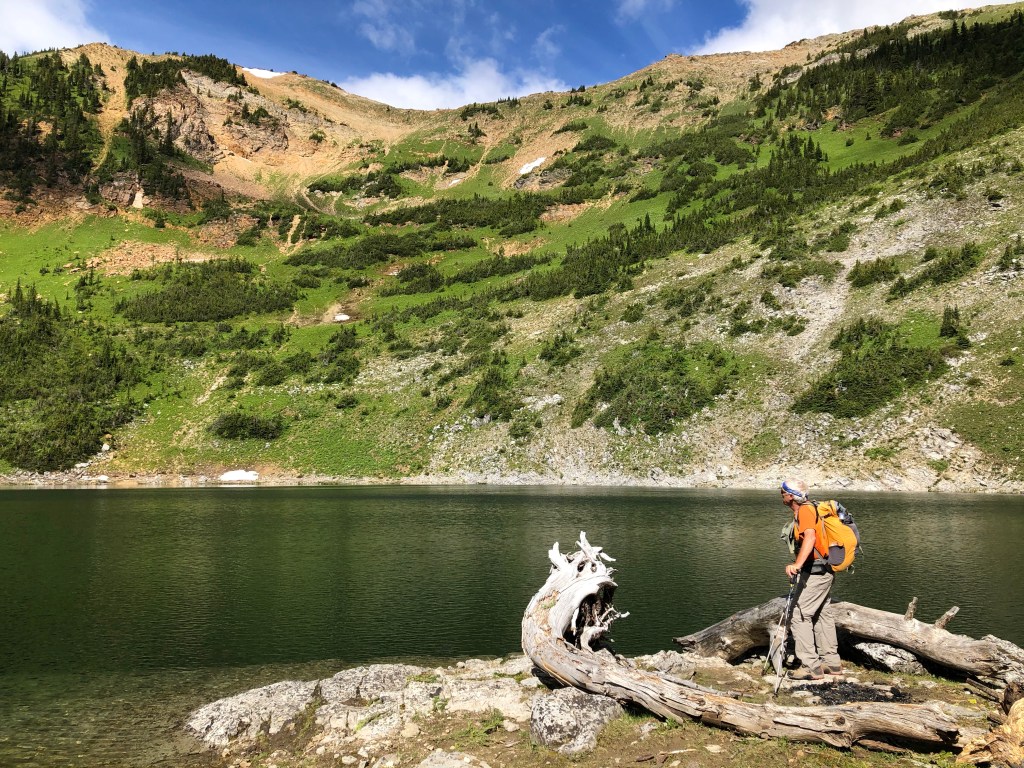
We parked our quads near the top of a former skid road and followed a newly flagged trail for about half an hour to Ruault Lake. The lake was very high for the third week of July. Bear Lake is below the other side of the ridge that is shown in the photo below.

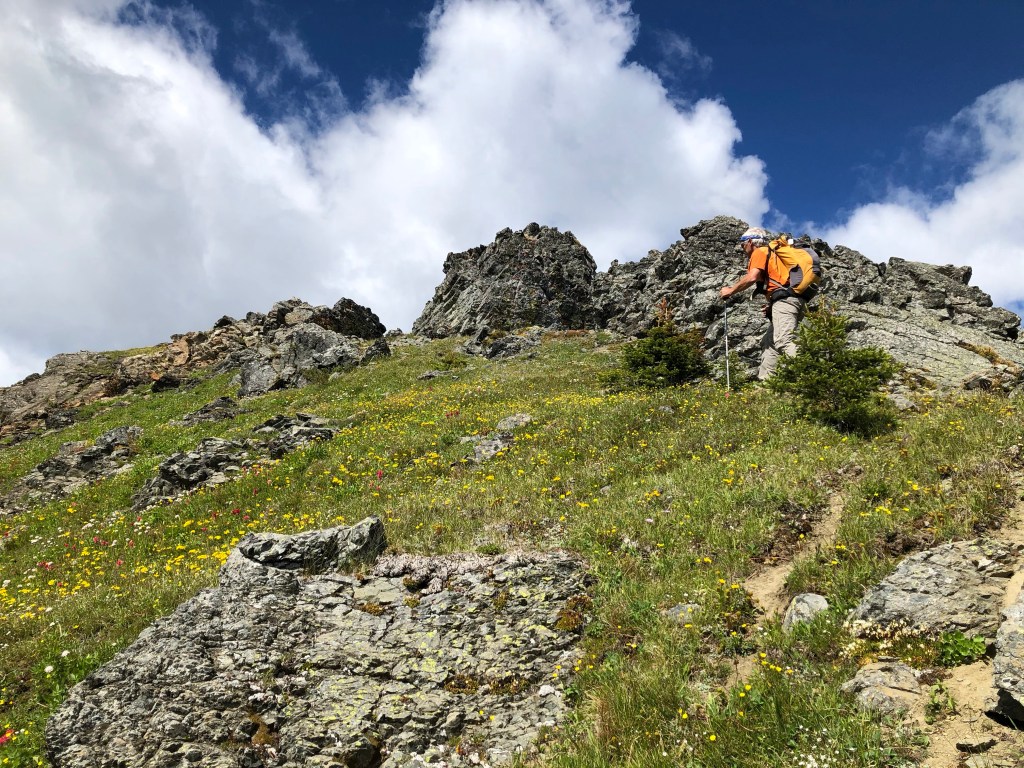
With plenty of time left in the day, we chose to make our way up to the ridge, sometimes following game trails and sometimes bushwacking. As we worked our way upwards, we had good views of Ruault Lake and Mount Ruault.

Soon we were walking along the ridge line.

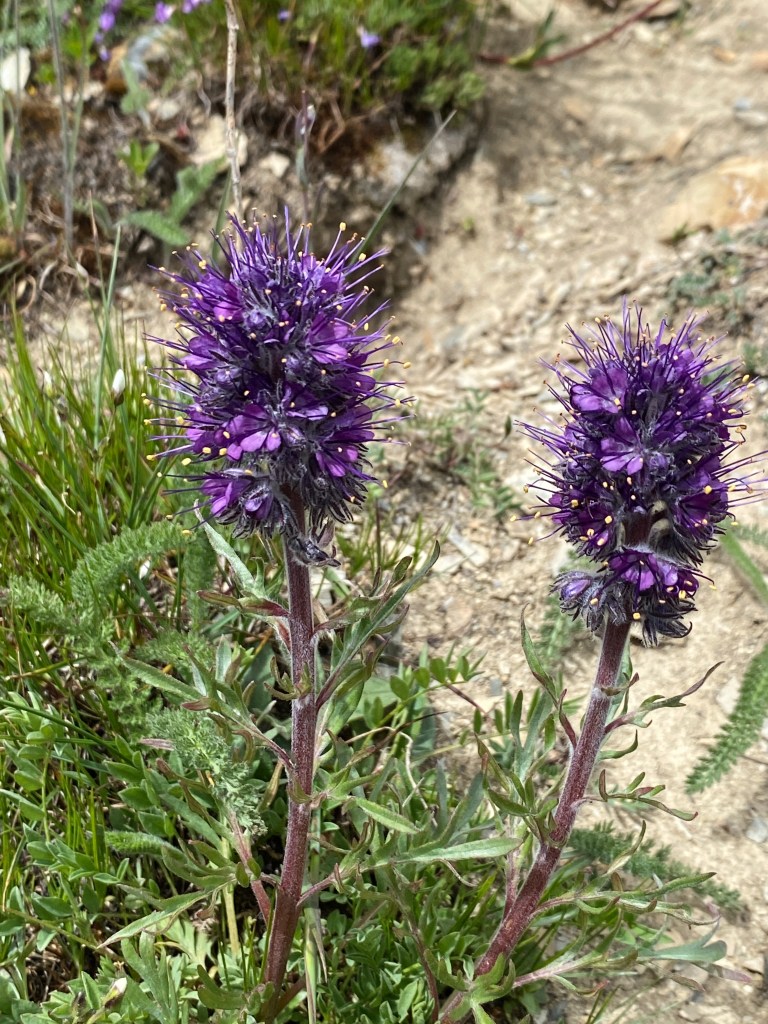
The flowers were spectacular. There are close-ups of Silky phacelia and Indian paintbrush.

We reached the highest point on the ridge close to noon. From there, we had a great view of Bear Lake, and could even see Cranbrook, although it’s not visible in the photo below. We had an enjoyable lunch, without much wind, with the bonus of cellular coverage so we could send photos to family and friends.

We backtracked along the ridge and then headed down the avalanche path. In the avalanche path we were truly bushwhacking, with no evidence of a trail at all. We joined the Ruault trail about five minutes of walking above our quads. Our total hike was about four kilometres.

The next morning, we explored some newer (and now unused) logging roads around Goat Haven Mountain. We used to spend time in the area when it was thickly forested and intertwined with game trails. We had some great views of Goat Haven and the surrounding mountains.

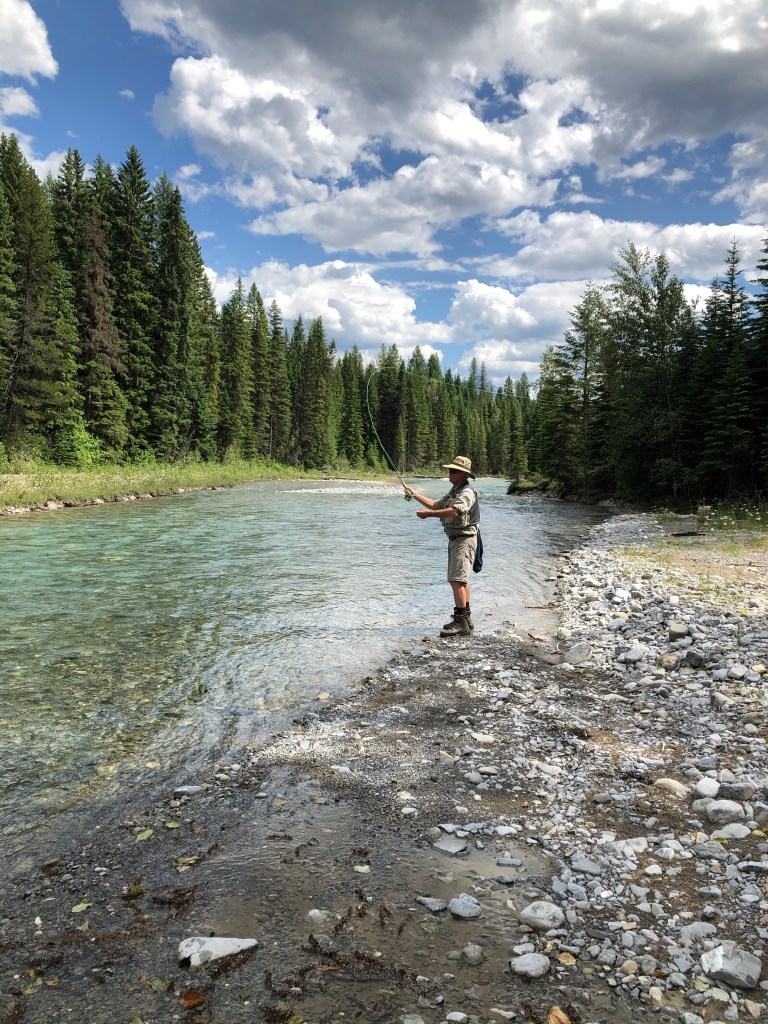
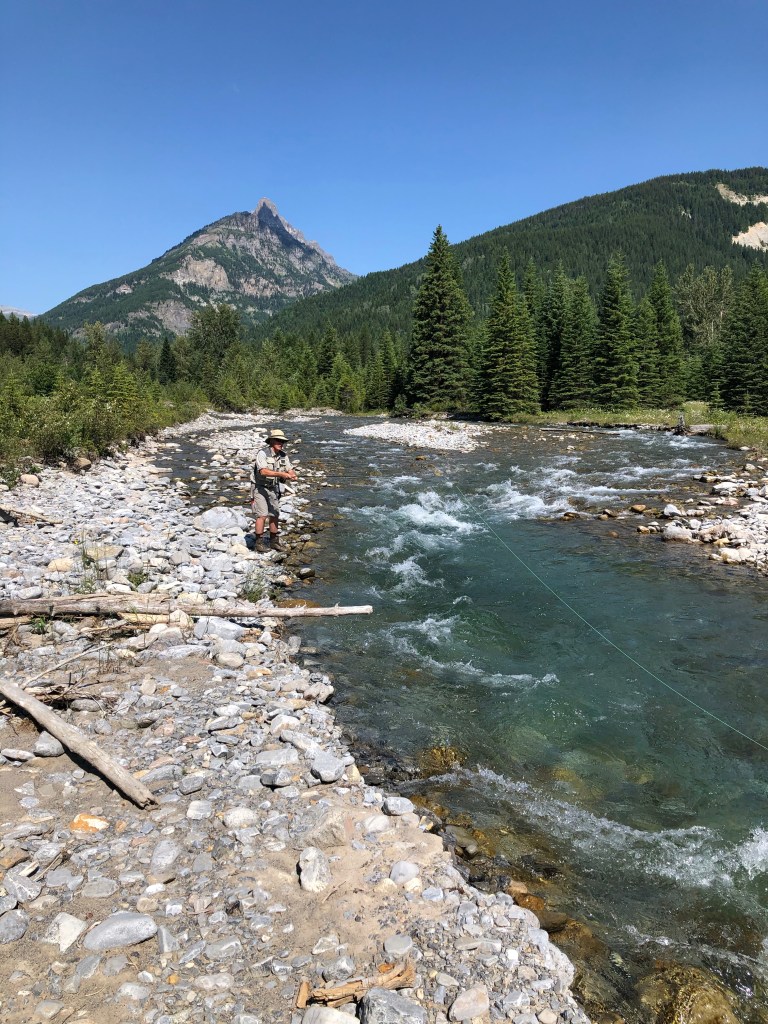
In the afternoon, we drove our quads to a good fishing spot about five minutes down the road. Doug spent some time casting into likely “fish holding” spots without much success, so he headed downstream to look for more productive waters. As soon as Doug was out of view and earshot, Wendy, who had been struggling to remember how she casted in this kind of stream, caught a fish! And she caught (and released) one more before we left for our home-on-wheels.

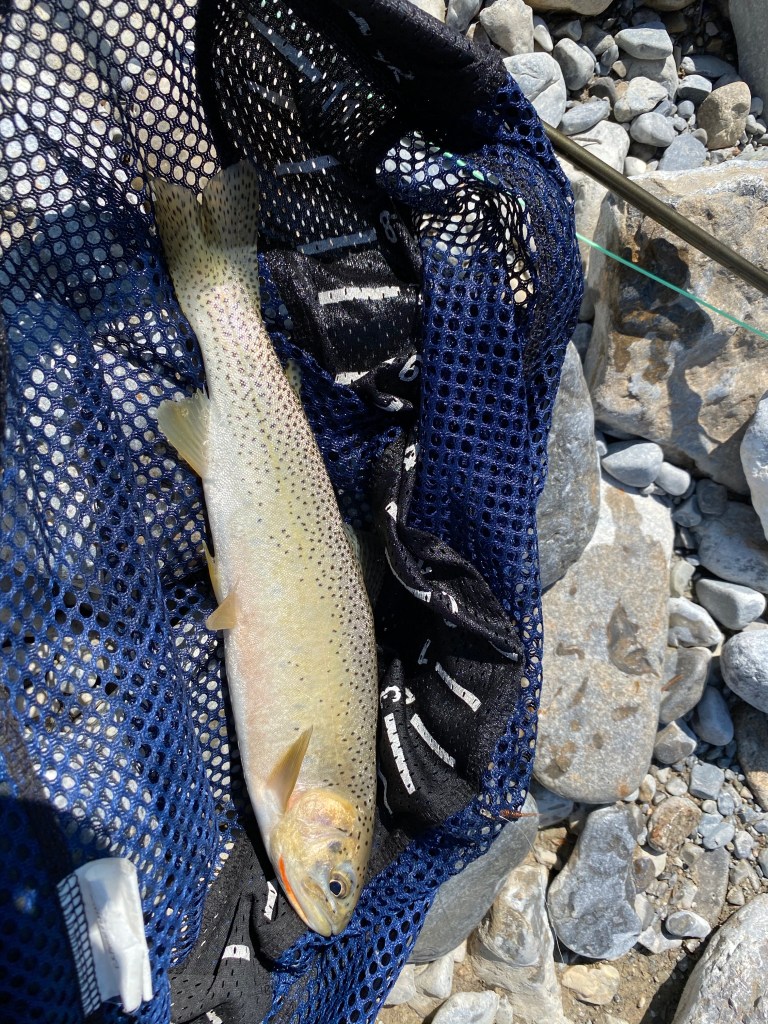
We were leaving the next day, but there was no need to leave early, so after taking down most of camp, we headed up the road about two minutes to another fishing spot. This time Doug fished a deep pool and caught (and released) two cutthroat.

After lunch, we drove home in plenty of time for dinner. Over the next few days we got the camper cleaned and restocked; ready for our next adventure.

We put together this blog to record a typical local camping trip with our camper. Each trip is to a different location, so sometimes the activities change, but this account gives you an idea of what we do when we’re “off camping.”

Tucson, AZ: final post

Tucson, AZ: final post

We got back to mountain biking, after Wendy’s scraped knee healed and she purchased some knee pads. She hardly ever falls, but the knee pads are confidence boosters. We went farther than our first outing and covered over thirty kilometres in three and a half hours.

Wendy-Honeybee-ride

The next week we went out again, but turned around at the “big rocks” to make a twenty kilometre ride.

Wendy-Honeybee-rocks

We’ve birded at El Rio Open Air preserve a number of times. Often the Black-crowned night herons are hidden in the branches. This time, a couple of them were more visible. This photo was taken through the scope.

BCNH

Doug spent some time at our place practicing with taking photos through the scope. Here’s an Inca dove, one of a half dozen that visit our feeder. These doves are very small (only 20 cm long) and have a beautiful scaly plumage pattern.

INDO

On a cooler day when rain was expected, we went birding at the Desert Museum. Many wild flowers were blooming, which made the cactus garden even more gorgeous.

Cactus-Garden-blooms

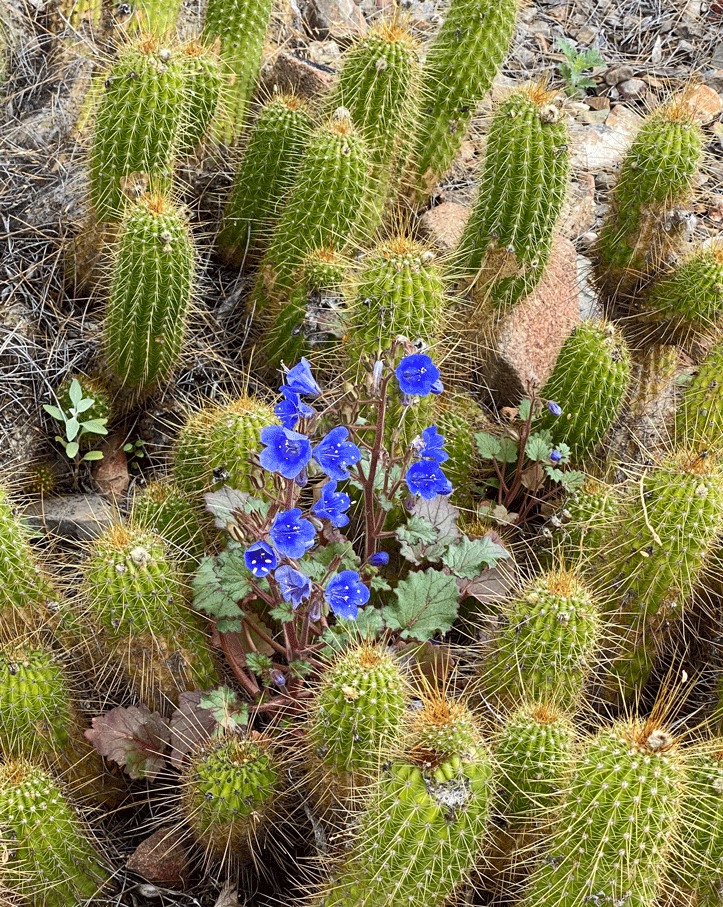
Here are some desert bluebells among the hedgehog cactuses.

Cactus-and-flowers

The desert museum had a very good specimen of desert honeysuckle. Hummingbirds love these flowers.

DesertMuseum-red-flowers

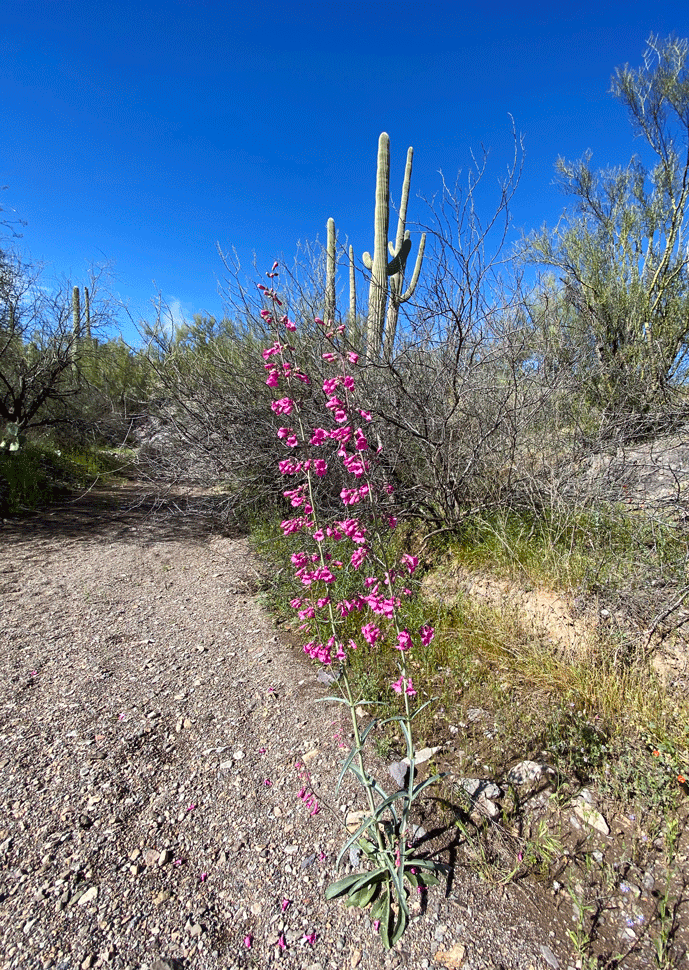
We hiked again in the section of Saguaro National Park that is really close to us. This time we headed up some trails we had hiked before. This photo of the pink penstemon was taken on a wash beside the Ringtail trail.

GilaMonsterLoop-flowers

There are a myriad of trails in this area that allow a hiker to make different loops. This time we went over to the Gila Monster trail. A Gila monster is a kind of lizard, but we didn’t see any. We knew when we started hiking that rain was in the forecast, but we hoped we would get home before it started. This photo was taken moments before we felt sprinkles. It was windy and damp for about twenty minutes, but we only needed to put on our wind jackets to be comfortable. We dried off by the time we got back to the truck.

Wendy-GilaMonsterLoop-hike

The next day, we set our alarm for 6, because we wanted to go birding at Madera Canyon, an hour drive away. The leftover clouds from the rain the night before made for a spectacular sunrise.

Sunrise

By the time we got to Madera Canyon, the sky was clear. We parked at Proctor Road and hiked on the paved trail.

Proctor-Road

About five minutes from the parking lot, we heard the Northern beardless-tyrannulet, a bird we had been hoping to see. It flitted around as flycatchers will, but it finally perched long enough on a sunlit branch for Doug to get this photo. It’s unfortunate that it didn’t perch a few centimetres lower, so it’s head was not blocked by the branch, but we were happy to have this good of a view of such a small bird. (Only 11 cm long.) It also has a very limited range in the US. A life-bird for us!

NOBT

Later that afternoon, we had good views of a Yellow-eyed junco.

YEJU

On the way home from Madera Canyon we stopped by Canoa Ranch Conservation Area, to see if there was anything interesting. We saw a lot of the same birds that we had seen the last time. Doug is looking through the scope at some Ruddy ducks, a pair of Ring-necked ducks and one Bufflehead. Madera Canyon is in the mountains in the background of the photo.

Canoa-Ranch

A few days later, we returned to Madera Canyon. We really wanted to see an Elegant trogon. There was one male in the area that fed on the red berries of the pyracantha bush. He had come to the bush in the morning on the previous two days, so there was a crowd expecting his arrival. The photo below shows some of the people on the road. We were practicing social distancing, so kept a lookout from the trail below. Unfortunately, he didn’t show up that morning.

Trogon-hunt

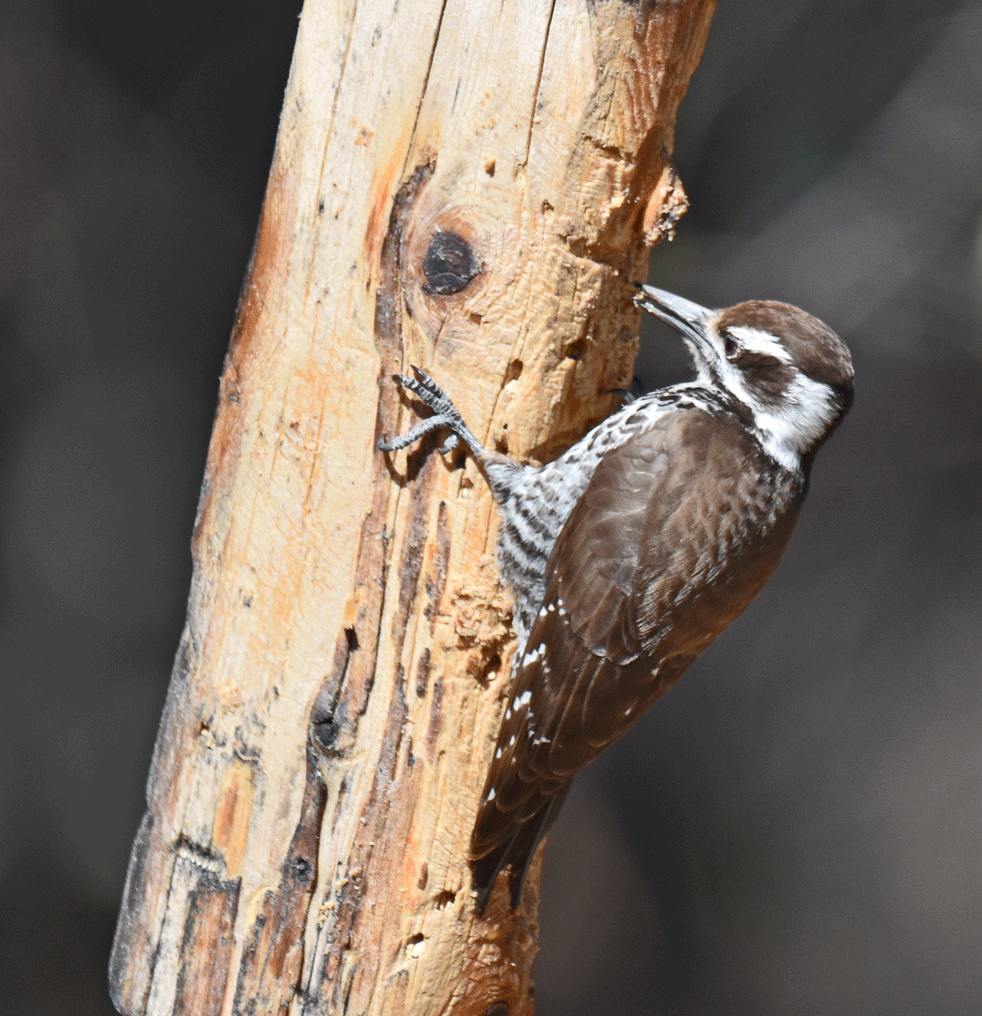
We walked up to the Santa Rita Lodge gift shop, where they have over a dozen feeders. We had a quick look at the feeders and the surrounding area. Doug got a good photo of an Arizona woodpecker, another bird that has a very limited range in the US.

ARWO

After lunch, we went back to check out the pyracantha bush and were rewarded with a view of a male Hepatic tanager.

HETA

The next day, we found another great area for hiking in the Tortolita Mountains. Pima County maintains the trails and provides signage and maps.

Tortolita-trailhead

We chose to follow the Alamo Springs trail out of the wash and up along a ridge.

Wendy-AlamoSprings-hike

There were plenty of wildflowers and cacti to look at.

Tortolita-flowers

It was an excellent trail through interesting terrain.

Doug-Tortolita-hike

This rock formation is nick-named “Machu Picchu,” because it looks like it is a man-made structure. After we read the information board, we took a rest on the nearby bench.

Alamo-Springs-Machu-Pichu

We didn’t walk all the way to Alamo Springs, instead we went down the spur trail to the valley bottom and walked along the wash back to the trailhead.

Wendy-Spur-Trail

On our last day in Tucson, we went birding at Sweetwater wetlands. The maintenance crew had cleared the edges of the ponds which made it easier to see the birds that like to hide in the reeds. Doug is taking a photo with his iPhone through the scope of a rare and hard to see bird known as …

Doug-Sweetwater-Bittern

… an American bittern! You might not see it at first glance.

AMBI

That afternoon we reorganized the trailer to make it ready to move. We were reluctant to leave the beautiful weather of Arizona, but it became clear that our best place during the coronavirus pandemic was at home in Canada.

The next morning, after some fancy manoeuvres, we were out through the narrow gate and on our way. We drove north and sailed through Phoenix and Las Vegas because there was less traffic than average. At 6:30, we found a spot for the night in the Walmart parking lot in Mesquite, NV.

Walmart2

The next day, we drove twelve hours to make it to Dillon, Montana. We got home on the third day of nine hours. Before we could park the Redwood, Doug needed to get out the quad and plow to clear a space in our regular parking area. It had not been plowed all winter, because we were expecting to get home after everything had melted. Here’s a view of the trailer with the car beside it. Wendy uses the car to move the food from the refrigerator to the house.

Home

We’re home now and doing our fourteen day self-isolation. We hope to be out in the trailer in June. Until then, keep safe and stay healthy.


Tucson: Mar. 1 – 8: Biosphere 2, Buffelgrass & Birds

Tucson: Mar. 1 – 8: Biosphere 2, Buffelgrass & Birds

We visited Biosphere 2 in early March. Biosphere 2 is a research facility, now owned by the University of Arizona. It was originally built between 1987 and 1991 as a closed ecological system meant to demonstrate the viability of such a system to maintain human life in outer space. From 1991 to 1993, four women and four men lived inside and sustained themselves with food that they harvested in the closed system.

Here’s a view of the facility from a knoll just above it.

Wendy-Biosphere

Nowadays, the facility has guided tours every half hour as well as several small-scale and large-scale research projects. The rainforest biome had recently been reopened after an experiment which they manipulated the water input to simulate a drought and measured the effects on the plant life. Our tour guide said it would take quite a while to deal with all the data that was generated.

Biosphere-Rainforest

Another day, we decided to do our own weed pull on our closest trail, the one up Panther Peak. The brittlebush was now flowering and made a nice contrast to the teddybear cholla.

Brittlebush-flowers

We came to pull up some buffelgrass that we had noticed on our previous trips. The trail goes right through this patch. Buffelgrass is an invasive grass and is especially bad because it can allow a fire to spread through the saguaros.

Buffelgrass

It took strength, but most plants came up with roots intact.

Doug-Buffelgrass

Here’s the view after our effort. We will need to go back another time to get the bit we missed.

Buffelgrass-after

We stuffed the grass into two garbage bags and then considered how we were getting them out. It was quite rocky and fairly steep where we did the work, so balancing the bag on our heads worked for awhile, but soon our shoulders were sore. We found holding the bag over our shoulder “Santa style” was the preferred method. We’ve since researched about what other people do and found that they leave the grass in the area, but weigh it down with rocks.

Wendy-sherpa-mode

We found a new area for hiking that has many short trails that can be combined into loops ranging from an hour to all day. It’s known as the Sweetwater Preserve and is about a twenty minute drive from our place, on the east side of the Tucson Mountains.

Doug-cactus

Can you spot the Curved-billed thrasher on top of the saguaro?

Wendy-Sweetwater-Preserve

We did a few days of birding, too. We visited the Canoa Ranch Conservation Area which is in Green Valley, just south of Tucson. There were quite a few other birders there looking especially for a Clay-colored sparrow that had recently been sighted and is rare for this area.

We didn’t see one, but Doug did get this photo of a Brewer’s sparrow with his long lens.

BRSP

And we visited the Sweetwater Wetlands again. This Greater roadrunner was preening himself in a tree. This photo was taken with an iPhone through the scope.

GRRO

Until next time…

Tucson: Feb. 24 – Feb. 29: Birds, Flowers, Picacho Peak

Tucson: Feb. 24 – Feb. 29: Birds, Flowers, Picacho Peak

It was time to visit Sabino Canyon again for some birding. Here’s a view of the recreation area before the trail climbs into the canyon.

Saguaro

Doug got out his camera and big lens for the first time since our Panama trip.

Doug-camera

He got some good photos. Here’s a male Costa’s hummingbird.

COHU

This is a female Northern cardinal.

NOCA

We walked up the Bluff trail and looked across into the branches of the tall cottonwoods. A Cooper’s hawk was building a nest. We watched as it pulled dead twigs off branches and carried them to the nest. It rested for a few moments and Doug was able to get this shot.

COHA

A little further up the trail was this male Broad-billed hummingbird. We had seen them before but only in vicinity of feeders, so it was wonderful to see one “in the wild.” Note his broad, notched tail and bright red bill.

BBIH

He was preening and shaking out his feathers. Doug caught him fanning his tail.

BBIH2

There were Black-tailed gnatcatchers flirting about in the creasote bushes. One male paused long enough for this photo. He was in breeding plumage which made him very easy to identify.

BTGN2

Here’s a view of Picacho Peak that we took in September when we were staying at the park for a few days. Its centrepiece spire is visible from Tucson as well as from the roads near our place. It was on the list of “mountains to climb that we can see from our winter home.” So we picked a day in February. (February 25 to be exact.)

Picacho-campsite

We left our place by 7 am and were on the trail just after 8. The trail starts on the side you can see in the previous picture and switchbacks up to a shoulder. The route then heads down the cliff face on the other side. Here is Wendy down climbing with help from the cables.

Wendy-Picacho

The trail then skirts the cliffs. It’s amazing that this saguaro can survive here.

Wendy-Saguaro-Picacho

Soon the real climbing began. Doug climbed this section by leaning back and pulling up.

Doug-Picacho

The trickiest bit had cables on both sides for handholds. It allowed us to get up a section that would have required full-on climbing gear.

Wendy-Crux-move

This ramp and handrail made for an easy traverse.

Wendy-Picaho-ramp

We were on the top by about 10:00 and had the place to ourselves. We didn’t stay long though, because it was quite windy.

Picaho-summitOn our way down, we met many people ascending, but we only had to wait at one of the “one-way only” sections.

We took a short side-trip near the trailhead to take photos of the Mexican gold poppies. (Eschscholzia mexicana)

Poppies

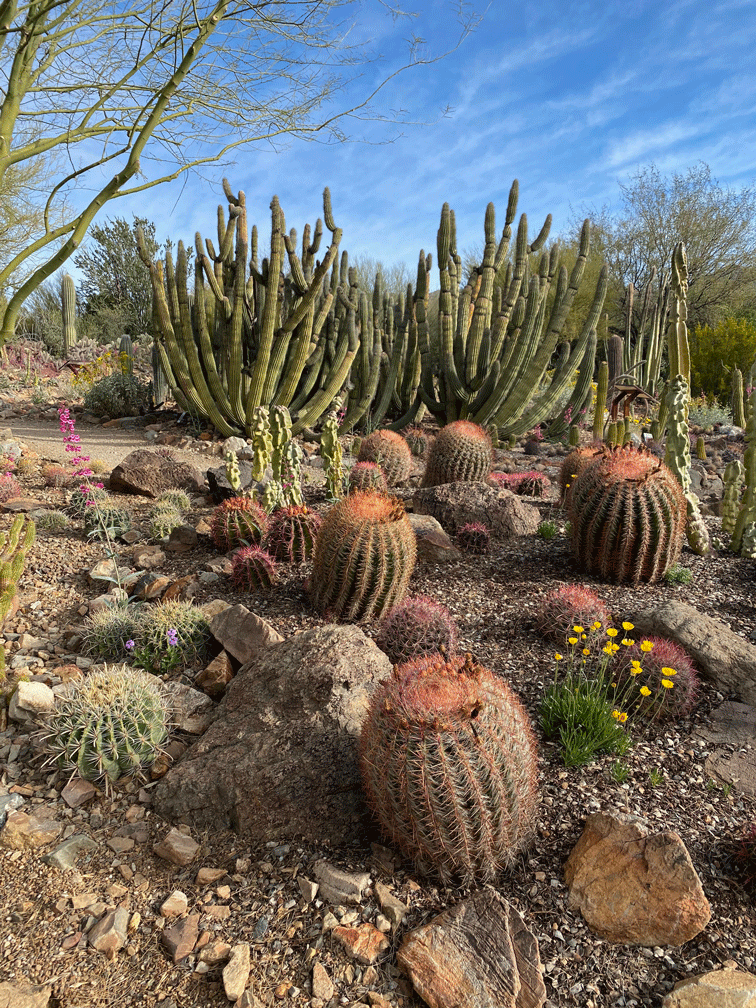
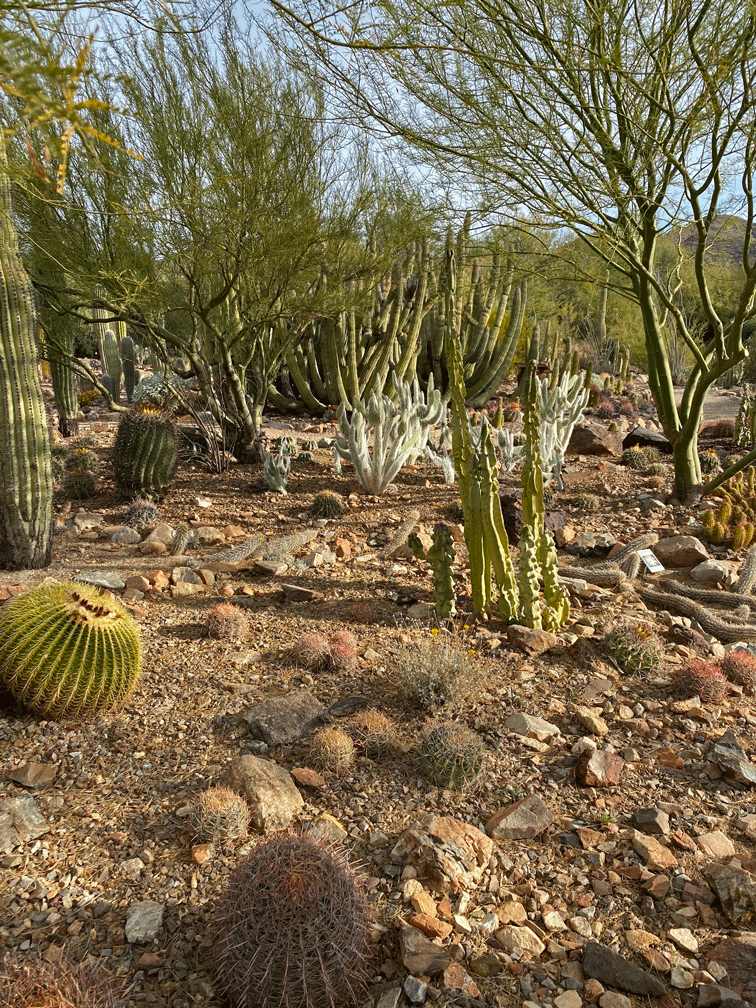
Another day, we visited the Arizona-Sonora Desert Museum. This view of the cactus garden shows Organ Pipe cactus and Totem cactus surrounding a number of varieties of barrel cactus. Notice the heart-shaped prickly pear cactus on the front left.

Cactus-garden

After spending months riding the pavement on “The Loop,” we finally found a good place for mountain biking. It’s about a 40 minute drive to the trailhead for us, but it was definitely worth it. Much of the trail is the nice desert riding we enjoy; not too many rocks or too much sand. Here’s Doug on the “Honeybee Loop” trail …

Doug-Honeybee

and Wendy just a bit further down the trail. The trails in Honeybee Canyon are reached from the Big Wash trailhead in Oro Valley.

Wendy-Honeybee

We went birding again to Reid Park. Back in November, we saw this Greater Pewee and got a fuzzy photo of it. It was a rare bird for the area. It seems it decided to stick around for the winter. This time, it cooperated better and Doug was able to get this shot.

GRPE

The other reason for birding at Reid Park, in the middle of Tucson, was its closeness to the Davis-Monthan Airforce Base. On the day we were birding, the pilots who fly historic warbirds from Korean, Vietnam and WWII were being recertified. Some modern planes were also flown. That meant there were plenty of interesting planes overhead. Doug probably took as many pictures of aircraft as he did of birds that day. Here’s a view of an F-16.

F-16

This blog gets us caught up for February. More hiking, biking and birding to come!