Moab, Utah

Moab, Utah

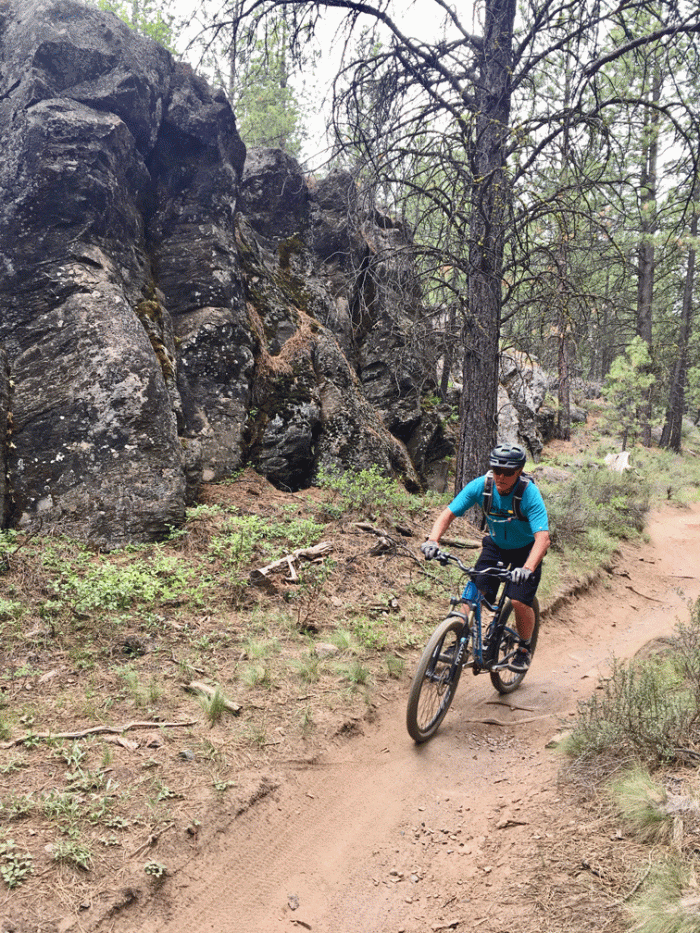
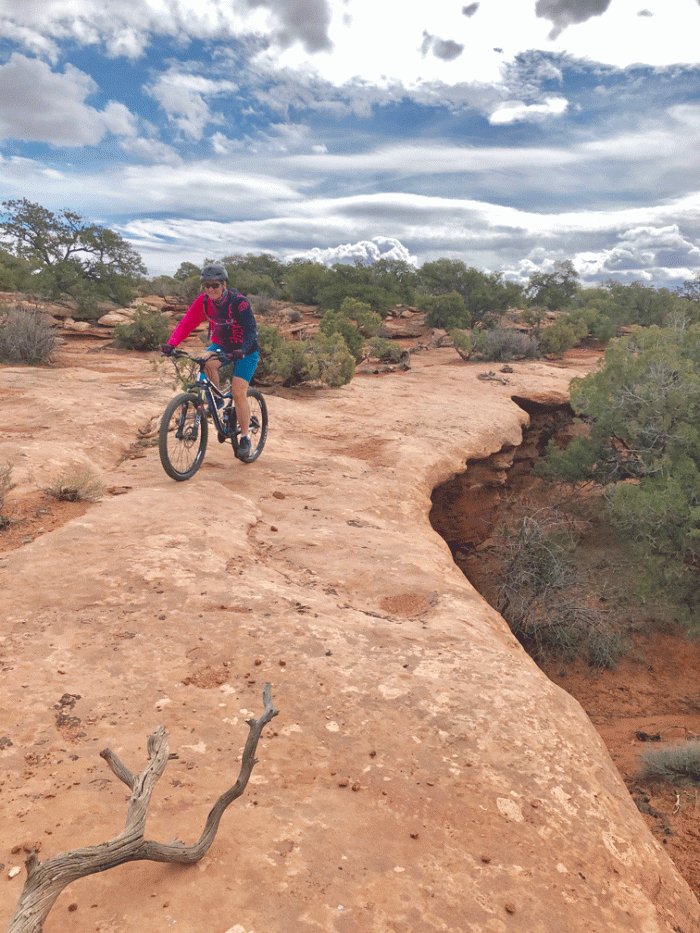
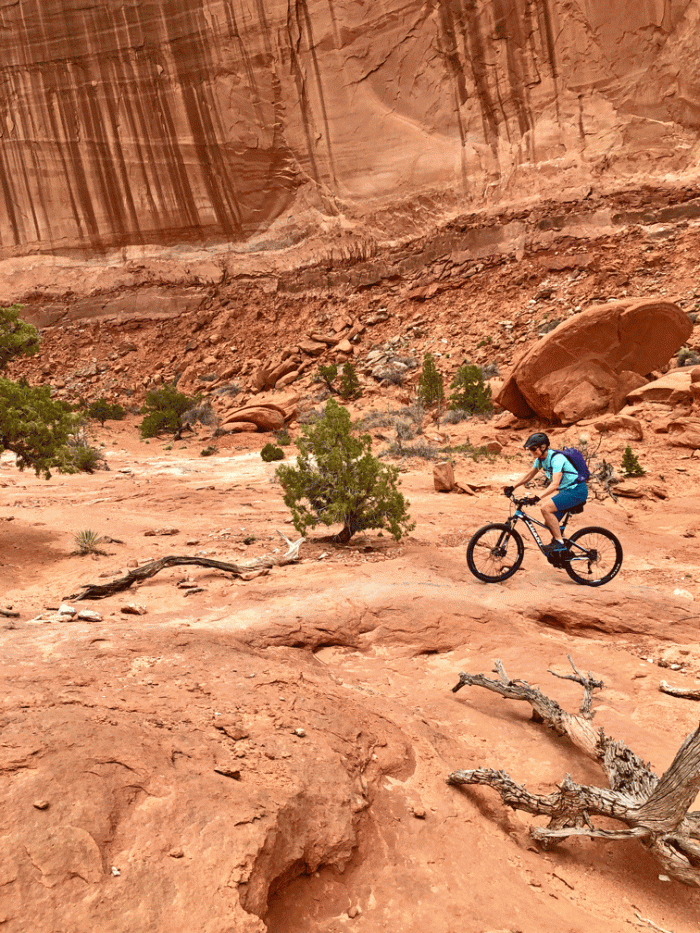
We wanted to ride and hike on slick rock on our visit to Moab and we had lots of opportunities. Our first mountain bike ride was up at Dead Horse State Park, in the Intrepid trail system. We had a cool day with a few rain sprinkles, but it was a perfect temperature for riding.

Wendy_Intrepid-trails

The trail went close to the edge of Schafer Canyon. Canyonlands National Park: Island in the Sky Unit is in the background of the photo below. We both had our “best day ever” of mountain biking. The trails had enough slick rock to be interesting and nothing too steep.

Wendy_slickrock-on-Intrepid-trails

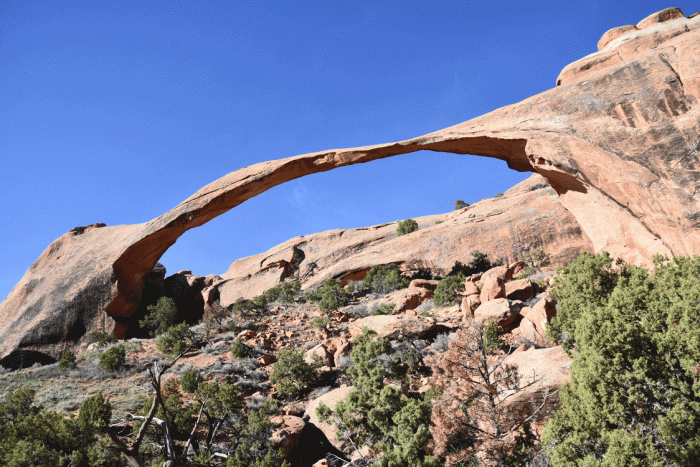
The next day, we headed to Devils Garden, one of our favourite hikes in Arches National Park. We chose to do the long loop, and view all ten arches. The trail to Landscape Arch is wide and smooth and very popular.

Landscape-Arch

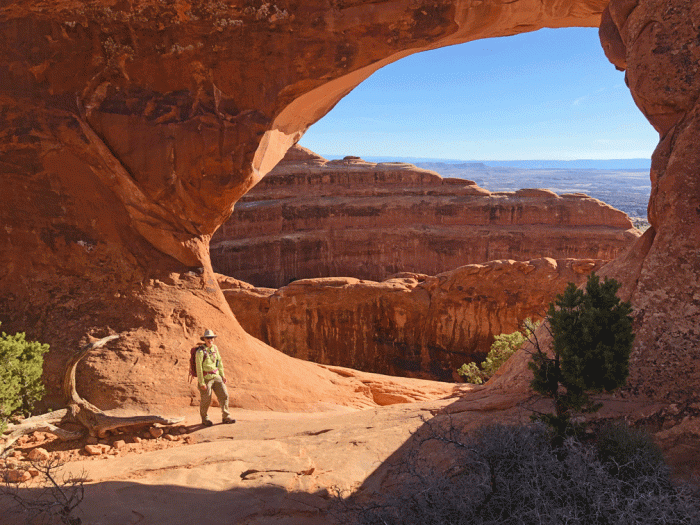
It was our first visit to Partition Arch. When we did the hike in 2016, we did the loop without any side trips because we didn’t have the same fitness level that we have now. We also took a side trip to Navaho Arch and to the viewpoint for Dark Arch.

Wendy_Partition-Arch

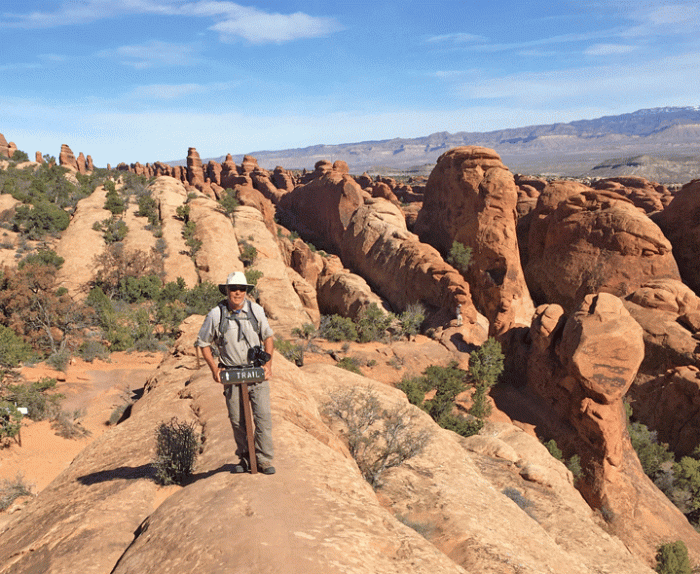
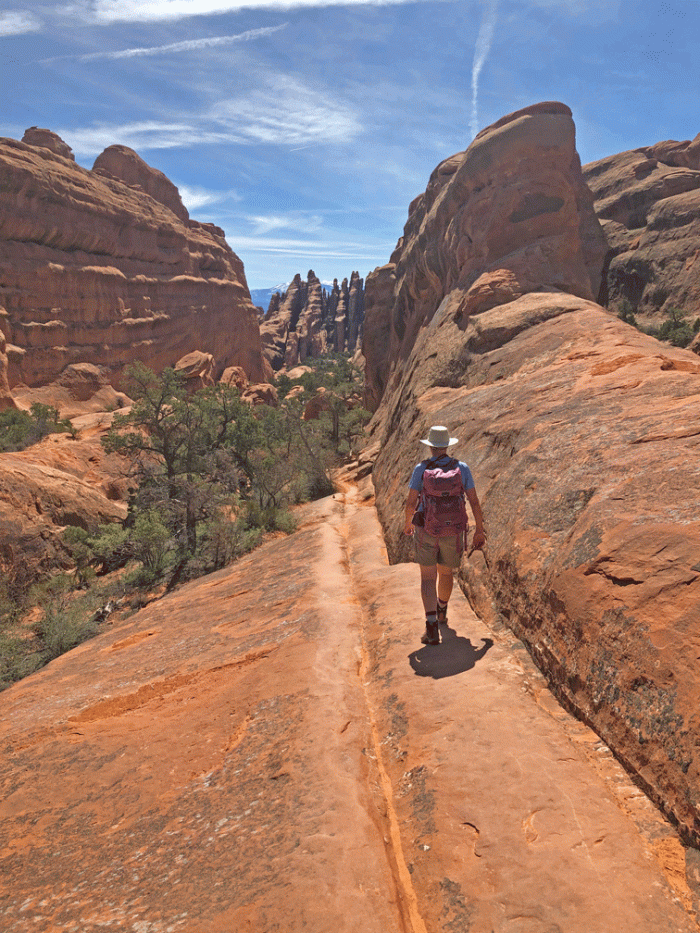
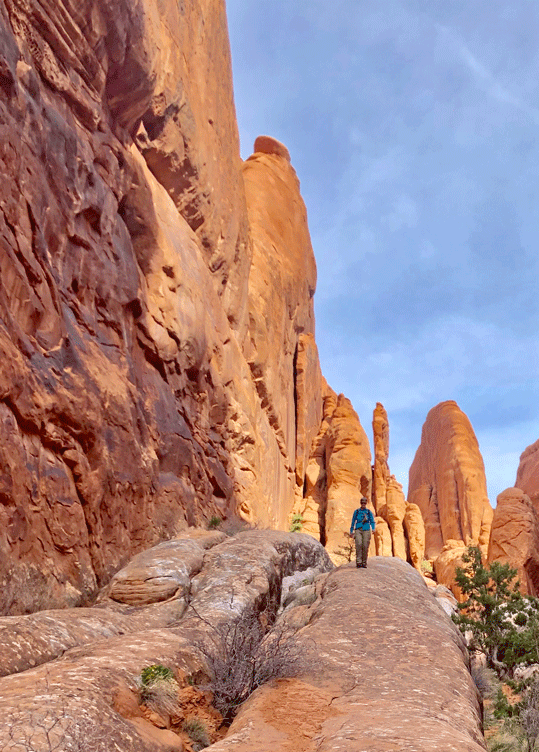
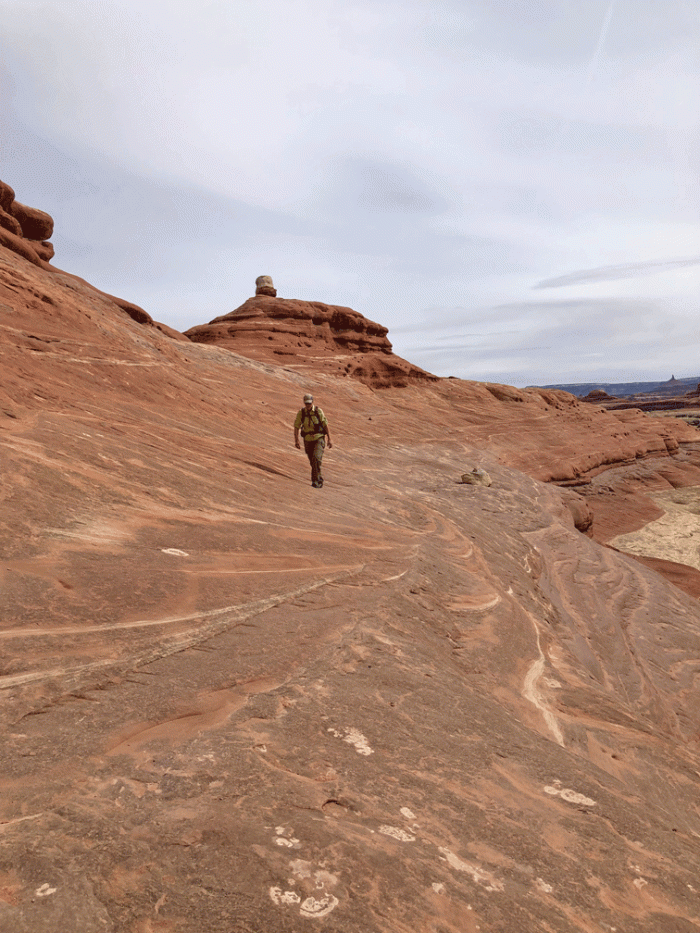
Most people turn around at Landscape Arch because the trail beyond it involves walking on slick rock and a bit of scrambling. The trail had more markers than the last time we walked it. Here’s Doug standing on the trail that goes along a sandstone rib. There was another sign further along to lead you to the exit to the left.

Doug_Double-O-hike

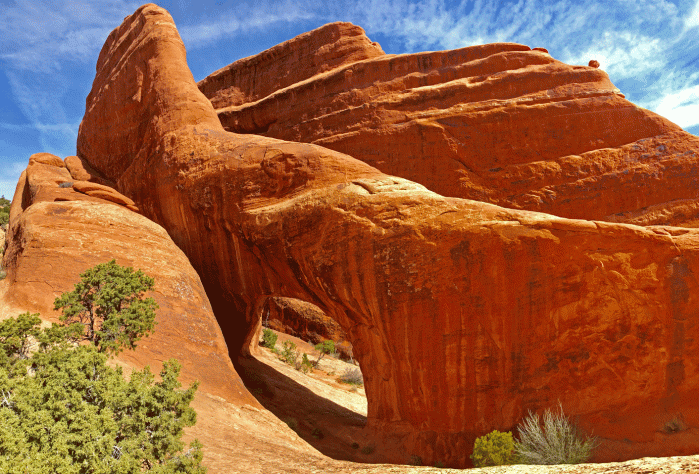
We reached Double O Arch and climbed up and through the bottom arch, to get this view. By this time, we’d been hiking two hours, so it was a good spot for a snack.

Double-O-Arch

Following the primitive trail past Double O, we took another side trip to Private Arch.

Private-Arch

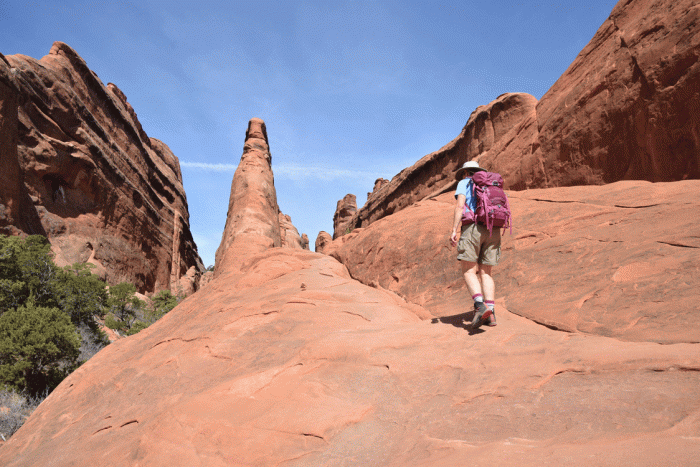
The primitive trail involves plenty of slick rock sections. You can pick out the trail by looking at the worn sections on the rock.

Wendy_Primitive-trail

Here’s another section of the primitive trail.

Primitive-trail

We took another side trip to a backcountry camping spot to have our lunch. It wasn’t much, just a relatively flat piece of rock.

We finally joined the main trail after climbing up from a wash. We took our final side trips to Pine Tree Arch and Tunnel Arch, then continued to the parking lot. Our total hike was just over 16 km and it took us just over 5 hours.

The next day, we hiked into the Fiery Furnace. You need a permit to hike in this area, and you are required to watch a video and have a chat with a ranger about the rules. The rules were basically to not harm the environment and to stay quiet to allow others to have a “wild” experience. There are no real trails but there are a few markers along the way. When we did the hike three years ago, there were no markers so it made it much more challenging.

Here’s Doug walking in a wash so you can get a sense of the scale. It’s a labyrinth of pillars and fins.

FF_Doug-walking

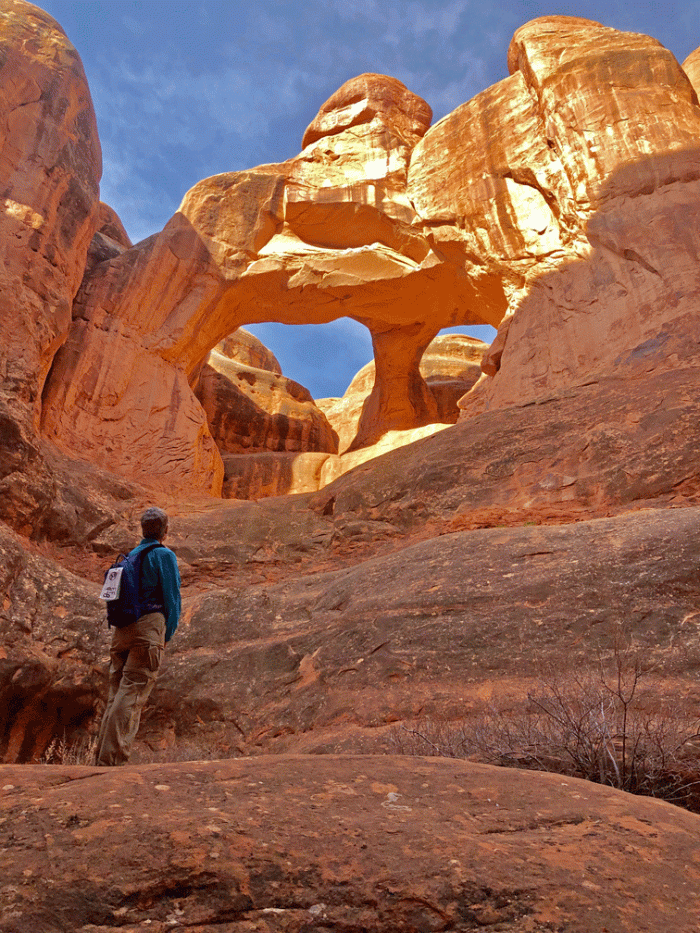
One of the “Dead End Ahead” areas leads to what we call “Surprise Arch.”

FF_-Surprise-Arch

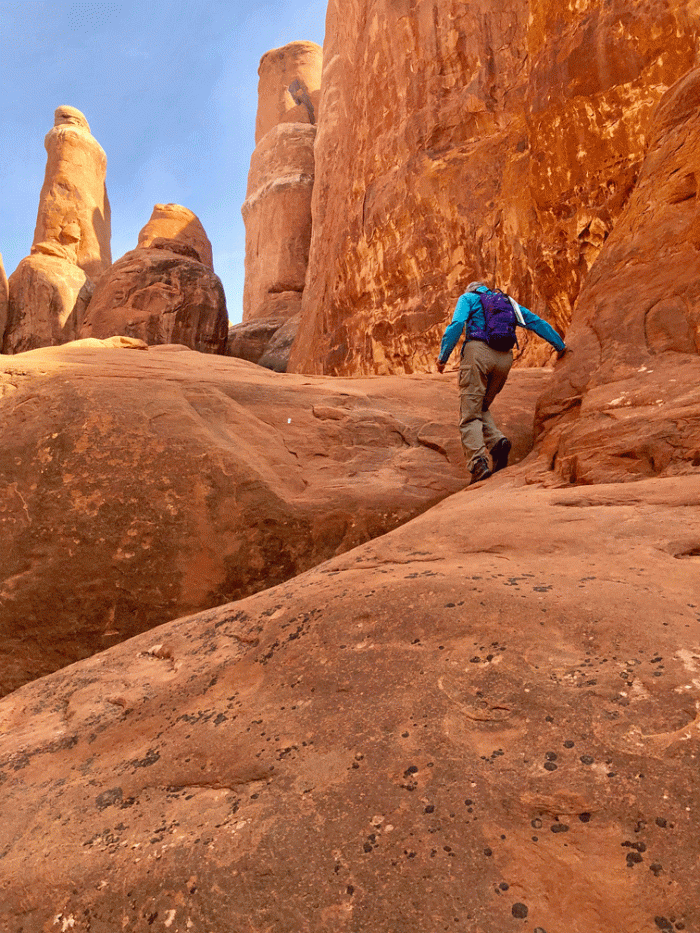
There’s lots of scrambling.

FF_Wendy-scrambling

Here’s Doug ready to climb up.

FF_doug-Scrambling

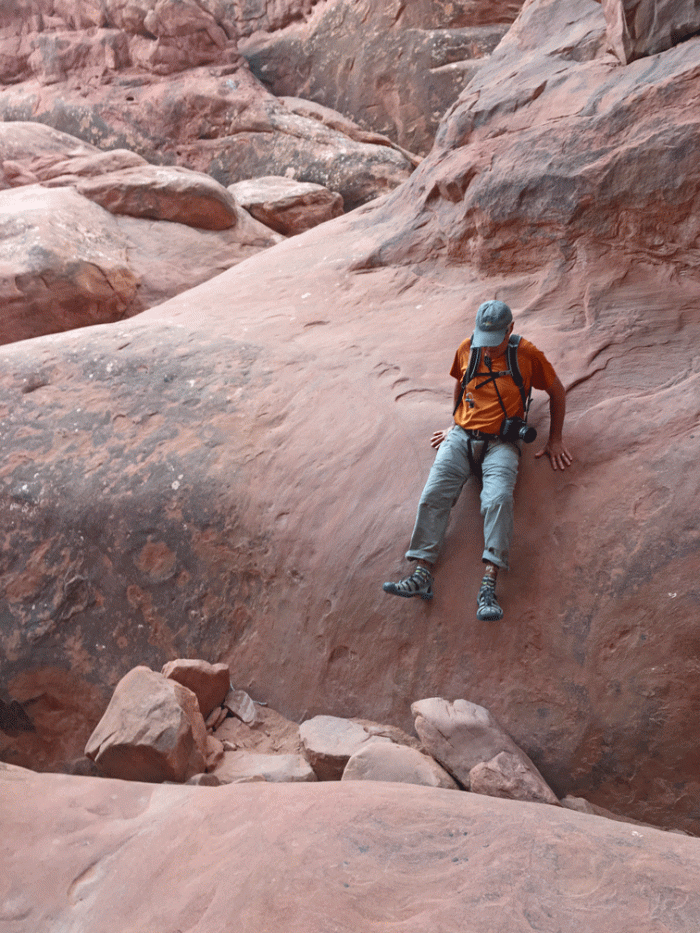
Canyoneering has different techniques than regular climbing. “Bum sliding” is an accepted practice and the only way down sometimes.

FF_Doug-bumsliding

Because we had hiked here before, we could explore the other “off-shoots” without stress. This photo was taken on our way back to the regular route.

FF_Wendy-on-fin

This slot is part of the regular route and was not very wide.

FF_Wendy-squeeze-crack

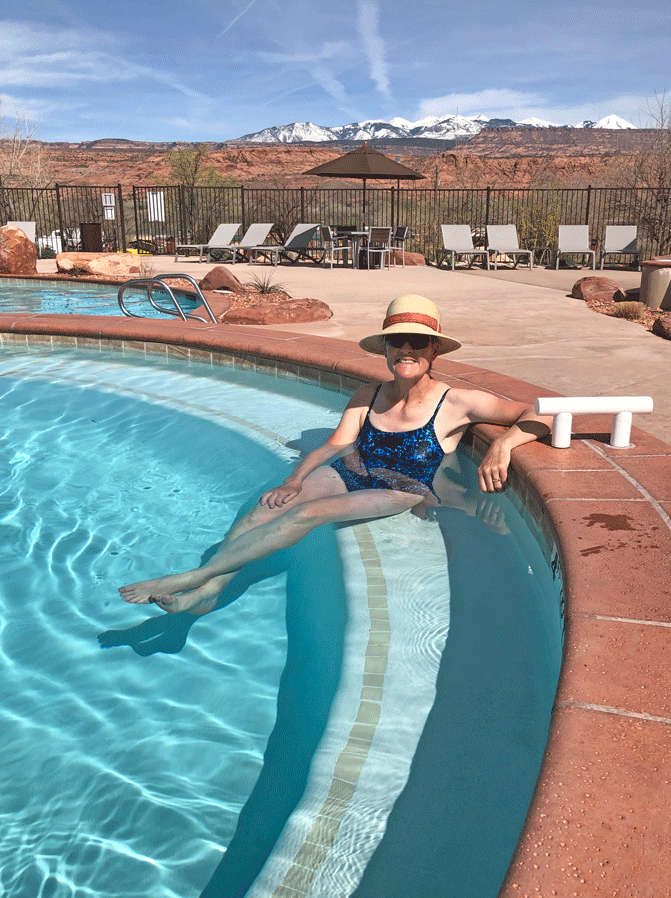
We spent about 3 enjoyable hours in the “Furnace.” That gave us time to get home early and lounge at the pool. The Moab KOA has really upgraded recently.

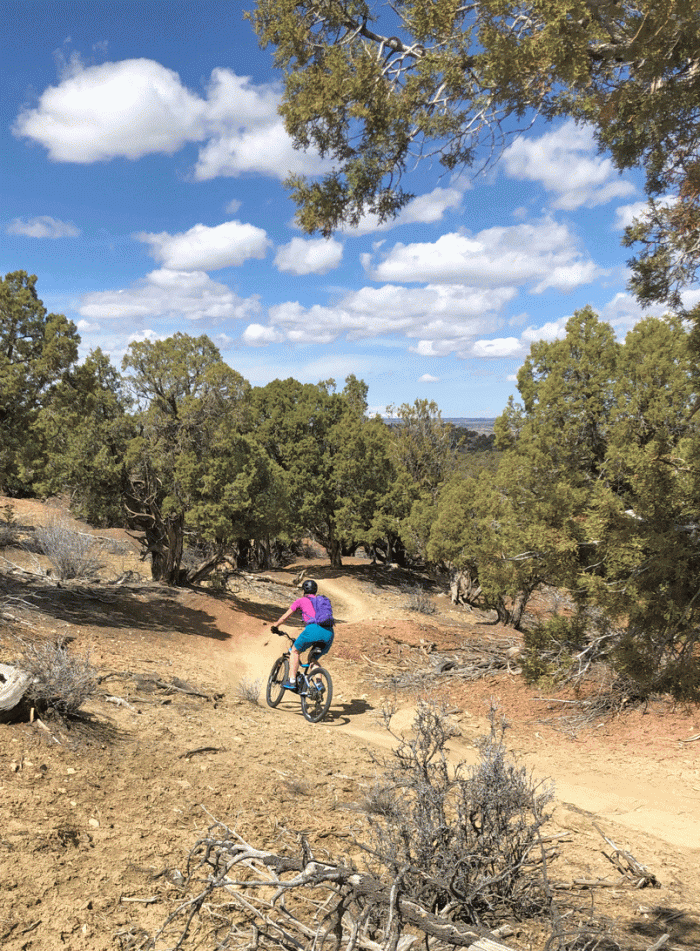
The next day we drove up towards Dead Horse State Park and stopped at the trailhead for Navaho Rocks. This is a newer mountain biking area with lots of slick rock and lots of elevation changes. We chose to ride up Big Mesa to Big Lonely. Wendy chose to ride the highway back to the parking lot and Doug continued to Coney Islands and Middle Earth. If we ever ride it again, we’d do it in the opposite direction.

Navajo-Rocks-trail-sign

Here’s Wendy near the beginning of Big Mesa.

Wendy_Big-Mesa

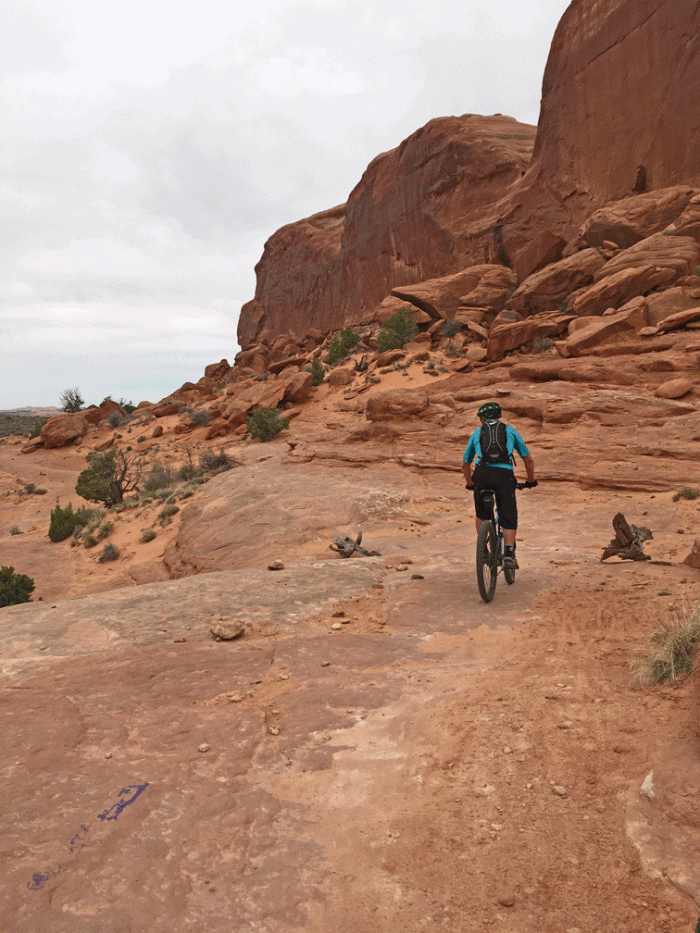
Here’s Doug on Big Mesa as well. You can see the route markers in the bottom of the photo; for Big Mesa it’s a blue stripe of paint. The juniper branches also help to define the route.

Doug_Big-Mesa

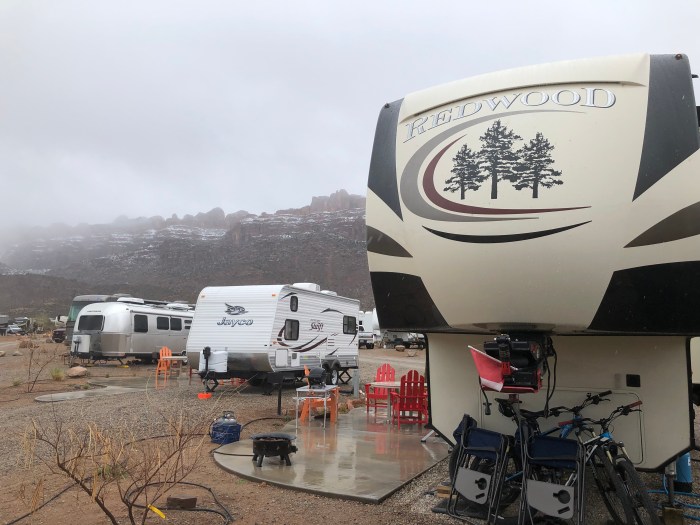
The wind picked up while we were riding and blew hard all evening. The next day, the cold front brought rain and snow and much lower temperatures. Just so you can see that our whole trip hasn’t been the sunshine and fine weather that most of our photos show, here’s a view of our site that day. It rained and sleeted most of the day. But we were warm and cosy and didn’t mind the rest.

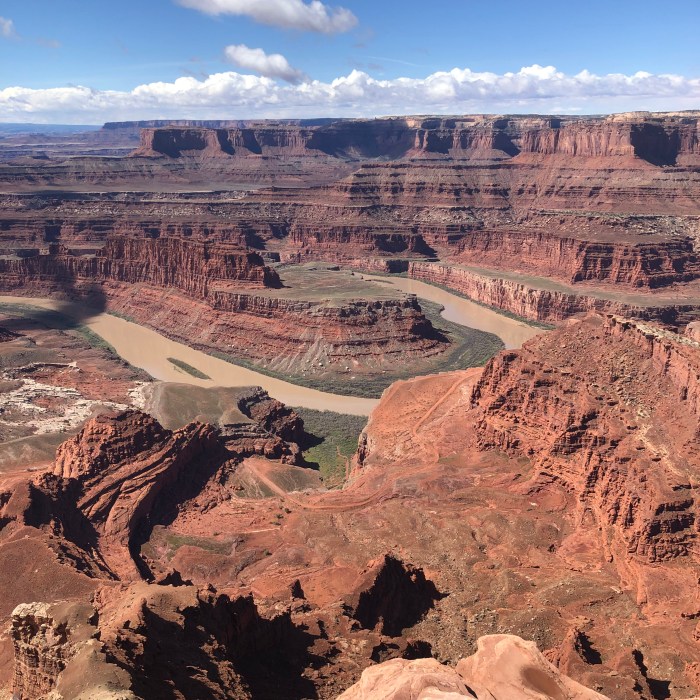
The weather improved for our last day in Moab. We drove up to Dead Horse State Park and Canyonlands National Park: Islands in the Sky Unit and stopped at most of the overlooks. Here’s a view from Dead Horse State Park down to the Colorado River.

So we’ll be on our way home. We expect to post again in July about our next trip. This trip was the longest we’ve ever done… so far…

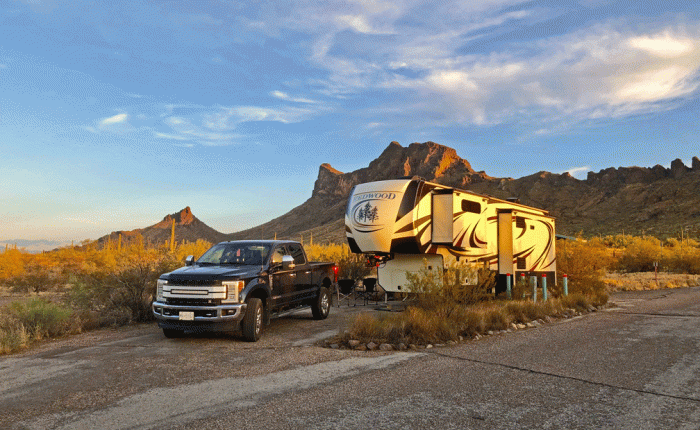
Goodbye for now from “Travels with a Fox.” Perhaps it is more appropriate to say “foxes.” Here’s our mascots all in one spot of our Redwood Fifth Wheel.

Foxes

Blanding, UT: Anything but bland

Blanding, UT: Anything but bland

We stayed for a week at Blue Mountain RV in Blanding, Utah. Blanding is a perfect spot to stay to access the hiking trails to ruins and petroglyphs in the vicinity of Comb Ridge. Our site was at the upper level with good views over to the Bears Ears and to Monument Valley. We had a few nice sunsets, too.

Blanding-sunset

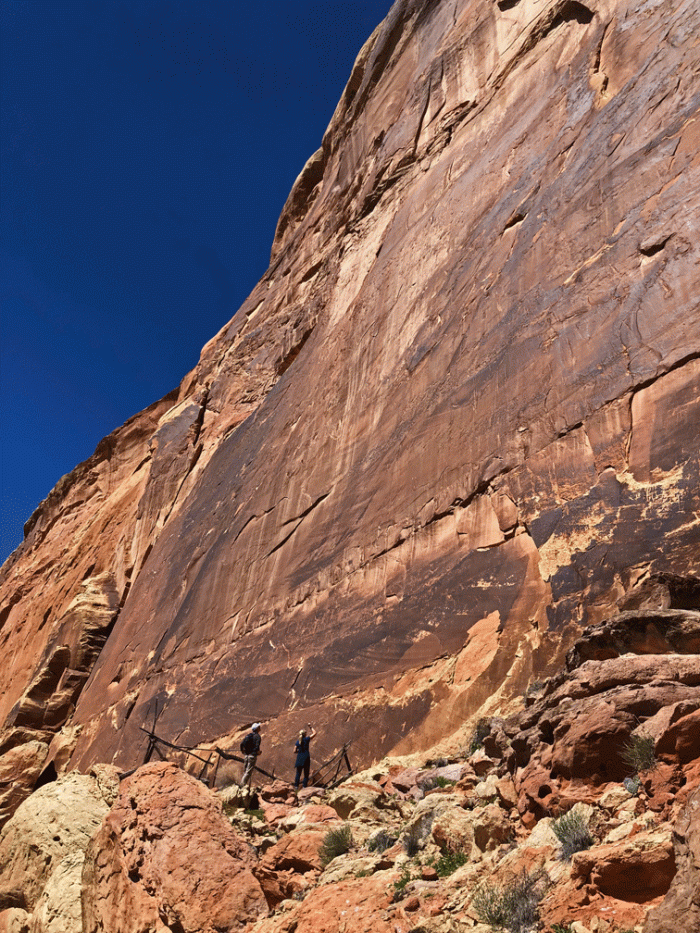
The first hike we did was to a wall of petroglyphs beside the San Juan River.

San-Juan-wall

There were hundreds of petroglyphs; some faded and some very clear, like this lizard-like creature.

Butler-petroglyh

The trail went down from the slick rock parking lot (at about the same level as the highway) via an old wagon road into Butler Wash. The map labelled it as “Emigrant Road” and we could see the grooves in the sandstone from wagon wheels. The road traverses the slope at about the level of Doug’s hat and if you look carefully you can see the rocks that were placed to make the trail wide enough for a wagon.

Doug_wagon-road

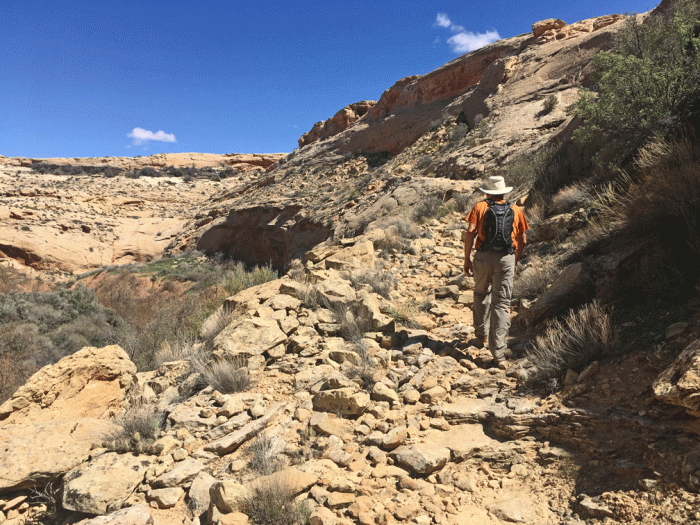
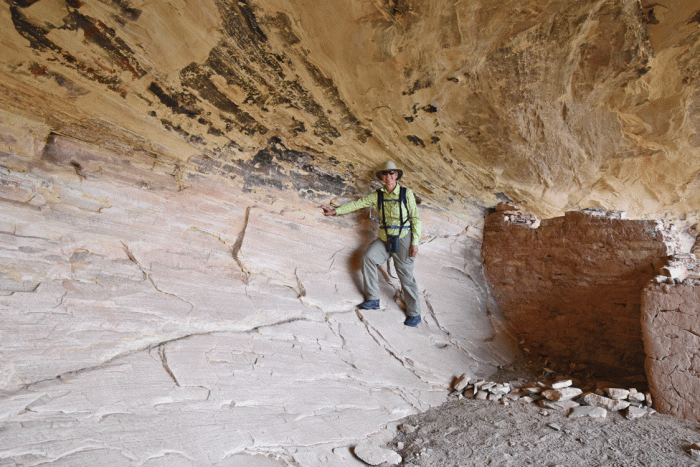
The next day we went back to Lower Butler Wash. To get to this ruin we had to route find and down climb. We thought we wouldn’t have trouble getting back up because we knew that it is usually harder to climb down than up. This ruin was in a natural alcove on a bench above the wash.

Hobbs-Wash-ruin2

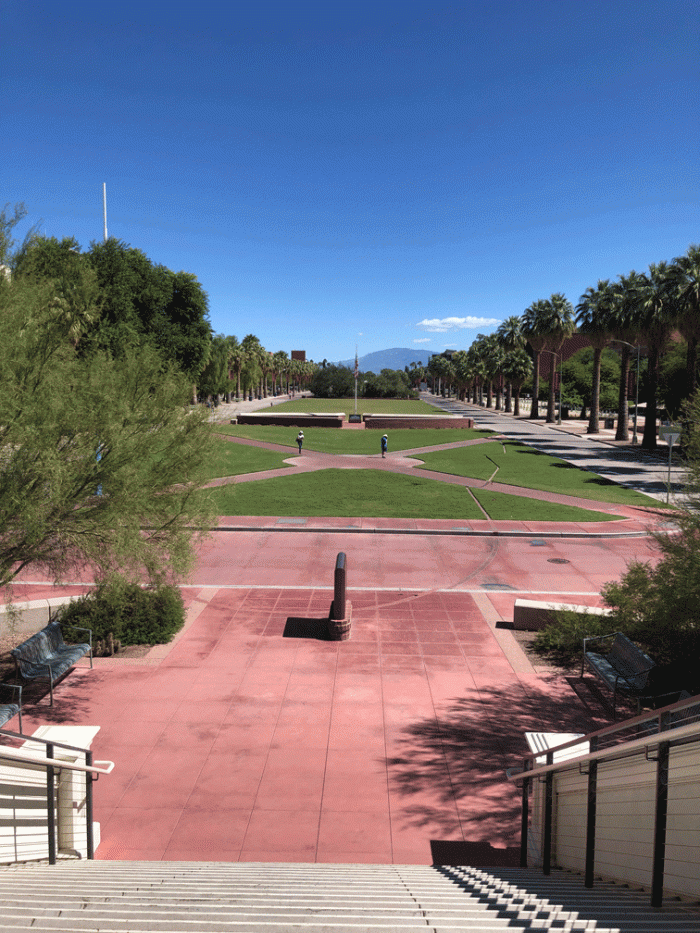
It had “moki” steps, which are depressions that have been made in the rocks to allow a foothold. They didn’t seem to have a purpose unless they were to access a roof of a structure that is now long gone. Perhaps they were a sort of practice climbing wall for children, we’ll never know.
Ruins-moki-steps

The next day, we went in search of the “Big Crane” petroglyph. We’d seen pictures of it and every time we came to some petroglyphs we’d search the wall for it. But we hadn’t yet seen it in person. When we were at the San Juan panel, we talked to some other hikers who gave us a lead about where to find the crane.

Once we parked in the right spot, the trail was fairly straightforward, but we walked past the crane anyway. Backtracking, we used binoculars to scan the cliffs above, and picked it out, all by itself. We made our way up the ramp, and soon we were beside it.

Wendy_Crane

Here’s a closer view of the “Big Crane,” likely a rendition of a Sandhill crane.

Crane-closeup

We were back at the truck before noon, so we drove a couple of miles to a trailhead for Double Stack ruin. Along the trail were the remains of a Navaho sweat lodge.

Sweat-lodge

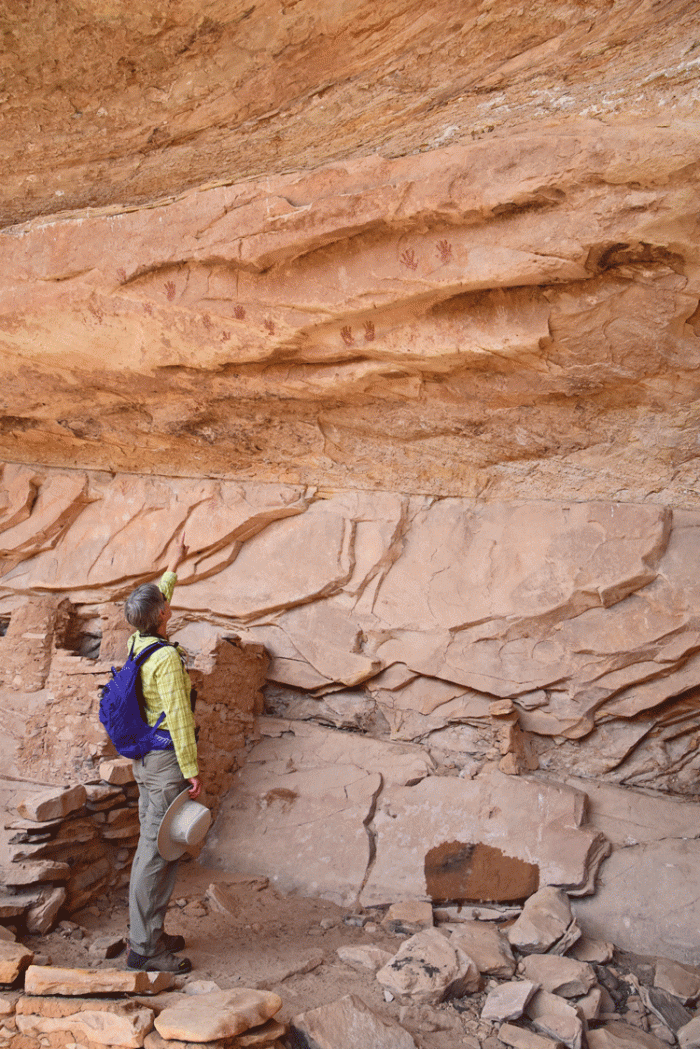
The ruin had numerous handprints high on the wall. Maybe the people who put them there were standing on the roof of a structure?

Handprints

After a rest day, we set out for Canyonlands National Park: Needles section. This part of the park is a pretty long drive from any nearby city, so we hadn’t visited it yet, but we were intrigued. So we got up early and drove the hour and a half to the trailhead at Squaw Flats Campground.

Here’s the first bluff that we climbed up and over on the Big Springs Canyon trail.

Start-of-hike

We could just see the tops of the Needles in the distance.

Big-Spring-Canyon-Needles

Soon we were at the head of the canyon and following the cairned route to the saddle in order to continue to Squaw Canyon. We worked our way up ledges and across this wet spot.

Wendy_spring-creek-ledge

From below, it didn’t look like there was a way up. Here’s a photo of Wendy working her way up the passageway. The sandstone was quite “grippy,” so it was a series of friction moves.

Wendy-ascent

Soon we could walk up it.

Doug-ascending-Spring-Creek

Here’s a view of Big Spring Canyon from near the top of the saddle.

Wendy_view-of-Spring-Creek

Then we had to go down into Squaw Canyon! But it wasn’t quite as steep as the other side. It was a bit like walking on a slanted sidewalk, and we worked our way down by picking the flattest places to put our feet.

Wendy-descent-traverse

The rest of the hike on the rock ledges was pretty straightforward, although there was a sort of a rock slot that Wendy had to work up the courage to jump across.

Leap-of-faith

Soon we were off the rock and on a regular trail again. We found a spot for an early lunch, then continued on, reaching the trailhead by 1:30, making it a 4 1/2 hour hike of 12 kilometres.

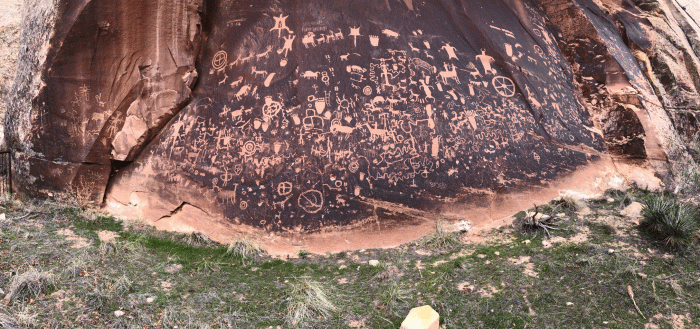
On our way back to Blanding, we stopped at the famous “Newspaper Rock.” There are hundreds of figures pecked into the rock. Most of the figures are Anasazi, however some Fremont and modern Ute figures occur.

Newspaper-rock

We hadn’t done any mountain biking for awhile and we were missing it a bit. So we drove just over an hour to Cortez, Colorado to one of our favourite mountain biking trails at Phil’s World. The trail has some challenging (but doable) uphill and some amazing downhill sections. Doug especially likes “The Ribcage,” a series of roller coaster-like whoops.

Phil's

After our ride, we checked out a newer brewery in Cortez: Wild Edge.

WildEdge

Blanding is a fairly quiet (and dry) community, but their motto is: Base camp to Adventure, and for us it was a great base camp for our adventures.

We have one more destination on our agenda: Moab, Utah. More mountain biking and hiking to come!

Grand Canyon, AZ

Grand Canyon, AZ

This was our first time to the Grand Canyon and we now understand why it’s so popular. Every time we looked at the canyon it was slightly different but still amazing. We arrived in the early afternoon of Monday and left mid-morning on Friday, which gave us plenty of time. We stayed at the Trailer Village on the South Rim.

Overlook_Bright-Angel

Another view with different lighting.

Overlook2

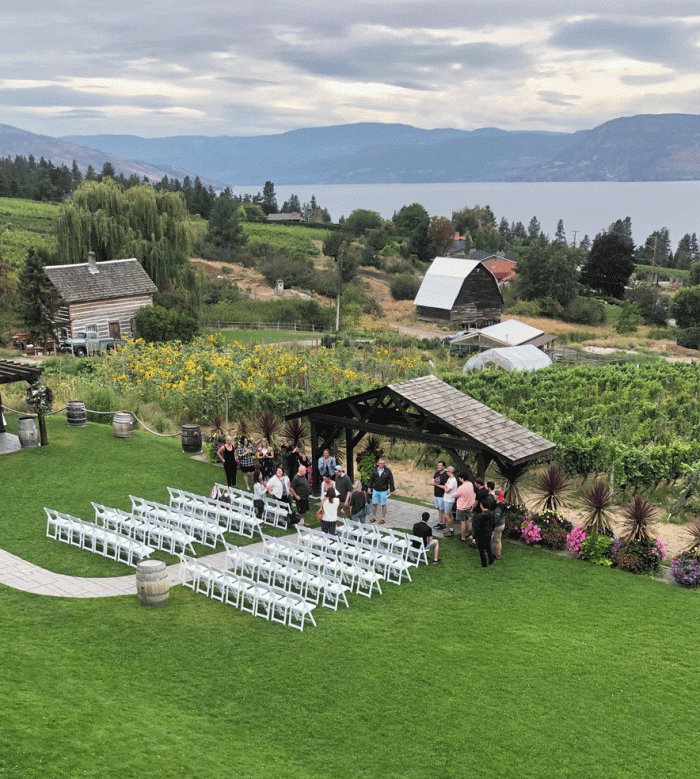
We had an early dinner on our first night so we could be in time for the sunset. We made sure our bikes were fitted with their lights and rode ten minutes on a paved “Greenway” trail to the Visitor Centre. From there it was another ten minutes walking to Mather Point.
Wendy_sunset

Here’s one of several photos we took as the sun was descending.

sunset

The next day was an acclimatization day, to allow us to be able to breathe easier at elevation. We took a road tour east along the rim road, towards the east entrance to the park. The Tusayan museum, although small, was very interesting because there were displays from each of the indigenous peoples that have the Grand Canyon as a prominent place in their culture.

Tusayan

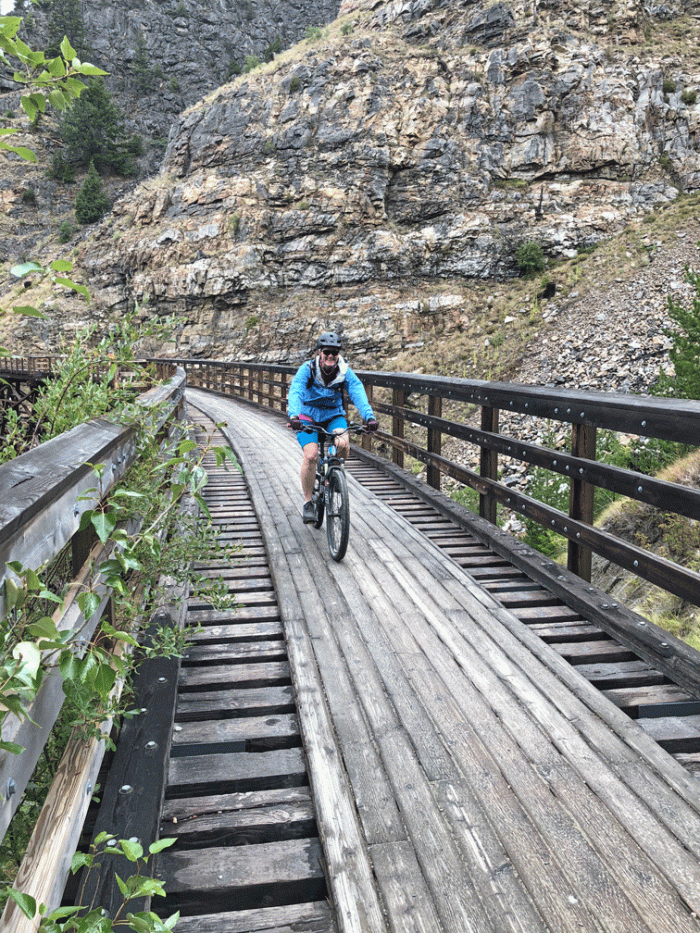
The Desert View Watchtower is near the east entrance. It was built in 1932 by architect Mary Colter, who designed many of the early buildings on the south rim. Although it looks like it is made only of stone, it was built on the steel skeleton.
Watchtower

Mary based the interiors on native art that she had seen.

Watchtower-graphic1

You can climb the steps to almost the top of the tower and view the motifs on the plaster walls. There was also an outside viewing platform that gave you a different view of the canyon. Unfortunately, like many days at the Grand Canyon the air was hazy from pollution that blows in from Southern California.

Watchtower-Graphic2

We stopped at every overlook on the way back. At one of them, Doug was quick enough to catch these ravens soaring at almost the same level as us.

Ravens

The next day we rode our bikes on the Greenway trails to the start of the Hermit Road. This road is only open to the shuttle buses and service vehicles so there wasn’t much traffic. It was another hazy, cloudy day but we got to see some different views of the canyon.

Wendy_bike

There was a section of Greenway trail close to the end of the road which was really nice and had small pullouts for views like the one below. That day we rode about 33 kilometres, all on pavement thankfully.

Doug_bike-ride

The next day was the one we were working up to: a hike below the rim. The difference with most hikes that we do was that it starts with the easy downhill part and ends with the uphill. We knew we could walk five hours but we were very conscious of the advice: “Downhill is optional, uphill is mandatory.” We studied the board and prepared ourselves for a big day, which means making our lunch at night, getting our packs organized and setting our alarm.

Kaibab-Trail-sign

We rode our bikes to the trailhead instead of taking the shuttle bus, which was a nice half hour warm-up, and some of it was along a trail right beside the canyon.

The views started right from the beginning of the South Kaibab trail. Here’s a spot about 15 minutes into the hike where the trail seems to drop into nothingness, but it actually takes a sharp switchback turn.

Doug_Kaibab

It was a well maintained and relatively smooth trail and we were at Ooh Aah Point in about twenty minutes. We continued downwards.

Wendy_steps

From Ooh Aah Point to Cedar Ridge took us another 25 minutes. It was too early to start back, so we kept going down. Here’s Wendy at Cedar Ridge. You can just make out the trail to Skeleton Point to the right.

Wendy_Cedar-ridge

Most of the people we saw on the trail below Cedar Ridge were backpacking to the river. We took a photo of a young couple and they took ours. This is the view looking west.

Doug-and-Wendy

We met a mule train. The mules are fine with people on the edge of the trail as long as you are on the uphill side of them.

Mule-train

This is the view from Skeleton Point. The trail drops steeply from here, so it was a good turnaround point. It was only 10:30, but we had our lunch anyway.

Skeleton-Pt

We headed upwards, and upwards. It wasn’t too bad because we just kept slowly walking. You can see the last steep section switchbacking ahead of Wendy. It looked worse that it was, because we were at the top within 20 minutes of this photo being taken.

It took us 2 1/2 hours to climb up, including rest stops, for a total of about 4 1/2 hours for the whole hike. Luckily our bike ride back to the trailer was mostly downhill.

Kaibab-switchbacks

By Friday, we had seen more of the Grand Canyon than we had expected, but we didn’t have to leave early, so we took one last trip to the rim. The air was much clearer than the other days. So here’s another view from close to Mather Point.

Grand-Canyon-pano

Next stop is to Blanding, Utah to explore ruins and hike on slick rock.

Camp Verde, AZ and area: Birding, etc.

Camp Verde, AZ and area: Birding, etc.

Last year, we attended the Verde Valley Bird Festival, so we knew of some areas we could return to that had good birding potential. We were about a month and a half earlier than last year, so we didn’t see quite as many species, but we had fun nonetheless.

Bubbling Ponds Preserve is connected to the Page Springs Fish Hatchery and has good viewing opportunities right near the rearing ponds and well as along the nature trail.

Bubbling-Ponds-sign

We saw over a dozen Great blue herons. The fishery personnel must figure on losing a number of fish to predation when they do their planning. Another adept fisher is the Belted kingfisher, which you can see below.

BEKI

The area is noted for being a nesting site for Common black hawks, which have a limited range in the United States. After our walk around the trails at Bubbling Springs, we drove over to the fish hatchery. We checked out the black hawk nest, which was empty, but we spotted one in a tree. It moved between trees a few times and Doug was patient enough (and lucky) to catch it flying off its perch. You can make out its white tail band and yellow and gray beak.

COBH3

The Sedona Wetlands Preserve was close by. The ponds are adjacent to the water treatment facility.

Sedona-Wetlands-sign

Here’s a view of one of the trails. We saw over 20 species in this spot, including a couple of Northern cardinals, but didn’t take any noteworthy photos.

Sedona-Wetlands

We birded in Prescott at Willow Lake, after our mountain bike ride one day. The waterfowl were mostly Northern shovelers and American coots, but we were able to pick out a Redhead and some Canvasbacks with the aid of the ‘scope. The trees by the shore were full of Yellow-rumped warblers.

Prescott-birding

Another day, we visited Montezuma’s Castle National Monument. It was busy with tourists and a bit windy, so we weren’t expecting to see many birds. We were almost at the exit, when we heard a Gila woodpecker. We stopped to look and soon had seen over a dozen species in a few minutes, including Dark-eyed juncos which are common to us, but had not been recorded as seen there before. That’s one of the things that draws us to birding; you just never know what you might see.

Montezuma-Castle

That same day we visited Montezuma’s Well. There were Cinnamon teals and American widgeons in the “well,” which is formed when a volcanic crater collapsed long ago and is fed by continuing flowing springs.

Montezuma-Well

We joined an organized bird walk at Tuzigoot, the other nearby National Monument. One of the rangers there is an avid birder and leads bird walks on the second and fourth Saturdays. We saw 28 species: the Vermilion flycatchers and the Northern cardinal were the brightest and the Osprey was the most unexpected. We recognized the osprey right away, but the species hadn’t been recorded there before at that time of year.

Tuzigoot-birding

We also did some birding at our RV park. Zane Grey RV Resort is right on West Clear Creek. Earlier this year, the area had a huge snowfall, followed by heavy rain. The usually small creek flooded its banks. When we arrived in the middle of March, these Wood ducks had been hanging around for a few weeks. By the time we left, the creek was mostly in its original channel, and the pair had moved on to a hopefully more hospitable place to raise a family.

WODU

And now to the etcetera. We couldn’t resist going to the Wine festival in Camp Verde.

Festival-sign

With your admission price, you received a wine glass and tickets that you could redeem for a “pour.” We were pleasantly surprised at the quality and the number of wineries.

Wine-Festival

And then there was one of our favourite breweries: That Brewery in Cottonwood. It wasn’t too far out of our way at the end of a hike or a bike ride or a birding session. The tasting room is right in their brewery and had friendly people and tasty beer.

That-Brewery

We really fit a lot into our stay in the Sedona area. Next is Grand Canyon.

(We probably need a day of poor weather to catch up on all our posts!)

Camp Verde, AZ and area: Hiking and Biking

Camp Verde, AZ and area: Hiking and Biking

Camp Verde is in the centre of Arizona, and close to the red rocks of Sedona. We stayed at Zane Grey RV park for eleven days and we did something everyday. This post will focus on our hiking and mountain biking, and you’ll read about our birding in the next post.

Our first hike was on a crisp, clear day. We parked at the Bell Rock Vista by 8:30 in the morning in order to get a parking spot even because it is one of the most popular areas. We avoided most of the crowds however, by hiking a route that wasn’t on the posted trail maps. We started on the Courthouse Butte loop and turned at the Rector trail which goes between Bell Rock and Courthouse Butte. Here’s a view from that portion of the hike.

Bell-Rock hike

This is a view of Bell Rock “from the back,” not the typical view from the parking lot.

Bell-rock hike2.gif

Bell Rock again. We continued on the Courthouse Butte loop, through the section that is closed to mountain bikes. We were back at the truck for lunch.

Bell-Rock

Another day, we went northwest of Sedona to another popular hike: Boynton Canyon. Beautiful views, and we even had the trail to ourselves for a short time.

Boynton-hike-

Our third hike in the area was to Bear Mountain. This sign is at the beginning of the trail, taken at the end of our hike.

Red-Rock-Wilderness

Here’s a photo from the morning. Bear Mountain is the flat-topped mountain in the centre of the photo. It’s actually higher than the unnamed red rock on the right.

BearMtn-hike

Here’s Doug climbing the slickrock portion of the trail, close to the top of Bear Mountain.

Doug_Bear-Mtn

We did one mountain bike trail in the Sedona area. The Chuckwagon trail is rated at intermediate. Here’s a photo of one of the few easy sections of the trail.

chuckwagon2

This part wasn’t too challenging either, but we were off our bike and walking more than we would have liked. We weren’t wearing protective padding and we know we don’t heal very quickly, so we rode conservatively. Wendy had ridden this trail three years ago and was happy that she stayed on her bike for more of the ride this time.

chuckwagon

The trail crosses Dry Creek, which wasn’t dry this time. There was no way to complete the loop without getting wet. Doug was bolder and walked across in bare feet.

Dry-Creek

From Camp Verde, it took us about an hour to get to the trailheads in Sedona, and there’s traffic and jammed parking lots to contend with, so we decided to see what the mountain biking was like in Prescott. Prescott is about 2000 feet (700 metres) higher than Camp Verde, with a cooler climate. We rode there two separate days.

Prescott-mtn-biking

Prescott Parks and Rec department maintains a spiderweb of trails; many of them single-track, specifically for mountain bikes. We love this kind of trail: flowy and fun. Here’s a view from our second ride from a bit higher on the hill.

Prescott-biking

Next post will be about our less physical activities: birding, etc.

Mesa, Arizona and Area: Part 2

Mesa, Arizona and Area: Part 2

We had another ten days in Usery Mountain Regional Park since the last blog post. Here are some of the highlights from that stay.

We hiked the Pass Mountain trail that starts in the park and loops around the mountain. We did the trail clockwise, starting at the Wind Cave trailhead. At a viewpoint about an hour into the hike, we met some nice people from the Chicago area, and one of them took our photo. This view is of the mountain ranges northeast of Phoenix.


Pass-Mtn2

We continued around the mountain. You can just make out the built-up area around Fountain Hills in the background behind Wendy’s head in the photo below. The poppies were in full bloom here as well.


Pass-Mtn1

As we made our way to the pass, the Teddy bear cholla caught our attention.

TeddyBearCholla

This is the view looking back at the pass. The trail on the southern side was steeper amid loose rocks and some slabs. The 7.5 mile hike took us about four and a half hours.

Pass-Mtn3

One day we drove over to the closest other regional park: McDowell Mountain Park. We had heard that there was good mountain biking there, so another day we loaded up our bikes and checked it out. The Pemberton loop trail looked interesting, but we weren’t sure we wanted to tackle the whole 24.5 kilometres. After riding only a few minutes, we changed our mind. Most of the trail was quite smooth and the hills were not too steep, so we kept going. We did the loop clockwise which meant that the last ten km were fun: mostly downhill, on a well maintained trail with banked curves.

Wendy_McDowell

Here’s one of the rest stops along the trail with its funky decorations.

McDowell_rest_area

The Salt River was fairly close to Usery Mountain Park, so it was natural for us to go birding there. We stopped at the Granite Reef Rec. Site. The water was really high and there were lots of birds; mainly Ring-necked ducks. The ‘scope was necessary to do any identification, especially for the birds on the far shore. The mountain in the background is the aptly named, “Red Mountain.”

Wendy_scope

There were also some birds in the trees and bushes along the shore. Doug got a nice photo of a male Northern cardinal.

NOCA

We returned to the trails that we had ridden the week before that we could access directly from our campsite. This time we met some locals who explained some of the new trails.  Here’s a photo of Doug on the new trail called, “Stinger.”

Doug_Stinger

Here’s Wendy on another portion of “Stinger.” You can see Red Mountain in the background.

Wendy_Stinger

You might believe that the weather was amazing while we were here, because that’s all the photos show. But it did rain for most of two days, and not just sprinkling. Wendy took the opportunity to get out her quilt project. Below you can see how she is enjoying the space for her sewing, pressing, cutting and organizing stations.

Quilt-Palace

The clouds cleared late on the afternoon of our last day at Usery Mountain. We got out on the trails right in the park. The ocotillo, which usually look like dead sticks were sporting their new leaves. Apparently their leaves will come out just after a rainfall.

Ocotillo

Most of the compass barrel cacti were solitary, so this clump of them was unusual.

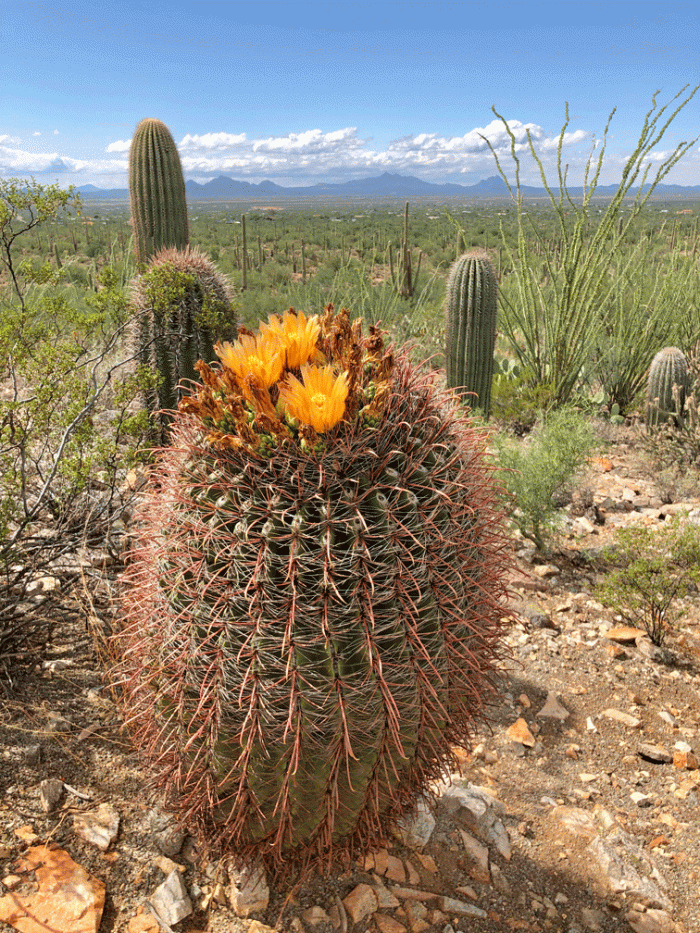
Barrel-Cactus

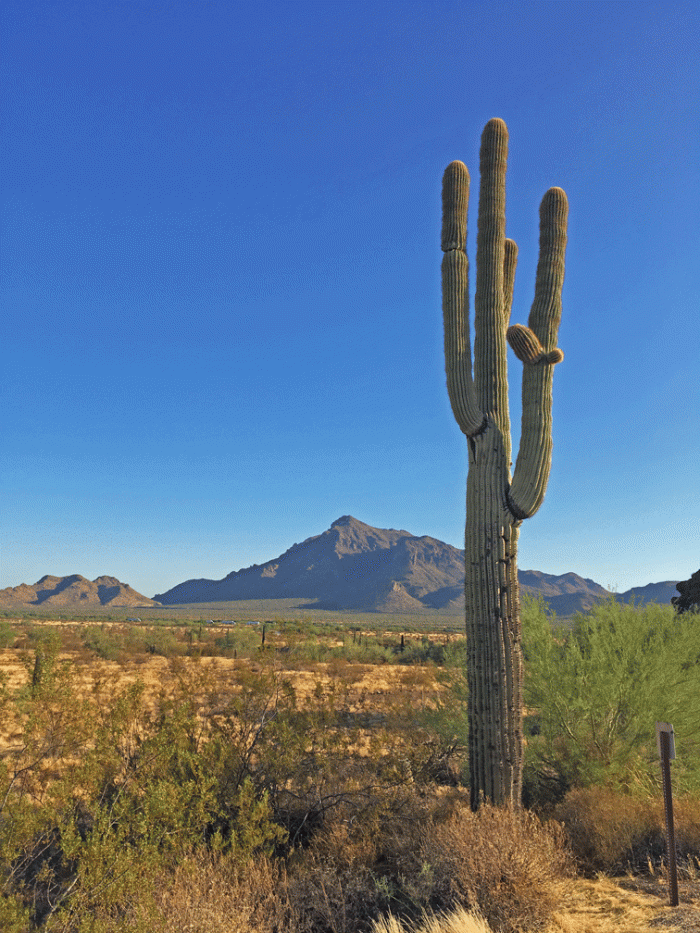
If you look carefully between the two larger Saguaros, you can see the white lettering on the mountain that says, “Phoenix” with an arrow pointing west. A boy scout troop built the sign in the 1950s. Doug took this photo very strategically; in another few steps from this spot you would be able to see the RVs in the campsite.

Saguaro

We totally enjoyed our stay at Usery Mountain Regional Park. The location was close enough to the city for groceries (including Costco), and we were also in a natural setting. Here’s a view of our campsite (#23) looking east.

Campsite

The sunsets were a bonus. This was the view from our campsite (looking west, obviously.)

Sunset

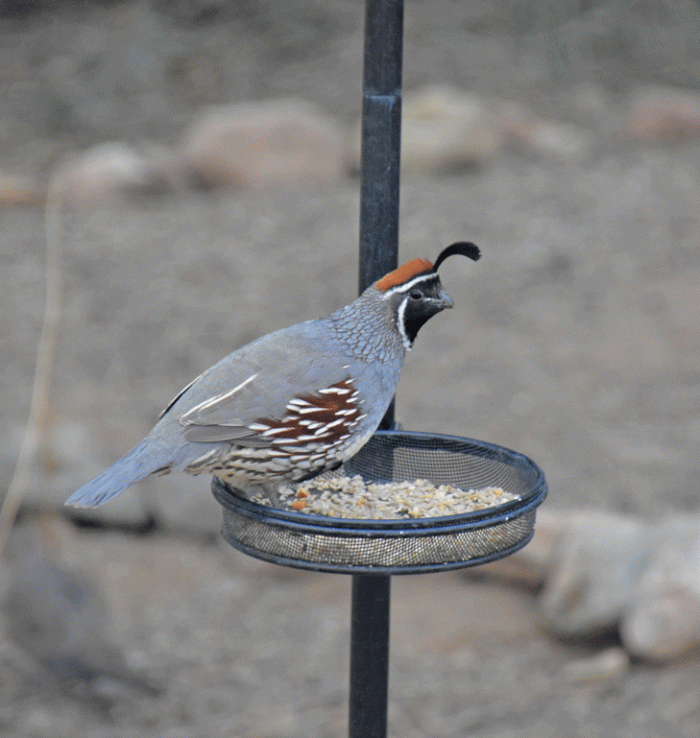
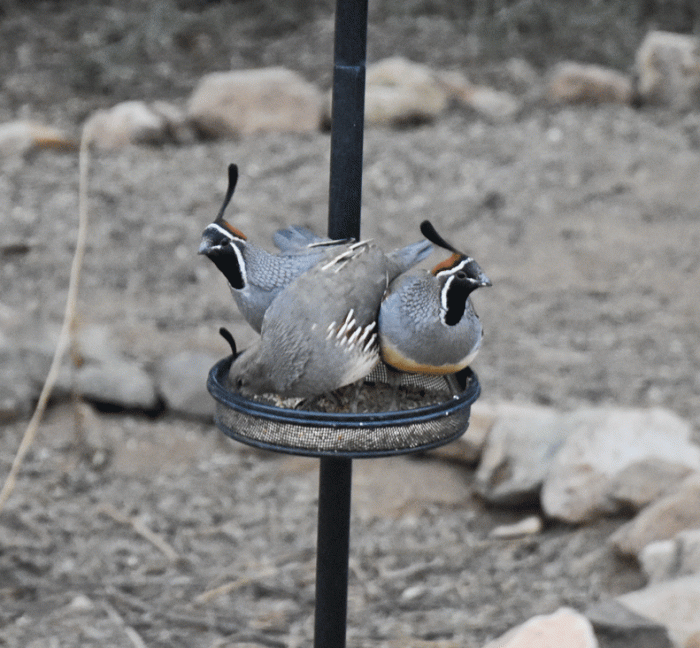
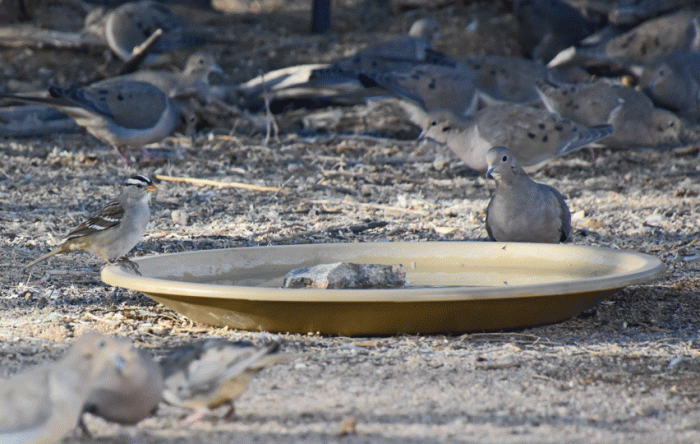
We’ll also miss our feathered friends. We put out quail and dove mix and often had over twenty Mourning doves and a covey of Gambel’s quails under the feeder. This male quail wandered into the grass to allow for a nicer looking background.

GAQU

This Gila woodpecker adapted well to all of the feeders, even the ones that were not intended for him. Here he is drinking from the hummingbird feeder.  (You can see his tongue!) We moved the feeder into a bush that wouldn’t support him and the hummer was much happier!

GIWO

There was always something to watch. Below you can see a Curve-billed thrasher go in for a peanut, while a Gila woodpecker hangs on from below and a Mourning dove returns to its favourite perch right in the dish.

Drama

Our two weeks in the Mesa area went quickly. We hope to return next year. Next blog post will document our time in the Sedona area.

Mesa, Arizona: Part One

Mesa, Arizona: Part One

We got set up at Usery Mountain Regional Park in a massive site, with lots of room between other campers.

Campsite

We set up our bird feeders right away. Next post we’ll include photos with birds. We have lots of feathered visitors.

Birdfeeder

We rode right from our site to the trailhead for Pass Mountain trail. We rode the first section from the Wind Cave trailhead to the Bulldog trailhead and back home on the pavement, for an enjoyable ride.

Wendy_bike_cacti

Another day, we chose to go birding at The Riparian Preserve at Gilbert Water Ranch. The ponds are created with reclaimed water and the birds love it! There are paved and gravelled pathways throughout the 110 acre area. Here Wendy is viewing a Green heron, a “life bird.” (Which means it’s the first time in our lives that we’ve seen one.)

Wendy_binos

 Here’s the Green heron. A Green herons is about a third of the size of our more commonly seen Great blue heron. They are hardly ever seen in Canada.

GRHE2

Get ready for some bird photos! A snowy egret.

SNEG

Another Snowy egret that reminded us of the Cattle egret we saw in New Mexico, because it didn’t look very happy.

SNEG2

This is a flock of Long-billed dowitchers.

LBDO

There were hundreds on Black-necked stilts.

BNST

Another Pied-billed grebe photo. (Check the Big Bend Part 2 blog for a photo of a male. This one is a female.)
PBGR

A Neotropic cormorant. The white V behind its bill is the distinguishing feature.

NECO

A Great egret.

GREG

Here’s one American avocet of hundreds.

AMAV

This is a Gila woodpecker poking its head out of its nest in a Saguaro cactus.

GIWO

After our day birding, our legs were rested enough to try another bike ride. This time we also rode right from our RV. We joined trails we had ridden last year, then took a different turn and ended up on a trail that wasn’t on our app. It all worked out though, since the trail connected to one we knew. The flowers were spectacular.

Wendy_bike_flowers

Here’s a closer view of the Mexican golden poppies.

Poppies

Here’s Doug on another section of the trail. Our total ride was about 24 km, that included about 5 km on pavement on a dedicated bike lane along the highway.

We’ve still got quite a bit of time to spend in the Mesa area, but with all these bird photos, we figured this was enough for one post.

Southeast Arizona

Southeast Arizona

We wanted to spend some time birding in the Sierra Vista area of Arizona, so Doug booked us three nights at Tombstone Territories RV Resort. The sites were spacious and almost everyone of them had afternoon shade. This is a view of our site in the morning.

Campground

The park was situated on flat land that was a little bit higher than the surroundings, and because there weren’t any tall trees, we had a view in every direction. This was one of the sunsets we experienced.

sunset

We drove an hour west to Patagonia State Park, an important bird area. There were lots of other birders, but we were able to space out enough to have our own experience. We saw almost all of the birds on this board, except the “specialty birds.” We might go back again to try to see the Elegant trogan, or maybe just travel to Mexico where it would be easier to see. We were able to confirm that we saw the Mexican variety of Mallard. The males look very similar to the northern Mallard female except they have a yellow bill.

PatagoniaLakeSign

We had lunch by the shore. Patagonia Lake is a natural lake, something that is less common in the Southwest than a lake formed by a dam.

PatagoniaLake

After lunch, we drove about 20 minutes to the town of Patagonia.

Patagonia

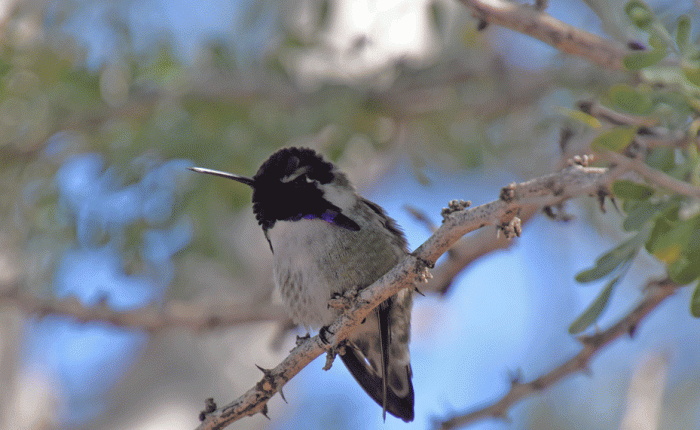
We visited the Paton Center for Hummingbirds. The centre is actually in the yard of Mr. and Mrs. Paton and is world famous, especially for attracting the Violet-crowned hummingbird, that’s on the sign. The front and back yards have plenty of feeders. There are benches set up, so it’s pretty easy birding.

PatonSign

The Violet-crowned hummingbird was one of the first birds we saw.

VCHU

There were lots of other interesting birds, including this Blue grosbeak. It’s either a female or first year male. Our identification was made easier by the fact that we were sitting right in front of a birding guide and his two clients, so we heard everything he was telling them. Apparently it is rare to have a Blue grosbeak around at this time of year. And it was a new bird for us.

BLGR

The Broad-billed hummingbird was hanging out in the backyard. We think he is the most beautiful hummingbird that we’ve ever seen.

BBIH

The next day, we had a couple of birding spots to check out, so we planned a circle tour. We headed east on Highway 82, and went for a short walk on the San Pedro Riparian Preserve on the trails around Fairbank Historic Town. (That’s code for birding but not seeing anything.)

We went south through Tombstone, and chose not to stop at this tourist attraction. Our plan was to turn west towards Sierra Vista, but as we were approaching the turn, we realized that the town of Bisbee was only 8 miles away. Doug has read all the J.A. Jance books about Sheriff Joanna Brady, who is the fictional sheriff of Bisbee.

So that’s how we ended up in Bisbee, which is mining town that now has a focus on tourism. You can stay in the historic Copper Queen Hotel.

CopperQueenHotel

It wasn’t hard to find Old Bisbee Brewing Company in historic brewery gulch. The brew house was across the street from the tap room.

OldBisbeeBrewing

The tap room was very modern which was quite a contrast to the rest of the historic looking town. We enjoyed the beer. Wendy had a Russian Imperial stout and Doug had their Copper City Ale.

Wendy_taproom

After a quick lunch in the truck, we continued on our original plan. We stopped at another part of the San Pedro Riparian Preserve at San Pedro House. We birdied along the trails, seeing 27 species including this Green kingfisher. Green kingfishers have a very limited range in the USA but are often seen at this site. We watched this female catch tiny fish from a low branch. Green kingfishers are much smaller than the Belted kingfishers that we see more commonly and have very long bills. Another new one for us!

GKIN2

Before we left our RV park and its reliable wi-fi, we got some work done on our blog and made sure our bird lists were submitted to eBird. The blog is a joint effort. Doug takes most of the photos and formats all the photos so that they load easily to our WordPress site. Wendy then writes the commentary.

Wendy_blog

This blog was posted with the use of a personal hotspot, from Usery Mountain Regional Park, as I sit in the shade with the iPad in my lap and birds all around. Isn’t technology wonderful! We’ll be here in the Mesa area for another couple of weeks.

New Mexico: Carlsbad and Las Cruces

New Mexico: Carlsbad and Las Cruces

There are a few choices of routes to take from Lajitas, TX to Carlsbad, NM. We thought this time we would avoid the mountains. The route we chose through Ft. Stockton and Pecos looked fine from the map; nice straight roads without much elevation changes. What our less the detailed map didn’t show, was that we would be travelling through the Permian Basin. The Permian Basin is a hotspot for oil and natural gas extraction. We ended up travelling through a hundred miles of drill rigs, tank farms, pump stations and refineries, with heavy industrial traffic on a undivided highway. It probably would have been better to drive the longer route to avoid it. Anyway, we got to Carlsbad, NM and set-up at the Carlsbad KOA, a very nice park.

We wanted to see the Carlsbad Caverns National Park, which was about an hour south of our RV park.

Caverns-sign

We spent a few minutes in the visitor centre, refreshing our memories of cave formations.

Visitor-centre

Then we walked down a path to the natural entrance. The path was paved, with handrails all the way along and had a fairly easy grade.

Entrance

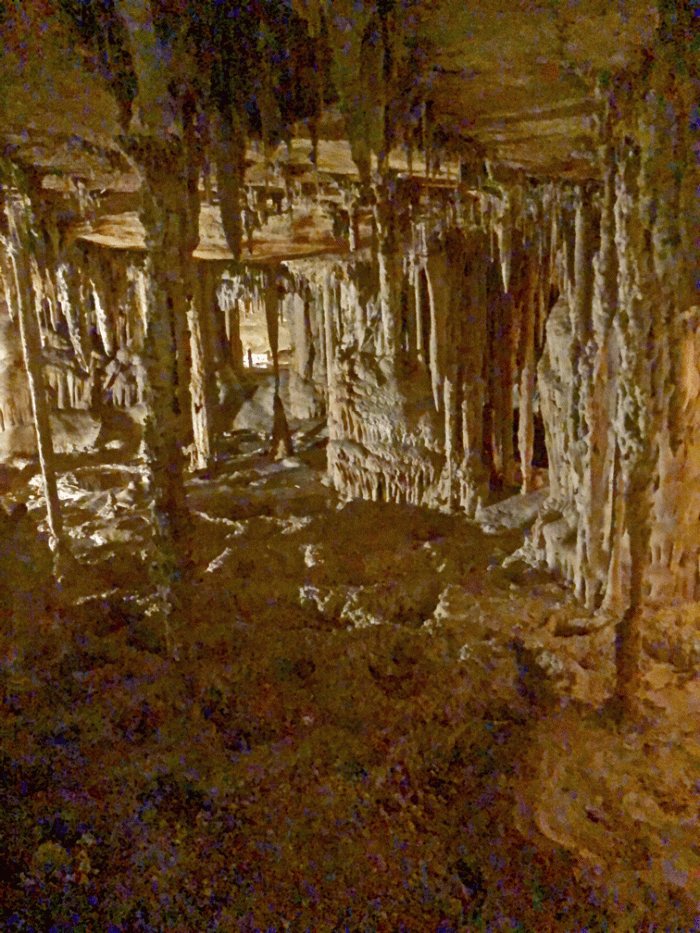
Our eyes adjusted to the limited lighting. We didn’t talk much and then only in a whisper, because voices carried and would disturb others. Most other people also stayed quiet, so it was quite a calm atmosphere. We walked down about 1 and a quarter miles until we came to the “Big Room.” Here’s a view of one of the formations.

Cavern1

These are soda straws growing from the cavern roof.

Cavern2

Everywhere you looked, there would be another fantastic structure. We could have chosen fifteen photos and it wouldn’t have been enough to show you the variety, but you will have to be satisfied with these three. It was definitely worth visiting.

Cavern3

We also had a day to go birding at a few different areas. We started in our campground, where there was an almost tame covey of Scaled quail, a bird we had been hoping to see in Texas. We didn’t have to work hard to see these.

SCQU

There was a field along the edge of the park, where Red-tailed hawks hunted as well as  this Sharp-shinned hawk. We watched the red-tails chase the smaller hawk out of the field. He rested in a tree on the edge of the RV park, which allowed us to have a good view.

SSHA

Next stop was Las Cruces, NM. We had stayed at the same KOA the last time we were here a few weeks before. This time, we arrived just as the wind was picking up. The low pressure system that blew through brought high winds with gust to 100 km/hr, but no snow like the folks in Arizona experienced. We stayed in our trailer, sheltered from the storm, and were happy we weren’t on the road.

It was still pretty breezy in the morning, so we took a drive to Hatch to buy Hatch chiles from a local company. We went to a wild bird specialty store to buy birdseed for our campsite in Mesa the next week, and arrived just as a seminar on nests and nestlings was about to start. We enjoyed the presentation and learned a lot.

By then it was time for a beer, so we visited the older brew-pub in Las Cruces, High Desert Brewing.

High-desert-brewing

So the next day was dedicated to birding. Las Cruces is about two hours from the best birding spot in New Mexico: Bosque del Apache National Wildlife Refuge. Our good friend, Kath, who recently passed away, recommended that we go, so we got up early and made a day of it. We dedicated our day of birding to her memory. Actually, everyday we bird we think of Kath. She inspired us to learn and report more. The visitor centre had bird feeders outside its window and a cactus garden with a nature trail just beside it, so before we got into our truck to drive the self-guided loop roads, we had seen a dozen species of birds.

Bosque_sign

Just as we were getting ready to hop in the truck, more than a thousand snow geese circled over. They were coming their overnight resting spot in the fields that were a few minutes flight away. They landed on the pond right at the start of the tour. Doug took some good photos, although it is hard to capture the movement and noise of the flock.

SNGO1

They took some time to settle; they’d be down on the water for a few minutes, then up and circling again and back to the water. Later in the day they were mostly just swimming in a large group, and not moving very far and it was not as dramatic.

SNGO2

While all this commotion was going on, a lone Cattle egret sat on the shore, looking very lost. And we guess he was a little lost, since he wasn’t expected to be there for at least a month. It’s always nice to have a good photo to submit to eBird when the RARE bird alert shows up and you need proof that it was there.

CAEG

In among all the Snow Geese, were a number of Ross’s geese, a goose we have never seen before. It’s difficult, however, to differentiate the geese when they are in a huge flock. This Ross’s goose was kind enough to separate itself and wander beside the ditch. It’s bill is different from a Snow goose and doesn’t have a “grin patch.”

ROGO

We drove the loop roads and stopped at random spots. There were viewing platforms throughout the route, but Doug found another solution to get high enough to see by standing in the bed of the truck. We also used the scope a lot to see birds that were in the distance.

Doug_tailgate

This Green-winged teal’s head was beautiful, but the thing that stood our from a distance was his buff behind, especially when he was dabbling.

GWTE

There were also birds in the fields. We saw over twenty meadowlarks. We couldn’t say for sure if they were Western or Eastern, since they are both here at this time and look very similar.

EAME

We also got a good view of a Red-tailed hawk.

RTHA

And an American kestrel.

AMKE

This raven was close to the road and very cooperative, so Doug got a few good pictures. It was good we had photos, because we were able to confirm that it was a Chihuahuan raven, based on the length of its bill and how far his nasal feathers go down his bill.

CHRA

We saw a lot of birds! There were also a thousand or so Sandhill cranes. Mostly they were in a field of corn that had been grown especially for them, but a few groups of them took to the air.

SACR_flight

We spent about five hours at the refuge, so by the time we got back to Las Cruces, it was a nine hour day. But it was worth it.

Big Bend National Park: Part 2

Big Bend National Park: Part 2

We chose to stay in Lajitas because the park had good ratings and it was close to Big Bend National Park which we knew had good birding. When we did some research about things to do in the area we saw that there were some mountain biking trails. We were not expecting to find a mountain biking Mecca, which is what it turned out to be. Almost everyone in the RV park had mountain bikes, and groups were riding from the park. We tested our legs and lungs out on some nearby dirt roads for the first few rides and then headed out to the single track. Here’s Wendy on a pleasant section of Loop 3 at the Lajitas Airport trails.

Wendy_loop3

Here’s Doug heading down a steeper section of the same trail. We enjoy desert riding because the terrain is so varied, no roots to worry about and usually the trails avoid the cactus thorns.

Doug_bike

Two other days we headed into the Big Bend Ranch State Park. We could ride to the East trailhead from our RV. The trails are a series of old roads with single track sections. Here’s Doug heading off on one of our favourite sections.

Doug-Camino-Viejo

Doug is riding here on the “Rock Quarry” trail. We were given good advice to ride it on the way back. We rode over 20 kilometres on both days.

Doug_riding

We went to Big Bend National Park for another day of birding; this time to the Rio Grande Village nature path. They have built a boardwalk out through the marsh. At the pond, we caught a glimpse of a Black-crowned night heron, but this Great blue heron was much more photogenic.

GBHE

Doug was just in the right place at the right time to catch this Pied-billed grebe.

PBGR

This section of the park is very close to the Mexican border. There’s a town a few miles away that has an official border crossing where you can wade across the Rio Grande or hire a rowboat to take you. But it’s not legal to cross at this trail. But someone must sneak across regularly, because there are displays of trinkets that are offered for sale all the way along the trail. Each bright beauty has a price tag and there is a can available to take your payment.

Trinkets

Here’s a view of the Rio Grande and into Mexico from the lookout.

RioGrandeScenic

Just below the lookout, we saw this Rock wren.

ROWR2

We took a walk around the campground at Rio Grande Village. (Actually there is no village, only a campground.) We saw a couple of Greater roadrunners cavorting alongside of the road. This one had raised its crest which allowed us to see the orange bare patch of skin behind its eye.

GRRO

Another day, we went back to the Chisos Basin in BBNP and hiked the Lost Mine trail. Here’s a view from partway up the trail. Very interesting and rugged terrain.

Lost-Mine-scenic

Here’s Wendy at the ridge. Over her left shoulder is the view that we saw from the Window trail.

Wendy_Lost-Mine

We walked along the ridge to the high point. Here’s a view looking back towards where the previous picture was taken. As we walked farther along the ridge, the wind gusted and we almost lost our footing.

Lost-Mine-hike

Here are a couple of photos of some typical flowers that we saw throughout our eleven day stay in the Big Bend area. The yuccas were blooming. (There are many varieties of yucca, like there are many sparrows. We’re learning the different sparrows, but haven’t tackled understanding the different yuccas.)

Yucca

These beautiful blue flowers are known as Texas Blue Bonnets, and they are a kind of lupine. They grow mostly on disturbed soil, along the roadside, but we happened to find this patch a little bit from the road.

Bluebonnets

So when we’re in a spot for more than a few days, Wendy sets up her “mobile quilt palace,” as Doug calls it. Here she is quilting a placemat.

Mobile_quilt_palace

Here’s the finished placemat, in keeping with our “travelswithafox” theme. Wendy did the whole project in the trailer: cutting, piecing, quilting, and binding.

Next post will document our trip from Texas to Arizona, through New Mexico.