This is the continuation of our adventures in Texas in the middle of April. On our fourth day in Texas, we went on a guided trip to Santa Margarita Ranch. Last year we went with the same guide, Simon Kiacz, but with a large group. This time, it was a more positive experience with our group of five and only three other clients. Here is a view of Simon, Wendy and Mary looking across the Rio Grande River into Mexico. We saw a wild Muscovy Duck near the island below us.

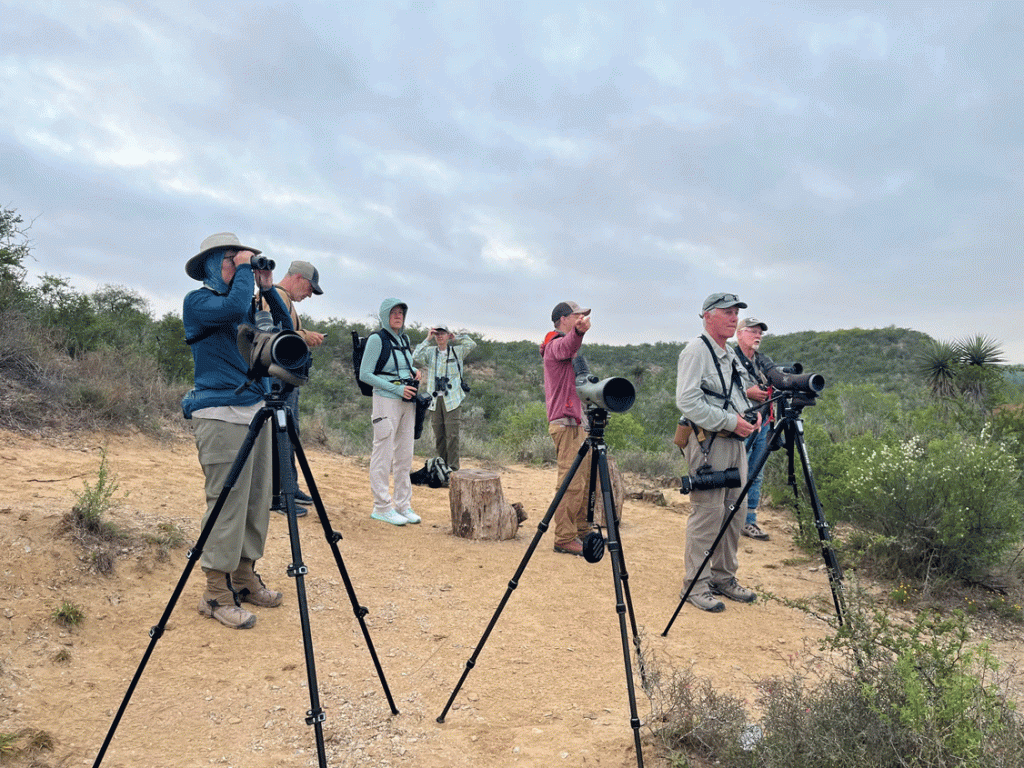
Mary took this photo of most of the group. We spent a couple of hours on the bluff, hoping to see rare hawks. The most plentiful birds were Great Egrets. A Painted Bunting visited us on the bluff for a few minutes.
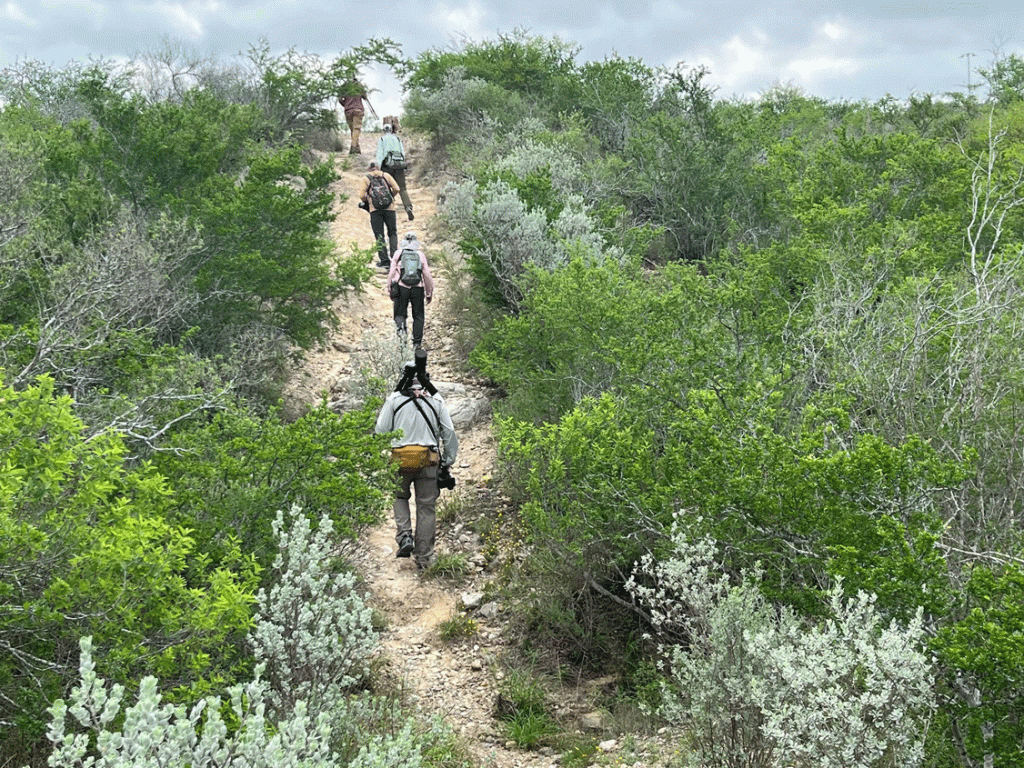
Here’s another of Mary’s photos of some of the group walking back up to the vehicles.
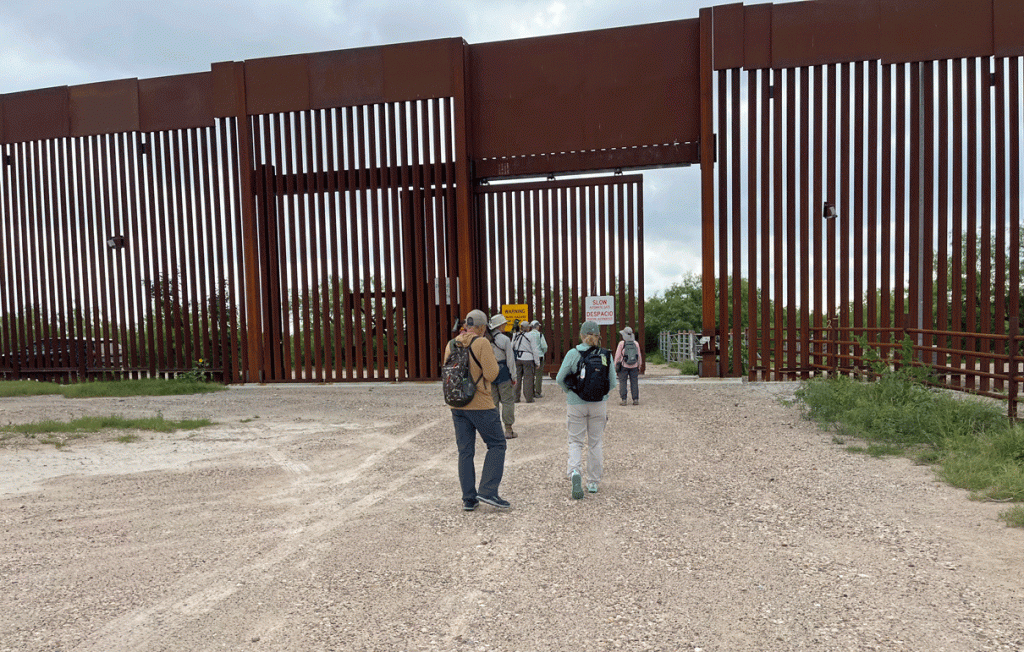
Rich took this photo of the border wall as it was sliding open to let us through. Our guide had a code that activated the gate. Our vehicles are parked just on the other side.
We drove to another section of the ranch, through a gate and down to a bench above the river, where we parked in a clearing. As we were walking towards the feeding station, Simon noticed a non-venomous snake and quickly grabbed it so we could see it. It was a Texas Blue Indigo, one of the largest snakes in North America. It kills its prey by overpowering it and using its powerful jaw strength.

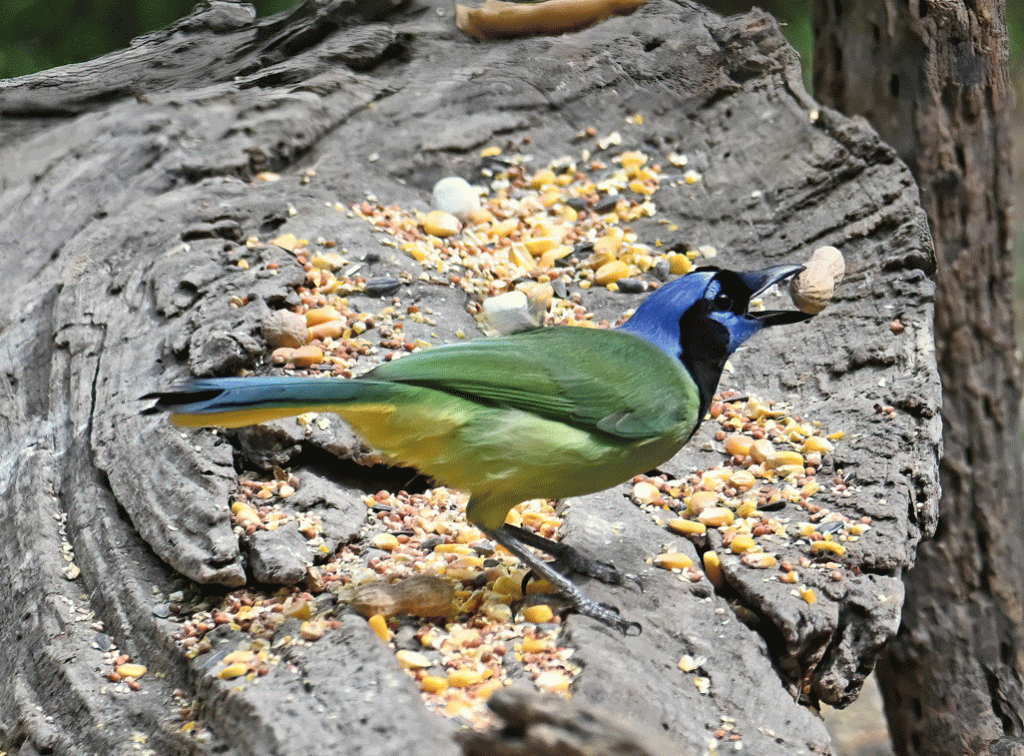
The guide refilled the feeding station with oranges, seeds, peanuts and mini-marshmallows. This Green Jay was one of the first to show up. They live year-round in this part of Texas.
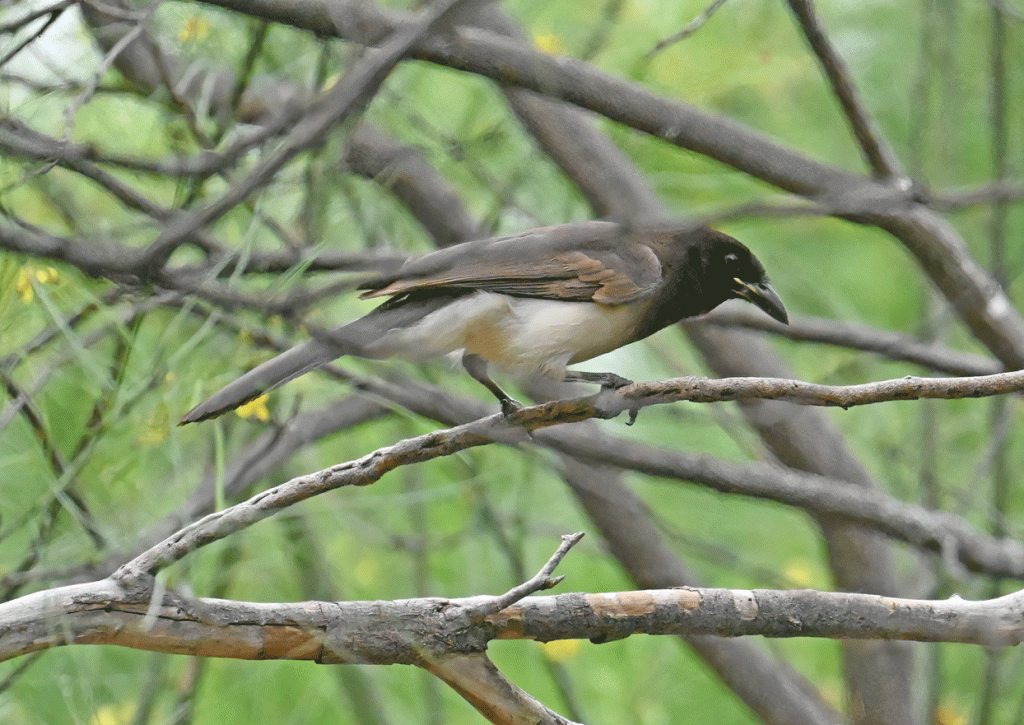
While common in Mexico, the Brown Jay is a very rare bird in the US. Santa Margarita Ranch is one of the few places that they are found. A pair nested on the ranch last year, and we also saw this year’s nest.
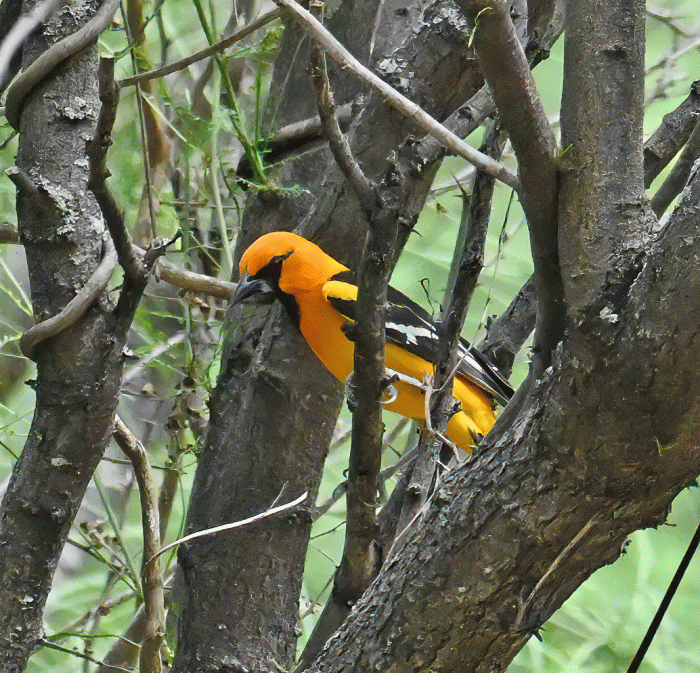
This is an Altamira Oriole, which is only found in the US along the Rio Grande in open shrubby woodland. They will visit fruit feeders.
This chicken-like bird is a Plain Chachalaca. They “sing” their name, which is more of a cacophony than a song.

Olive Sparrows are known to be quite secretive, but this one came to the feeding station.

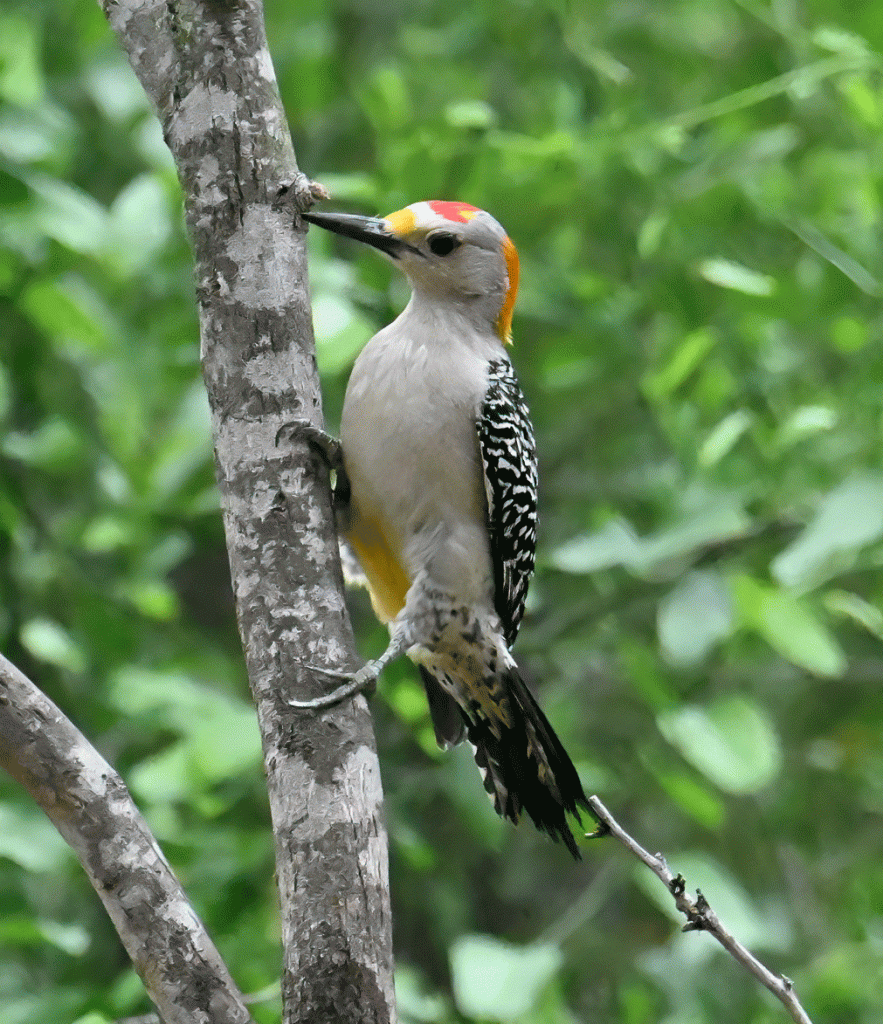
We got a good view of a Golden-fronted Woodpecker. We saw or more likely heard over twenty throughout the day. Their call reminded us of a Gila Woodpecker that we know from Arizona, but the two species live in different parts of the country.
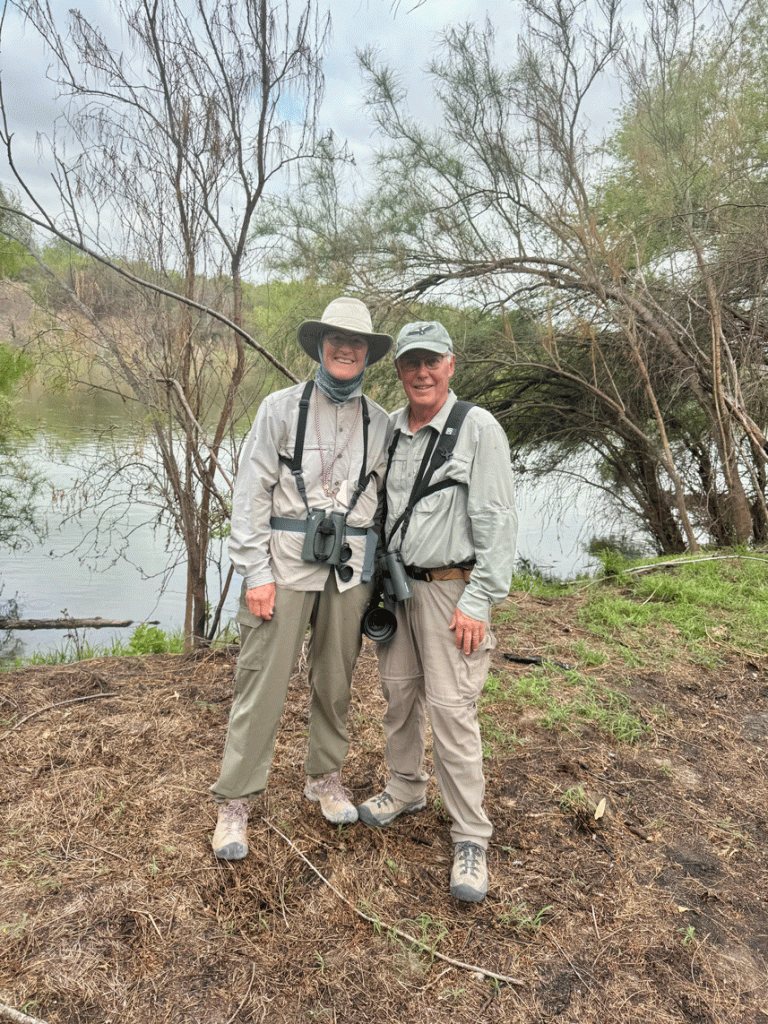
We walked close to a backwater of the Rio Grande and took a moment to take some posed photos. Here are our friends Mary and Rich.

Here’s one of us. This spot was very close to the place that we saw a Morelet’s Seedeater. We were lucky to see the very rare bird for the US, but our best views were through the guide’s scope, because it was so far away. It’s a fairly common weed-eating bird in Mexico.
This female Rose-throated Becard was adding more “soft stuff” to her large, globular nest hanging high in the treetops. Notice the hawk feather on the edge. This is another species that is easier to see in Mexico or Central America than in the US.
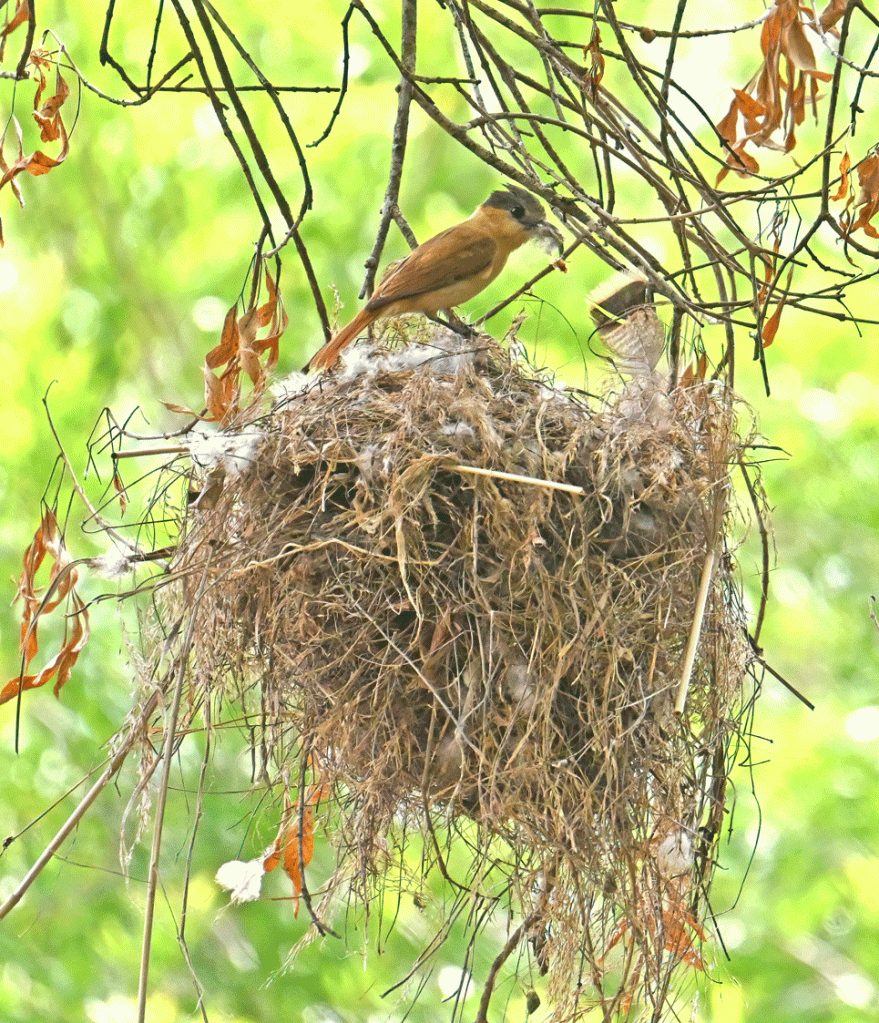
Our day at Santa Margarita Ranch was like a “mini” birding trip to Mexico without actually going to Mexico, since we saw so many birds that are found more easily in that country.
It wasn’t yet two in the afternoon when we left the ranch, so there was still time to go somewhere else. Falcon State Park was fairly close to Santa Margarita Ranch, so we headed there. We got a good view of this Brown-crested Flycatcher near the Butterfly Garden at the park. We also went down to the reservoir, which is a dammed section of the Rio Grande. There we saw a Gull-billed Tern, a bird that we had hoped to see when we were at the ranch.

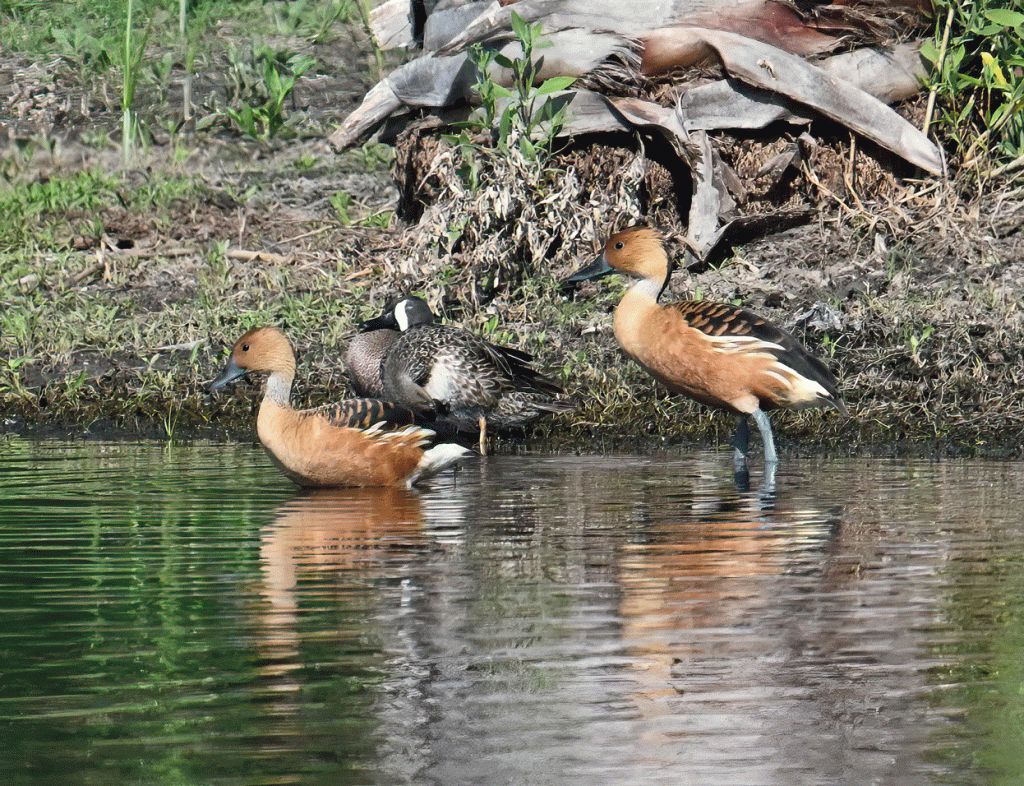
One of the birders that we met at the ranch told us we could see Fulvous Whistling-Ducks at Delta Lake in Hidalgo County. It was an hour and a half drive somewhat in the direction of our casita. We arrived about 5 pm and got good views of the dark-billed, long-legged ducks before they flew away. We had never seen that species before. We got back to our casita that evening at 6:30, a long but fulfilling day.
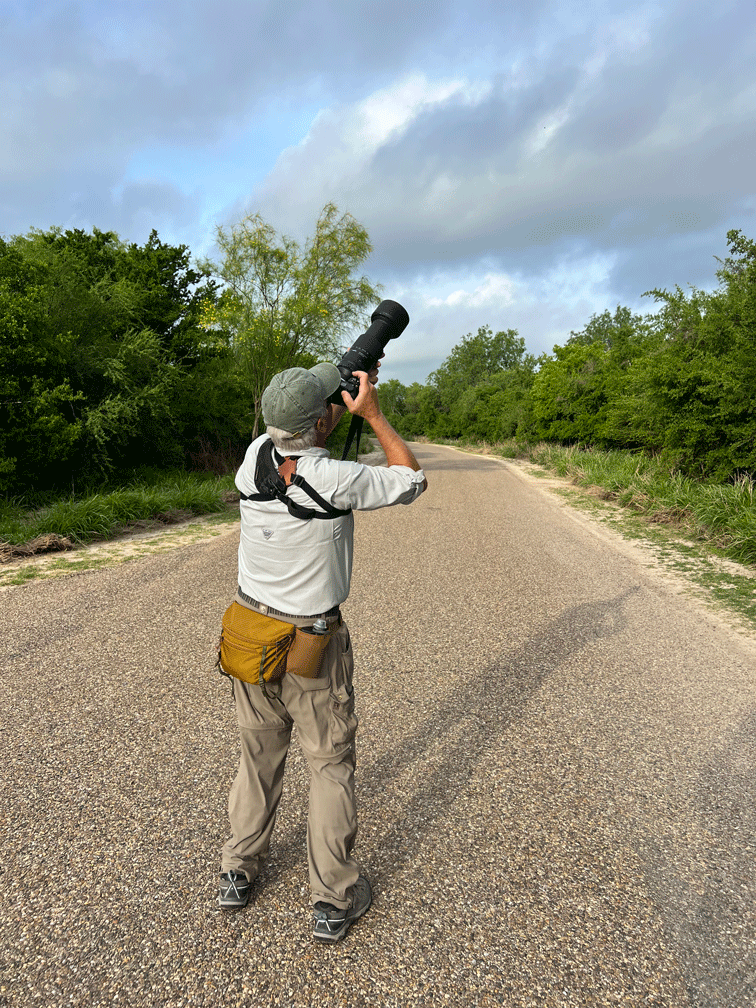
On Wednesday, we decided to stay a bit closer to home. We started by walking about ten minutes from the casita to Bentsen – Rio Grande State Park. Here’s a photo of Doug taking a photo of a Broad-winged Hawk.
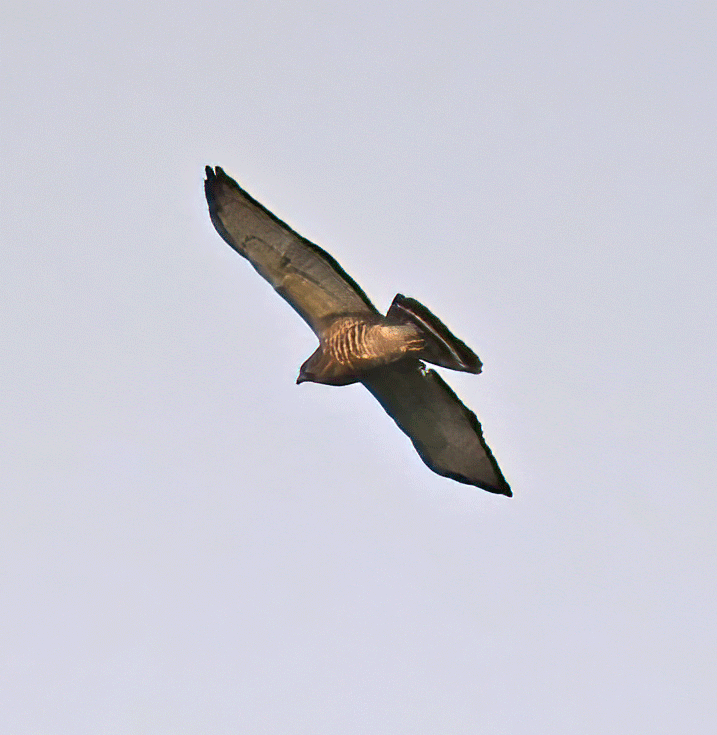
And here’s the photo of that bird. It was a long way up in the sky, but the white band on the tail was visible. Broad-winged Hawks migrate over this area and are one of the species that the observers at the Hawk Watch tower watch out for. We didn’t see large numbers of hawks for the short time we were at the tower. The volunteer at the tower thought that the migration was slower this year than usual.
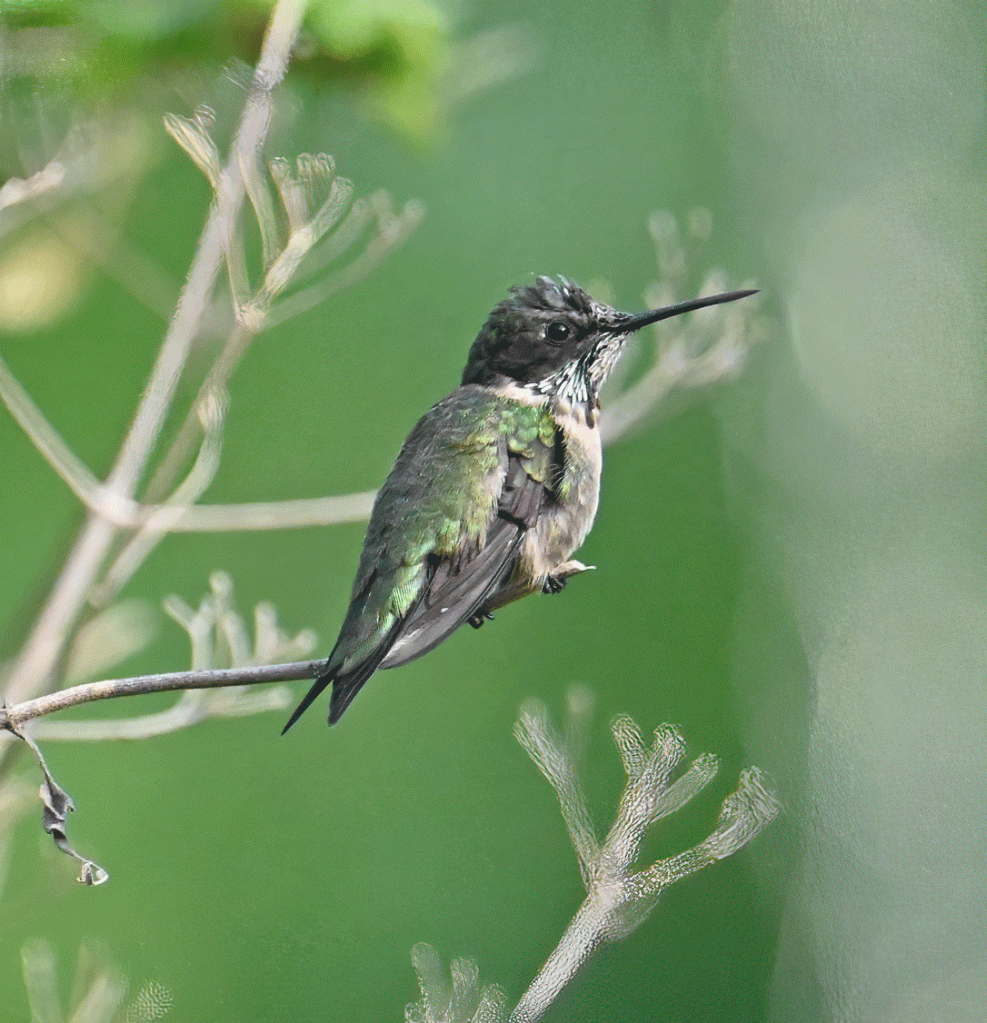
We saw our first ever Ruby-throated Hummingbird near a feeder in the park. The light didn’t catch the gorget at the right angle so it doesn’t appear very red. The Ruby-throated Hummingbird is the Eastern counterpart of the Black-chinned Hummingbird that we see in BC in the summer.
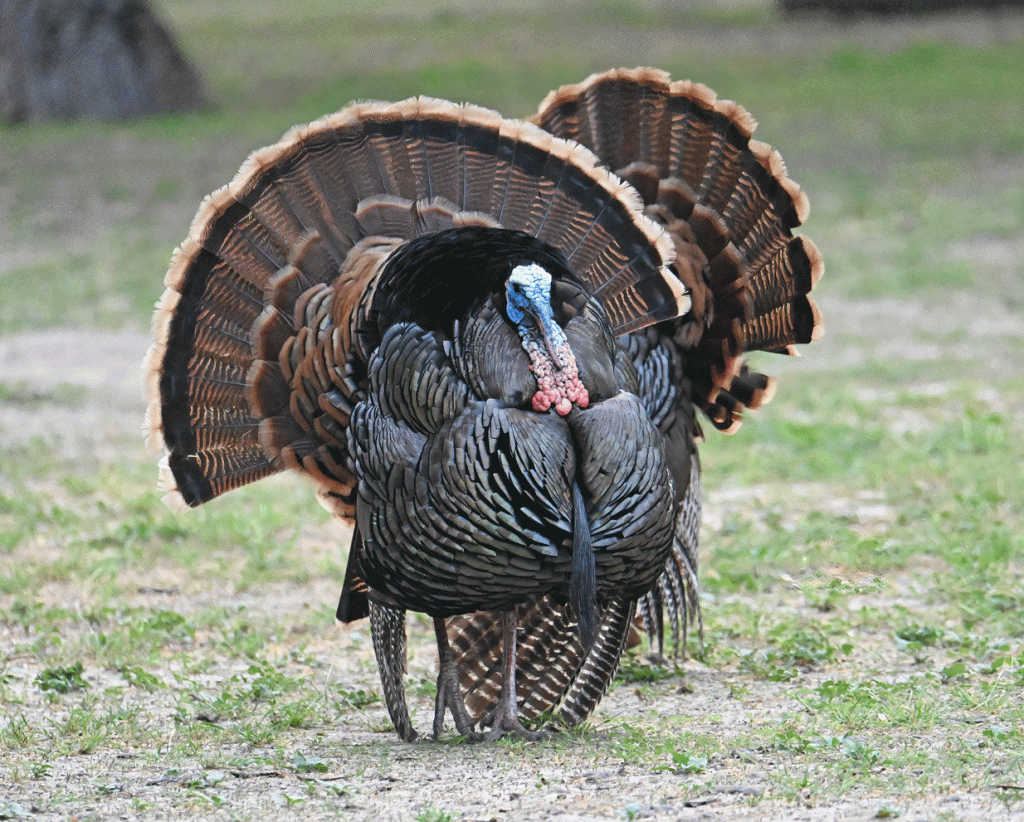
Wild Turkeys in year-round in BC, and we’ve even seen them in our yard, but we’ve never seen them displaying. These two toms were perfecting their struts, accompanied by loud “gobble-gobble” vocalizations. The females that were nearby ignored them.
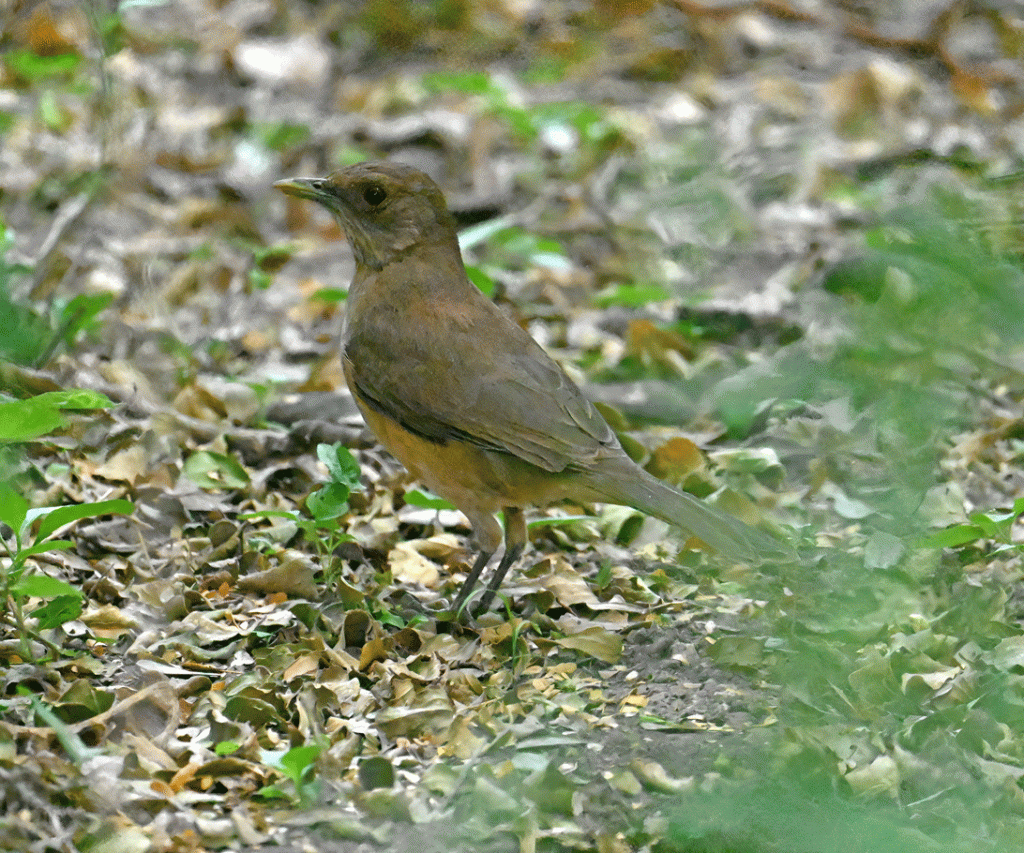
When we were leaving the park, we spent some time around the Visitor Center, hoping to see a Buff-bellied Hummingbird. Instead, we got good views of a Clay-colored Thrush. This secretive thrush is basically a drab coloured robin. The Clay-colored Thrush is a rare but regular visitor to this part of Texas, so it was a nice bird to see.
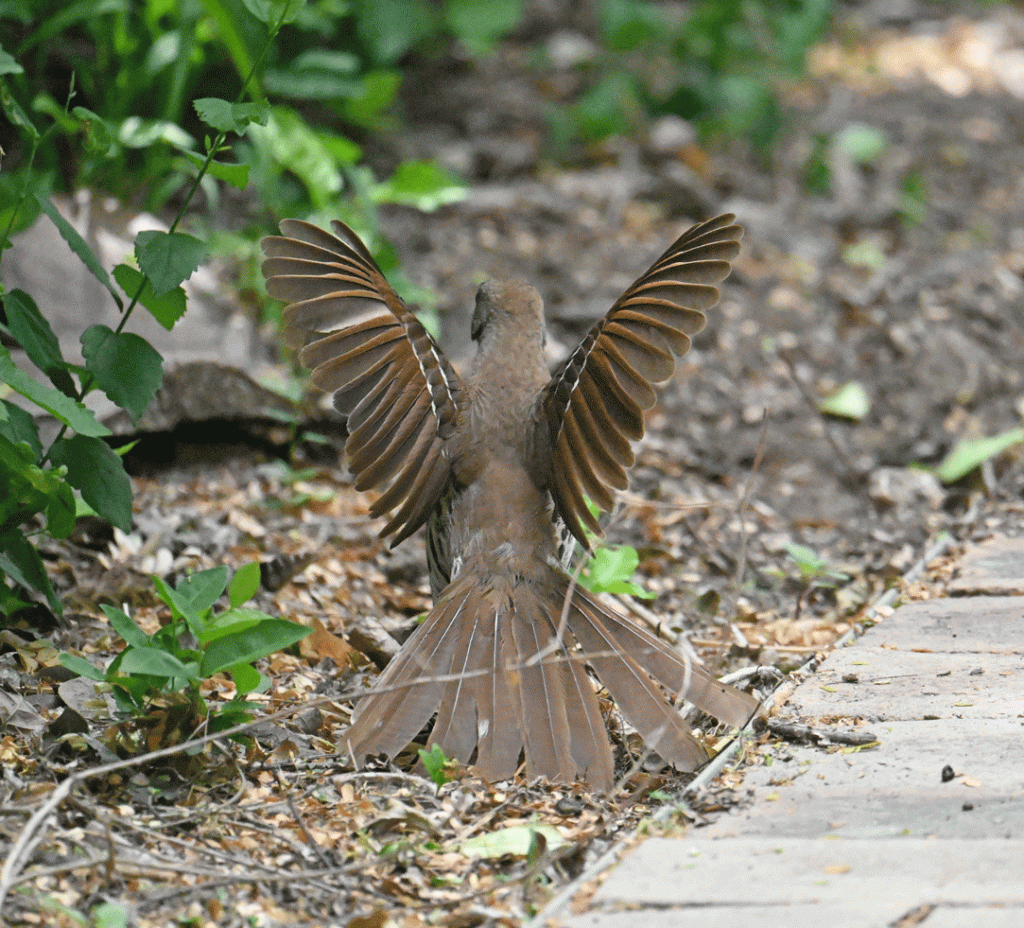
We also noticed a Diamondback Rattlesnake on the pathway. We notified the park ranger because it was very close to the bus stop. They said they planned to put up a warning sign to alert visitors.

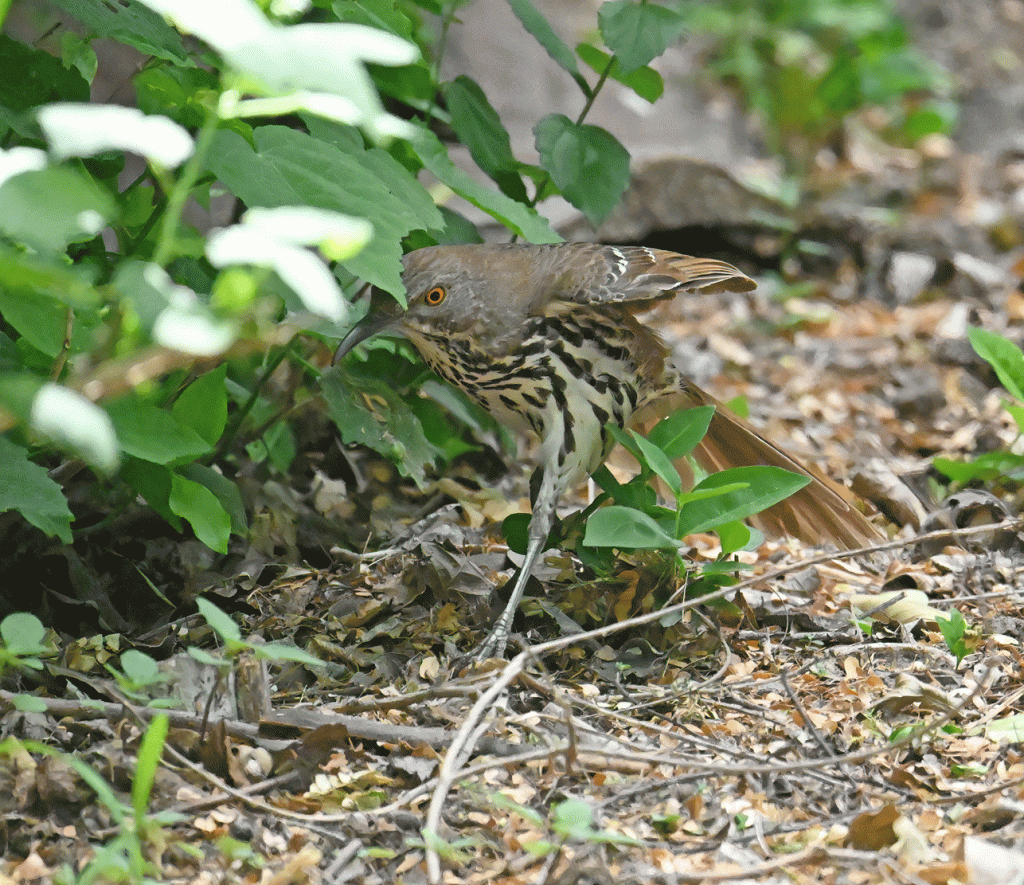
This Long-billed Thrasher also saw the snake. Thrashers will attack snakes, especially if they are defending a nest. Long-billed thrashers are very similar to Brown Thrashers, except for their ranges.
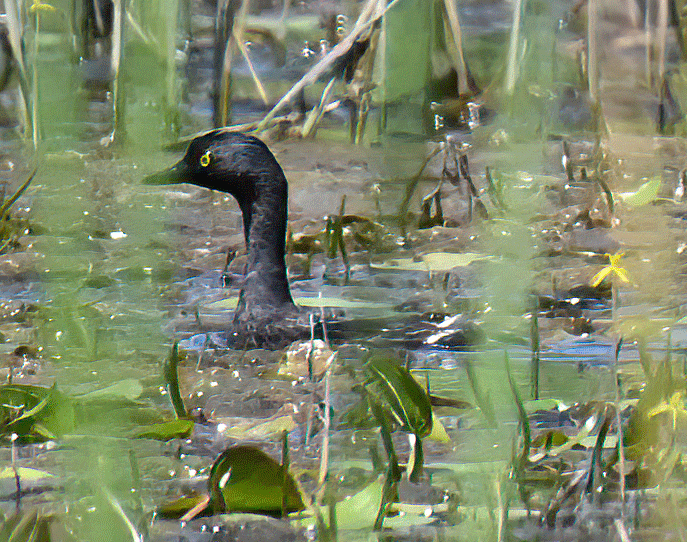
After lunch in our casita, we drove about a half hour east to Estero Llano Grande State Park. We saw this Least Grebe almost hidden among the vegetation in one of the ponds. The Least Grebe is much smaller than a Pied-billed Grebe and has a small, dark bill and yellow eye.
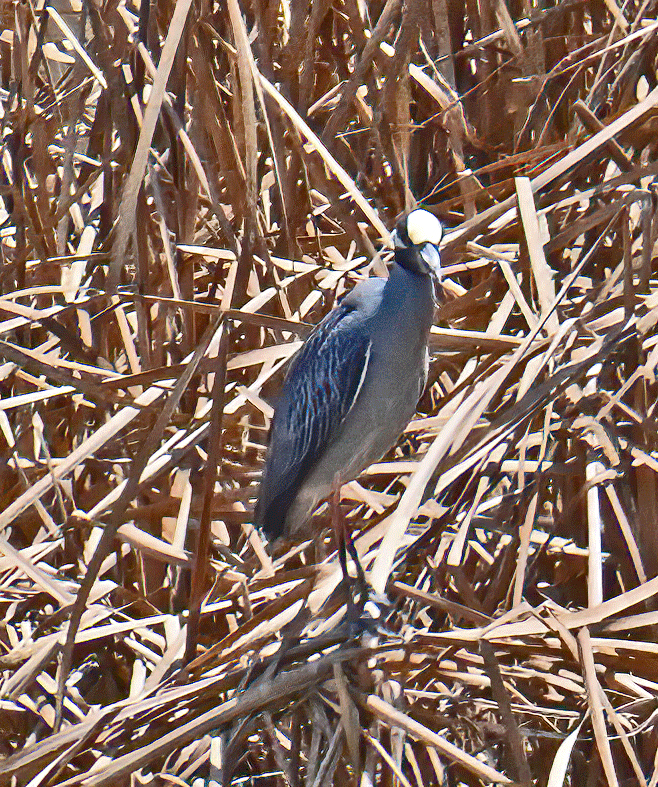
We were happy to see an adult Yellow-crowned Night Heron, because they are generally only active at night. It had quite a bold head pattern with white cheeks and a very thick bill.
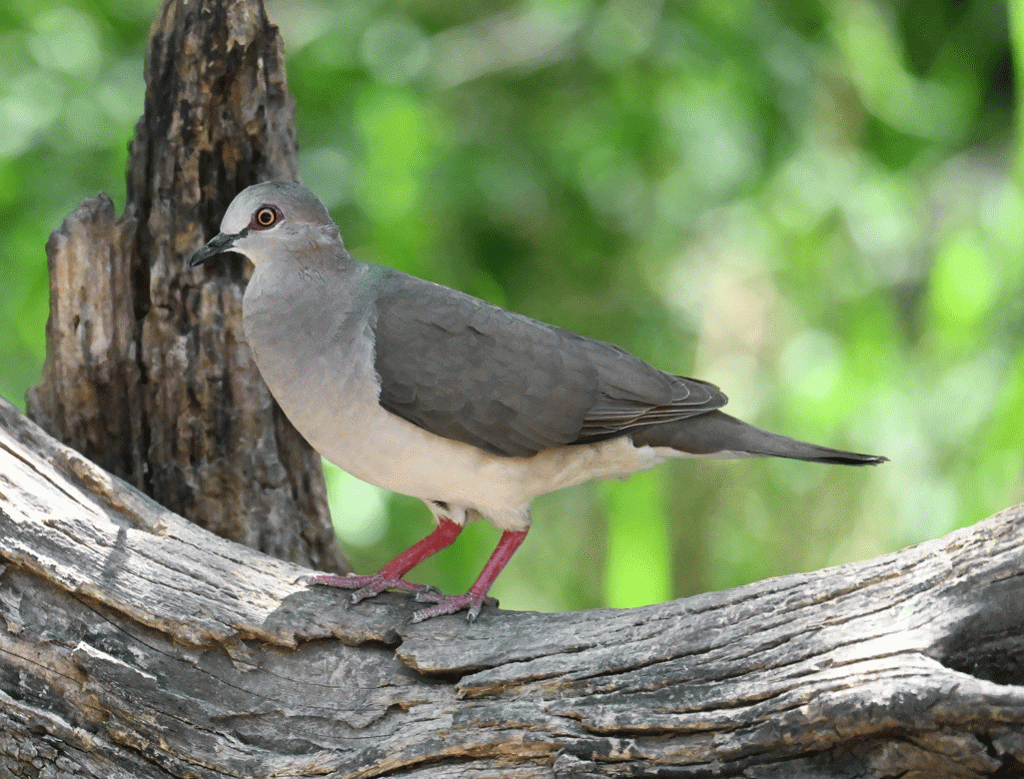
The pink legs on this White-tipped Dove seem more obvious than the white corners on its tail that are visible when it flies. The Sibley Guide to Birds describes it having a “bemused expression.” We saw this individual while we were waiting at a bird blind in hopes of seeing a Buff-bellied Hummingbird.
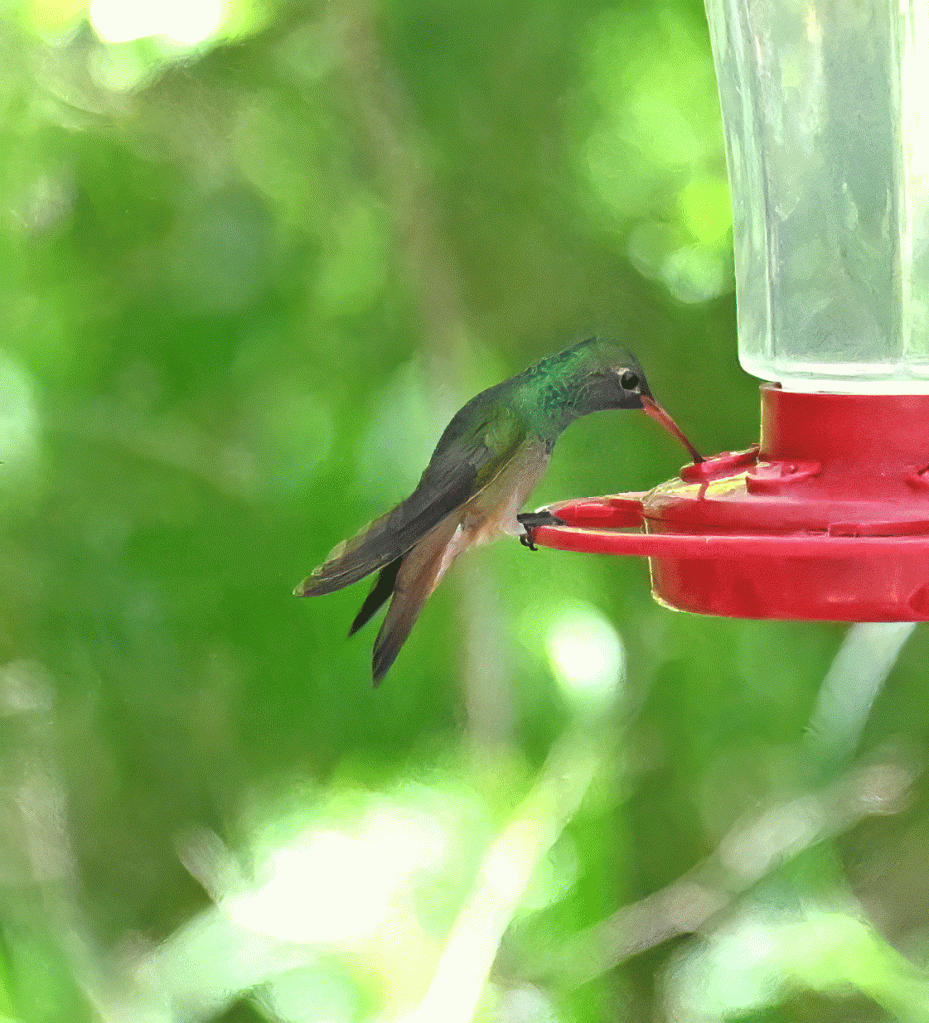
The Buff-bellied Hummingbird did eventually show up to the feeder. It’s another one of those birds that can only reliably be seen in South Texas or Mexico, so we really wanted to see one on this trip. The Buff-bellied Hummingbird looks similar to a Berylline Hummingbird, with its entirely green head, rufous tail and red bill, but the two species don’t live in the same areas.
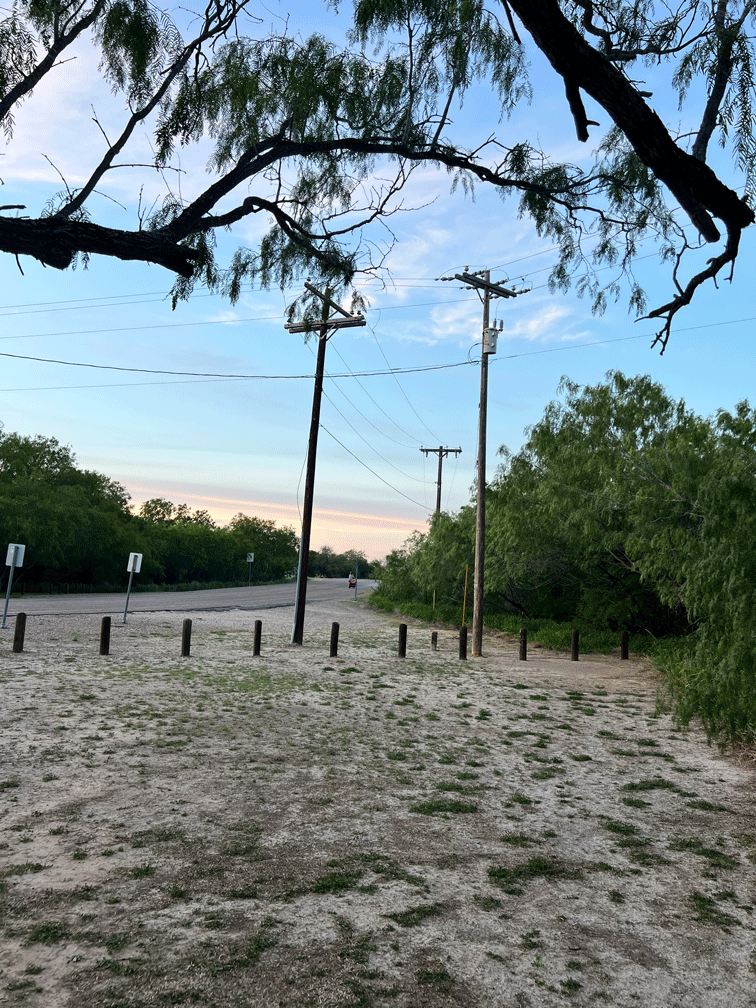
After dinner that evening, we walked over to the Bentsen-Rio Grande State park again. The Elf Owl that we saw last year was still nesting in the same power pole (the one on the right with the transformer).
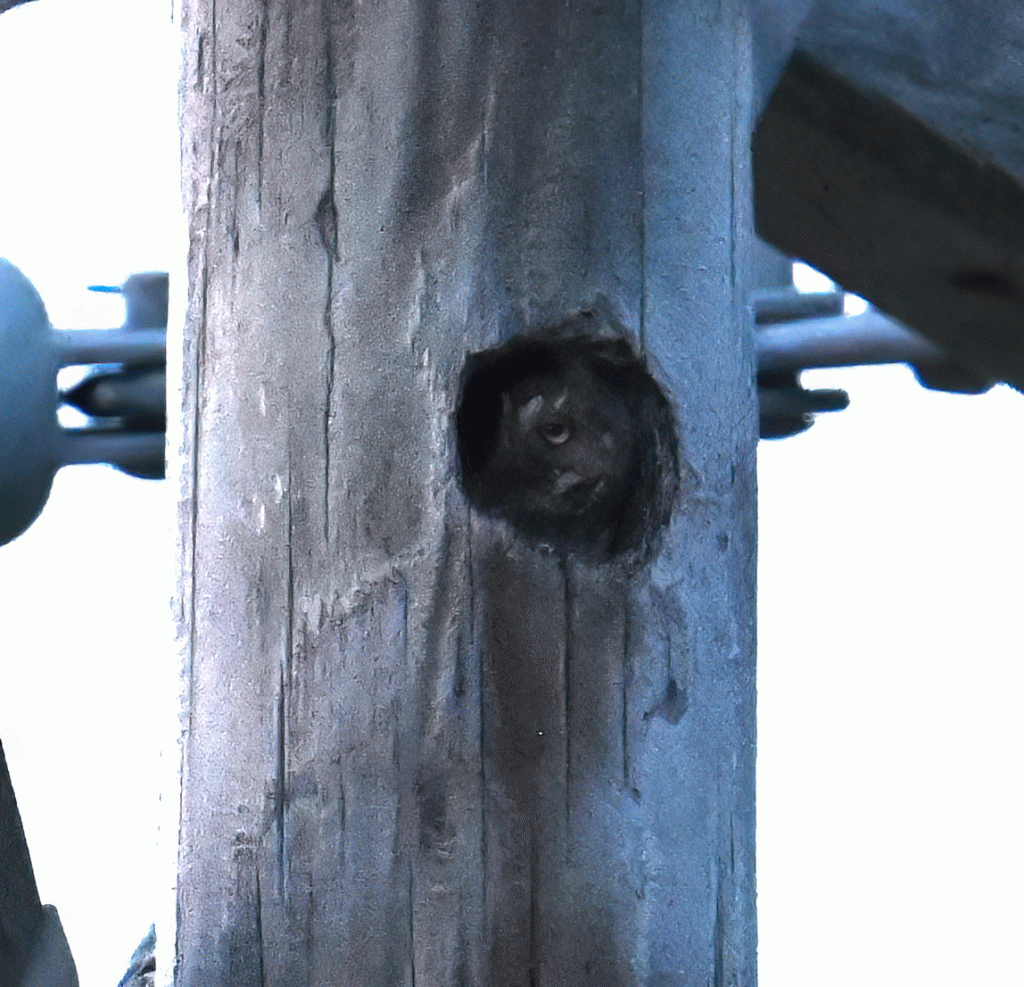
Here’s a low-light distant photo of the Elf Owl. It first poked its head out at 8:01, before the guided birding group got there. It looked out for longer at 8:07. We didn’t wait around to watch it fly out because the mosquitos were annoying. Elf Owls are the smallest owl; less than 15 cm (6″) long, with a wingspan just a bit over double that. One day we hope to see one in Arizona where they will roost in Saguaros.
On Thursday, we started at the Sugar House Pond. The photo below shows the “pond” which is more like a flooded field. It was actually taken on the windy Wednesday afternoon. We were looking into the sun, so we figured it would be better to come back in the morning when the light was better.
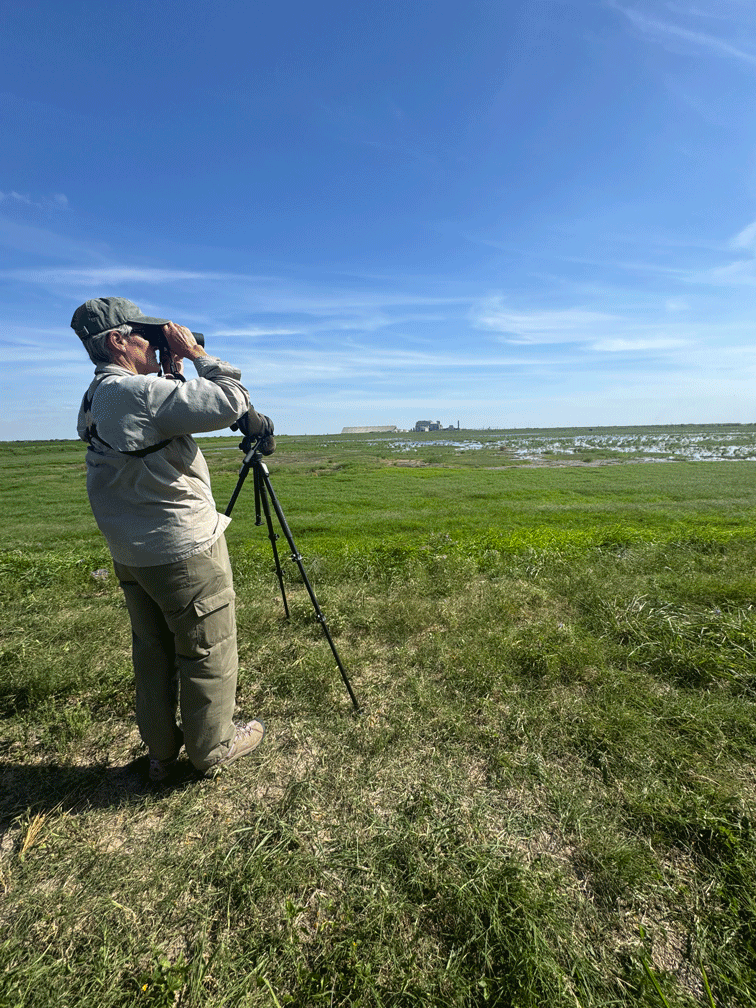
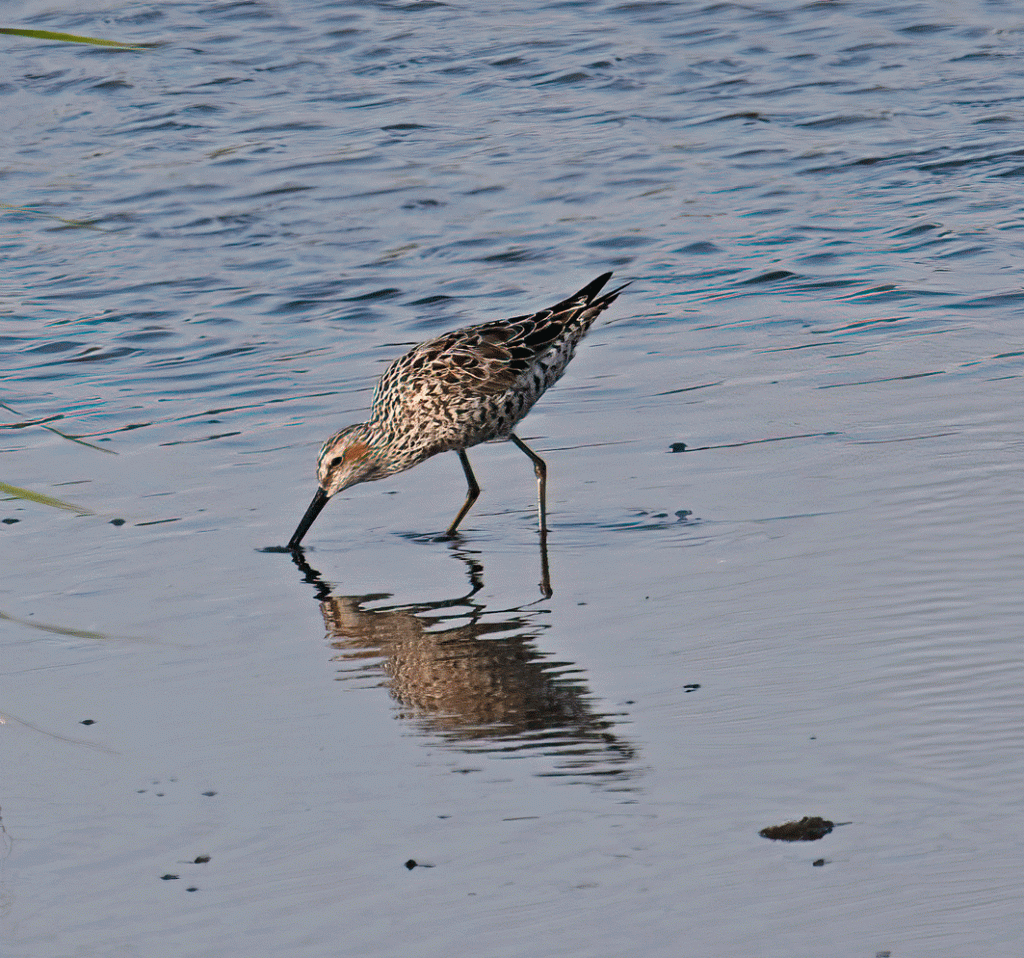
Many of the birds were too far away for good photos. Our scopes helped us make identifications. We saw over 50 Fulvous Whistling-Ducks on the far edge of the pond. This Stilt Sandpiper was much closer. It’s a medium-sized sandpiper with long legs and bill. The white eyebrow and orange cheek and barring on its body are all indications of breeding plumage. We saw at least ten of this species at the pond.
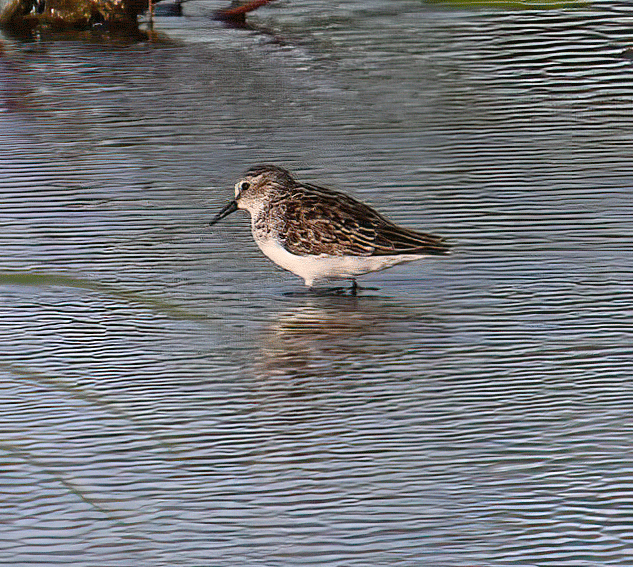
The Baird’s Sandpiper isn’t very big (about 18 cm / 7″ long). It has long wings and dark legs. The species is on its way north to breed in the Arctic. During migration in the fall, we can see them where we live in BC, as they work their way down to South America.
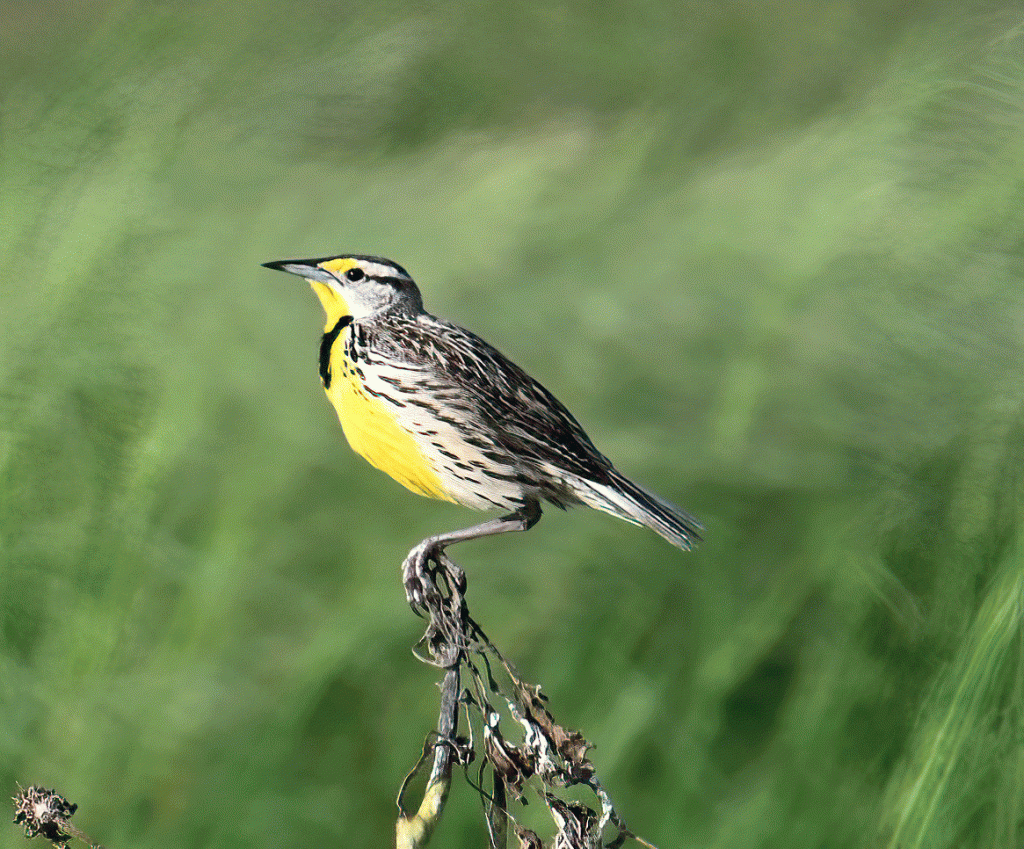
The light was shining on this Eastern Meadowlark, and it kept singing, almost begging to have its photo taken.
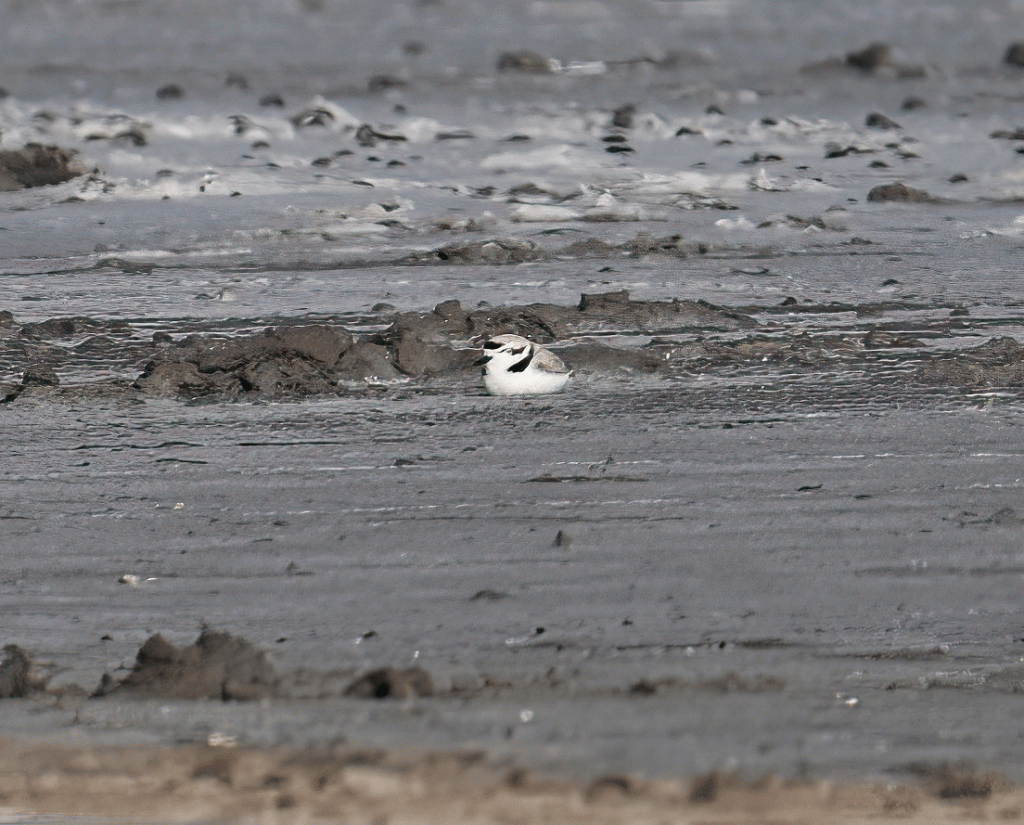
Our next stop was at La Sal Del Ray, a section of the Lower Rio Grande Valley National Wildlife Refuge. Black-necked Stilts, Killdeer and Snowy Plovers nest here.
La Sal del Ray is a hyper-saline lake, ten times saltier than the ocean. Historically it was a valuable source of salt for Native Americans, Spanish explorers and settlers. Now it’s important to wildlife and especially for migrating and nesting shorebirds. In the photo below, we are looking at Snowy Plovers, way out on the salt flats.
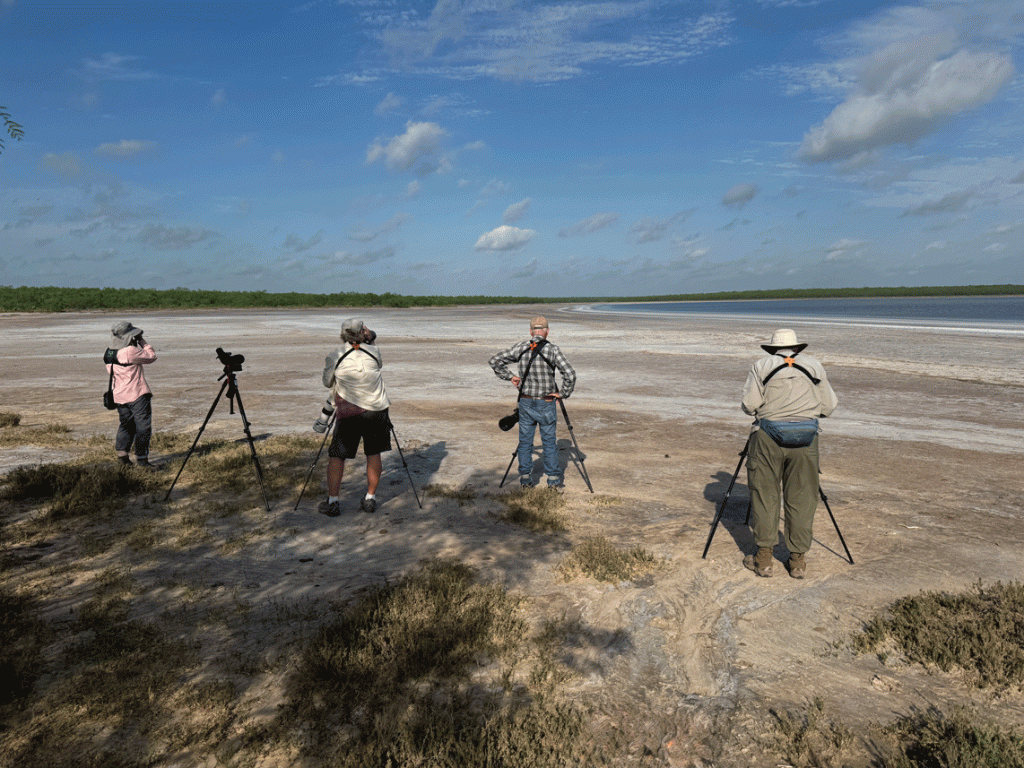
Doug walked a little closer to get this photo, but he still stayed a long ways back, which is obvious by the distortion in the image.
We happened to see a Scissor-tailed Flycatcher close to the parking lot. We saw several of these beautiful birds throughout our visit to Texas, but usually as they flew over fields while we were driving. It is the longest-tailed songbird in North America.

It was only mid-morning when we left the Wildlife Refuge so we had time to visit a few other birding hotspots. We drove to the Hanka Sod Farm where shorebirds had been sighted on their flooded fields. It’s a private working farm, but they allow birders access as long as they stay on the roads. We first went to the farthest field where our friends had seen a variety of shorebirds.
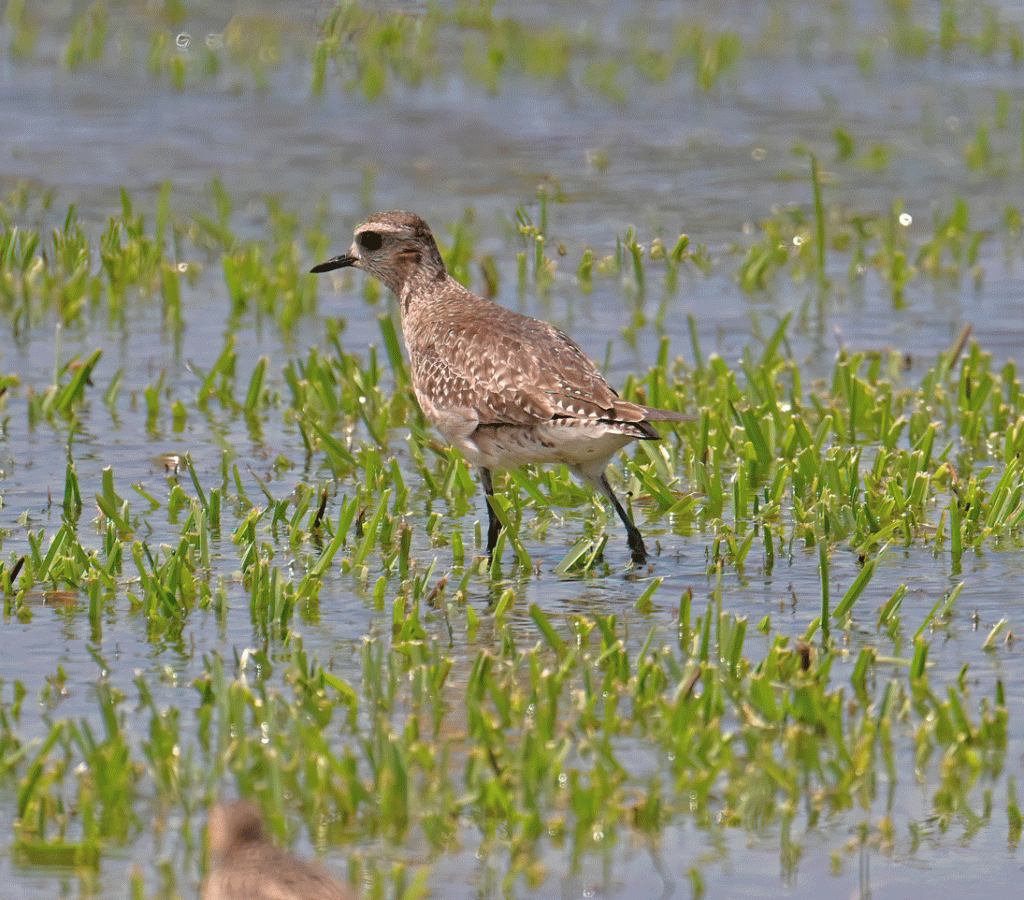
Here is an American Golden Plover, although not in breeding plumage. In breeding plumage, there are gold coloured flecks on its dark back, hence the “golden” in its name.
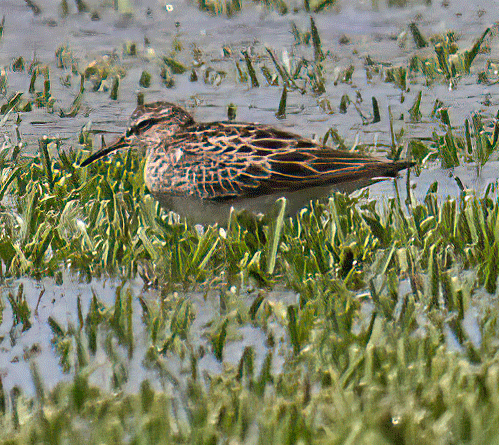
We noticed birders in another vehicle across the field from us, with plenty of birds nearby, so we drove over on that road. It turned out that it was our friends from Arizona, Leo and Jenny. Jenny helpfully pointed out the Buff-breasted Sandpipers, a species we had never seen. We were really lucky because they were quite close to the road. Buff-breasted Sandpipers are found in the central US in migration only, as they make their way to their Arctic breeding grounds.

This Pectoral Sandpiper was about 50 metres (50 yds) out in the flooded field, so the image is not as large. When Doug takes a photo from that far off, he first finds the bird in the scope, then tries to see some sort of marker in order to know where to aim his camera. The bird in this case looked like a speck in his viewfinder. When he works with the photo on his computer, the next challenge is to find the specific bird in the image, because it could be in a mixed flock. Then the image is severely cropped, which reduces its size.
A Pectoral Sandpiper is smaller than a Killdeer (a bird that is so common that it is used as a size descriptor) and resembles a very large Least Sandpiper. This photo shows a glimpse of its densely streaked breast that contrasts sharply with its white belly which is the “pectoral” reference in its name.
On our way back to the casita, we stopped at the National Butterfly Center. The woman in the visitor center described where we could see an Eastern Screech-owl. In the photo below, follow where the camera is pointing and the nest box will be obvious.
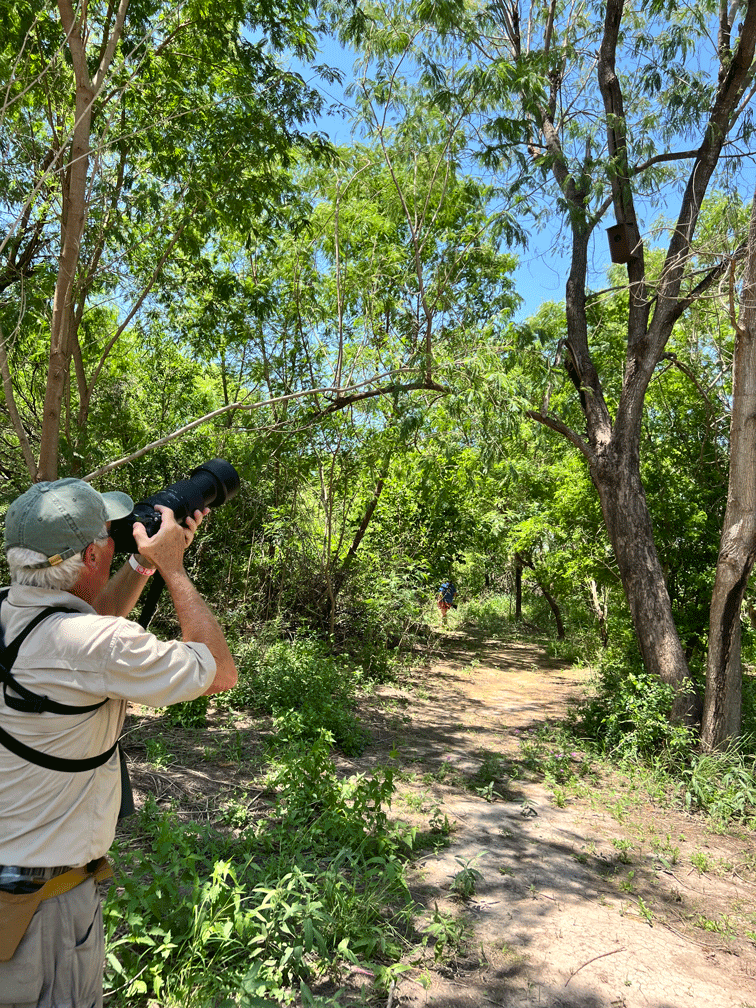
The Eastern Screech Owl poked its head out, although it looked a little grumpy. This one was part of the Mexican group (McCall’s), which we noted in our observation on eBird. That information will be important if the experts decide at a later date that it is a distinct species.

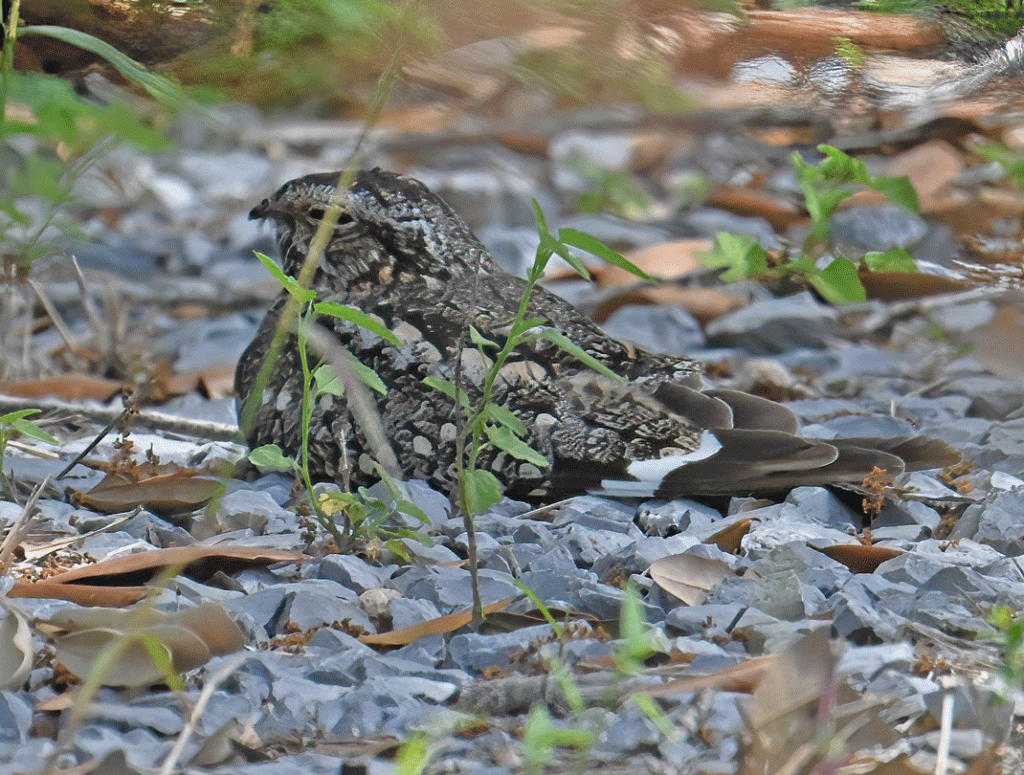
Another sleeping bird had been reported on the property. The center had cordoned off a section of their overflow parking lot to make sure the Lesser Nighthawk was not disturbed. Nighthawks forage mainly at night and roost on loose gravel on the ground.
The next day we headed back to Arizona, staying in Van Horn, TX overnight. We drove through a dust storm, where visibility was limited for about a half hour. Now that we’ve had a taste of what a dust storm is like, we don’t need to experience it again.
We returned to our place outside of Tucson the next day. The descriptions of our adventures for the rest of the month were part of our April 2025 in Arizona blog that has been previously posted.
Now that we are home in Canada, we don’t travel as much with our fifth wheel, so we likely won’t be posting until we go down to Arizona in the fall.
 Travels with a Fox
All of the birds were interesting. Of course the more colourful birds caught my eye. The most interesting one this time was the scissor-tailed flycatcher. Thanks for sharing.
LikeLike