February was another good month for birds in Arizona. This blog post includes photos of over twenty-five species. Enjoy!
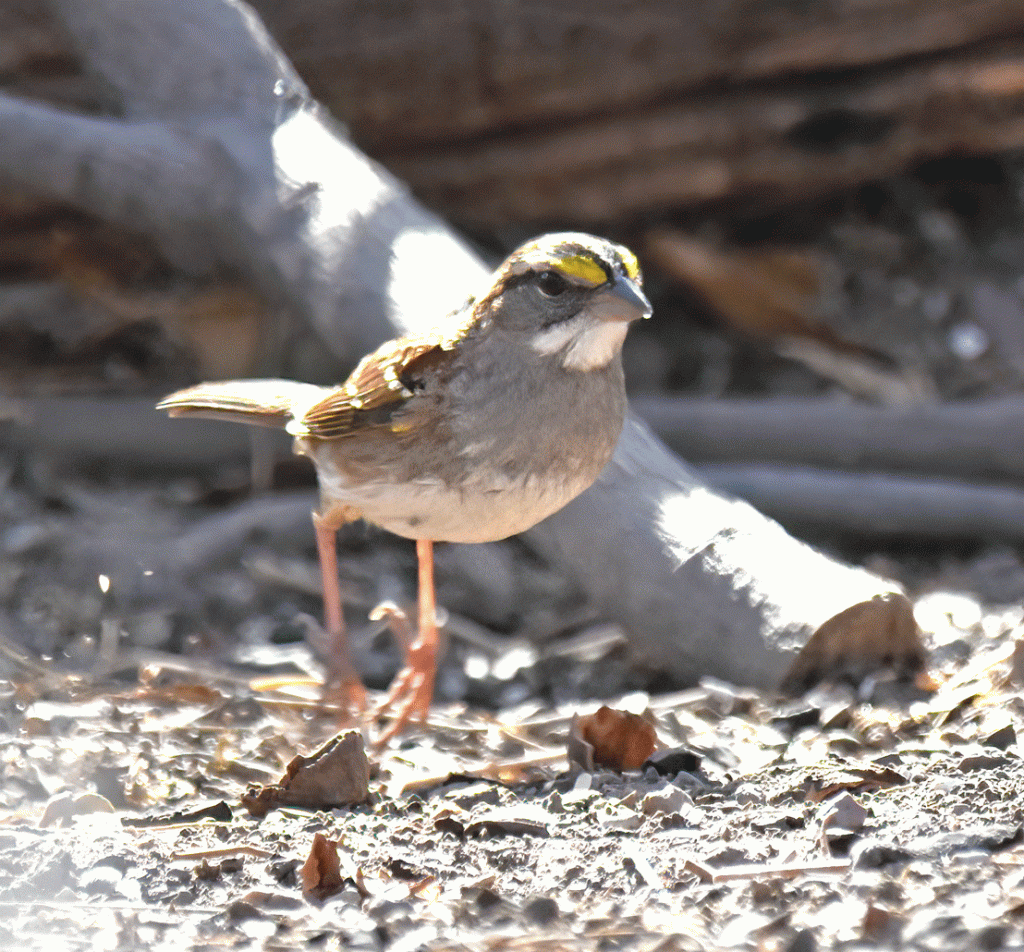
We visited the Paton Center for Hummingbirds in Patagonia at the beginning of February. Doug caught this White-throated Sparrow mid-leap. Its white throat is quite prominent in the photo below, but often the yellow lores stand out more, especially when viewed from above.
We saw our “first-of-year” female Lazuli Bunting at one of the feeders at the center. It’s one of the species that we will see back home in BC later in the spring.

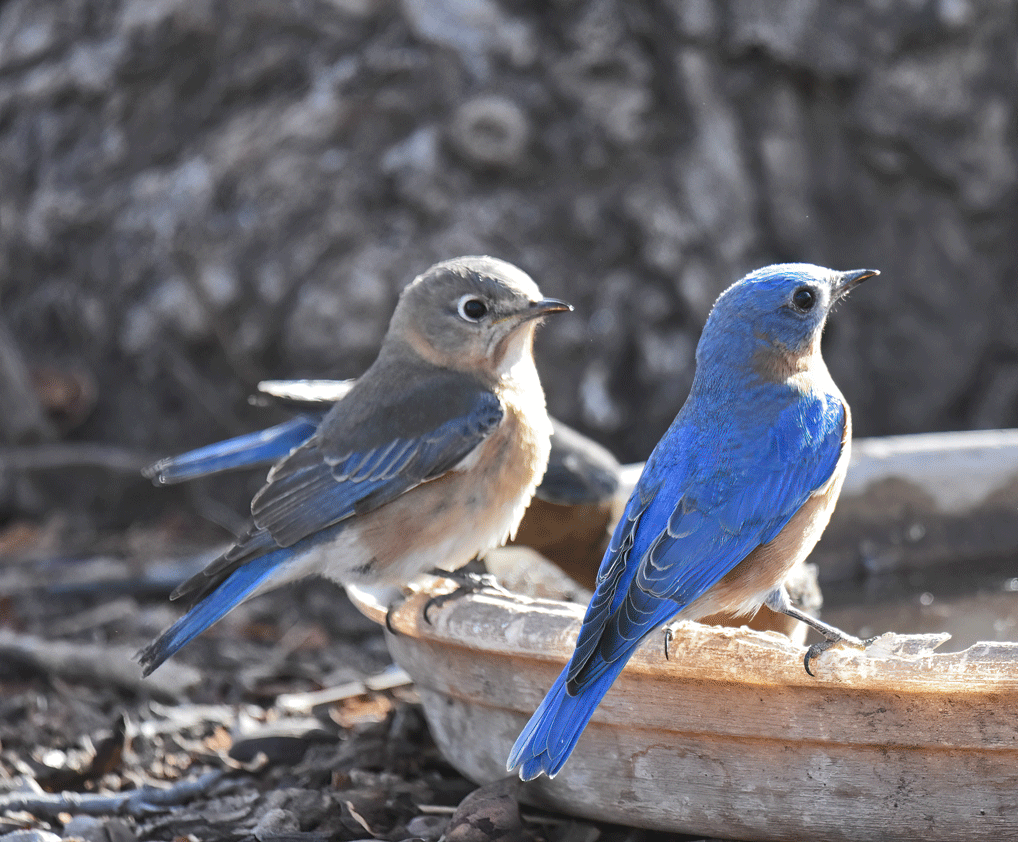
These are Eastern Bluebirds perched on the water dish. They are very similar to Western Bluebirds which we have in BC in the summer, but they have white bellies and rufous throats. A guide that was with another group believes these birds were of the Azure Bluebird sub-species that has an Arizona population.
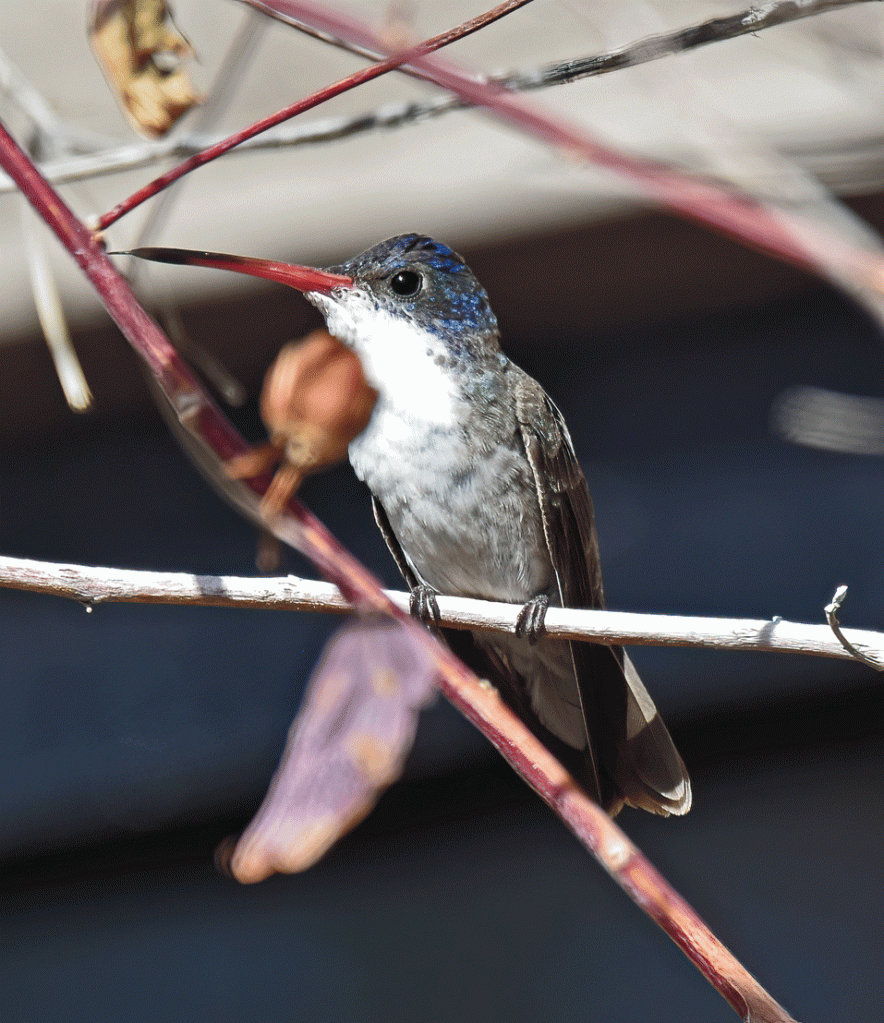
The Paton Center is famous for its Violet-crowned Hummingbirds, but this time, we needed to go to Patagonia Lake State Park to see one. This species is the only hummingbird in western North America with clean white underparts. We saw this one at the feeders beside the visitor center. Both males and females look alike.
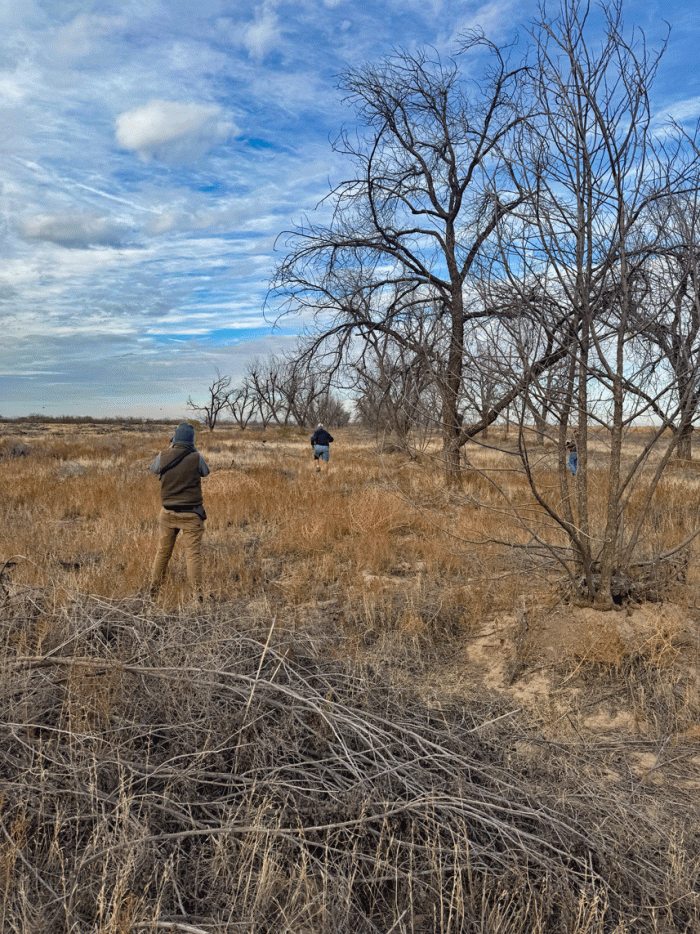
On February 10th, we joined our friends out in the Santa Cruz flats north of Tucson in hopes of seeing a rare Streak-backed Oriole that had been reported. Within fifteen minutes of arriving, our friends alerted us to the orange bird that was flying towards us. It perched for a moment and Doug got a quick photo. It flew over us, then hid in a thick clump of bushes. The other people in our group only got quick glimpses. After what seemed like a long wait, it flew off to a row to pecan trees. Everyone wanted a better look.The hunt was on!
Doug caught up to the bird and was able to get this photo. The oriole looks a bit like a Hooded Oriole, with a heavy bill and distinctly streaked back. Streak-backed Orioles are very rare visitors from Mexico.

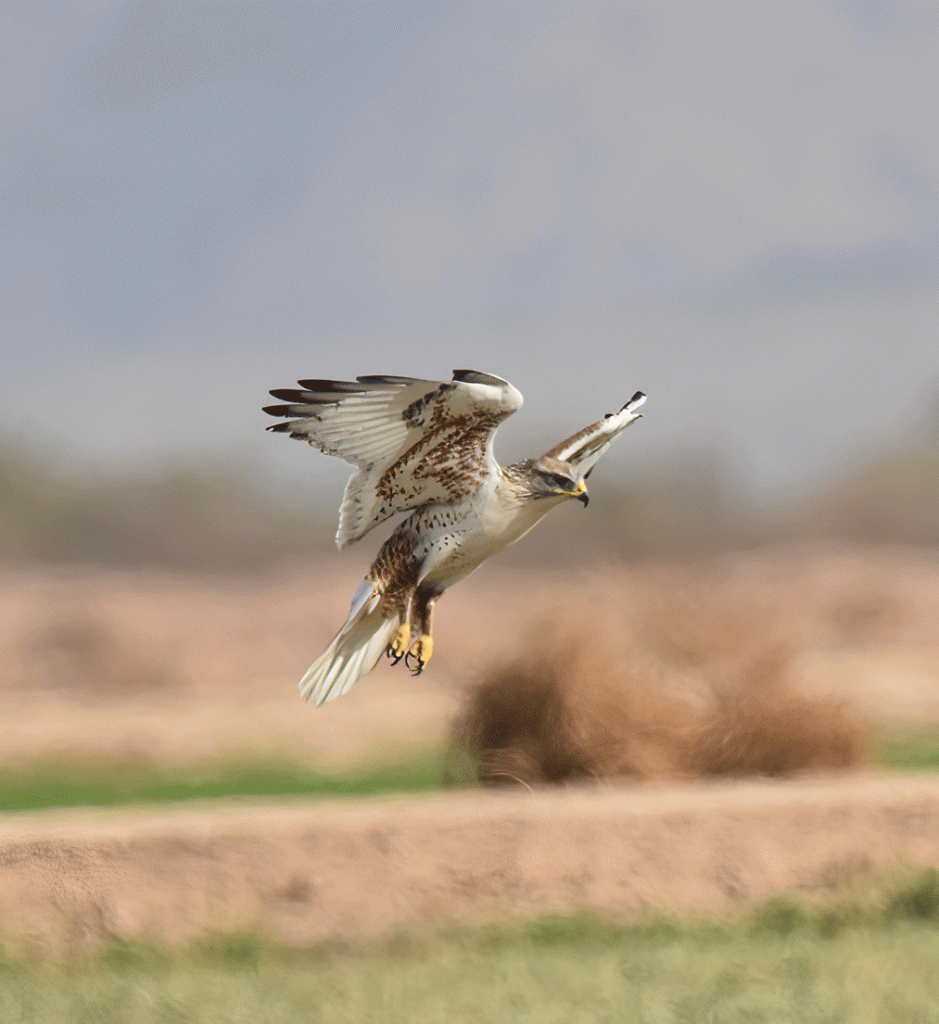
We watched the oriole fly south to the river, and waited around awhile for it to return. While we were waiting, we had a good view of a Ferruginous Hawk landing in a field nearby. It’s a bigger bird than the more common Red-tailed Hawk. Red-tailed are 50 cm (20″) long with a wingspan of 125 cm (49″) and Ferruginous are 58 cm (23″) long with a wingspan of 142 cm (56″).
The next day, we drove part-way up the road to Mt Lemmon and parked at the top of the campground for Rose Canyon. We wanted to get some exercise as well as see some birds that are found at the higher elevations. We walked down at least 150 metres (500′) to the lake at 2100 metres (7000′) and back (about 7 kilometres / 4 miles). On our way back up, we were lucky enough to see this Williamson’s Sapsucker, that we had missed on the way down.

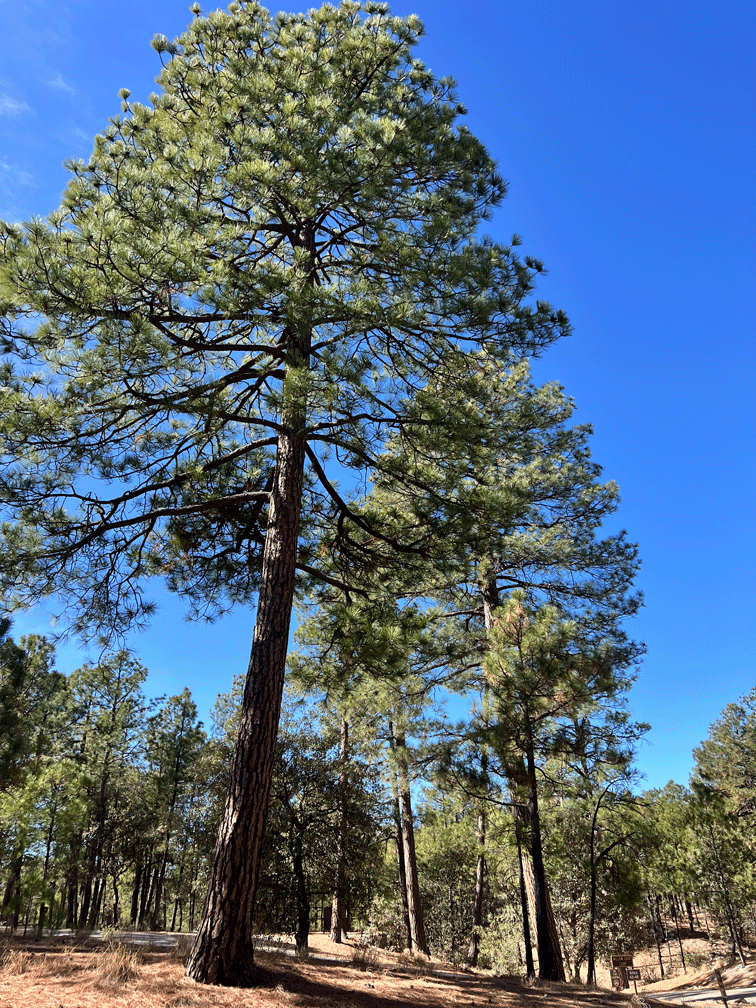
Here’s a photo of the Ponderosa Pine tree the sapsucker was in. Close inspection shows that it is lined with sap wells. Sapsuckers feed on the tree sap, as well as on the insects that are attracted to the sap wells.
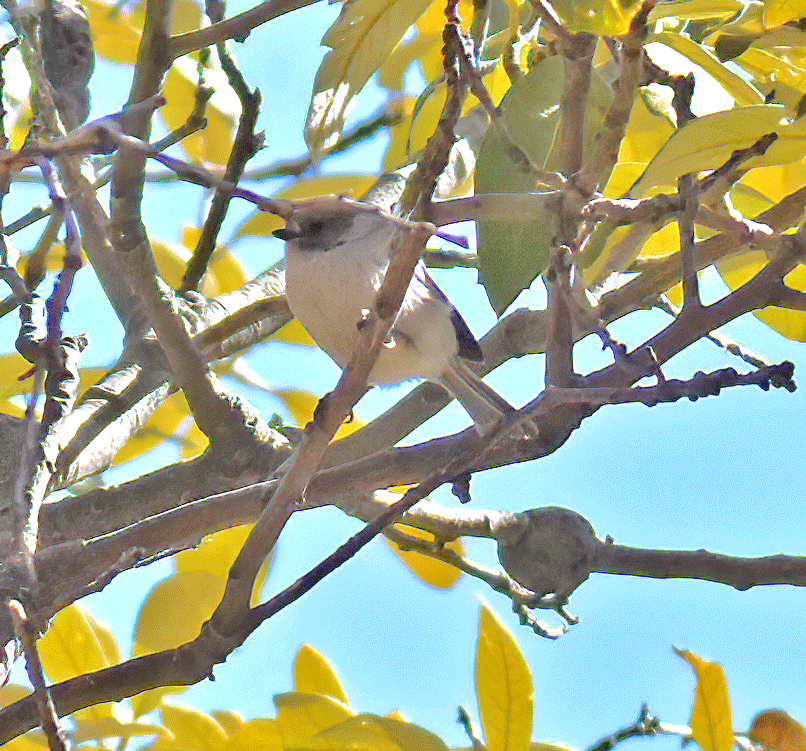
In the upper sections of the campground, we met a friend who was watching a group of tiny Bushtits. Usually Bushtits don’t stay in one place long enough to get a photo, so Doug was happy to capture this one. We were also able to describe where we saw the Williamson’s Sapsucker and show him the photo of the tree. We found out later that he was successful seeing the sapsucker. It makes it easier when a bird has a favourite tree.
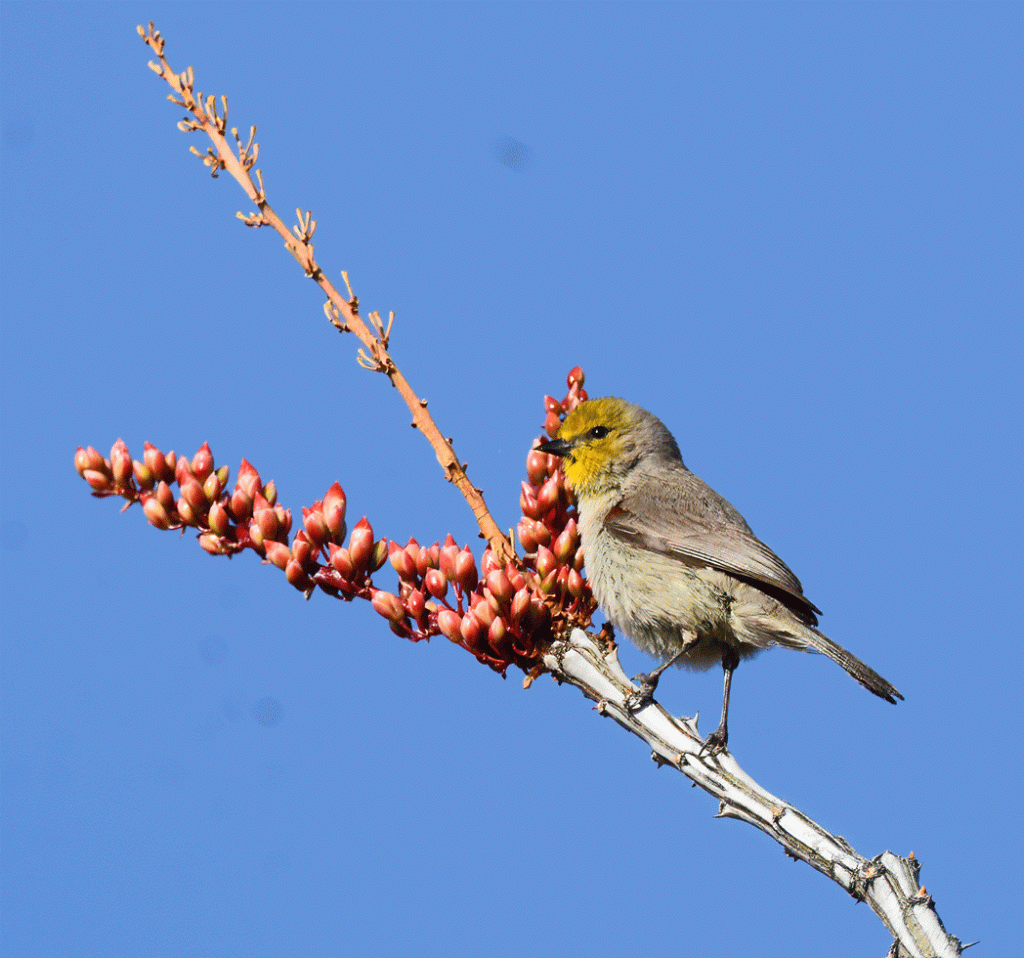
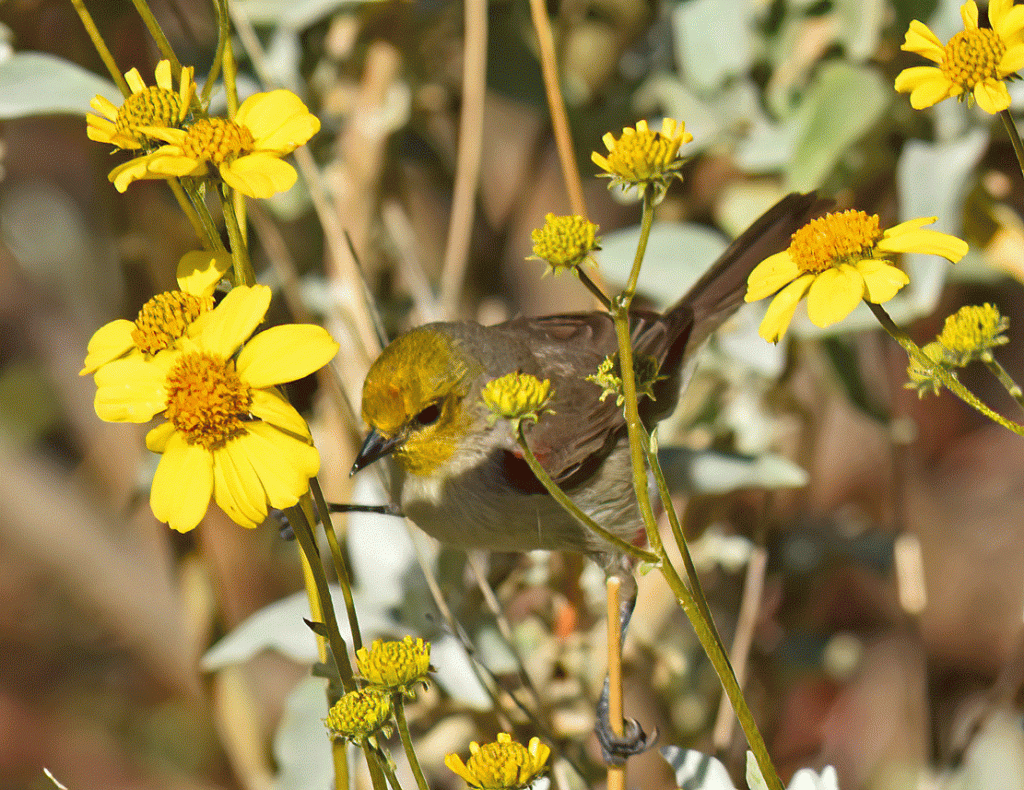
The next day, we went to the Arizona-Sonora Desert Museum. Many of the ocotillo bushes were starting to flower. This little Verdin perched near the top of the spiny stems. Its rufous shoulder is almost the same colour as the ocotillo flowers.
This Verdin is almost camouflaged among the brittlebush flowers.
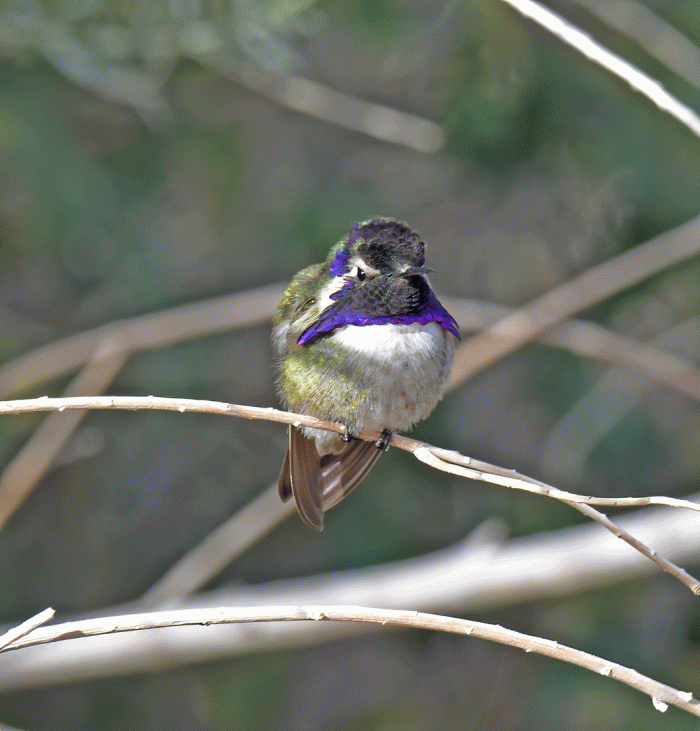
This male Costa’s Hummingbird perched in the sunlight to show off his iridescent long, flared gorget. His white “eyebrow” shows up well in the photo. Costa’s Hummingbirds are one of the smallest (8cm/3″long.)
We went to Santa Rita Lodge in Madera Canyon and saw this Rivoli’s Hummingbird, which is a lot larger than the Costa’s at 12cm/5″ in length.

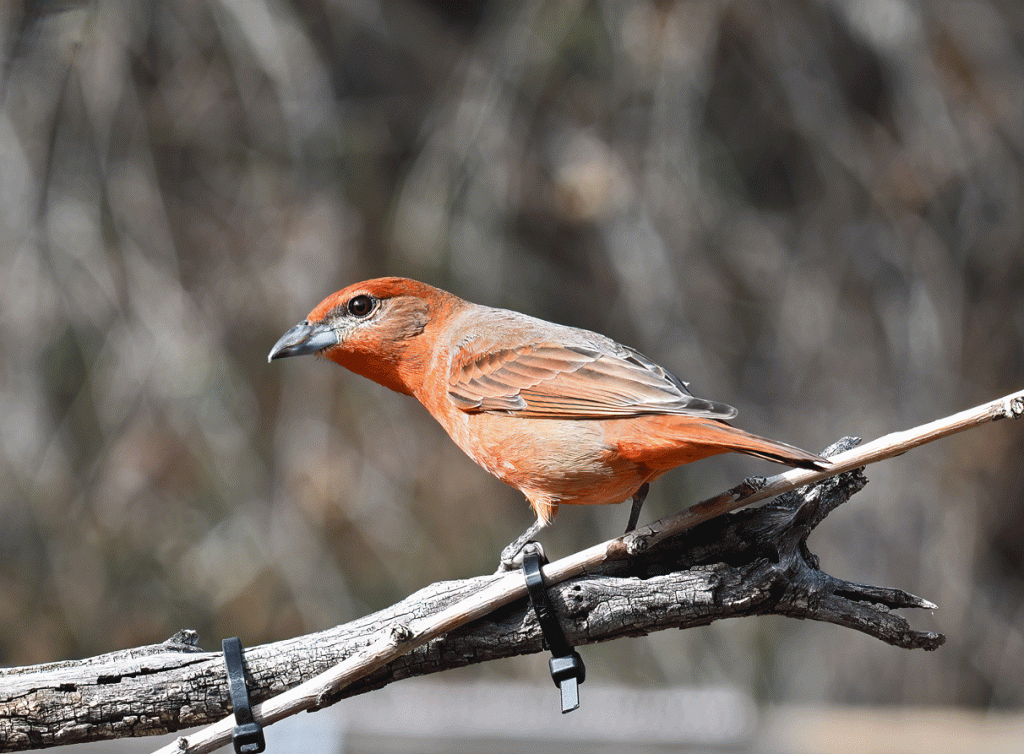
This male Hepatic Tanager was also hanging around the feeders at the lodge. Its dark bill is one of the features that distinguishes it from a Summer Tanager.
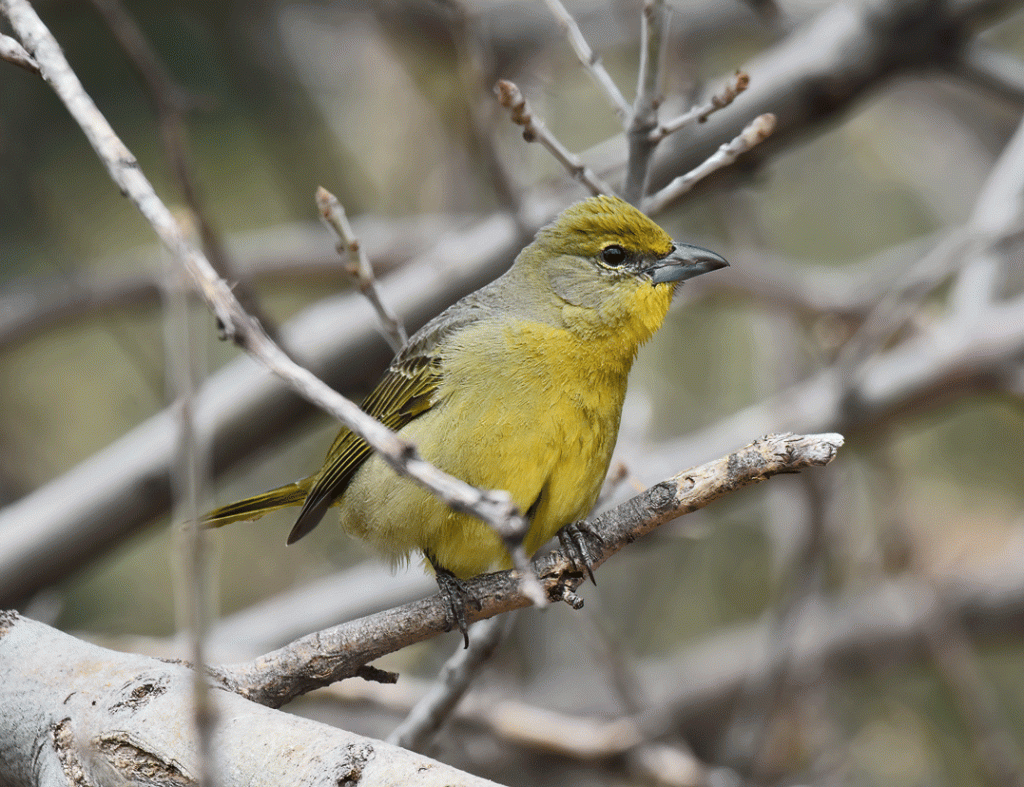
Perhaps this female Hepatic Tanager was his mate. Female Hepatic, Summer and Western Tanagers are all yellower than the male of the same species.
We can usually count on seeing an Arizona Woodpecker at the Santa Rita Lodge. This one is a female because it doesn’t have any red on its head. It’s nice to have a view of its speckled front since its all-brown back is not as interesting.

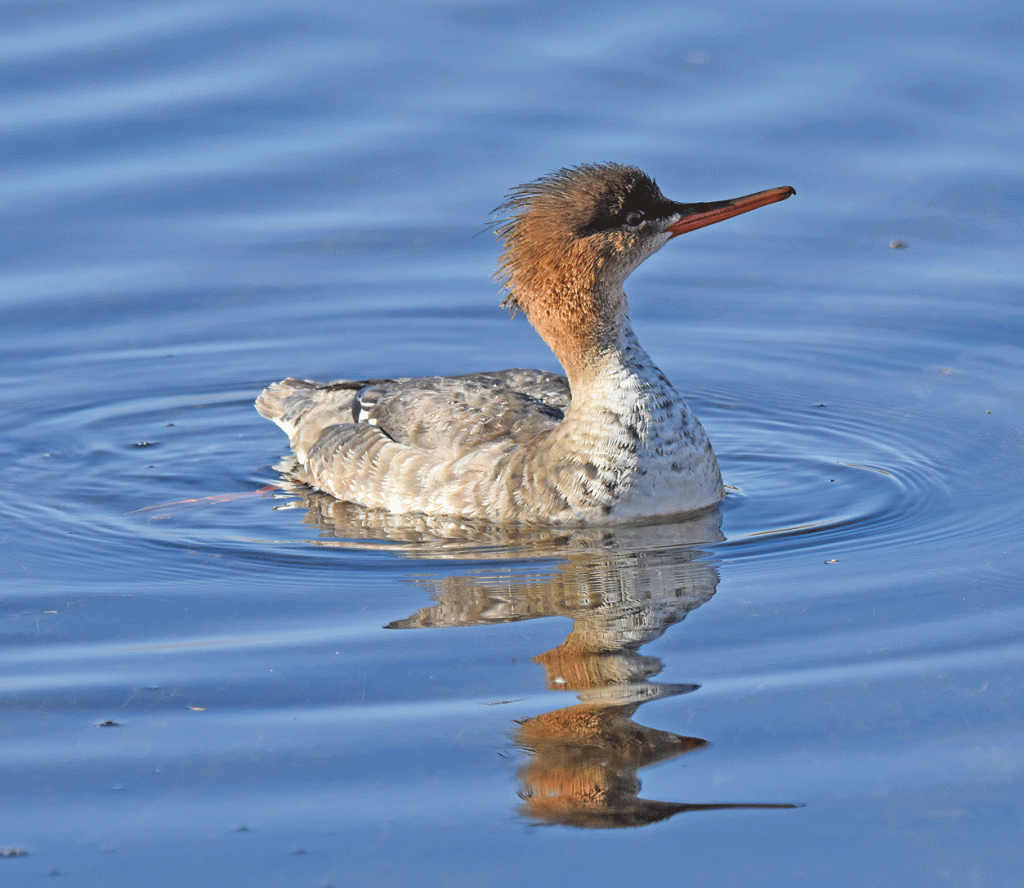
One morning, we went early to Canoa Ranch Conservation Park and we were lucky enough to see this Red-breasted Merganser in good light.

Its wispy crest shows up a bit better when it’s not soaking wet. The males show a red breast in breeding plumage. We think this one is a female. She only stayed about ten minutes.
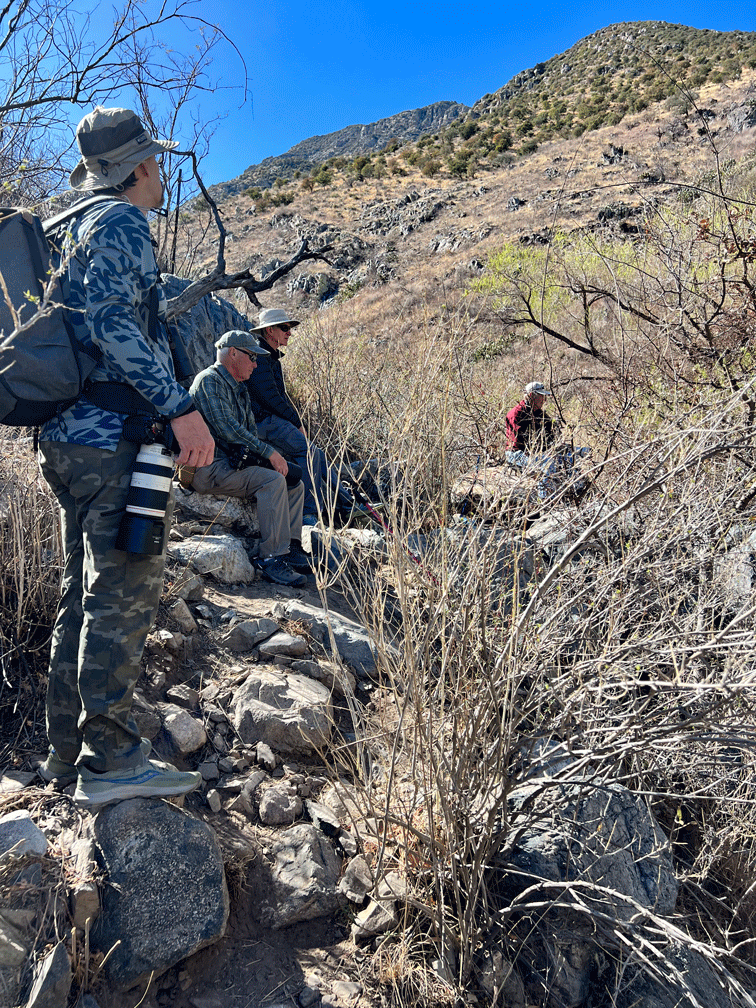
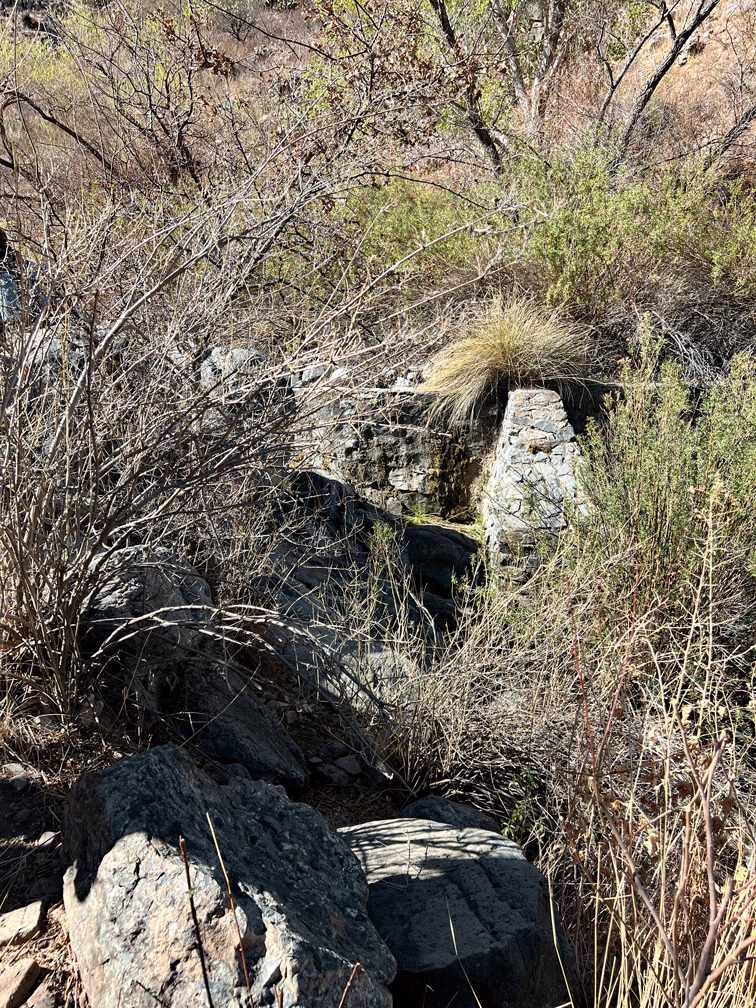
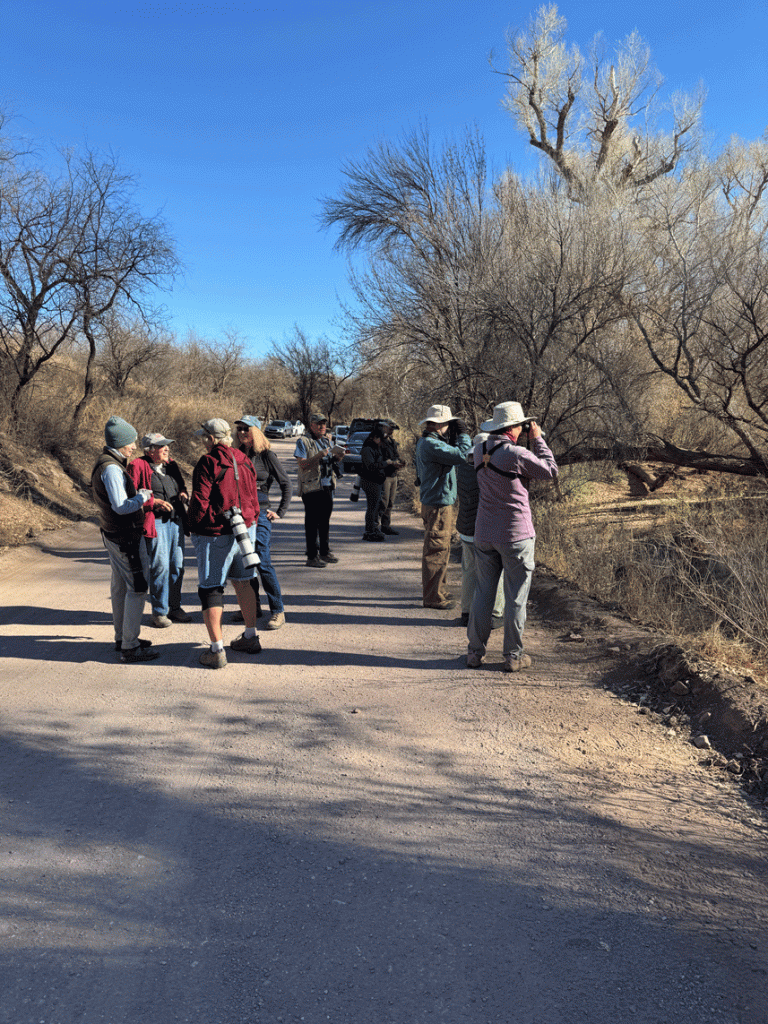
That same day we drove up to Florida Canyon, with hopes of seeing a Golden-crowned Sparrow. The photos below show the group waiting and a view down to the area below the dam that we expected to see the bird.
While we were waiting, we had good views of a pair of Golden Eagles.

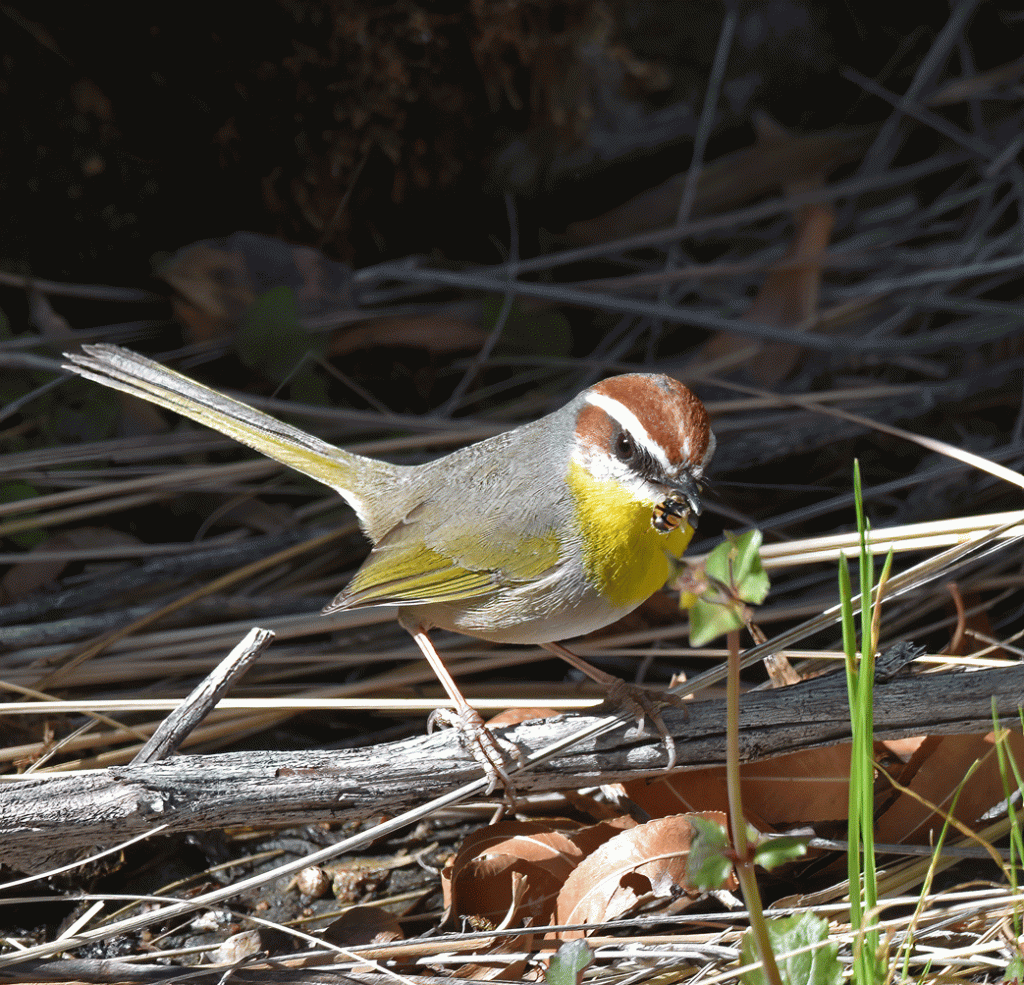
Just below the dam was a favourite spot for the Rufous-capped Warbler, so we saw it again. It is such a nice-looking bird that we have included a photo, even though it has been featured in a blog post multiple times. We did not see the sparrow, however, so maybe we’ll go back later to try again.
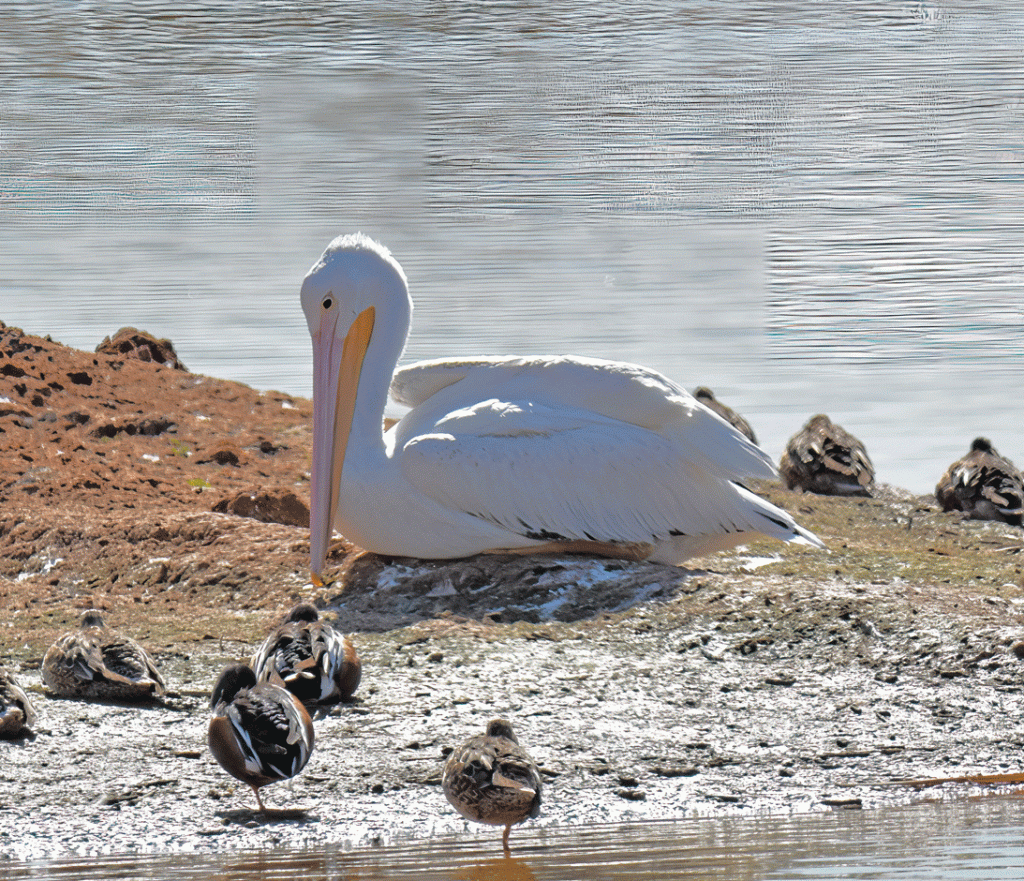
On our way to our hike in Northern Arizona, we stopped in the Phoenix area. This was the first American White Pelican that we had seen this year, and the only one at the Riparian Preserve at the Gilbert Water Ranch. Soon there will be dozens, as they migrate north.
We were pleased to see this Black-and-White Warbler, gleaning insects along the trunk and thick branches of a mesquite that had not leafed out yet. This species of warbler is usually found east of the Rockies, so while they’re common in Eastern Canada, they are hardly ever seen in BC.

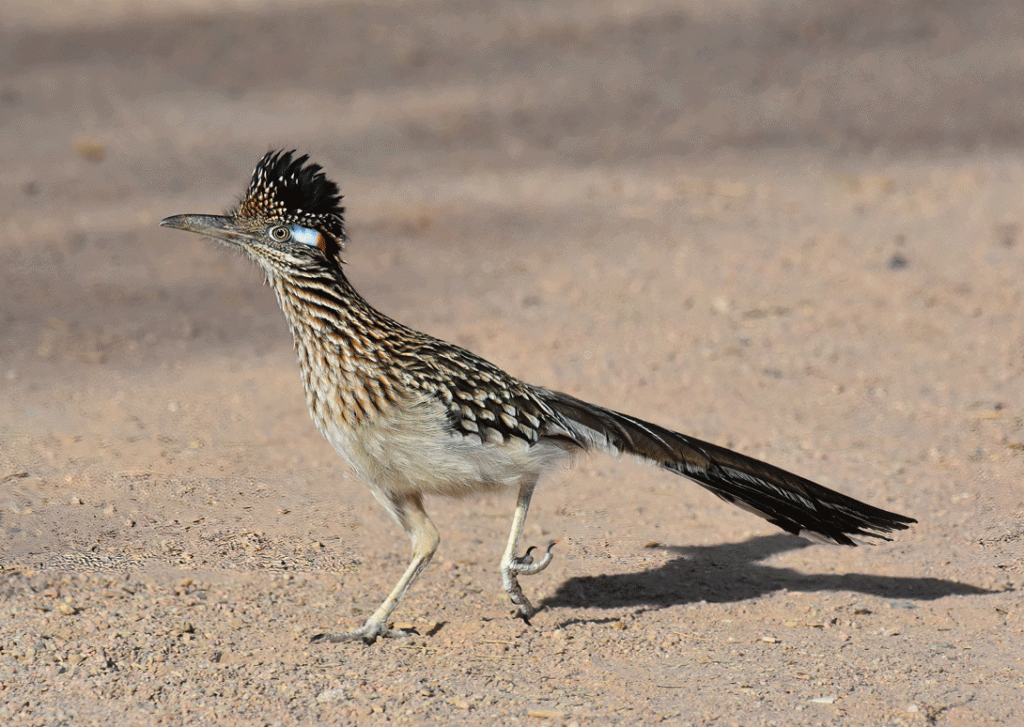
Greater Roadrunners have surprisingly bright patches behind their eyes. Often they are hidden in the brush, so when they emerge onto the path it’s hard resist taking their photo.
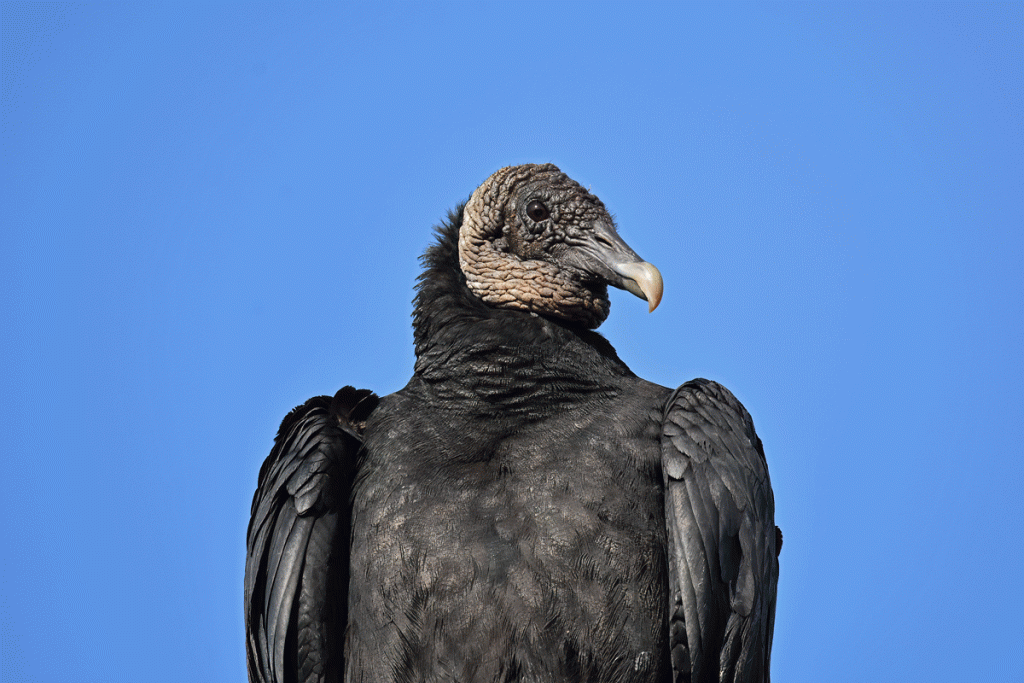
A Black Vulture is all-blackish, with a wrinkled grey head. Vultures have the largest sense of smell of any bird which allows them to find dead animals from a long distance away. These scavengers have featherless faces which keeps them healthy. We saw this vulture at a park in Maricopa county.
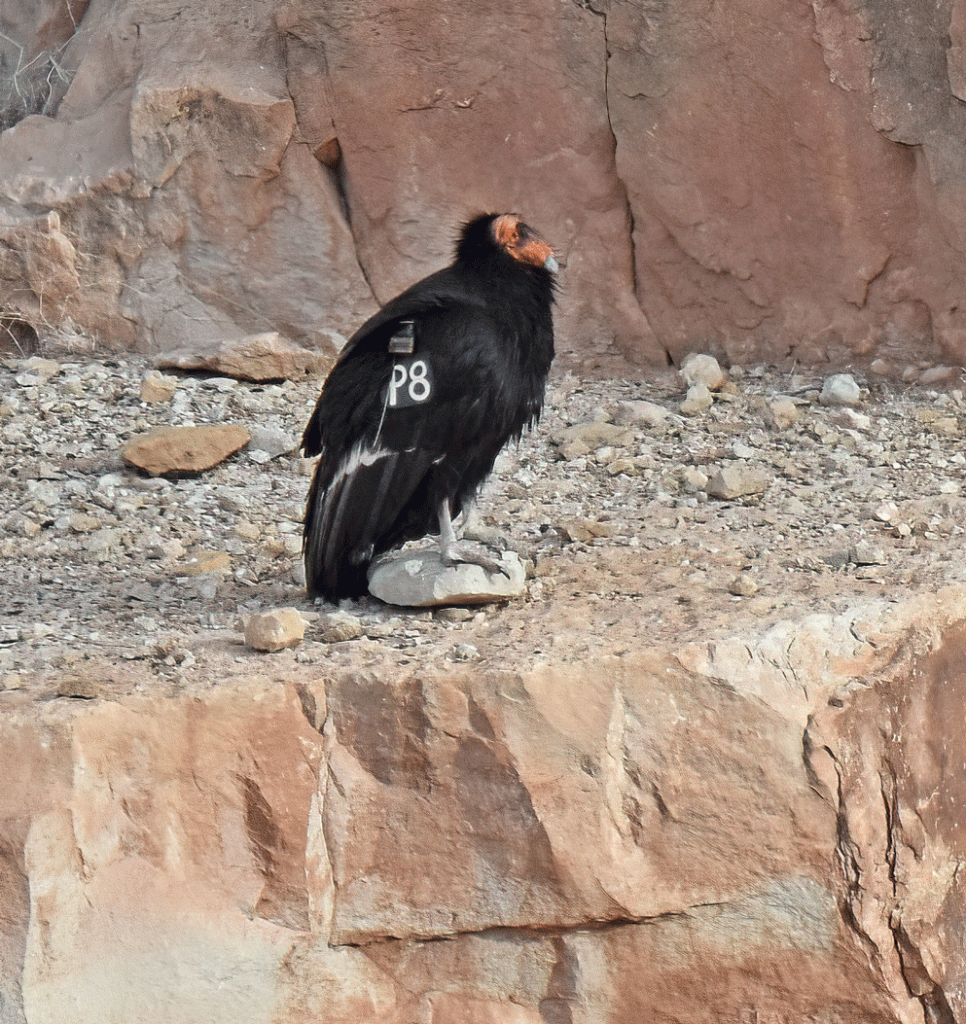
On our way to our overnight stop in Page, Arizona, we took a short detour to Marble Canyon and the Navaho Bridge, specifically to see the largest scavenger bird: a California Condor. We saw the condor perched on the cliff beside the original bridge footing (left side in photo below). The bridge on the right carries the traffic, the original bridge is a pedestrian bridge.

Here’s the photo that Doug took from his position in the previous photo. All the condors have radio transmitters and tags. We researched “P8” and found out that she was almost eleven years old and had been hatched in the Oregon Zoo. We also found out that her mate had died on Jan. 26, 2025, less than a month before we saw her. The pair had one offspring that was born in the wild. Check out http://www.condorspotter.com for more information.
Here’s a view to the north of the Vermillion Cliffs from the bridge.
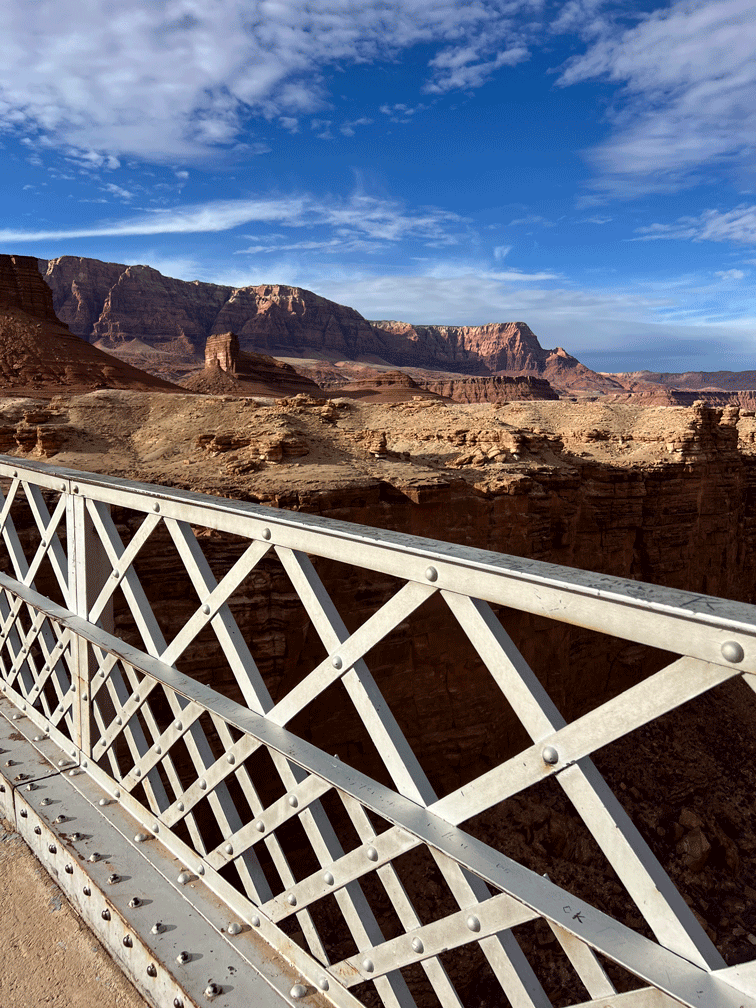
And a view of the Colorado River through the bridge railing.

We had a rest day at home after our short trip to Northern Arizona (see blog post: Feb. 2025 in Arizona: Part 2). That day, a couple of birders saw an American Woodcock in Patagonia. So, on February 23, we got up early and headed there. As soon as we pulled up to the spot on Blue Haven Rd, we saw a group of birders focused down the bank. At first it was difficult to see because it was hidden in the weeds, but it did move out to the stream bed and Doug was in a good position to capture this photo. Our first ever American Woodcock!

More and more people were coming, so we left to make space for others. After birding somewhere else for about an hour, we returned down the same road and met some friends who were viewing the woodcock. There was space for the truck, so we stopped again. This time the woodcock was on the stream bank and was well camouflaged among the leaf litter. It was also nice to share the excitement with others.
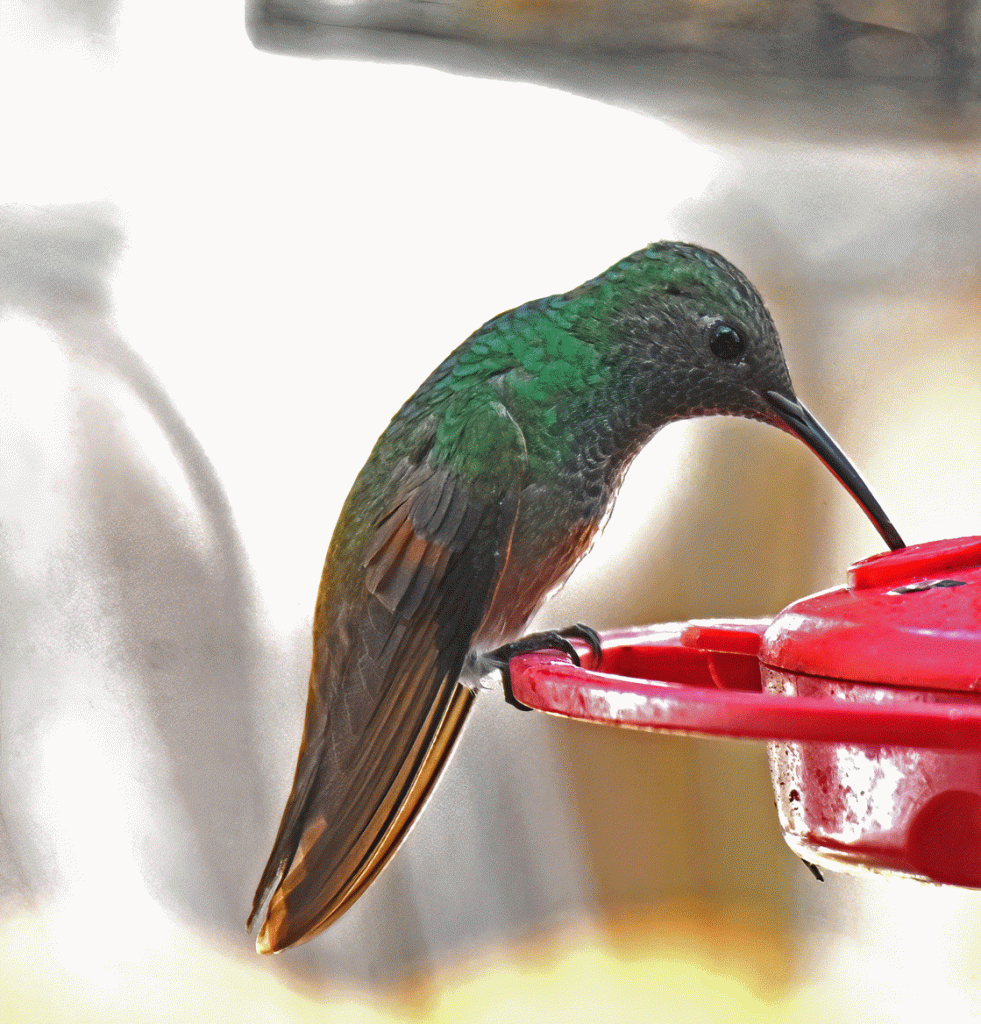
It was still early in the day and we were feeling lucky, so we took a short detour to Madera Canyon on the way home. A Berylline Hummingbird had been seen at Kubo’s B’n’B. Within ten minutes of sitting down, we saw the hummer. The owner of the B’n’B sat with us and told us that she had a pair of this species nest nearby this summer. She thought the hummingbird that we saw is one of the offspring that over-wintered. Berylline Hummingbirds are usually only seen in Mexico.
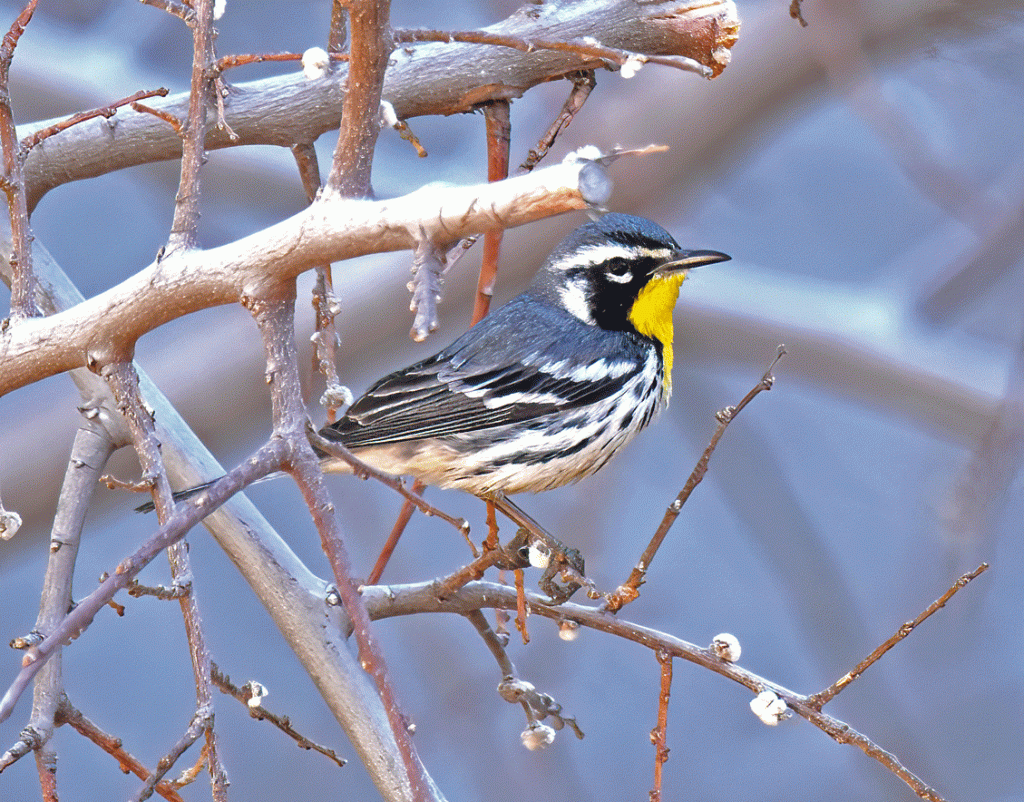
The next day, we drove into central Tucson to find a rare bird. A Yellow-throated Warbler had been frequenting the area around the community garden at the University of Arizona. We waited about a half an hour before it showed up. We saw it flit around the ramada and visit a number of trees before it flew away again. We saw the warbler for seven minutes, but it seemed like longer. At this time of year, a Yellow-throated Warbler would normally be found in Florida or Mexico.
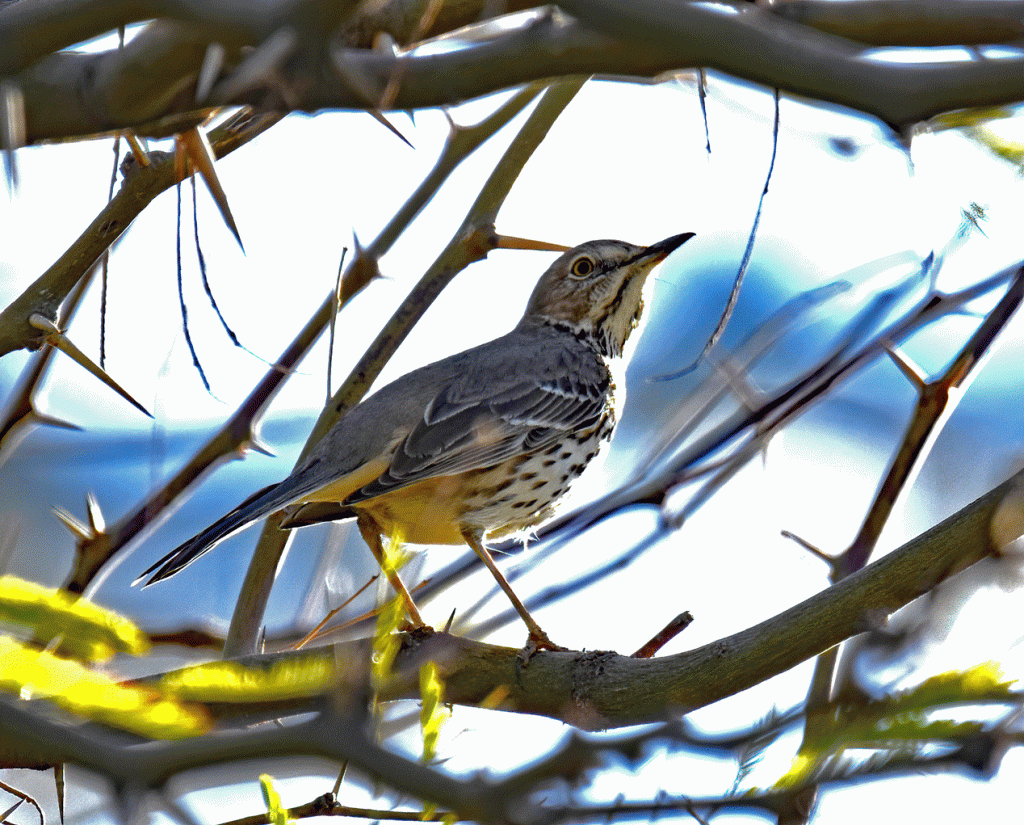
We did a little more urban birding later in the week. This Sage Thrasher had been hanging out near the ball fields at Reid Park in the middle of Tucson. For a biggish bird (about robin size), it was surprisingly stealthy. We caught a glimpse of a “right-sized bird” fly into a mesquite tree and basically disappear. We took up positions on opposite sides of the tree and systematically looked at every branch. Wendy was successful seeing it and called the others over. It perched a little higher in the tree to allow for a photo, and then was gone as quickly as it had arrived. Two other birders who we had never met before saw it as well. We had previously tried several times unsuccessfully to see one in its more typical habitat of sagebrush and sparse brushlands. Perhaps the drought brought it to an area of dependable water.
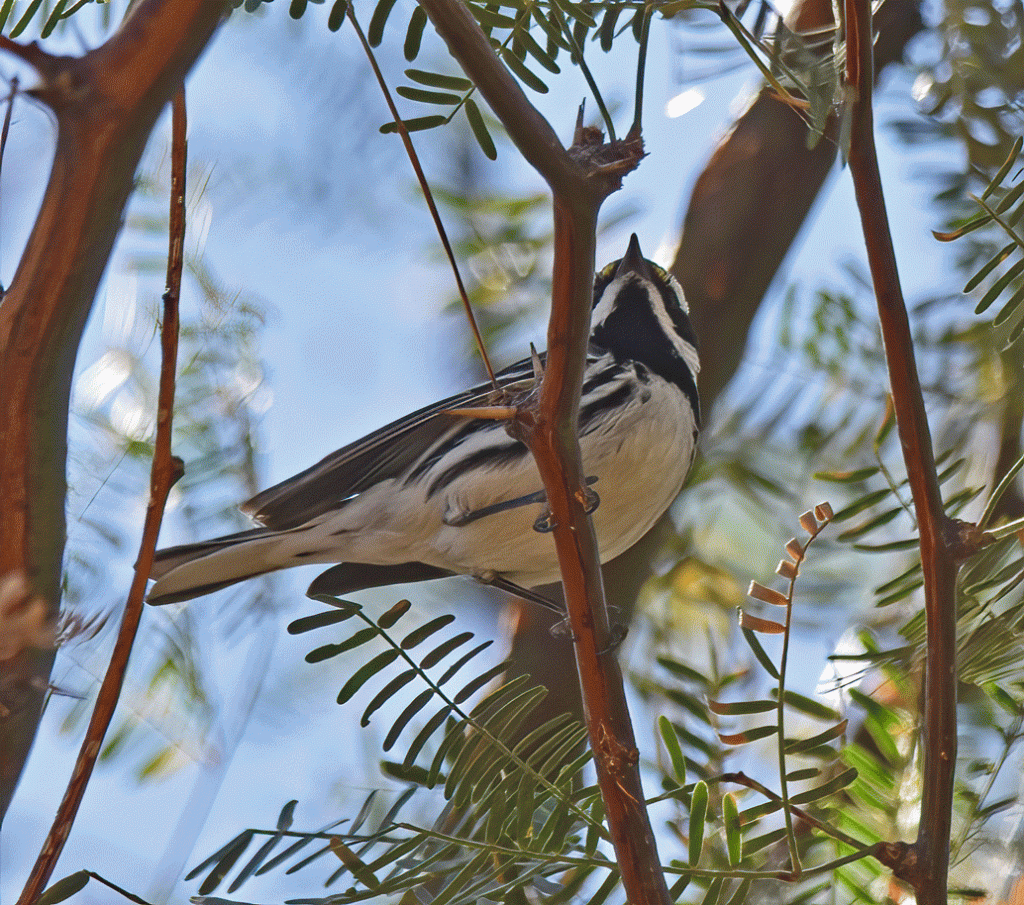
Later the same day, we saw this Black-throated Gray Warbler at Sweetwater Wetlands. This view from below shows off its black throat quite well. Often people confuse it with a Black-and-White Warbler, because it is mostly just black and white, but a Black-and-White Warbler doesn’t have a black throat or yellow spots behind its eyes. Black-throated Gray Warblers flit around the tops of trees, while Black-and-White Warblers feed along the trunk and along thick branches. We can see Black-throated Gray Warblers near the coast of BC in the summer.
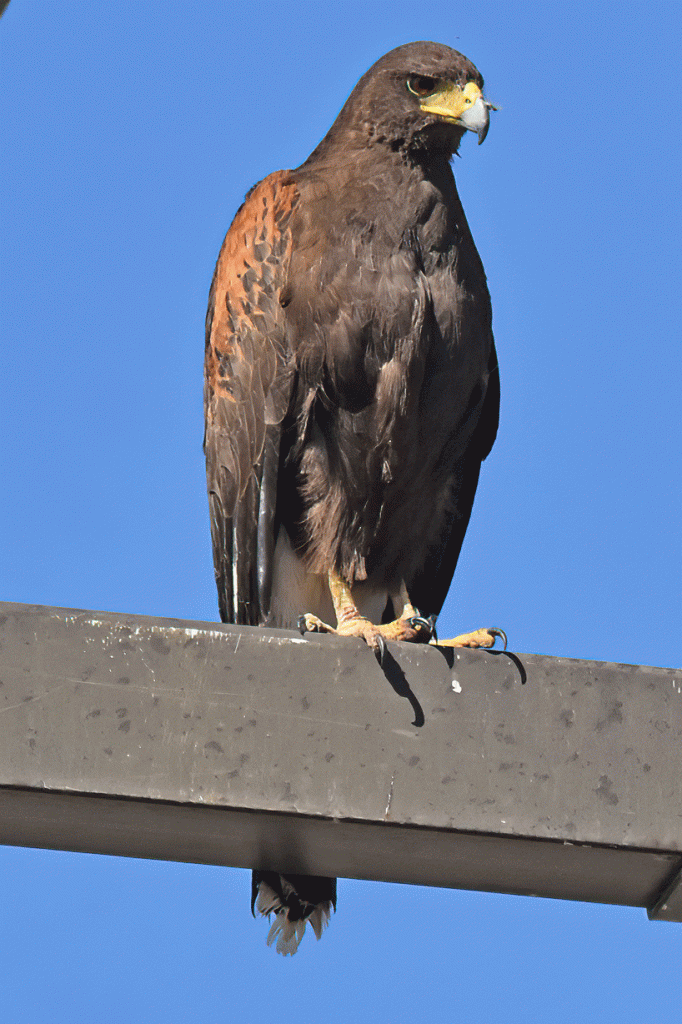
Our final bird for this month is a Harris’s Hawk that perched on a power pole near the entrance to Sweetwater Wetlands. It’s a distinctive bird; mostly dark brown with a rusty patch on its wings. Look at those talons!
That concludes our February bird photos. Migration begins in March in Arizona and we have already several species of warblers. March is also the time for Hawk Watch. So we expect to have many photos to share. Something to look forward to…
 Travels with a Fox
All the photos were terrific but the merganser with the perfect reflection was outstanding.
LikeLike