This post will cover day 4 and 5 of our ten day trip. Day 5 was our “forest bird day” with a birding guide, so there are plenty of bird photos included.
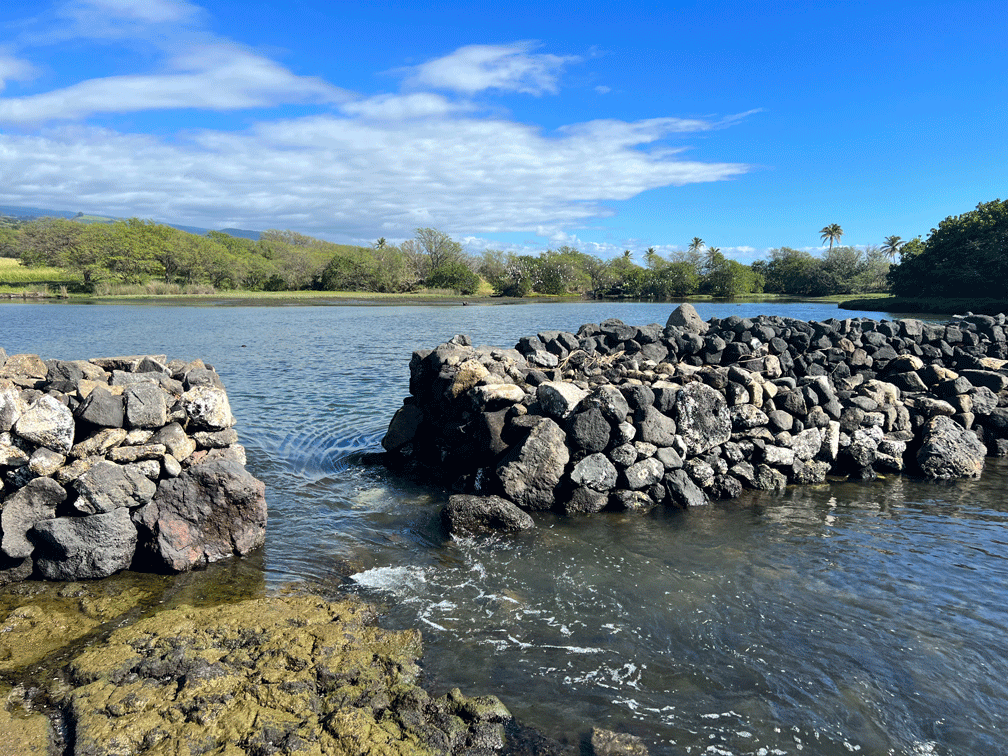
On our fourth day on the big island of Hawaii, we did a road tour to Hawaii Volcanoes National Park. Along the way, we stopped at Whittington Beach Park. There was a rocky shore and a pond farther inland that was built as a fish pond by the early peoples.

The rock wall along the entrance to the pond had been reinforced with concrete. The “white specks” in the trees in the background are actually Western Cattle Egrets. We saw cattle egrets virtually every day of our visit, but this was the largest flock.
In the middle of the pond, there was a lone female Harlequin Duck. This species is rare for the island, so we had the opportunity to contribute our observation to the “rare bird alert.” The bird had been previously sighted in this location.

We navigated the crowds at Hawaii Volcanoes National Park and found a parking spot at the Kilauea Caldera overlook on the west rim road. The view was worth the short walk out to the fence. Surprisingly for us, we saw a White-tailed Tropicbird soaring above the caldera. Although tropicbirds are seabirds, they nest on the remote crater walls where they can avoid predators. The caldera is approximately 16 km (10mi) from the ocean, which is obviously not too far away for this species.

Next, we drove the east rim road, past the overcrowded parking lots for Kilauea Iki Overlook and the Thurston Lava Tube. We turned on to the Chain of Craters road and drove about a half an hour and descended about 4000 feet to the ocean. Virtually the whole way down was through old lava flows. Some looked like intestines, some like cow piles and some like something the dog threw up. On the coast, we parked beside the end of the navigable road and took a trail to view a sea arch. Here the lava cliffs rise abruptly above the sea.
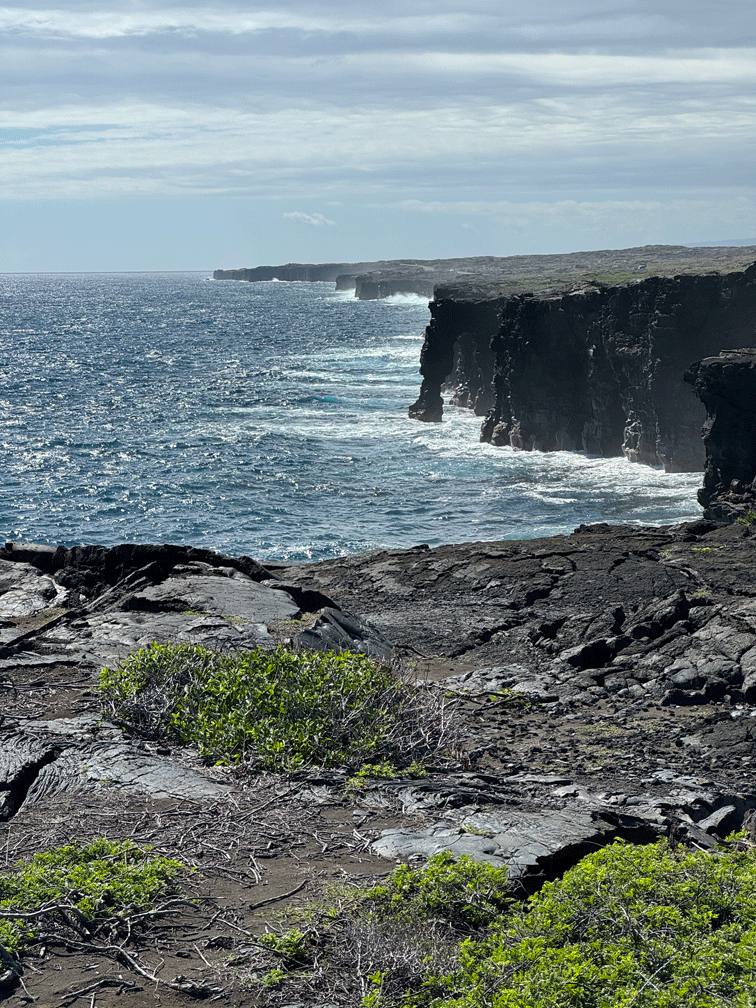
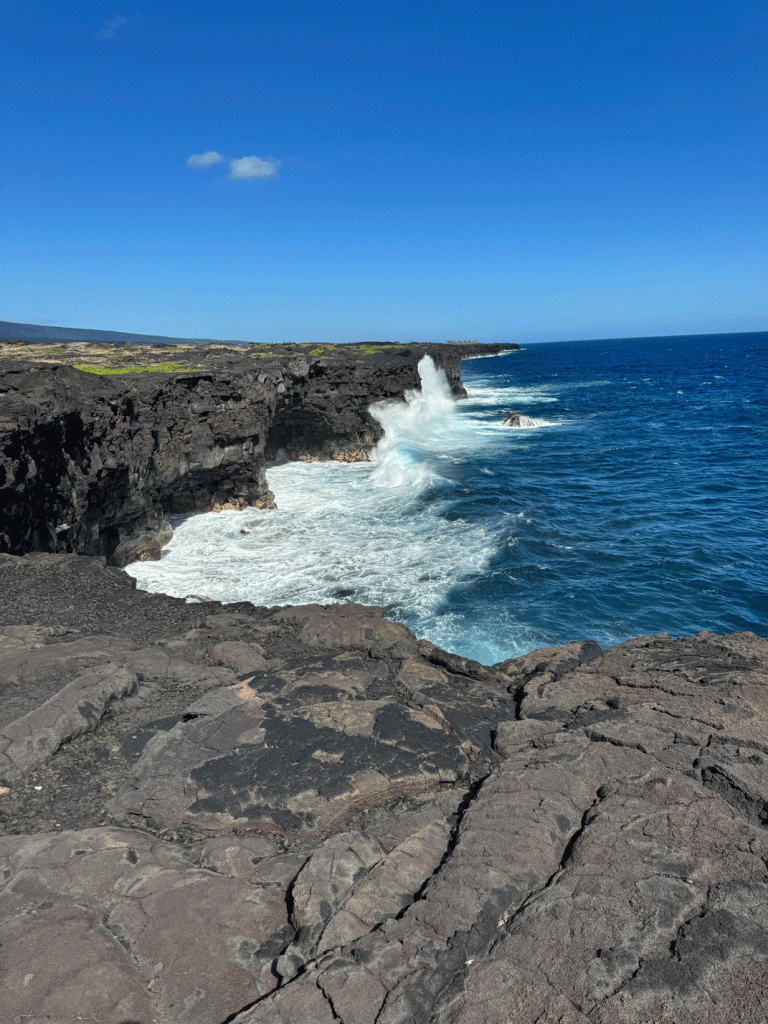
A little ways west of the arch, we saw some people walking a rough trail to the edge of the cliffs, so we stopped to have a look. The cliffs here had been worn away, forming caves. We noticed birds flying into the caves and could make out Black Noddies perched on the cave ledges. Another life bird!
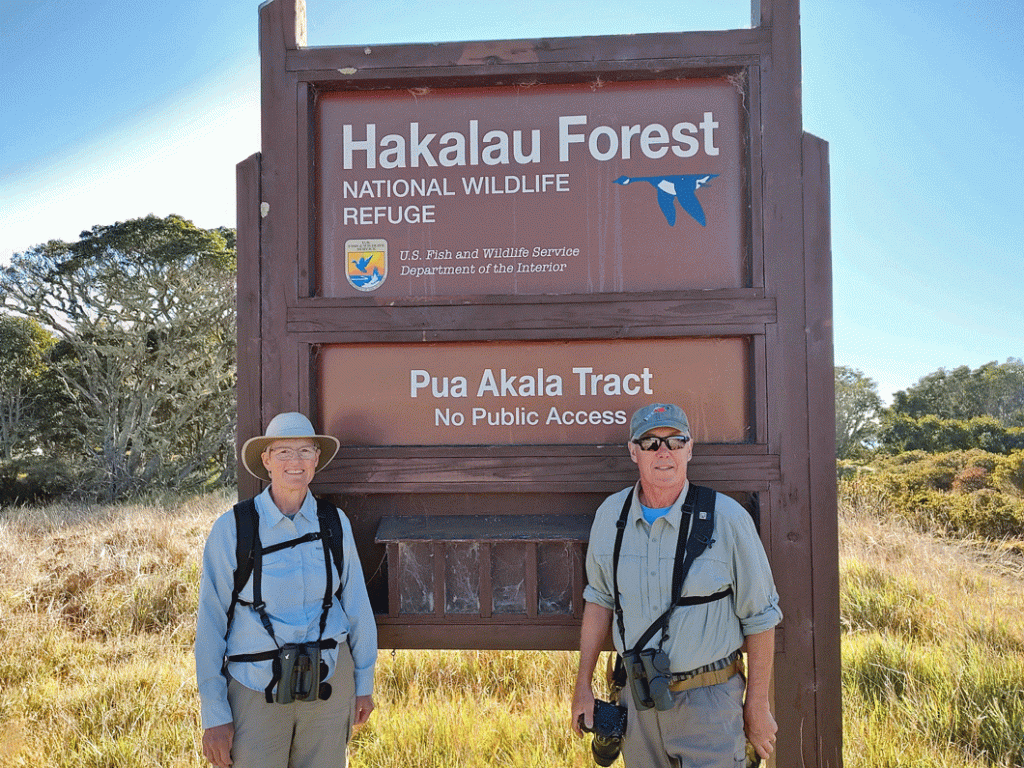
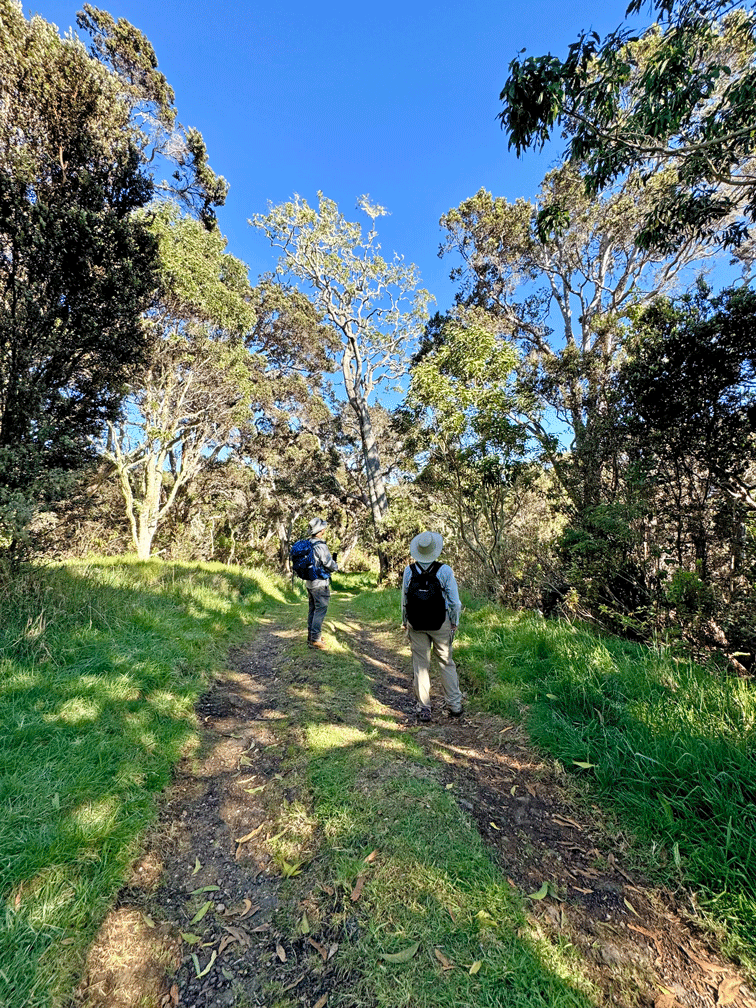
The next day we got up early and left our place at 5:45 am so we could meet our guide at the Mana Road, a few minutes up the road to Mauna Kea. We joined our guide in his four-wheel drive vehicle and drove an hour to the Hakalau Forest National Wildlife Refuge. The refuge is only open to parties that are led by a guide because of concerns about a disease called Rapid Ohi’a Death which has killed thousands of acres of mature ohi’a trees in other parts of Hawaii. We needed to clean our shoes of all debris and our guide sprayed our shoes in order to avoid contaminating the soil. The refuge was established in 1985 to protect and manage endangered forest birds and their rain forest habitat.
The section we were visiting had previously been cleared for a ranch and the only trees that were growing were in the ditches and gorges that the cattle couldn’t reach. Twenty-five years ago, many ohi’a trees were planted, so now the area is a lush forest. When we looked closely, we could see that most of the trees were the same age. The forest was full of birds, and with the help of our guide, Lance Tanino, (Hawaii Bird Guide LLC) we were able to see all the rare and endangered species that we had hoped to see.
The road wandered down the slopes of Mauna Kea. Although we saw most of the birds right from the road, we also ventured off to various overlooks.
The Hawaiian Goose or Nene is Hawaii’s official bird. It’s capable of inter-island flight, but is non-migratory. It was nearly extinct in 1940 due to overhunting and habitat loss, but in 2019 it was down-listed to threatened. We saw about twenty on this day and then later in our trip we saw them on golf courses and lawns by the beach; the sort of place you might find a Canada Goose.

Perhaps the most exciting bird to see was the endangered Akiapolaau, which is only found on Hawaii island. This little bird drills holes in ohi’a trees with its stout lower mandible and drinks sap by tilting its head back. Its long curved upper mandible extracts prey.
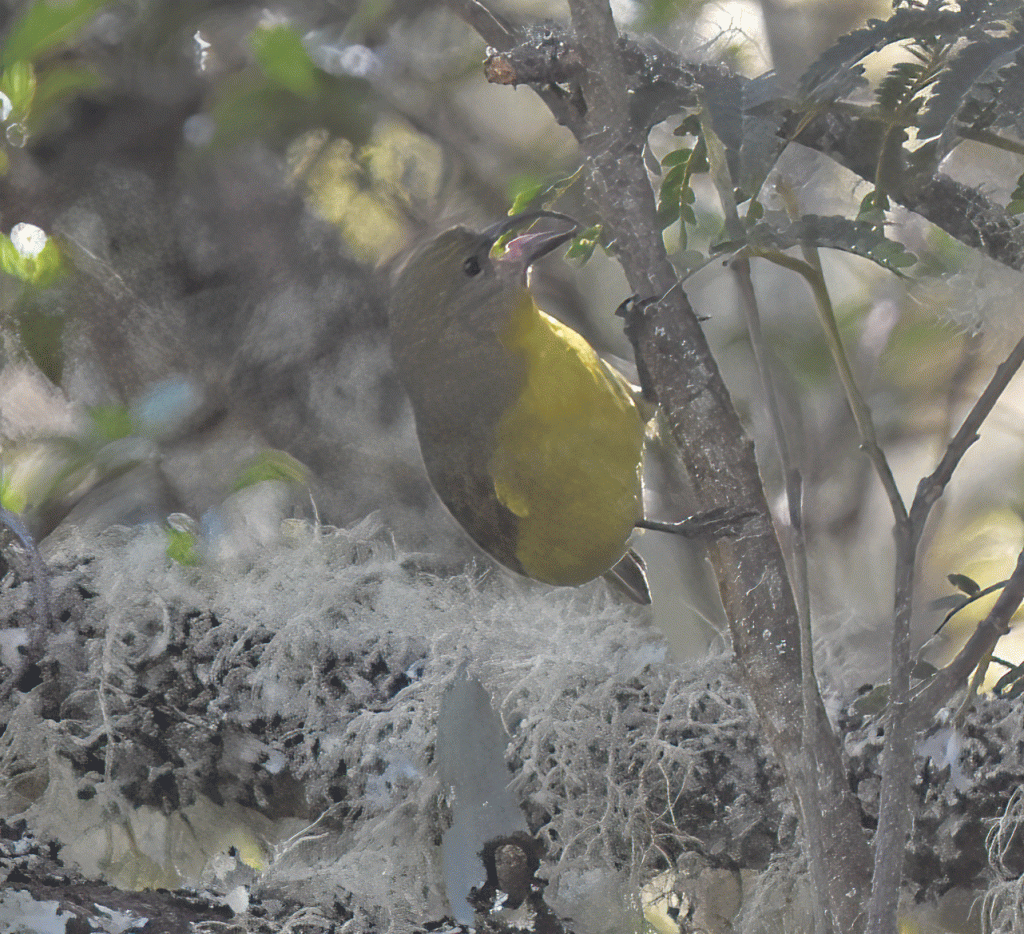
Here’s another “Aki,” as they are called for short. It’s a female or immature male.

The I’ivi (ee-EE-vee) or scarlet honeycreeper is a flashier bird and we saw several of them this day. Even so, this endemic bird is listed as threatened.

Another I’ivi! This species primarily feeds on the ohi’a nectar as well as other understory tubular flowers.

These thrushes are much less conspicuous than the honeycreeper. Known as Oma’o, they can perch motionless for long periods. They are rare and restricted to windward-side native forests above 3000 feet. We were lucky enough to see several this day.

We also saw a few Hawaii Creepers. These birds feed on insects and move along branches and tree trunks like nuthatches. Notice their curved bill and “racoon” mask.
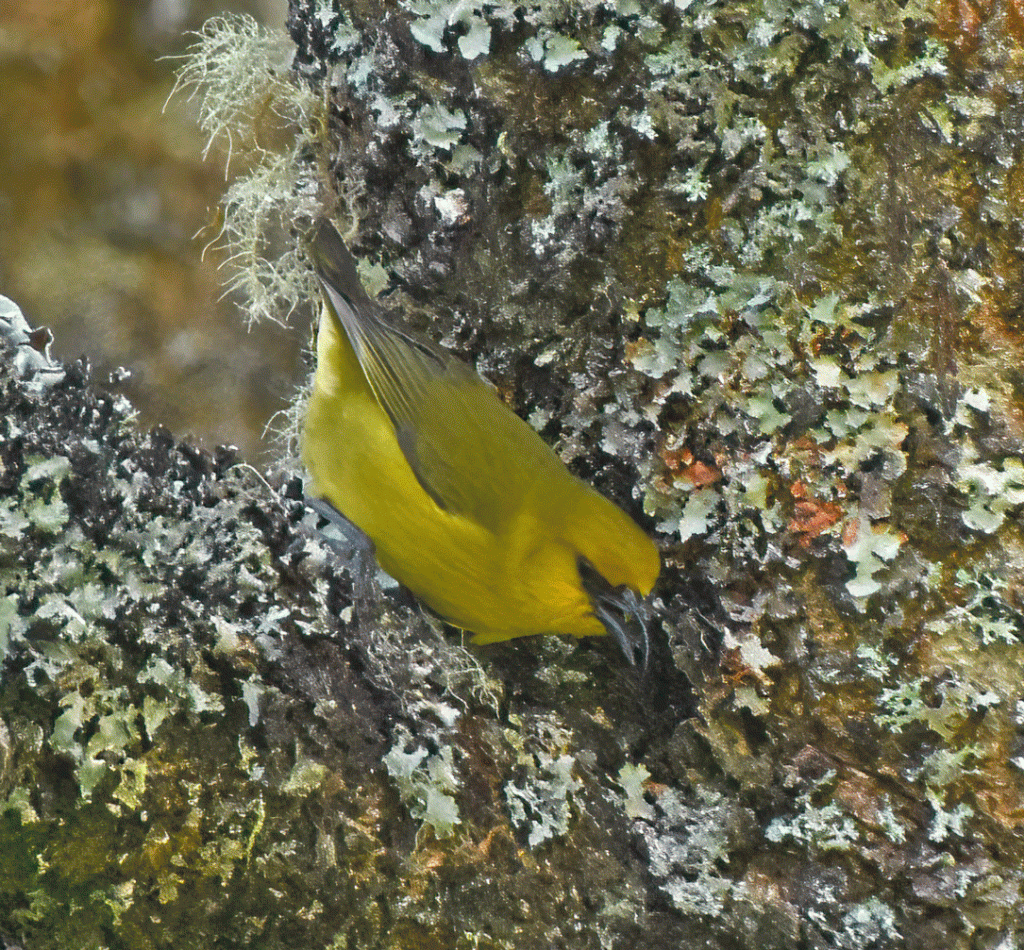
There were three times as many of these yellow birds (Hawaii Amakihi) as there were creepers. Although they have similar colouring, the Amakihi has a straighter bill and not as much black on the face as a creeper. Since we’d seen several of this species a few days before, it was like meeting an old friend again.
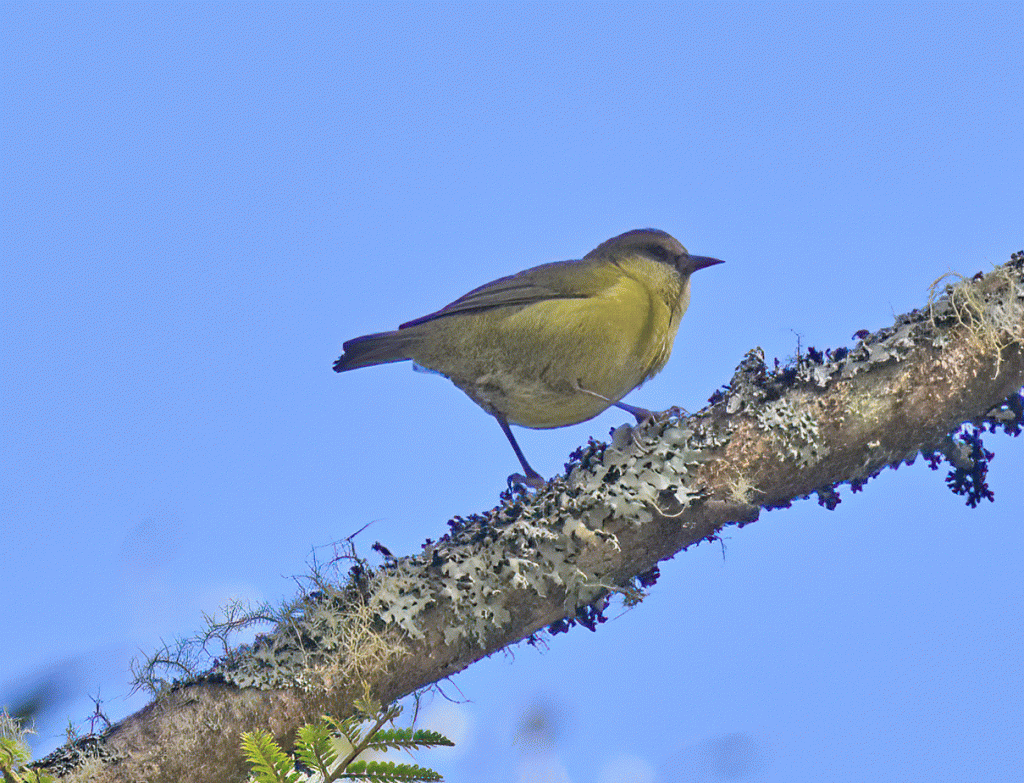
The last endemic bird that we saw on our “tick list” was the endangered Hawaii Akepa. It was harder to see because it forages in the crowns of ohi’a trees. The Akepa has a crossed bill which it uses to pry open buds, seed pods and galls in search of insects to eat.

The other forest endemic birds that we saw were Hawaii Elepaio and Apapane. The Elepaio tended to stay hidden among the shrubbery and the Apapane were high up in the canopy.
We saw some introduced birds as well, including this Kalij Pheasant. This species is native to Southern Asia and was introduced to Hawaii in 1962.

It was a big day for us, with twelve “life” birds, including several that were endangered or rare. It’s not likely that we will ever see most of these birds anywhere else.
January in Hawaii – Part one and two have summarized the first half of our ten day trip. Part 3 and 4 will be posted soon.
 Travels with a Fox
amazing birds but I really enjoyed your colourful description of the lava flows
LikeLike