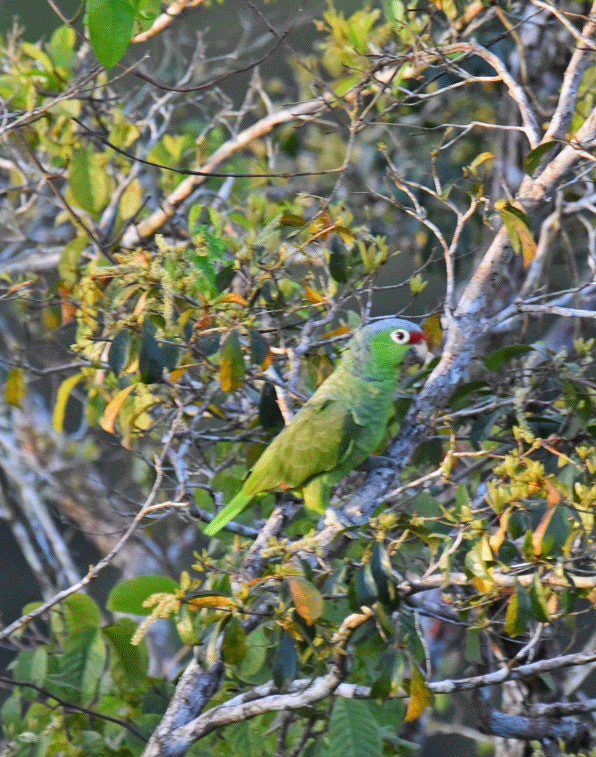
Birding in Panama – 5

Birding in Panama – 5

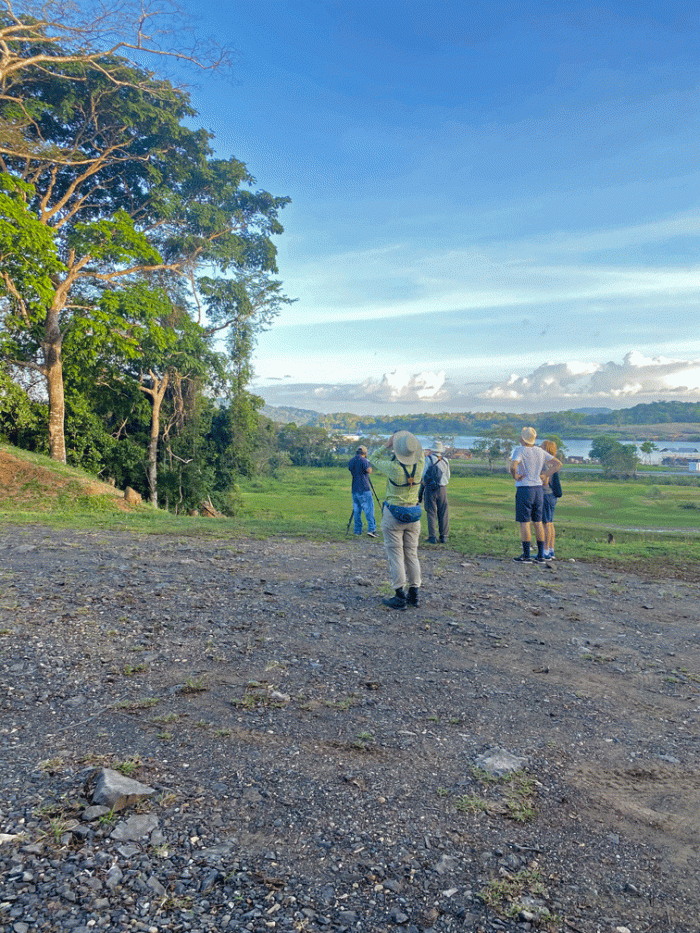
This blog is about our Tuesday, Wednesday and Thursday birding adventures. On Tuesday, we had a full day birding in the Pacific Dry Forest with a stop at a beach near Santa Clara.

On the way to the beach, we saw several hawks. This Roadside hawk was appropriately named since it was sitting on a roadside fencepost.

Roadside-Hawk

So was this Crested caracara. We saw a few of them following the piece of heavy equipment that was clearing the edge of the road. They were picking off any creature that was disturbed.

Crested-Caracara

There were some open grasslands where we saw this Fork-tailed flycatcher.
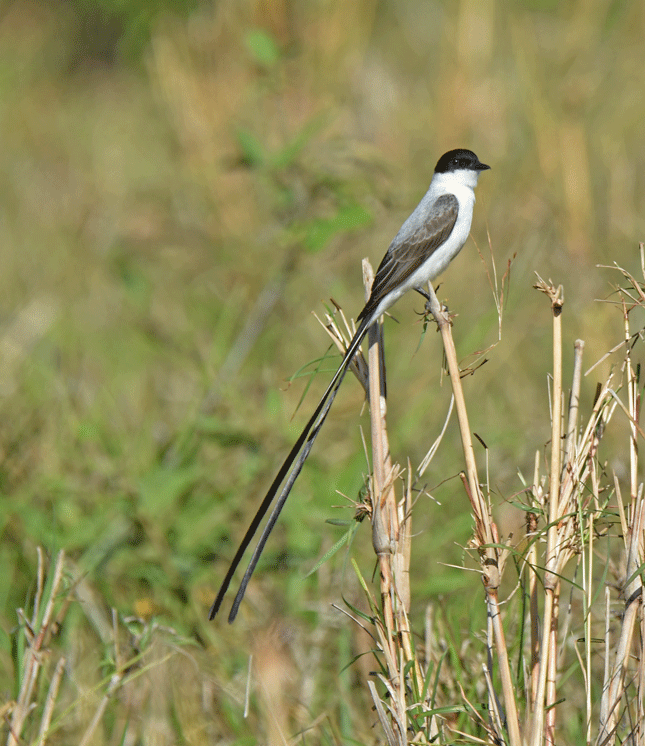
Fork-tailed-Flycatcher

This is a House wren, that has a wide range throughout North America. A plain, common bird, but still worth looking at and photographing.
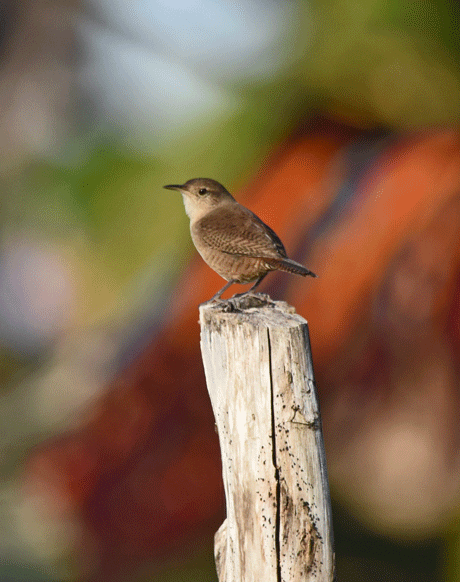
House-Wren

The beach was amazingly beautiful. Gretchen and Wendy were probably looking at Brown pelicans. We also saw Laughing gulls, Royal terns and Sandwich terns along with various other shorebirds.
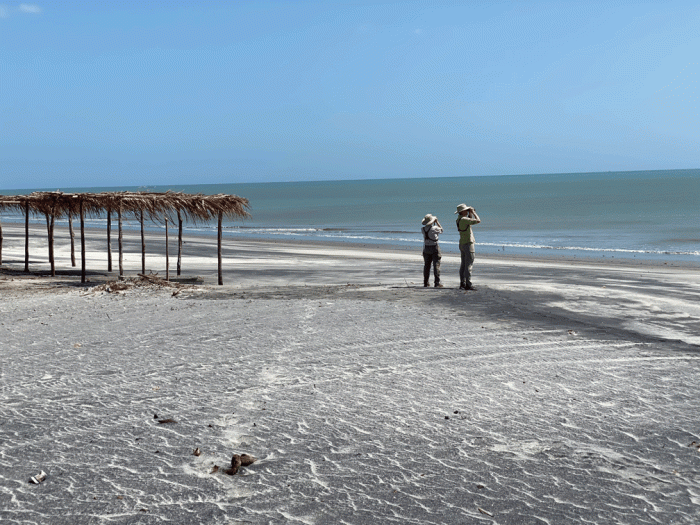
Wendy-Gretchen-beach

As soon as we got to the beach house, we changed into our bathing suits and had a dip in the ocean.
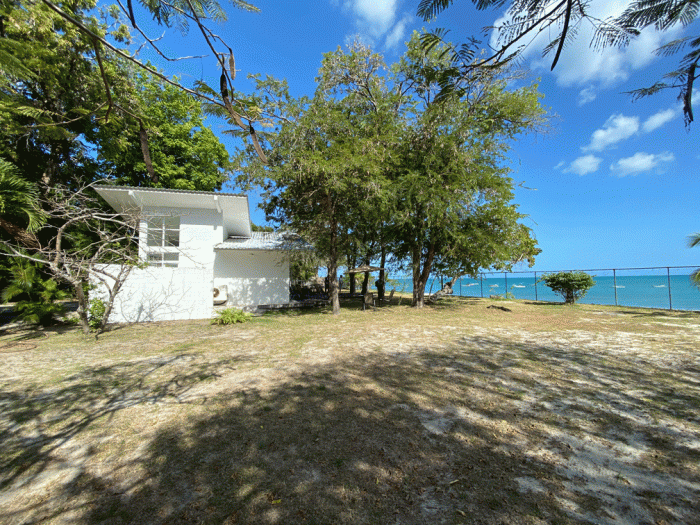
Beach-house

A hot lunch had been prepared for us.
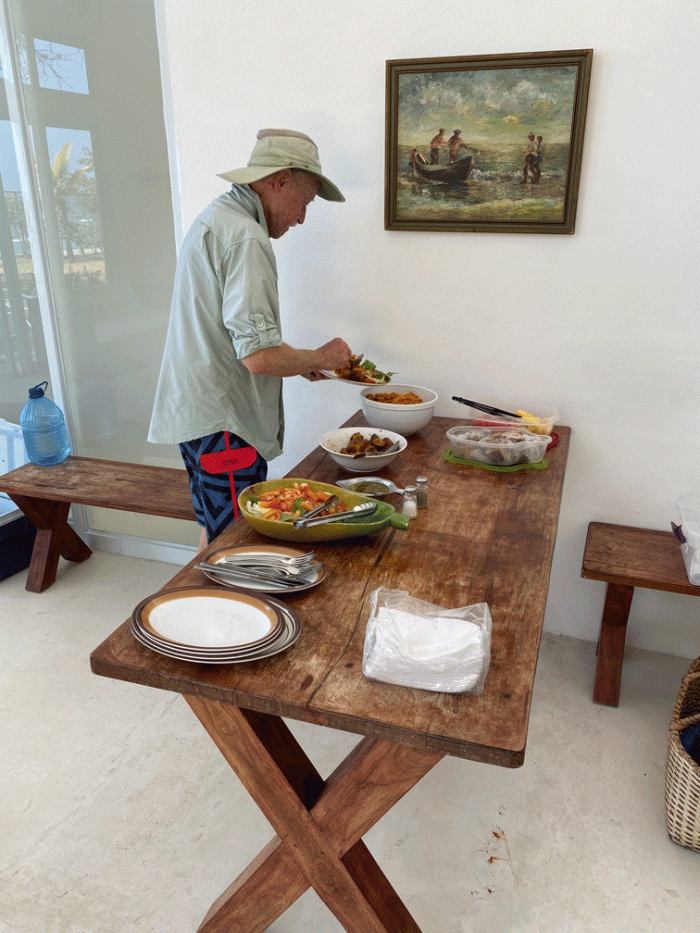
Bob-lunch-beach

After a pleasant break, we continued looking for birds. Our guide heard a Ferruginous pygmy-owl and we spent about half an hour trying to see it in the top of the tall trees. We persevered and got a glimpse of the bird through the leaves.

Doug thought this Marlboro sign was interesting so Wendy posed in front of it.
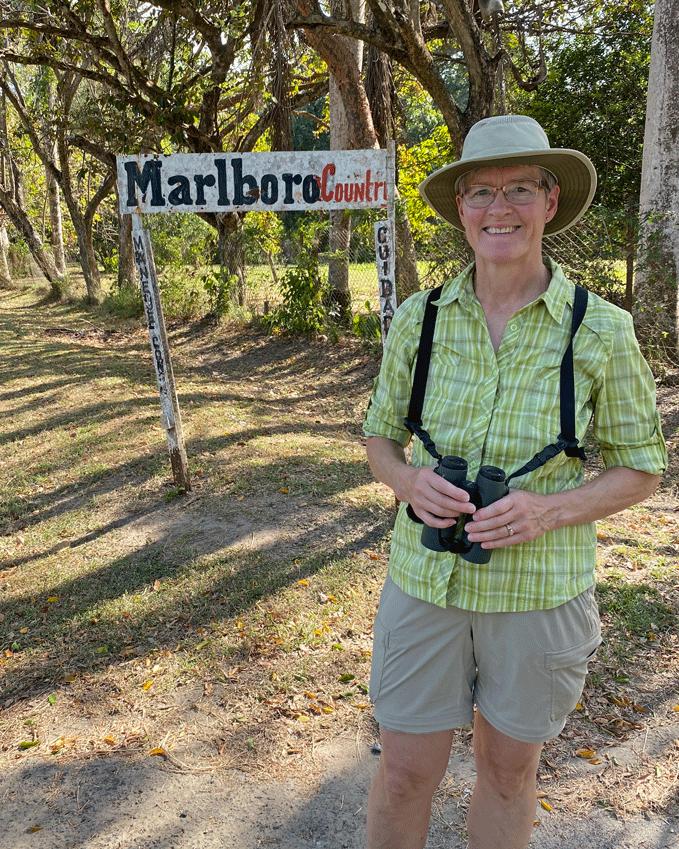
Marlboro-country

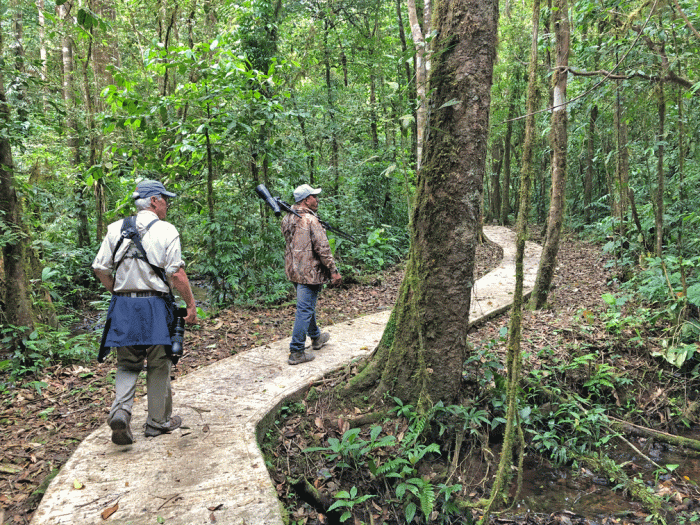
On Wednesday, we stayed closer to the lodge. The van took a group of nine of us up to La Mesa road and the Candelario trail. The trail was in the forest along the edge of the fields.

With so many people trying to see the same bird, we needed to “stack,” which means a taller person would stand behind a shorter one. In this photo, our guide Eli, is crouching down and using his laser pointer to direct us to the bird. The guides were really good at pointing the laser at a tree trunk and once everyone could see the spot, moving it upwards to a branch near the bird, being careful to not shine the laser directly on the bird.
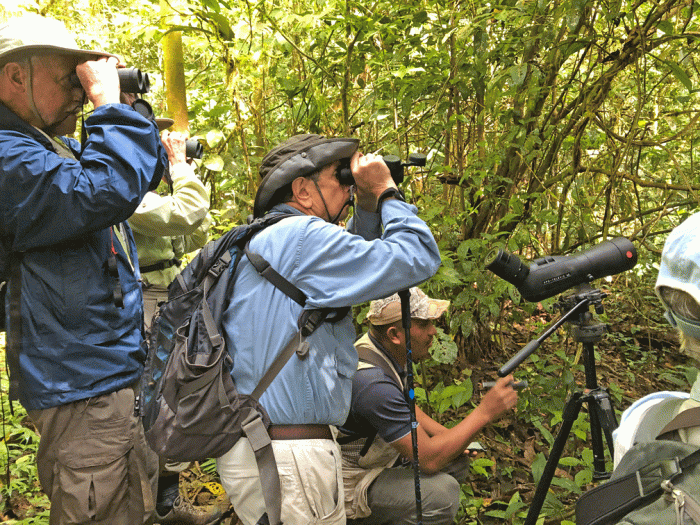
Looking-for-birds

All the guides were good at taking a photo through the scope with our cell phones. Photos could happen after everyone had had an opportunity to see the bird through the scope and obviously if the bird stayed still long enough.

Moyu-scope

In this case, Eli was taking a photo of a Helmet-headed lizard, which wasn’t moving quickly. In fact, these lizards sit and wait for a long time, before dashing after a tasty insect. When it moves, it becomes vulnerable to attack from its predators, so it stays motionless as much as it can.
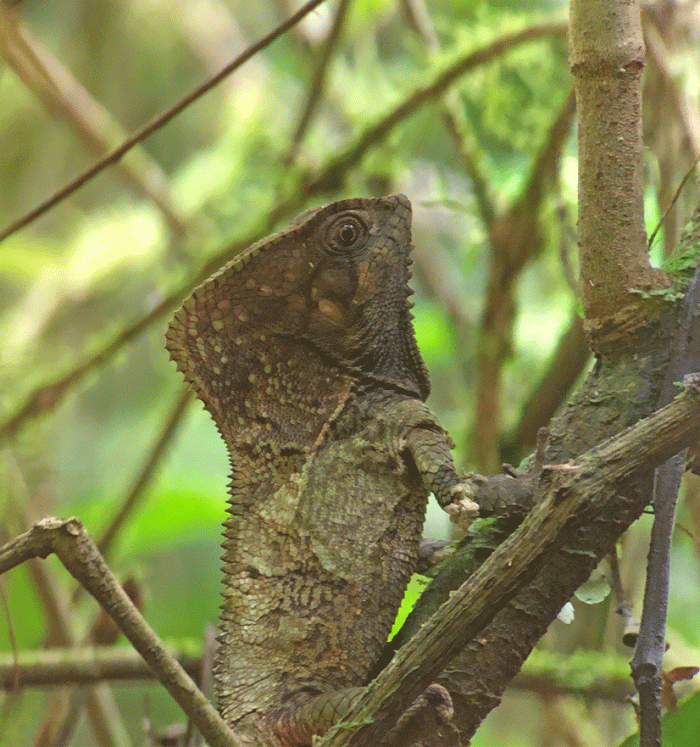
Scope-lizard

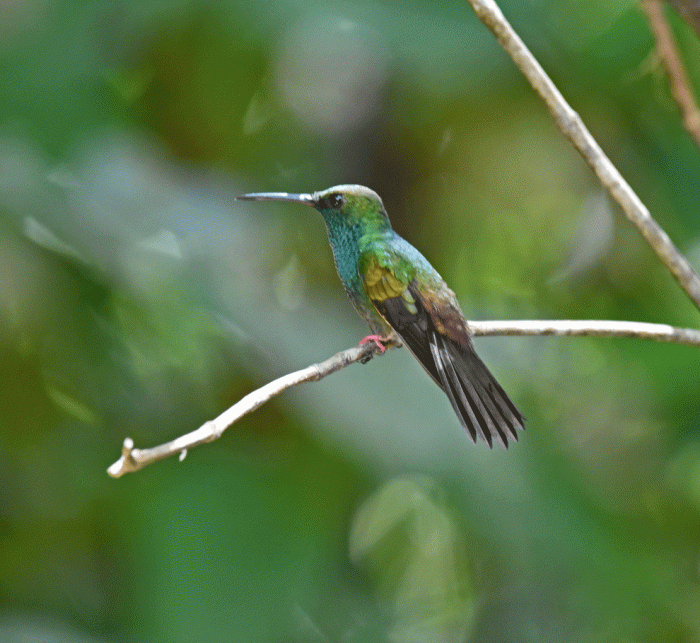
We also saw some hummingbirds in the forest. This one is a female Crowned woodnymph. This photo shows the distinguishing characteristics: green above, grayish-green below with a large pale throat patch, white spot behind the eye and slightly forked tail with white tips on outer feathers. The male Crowned woodnymph looks quite different, with a purple belly and a green throat.

Crowned-Woodnymph

The Rufous-tailed hummingbird was one of the most common hummingbirds in this area so we were able to see many of them and learn to recognize them. The other nice thing was that the male and female of the species were similar.

Rufous-tailed-Hummingbird

This Chestnut-sided warbler was a little trickier to identify when we were looking at the photo three weeks after it was taken. It’s a female in first winter plumage, so the “chestnut side” is not visible.
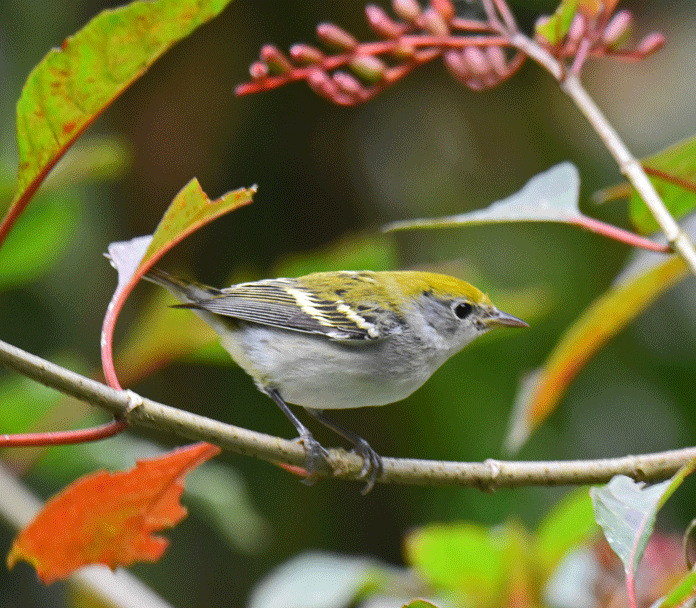
Chestnut-sided-Warbler

We came out of the forest, into the fields, and into the sunshine.
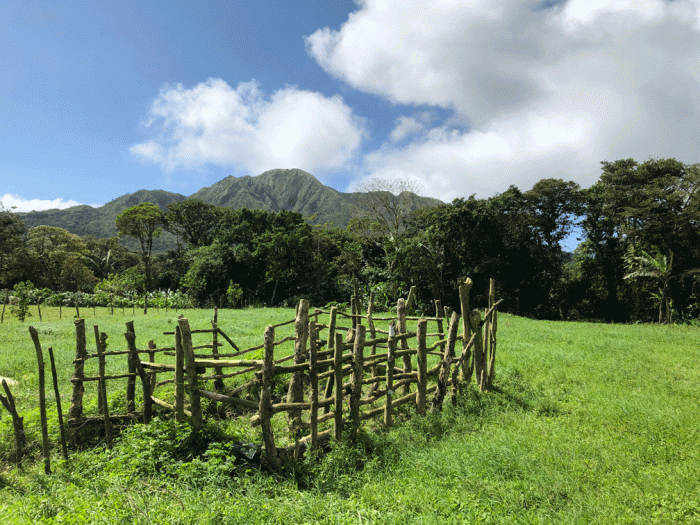
Candelario-farm

That afternoon the van drove us up and over the rim to Caimito Road. We hoped to see a Montezuma oropendola, because we had seen many Chestnut-headed oropendolas and some Crested oropendolas. The Montezuma oropendola has interesting pale blue and pink patches on its cheeks. And here’s a photo of one.
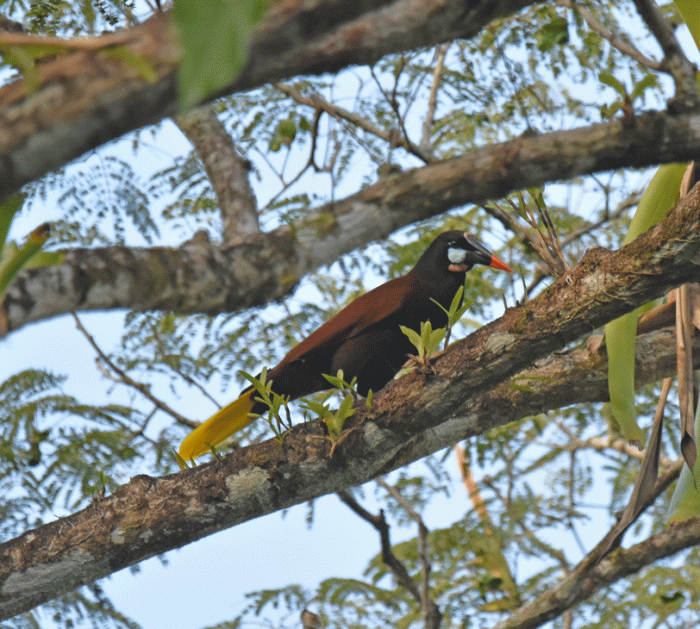
Montezuma-Oropendola

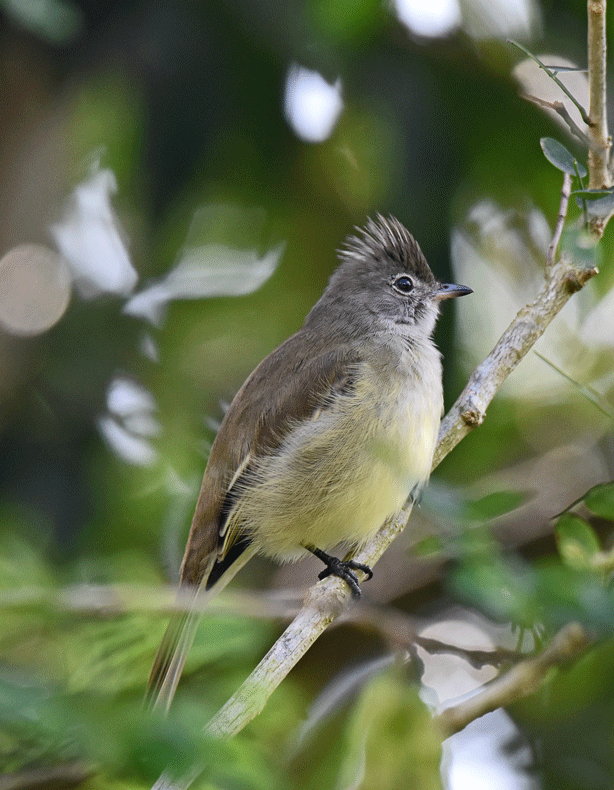
Doug got a good photo of this Dusky-capped flycatcher.

Dusky-capped-Flycatcher

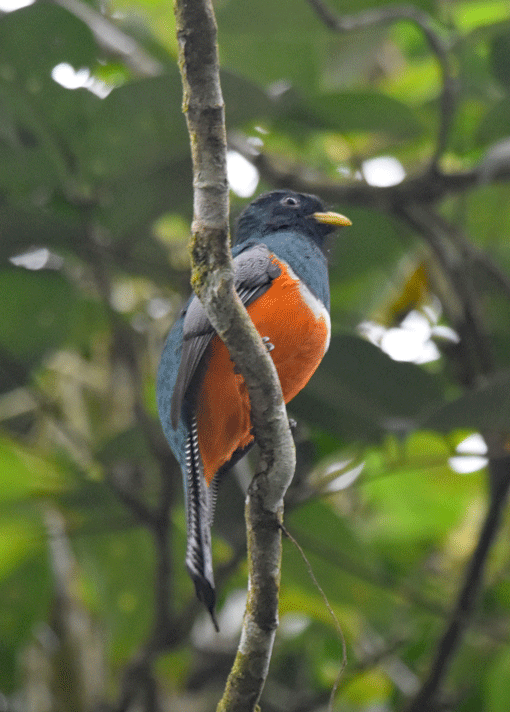
We really enjoyed seeing every trogon. They are a bit bigger than our American robin and have a distinctive shape and posture. This is a Gartered trogon.
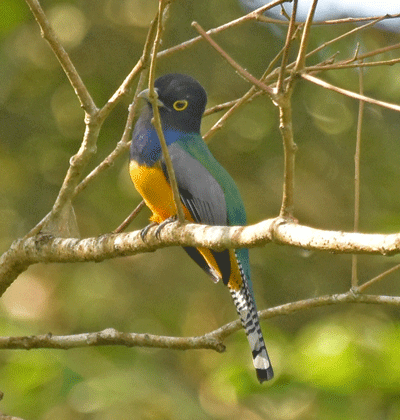
Gartered-Trogon

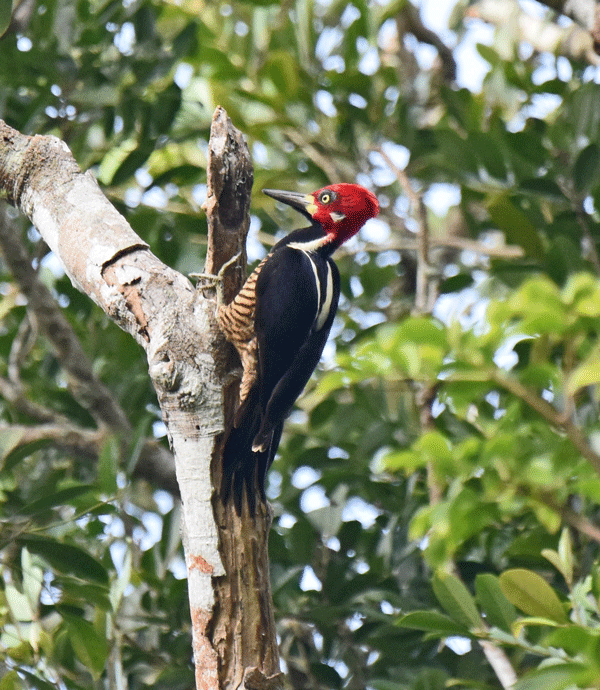
This Lineated woodpecker is similar to the Pileated woodpecker that we have in Canada. It has a similar call and on first glance looks alike. However, the Lineated has a dark chin and not as much white on its head.
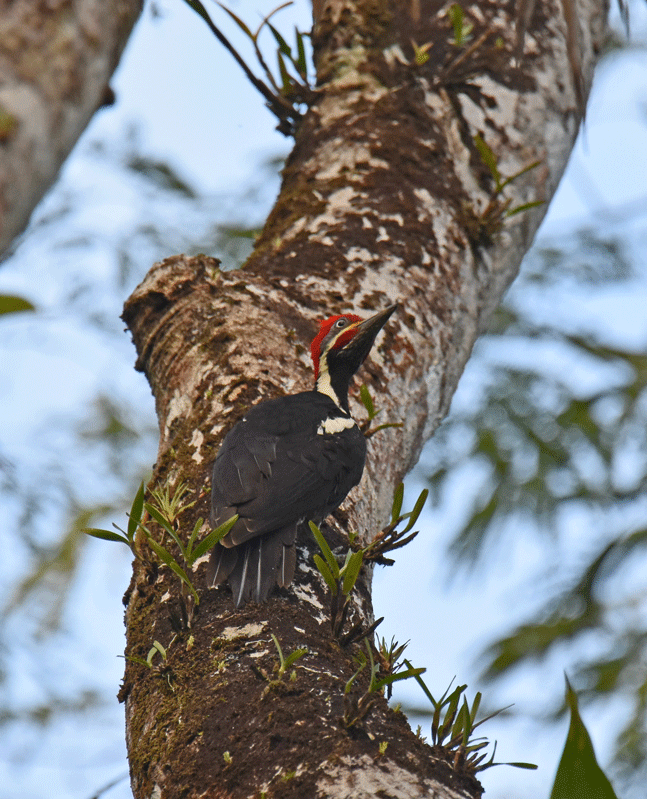
Lineated-Woodpecker

On Thursday, we went on another full day trip, this time going north and east to Rio Indio and Jordanal.

This little bird is more significant than you would think from its appearance and name. We worked hard to see the Bran-coloured flycatcher on a hillside of grasses and bushes, and it was the only one we saw the whole trip.
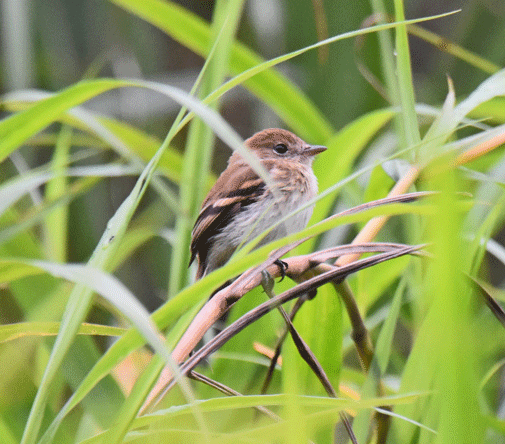
Bran-colored-Flycatcher

We were driving in four wheel vehicles because the roads were steep and unpaved. There was a lot of road construction to improve the roads to allow the farmers to get their product to market. There was hardly any traffic, mainly because the people who lived way out here didn’t have vehicles.

Here’s a view of a couple harvesting culantro on the steep slopes of their farm. If you zoom in, you can see the ties attached to the farmer’s waist that he uses to tie the culantro into bunches. Culantro is related to cilantro but has a more intense flavour. Its leaves are long and saw-toothed like a dandelion. We had a chicken dish with culantro at the lodge, and it was delicious.
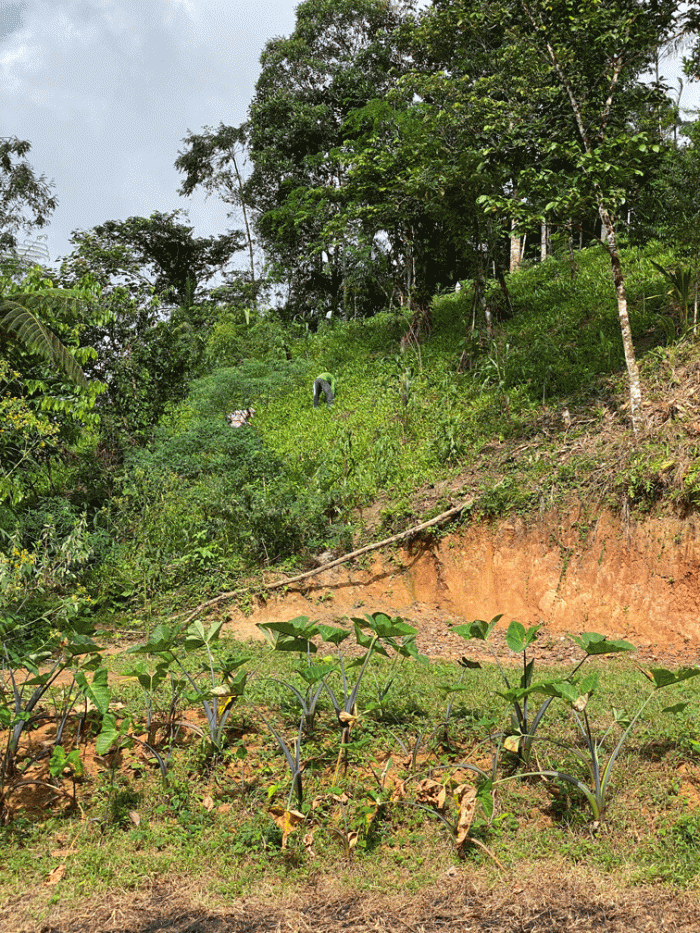
culantro-farm

We saw gorgeous flowers throughout the whole trip. Some of the homes were very basic but they had amazing gardens. We’re including this red flower as an example.
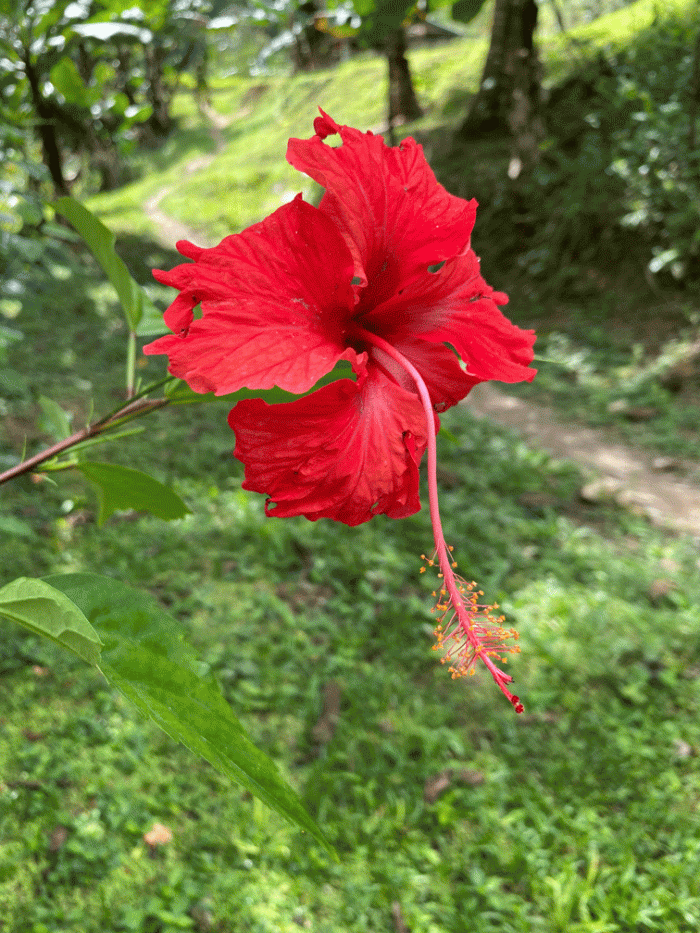
Red-flower

This Plain-coloured tanager seems happy and is not aware that he doesn’t have a fancy name.
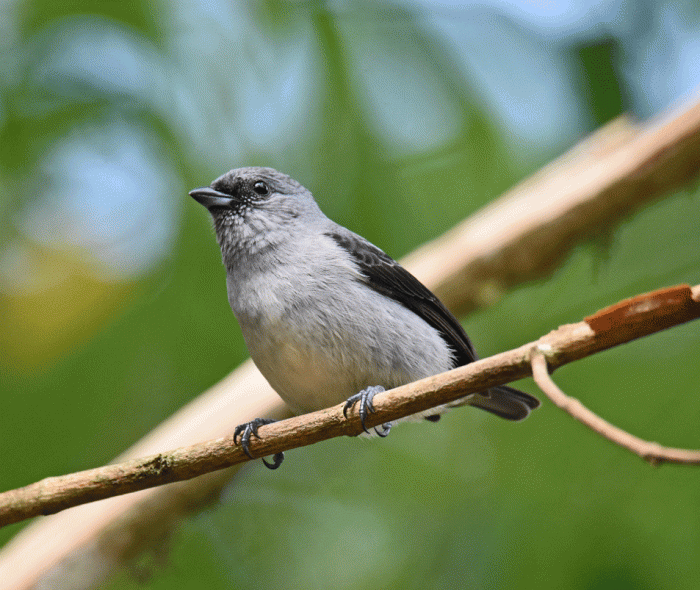
Plain-colored-Tanager

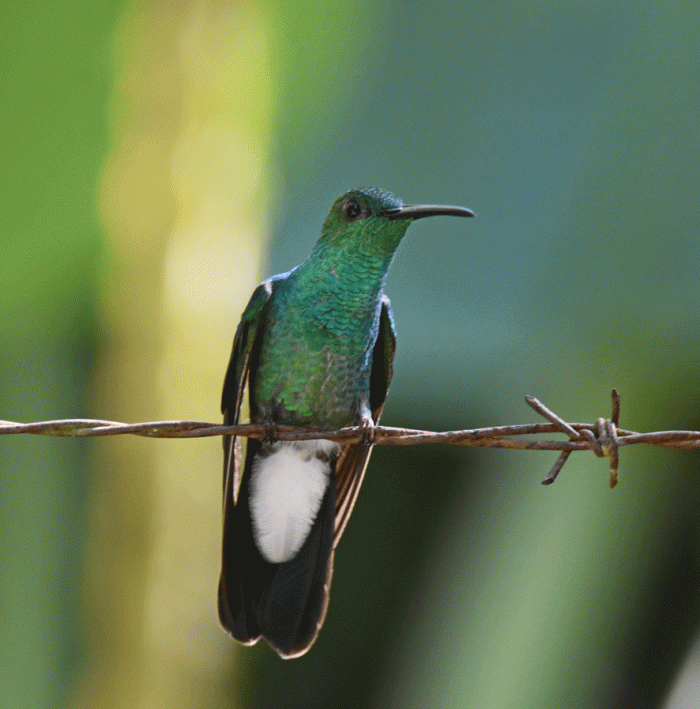
This is a female Blue-chested hummingbird, which doesn’t show very much blue on her chest. We saw several of them on our trip.
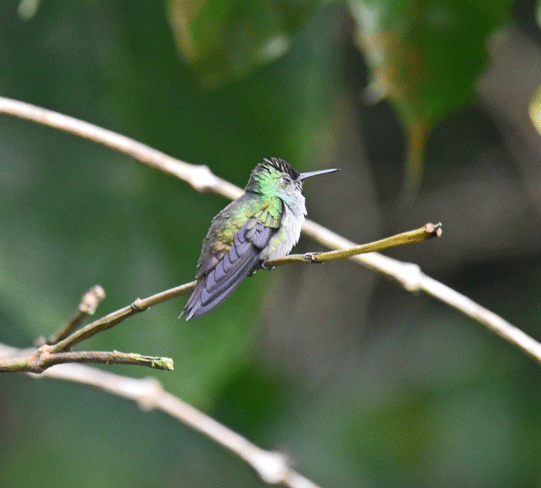
Blue-chested-Hummingbird

We only saw one Cinnamon becard on the whole trip, but this one was good enough to stick around so we had a good look at it.
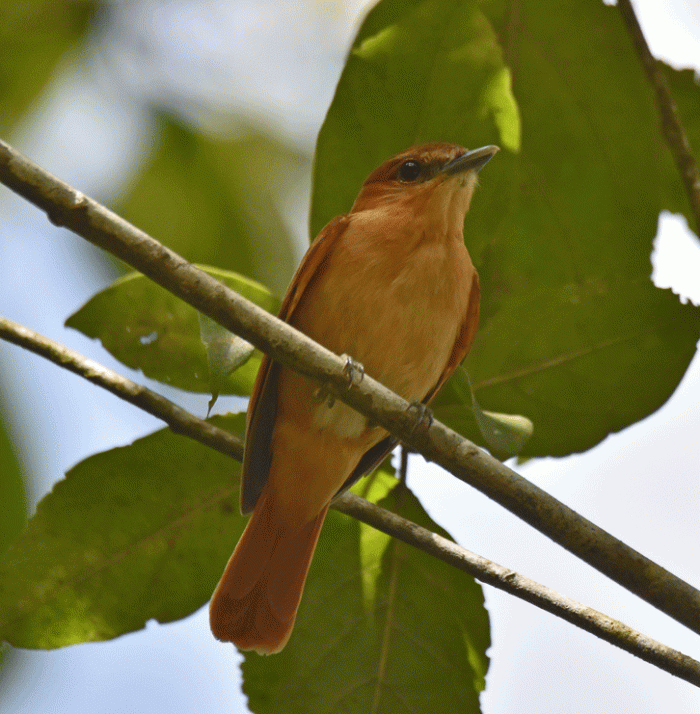
Cinnamon-Becard

We were also happy to see a Barred puffbird, because they were uncommon but also cool-looking.
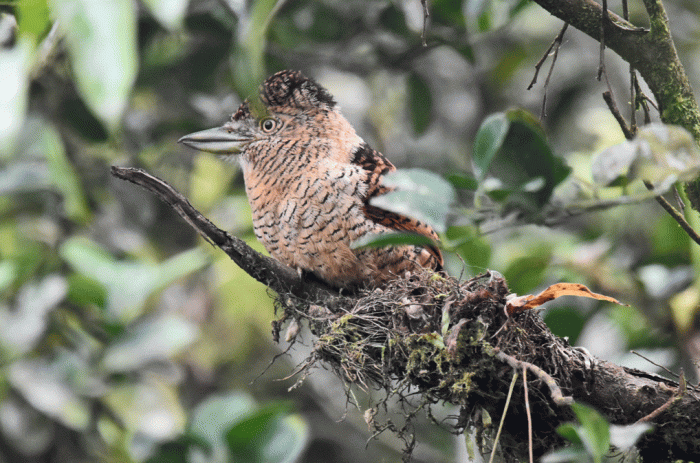
Barred-Puffbird

You can almost imagine the racket of a noise that is coming from this Crested oropendola.

Crested-Oropendola

The amazing thing about seeing this Ringed kingfisher, was that across the river from him was an Amazon kingfisher. The Ringed kingfisher is much larger (48 cm – 93 cm / 19″ – 37″)
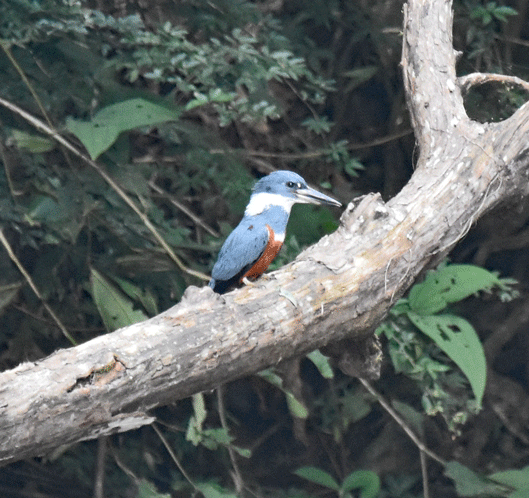
Ringed-Kingfisher

This Little blue heron was along the Rio Indio, around the spot that we turned around to go home. Knowing there is a Little blue heron explains why the one we have at home is the Great blue heron

Little-Blue-Heron

So that wraps up our Tuesday, Wednesday and Thursday trips. Only Friday and Saturday of birding left to go!

Birding in Panama – 4

Birding in Panama – 4

On Sunday, we had a leisurely start at Canopy Tower. After our final look at birds from the observation deck and a delicious breakfast, we packed our bags to be ready to leave for Canopy Lodge, in El Valle.

It took us a couple of hours to reach the valley. Our van drove us west along a divided highway. We turned north at the town of Anton and continued up narrow, steep, winding roads to the rim of an ancient volcano, then down equally steep grades to the valley floor and the town of El Valle. Canopy Lodge is up a hill just outside of town.

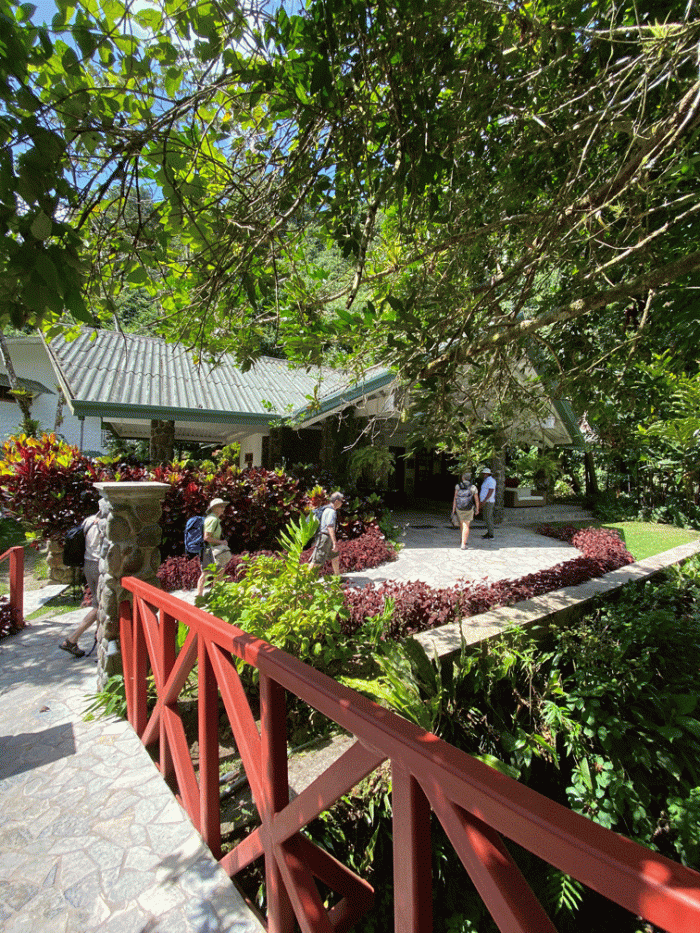
The lodge is on the other side of a footbridge over a small stream, which adds to the natural feel of the place. It means that all supplies are brought over either in baskets or on a hand-cart.

Canopy-Lodge-from-bridge

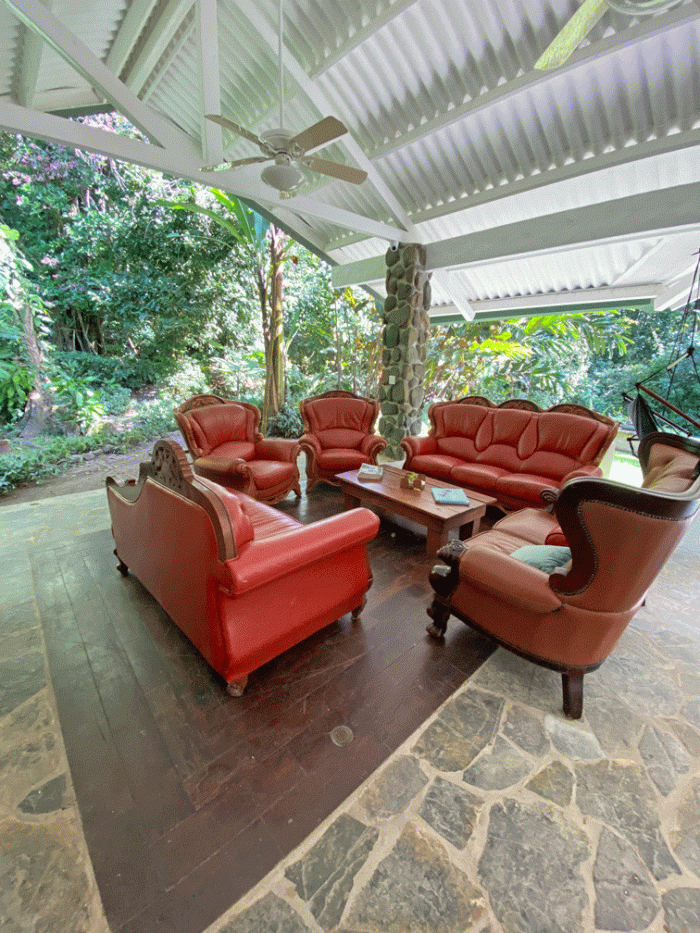
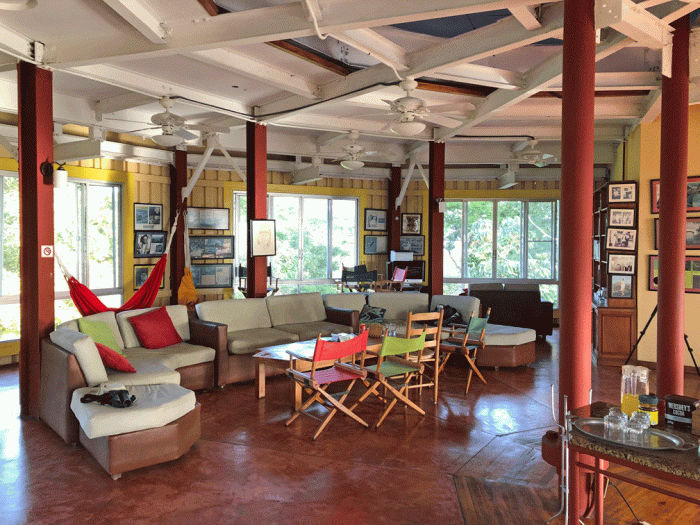
The main parts of the lodge are all covered outdoor areas. Here is a view of one of the lounge areas. This is where we usually sat in the evening when we went over our sightings for the day.

Common-area

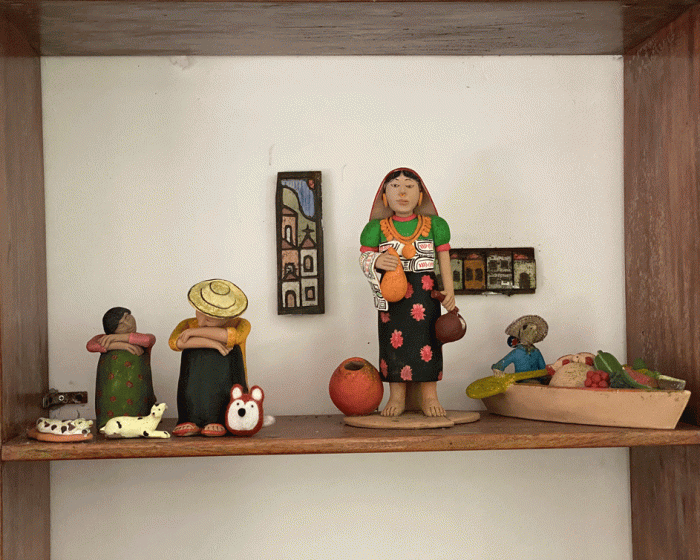
Along the wall is a bookcase of nature reference books and variety of others books. There is also a section devoted to some local folk art.

Fox

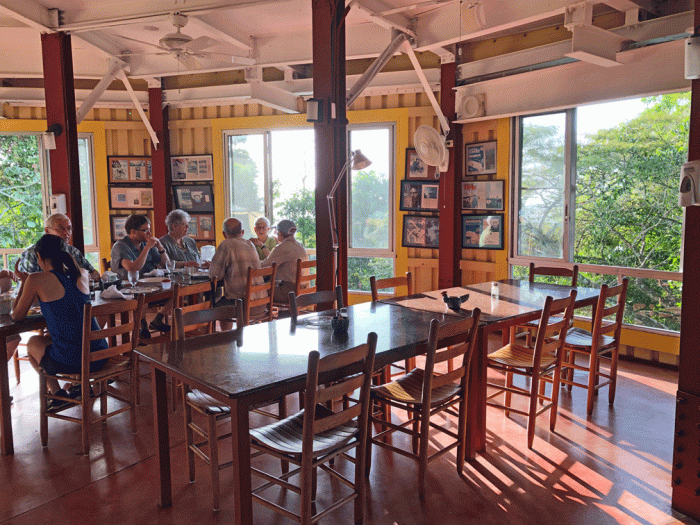
This is the dining area, with the second lounge area behind. It cooled off in the evening, but most nights were about 20 degrees C. Doug recalls wearing a jacket once when it was breezy. The kitchen is behind the rock wall.

Lodge-dining-area

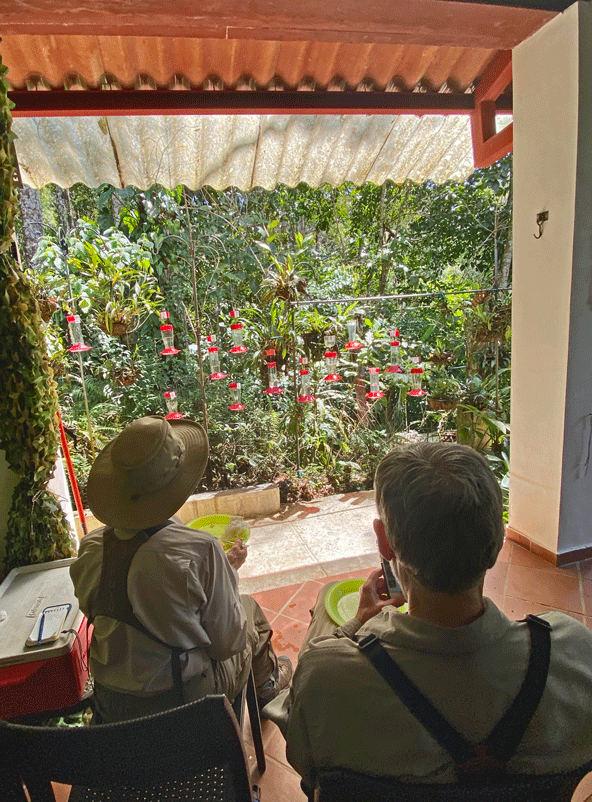
Wendy is looking at the bird feeding station. We watched the live cam before we visited. You can too. Search: Panama Fruit Feeder Cam at the Canopy Lodge.

View-of-feeder

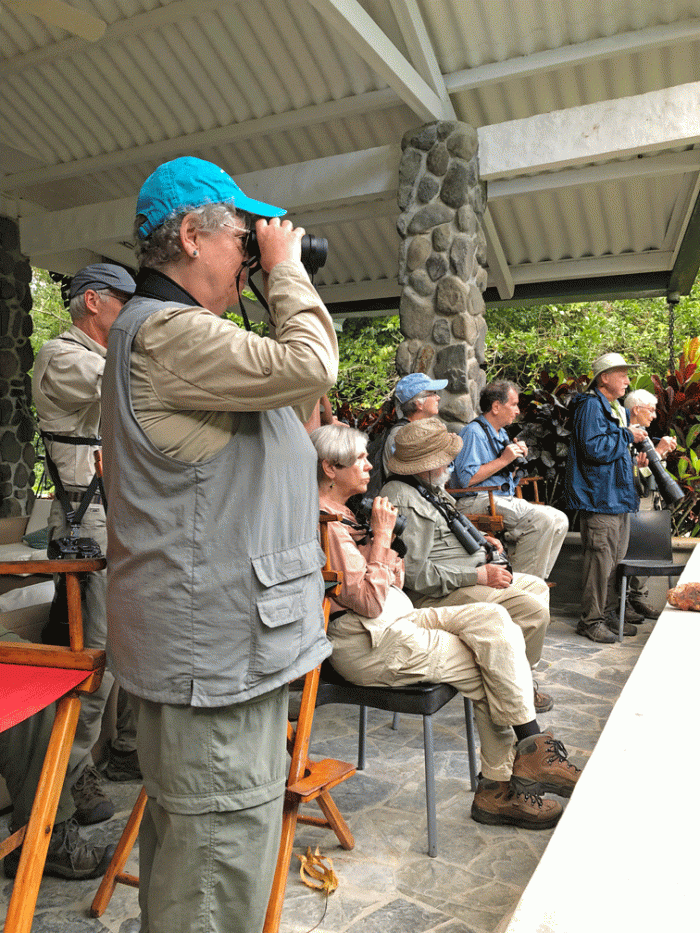
It was a popular spot with lodge guests before heading out for their afternoon birding session.

Lodge-feeder-viewing

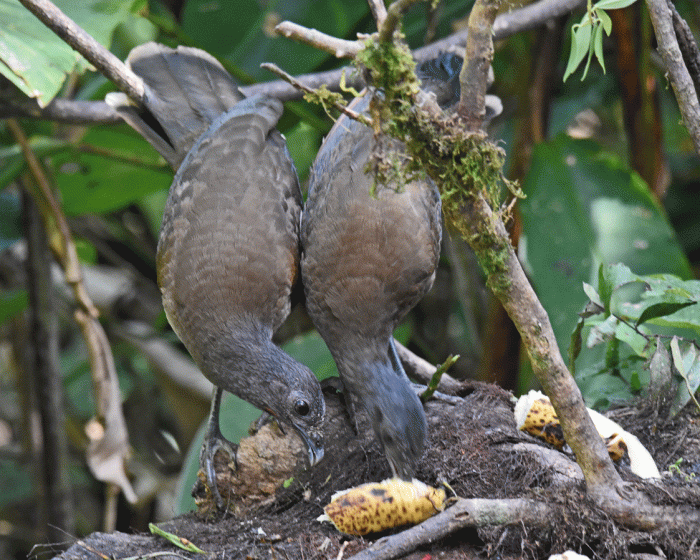
The Gray-headed chachalacas were fun to watch, and they could clear the tray full of fruit in minutes.

Gray-headed-Chachalaca

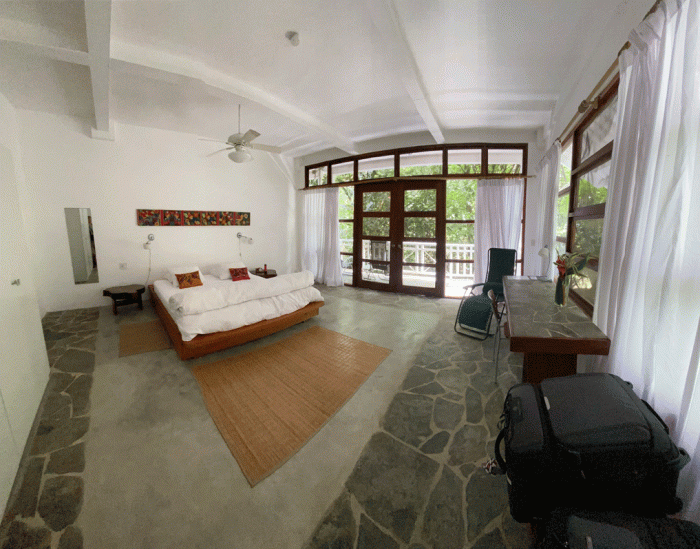
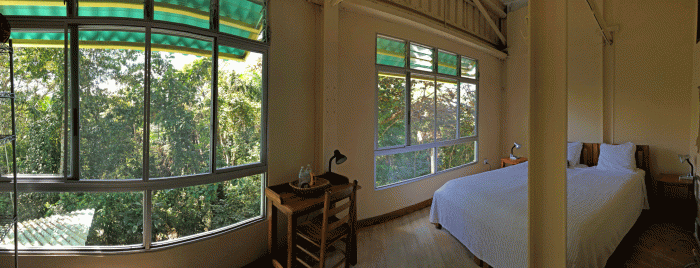
The rooms were bigger than at the tower. The windows were only screen, so if it was breezy, the curtains provided some protection. There was a huge duvet which we found we didn’t need.

Our-room

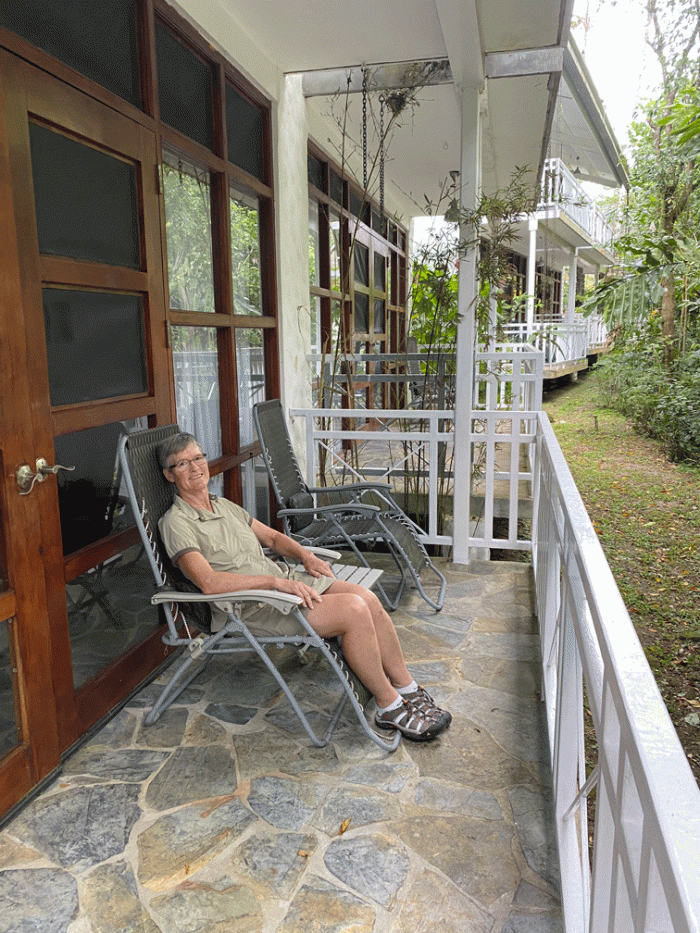
Our room was at ground level, but some were up a story so could be considered at the canopy level. This is a view of our balcony, which we enjoyed many evenings, and sometimes used for an afternoon outdoor siesta.

Room-balcony

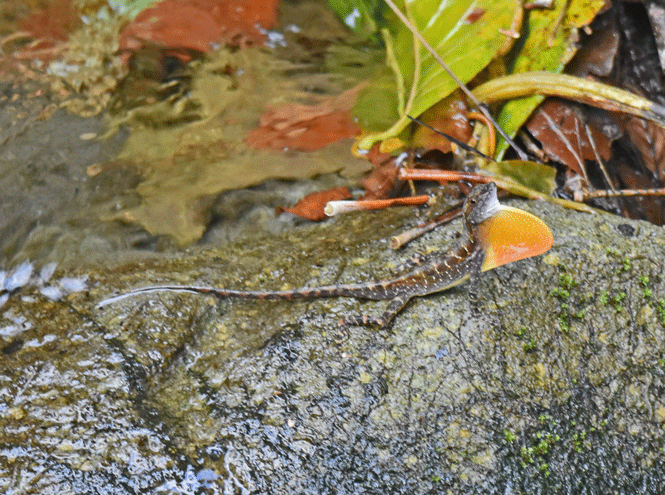
The stream at the lodge brought all sorts of creatures including birds. This Water Anole lizard was sunning himself one afternoon.

Water-Anole-Lizard

The first afternoon birding tour was on a road full of fancy homes within view of Cerro Cara Iguana. The mountain got that name because it looks a bit like a sleeping iguana.

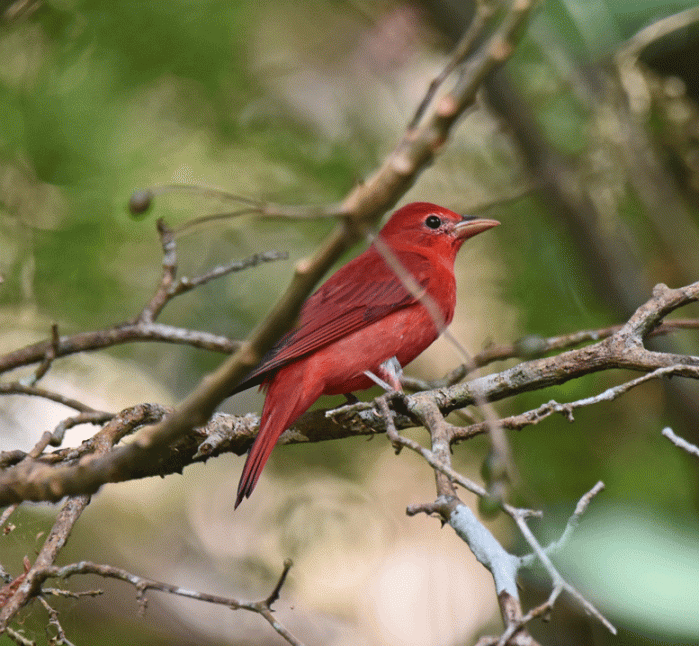
While we were walking along the toad, Wendy heard the call of a bird she was familiar with, which didn’t happen very often in Panama. Sure enough, a Summer tanager appeared and we all had a good look.

Summer-Tanager

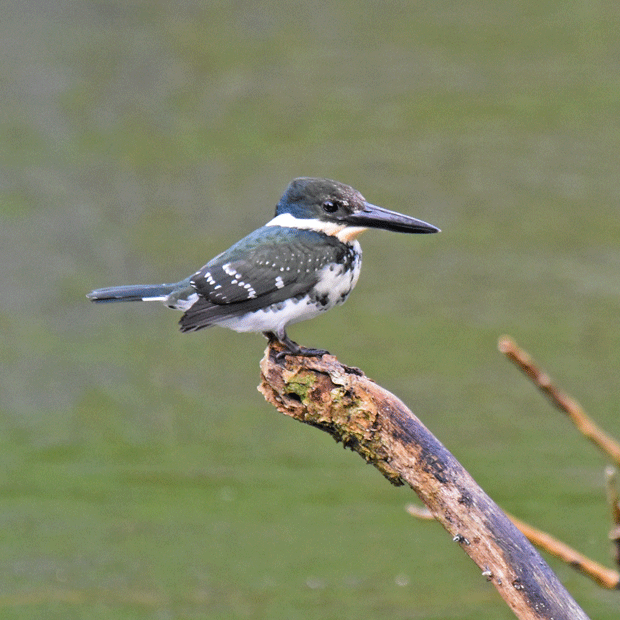
Next morning, we loaded into the van and headed up the hill beyond the lodge. We parked beside a pond where we had a good view of a Green kingfisher. We saw her a number of times throughout the week.

Green-Kingfisher

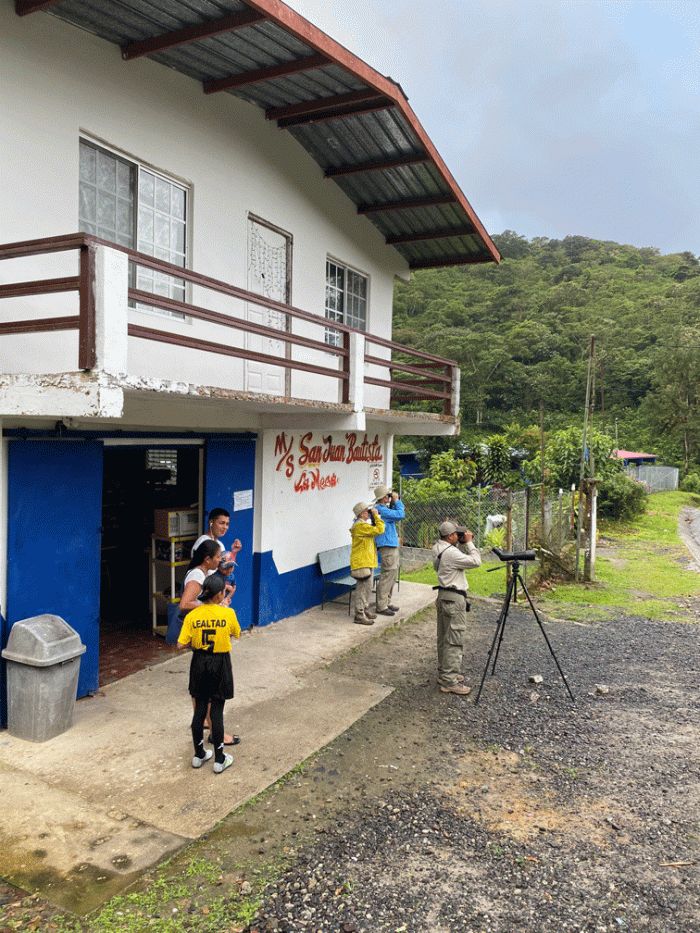
We walked up the road and it started to sprinkle. Soon it was raining hard so we took shelter in the overhang of the local store. Our guide today was Danilo.

Store

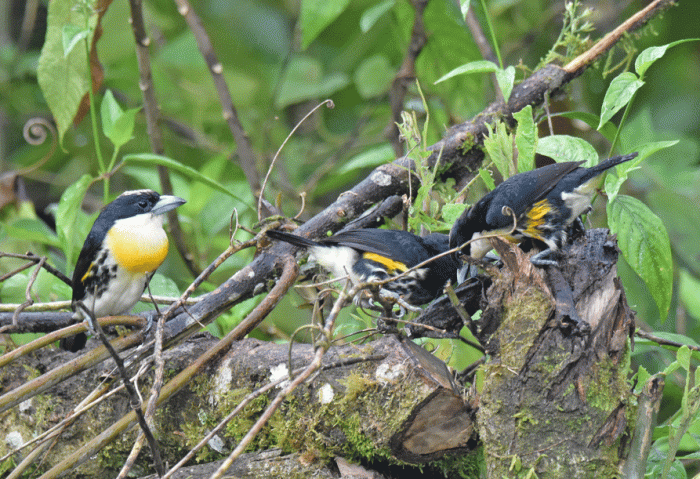
Across the road from the store, there was a remnant of a banana. We watched while different birds came to clean it up. These are Spot-crowned barbets.

Spot-crowned-Barbet

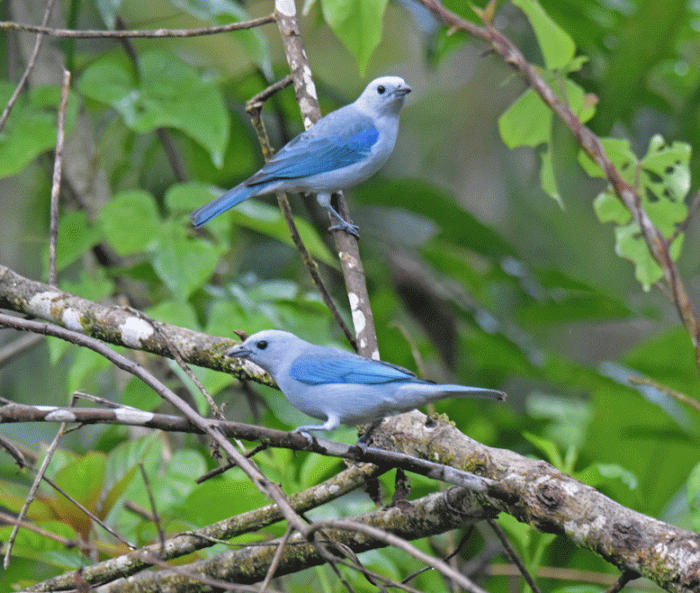
The Blue-grey tanagers were waiting nearby.

Blue-gray-Tanager

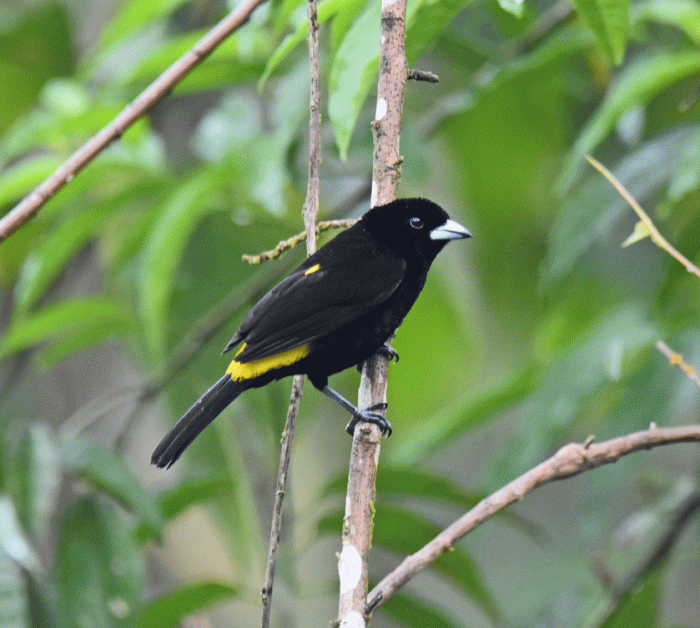
And a Flame-rumped tanager came by to check it out. The local guides call them Lemon-rumped, which is a better name for them.

Flame-rumped-Tanager

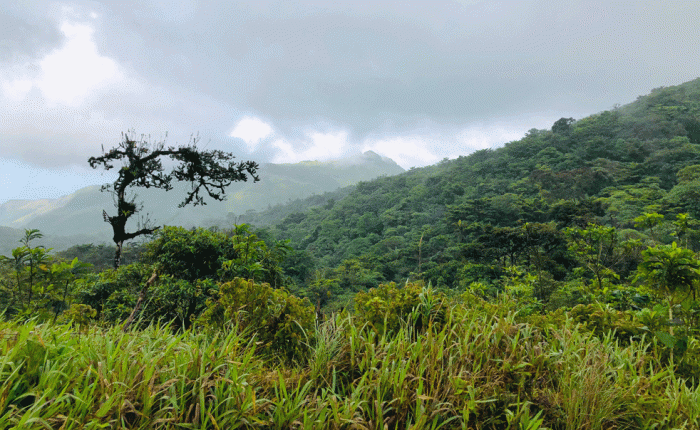
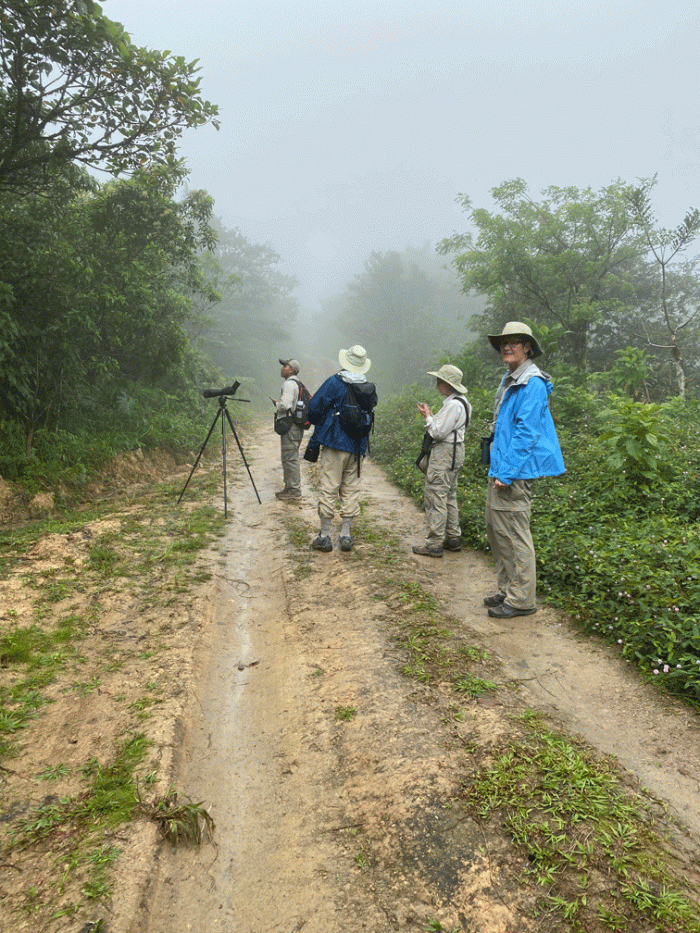
We continued up to the “cloud-forest” and walked along a road known as Las Minas Trail.

Birding-in-the-cloud-forest

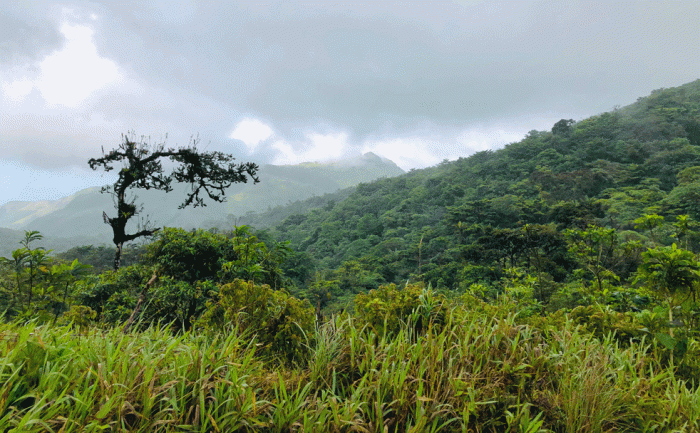
When we got to an overlook there was some clearing out towards the Pacific.

Cloud-Forest

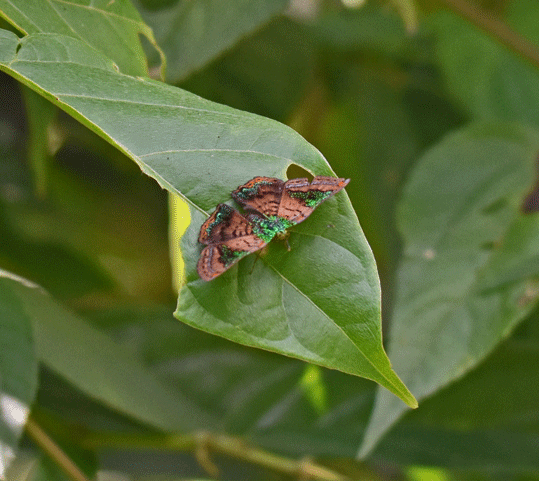
We saw a few birds, but the fog made it hard to see long distances. This butterfly or maybe moth, caught our attention. We saw many butterflies and moths and can understand those who become butterfly watchers, but know that it would be a complex endeavour and not for us right now. So this photo is just of “a nice rufous and green one.”

Butterfly

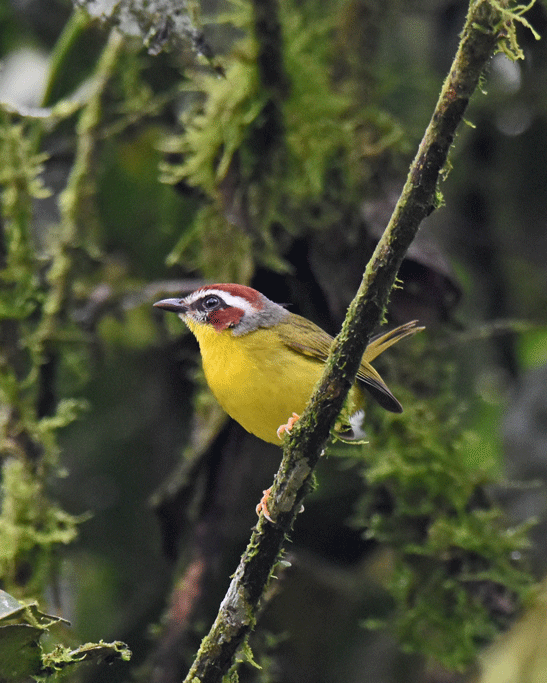
We did however, see a nice rufous and yellow bird, known as a Rufous-capped warbler.

Rufous-capped-Warbler

That afternoon, we walked up the road from the lodge towards property that is part of the Canopy Family, called “Canopy Adventure.” They offer zip-line tours that criss-cross the stream and waterfall. Gretchen was the only one of our group that went later in the week.

Here’s a view of one of the suspension bridges.

Bridge

The waterfall was a good backdrop for a photo. Here’s a good one of Gretchen and Bob.

Bob-Gretchen-watrfall

And one of Doug in almost the same place.

Doug-waterfall

We managed to see a pair of Mottled owls that were roosting behind a curtain of branches, but the most exciting find was this Violet-headed hummingbird on her nest.

Violet-headed-Hummingbird

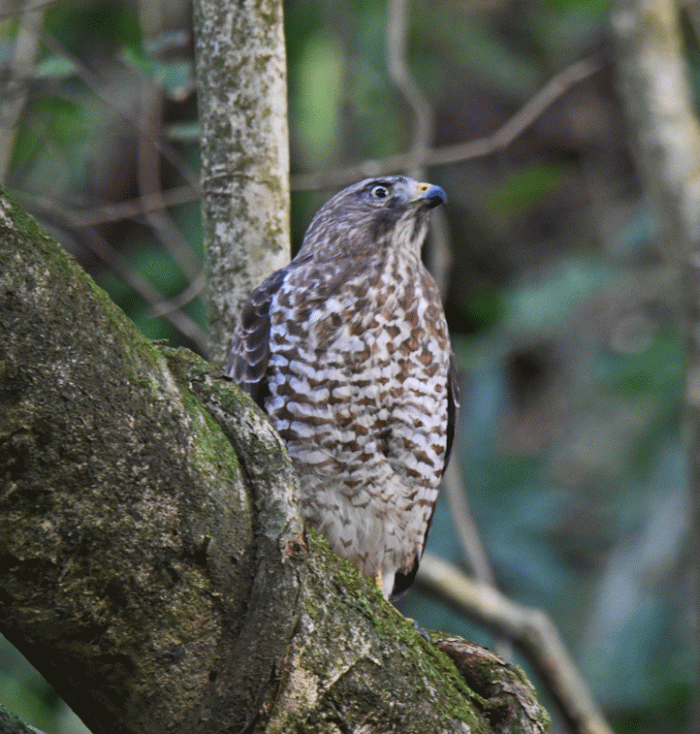
When we were walking back to the lodge we spotted this Broad-winged hawk perched in a tree. Perhaps he was taking a rest, because he didn’t move much, which allowed us to find a better vantage point and have a good look at him.

Broad-winged-Hawk

So that’s enough for one post. There’s five more days of birding tell you about, and many more birds to show you!

Birding in Panama – 3

Birding in Panama – 3

The Metropolitan Natural Park encompasses 265 hectares and is the only large forested park within a metropolitan capital in Latin America. A large potion of the park is Dry Lowland Pacific Forest, an endangered tropical ecosystem.

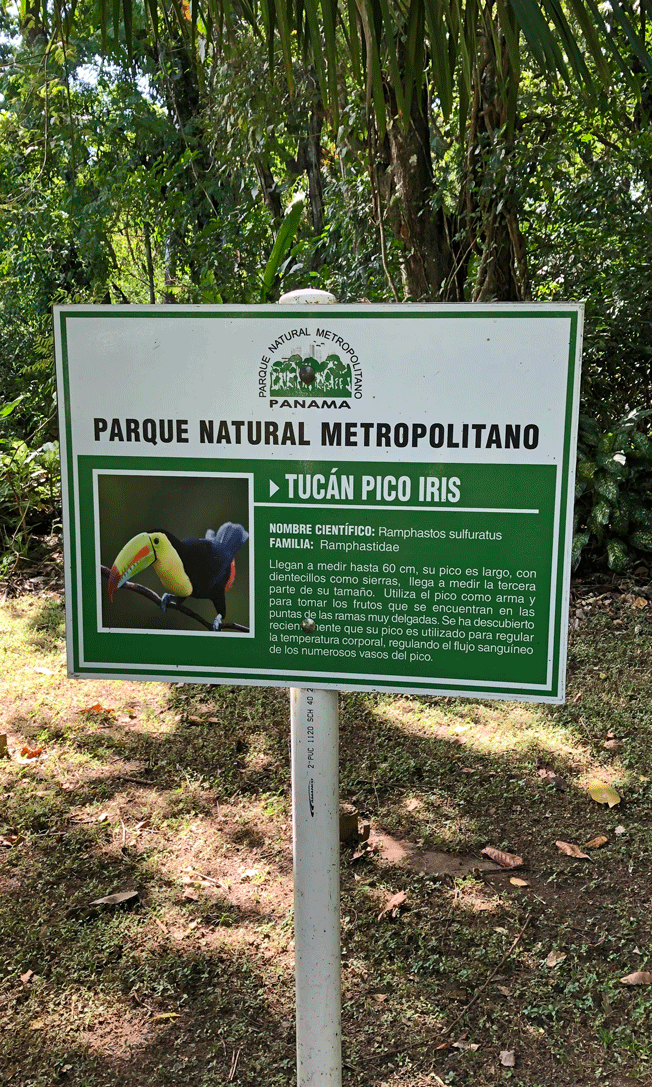
On the maintained trails throughout the park, there are signs explaining the plants and animals. This sign gives information about the Keel-billed toucan. I think the name in Spanish refers to its rainbow bill.

And we had a good view of a Keel-billed toucan.

Keel-billed-Toucan

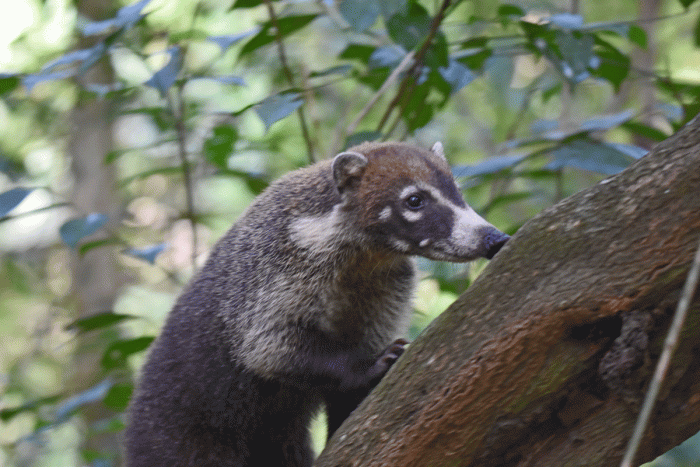
We also saw a family of White-nosed coatis. Coatis are members of the raccoon family, and from our experience, they didn’t have much fear of humans. They are more often foraging on the ground, but they climb trees easily.

White-nosed-Coati

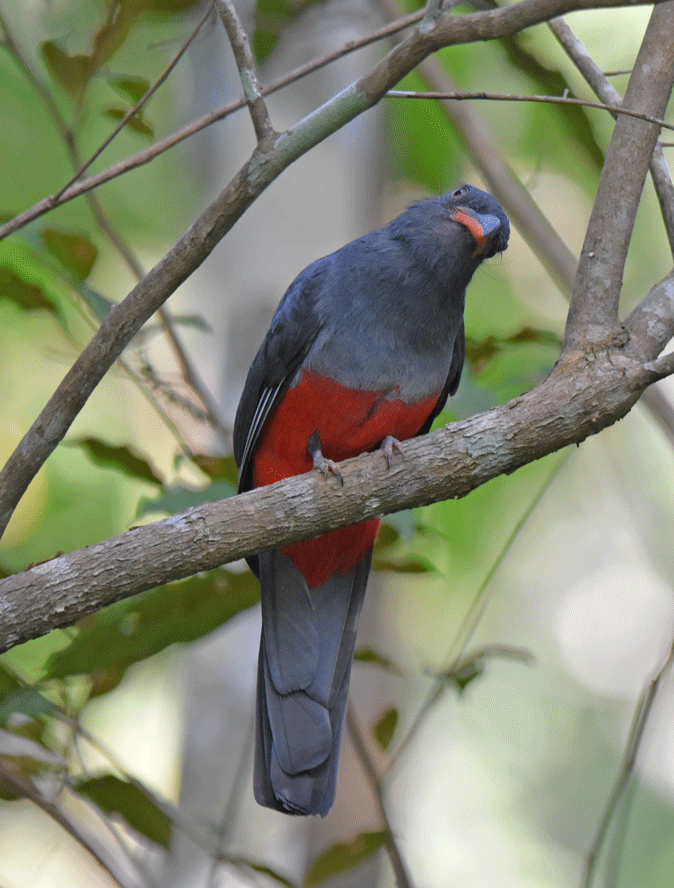
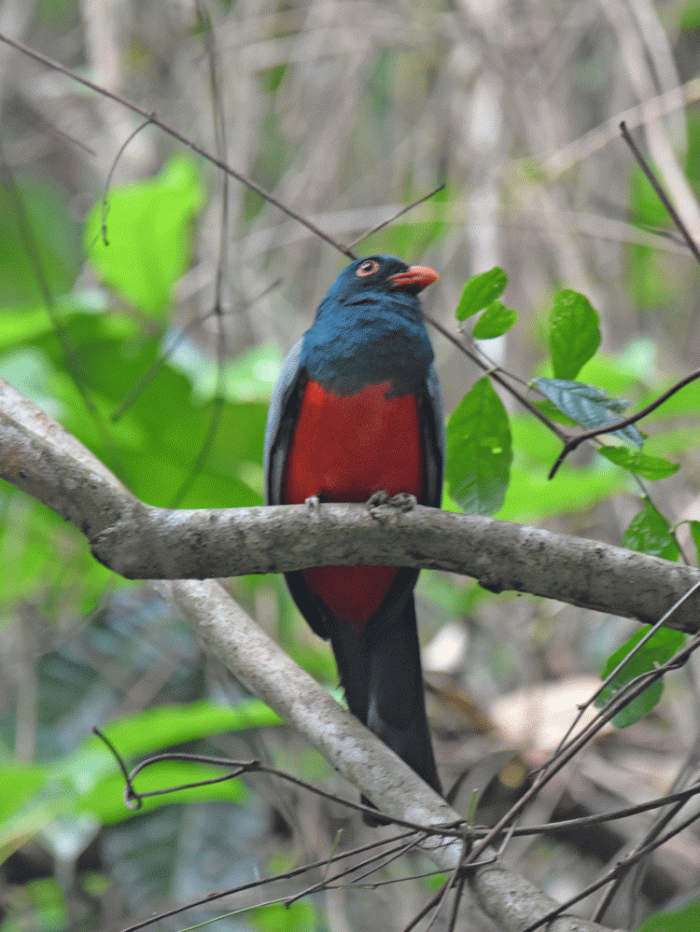
That afternoon, we did some bird-watching near the Changres River. We saw a Black-tailed trogon and a White-winged becard, but the best photo was of a Slaty-tailed trogon.

Slaty-tailed-Trogon2

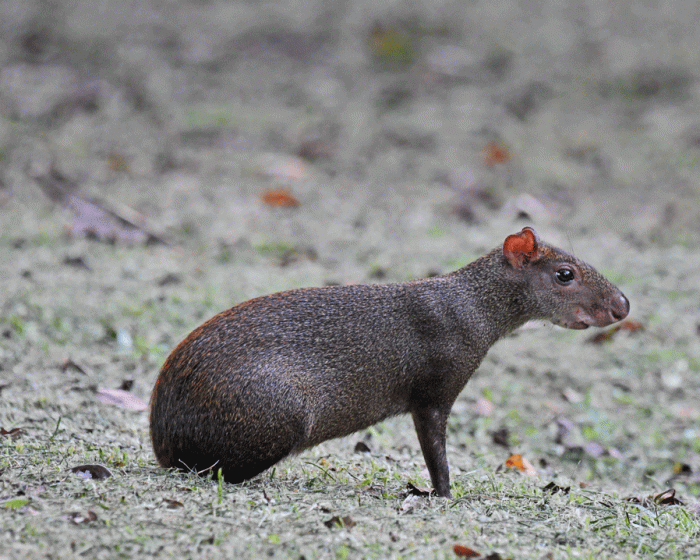
We saw this Central American Agouti in the field near the truck. An agouti is a rodent and is an important member of the rainforest community because they are “scatter hoarders.” This means that when food is plentiful, they will bury excess nuts and fruit.

Central-American-Agouti

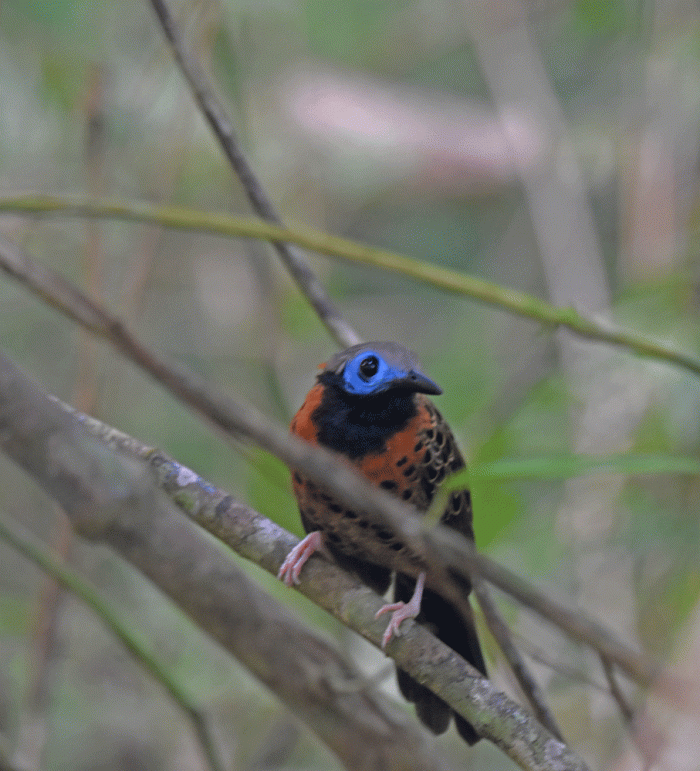
The next day, on the way to the Rainforest Discovery Center on Pipeline Road, we stopped the truck to let a coati cross the road. Our guide heard an Ocellated antbird. It’s almost only found at Army ant swarms. He used an antbird recording to bring it in.
Each of our guides had a portable speaker that they accessed through Bluetooth and could hang on a bush and fool the bird into thinking there was another bird there. It comes to investigate and you get a chance to see it. It’s not a strategy that should be used when birds are nesting, or overused in any one area. Usually when our guides used the speakers, we were the only people around.

So we were able to see this Ocellated antbird. Quite the weird-looking character!

Ocellated-Antbird

Here is the bottom of the 175 step tower at the Rainforest Discovery Center. It was fine going up, but we got a little dizzy coming down and had to stop.

RF-Tower-steps

Jorge was our guide today. The top of the tower was one of the few times that we were in full sun for a longish period of time, and apart from the Canopy Tower, the only time we were above the canopy.

Rainforest-Tower

This colourful character is a Collared aracari.

Collared-Aracari

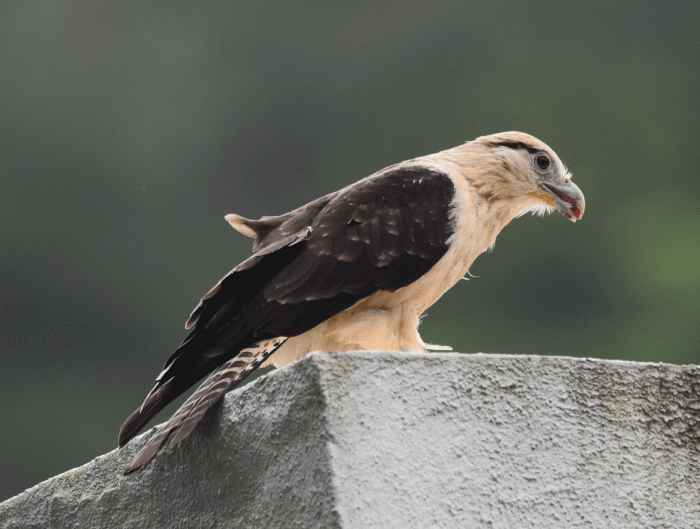
A Yellow-headed caracara flew by. Although they are raptors, cacarcas have bare heads because they also eat carrion.

Yellow-headed-Caracara

This female Blue dacnis perched on the railing for a few moments.

Blue-Dacnis

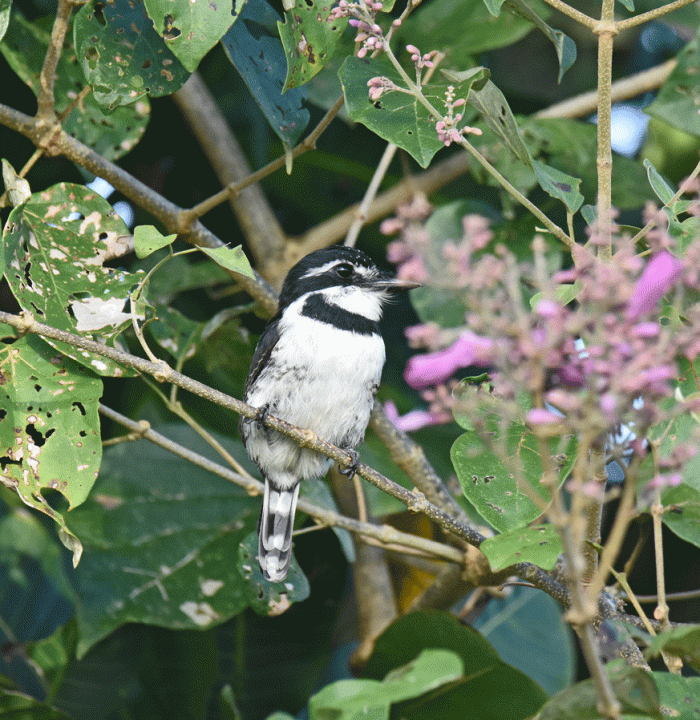
This is the best view of a Pied puffbird that we had all week.

Pied-Puffbird

After coming down from the tower, we spent some time looking for a Pheasant cuckoo, a rare bird that our guide had heard call from the tower. This cuckoo lurks in dense undergrowth, and yes, we saw it, but the dense undergrowth didn’t allow for a quality photo.

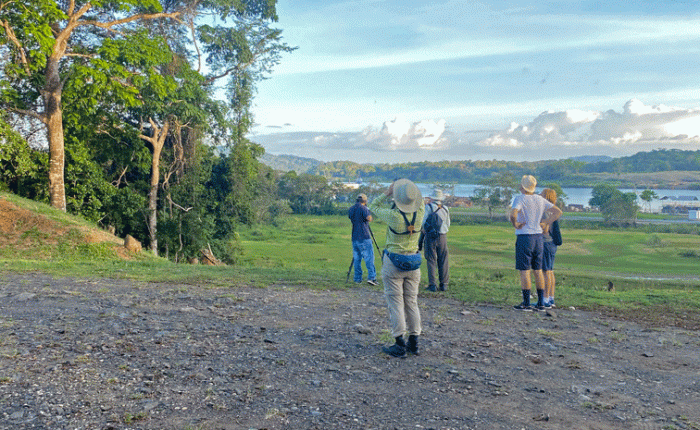
We followed the trail to this overlook, which although beautiful didn’t produce many birds besides some Wattled jacanas and a distant heron.

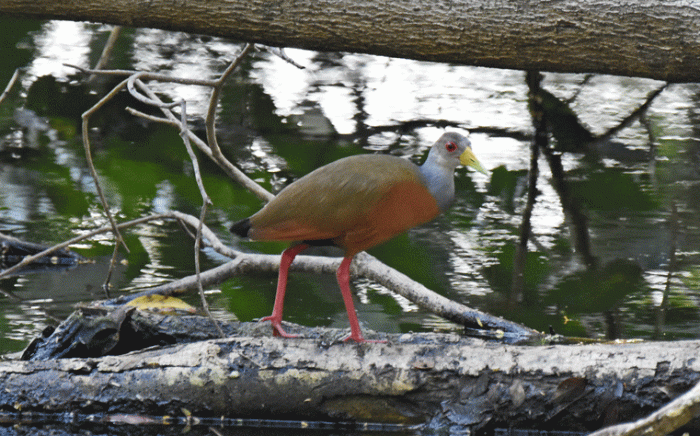
Later that afternoon, we visited Summit Ponds again. Here’s a photo of a Gray-cowled wood-rail.

Gray-cowled-Wood-Rail

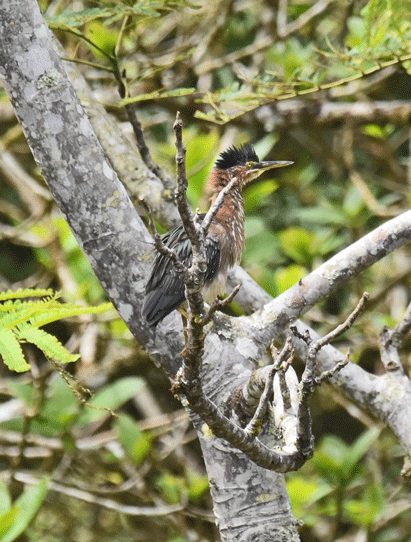
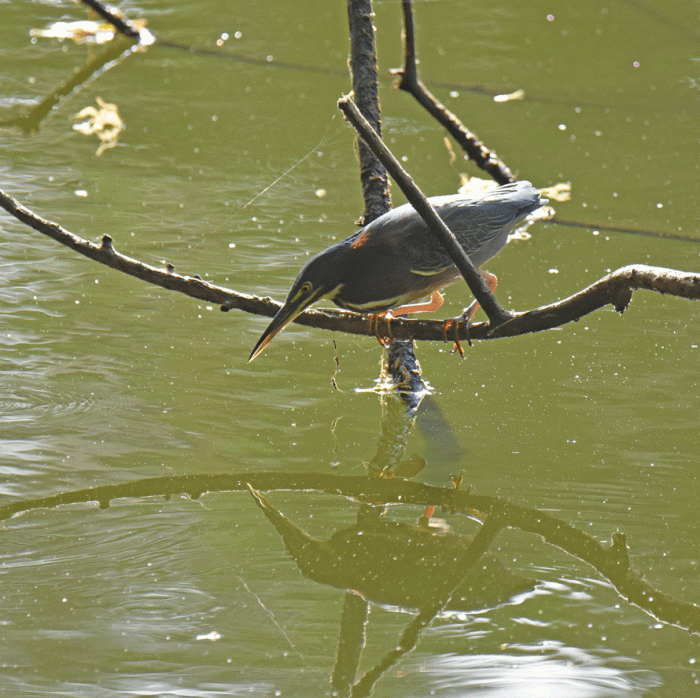
And one of a Green heron catching his dinner.

Green-Heron

On Saturday, we revisited the “Ammo Dump Ponds” because we had yet to see the elusive White-throated crake, which other birders at the Tower has seen. We had heard it, but we wanted to see it.

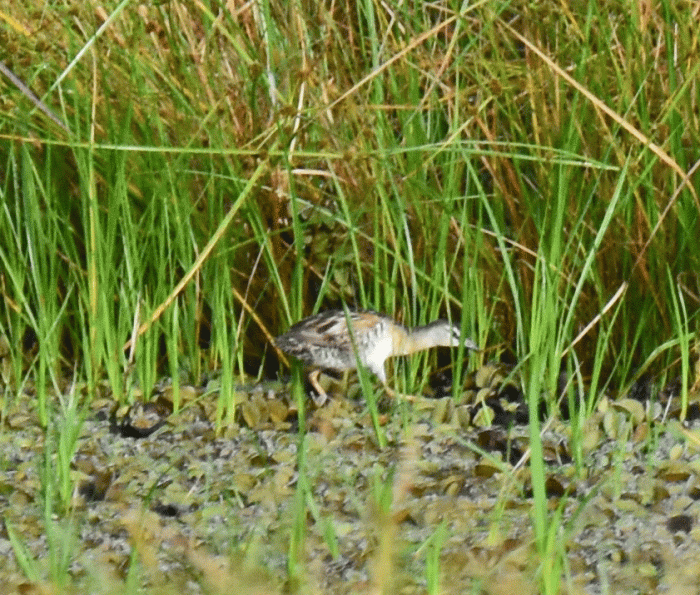
We didn’t see the WHCR, but we saw something better! A rare Yellow-breasted crake. Another birding group had spotted it and let us know. Mostly it walked in the reeds, but it allowed us to see it briefly.

Yellow-breasted-Crake

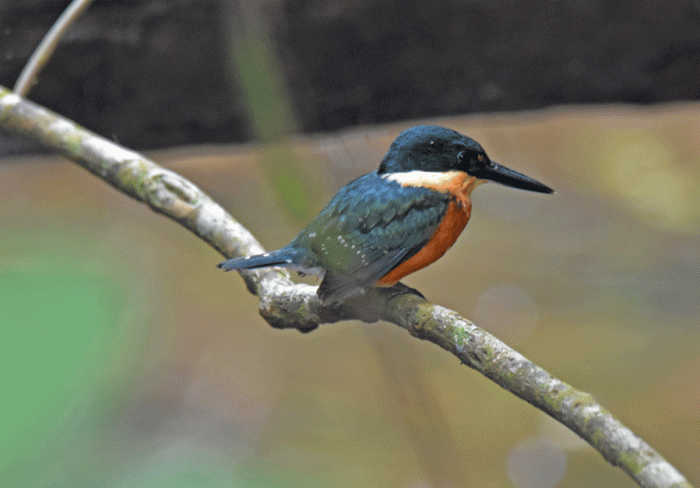
We continued onto Pipeline Road. We saw this American pygmy kingfisher above a pool by the gate.

American-Pygmy-Kingfisher

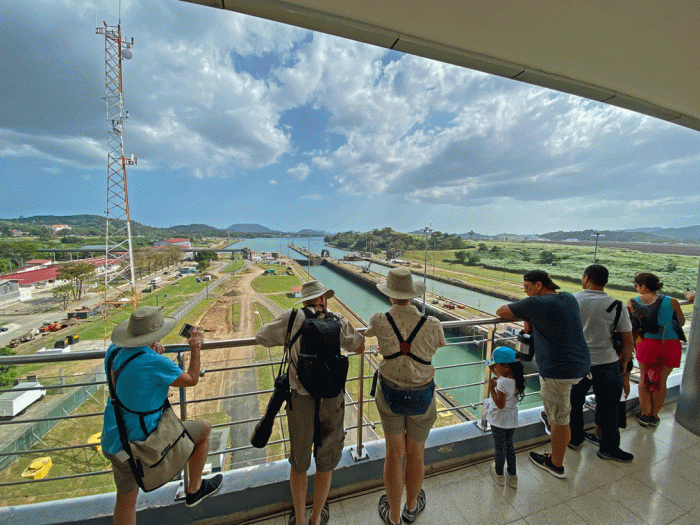
That afternoon we took some time off of serious birding and visited the Panama Canal at the Miraflores Locks.

Two cruise ships went through the locks while we were there. We also saw some informative exhibits about the history and the workings of the canal.

We’ve now described our first week in Panama. Next we move to Canopy Lodge in El Valle. More birds, more adventures!


Birding in Panama – 2

Birding in Panama – 2

We travelled from Canopy Tower in the back of a four-wheel truck called the “Birdmobile.” This gave us a good view of the rainforest.

View-from-Birdmobile

Our first afternoon of birding was at Summit Ponds, just a few minutes from the tower. The ponds are near the highest point along the canal.

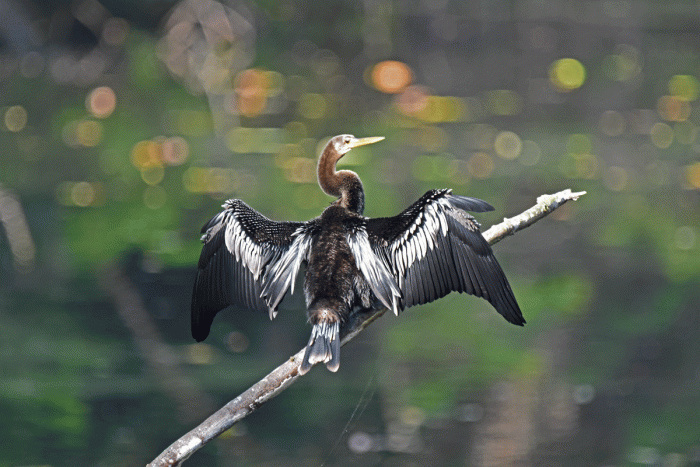
This Anhinga was sunning himself, just like a cormorant does. Anhingas have longer necks and bills and tails than cormorants and are in a different family.

Anhinga

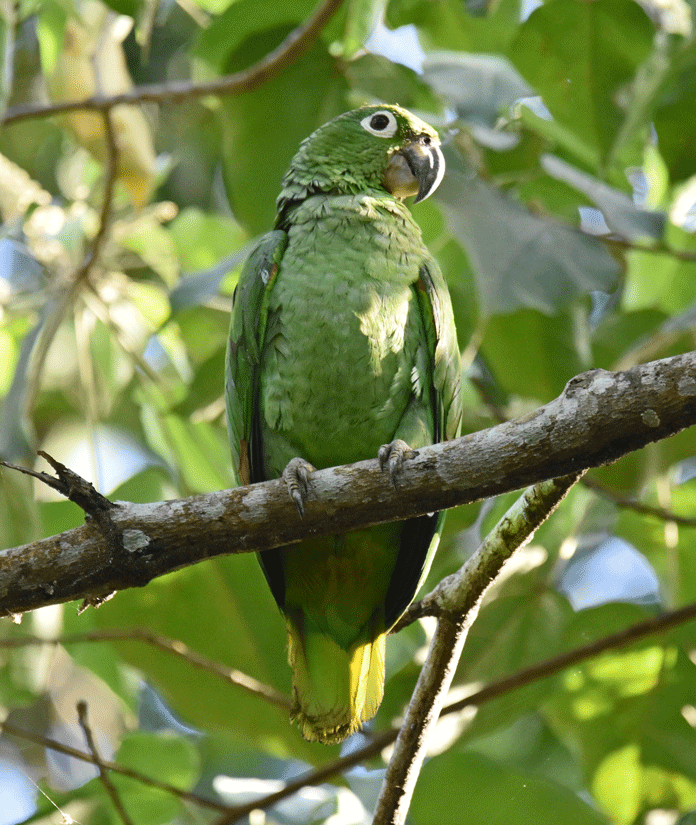
We were lucky enough to see a couple of Mealy parrots. They were hard to see because they are almost all green and were high in the canopy, yet our guide spotted them and Doug was able to get a good photo.

Mealy-Parrot

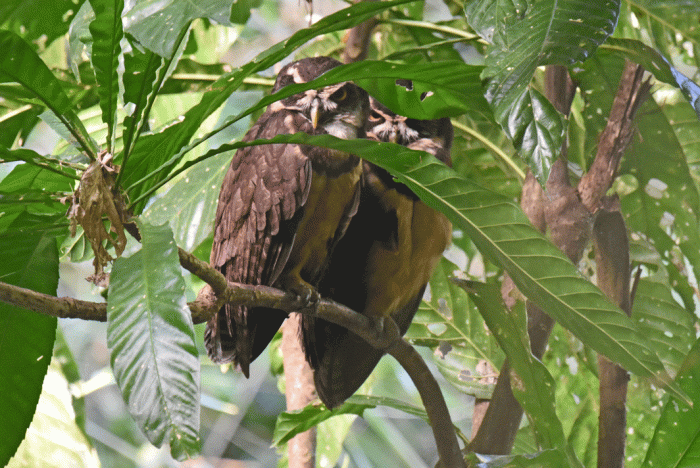
We were also fortunate to see two Spectacled owls roosting.

Spectacled-Owls

The next day, we were driven to the bottom of the Semaphore Hill. From there, we hiked along the Plantation trail in Soberania National Park. The trail passes through mature rainforest and follows a small creek.

We saw the first of many Slaty-tailed trogons that we saw over our two week visit.

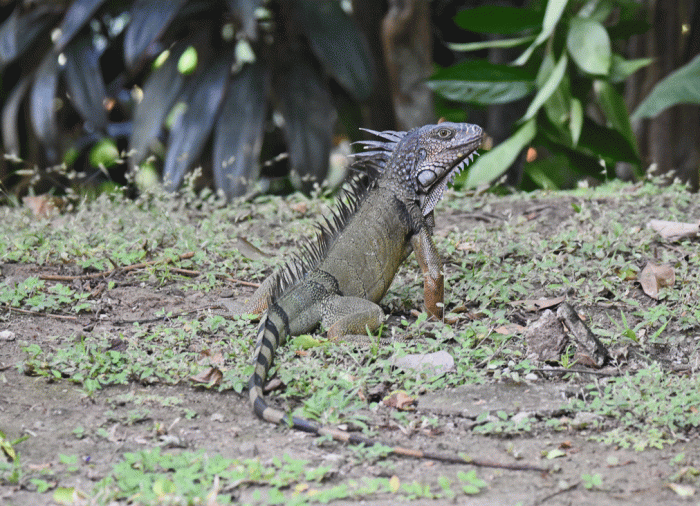
That afternoon, we visited the Canopy B&B in nearby Gamboa. There were wonderful birds on their feeders, but this Green iguana stole the show.

Green-Iguana

Here’s a look at our next birding sites. This spot overlooks a marshy area known as the “Ammo Ponds,” which we examined closely from the road below. From the hill, we had good views of birds and also of the canal in the distance.

For these two days, we enjoyed the company of two nature lovers from Berlin, while we tried to persuade them to become birders.

Birding-and-canal-view

The next day, we headed for the Pipeline Road for a full day of birding. The road was built in the 1940s as a service road to the oil pipeline that crossed the isthmus and is world-renowned for its birding opportunities.

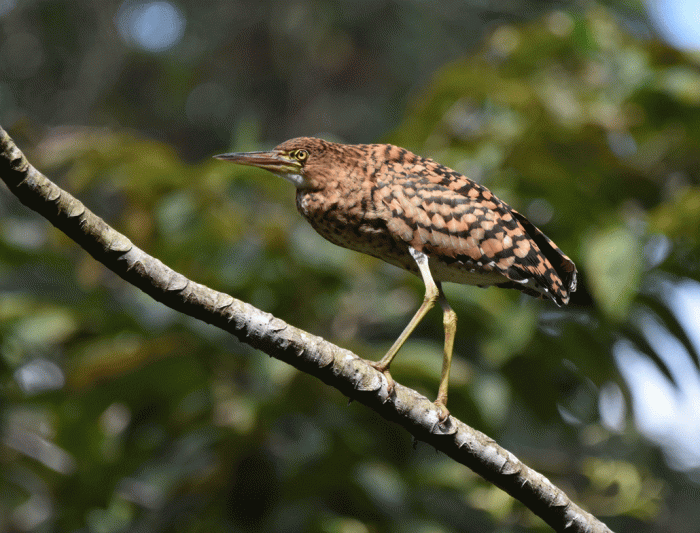
This juvenile Rufescent tiger-heron was perched on a branch that was overhanging the road. Perhaps it was a little off-track, because it wasn’t very near any water.

Rufescent-Tiger-Heron

Our 4-wheel drive “birdmobile” was able to navigate the muddy ruts in the limited access road. This day, it was only our group of four (us and our friends, Gretchen and Bob) with our guide, Iqua.

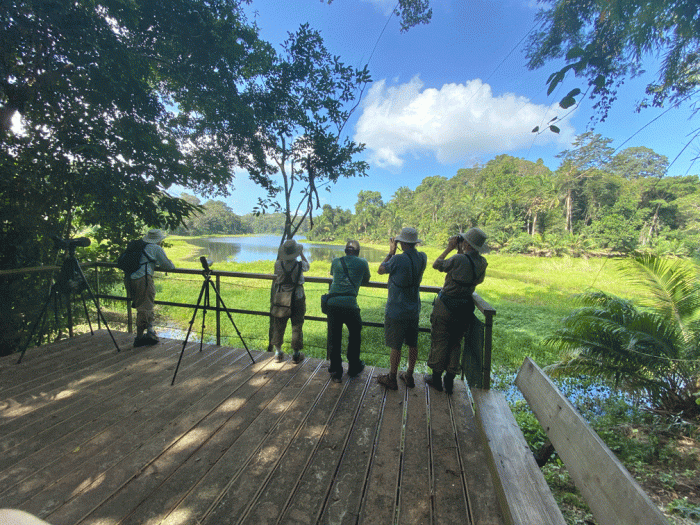
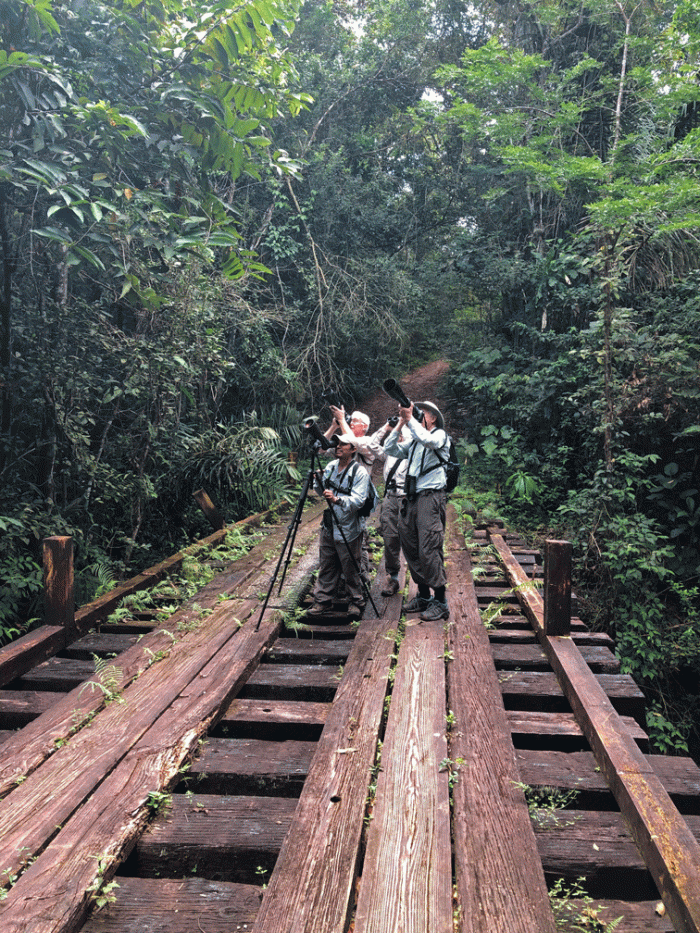
The photo below is typical: the guide sets up the telescope on a special bird and we all take turns look at the “scope view.” Doug and Bob work to capture the image and Gretchen and Wendy look at it through binoculars. This time, after a quick look through the ‘scope, Wendy took a photo of the group because the holes in the bridge deck made her feel uneasy.

Birding-on-bridge

We can’t remember exactly which bird we were looking at. Perhaps it was this White-tailed trogon,

White-tailed-Trogon

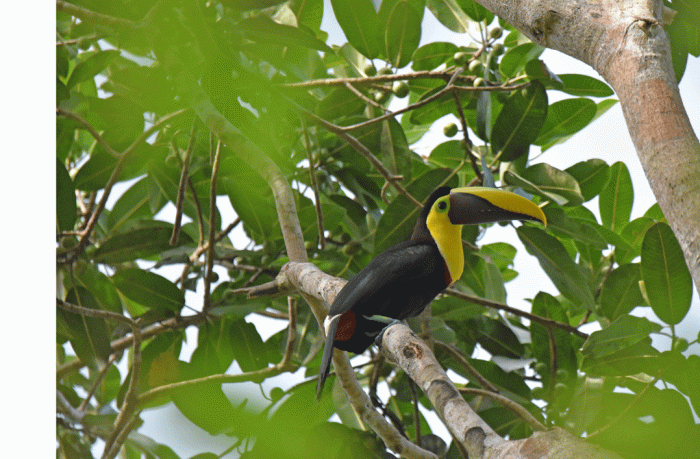
or this Yellow-throated toucan.

Yellow-throated-Toucan

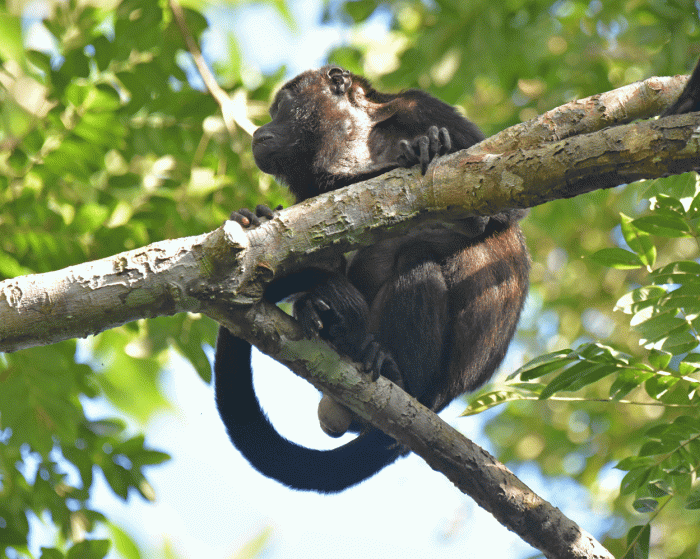
 We also got good views of Howler monkeys.

Howler-Monkey

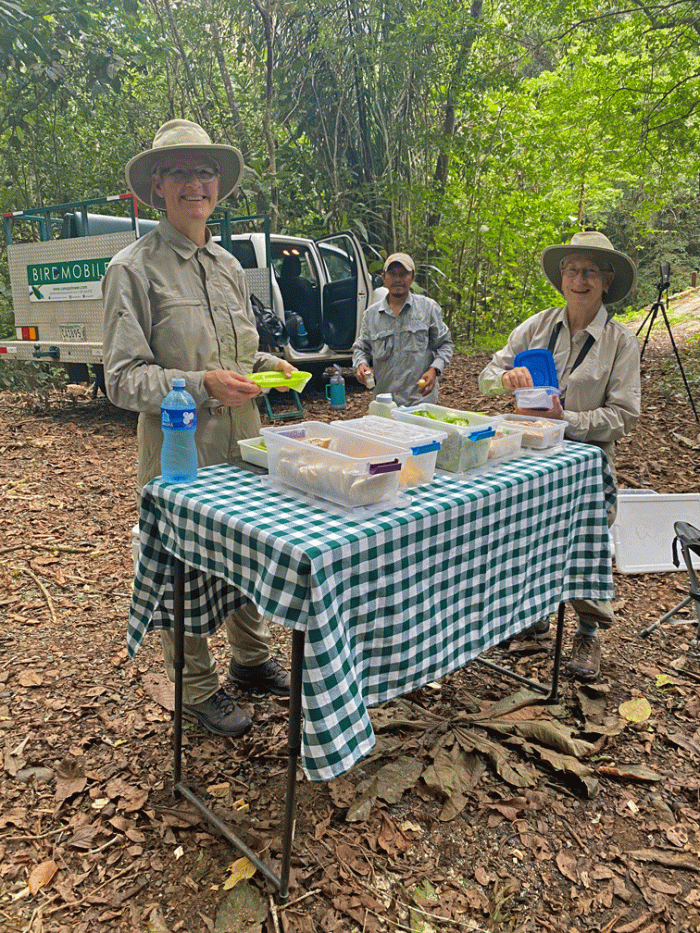
Since we were out for the whole day, had a picnic lunch in the forest. We had lots of food, and stools to sit on.

Picnic-lunch

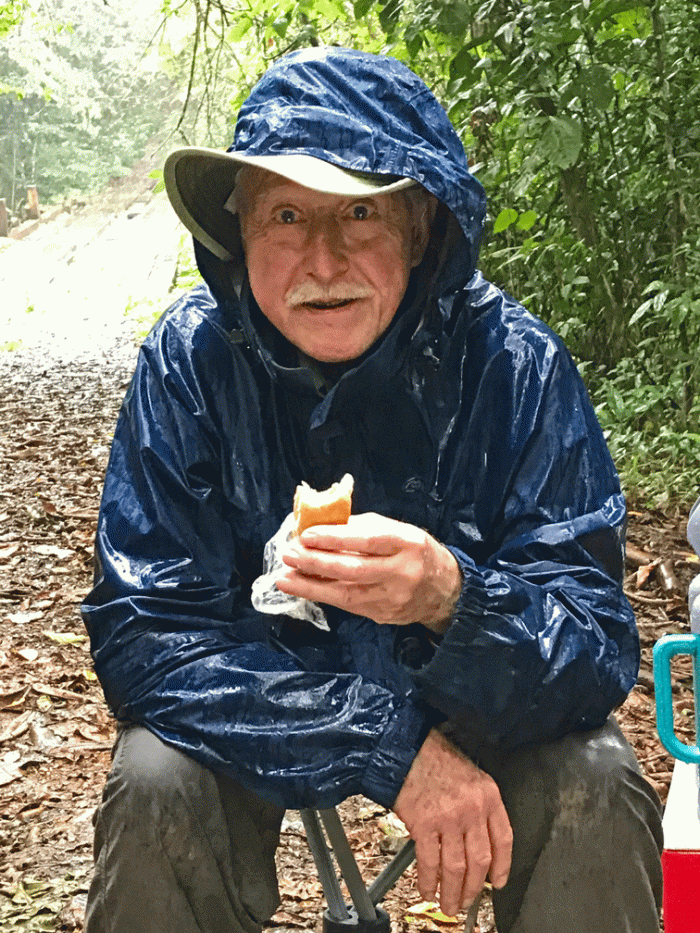
Shortly after we had filled our plates, the heavens opened. It was the longest and hardest rain that we had the whole trip. Our jackets kept us mostly dry. Once the rain had stopped, we dried off pretty quickly.

Here’s Bob making the best of a soggy situation.

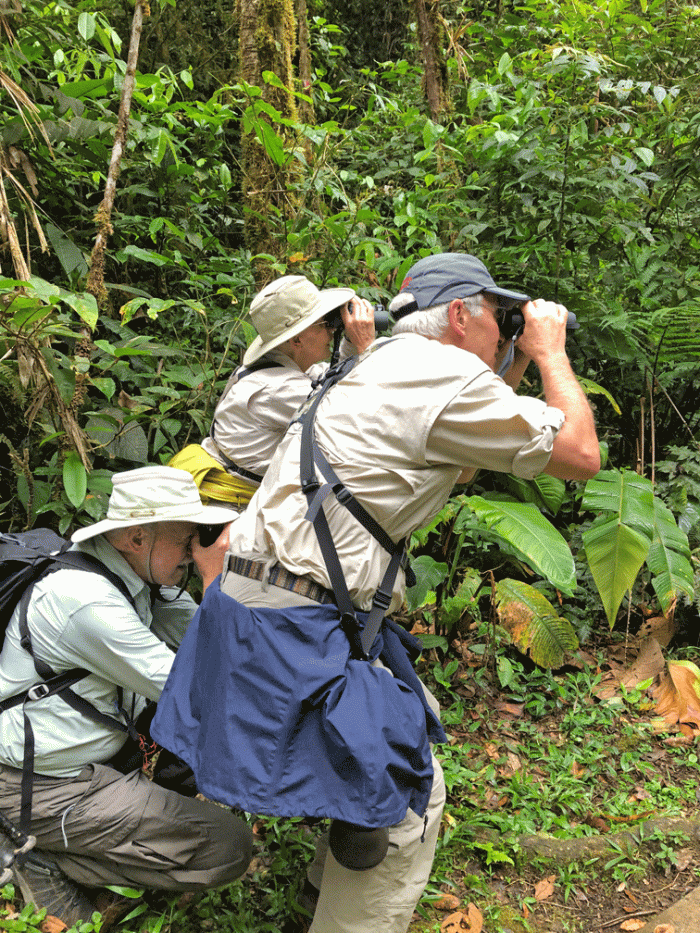
Walking was our main exercise, but sometimes the small “window” between the leaves required some bending to get a good view. Not really a yoga pose, more like “douga” or “boba.” Here you can see our guide using a green laser pointer to help pinpoint the bird.

Douga-and-Boba

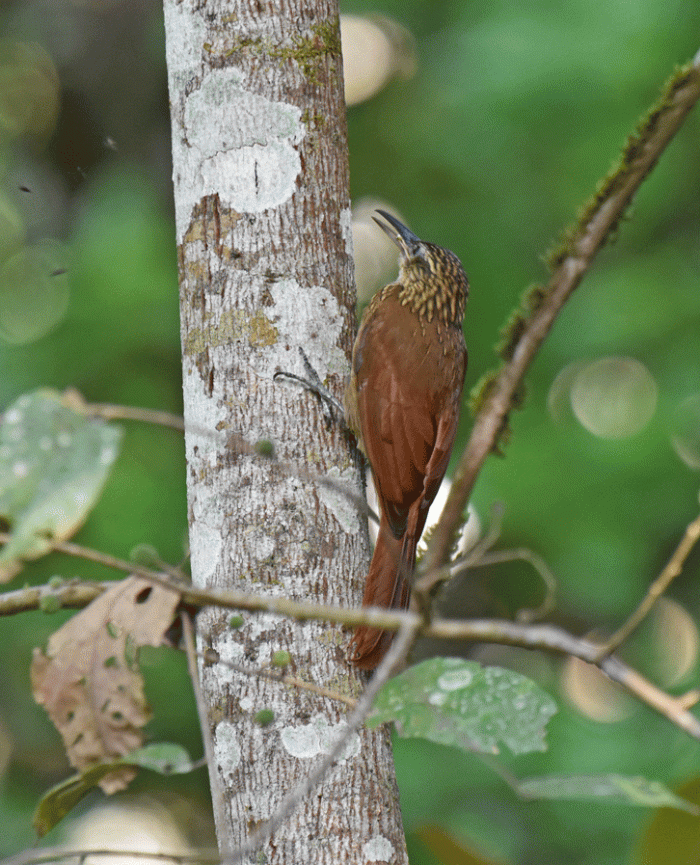
Maybe they were getting a photo of a Cocoa woodcreeper. We saw lots of these birds throughout the week.

Cocoa-Woodcreeper

 Gretchen practices yoga regularly which allowed her to “hold the pose” for as long as she needed.

Gretchen-and-Bob

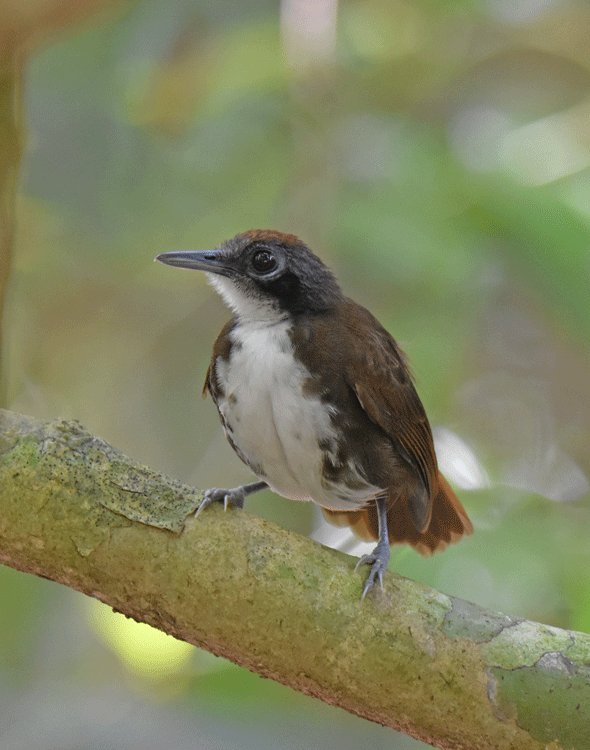
Bob and Gretchen were probably looking at some kind of bird that is forages for ants in the undergrowth of the rainforest. There are antbirds, antthrushes, antshrikes, antpittas, ant-tanagers and antwrens. This photo is of a Bicolored antbird.

Bicolored-Antbird

The next day, (Wednesday) was another full-day trip. This time we drove over an hour to the hills above Tocumen towards the two peaks of Cerro Azul and Cerro Jefe.

At lunchtime, we visited the “Hummingbird House,” the name given to the home of two American bird lovers. They have seed feeders along with over a dozen hummingbird feeders, all numbered so the guides could direct your attention to a specific feeder.

Harrison-House-feeders

The owner removes the bee guards from the feeders so that honeycreepers can drink from them. This one is a female Shining honeycreeper.

Shining-Honeycreeper

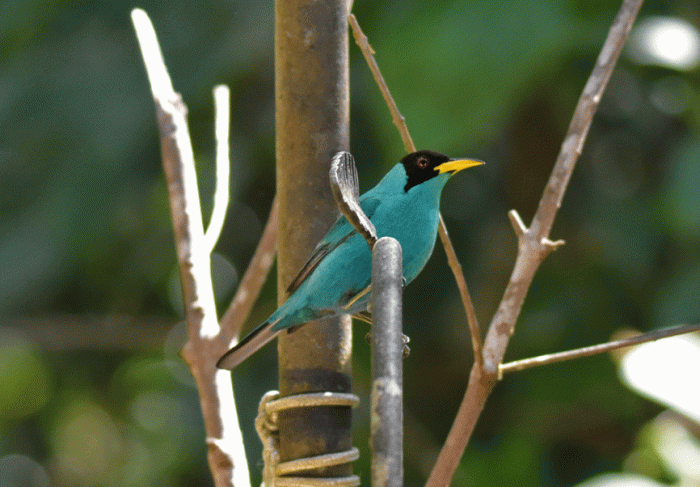
Here’s a male Green honeycreeper.

Green-Honeycreeper

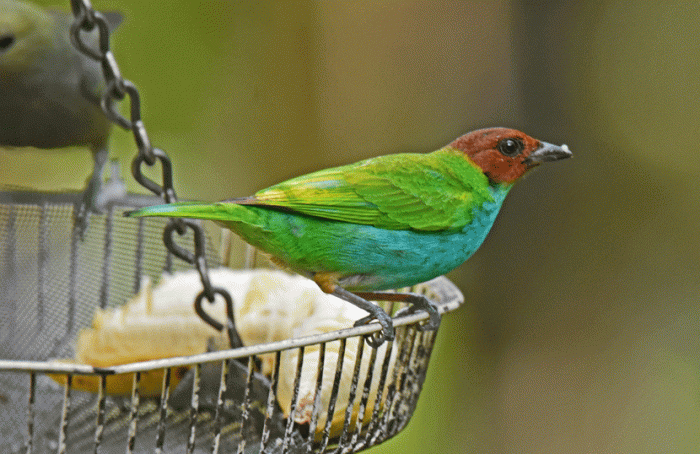
We saw several Bay-headed warblers over our visit, but this view was probably the best.

Bay-headed-Tanager

And of course there were hummingbirds. We all saw a Rufous-crested coquette with our binoculars but it was feeding on some flowers that were obscured by branches and it was difficult to get a well-focused photo. The coquette is one of the cutest and smallest hummingbirds and very common.

This Bronze-tailed plumeteer was more cooperative.

Bronze-tailed-Plumeleteer

So that’s enough for one blog post. The next one will document the rest of the week of our stay at Canopy Tower.

Birding in Panama – 1

Birding in Panama – 1

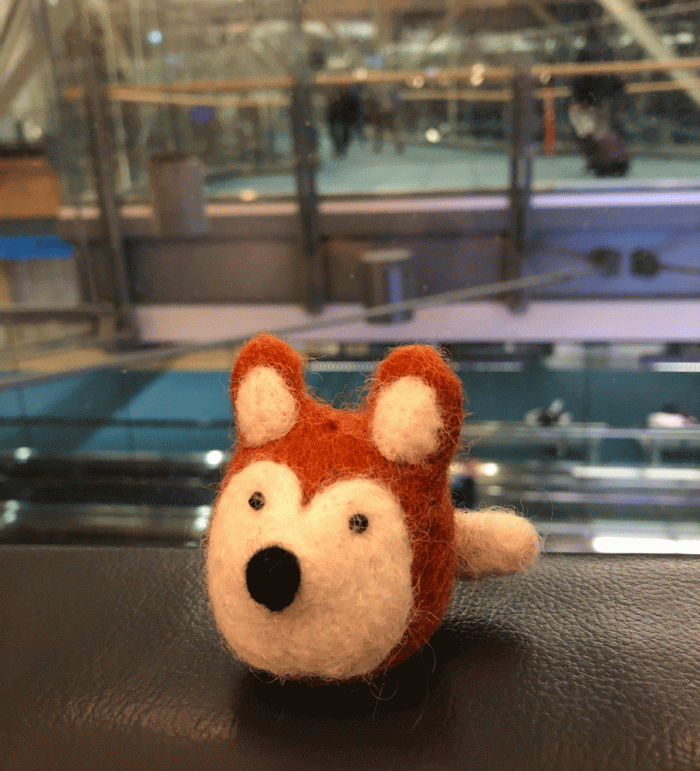
We’re introducing our newest fox mascot who travelled with us to Panama, allowing us to stay true to our blog title: Travels with a Fox. “Felty Fox” is only 6cm (2.5 inches) high, so he will likely be harder to see when he is included in future photos. This view is from the lounge at YVR. We left Vancouver in early January.

Fox-YVR

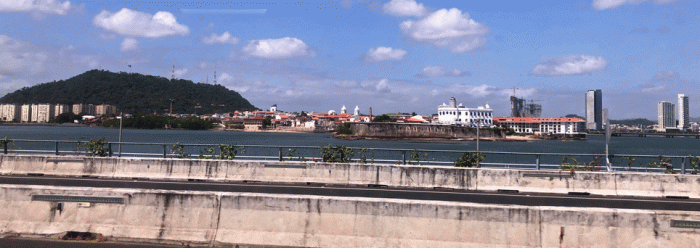
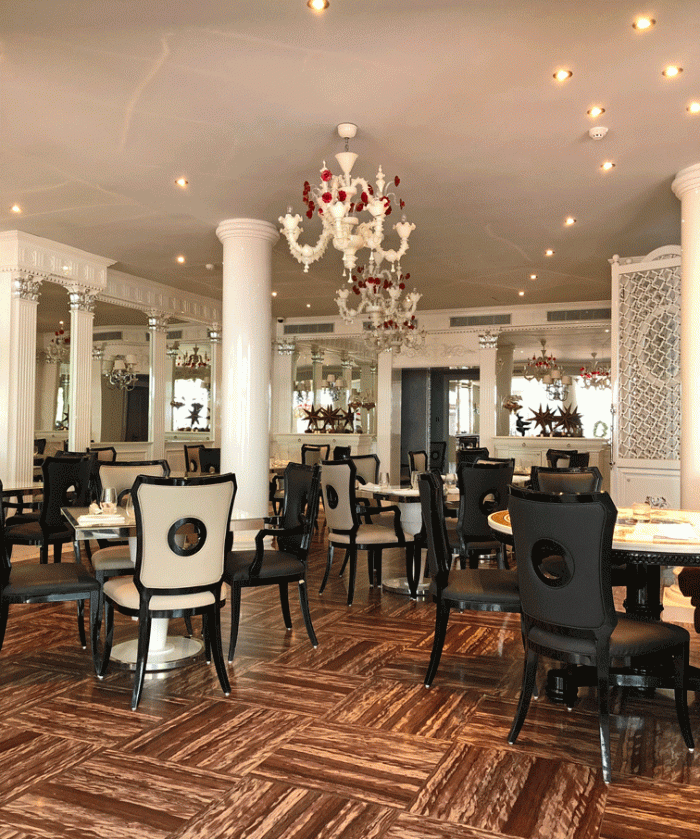
We had one night in Panama City before going to our birding lodge. We chose to stay in a boutique hotel in Casco Viejo (the old quarter). Villa Palma was decorated in a unique style.

Villa-Palma-lobby

Each of the six rooms was decorated differently. Our room was on the third floor, reached by a spiral staircase. The elevator only went to the second floor.

Villa-Palma-room

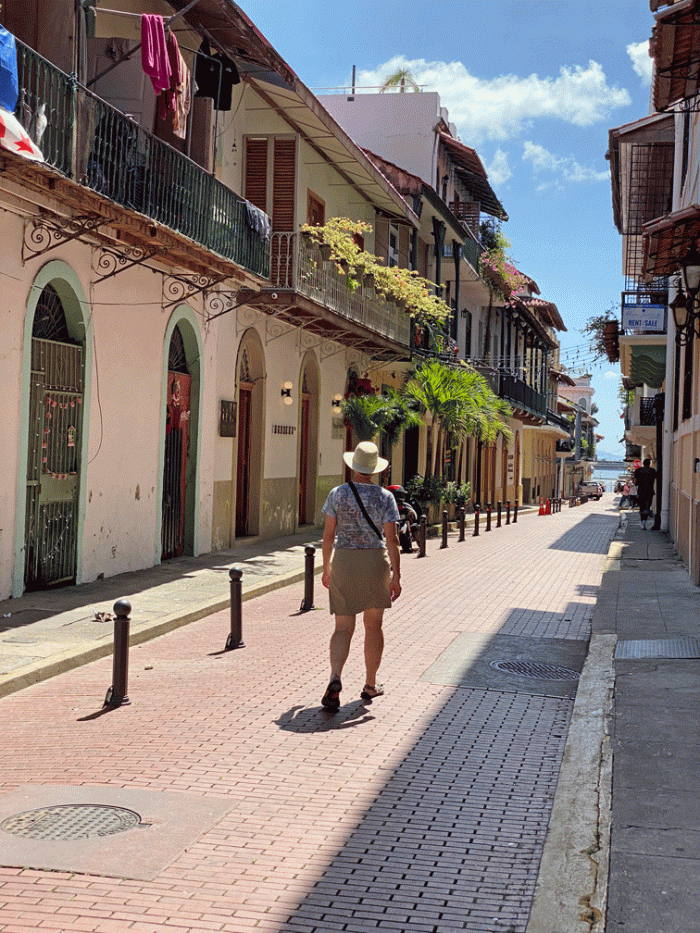
We explored the narrow streets. Most of the cars stayed on a one-way circuit that looped around the peninsula that makes up the old town. The area has recently been revitalized and made safe for tourists.

Casco-Viejo-street

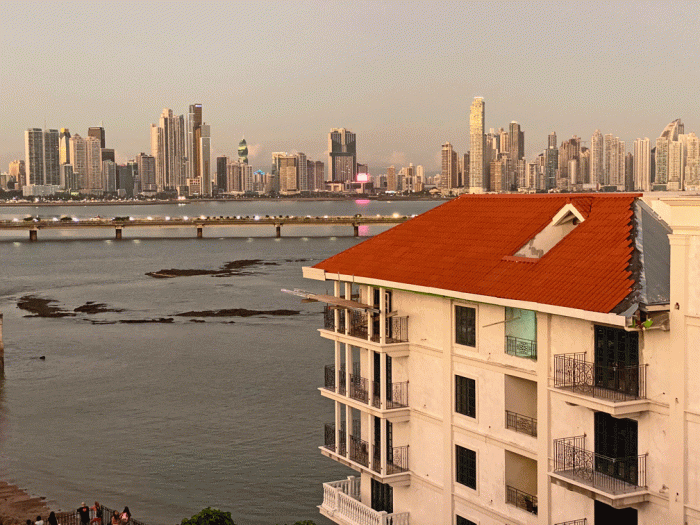
Here’s a view from our hotel’s rooftop lounge area, looking towards the skyscrapers of modern Panama City.

Panama-city-from-roof

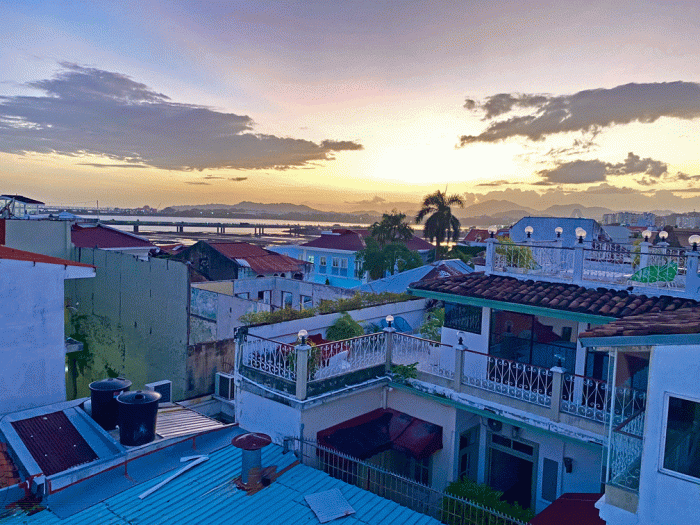
And a view westward towards the Pacific.

Sunset-from-Villa-Palma-roof

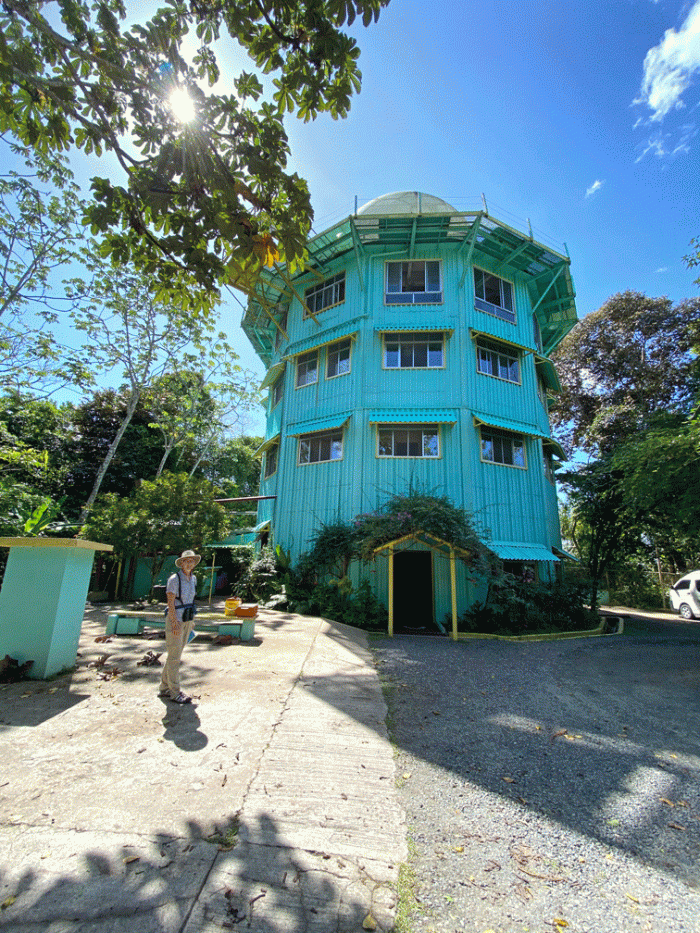
The next day a “Canopy Family” driver picked us up and drove us to Canopy Tower, our home and birding base for the next week. Canopy Tower was constructed in 1965 as a radar station by the US military. In the mid-1990s is was retrofitted to become a birding lodge. It’s situated on the top of a hill surrounded by the lowland rainforest of Soberania National Park.

Canopy-Tower

Even before we found our room, we were mesmerized by the hummingbirds visiting the feeders just outside the door. This White-vented plumeleteer posed on the nearby fence. We saw over twenty species of hummingbirds in our two week stay.

White-vented-Plumeteer

Since we booked so early (July 2018 for our January 2020 stay), we were able to stay in the Harpy Eagle suite. There was no air-conditioning, but the fan and the evening breezes allowed us to sleep relatively comfortably.

Harpy-Eagle-suite

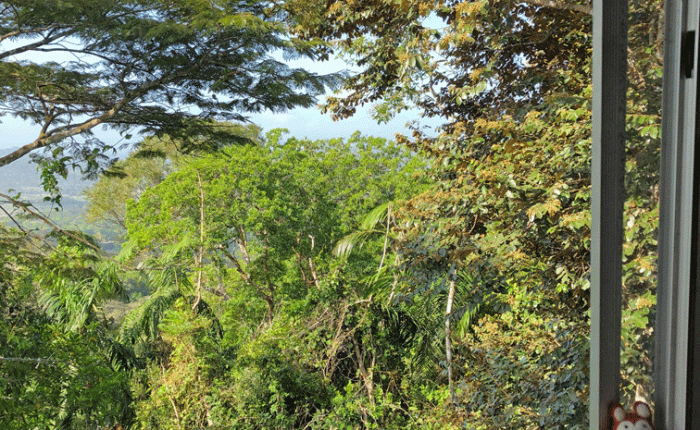
The lounge and the dining area were on the third level, surrounded on all sides by windows and views of the rainforest.

Here’s a view of us and others having a late breakfast on our last day at the tower. Usually we were leaving the tower earlier so we could be looking for birds in the early light.

Canopy-tower-dining-area

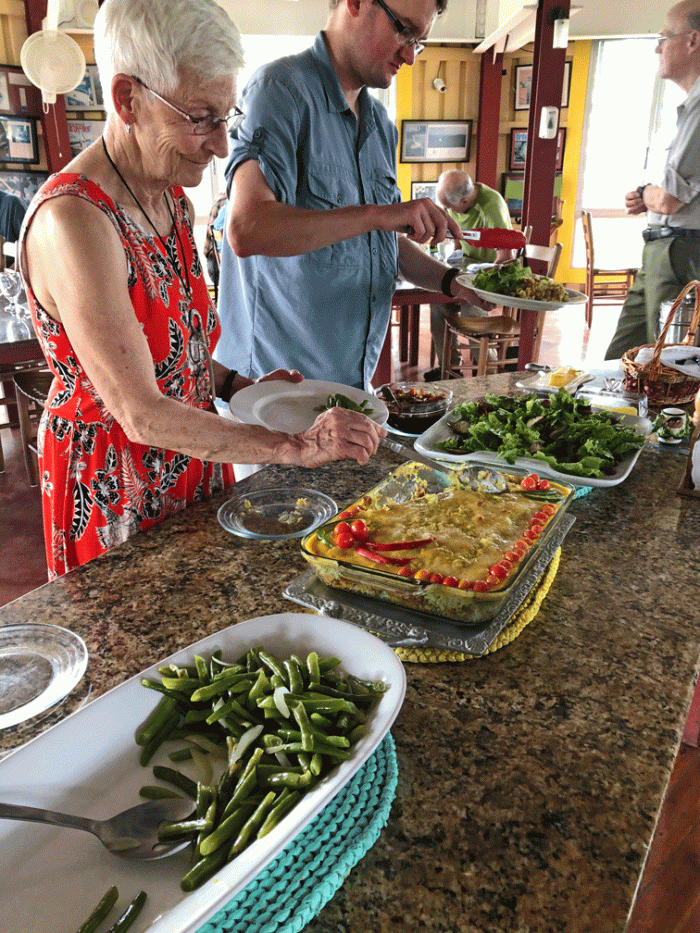
The food was delicious. Some days we would come back to the tower for lunch after our morning of birding. Those days we would have a break in the middle of the day and set out again at 3:00. Even birds seem to need siestas!

Dinner-Canopy-Tower

The view from the lounge windows was amazing. Sometimes you could see monkeys clambering through the branches.

Fox-Canopy-Tower

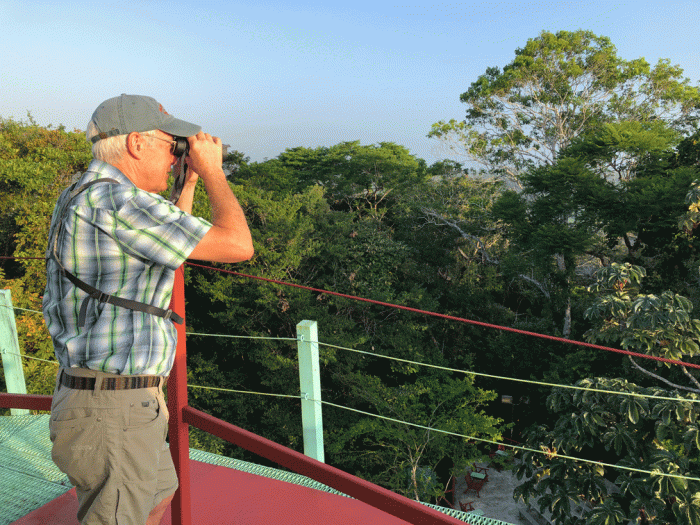
The top observation deck allowed views all around, both distant and close views.

Doug-on-tower

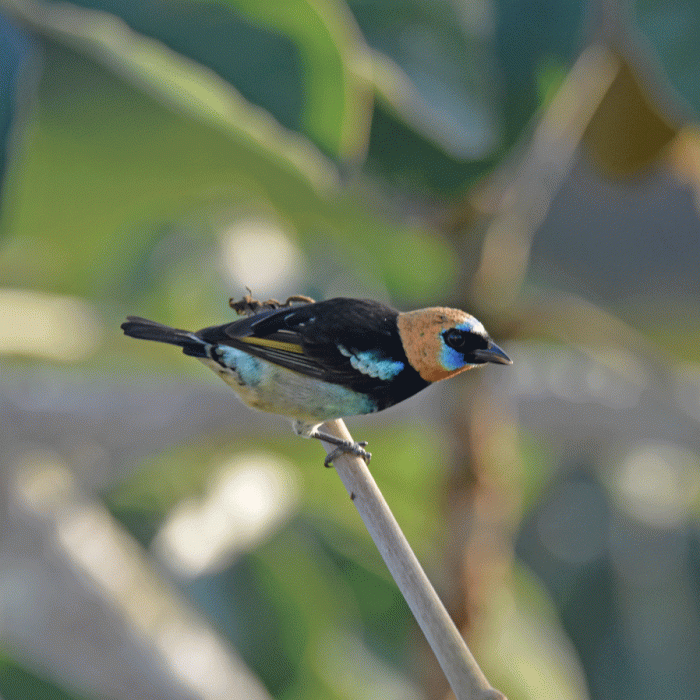
Doug captured this Golden-hooded tanager with his 600 mm lens from the observation deck.

Golden-hooded-Tanager

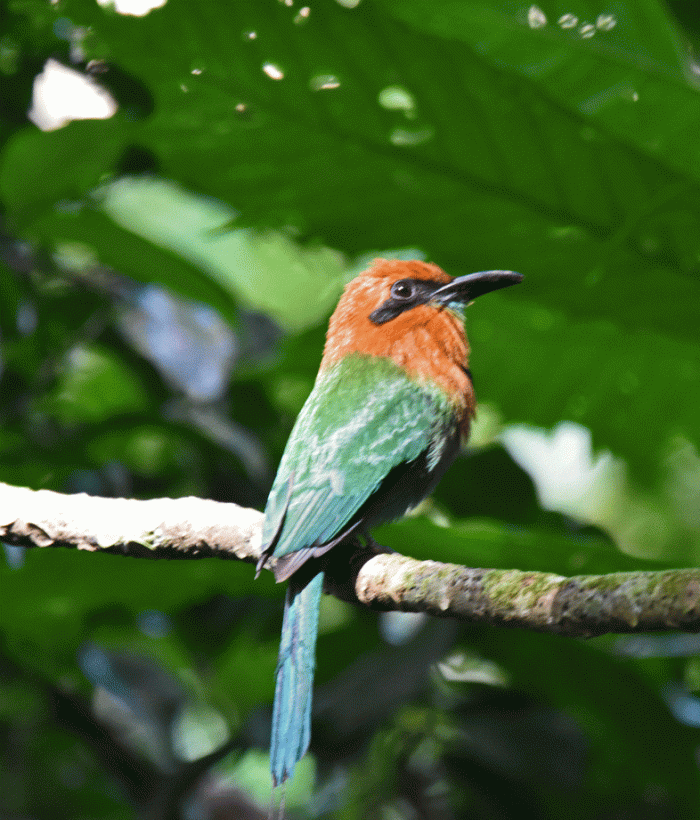
We saw many Broad-billed motmots throughout the week, but the first one was special.

Broad-billed-Motmot

Often we only heard and caught glimpses of the Red-lored parrot, but this one came close to the tower one morning.

Red-lored-Parrot

Here’s a view of sunrise from the tower. If you look closely you can make out the skyscrapers of Panama City on the horizon.

Sunrise-from-Canopy-Tower

This is the first of a number of posts about our two week trip to Panama. We have many more birds to show you!

November Fun in Arizona

November Fun in Arizona

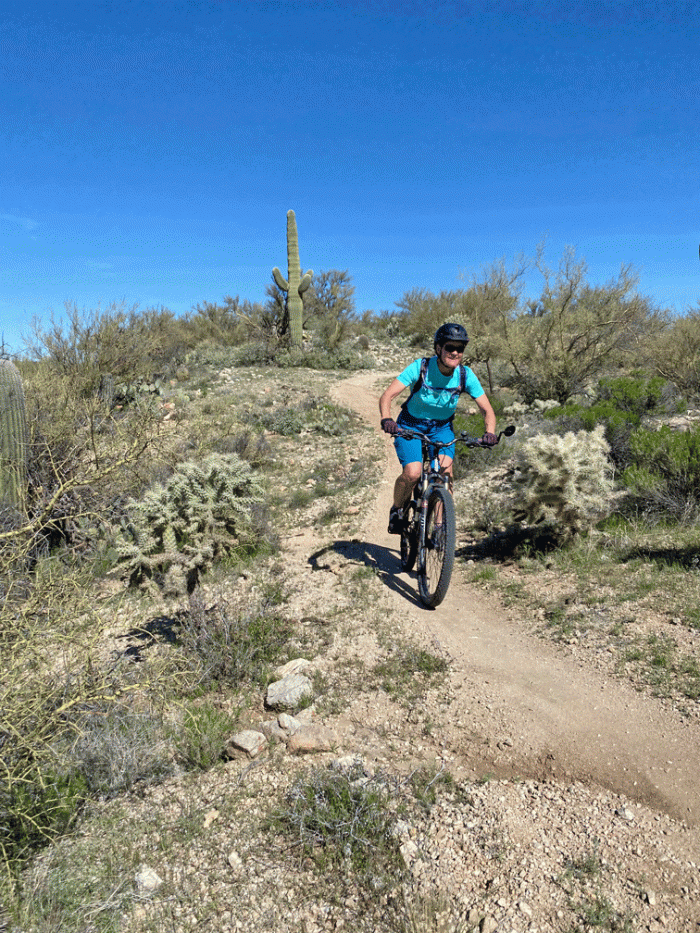
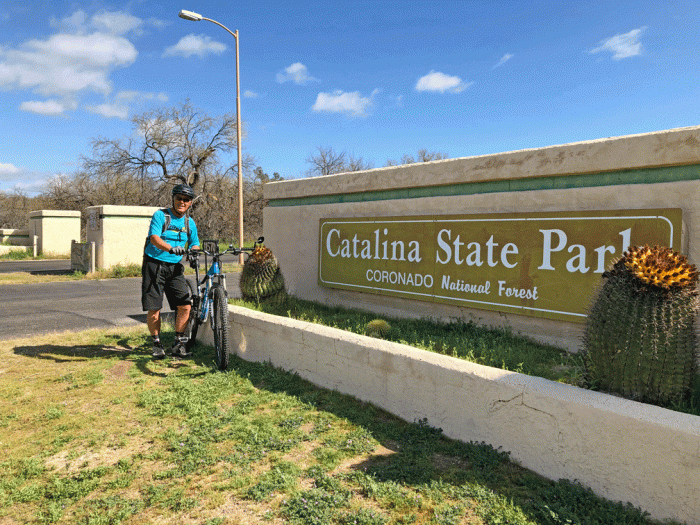
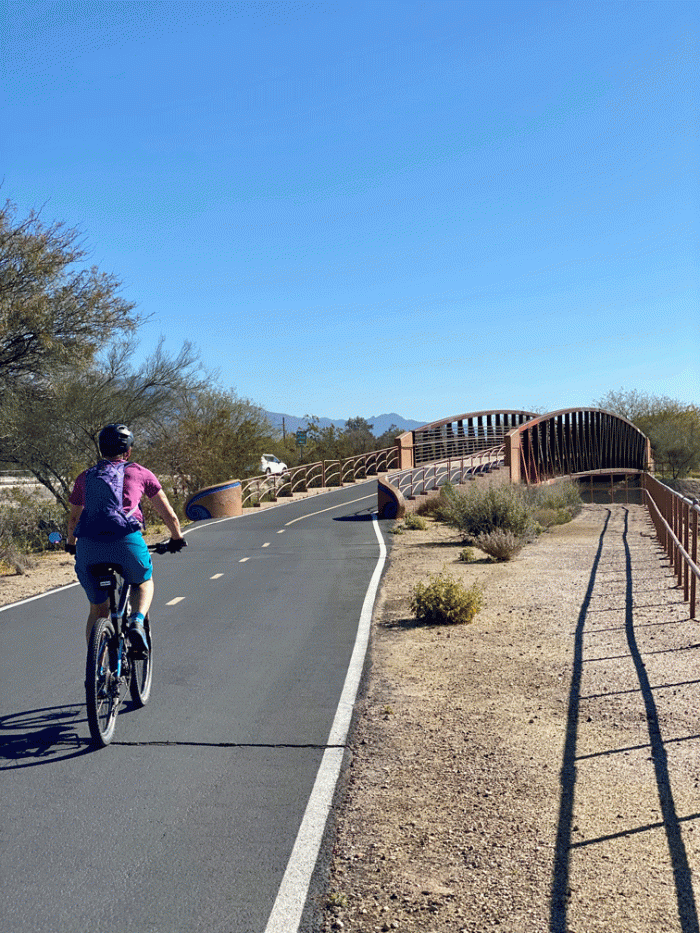
We brought our mountain bikes down with us, but so far we’ve mostly ridden on pavement. There is a great multi-use paved trail system in Tucson called “The Loop,” because is loops around the whole city and into the surrounding towns. We’ve ridden at least six days on the trail system. Here’s a few photos to let you get the idea.

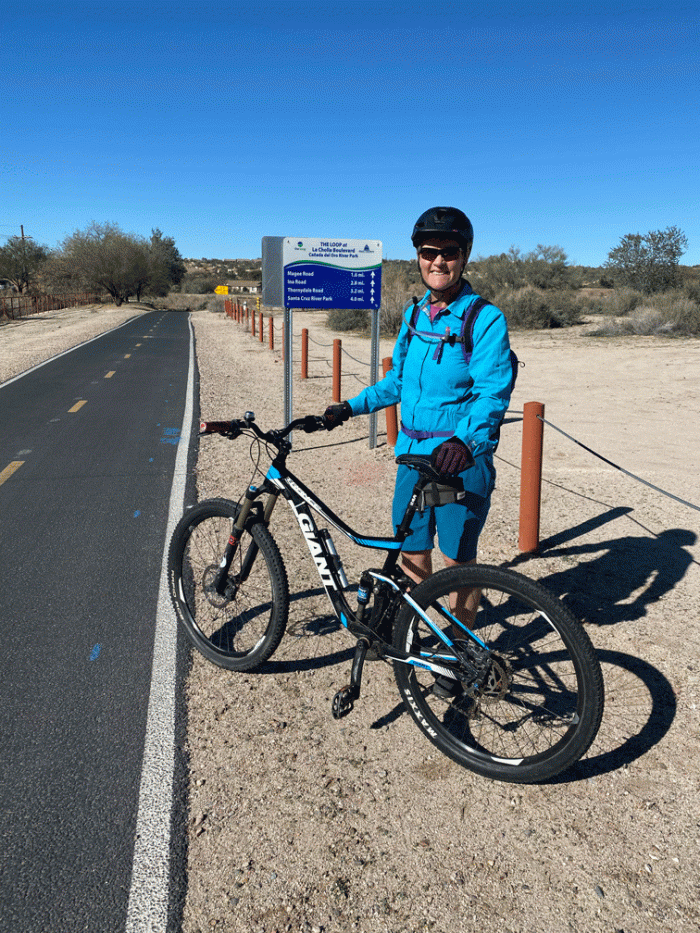
This is Wendy on the Canada del Oro River Park route, with views of some luxury homes behind her.

Wendy_bike_Canada-del-Oro

The same trail continues towards Catalina State Park, through a mesquite desert.

Wendy_bike_Loop

There are many beautiful bridges along the trails. Our place is just on the other side of the mountains in the background.

Wendy_bridge

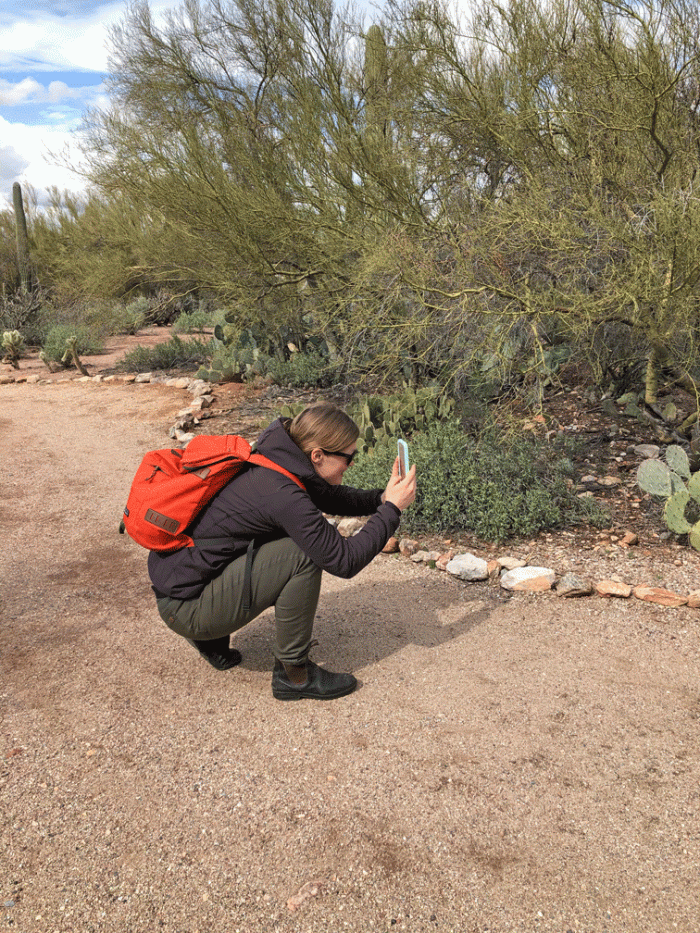
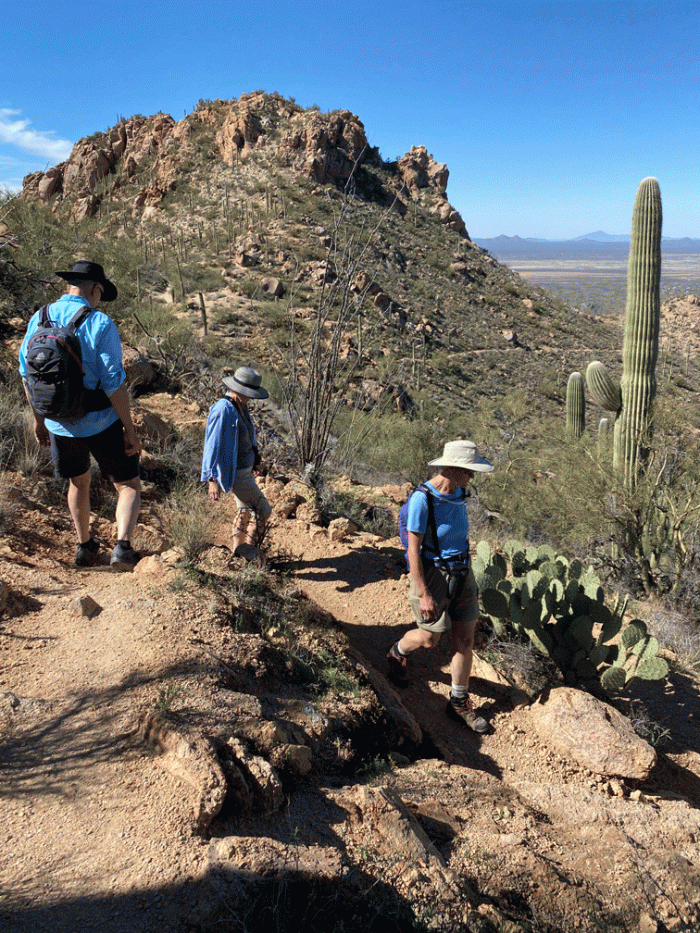
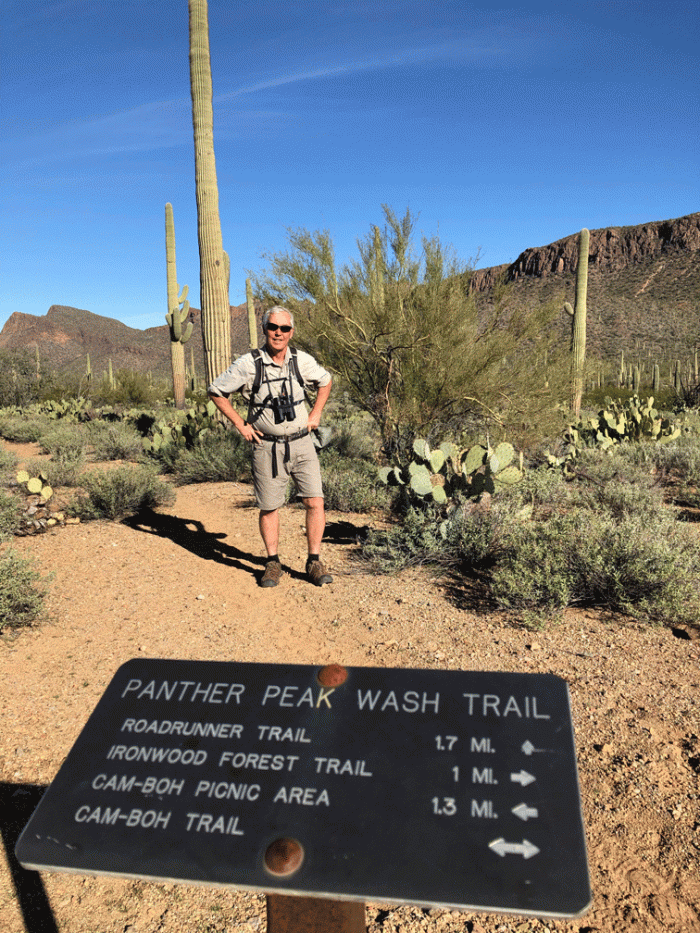
We did some hiking in the area close to where we live. This is a portion of the Ironwood Forest trail. It’s definitely not the typical forest that we usually hike in.

Wendy_Ironwood

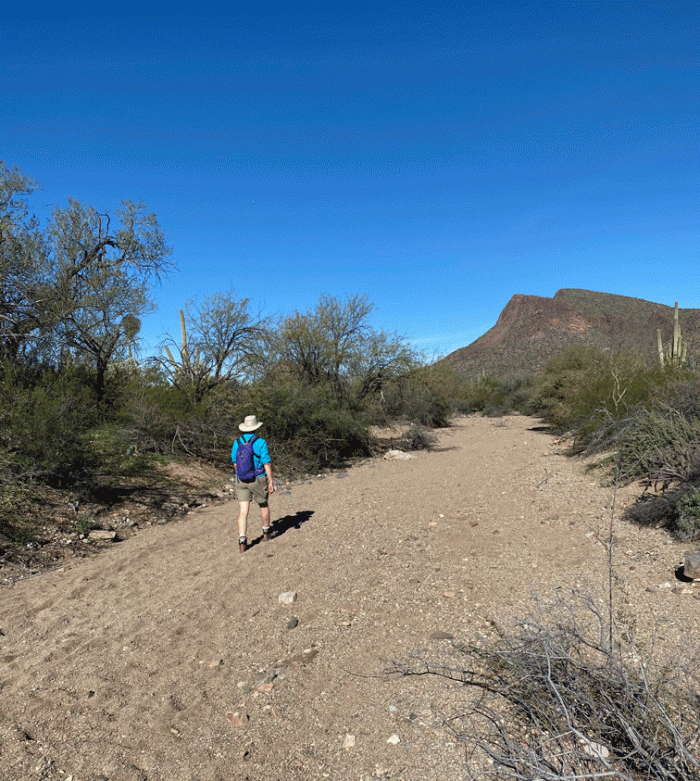
Another cooler day, we did a longer loop and retraced some of our previous hike. The Brittlebush trail starts up a wash.

Wendy_Bitterbrush

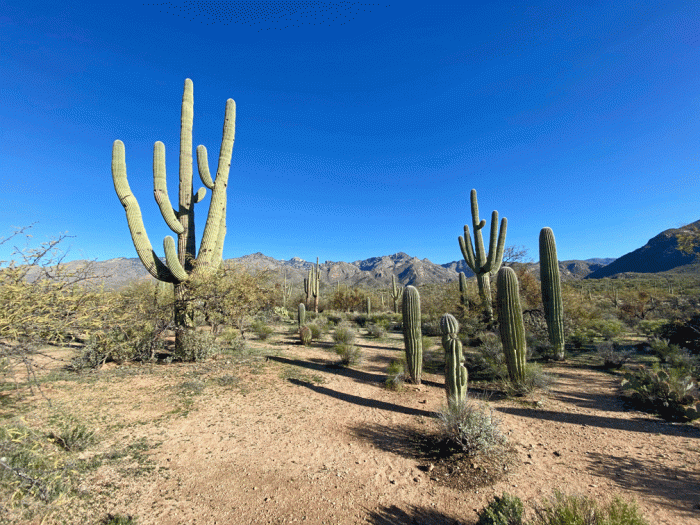
Here’s a view along the trail. Prickly pear and saguaro cactuses dominate.

Hike_pano1

This bright green plant is known as “resurrection plant” and is a species of desert plant in the spikemoss family. During dry weather, it’s stems curl into a tight ball, and uncurl when exposed to moisture. The plant is hardly noticeable when it’s all dried up and it’s quite a surprise to see the green slopes after a rainfall.

Resurrection

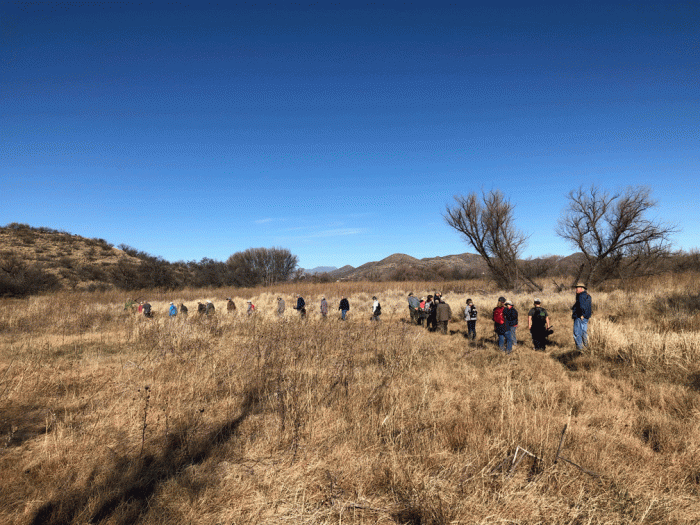
We also drove across town to the Santa Catalina Mountains. One day, we joined an Audubon field trip at Sabino Canyon. We saw plenty of birds, but it was a rainy day, so no good photos.

A little farther north is Catalina State Park. We did a short birding hike among the granitic outcrops.

Wendy_Catalina

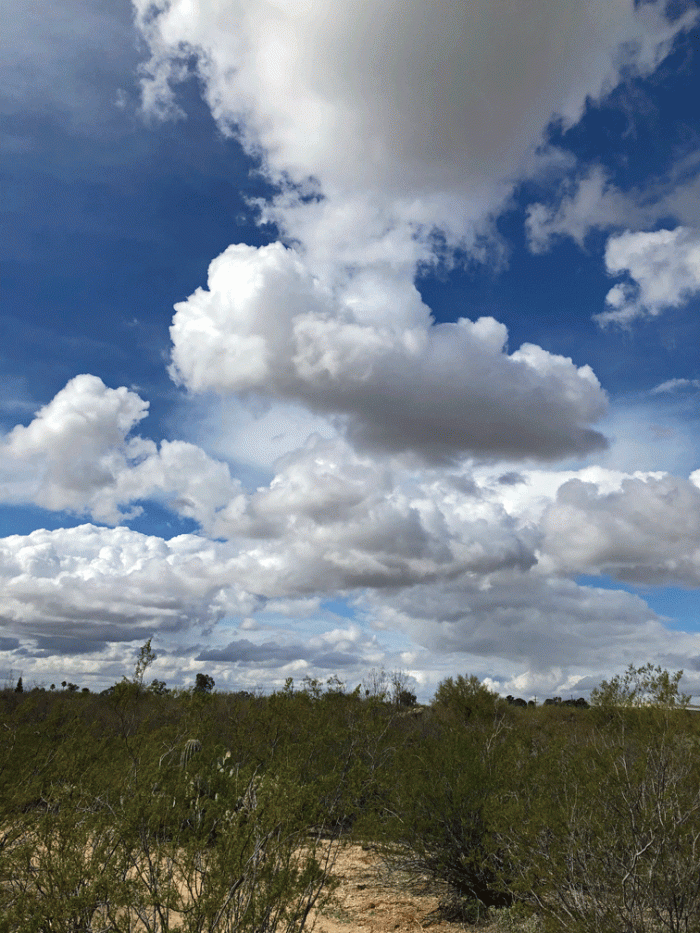
We experienced some interesting weather. These clouds preceded a cold front that brought lots of rain and some cooler temperatures.

Clouds2

That meant that we could enjoy some “comfort” food. Doug made his speciality, Chicken Parmesan for the first time in the Redwood.

Doug_dinner

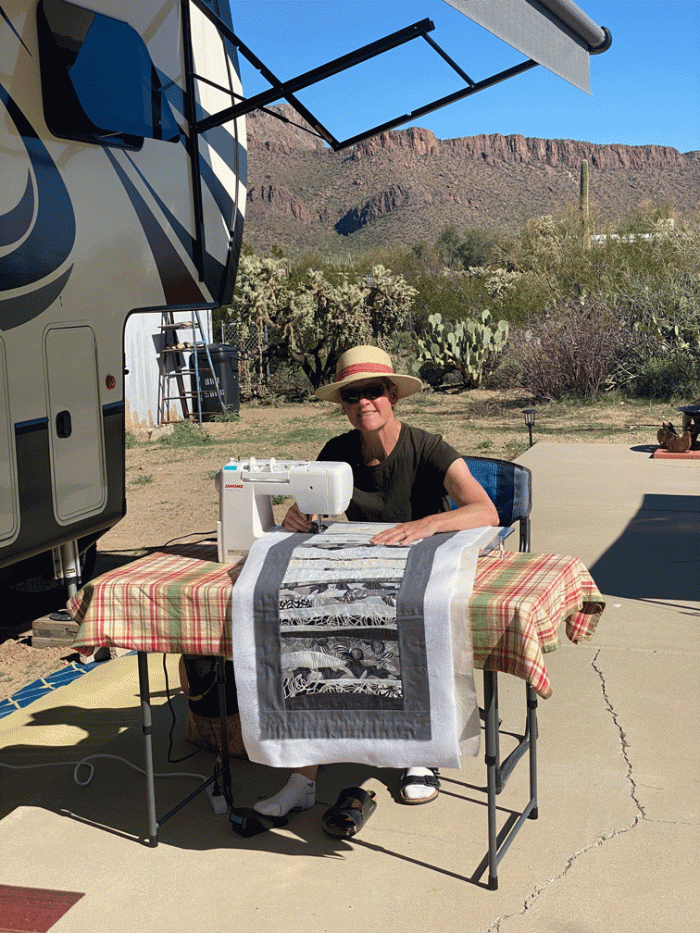
Throughout our whole trip here this fall, Wendy has found time to sew. Usually she manages with a small table for her sewing machine. The “living room” was transformed into a “quilt palace” for the last few long seams in her throw size quilt top.

Quilt_palace

Here is Wendy’s “Arizona” quilt top.

Quilt

We visited Tohono Chul gardens for the last four Sundays in November to attend concerts. Most times it was quite hot. This photo of Doug from November 24 is noteworthy because the cooler temperatures encouraged a new wardrobe: jacket, pants and shoes!

Doug_TohonoChul

Jonathan W. Martinez played that day. We throughly enjoyed his original pieces and his use of unconventional techniques. (Guitar as percussion, multiple capos and use of looping.)

Concert

We’ve also seen a lot of different wildlife this fall. Here’s a Collared lizard that we saw sunning himself at the Arizona-Sonora Desert Museum.

Collared-Lizard

This coyote was also at the Desert Museum.

Coyote

One day we went birding at the Sweetwater Wetlands and saw four bobcats. Three of them were a long way off, but this fellow was just down the path from us. He didn’t stick around long.

Bobcat

We were lucky enough to see three javelinas the same day. They trotted out from the bushes and gave us a good view. Javelinas are peccaries; a medium-sized pig-like hoofed mammal. They have a strong odour and we could smell them before we saw them.

Javelina

And because we promised some birds…

Here are a couple of Northern shovelers, in breeding plumage.

NSHO

And a male American kestrel.

AMKE

We’ll be taking a break from the blog until the new year. Have a great Christmas!

Birds at the Desert Museum

Birds at the Desert Museum

This blog is all about the birds we have seen recently at the Arizona-Sonoran Desert Museum. Enjoy!

This bright fellow is a male Lesser goldfinch.

LEGO

This male Phainopepla posed nicely on one of the sunny days that we visited the museum.

PHAI

The Arizona-Sonoran Desert Museum is not a typical museum. Most of the displays are outdoors. Many of animals that are on display have huge natural enclosures. There are two enclosed aviaries; one for hummingbirds and one for other desert birds.

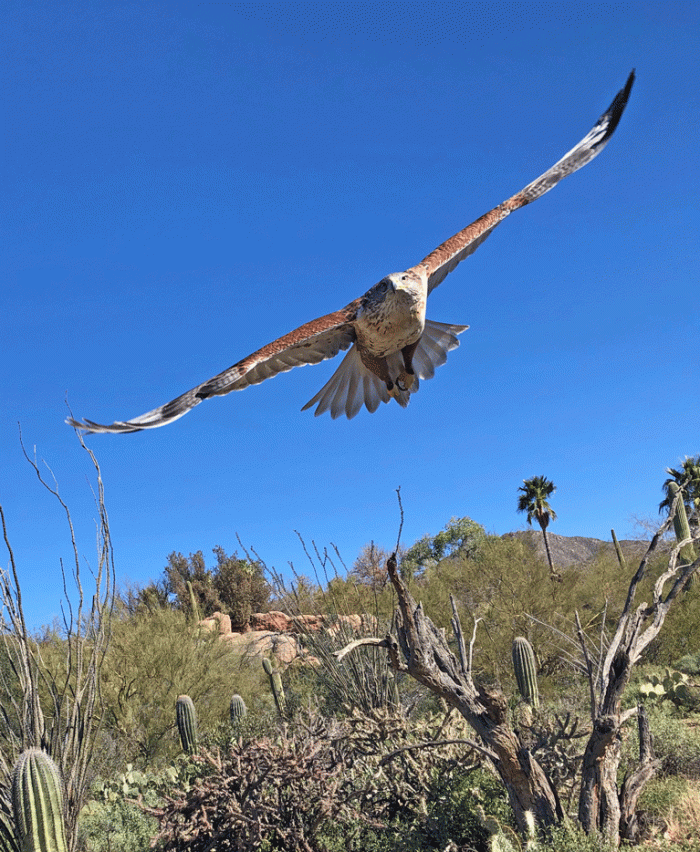
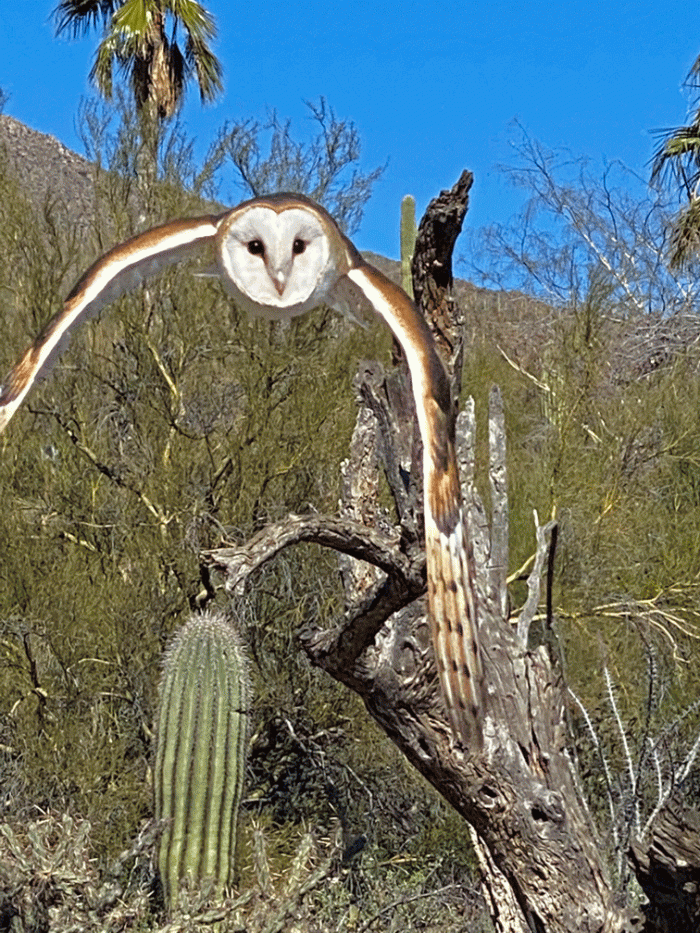
From the end of October to the middle of April, they have an extraordinary bird of prey exhibition called “Raptor Free Flight.” The birds fly completely untethered in the open desert. We went to a couple of the presentations and Doug took his larger lens to capture these amazing shots.

Here’s a Barn owl. Barn owls feed almost exclusively on rodents and is nocturnal in the wild.

BANO

The raptors will swoop from perch to perch to feed on the meat scraps that have been placed there by the trainers.

BANOflapping

Barn owls have the most accurate ability to locate prey by sound out of any animal tested. The shape of their face helps to focus sounds.

This Great-horned owl was injured when it was young and has imprinted on humans. It vocalized throughout the presentation with a call that normally would be used by very young owls.

GHOW

Great-horned owls are found throughout North America. They forage for birds and small mammals up to the size of rabbits.

GHOWflight

The broad ear tufts of feathers are not horns at all, but they help to focus sound.

GHOWlanding

Below is a Gray hawk. They are found in Southeast Arizona in the summer. Their banded black and white tail is a good identifying feature.

GRHA

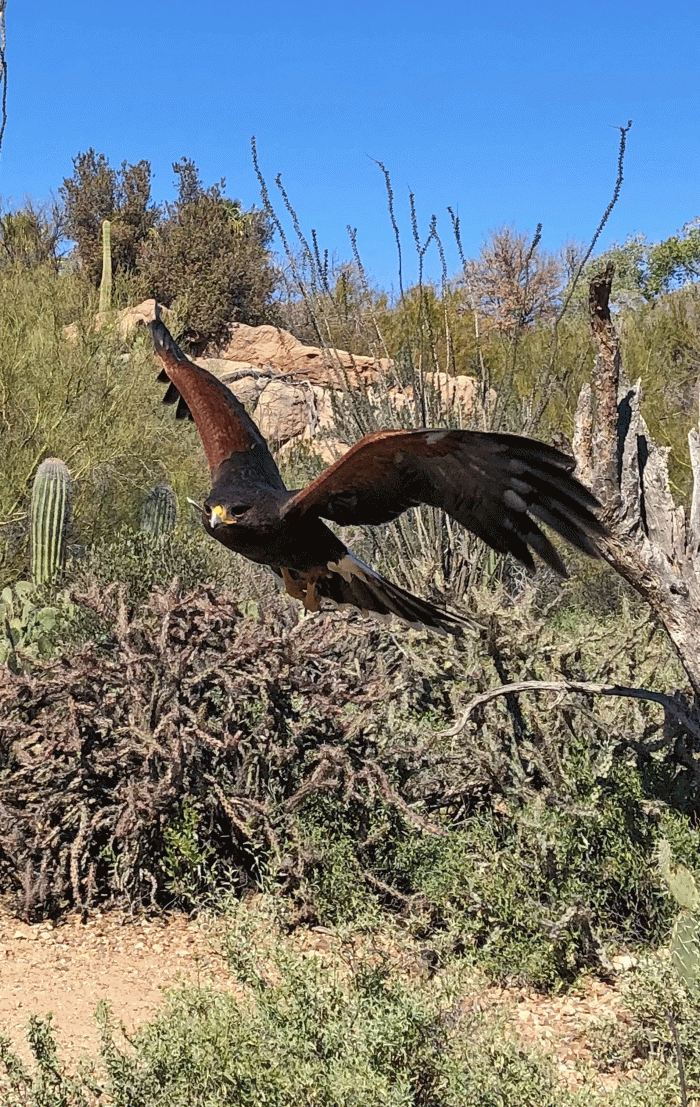
Here’s a photo of a Harris’s hawk. They are found throughout Mexico, and into Southeastern Arizona and a small part of Texas.

HASHbranch

Their white uppertail coverts and tail tip and their rufous shoulders make them very distinctive.

HASHback

Harris’s hawks are the only hawks known to hunt in family groups.

Here’s a view of a Ferruginous hawk. They have a wider range in North America and hunt over arid grasslands and the adjacent farmland. Ferruginous refers to their rusty colour. (Fe: symbol for iron) The feature photo of this blog (visible when you view the blog using an internet browser) is also a Ferruginous hawk.

FEHA

This strange-looking bird is a Crested caracara. Although it is in the falcon family, it has scavenging behaviour closer to a raven. It will fly relatively low in search of prey (lizards, mammals) and patrol roadways in the early morning to find carrion before vultures fly.

CRCA

Notice the lack of feathers on its beak, which is an adaptation for eating carrion.

CRCAlanding

If you are ever in the Tucson area, we highly recommend visiting the Arizona-Sonoran Desert Museum.

Our next blog will include photos of hiking and biking, and likely some birds as well!

Arizona Yard Birds

Arizona Yard Birds

This whole blog is about the birds that come to our feeders at our place near Picture Rocks, Arizona. Our favourite hummingbird is this male Costa’s. He is very inquisitive and will come right up to Doug when he is filling the feeders. The male Costa’s has a long, flared gorget, that shimmers when it catches the light. Also notice the white “eyebrow.”

COHU_yard

Here’s a view of him sitting on a nearby branch.

COHU_branch

We also have a number of Lesser goldfinches.

GOFI_branch

They love the nyger seed that we set out for them.

GOFI_feeder

We also have a few House finches. House finches are found throughout the US and Canada, often in urban areas. In Arizona many of them live in the desert which could have been their original home before they became more widely distributed. We see a lot of them on our desert hikes.

HOFI_yard

Here’s a female House finch (left) with a male Pyrrhuloxia. The Pyrrhuloxia is similar to a Northern cardinal with a grayer overall colour with rosy-red highlights. Around here, Pyrrhuloxia are found in desert scrub and Northern cardinals in riparian woods.

HOFIPYRR_feeder

We have a couple of Gilded flickers that visit the feeders and suet. They are very similar to the Northern flicker that we have at home, but with a brighter cinnamon forehead and an all-brown crown and nape. They also are yellow underwing, unlike the Northern flickers (western) that are red-shafted.

GIFL_feeder

These Gila woodpeckers look a little bit like the Gilded Flicker but without the black chest patch. Male Gilas have red on the top of their head. The two females in the photo below are swallowing simultaneously.

GIWO_water

There are a number of Cactus wrens in the area. This one came for some water.

CACW_yard

The yellow eye on the Curved-bill thrasher makes it seem that it is always angry. Their call sounds a bit like someone whistling for their dog.

CBTH_yard

Gambel’s quail usually feed on the ground. When they approach the area, they usually trot along, so we were a bit surprised to see that one had flown up to the feeder.

GAQU_feeder

Soon his buddies joined him.

GAQU3_feeder

On the left side of the water dish is a White-crowned sparrow. We have about six or seven that come regularly. In the background, you can see a small portion of the number of Mourning doves that also come to visit the feeders. Some days there are fifty or so. They are also fun to watch.

WCSPMODO_yard

We also have a few other species that are around the yard, but don’t come to the feeder and generally hide in the trees and bushes. They are: Verdin, Black-tailed gnatcatchers and Phainopepla.

Our next blog will also be all about birds. Doug’s got some great pictures from the Arizona-Sonoran Desert Museum to share.

Back to Tucson

Back to Tucson

We drove to Calgary and flew to Tucson via San Francisco. We were happy to leave the snow behind. Here’s a view from the airplane of the Steeples and Mt. Fisher with Cranbrook behind them.

SteeplesFisher

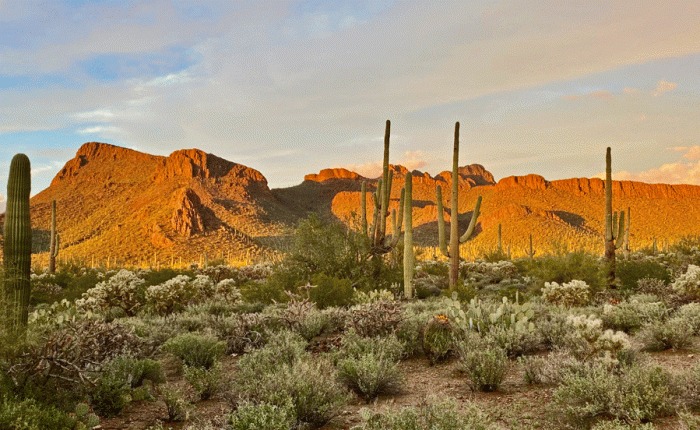
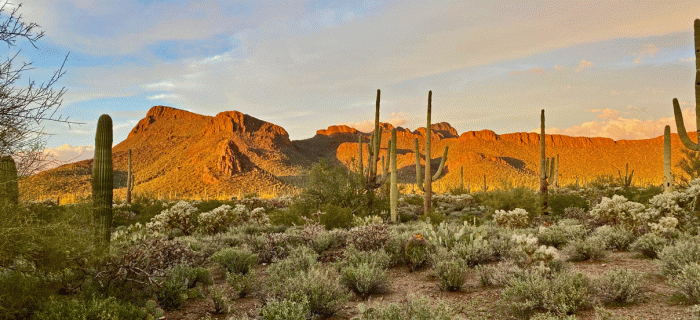
The ridge behind our place was as pretty as ever.

Cover-shot

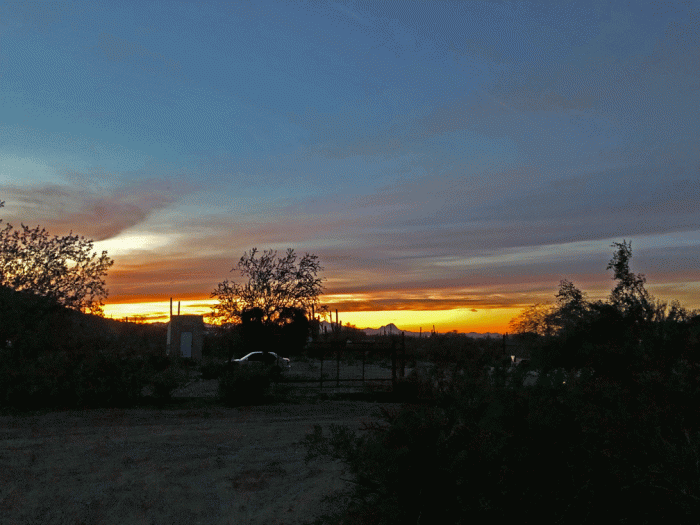
And we had some beautiful welcoming sunsets.

Sunset2

The hummingbirds came back almost as soon as the feeders were filled. This is a female Anna’s.

ANHU

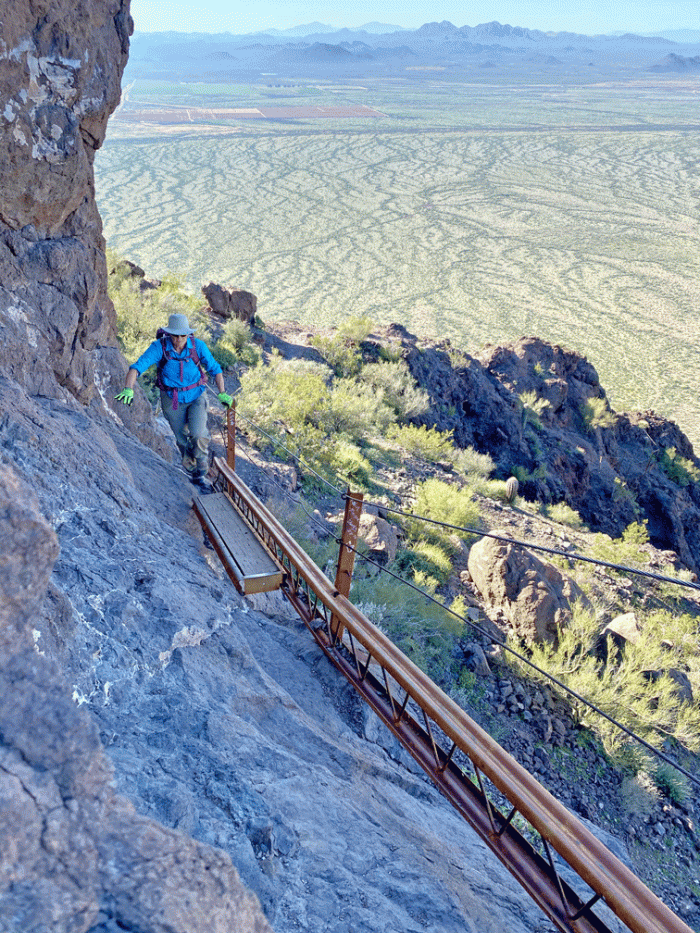
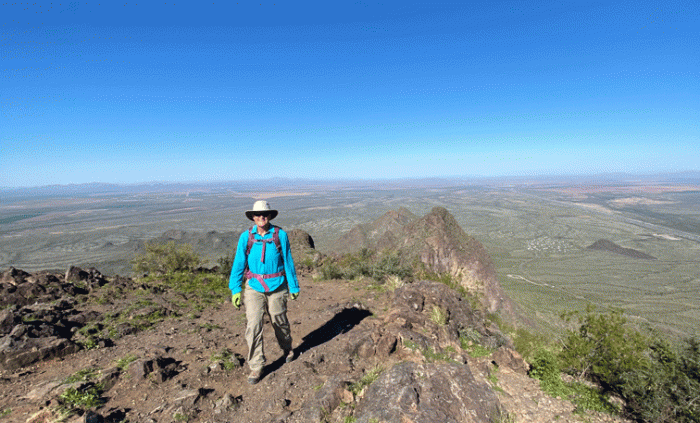
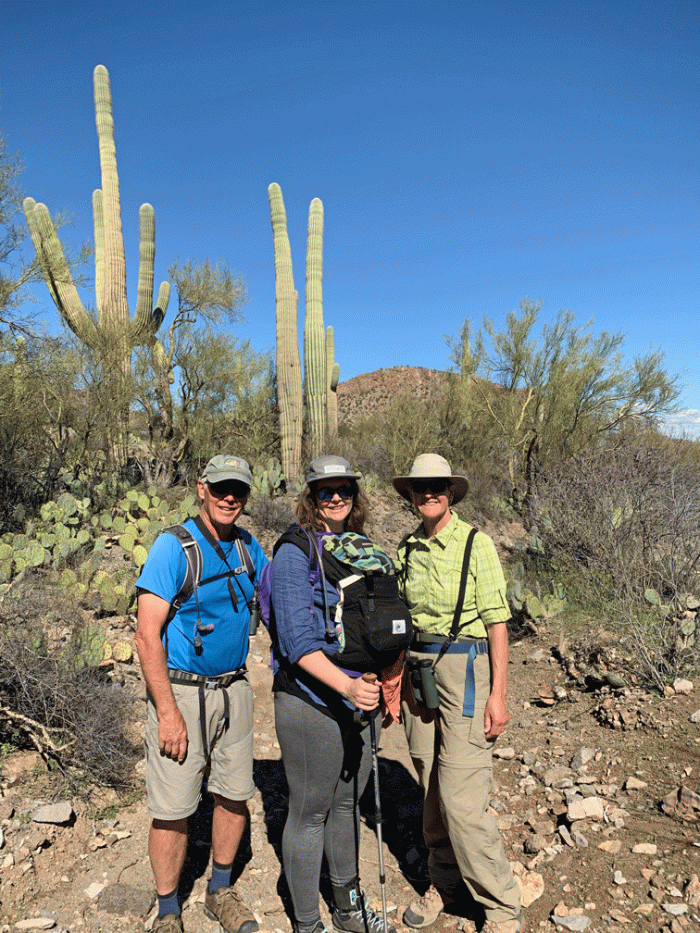
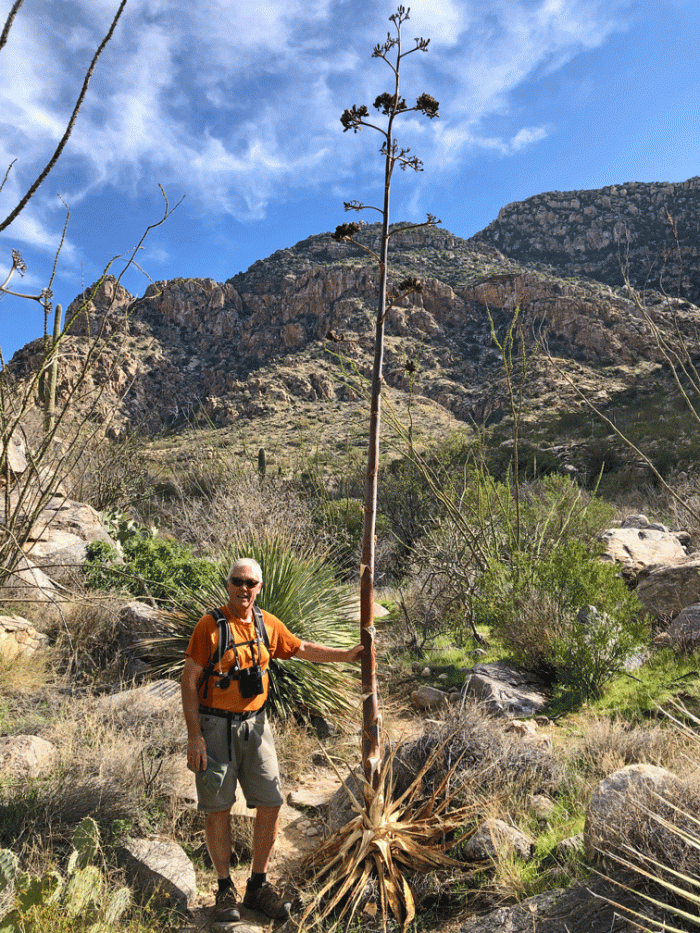
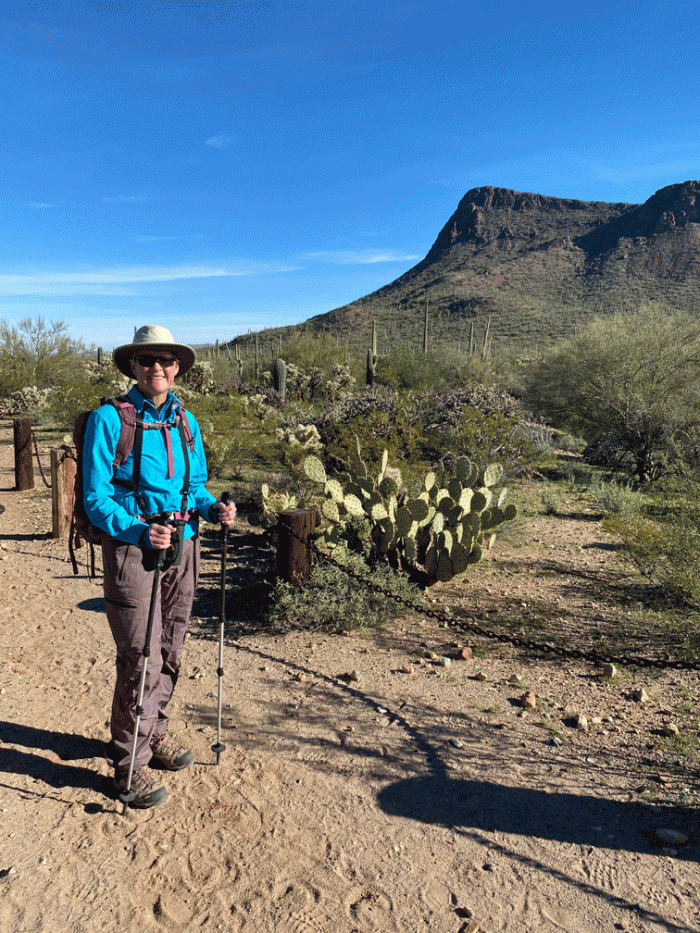
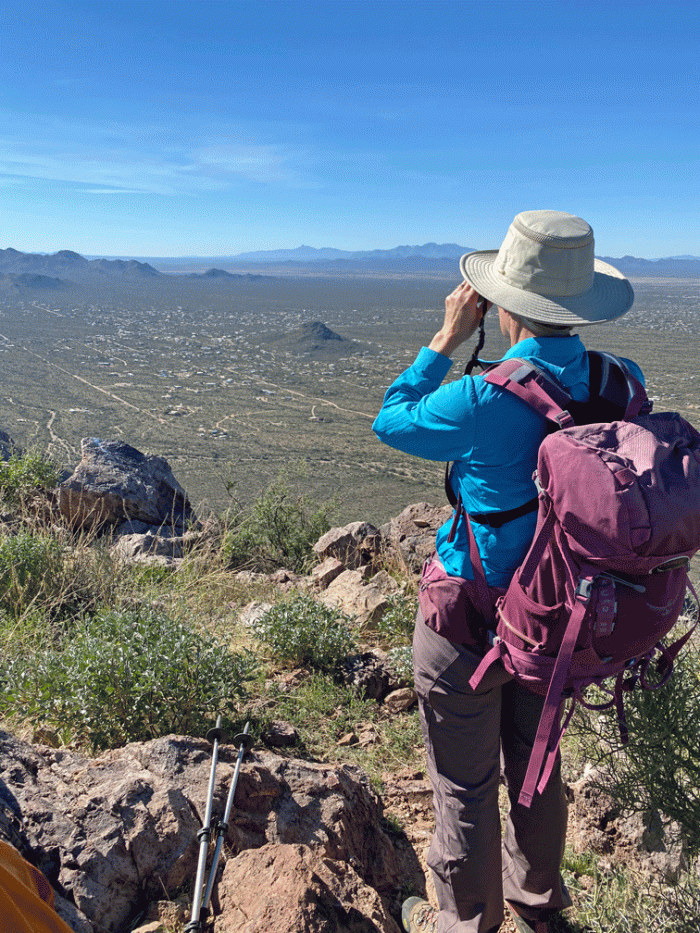
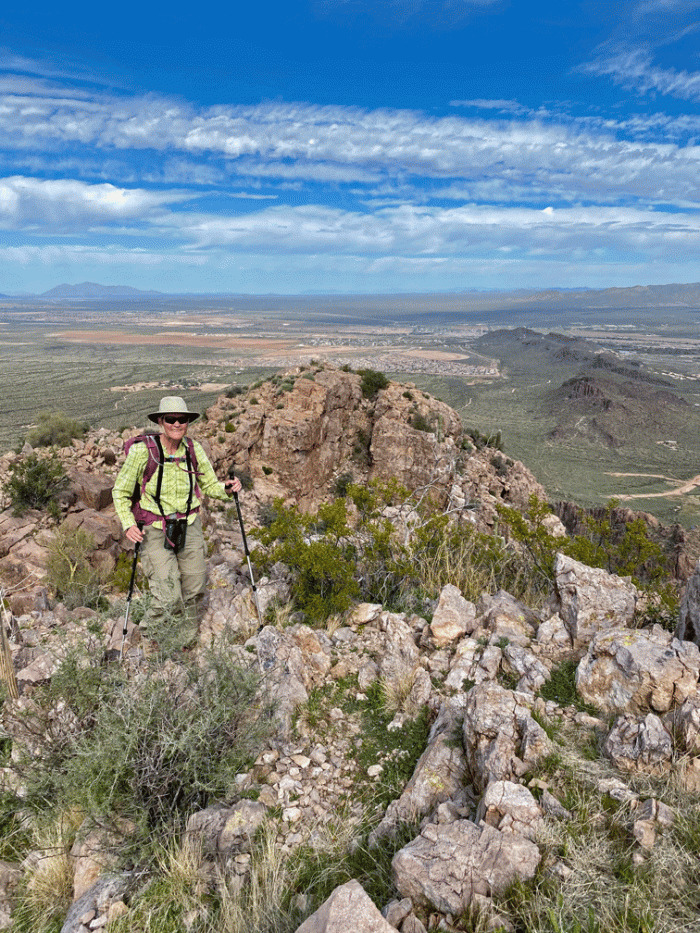
The weather wasn’t too hot to hike, so we ventured out. We hiked to the top of Wasson Peak, the highest one in Saguaro National Park (Tucson Mountain Division). Here’s a view of Wendy near the summit. Our trailer is somewhere on the flats below (above her head in the photo.)

Wendy_Wasson-summit

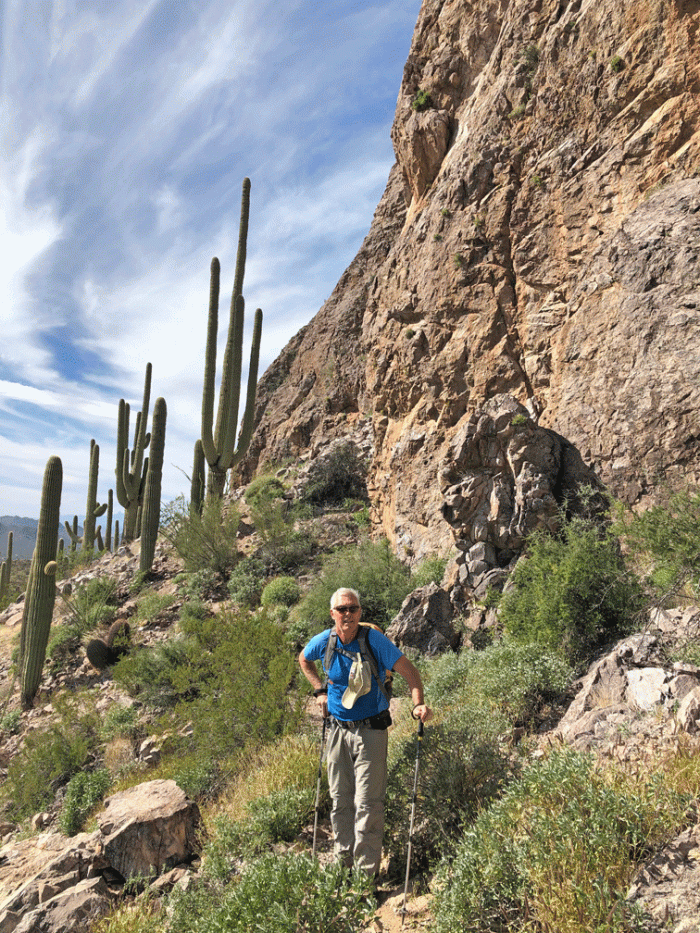
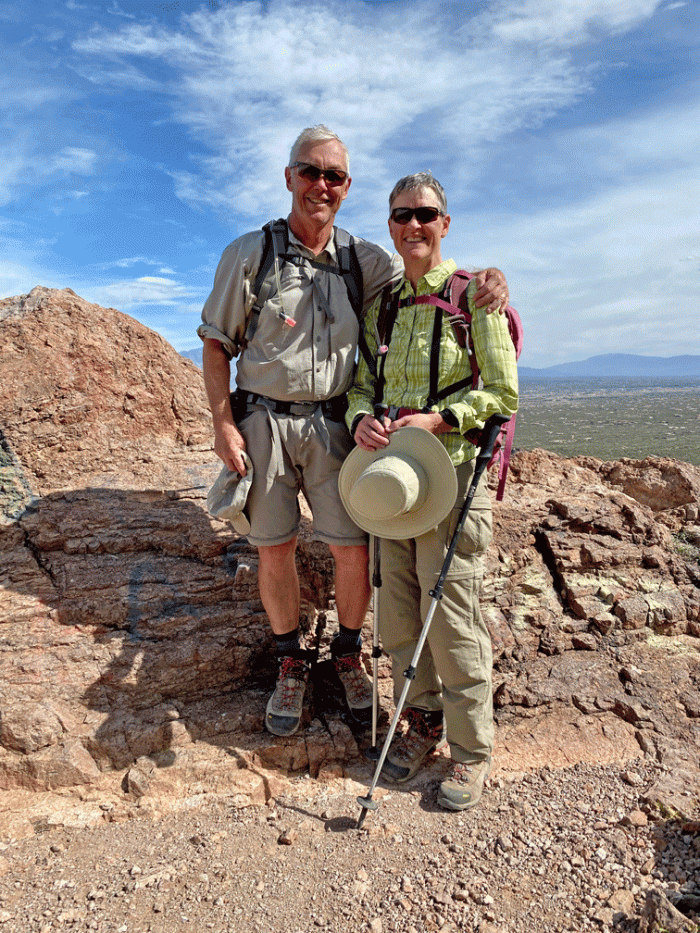
Here’s Doug with a view of the Avra Valley behind him.

Doug_Wasson-Pk

Another day we returned to Tubac. We went birding in the morning and we were unable to locate a Rose-throated becard. But we enjoyed the birding and saw lots of interesting birds. We came to listen to a talk, “Return of the Rose-throated becard” that was scheduled for the afternoon. We had time to have lunch in Tubac and see a little of the Mexican-feeling town.

Tubac

All this wall art was for sale. Some pieces were ceramic, others were made of metal.

Tubac-wall-art

It was very windy that night and it was still windy in the morning. By 10:30, it seemed to die down a bit so we headed out for a hike. We drove to the trailhead for Picture Rocks wash in about ten minutes. It was a pleasant hour and a half hiking through the wash, past the “picture rocks” (petroglyphs), and finishing the loop on a desert trail.

Wendy_Picture-Rocks-wash

Doug visited the Pima Air and Space Museum on two different days. (Wendy did quilting related stuff: once to a Quilt festival/market and another day to a sewing day at a local quilt shop.)

The Pima Air and Space Museum had several hangars displaying WW2 vintage aircraft that Doug really enjoyed. He grew up reading about them and making models. Quite a zing to see the real thing!

Pima-Air-Museum

The Spitfire was nice to see up close and so much bigger than the model Doug built when he was 12. His current favourite military aircraft is the A10 Warthog which happen to pass over our fifth wheel on a regular basis.

Spitfire

We had a late start one day because we had planned to ride our bikes, but one of the tires on Doug’s bike had a rip in the sidewall. So after taking the wheel to the bike shop, we headed to Reid Park for a little birding.

We chose Reid Park because a rare bird, a Ruddy ground-dove had been seen there over the last week or so. We didn’t see the dove, but we did see another rare bird, a Greater pewee. Doug got a photo of it that is good enough for identification but too small to include here.

Reid Park is in the middle of the city, with a zoo, rose gardens, two ponds, lawns etc. Alongside the ducks that enjoy being fed crusts, there are some interesting birds. This one is a juvenile Black-crowned night heron.

BCNH

Here’s another Black-crowned night heron (who’s a bit older, but still immature) standing near a yawning Neotropic cormorant. The bird behind is an American wigeon just taking off.

BCNHNECO

We don’t often see Northern shovelers when they aren’t in breeding plumage. It’s bill gave it away.

NSHO

And it’s always a pleasure to see a Vermilion flycatcher.

VEFL

So the next day, with the bikes all ready to go, we rode about 18 km on a paved multi-use trail along the Santa Cruz River in Marana. In the photo below, we’re close to the most northerly end of the trail near the El Rio Open Space Preserve. The flowers are flowing over the fence of the garden of a high-end home.

Wendy_Loop-bike-trail2

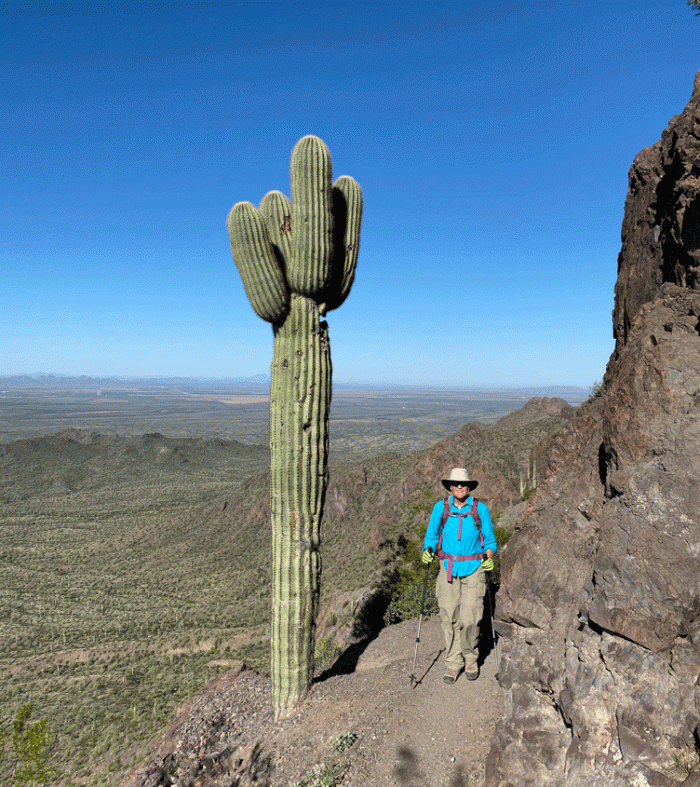
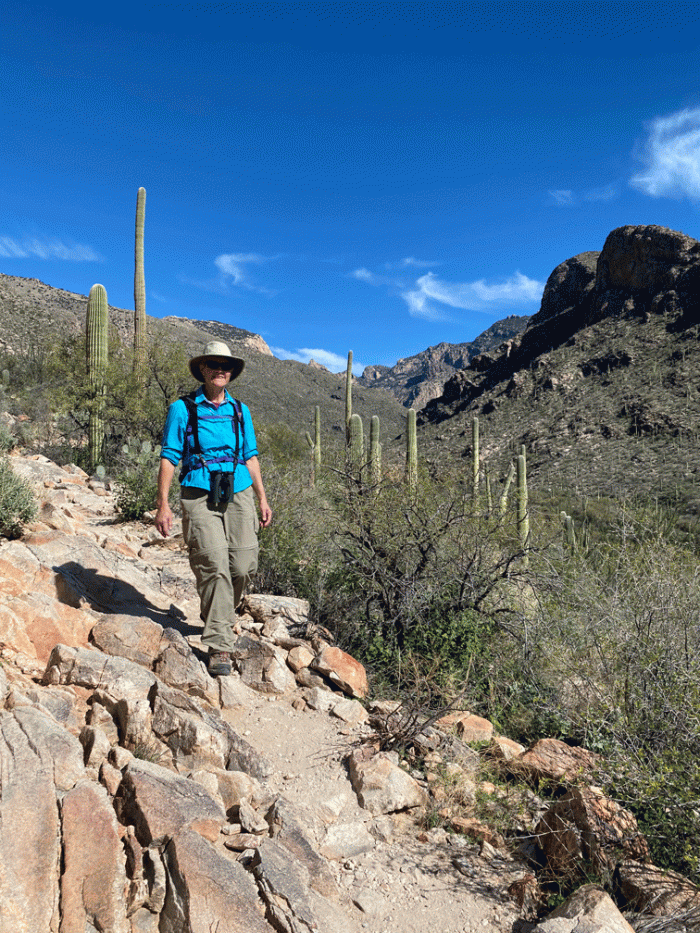
Another day we hiked up and along Brown Mountain, which is in Tucson Mountain Park. We can drive to the trailhead in about 20 minutes. Here is Wendy at the beginning of the uphill section: a nice trail with switchbacks and not too far to climb.

Wendy_Browns-Mtn-hike-start

Here’s a view looking northeast towards Wasson Peak, the highest one on the skyline.

Wendy_Brown's-Mtn

Once we got to the top of Brown Mountain, we walked along it’s ridge and worked our way gradually down. We got a good view of the Arizona Sonoran Desert Museum grounds. (Doug turned around for the photo.)

Doug_Browns-Mtn

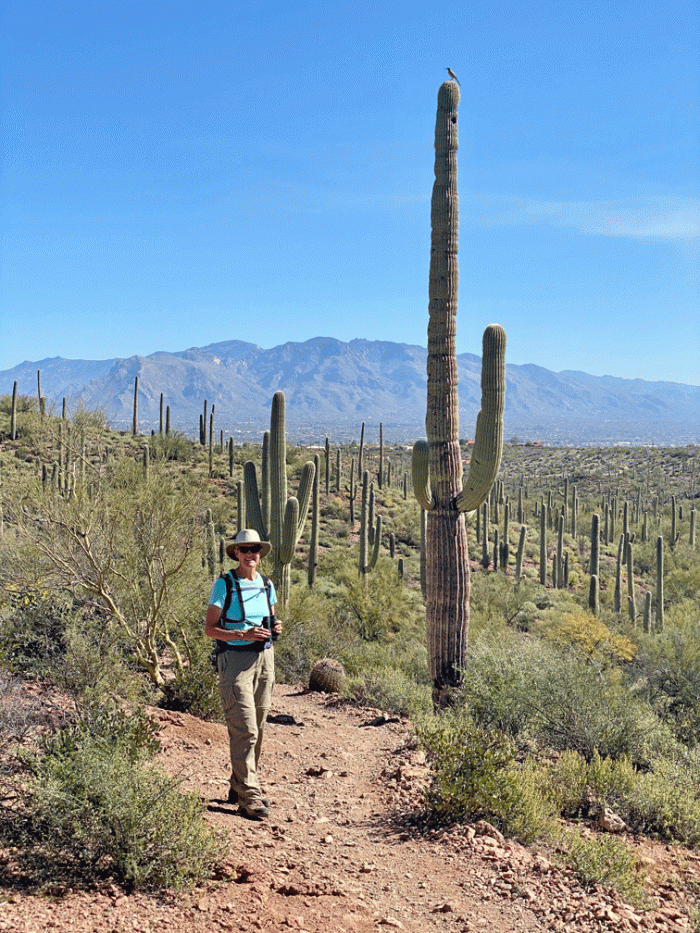
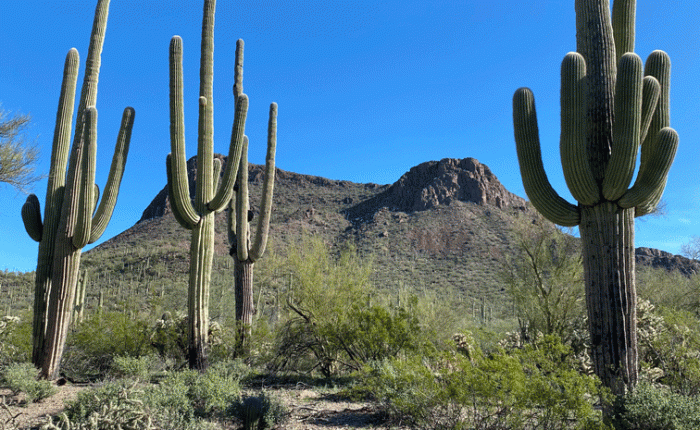
There were some magnificent saguaros along the trail.

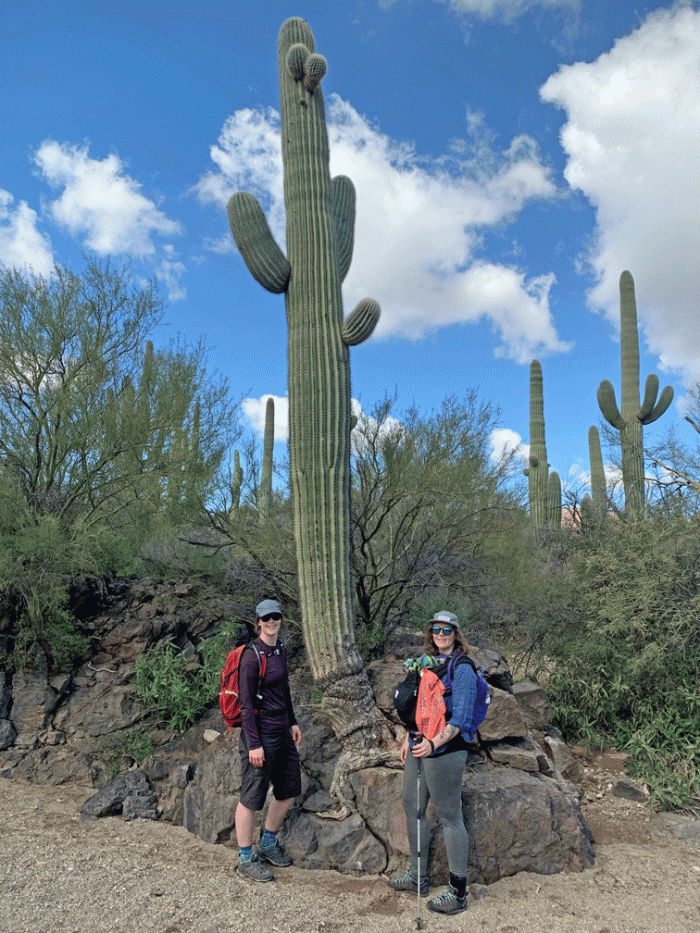
Saguaro

We were watching out to try and find the smallest saguaro, and this one was probably the littlest we could find. It was about 20 cm tall and perhaps five to ten years old. Although we didn’t see very many small ones, once the saguaro becomes established, it can grow to be very old. The first branches of the saguaro develop when the cactus is fifty years old.

Baby-Saguaro

Here’s our final photo for this blog, a male Black-tailed gnatcatcher. We saw at least a dozen of them along the trail. They especially liked foraging in the Palo verde bushes.

BTGN

You can look forward to more bird photos in our next blog.

Birding and Exploring around Tucson

Birding and Exploring around Tucson

Tucson is still pretty warm in September, so we didn’t bike or hike much. However there are many birding opportunities. One day we drove south about an hour and a quarter to Tubac. Tubac is a very old settlement on the Santa Cruz River that has found new life as a tourist town with quaint shops and galleries. We started our birding route at Bridge Road, just before the bridge and followed the Juan Bautista de Anza trail for a little ways until it connected with the TGR (Tubac Golf Resort) trail.

Wendy_Tubac

We were hoping to see Rosy-breasted becards high in the cottonwoods. But no luck. Perhaps we’ll have to return with our scope. Those treetops are a long way up!

While we were wandering near some lower bushes, we heard some close scuffling sounds, but the source was out of sight. A few minutes later we caught sight of three javelinas trotting along. They were too far away to get a good photo, but it was our first sighting of them in the wild.

Javelinas are also know as collared peccaries and are similar to wild boars. Although they are herbivores, they can become aggressive if startled and can inflict damage with their long, sharp canine teeth that protrude from their jaws by about an inch.

Wendy_Tubac-birding-trail

We did see a new bird for us: a female Varied bunting. We’re looking forward to seeing a male version, which is blue and red and quite beautiful.

VABU

There were quite a few Inca doves right close to the road.

INDO

And a Warbling vireo allowed us a viewing. Usually we only hear its distinctive song.

WAVI

We toured the Tubac Presidio State Historic Park which was nearby. There were a few interesting buildings, including an old school house which was set up to be like it was in the late 1800s. A couple of classes of school kids from Tucson were touring the park with their clipboards and worksheets dressed in period costume and it reminded us of school field trips to Ft. Steele.

We thought that the prettiest place in the park was this collection of cacti surrounding an old wagon.

Tubac-garden

Seven minutes down the road is Tumacacori National Historic Park. This old church was built in several stages starting in the 1750s by Franciscan monks.

Church

Since we were in “tourist mode,” we stopped at the Titan Missile Museum which is just outside of Green Valley on our way back to Tucson. We were expecting a static display, but instead signed up for the last tour of the day. Doug was thrilled to sit in the command post. Doug was very interested in all the technology and the history from the Cold War era. Wendy figured that since she dragged Doug to plenty of quilt shops and shows she would come along.

Doug_Titan-Missile

Another day we went birding closer to home at the Sweetwater Wetlands. The Sweetwater Wetlands are part of the City of Tucson’s water reclamation system. Treated water is naturally filtered as it moves through the wetlands, and is recharged in basins and reclaimed for use in city parks, golf courses and school grounds.

Wendy_scope2

There are viewing platforms built to view the ponds. The ponds are green with a coating of algae.

Wendy_scope1

There were plenty of American coots enjoying the lushness.

AMCO

This Nashville warbler paused for a moment to allow Doug to get a photo.

NAWA

We were surprised to see a Greater Roadrunner because they are often in more open areas. There were probably plenty of lizards round for it to dine on.

GRRO

Another day, we went out to lunch at a brewpub near the university. We took a short walk through the University of Arizona’s campus. Here’s a view from the steps of the Old Main. It’s hard to tell it’s in the middle of the city.

UofA_campus

After lunch, we drove to the Arizona-Sonora Desert Museum to attend the opening of an international exhibition of art quilts: Connecting our Natural Worlds.

Quilt-sign

About fifteen of the artists were present and we had conversations with some of them about their work. The exhibition continues until January, so we’ll return a number of times when we’re back in November and maybe get some good photos of the works then.

Wendy_quiltshow

Since we had a bit of time, we viewed the aquarium at the museum. Since the Sonoran desert is on both sides of Baja California, marine life from the bay is included in the exhibits, as well as any native fish that may be in the rivers.

These are Garden eels that are about 40 cm long. They need to live in sand that is at least 60 cm deep. They were fascinating to watch as they twisted and swayed trying to catch particles of food.

Sand-Eels

Tohono Chul, where we have a membership, hosts Sunday concerts in the garden. We enjoyed listening to this jazz ensemble from the University of Arizona.

Concert

This is a view of our dinner on October 6. It was just over 30 degrees C. We headed home the next morning, leaving the fifth wheel behind.

Dinner

On Monday we drove from Tucson to St. George, Utah. The next day we drove longer than we had planned in order to get over the pass into Montana before the weather changed. We knew a severe winter storm was coming and we’d hoped to miss it. It didn’t quite work out that way and we woke to blowing snow and below freezing temperatures. (-7 C) Here’s the view of the truck in Dillon, Montana.


Dillon_snow2

We had a few hours of full-on winter driving until we reached clear pavement. The weather for the rest of the trip home was beautiful. It was great to see the autumn colours.

We’re now back home for about a month. We’ll return to our Redwood in November.