This blog post includes photos from two local hikes and a walk. As usual, we’ve included some biking photos and a couple of sunrises. Part 2: hiking focuses on the North Coyote Buttes in Northern Arizona.
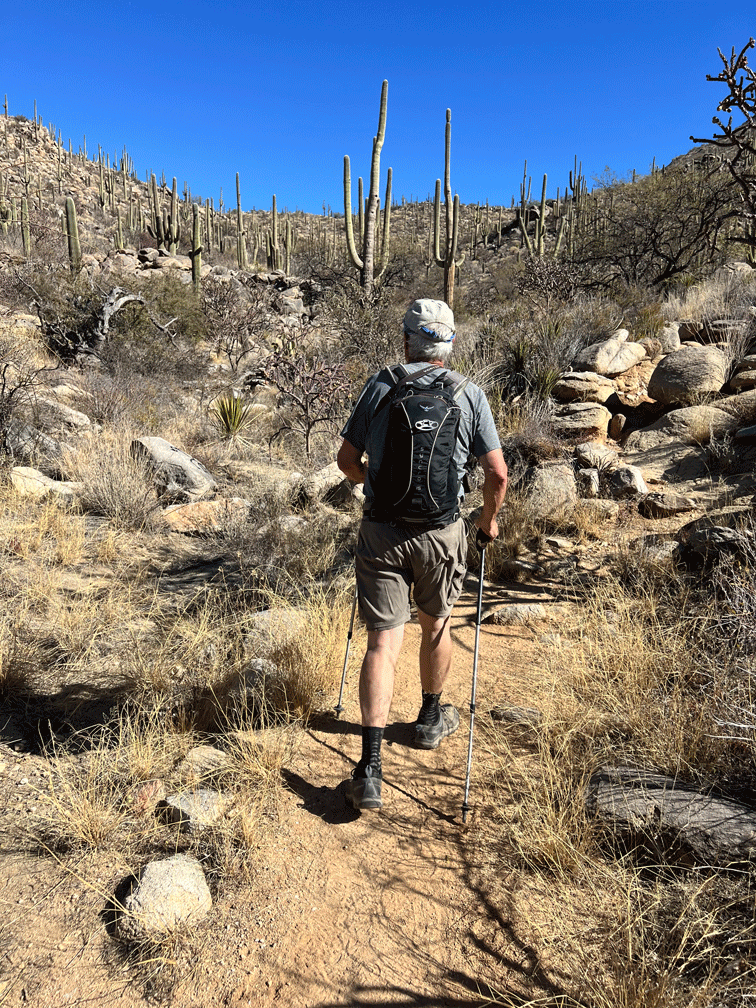
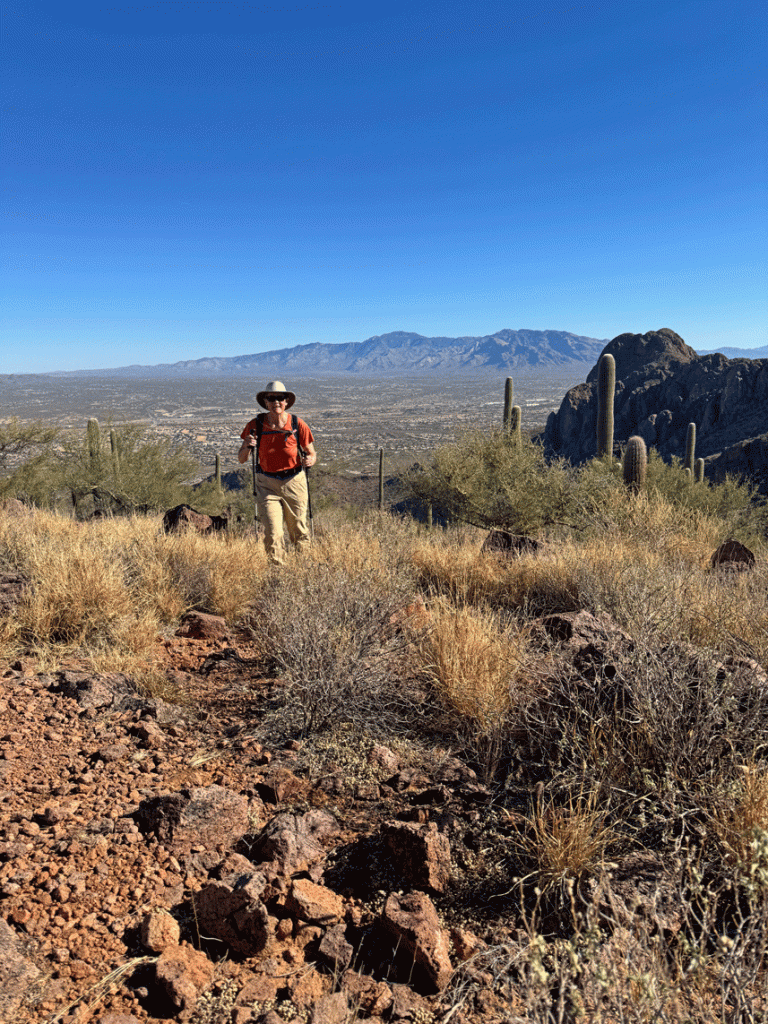
We returned to one of our favourite hikes in the Tortolita Mountains in early February, climbing up the ridge on the Alamo Springs trail.
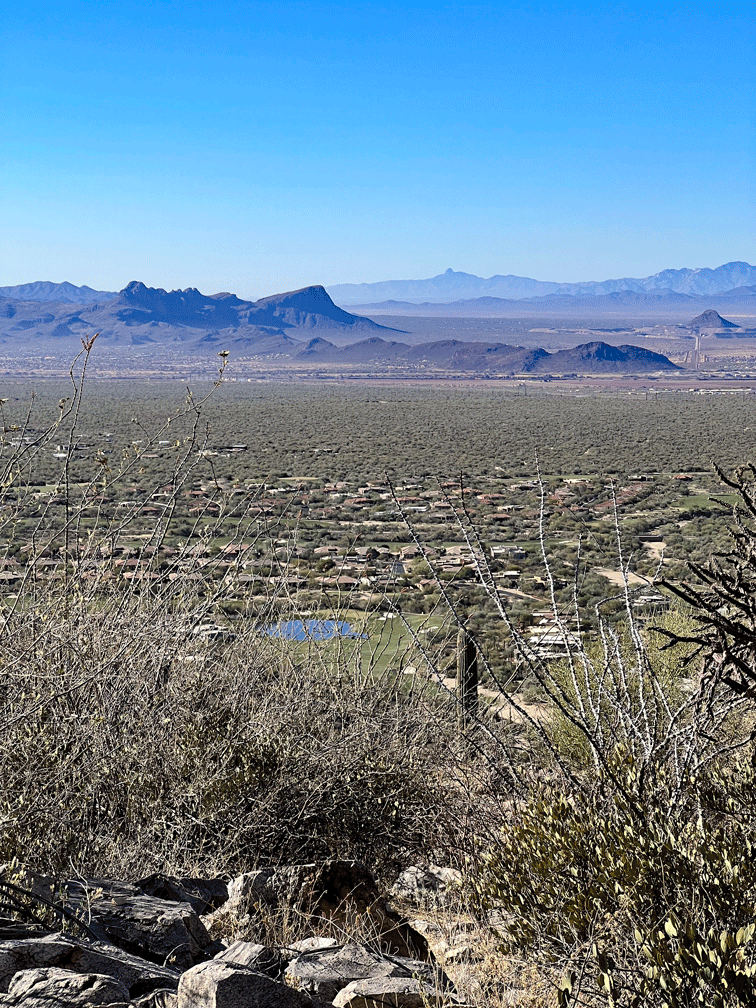
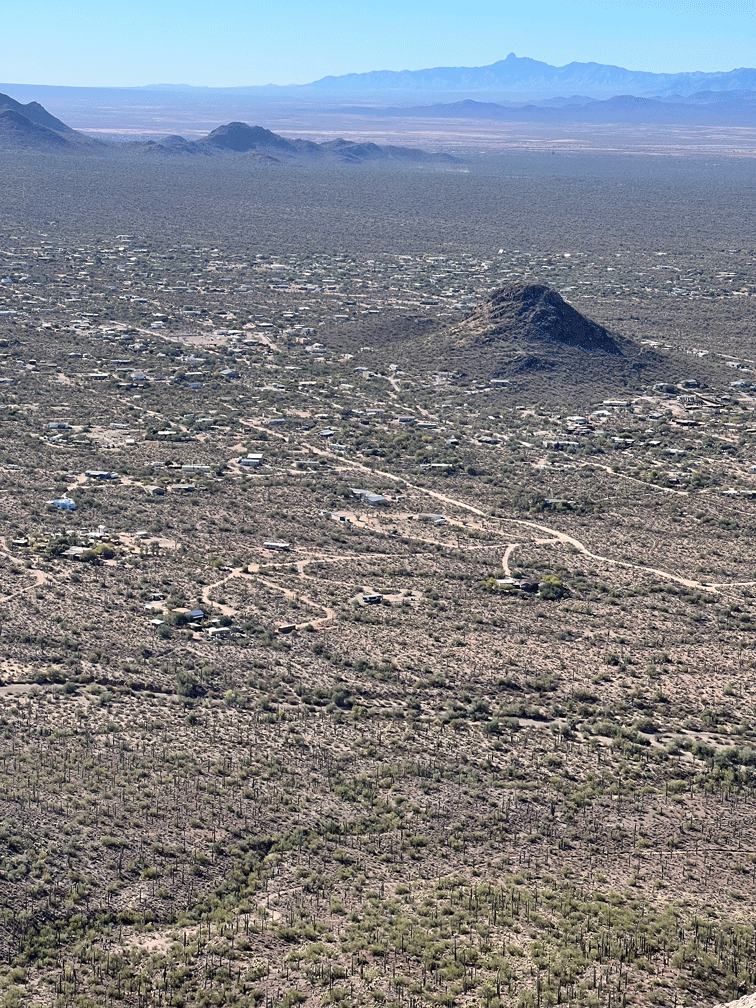
Here’s a southwest view from the first viewpoint, overlooking the Dove Mountain community. Further along are the Tucson Mountains with Panther Peak on the right side (the dark triangular mountain.) The prominent mountain in the far distance is Baboquivari Peak, over 120 kilometres (75 miles) away.
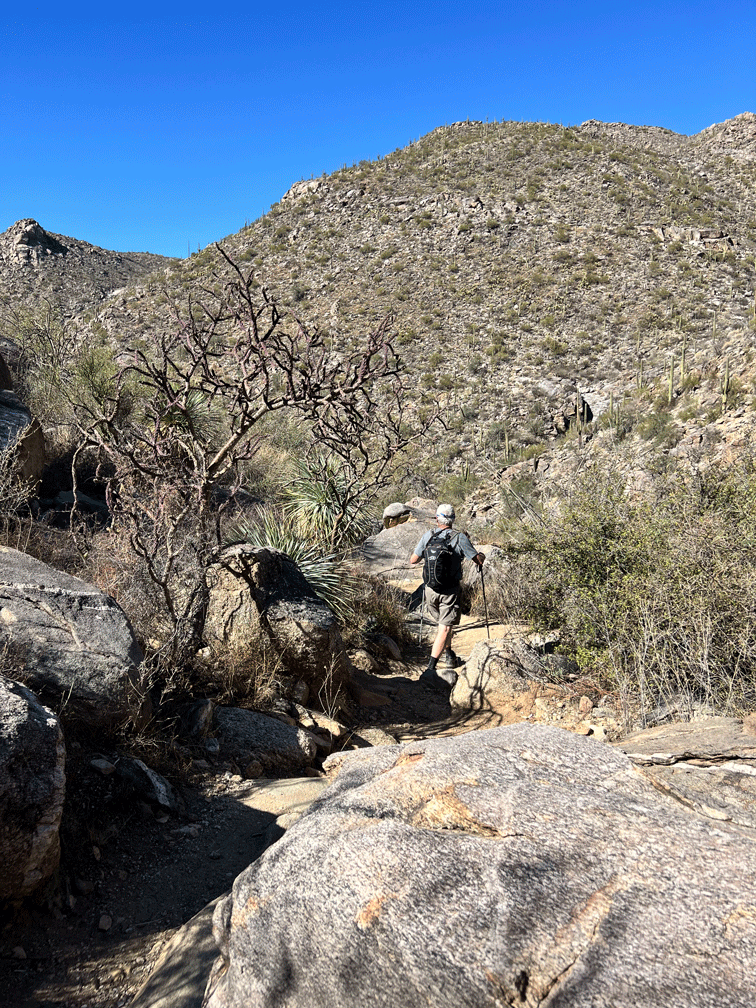
Here Doug is walking down the spur trail to connect with the Wild Burro trail.
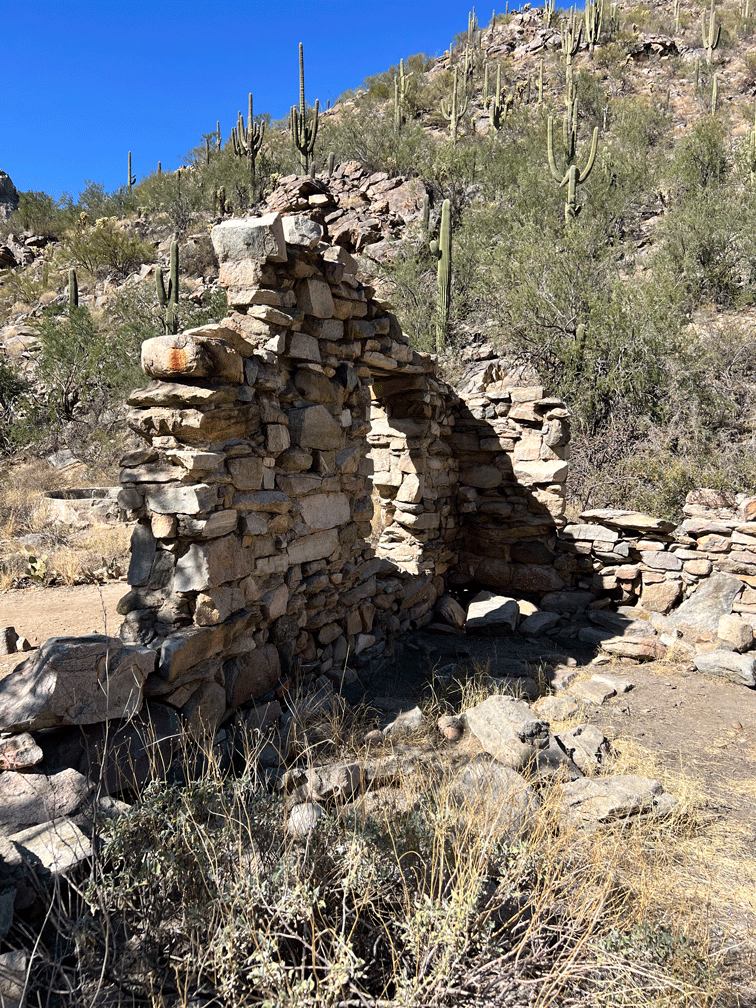
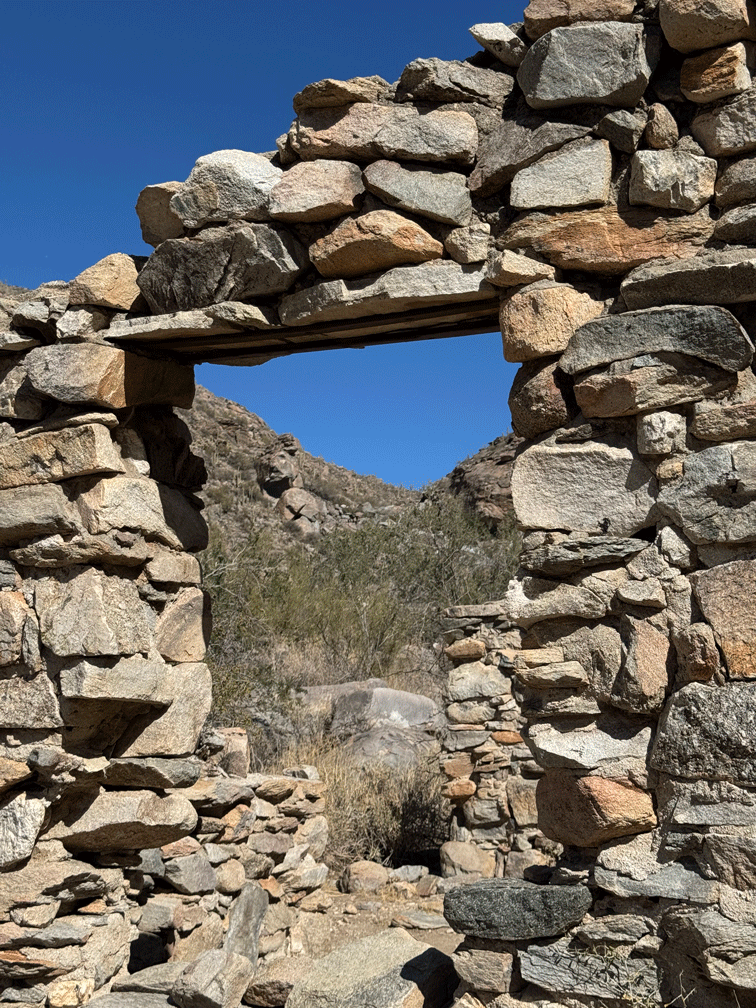
Right above the flat part of the Wild Burro wash is this old stone wall that was part of a building near an old spring. We had lunch here, then made our way back to the trailhead on the flats. The whole hike was just under nine kilometres and we completed it just over four hours.
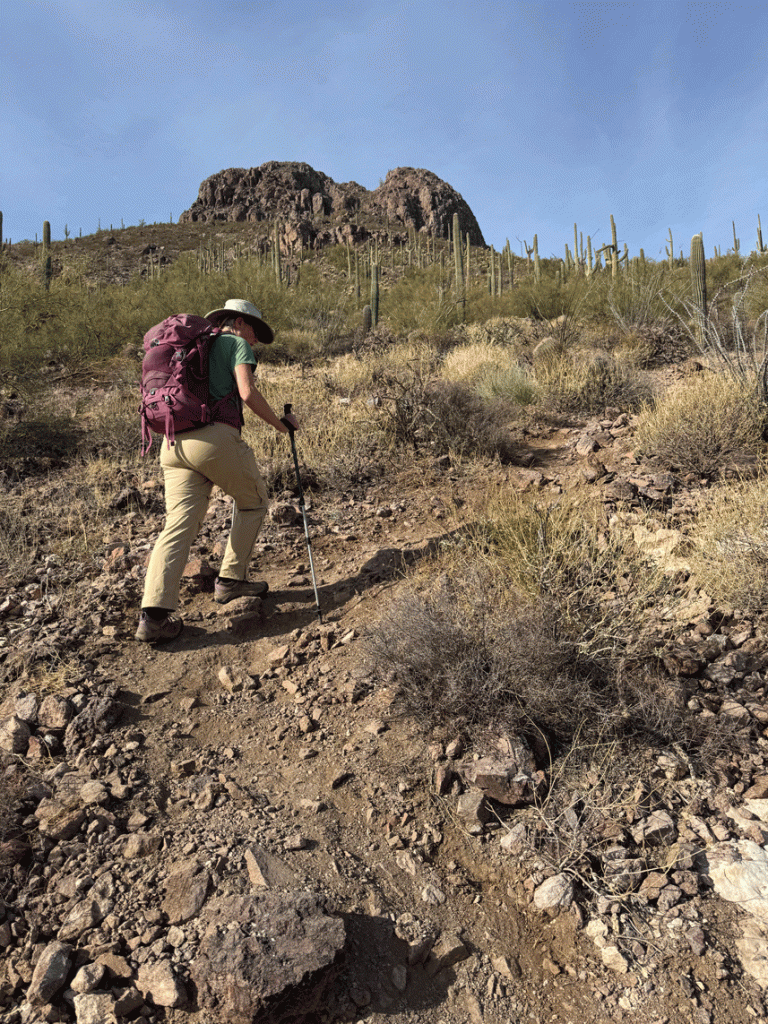
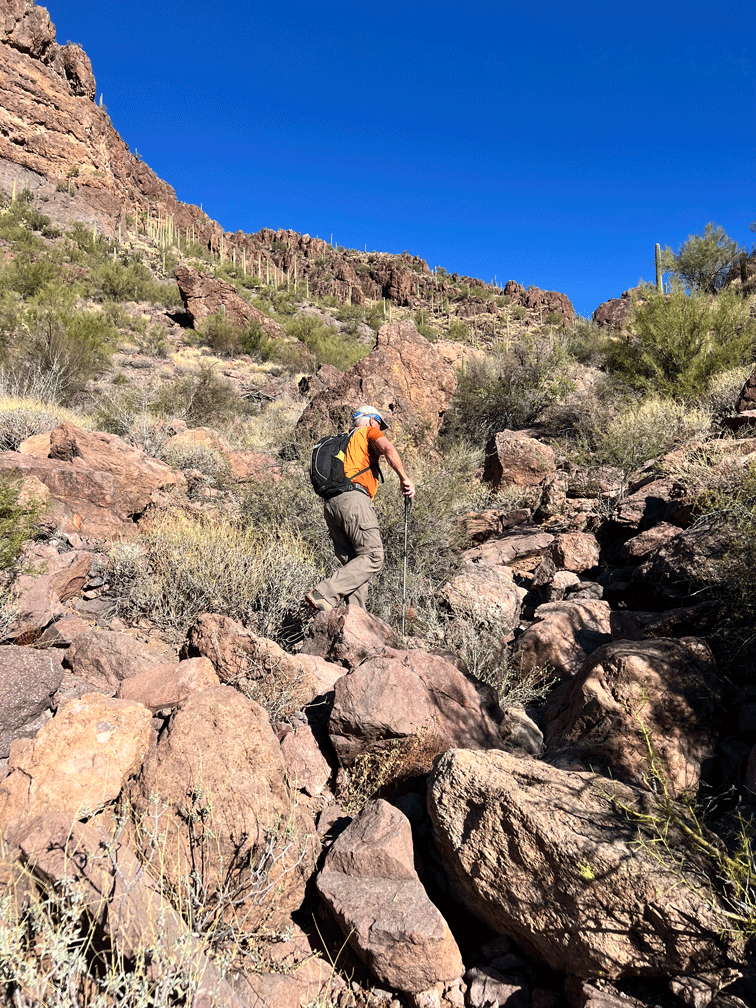
A week and a half later, we decided to climb Mt. Safford, also known as Sombrero Peak. The whole mountain looks a bit like a big hat from a distance. The trail goes around the cliffs on the left side and comes around the back. We gained the summit by climbing up to the prominent notch (the “dent” in the sombrero) that is visible in the photo below.
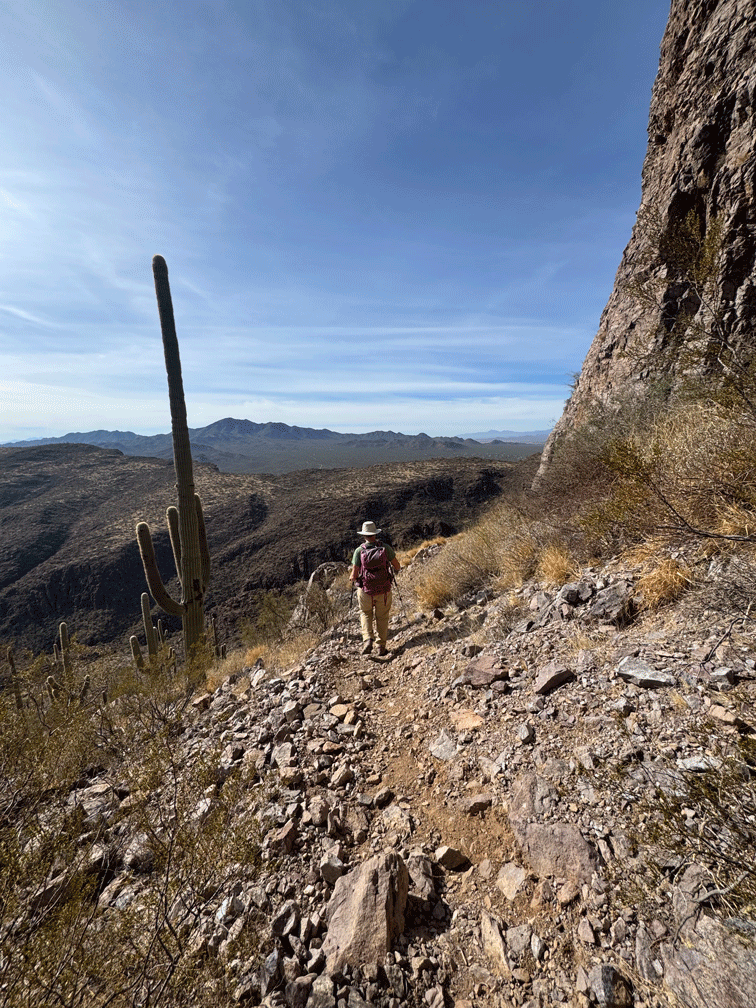
Here Wendy is walking below the cliffs, facing southwest. Mt. Wasson is the tallest peak in the background.
Near the summit.
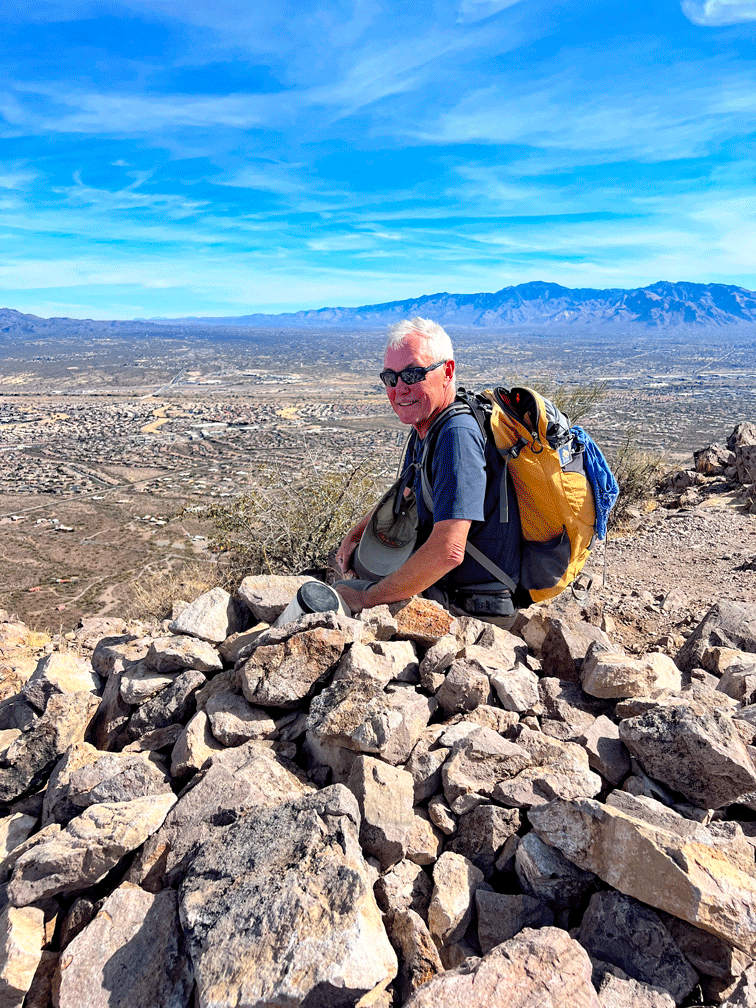
Here’s Doug on the summit. Mt. Lemmon is directly in line with his pack in the photo below. The Tortolita Mountains, the location on our previous hike, are at the far left in the photo.
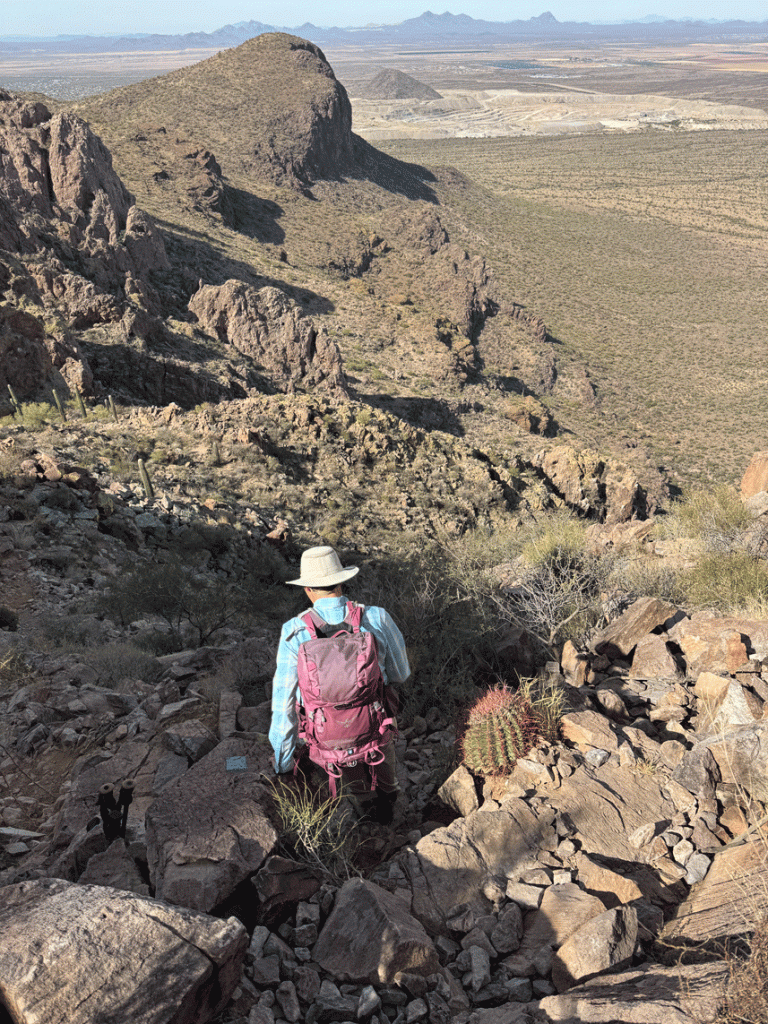
In this photo, Wendy is just about at the spot that we left our poles. The healthy-looking barrel cactus was our landmark. Notice also the blue rectangles that have been painted along the route to help with navigation. We had a good view of Panther Peak. Panther Peak is part of the same massif as Sombrero, and not that far away, but there is no easy way to get over to it. As we were descending, we saw a Peregrine Falcon soar along the cliffs and land on a ledge.
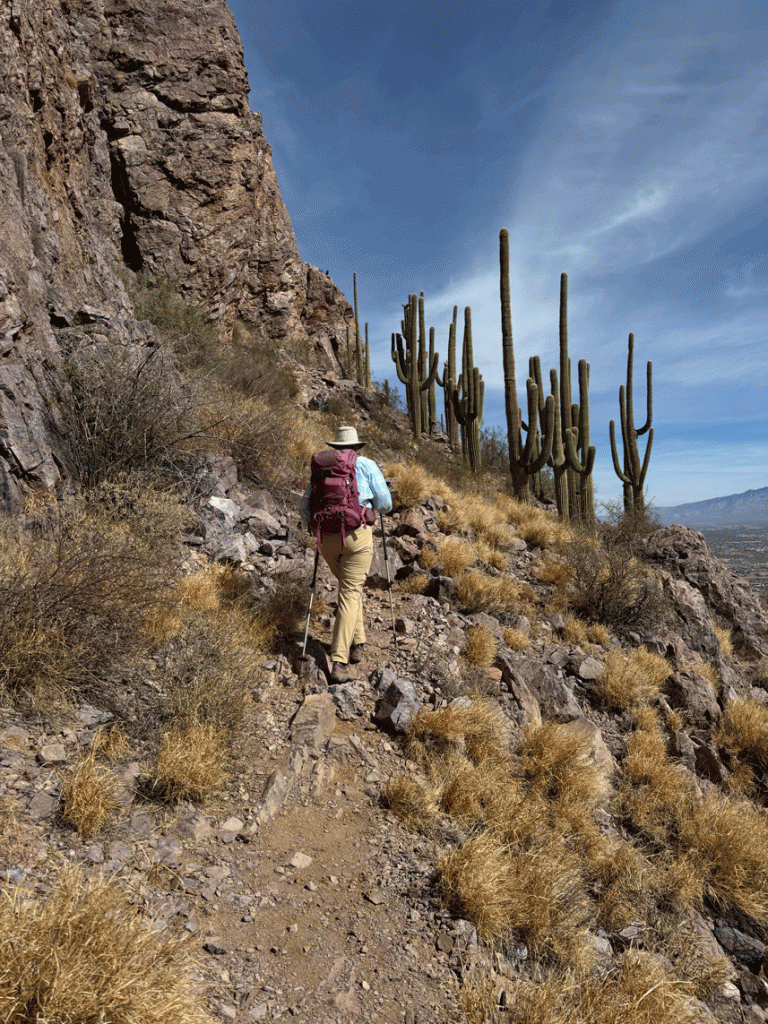
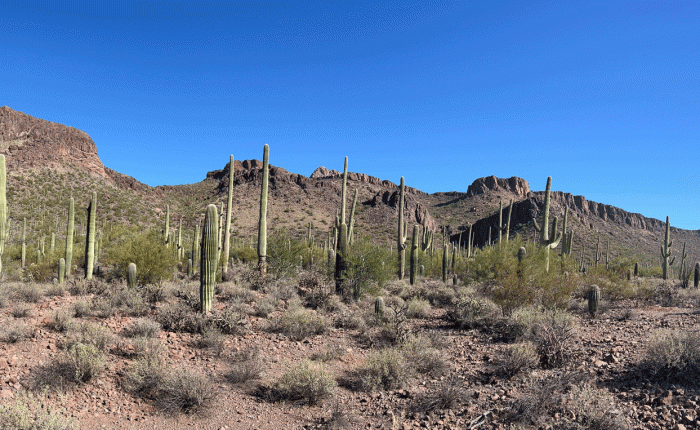
We worked our way down the trail and around beside the cliffs. We’re impressed with the large number of tall saguaros that grow near the cliffs.
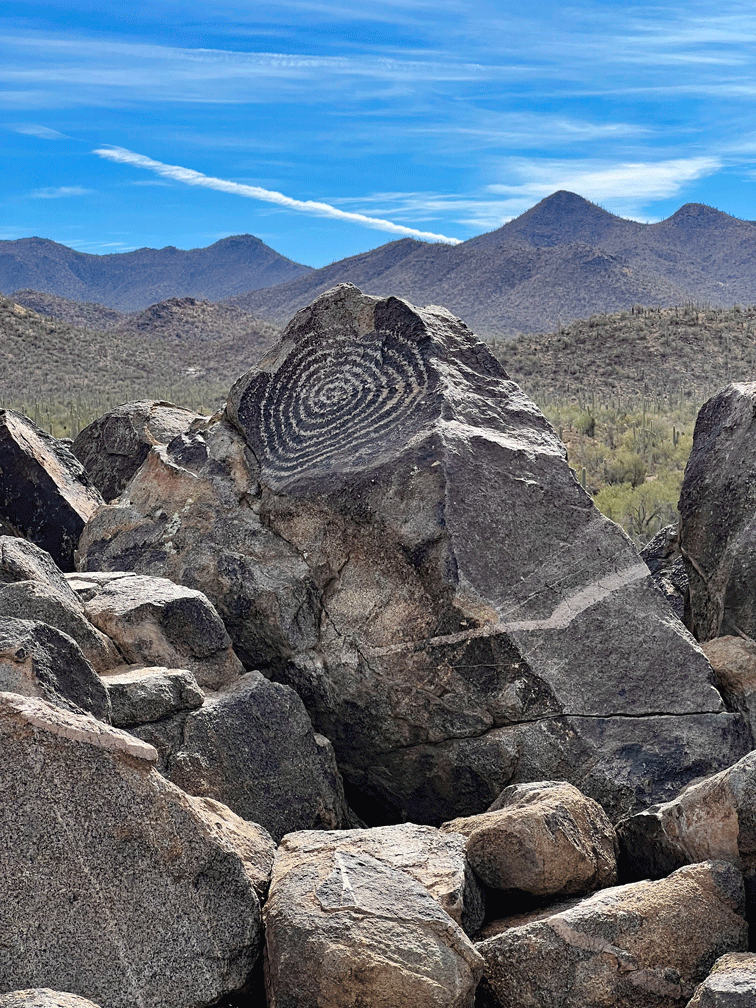
Another day, we were in Saguaro National Park (West) Signal Hill looking for birds. We were unsuccessful with our target, but we were close to Signal Hill. We hadn’t walked the short trail for over five years. It has been improved since that time, with the addition of many rock steps. The photo below is the typical view of the most prominent petroglyph that is featured in tourist literature. It’s quite close to the trail at the top of the hill and is easy to see.
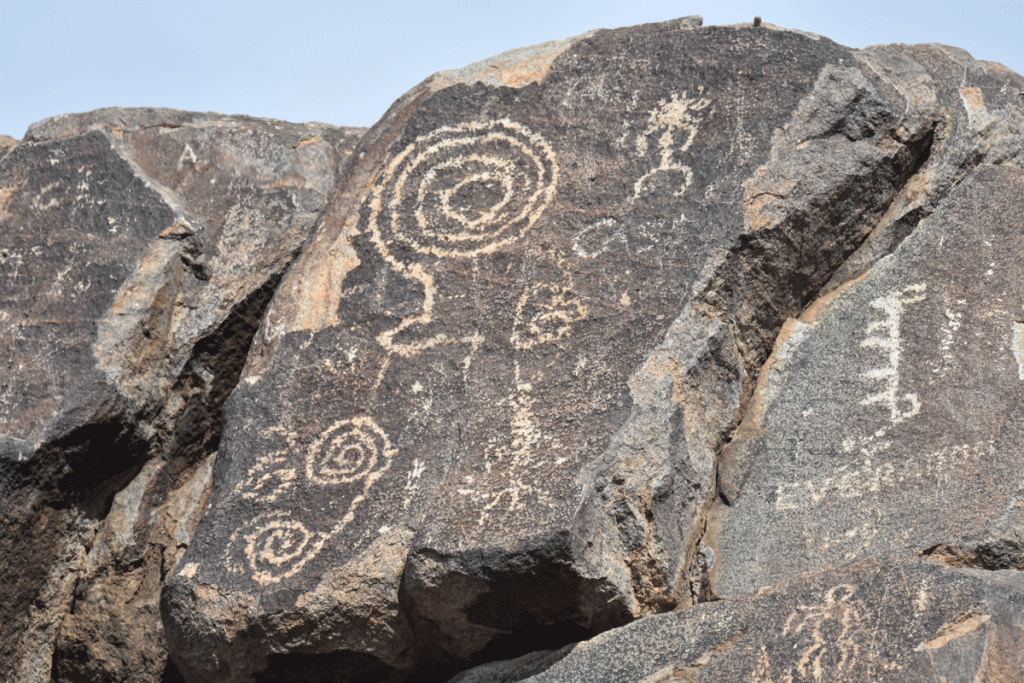
The following petroglyphs are on the south side of the hill, quite a ways from the trail. Since we had our binoculars with us, we could study them easily. Doug took these photos with his telephoto lens. Unfortunately, the photos also show damage to the site, likely before this area was part of the National Park.
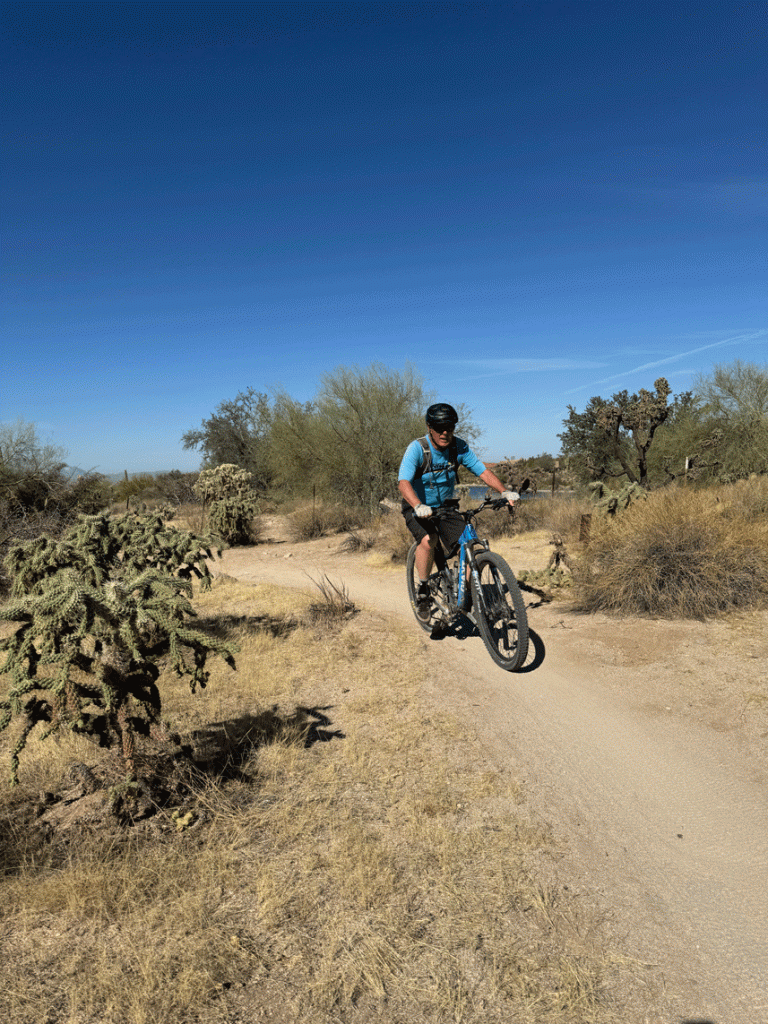
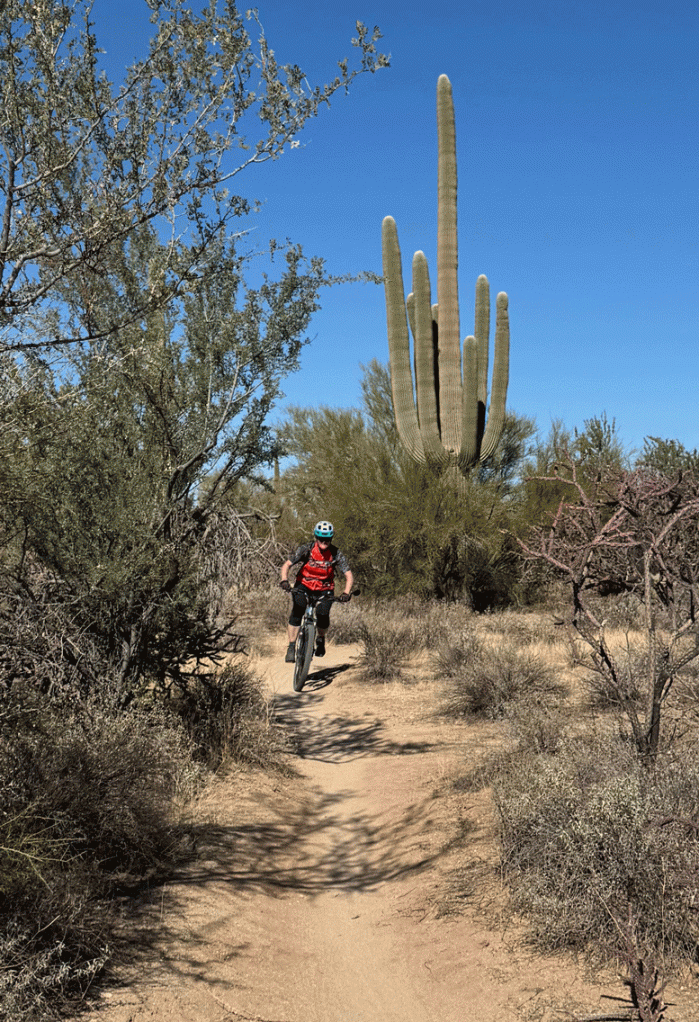
We rode at the Tortolita Preserve again this month. Even though it is a small area, there is interesting terrain. We’re trying to take photos of different parts of the trail. Here, Doug is riding in front of a lake that is part of the golf course just beyond the fence.
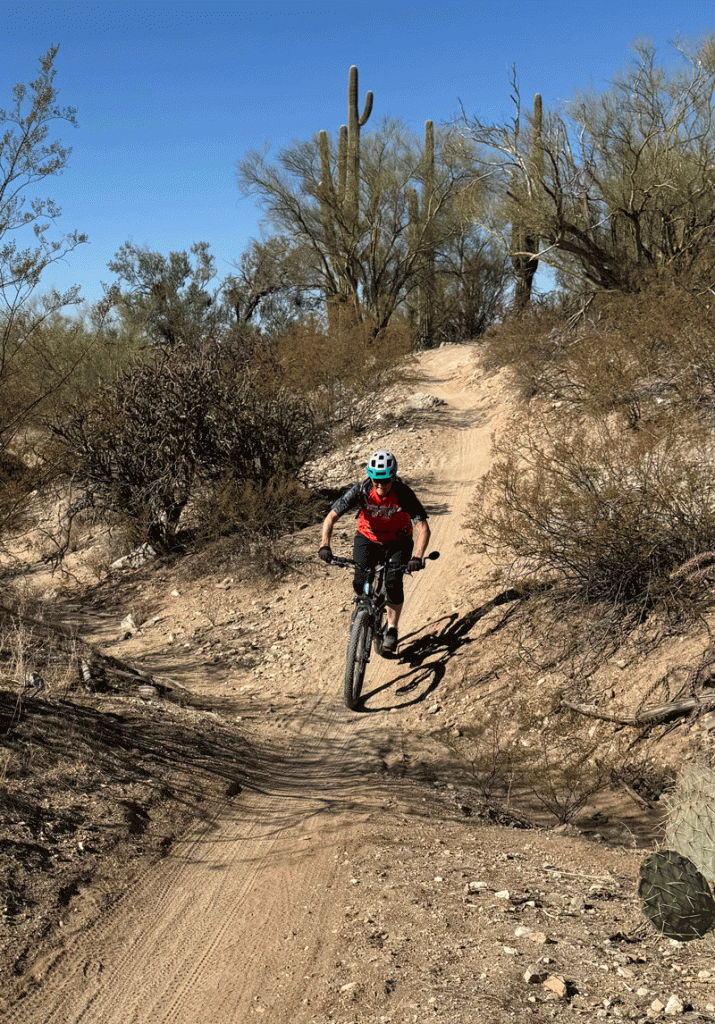
Here Wendy is riding down one of the smoother approaches to a narrow wash.
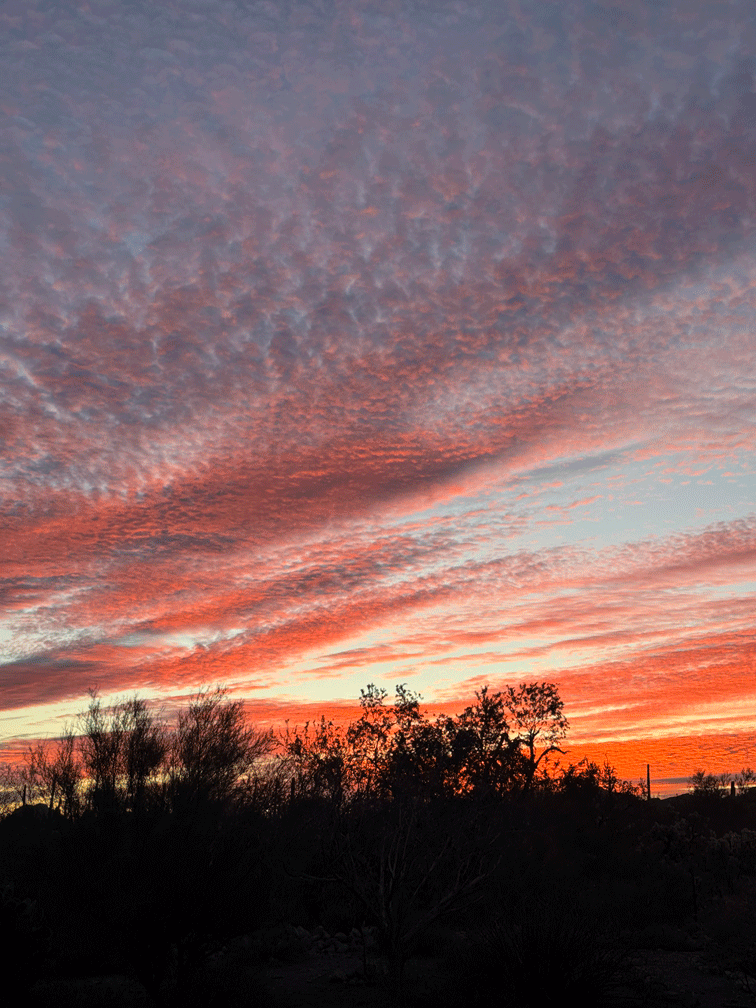
To end, we’ve included two sunrises this month. No sunsets made the cut. This one is from February 11.
And this was sunrise on February 17.
There will be two more posts to record our February events. The next one will be about our trip to Northern Arizona and the third one will be about our birding adventures. Coming soon…
This blog post will focus on selected photos of all the other birds we saw in January, grouped by location.
On January 1st, we started the new birding year at Sweetwater Wetlands. There are many species that call the wetlands home, and it doesn’t take us long to get there. We met several other birders with the same idea. The ponds were filling up after being drained in the fall, but there were still plenty of shallow spots and mudflats. We saw four Wilson’s Snipes which is the most that we have ever seen there.
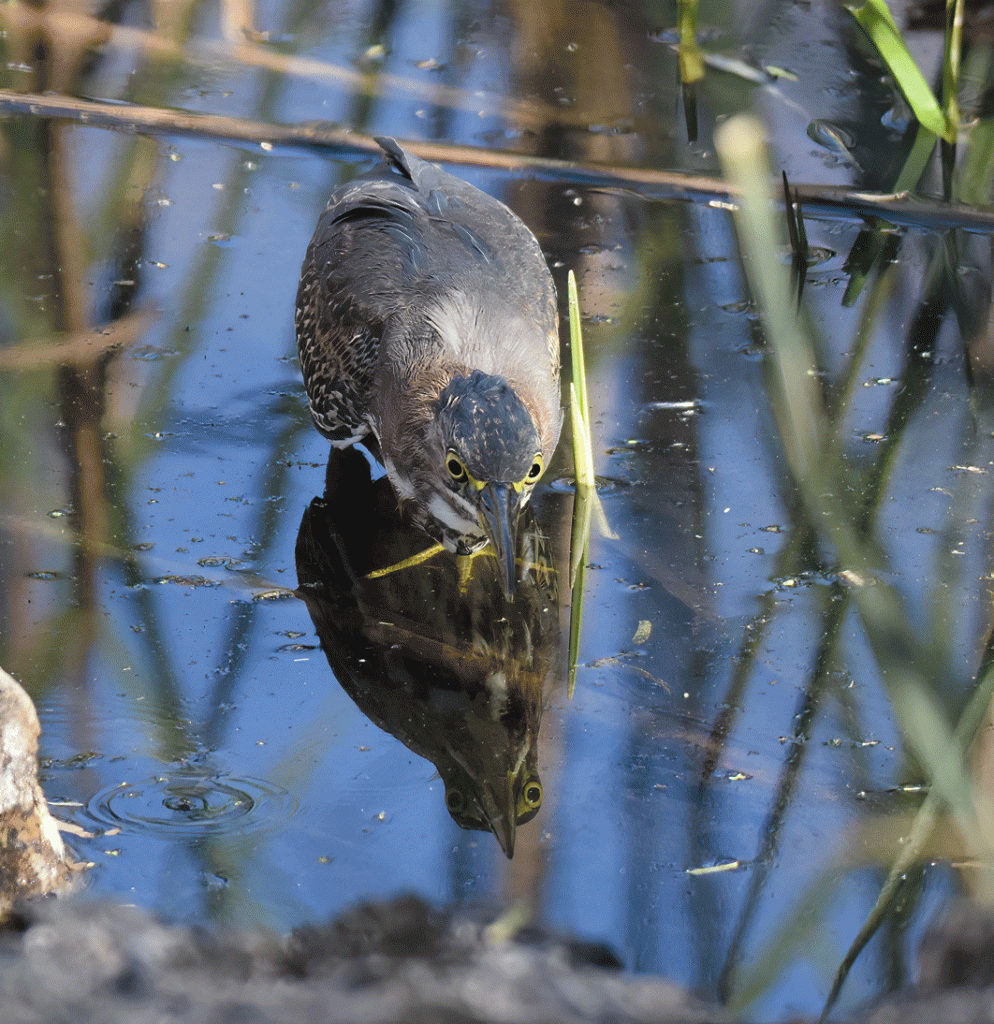
This Green Heron was poised to catch its dinner, although it looks a little like it is practicing its “scary look” in the water’s reflection.
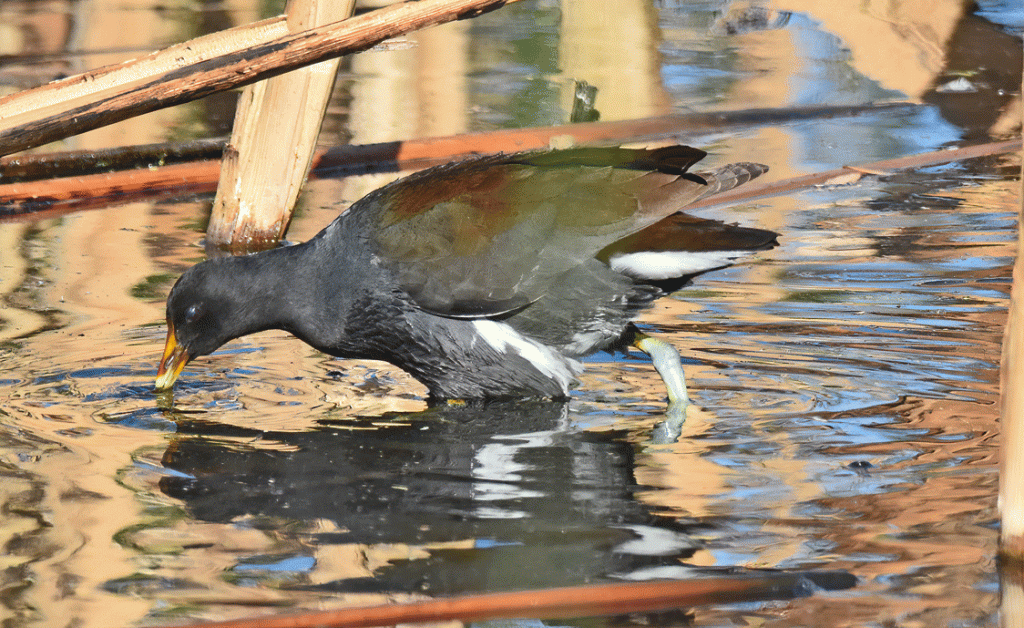
This Common Gallinule is starting to develop the red shield on its head. It should be in fully breeding colour by February. They are in the same family as the more abundant American Coot.
We often see a Cooper’s Hawk at the Sweetwater Wetlands. This one is immature, so it is still brown and streaky.
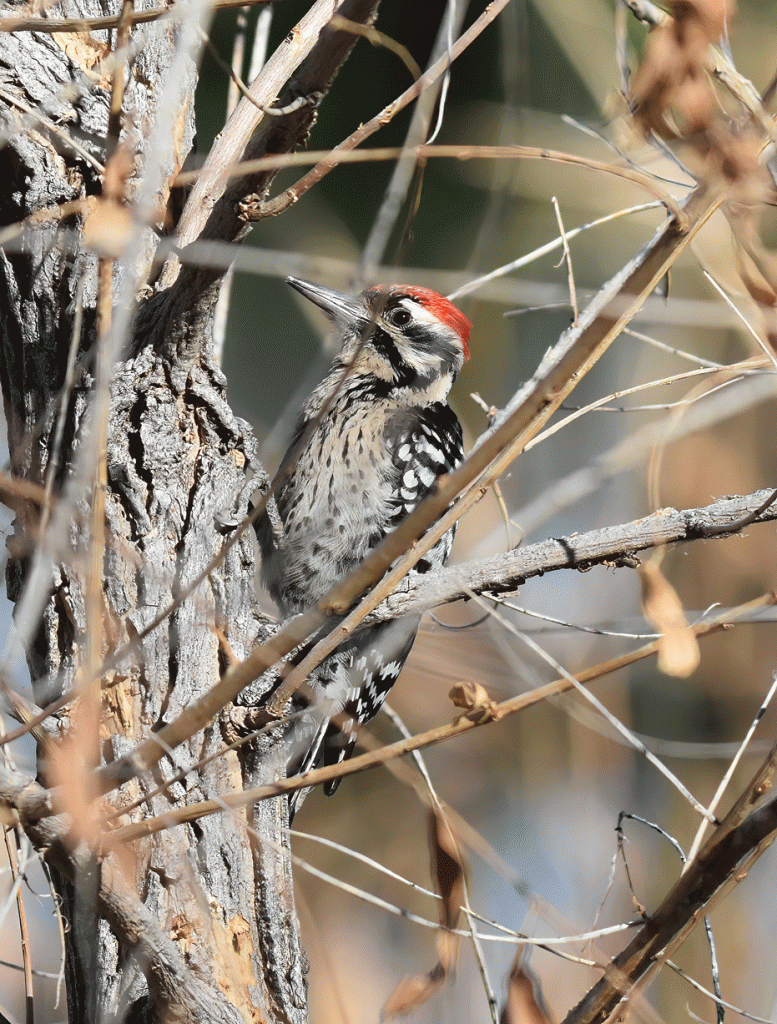
The Ladder-backed Woodpecker sounds a lot like a Downy Woodpecker but is a bit bigger, with a longer bill and barring on its back resembling a ladder. The two species ranges hardly overlap, so when we hear a “pwik” call, we know to look for the Ladder-backed.
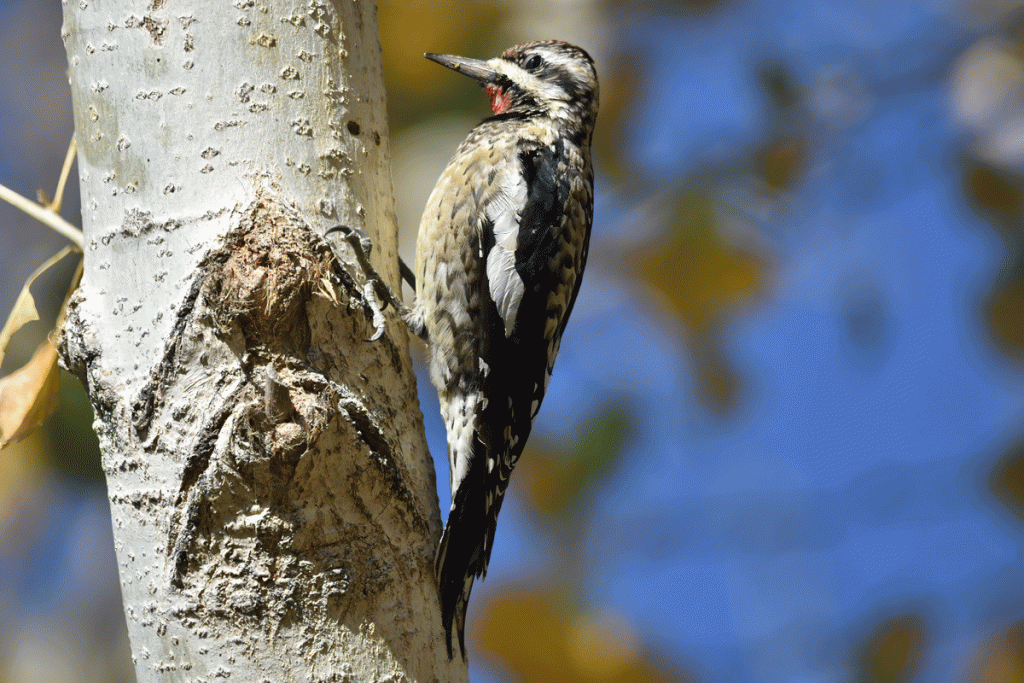
This Yellow-bellied Sapsucker is a bit bigger than a Ladder-backed Woodpecker and has a distinctive white patch on its wing like many other species of sapsuckers. This one was a rarity because it is out of its winter range, which should be Texas and parts east. It differs from the more common Red-naped Sapsucker by having less red and black, and more white on its head. Its yellow belly can be difficult to see and is sometimes almost absent. We really like to have a photo in order to be sure of our identification.
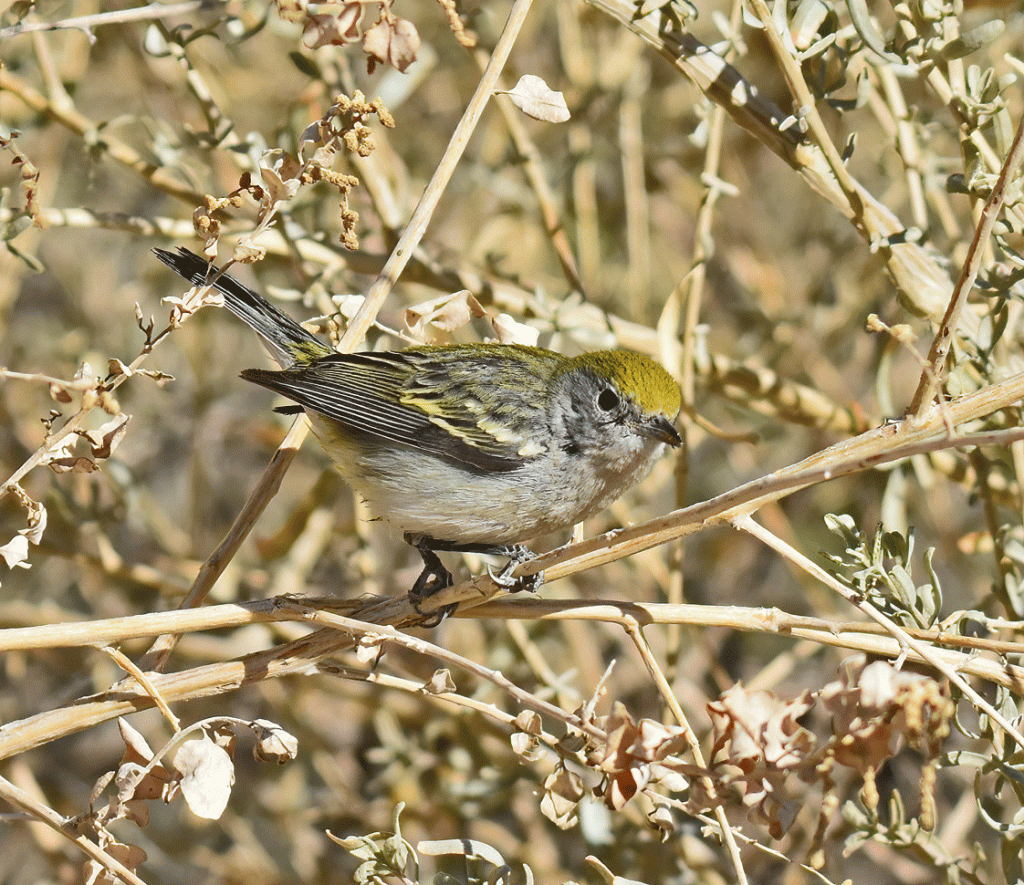
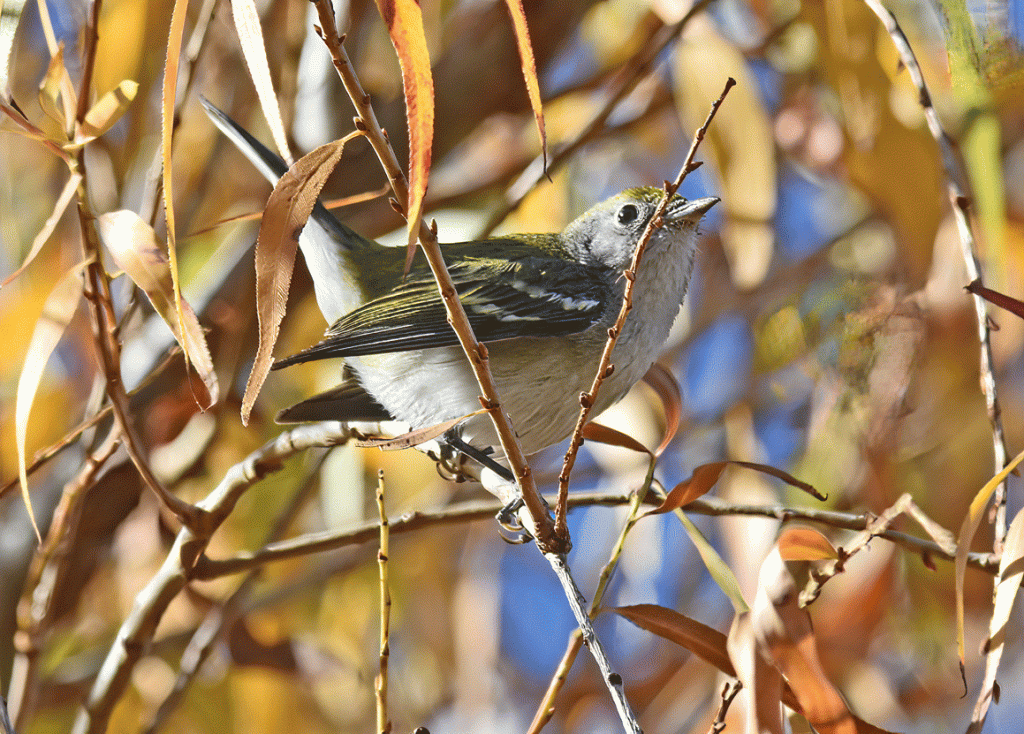
Another rarity at Sweetwater Wetlands was this female or immature male Chestnut-sided Warbler. The species usually winter in southern Mexico and Central America. This one has stuck around the wetlands for several months, so it seems to have found a spot that fulfills its requirements. On the day that Doug took this photo, it was foraging in low bushes near the pathway, seemingly unbothered by people walking by.
And because it’s such a pretty bird, here’s another photo showing its lime-green back a little better. It will develop “chestnut sides” when it matures.
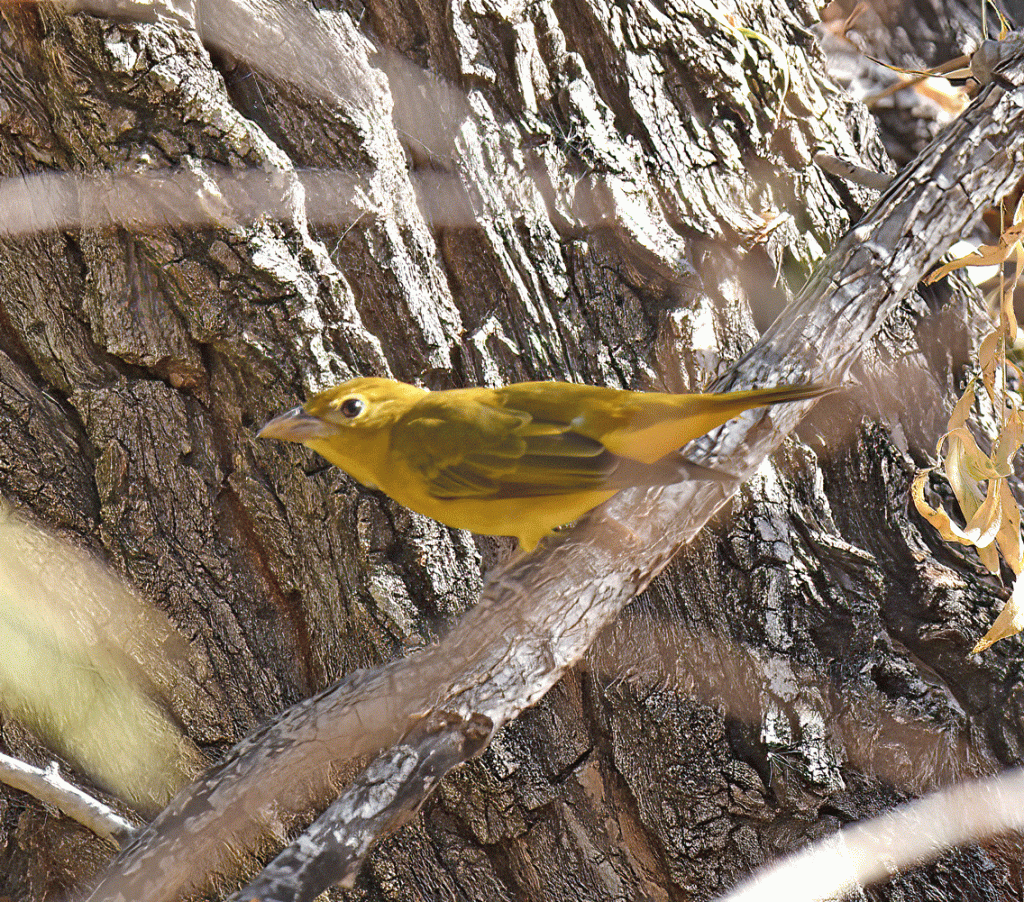
On January 1st, we headed over to Christopher Columbus Park after Sweetwater. We were lucky enough to see this rare female Summer Tanager in the sunshine. It seems that this one decided not to migrate. The species usually winter in southern Mexico, Central America and northern South America and can be found in Arizona in the summer.
On our way home, we stopped at a spot under a bridge to see a Barn Owl. At home in the afternoon, we recorded the birds on the feeders and on the ground in our yard. The sixty-eight species that we tallied gave us a good start on our 2025 list.
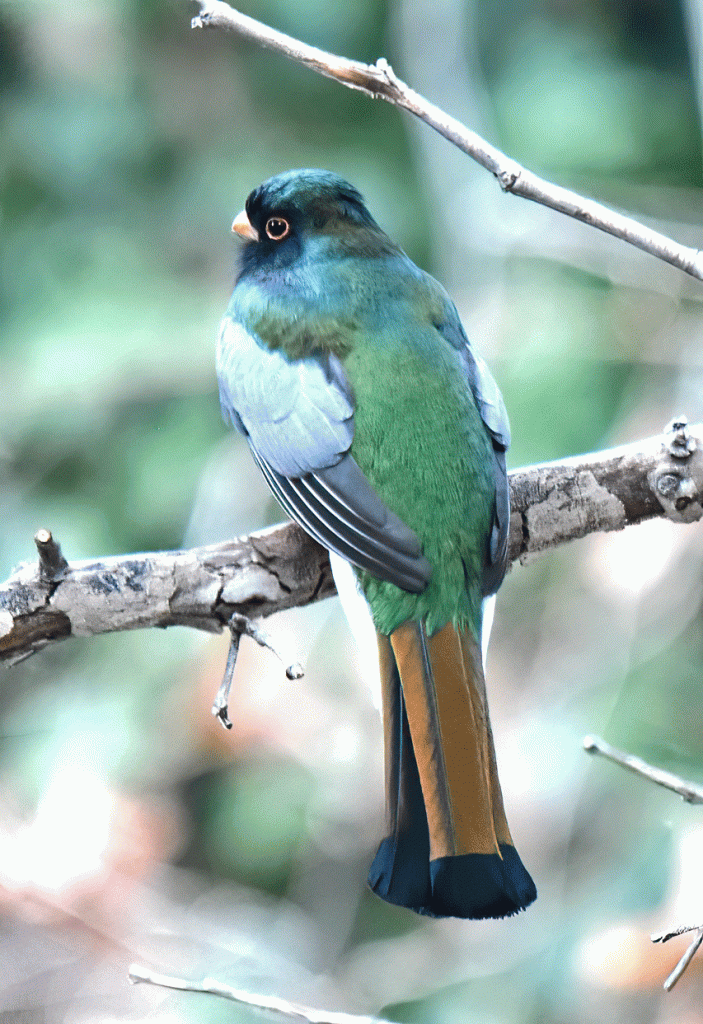
Madera Canyon is famous as a home for the Elegant Trogon. We set off early on January 2nd, prepared to wait all morning if we needed to. The trogon must have been hungry for the pyracantha berries because we it showed up within fifteen minutes. Doug took the photo of its green back and coppery tail; his favourite view.
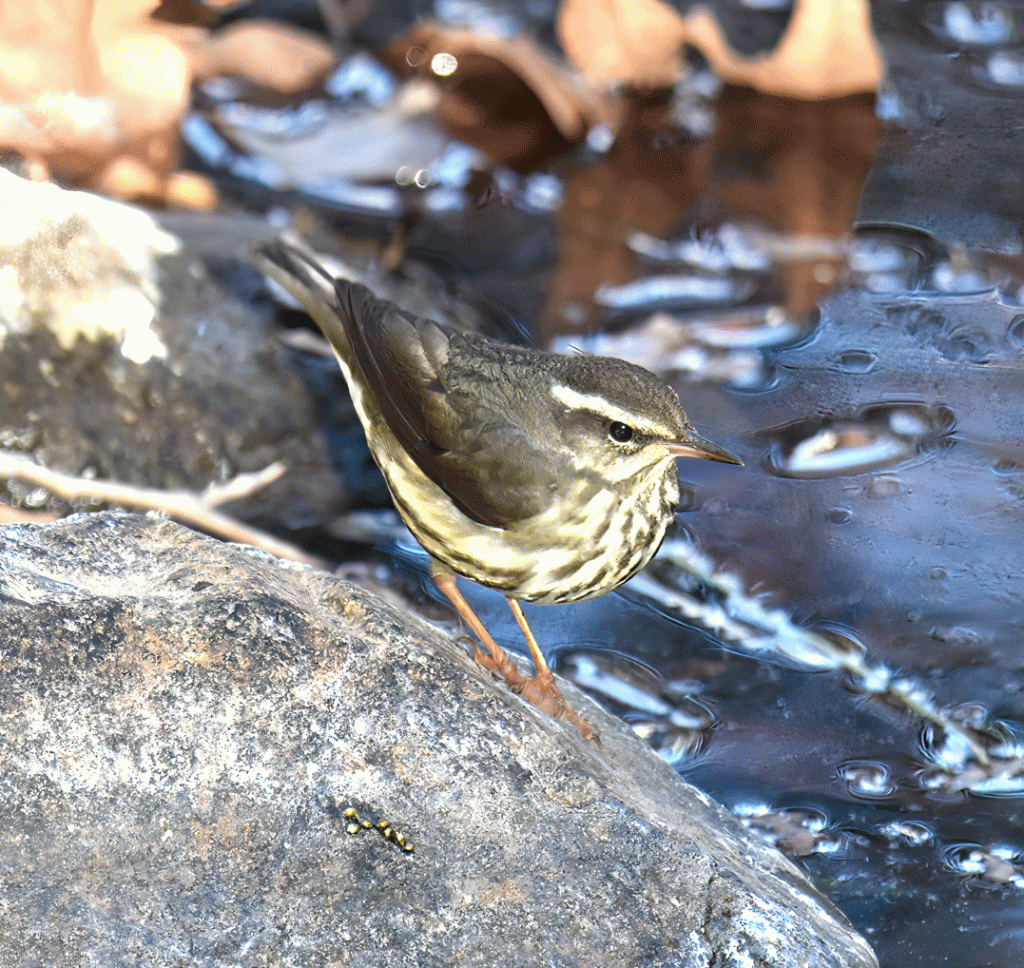
It was only 8:45 that same day, when we started hiking downstream from the Madera Canyon Picnic Area. We were lucky again! We saw this rare Louisiana Waterthrush bobbing just below the bridge we were standing on.
Florida Canyon is close to Madera Canyon and a beautiful place to go birding. We visited it twice, once early in January and again near the end of the month.
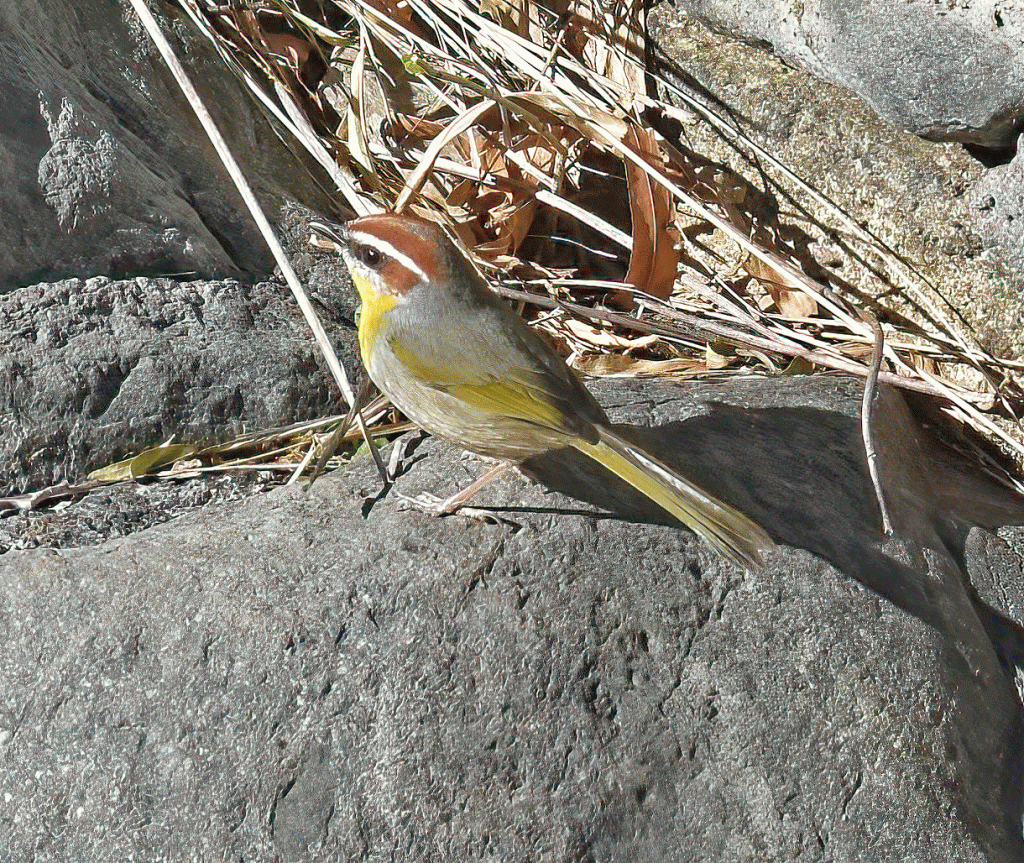
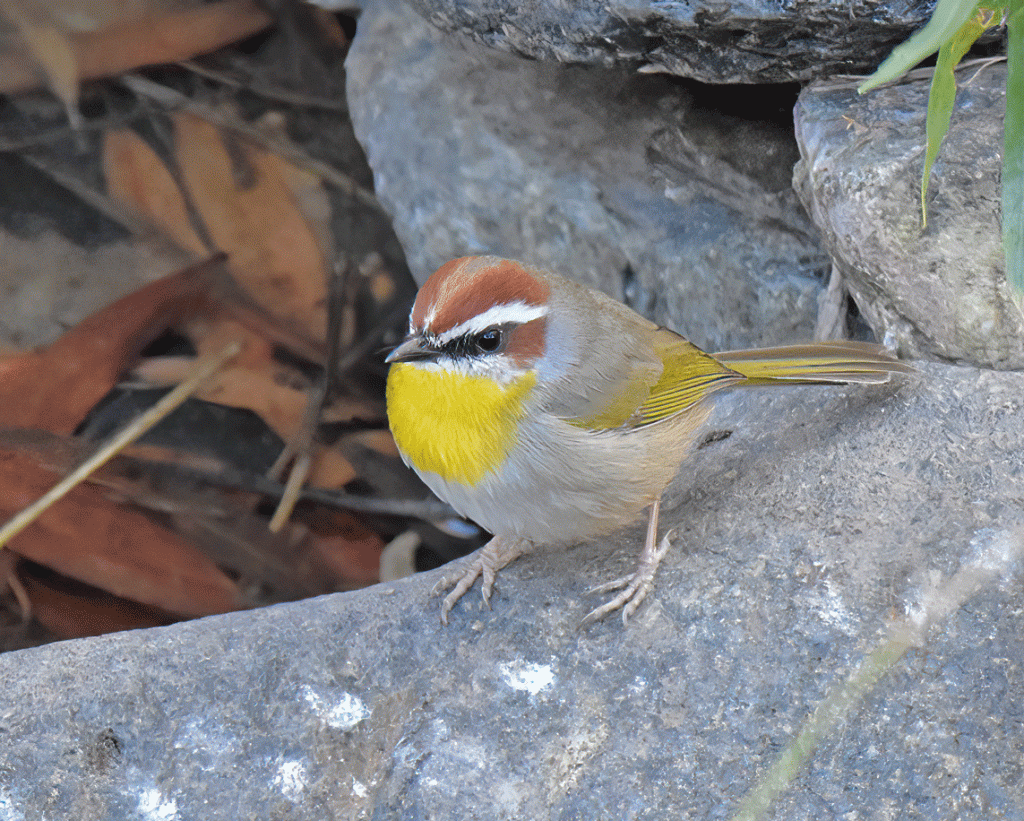
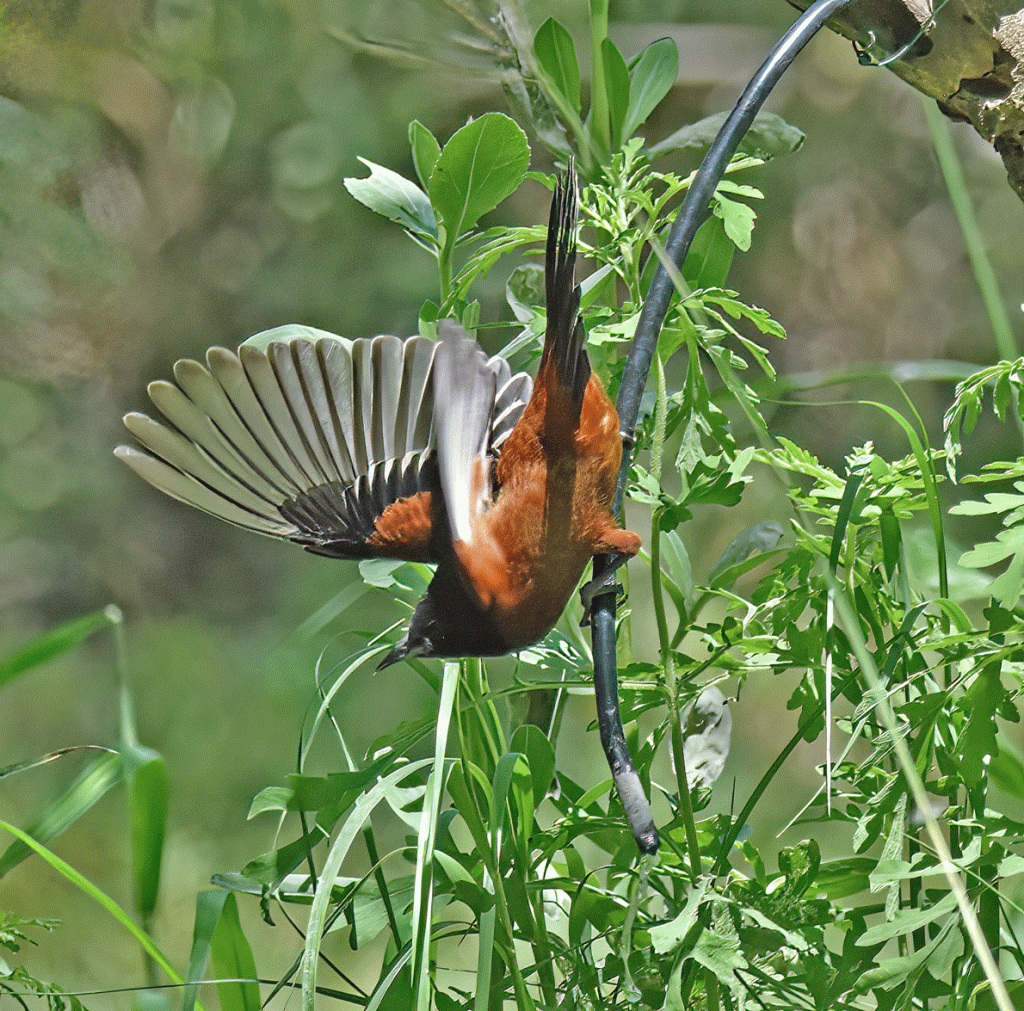
Both times, we were lucky enough to see this rare Rufous-capped Warbler. It likes to feed on insects near the bottom of an old dam, where there is a shallow pool.
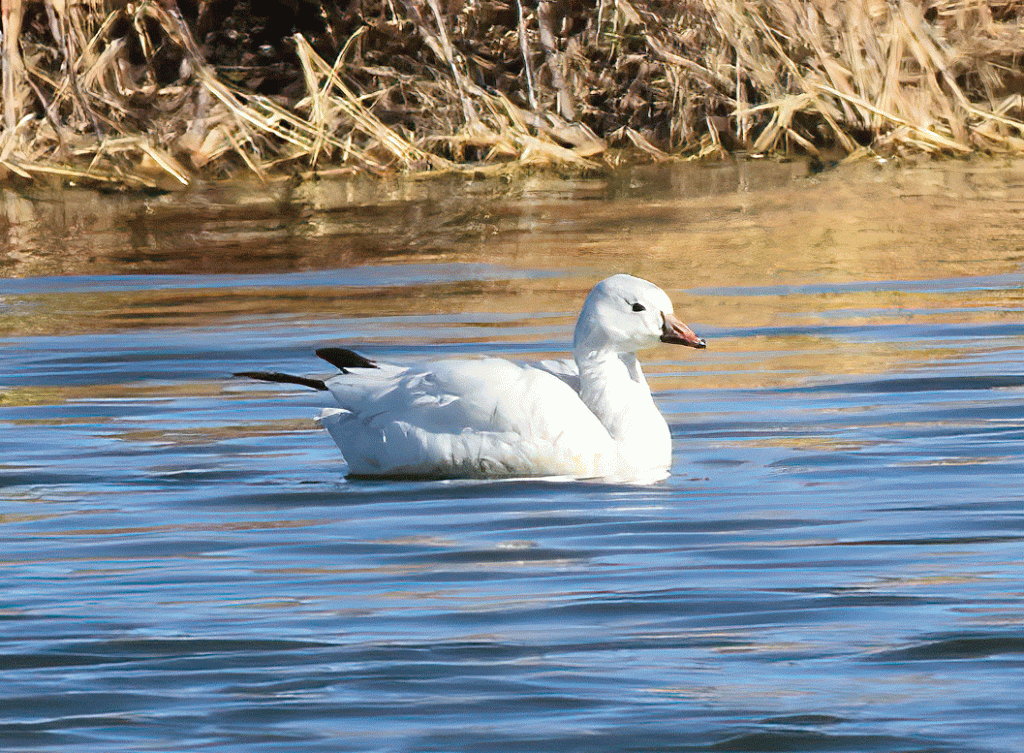
We visited the Amado Water Treatment Plant in hopes of seeing a Ross’s Goose. When we went in the morning, we couldn’t see it and wondered if it had flown away. We returned in the afternoon and it was easy to see. While we were there, it took off, circled and flew north. We thought we had been really lucky to see it before it left. Now we know that it came back and has been living there for a month and a half. Perhaps it will stay a lot longer. It’s very similar to a Snow Goose, but smaller.
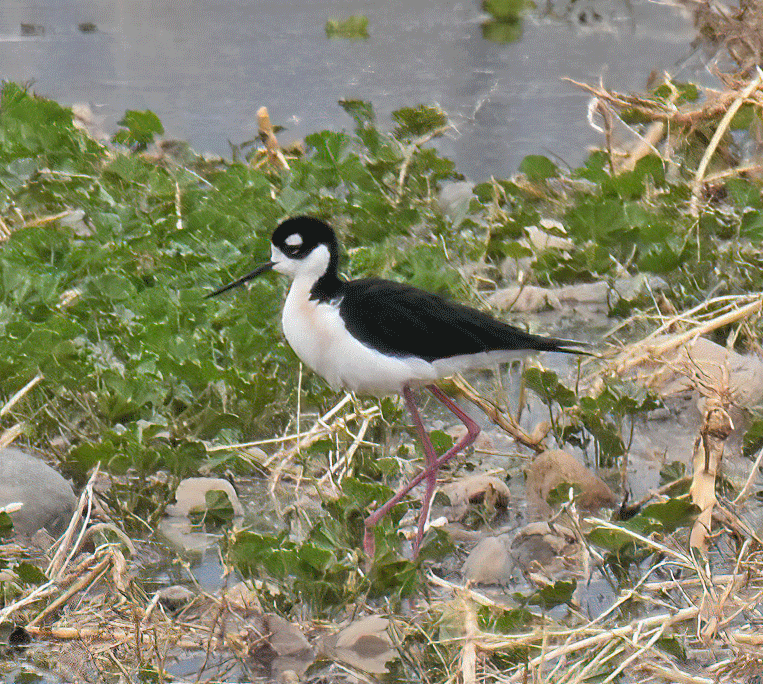
Water Treatment Facilities are great place to find birds in the desert of Arizona. We saw this Black-necked Stilt at the Green Valley WTF. It walks delicately on its long reddish legs.
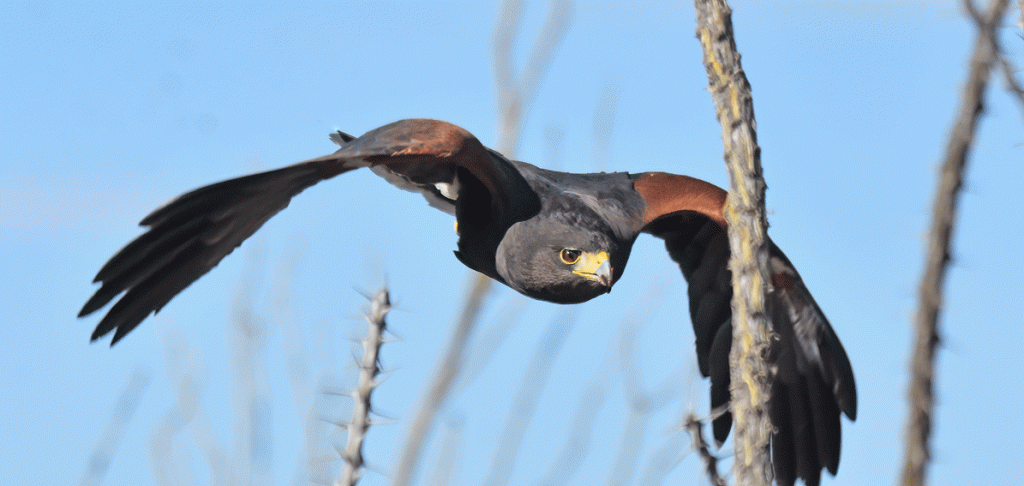
The Raptor Free Flight show was not very crowded on one of our visits to the Arizona-Sonora Desert Museum, so we joined the audience. We love watching the Harris’s Hawks swoop close to the ground as they take the most direct route to the food that the trainer has left for them. We sometimes have a family of Harris’s Hawks hunting together near our yard.
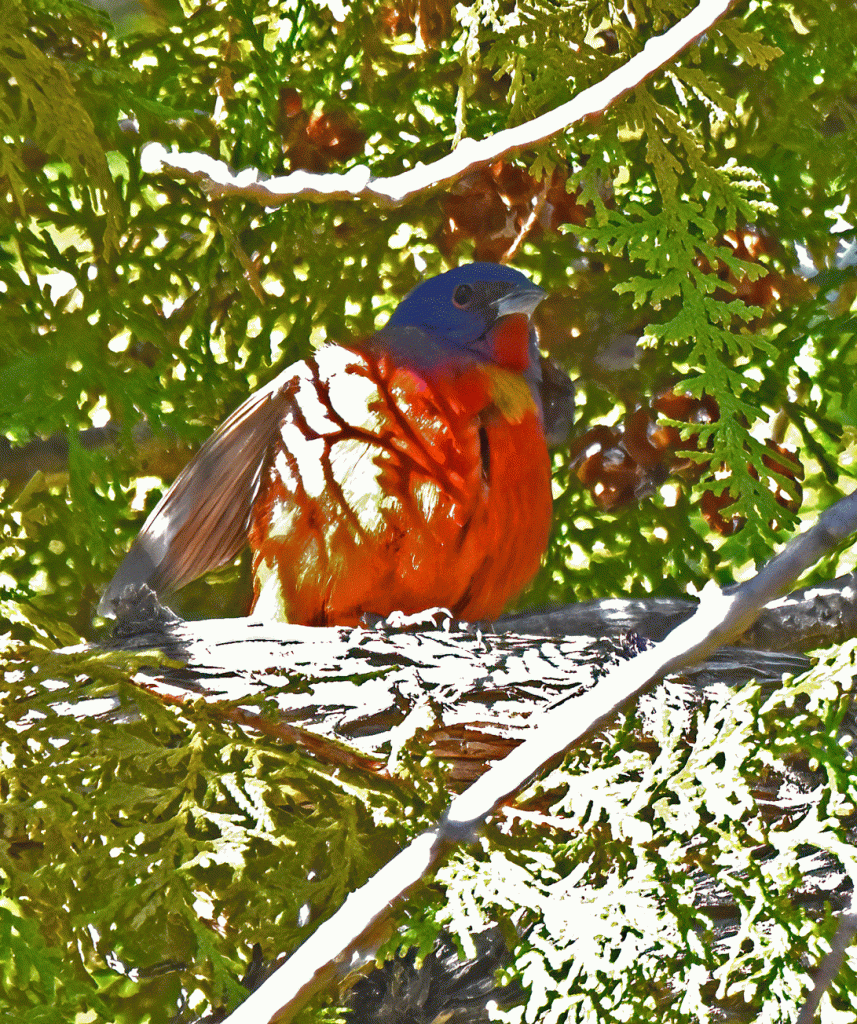
This beautiful male Painted Bunting showed up in a “pocket” park in a Tucson neighbourhood. Usually they should be in Mexico or Central America for the winter. It stayed almost hidden for the whole time we were at the park.
Here’s another view of the Painted Bunting.
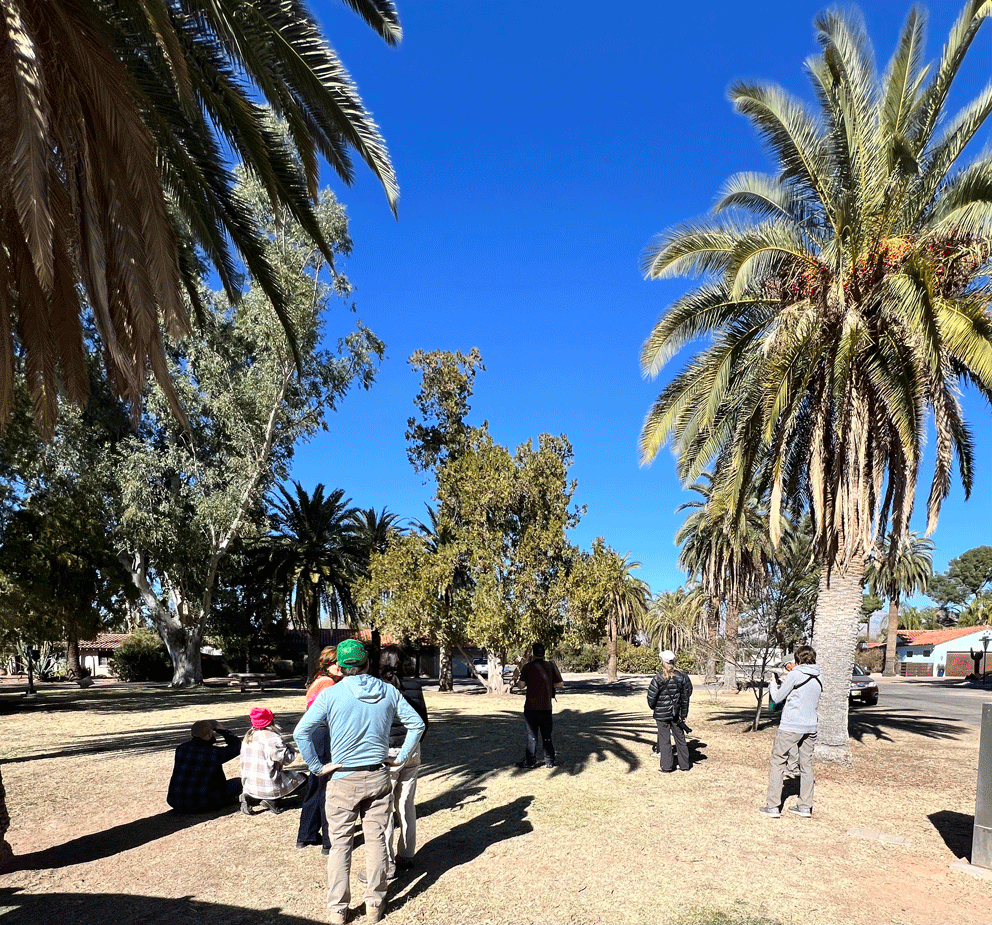
And here’s the little park it was found in. We helped curious neighbours see the bird, which was in the tree in the centre of the photo.
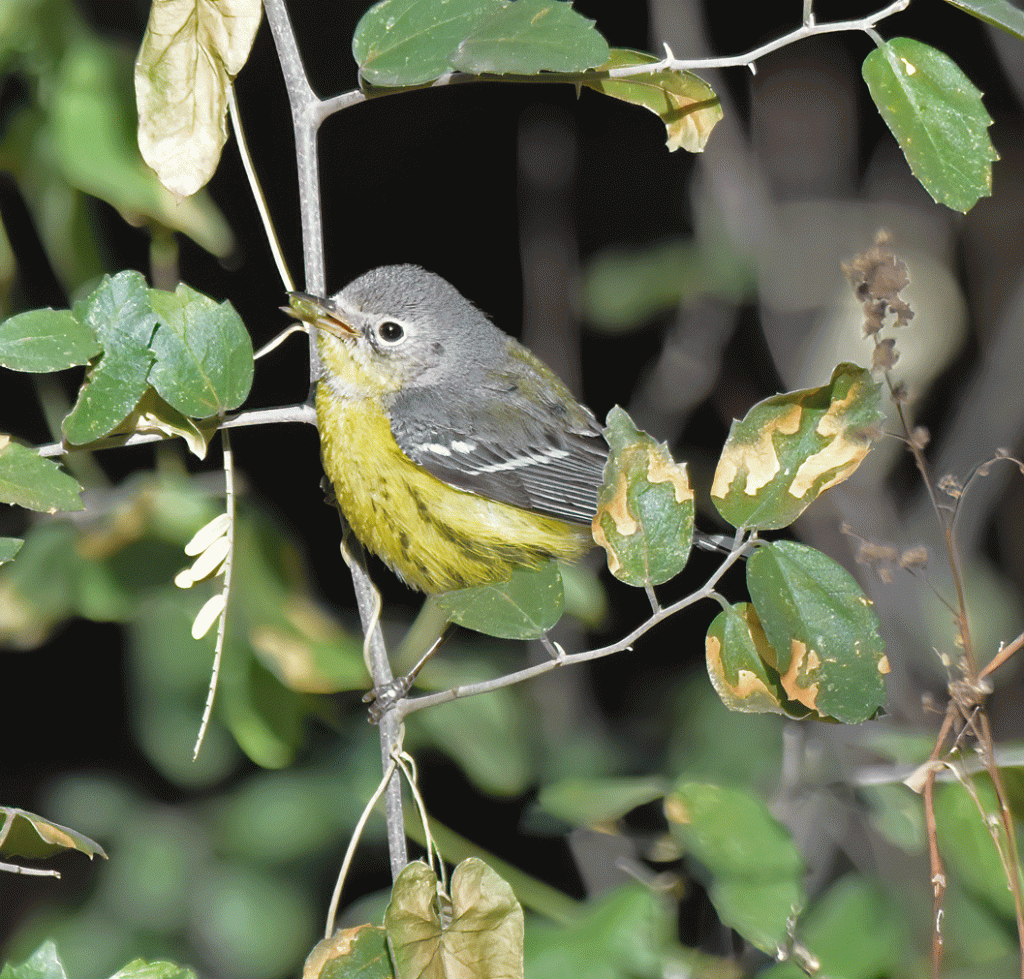
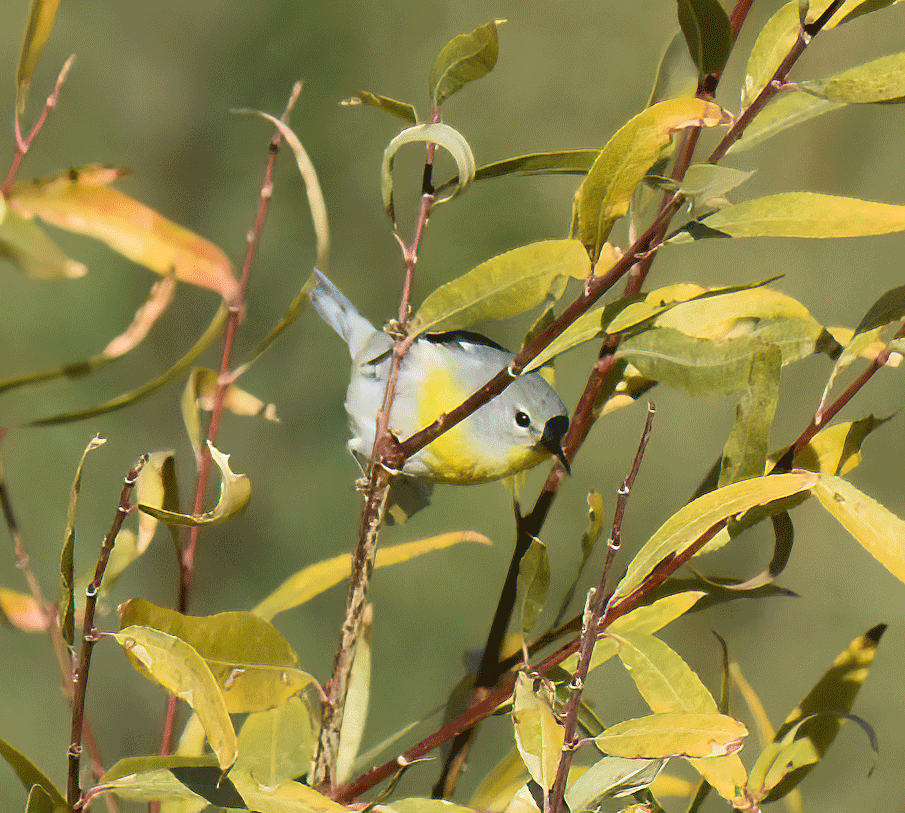
One cold morning, we drove down to Tumacacori and walked back and forth along the Anza trail. A Magnolia Warbler had been seen the day before and we hoped it was still in the area. We were really lucky it popped out in front of us and stayed in the low bushes for several minutes. We were able to alert one of our friends who was nearby and he was also able to get some good photos. A Magnolia Warbler is mostly an Eastern bird and we had never seen one before.
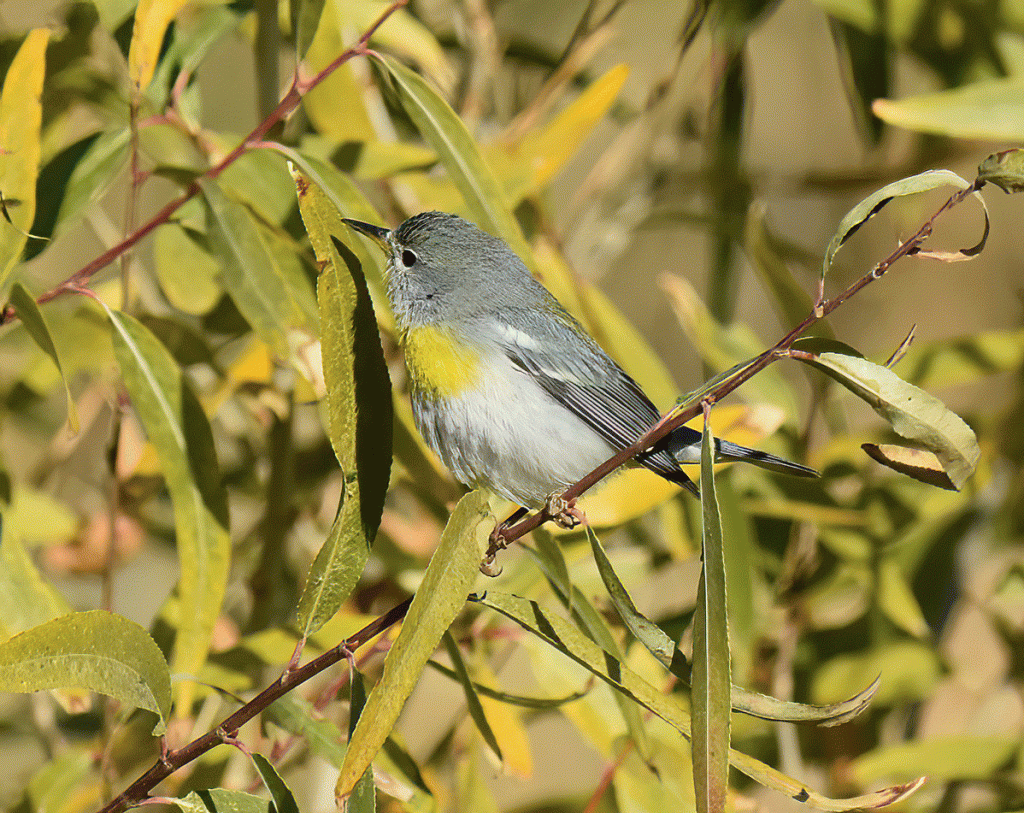
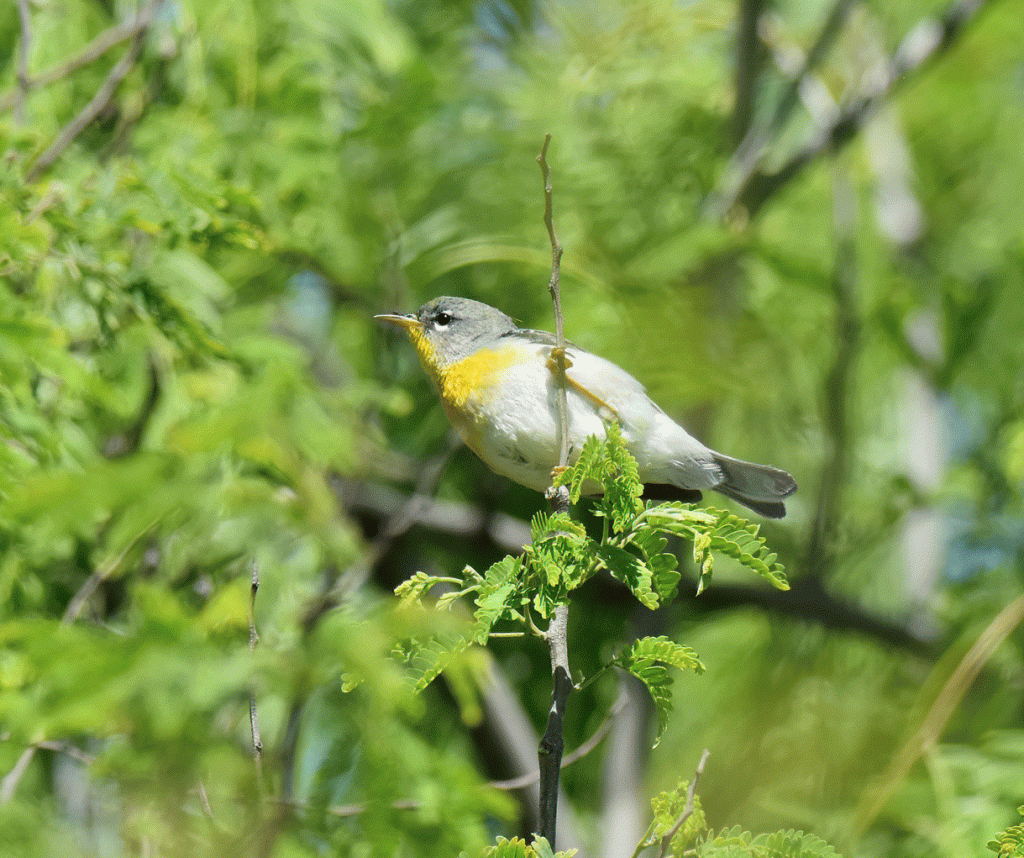
Another eastern warbler is a Northern Parula. This one showed up close to the bike path along the Santa Cruz River near the Ina bridge. We got there a few hours after it had first been reported and were able to locate it in the willows. We also saw a Tennessee Warbler in a nearby tree. We were also able to help another two birders see the Parula, which made our positive experience even better.
Here’s another view of the Northern Parula.
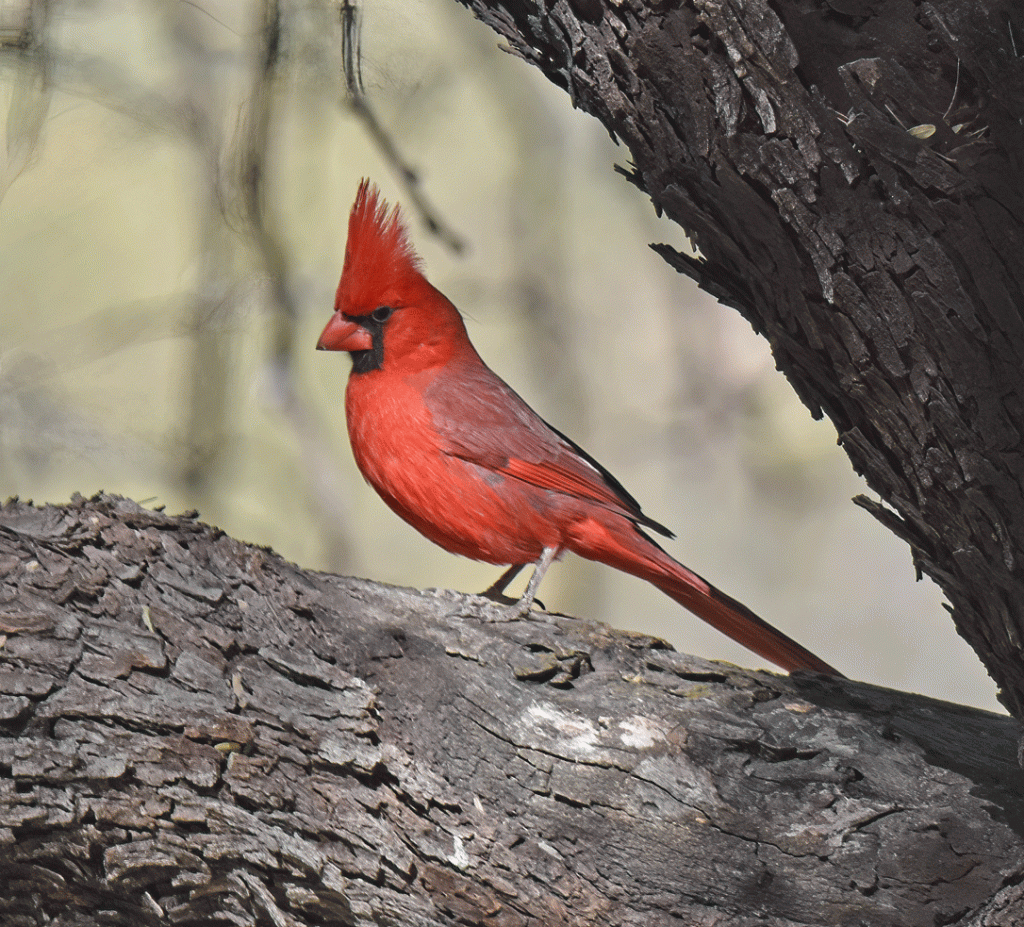
Northern Cardinals are year-round residents and common in our area of Arizona. This one posed nicely in the sunshine at La Posta Quemada.
We have only ever seen Elegant Trogons in Madera Canyon, so we were intrigued when one was reported in a Dove Mountain neighbourhood. Since the “stakeout” spot was only a few minutes from the Tortolita Preserve where we go mountain biking, we decided to swing by and see if we could spot it. When we got there, a birder and a resident had already located it. Here is a cellphone photo of the trogon.
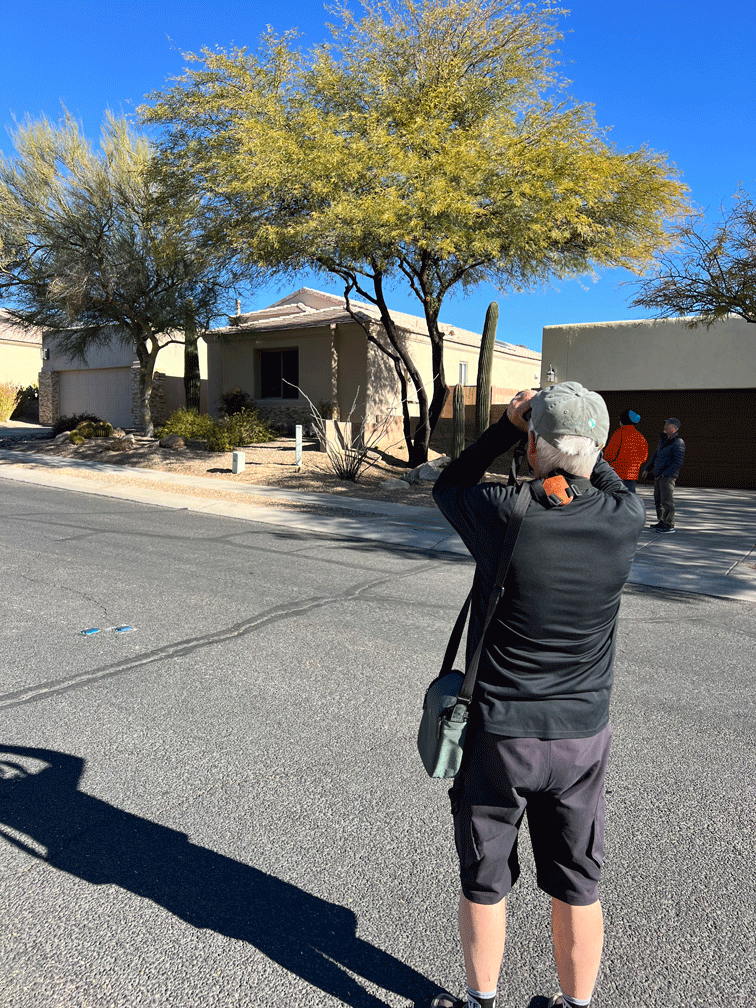
This is a view of the neighbourhood and the two trees where we saw the Elegant Trogon.
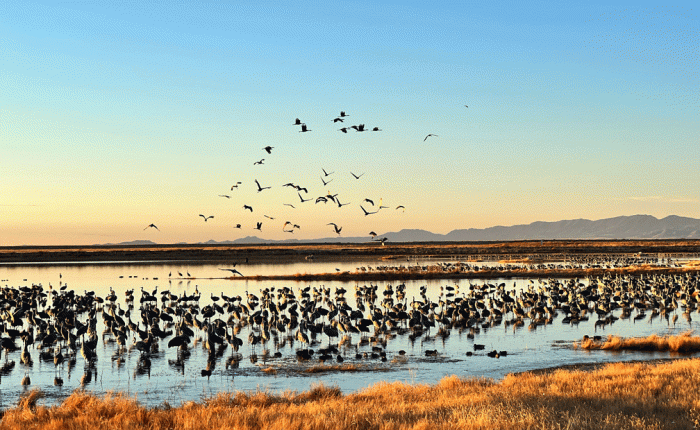
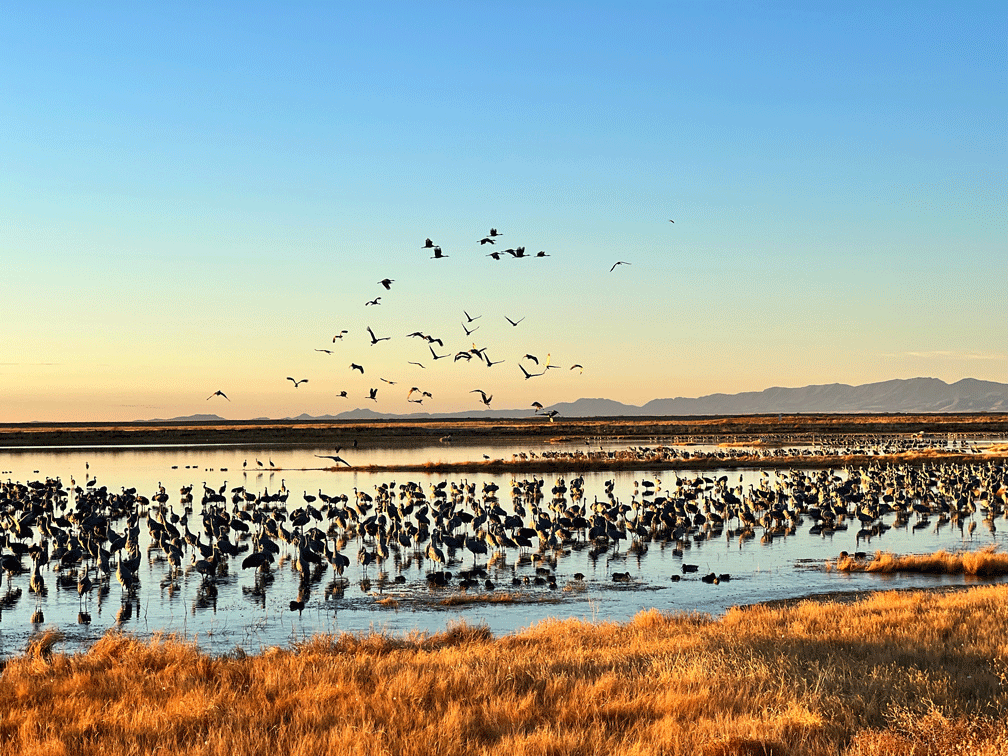
In the middle of January, we drove to Willcox and got there just before sunrise. We watched thousands of Sandhill Cranes take off, but there were thousands still at the shore.
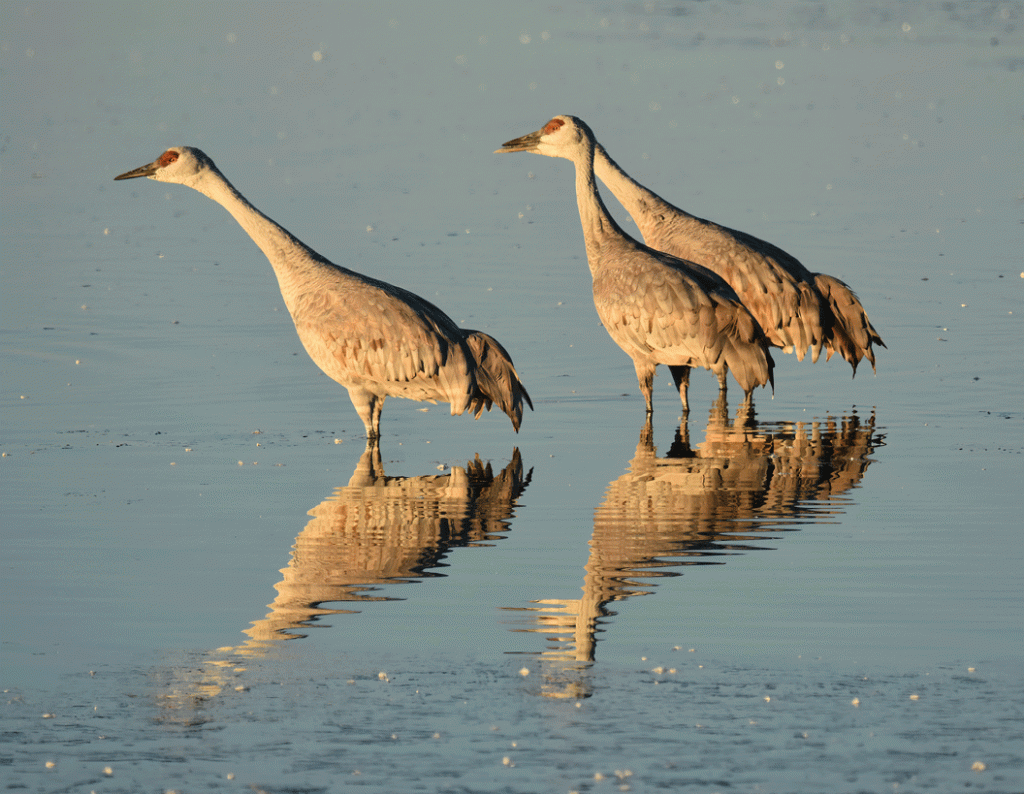
These Sandhill Cranes show their winter plumage. Their fresh gray feathers of late summer become more stained throughout the year, so they look rusty coloured by the spring.
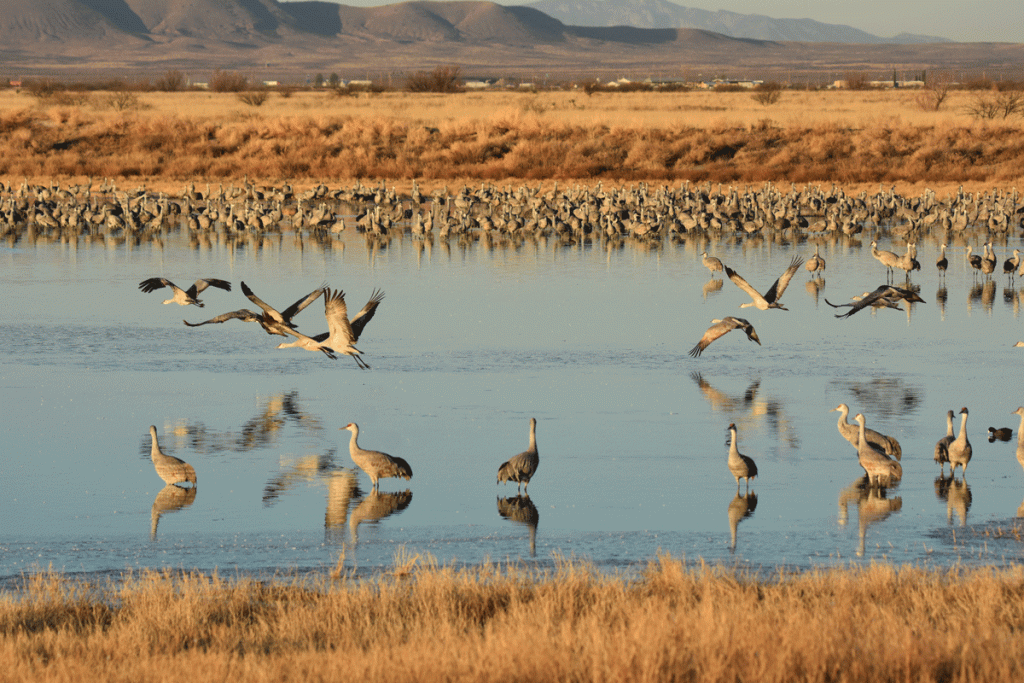
Here’s another view of Lake Cochise in Willcox. The cranes head out to the surrounding fields to feed and then return in the afternoon.
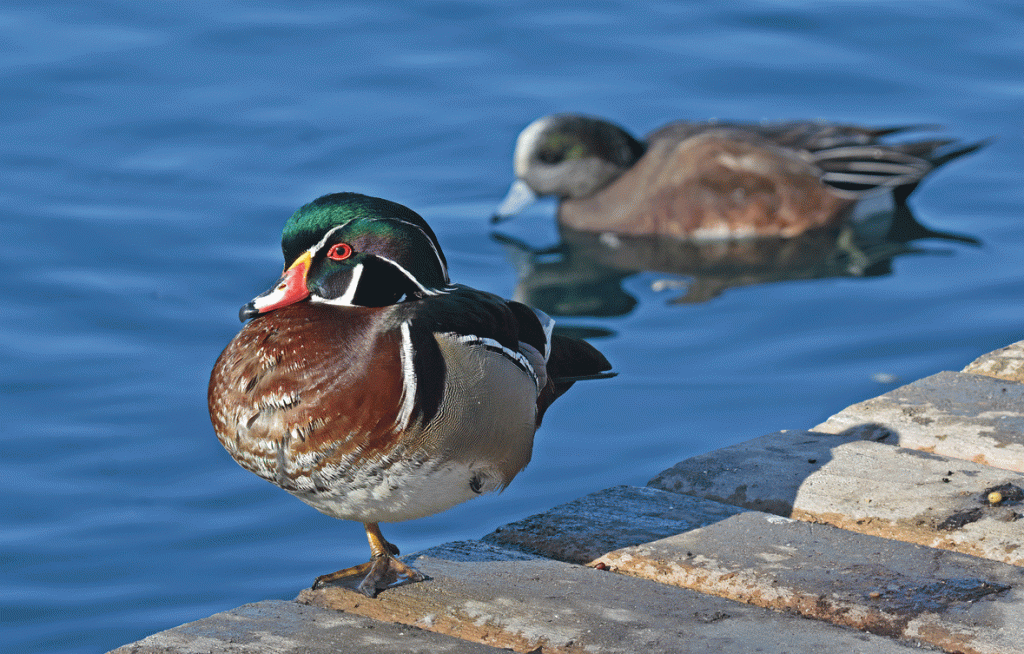
We wanted to include this male Wood Duck from Reid Park for two reasons. First, because it’s a beautiful bird and second, because this month, we had a hard time seeing it. We were looking in the wrong places, we expect.
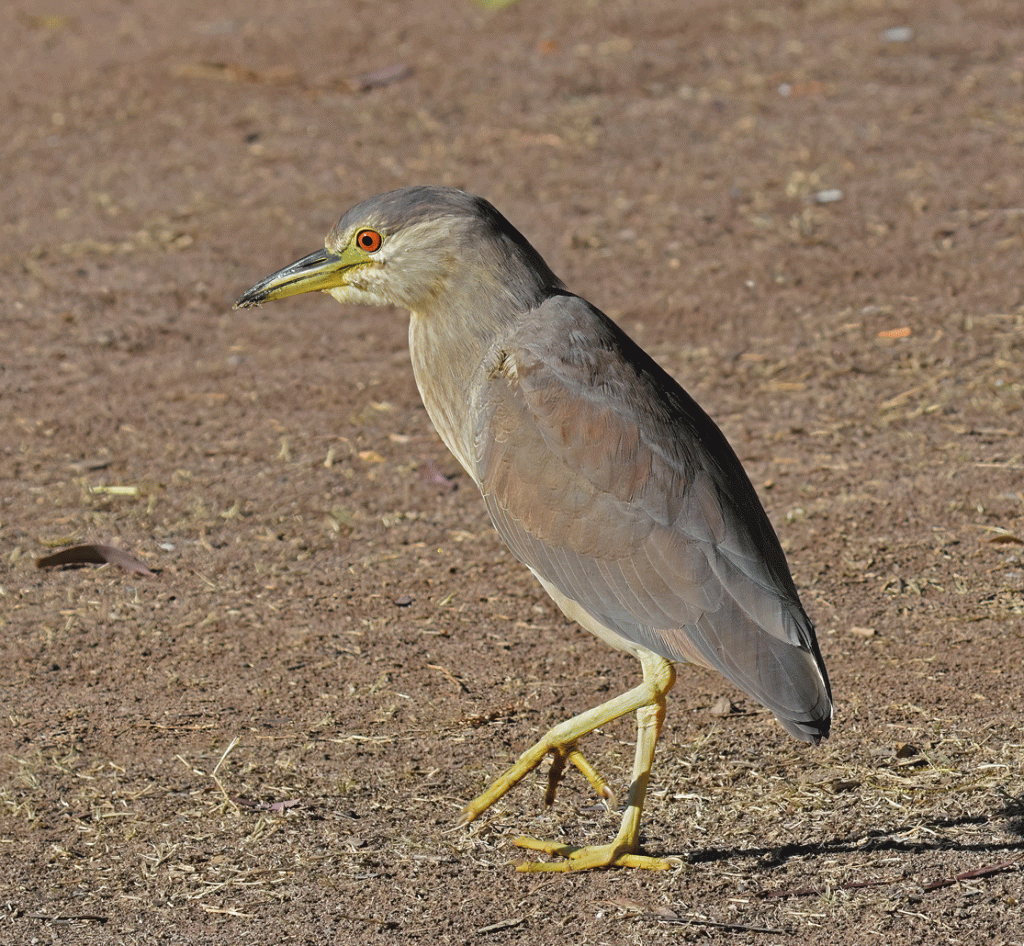
We had also seen fewer Black-crowned Night Herons this year, so we wanted to have a photo of this juvenile that was picking up scraps near a ramada at Reid Park. It’s developing its black crown and losing its streaky appearance.
Whew! So many birds! Actually we are not at all tired of looking at birds and we already have a number of good photos for next month’s edition. Until then…
We saw and photographed a lot of birds in January; so many that there are two blog posts to cover them. One of our goals this year was to get better at identifying the “LBJs” or “Little Brown Jobs,” a term that we used before we were “birders.” This post will focus on the sparrows, longspurs, and buntings that could be considered “LBJs,” as well as other brownish bigger birds.
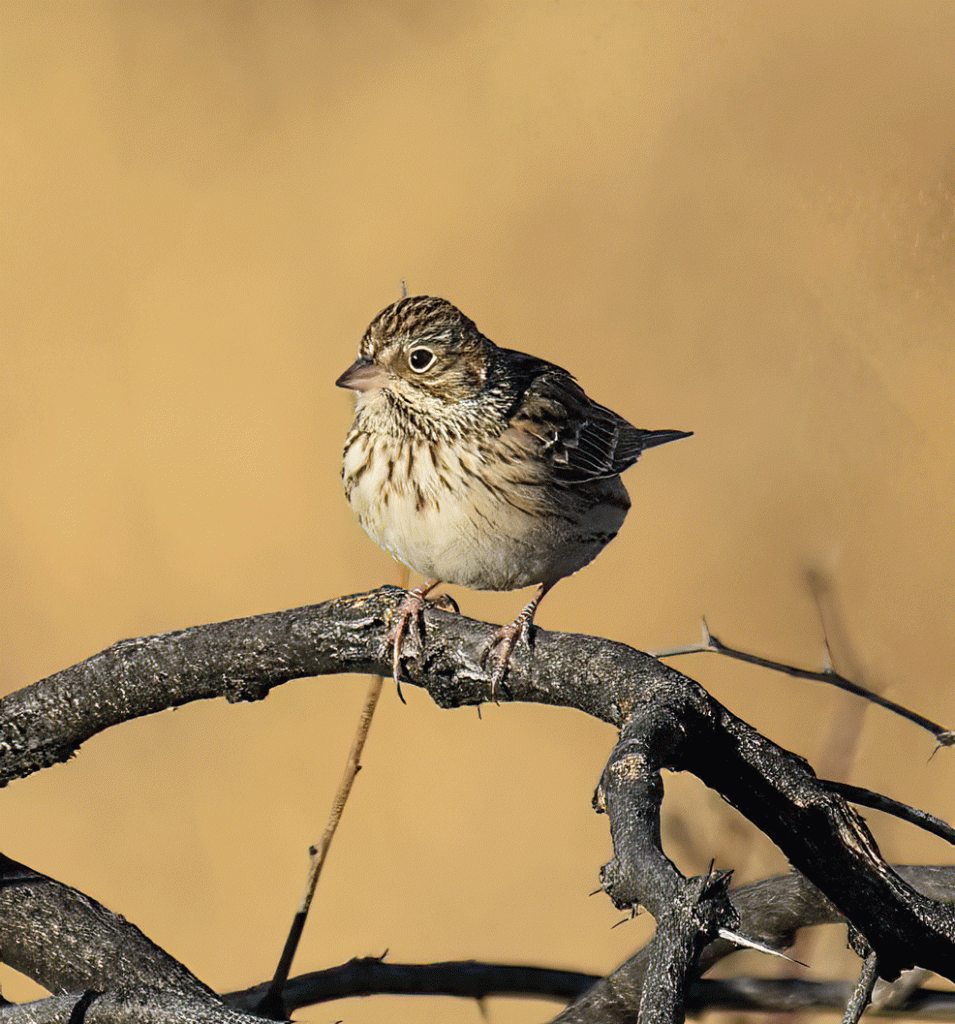
We saw Vesper Sparrows in many locations, but they seemed to be most plentiful in the Sonoita grasslands. Many times we wouldn’t get a good look at a stationary bird, but would recognize its white tail feathers as it flew away. This Vesper Sparrow was more cooperative.
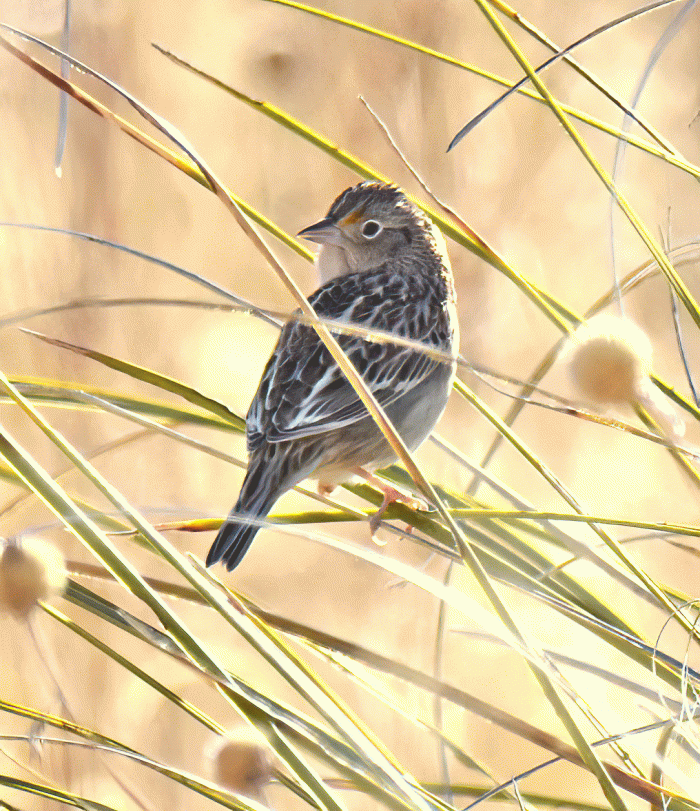
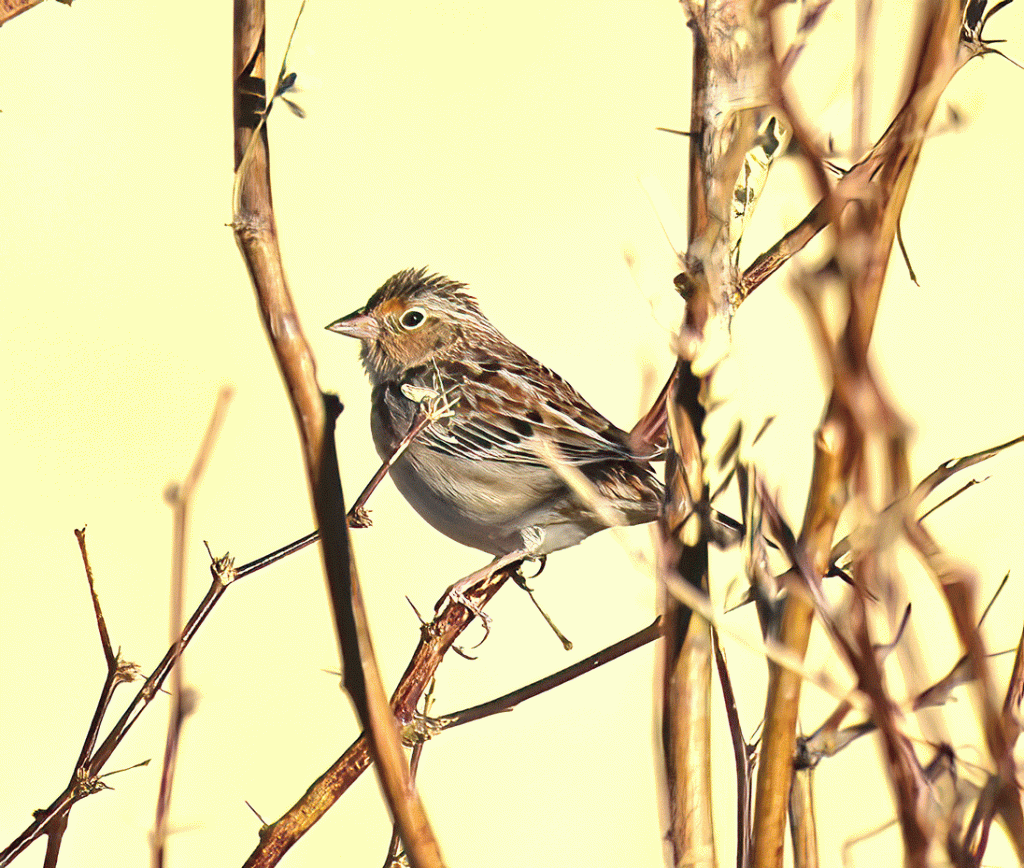
We also saw this Grasshopper Sparrow in the same grasslands. They are found year-round in parts of SE Arizona, and there were several in the same field. We’ve only had a glimpse of one in the Okanogan back in BC.
We also saw Brewer’s Sparrows in many locations, but they seemed most prevalent at Canoa Ranch Conservation Park, where we estimated there were over 75 in a small area. It is a dainty sparrow, and looks even smaller when viewed beside the larger White-crowned Sparrow which shares the same habitat.
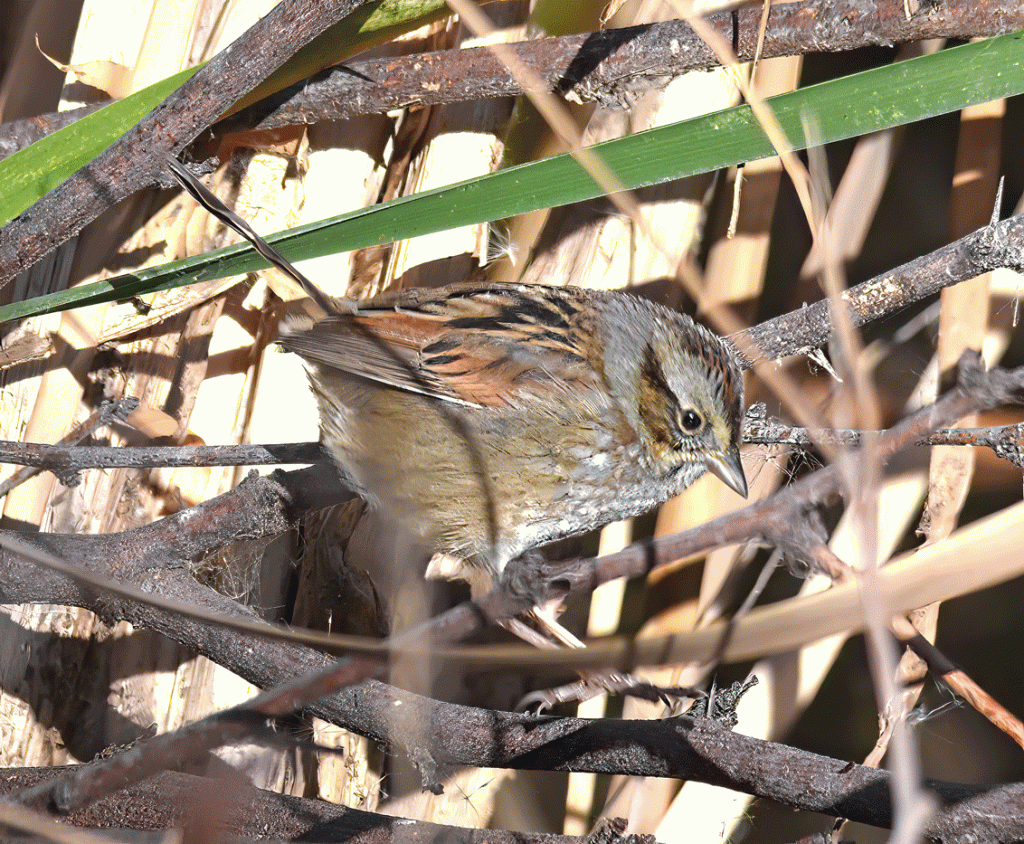
We made a trip across Tucson to Lakeside Park in order to see this Swamp Sparrow. Because it is a rarity, other people were also looking for it. We met one birder who directed us to where she had just seen it, then helped the next birder who came along get his eyes on it. Sometimes it’s hard to see a “special” bird, sometimes it’s easy. True to its name, it was frequenting a swampy spot along the lakeshore.
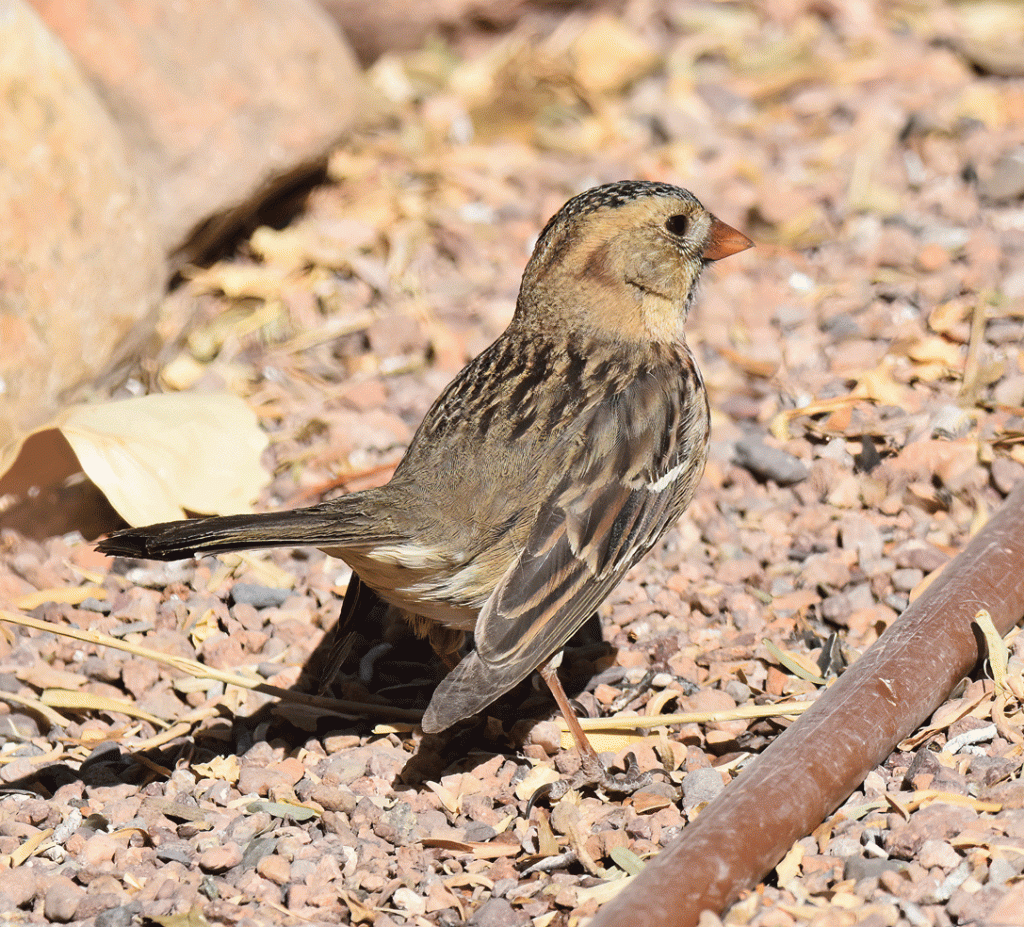
We travelled quite a bit farther to see this Harris’s Sparrow. It was out of its normal winter range (which is Texas, Oklahoma, Kansas and Nebraska) and had found a comfortable place with feeders at San Pedro House near Sierra Vista. We saw it on the same day that we travelled to see the Sandhill Cranes (next post), so we figured that since we were more than half-way there, a few extra hours was worth it to see a “lifer.”
A Baird’s Sparrow, while not considered “rare,” is a difficult bird to see. It spends its summers in the grasslands of southern Alberta and Saskatchewan, where we have seen it before, but we had never seen one close up. This one came down to the water of a cattle pond only ten metres away from where we were standing. It’s generally a solitary and secretive bird, so we were very happy that it was also thirsty.
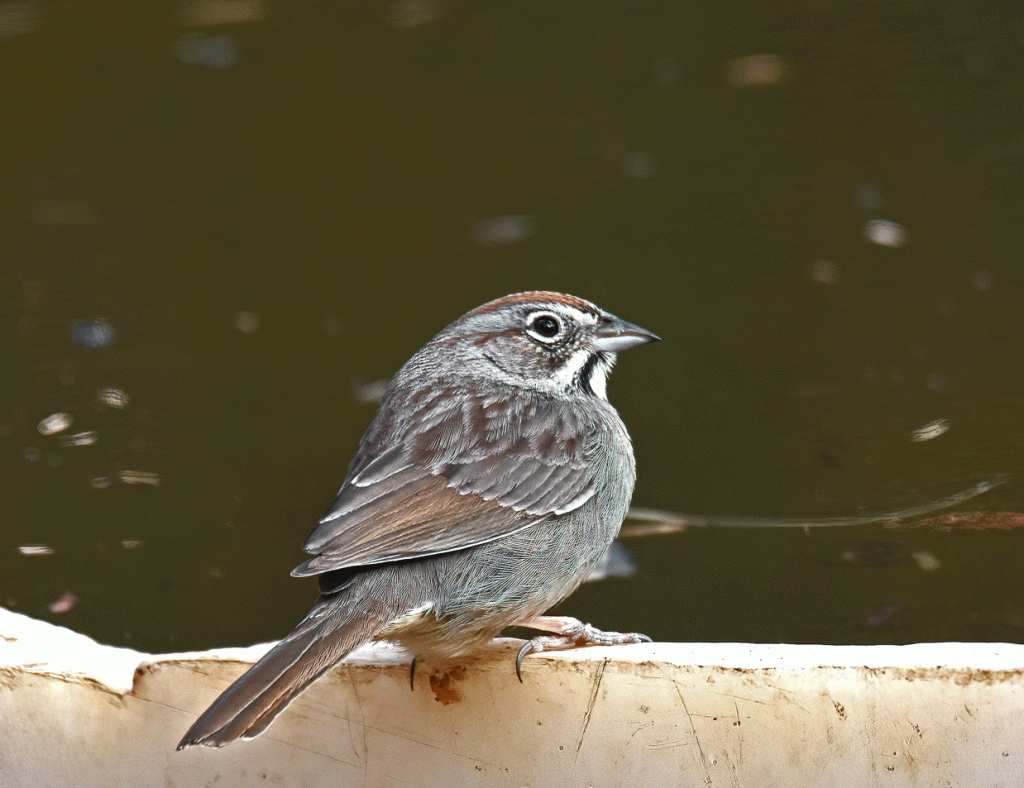
A Rufous-crowned Sparrow lives year-round in the southern US, although it is uncommon on arid, rocky hillsides with patches of shrubs and grass. Our strategy of finding a water source and waiting, worked to give us good views of the rather large, stocky sparrow.
We also saw this Black-chinned Sparrow at the same water source. In non-breeding plumage, they don’t show a black chin and their face and small pink bill remind us of a Dark-eyed Junco. But from the back, their streaked back and lack of white tail feathers says, “sparrow.”
We saw the Rufous-crowned and the Black-chinned Sparrows up a gravel road in the foothills below the Sierrita Mountains near Green Valley.
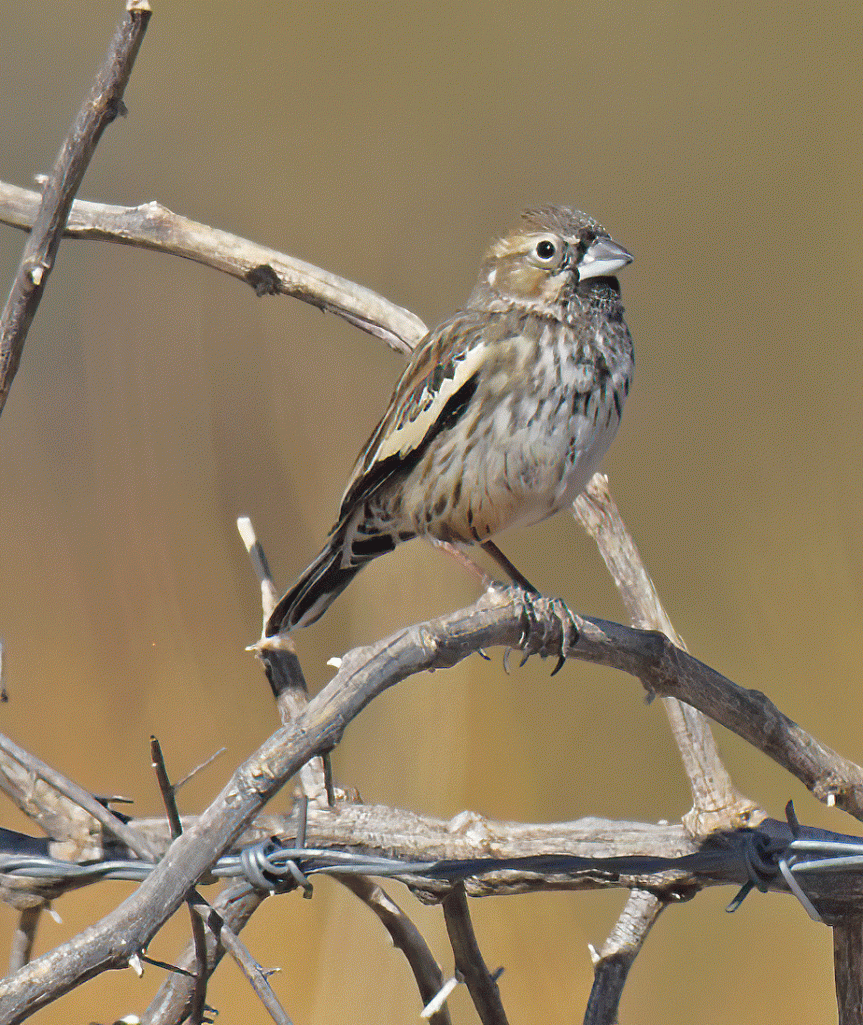
At first glance, these female Lark Buntings look like sparrows. We now know to look for the broad whitish edges on their wings and their large bluish-grey bills. When they fly, there is a white patch on their wings and their tails have white tips, which is good for identifying large distant flocks.
More Lark Buntings.
Longspurs used to be classified in the same family as sparrows, and they definitely fit into the “LBJ” category. It’s been a learning curve for us to identify longspurs. Usually it involves using a scope to scan a dry lakebed or bare dirt field. To add to the challenge, they share the same habitat as the beautiful but more common Horned Lark. And the flocks tend to scare easily; flying off, circling and landing somewhere else.
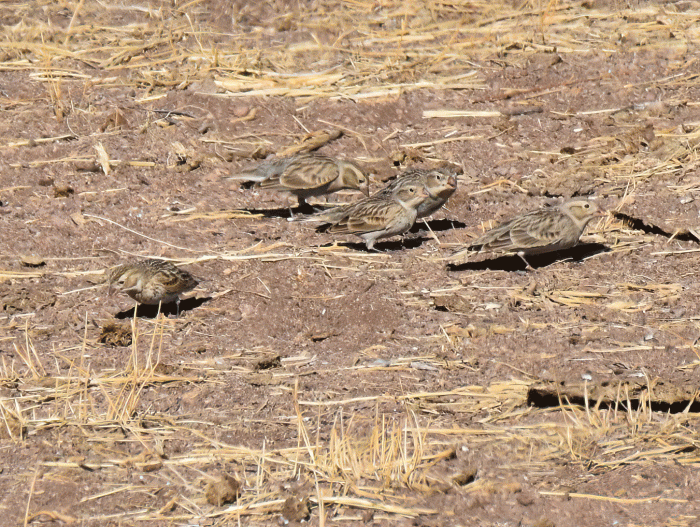
This group of Thick-billed Longspurs didn’t mix with the Horned Larks and tended to keep a bit to themselves. We were also with another pair of sharp-eyed birders. Four scopes is better than one! Thick-billed Longspurs are pretty drab when they are not in breeding plumage and look very much like the surrounding ground. The large pinkish bill is its most distinguishing feature, but you need to look pretty carefully.
We were really happy that a flock of Chestnut-collared Longspurs landed close to the cattle pond, (same one as the Baird’s Sparrow) and even happier when one headed down the bank, allowing us to view it from below. This one was showing the dark belly of breeding plumage a bit early. There are some brownish-red (chestnut) feathers on the back of its neck.
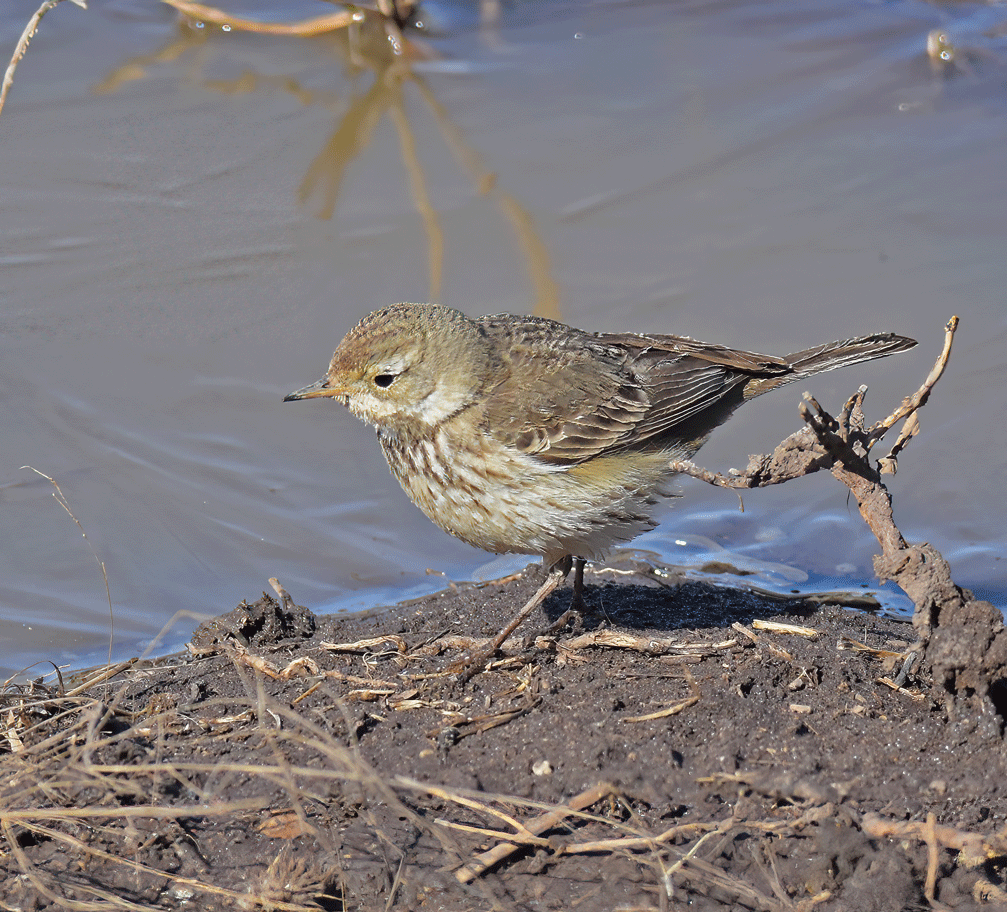
At this same cattle pond (Smith Canyon and Corral hotspot), we got good views of this American Pipit, that walked along the shoreline just in front of us. We also saw the rarer Sprague’s Pipit, but it landed way across the pond and flushed after a few minutes.
This Chihuahuan Meadowlark also came to drink at the same pond. It’s the brightest bird in this blog post, but has more white than a Western Meadowlark.
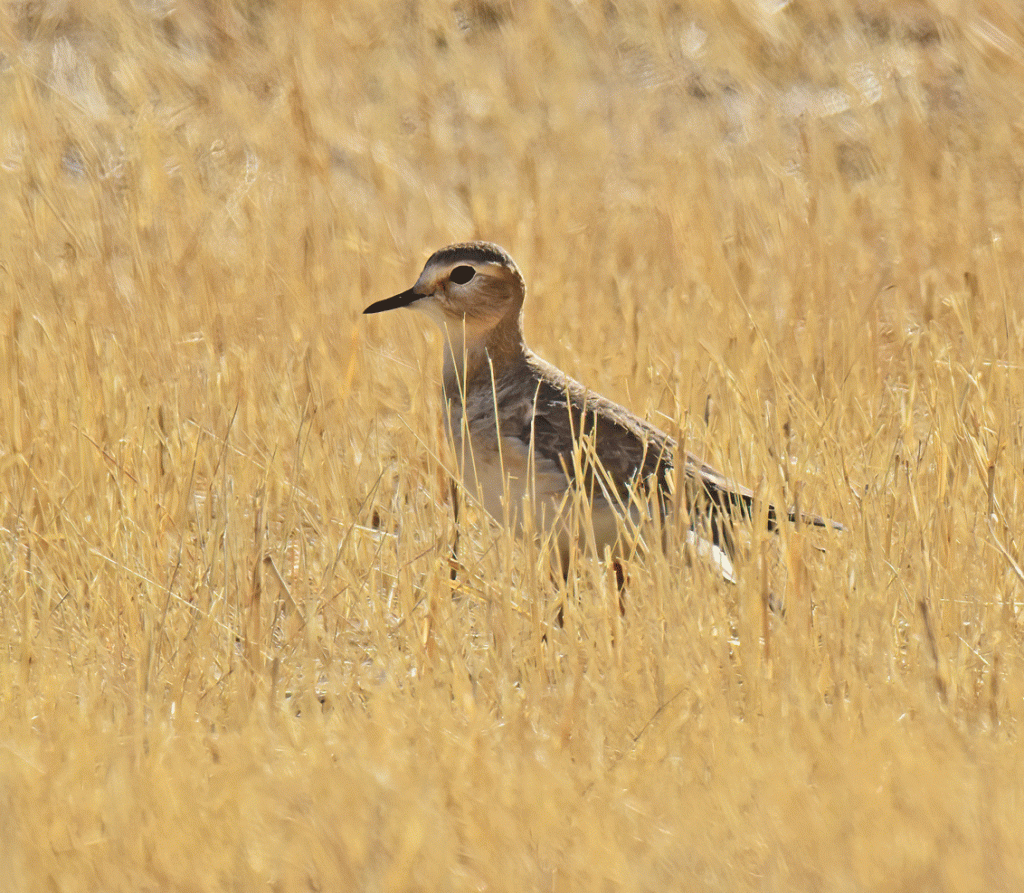
We travelled to Willcox to see the Sandhill Cranes (next blog post) and Mountain Plovers had been reported nearby. So we loaded in the GPS coordinates that were provided by a competent birding friend and drove to that spot. At first, we saw Sandhill Cranes in the distance, but the fields nearby looked barren of any wildlife. We continued scanning in all directions and Doug spotted two Mountain Plovers quite close to the road. The birds moved even closer and Doug was able to capture this photo. Mountain Plovers winter on dry barren ground, smooth dirt fields and shortgrass prairies. The world population of the species is only 20 thousand.
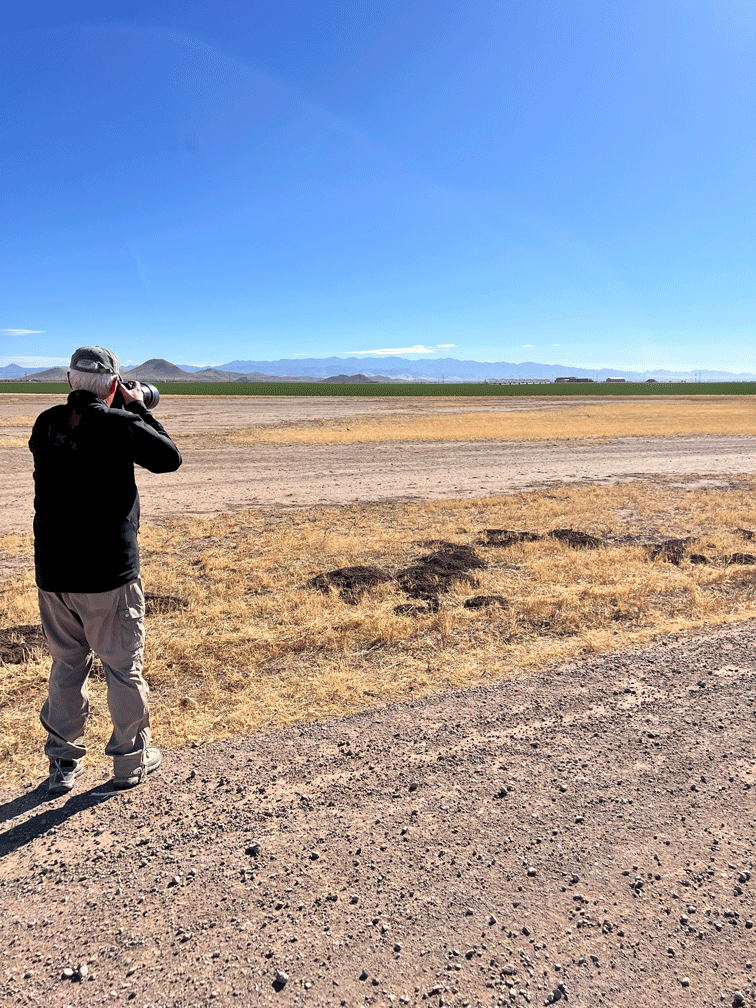
You might be able to make out the splotches that are Mountain Plovers in the golden dry grass in the photo below. You can understand why binoculars and a telephoto lens are essential.
When Wendy attended the quilt show, Doug went birding at La Posta Quemada, where this Canyon Towhee posed nicely in the sunshine. Towhees are in the sparrow family and can be found hop-scratching to kick leaves back to uncover seeds.
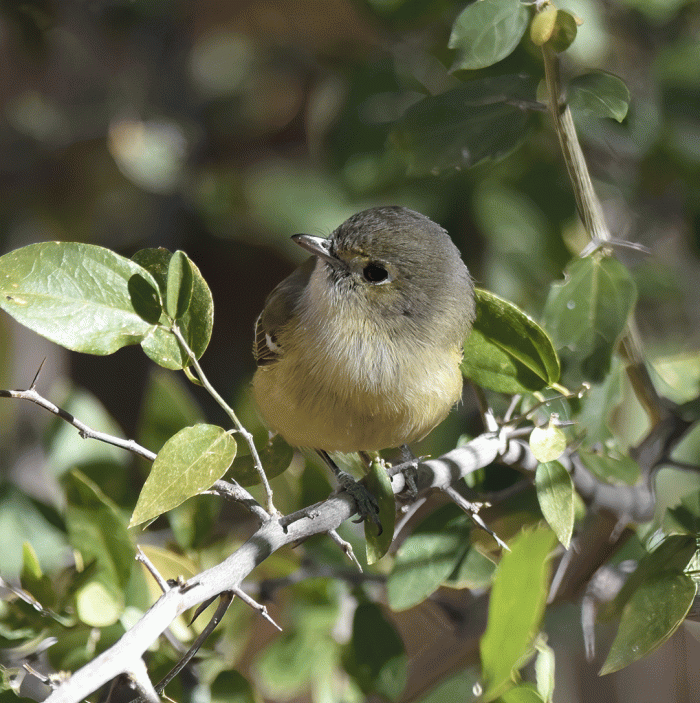
He also photographed this Hutton’s Vireo, which looks a lot like a Ruby-crowned Kinglet, but stockier. The photo shows its thicker, slightly hooked bill.
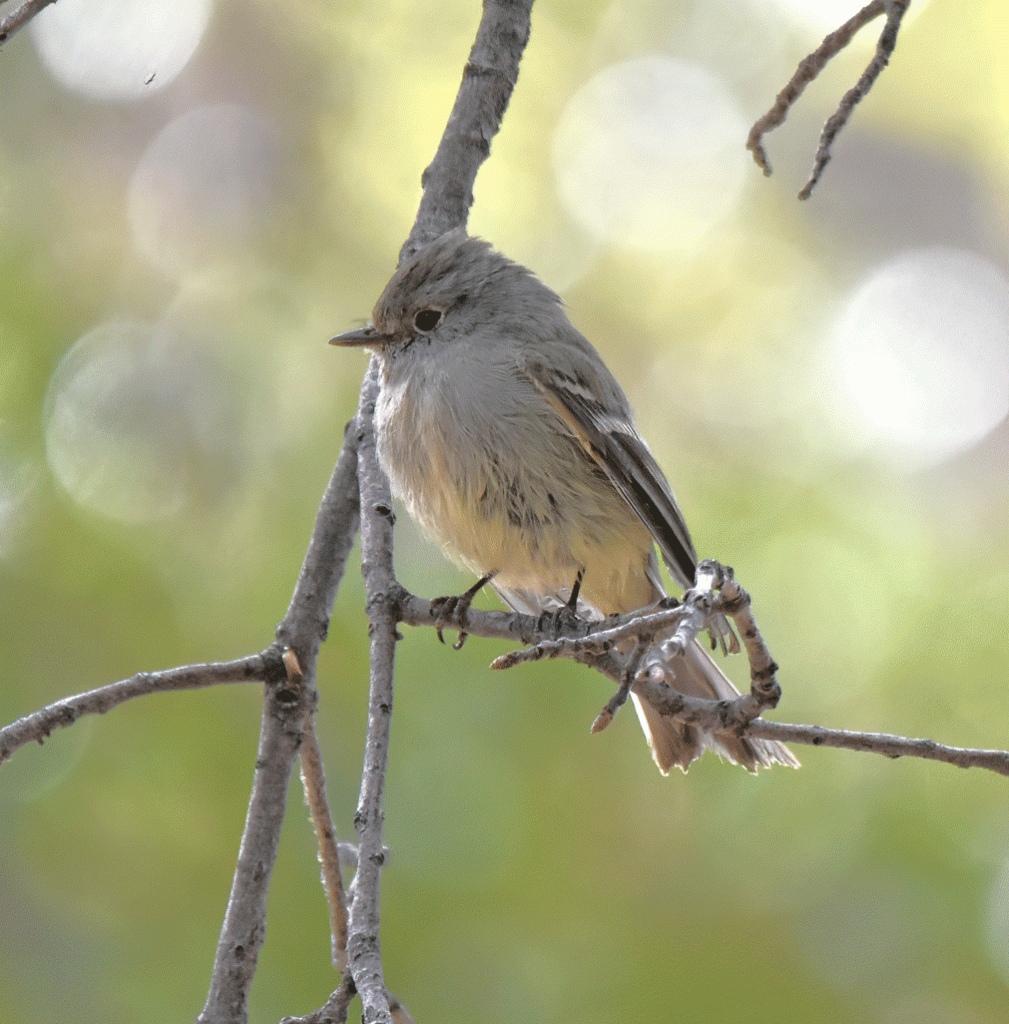
We see plenty of Hammond’s Flycatchers when we are in BC, but often they are near the top of tall trees. This one perched a little closer to the ground.
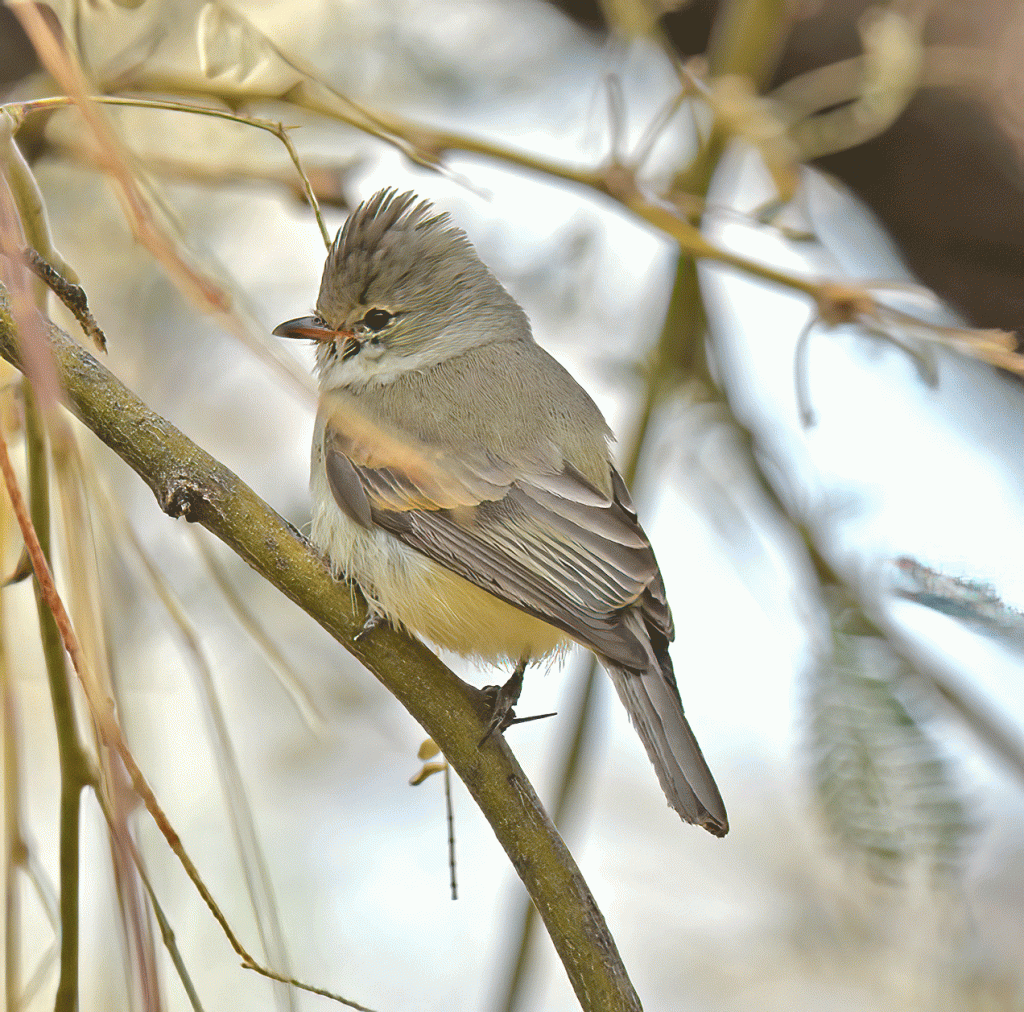
The Northern Beardless-Tyrannulet looks similar to the Hammonds’s Flycatcher except that it is smaller and often shows a ragged crest. The orange at the base of its shorter bill is also a distinguishing feature. Its wingbars are drab and not as obvious as on the Hammond’s Flycatcher.
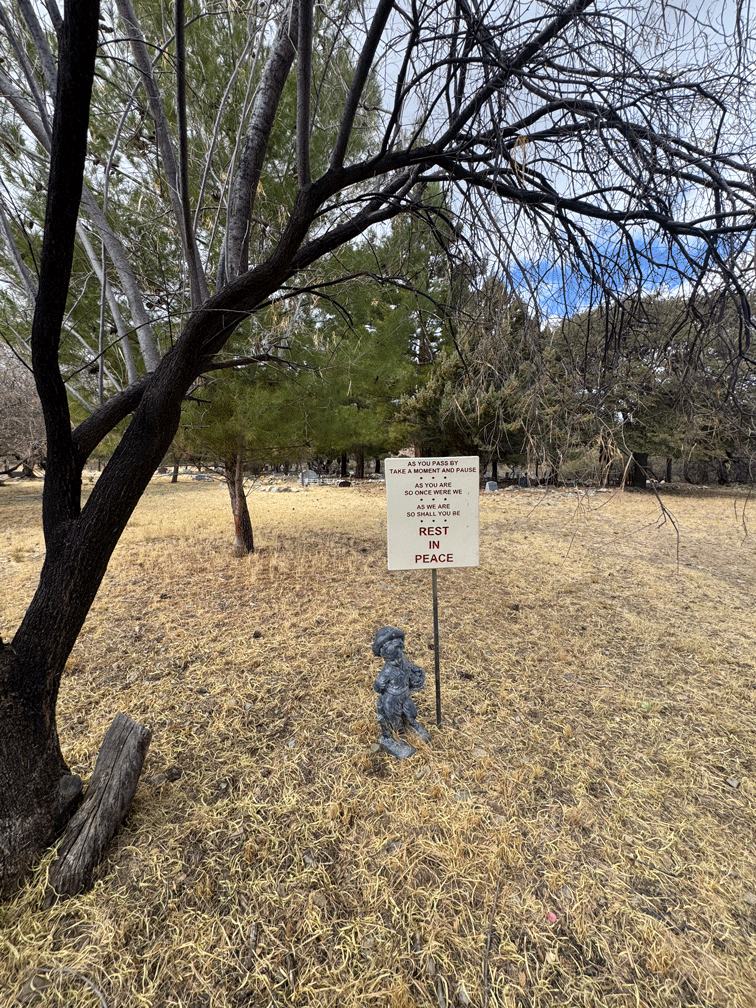
This is a view of the small Magee Ranch Cemetery where we saw the flycatcher and the beardless-tyrannulet. Non-native conifers have been planted between the graves, creating a mini forest in the arid surroundings. It was unusual for the two species to be in the same environment, because Hammond’s Flycatchers usually choose a mature conifer forest, while the Northern Beardless-tyrranulet is found in lowland riparian woods.
Here’s another view of the small cemetery.
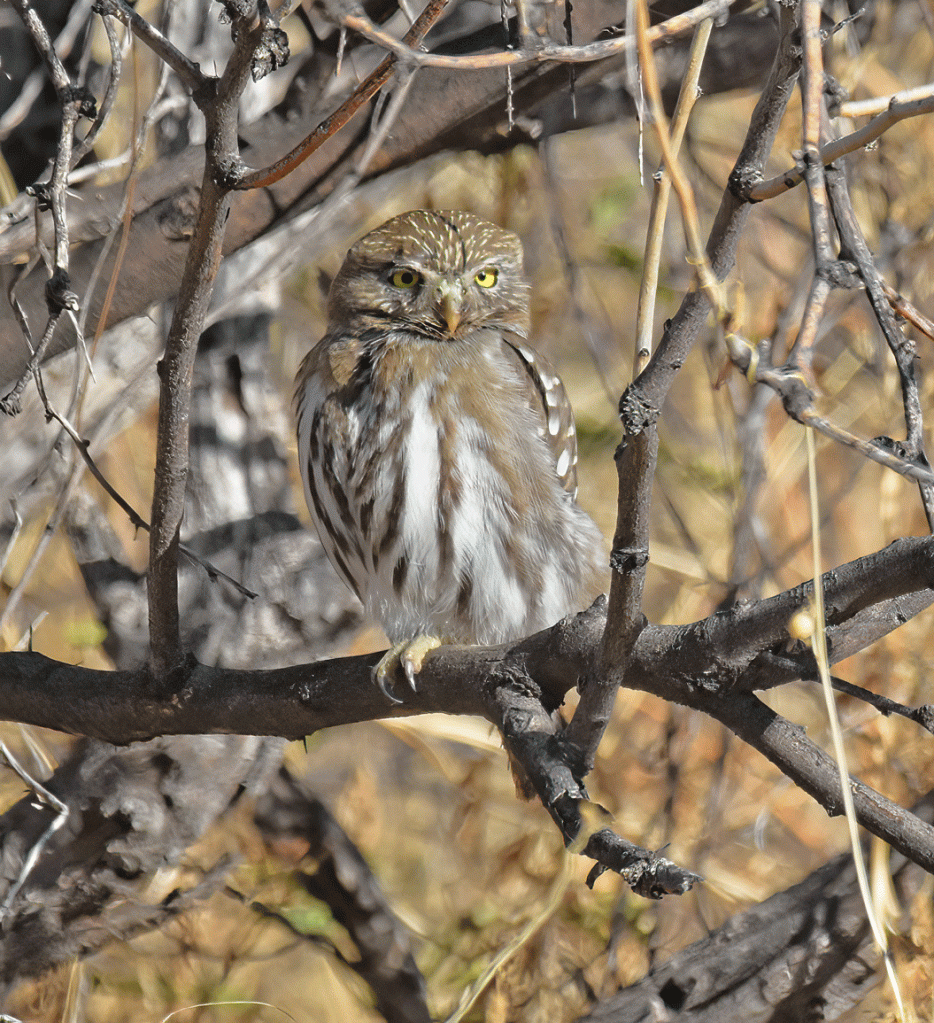
We were really lucky that this little Ferruginous Pygmy-Owl decided to hoot, because we would not have known to look for it on its perch in a tangle of branches. They are very similar to the Northern Pygmy-Owl, but more orange-brown.
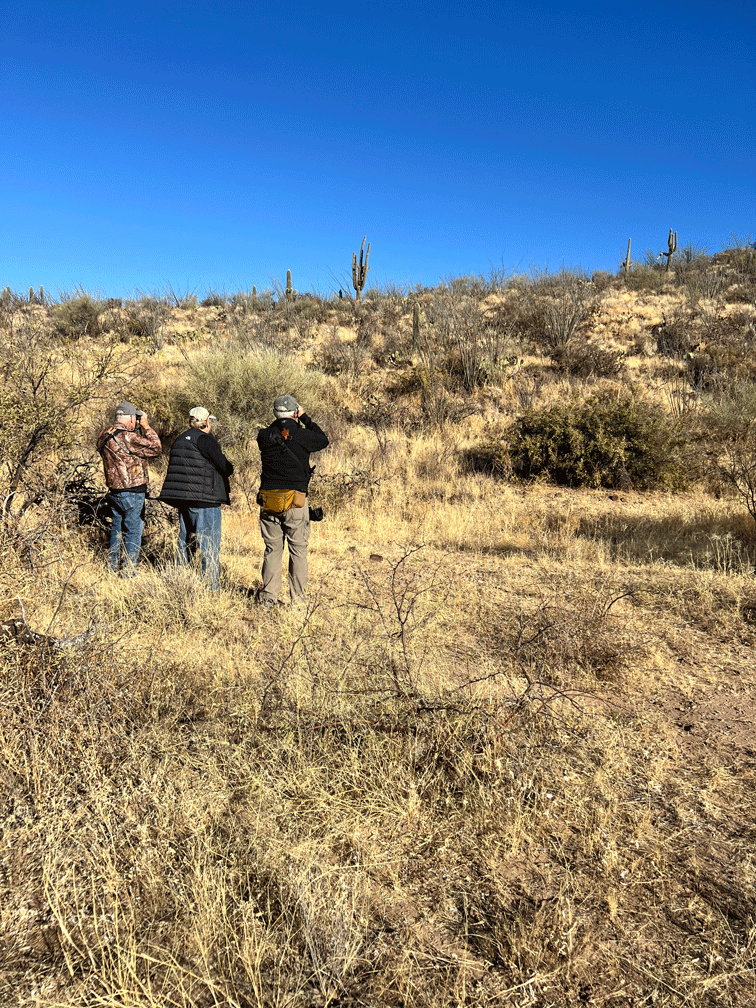
Rich, Mary and Doug are waiting for it to open its eyes again in order to get another photo. It’s in one of the bushes on the hillside.
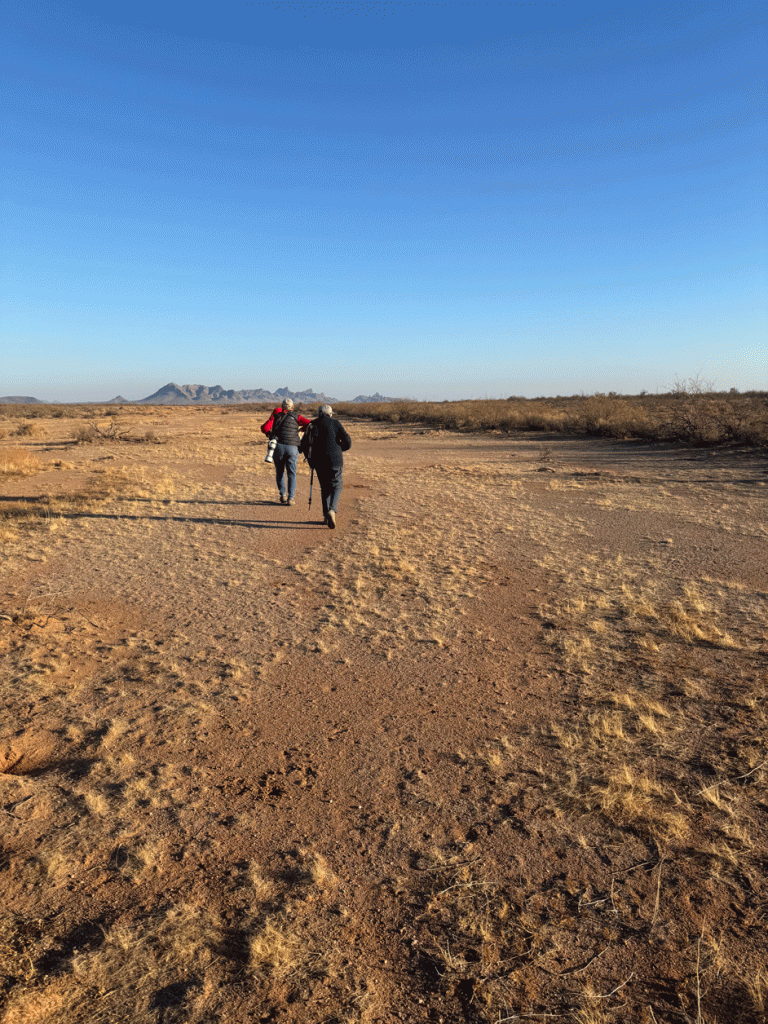
Mary and Elaine joined us for a “thrasher hunt” on some salt flats north of Tucson. In the photo below, they are heading over to where they saw some Sagebrush Sparrows in the early morning light.
We got a pretty good look at this Crissal Thrasher. It’s a bird that we don’t see very often, but we were hoping it was a LeConte’s Thrasher. The dark rufous undertail and the light iris confirmed it was a Crissal, and the photo really helped us to be sure.
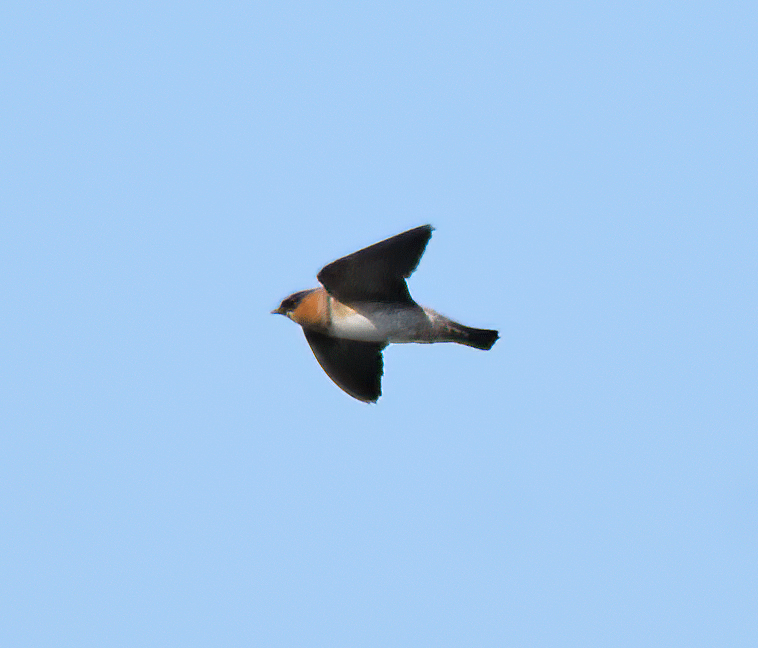
That same day, we headed even farther north and then west to the Gila Bend Sewage Ponds because a rare Cave Swallow had been sighted there. When we arrived, the swallow had just flown off, but it didn’t take long before it was back. Doug used one of his focusing tricks to take a photo of the bird as it dipped and dived over the water. The dark forehead and peachy throat create a dark-capped appearance unlike any other swallow.
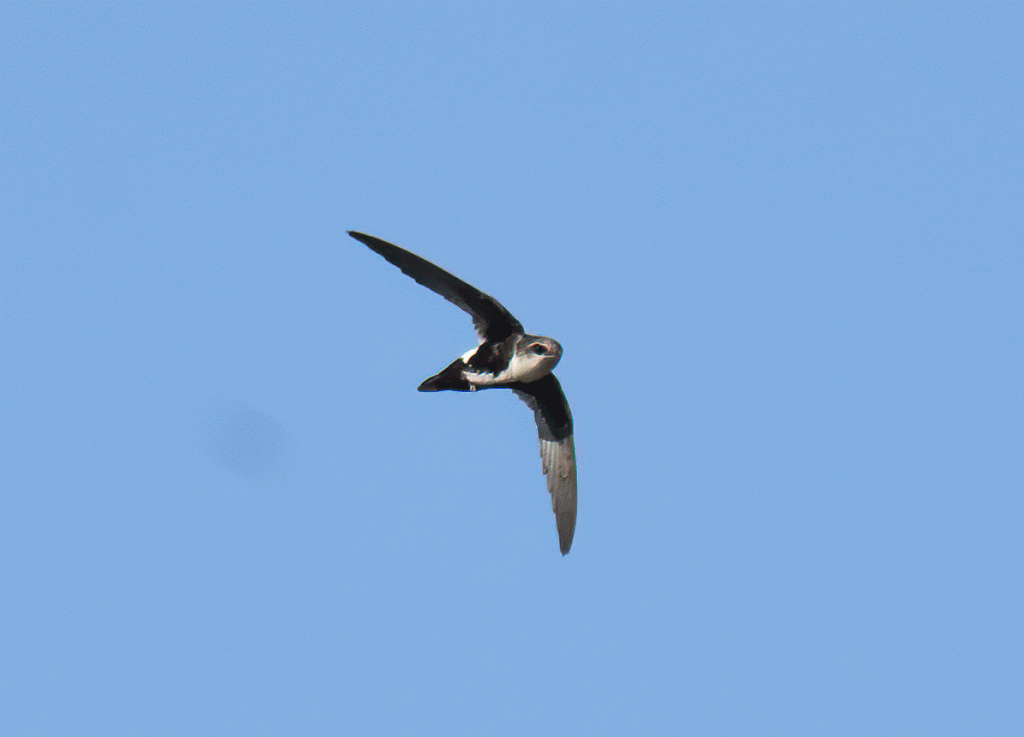
There were also several White-throated Swifts that flew over the ponds. Usually we see them high in the air near rocky cliffs, too far away to photograph or we’re hiking and only have our cell phone cameras.
This blog post included some of the drabber birds that we saw in January, but they were all interesting birds. Part 2 has the flashier ones and will be posted soon.
This post will document the two hikes that we did in January and other various activities, not including birding. There will be two more blog posts to cover all the birds we saw.
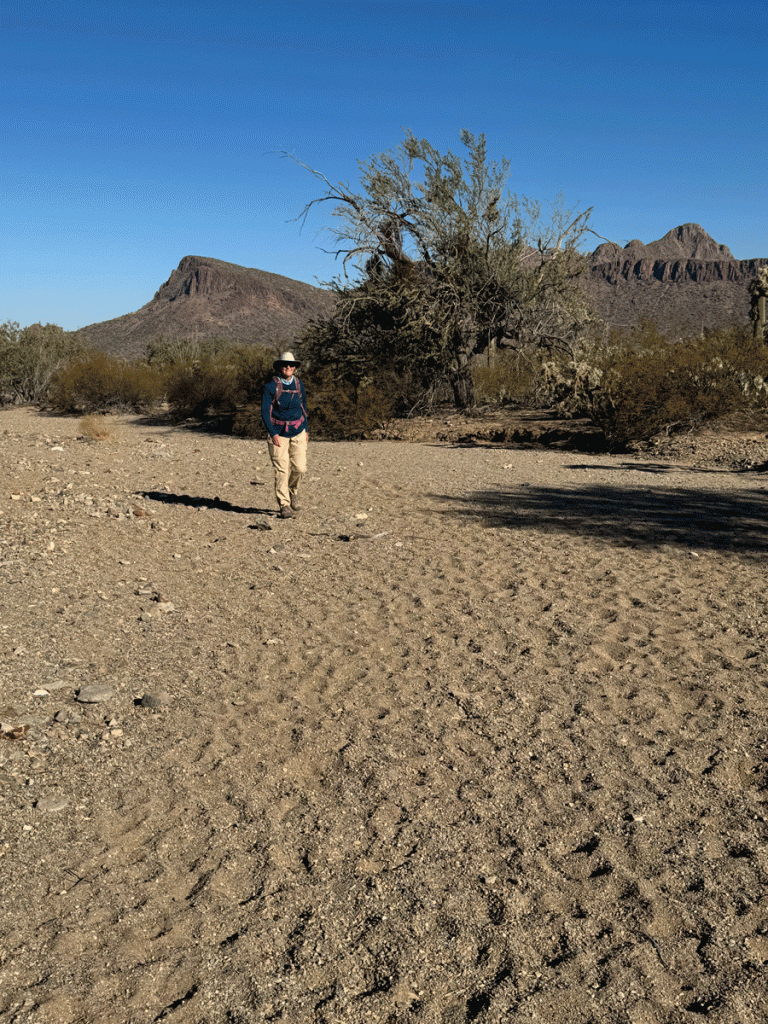
On January 13th we hiked the Prophecy Wash Loop that starts at Cam-Boh Picnic area in Saguaro National Park (West). It’s really close to our place in Picture Rocks. After a short rocky trail, we were walking in the sandy wash. Panther Peak is in the background behind Wendy in the photo below.
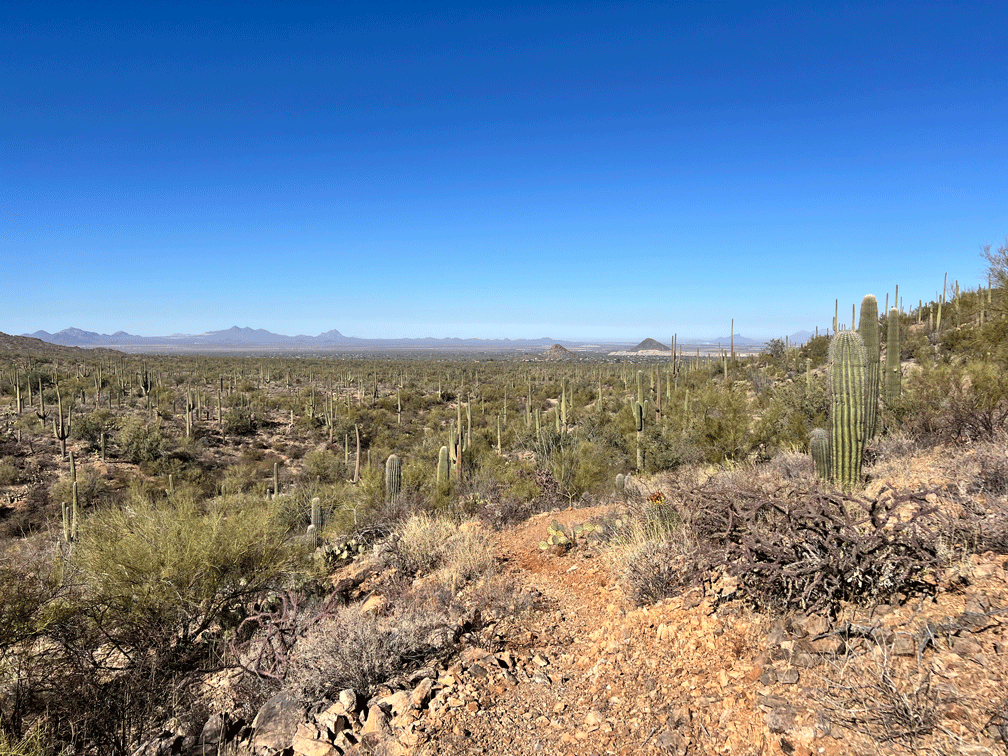
The trail continues out of the wash over a height of land. With a little bit of elevation gain, we can see back to where we live. It’s in the area between the two cone rock formations in the mid-ground in the photo below.
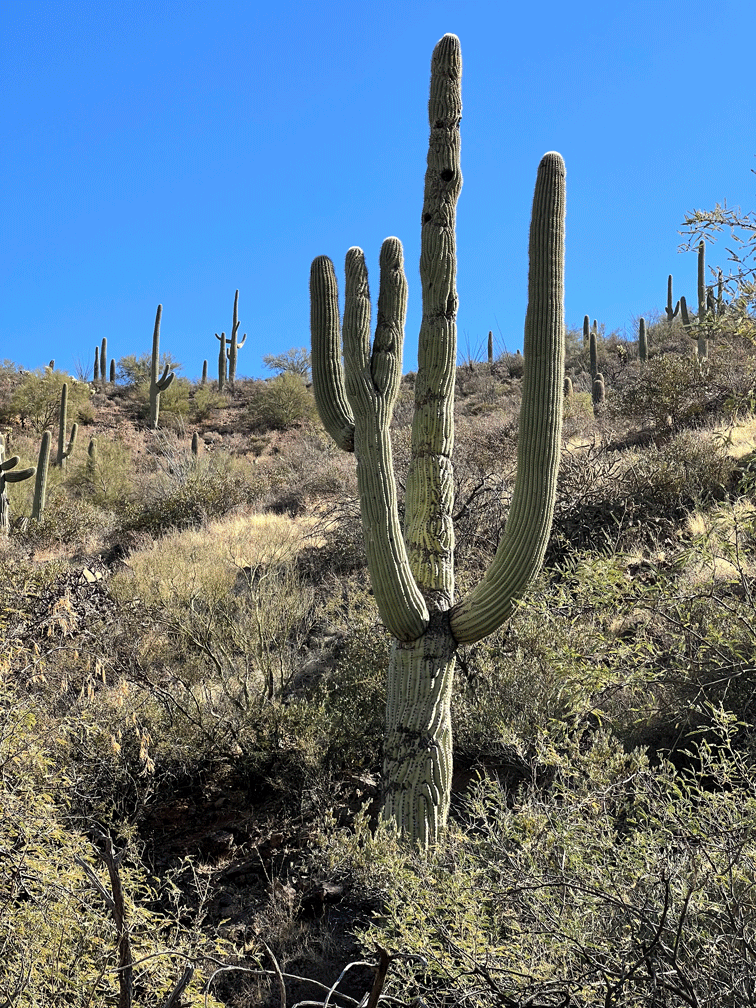
We are still enthralled with the different shapes of saguaros. This one grew a little abnormally.
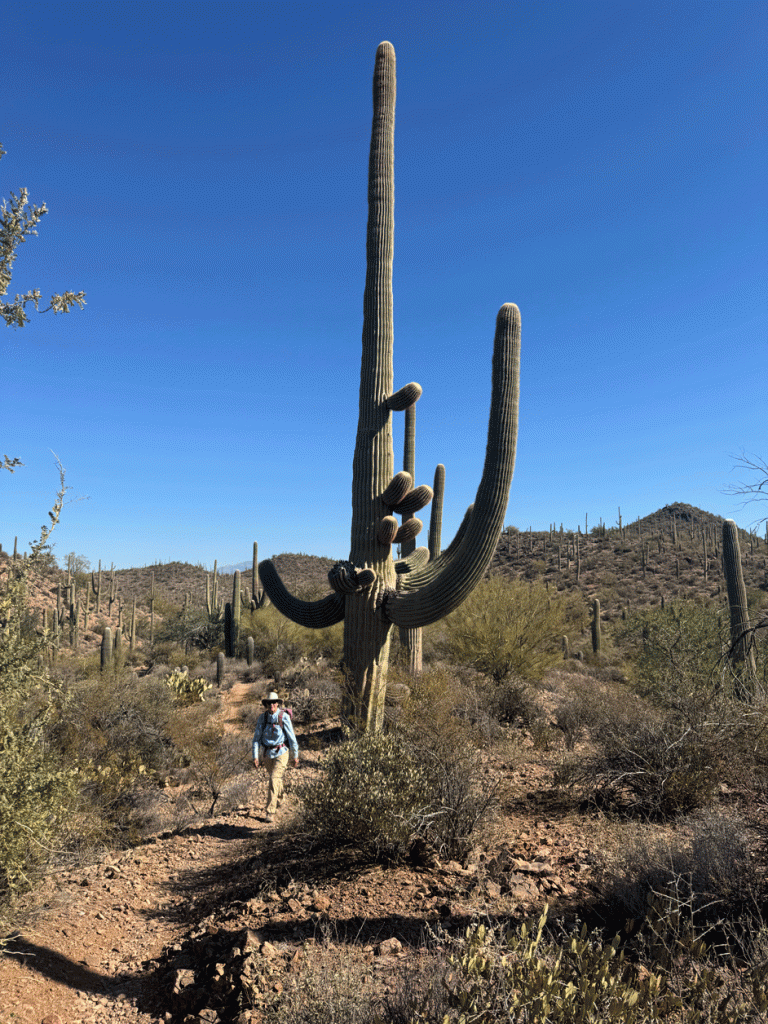
We call this one a “Super Saguaro,” because of its height but also because of how many new limbs are growing.
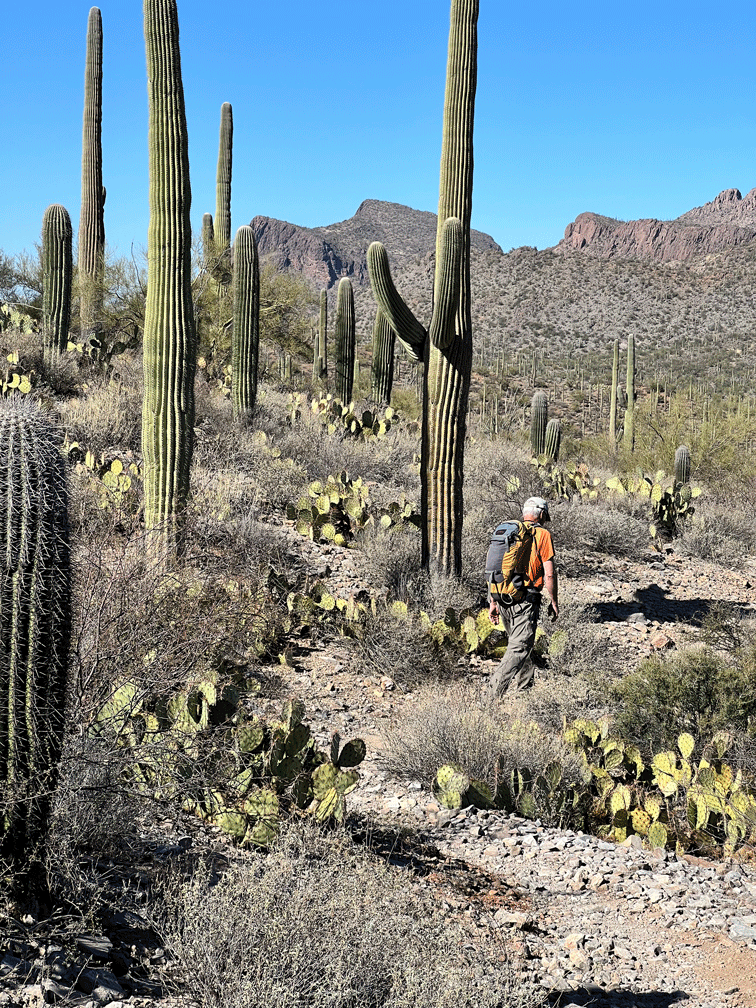
The trail first headed south down the wash, then east over the height of land and along to another wash. At the point that the photo below was taken, we were heading northwest, so Panther Peak and the ridge beside it are again in the background.
Here’s another view of same ridge, which is also the one we can see from our yard.
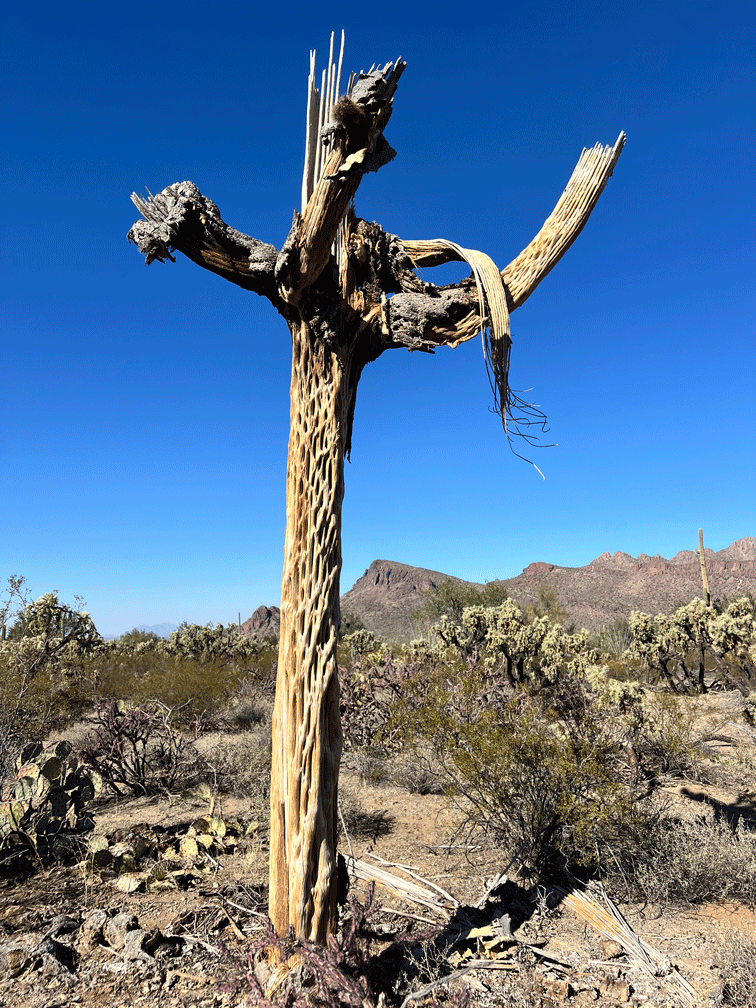
We only had to walk another half hour to the trailhead from this saguaro skeleton. The total distance we travelled was just under twelve kilometres (7 1/2 miles).
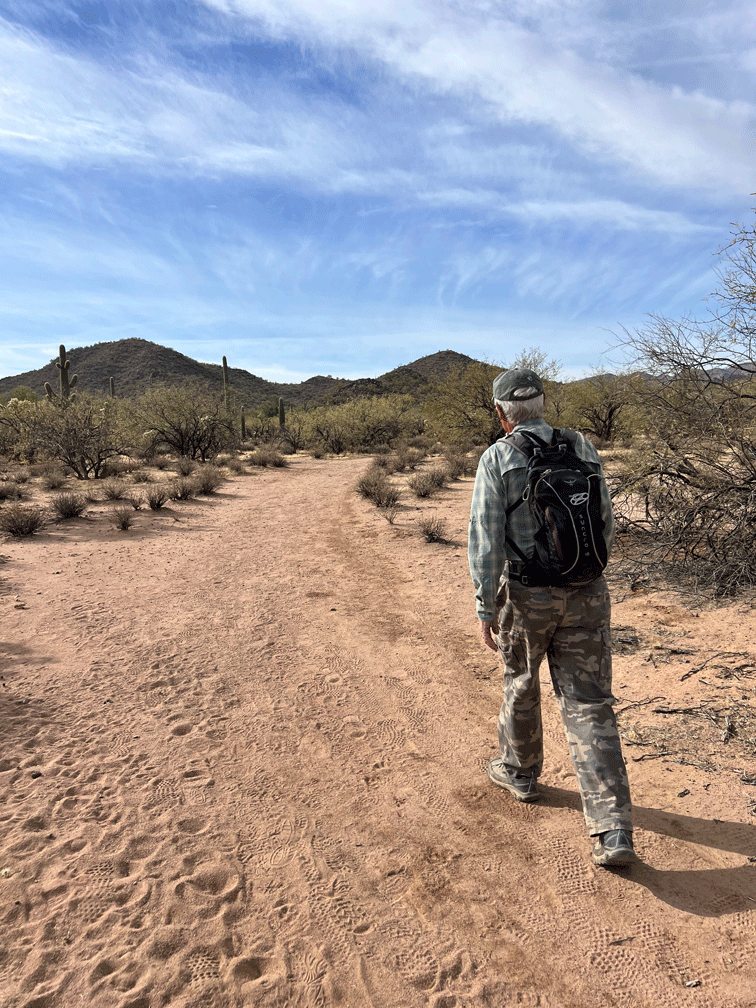
Doug researched a new hike for us that led to some petroglyphs. On January 22, we headed out to Ironwood National Monument which is in Avra Valley, west of where we live. After six kilometres (4 miles) of sandy road, we reached the trailhead and gate that allowed foot traffic only. The beginning of the Cocoraque Butte trail was along an old road, so it was easy walking. Our destination is the darkish lowest bump in the background.
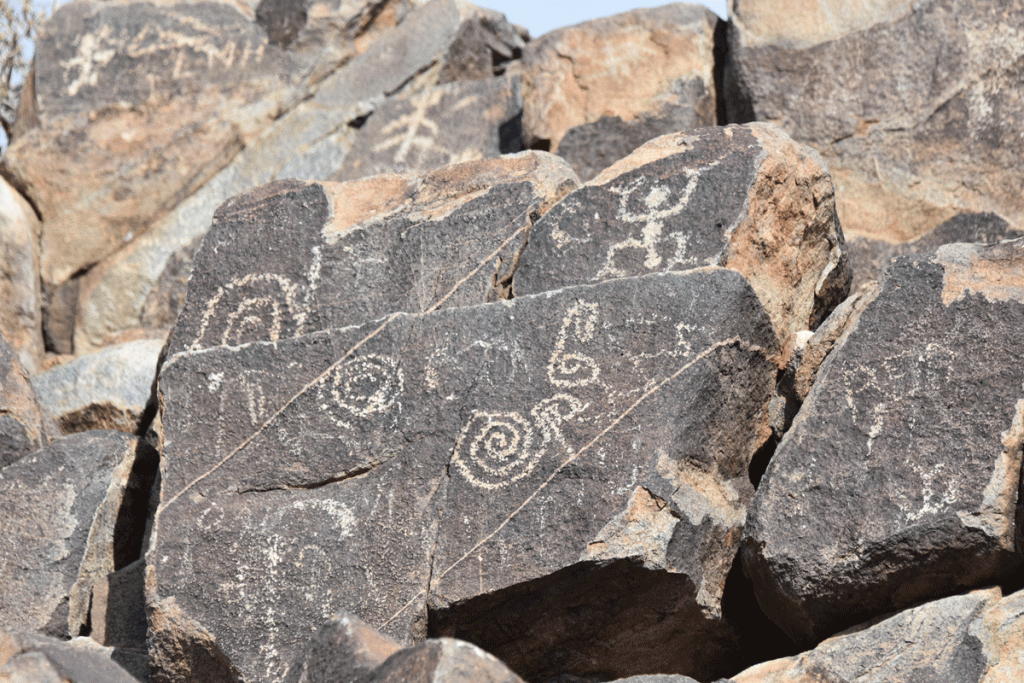
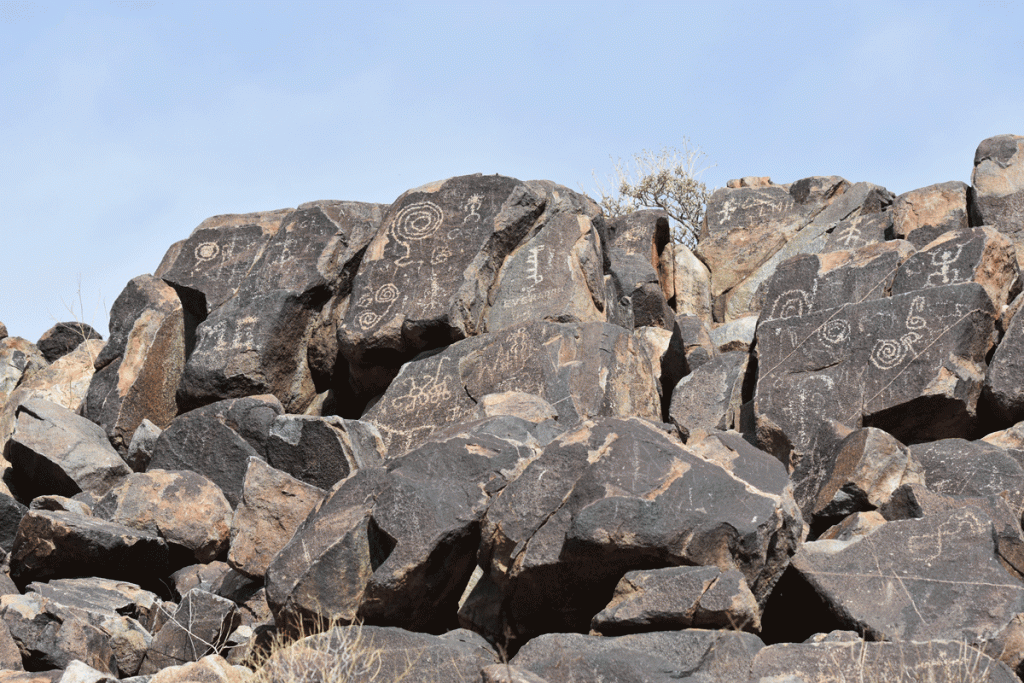
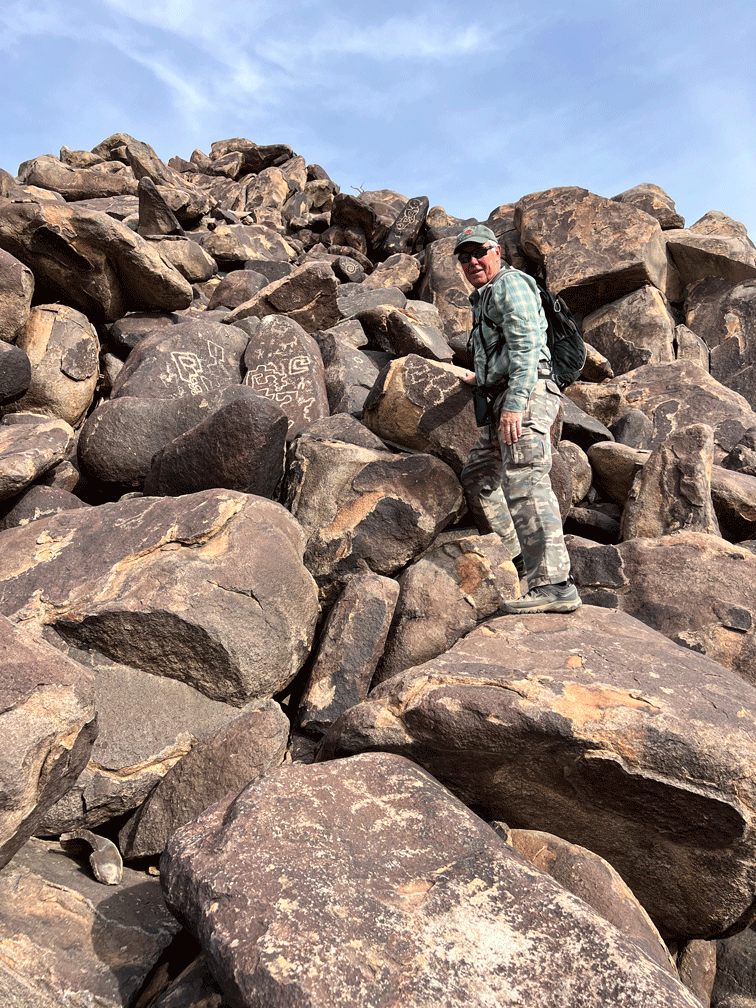
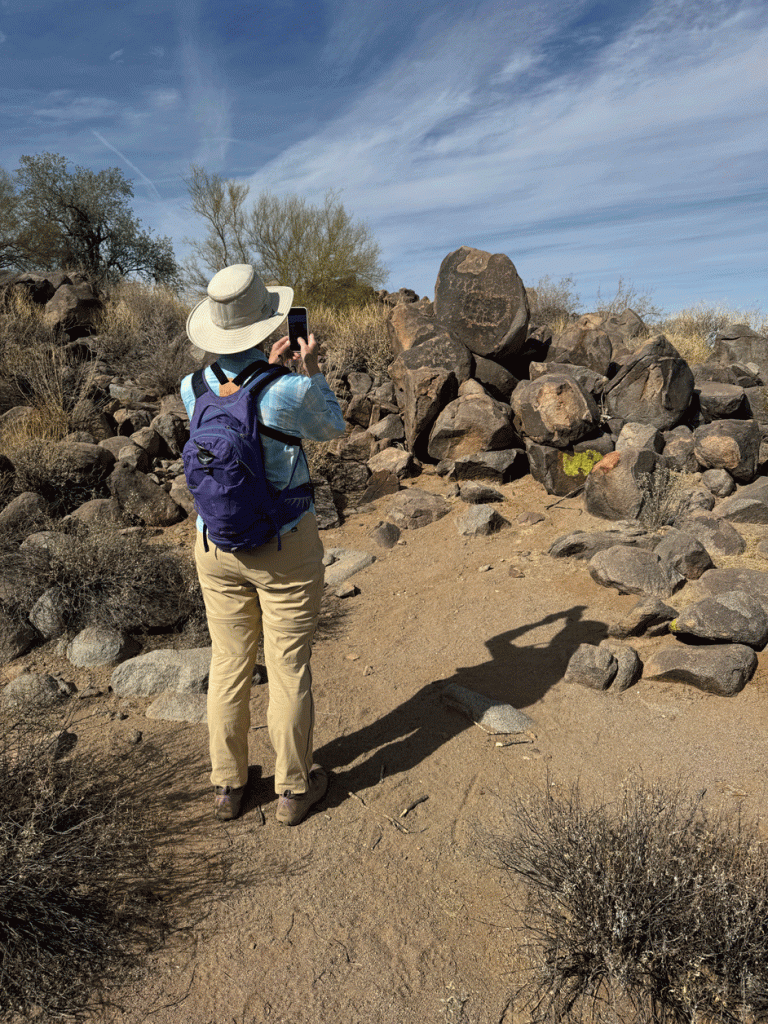
We came to a huge pile of boulders and rocks covered with petroglyphs. We climbed up, being careful not to touch any of the ancient drawings. The rock was really grippy and also stable.
Here’s Doug working his way up between the petroglyphs. The petroglyphs were carved into the rock by ancient inhabitants (Hohokum) of the area. We have seen examples in other areas on a similar kind of rock that has a veneer-like surface.
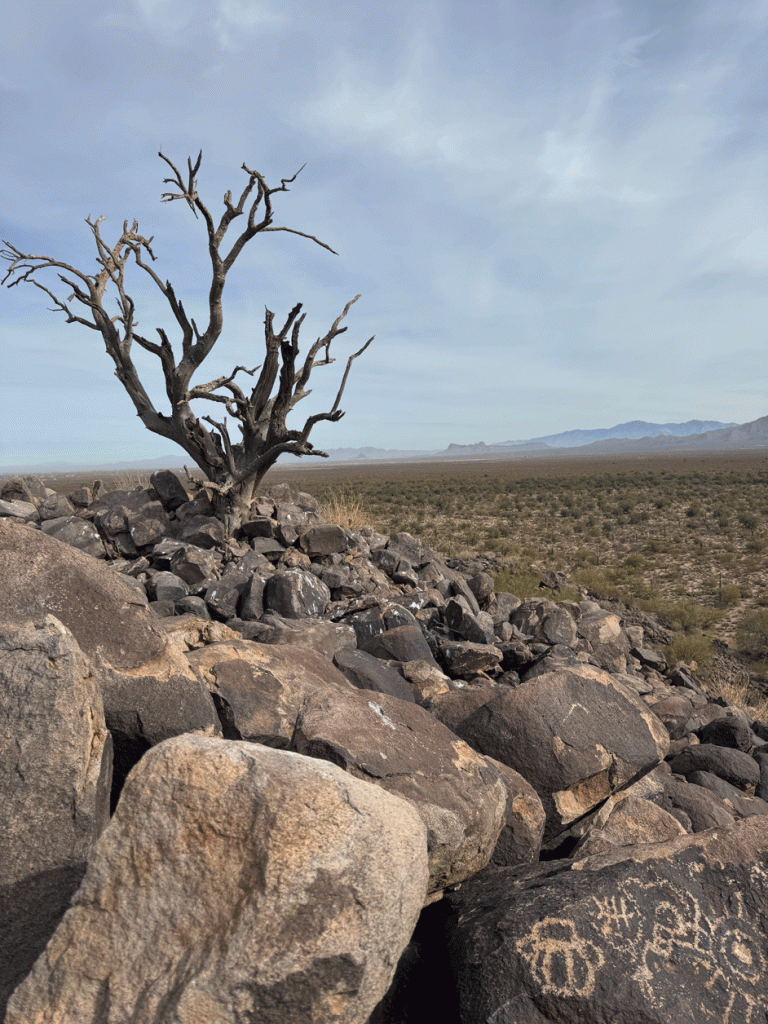
The dead tree at the top of the “hill” seems to be a favourite spot for birds, judging from the “white-wash” on the rocks.
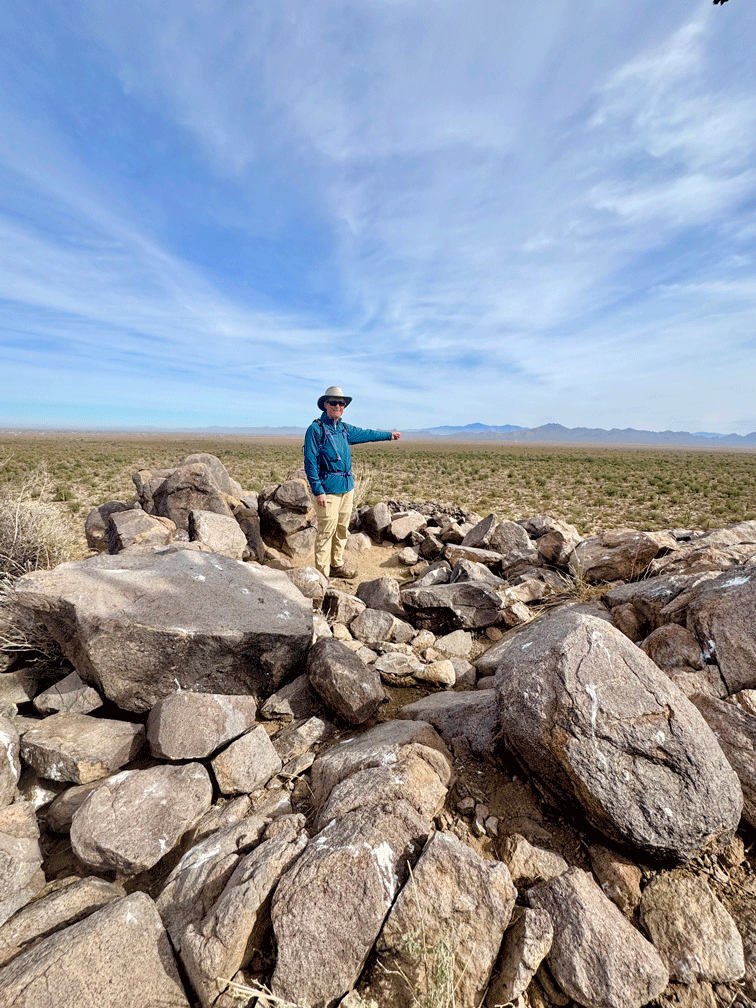
Wendy’s hand is pointing to our place, east of this hill of rocks.
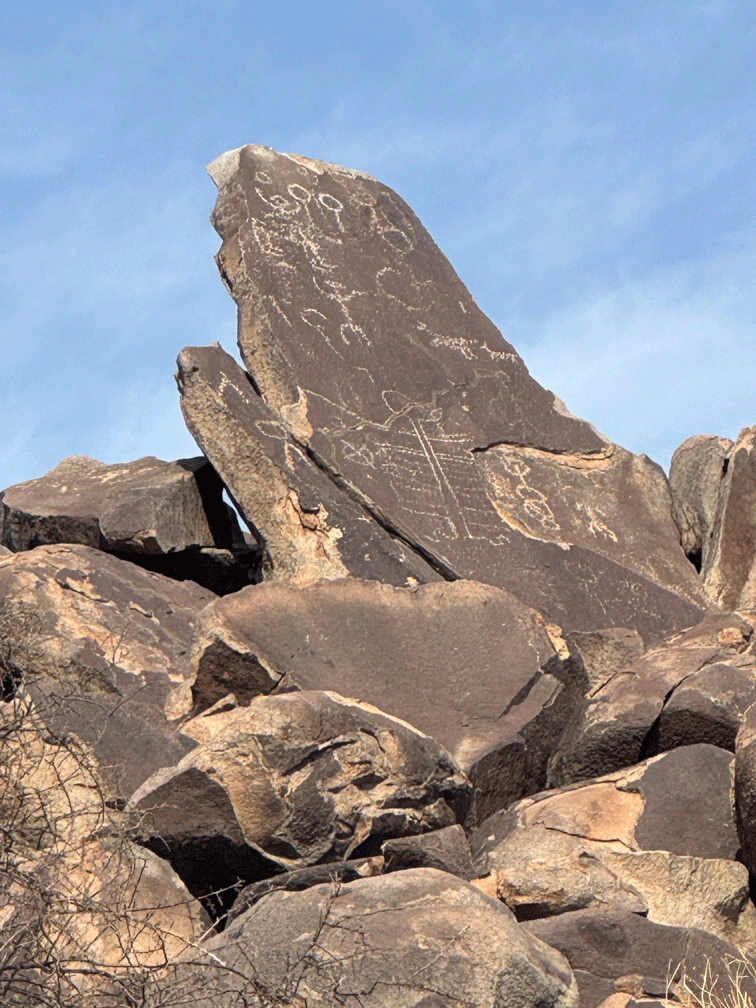
We walked down the opposite side, which was not as steep, then headed across the desert to a smaller bump. Many of the rocks on the smaller hill were more angular. The rock below is almost vertical and had many interesting figures. The photo was taken with a telephoto lens because it was quite high up.
There were other petroglyphs that were close to the ground.
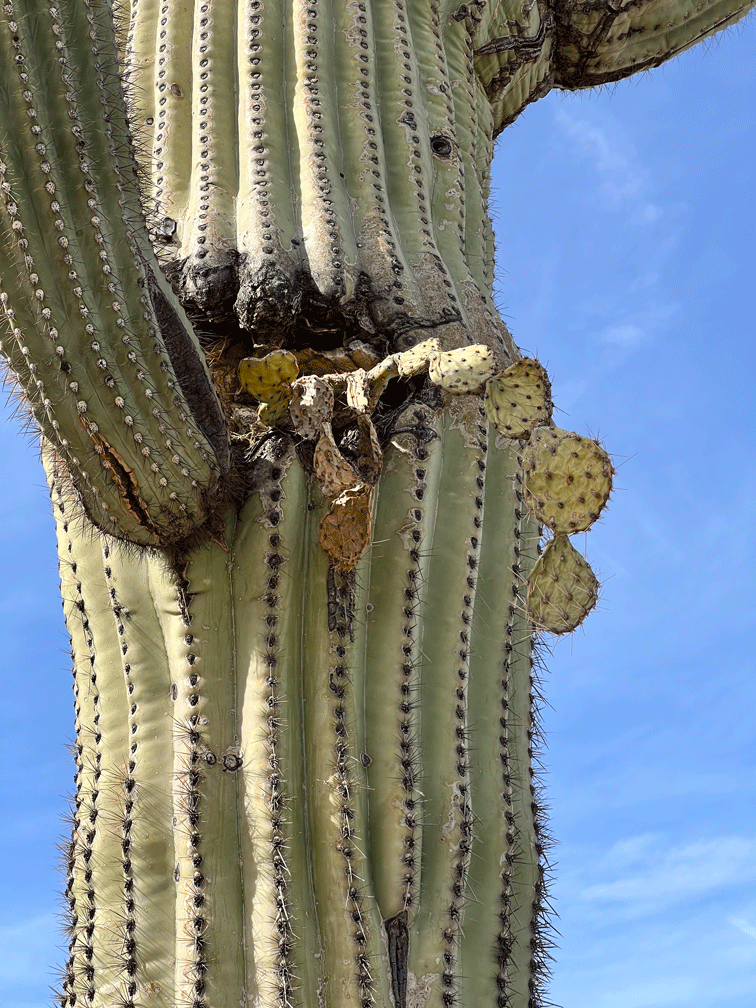
We also saw this saguaro that was providing a growing spot for a prickly pear cactus. Hopefully the prickly pear gets some moisture soon, because it looks like it’s almost dead.
We had to include at least one mountain biking photo. As usual, it was taken at the Tortilita Preserve, where we rode three times in January.
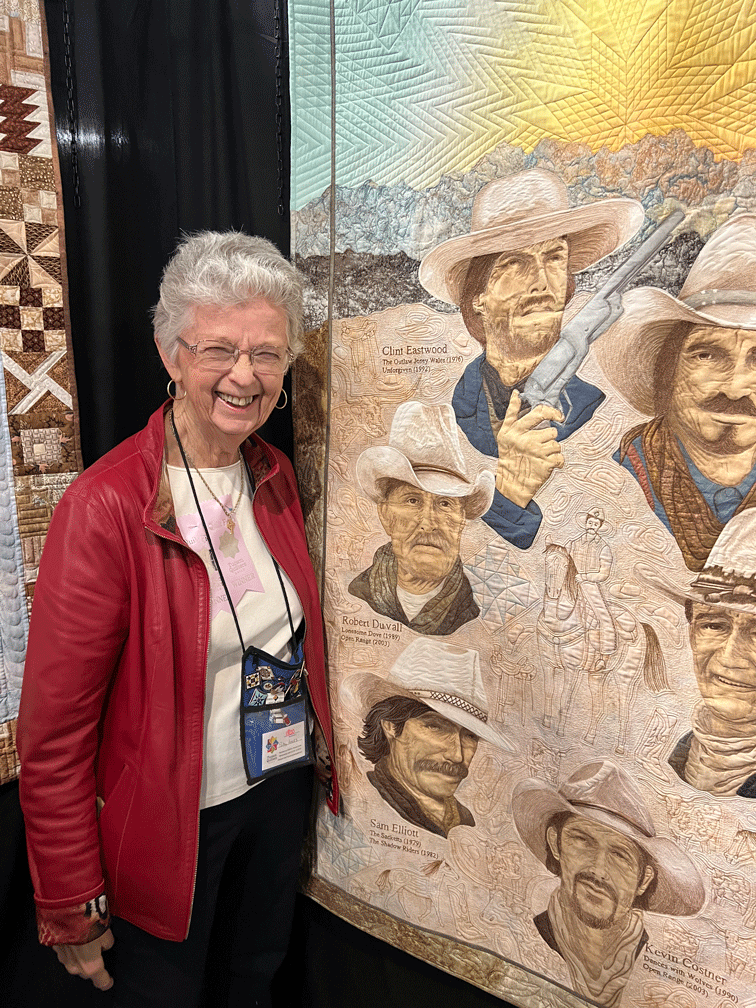
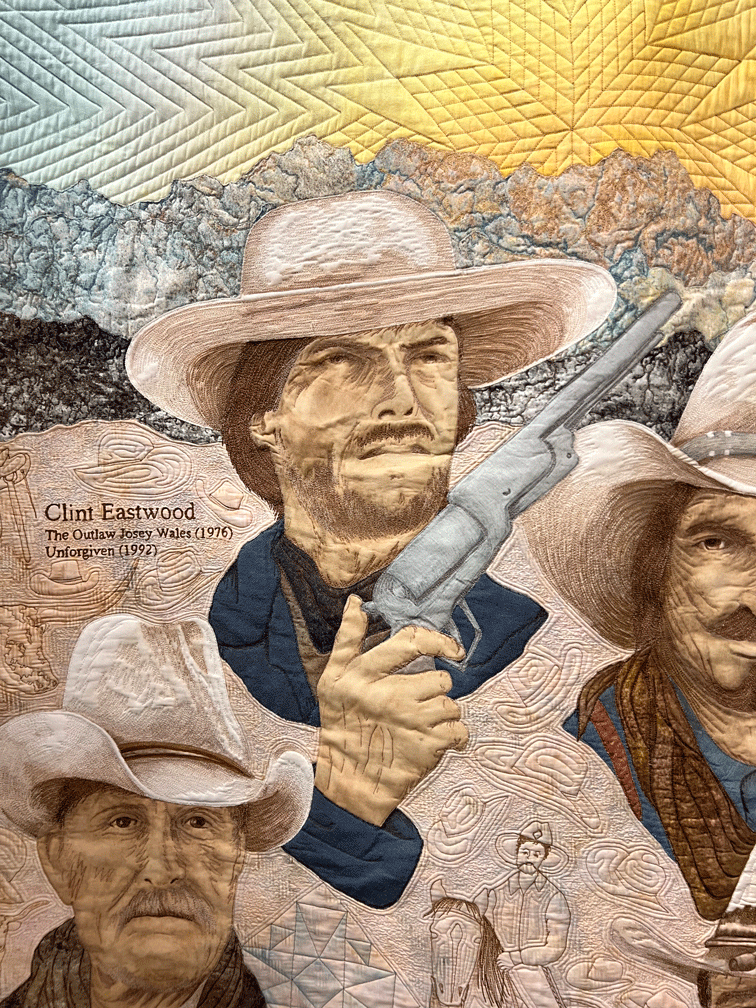
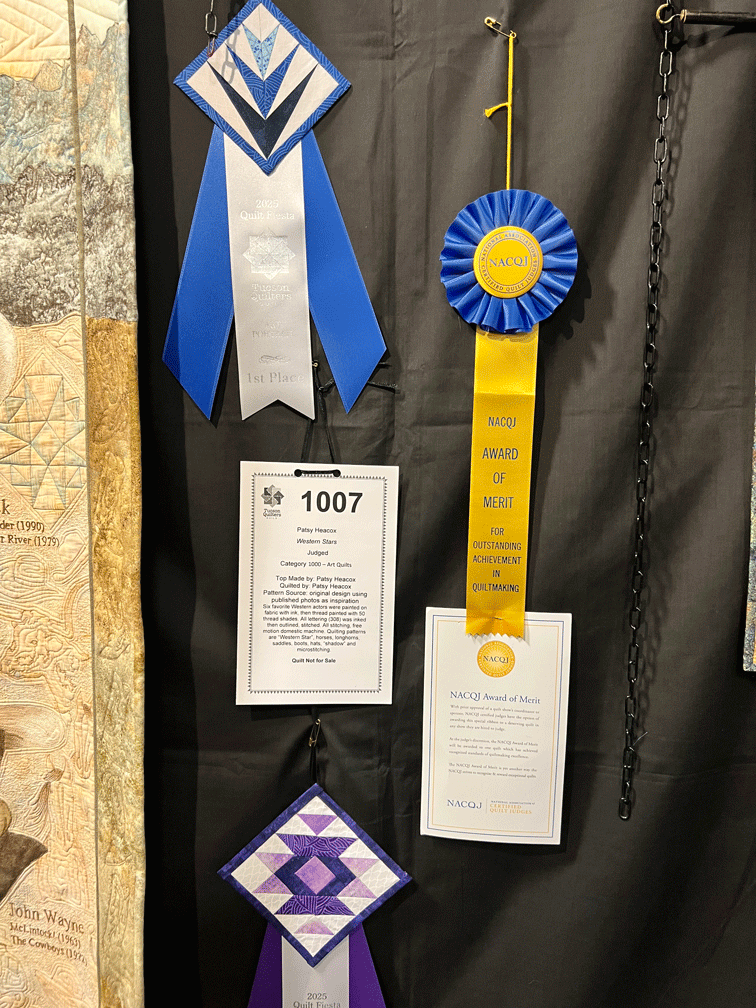
Wendy attended the Tucson Quilt Guild’s “Quilt Fiesta” show on January 11. She was able to speak with many of the award-winning artists. Below is Patsy Heacox with her quilt, “Western Stars.” It won first place in the Art Portrait category as well as a Judge’s Special Merit ribbon.
It was an original design using published photos for inspiration. Patsy painted six of her favourite Western actors with ink, then thread painted with fifty thread shades. The detail was amazing. For example each letter was inked then outlined with thread and filled in with tiny stitches.
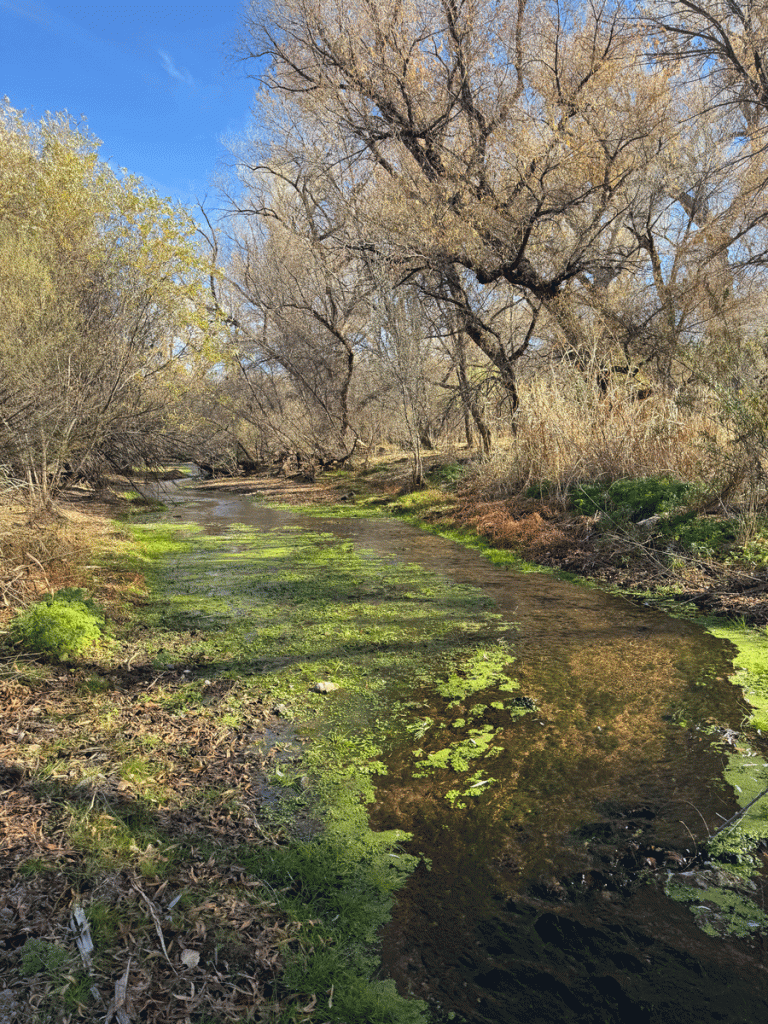
The other scenery photos in this blog have all been of the desert, so we’ve included this photo of Patagonia-Sonoita Creek Preserve to show that we visit other environments as well, especially to go birding.
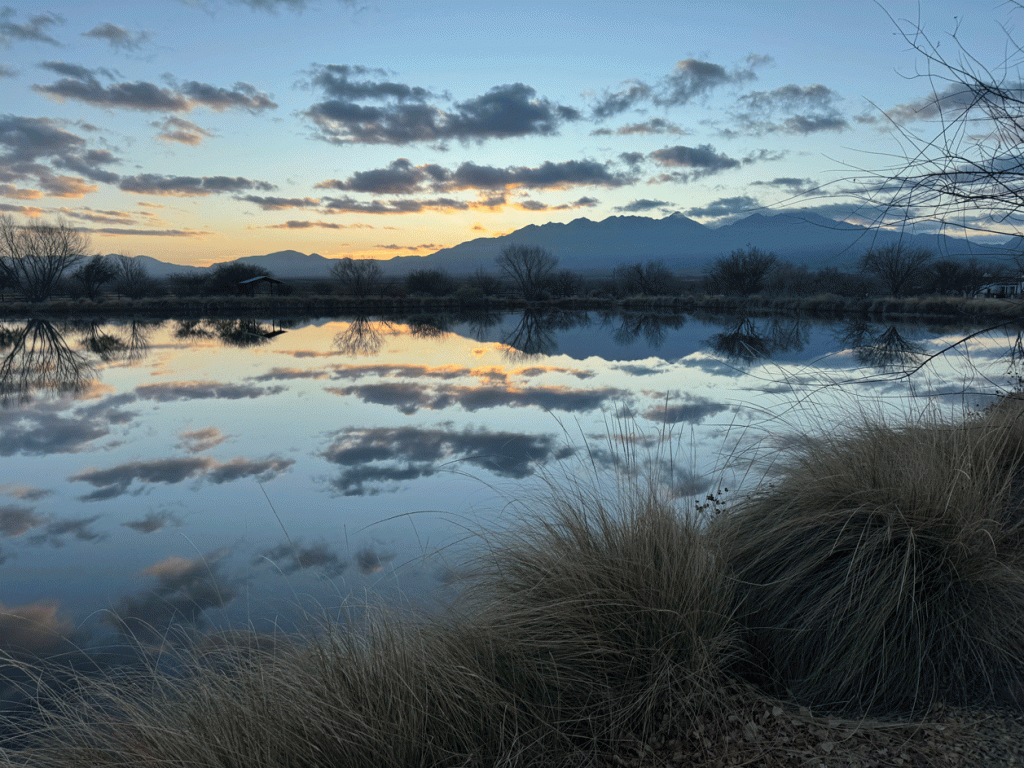
We happened to be at Canoa Ranch Conservation Park at sunrise and captured this view. Unfortunately, the bird we had got up early to see had flown away, but the sunrise and visiting with friends who came with the same intention were good consolations.
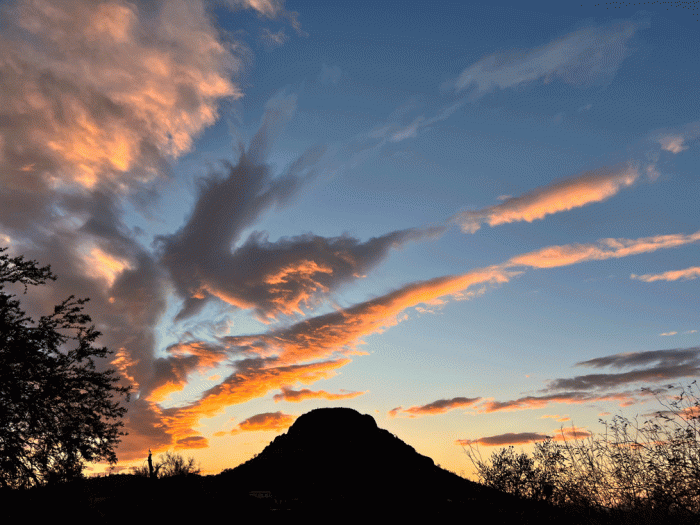
And to end… sunrise on January 6th,
and sunset on January 9th. January 8th was tremendously windy, but the storm brought no rain. We received a bit of rain on January 29th, and while it was exciting enough for us to take a video of the heavy downpour, we didn’t think that anyone else would be interested.
This post shows that we did other things besides birding in January, but the next two posts might make you think otherwise. There are two blog posts planned for all the birds we saw in January. Coming soon…
This month’s post includes almost as many photos of the places that we went birding as the birds that we saw. Being outdoors in interesting landscapes is a positive part of our birding experience.
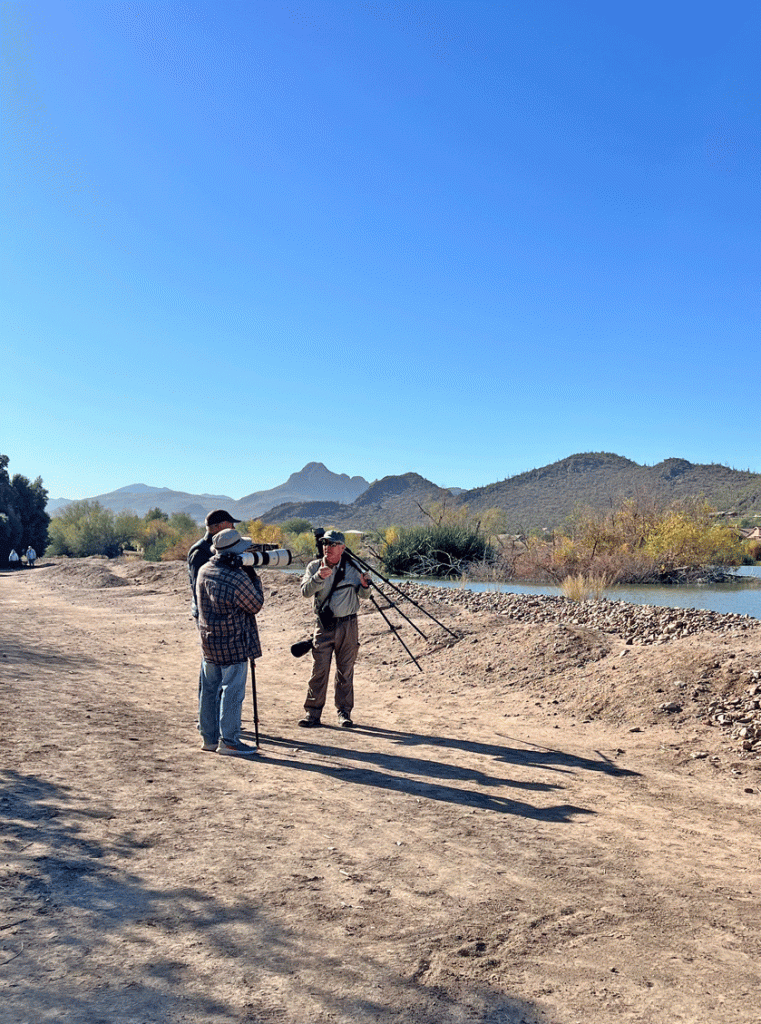
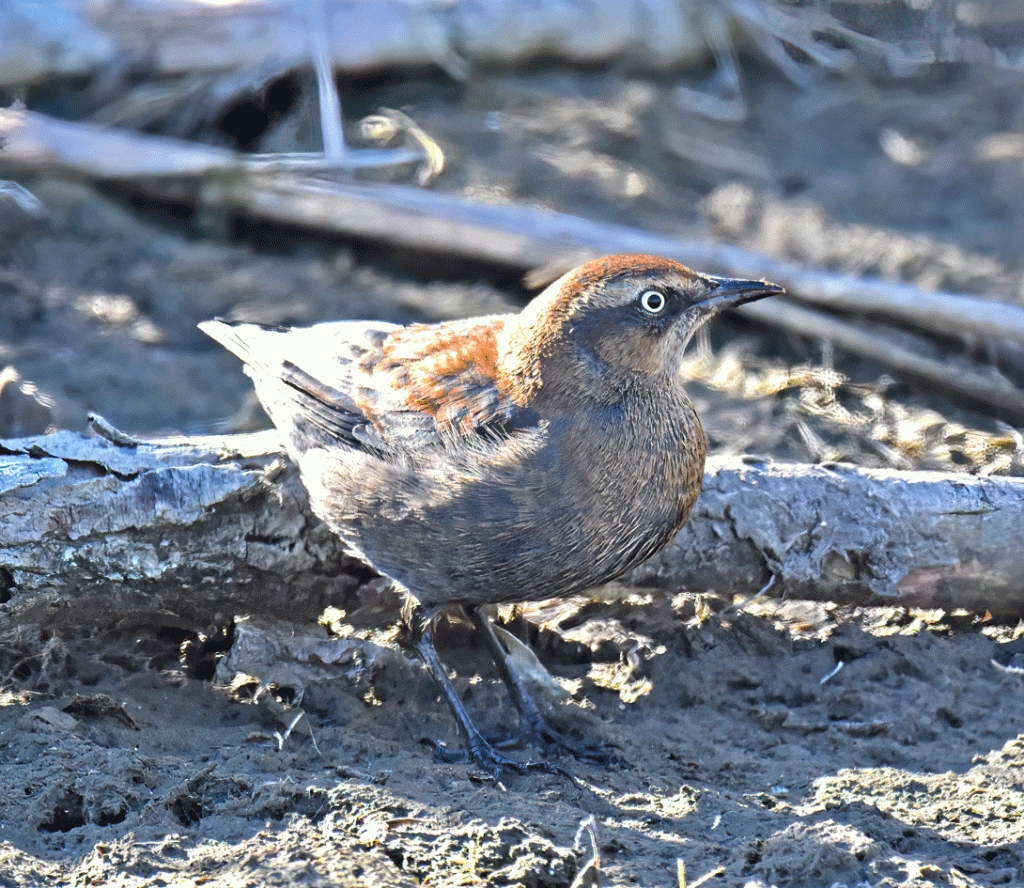
On our first day back we went to our closest birding “hotspot”, El Rio Open Space Preserve. There were other birders and photographers there who were also looking to get a rare sighting of a Rusty Blackbird. So we had a chance to say hello to familiar faces as well as meet new people. The two photographers having a chin wag with Doug helped us locate the bird.
This is the female Rusty Blackbird that we finally got eyes on. She mostly stayed in the shady spots under the trees, but Doug was ready when she ventured into the sunshine. Notice that she is missing a tail.
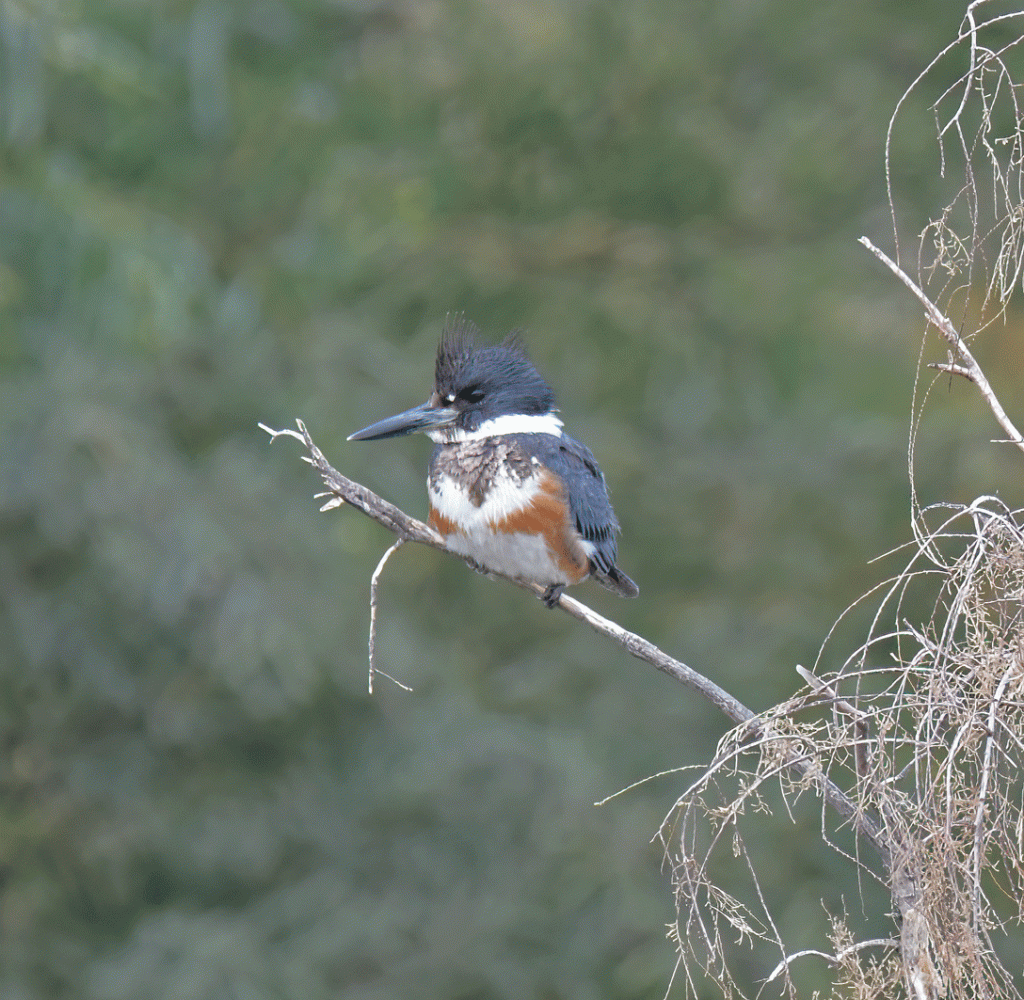
We returned towards the end of the month, and just enjoyed seeing the resident birds, including this Belted Kingfisher.
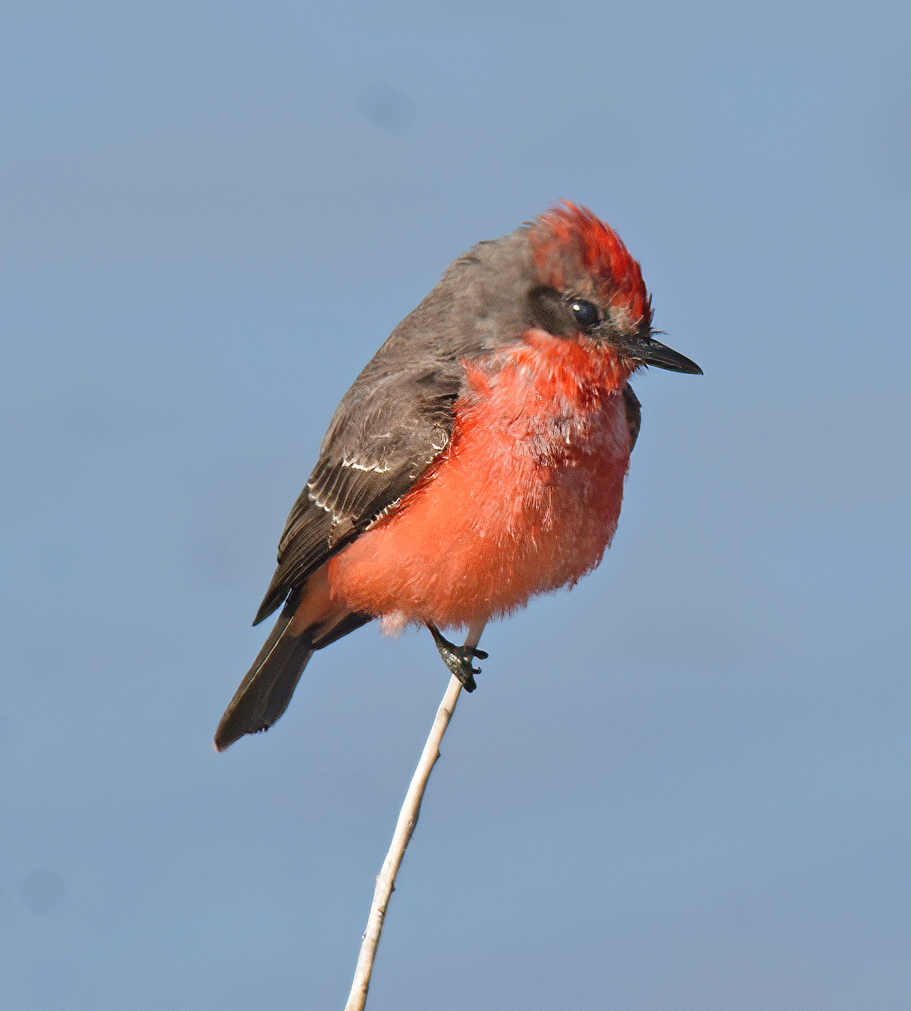
This Vermilion Flycatcher kept returning to a perch just in front of us on the shoreline.
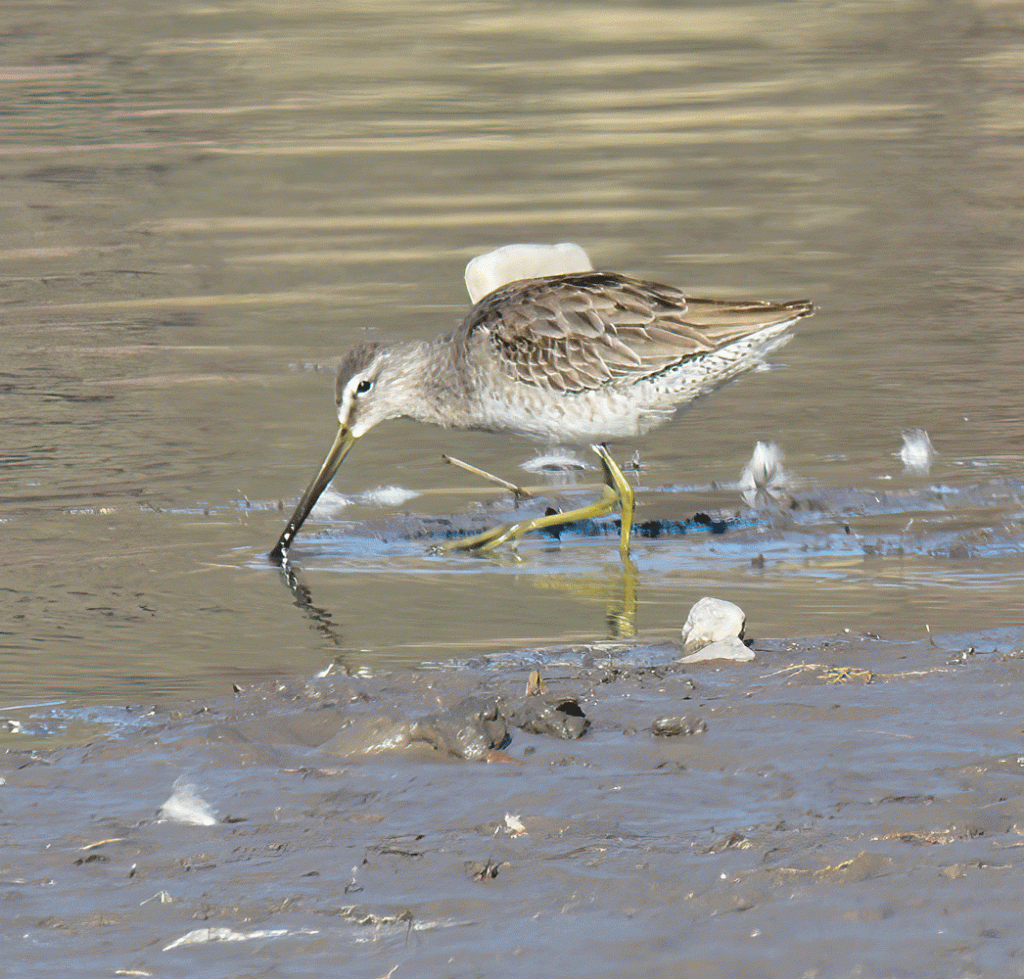
We had a good view of this Long-billed Dowitcher. They nest in the high arctic and spend their winters in this area, but are infrequent visitors to the preserve.
Last spring, we were unsuccessful in finding a LeConte’s Thrasher, so we and our friends made another attempt. The spot we go to is a rather desolate looking place. We wonder why any bird would choose to live there.
There were some birds, although the only thrasher we saw was the more common Curved-bill Thrasher. Here Doug and Mary are getting shots of a sparrow.
The Sagebrush Sparrow is one of the birds that lives in this harsh environment, and is hard to find in other places, so it earned the honour of “bird of the list.”
This Crested Caracara was a candidate in our unofficial “Bird of the Day” contest. We saw it in an irrigated field close to the arid saltbush plains where we saw the Sagebrush Sparrow. The actual winner of “Bird of the Day” was one of the Mountain Plovers at a sod farm in the area. Unfortunately we haven’t included a photo of them because the birds were too far away for a good photo. They won because they were “lifers,” or birds we had never seen before.
We helped with the Christmas Bird Count in the circle around Nogales, AZ. Our section was a part of the Anza trail that goes along the Santa Cruz River south of the Guy Tobin trailhead. A week before the count we went out with Cathy and Wayne to learn about the area. The greenery was confined to the riverbanks.
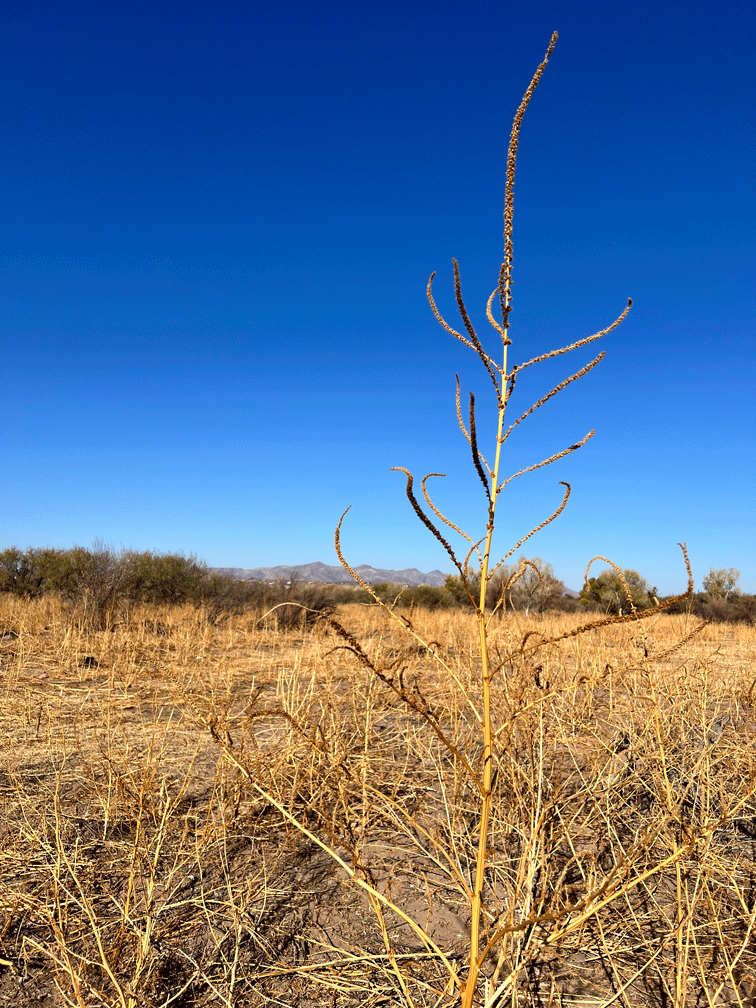
Away from the river, all the vegetation was dry. There were cattle wandering around and we were surprised to see them eating dry stalks. We wondered how they managed to stay alive.
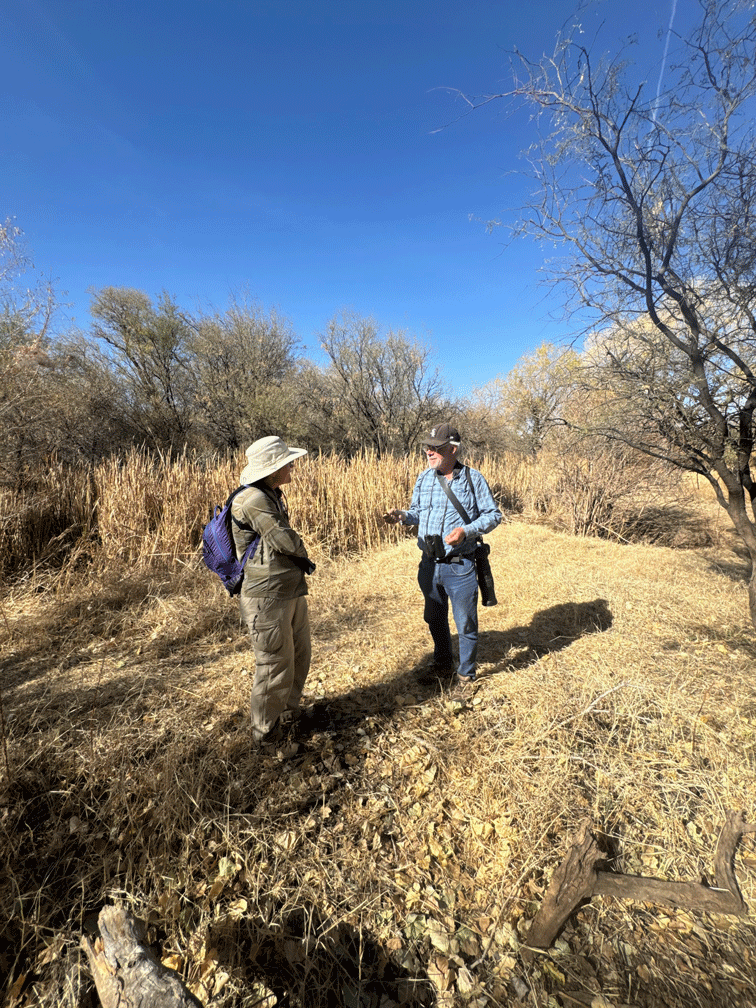
The area was full of sparrows, however. We estimated that there were over 400 White-crowned Sparrows in the six kilometre section. Brewer’s Sparrows were the next most prolific (60). In among all the White-crowned, we ferreted out some Lark, Vesper, Song and Lincoln’s Sparrows and some Lark Buntings. The most exciting sparrow was a singular Swamp Sparrow, because they can be very skulky. Ted (pictured below with Wendy) was also part of our team.
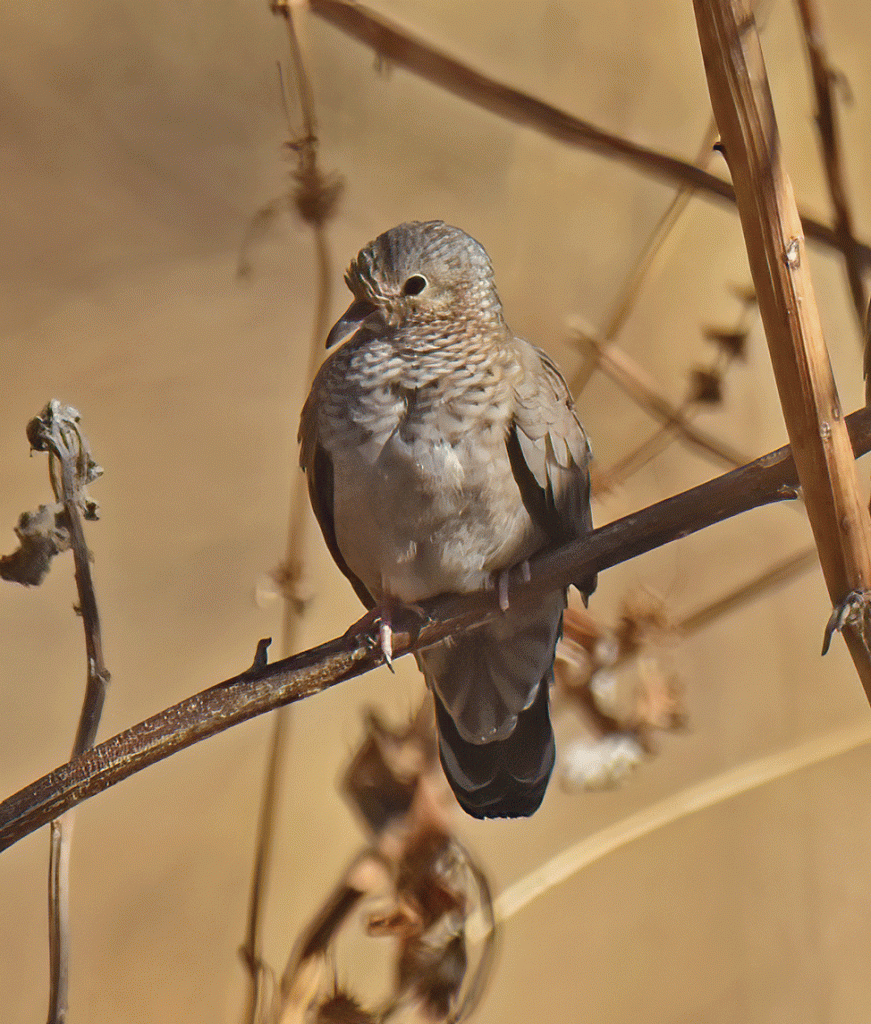
On our preview trip, we saw a group of Common Ground Doves. Notice how short the tails are on these birds. They have beautiful scaled breasts and napes.
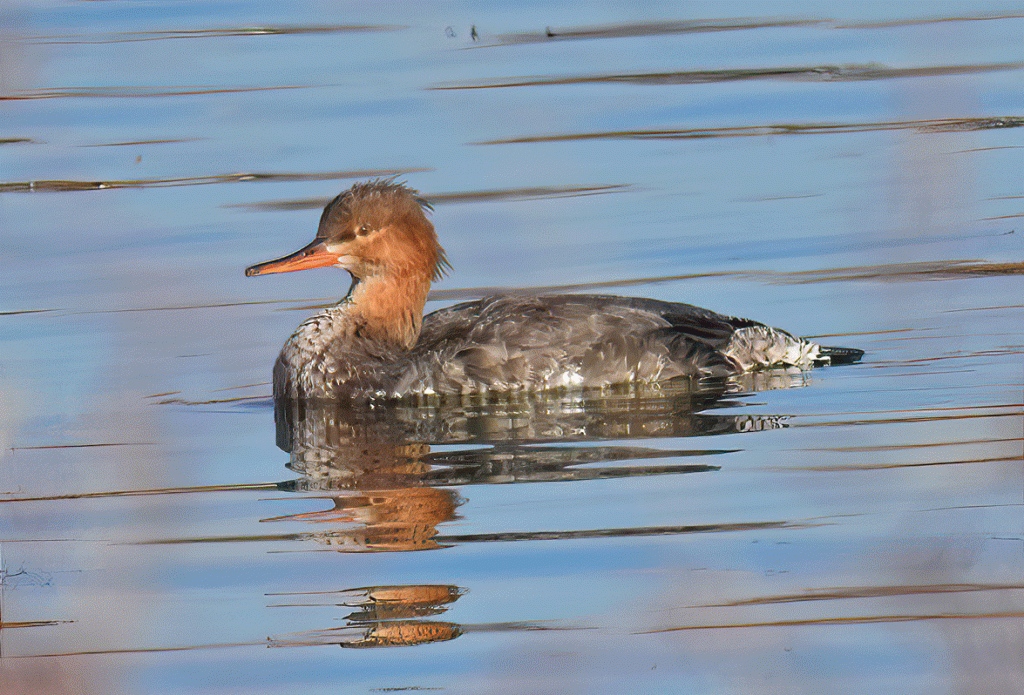
On our way back from the Nogales area, we stopped in at the Amado Water Treatment pond to see a female Red-breasted Merganser. This species is common all year on the coast, but is rarely seen in Arizona. This individual seems happy to stay however, because she has been there for over a month. The male of the species is the one that has a red breast in breeding plumage.
The next important destination for us was Florida Canyon which is close to the more frequently visited Madera Canyon. We spent a number of days in the canyon last January, in unsuccessful attempts to see a Rufous-capped Warbler. It is beautiful country, so we still enjoyed each visit.
This time, we were successful. The Rufous-capped Warbler species is a rare sighting in southeast Arizona. It’s likely that the pair that were in the area last year nested in the canyon. Perhaps they will stay this season too. The warbler was easier to see this December than last spring because the only water around has collected in a small puddle at the bottom of an old dam. We only had to wait a few minutes before the warbler showed up for a drink and an insect snack.
Because we saw the warbler so quickly, we had time for more birding. We chose to go to Santa Rita Lodge in Madera Canyon, only fifteen minutes away. The lodge has a large viewing area with numerous feeders. We can count on seeing at least one Rivoli’s Hummingbird. If we’re lucky we’ll see the iridescent feathers when the light catches them at the right angle, like in the photo below.
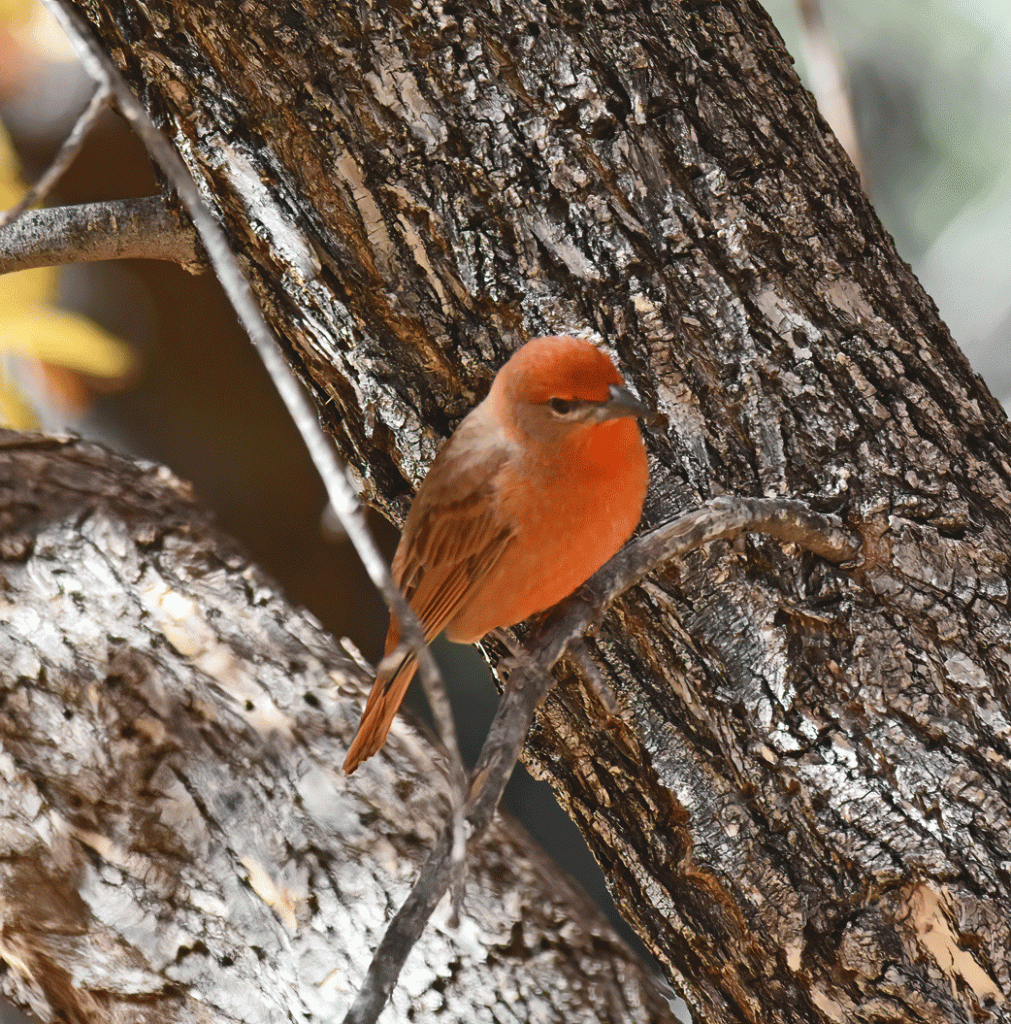
We also saw another common resident of the area, a male Hepatic Tanage. He was a beautiful orange-red that was especially bright on his forehead and throat.
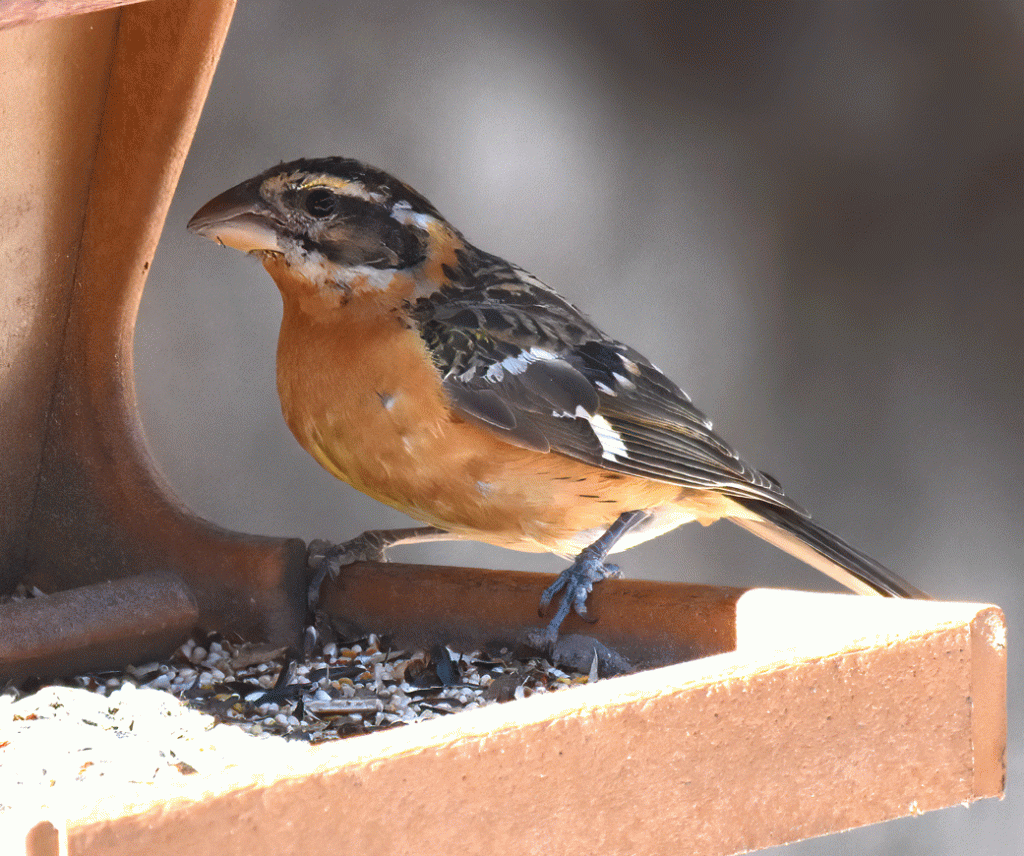
Likely this Black-headed Grosbeak stopped in to the feeders on its way to its wintering grounds in Mexico because we rarely see them in this location. A Black-headed Grosbeak has a similar song to the Hepatic Tanager, since they are in the same family.
One cold morning, we checked out the Patagonia-Sonoita Creek Preserve. The area still has many living cottonwoods, but none are as big as this one was before it died and fell over. This visit was our first unsuccessful attempt at seeing a Brown Thrasher.
Later the same day, we walked on the birding trail at Patagonia Lake State Park. The trees remind us of early fall in BC.
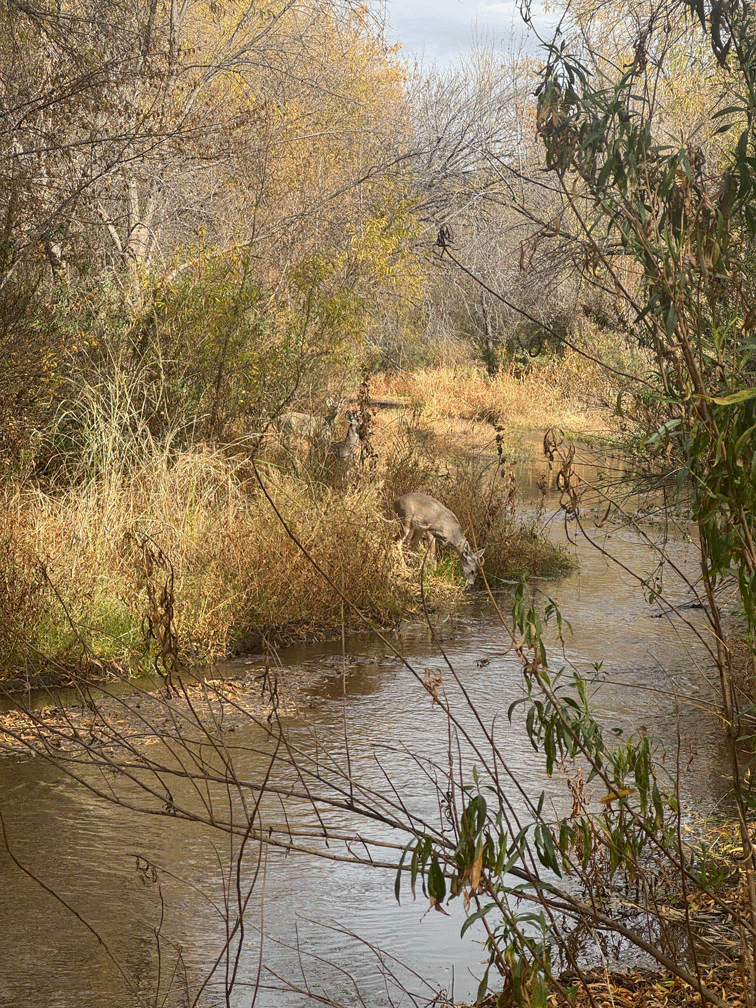
We had a good view of these three deer beside the creek. We saw several birds as well, but no photos this time.
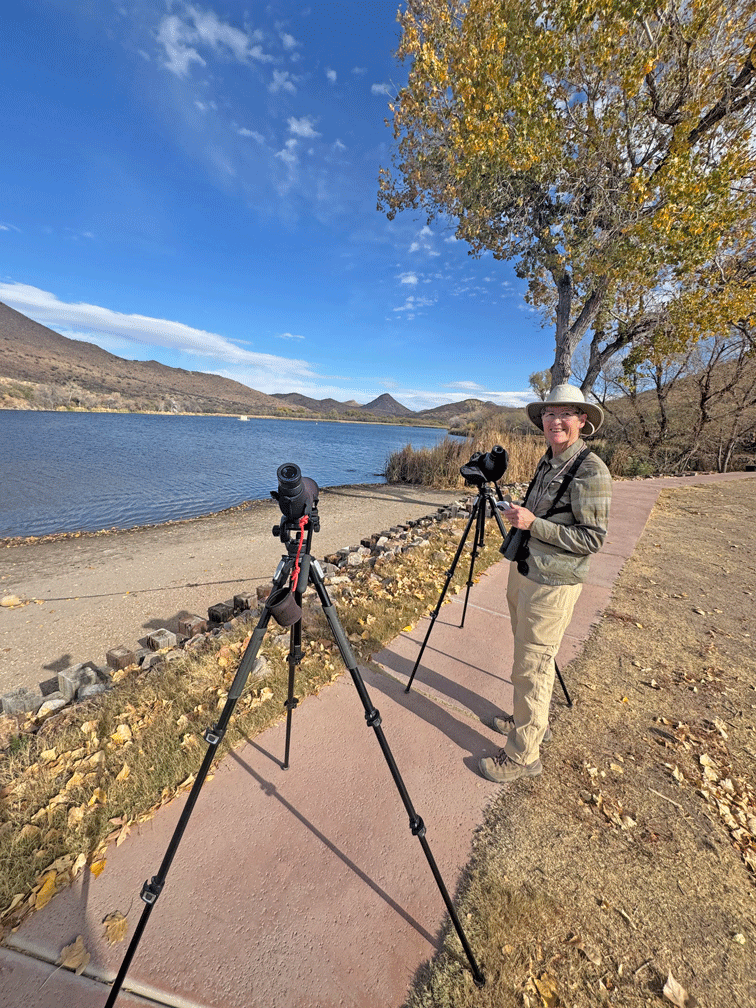
We were trying to see a Red-throated Loon that had been reported. We finally located it with our scopes from the beach area of Patagonia Lake.
Another day, we visited Sweetwater Wetlands in Tucson. It looked very different from last season because they had conducted a burn to improve the habitat.
The ponds had become inundated with an invasive water lettuce that had likely been introduced by someone releasing their aquarium fish and water into the ponds. Over the years, other measures had been taken to try to eradicate the weeds, without success. This time, they drained the ponds, pulled weeds by hand, and burned. Hopefully it will be successful. Shorebirds like Spotted and Least Sandpipers and Wilson’s Snipe like this current habitat. Sparrows are also plentiful. Soon the ponds will fill up.
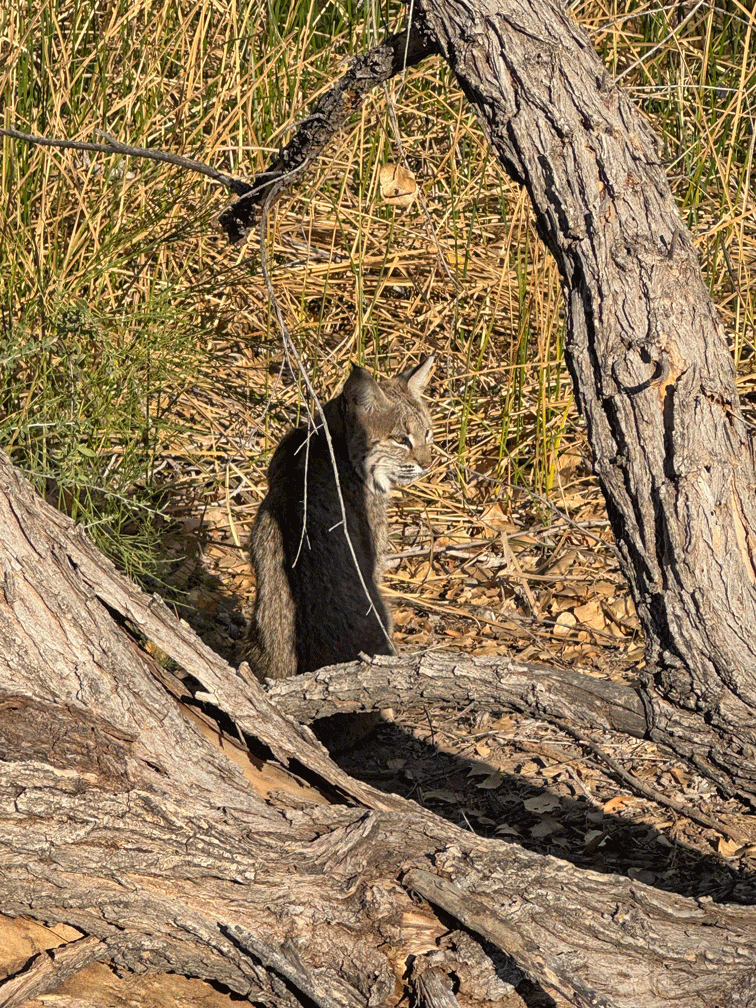
Several bobcats live in the wetlands and surrounding area. We were lucky enough to be so close to this one that Doug took the photo with his iPhone. It was right near the spot where we had a quick look at a rare Chestnut-sided Warbler.
We returned to Sweetwater ten days later on December 23 and had much better views of the female Chestnut-sided Warbler. No chestnut sides however, because she is not in breeding plumage. She is a first winter female and has a brilliant green back.
Another regular birding spot for us is Christopher Columbus Park.
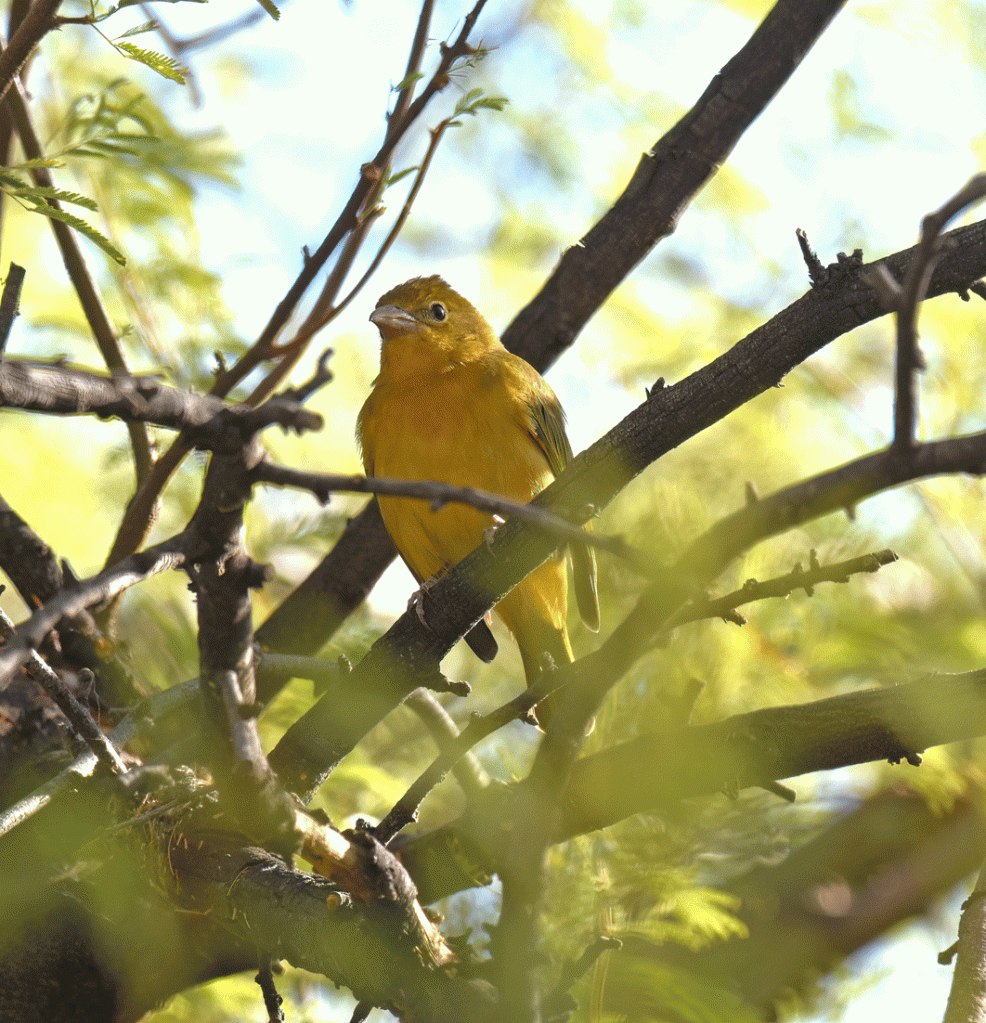
We saw this rare female Summer Tanager in the trees beside the stream that links the two lakes.
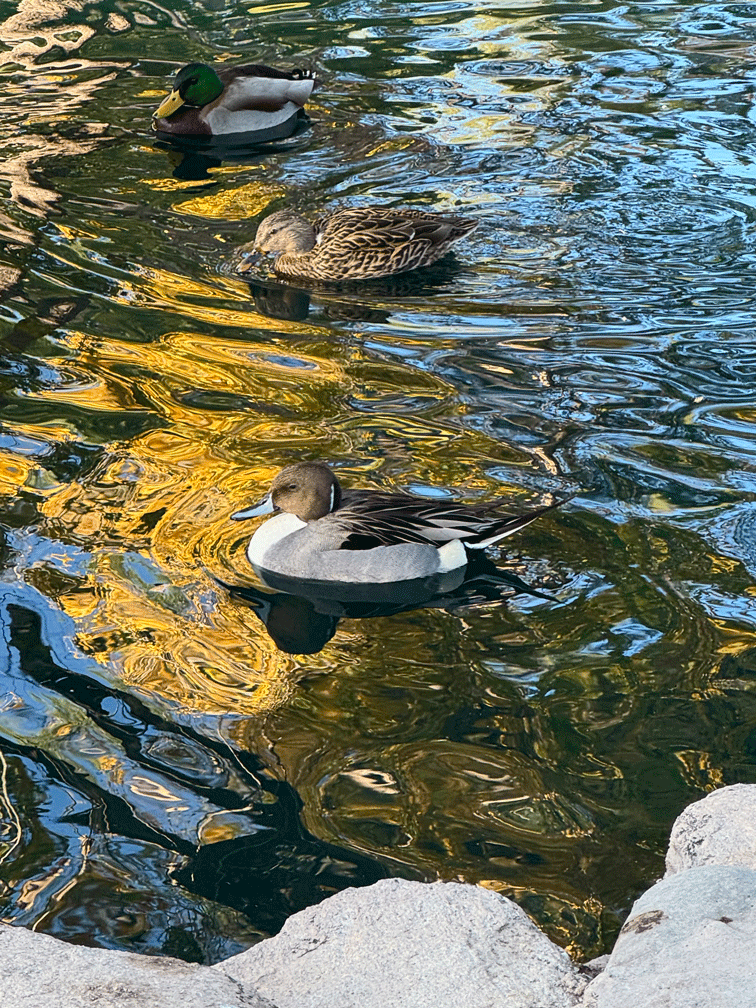
We try to get to Reid Park each month. Doug took this photo of a pair of Mallards and a Northern Pintail with his iPhone at the small pond at the park.
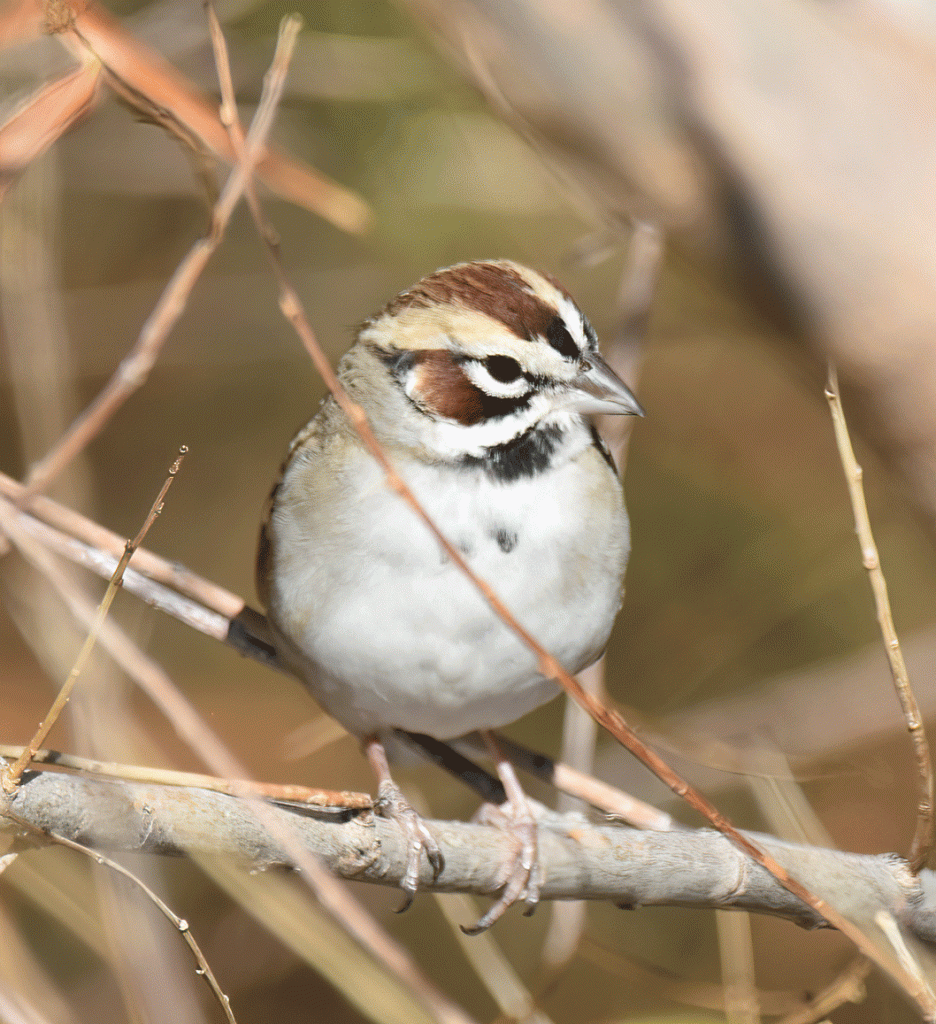
Another one of our regular birding spots is Canoa Ranch Conservation Park. It’s a good spot for sparrows and this December we got a good view of this Lark Sparrow.
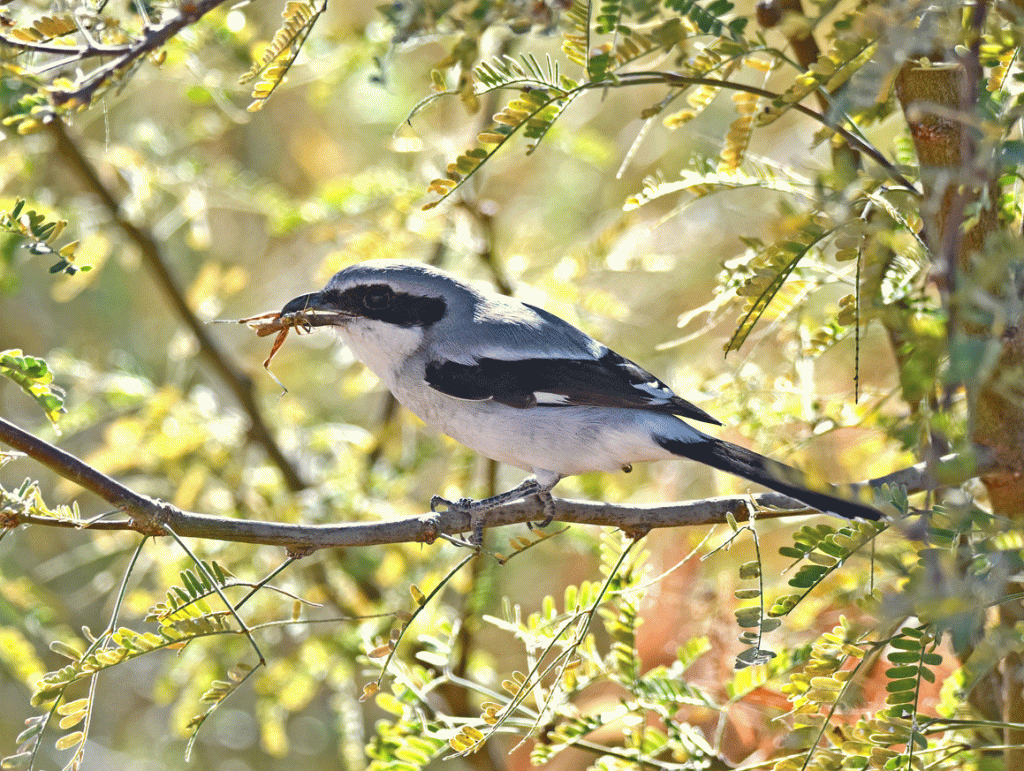
We can usually count on seeing a Loggerhead Shrike there as well.
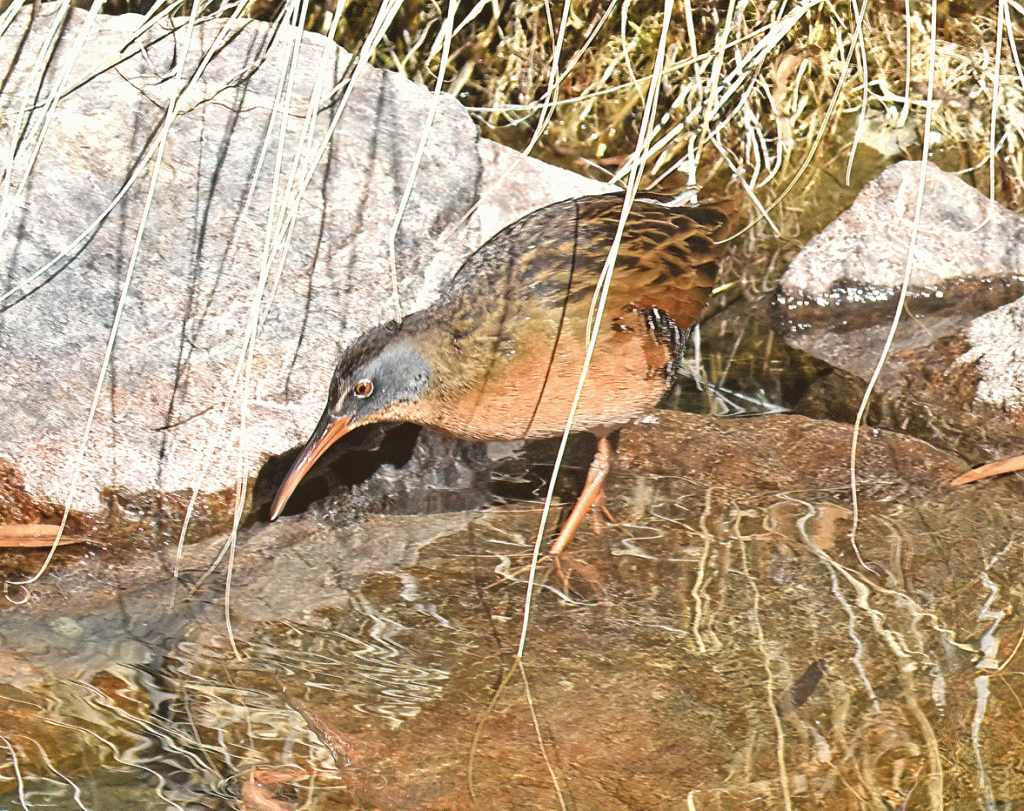
This Virginia Rail is a more recent visitor and has been hanging around for more than a month. There is a bridge right above the reeds where it hangs out in, so when it wanders out it’s easy to get a good view.
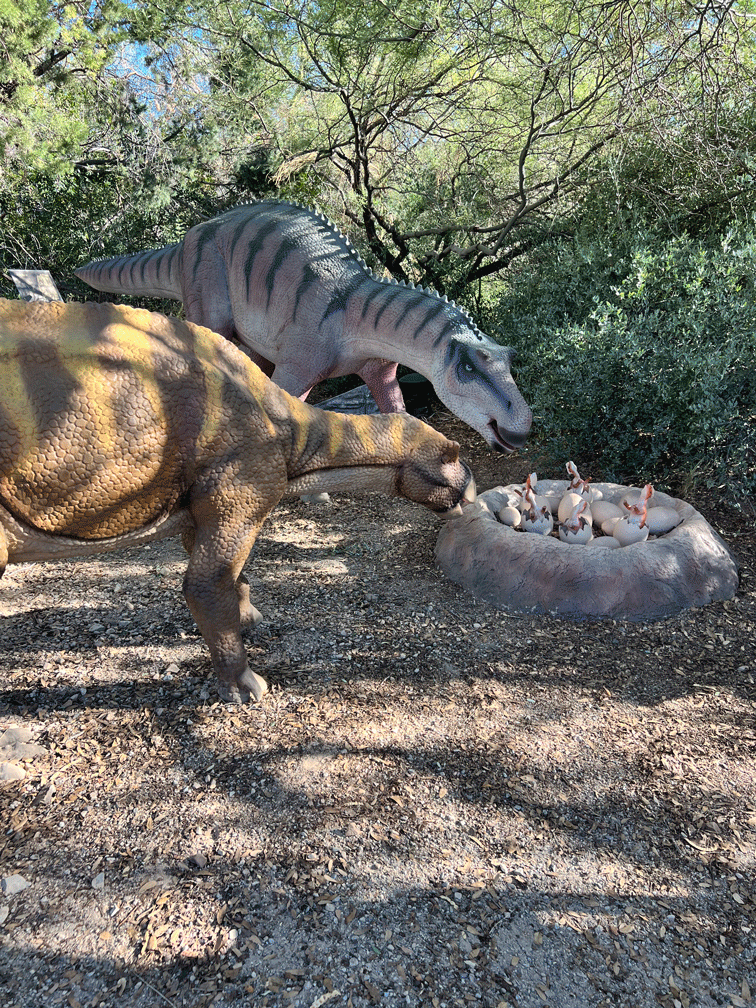
And of course, we had to visit the Arizona-Sonora Desert Museum. They have life-size animatronic dinosaurs on display until the end of March. This photo is of Maiasaura which means, “good mother dinosaur.” It earned its name because it was found with nests of eggs and babies. It lived in the Cretaceous period.
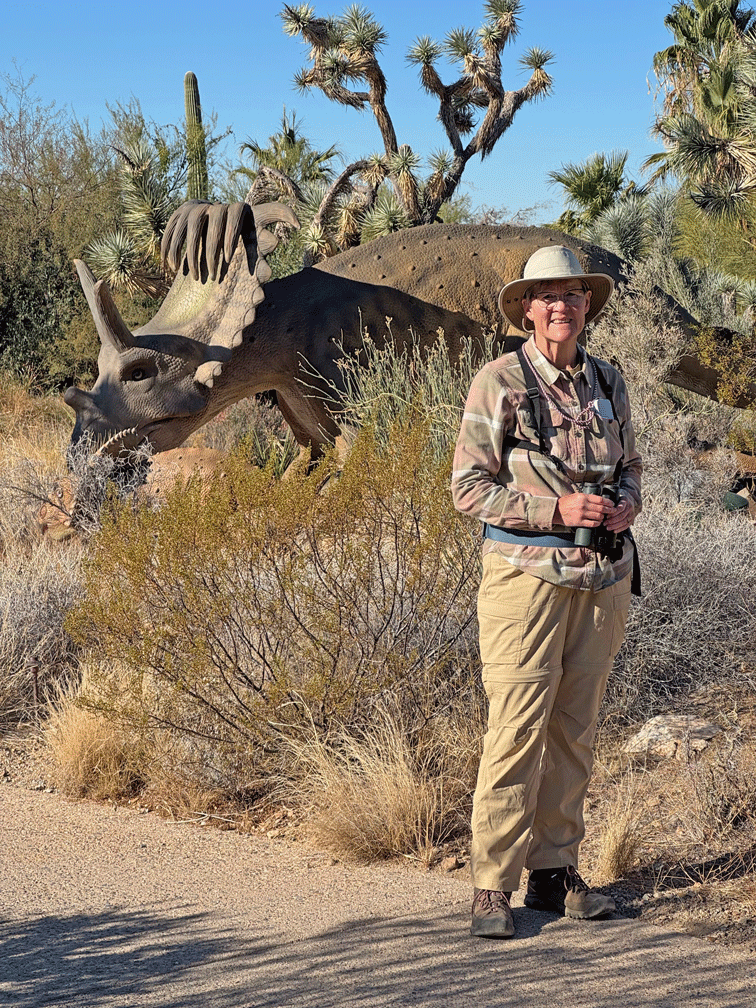
Wendy is standing in front of a model of Kosmoceratops, that had the fanciest head decorations of any dinosaur. It was a plant eater that lived in the Cretaceous period.
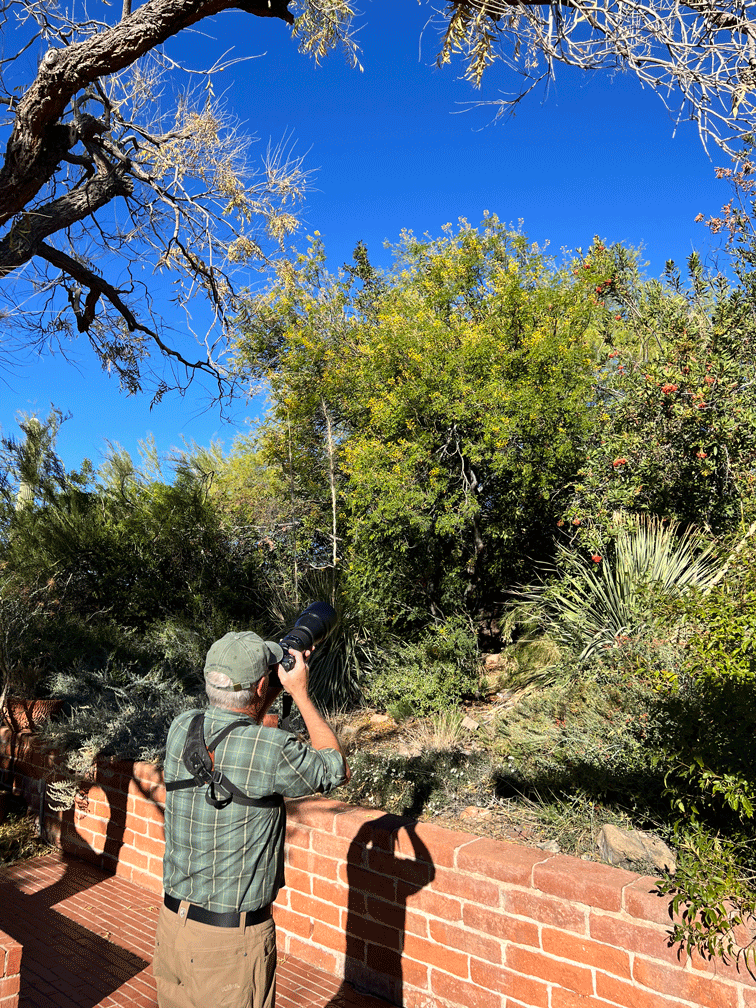
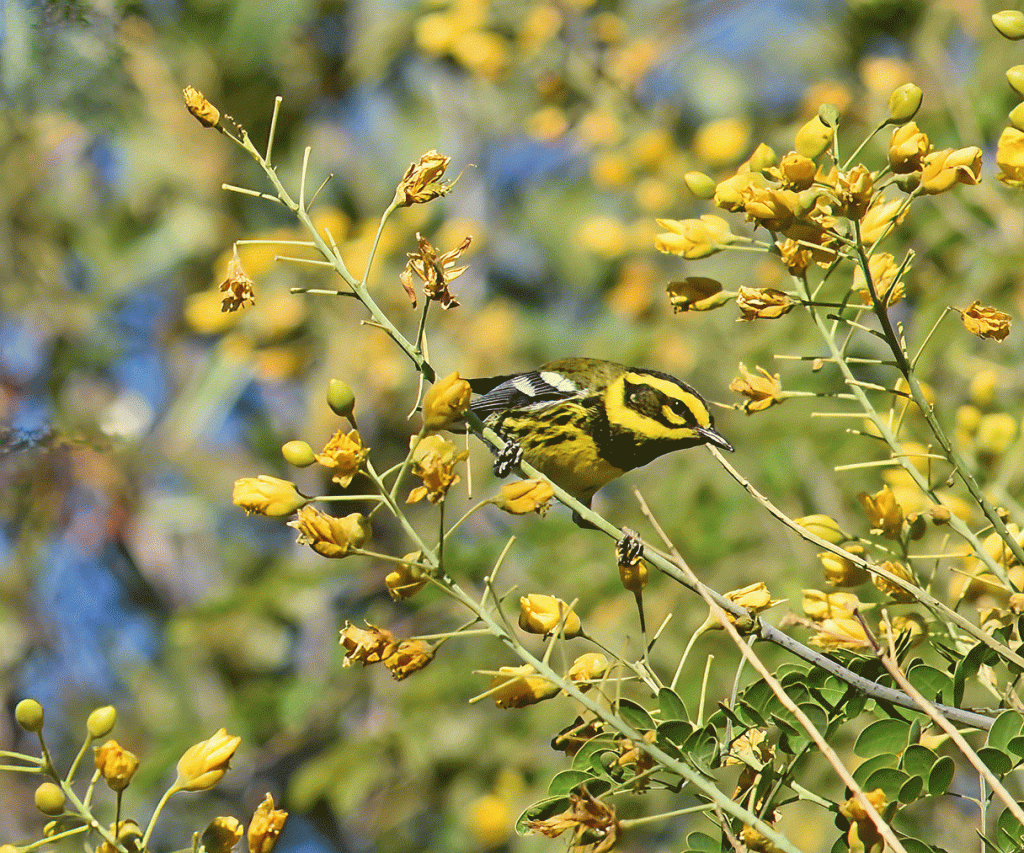
There’s a beautiful yellow flowering tree (Sweet Acacia, we think) in the desert garden section at the Desert Museum. On December 24th, it was full of birds: Ruby-crowned Kinglets, Hermit Thrushes, and Costa’s Hummingbirds, as well as a Townsend’s Warbler.
The male Townsend’s Warbler looks beautiful among the yellow flowers. The species usually winters a bit farther south than Tucson, so this one is considered a rarity.
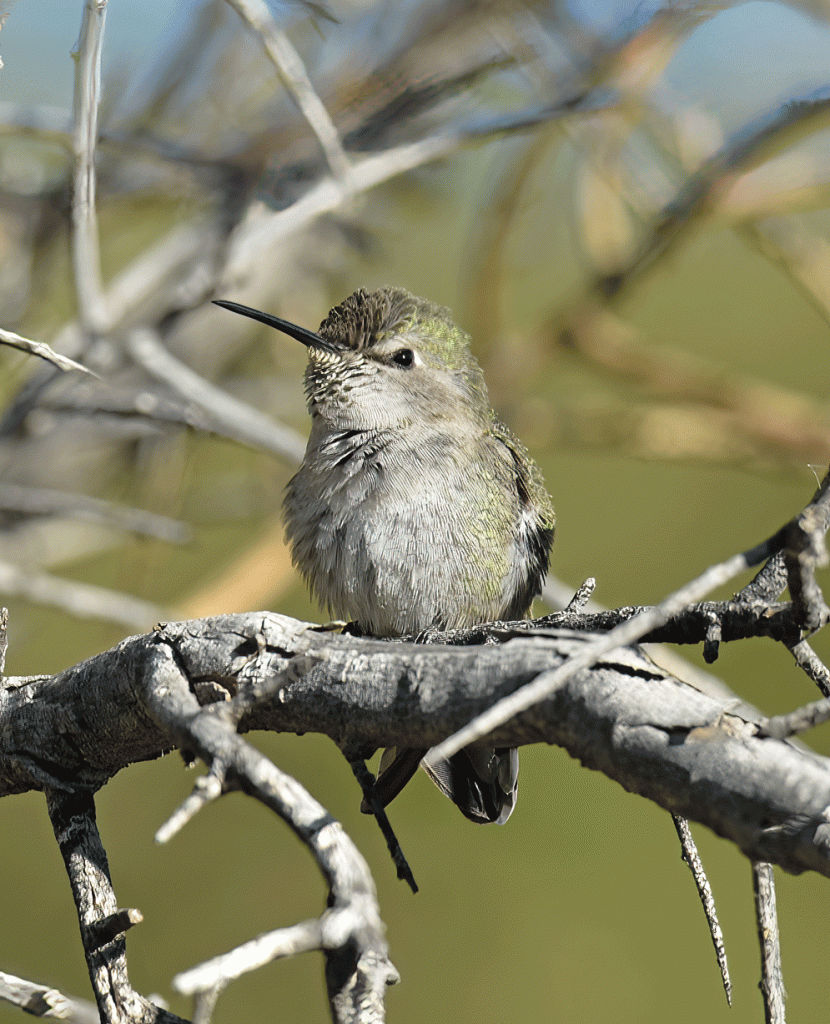
That same day, Doug captured this female Costa’s Hummingbird.
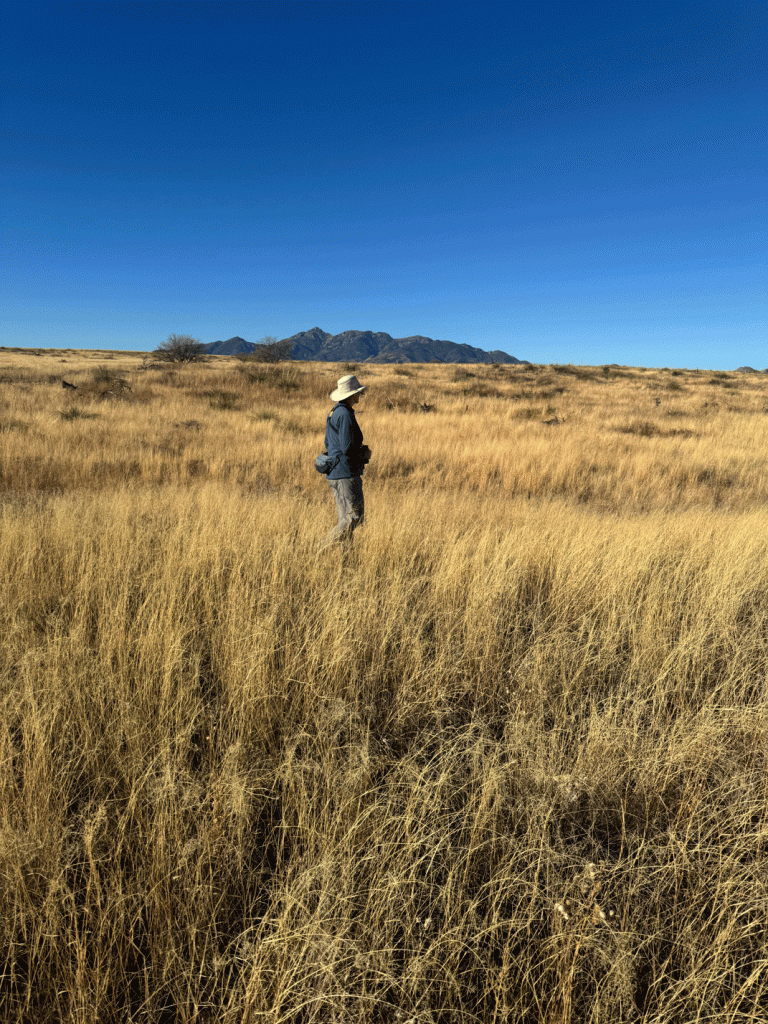
On December 29th we went to a new area for us in the Sonoita area. We wandered through the grasslands, mostly following cattle paths.
We saw more Grasshopper Sparrows than we have ever seen in one area.
It’s almost two weeks into the new year, and this post is now ready to be published. We’ve seen some other great birds already to include in January’s instalment. Until then…
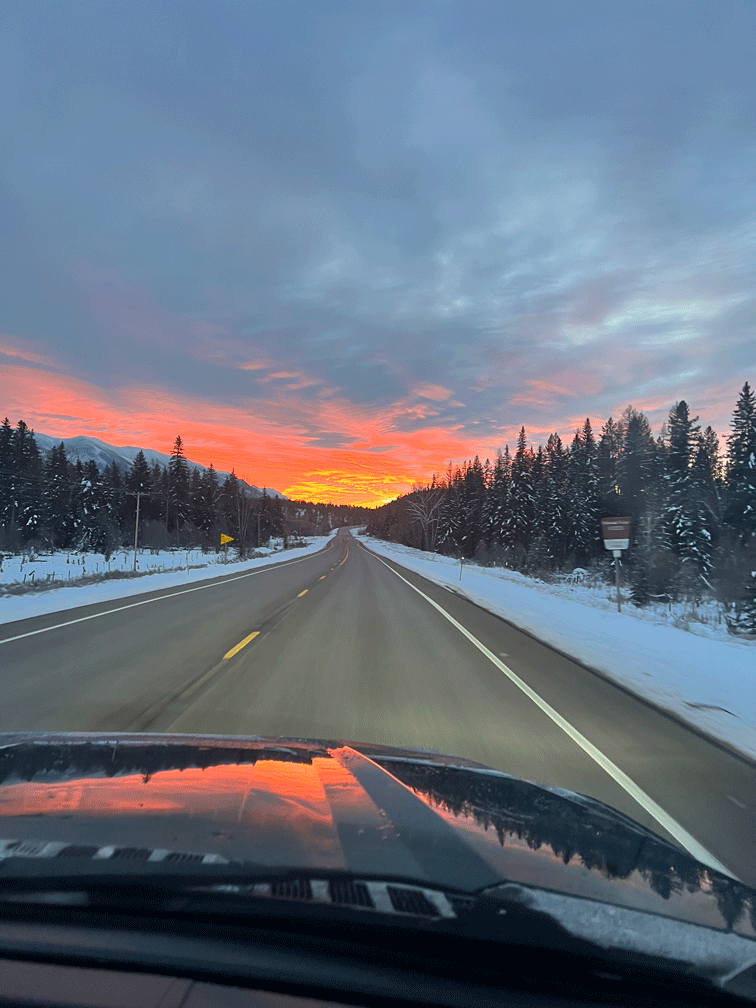
We left our home in Canada before sunrise on December 1st. We enjoyed the beautiful sunrise just south of Eureka, MT about 8 am.
That sunrise started the series of sunrise and sunset photos. Here’s the sunset from our hotel in Pocatello, Idaho. We slept well after our ten hour drive.
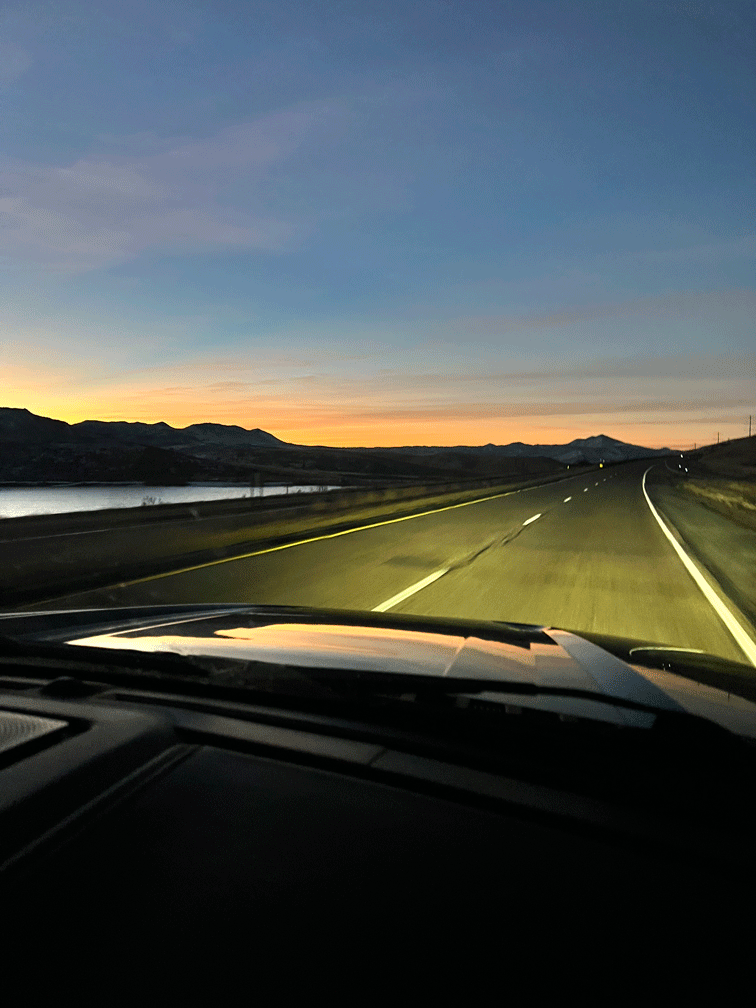
Sunrise the next morning.
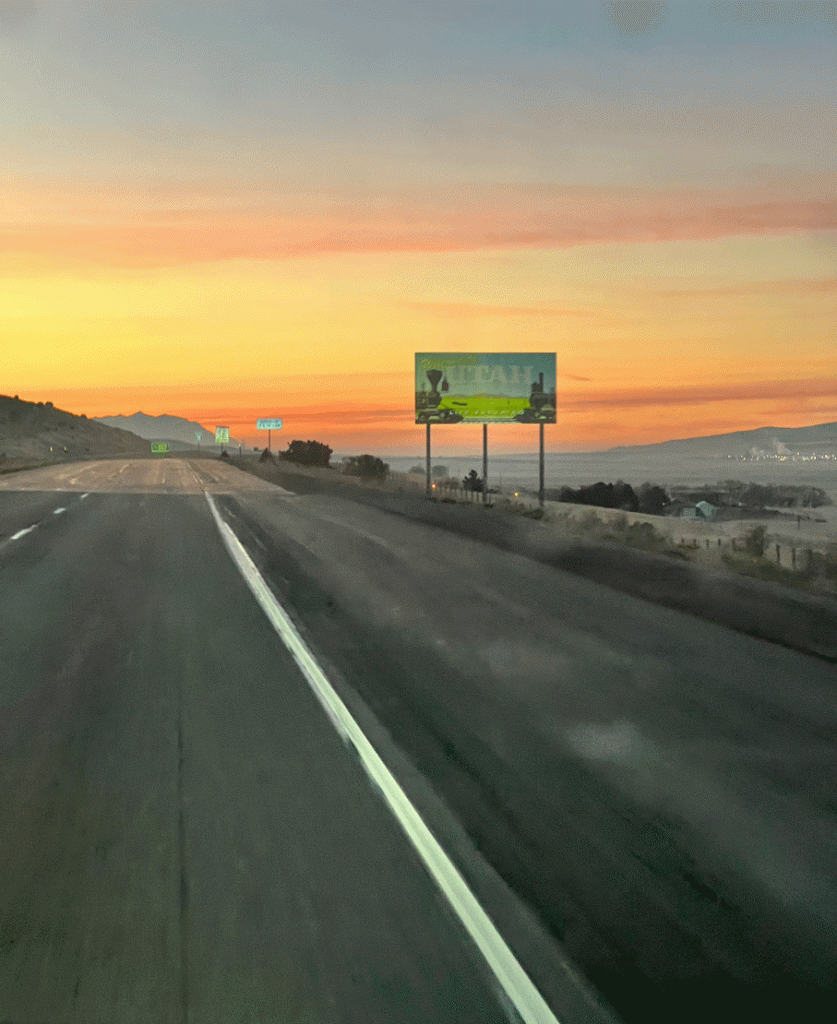
There was still some nice colour in the sky when we passed into Utah.
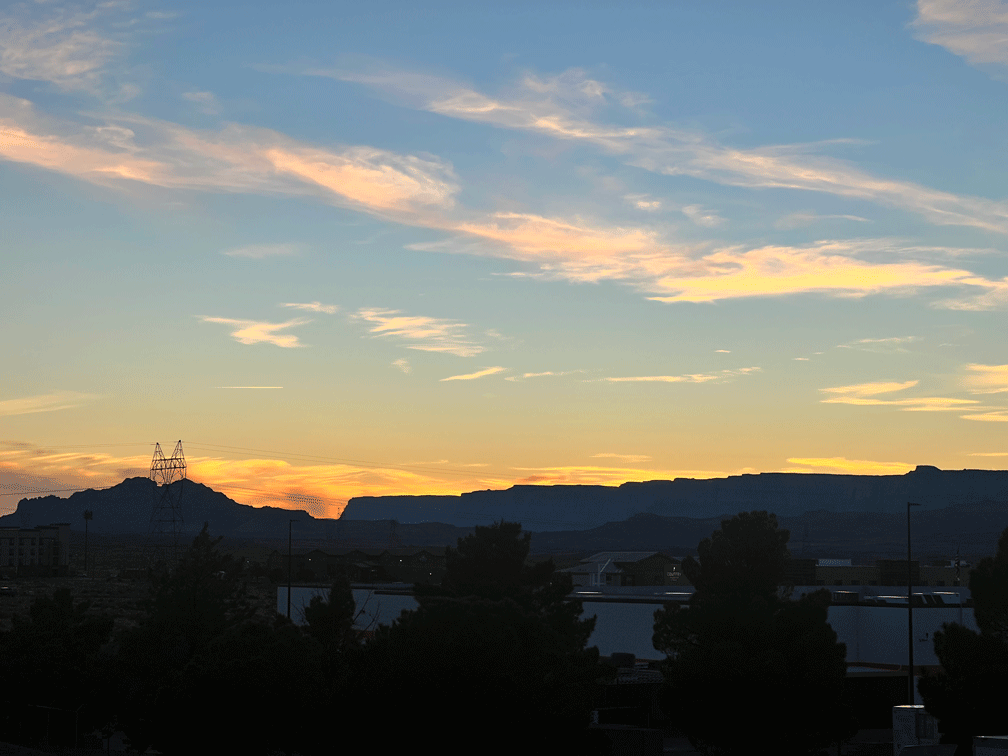
This is sunset from our hotel in Page, Arizona. It was about an eight hour drive from Pocatello.
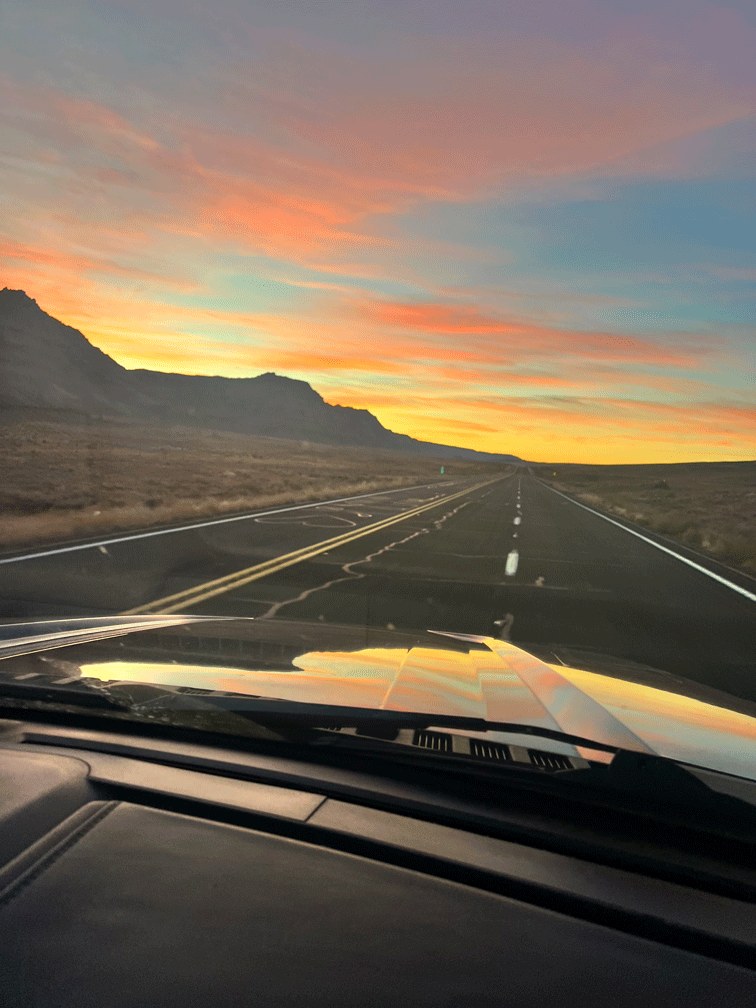
Here’s sunrise south of Page. We had excellent driving weather the whole trip.
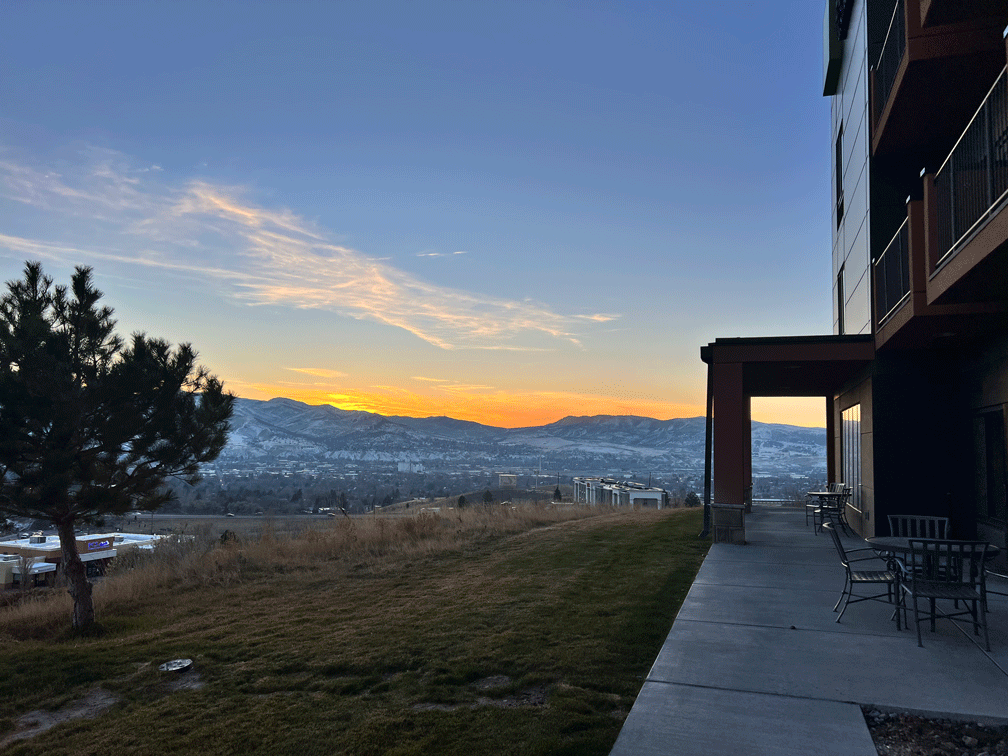
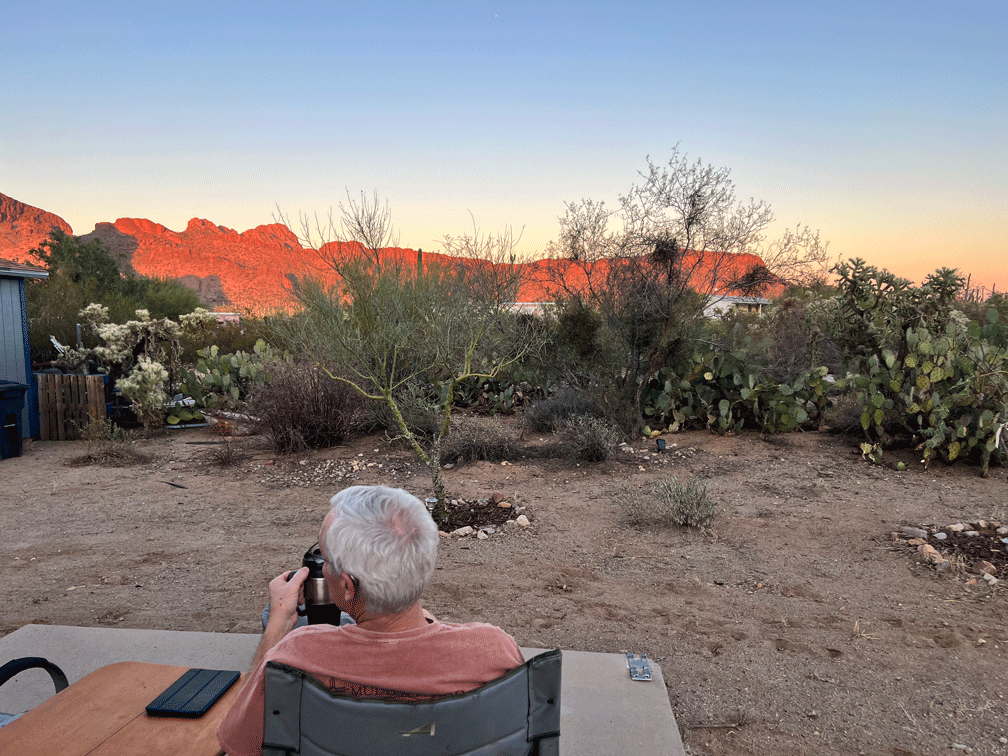
It was about a six hour drive to our spot just outside Tucson, AZ. We sat outside before dinner and enjoyed the glowing mountains to our east.
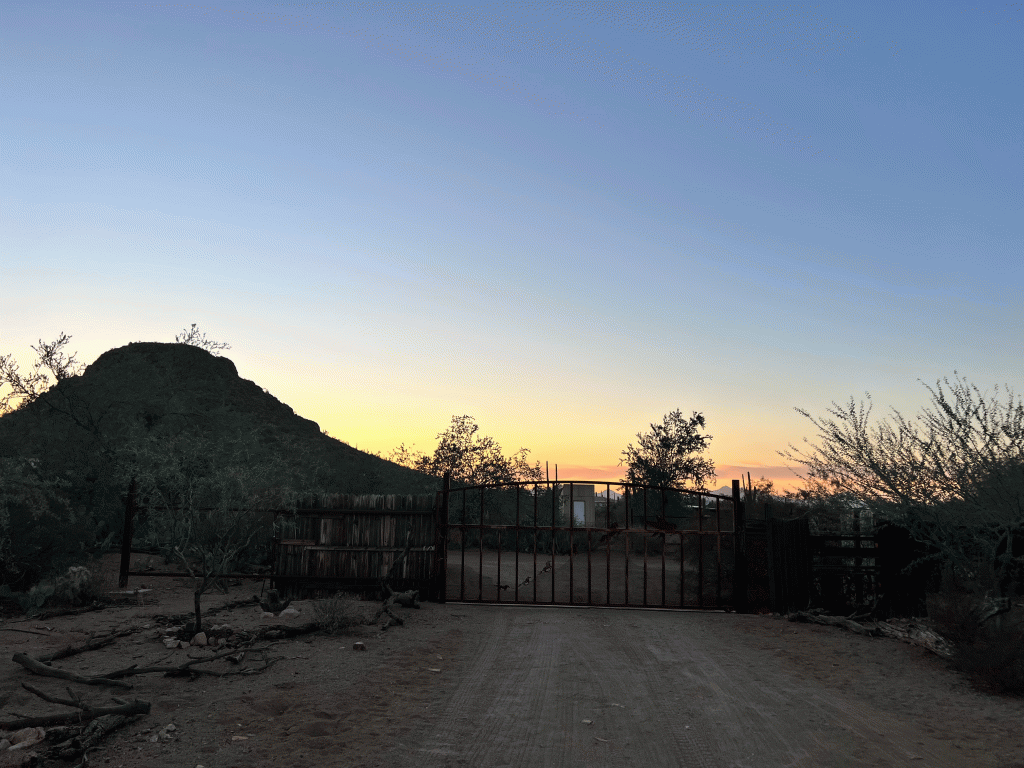
Sunset was not spectacular, but we were glad to be here.
We revisited our favourite trails that we can access right from our place. We’re happy to see new arms growing from the left “gate-post” saguaro. The trail goes right between these two sentinels.
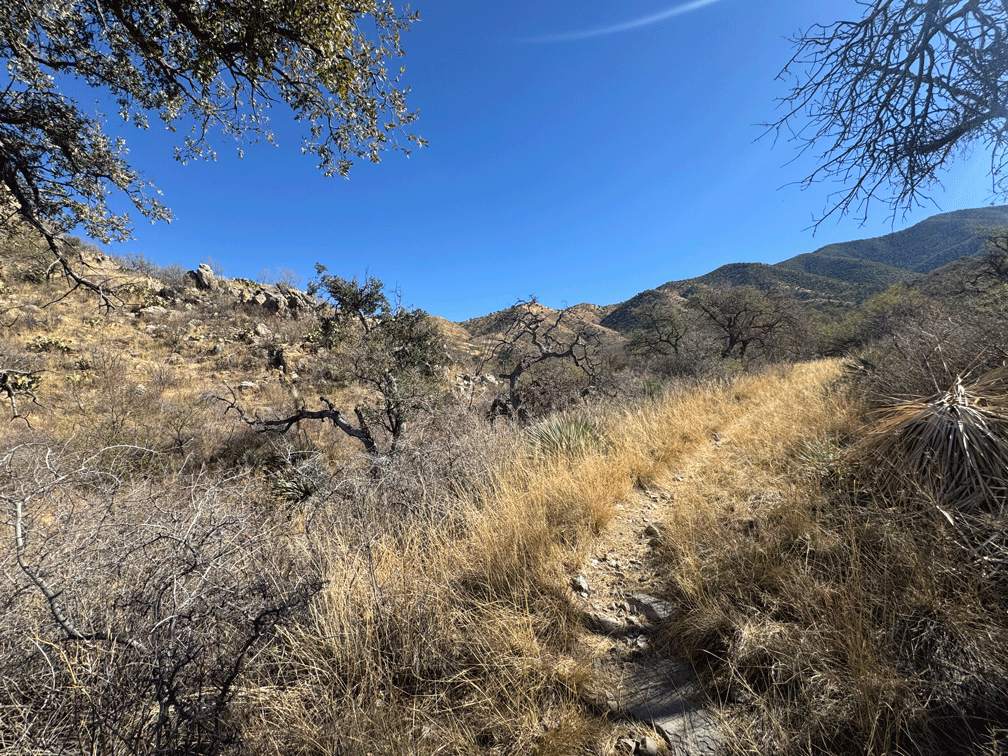
Wendy is on a rather sketchy trail that we discovered last year. Each time we walk it, we improve the trail by moving a rock or two as we go along.
Here’s a panorama view to the east, taken close to the location of the last photo.
On December 16, we chose to climb Wasson Peak, which we can see to the south from our place. We started from the Esperanza Sendero trailhead in Saguaro National Park (West) at about 8:15. It was only 3 degrees C (37 F). Wendy is bundled up in five top layers, three hats, gloves and mitts.
By nine o’clock we were in the sunshine and we could shed a few layers.
This photo shows the ridge and the part of the Hugh Norris trail. Our place is part of the community that you might be able to make out above Wendy’s head in the following photo.
We were at the top around 11 am, and decided to have an early lunch. Two other hikers were there when we arrived, but they left soon after and we had the place to ourselves.
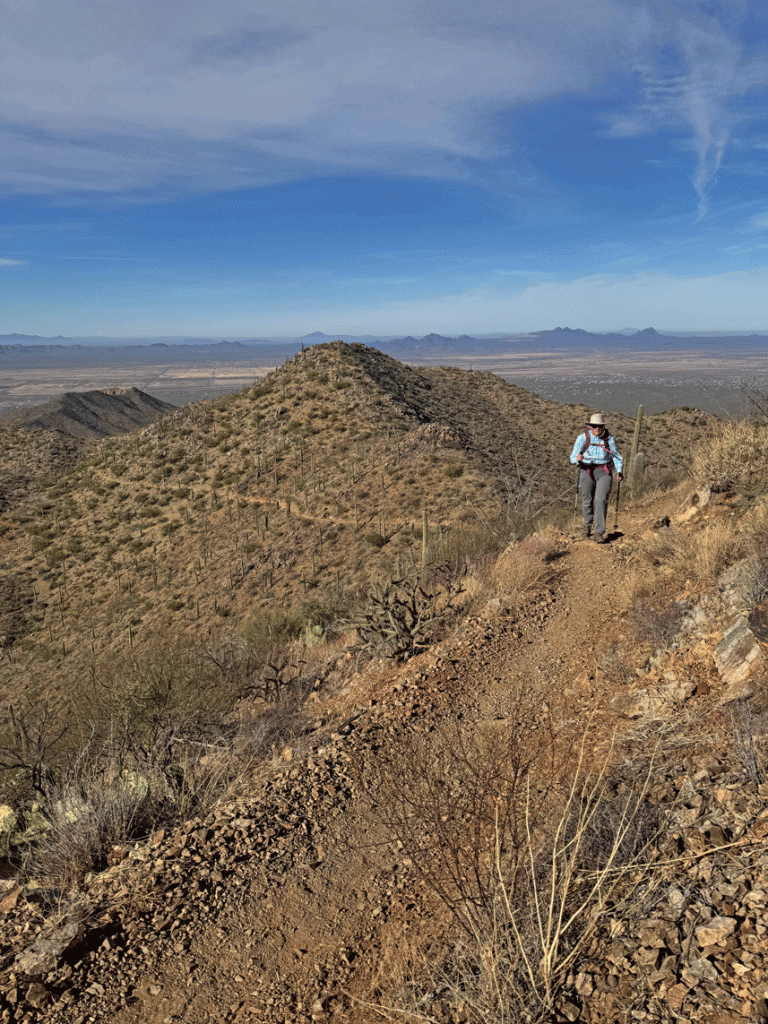
There is no photo from the top, but here is a view of the trail just below the summit. It’s a little rockier than the Hugh Norris trail, but it is still very enjoyable.
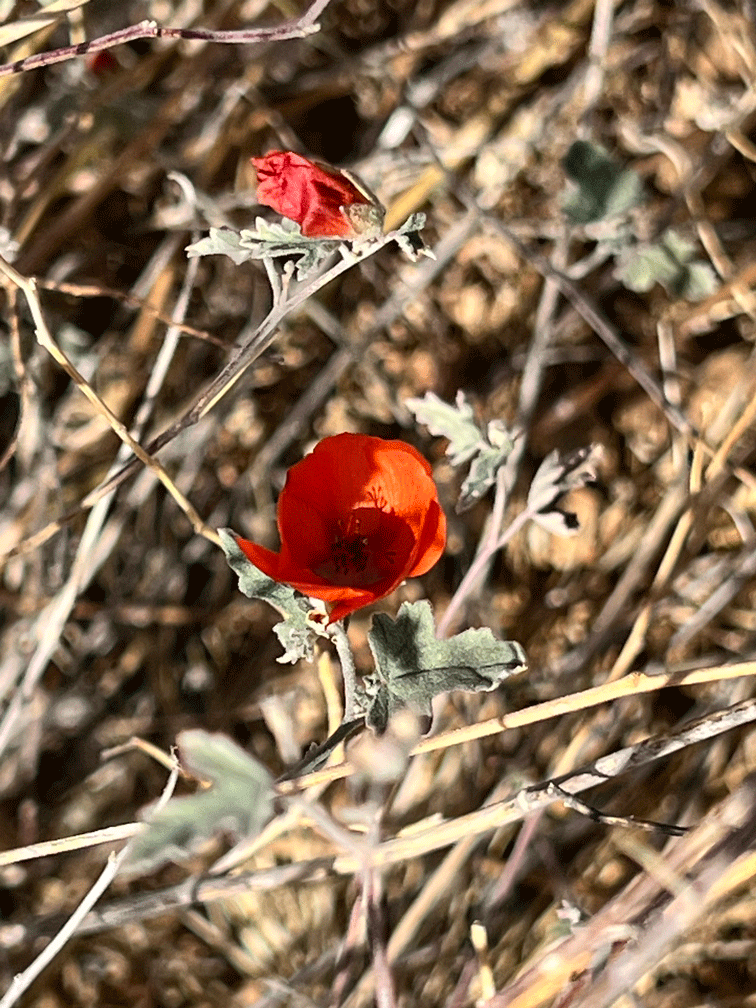
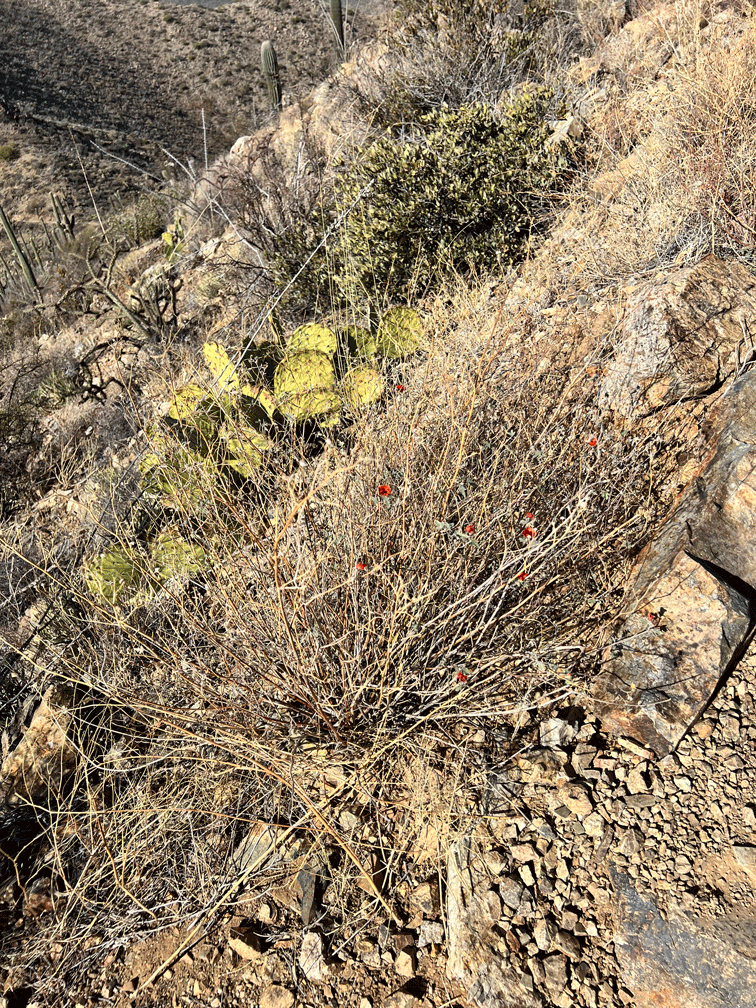
We had to work hard to find a wild flower, and only saw this one on the way down, because at first glance, it looked like a dried up bush. Its common name is Apricot Mallow.
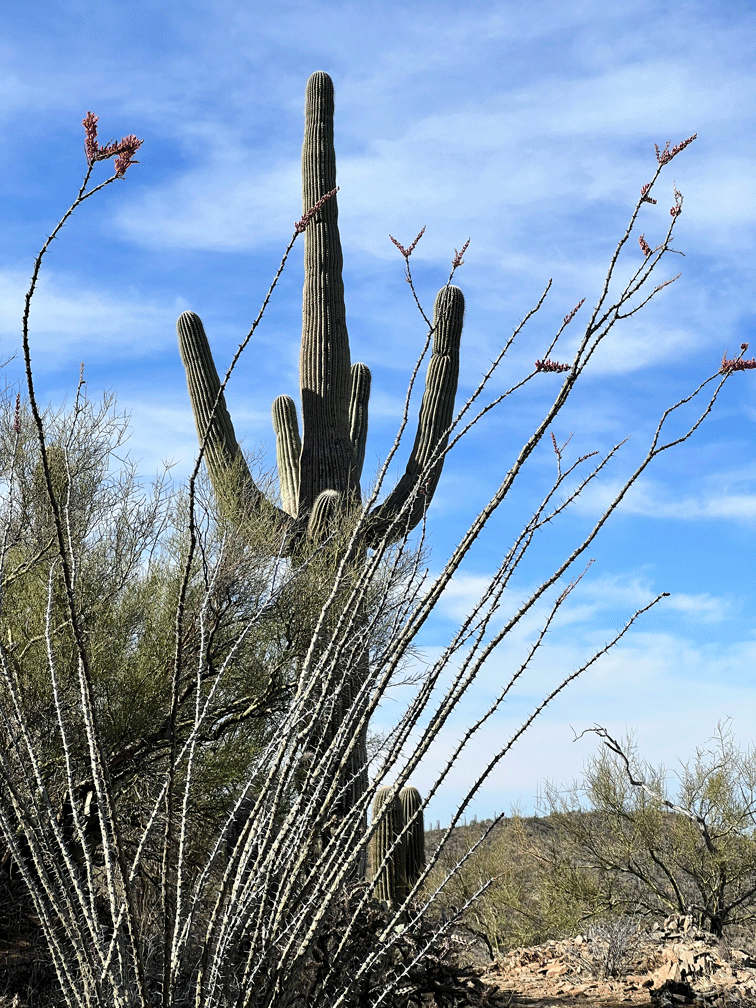
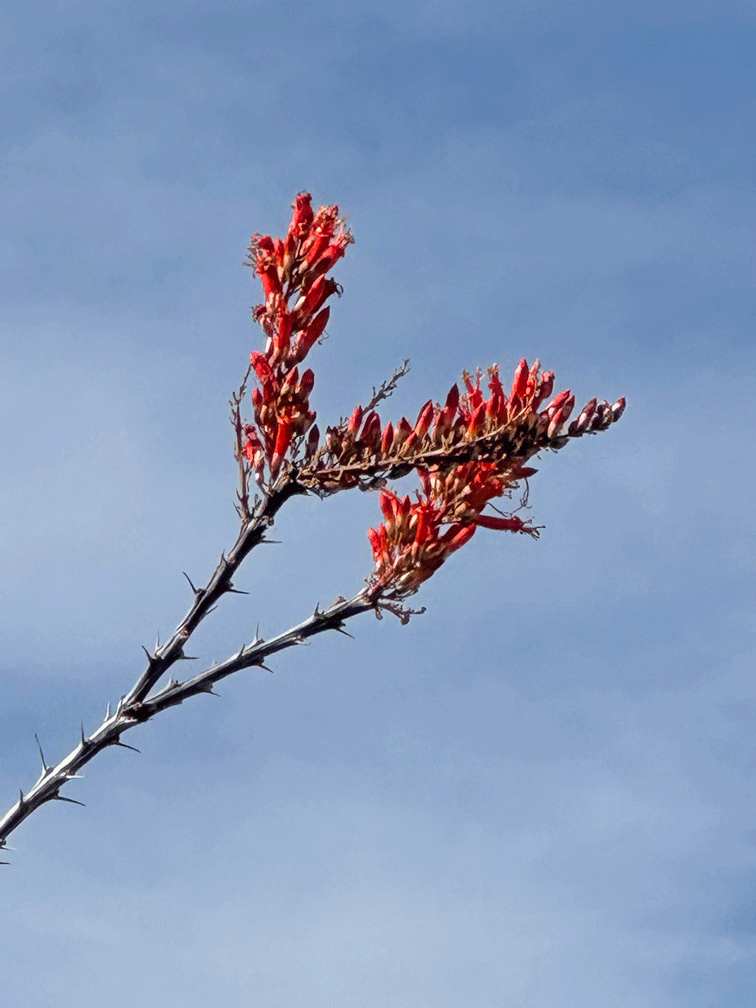
We have noticed this specific ocotillo on previous trips and it seems that it is always in bloom. The rest of it looks almost dead, but we know that it will produce green shoots the next time it gets some moisture.
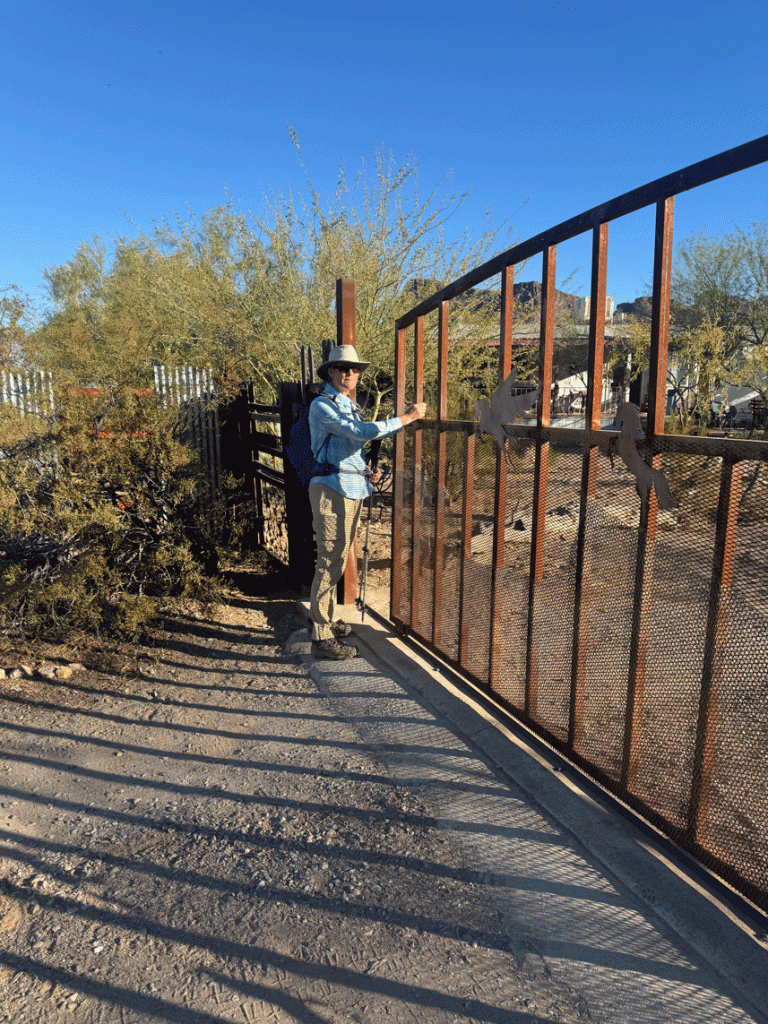
Two weeks later, we did another longer hike. It was warm enough to start off in two layers. We walked right from our gate.
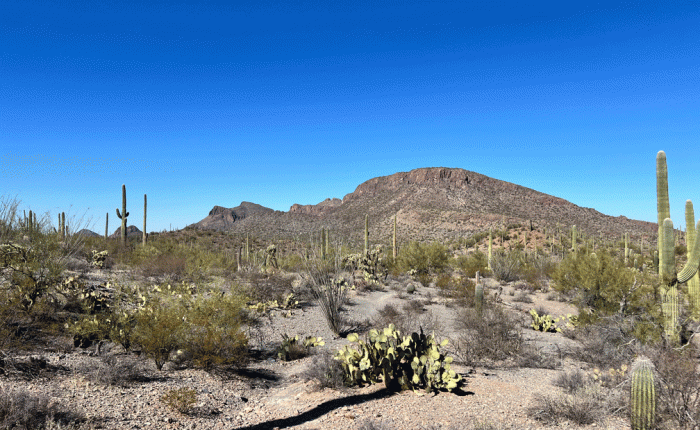
Our objective was Panther Peak, the mountain on the left in the photo below. The trail / route goes through the gully that is visible on the right side.
Doug is navigating over and around the boulders in the gully. There are cairns placed in strategic spots along the way, but it is still easy to get off track.
The trail is more distinct towards the top. The towns of Marana and Oro Valley are in the valley below.
This southwest view from the summit includes our neighbourhood. We could figure out where our fifth-wheel was parked by finding the blue house and following the roads back to our place.
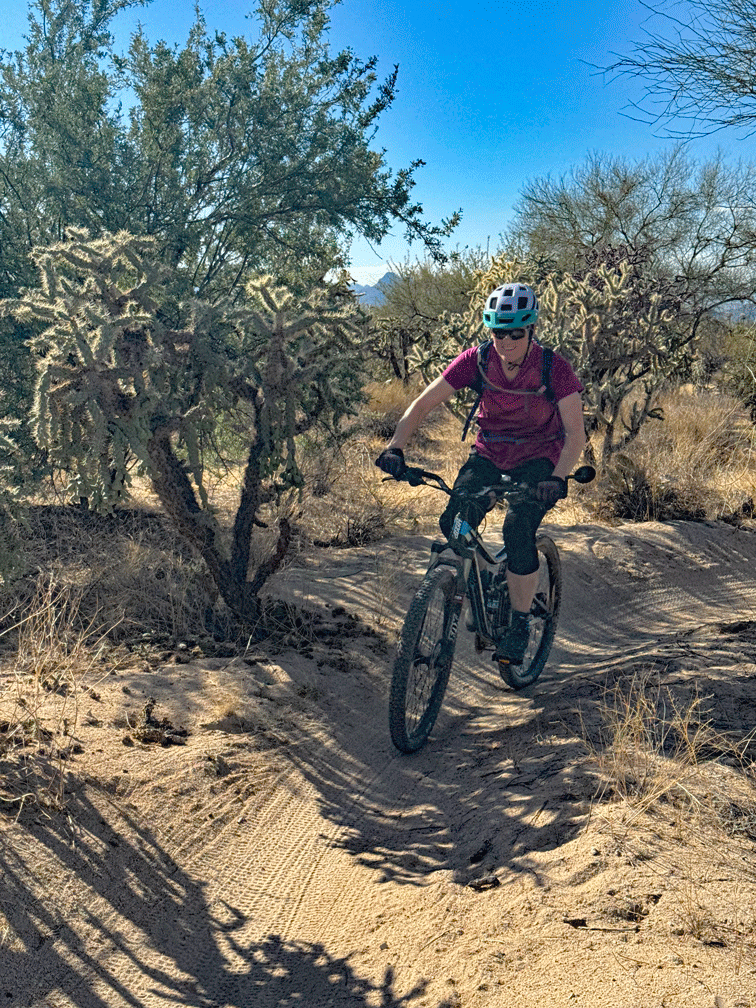
As in previous years, we enjoyed riding the mountain bike trail at the Tortolita Preserve in Marana. It takes us about half an hour to drive to the trailhead. The 15 kilometre ride takes us less than an hour and a half.
This photo was taken on Christmas Day. We’ve replaced our former tradition of going skiing on Christmas with doing a bike ride.
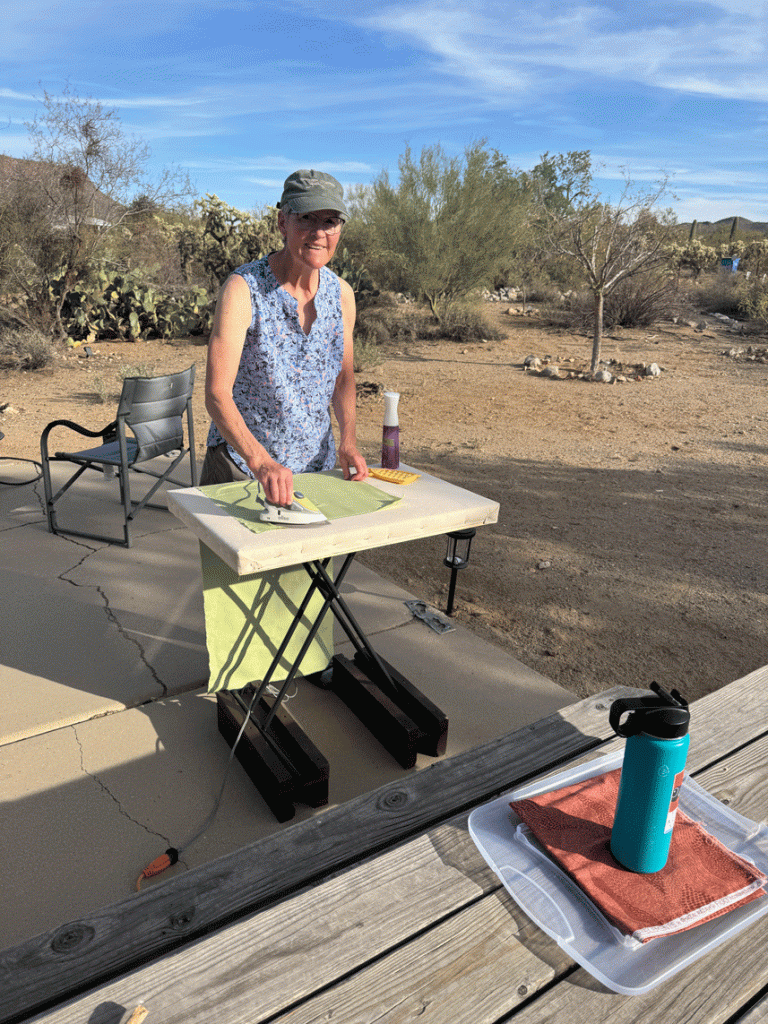
Wendy also got some sewing in for a baby quilt she is making. We haven’t regretted replacing the sofa with this work surface. Our bins that hold all our birding gear have dedicated spots underneath.
We have experienced one of the driest and hottest Decembers on record. So, if the air-conditioning is on in the trailer, Wendy sets up an outdoor station if she wants to do any serious ironing.
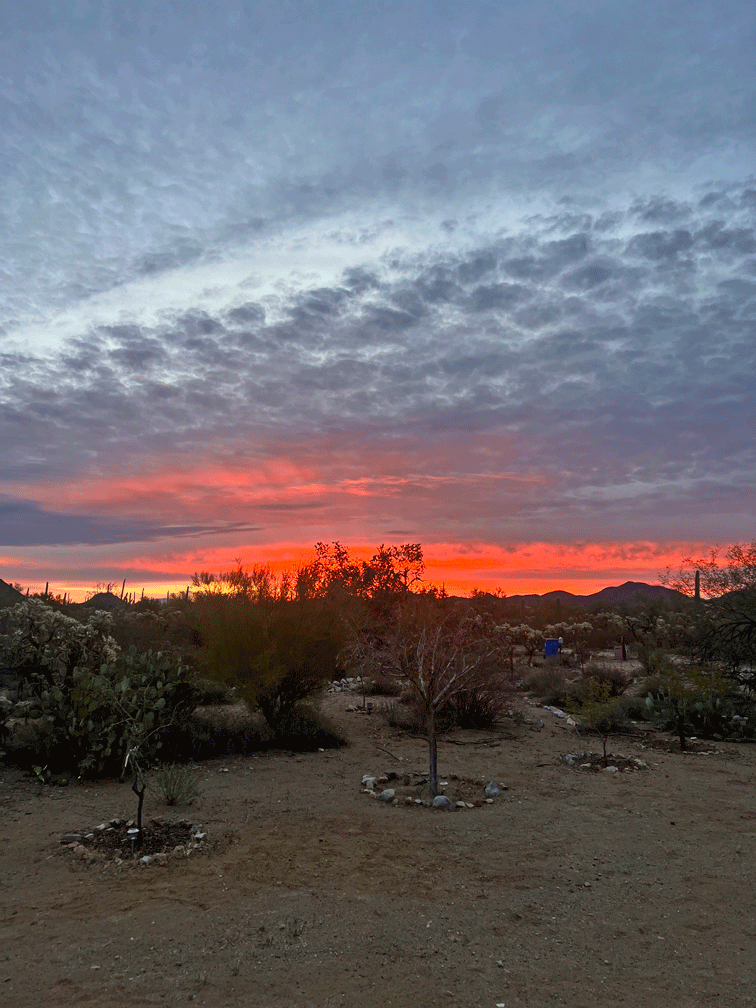
We’ll finish this blog with the top sunrise and sunset photos of the month. This was sunrise on December 13.
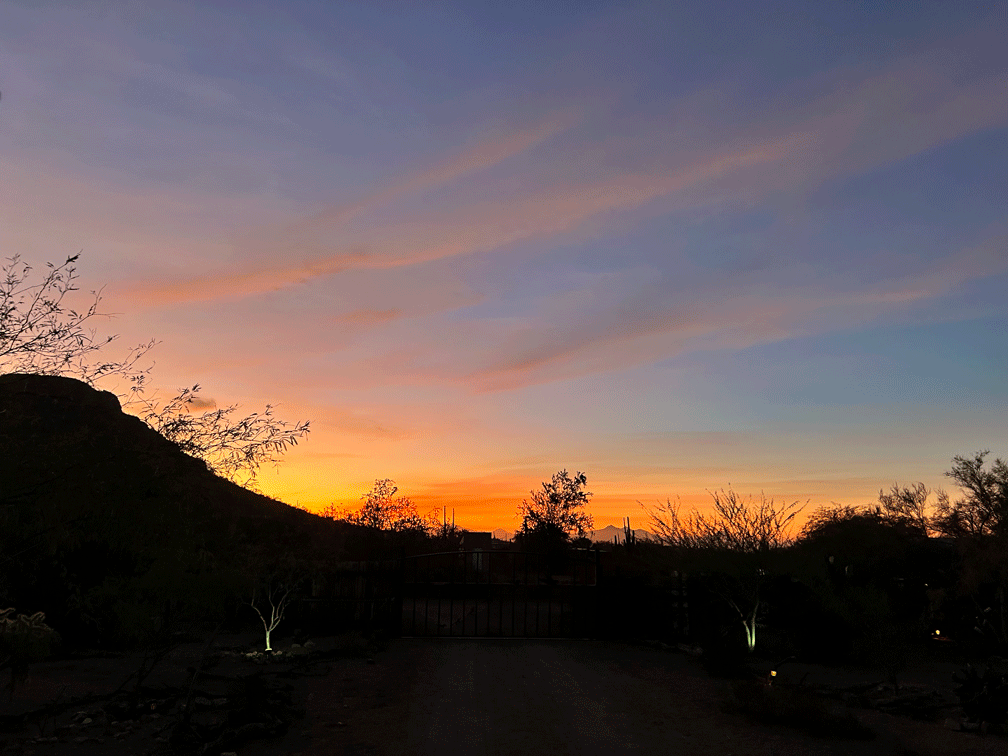
Sunset on December 17.
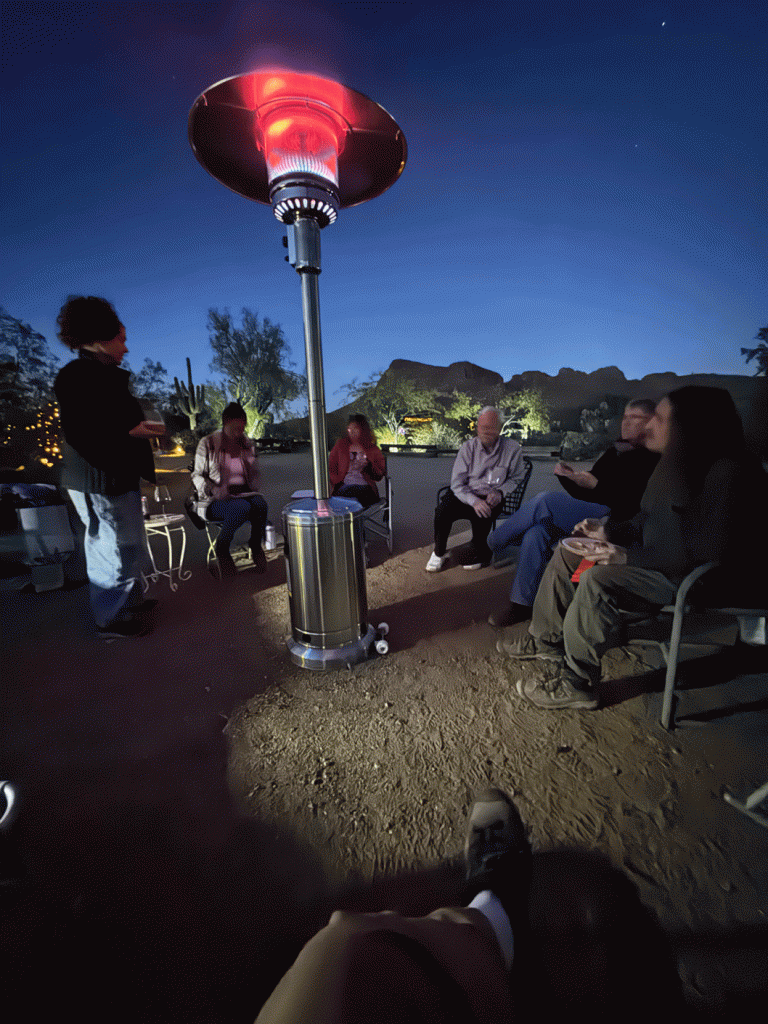
We welcomed in the new year at an outdoor neighbourhood get-together. Although we actually had the champagne toast at 10 pm as the ball dropped in Times Square. (The photo below was taken just after 6 pm)
Those people who have followed our blog for several years, will notice that we are returning to our favourite places frequently. We don’t get tired of seeing some of the same sights over again; everything changes, if just a little bit.
Our monthly birding blog (December 2024 – Part 2) will be available soon.
This is the final instalment of our trip to Texas in the first week of April. On our last day of birding, we went back to the Frontera Audubon Center in hopes of seeing a rare bird that we missed a few days before. First we hung out at one of the feeding stations. We stood behind a guided group for a while, seeing similar species that we had seen before.
We had a good view of a White-tipped Dove. The photo below shows the difference between a White-winged Dove (background) and the White-tipped. The two species are close to the same size. When a White-winged Dove flies, the large white patch on its wings is prominent, while a White-tipped Dove only has a bit of white on the corners of its tail. The conspicuous red legs of the White-tipped Dove help with identification. White-tipped Doves are widespread in Mexico, Central and South America, but are only found in the US in Southern Texas.
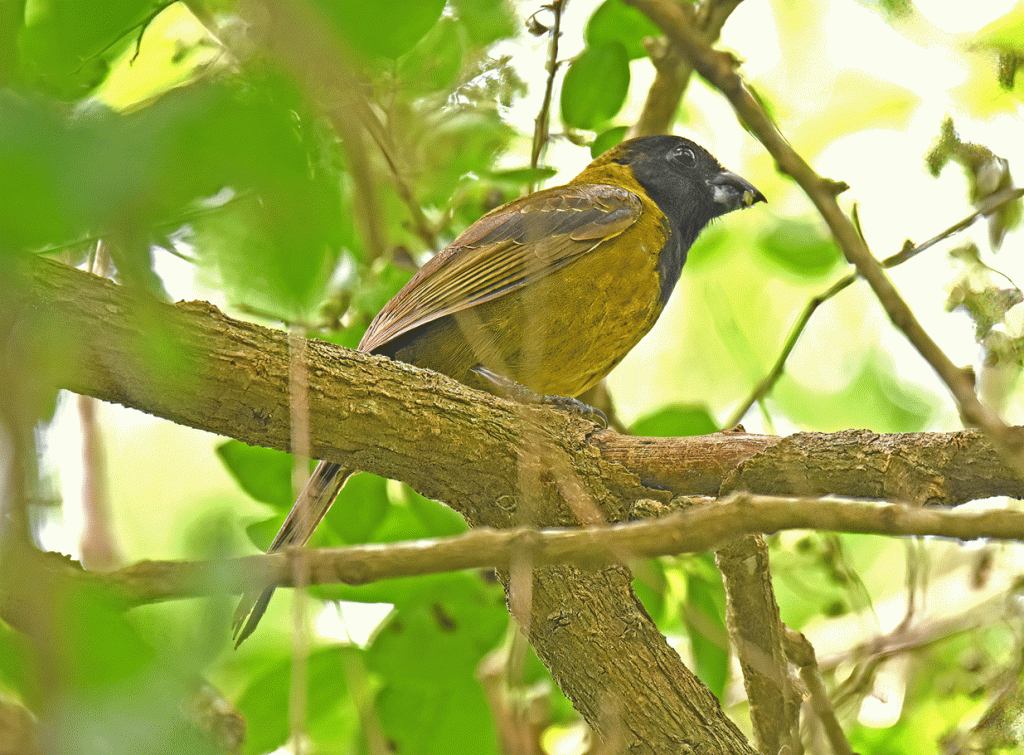
Wendy left the group at the feeding station and wandered nearer to the entrance, and met other birders who had heard and briefly seen the rare bird we were looking for. She messaged the others and soon we all were searching the thicket going back and forth and over to another trail and back again. A couple of Canadian birders joined us in the frenzy. Finally, all of us saw the female Crimson-collared Grosbeak. Here’s the best photo that Doug captured. The male of this species has a crimson collar, and the female is a drab greenish with a black hood. The Crimson-collared Grosbeak is native to a limited area of northeastern Mexico so it was nice that this one found the grounds of the Audubon Center so appealing.
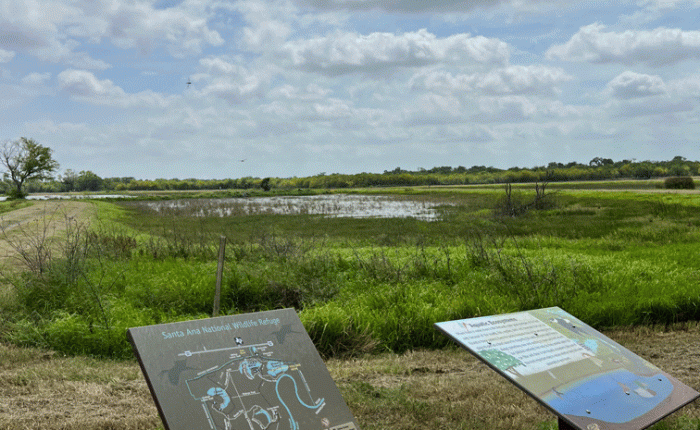
Later that day, we drove a short distance to the Santa Ana National Wildlife Refuge. The refuge is huge, but we focused on a smaller area around the Pintail Lakes. The Pintail Lakes are the lakes on the right of the map below, and the winding river is the Rio Grande, so you can see how close we were to Mexico.
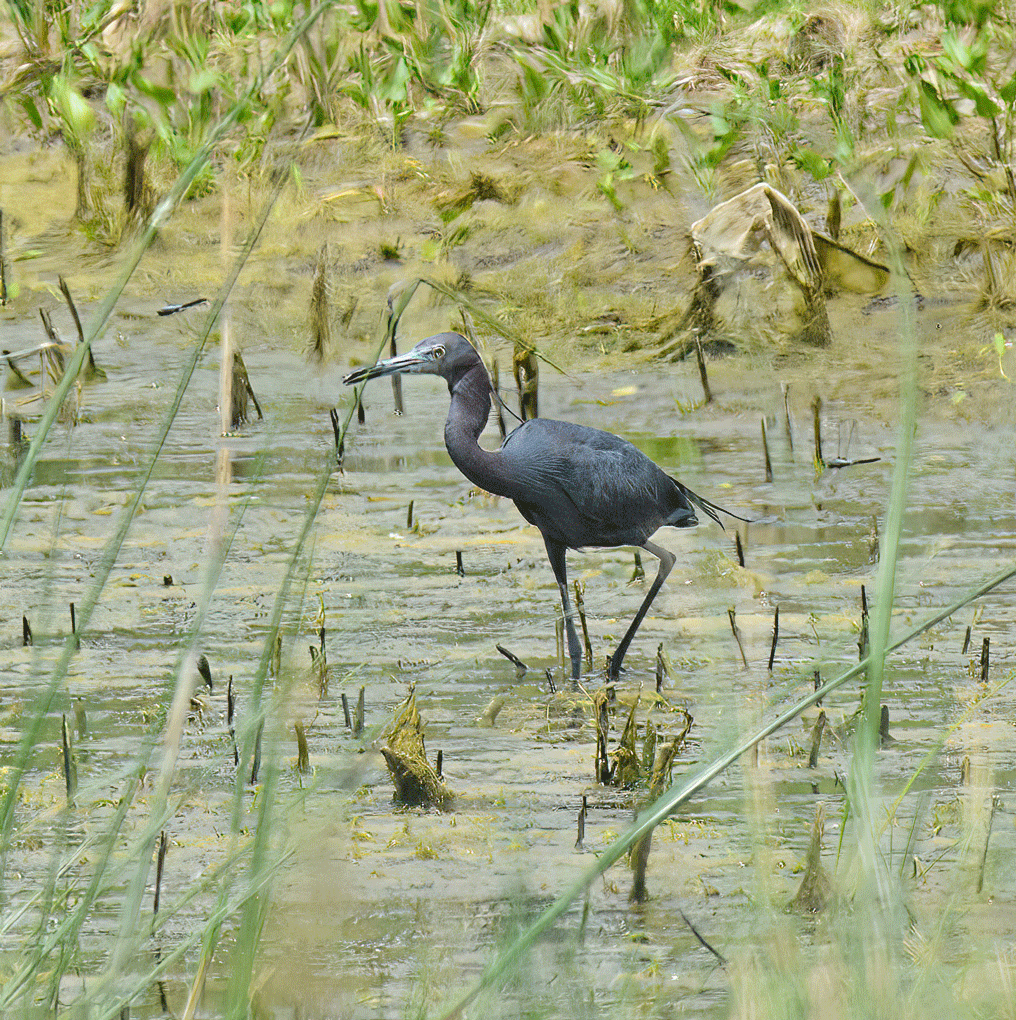
We were really happy to see some Little Blue Herons, since we had never seen them in the US.
Here’s another adult Little Blue Heron. Immature Little Blue Herons are all white in their first year, which make them a little harder to identify.
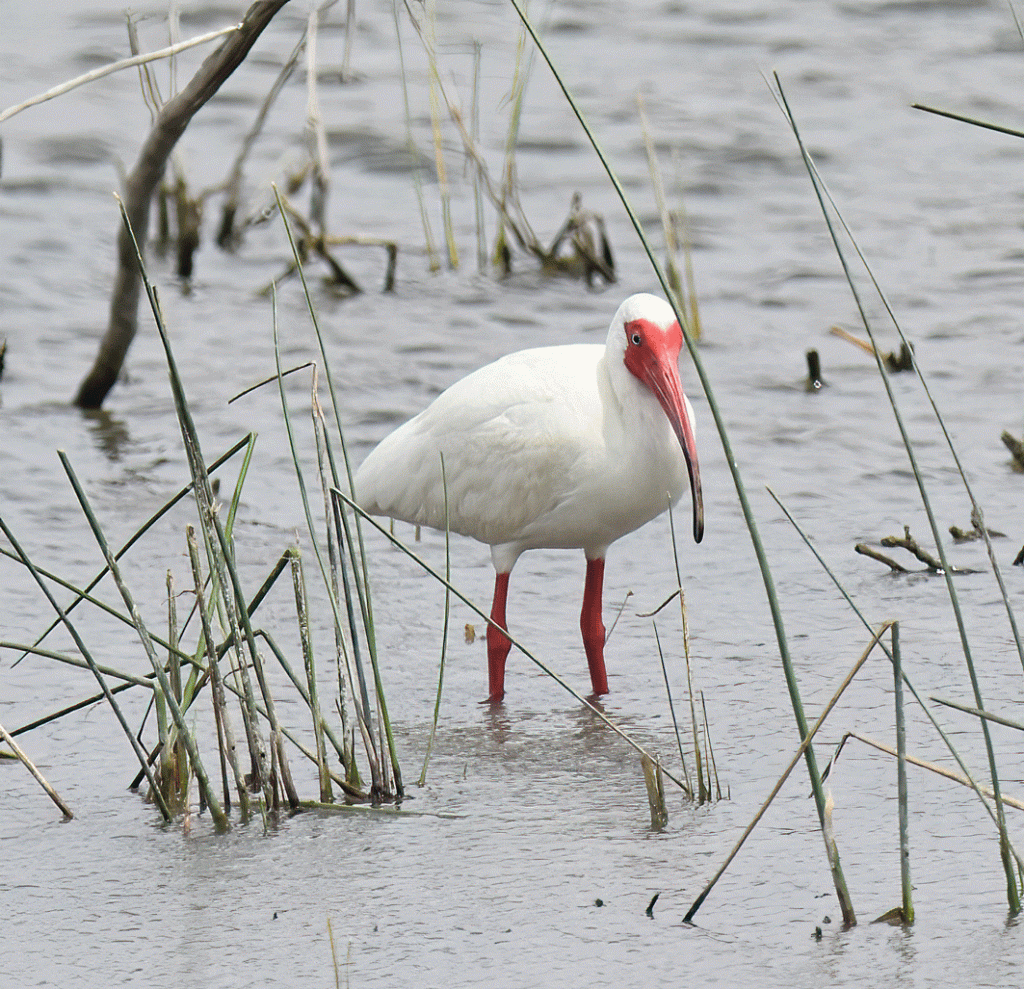
Here’s an adult White Ibis.
And a scruffier looking immature White Ibis.
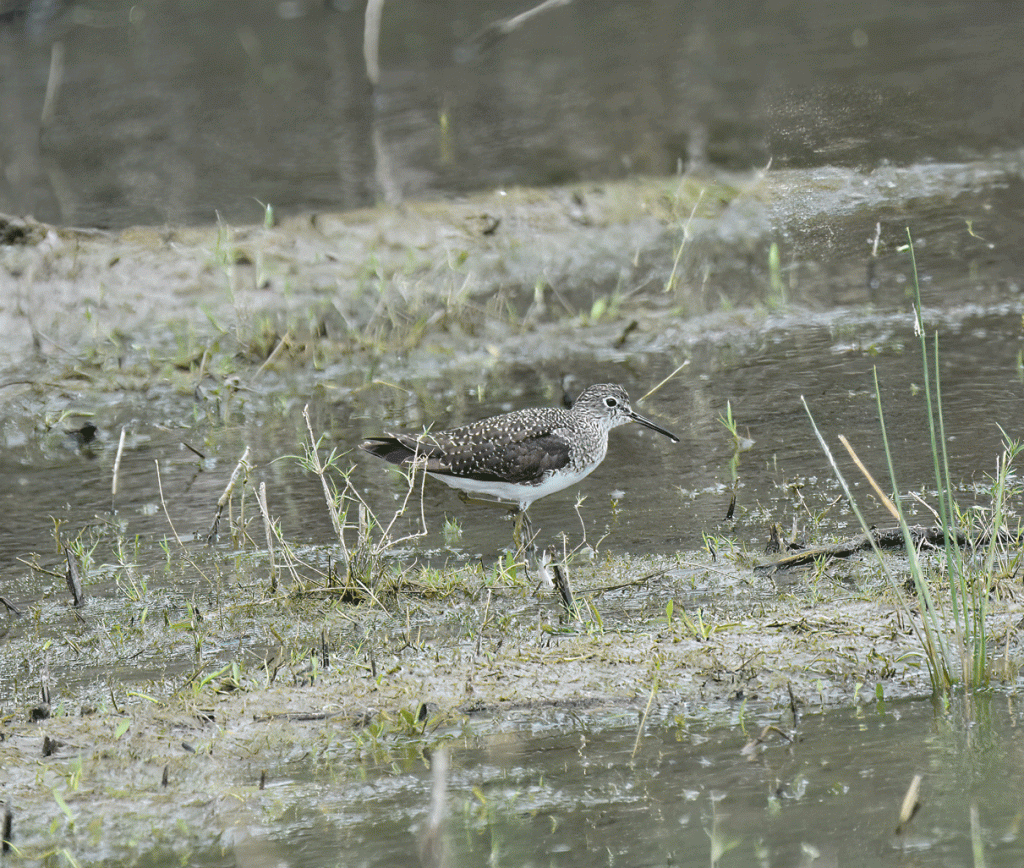
We also got a good view of a Solitary Sandpiper, a sandpiper that we can see at home during its migration.
This Hooded Oriole was alongside of the road on our way back to the parking lot. It seemed as if it was saying,”I may not be rare, but I’m pretty enough for you to take my photo!”
After a quick dinner at our casita, we walked over to the Bentsen-Rio Grande Valley State Park. It was just before sunset as we crossed the border wall area.
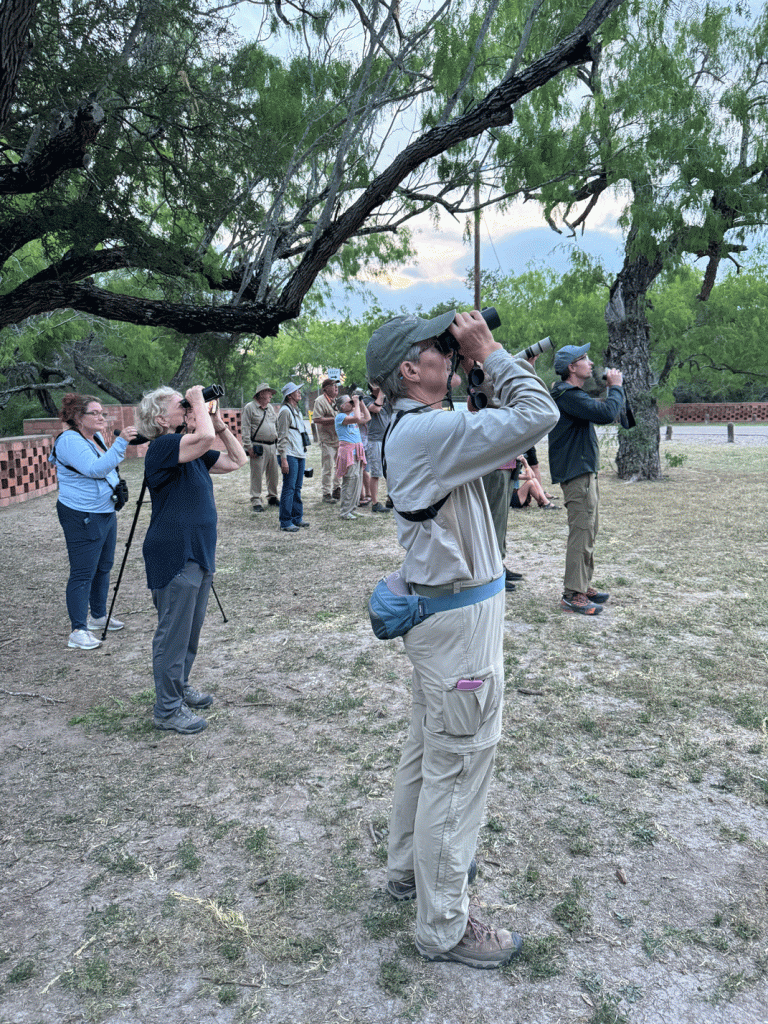
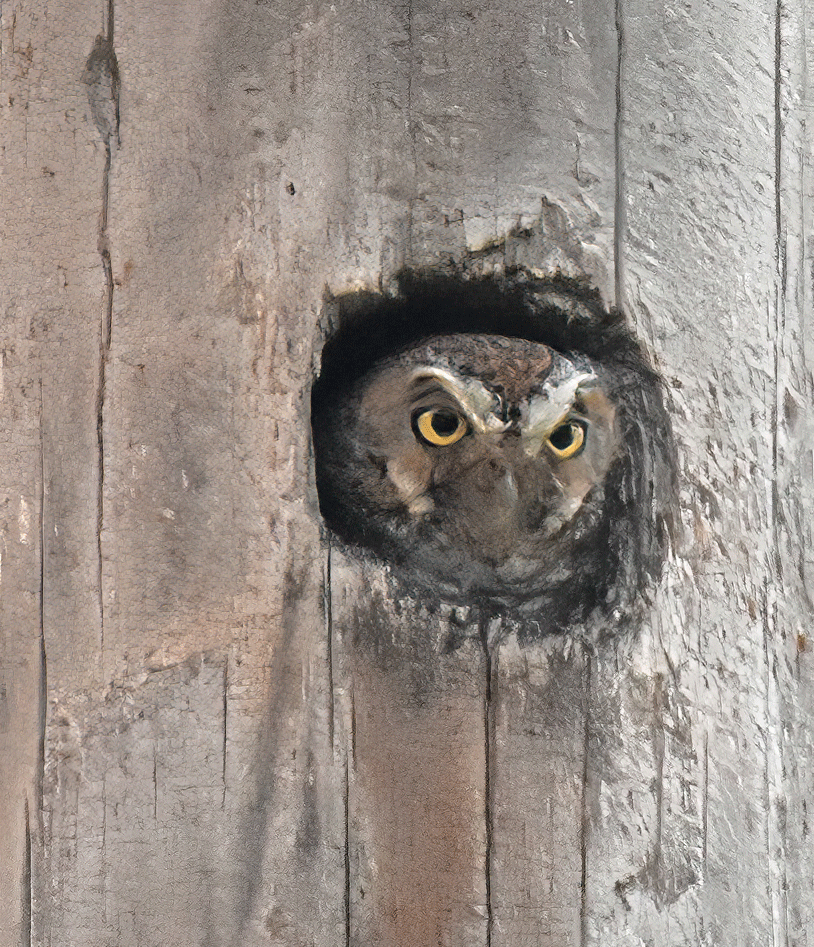
An Elf Owl had taken up residence in a power pole near the State Park entrance gate. It had a predictable behaviour of looking out of its hole for a few minutes near sunset, then flying off for a night of foraging. Every night there were people there waiting to see it. We all stood a long way from the pole.
Here’s a photo of the power pole and a closer view of the owl, taken in dim light.
As we were walking back in the dark, (there is a very short dusk in the lower latitudes), we heard a bird call unlike any we had ever heard. Wendy recorded it and with the help of the Merlin app, we realized that we had heard a Chuck Will’s Widow, which is a strictly nocturnal bird, and is more often heard than seen. We hadn’t expected it hear it, but it must have migrating. Another lifer!
So finally, our Texas trip has been documented! In our seven day trip, we saw 184 species, and 34 of them were birds we had never seen before (lifer or life bird). But it wasn’t just about “the list.” We also experienced some different and unique environments with good friends.
We spent the next three weeks of April in Arizona, but it already seems like a long time ago. Perhaps we’ll post another blog about that time, or not…
This blog post is all about our day at the Santa Margarita Ranch on the banks of the Rio Grande on April 5. We met the guides and the rest of the group before sunrise right at the border wall. Since we were birding on private ranch, we were required to join a guided group. We actually got a glimpse of two Northern Bobwhites in the dim light. We also heard our first Common Pauraque, which has a distinctive call and is rarely seen.
We walked through an “animal gate,” in the wall.
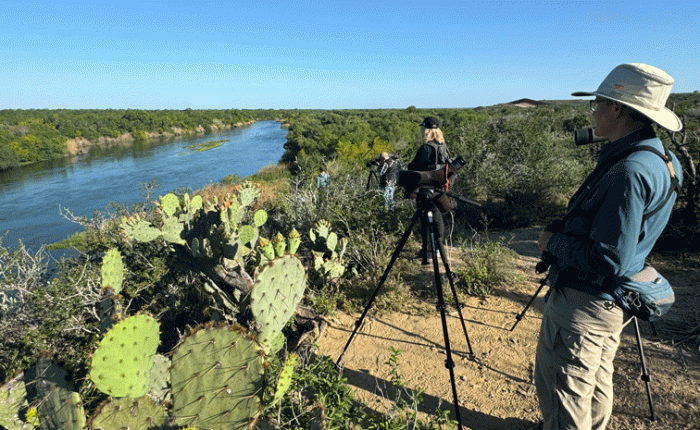
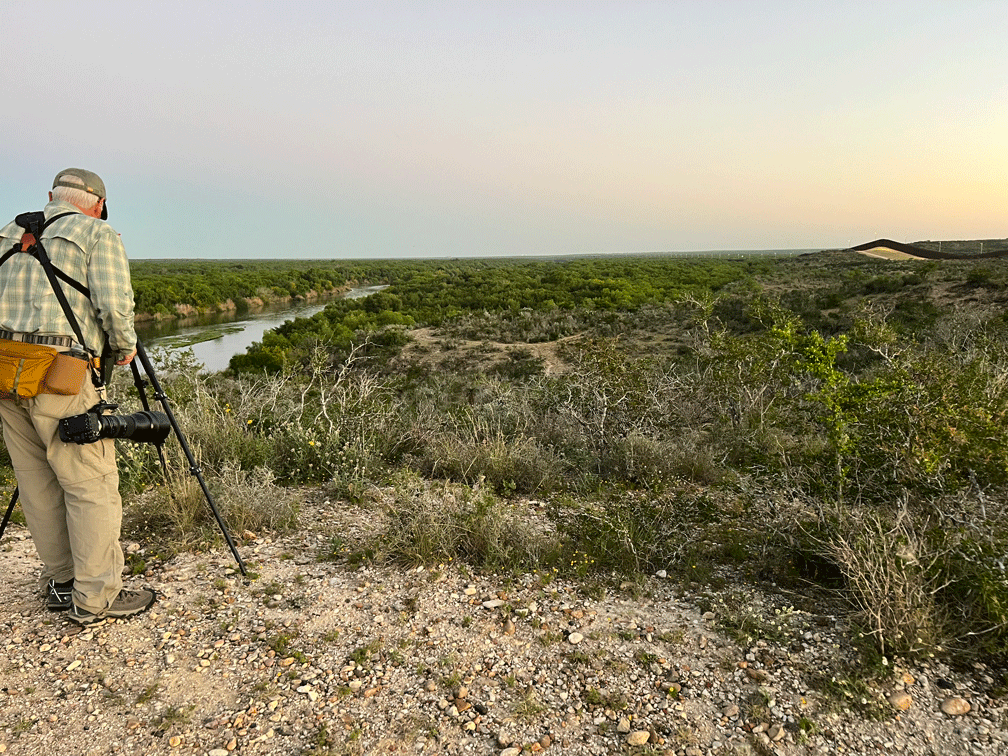
We set up our scope on a bluff with a view into Mexico. The Rio Grande is on the left and the border wall is visible on the right of the photo. From here we had a distant view of a Hook-billed Kite.
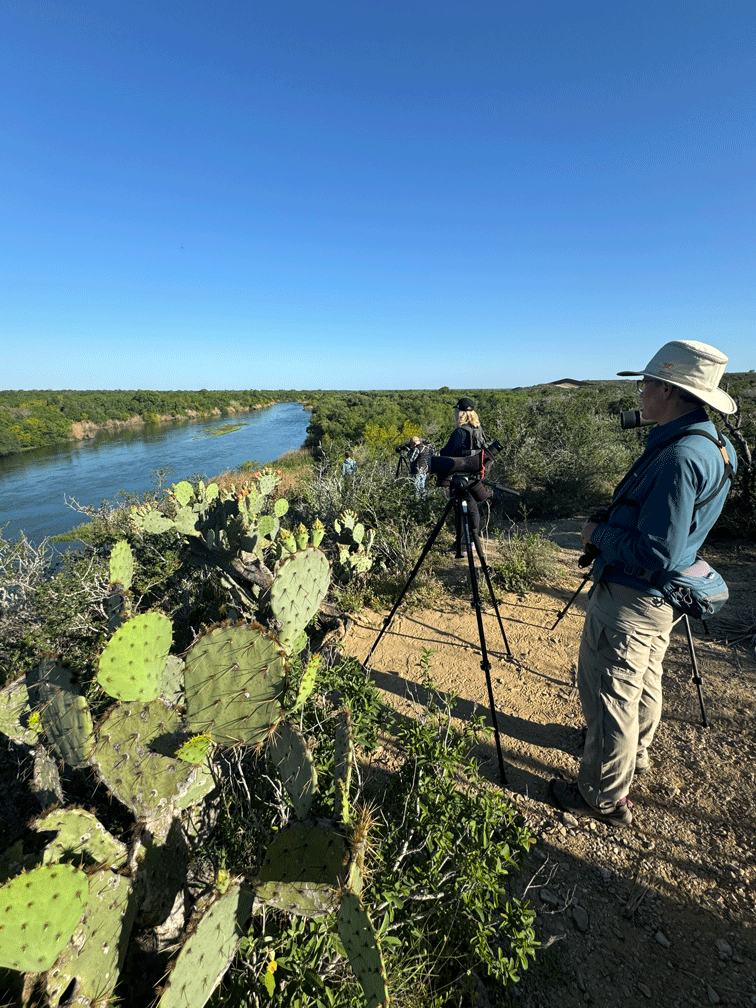
Soon we moved down to a lower bluff that had a better view of the river. Notice the small island in the river,
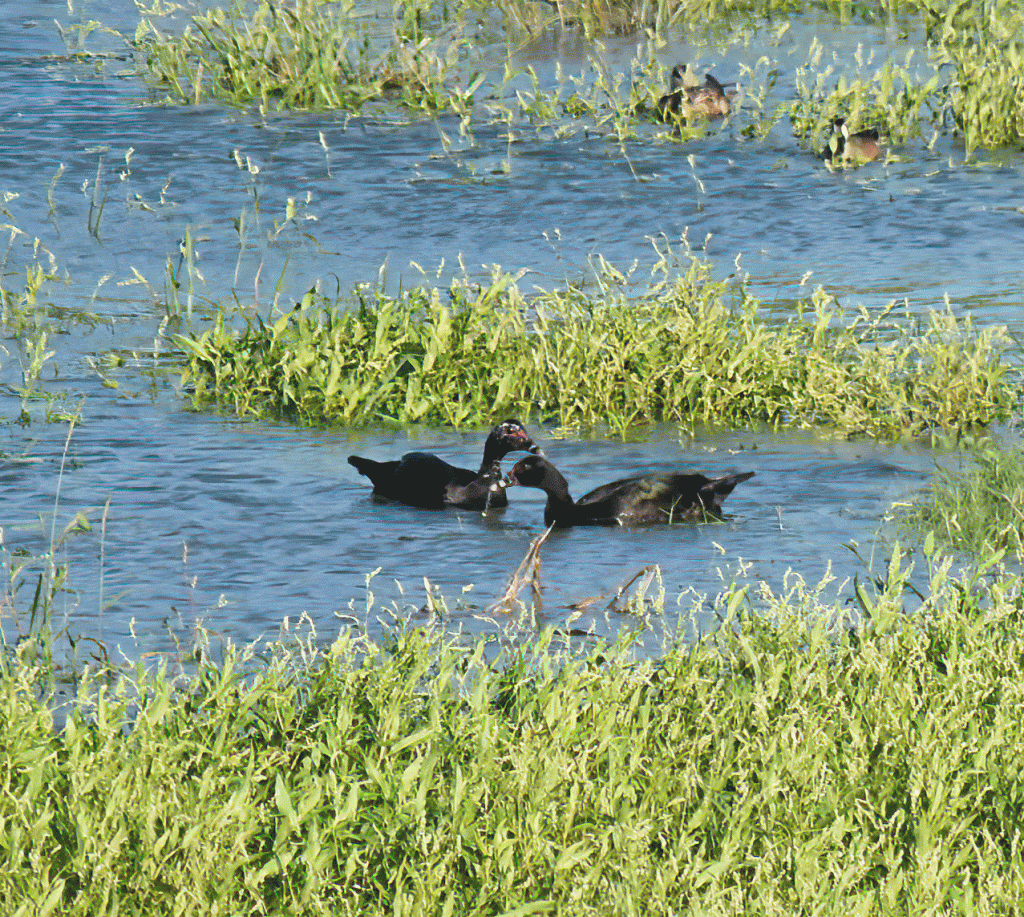
because that was where we saw these Muscovy Ducks. We have only seen domestic Muscovy Ducks before.
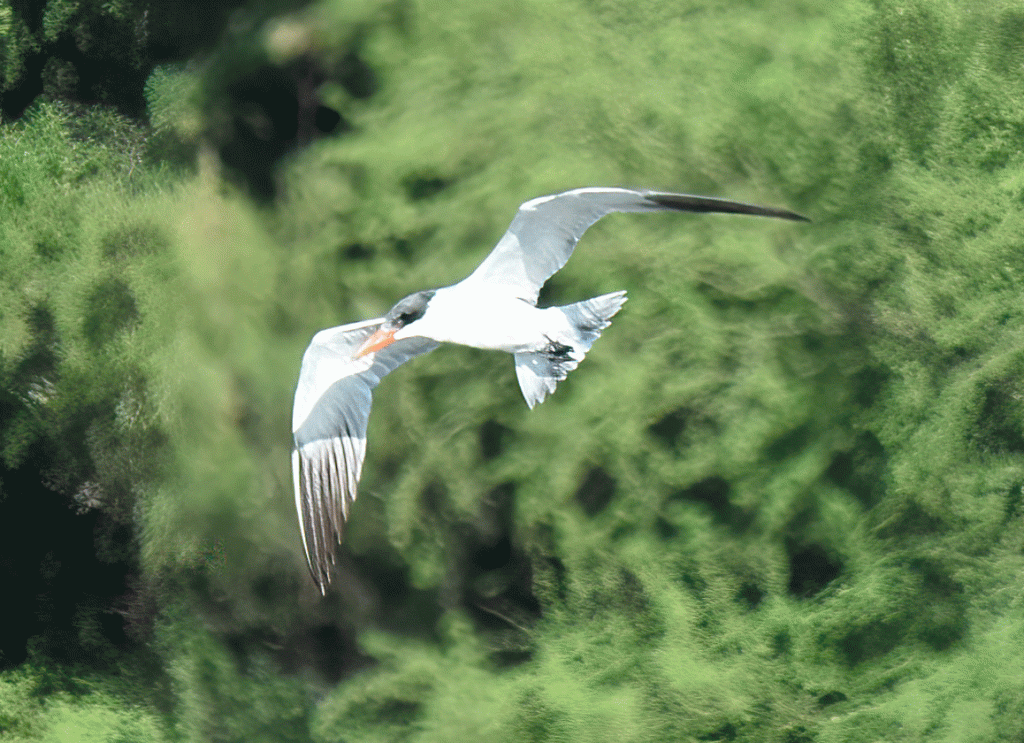
At least five Caspian Terns flew over the river, so they were a little closer.
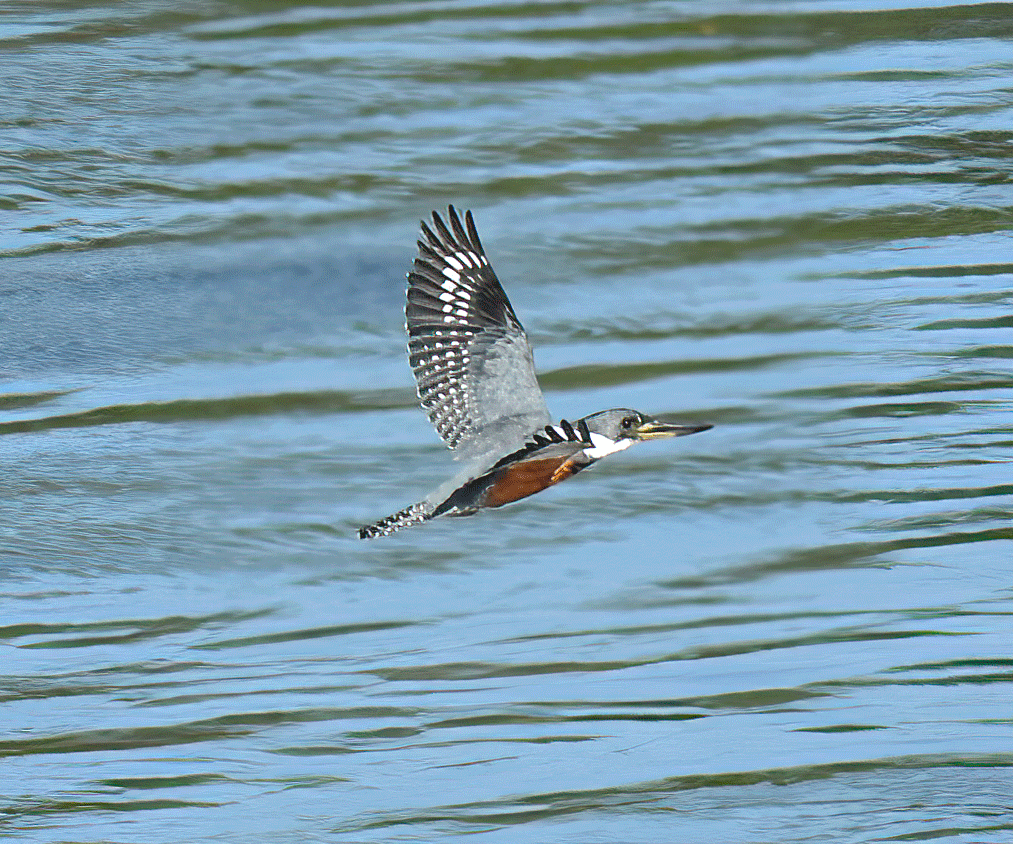
A Ringed Kingfisher flew by us a couple of times, allowing good views. We have only seen them before in the tropics. The species is larger than a Belted Kingfisher and has a massive bill. We watched it hover over the water looking for prey and dive directly from the air.
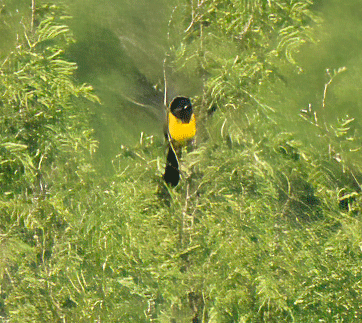
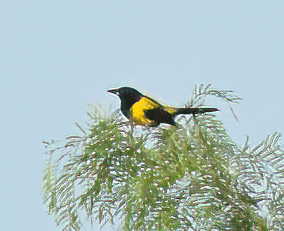
We had a very distant view of an Audubon’s Oriole. We were lucky to see it because these birds have a limited range in the US and are usually more secretive than other orioles. It’s also good that it has such distinctive colouring since it was hard to see any details on the bird.
We also saw two more “lifer” birds: a White-tailed Hawk and a Red-shouldered Hawk. (No photos.) We saw 57 species in the three hours we were at the bluff area.
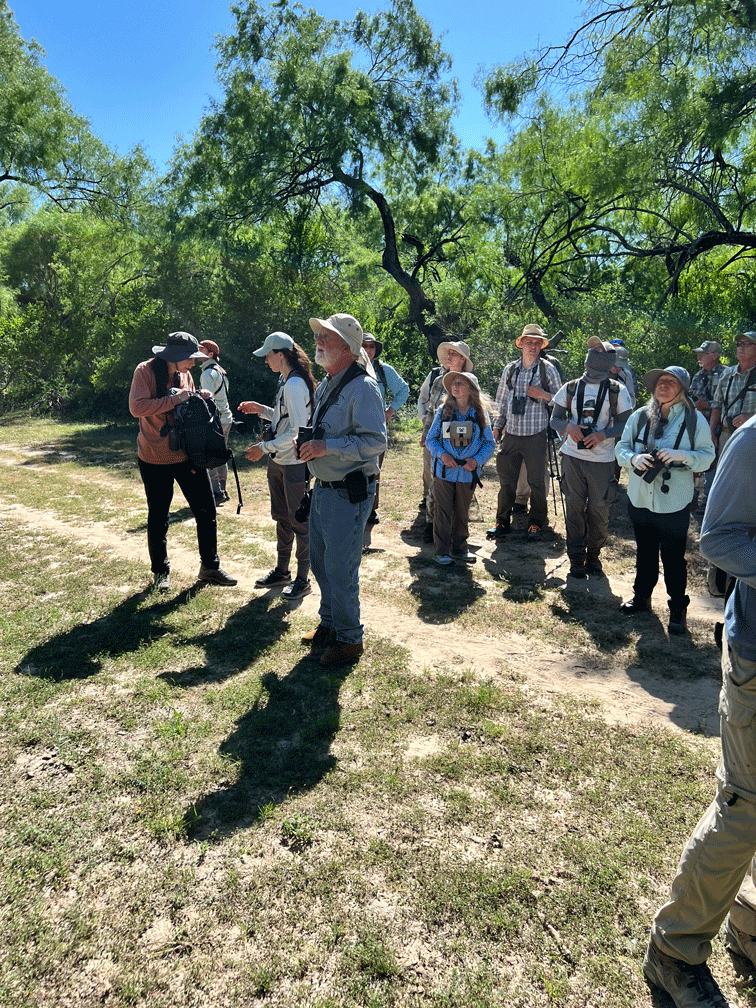
We made our way back to the vehicles and then drove a short distance to the ranch proper for the second part of the tour. Here’s a photo of some of our group of twenty clients and two guides. It was close to 11:00 am. by then.
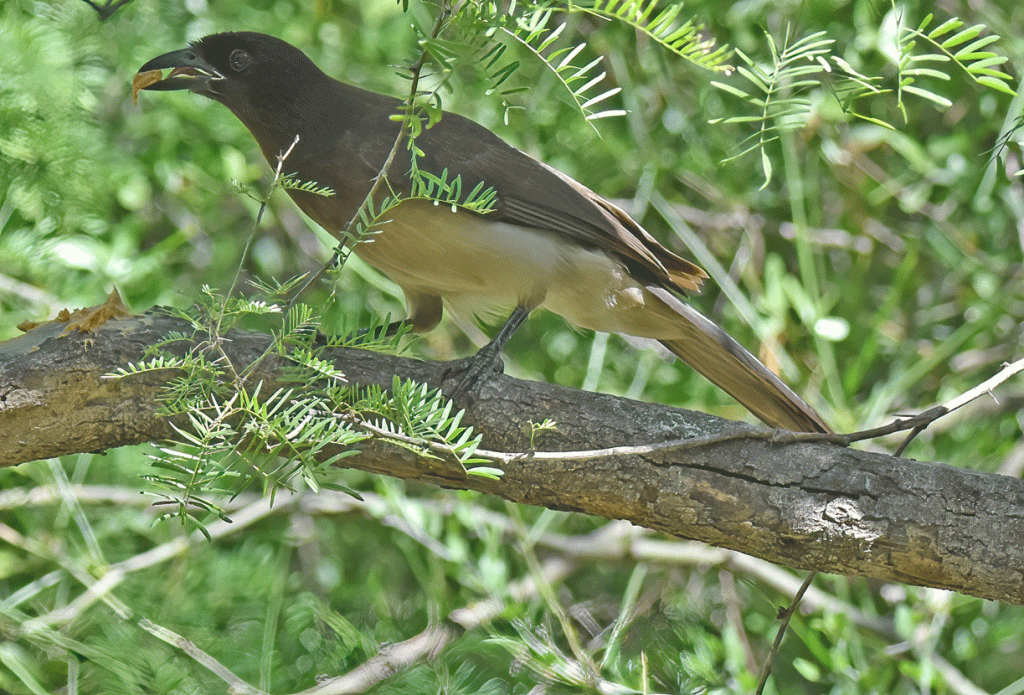
We followed the guide down a ranch road to an area that was set-up as a feeding station. Here’s a Brown Jay feasting on peanut butter. Brown Jays are much larger than other jays and are rare and very local. The ranch was one of the few places in the US that they are found. Later in the day, we saw a Brown Jay at a nest, which is even rarer.
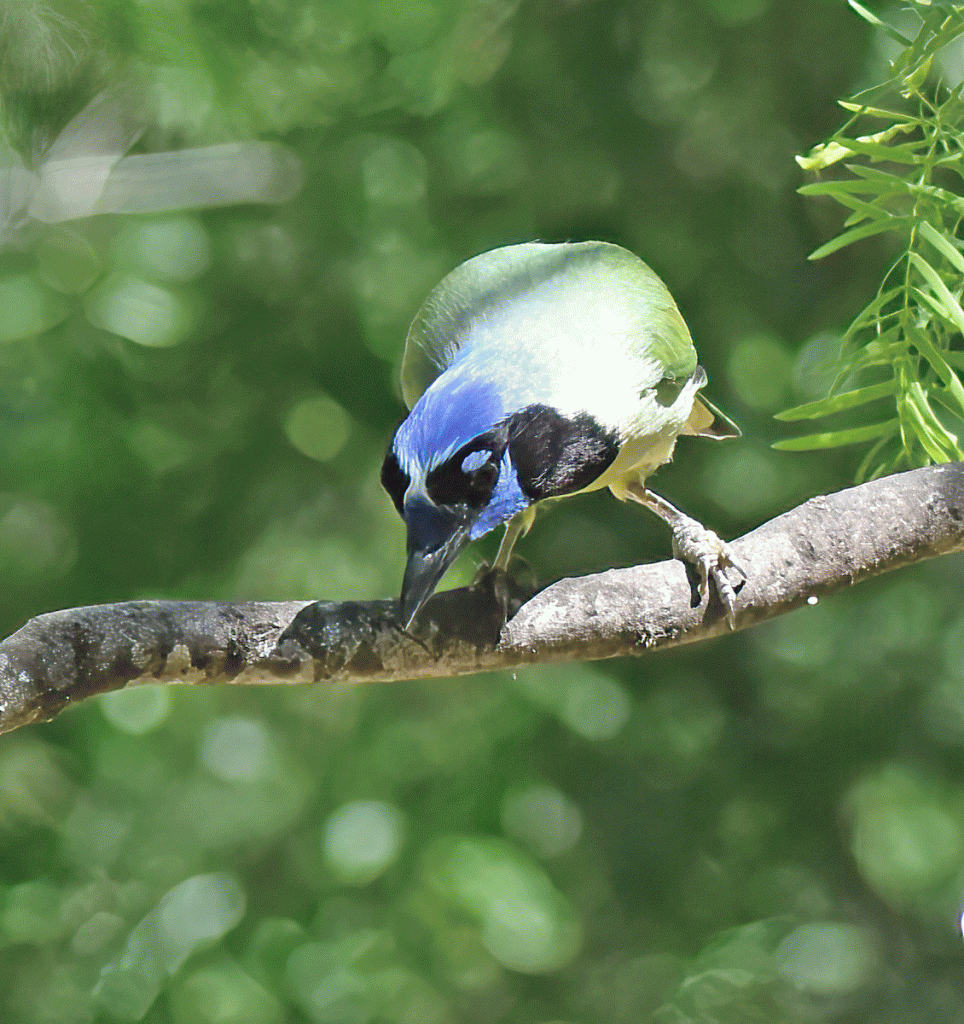
We had another view (for this trip) of a Green Jay. This photo shows the green back better than the one in a previous post.
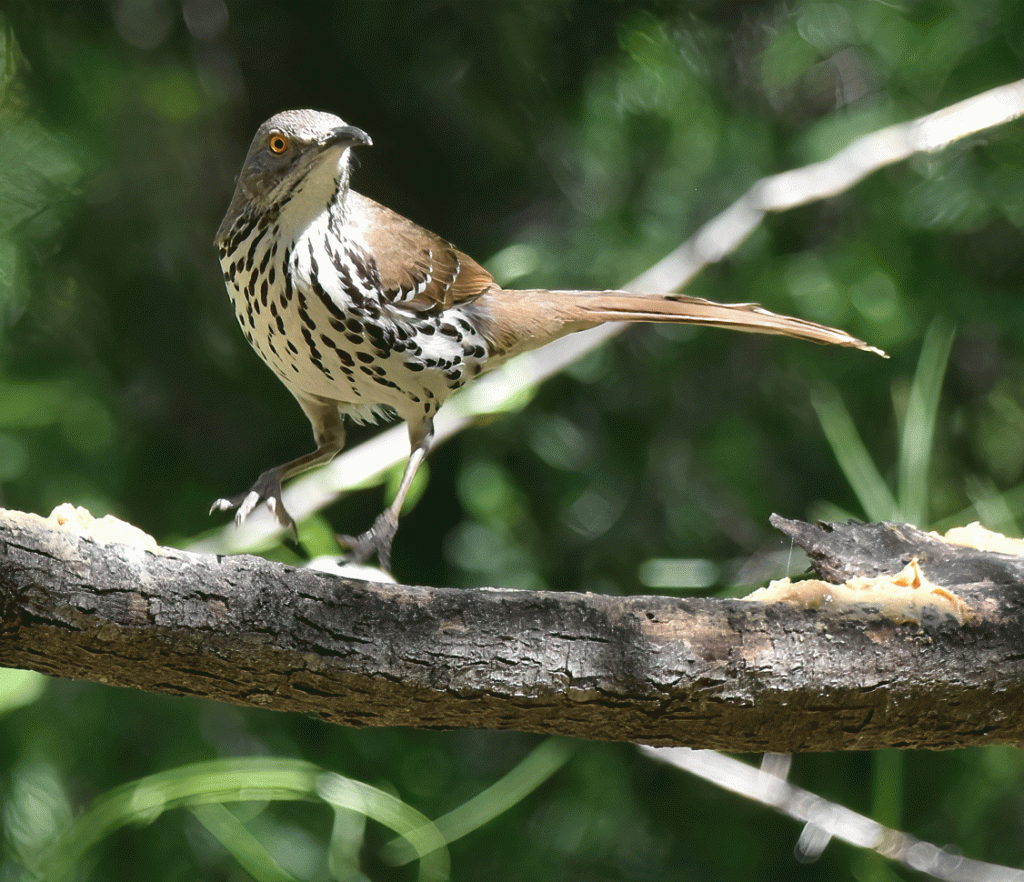
And a Long-billed Thrasher also enjoyed the peanut butter.
We headed off the main trail and followed narrow forest trails. We came to a tricky stream crossing that required us to wade into water that was just over our shoes. In the photo below, taken by our friend Mary, we’re waiting for the rest of the group to catch up. It wasn’t the best place to hang around, however, because the “chiggers” like the tall grass and will climb up your pant legs and nibble on your leg. On our other trips in the tropics, we tucked our pants into our socks to help avoid this. Not this time. No bites on Doug, three on Wendy which itched for a couple of weeks.
We took turns having our photos taken in front of the Rio Grande.
Here’s another of Mary’s photos of the group waiting for interesting birds to show up. We did see glimpses of a pair of Rose-throated Becards, and a distant view of a Morelet’s Seedeater; both rare species.
An Olive Sparrow was very cooperative beside the trail on the way back up to the vehicles.
At the truck, we got a good view of this Swainson’s Hawk flying overhead.
In our six and a half hours of birding we saw or heard 80 species, including 6 “lifers.” It was an experience of a lifetime, made better by being able to share it with our friends, Mary, Rich and Carol.
If you are reading this blog post in “real time,” you’ll notice that it’s now June! There’s one more post about our Texas trip to come. Life back in BC is busy!
On April 4, we decided to stay close to our casita for the morning. We walked over to Bentsen Rio Grande Valley State Park, about five minutes from the RV Resort gate. First we walked to an overlook of the river and saw Anhingas, Great Egrets, Double Crested Cormorants and a Least Grebe. Continuing on, we saw a several Great Kiskadees and two of them were building a nest.
Near the washrooms we caught a glimpse of an oriole as it moved from tree to tree. We were able to track it down and confirm that they were two Altamira Orioles. Here’s a photo of a first year individual. An adult would be a deeper orange. Altamira Orioles have a very limited range in the US. Another life bird!
We walked farther to the hawk watch tower and saw some distant unrecognizable birds. It was a long walk, so we didn’t bring our scope. We could hear Olive Sparrows in the underbrush below the structure, so we focused on trying to see one.
And we did catch our first sighting of an Olive Sparrow, a rather drab bird. It’s a secretive bird that also has a limited range in the US.
It’s always nice to see a Greater Roadrunner, especially when it’s running along the road!
That afternoon, we drove to Weslaco to the Frontera Audubon Center. It was like being in the tropics, yet we were in an urban area.
We got a good view of a Golden Fronted Woodpecker. The orange-yellow nape (back of neck) and the yellow in front of the bill along with the all-white rump and all-black tail distinguish it from other woodpeckers. It sounds a bit like a Gila Woodpecker that is very familiar to us in Arizona.
A Green Jay is another one of the birds that is only seen in the US in Southern Texas. They are more common in Mexico and down as far as Honduras. This individual is not as green as others we saw. The blue colour we see on a bird is a structural colour, created by the way the light waves interact with the feathers. All the other colours of light are absorbed by the melanin layer which allows our eyes to see only blue.
We also had our first look at a Long-billed Thrasher, a bird we had only heard for the first time earlier in the day.
And there also were Plain Chachalacas, which acted very much like the Gray-headed Chachalacas that we saw on our trip to Panama. They are noisy turkey-like birds.
We also saw a Buff-bellied Hummingbird and a Carolina Wren at the Frontera Center, both “life birds” for us. A good day for us!
There are two more blog posts to finish up this trip, and they will be posted soon.
On April 3rd we started our day at the South Padre Island Birding and Nature Center, which was about an hour and a half from our casita in Mission, TX. The Birding and Nature Center has raised bayfront boardwalks to allow visitors to get closer to the birds and natural wildlife in the Laguna Madre Coastal area.
They also have alligators that you can observe from a safe distance.
We were happy to see a Mottled Duck for the first time, because they are only found along this coast and in Florida. The male looks very similar to a female Mallard, but darker. It reminded us of a Mexican duck, but the two species have different ranges.
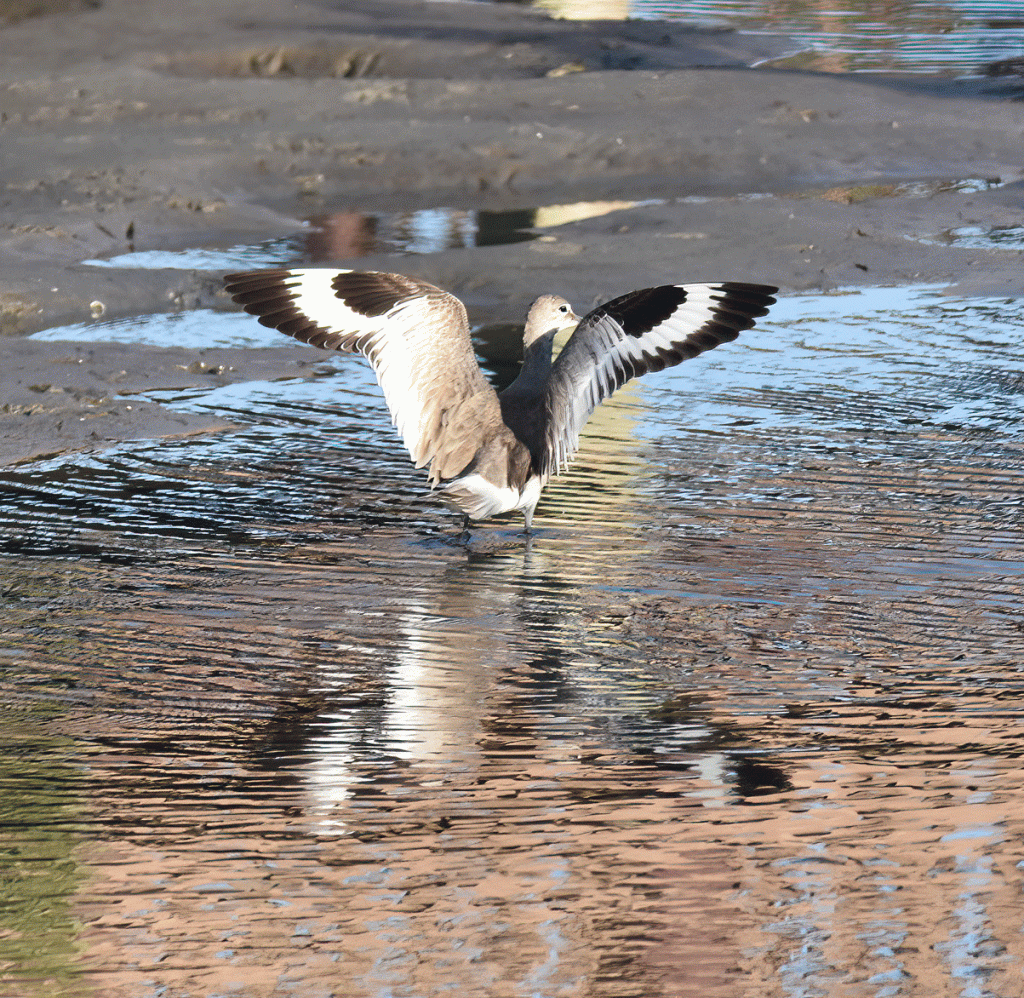
We saw several Willets, and learned about their distinctive wing patterns.
This juvenile Yellow-crowned Night Heron was quietly sitting in the shrubbery, not drawing attention to itself.
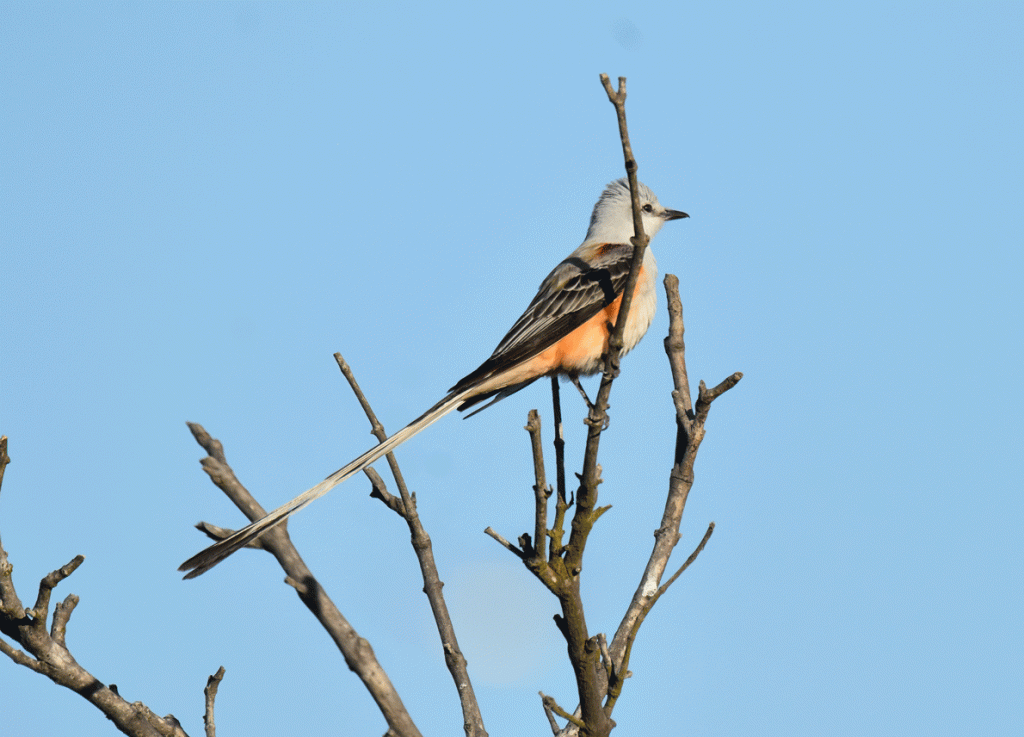
Most of the Scissor-tailed Flycatchers that we had seen before this visit were flying near the roadsides as we drove along. It was nice to get a good view of one on a perch.
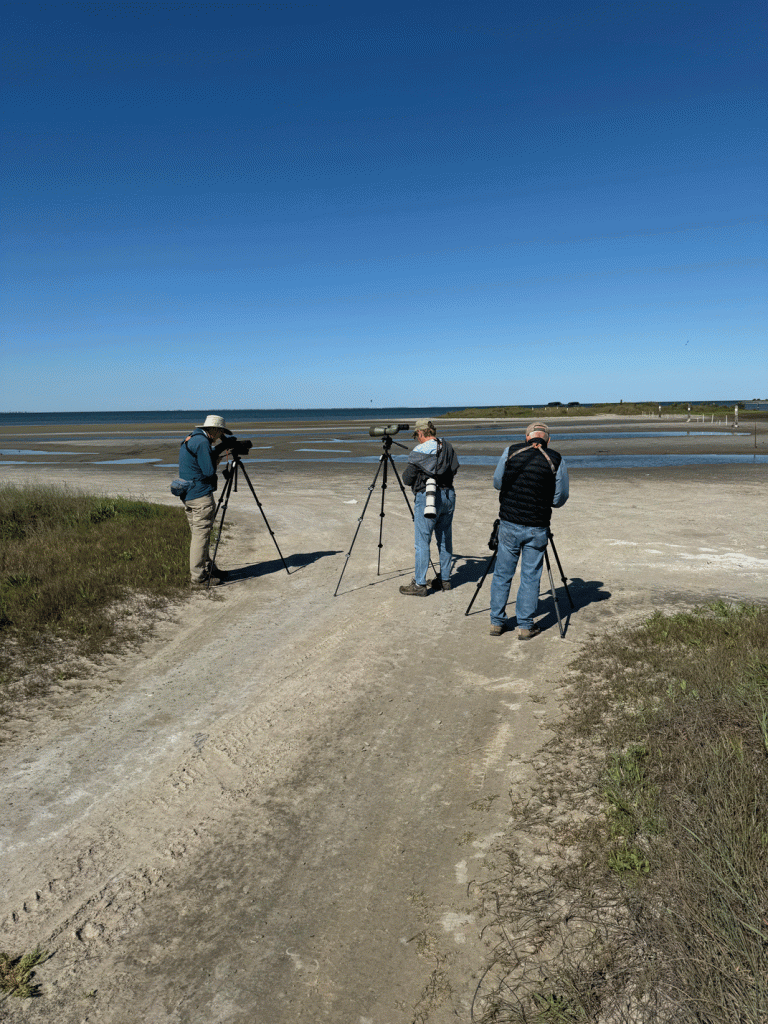
Next we explored the mudflats a few minutes north of the Birding Center. The tide was out so there was lots of space for shorebirds. We had walked at least a hundred metres from the high tide mark to reach the spot in the photo below.
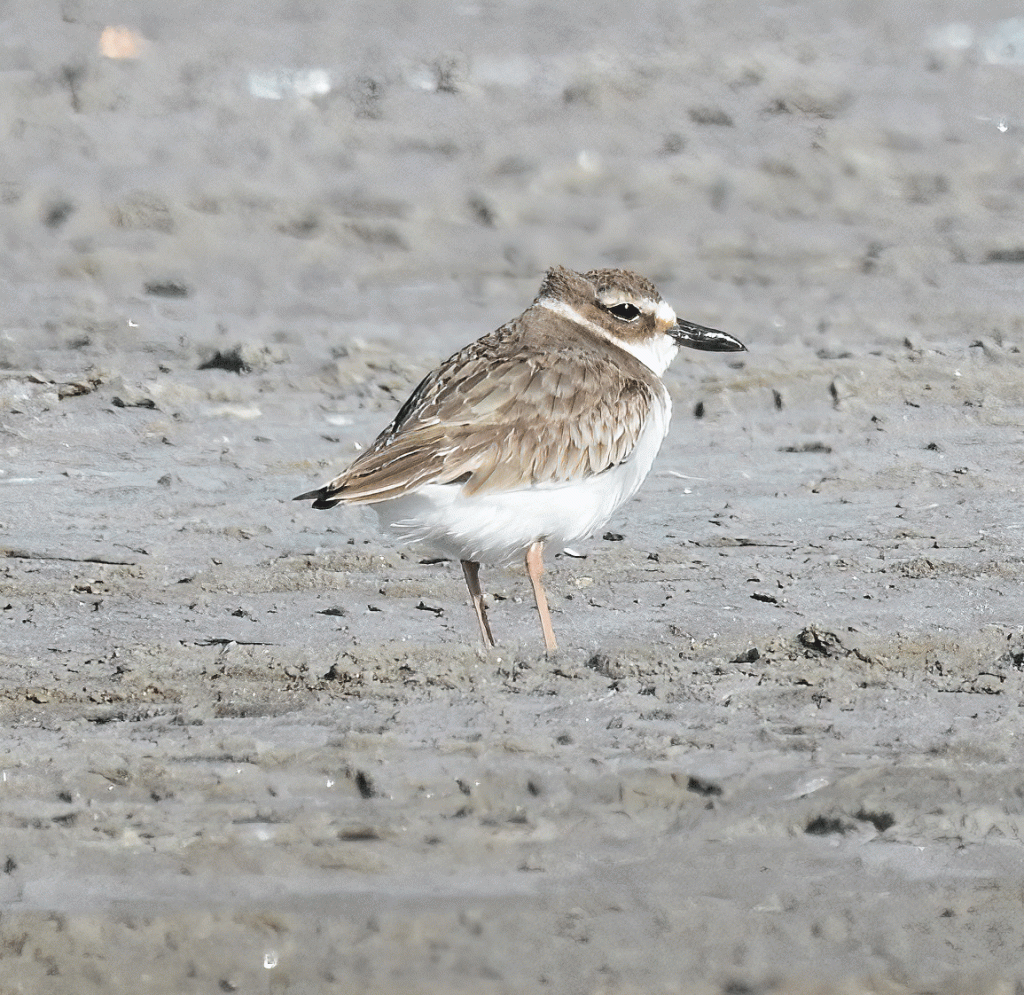
We saw some Wilson’s Plovers that allowed Doug to get within range of his telephoto lens. Its large black bill is diagnostic. It usually faced away from us so it was hard to see the black band across its breast.
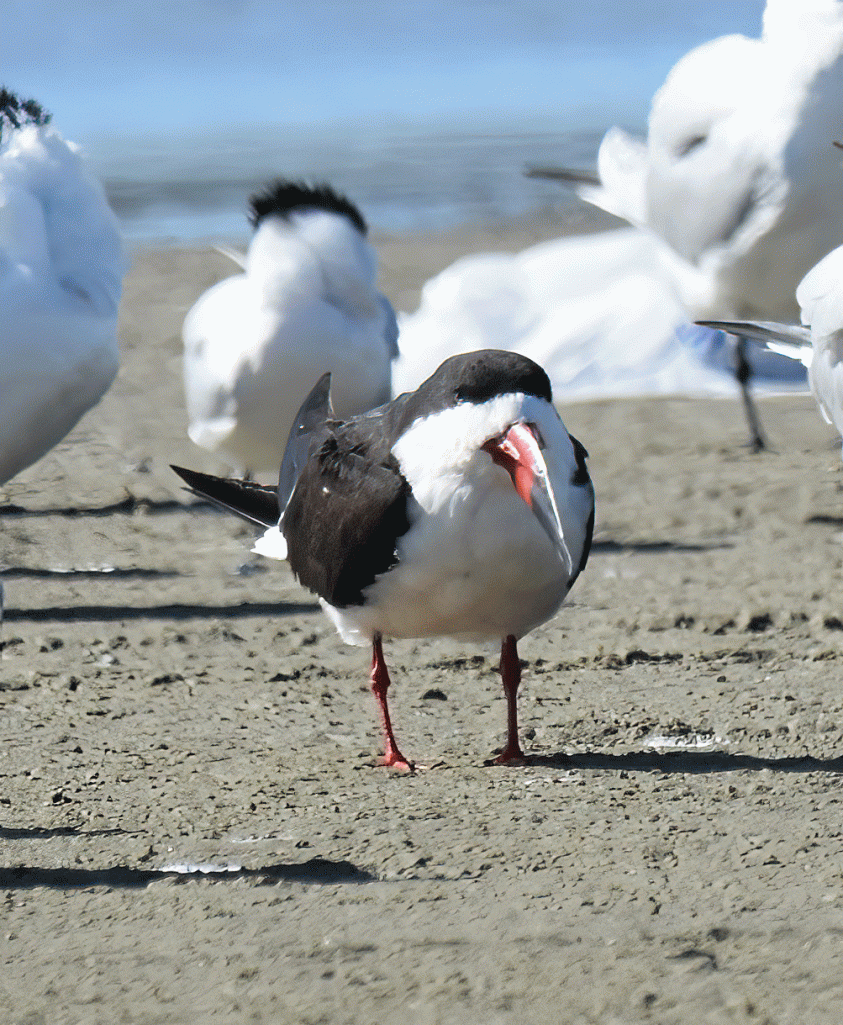
There was a large flock of at least seventy Black Skimmers that were resting on the shore. This unusual bird has an oversized bill, with the lower part being much longer than the upper mandible. It feeds by “skimming” for small fish close to the surface of the water.
Occasionally the whole flock would be disturbed and lift off, circle around and land in a new spot. The photo shows a mixture of mostly Black Skimmers and Royal Terns with some Laughing Gulls and Caspian Terns as well.
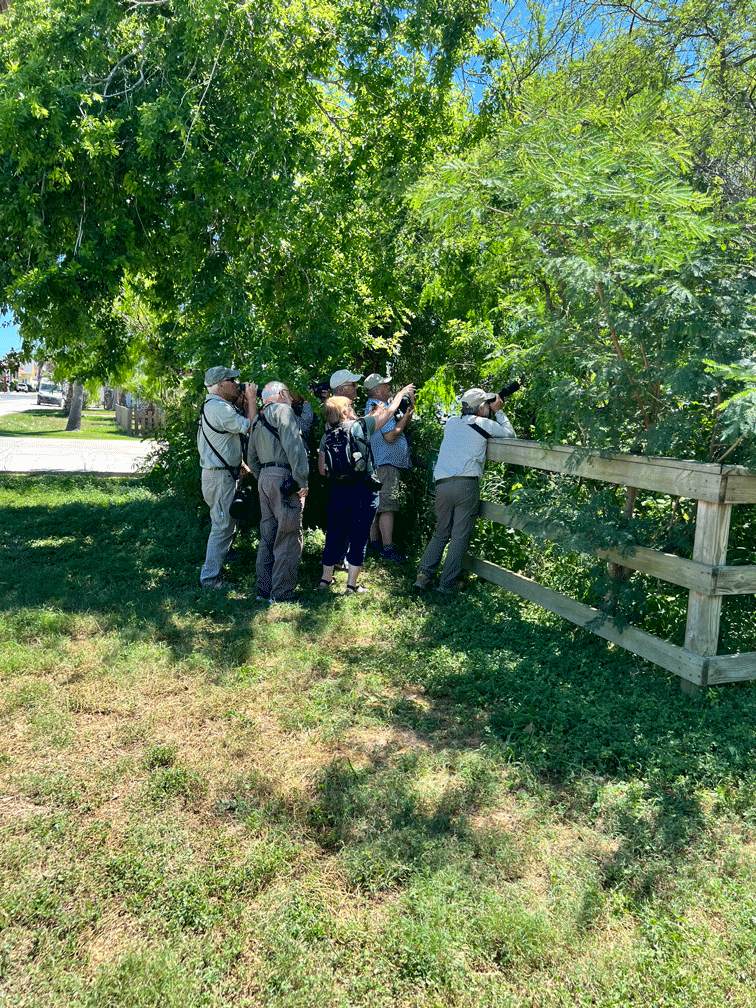
We met some other birders as we were leaving who told us about another good spot on the island. The previous few days had been really windy and many birds were resting and refuelling at The Valley Land Fund Lot, so we headed there. The Valley Land Fund is dedicated to conserving the unique habitats of the Rio Grande Valley. One lot on the south side of the street was left wild. Someone was observant enough to notice a “biggish blob” on a branch and to figure out it was a Least Bittern. Here’s a photo of people trying to see it. Later it woke up, and if you stood in the right spot you could see most of the bird, but it was mostly obscured by branches.
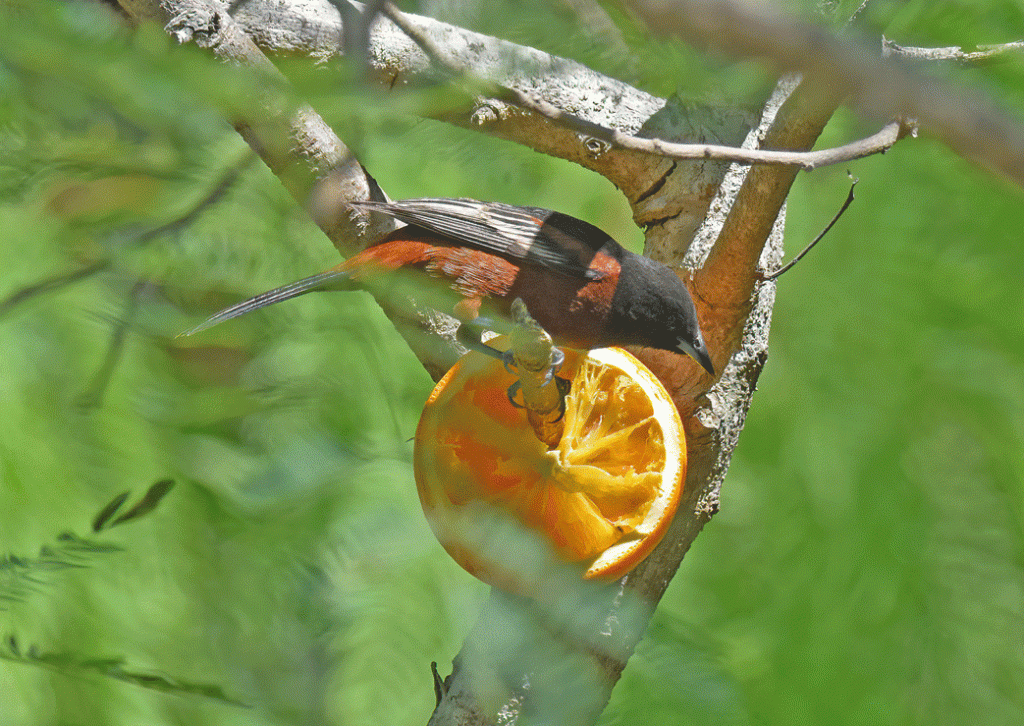
The lot on the other side of the street had been set up with feeding stations. Here are two photos of an Orchard Oriole.
We got some good views of a Nashville Warbler. Later in the spring, Nashville Warblers will be near our house in BC.
We also saw a Northern Parula, a warbler that we had seen several times as a rarity in the Tucson area. This time the parula was in its normal range.
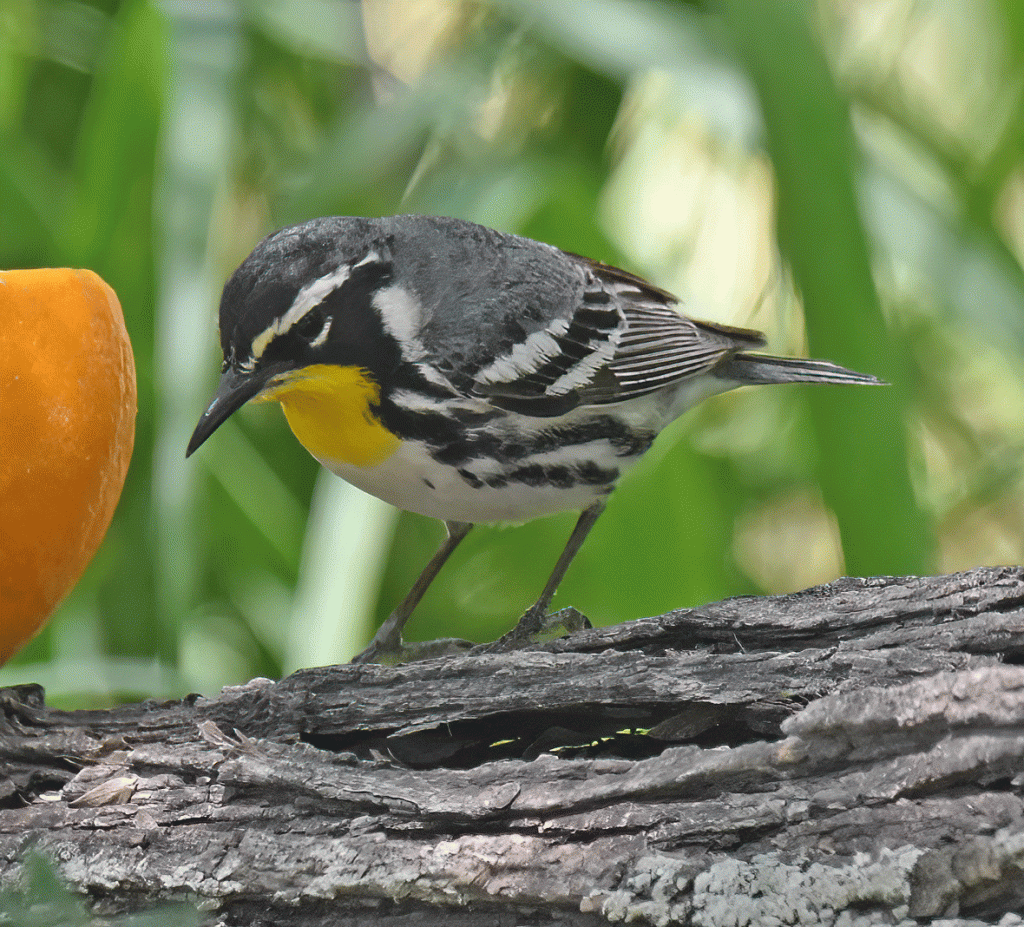
We’d seen a Yellow-throated Warbler once before in the Tucson area, again as a rarity. Like the Northern Parula, it is usually found in the eastern US and SE Canada in the breeding season.
But this Black-throated Green Warbler was a first for us. Even though its yellow head is quite prominent, it has a slight tinge of green on its back which is used in its name. Black-throated Green-backed Yellow-headed Warbler would just be too much!
There was also a Summer Tanager hanging out near the oranges.
This is an Indigo Bunting, an easy bird to identify from its name.
We spent over two hours at the Land Lots, so we took a break for lunch. Thanks to Mary for this photo of Rich, Wendy and Doug.
This whole blog post was about just one day! That day on South Padre Island, TX, we saw over sixty species, with six “life birds.” There will be three more posts about our trip to Texas to be posted soon!


















































 Travels with a Fox