March 2024 in Arizona: the wildflower edition

March 2024 in Arizona: the wildflower edition

Wildflowers! We’ve had double the average rainfall this year in the Tucson area and the wildflowers are loving it! This post will focus on botany, with a reptile thrown in.

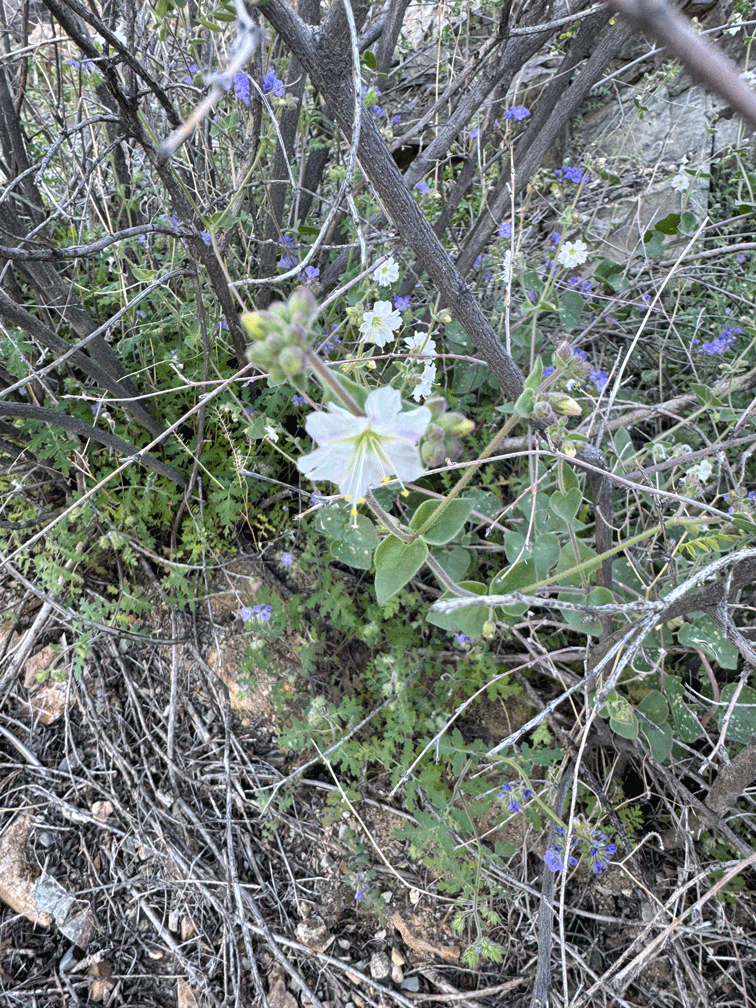
Our March wildflower quest started with a hike up King Canyon in Saguaro National Park (West). The Arizona Native Plant Society had planned a field trip to the canyon, so we decided to go a few days earlier on our own. This Desert Wishbone bush was the featured photo on their Facebook page advertising the trip, so we were happy to find it early in the day. The bush has quite a small flower and is easy to overlook.

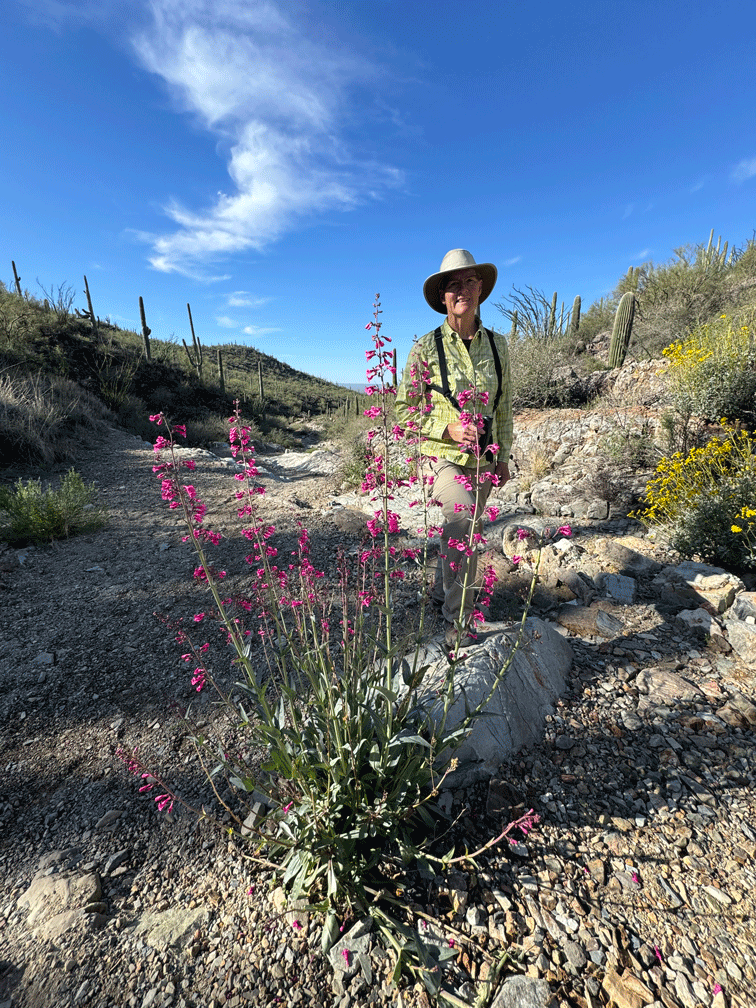
We’ve shared photos of penstemon before on blog. However, this was the tallest specimen that we’ve seen in the “wild” (meaning, not the Desert Museum). Parry’s penstemon is native to the Sonoran desert and blooms in March and April.

A close up of Penstemon parryi.

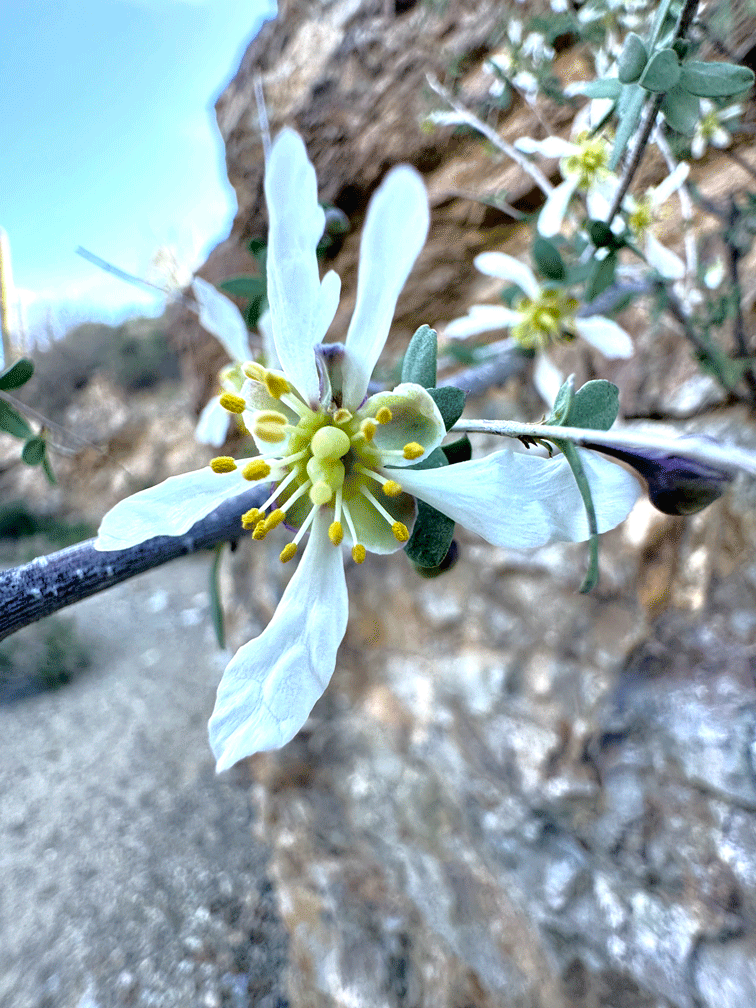
The “main event” flower was Crossosoma Bigelovii, or ragged rockflower. It likes to grow out of rock crevices, so it’s not able to be cultivated.

It has a pleasing jasmine-like scent. We only saw one of these plants on our hike.

Farther up the canyon, there is a rockwall covered with petroglyphs. Doug is pointing yo some of them in the photo below. Every crack that holds a bit of soil has a plant growing out of it.

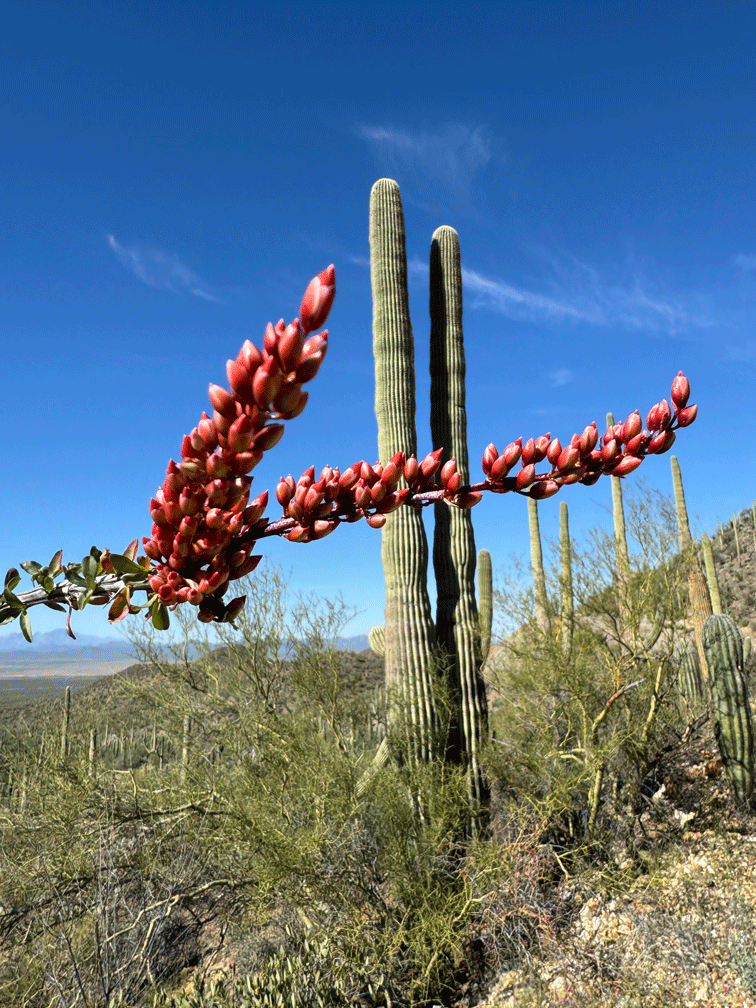
We climbed out of the canyon and followed Sendero Esperanza west until it joined the Gould Mine trail. There was a blooming Ocotillo overhanging the trail along this section.

This is a close-up of Allonia incarnata, a flowering plant in the four o’clock family. The flower is about the size of a quarter. It’s the last wildflower photo that we included from this hike, although we saw several other flowers that day.

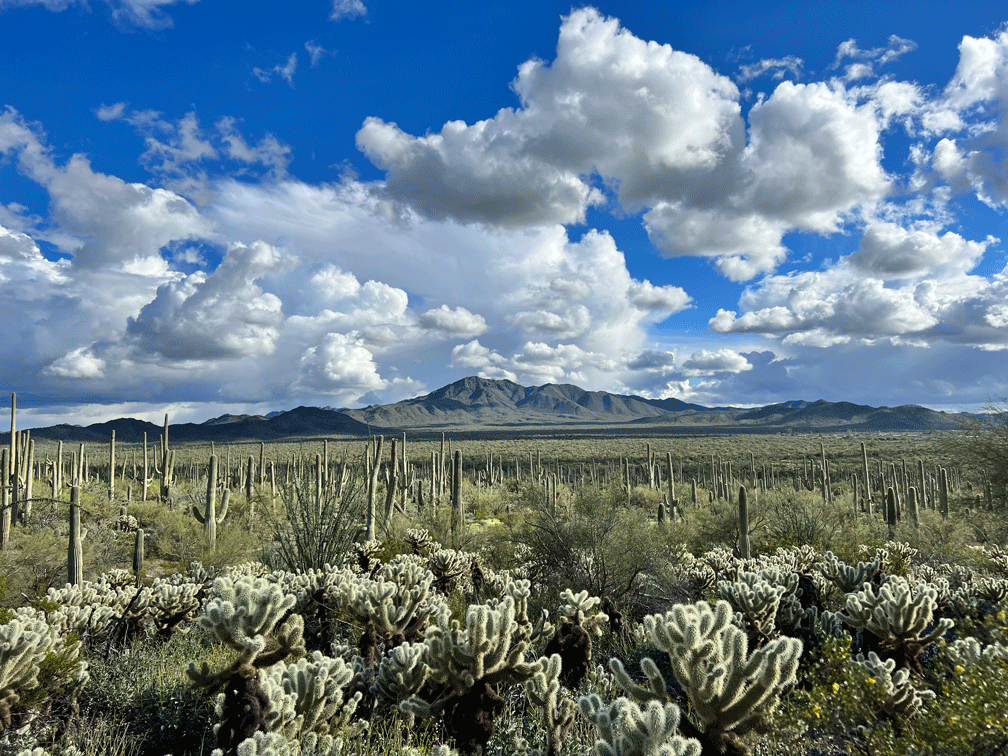
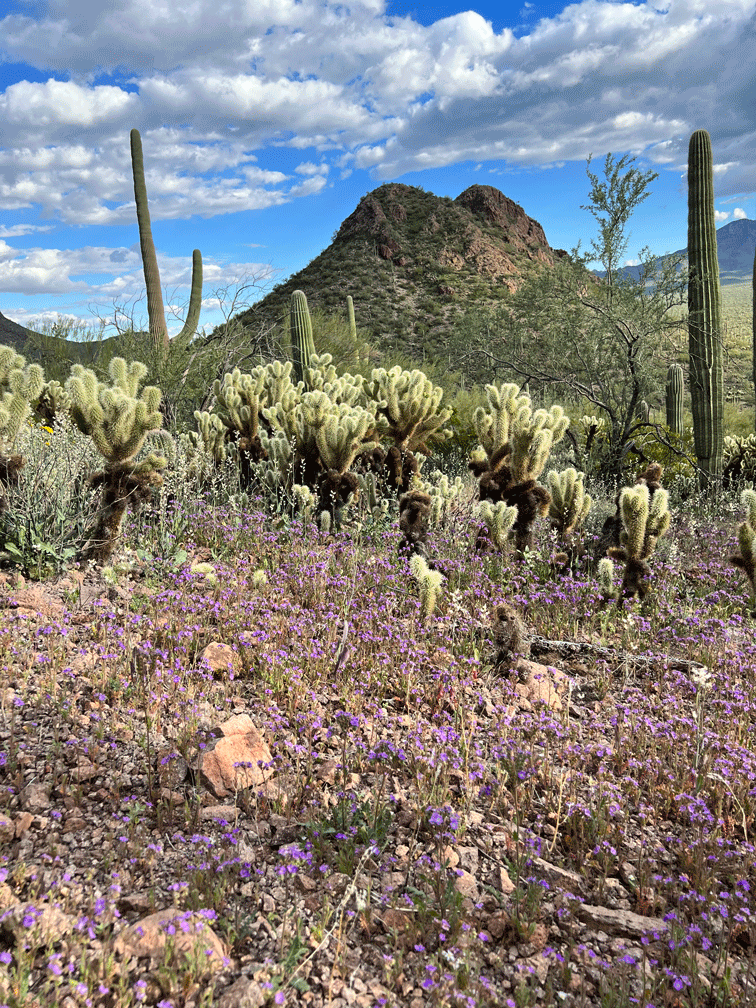
In March, we have generally done most of our hiking from our doorstep. We realized that we enjoyed the solitude, the scenery and the convenience of not having to drive to a trailhead. We have discovered multiple trails so we can enjoy a short 45 minute hike or extend it to two or three hours. Here’s a view looking south over the teddy bear chollas and saguaros towards Wasson Peak in Saguaro National Park.

The scorpion weed made a carpet of purple on one of our hikes.

If you look closely in the photo above, you might notice some slender whitish flowers. They are Lyreleaf jewel flowers (streptanthus carinatus). A bee happened to visit one of the flowers as Wendy was taking a photo.

We had never seen this bush in flower in the last four years, but the moisture this year allowed it to flourish. It’s a species of rhatany known as Krameria erecta. It’s very heather-like, and unlike most desert bushes, doesn’t have any thorns.

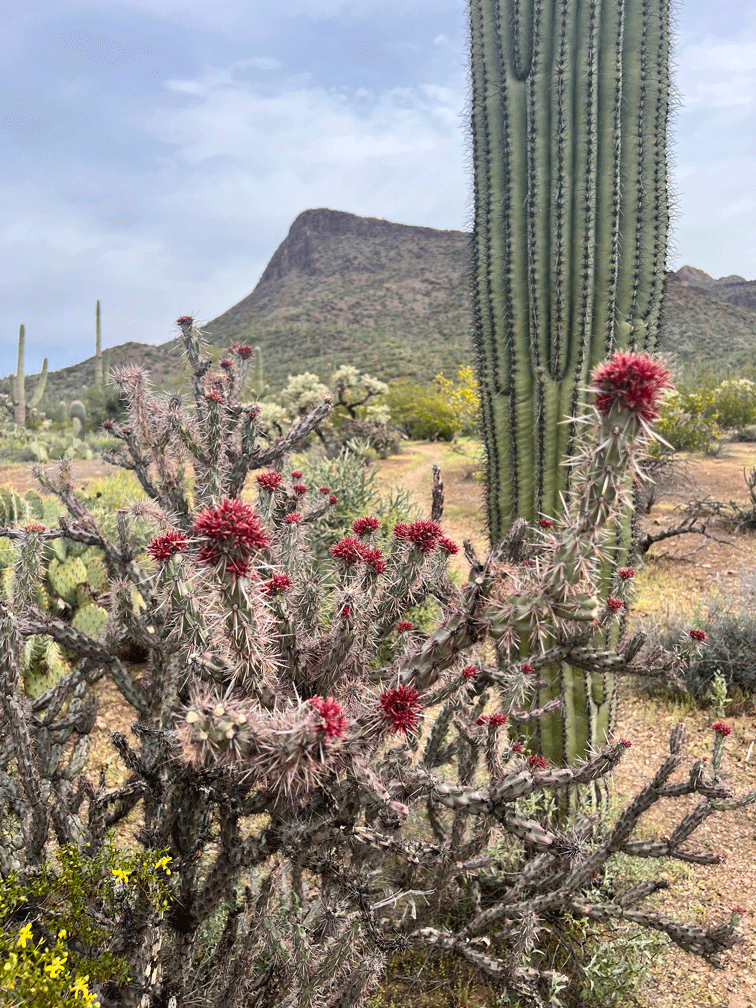
The buckhorn cholla is sending out new growth and it looks very flower-like.

Here’s a close-up. We passed this cactus and few days later, and the red had faded to green.

Here’s an Ocotillo with autumn colours. It used to be a lush green and it is now turning colour similarly to how deciduous leaves turn colour in the fall where we live in BC. It makes sense, because it is coming to the end of its growing season. It will be dormant in the heat of the early summer and sprout green leaves when conditions are right again.

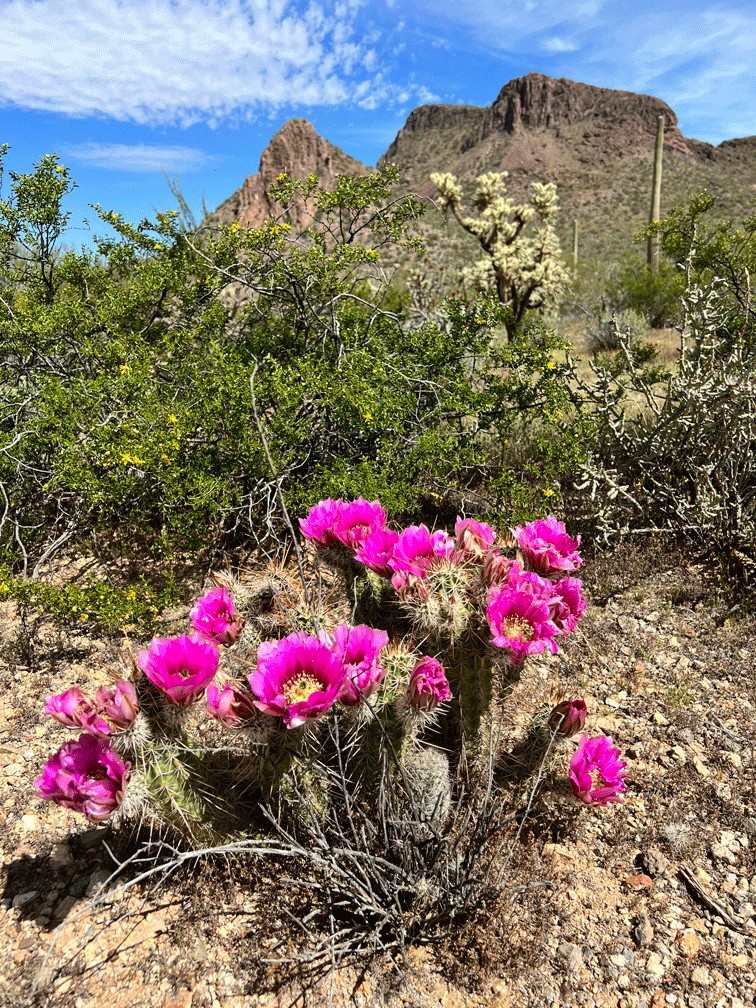
At the end of March, Wendy walked from Cam-Boh picnic area back to our place (about an hour) and was surprised to see this hedgehog cactus in full bloom. It’s the first of the season; mostly we see this species bloom a little later.

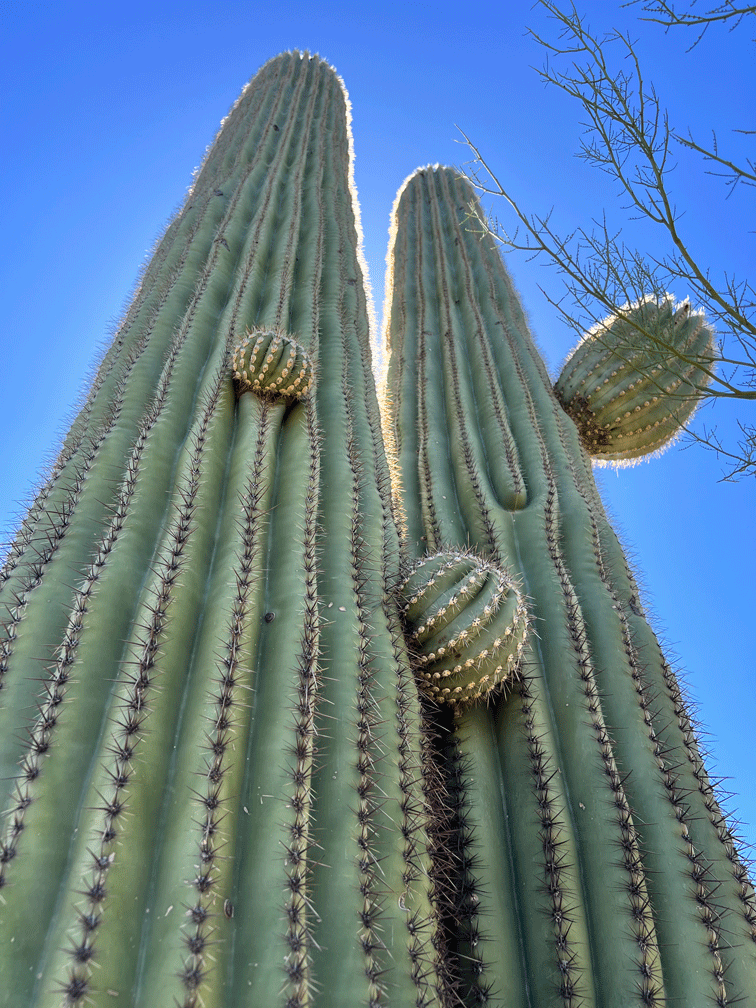
We made a special visit to a saguaro that we saw start to bud last year to see how long the arms had grown. The first photo was from February 23, 2023 and the next one from March 27, 2024.

The next couple of photos were taken at the Arizona-Sonora Desert Museum.

Here, the Kingcup cactus, a variety of hedgehog cactus is just starting to bloom.

These Notch-leaved Phacelia provide nice contrast to the cactus.

Now to introduced flowers. In Madera Canyon, this plum tree is growing wild, producing beautiful blooms. It was likely planted near a cabin, which has long ago disappeared.

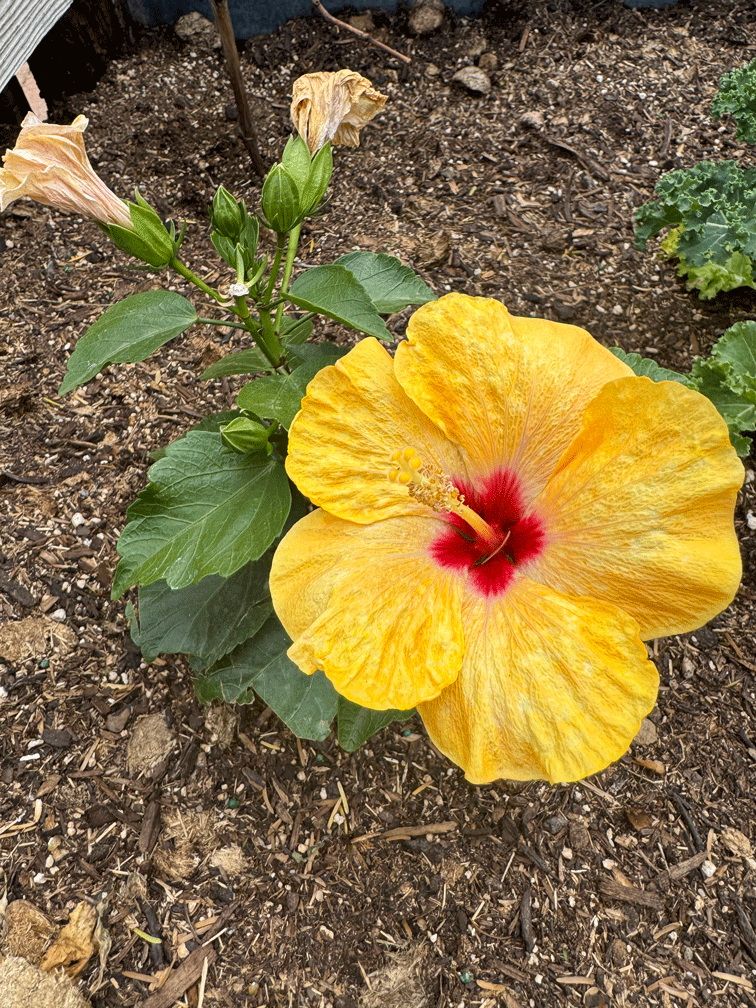
Our neighbour grew this flower in a raised bed along with some lettuce. It’s a hibiscus called “Hawaiian Punch.” The vegetable gardening season is almost finished because it will soon be too hot.

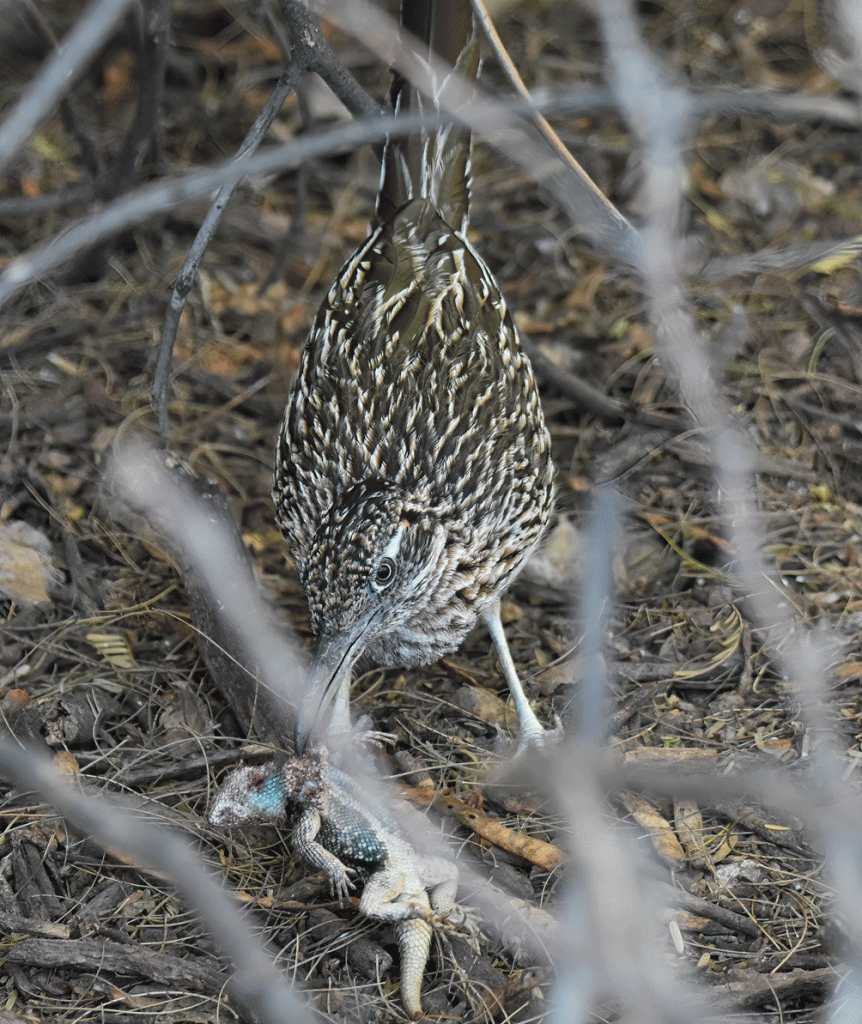
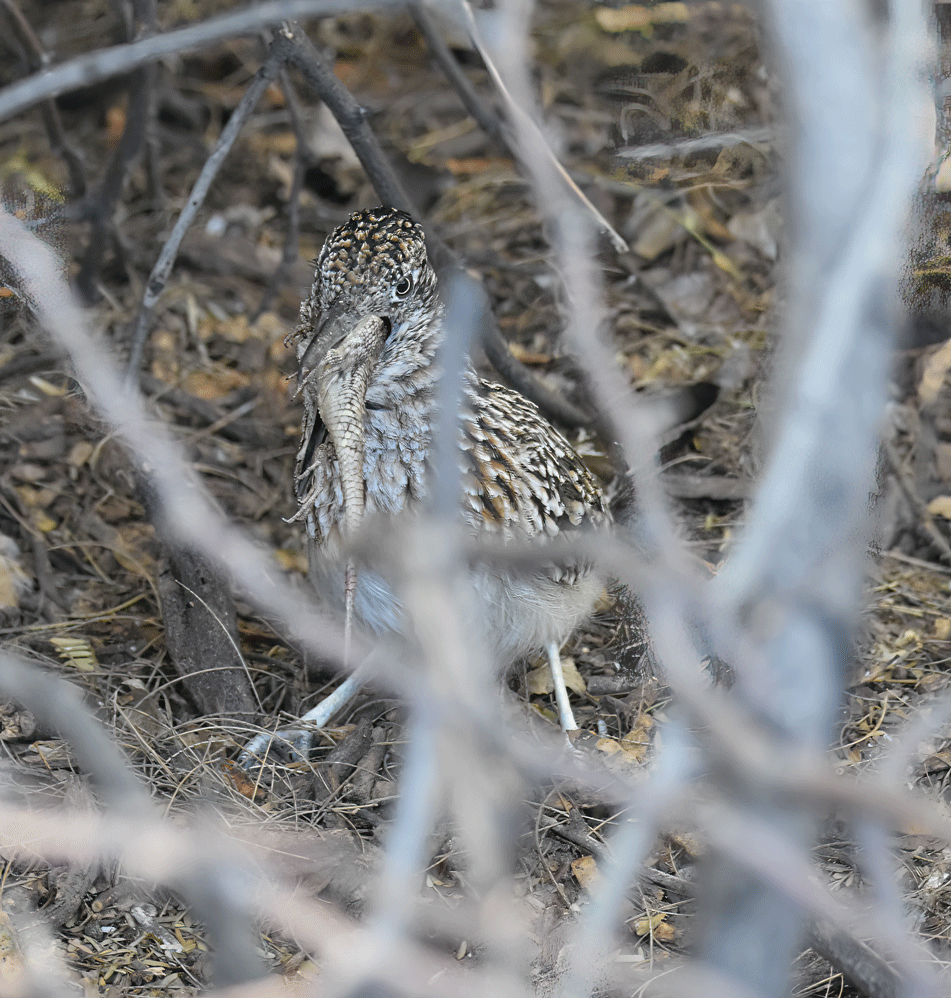
Now to our reptile sighting. One day on our bike ride on “The Loop” we encountered two rattlesnakes in the middle of the pavement, which we found were easy to avoid. This one is a Western Diamondback. It was spread out across the bike lane as we approached, and we watched a cyclist run over it. It then curled up, but didn’t look injured. It’s nice that an iPhone can zoom in a long ways so Doug didn’t get very close for the photo. We guess that both snakes were warming up on the dark surface.

Of course we will end the blog post with a sunset photo. This one is almost magical.

We hope you enjoyed all the flowers and plant life. We also saw plenty of birds which will be posted soon in the our second blog of March, 2024.

February 2024: Birding Adventures in Arizona

February 2024: Birding Adventures in Arizona

This post will cover the highlights of our birding day trips in Arizona. We submitted over fifty checklists to eBird for the month and had at least one list for 24 out of the 29 days, so it would be safe to say that we went birding a lot.

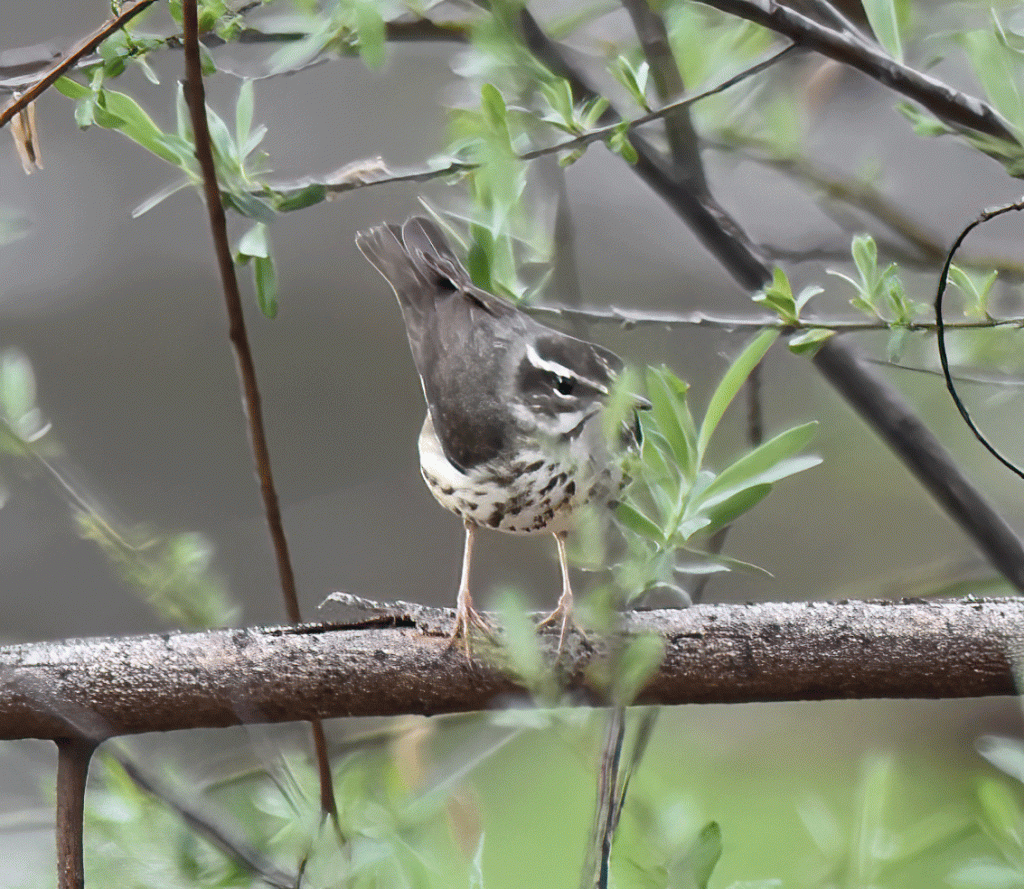
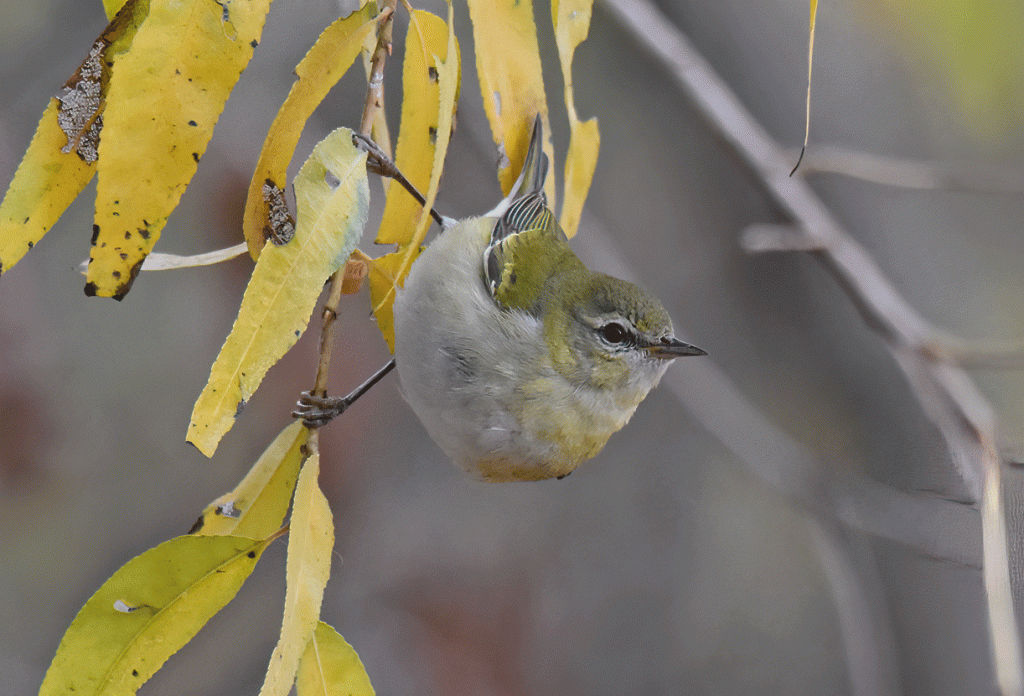
This first photo, actually from early January, is of a Tennessee Warbler, which is a rare sighting for the Tucson area. We were getting ready to leave after a couple of hours of watching and took one more pass through the willows and it popped up. It’s a female in non-breeding plumage.

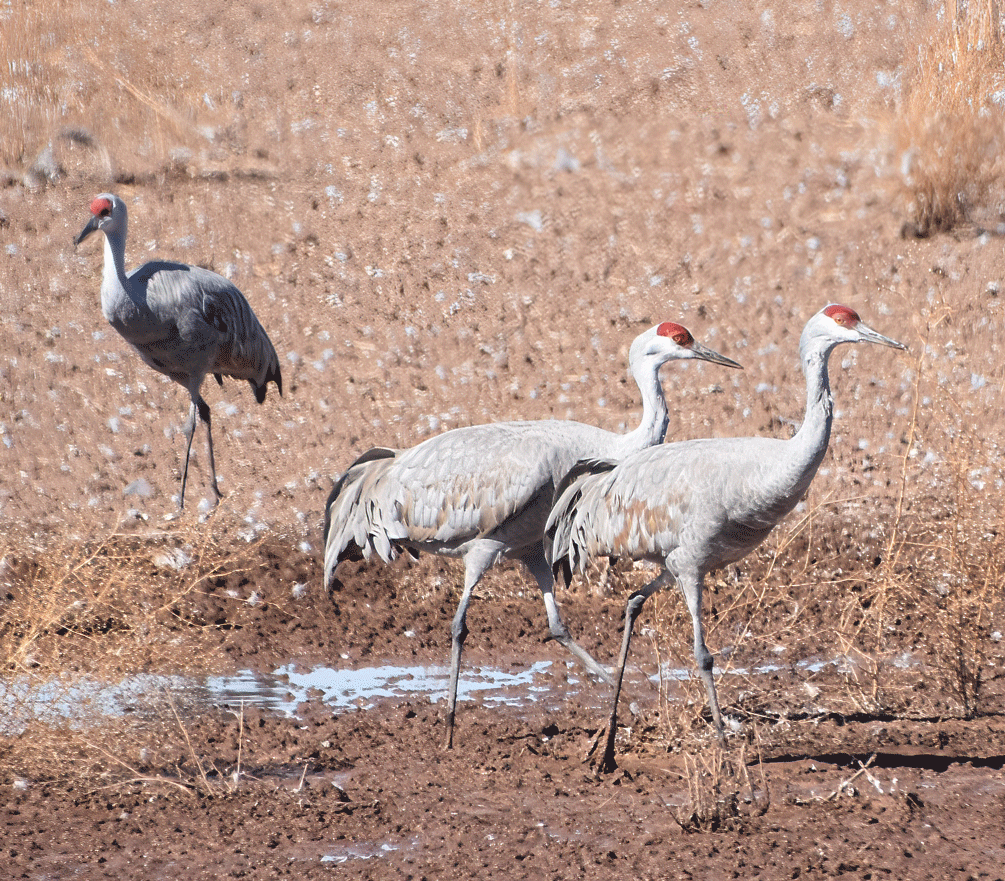
We also want to include photos from our visit to Whitewater Draw in the middle of January. We go every year to get our fill of Sandhill Cranes. This year, the cranes landed closer to the viewing path than last year, when most of the cranes chose to land in the outlying fields. We estimated that 10 000 cranes landed when we were there.

This group chose to walk across the shallow water rather than fly. They looked awkward as they raised their feet out of the muck.

Here’s a closer view of the magnificent birds.

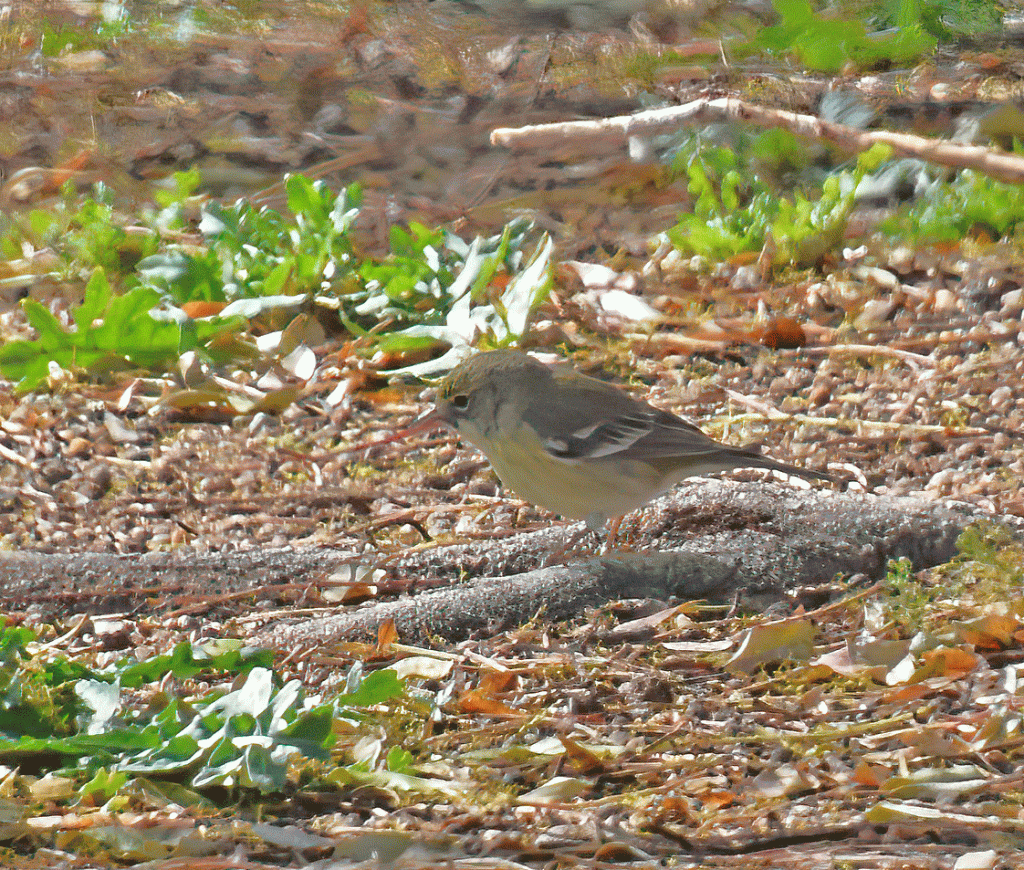
Now for our February birds. In early February, we drove about an hour to a park in south-east Tucson to try to see a Pine Warbler. It was tricky to see among the Yellow-rumped Warblers, because it was a rather drab coloured female, but we were successful and we were also able to help other birders get their eyes on it too. Pine Warblers are usually found in the eastern US. And a bonus for us was getting to catch up with birding friends.

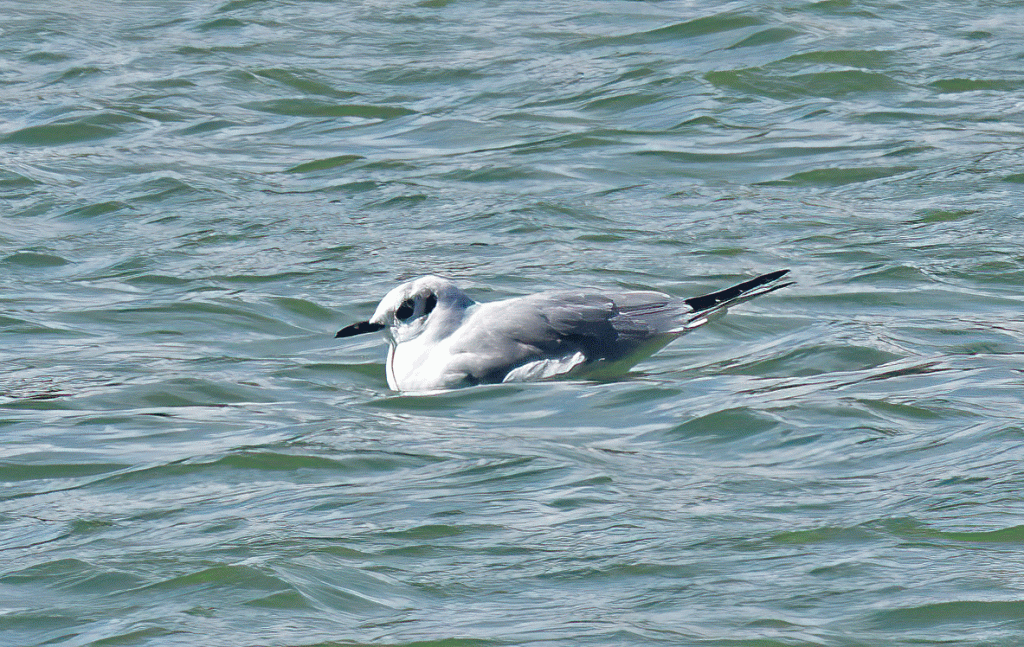
Sometimes when there is stormy weather, birds are affected and end up in unusual locations. We were lucky enough to see this Bonaparte’s Gull on a lake in Kennedy Park in southwest Tucson. The gull flew in about mid-day and rested a few hours before taking flight and hopefully finding its way back to its flock on the coast.

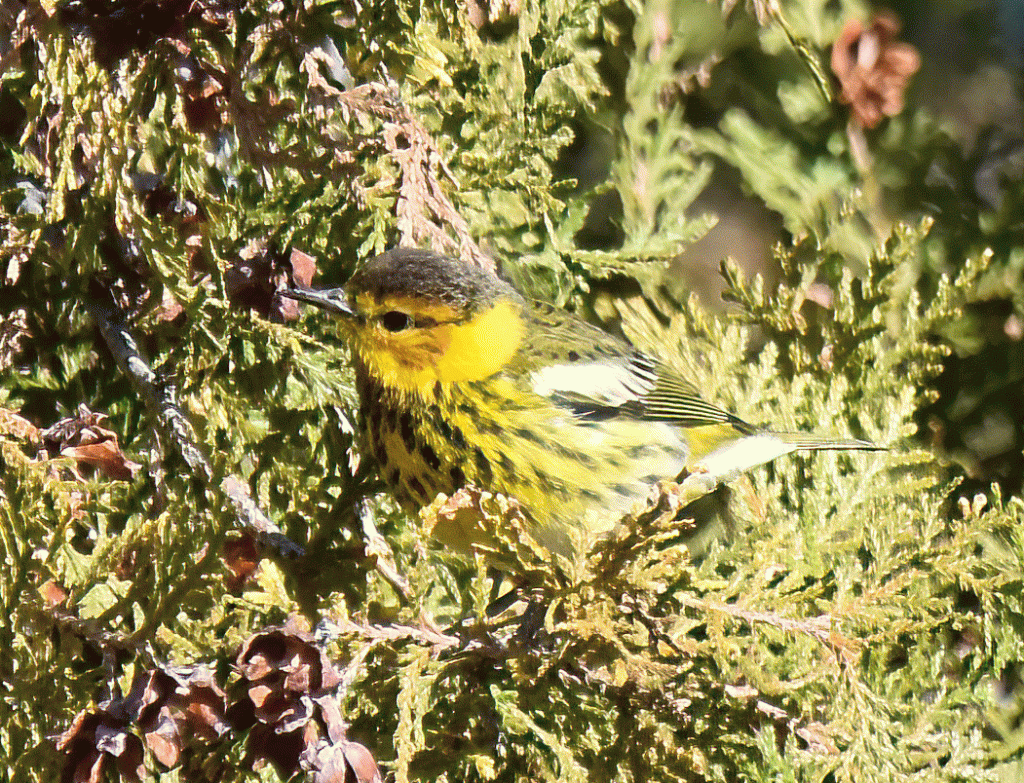
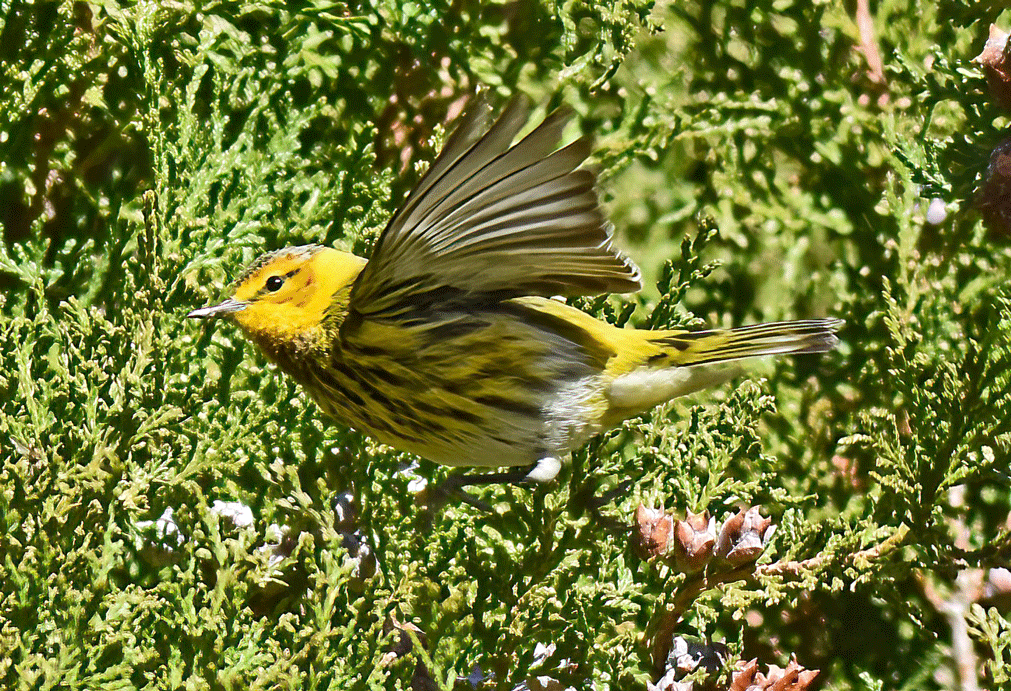
We made several trips to Patagonia, Arizona in hopes of seeing the Cape May Warbler again. (It’s a birding thing; we wanted to see it again for our 2024 list.) We were unsuccessful in January because the bird decided to explore other parts of the town, but in the middle of February, he came back to the tree that we saw him on in December. He is a beautiful bird and we’re glad he found a place to spend the winter.

Whenever we go to Patagonia, we visit the Paton Center for Hummingbirds. The following photos were taken at the center over several visits.

The Violet-crowned Hummingbird is the bird that made the center famous. Violet-crowned Hummingbirds are rare and local even in Mexico where they are found year-round. A few adults stick around the center all year. They have a steady supply of nectar with the feeders and can find good nesting sites in the cottonwoods along the stream.

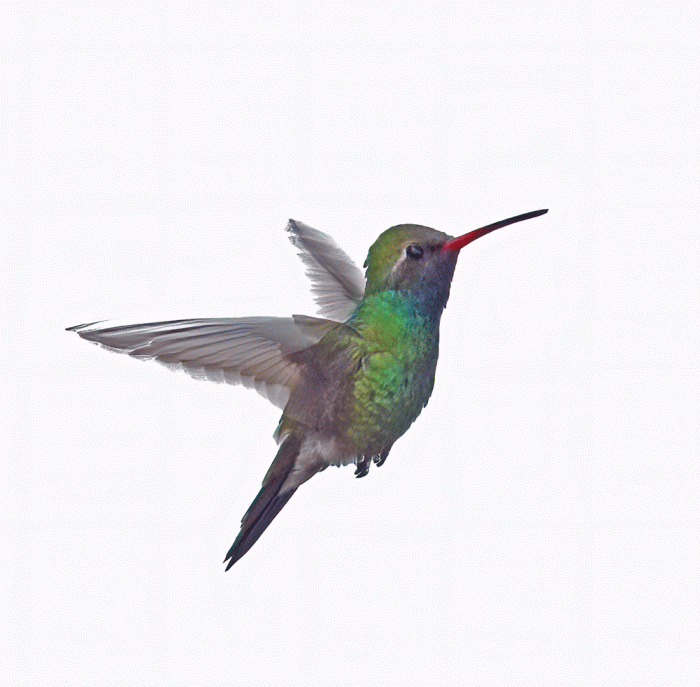
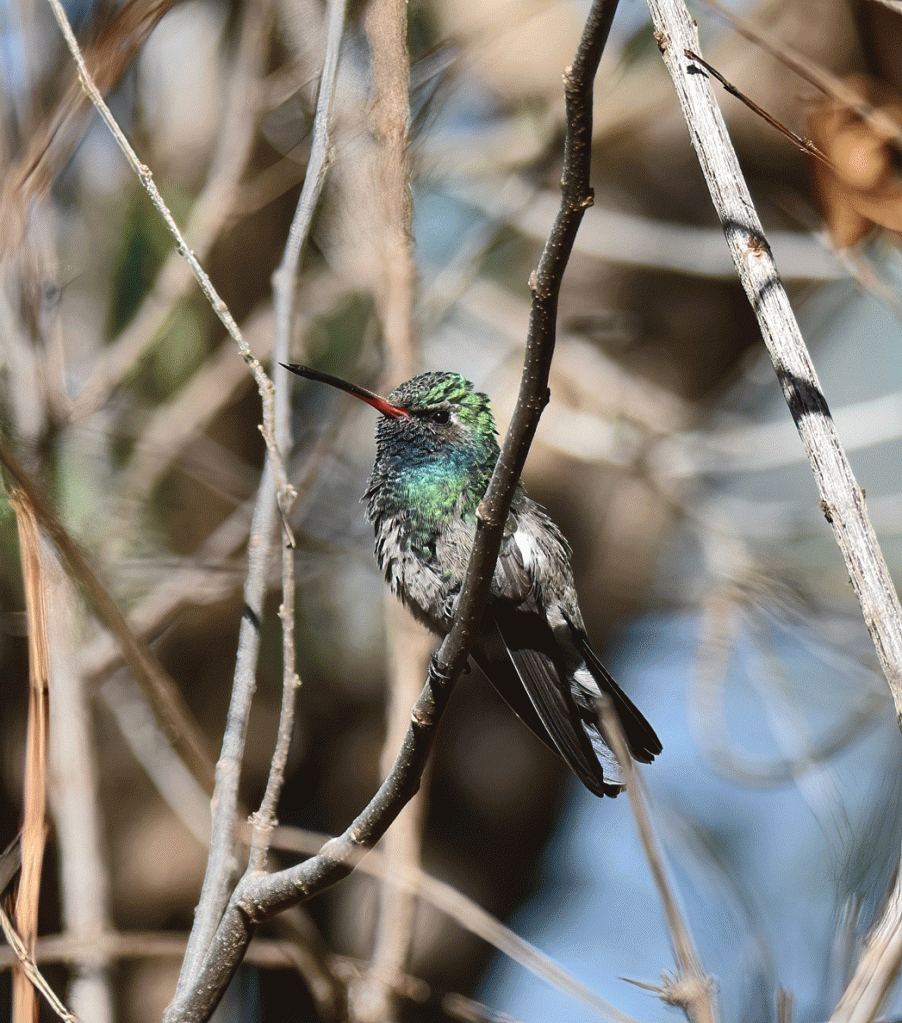
Broad-billed Hummingbirds are always nice to see.

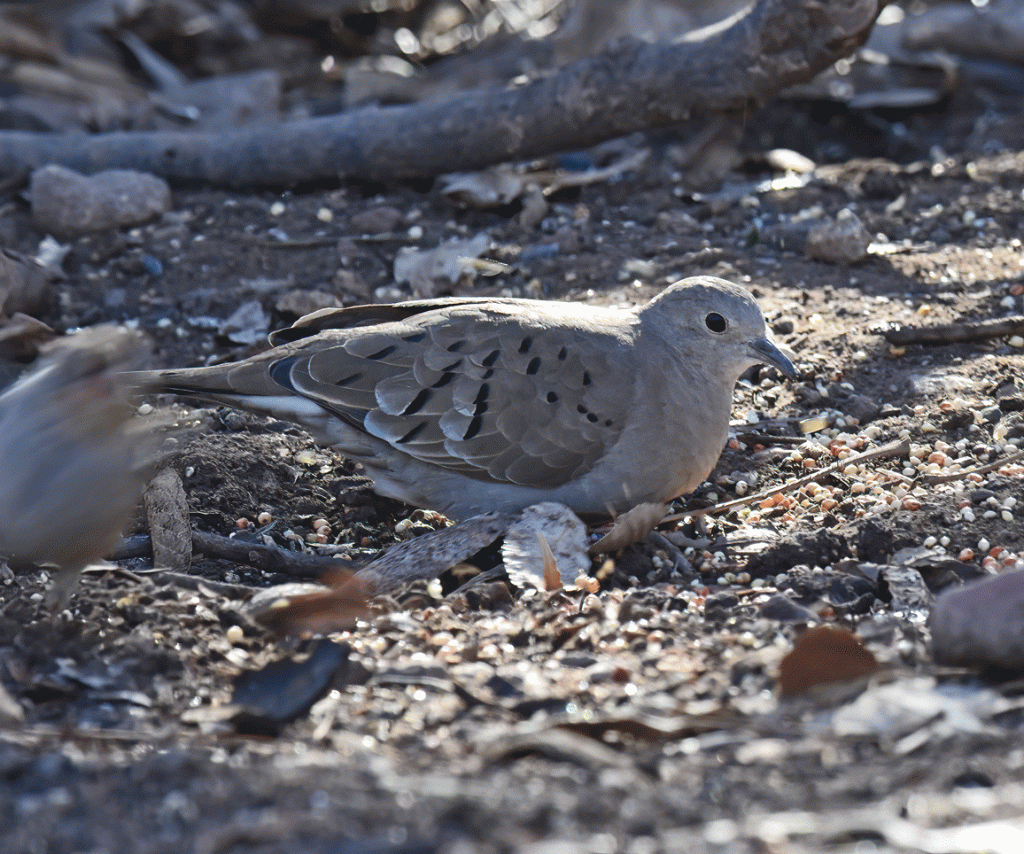
There are two species of Ground-doves that frequent the brush piles at the Paton Center. The one on the left is a female Common Ground-dove and the one on the right is a female Ruddy Ground-dove. While the male ground-doves do not look alike, there are only subtle differences between the females. The female Common Ground-dove has pink at the base of her bill, while the Ruddy’s bill is gray. The Common Ground-dove has a scaly breast, while the Ruddy Ground-dove’s breast is unmarked. There are also differences in the spots, but that’s getting into too much detail. You might wonder why we care to tell the difference. It’s because the Common Ground-dove is categorized as “Infrequent,” while the Ruddy Ground-dove is “Rare.”

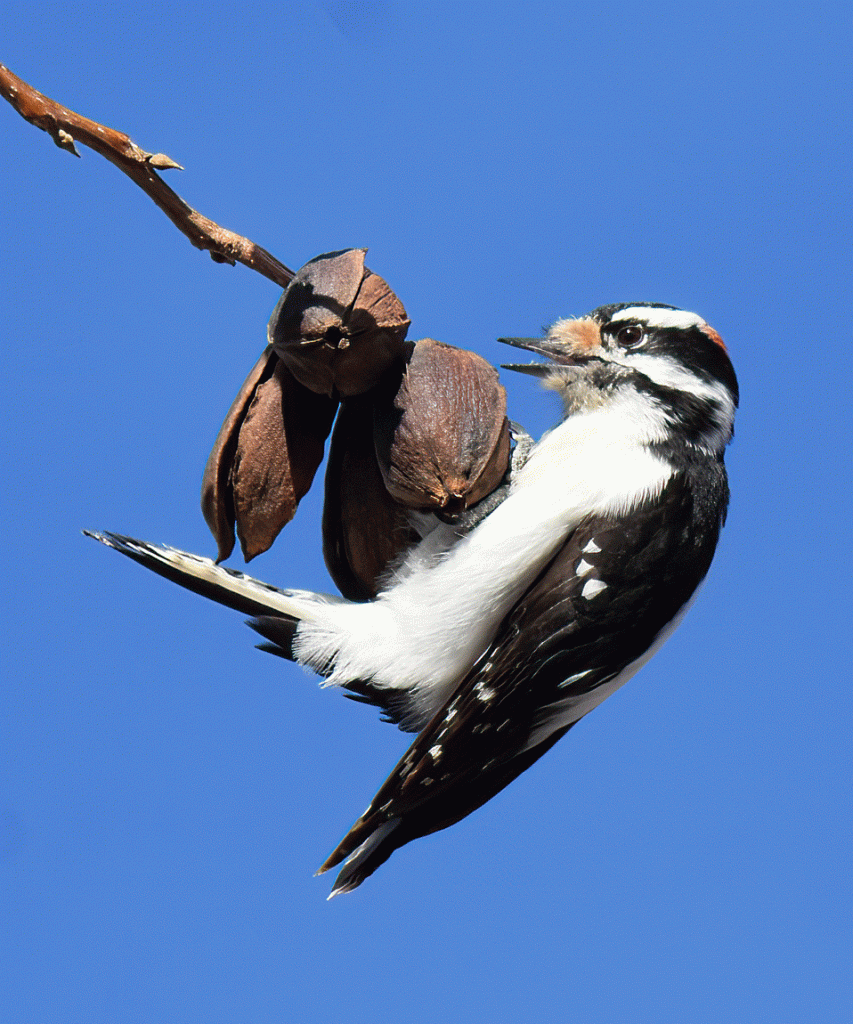
This is a photo of a Downy Woodpecker that was visiting the Paton Center and the neighbourhood since December. While Downy woodpeckers are very common at our house in BC, they are very rare this far south in Arizona. This male was the first recorded sighting for the county.

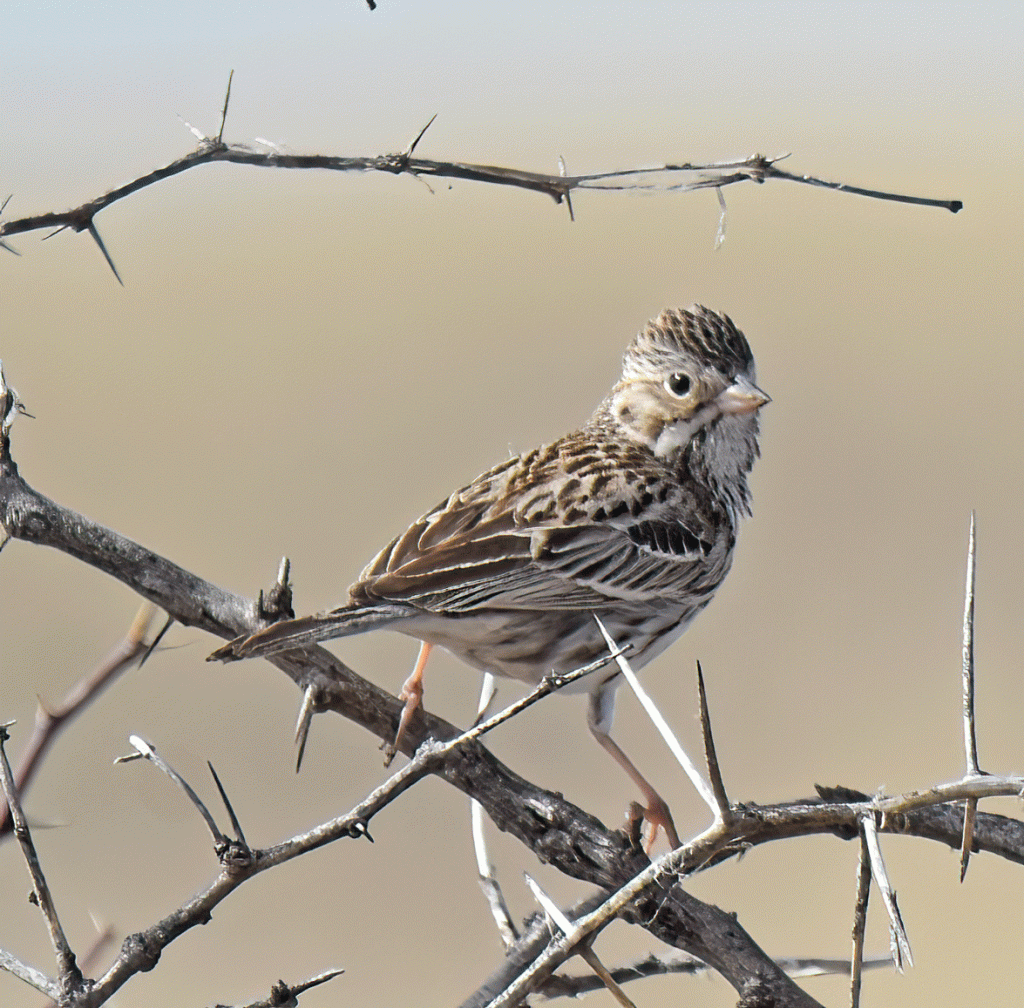
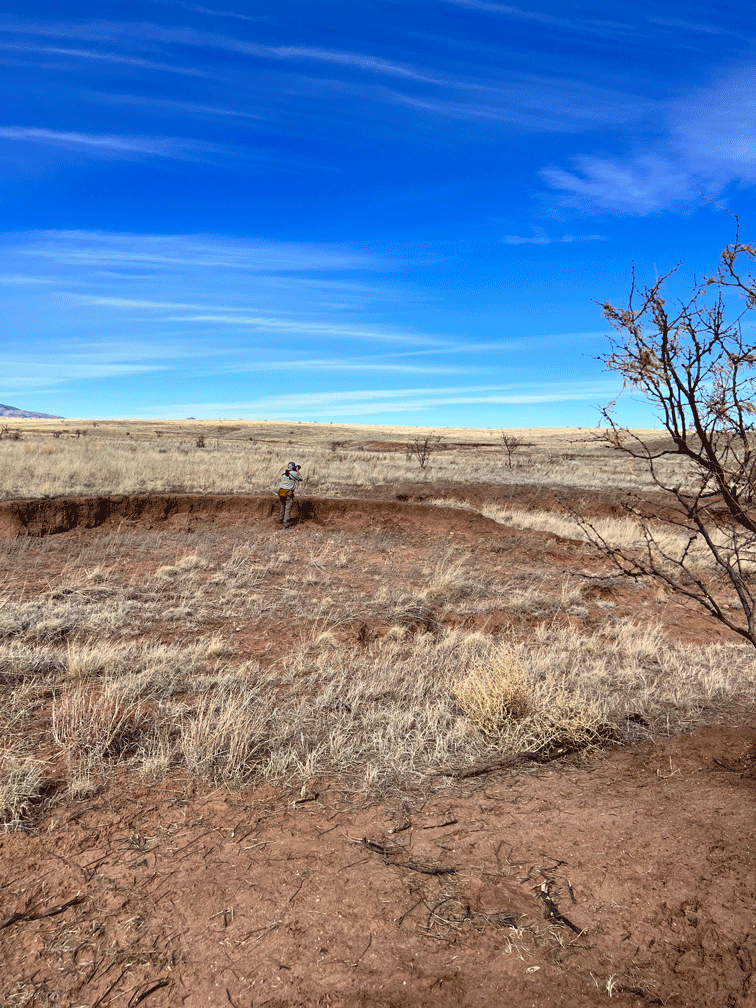
On one of our days that we visited Patagonia, we stopped at Las Cienegas National Conservation Area on the way home to try and see birds that are only found in the grasslands. We didn’t see much that day, but Doug was able to get a photo of a Vesper Sparrow, which is a common bird.

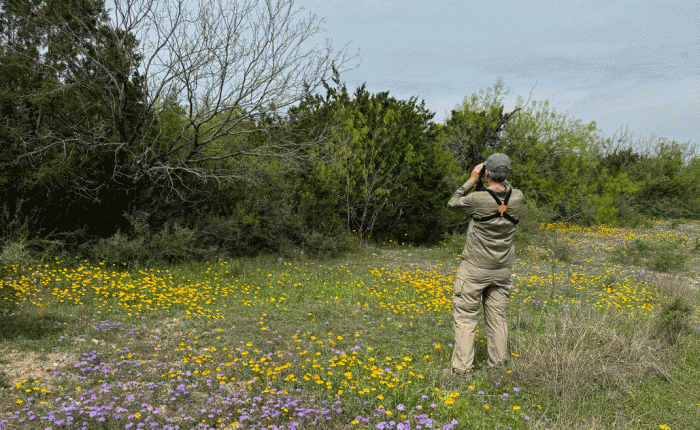
Here’s a view of Doug taking that photo to give you a sense of the vast grassland and how far he was away from the shrub the sparrow was perched in.

We visited the Sweetwater Wetlands in Tucson several times in the month. One time, this Common Gallinule was in good light. Gallinules are a bit like coots because they bob their heads as they swim. When they are in breeding plumage, they develop a red shield on their forehead.

The Northern Parula is a warbler that usually winters in the Caribbean, but this fellow decided that the wetlands were going to be his winter home. We included photos of this bird in our December blog post, and here’s another one.

We also went to the Arizona-Sonora Desert Museum several times. One bright day, Doug decided to take photos of the common birds. Here’s a Cactus Wren in an ocotillo.

This is a female Phainopepla. The species forages for berries and especially likes mistletoe.

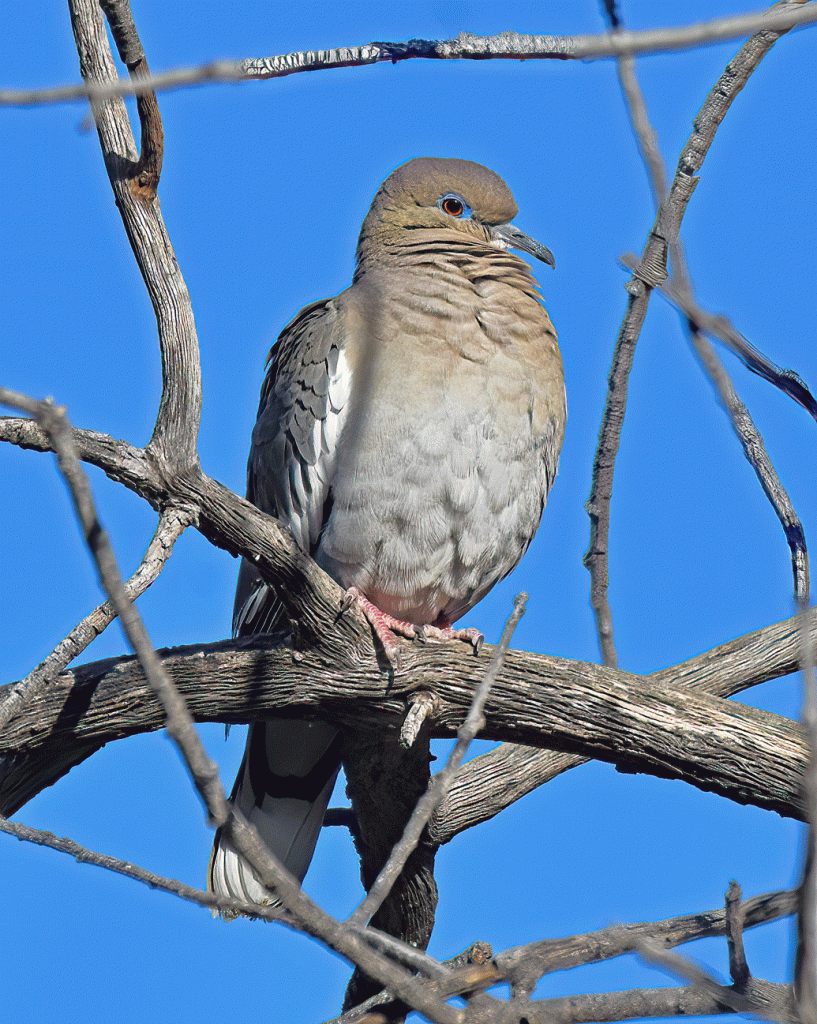
Usually when we hear the distinctive call of the White-winged Dove when we’re at the desert museum, we attribute it to the captive birds in the aviary. This one was a bit of a surprise this early in the season. We usually don’t see them in the area until later in the spring. They love saguaro blooms.

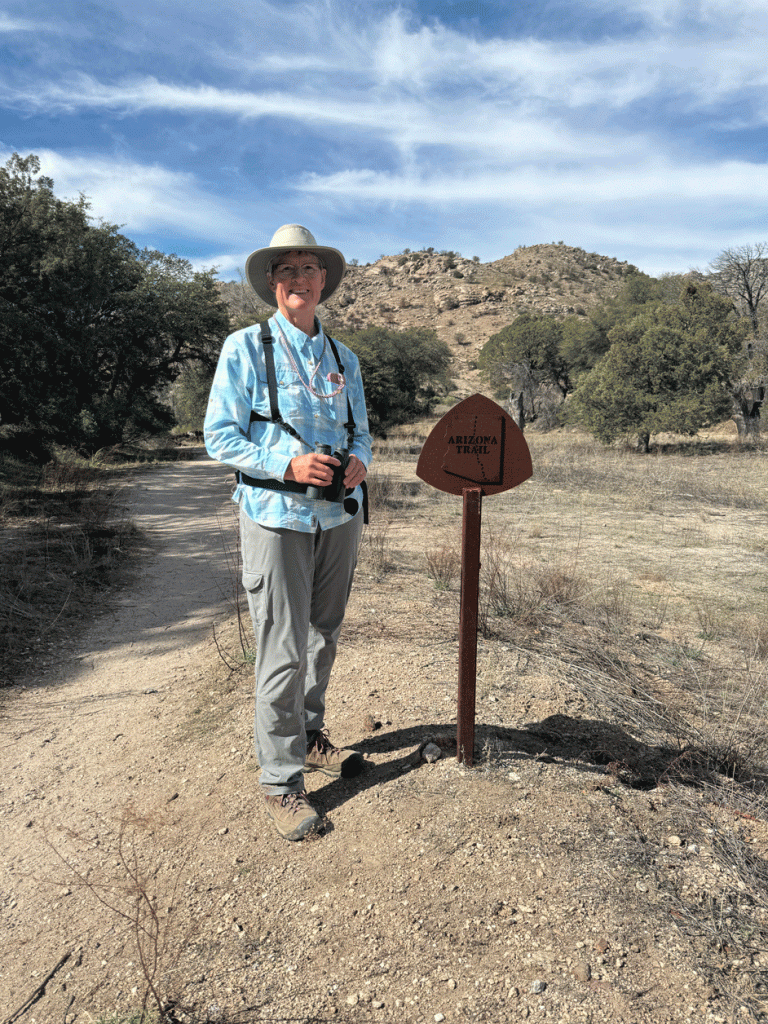
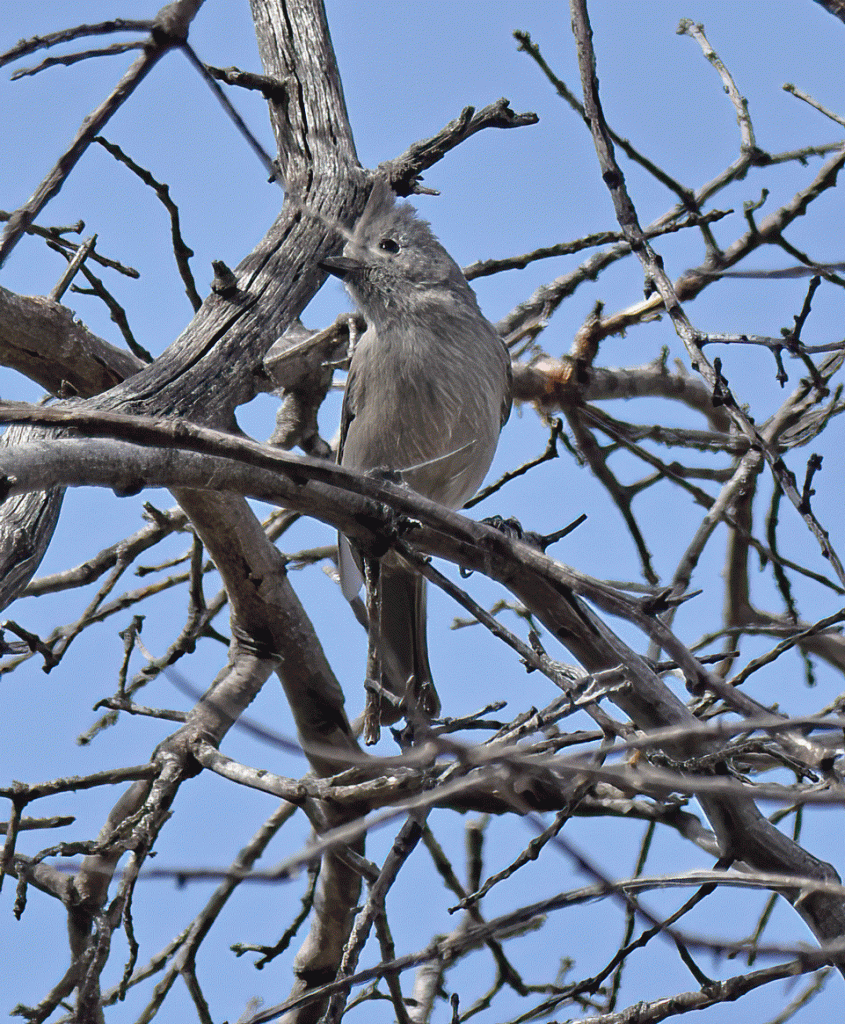
On an especially warm day for February (high of 30 degrees C, 86 F), we chose to go to higher elevations on Mt. Lemmon to escape the heat and see some different birds. We walked through the Gordon Hirabayashi Recreation Area and followed a section of the Arizona trail to a wash, where we heard a Juniper Titmouse singing.

Gordon Hirabayashi was an American sociologist, who resisted the Japanese American internment during World War II. When he was a university student, he was held in the prison camp that now bears his name. Wikipedia has a good article explaining his story and its significance.

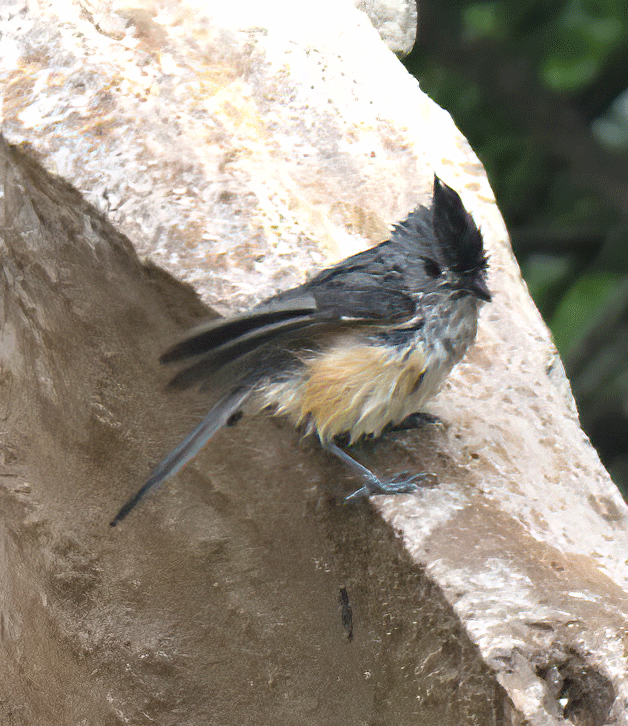
Here’s the Juniper Titmouse, that we had come to see. While they are a rather drab bird, their song is unique and was described to us as a “arcade / pin ball machine” sound, by our friend who introduced us to birding.

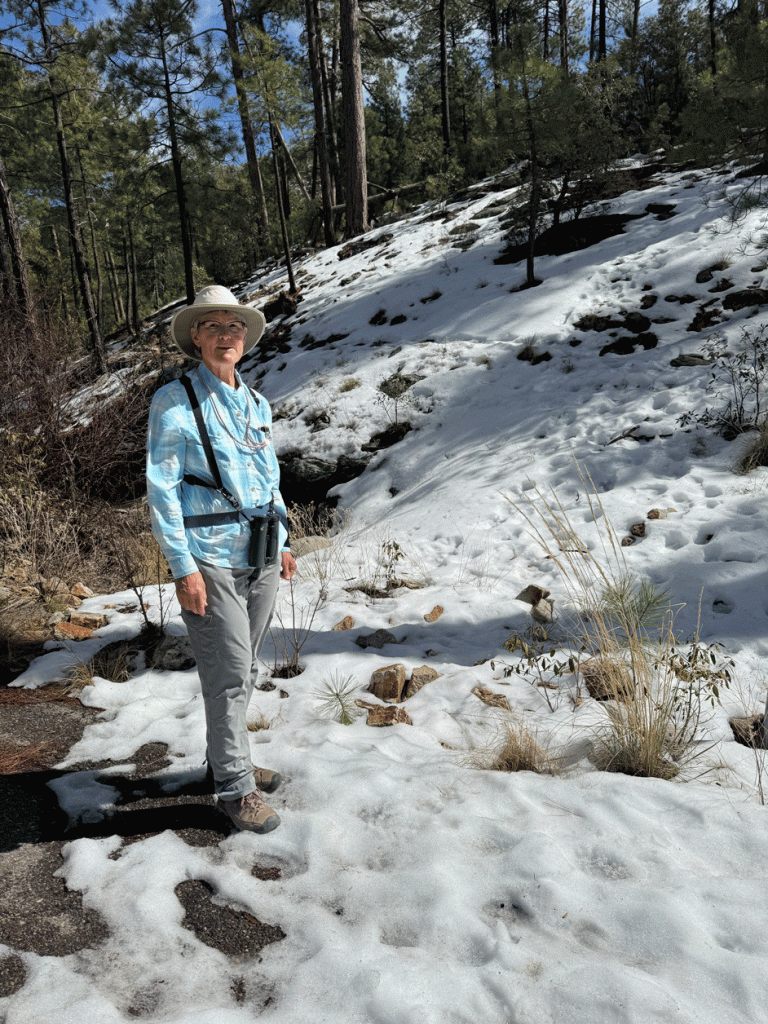
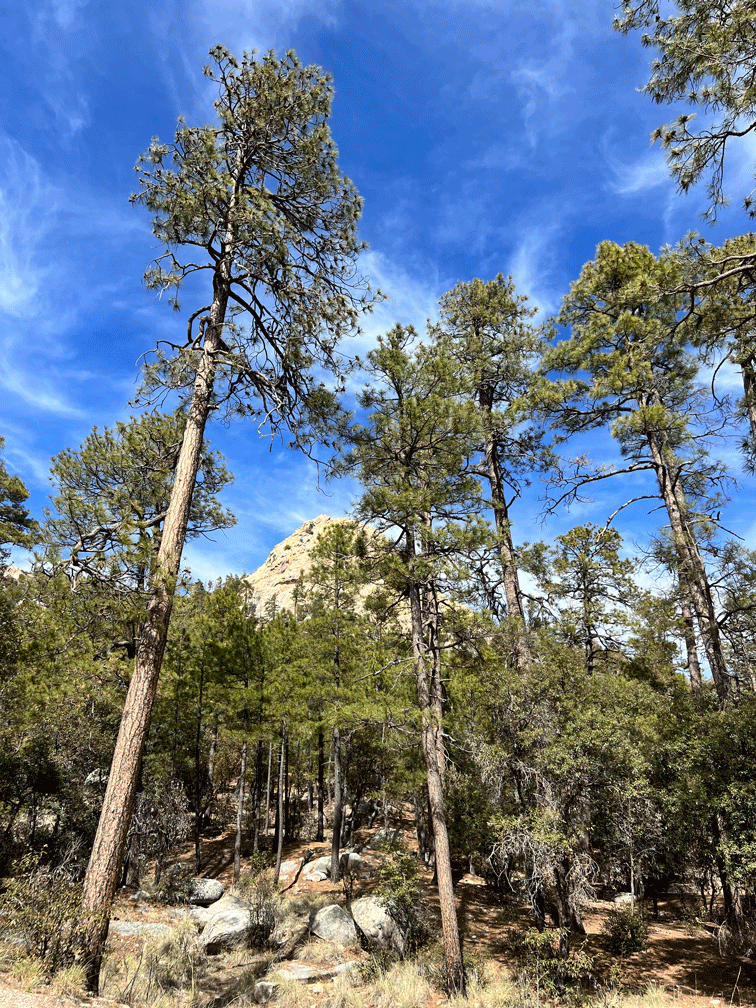
Later that day, we drove to a higher elevation and walked into the Rose Canyon campground. There were still some patches of snow in sheltered areas. We walked along the Green Mountain campground loop and had this view of Green Mountain. The mountain has a green tinge to it which doesn’t show up that well in the photo.

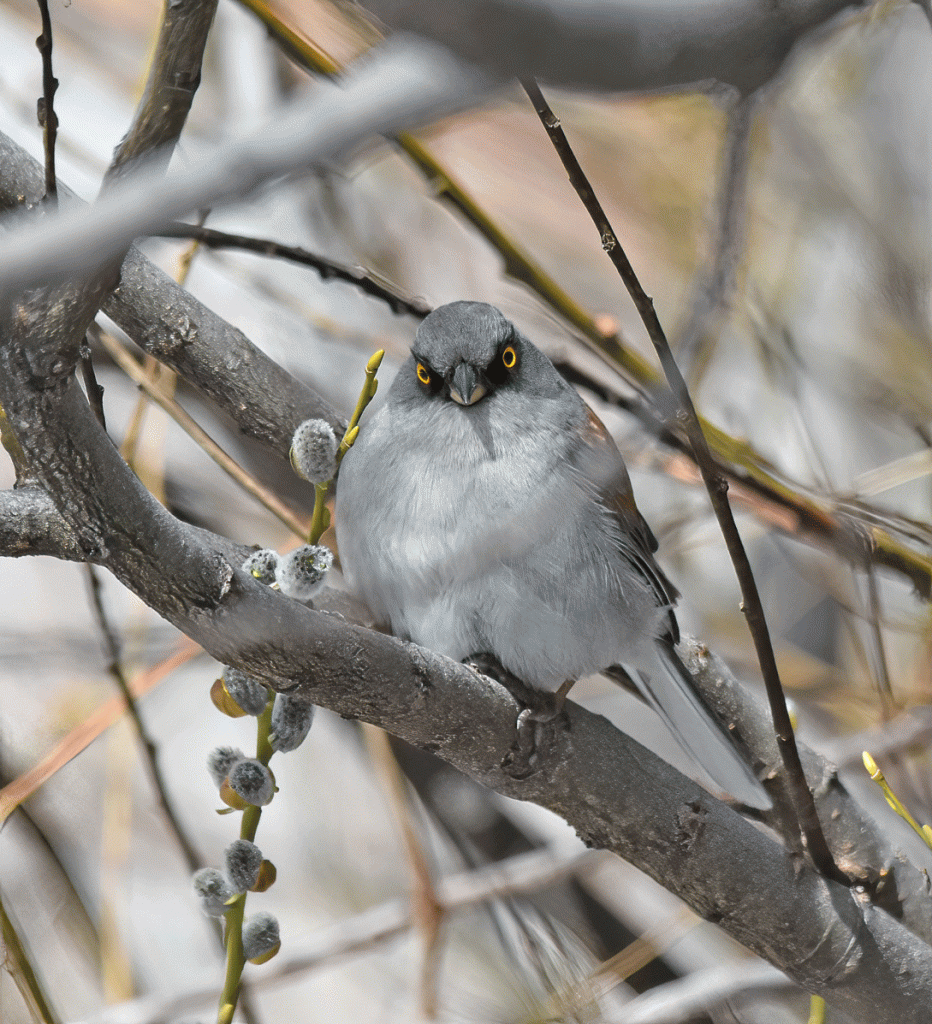
We wanted to see the birds that are common at this elevation, especially a Yellow-eyed Junco. Our friend refers to this species as “devil birds” and you can see why she might think so after you view the photo below.

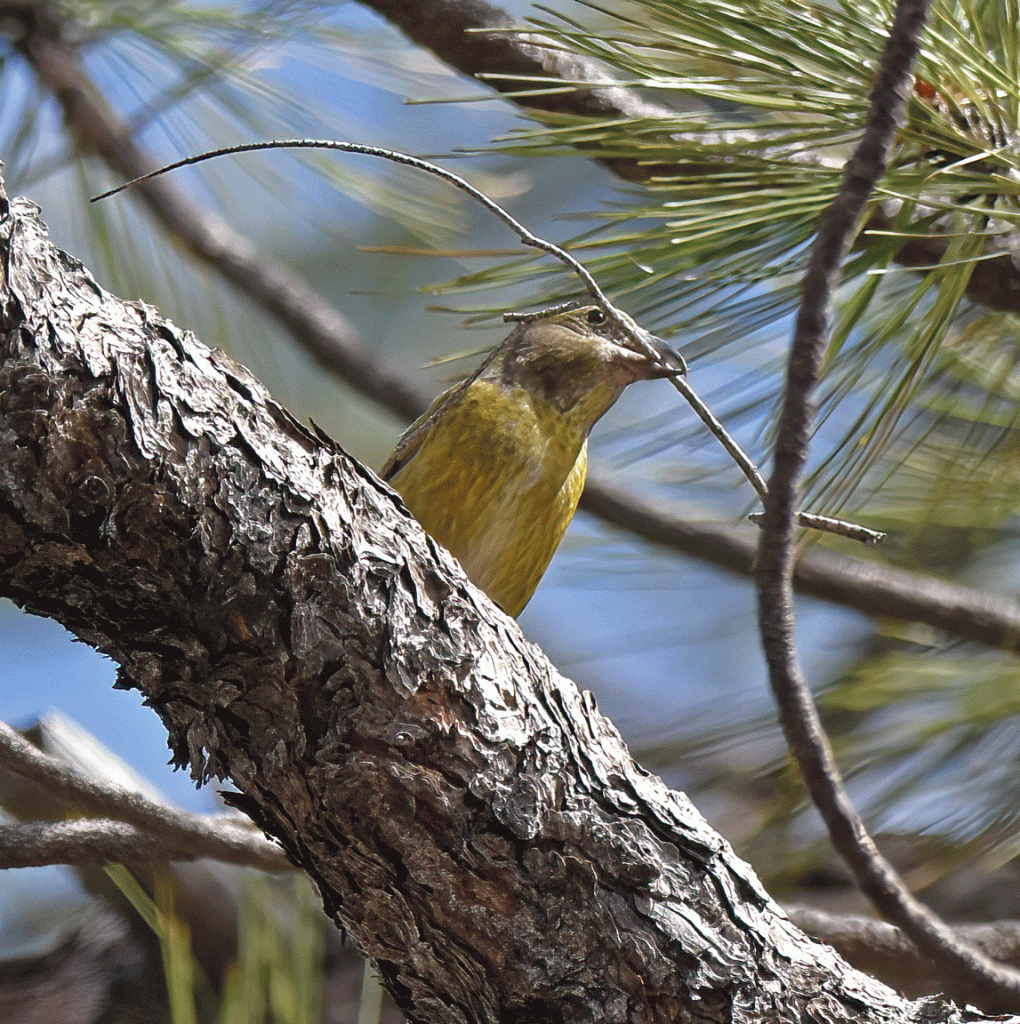
This female Red Crossbill is gathering nesting material. Mt. Lemmon is considered a “sky island,” where the habitat is similar to higher latitudes, so that “cooler weather” species can thrive.

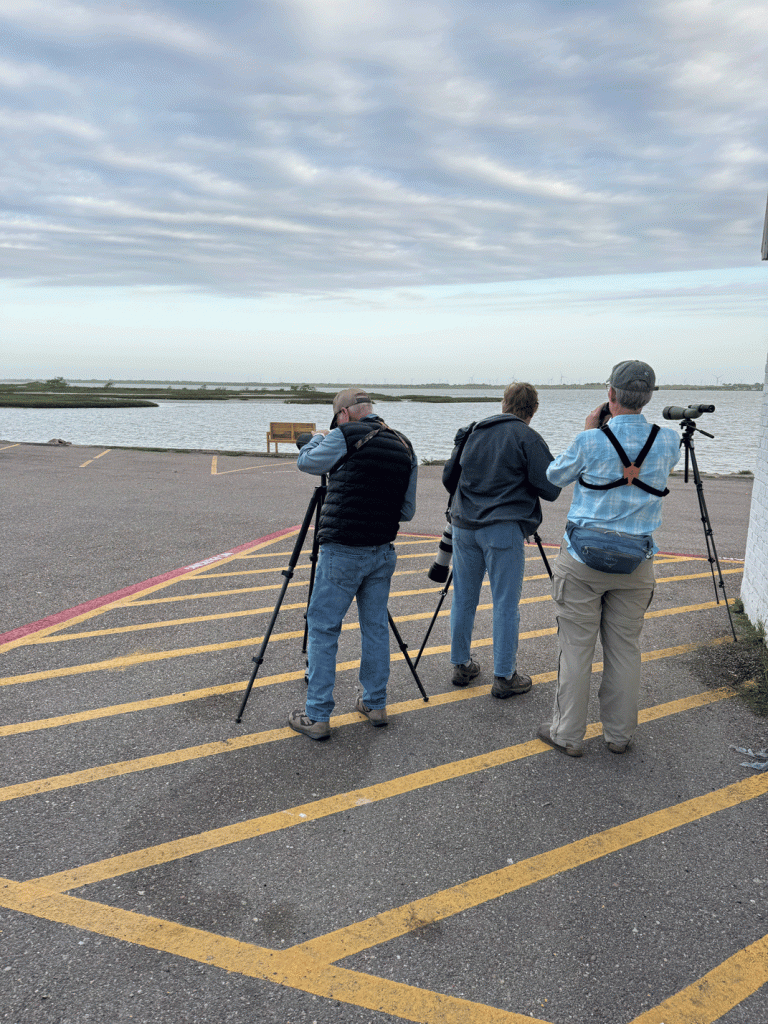
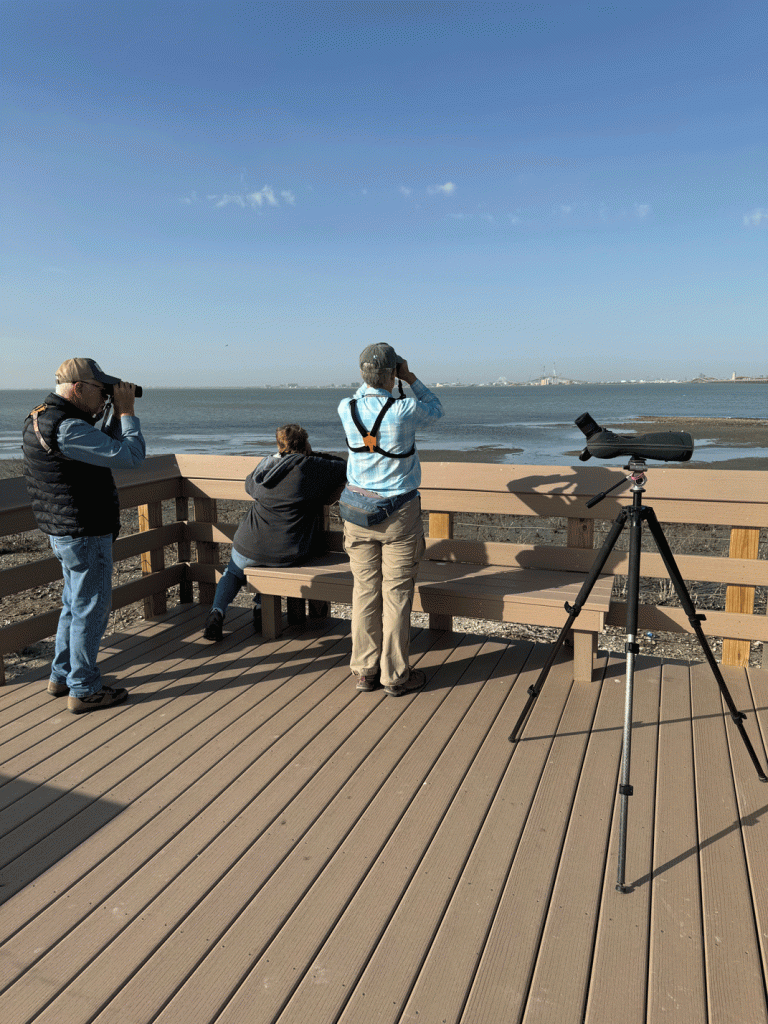
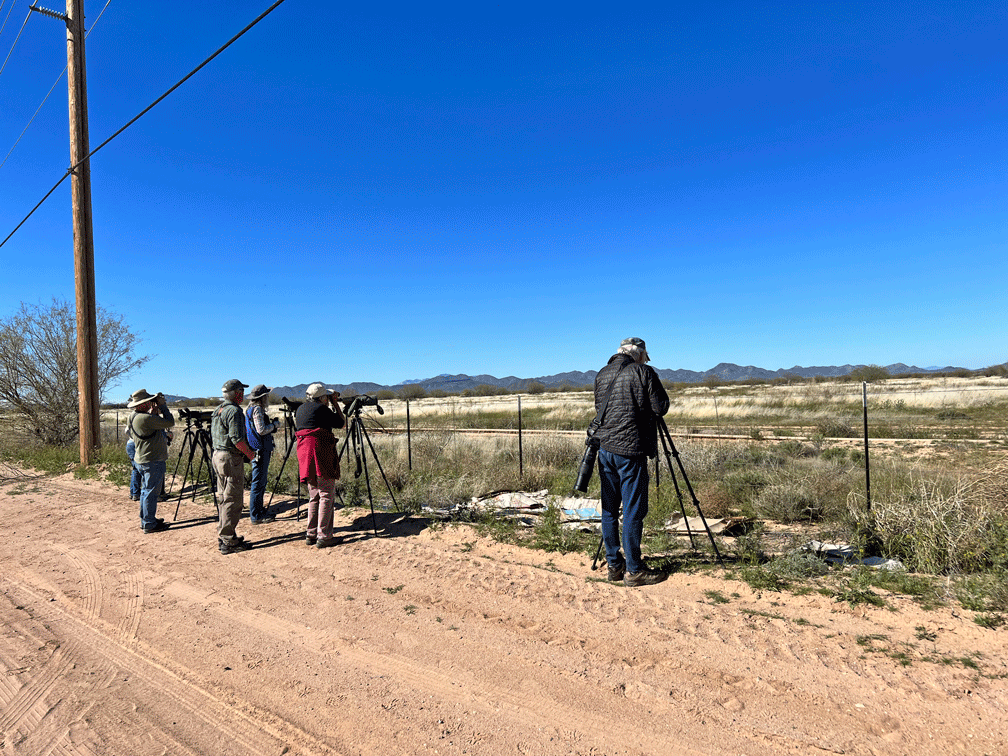
We ventured north into the Santa Cruz flats on three different days in hopes of seeing a Mountain Plover. Here’s a photo of Doug scanning a sod farm for birds. Mostly we saw Horned Larks and Killdeer. The Mountain Plover was definitely not as easy to see as the Pacific Golden Plovers that we saw in Hawaii. Most of the plovers have probably headed out on migration, so we’ll have to wait until next season to see them in Arizona.

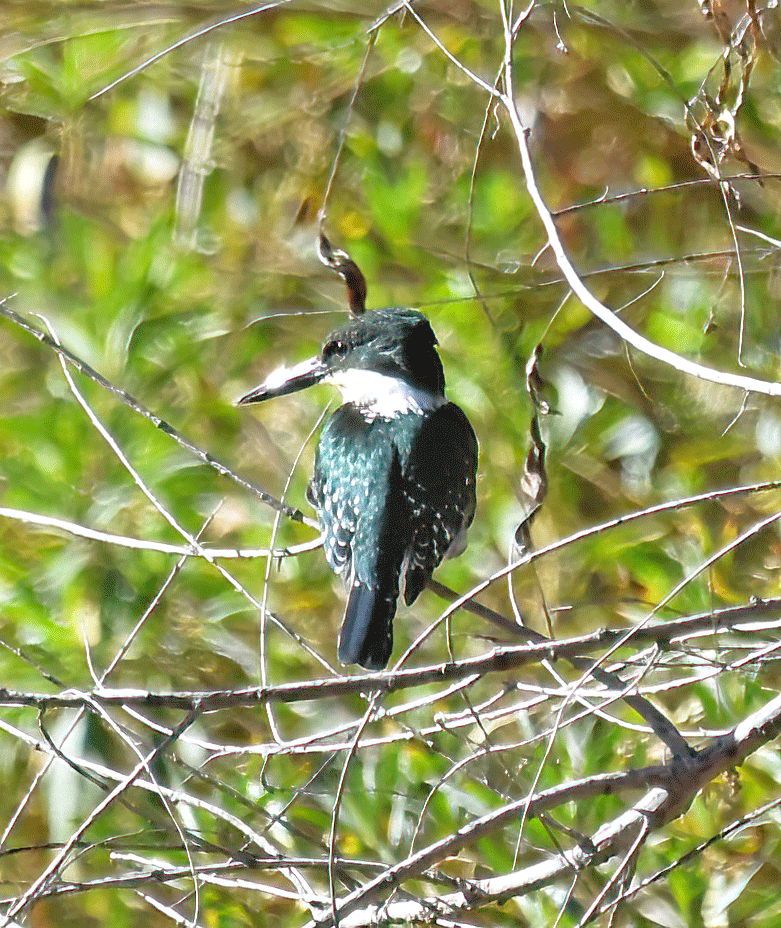
Towards the end of the month, we were lucky enough to see a Green Kingfisher fishing in the Santa Cruz River near Santa Gertrudis Lane in the Tubac area. Green Kingfishers are tiny birds with very long bills. Even though the kingfisher is resident to the area, they are hard to see when they perch on branches overhanging the water or when they fly just over the surface of the water.

We hope you’ve enjoyed seeing the twenty birds that are featured this month. March is a new month and we hope to see new birds and hopefully there will be some good photos too! See you next month.

February 2024 in Arizona

February 2024 in Arizona

This post is mainly about our February in Arizona, but also includes some of the things we did in the beginning of January, since we didn’t report on them earlier.

Our first bike ride of the year was on January 3rd, to our regular spot in the Tortolita Preserve in Marana. It was comfortable riding in shorts and a t-shirt.

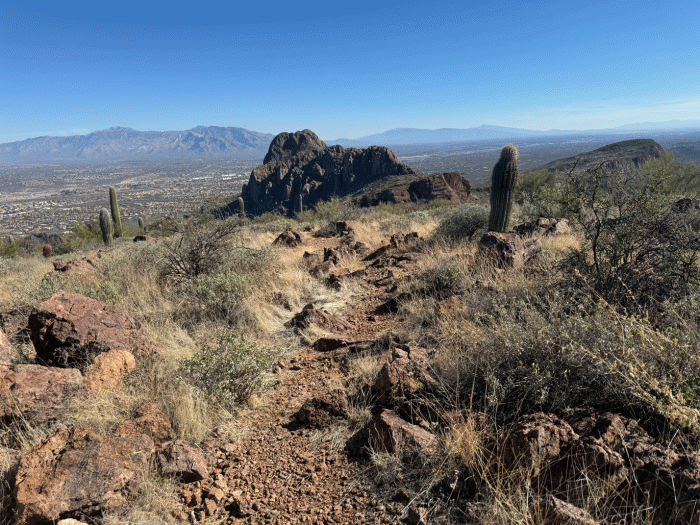
We did our annual hike to Panther Peak directly from our gate on January 6th. Here’s a photo from our approach trail. We headed to the pass that is directly above Wendy’s hat in the photo below. Panther Peak is hidden behind the peak on the left skyline.

The trail turns into a route through the boulders, on the way up to the pass.

Here’s a view looking east to Marana, Oro Valley and Tucson, taken just below the summit.

The next week , we hiked on the east side of Panther Peak, near Sanctuary Cove. Panther Peak is on the right in the photo below.

Here’s one last January photo of a huge saguaro in Catalina State Park. We had seen it many times from a distance and this time, we decided to get a closer view.

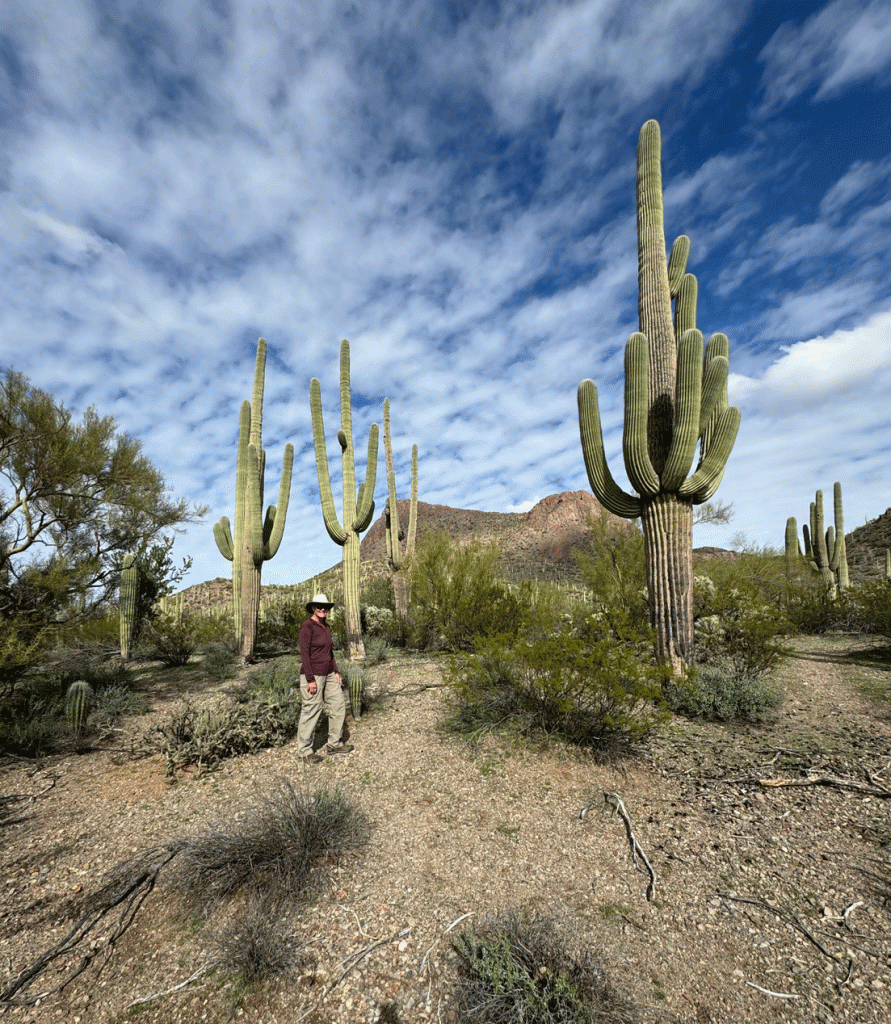
We love saguaros, especially the grove that is a fifteen minute walk from our place. We have included many photos in various blogs from this spot because we like it so much. We did most of our February walking on the trails in this area.

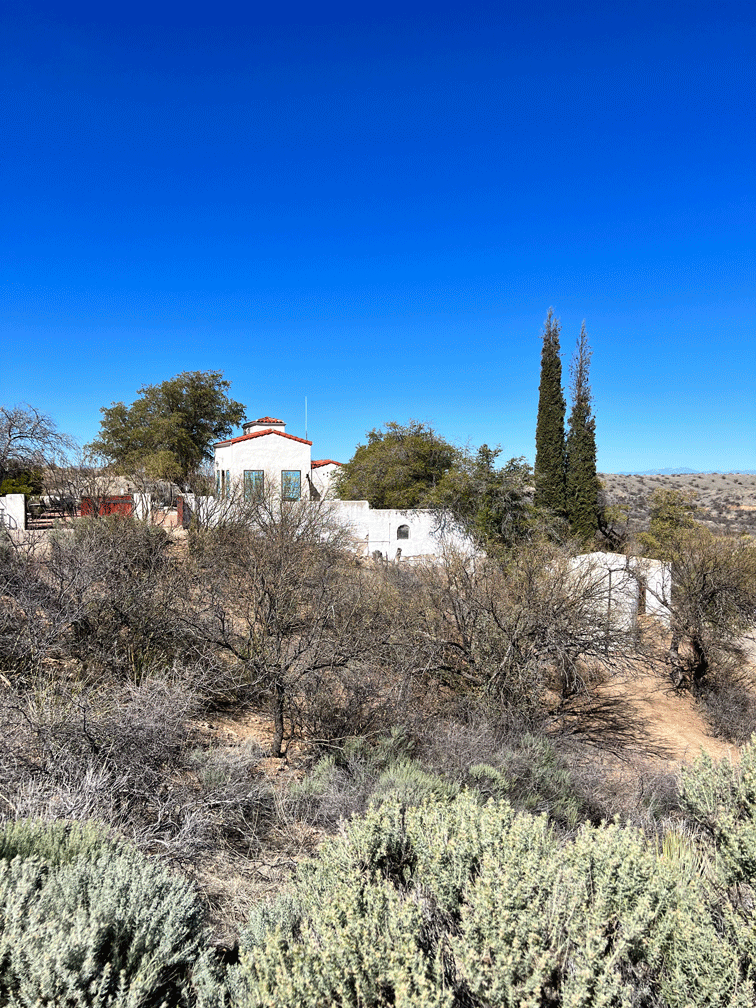
In the middle of February we drove about an hour north to Oracle State Park. We had never visited the park before and were impressed with the historic ranch house that serves as a visitor centre and museum. The Kannally family buildings and land became Oracle State Park. The four-level ranch house in the photo below was built in 1929-32 in the Mediterranean Revival Style.

We walked some trails in hopes of seeing a Crissal Thrasher, because the secretive bird likes the habitat of dense mesquite and brush along desert washes. We walked along a wash and saw a pair of the species. Alas, Doug’s camera battery died and the second one was in the charger at home, so no photo this time.

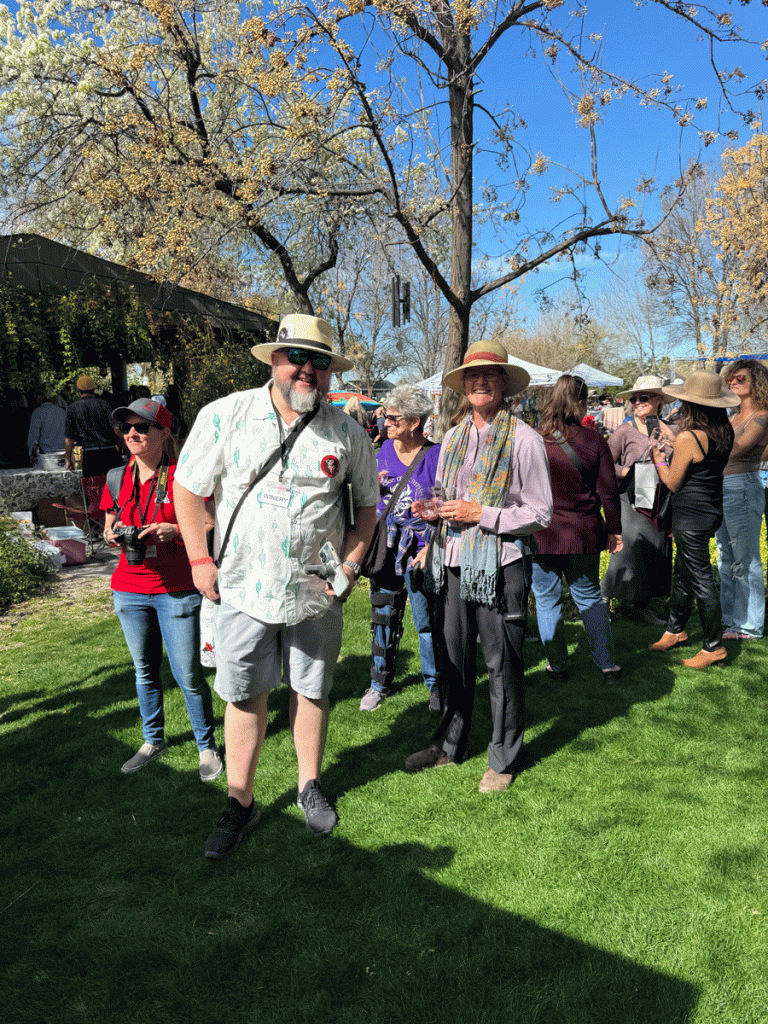
On February 17th, we attended a wine festival at Medella Vina Ranch on the southeast side of Tucson.

Here Wendy is waiting in line for a pour from an Arizona winery. The fellow ahead of her has a local radio show, so wanted to be “tagged” (#thetucsontastyshow). We tasted some good wines from Sonoita and Elgin, which are close enough to Patagonia so that we will plan a day of bird-watching followed by a wine-tasting someday soon.

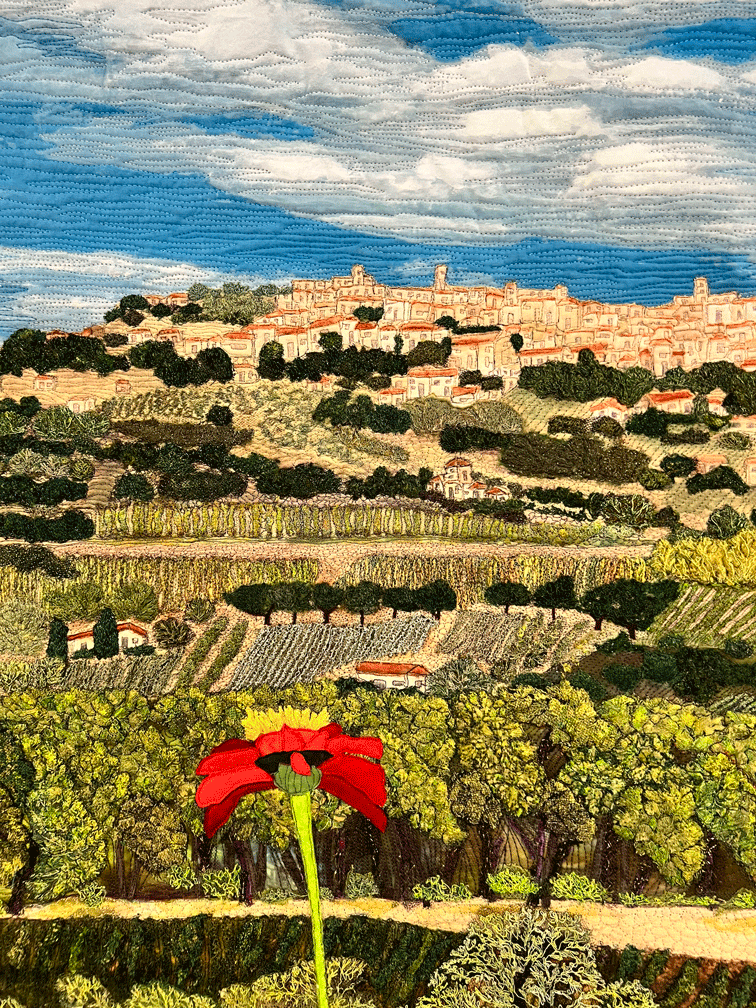
The next weekend was the annual Tucson Quilters Guild quilt show. There were many amazing quilts (Wendy took photos of over fifty of them) and this quilt earned “Best of Show.” It’s called Montepulciano, and is an original art quilt by Kathy Adams. Wendy didn’t measure it, but she would guess it was about 36″ x 48.”

This photo shows some of the details. The artist wrote that she made lots of parts for the trees, bushes and grapevines using wash-away stabilizer, tulle, fabric and yarns.

The quilt show was held at the Pima County Fairgrounds which was quite close to the Pima Air and Space Museum, so that’s where Doug went while Wendy was at the show. Doug is standing in front of a retired spy plane, the SR-71 Blackbird.

There was a special plane on display that has limited tours. Here’s his view while he waited in line of the Stratospheric Observatory for Infrared Astronomy (SOFIA). The lab was housed in a Boeing 747 and was modified to carry a reflecting telescope.

The flowers were starting to bloom by the end of February. This Baja Fairy Duster is brighter than the local fairy duster, but since its range is in the Sonoran desert, it qualifies to be included at the Arizona Sonora Desert Museum where we saw it.

Also at the desert museum was this cactus from the Escobaria family. It’s one of the first cacti to bloom.

These California poppies were near Picture Rocks Road and since we pass by them most days, we stopped once to get some photos. We suppose that the five days with rain at the beginning of February helped them bloom vigorously.

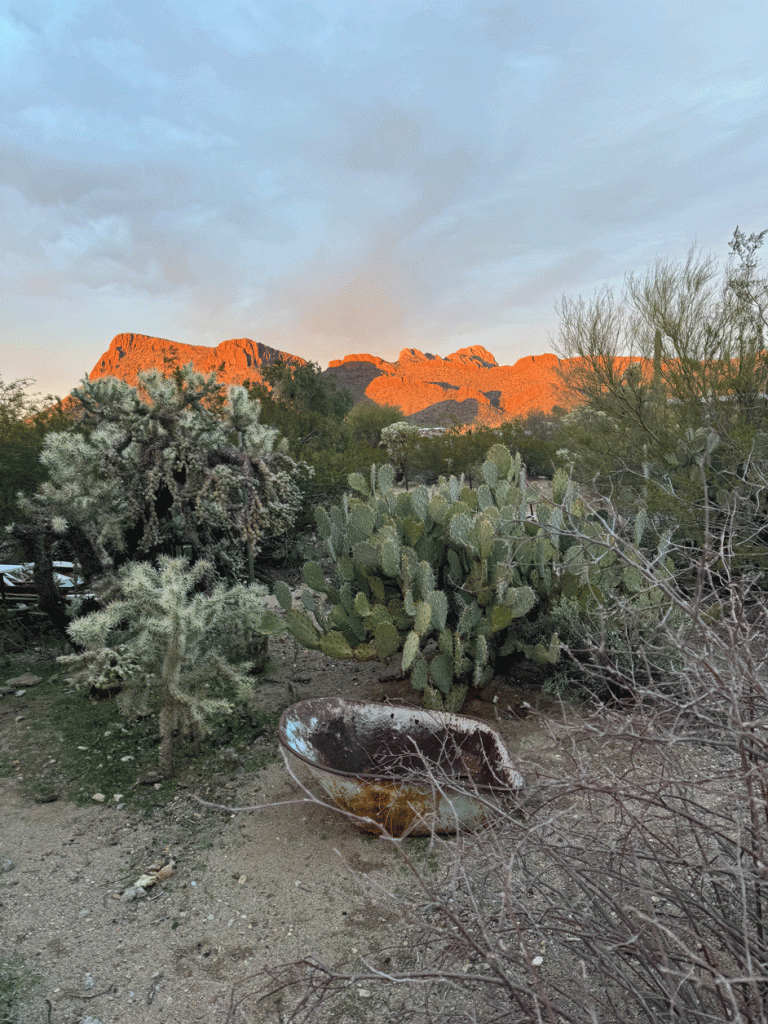
We’ll end the blog with the expected “sky” shots. Some days the sunset itself isn’t remarkable, but the alpenglow on the ridge makes up for it.

It’s the clouds that make the sunrise. This was taken on February 21.

Wendy walked a little ways off the patio, past the vegetation and into the wash to get this sunset photo. We needed to use our umbrellas when we were birding earlier in the day, but we didn’t mind the showers and the lingering clouds made for one of our best sunsets.

Part two: birding adventures will be posted soon.

January in Hawaii – Part 4

January in Hawaii – Part 4

This is our fourth and final post about our trip and describes our last three days on the big island of Hawaii.

On our eighth day, we drove over the saddle from our BnB in Kealakekua to the windward and wetter side to Hilo. We were fortunate to have a fair weather day for our visit. First we went to Wailoa Pond, which is part of Wailoa River State Recreation Area, to check out the birds.

Along the river, we saw a Wandering Tattler, a medium-sized shorebird that is a common winter migrant. It breeds in Alaska and the Yukon.

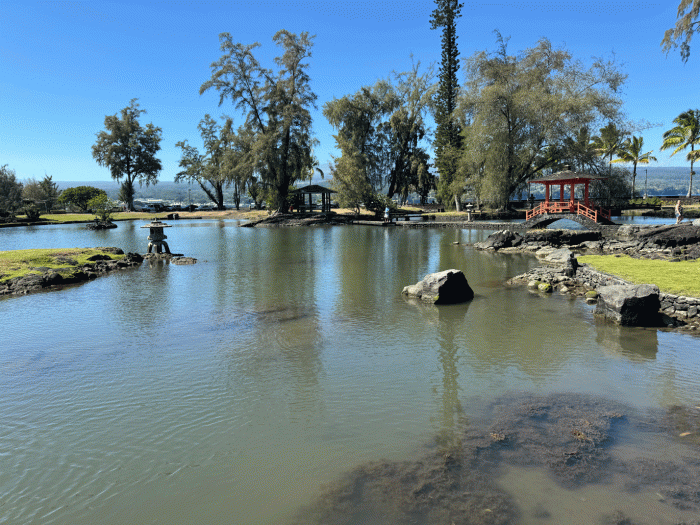
From there, we drove about five minutes north to Liliuokalani Gardens to enjoy the scenery and views. This Japanese Garden was dedicated to Hawaii’s first Japanese immigrants who worked the sugar cane fields.

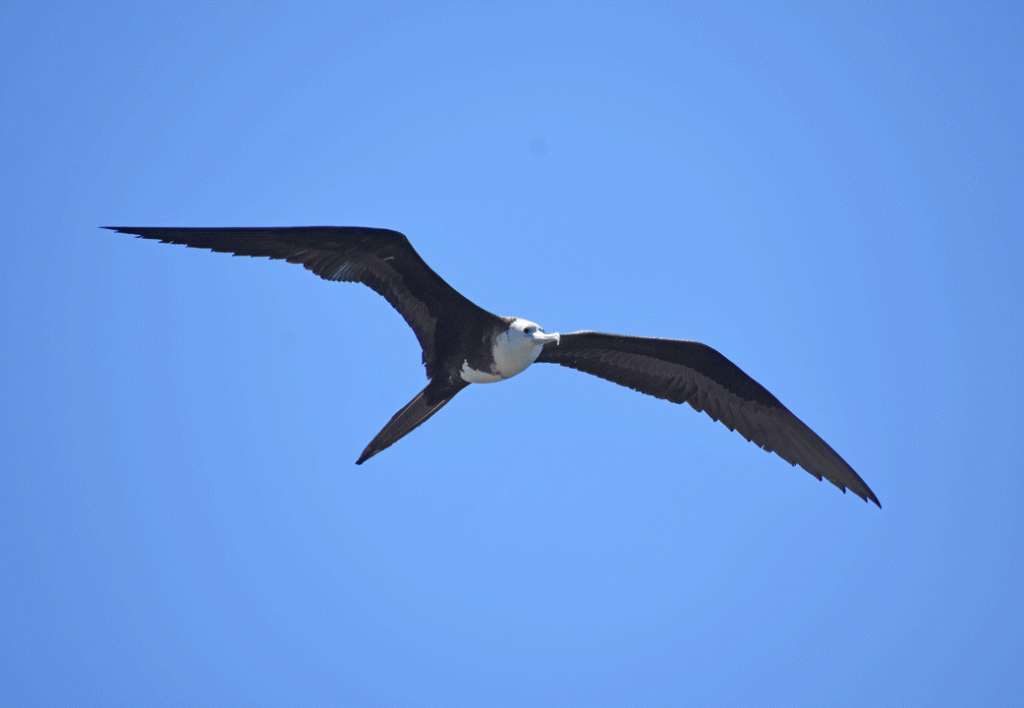
We almost didn’t start a “list” because the bird life was sparse, but then we got a good view of this Great Frigatebird and when we paid better attention, we saw twelve species of birds in our 45 minute walk.

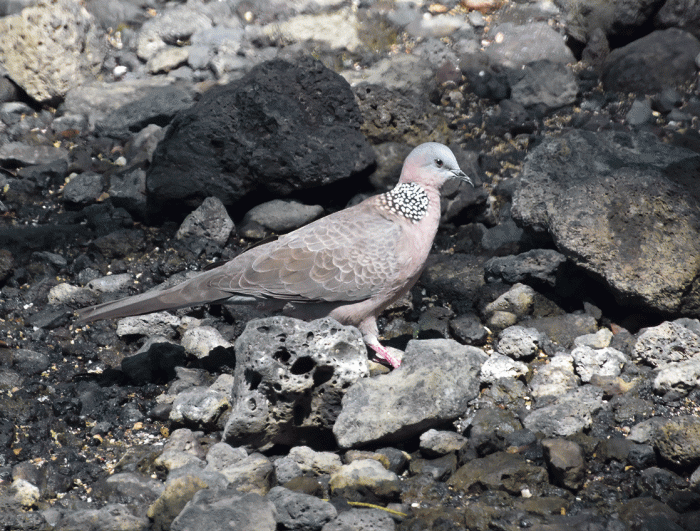
We got one of our best views of a Spotted Dove, even though we had seen many throughout the trip. These doves were introduced from Asia in the mid-1800s for food and in the 1900s for game. They are about the size of a Mourning Dove.

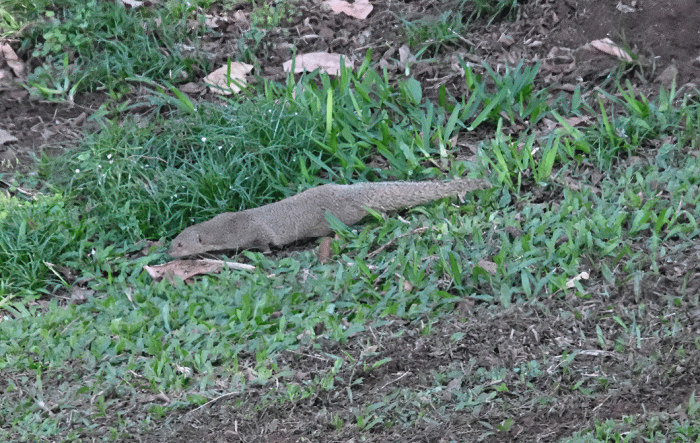
We also watched a mongoose hunting in the grass. Mongooses were brought from India with the idea that they would control rats. Unfortunately mongooses hunt in the day and the rats are active at night. The mongoose loves to eat bird eggs, which is devastating for ground dwelling birds. We saw many mongooses as well as some feral cats on our trip.

Next, we drove north on the Belt Road to Laupahoehoe Point Beach Park. The tide was coming in and it was fascinating watching the waves crash against the rocks. The park has a memorial to commemorate the lives that were lost in April of 1946 when a tsunami hit the community. The tsunami waves destroyed the schoolhouse, killing the teacher and twenty-five students. In all, 159 people died in the catastrophe. Hawaii now has a tsunami warning system in place.

The next day, we drove to the outskirts of Waikoloa, to the skatepark. While that seems like a strange place to go birding, the park also included a lush soccer field, a derelict baseball diamond, and a trail through the shrubs along the fence which were all good habitat for birds.

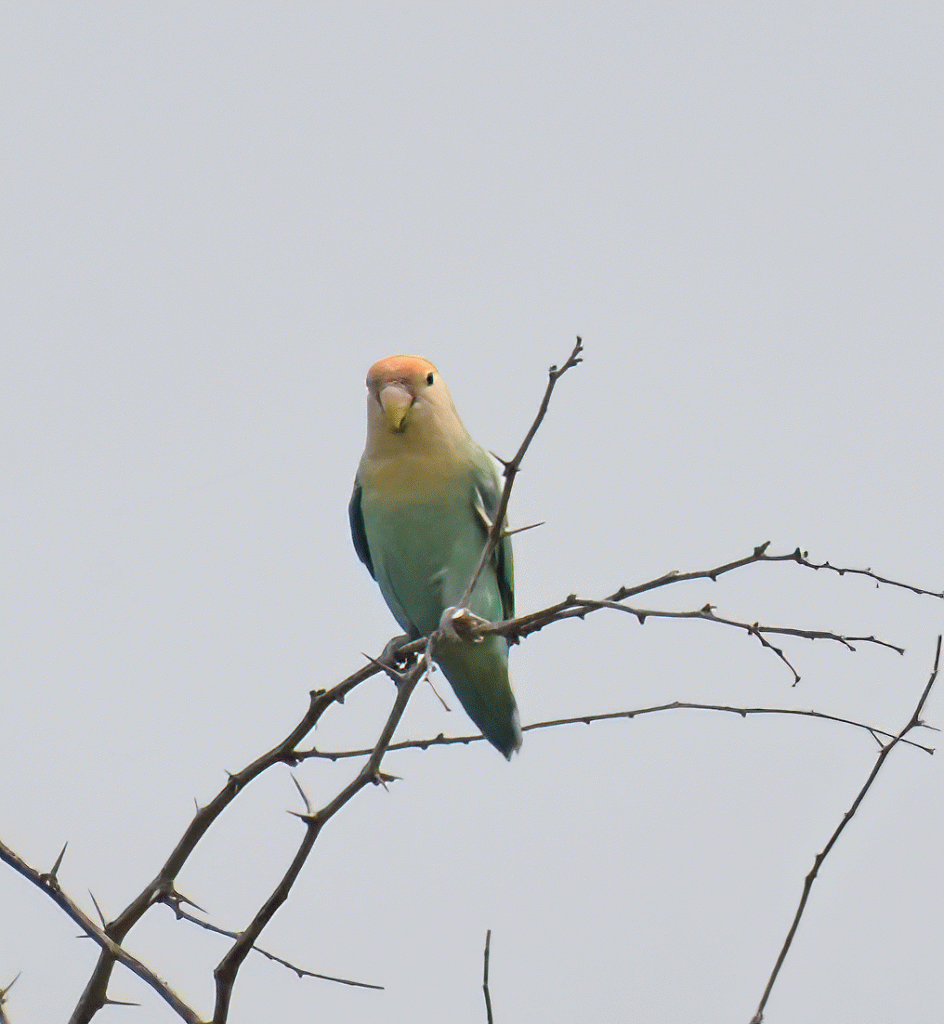
We saw a pair of Chestnut-bellied Sandgrouse, which are native to Africa and India, but they flew off before Doug could get a photo. Our bonus bird was a Rosy-faced Lovebird that perched politely for its photo. A lovebird is a short-tailed parrot native to southwestern Africa. It’s a common pet species, so escapees may occur anywhere. Hawaii and Arizona have feral populations. It was the first time that we had seen one in the wild.

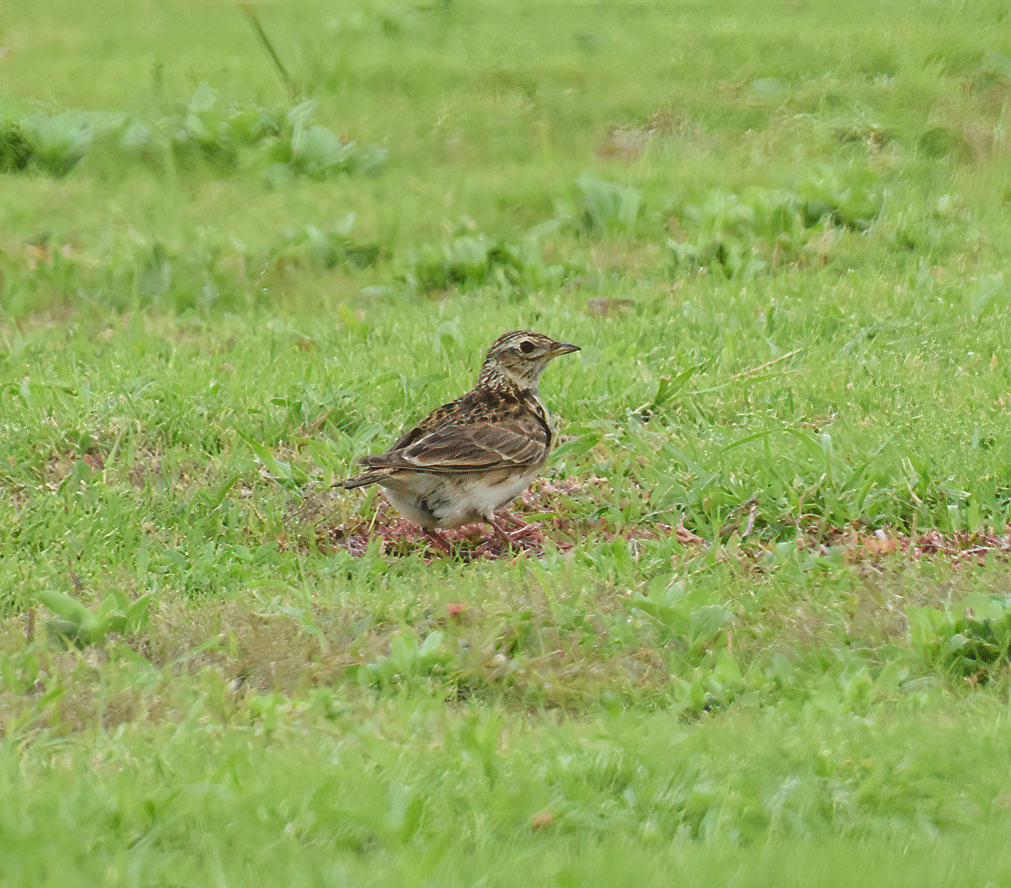
Eurasian Skylarks are common on grassy mountain slopes on the island of Hawaii and in this case, an unused soccer field. The species is common throughout Europe and Asia and was introduced to Hawaii in 1865.

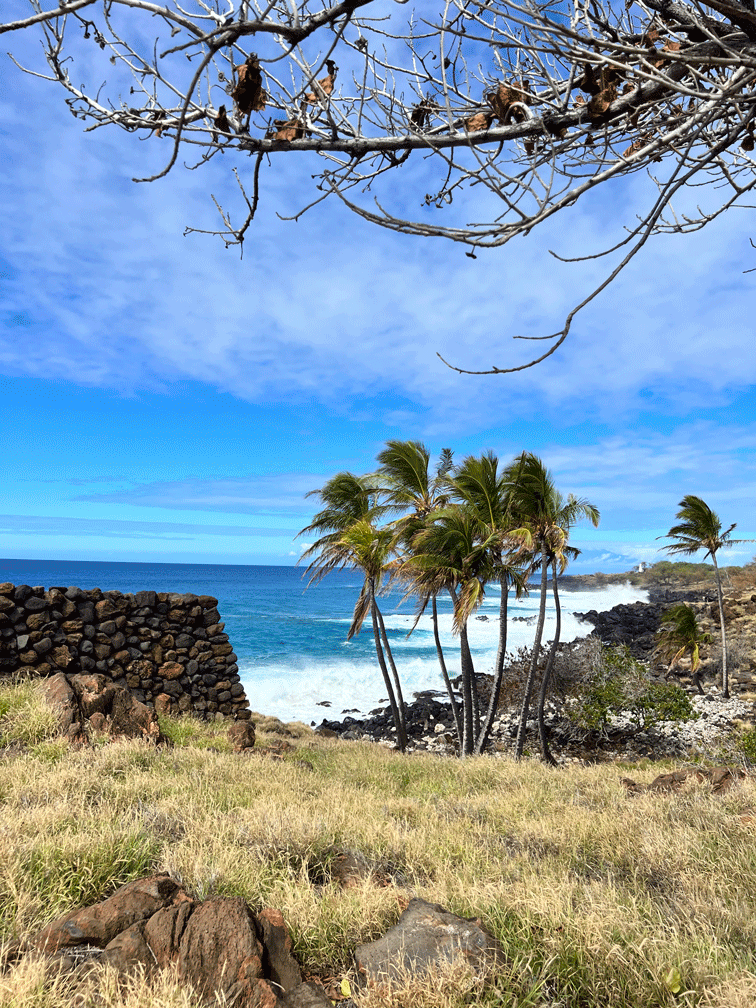
On our last day, we left our BnB in the morning and didn’t need to be at the airport until after dinner. So we went on a road tour to North Kohala. We stopped at Lapakahi State Historical Park and wandered down a trail to a view of the ocean. The state park is on the site of an old Hawaiian village.

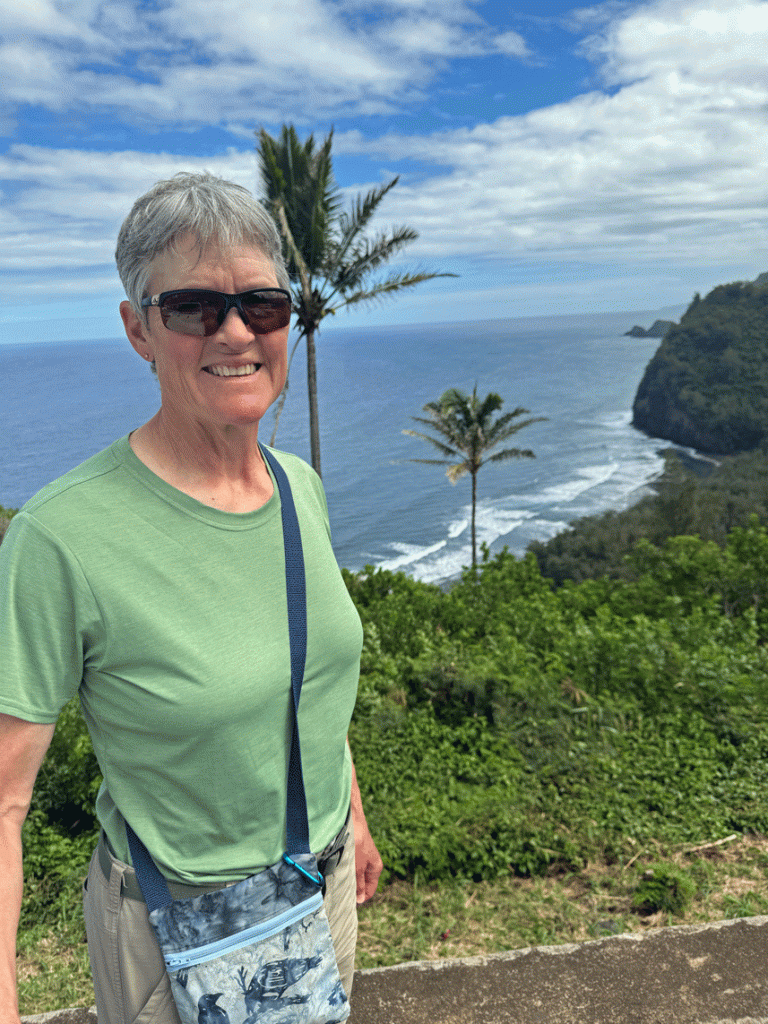
We stopped a few miles north at Kapa’a Beach County Park and watched the waves crash against the rocky shore while we ate our lunch. Then we continued along the tip of the island to the end of the road at the lookout for Pololu Valley. Our guidebook gave this spot a “Real Gem” rating and in the description said that if you took the trail down to the black lava sand beach in mid-week, you might have the beach to yourself. This was definitely not the case. The overlook was a crowded parking lot controlled by volunteers who kept the lot for people who were just looking at the view. If you wanted to hike down to the beach, you needed to park along the side of the narrow road. At least twenty vehicles were parked along there. We chose to park at the overlook and take a photo from the curb in front of the jeep. Too many people for our liking! But a beautiful view.

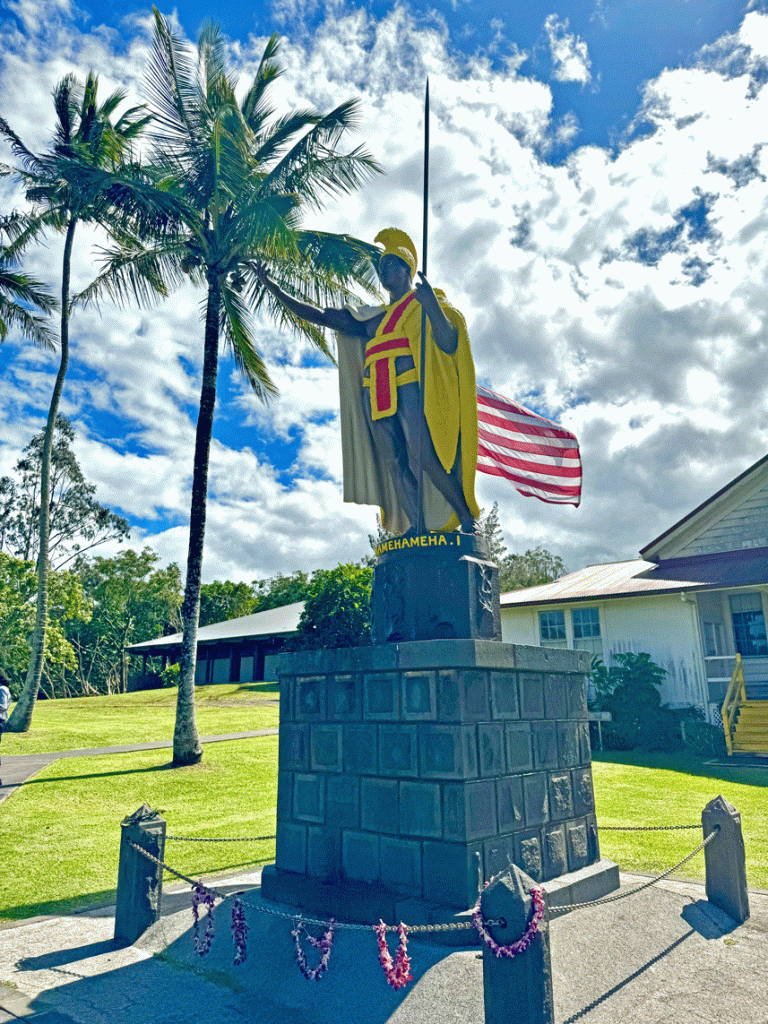
We backtracked to the small town of Kapa’au, where every restaurant and cafe seemed busy, so at least all the tourists were helping the local economy. A statue of King Kamehameha the Great is in a park in this small town. This statue is a lot like the one standing in front of the Judiciary building in Honolulu. Back in 1878, the statue was being shipped from Paris when the ship and cargo was lost at sea. The Hawaiian Legislature used the insurance money to order a new one. Sometime later, the captain of the wrecked ship saw the lost statue in Port Stanley where someone had salvaged it. He bought it and sent it to Hawaii. The broken arm was repaired and it now stands in this park near to the birthplace of King Kamehameha I. In ancient times, the king wore a cape made of bird feathers. Imagine how many Amakihi birds would have perished to provide all those feathers!

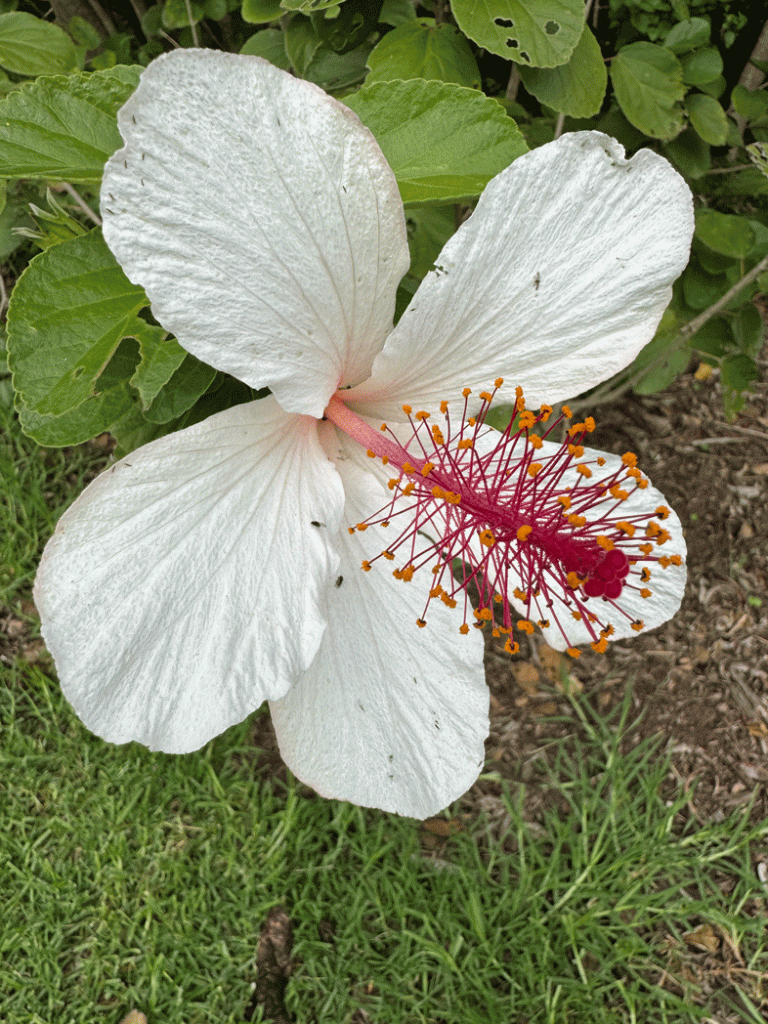
We took the Kohala Mountain Road south to the city of Waimea. Waimea is at 2,600 feet so it was cool enough for us to be comfortable. It was only mid-afternoon and we had nowhere that we had to be, so we found a pretty park (Waimea Nature Park) and wandered around looking at birds. There were beautiful hibiscus bushes. (And our blog from a trip to Hawaii should include at least one flower photo.)

From Waimea, we drove west to the coast. We spent about two hours sitting around in the shade at Spencer Beach. We had our a dinner of sushi, sitting at a picnic table, then changed into our travelling clothes and headed to the airport.

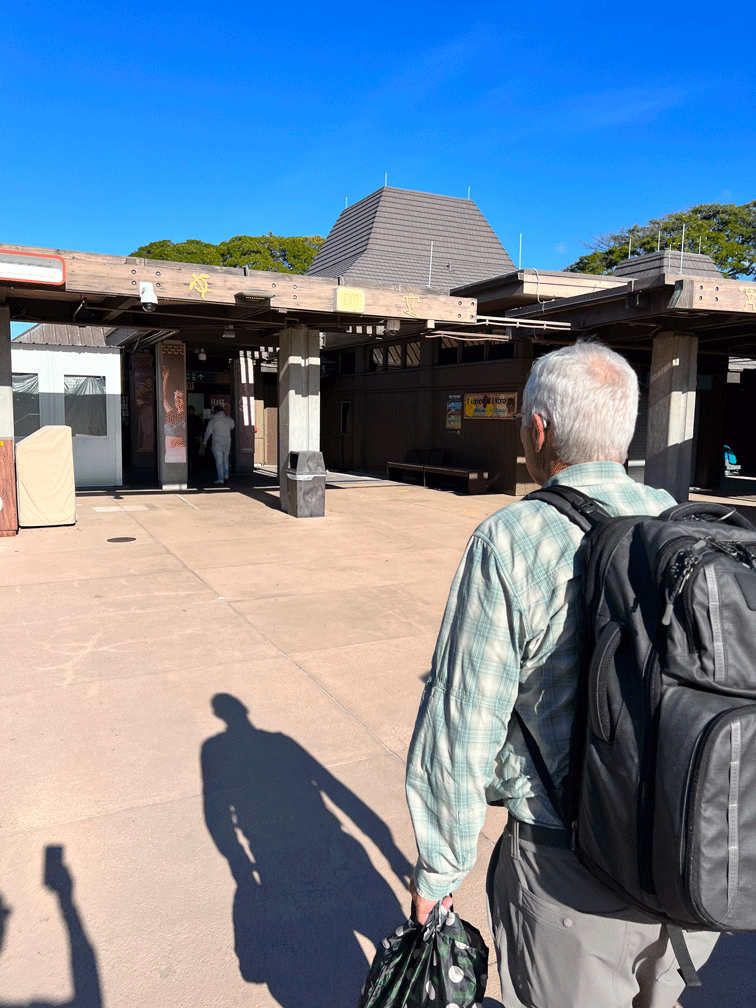
We arrived at the airport before 7 pm and our flight left at 10:30. The open air terminal was comfortable, so all there was left to do was wait. Our overnight flight to Phoenix arrived about 45 minutes early, because of a strong tail wind. Another couple of hours driving and we were home.

We thoroughly enjoyed our ten day trip to the big island of Hawaii. Our intention was to see as many birds as we could and the trip met our expectations. We were pleased at how much Hawaiian history we learned; the historic parks were well situated for bird watching and we picked up some history along the way.

Our day with a birding guide was amazing and we saw birds that we couldn’t have seen on our own. However, we were pleasantly surprised how we could find and identify so many other species with the help of our guidebook and iBird app. We used eBird to find hotspots as well as to see recent reports. Also on our first day birding, we met a birder from Oregon who birded regularly on Hawaii and told us about some good spots to explore.

Our resources for birds:

Hawaii Audubon Society, Hawaii’s Birds (2020) http://www.hawaiiaudubon.org: A great book to look at cover to cover to familiarize yourself with the possible species. Most of the extra information that we included about a species came from this guide.

iBird Hawaii, an Interactive Field Guide to Birds, version 10.06: An iPhone app. By using the search function and choosing different filters, we could find the bird we were looking at in the field quickly. For example: we chose the island (Hawaii), and primary color (yellow) to give us five birds that we could look at with more detail.

The guidebook that we used and would recommend:

Doughty, Andrew. Hawaii the Big Island Revealed: the ultimate guidebook, 11th edition. Wizard Publications, Inc. 2022.

Perhaps you’ll plan a trip to Hawaii and this post will be helpful. Even if you don’t, we hope you have enjoyed our travelogue. In a few weeks, we’ll be posting about our February in Arizona.

January in Hawaii – Part 3

January in Hawaii – Part 3

This post will cover day 6 and 7 – our beach days, from our trip to the big island of Hawaii.

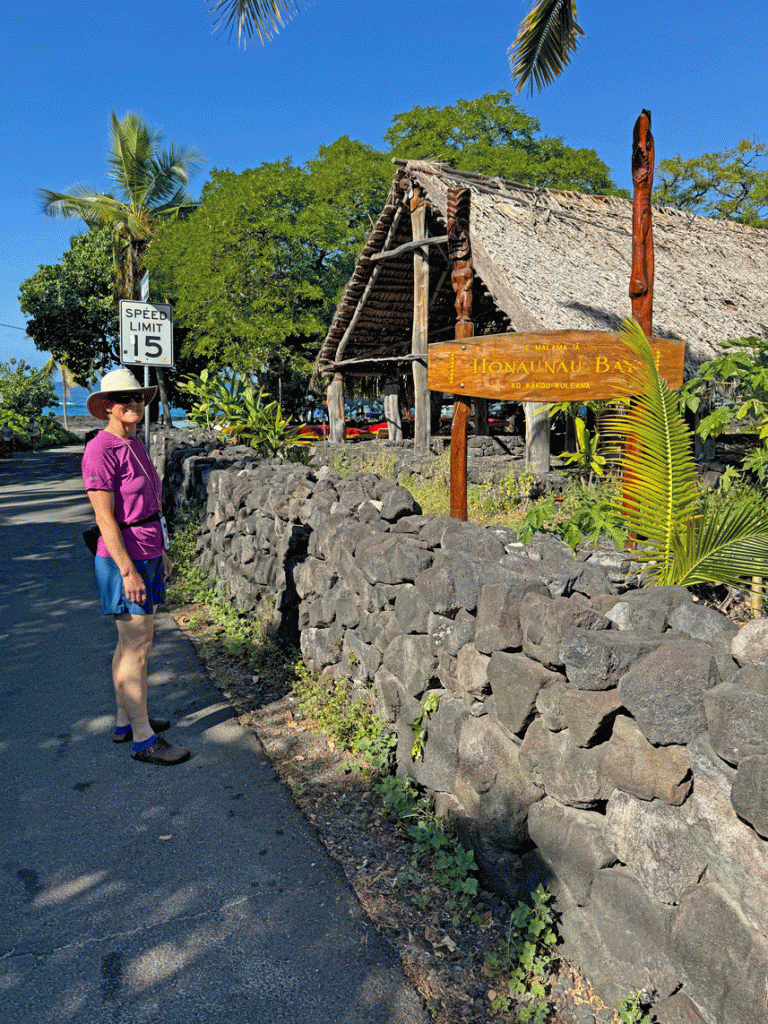
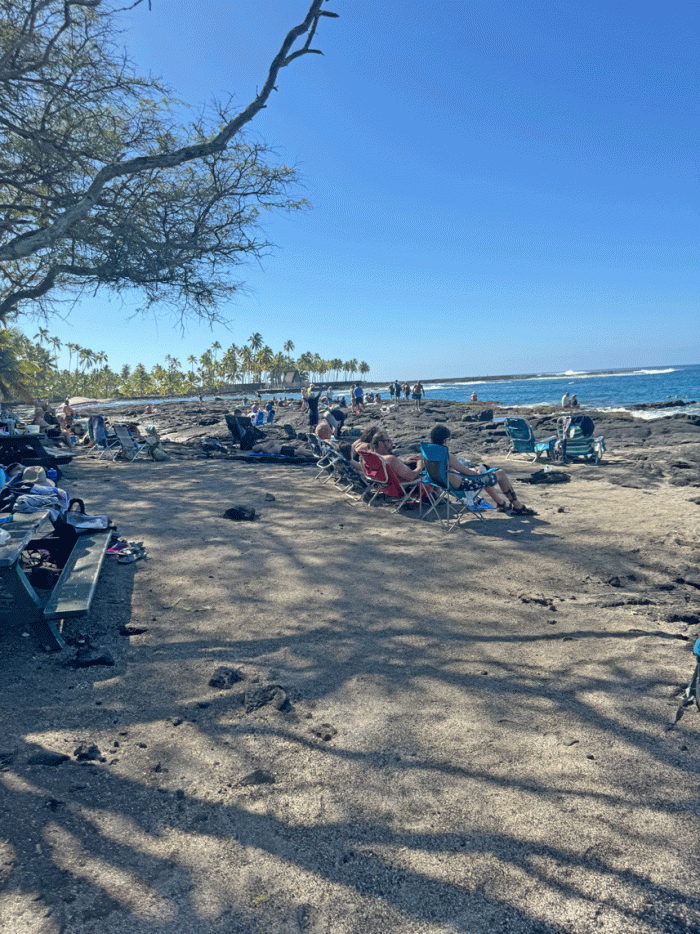
We decided it was time to go to the beach and actually get in the water. One of the best snorkelling spots on the island was less than twenty minutes south of our place in Kealakekua, so we headed over to Honaunau Bay and the snorkelling spot called “Two Step.” We parked above the beach beside the road and walked down the narrow lane, passing a boat shelter for outrigger canoes.

“Two Step” is in the middle of the photo below, behind the standing group of people. It’s called that because it is a lava shelf with steps. We were there near high tide, so the lower step was hardly visible.

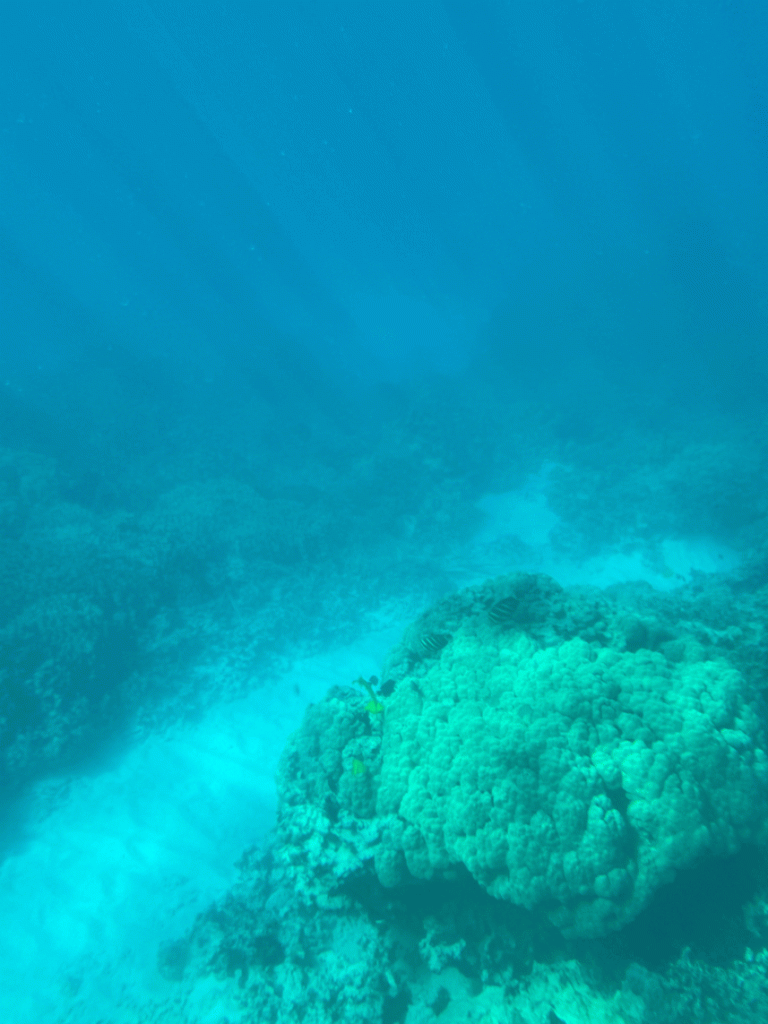
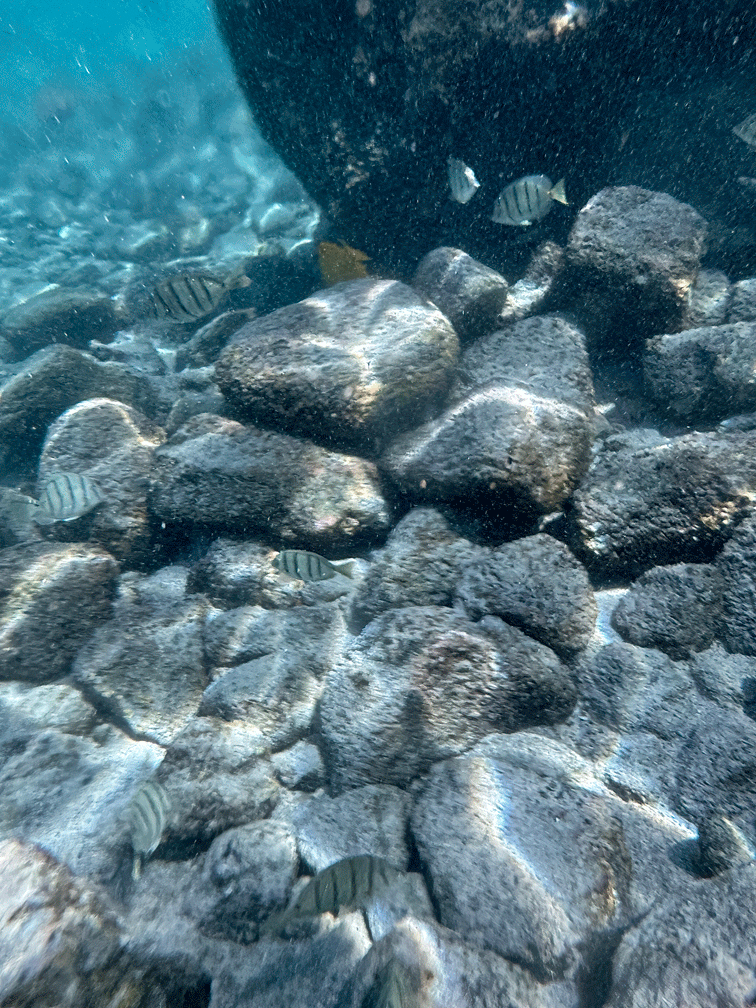
Doug had his iPhone in a waterproof case to take these photos. The one on the left was from the water directly out from the steps. Doug had a great time swimming and looking at the fish and coral. The next two photos were taken in the shallower water just past the boat launch where Wendy was more comfortable. There were plenty of fish to see in shoulder height water.

The snorkelling beach was right beside Pu’uhonua o Honauna National Historic Park. There was a charge for entry, but we gained admission with our National Park Annual Pass. We walked the paths of the Royal Grounds, through the opening in the Great Wall to the Pu’uhonua or place of refuge. A place of refuge was important in ancient times when commoners lived under a kapu system of rules that had to be followed. To escape death, a lawbreaker could get to a place of refuge and be absolved by a priest. The Pu’uhonua was also a sanctuary in times of war. In the photo below, the wooden images of Hawaiian gods stand outside the reconstructed Hale o Keawe heiau, which originally held the bones of 23 chiefs. We suspect the loin cloths have been placed to protect modern sensibilities.

This is a view from near the same spot, looking out towards Honaunau Bay.

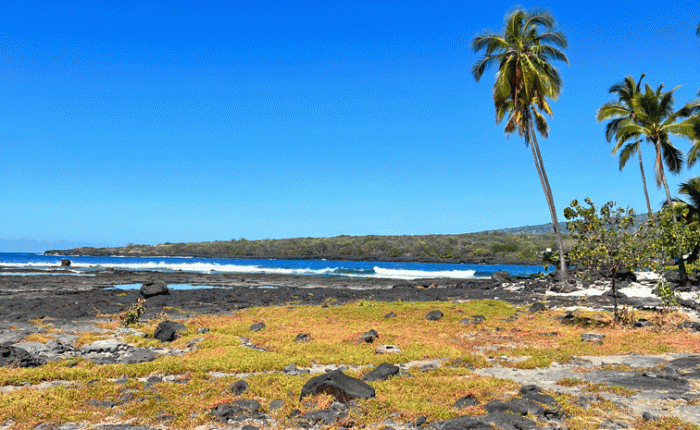
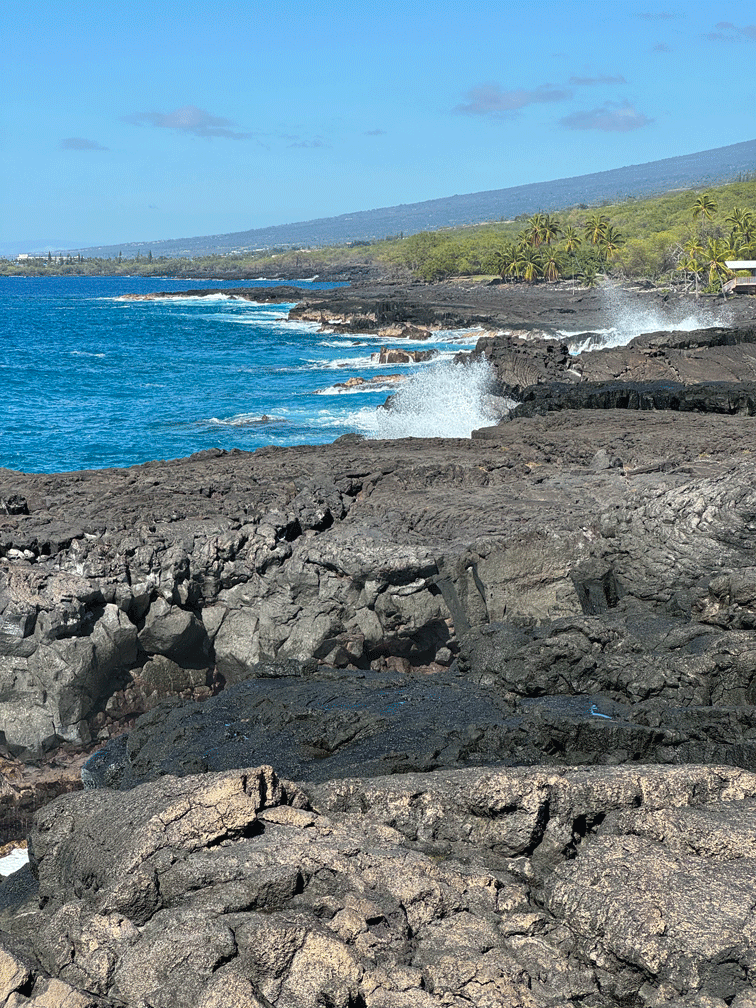
Next we drove back towards Kealakekua, to a shoreline park that was basically directly below our BnB. Hokuli’a Shoreline Park is a privately owned park that is open to the public. We drove down from the highway past luxury homes to the golf course and shoreline park. There was no beach here, but the waves crashing on the lava rocks were impressive. We saw seventeen species of birds here, including our best view of a Hawaiian Hawk. Hawk identification is Hawaii is pretty easy; if it’s a hawk, the only one around is the Hawaiian Hawk.

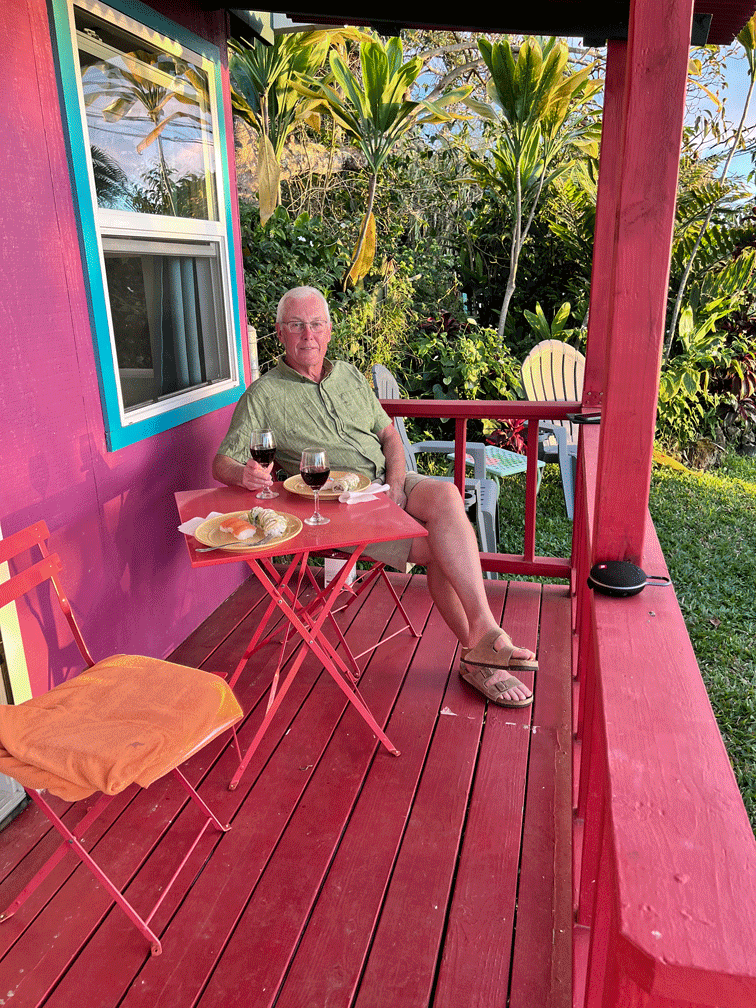
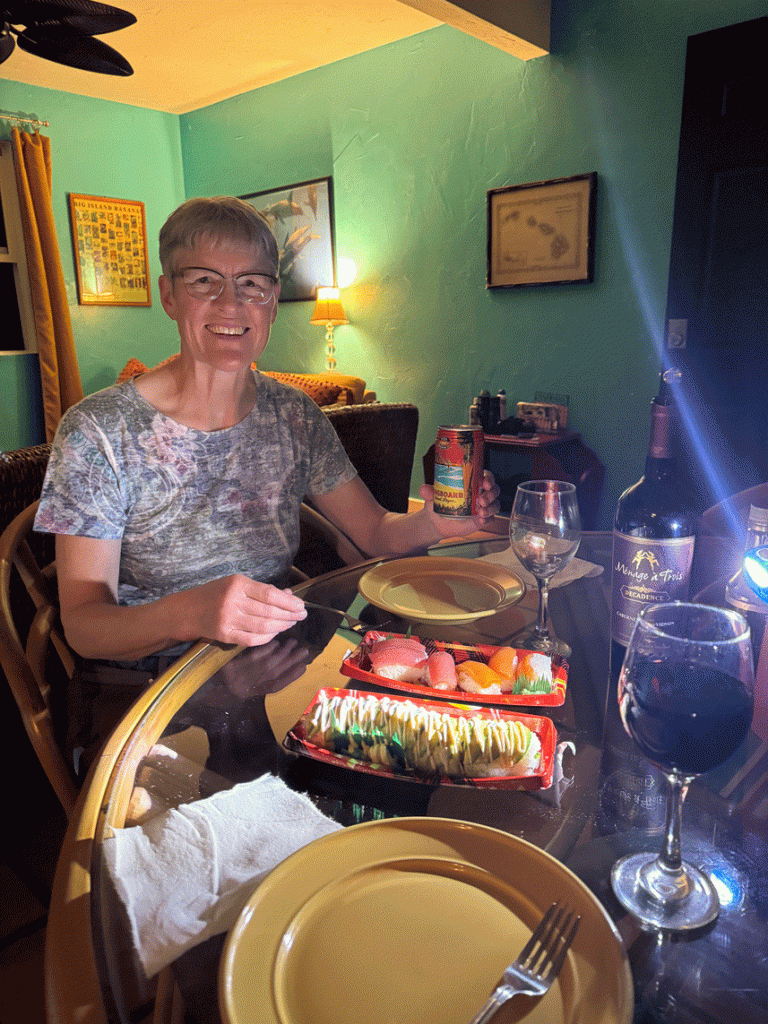
This was Saturday night and we went “out” for dinner. We decided that sushi on the porch would be more enjoyable than driving to a restaurant.

We watched the sunset as we ate and enjoyed our wine.

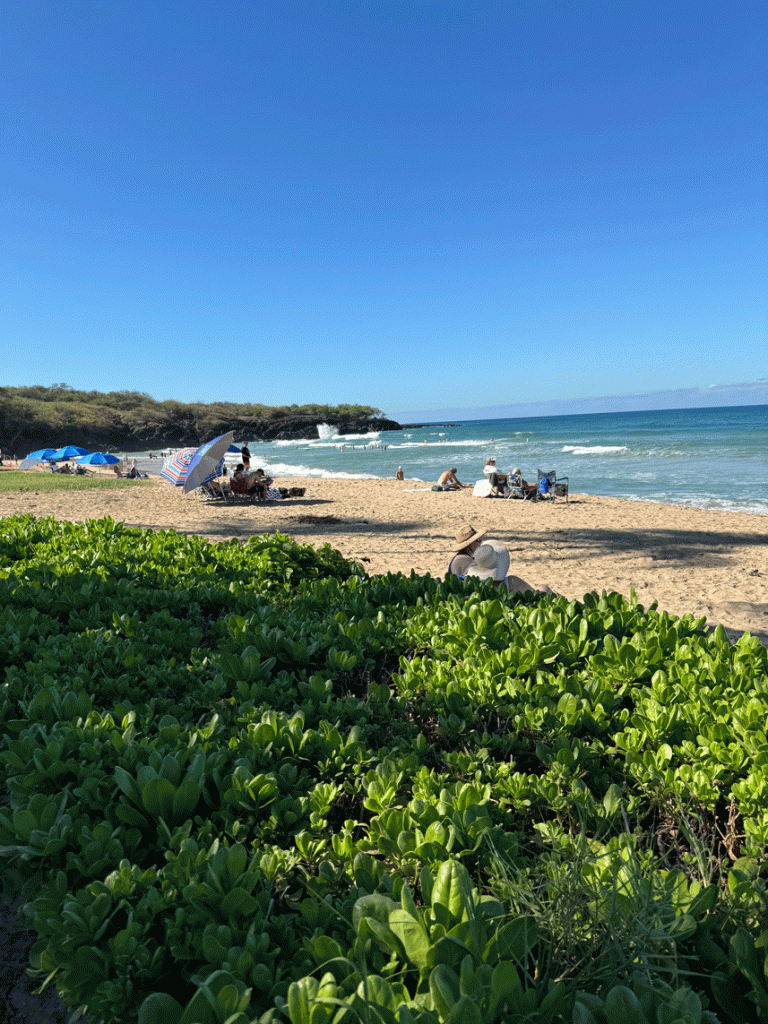
The next day, we continued with our beach theme and headed north to the Kohala coast. We visited Hapuna Beach mainly to go birding, but it looked like a great beach to spend the day. There was a fee for parking and day use for non-residents. Since we were there about half an hour, we parked beside the road outside the park entrance.

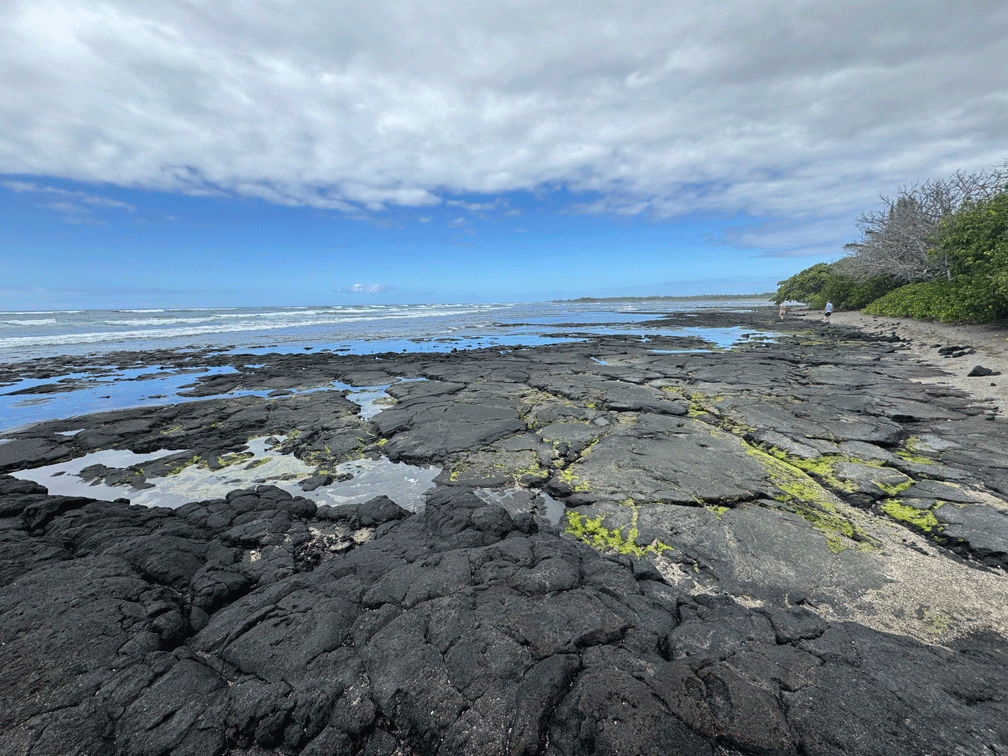
We got a close view of a Pacific Golden Plover. These plovers were plentiful around the island, especially on golf courses, soccer fields or patches of grass near the beaches. This species breeds in the Arctic and flies 3000 miles non-stop to Hawaii for the winter.

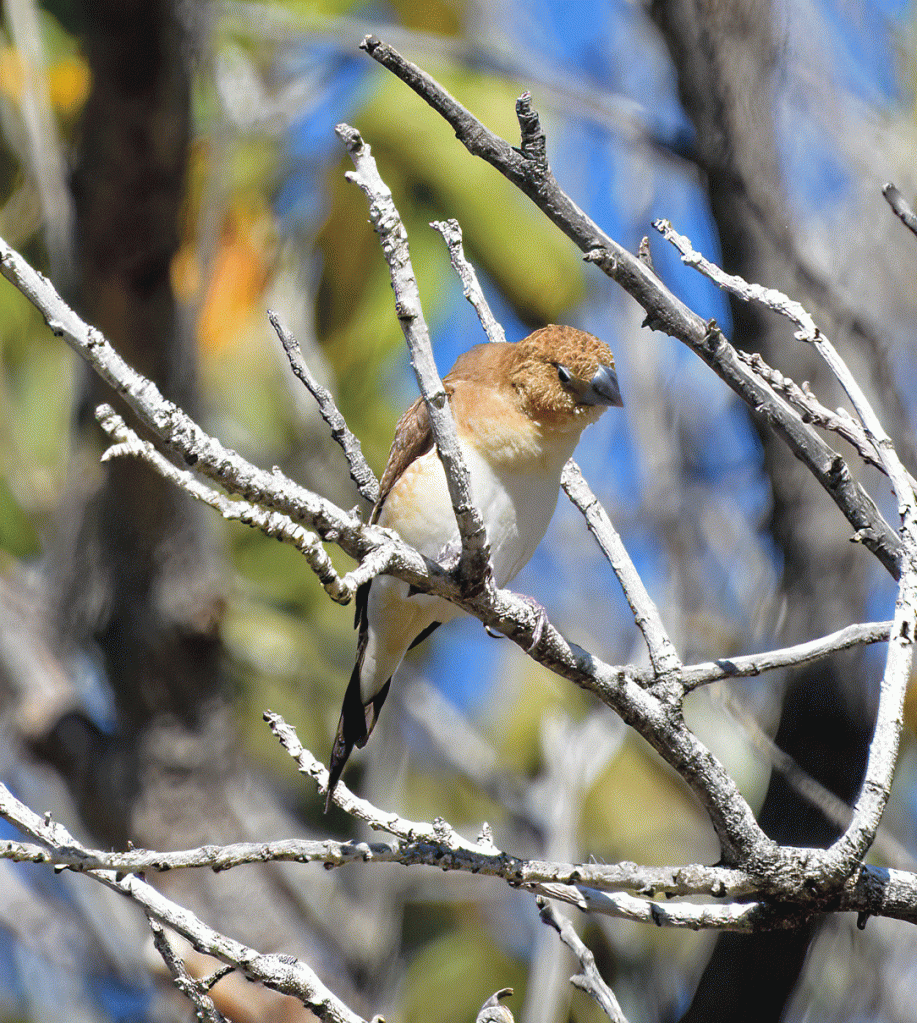
We also saw our first African Silverbill.

This Northern Cardinal seemed unafraid and it seemed as if it was asking for its photo to be taken. We saw at least a couple of cardinals each day we were in Hawaii, and they reminded us of Arizona.

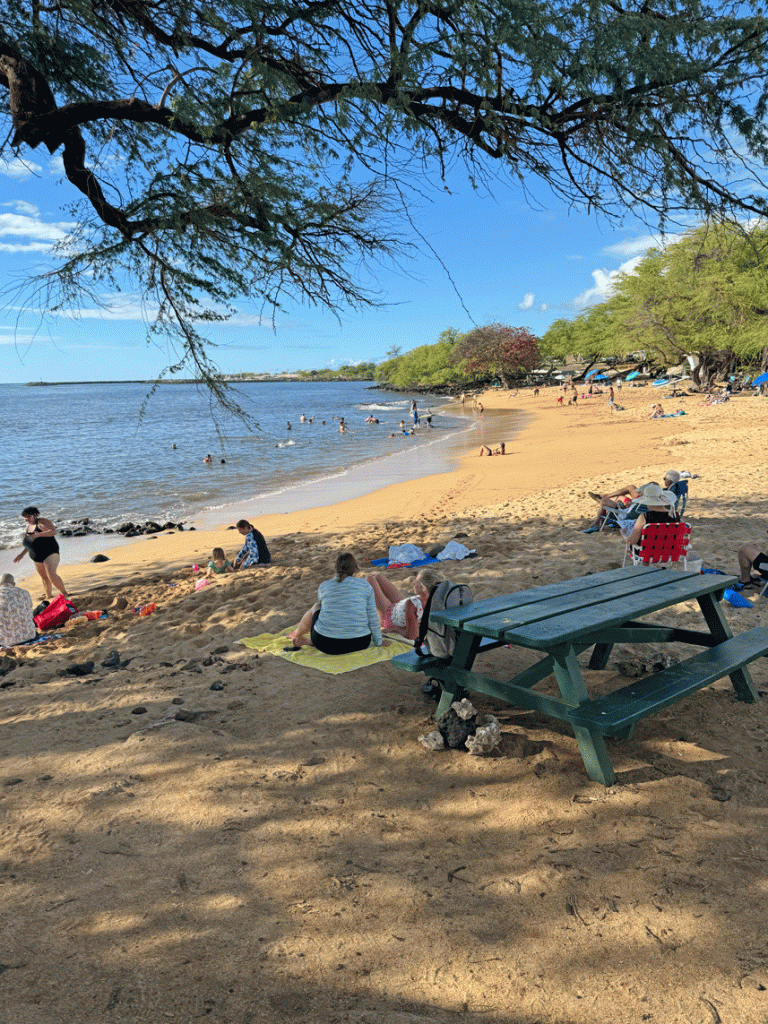
We went swimming at Spencer Beach, which was a calm beach about fifteen minutes north of Hapuna Beach.

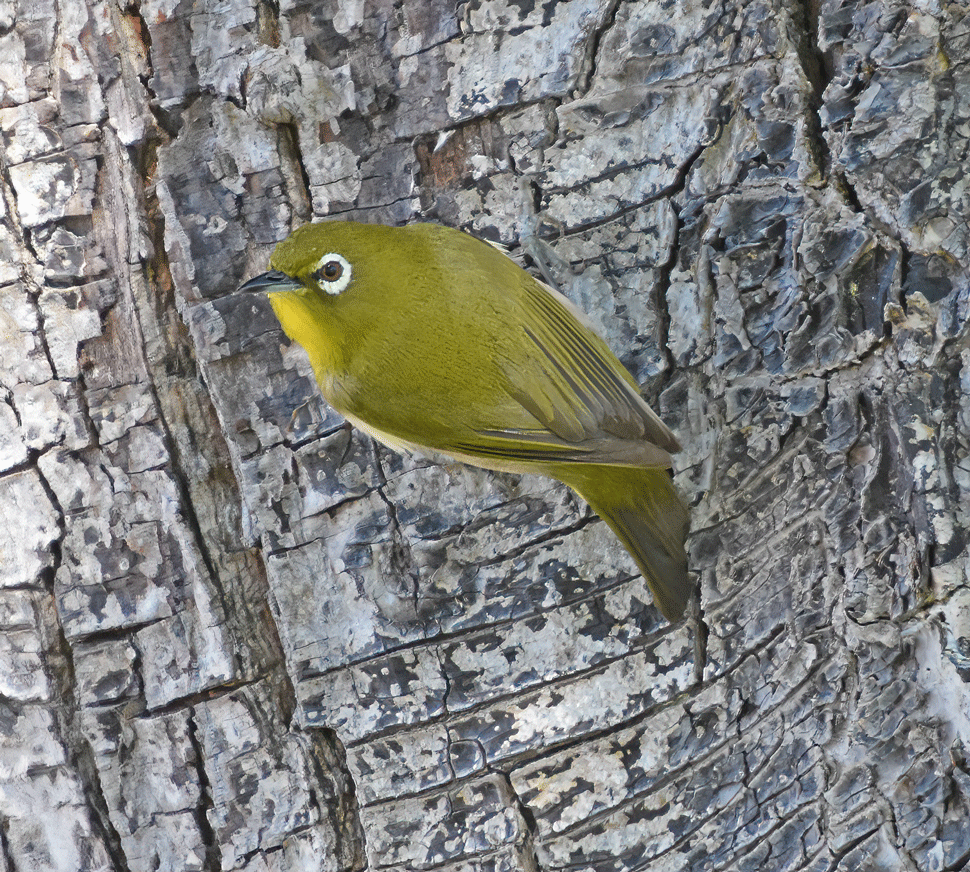
There we also got a good view of a Warbling White-eye.

January in Hawaii – Part 1, 2, and 3 were about our first seven days on the big island. Part 4 will finish off our trip and be posted soon.
January in Hawaii – Part 2

January in Hawaii – Part 2

This post will cover day 4 and 5 of our ten day trip. Day 5 was our “forest bird day” with a birding guide, so there are plenty of bird photos included.

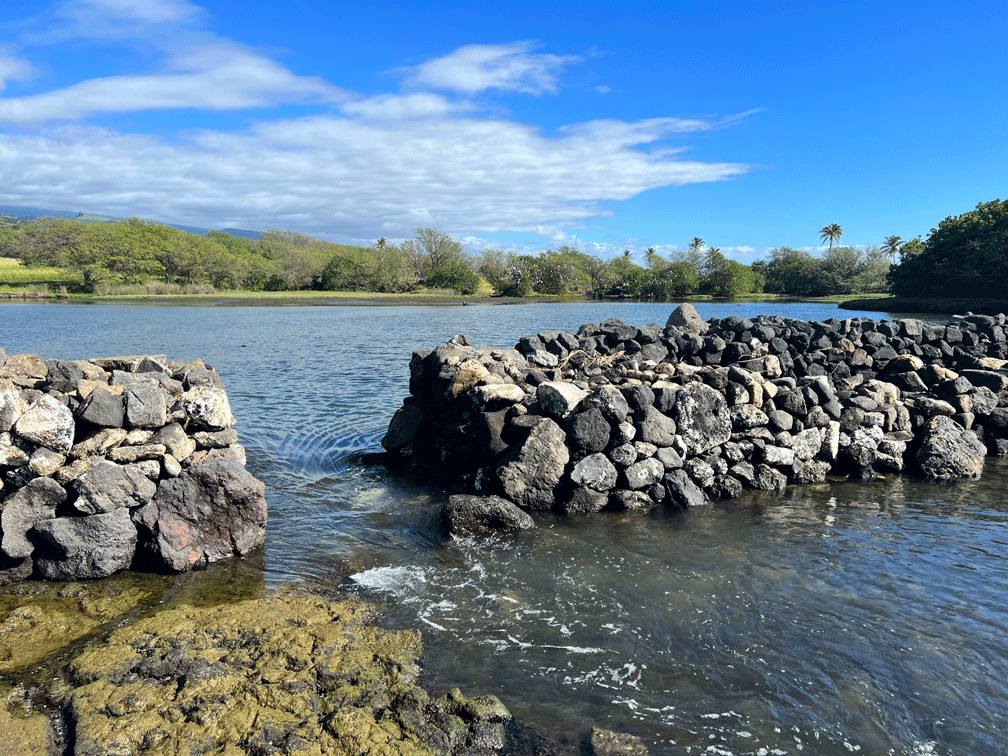
On our fourth day on the big island of Hawaii, we did a road tour to Hawaii Volcanoes National Park. Along the way, we stopped at Whittington Beach Park. There was a rocky shore and a pond farther inland that was built as a fish pond by the early peoples.

The rock wall along the entrance to the pond had been reinforced with concrete. The “white specks” in the trees in the background are actually Western Cattle Egrets. We saw cattle egrets virtually every day of our visit, but this was the largest flock.

In the middle of the pond, there was a lone female Harlequin Duck. This species is rare for the island, so we had the opportunity to contribute our observation to the “rare bird alert.” The bird had been previously sighted in this location.

We navigated the crowds at Hawaii Volcanoes National Park and found a parking spot at the Kilauea Caldera overlook on the west rim road. The view was worth the short walk out to the fence. Surprisingly for us, we saw a White-tailed Tropicbird soaring above the caldera. Although tropicbirds are seabirds, they nest on the remote crater walls where they can avoid predators. The caldera is approximately 16 km (10mi) from the ocean, which is obviously not too far away for this species.

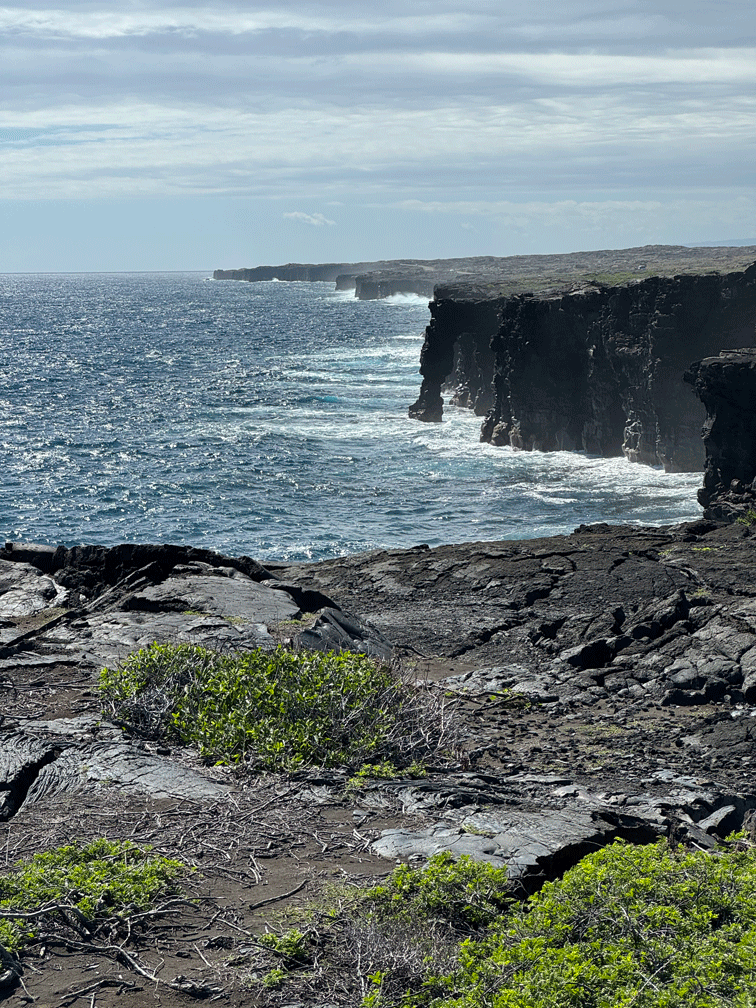
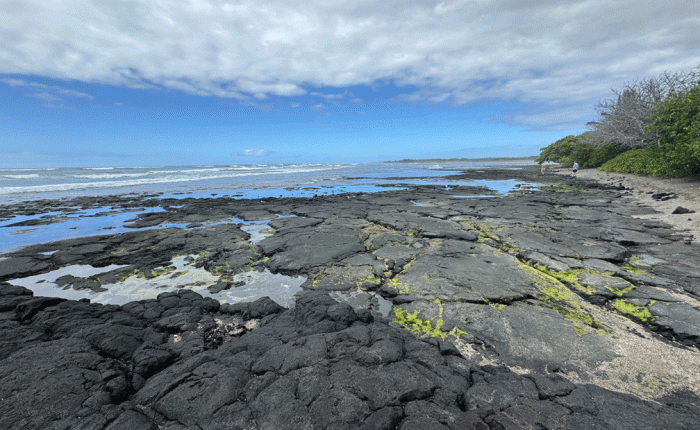
Next, we drove the east rim road, past the overcrowded parking lots for Kilauea Iki Overlook and the Thurston Lava Tube. We turned on to the Chain of Craters road and drove about a half an hour and descended about 4000 feet to the ocean. Virtually the whole way down was through old lava flows. Some looked like intestines, some like cow piles and some like something the dog threw up. On the coast, we parked beside the end of the navigable road and took a trail to view a sea arch. Here the lava cliffs rise abruptly above the sea.

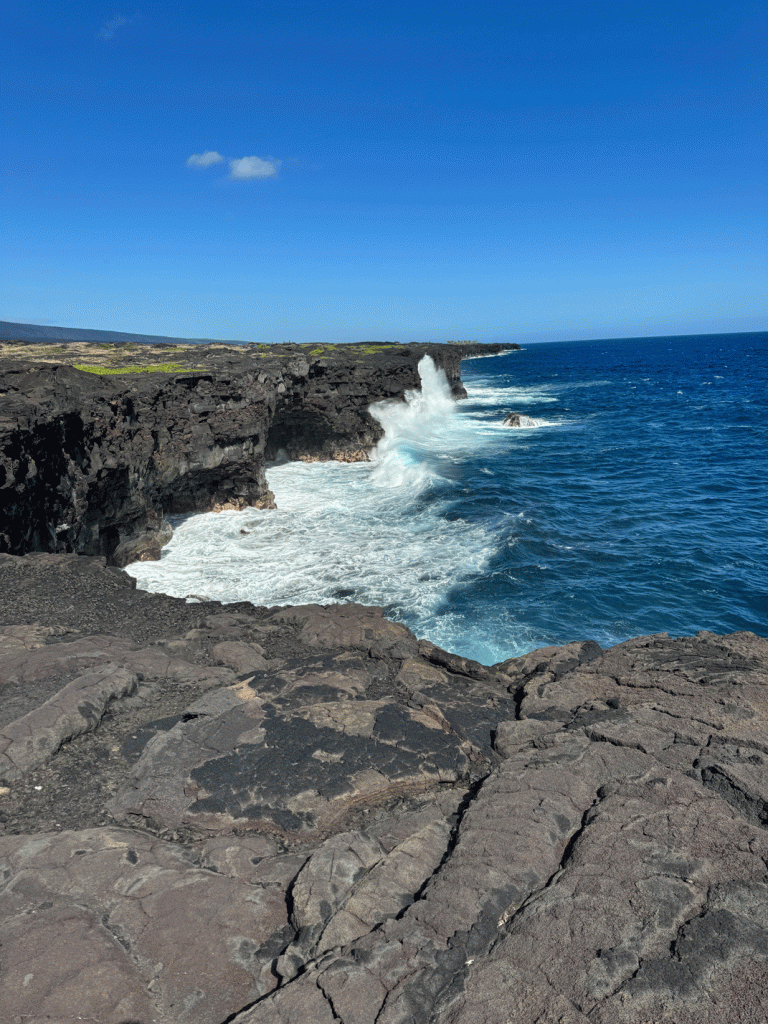
A little ways west of the arch, we saw some people walking a rough trail to the edge of the cliffs, so we stopped to have a look. The cliffs here had been worn away, forming caves. We noticed birds flying into the caves and could make out Black Noddies perched on the cave ledges. Another life bird!

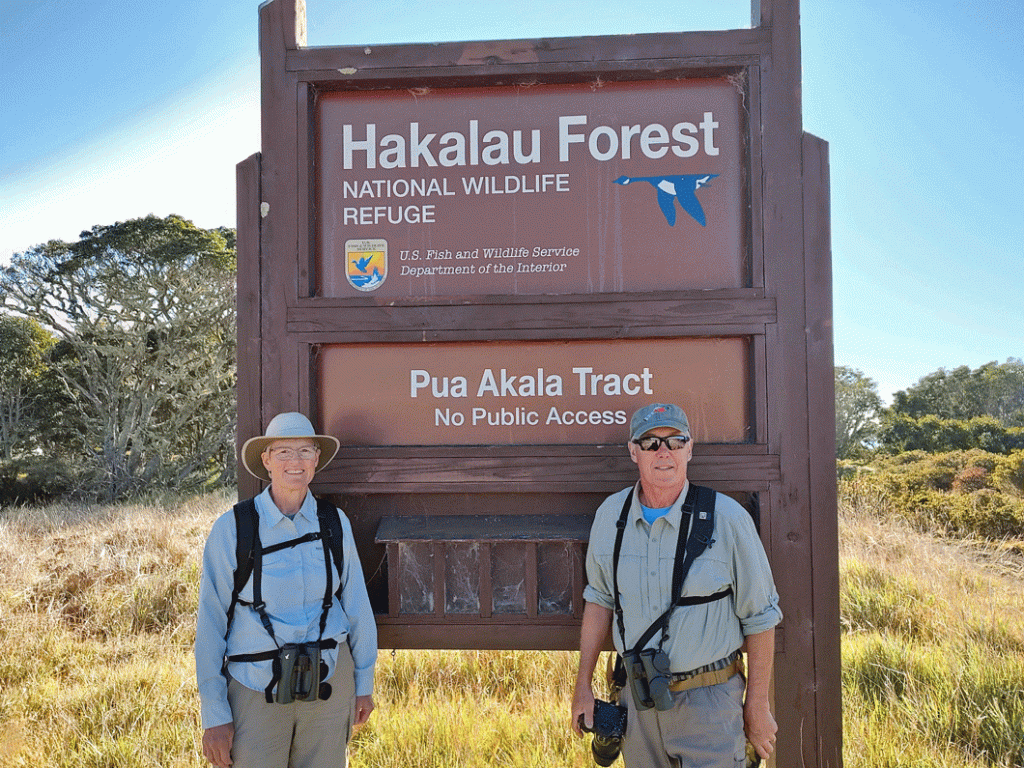
The next day we got up early and left our place at 5:45 am so we could meet our guide at the Mana Road, a few minutes up the road to Mauna Kea. We joined our guide in his four-wheel drive vehicle and drove an hour to the Hakalau Forest National Wildlife Refuge. The refuge is only open to parties that are led by a guide because of concerns about a disease called Rapid Ohi’a Death which has killed thousands of acres of mature ohi’a trees in other parts of Hawaii. We needed to clean our shoes of all debris and our guide sprayed our shoes in order to avoid contaminating the soil. The refuge was established in 1985 to protect and manage endangered forest birds and their rain forest habitat.

The section we were visiting had previously been cleared for a ranch and the only trees that were growing were in the ditches and gorges that the cattle couldn’t reach. Twenty-five years ago, many ohi’a trees were planted, so now the area is a lush forest. When we looked closely, we could see that most of the trees were the same age. The forest was full of birds, and with the help of our guide, Lance Tanino, (Hawaii Bird Guide LLC) we were able to see all the rare and endangered species that we had hoped to see.

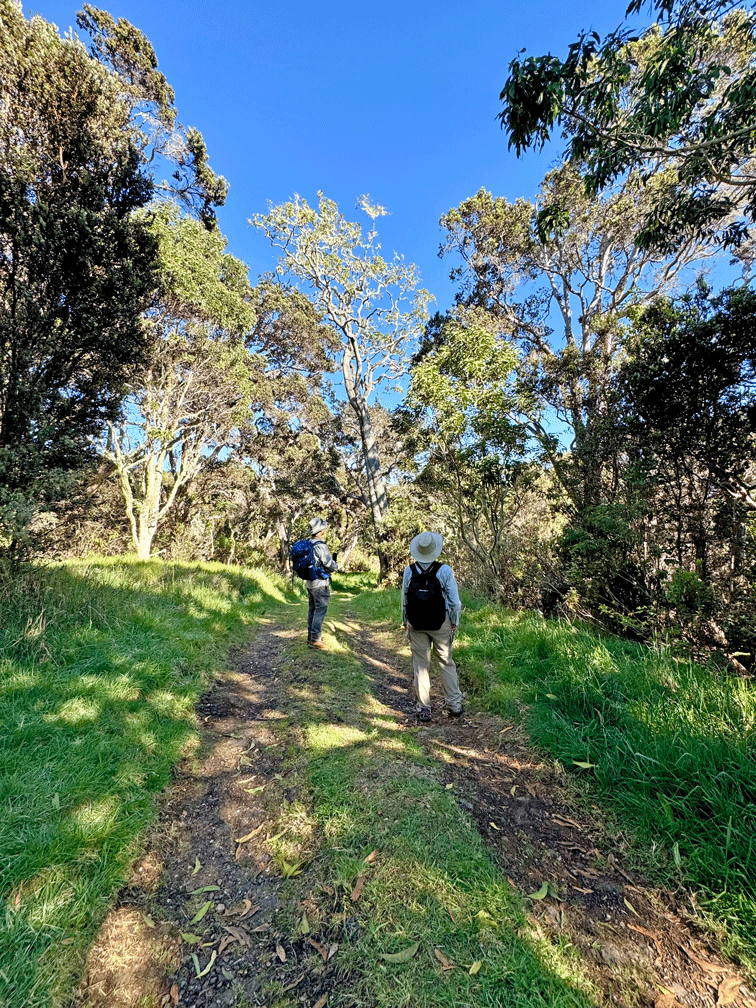
The road wandered down the slopes of Mauna Kea. Although we saw most of the birds right from the road, we also ventured off to various overlooks.

The Hawaiian Goose or Nene is Hawaii’s official bird. It’s capable of inter-island flight, but is non-migratory. It was nearly extinct in 1940 due to overhunting and habitat loss, but in 2019 it was down-listed to threatened. We saw about twenty on this day and then later in our trip we saw them on golf courses and lawns by the beach; the sort of place you might find a Canada Goose.

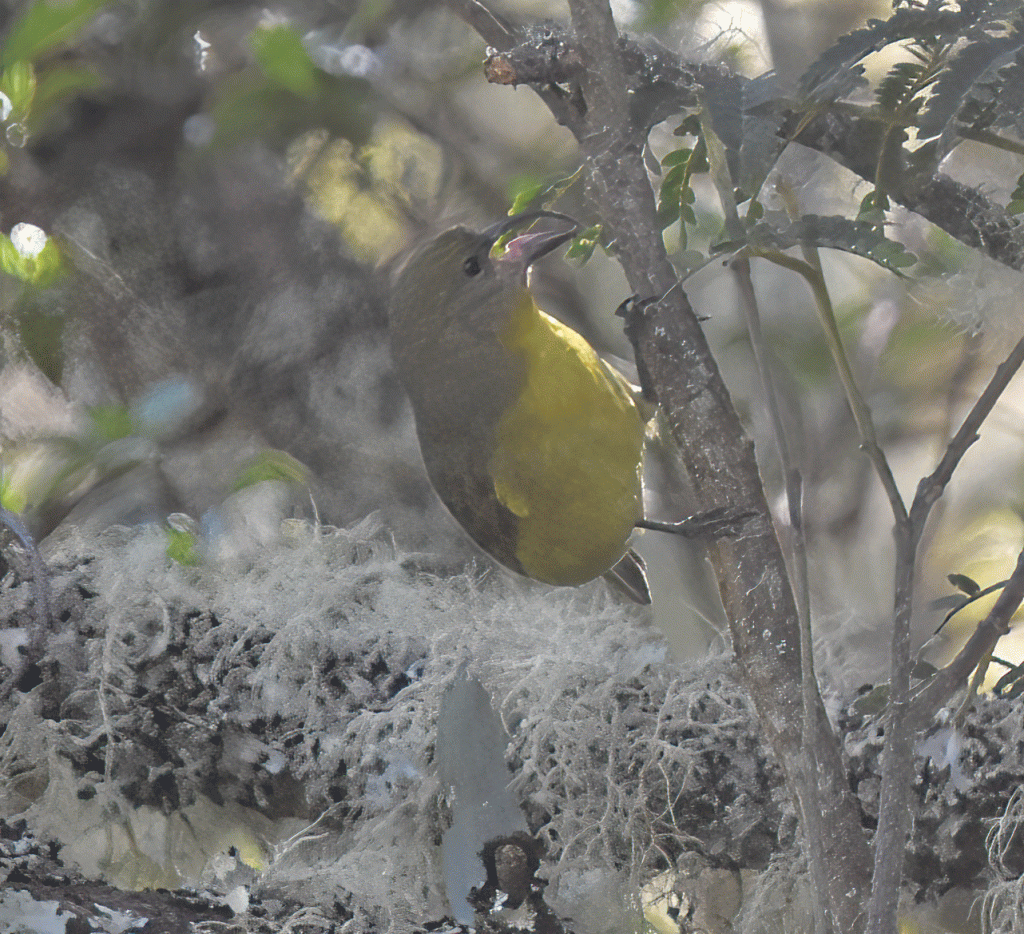
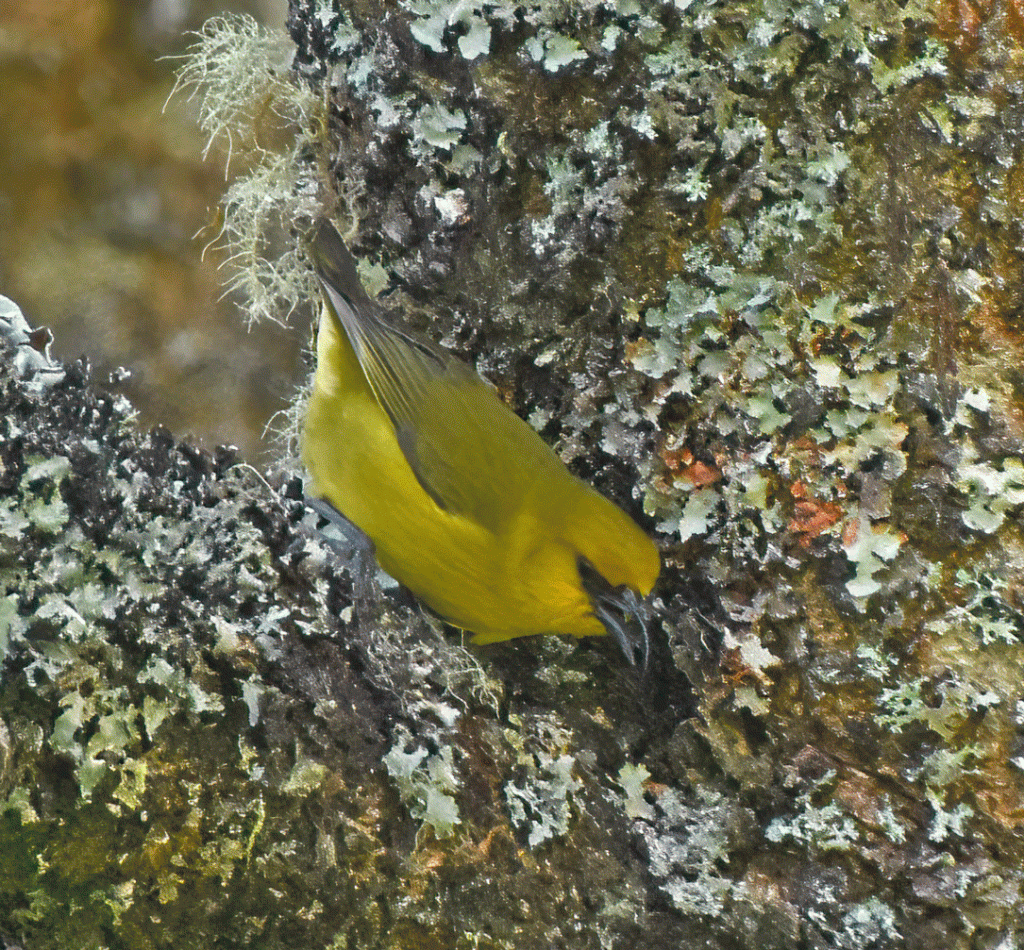
Perhaps the most exciting bird to see was the endangered Akiapolaau, which is only found on Hawaii island. This little bird drills holes in ohi’a trees with its stout lower mandible and drinks sap by tilting its head back. Its long curved upper mandible extracts prey.

Here’s another “Aki,” as they are called for short. It’s a female or immature male.

The I’ivi (ee-EE-vee) or scarlet honeycreeper is a flashier bird and we saw several of them this day. Even so, this endemic bird is listed as threatened.

Another I’ivi! This species primarily feeds on the ohi’a nectar as well as other understory tubular flowers.

These thrushes are much less conspicuous than the honeycreeper. Known as Oma’o, they can perch motionless for long periods. They are rare and restricted to windward-side native forests above 3000 feet. We were lucky enough to see several this day.

We also saw a few Hawaii Creepers. These birds feed on insects and move along branches and tree trunks like nuthatches. Notice their curved bill and “racoon” mask.

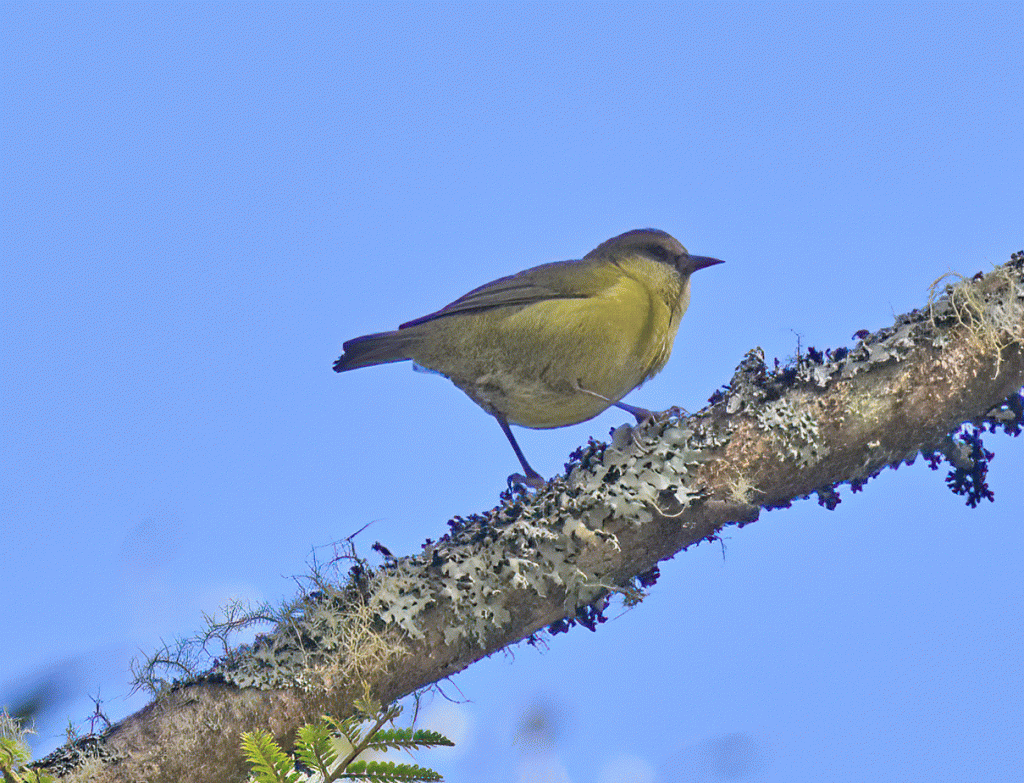
There were three times as many of these yellow birds (Hawaii Amakihi) as there were creepers. Although they have similar colouring, the Amakihi has a straighter bill and not as much black on the face as a creeper. Since we’d seen several of this species a few days before, it was like meeting an old friend again.

The last endemic bird that we saw on our “tick list” was the endangered Hawaii Akepa. It was harder to see because it forages in the crowns of ohi’a trees. The Akepa has a crossed bill which it uses to pry open buds, seed pods and galls in search of insects to eat.

The other forest endemic birds that we saw were Hawaii Elepaio and Apapane. The Elepaio tended to stay hidden among the shrubbery and the Apapane were high up in the canopy.

We saw some introduced birds as well, including this Kalij Pheasant. This species is native to Southern Asia and was introduced to Hawaii in 1962.

It was a big day for us, with twelve “life” birds, including several that were endangered or rare. It’s not likely that we will ever see most of these birds anywhere else.

January in Hawaii – Part one and two have summarized the first half of our ten day trip. Part 3 and 4 will be posted soon.
January in Hawaii – Part 1

January in Hawaii – Part 1

We took a trip to the big island of Hawaii at the end of January. We’ll share our photos and stories over a number of posts. From our last post near the end of December and this one, we were at our place in Arizona and doing mostly routine things; looking for birds, hiking and mountain-biking. If any photos stand out for us from this time, we’ll post them with our February blog.

We landed at the Kona airport around 3:30 in the afternoon. We disembarked from the plane right to the tarmac and walked over to the open air terminal and baggage claim area. A shuttle took us to the car rental, where we very efficiently picked up a jeep.

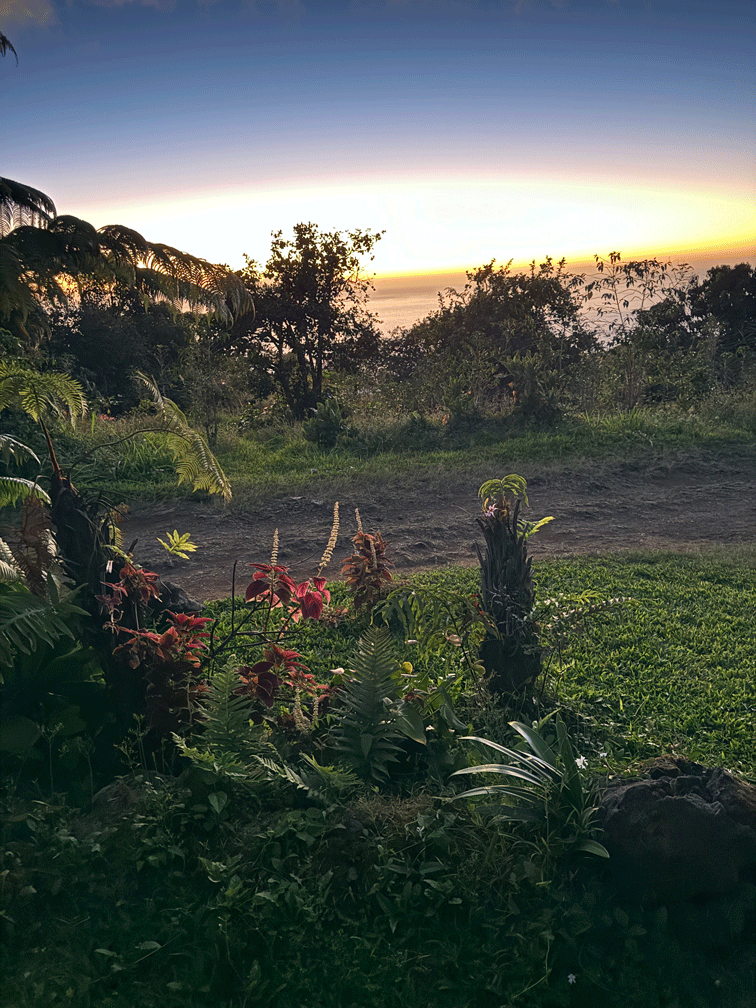
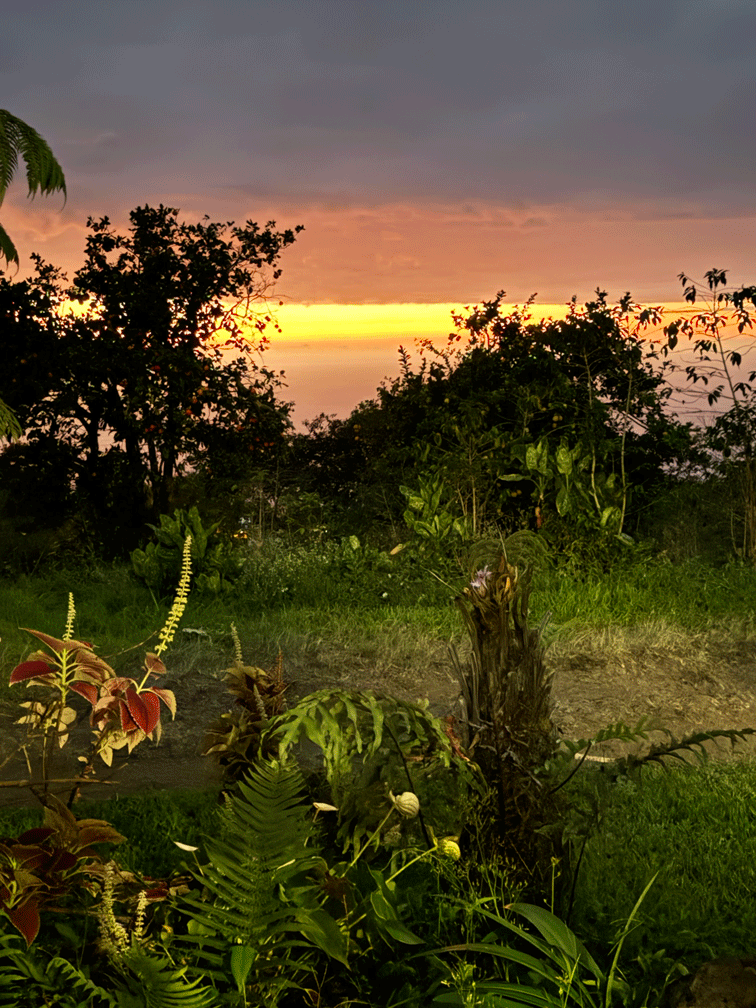
We headed south to our BnB in Kealakekua, dropped our bags and went out to the local supermarket to pick up enough food for our next three meals. We watched the sunset from our front porch before dinner.

The sushi we bought at the local grocery was made that day and it was a simple and tasty meal. Of course, we also bought some local beer.

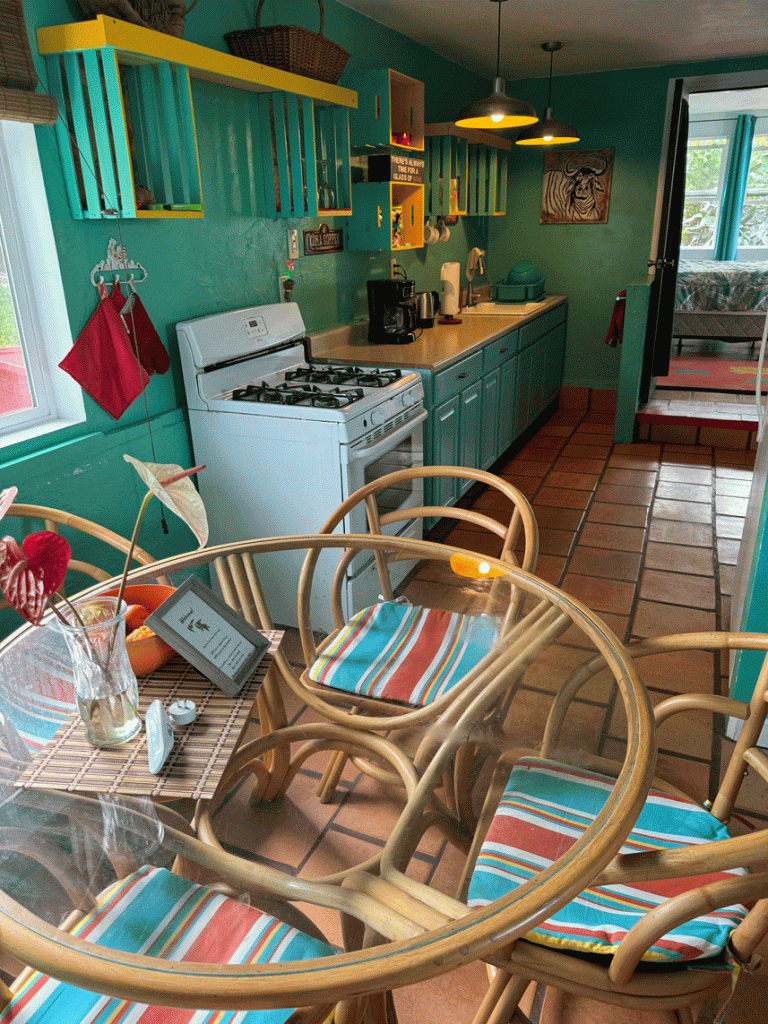
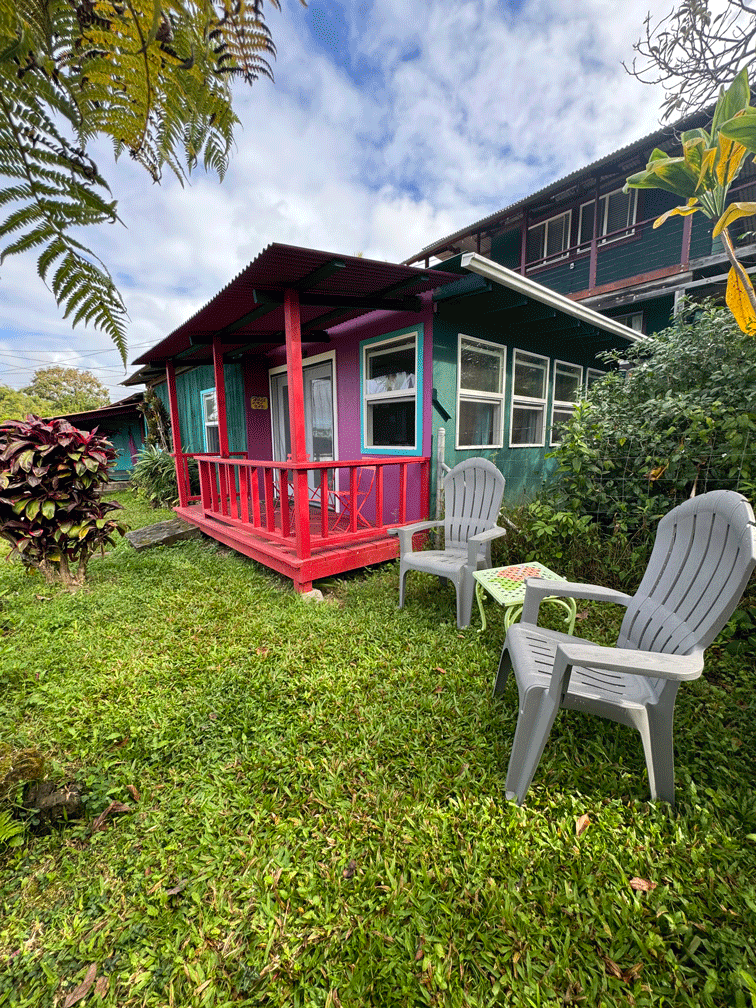
These next photos are a tour of our little cottage. It was originally a coffee drying hut. Here’s the kitchen, showing the steps up to the main bedroom.

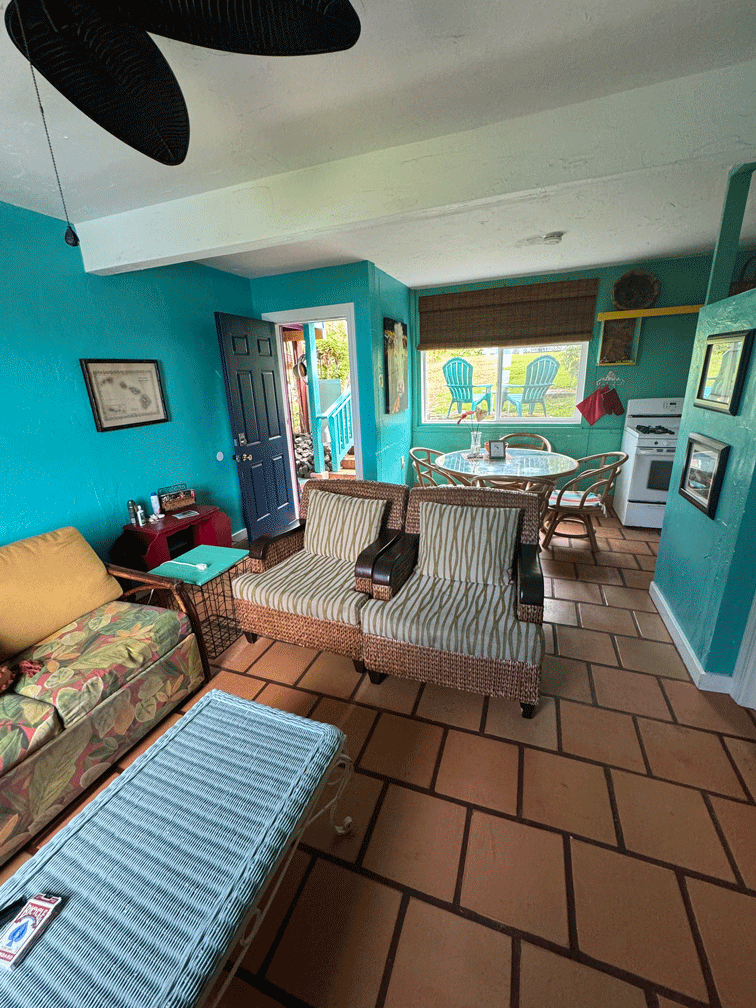
Here’s the sitting area and the back steps. There was a second bedroom off to the right of this photo, which had lots of shelves for our clothes.

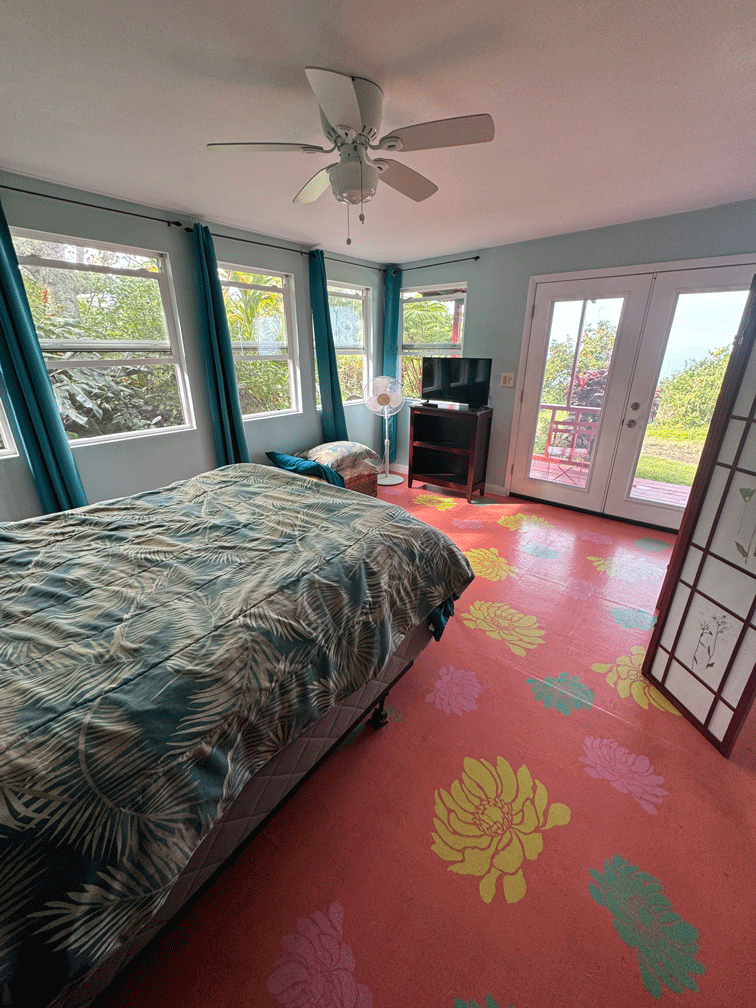
The main bedroom had screened windows on two sides, which we kept open all the time. It was always below 20 degrees C (68 F) by the time we went to bed, so it was very comfortable for sleeping.

Here’s a view of the front of the cottage and the porch off the bedroom. The jeep is hidden from view behind the red and green ti plant and in front of the porch that accesses the back door. Another tenant lives in the building behind us, but it was vacant when we visited.

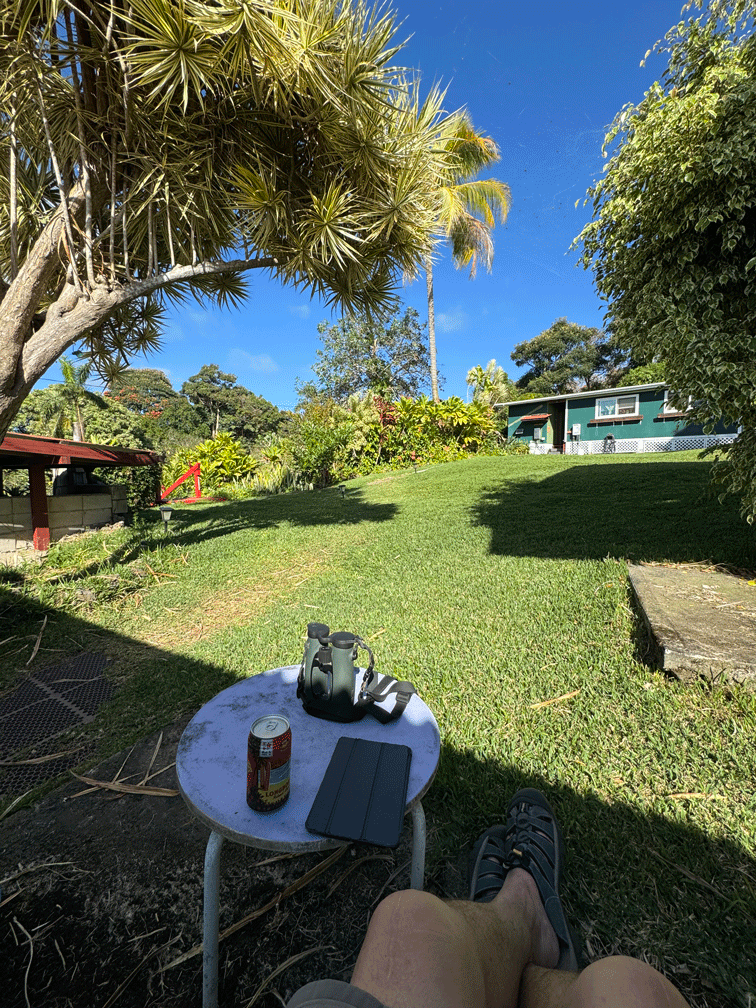
Here’s a view of the expansive lawn out the back door. The left side of the green building is the bath-house. We had a full bathroom that was only for our use. And, while is was a bit of a trek from our cottage, it was much better than tromping along a snowy path to a cold outhouse, which we’ve experienced when we’ve stayed in a mountain hut. It was a wonderful little place for our stay, but unfortunately it’s been taken off the BnB market, so we won’t be able to return here.

Our main objective of the trip was to see some interesting birds. And Hawaii has plenty of these.

Hawaii’s ecosystem has been changed through colonization; with the introduction of grazing and browsing animals as well as other mammals such as mongoose. The native birds are now only found in isolated high elevation isolated forests. (See Part 2 of this blog series).

Many urban birds have been introduced from all over the world. From the 1920’s to 1960’s, Hawaii government agencies and a private club called the Hui Manu Society, brought birds to the islands. Birds were chosen for their beauty, their birdsong and to eat insect pests. We realize that we may never travel to the parts of the world that the birds originated, so we were happy to see the “smorgasbord” of birds that now call Hawaii home.

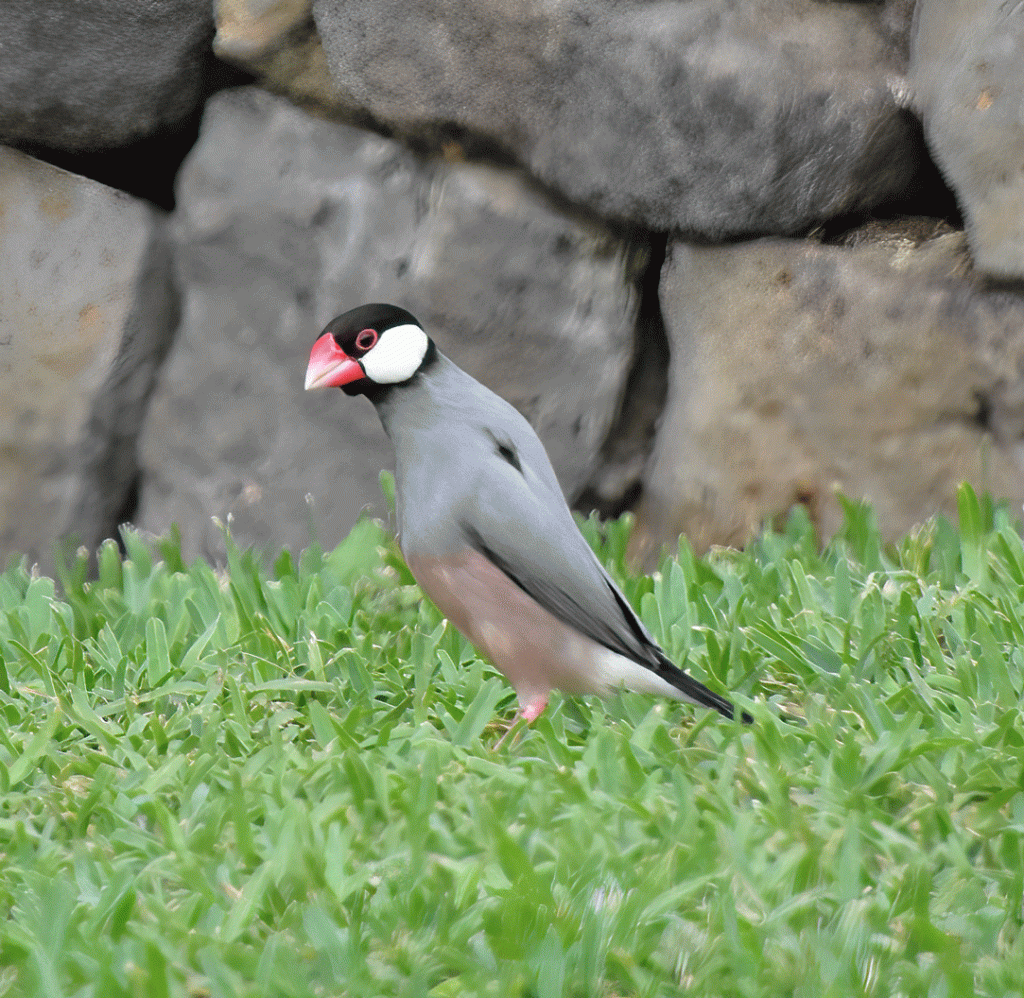
This is a Java Sparrow, originally from Indonesia. It was first introduced in 1867, and then reintroduced in the late 1960s. They were always around our cottage, since our neighbours next door had at least forty of them hanging near their feeders.

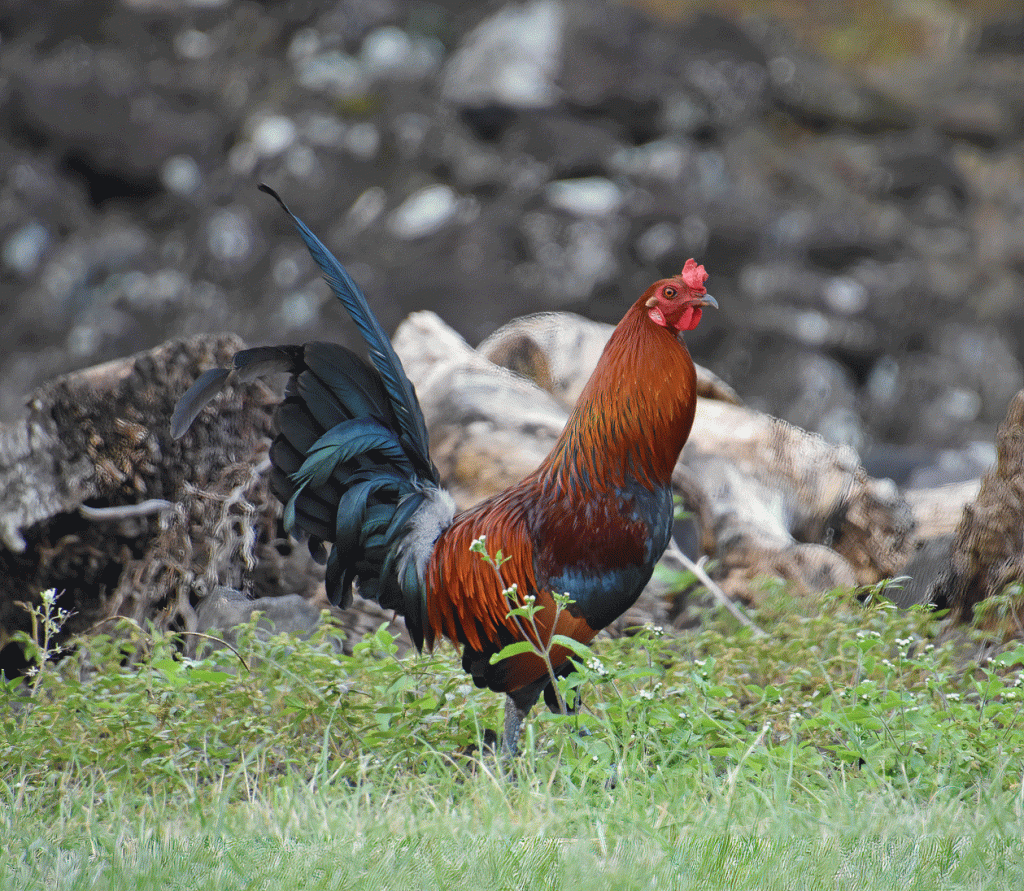
Roosters such as this one, also wandered along the front road. They are descended from Red Junglefowl, which were brought to the islands by the Polynesians over 1000 years ago.

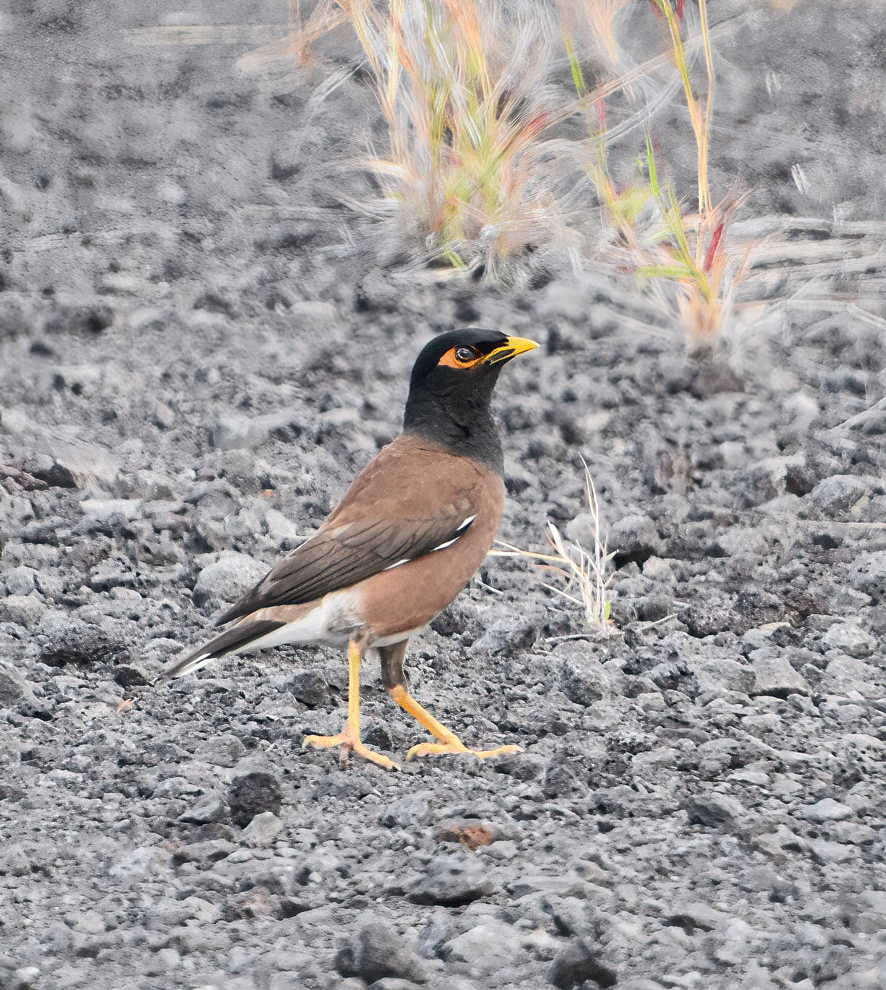
Common Mynas were very common in parks, parking lots and also around our place. They were introduced from India in 1865 to control insect pests.

On our first full day in Hawaii, we went to a couple of birding hotspots in the Kailua-Kona area. At the first one, Doug took this photo of a Red-billed Cardinal and a Saffron Finch. These birds are both native to South America and were easy to see in many spots around the island.

We got our first glimpses of a Warbling White-eye along the fence at the same spot. Its name has been recently changed from Japanese White-eye, although the birds are also native to China and Taiwan. We saw them throughout the island in both and dry and wet habitats.

Our next birding destination was also an opportunity to learn about Hawaii’s history at the Kaloko-Honokohau National Historic Park. We took a smooth, then rocky trail from the Visitor Center past some petroglyphs and stone walls to the beach.

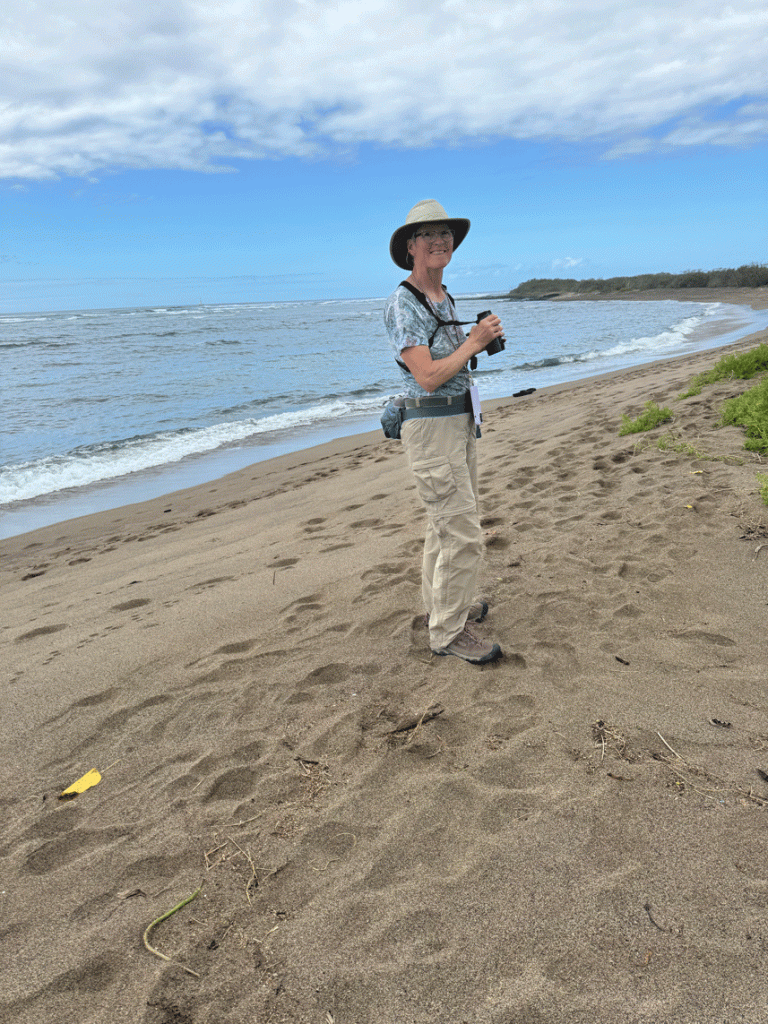
Farther along the beach there was a sand berm that closed off part of the bay to make a fishpond. Early inhabitants would use the fishponds to hold live fish that they wanted to keep for food. Narrow channels were dug from the pond to the ocean to allow water to flow in and out with the tides but not allow larger fish to get through. Wendy is standing part way up the berm. Unfortunately, we neglected to take a photo of the pond, but we saw some interesting birds, including a couple of Laughing Gulls and a Black-necked Stilt.

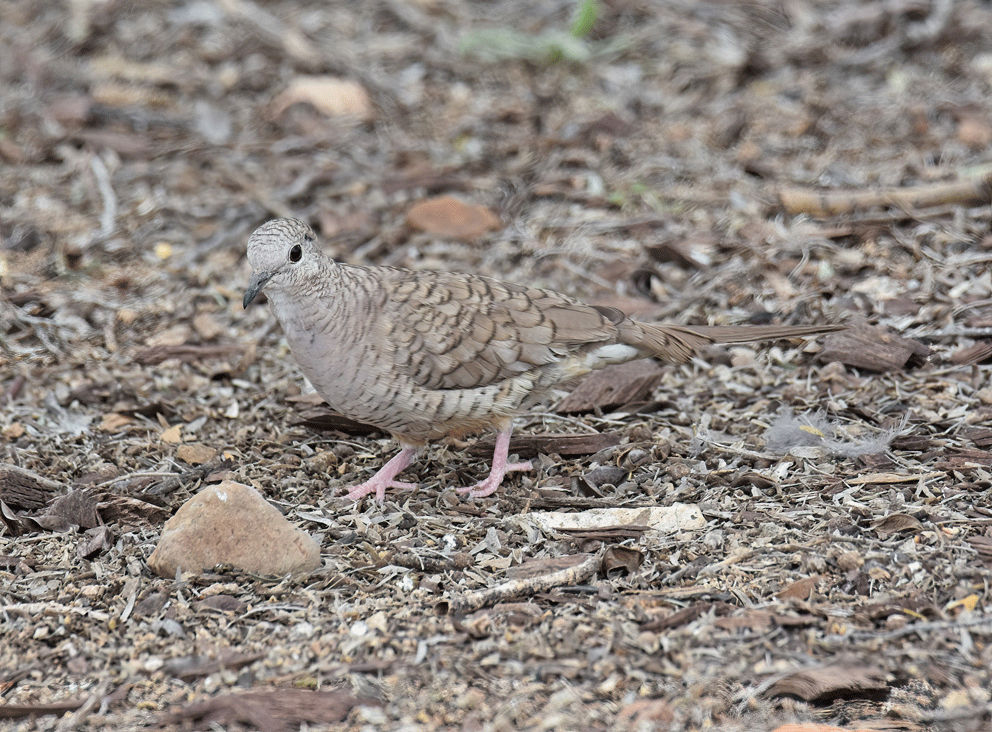
Coming back on the trail, we got a good view of a Zebra Dove. They were originally from Asia and are abundant in residential and rural areas. They are small doves and remind us of the Inca Doves that we see in Arizona.

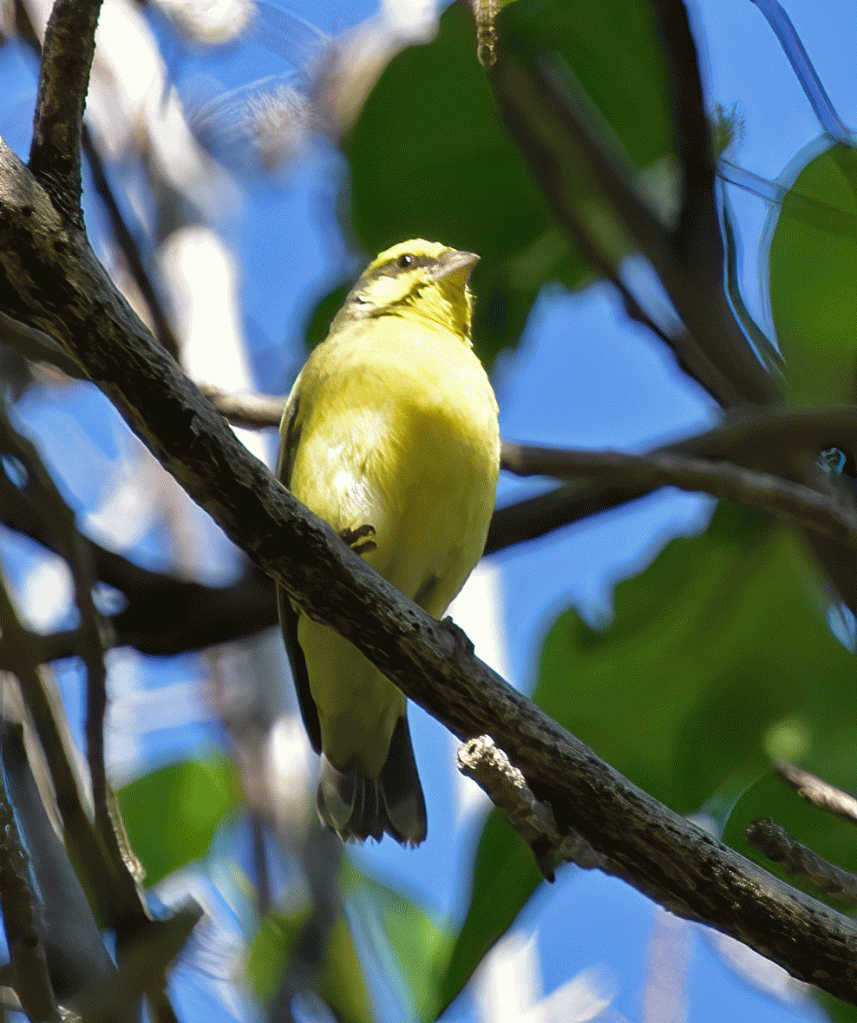
We also saw the first of many Yellow-fronted Canaries along the trail. This species is native to Africa and the only bird in Hawaii with a distinctive yellow rump.

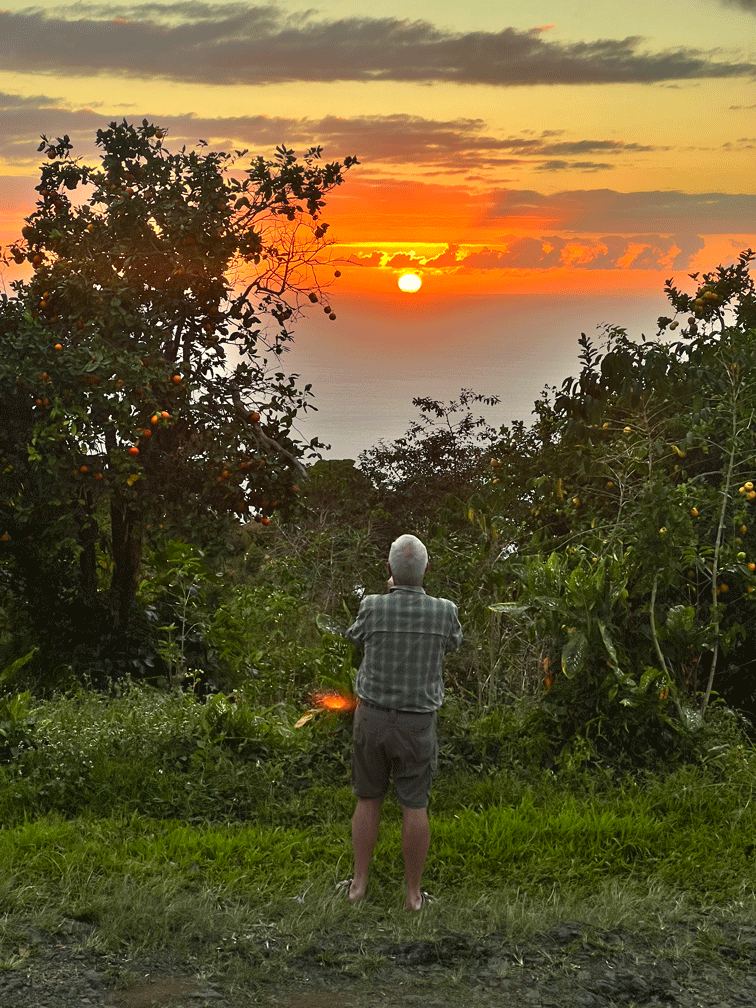
Our second day ended in a spectacular sunset. Doug walked off the front deck and across the road for his view. The best way to see the sunset was to look at your phone’s camera screen, because you couldn’t look directly at the sun.

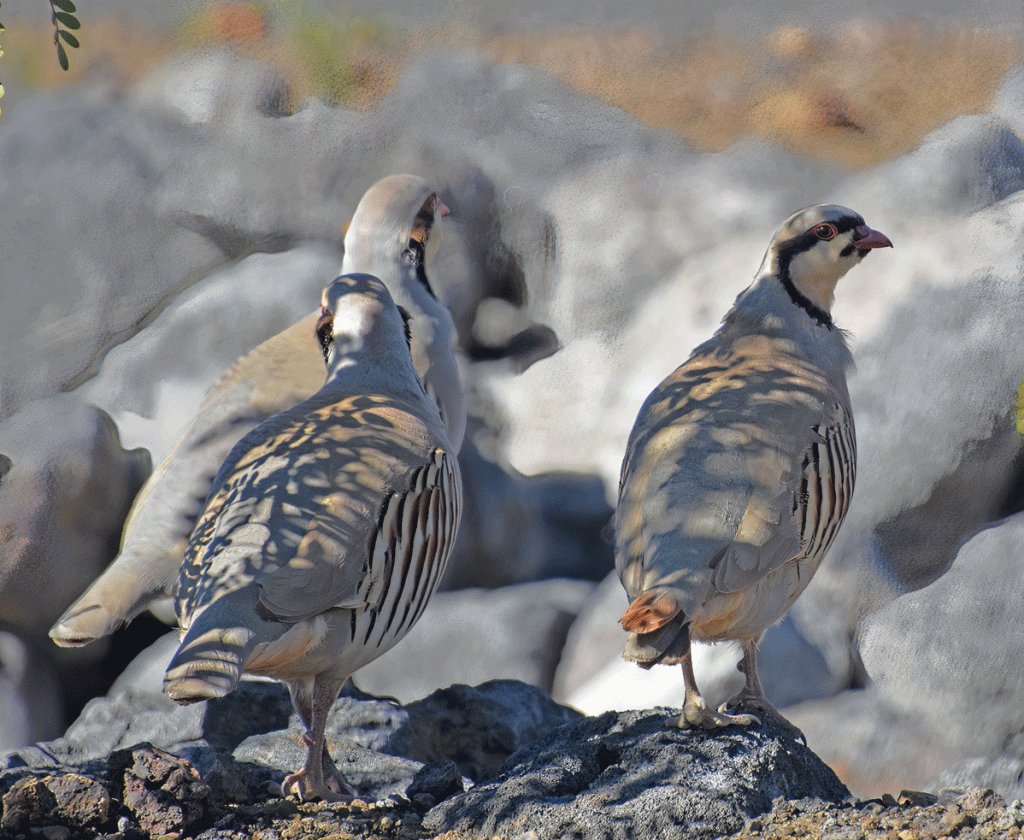
For day three, we drove to the Mauna Kea area to check out the location that we were going to meet our birding guide few days later. It was a beautiful clear day, so we decided to drive the road right up to the top. Since Mauna Kea is the highest mountain on the island at 13,796 feet, the rangers recommend that you spend about half and hour at the Visitor Centre (9,200 feet) to acclimatize. Luckily for us, there were Chukars wandering about. Chukars were introduced to Hawaii as a game bird and are native to the Middle East. Although they are naturalized in many part of the western US, we had never seen one before. Our guide book notes that they take flight quickly when startled; so we were lucky to see some that were habituated to people.

We drove the winding four-wheel drive road to the telescope structures. It was windy and about 6 degrees C (43F). Wendy wore the puffy that she brought just for this, but since we were only out of the jeep for a few minutes, it really wasn’t necessary. We saw another Chukar just around the corner from where we took this photo. Pretty high for a bird!

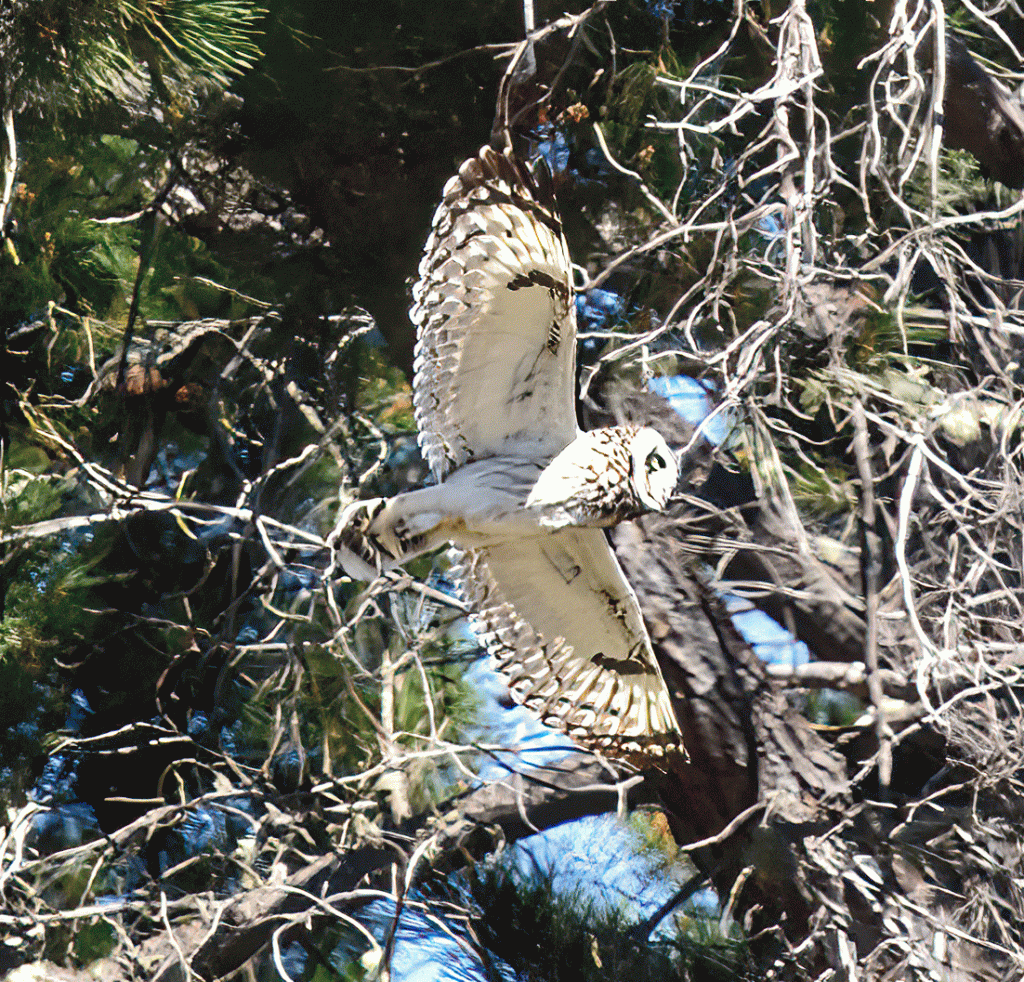
We didn’t spend much time above 13,000 feet but we could feel the effects of the altitude when we stopped at the visitor centre on the way down. The ranger checked the temperature of our brakes before we drove back down to the highway. We headed west and then drove about fifteen minutes up the Saddle Road to a hunter checking station. From there, we walked into grasslands with patches of woodland. As we were checking out some singing birds, we spotted an owl in flight. The Short-eared Owl is also known as the Hawaiian Owl and is an endemic, diurnal owl.

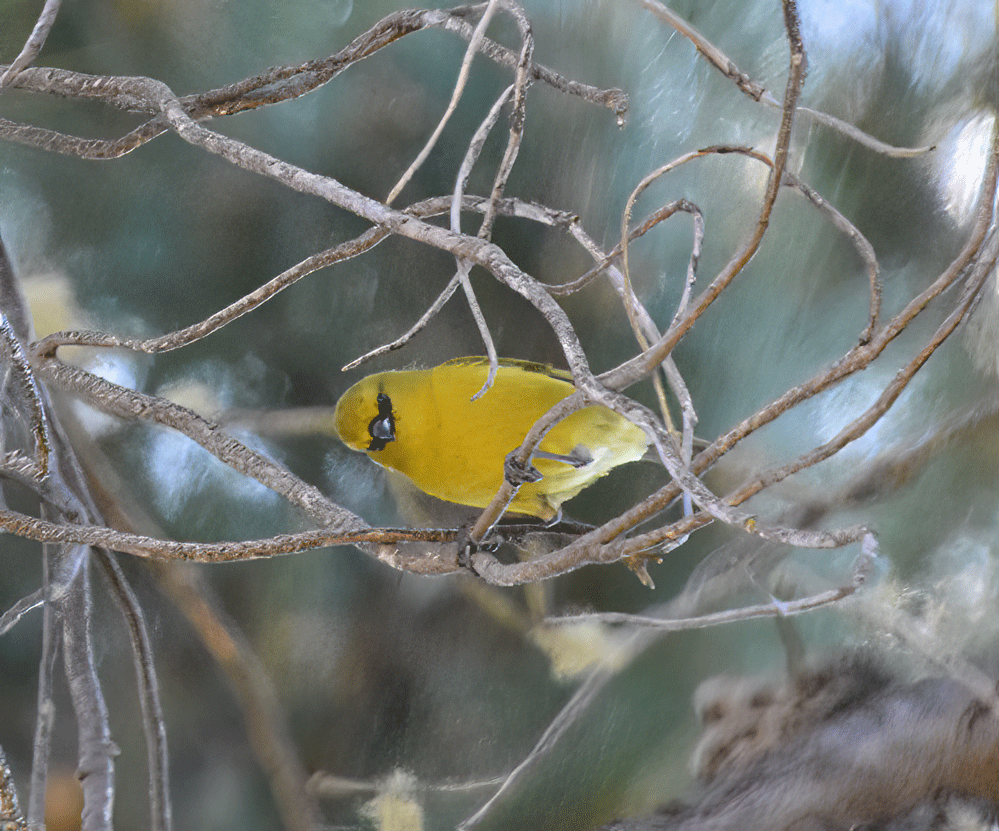
We heard and saw enough of the little yellow birds to identify them as Hawaii Amakihi. They were high up in the pines, that are introduced trees to Hawaii. We learned later from our guide that practically every plant in the world can be grown in Hawaii, since there is such a diversity of soil and climatic zones.

This post covered our first three days of our ten day trip to the Big Island of Hawaii. The next three posts will be ready soon.
December 2023: Our Birding Adventures

December 2023: Our Birding Adventures

We’ve had an amazing December for birding here in Arizona. We’ve seen four species of birds that we’ve never seen before. The birders in our community call them “lifers” or “life birds.” When we first came to Arizona, it wasn’t that hard to see a “lifer,” but the more birds we saw, the harder it was to see new species. It’s part of the fun for us; if it was easy, we don’t think it would be as interesting.

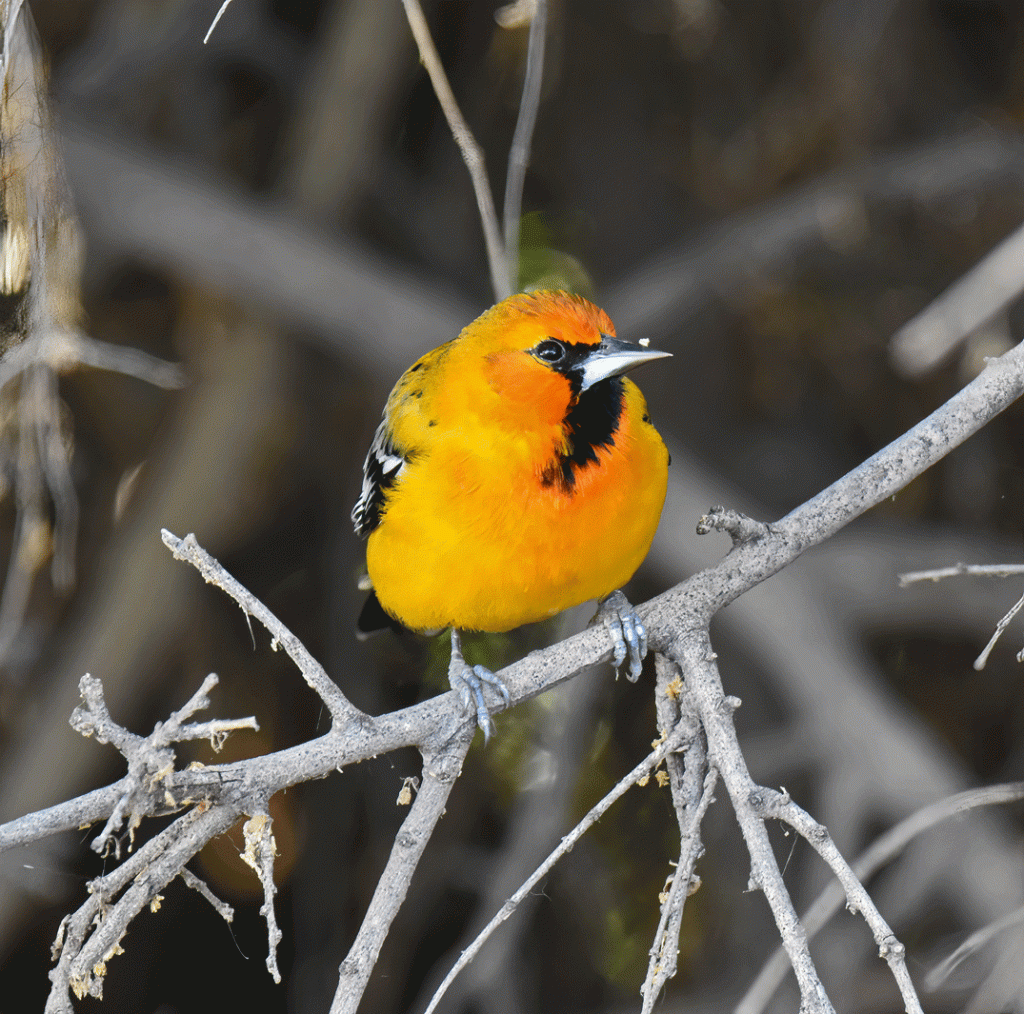
Even before we got to Tucson, we saw a pair of “lifers.” Two Streak-backed Orioles were frequenting the Gilbert Water Ranch, in the Phoenix metro area. We stopped for a couple of hours en-route to our place just outside of Tucson. We waited in their favourite spot for about half an hour before they showed up. The streaks on the male’s back are just visible on his back behind his neck in the photo below. The species is usually found in dry tropical forests from Mexico to Costa Rica.

On our first full day in Tucson, we headed off in hopes of seeing a Baltimore Oriole that had been reported in a park in the middle of a residential area. We had seen the species before, but not in the US. We met a number of our birding friends that were also interested in seeing the bird. We got glimpses of it high in a palm tree, but the photos were mostly of its underside. It flew off into the neighbourhood, likely to a yard with water features and oranges set out. Even though our view of the bird was brief, It was nice to reacquaint ourselves with people that we hadn’t seen since the spring.

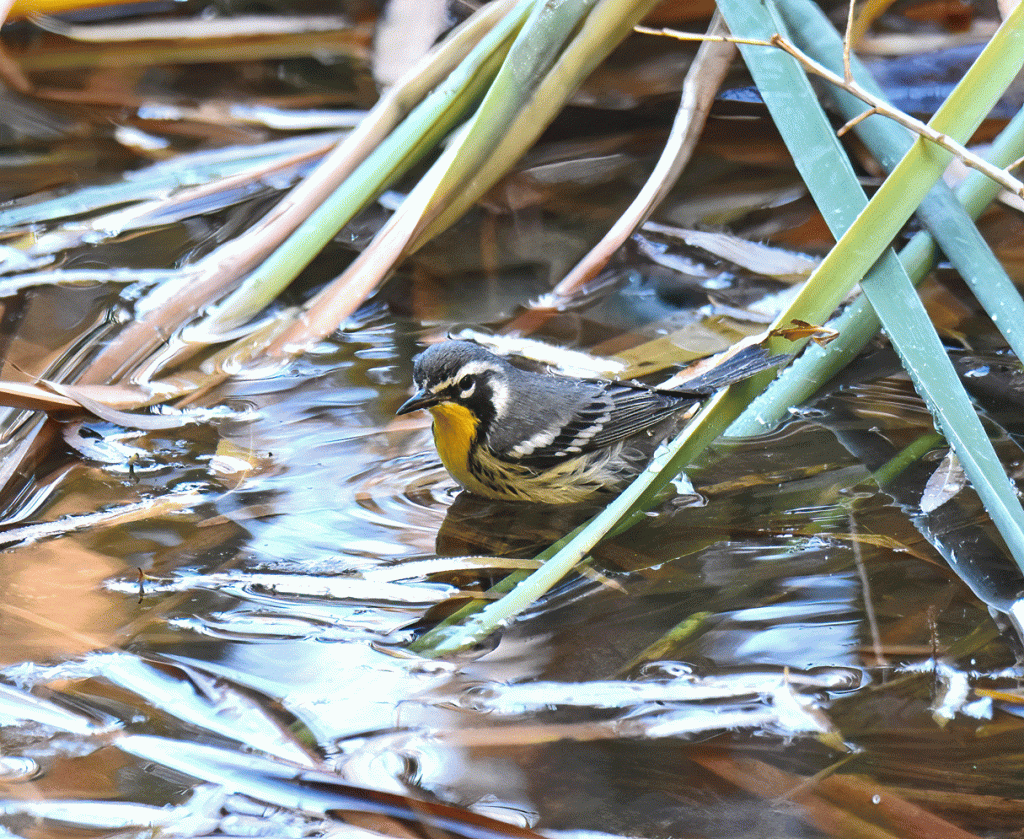
Our next “target” bird was a Yellow-throated Warbler. It was frequenting Lakeside Park on the other side of the city. It took us two separate visits to locate the bird, but when it showed up, it was very cooperative for photos. Doug’s best photo was when it was bathing. For some of his photos, he had to back up because his camera lens needs to be at least two metres from the subject. This warbler is usually found in the eastern US during the summer, and normally winters along the coast of the Gulf of Mexico and in the Caribbean. It was a “life bird” for us, and we hope that it likes its new home well enough to stay the winter. If it’s still around in January, we’ll try and see it again.

On both days that we went to Lakeside Park, we stopped at Sweetwater Wetlands. There was a controlled burn in October in half of the park, which made viewing the ponds easier because the cattails were not as thick.

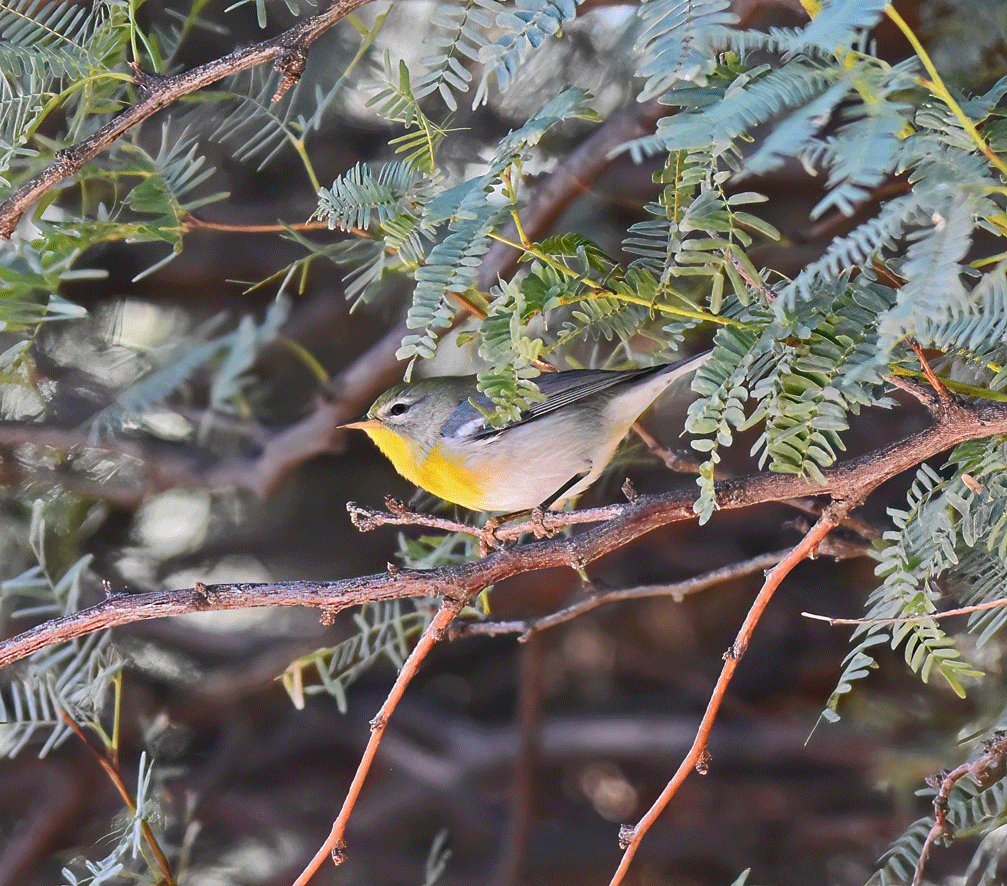
We saw another rare bird there: a Northern Parula. Each year, one or two parulas can be found at the wetlands, so the species is not as rare as the Yellow-throated Warbler or the Streak-backed Oriole. Still, it was a challenge to find the bird and then follow it in the tree with our binoculars until it chose to come out to the edge.

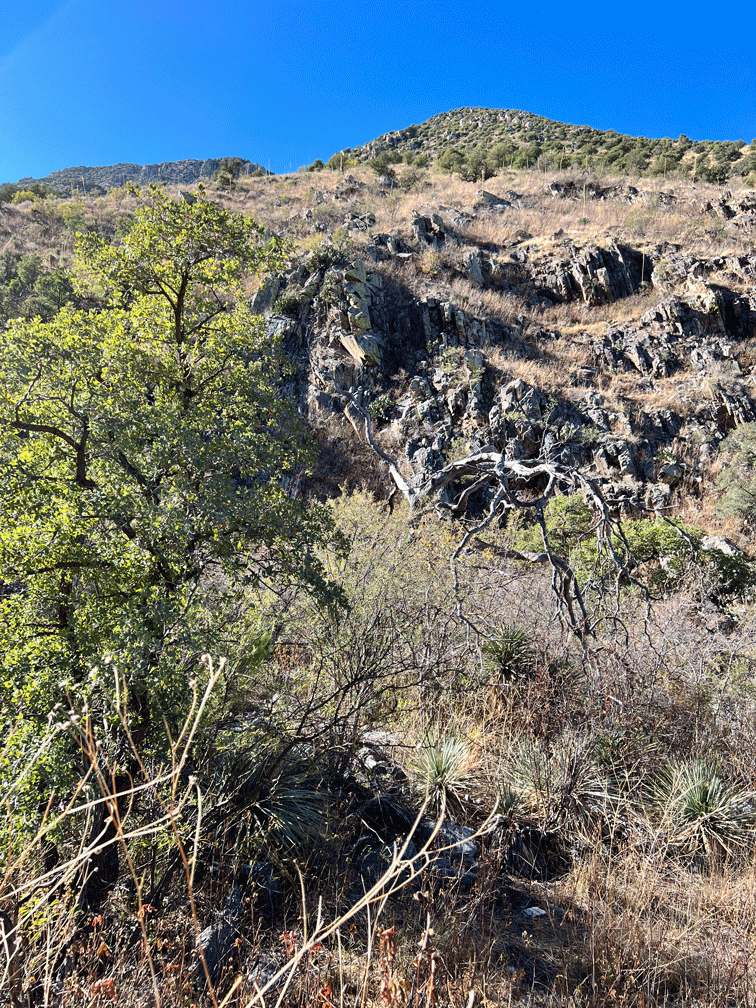
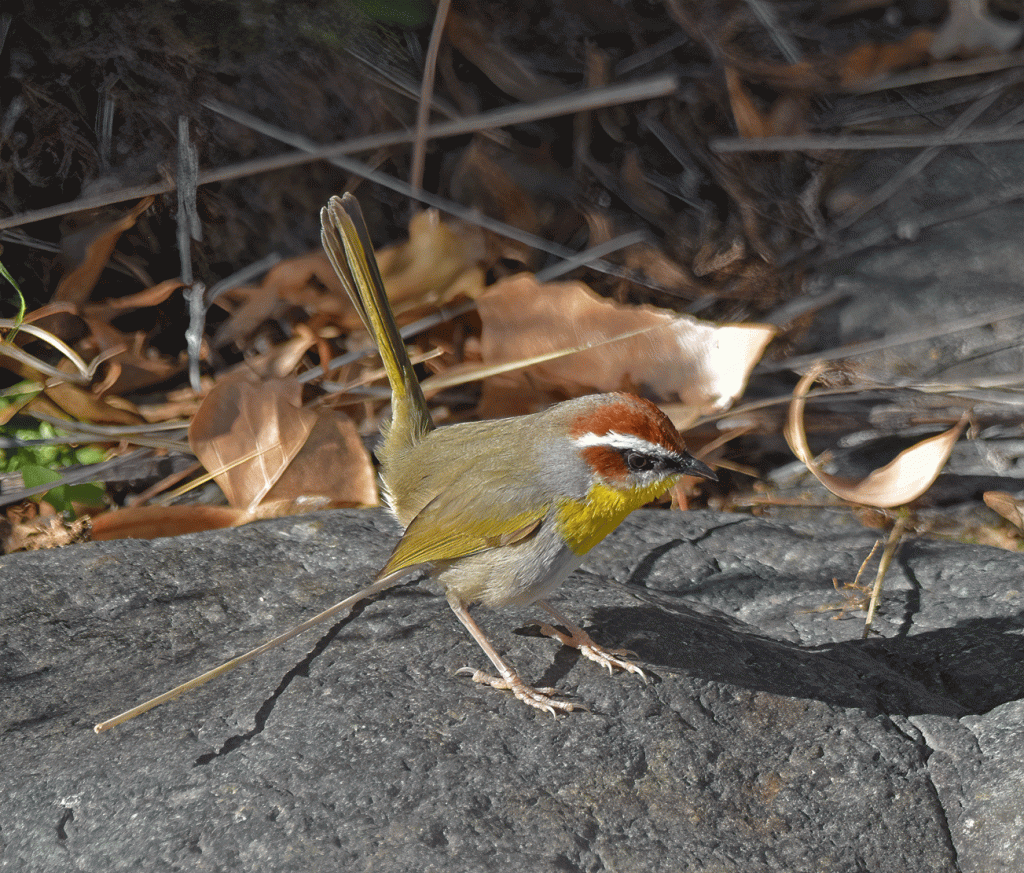
We ventured into Florida Canyon (pronounced Floor-EE-da locally), to search for a Rufous-capped Warbler. This is the same species that we spent a couple of days searching for last April, and we were really glad that a pair was spotted in this canyon in November and chose to hang around. Florida Canyon is close to Madera Canyon, so the access is not very difficult. Here’s a view of the hillside above the canyon.

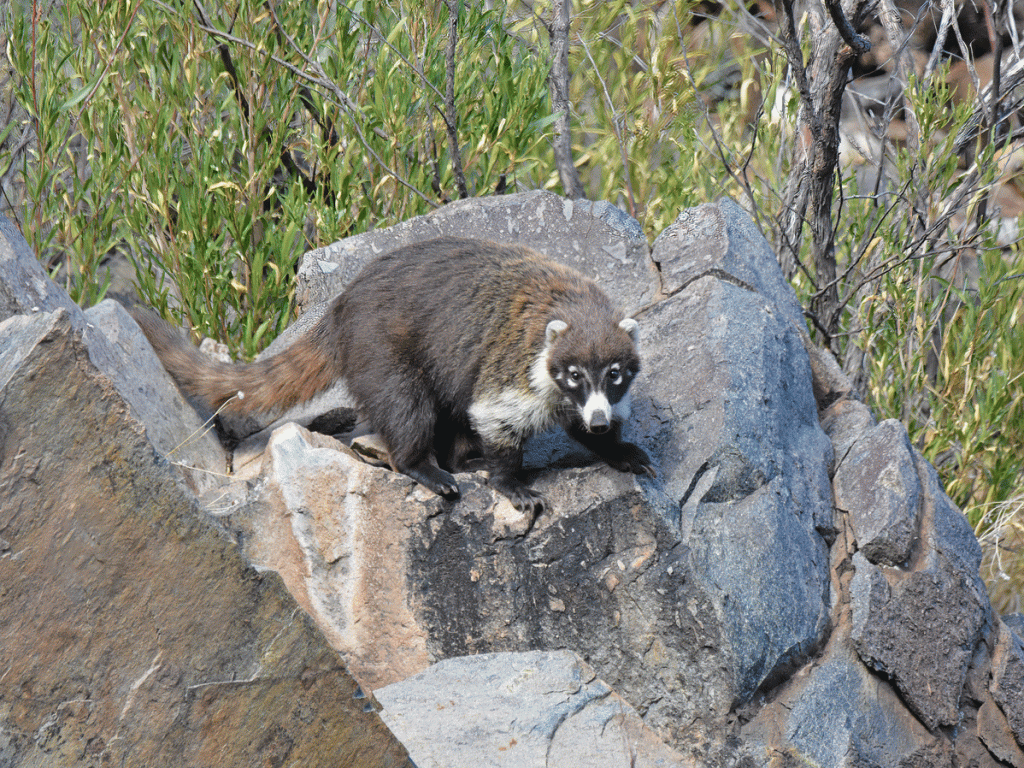
On the first day that we tried to see the warbler, we stayed in one spot, in hopes that the birds would come to the water. They must not have been thirsty that day, because we waited for four hours without a warbler sighting, but we saw a number of coatis frolicking on the hillside above us.

The next time we went, we were successful. This photo of the Rufous-capped Warbler was taken from the same spot that we had waited at the first day, but this time, we caught a glimpse of it above the water and followed it down. We also saw it again farther up the trail. The day was even more special because we saw it with our friend who had first discovered the bird in November.

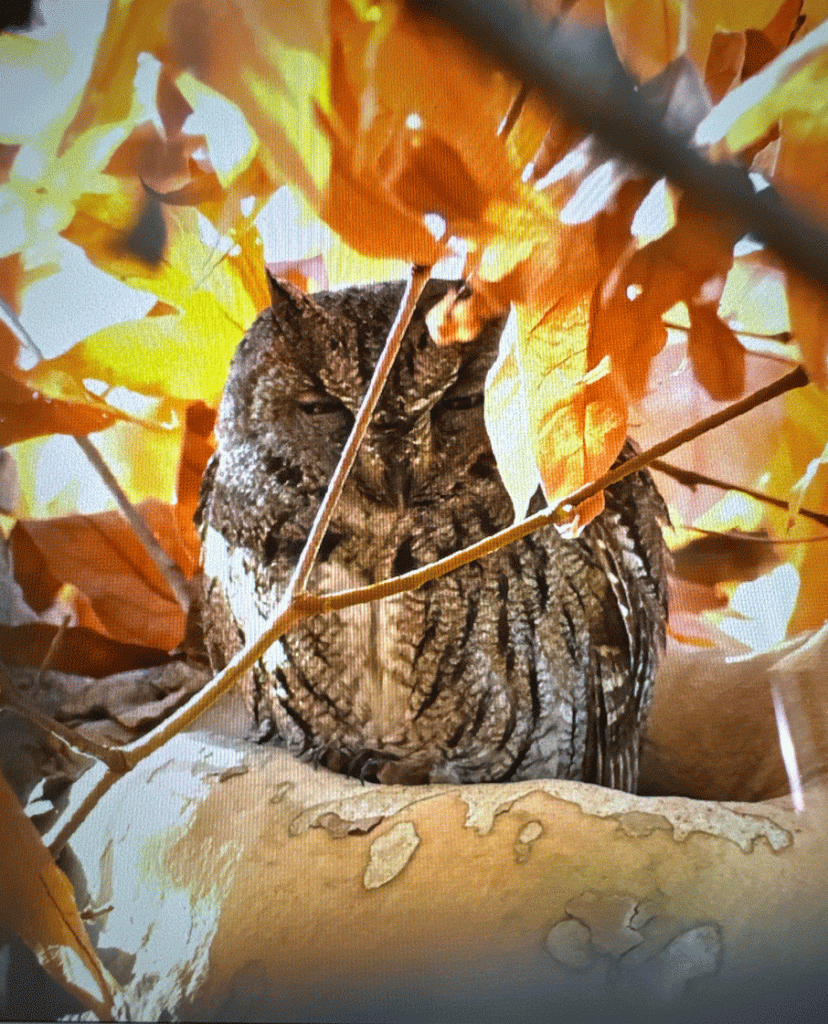
Later that same day, we did a short walk in Madera Canyon and were lucky enough to meet a group that was looking up at an owl. This Western Screech-owl was perched high up in a sycamore and we likely would have walked right past it. The group had found it because someone told someone, who told them the general area to look. We’ve experienced the same spirit of cooperation in other birding encounters.

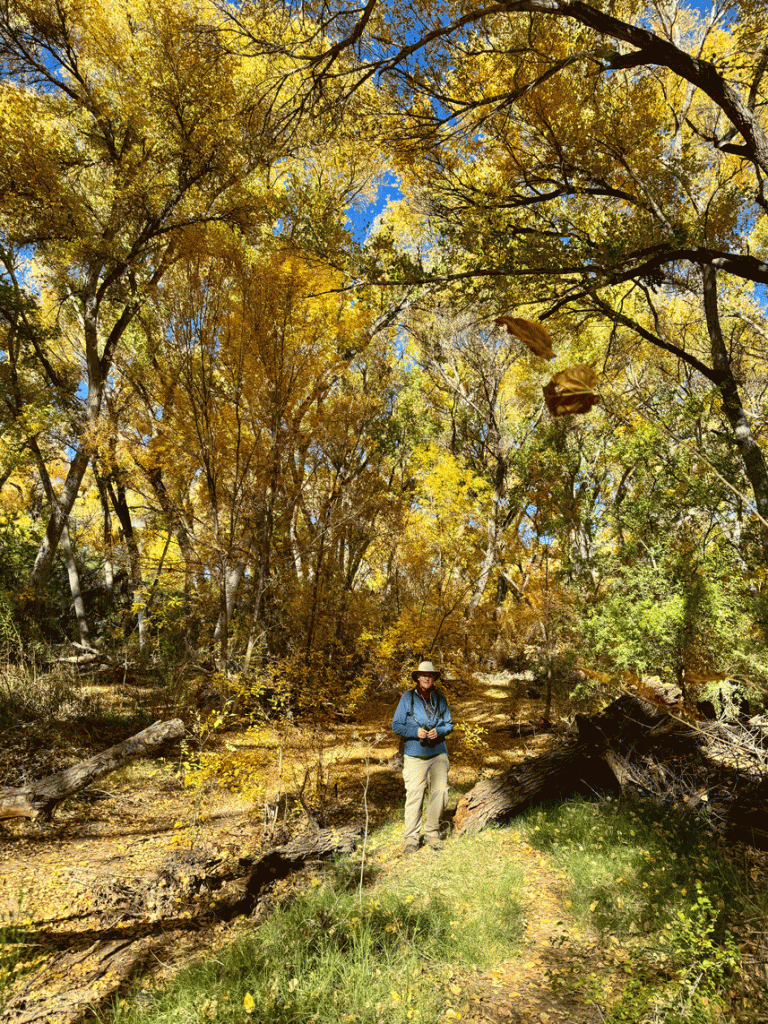
Another day, we walked along one of our favourite trails in Tubac. We didn’t see anything unexpected, but we discovered another side trail that allowed us to make a loop. The leaves of the cottonwoods in December in Tubac are reminiscent of the leaves in the East Kootenays in BC in October.

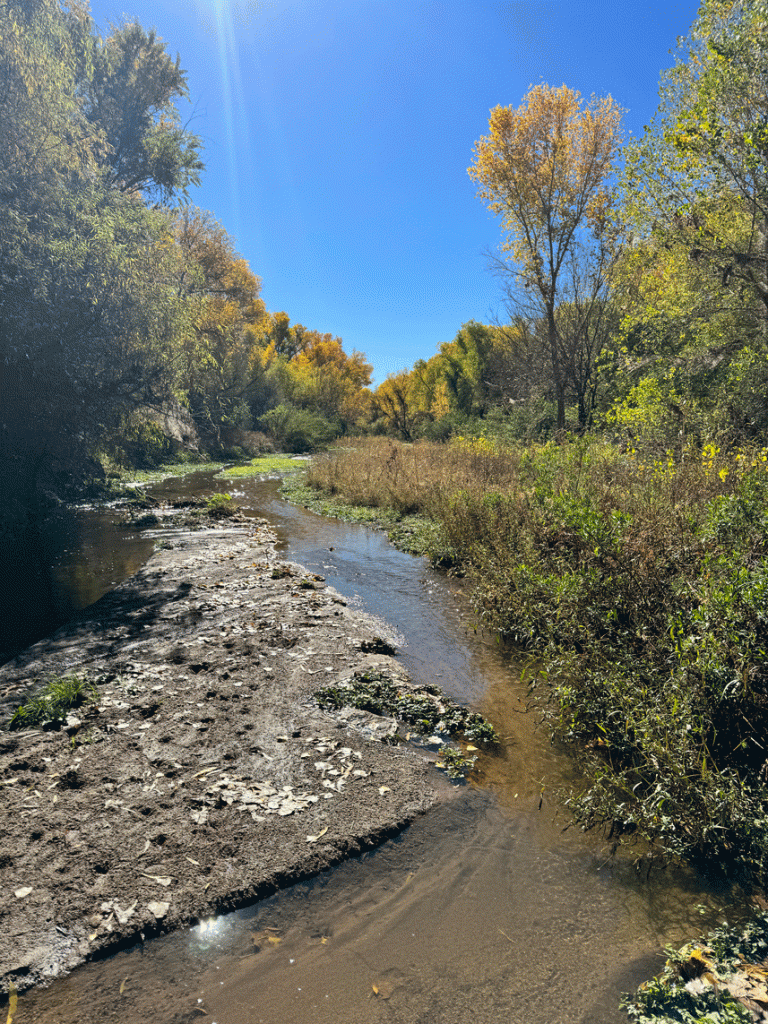
That same day, we drove a short distance south to Santa Gertrudis Lane. Here’s a view of the Santa Cruz River near where the road crosses the water. (There is no bridge; vehicles drive through the water.)

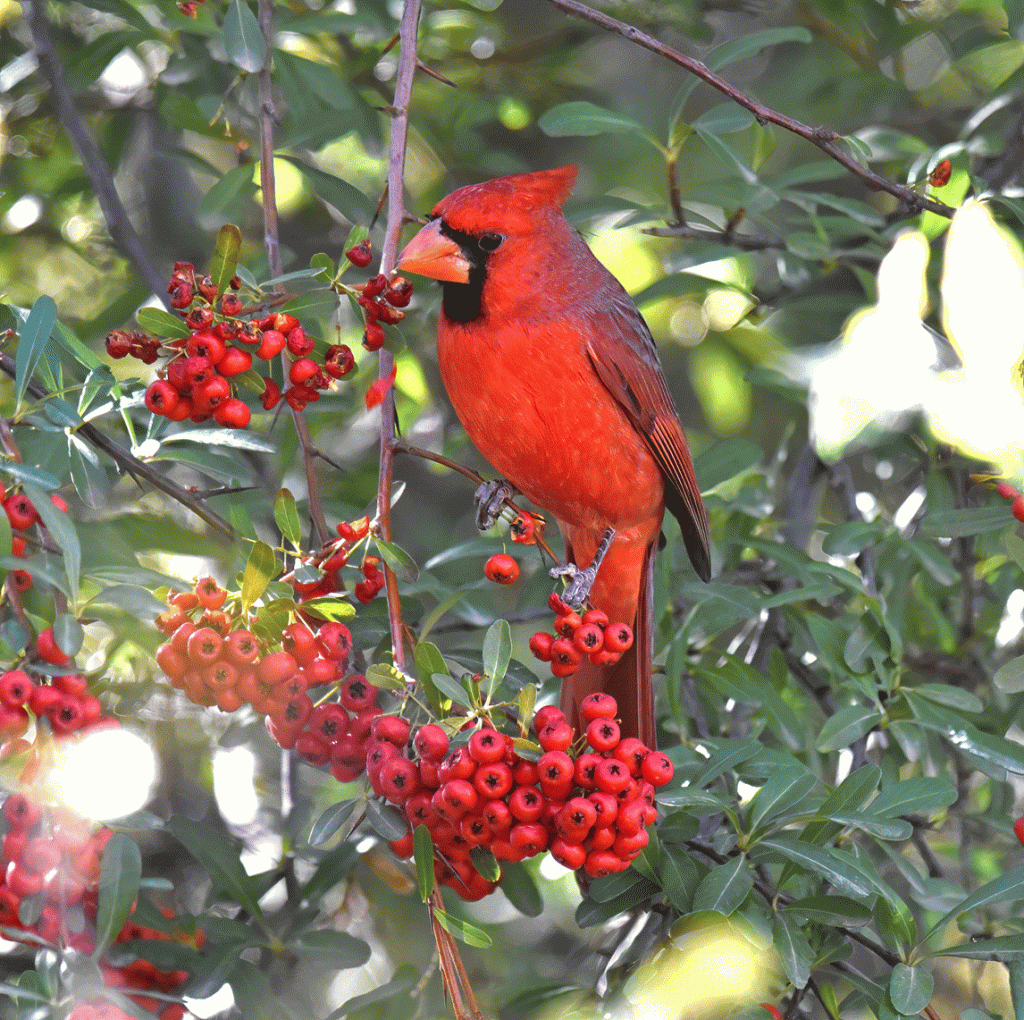
Along the lane there is a non-native pyracantha bush which provides food for many bird species. We spotted this male cardinal a little farther down the lane and followed him, hoping he would land near the berries for a Christmas-y photo. And he posed beautifully.

Here’s a view of El Rio Open Space Preserve on another day. This birding hotspot is in Marana and quite close to where we live. We didn’t take any photos of birds this day.

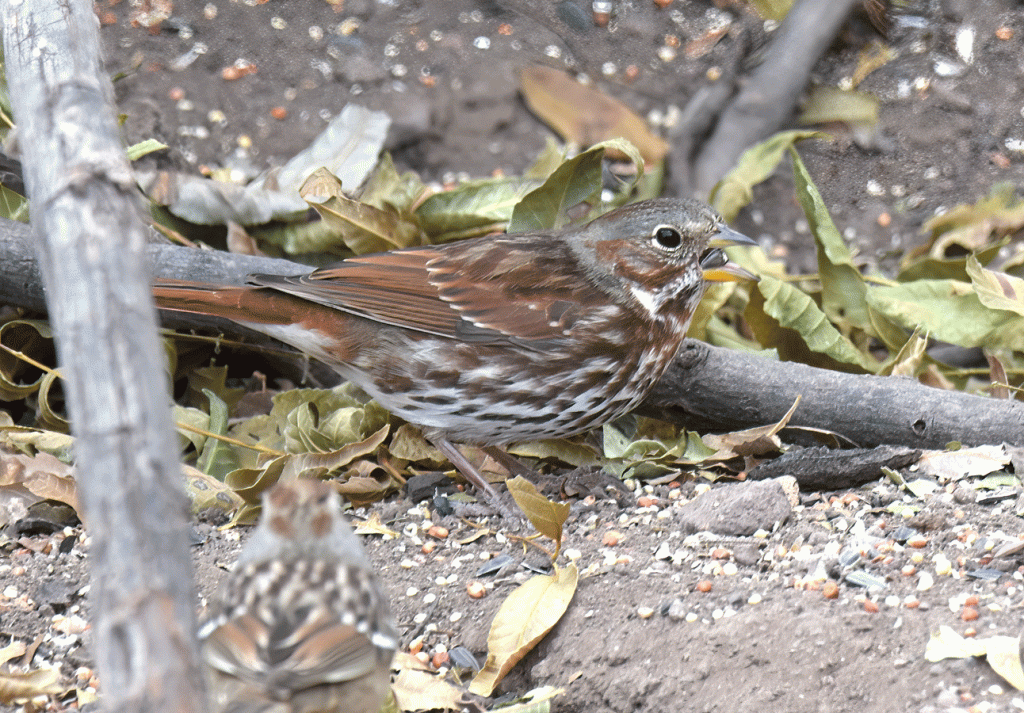
Another day, this Fox Sparrow was hanging out in the front yard of the Paton Center for Hummingbirds in Patagonia, AZ. It’s one of the red (taiga) sub-species.

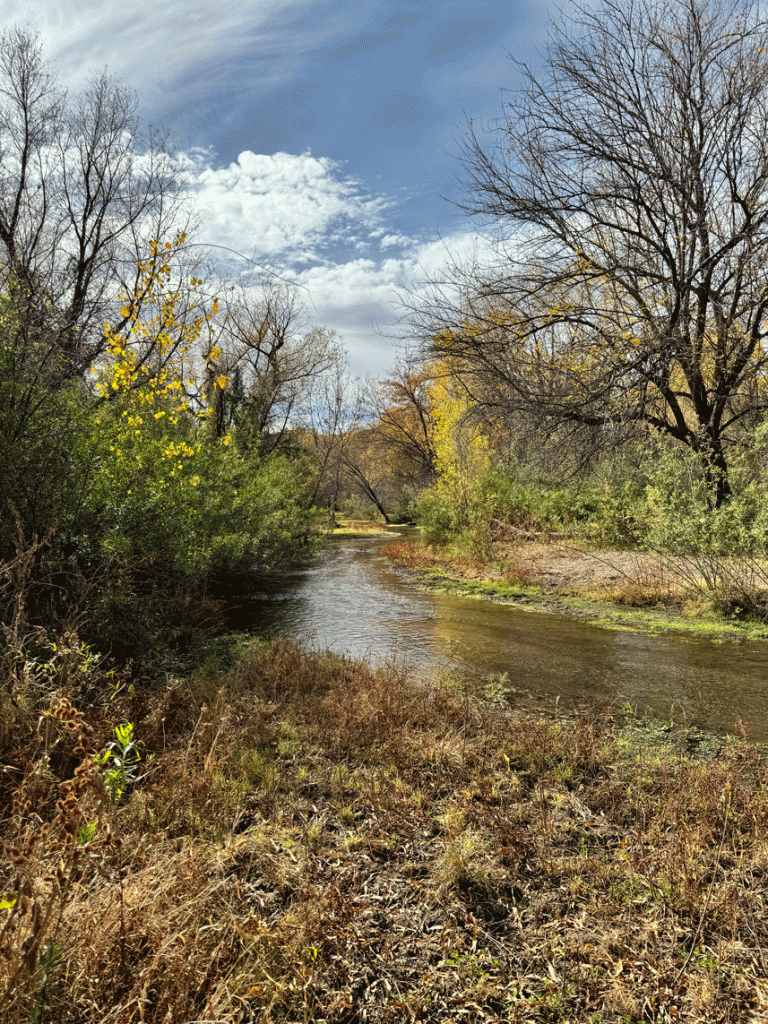
That same day, we walked along Sonoita Creek in Patagonia Lake State Park. We saw the “regulars” and enjoyed the short hike.

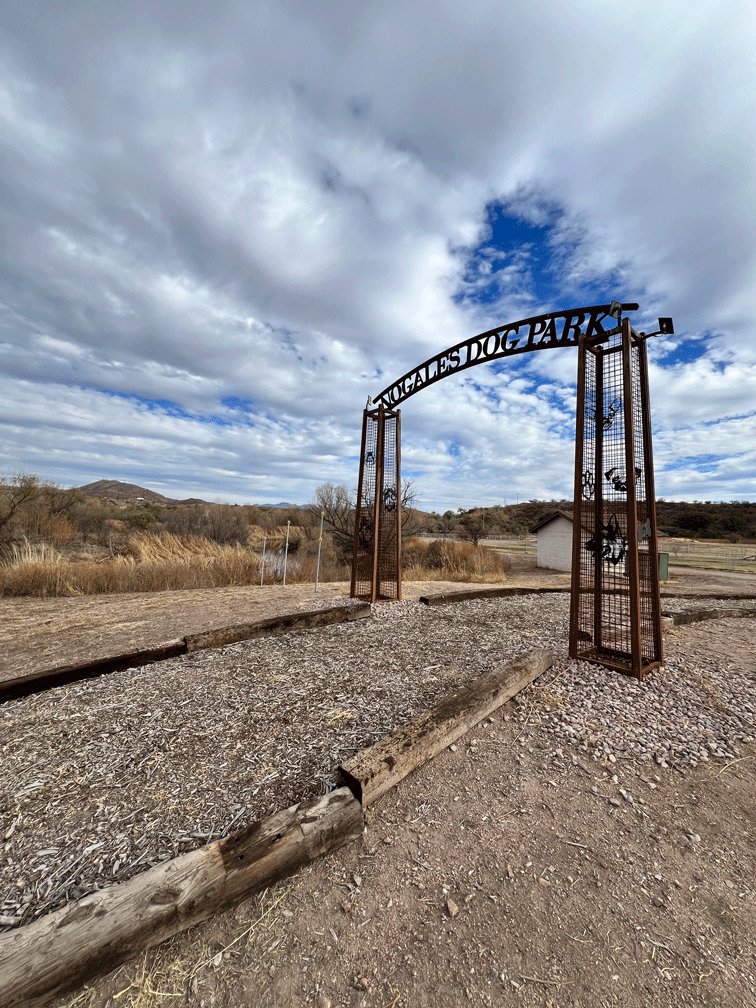
We went to one more birding spot on our way home from Patagonia. The dog park in Nogales used to be a golf course. In 2020, the city council put in a fenced area with features and obstacles. Sections have been mowed in the open area around the ponds. We saw over twenty species of birds in about twenty minutes, so it’s a place we will probably visit again.

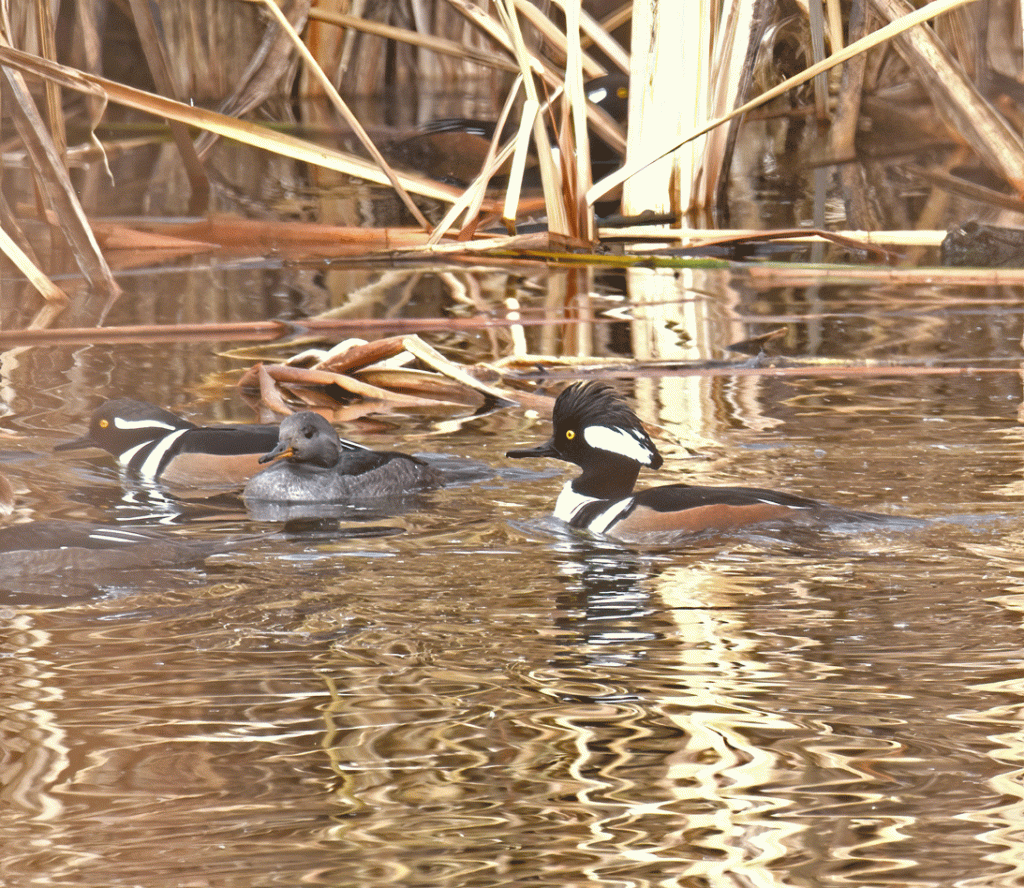
These Hooded Mergansers were in the long, narrow pond.

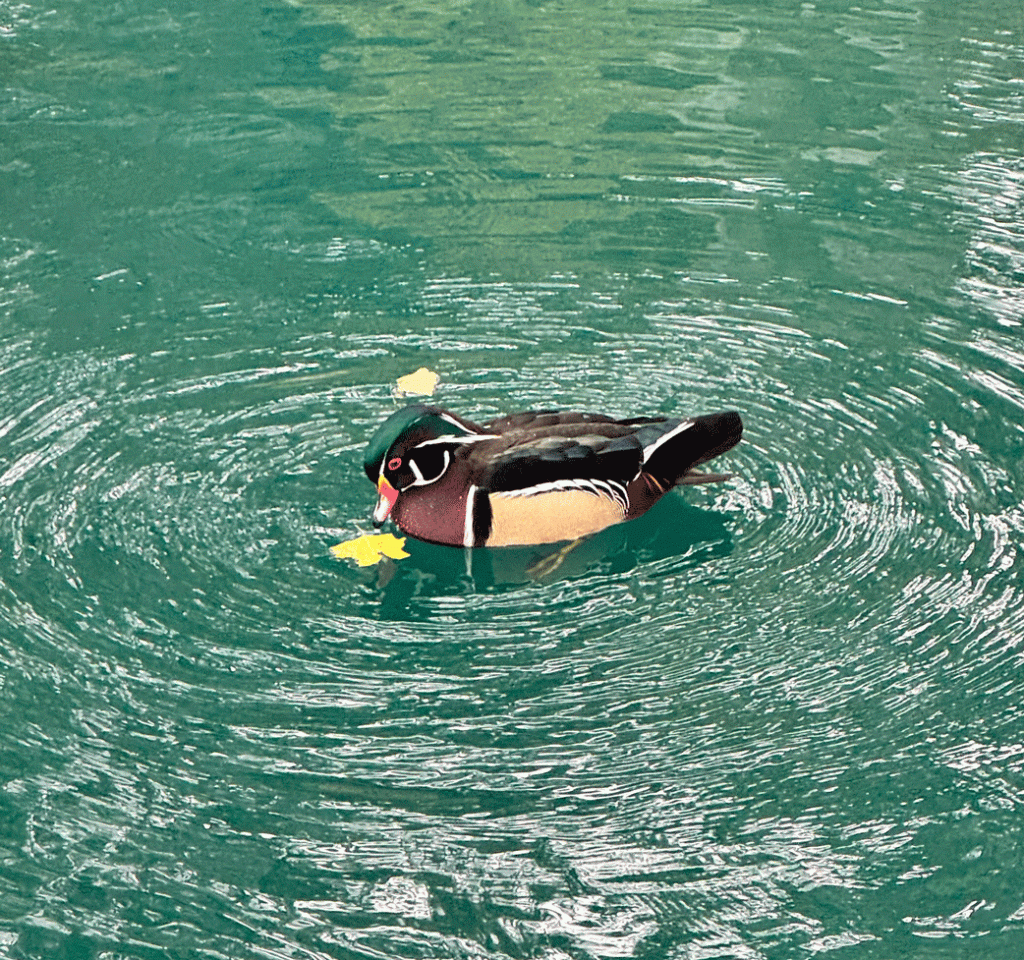
Another day, we made a regular trip to Reid Park. Doug has taken many photos of the resident Wood Duck and here’s another one. He’s such a photogenic bird!

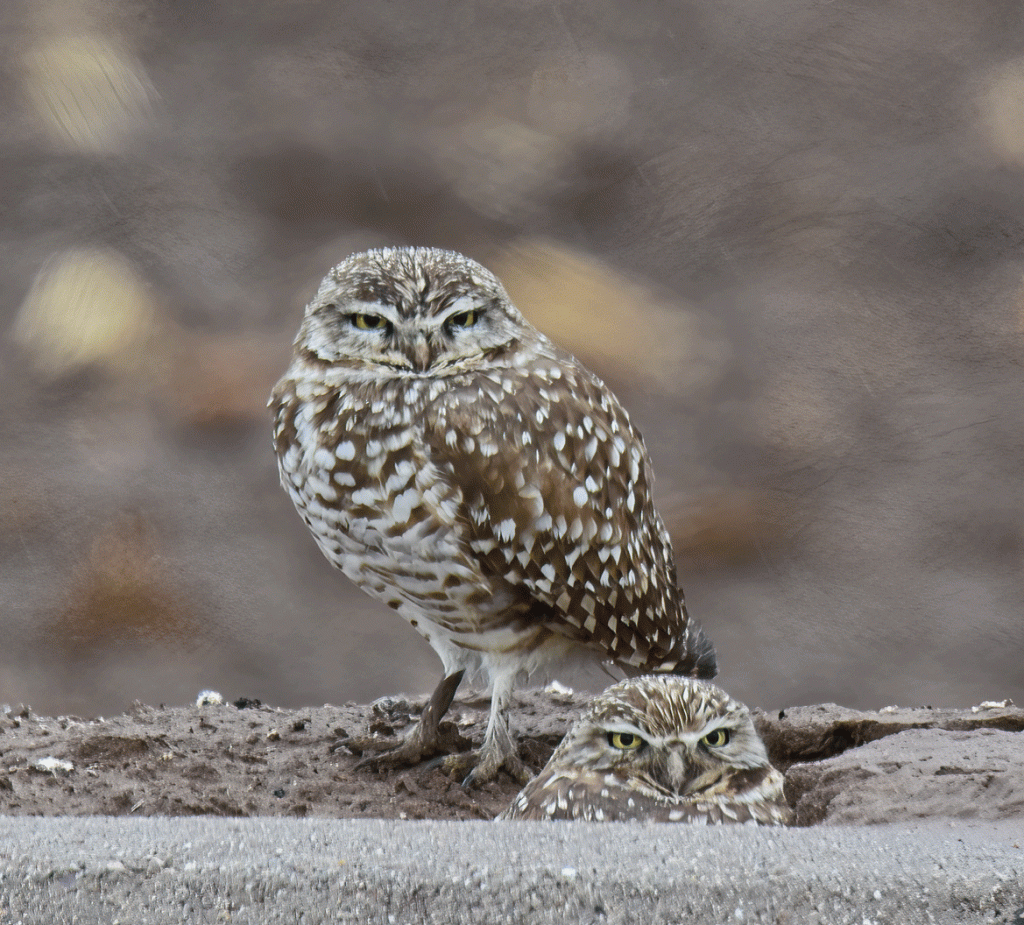
Several times we drove out to the fields in Marana to look for hawks (found a Ferruginous) and cranes (no Sandhills visible). Whenever we’re out that way, we check the spot where we’ve seen Burrowing Owls before. One day, we were lucky to see one of the owls totally up on the mound.

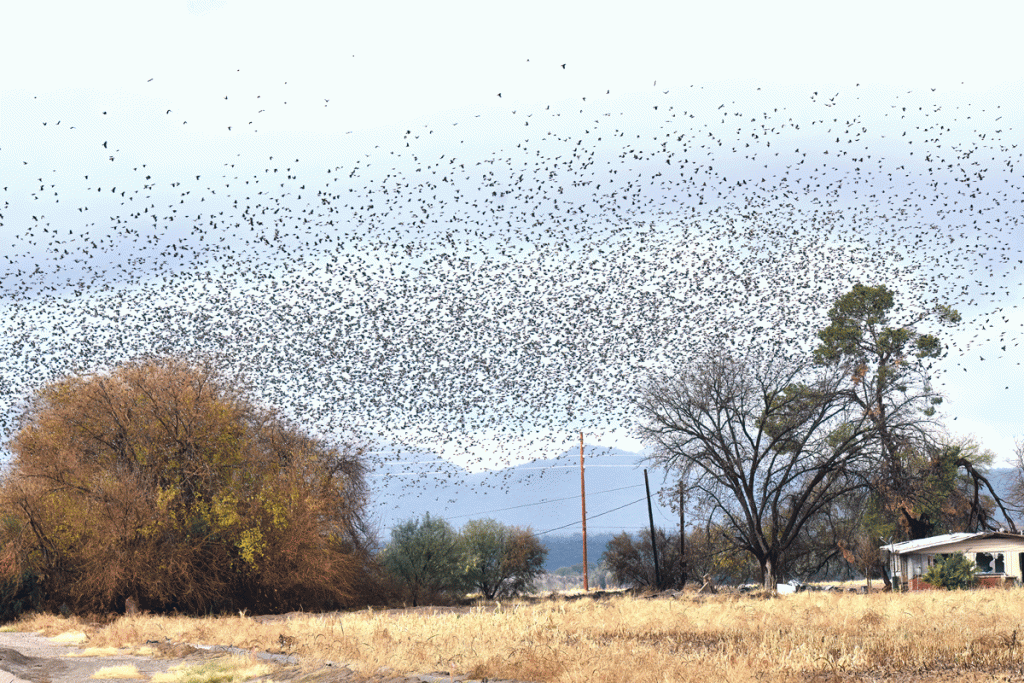
A little ways down the same road, we saw this huge flock of Yellow-headed Blackbirds. The photo doesn’t show the whole flock. The murmuration was mesmerizing.

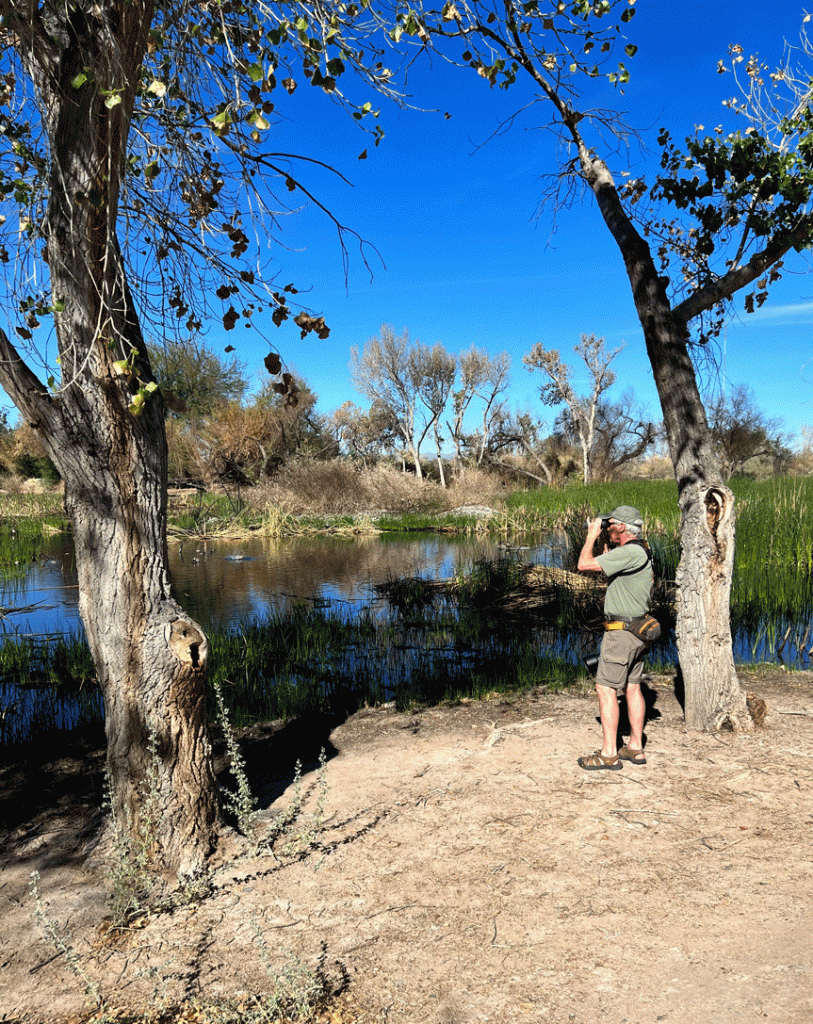
We saw our last significant bird of the year on Boxing Day in Patagonia, AZ. The special warbler was reported to frequent two thick juniper trees on the main road. Here’s Doug taking photos. He took over fifty.

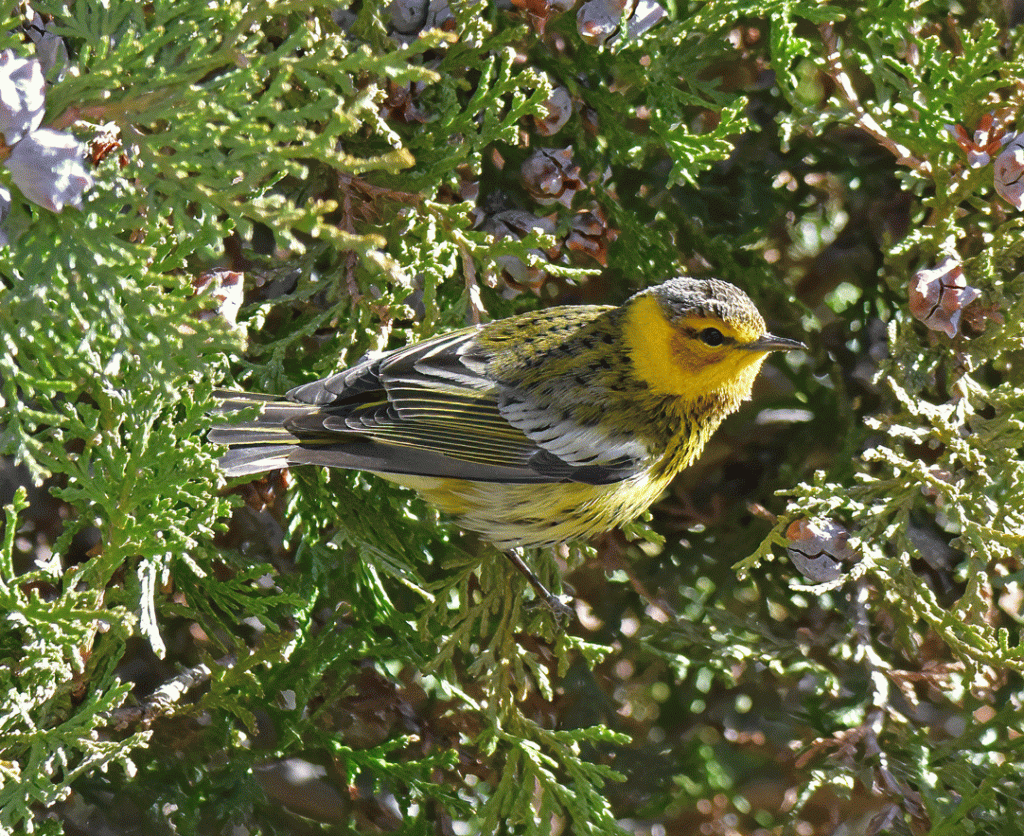
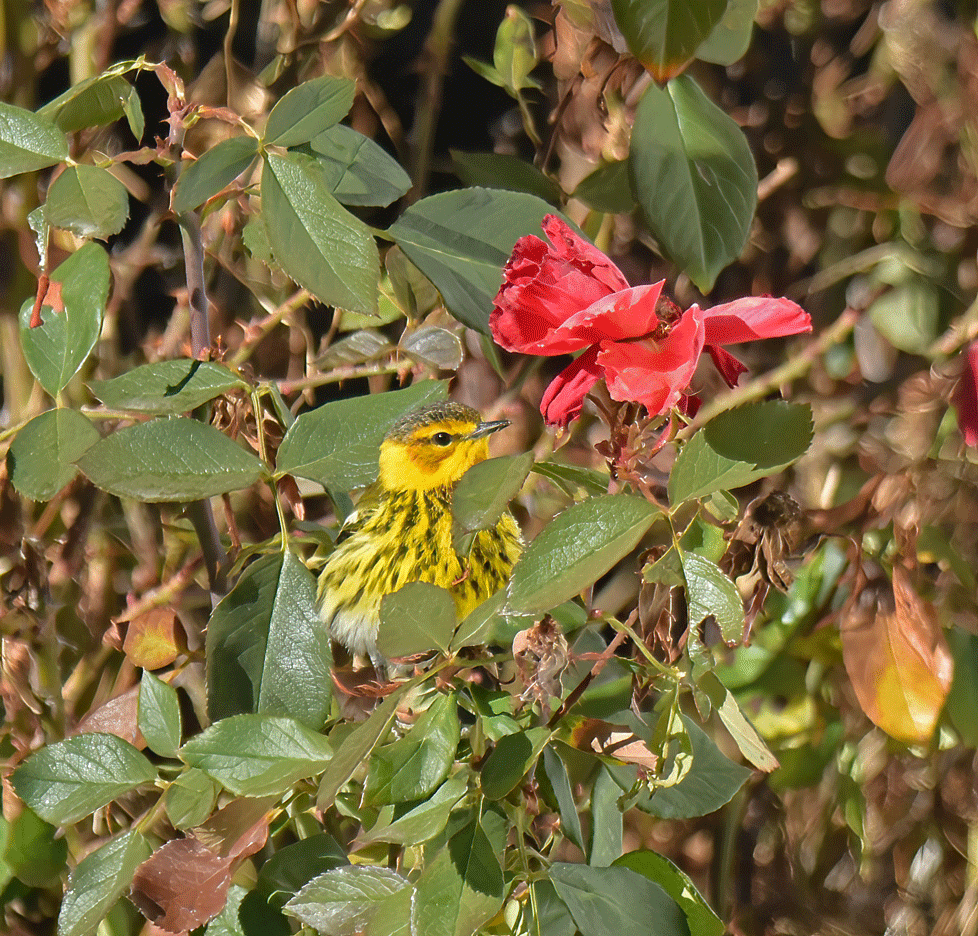
This is a Cape May Warbler, a “lifer” for us. And it was almost too easy; we drove an hour and a half to get there, and saw the bird immediately after walking over to the tree.

When enough photos are taken, sometimes a bird is caught in flight!

The warbler also visited a nearby rose bush, that was at eye level a few metres from the side-walk. It didn’t seen concerned about people watching it, although no-one got too close.

We hope you’ve enjoyed the photos of the some of the birds and birding locations from our December forays. And now that a new year has begun, and we’re sure to have many more birding adventures.

December 2023 – Back to Arizona

December 2023 – Back to Arizona

We took the fifth-wheel down to our place just outside Tucson, AZ in early October, so we didn’t need to worry about having to deal with poor weather while we were towing. We enjoyed the rest of October and all of November at home in BC. On our drive south at the beginning of December, the roads weren’t terrible, but they weren’t great either. On the first day, we drove to Idaho Falls through light snow squalls. The snow continued on our drive the next morning. The photo below was taken at the rest area just north of Salt Lake City, around 9 am. Luckily the roads were just wet after this stop, and the HOV lane made the drive easier through the metro area.

We stayed in Page, AZ the second night, which left us with about a six hour drive to complete our trip. We decided to get up early and make a stop at the Gilbert Water Ranch, in the Phoenix metro area. The park is mainly trails between a number of ponds, but the saguaro feature garden really gives us the feel of being back in Arizona.

We got back to our place by about 3 pm which allowed us enough time to set-up and then relax outside before dinner.

And the best sunset of the month was that night! Even the dog across the road was welcoming us back.

We spent the first week back getting organized and stocking up with groceries. We also focussed on trying to see the rare birds that had been reported lately, in case they chose to leave for other parts. The details of those birding adventures will be in the December Birding blog.

On our first Saturday back, we had the pleasure of being invited to a neighbourhood party. We had met many of the folks before, but mostly very briefly as we passed them on the narrow roads. We enjoyed getting to know people better and we left the party feeling like we were part of a community.

We were happy to be back mountain biking. Our favourite trail in the Tortolita Preserve was in great shape. Here’s Wendy riding past a nice looking saguaro that she named “Mr. Majestic.” When we reach this point in our ride, we’ve ridden a little over an hour and have about ten minutes left until the trail head.

We also did a longer ride in the Honey Bee trail system in Oro Valley. The trail passes granitic outcroppings, which are interesting to look at and provide good spots to have a rest and a snack. The 28 km route took us a little over 2 1/2 hours.

We got back into hiking too. One day we hiked our regular loop at Sabino Canyon.

Perhaps we’ve posted a similar photo of Sabino Canyon before, but we don’t get tired of the view.

The next eight photos are of a hike we did that is really close to our place. The twelve kilometre loop starts at Cam-Boh Picnic Area in Saguaro National Park (west). The first section is mainly up Prophecy Wash. Panther Peak is in the middle of the background in the photo below, and the right skyline is the ridge we look at from our fire pit.

Soon the trail leaves the wash. Wasson Peak is the high point in the skyline behind Doug. From here the trail continued gradually climbing.

We love saguaros, especially unusual ones. This “armless” quintet caught our eye.

At this point in the trail, we are starting down from the height of land between Prophesy Wash and Picture Rocks Wash.

We think the top end of Picture Rocks Wash is the most interesting part of the wash because it’s narrower and has rocky sections.

We always marvel at how the ironwood trees and saguaros can live when it looks as if they are growing out of rock.

We chose to come out of the wash on the Ironwood Forest Trail. Soon we could see the built up area of Marana over the ridge.

Then we headed west on the Cam-Boh trail, back to views of Panther Peak and the ridge. On our four hour hike that Saturday, we only met one other person.

We have made several trips to look for birds in the agricultural fields of Marana just north of us. Here’s a view of the mountains to the west, with harvested cotton fields in the foreground. Cotton is a productive crop in Marana, where they grow a longer-fibre strain, known as Pima cotton. The early people in the area (Hohokam) grew cotton thousands of years ago, building canal systems to water their crops.

Here’s a view of cotton bales on a truck. We were stopped for road construction.

Here’s a side view of a bale.

One morning, we were leaving to go birding around 7:15. This was the view in the western sky from the gate.

And this was the view of the fifth-wheel and the sunrise from the gate.

We are lucky to live so close to beautiful scenery. This photo was taken on one of our hour-long walks from our place. This saguaro is probably home to a number of birds.

We experienced the heaviest rain day of 2023 on December 22. It was a record rainfall for the date as well, at 1.25 inches (25 mm) in 24 hours. Since it rained almost all day, it gave his a chance to get caught up on the blog. Wendy also did some machine appliqué. She really enjoys the new sewing centre that Doug built for her. We don’t miss the couch that used to be in that spot.

Here’s a view of some of our Christmas decorations. We love gnomes!

Merry Christmas and Happy New Year! We’ll post our December birding blog soon.

March / April 2023 in Arizona – Part 3: Birding Farther Afield

March / April 2023 in Arizona – Part 3: Birding Farther Afield

At the end of March, we travelled to the Chiricahua Mountains near Portal, Arizona. We left early in the morning so we could stop along the way and see some birds in Willcox. Here’s a view of Cochise Lake in Willcox.

Here’s a closer view of the American Pelicans at the lake. They look huge compared to the Northern Shovelers swimming in front of them.

There were also some American Avocets.

Portal is on the east side of the Chiricahuas, and access roads are better from New Mexico. It’s possible to get to Portal over the mountains, but the road is impassable in the winter. Portal is a tiny village. The Portal Store (Cafe and Lodge) is the main building in “downtown.”

Just down the block is the post office, with the library is right beside it. That completes the tour of downtown. About 800 people live in the area.

We were staying at Cave Creek Ranch, but we were too early to check in, so we explored farther into the canyon.
We hiked up a short trail to a viewpoint to see this panorama. The rock walls are composed of fused volcanic tuff.

This is the view from the same spot in the opposite direction.

Sunrise from the ranch grounds was magnificent.

Here’s an early morning view from the patio in front of the office. Our unit was in the left low building in the background. The wild turkeys have gathered, anticipating a handout. The Cave Creek Ranch feeders are on the “must see” list for birders. The provided guidebooks have seen plenty of use.

This is the hummingbird we came to see: the Blue-throated Mountain Gem, and it was at Cave Creek Ranch. We saw this species in a couple of other places in the canyon, but the best views were at the ranch feeders.

This male Evening Grosbeak was also really close to the patio.

On our first full day, we drove farther into the canyon and hiked to Ash Springs. From the trail to the springs we got a good view of Winn Falls. The birds seemed to congregate at the spring area. The most interesting was a Yellow-eyed Junco. We were a little early in the season for a lot of the species, so we will visit later another year. There was too much water in the creek for us to safely cross, so we returned the way we came, rather than completing a loop.

We had our lunch at the John Hands Campground. The creek has been dammed at this location. Even though the creek is not in its natural state, the waterfall is still pretty.

That afternoon, we hiked a short way along the South Fork of Cave Creek, below impressive sheer cliffs..

The next day, we birded with friends that we hadn’t seen for years. It was by chance that we both came to Cave Creek on the same weekend. This photo was taken along the nature trail between the Visitor Centre and Sunny Flats Campground.

We took a few steps off the trail to get this view of Cave Creek.

This Painted Redstart was cavorting in the creekside willows.

That afternoon, we celebrated the serendipity of both couples booking the same weekend at Cave Creek Ranch. It was great to catch up and to get to know each other better.

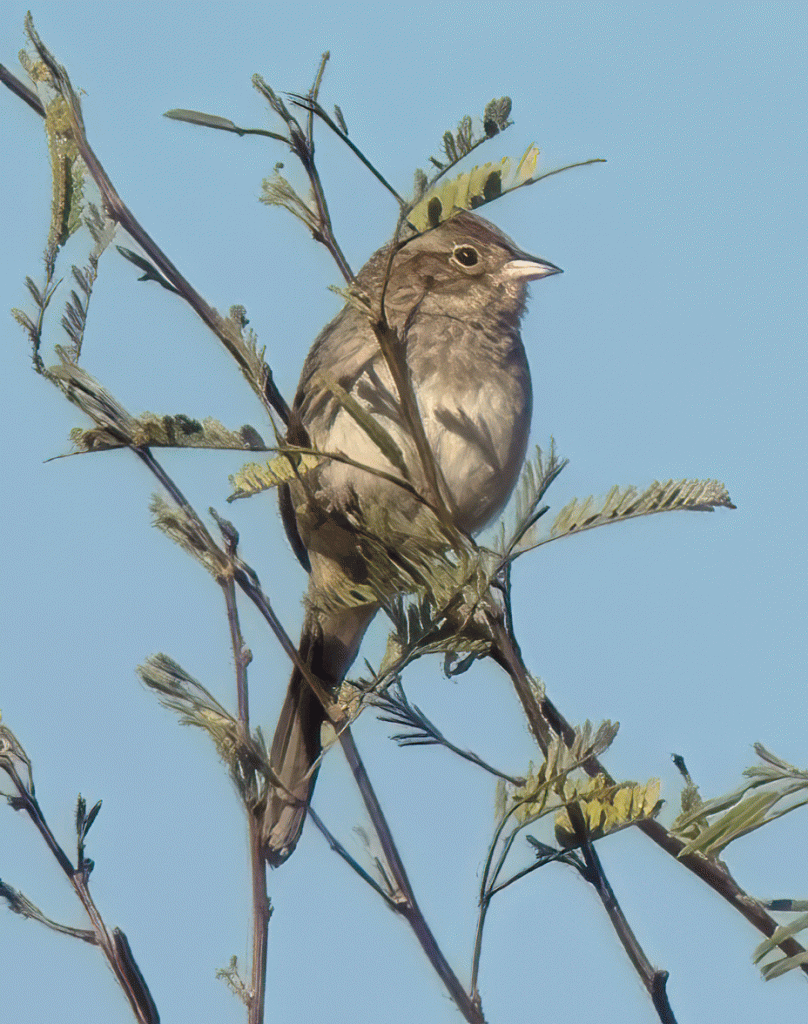
We left the next morning, and headed out early to Stateline Road. Our goal was to find a Cassin’s Sparrow that we knew had been sighted along the road. Since it was a quiet road, our strategy was to stop as soon as we saw some birds moving. On our first stop, we were able to get a good view of the target bird. It was definitely not a sparrow that we would ever see in BC or even any other part of Canada.

The desert scrub along the road was also a good habitat for Bendire’s Thrasher, so we kept a lookout for one. And we were fortunate to see one perched in good light. It was our third sighting for the year, but the best photo.

Recent improvements to Willow Tank, that is farther south on Stateline Road, have meant that it is a dependable place to see several species of sparrows. The term “tank” is used to describe any man-made water hole in the desert, usually made to provide water to cattle. Sometimes the water is actually in a metal tank, other times it’s a depression that has been filled with water. Willow Tank has been fenced off from livestock, and now it benefits the birds.

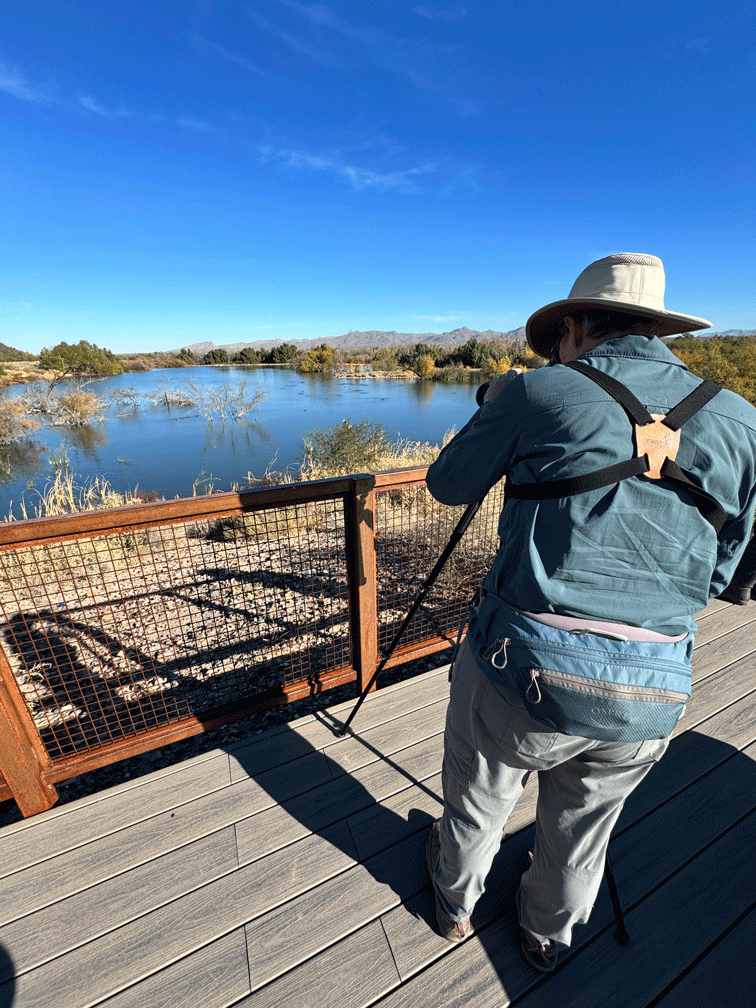
Willow Tank has also been improved for birders to have good viewing opportunities. Here’s a view of the tank through an opening in a bird blind. There is no cost for anyone to visit Willow Tank. The enhancements benefit the birds as well as bringing tourist dollars into the nearby communities.

In late March and early April, we made two trips to Ramanote Canyon, in hopes of seeing a Rufous-capped Warbler. We didn’t see that bird, but we did experience an amazing landscape. Here’s a view of the canyon before we walk down a steep jeep track to the stream below.

We actually did see a species we had never seen, along the trail closer to the truck than the above photo. We saw two Scott’s Orioles. The female posed for a photo; we only got partial views of the male since he landed in the middle of the tree and was obscured by branches.

This photo was taken from the stream at the bottom of the steep hill on our second attempt. It was a chilly morning.

This was the view above the dam, which was about 500 metres from the stream crossing.

There was a faint trail, mostly put in by cattle. At the beginning it was fairly open and easy going.

Farther up the canyon the trail became a bit overgrown with prickly bushes.

Here’s a close-up of the bush, locally known as the “Wait-a-minute” bush (Mimosa aculeaticarpa.) It got that name because the prickles catch your clothing and you need to back up to get the thorn out, or risk a tear.

The warbler we were searching for likes sunny brushy habitat in foothill canyons. It stays low in the dense vegetation, so we spent time looking for movement, without any success. (A positive note: the birder in the photo did see the warbler, a few weeks later in a different location.)

Our trip home was uneventful, and when we arrived at our place, the snow had mostly melted. The bird species that we saw all winter in Arizona are making their way up to BC and soon there will be a dawn chorus cacophony.

The Fifth-wheel is all unpacked and cleaned and will be ready for our annual trip to Oregon in July. We might not do a blog post about that short trip, but we’ll post again in the fall when we go back to Arizona.