Our final blog post about Belize will be about our visit to the Green Hills Butterfly Ranch, Black Rock Lodge and Caracol Maya site.
From the Crooked Tree Wildlife Sanctuary, we drove out to the Northern Highway, heading south. Luckily our driver has good eyes and noticed a large bird flying nearby. We stopped the car and walked across the road to scan the field. Soon, the huge bird was flying in our view. Wendy was so surprised when she saw it before the others, she couldn’t say “Jabiru,” just “large white bird.” Luckily everyone had a chance to see it. It was gone too quickly for a photo, but it was unmistackable.
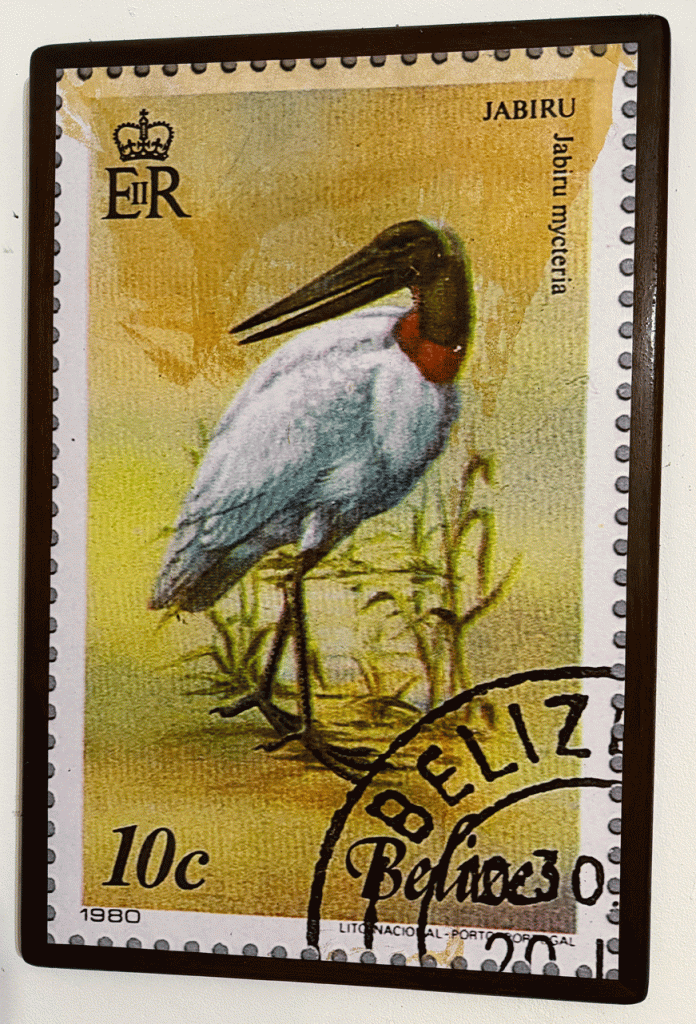
Here’s a poster of a Jabiru from our dining room at Bird’s Eye Lodge. They are huge, massive-billed storks that range in size from 90 – 130 cm (37 – 52″). Sometimes, if the water is low, there are several Jabirus in the shallow water near the lodge, but not this year. We were worried that we might not get a chance to see one. It was another “life bird” for the trip.
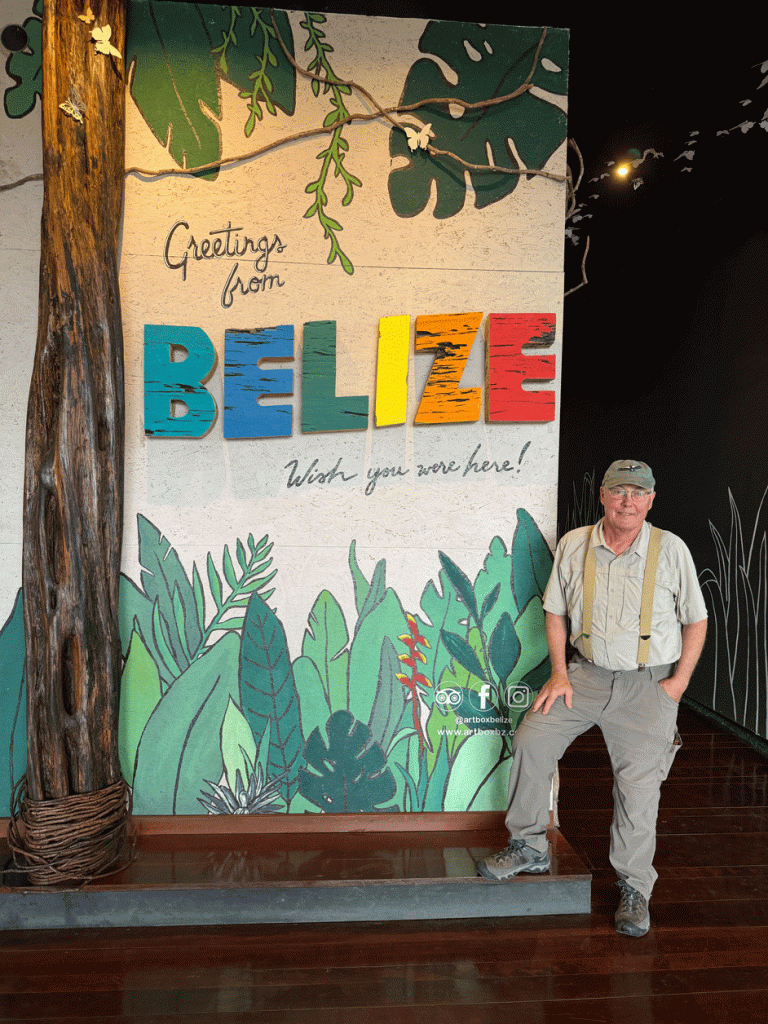
After the excitement, we continued south, then bypassed Belize City and joined the Western Highway at Hattiville. By mid-morning we were in Belmopan, the capital of Belize. We stopped at the Art Box, a cafe and gift shop, with unique decor. Here’s Doug posing by their mural.
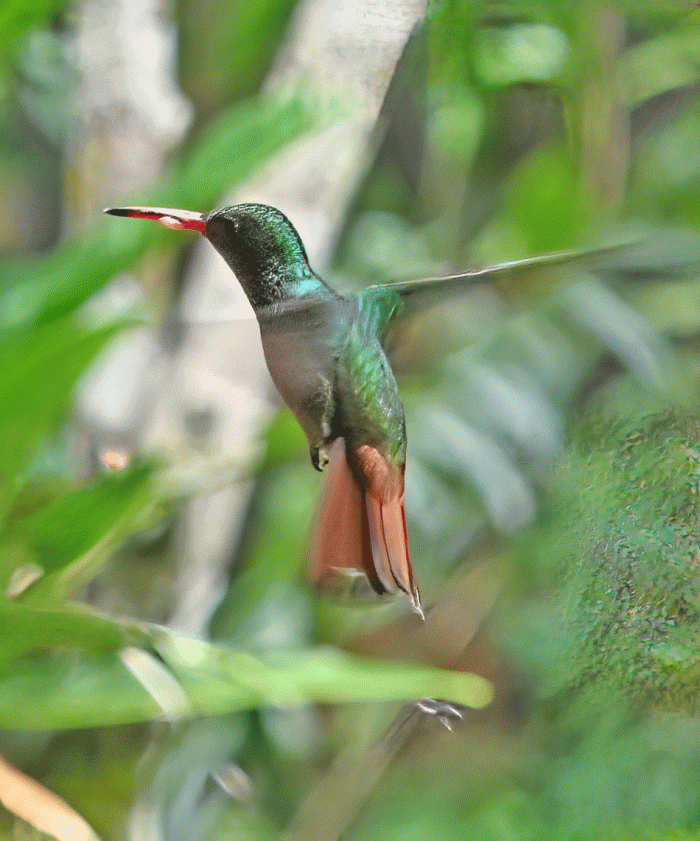
We continued west, soon reaching the Green Hill Butterfly Ranch. We weren’t there to see butterflies, however. They also had extensive feeders for hummingbirds and we got the best views of hummingbirds of the whole trip.
This one is a Rufous-tailed Hummingbird. They were quite common and we saw them at every place we stayed. They would feed on flowers as well as visit feeders.
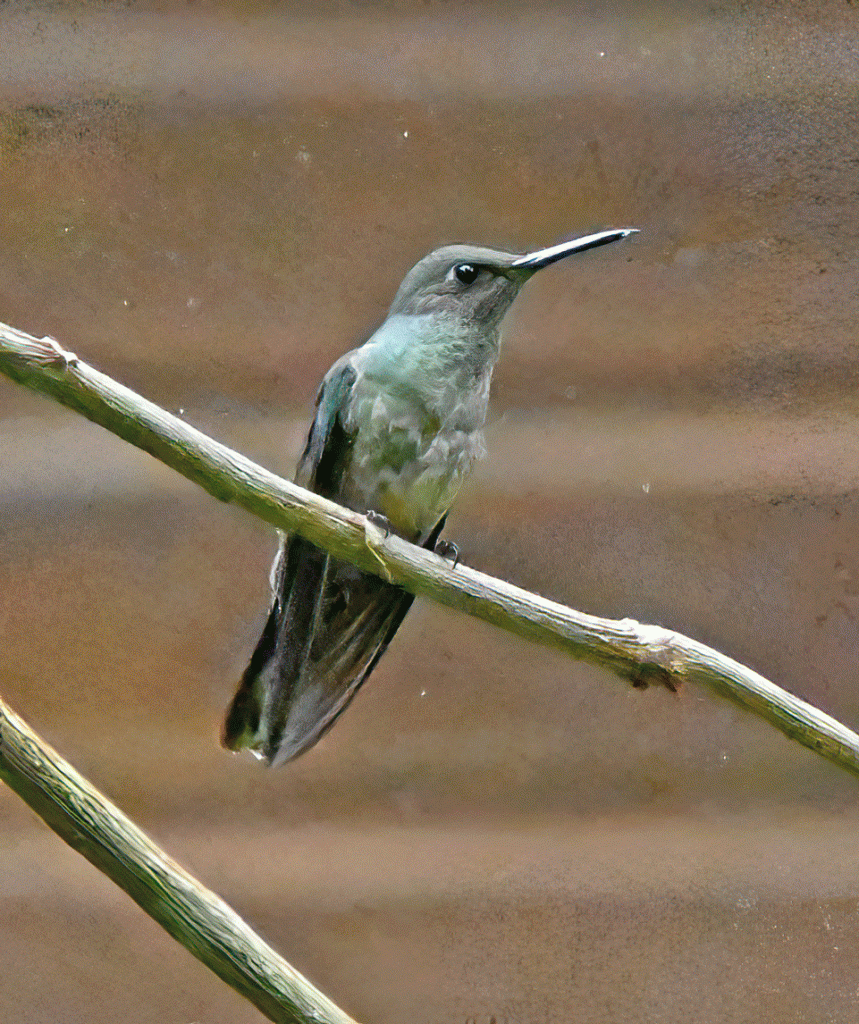
We only saw a Scaly-breasted Hummingbird at the Butterfly Ranch. This rather large, dullish green hummingbird has a mottled breast that is not obviously scaly.
We saw five more species of hummingbirds at the Butterfly Ranch, but their names didn’t end in “hummingbird.” We saw a “mango”, two species of “hermits,” some “jacobins,” an “emerald,” and some “sabrewings.” All the different names for all the species make it difficult to look them up by searching “hummingbird” unless you look them up by family (Trochilidae).
This Green-Breasted Mango belongs to the Anthracothorax genus, commonly called “mangos.” Mangos are medium-sized hummingbirds that have stout bodies, slightly curved bills and broad, metallic tails.
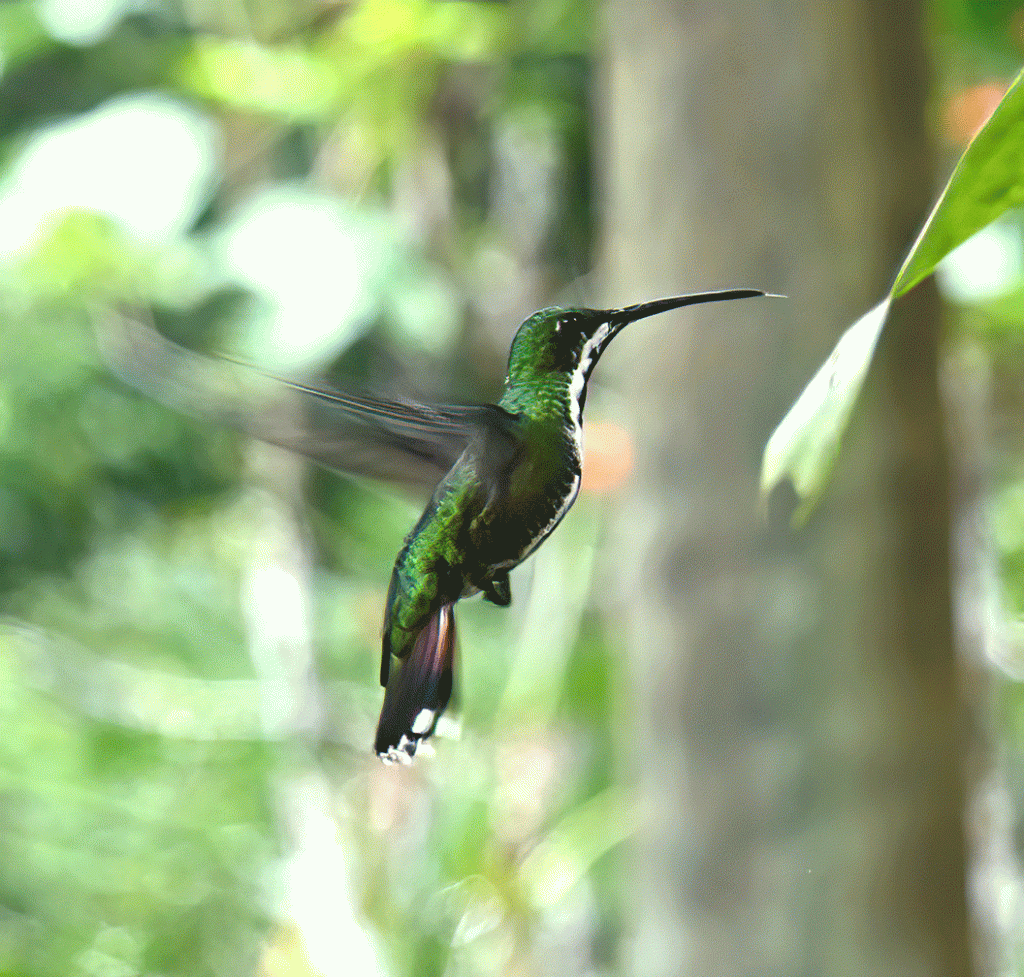
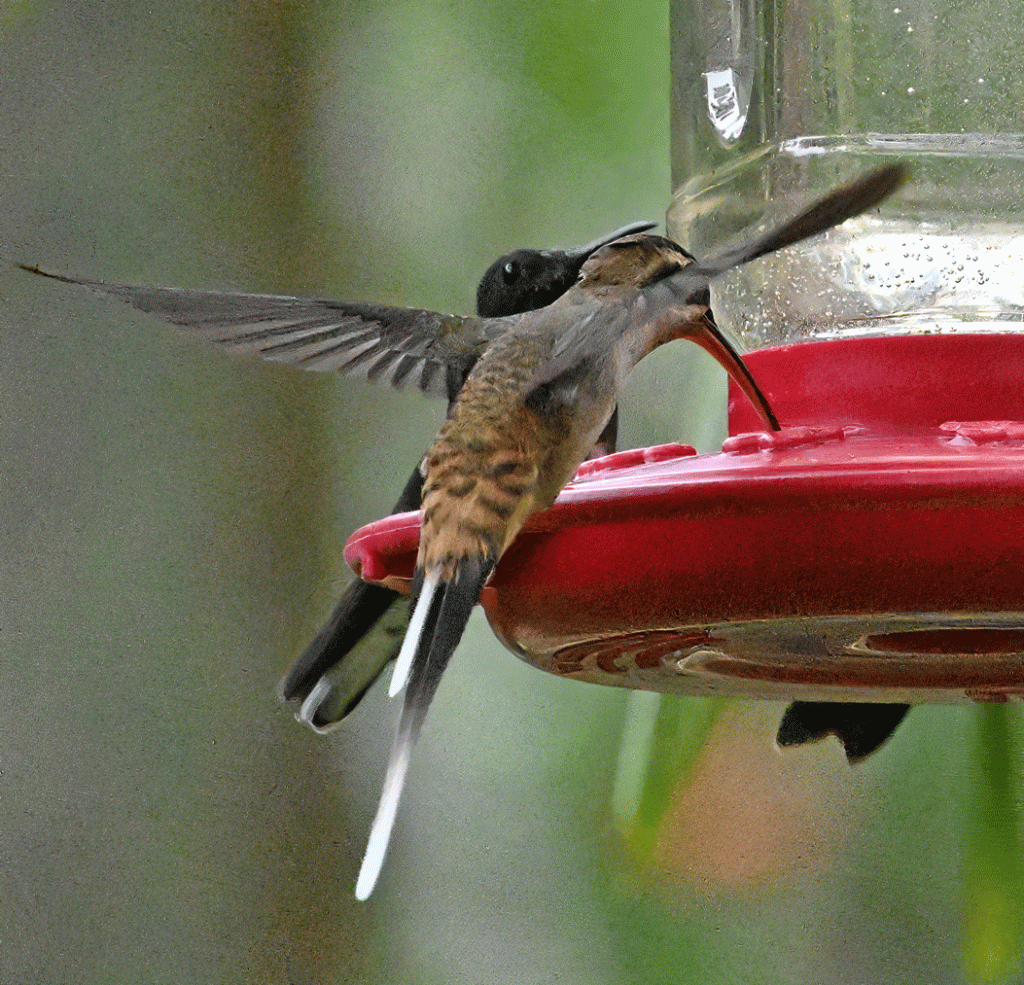
“Hermit” hummingbirds have less vibrant, more camouflaged plumage and most of them have long-decurved bills. This one is a Long-billed Hermit.
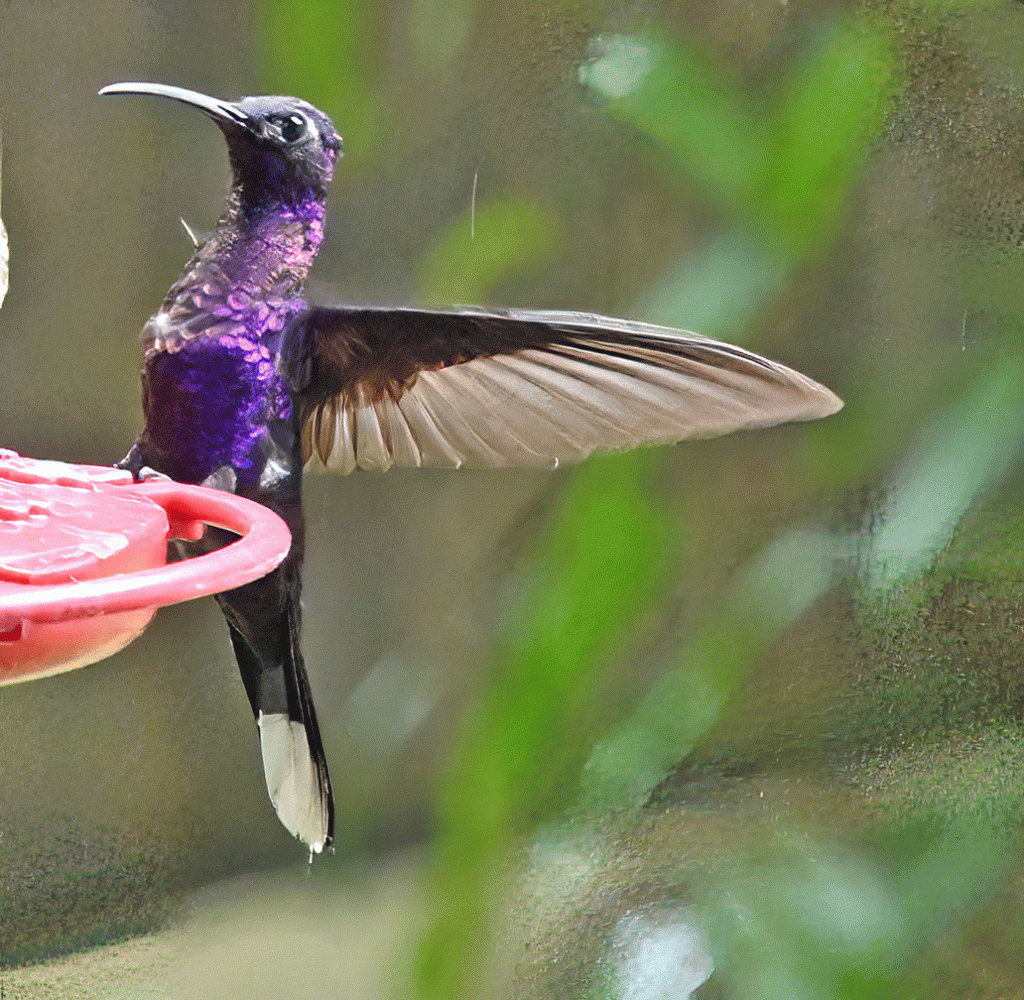
“Sabrewings” get their name from the shape of the male’s outer wing feathers which are flattened and curved resembling a sabre. This one is a Violet Sabrewing.
These are White-necked Jacobins. They are very agile and are also very territorial. Wherever we see them, they push their way to the feeder. The male (with the blue head) has a white patch on the back of his neck which is not visible in the photos below. The female is a brilliant green with an interesting patterned neck. We saw them at four locations on our trip.
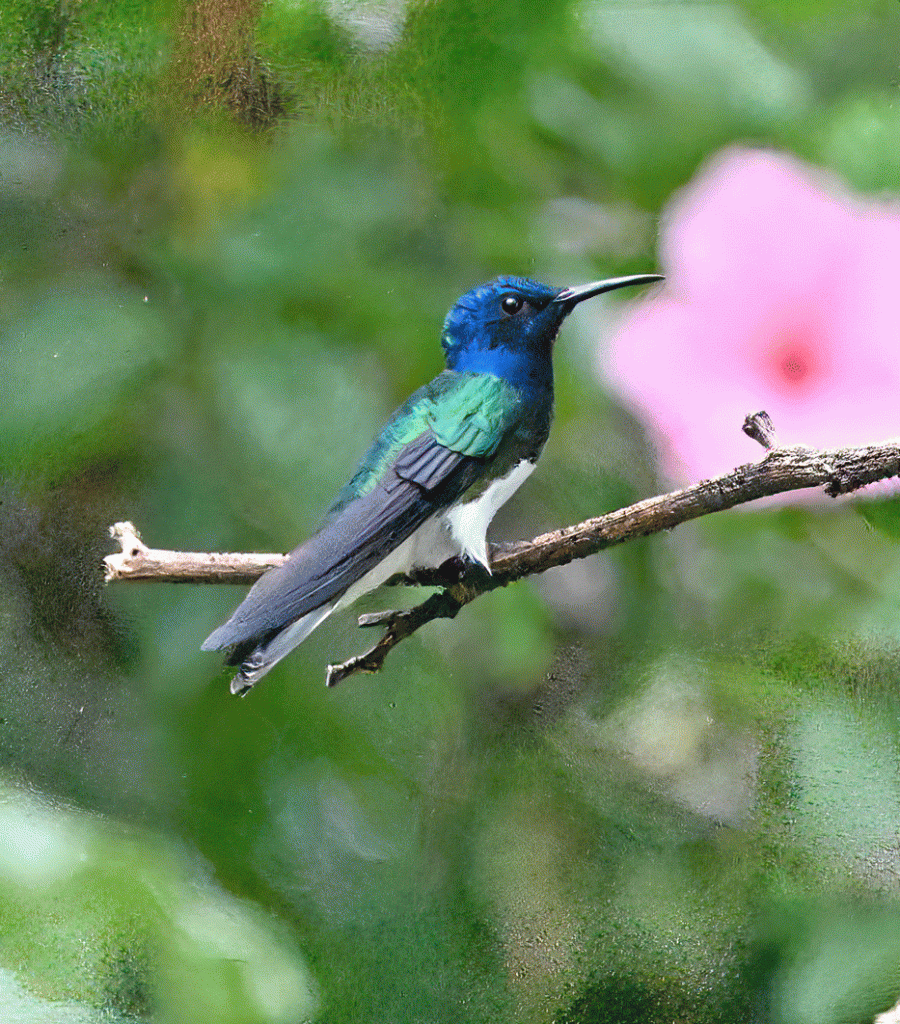
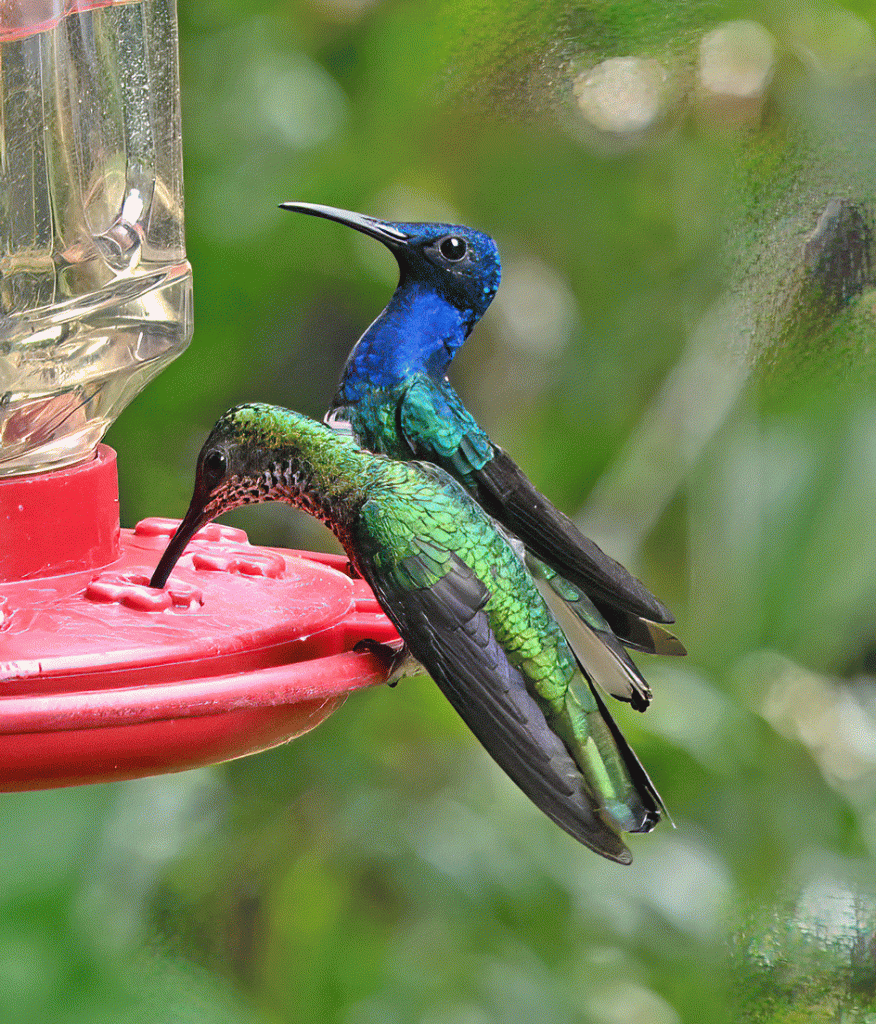
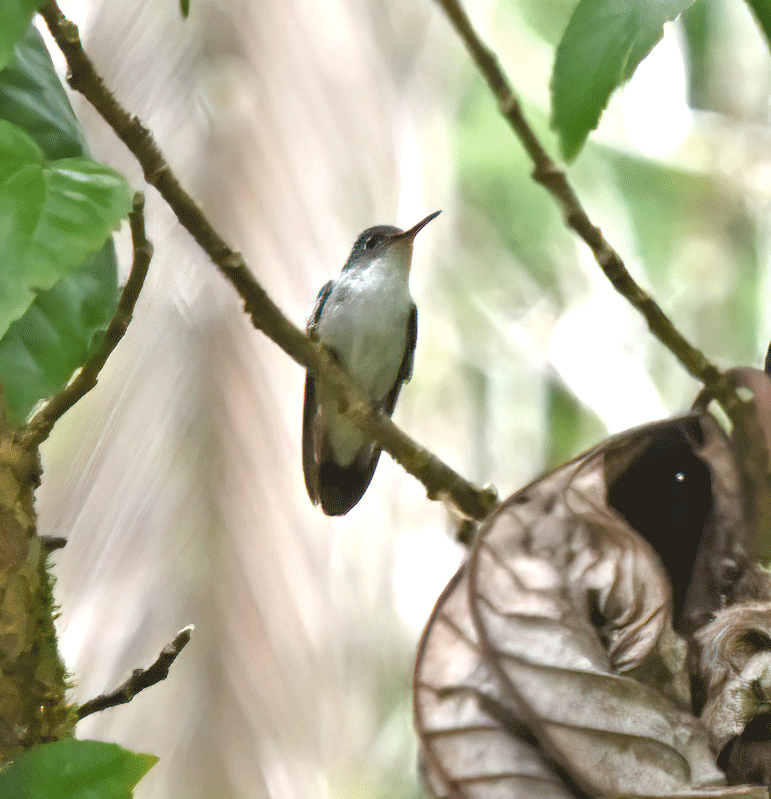
The only hummingbird at this location that we hadn’t seen before was the White-bellied Emerald. (After this sighting, we saw the species four different times.) Both sexes of this small and rather plain hummingbird look “female-plumaged.”
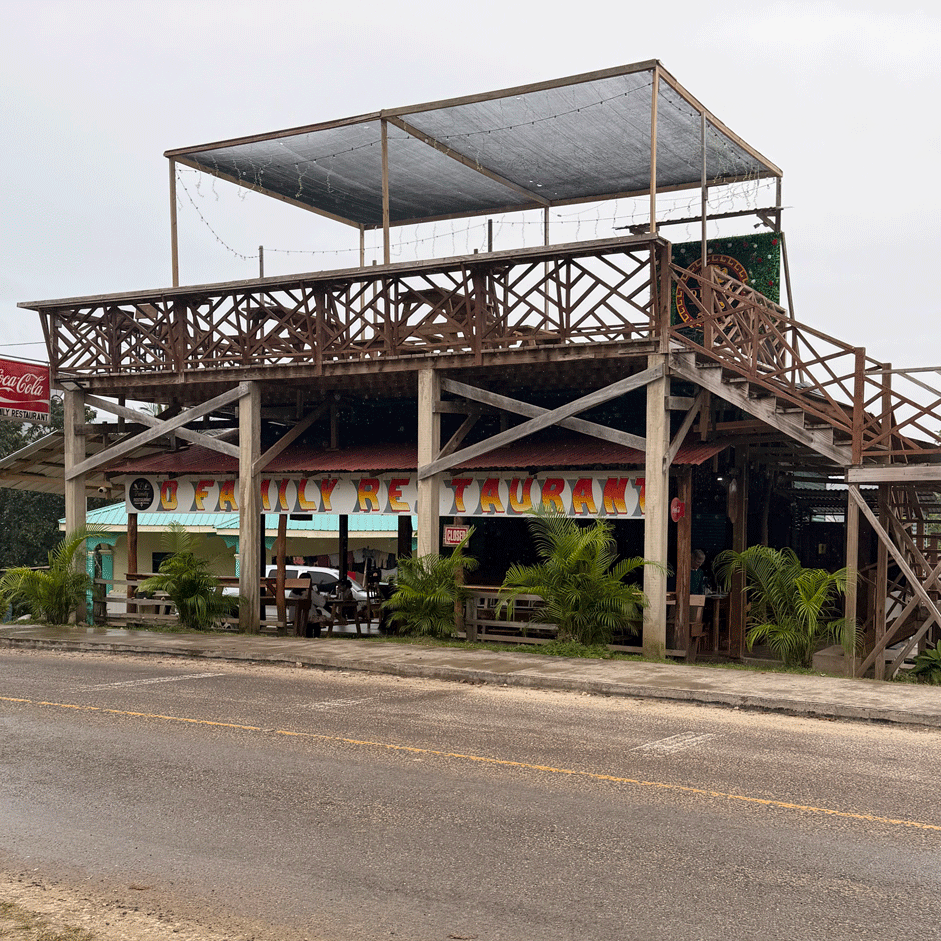
After the Butterfly Ranch, we stopped for lunch at “D Family Restaurant.” Unfortunately the weather was cool, so we didn’t eat on the upper deck.
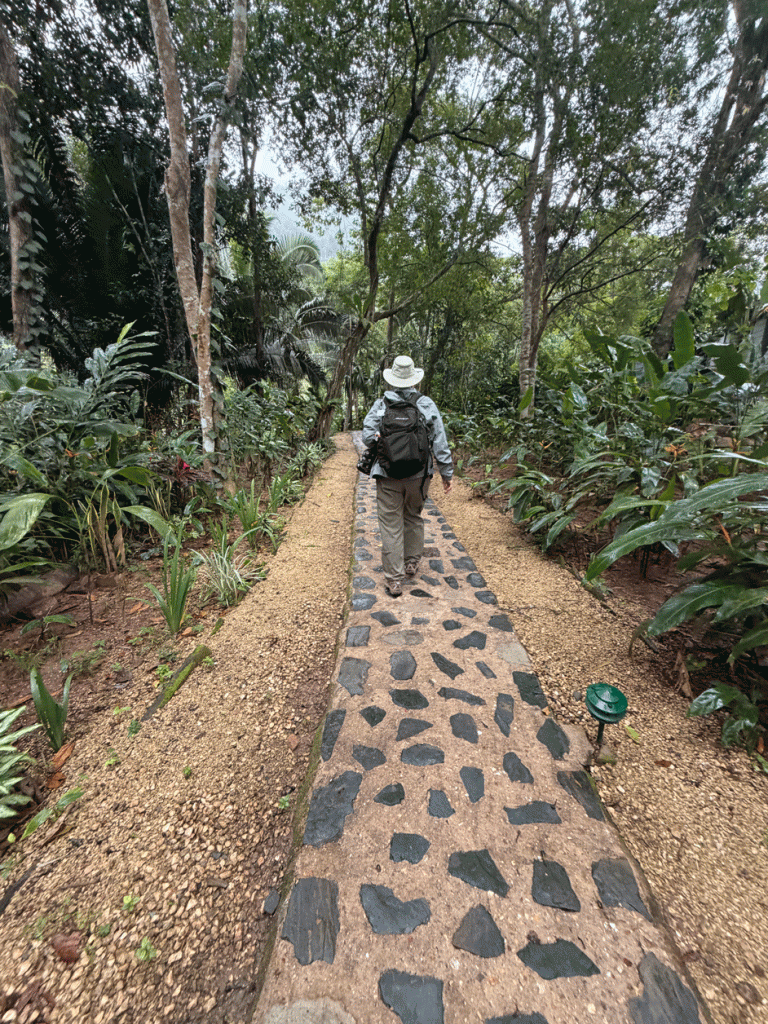
We drove up an eleven kilometre (7 mile) dirt road reaching the secluded Black Rock Lodge shortly after 1 o’clock, just as it started to rain.
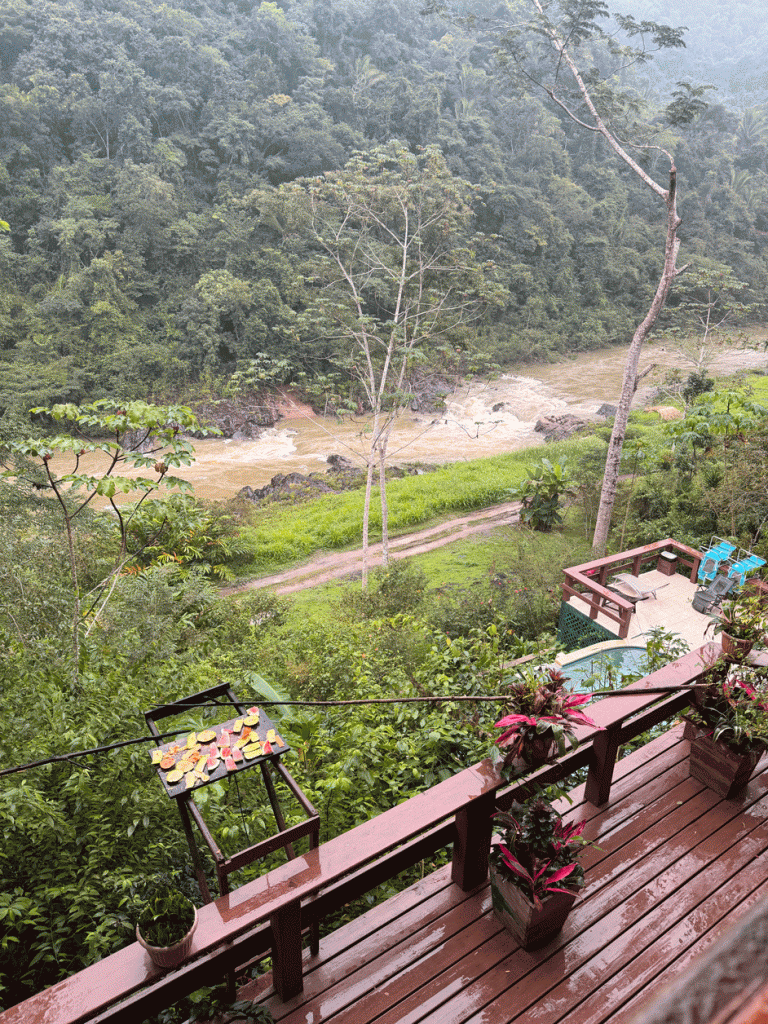
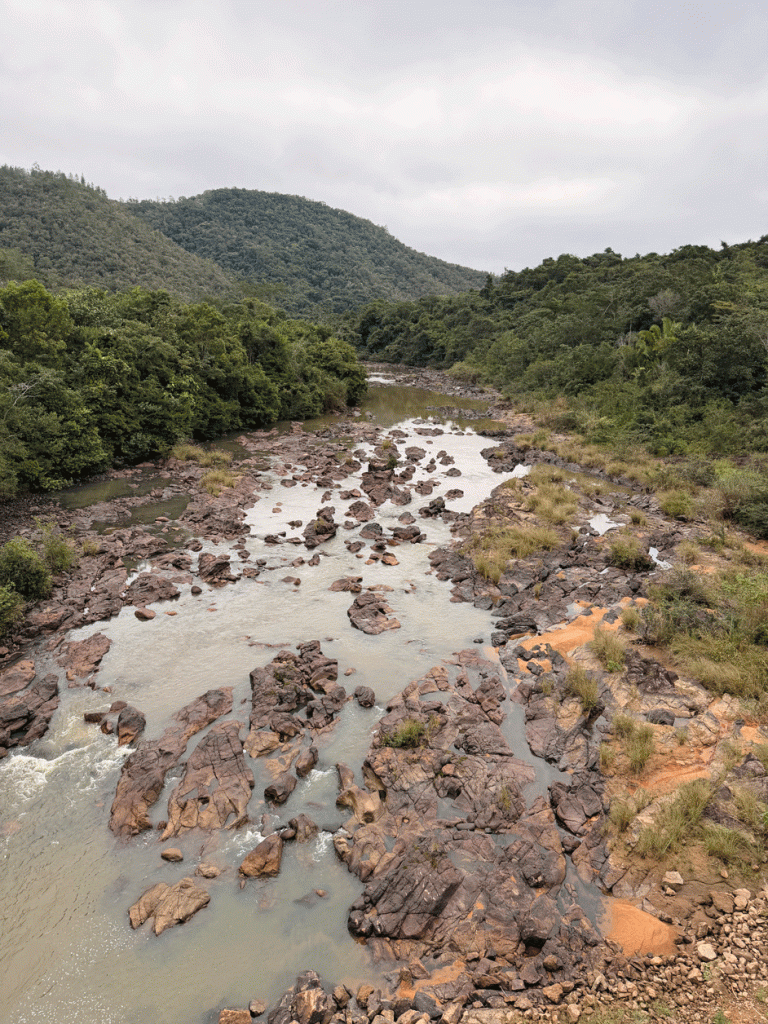
Here’s the view looking down from the restaurant, towards the Macal River. In more pleasant weather, people float down the river in tubes, and swim in the outdoor pool.
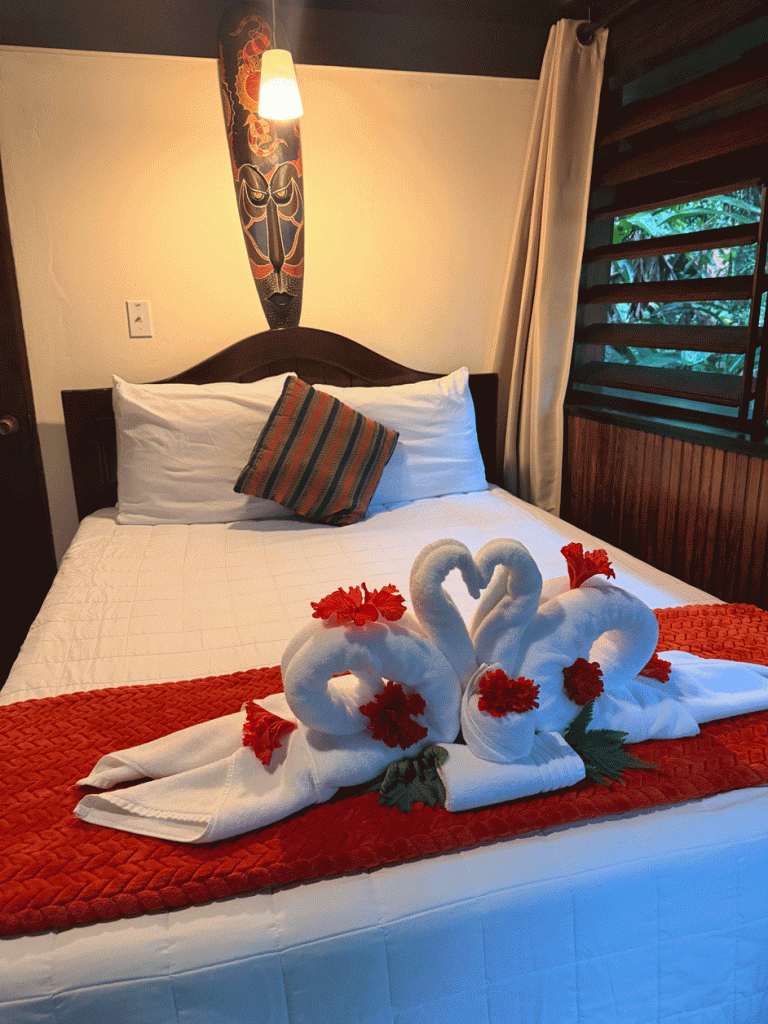
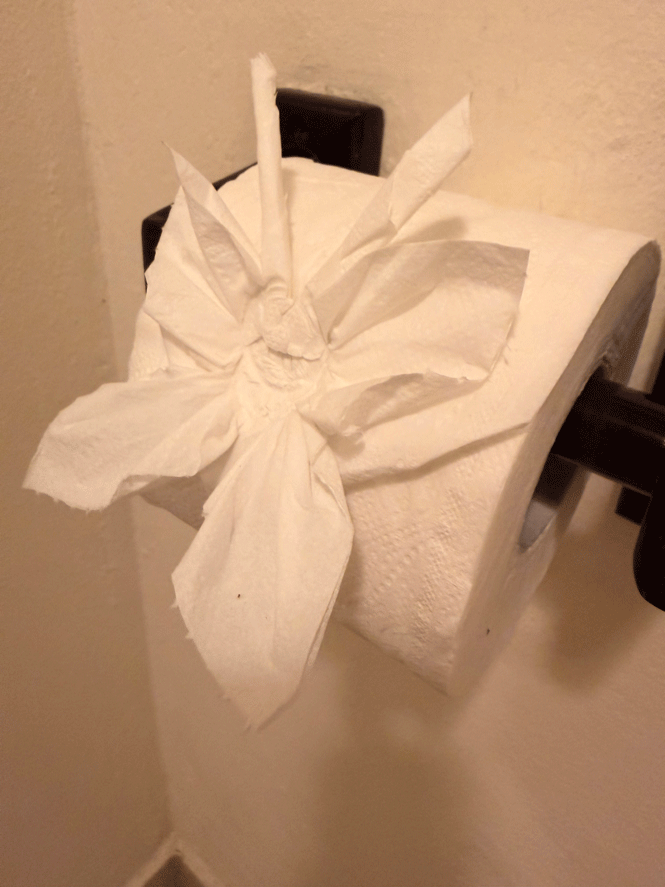
Here’s a view of half of our room. It was one of 20 cabins on the property. The toilet paper decoration in this room was unique, so Doug had to take a photo.
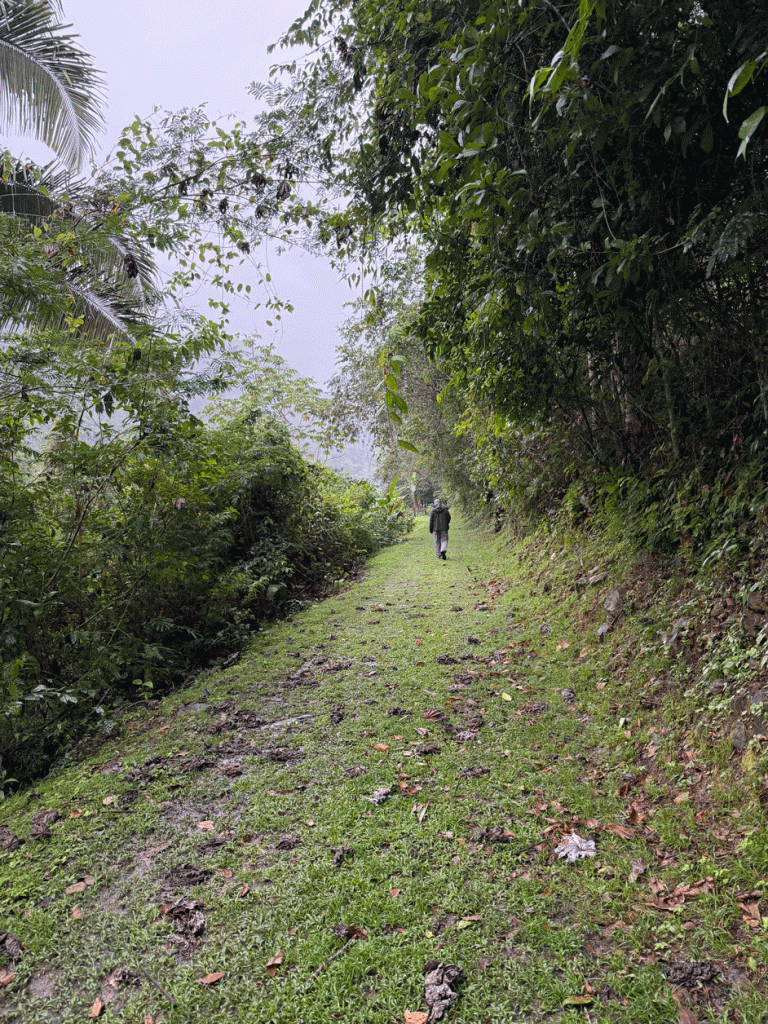
Around 4 o’clock the rain had let up enough for us to contemplate a walk. We walked along a road that headed upstream to the tubing area. It looked down on the lodge’s farm. The lodge is totally off-grid and relies on solar and hydro-power.
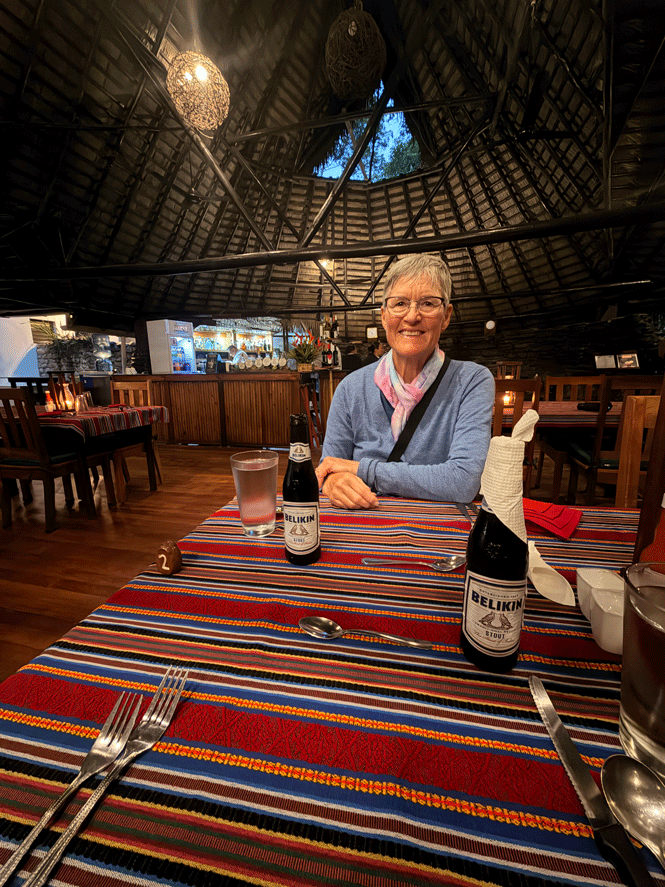
Wendy put on several layers of clothing to enjoy “Happy Hour” at the restaurant, since it was open to the outdoors. Belikin stout was our favourite beer of the trip, and available throughout Belize.
The next morning before it was light, we stopped at the staff parking lot to see a Spectacled Owl. The lodge provided us with a packed breakfast.
We drove the winding newly-paved road through the Mountain Pine Ridge Forest Reserve and stopped at the Guacamallo Bridge over the Macal River. From this vantage point, we saw a pair of distant Scarlet Macaws. They were even with the bend in the river. seen in the photo below. We got the ‘scope on them, but they were still very, very small. At the moment Wendy was looking at them through the scope, they took off from their perch and flew directly towards us, staying in “scope view” for a good distance. Soon they flew right over us. These were the only Scarlet Macaws that we saw on the trip, although we heard them in one other location. They are a “sensitive” species and will be hidden to the public from our eBird checklist. Scarlet Macaws are threatened by poaching for the illegal pet market.
There were several other birds that were much closer, however. We got a much better view of a Blue Bunting. The other little birds included the ever-present Morelet’s Seedeaters and Melodious Blackbirds, a Green-backed Sparrow and a couple of Blue-Black Grosbeaks.
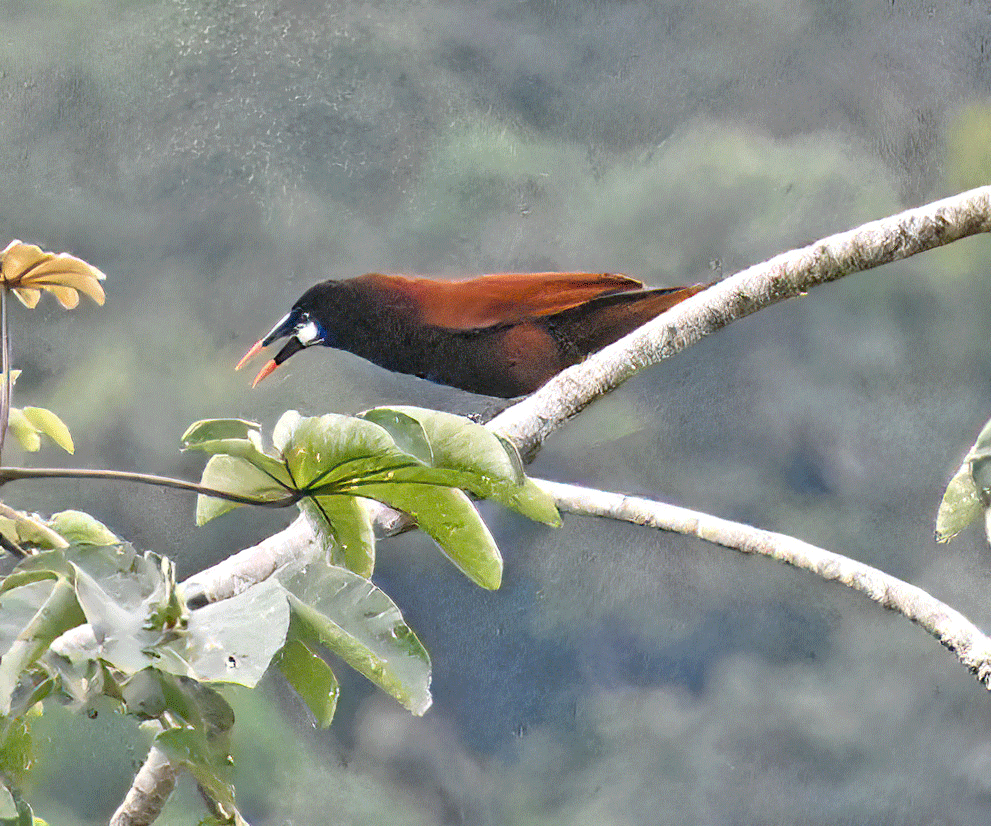
Bigger birds included common Brown Jays and spectacular Montezuma Oropendolas. The Montezuma Oropendola (photo below) has a very memorable song that sounds like water being poured from a bottle, which we heard often throughout the trip, but this was our best view of its ornate face. Oropendolas nest in colonies of large pendulous nests, which gives the species their name.
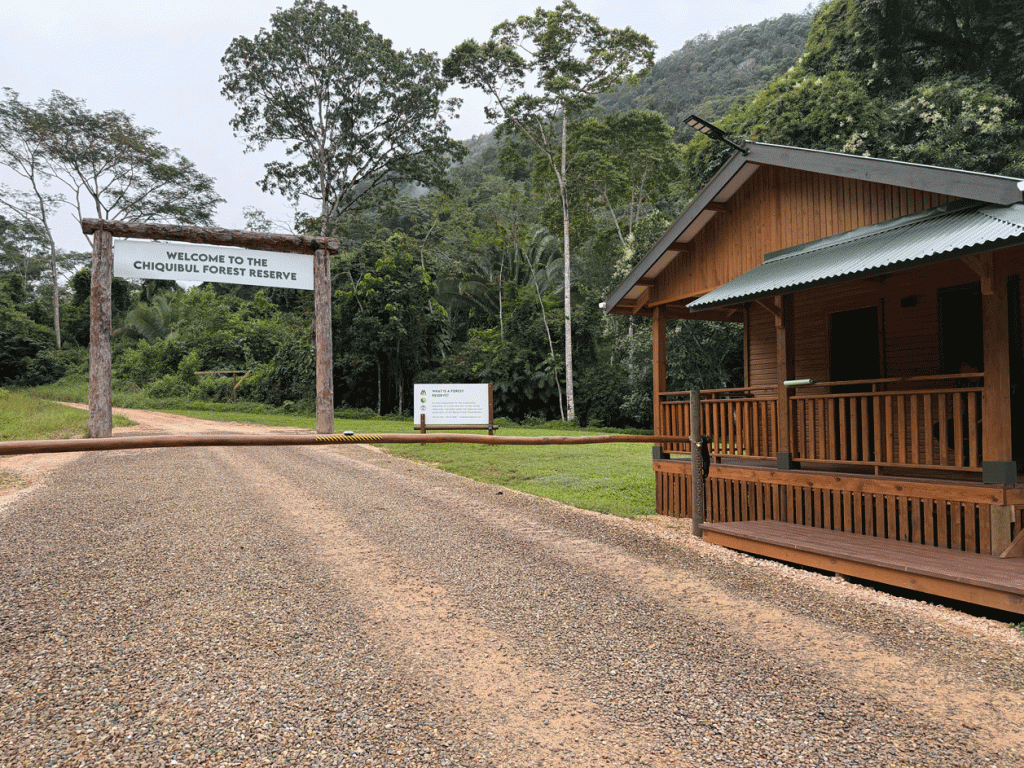
We stopped a few minutes up the hill at the Chiquibul Forest Reserve Ranger Station. All the forest reserves have manned gates to restrict access and keep records of comings and goings. We didn’t come to go into the reserve. Our guide worked at the station sometimes when the guiding was slow, so he knew that we would be able to use the washroom there.
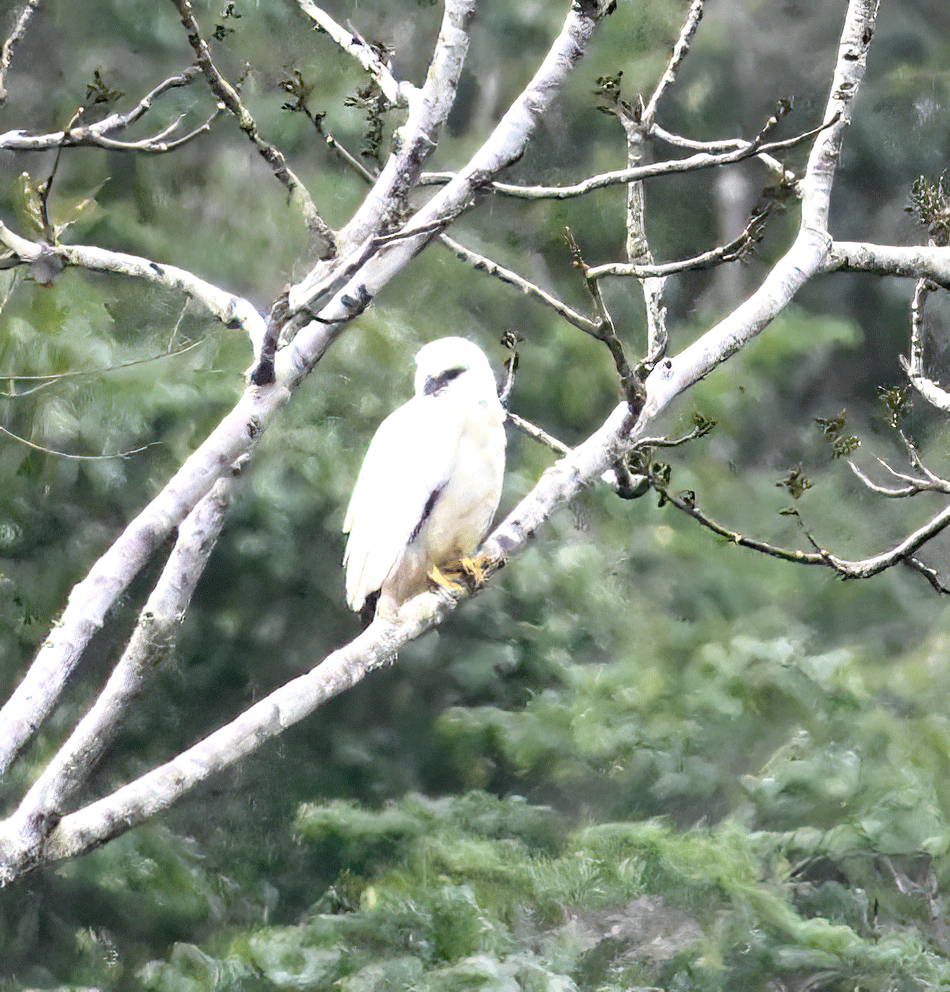
As a bonus, we saw two “life birds,” a White Hawk on a far hillside and an Acadian Flycatcher.
Doug took long distant “doc shots” of the White Hawk on the hillside from the ranger station, but luckily, just around the corner, a White Hawk was perched close to the road, so he could got a better picture.
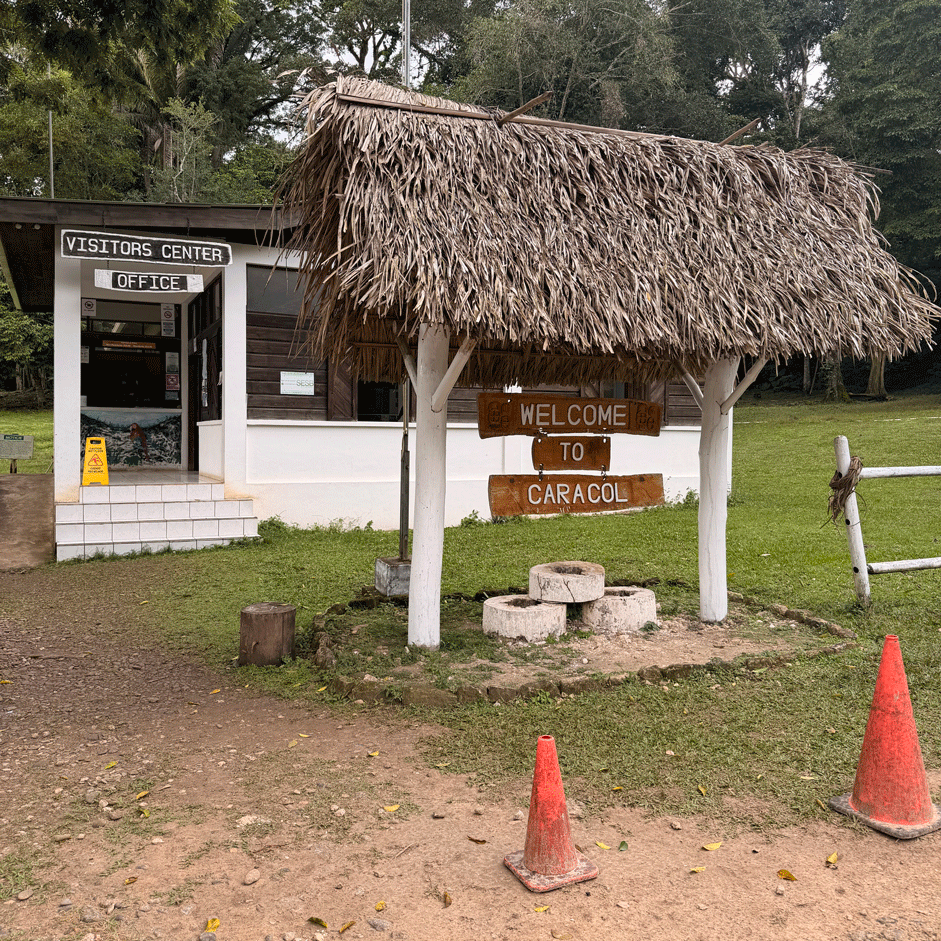
We drove about another half hour on the newly paved road and reached the Caracol Maya site. Caracol was once home to as many as 150 000 people and was continuously occupied from at least 600 BC to almost AD 1100. It is believed that there are over 35 000 buildings on the site although only some of them have been excavated.
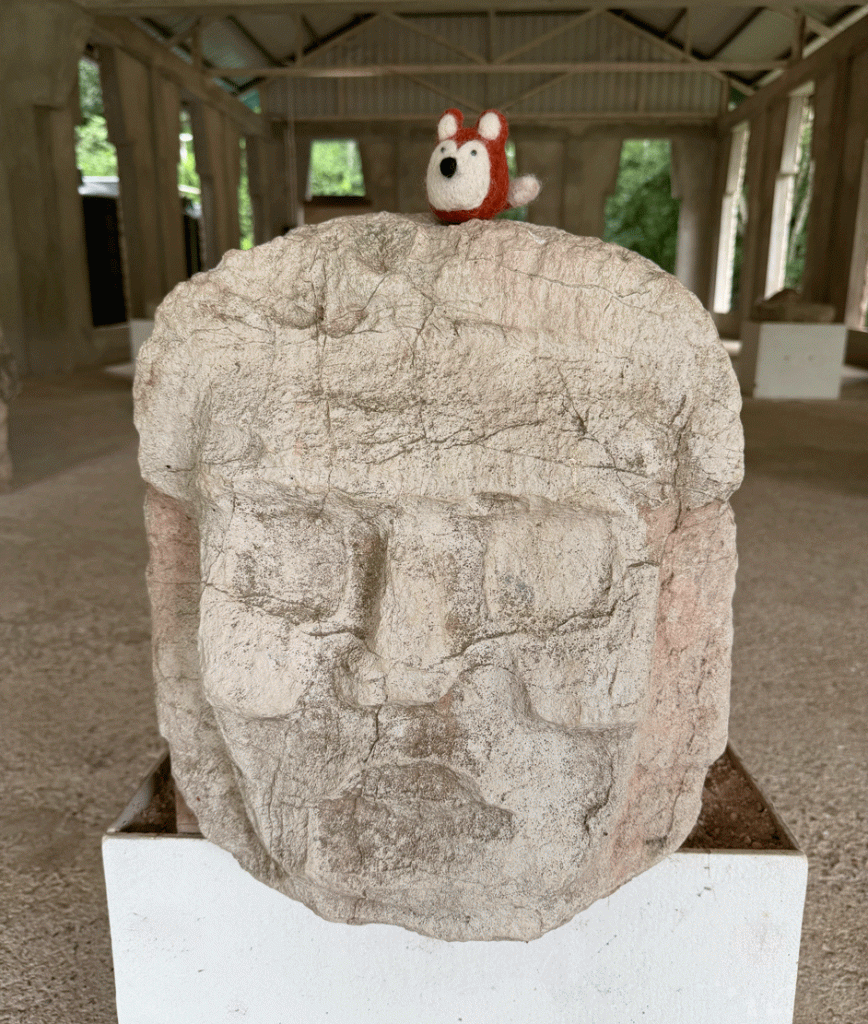
Near the visitor centre is a covered ramada that houses original artifacts. Here’s our fox mascot (travelswithafox.blog) on a Maya stone head.
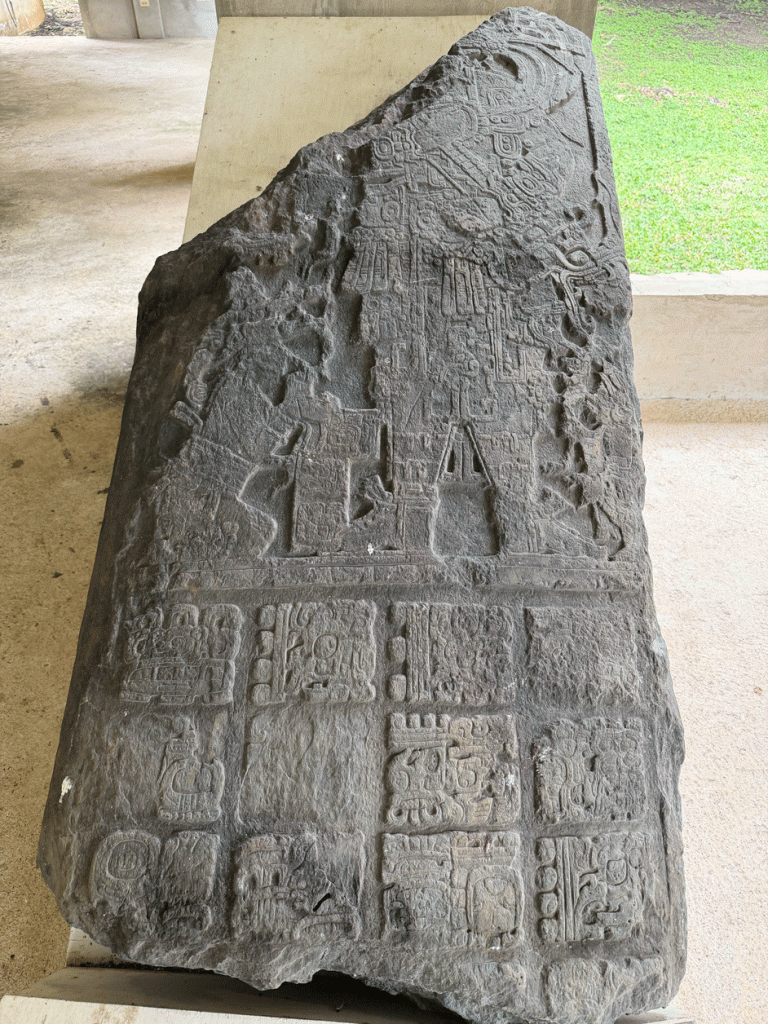
The bottom section of this stela shows a person kneeling in front of a king. The bottom part of the king’s scepter is also visible.
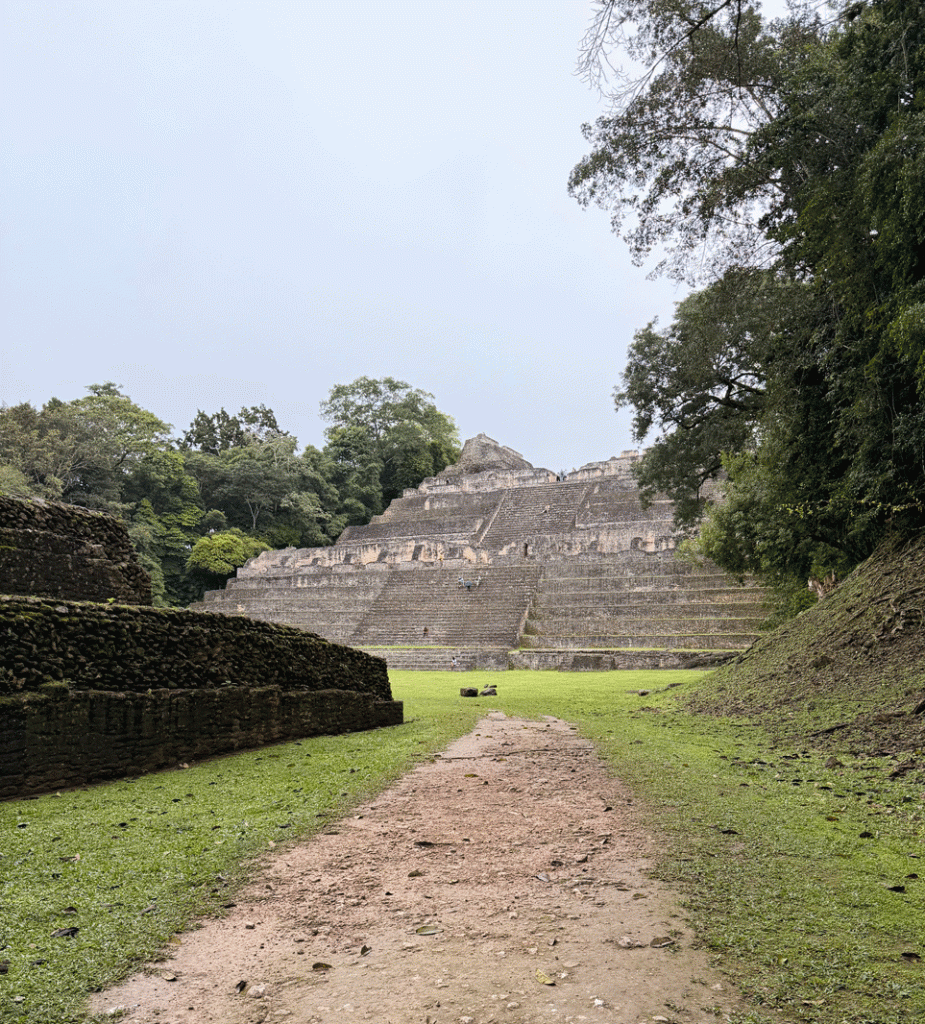
This was our first view of the B Plaza and the highest structure, “Caana,” also known as “Sky Palace.” It’s hard to grasp the scale because the top is barely in view from here.
On the left is one of the first structures we walked to, at the entrance to the B Plaza. It’s somewhat pyramidal in shape with “wings.” The photo on the right shows the decorative detail.
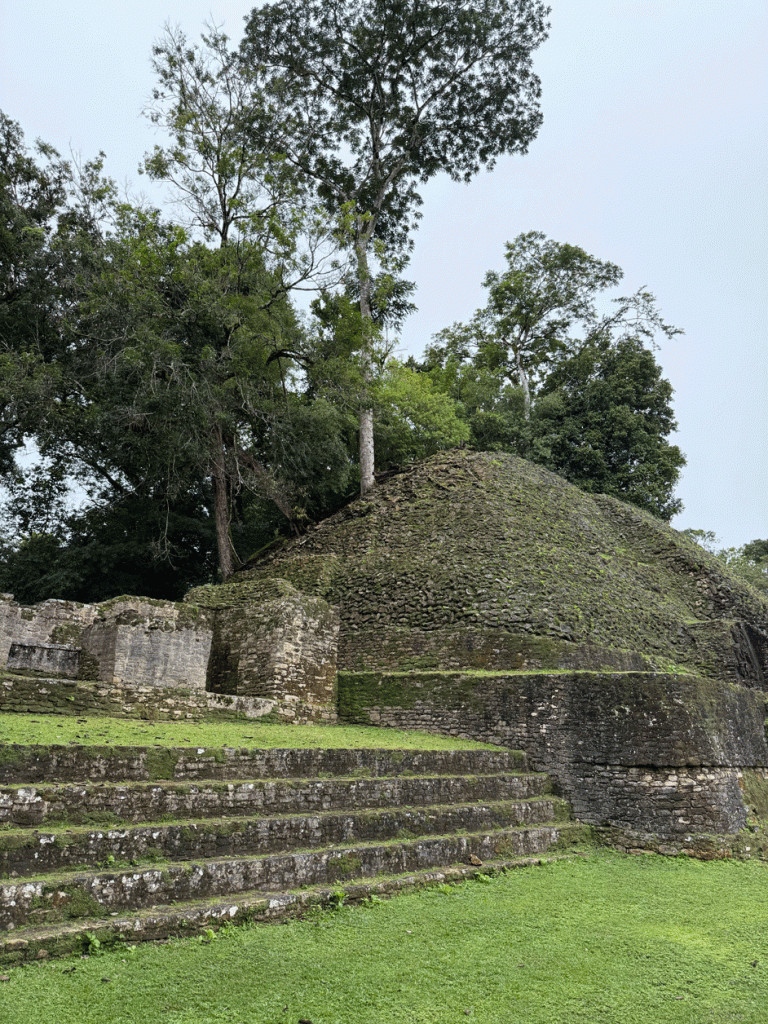
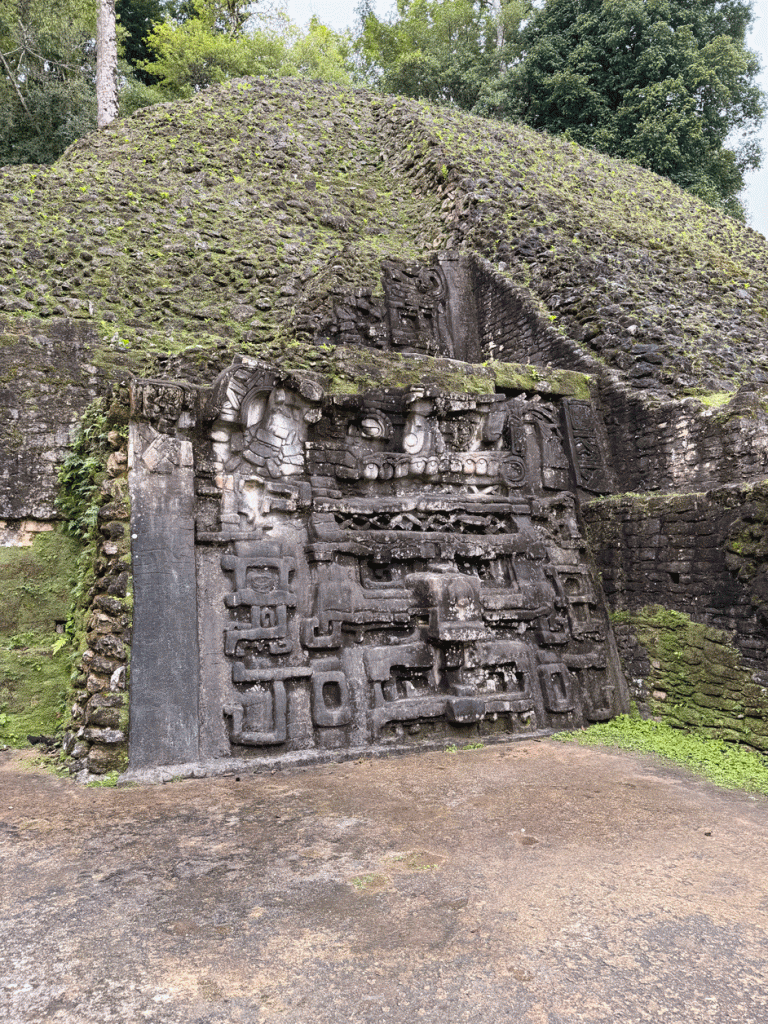
This same “pyramid” structure is behind Wendy as she starts the climb up the highest structure “Caana.” At this point in the climb. she is even with the height of the smaller structure and is on her second flight of stone steps.
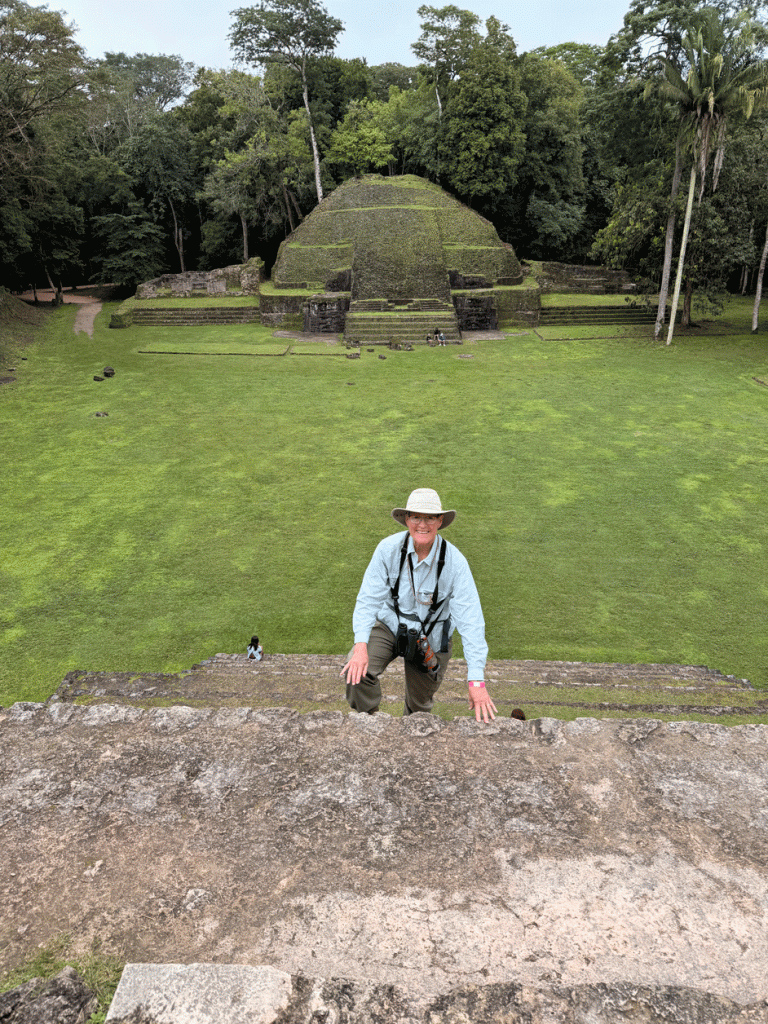
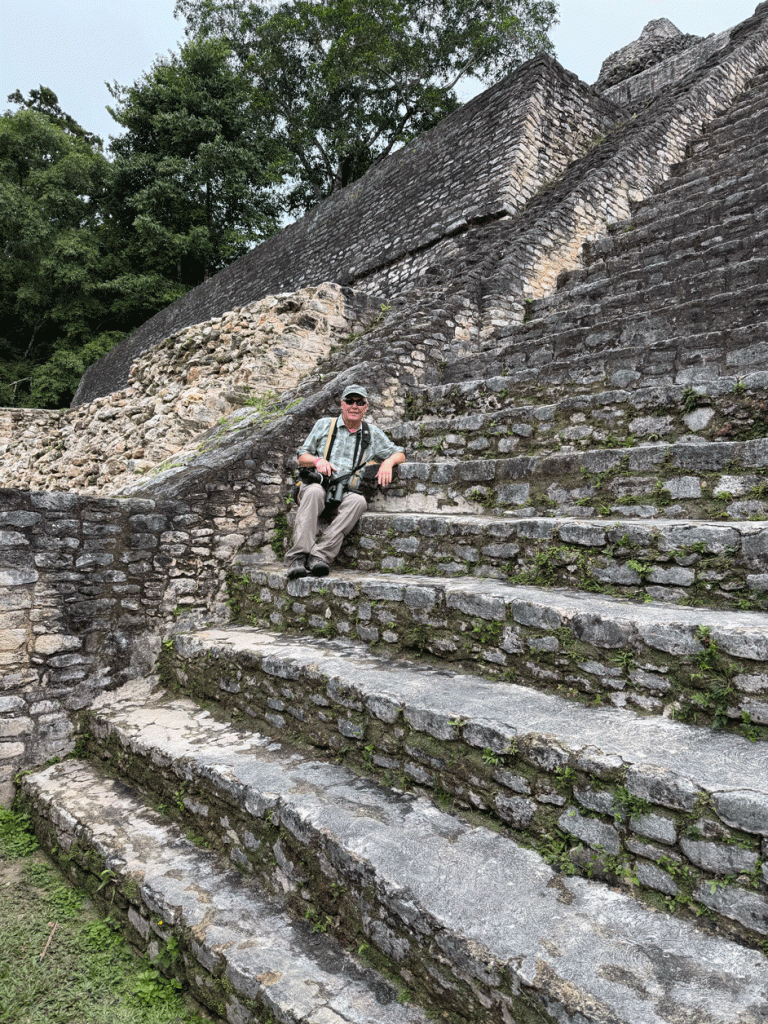
There was a narrow flat area with some walls for rooms, then the steps began again. Here Doug is resting before talking the next section. The steps were far enough apart to be a comfortable seat, but were a long stretch for a step.
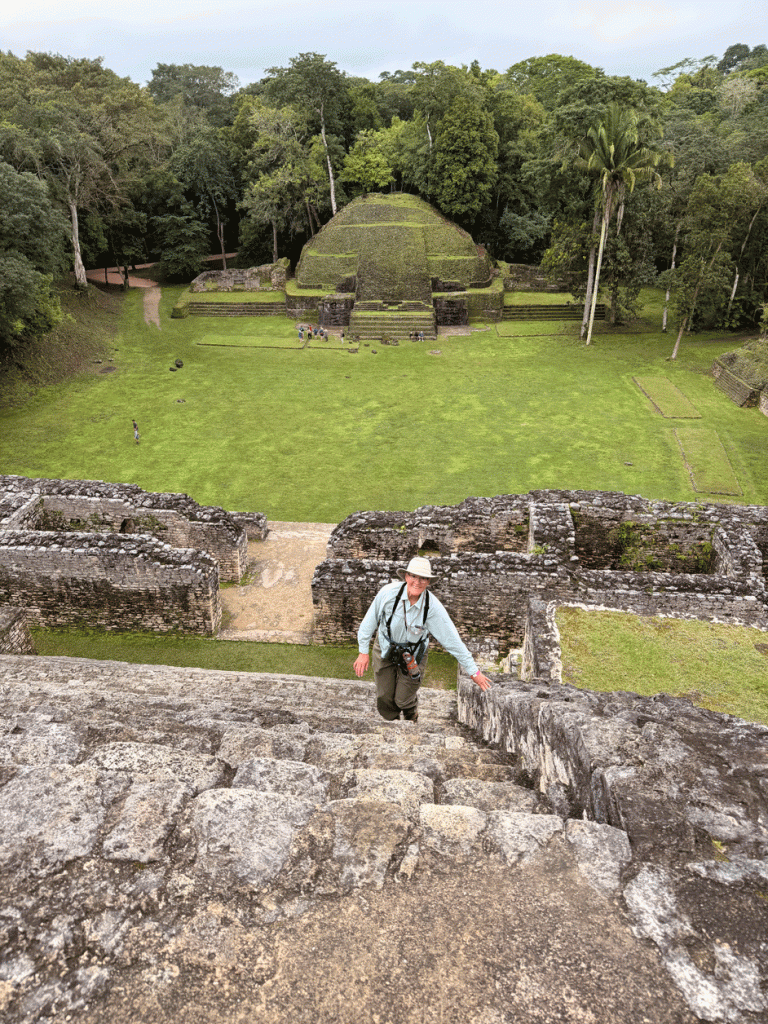
Here’s the view looking down from those same steps Doug had been sitting on. The rooms are visible on the level below.
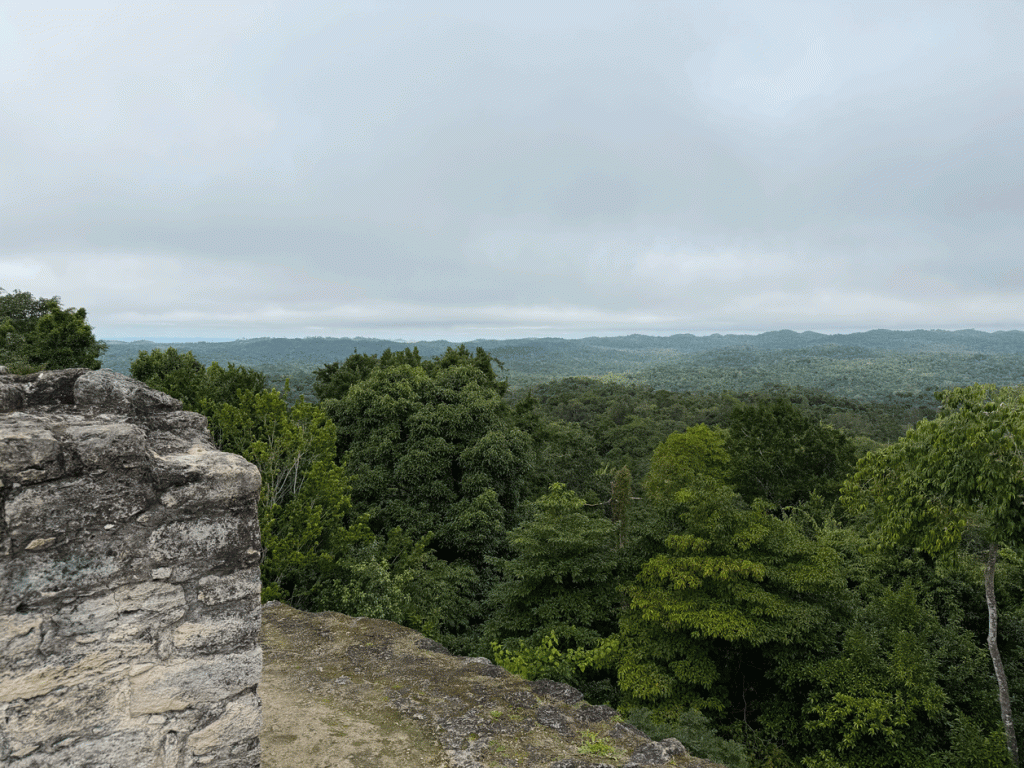
We reached a plaza level, then climbed another set of stairs and finally reached the top of the more than 40 metre (140 foot) pyramid. This is the view out over the jungle.
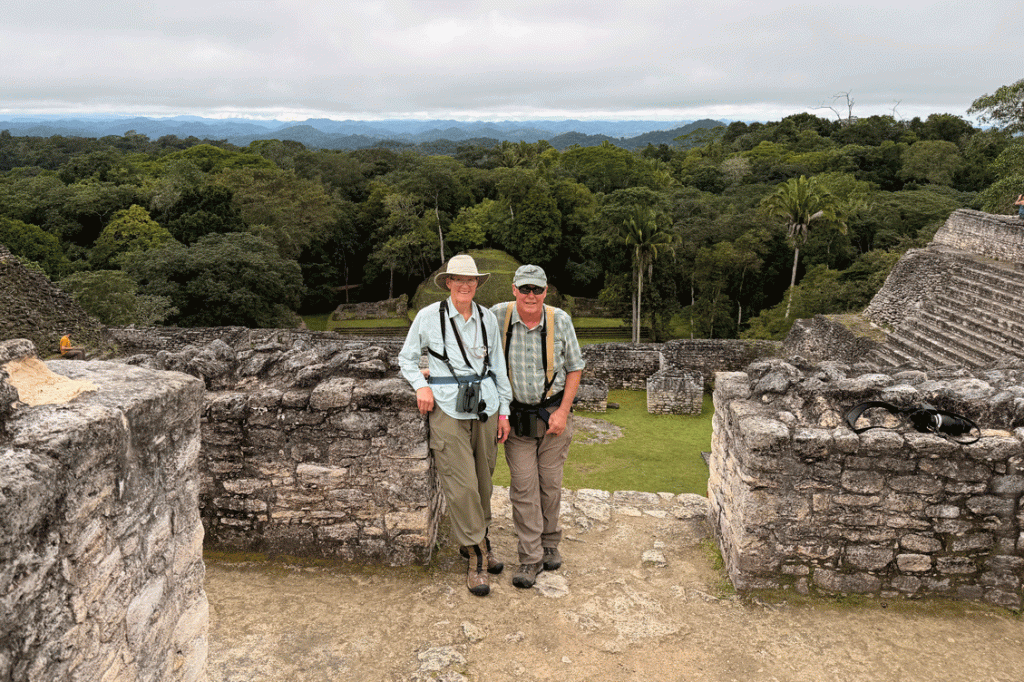
This is the view from the top looking down into the courtyard below. The smaller “pyramid” structure is behind us in the photo below.
We forgot to take a photo of the plaza area on the way up. The stairs where the photo of Wendy climbing was taken are out of view below the plaza area. It was easiest to walk diagonally downwards down these steep steps. Once we were at the plaza level, we watched others climb the temples on the right or left.
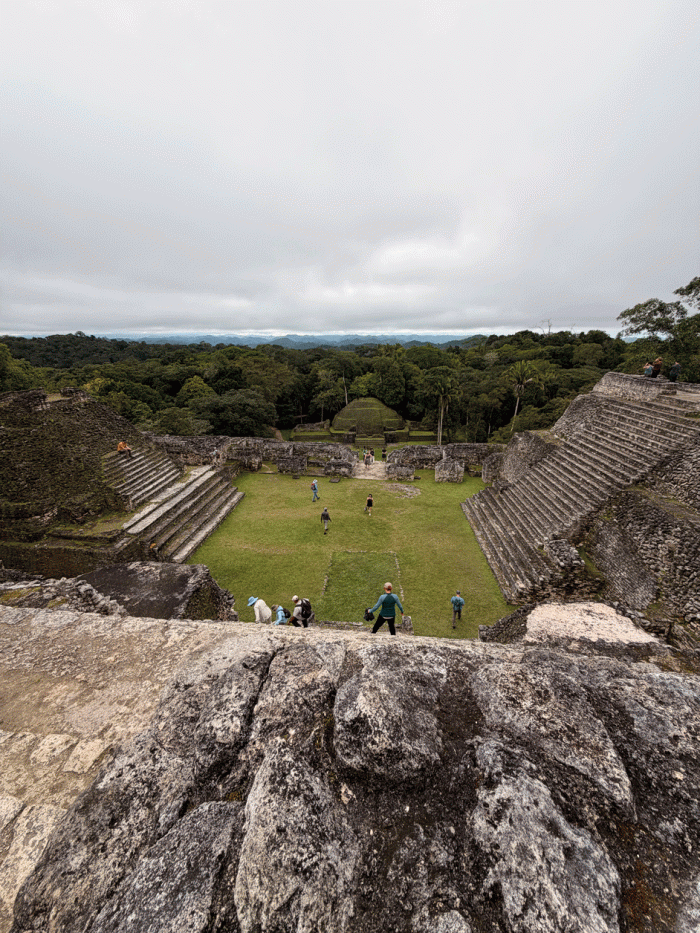
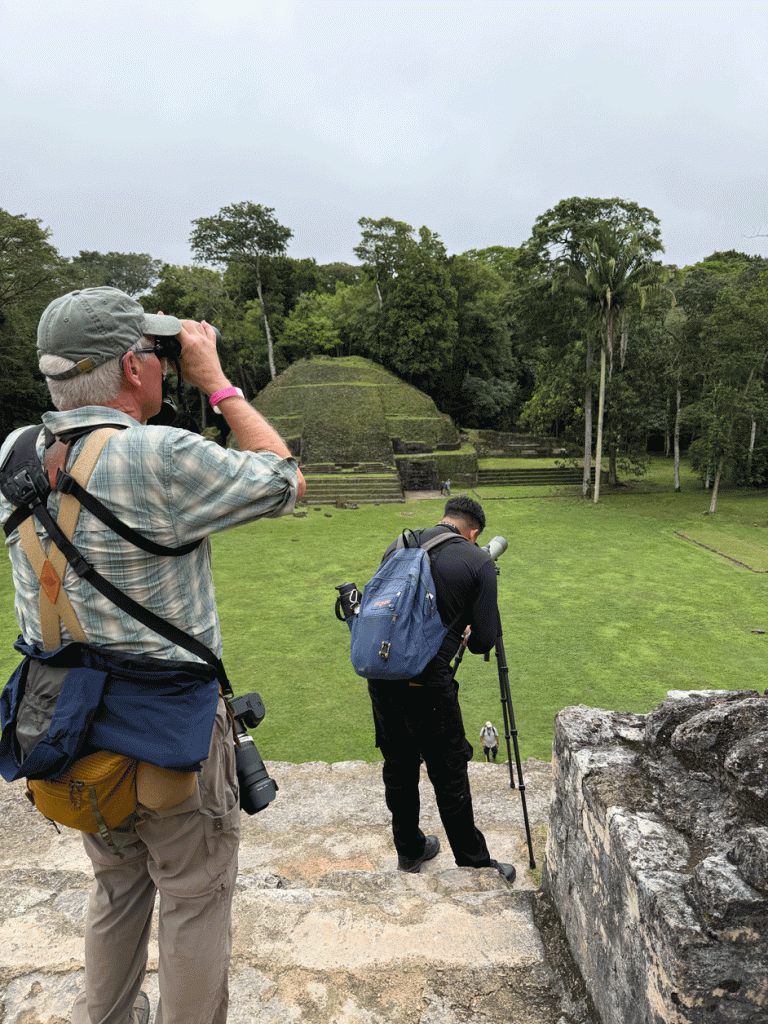
Our guide carried the scope all the way to the top where we saw some very distant parrots. Here Hugo is at a lower level and hoping to see a Barred Forest-Falcon, a bird that we only heard.
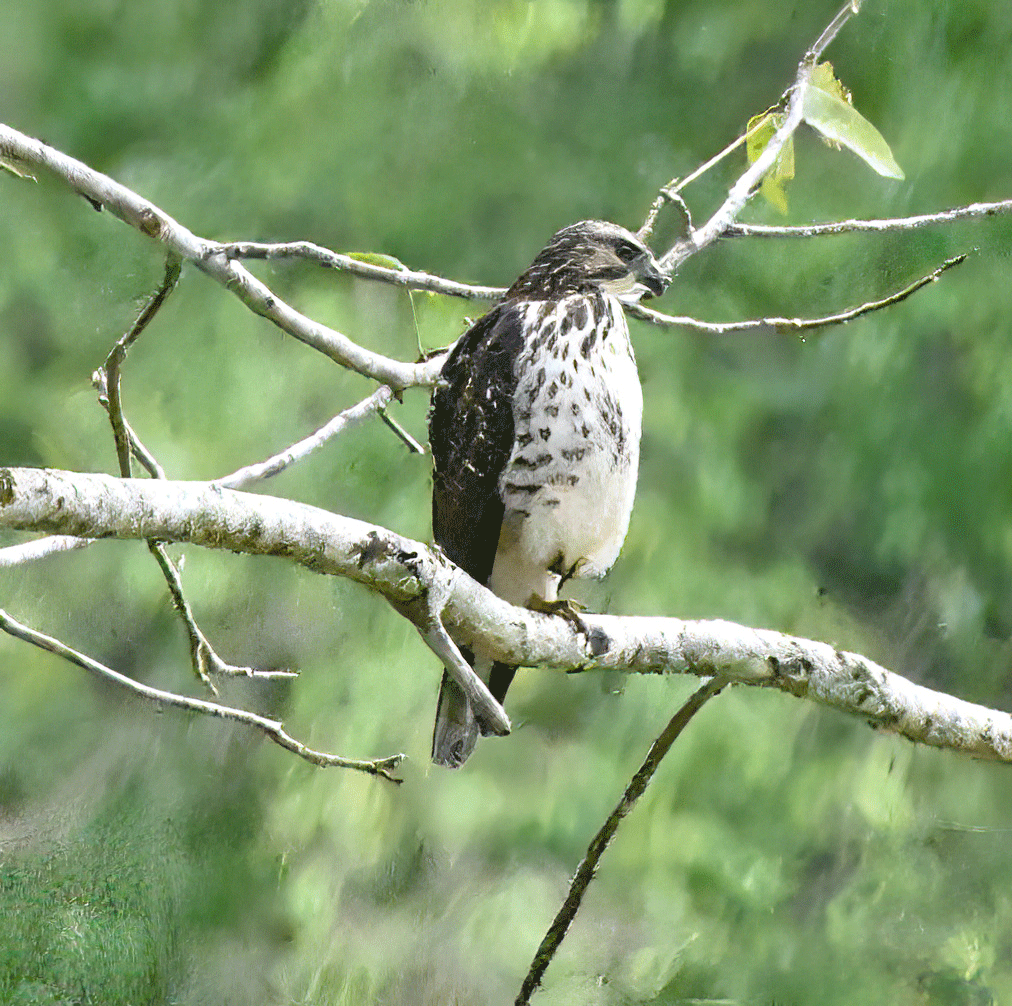
We continued our tour through the trails to other sections of the site. Here’s a juvenile Broad-winged Hawk that was perched on the edge of the forest. Broad-winged Hawks winter in Central America and spend their summers in the eastern part of the US and Canada. They are a bit smaller than a Red-tailed Hawk.
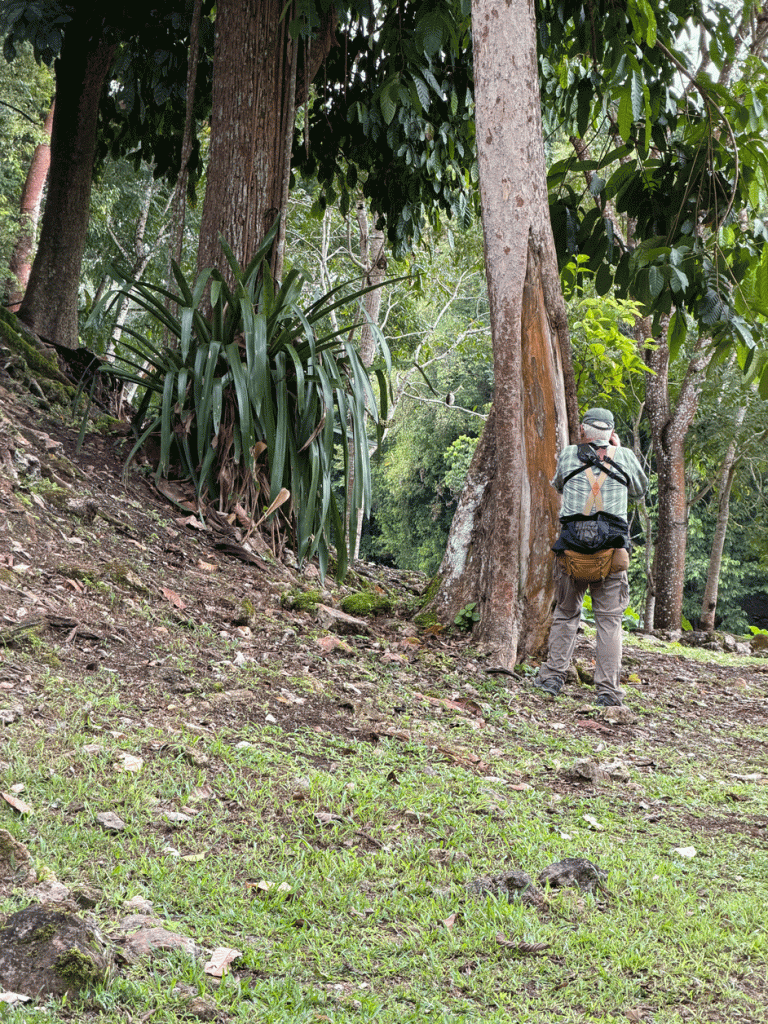
If you look closely to the left of the tree that Doug is standing beside, you might be able to see the hawk perched on a horizontal branch. Doug walked up to the tree, blocking the hawk’s view of him, so he could get closer for a photo.
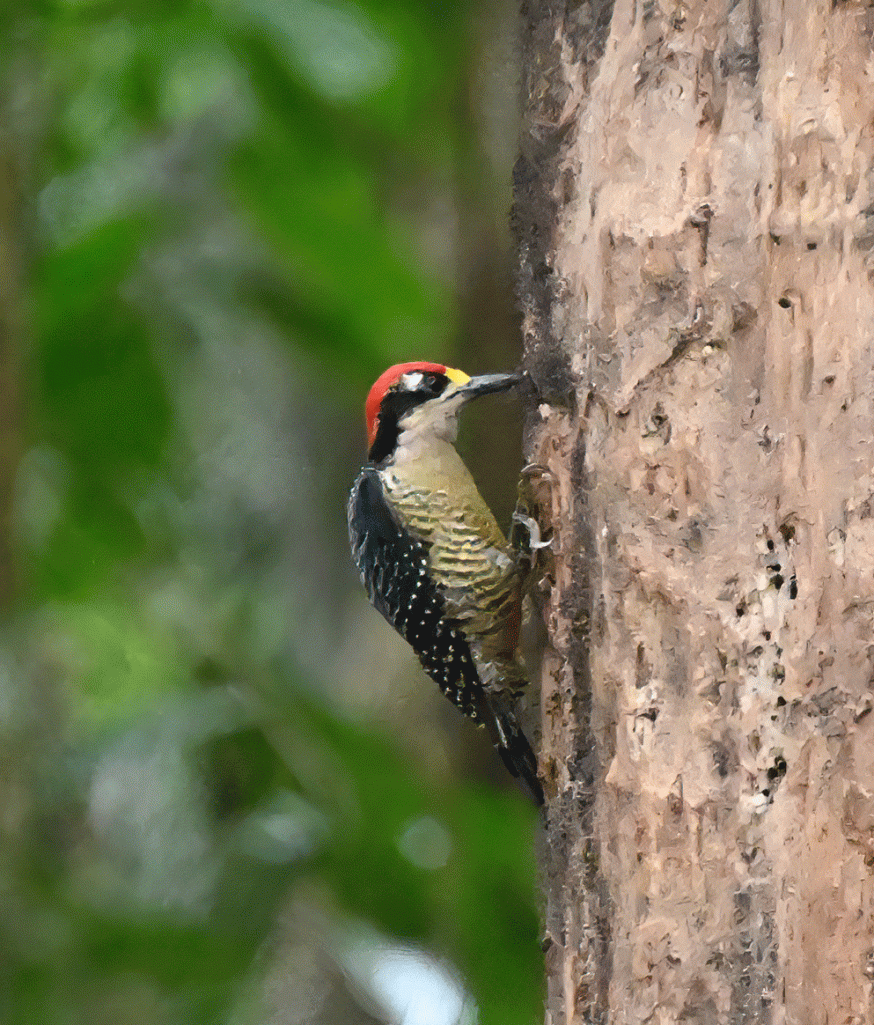
Here are some other birds that we saw at Caracol. This is a Black-cheeked Woodpecker. Its big black mask, and white patch behind its eye are distinctive. This was the only one that we saw on the whole trip.
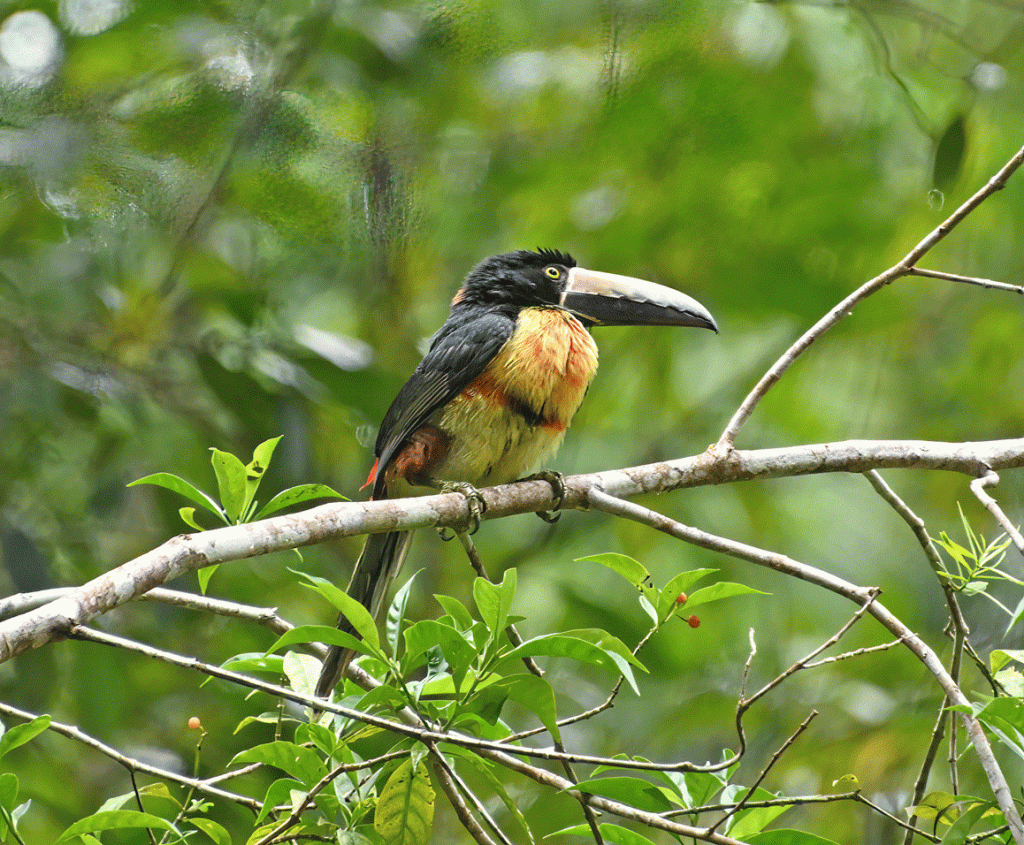
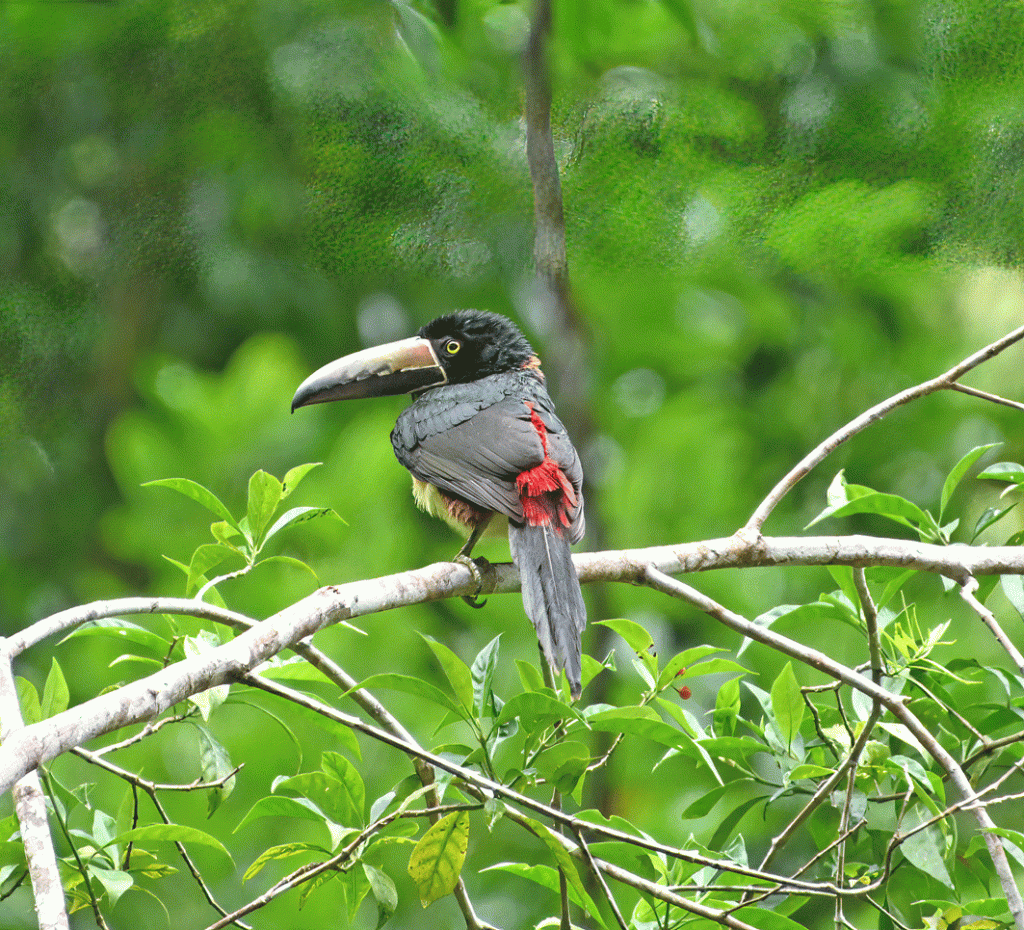
This is a Collared Aracari, a kind of toucan; front view and back view. Notice the serrated pattern on its big bill. They mostly eat fruit, but also consume insects, eggs and small animals.
These are two views of the Central Acropolis. Excavations are still continuing at Caracol and once it has been fully excavated it may be larger than nearby Tikal in Guatemala.
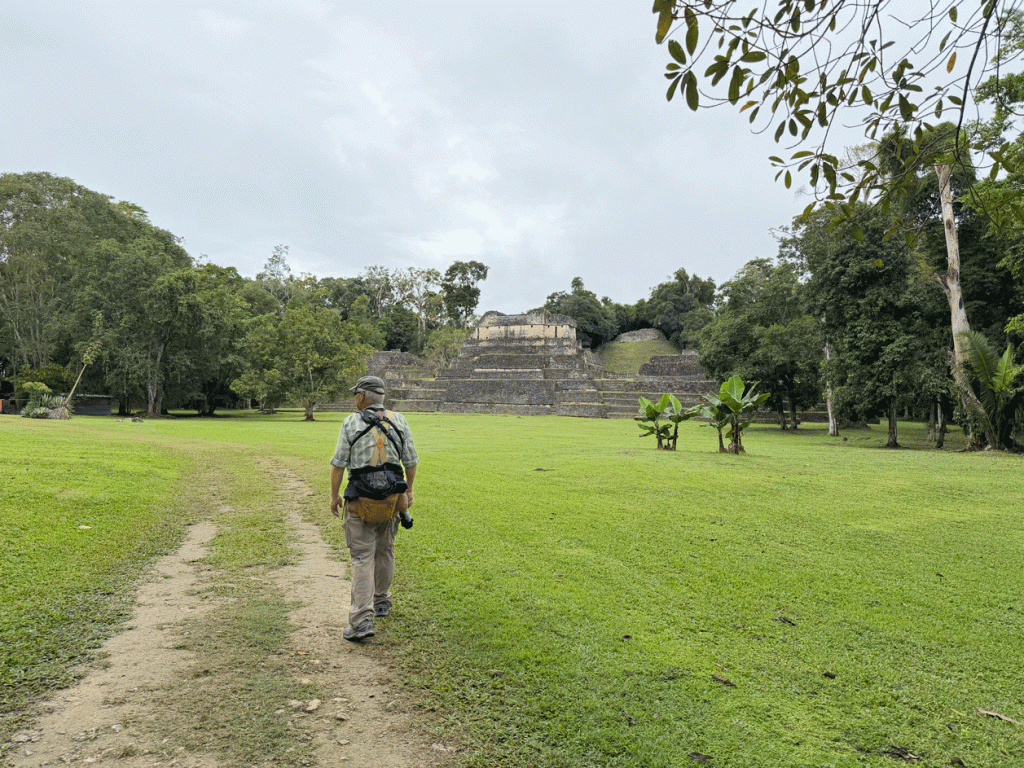
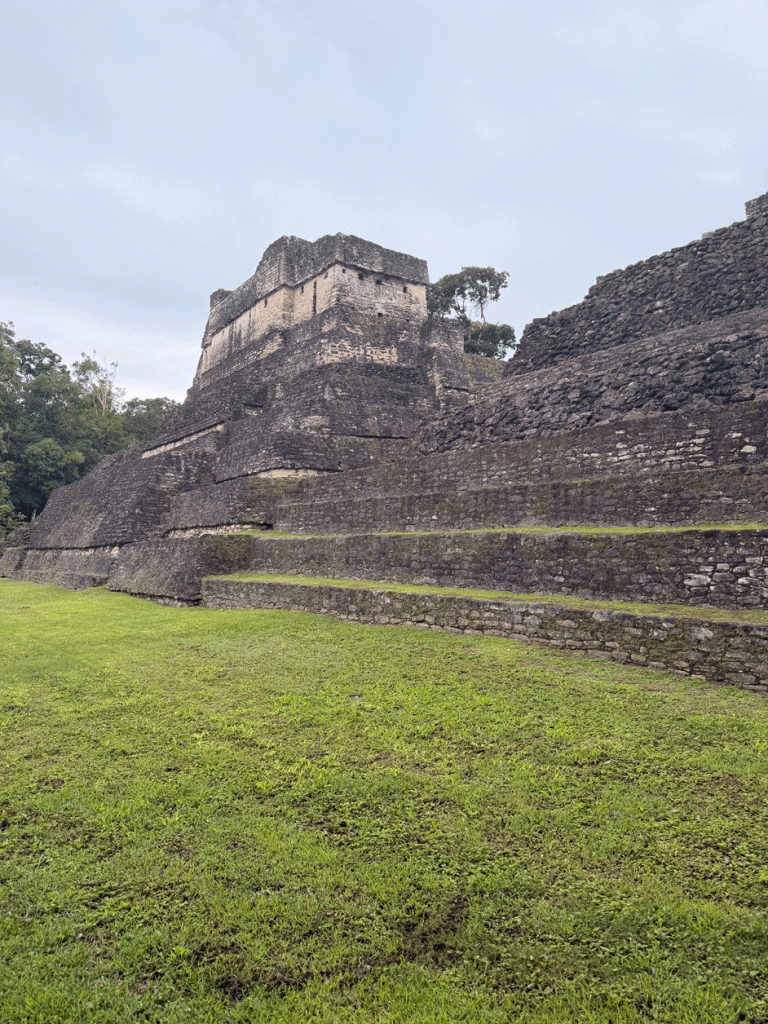
We finished our day in Caracol with a picnic lunch near the visitor centre. It took us about two hours to get back to Black Rock Lodge. We said good-bye to Hugo, because the rest of our trip would be in Guatemala where we would meet our new guide.
We saw 197 species of birds in Belize, including several life birds. We visited three districts in Belize: Belize, Orange Walk and Cayo. We also visited three Maya sites: La Milpa, Lamanai and Caracol.
Part 4 and 5 of the trip will be posted soon.
 Travels with a Fox
loved all the hummingbird pictures and enjoyed the other birds as well. The area looks interesting thanks for sharing
LikeLike