January 2026 in Guatemala – Part 2 (6)

January 2026 in Guatemala – Part 2 (6)

This is our final post of our trip to Belize and Guatemala. (Part 2 of Guatemala, but part 6 of the whole trip.) This post includes our visits to Tikal and Yaxha Maya sites. The Maya structures were incredible and we took so many photos, so this will be a longer than normal post.

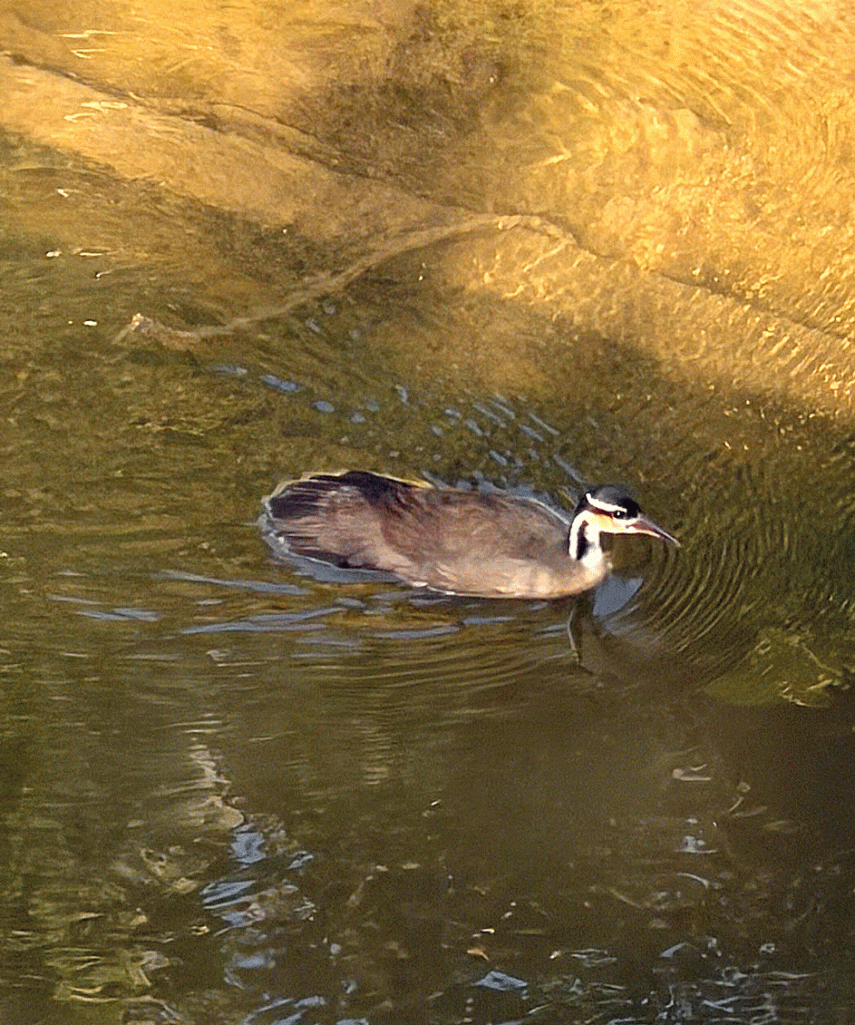
We stopped at various spots along the way to Tikal National Park from Las Guacamayas. We saw this Sungrebe from the side of a bridge. The camera was packed away, so this cell phone photo documents another “life bird.” Luckily it swam right under the bridge. It is very poorly named because it isn’t a grebe and it would rather be in a slow-moving shady stream than out in the sun.
We also stopped to see a Northern Potoo that was roosting on the grounds of a luxurious boutique hotel on Lake Peten Itza. (Our guide knew the manager.) Another new bird for us.

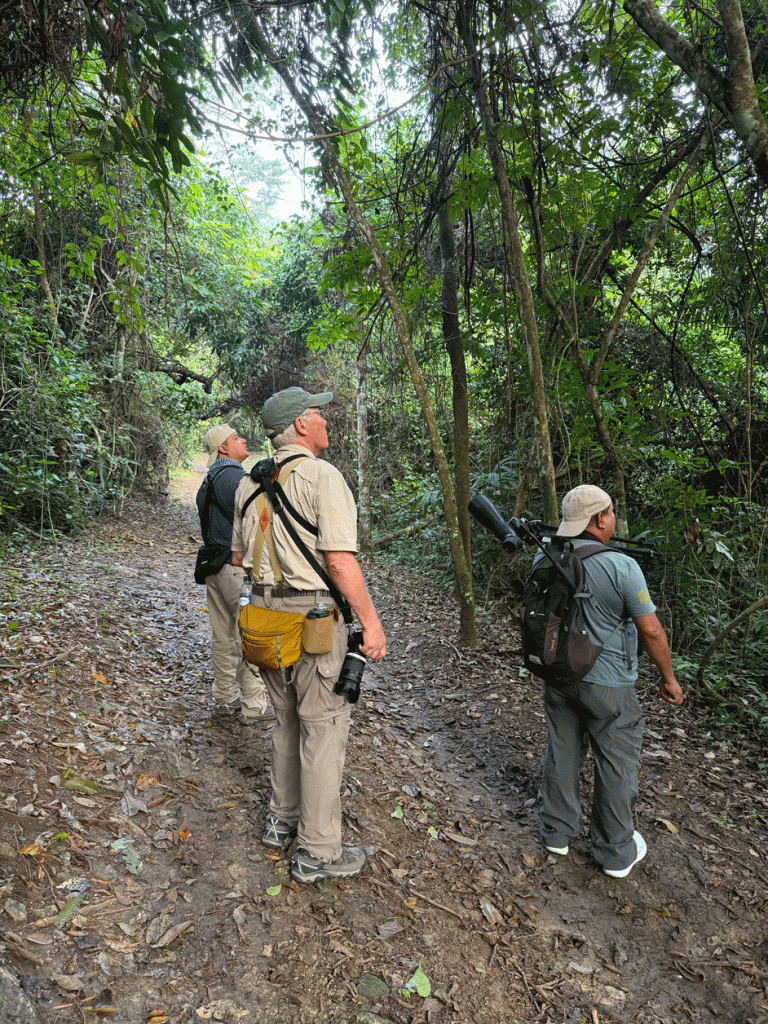
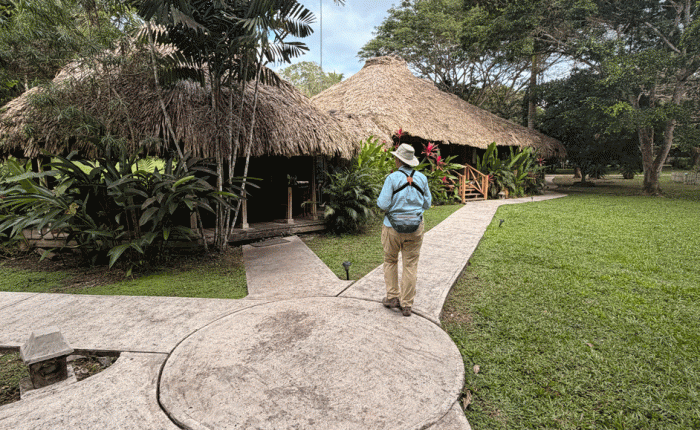
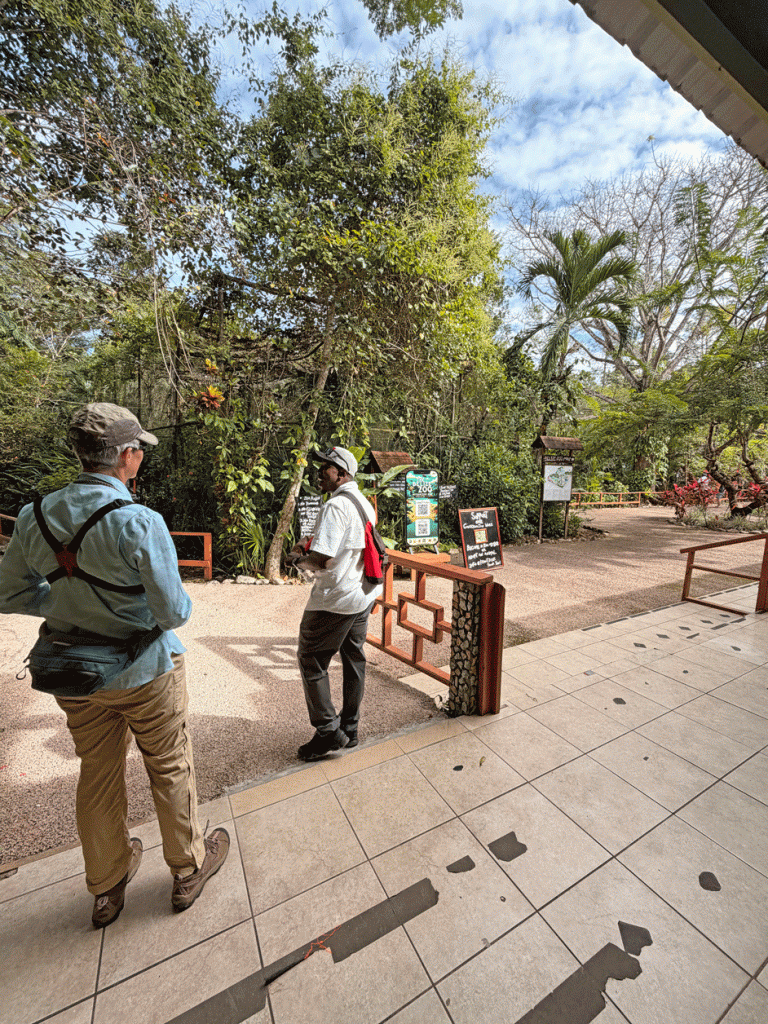
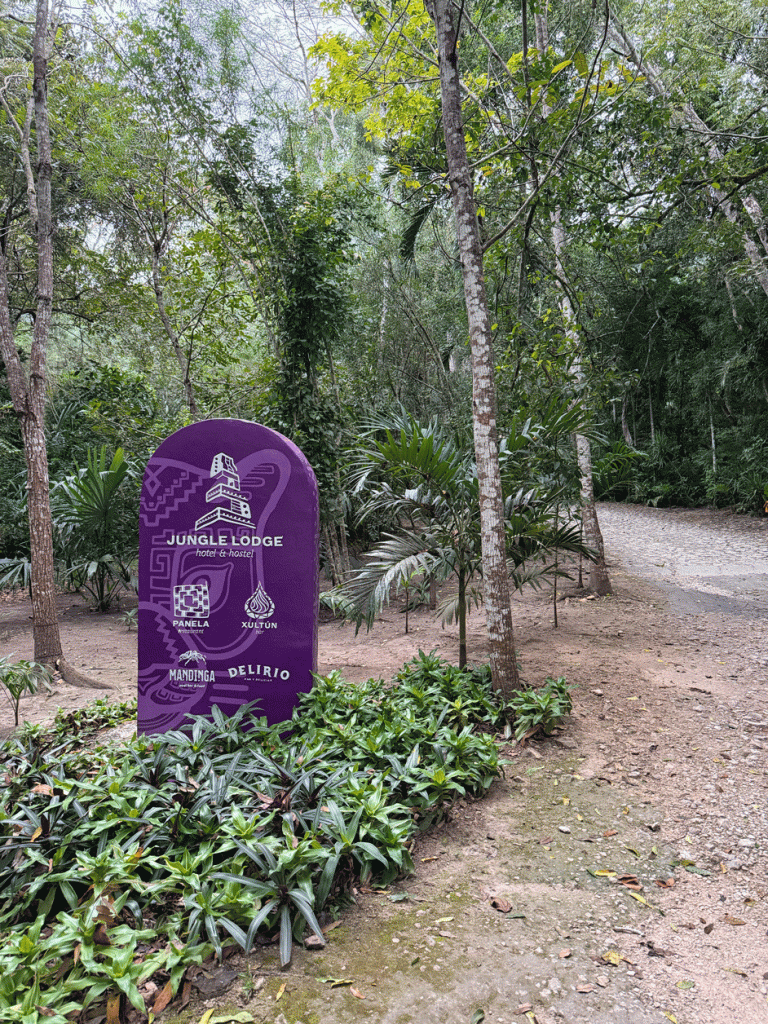
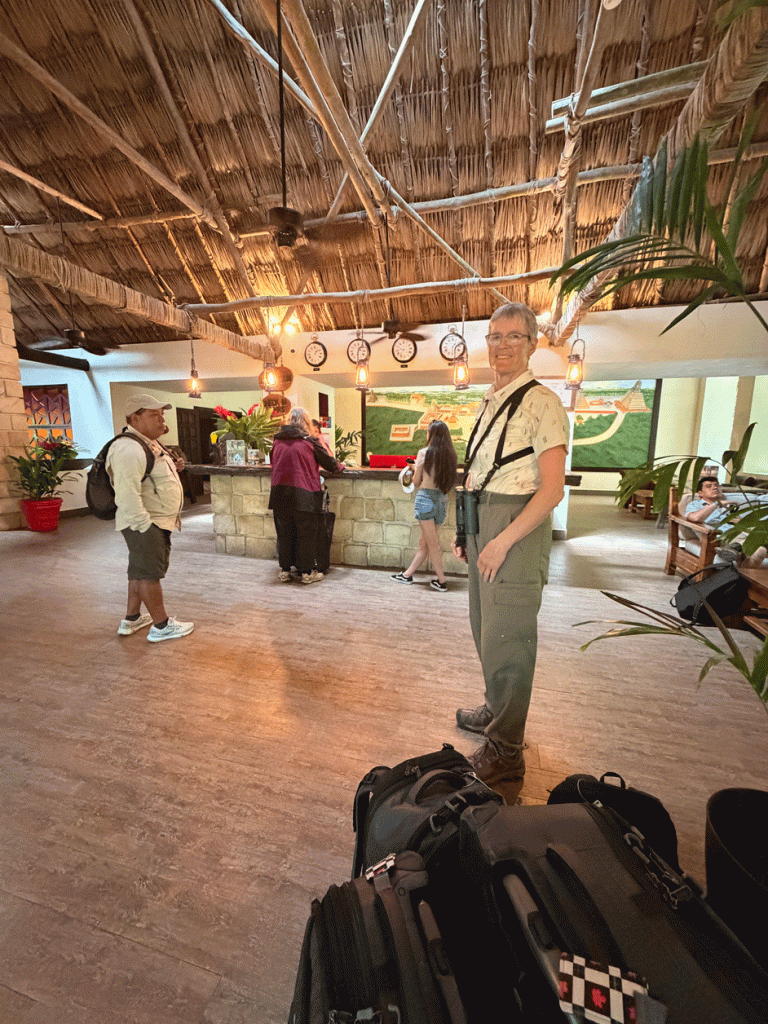
We reached Jungle Lodge in Tikal National Park around noon. As you can see from the vegetation around the hotel sign, we were in the jungle. Our guide, Bene, is waiting to help us check in. The roof of the lobby / restaurant is constructed to look traditional but the building was built with modern construction techniques.
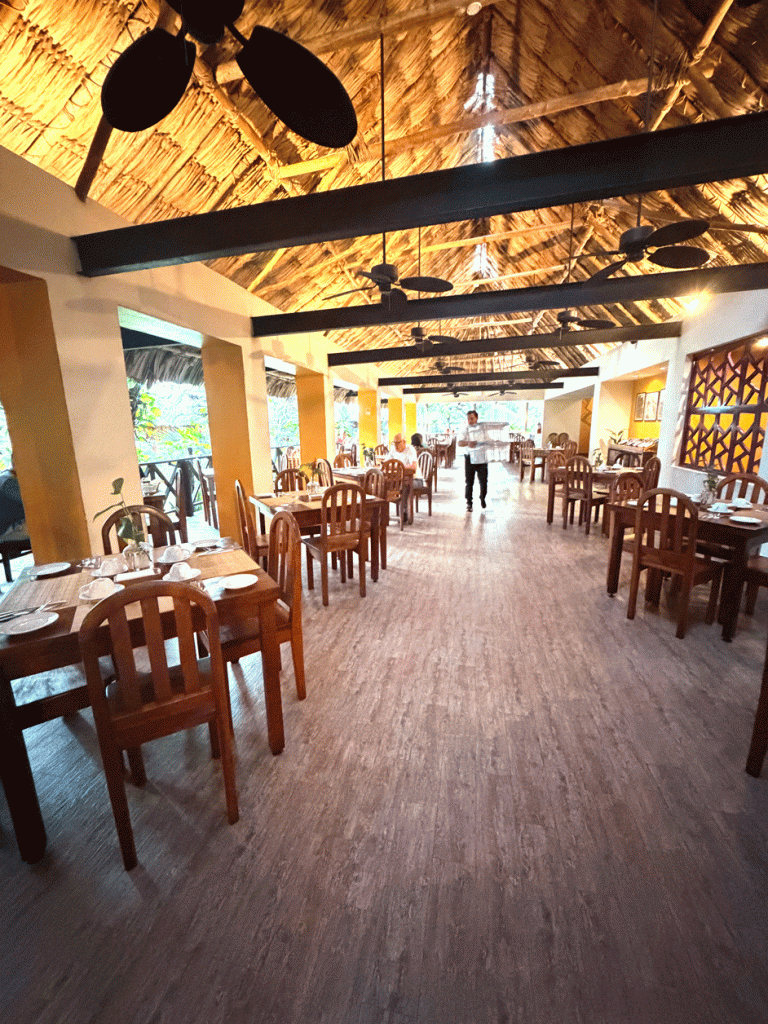
Our room wasn’t ready until three o’clock, so in the meantime, we had lunch in the open-air restaurant that is connected to the lobby.
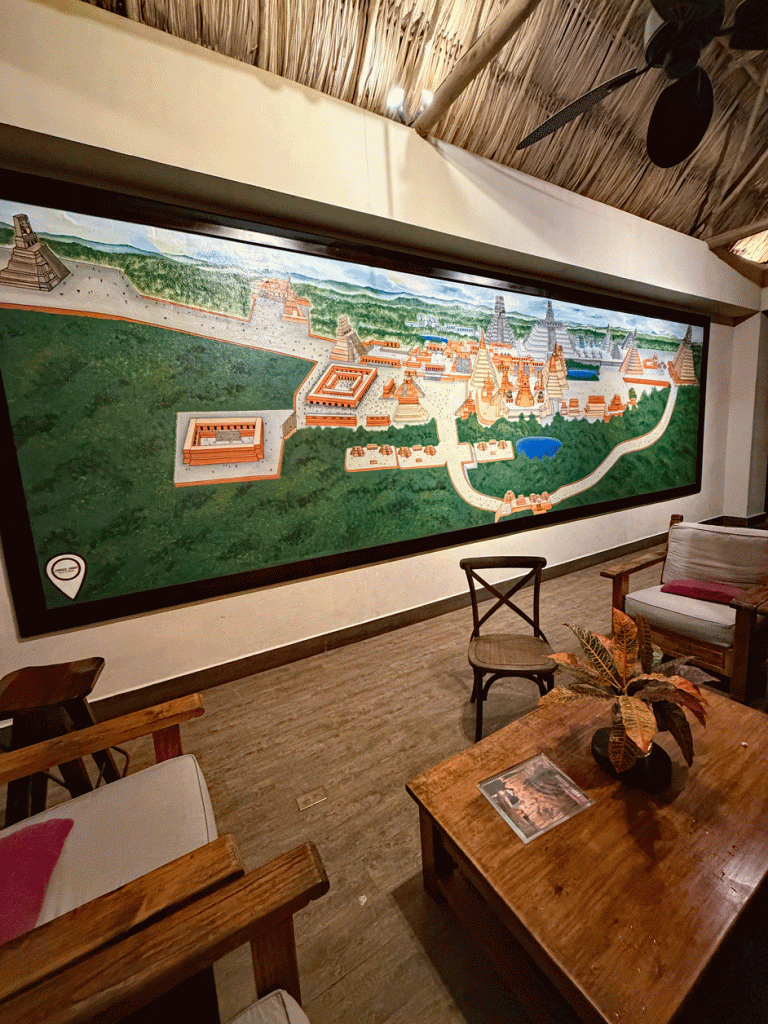
We had time to examine the mural of Tikal, as it might have looked in ancient times.
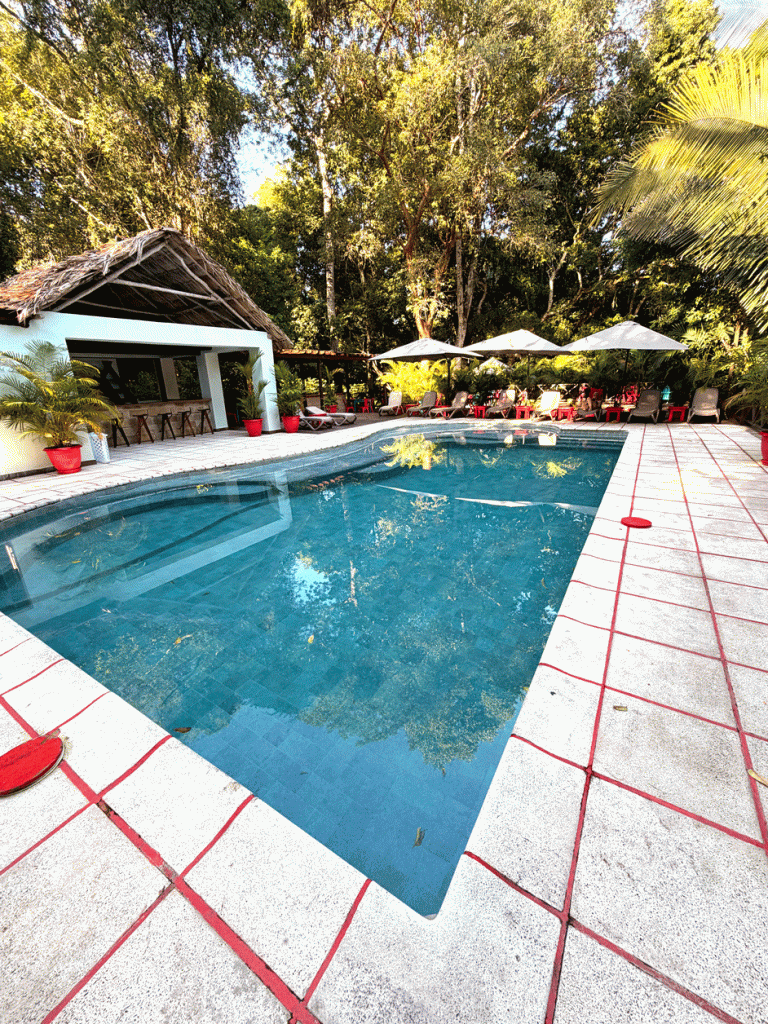
And we wandered around the grounds and discovered the pool.
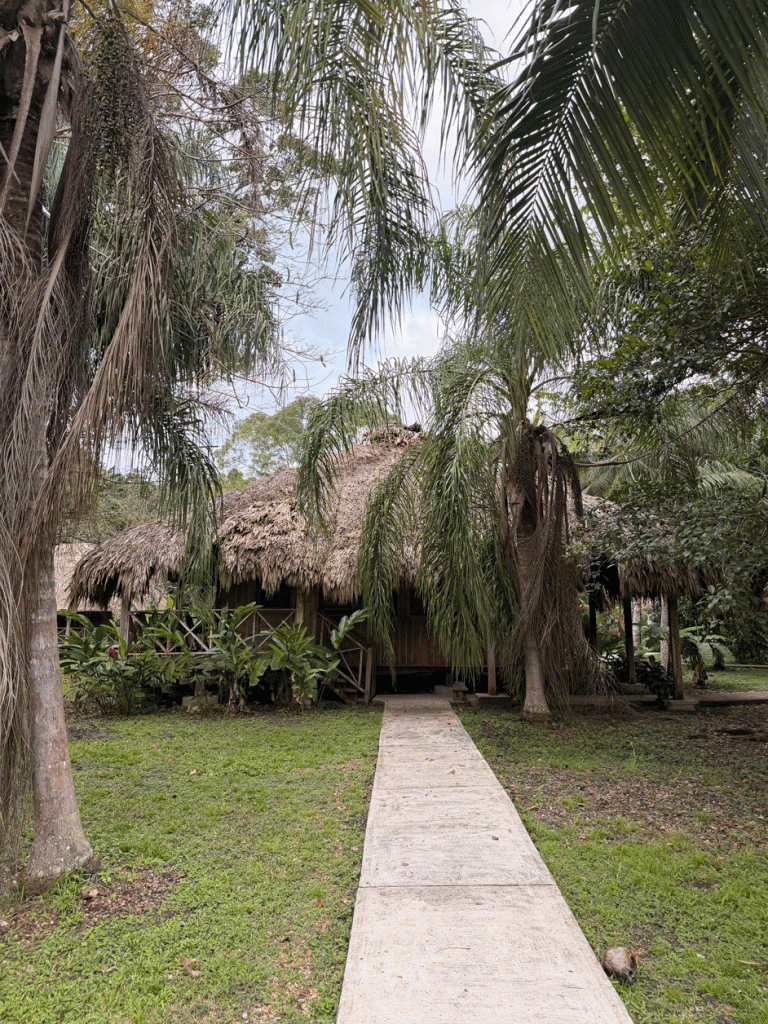
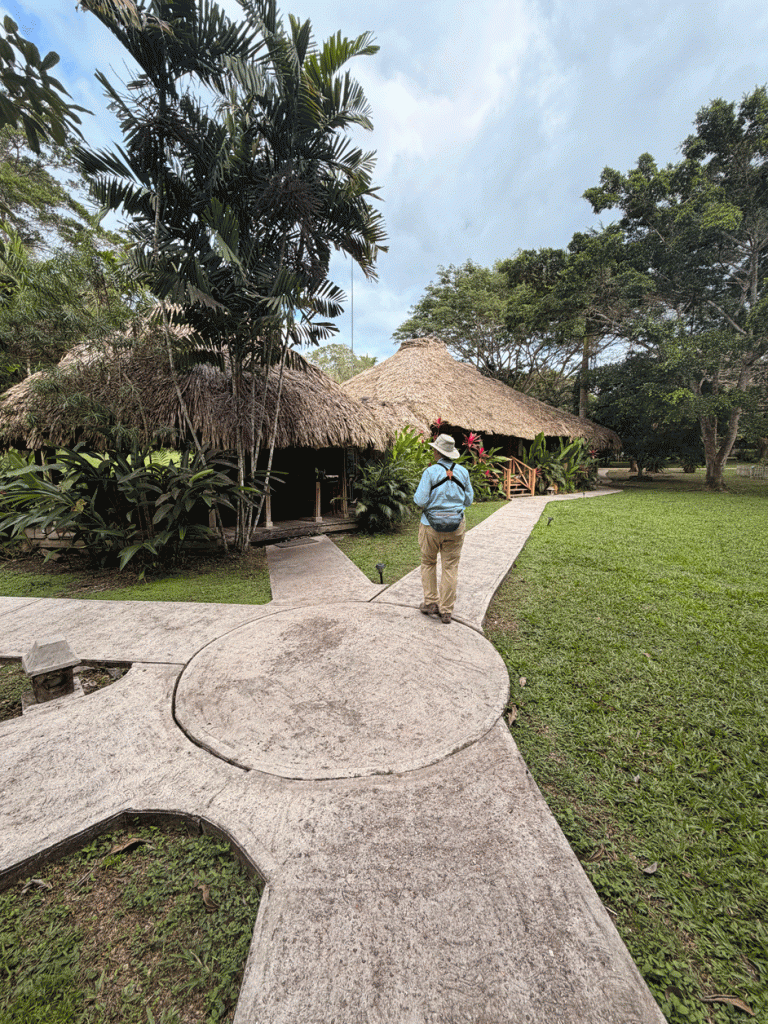
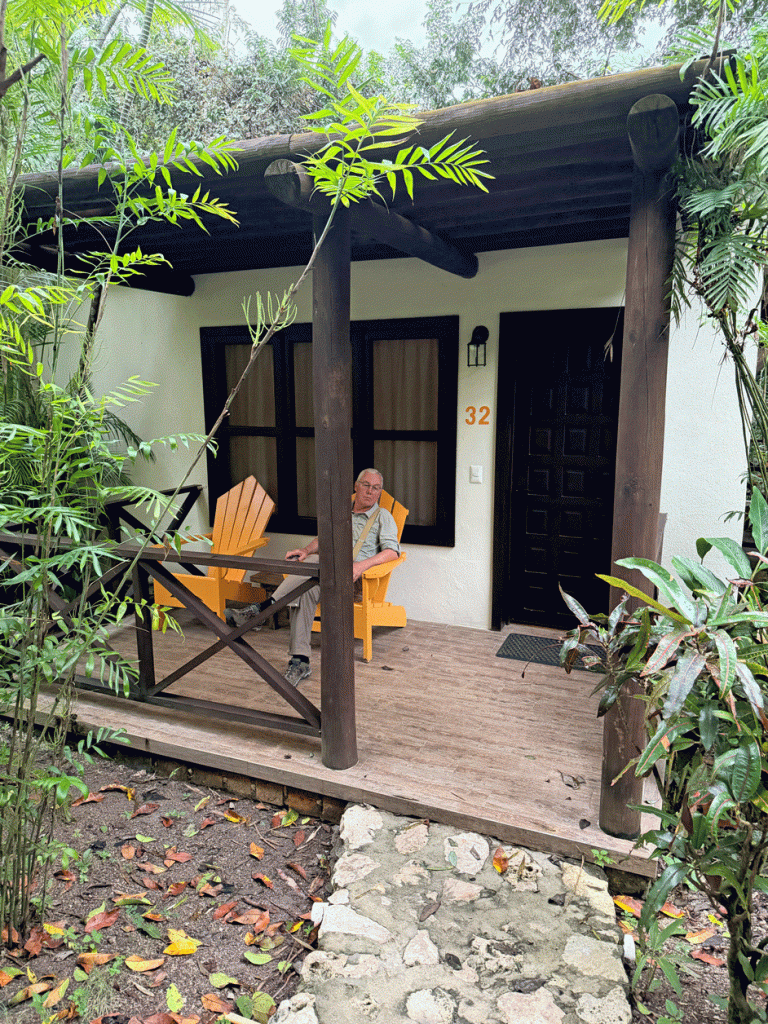
Finally our cabana was ready. Each little building had two units. We had an hour to rest before we headed out for our evening bird walk.
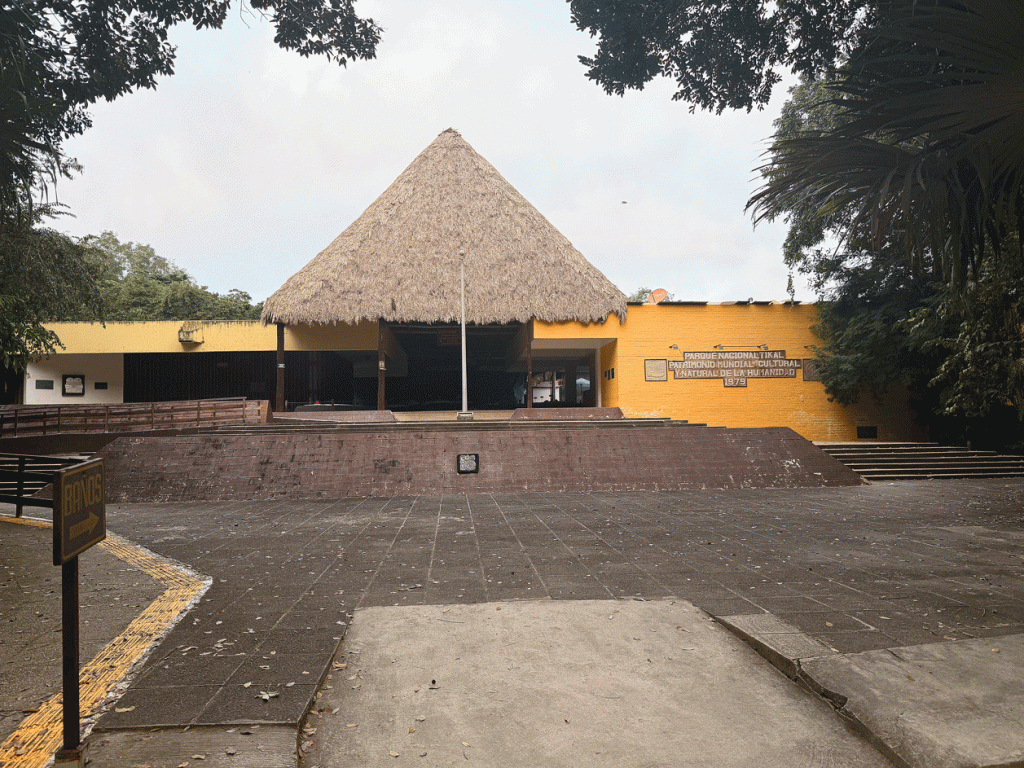
We birded around the visitor center, which was built in 1979
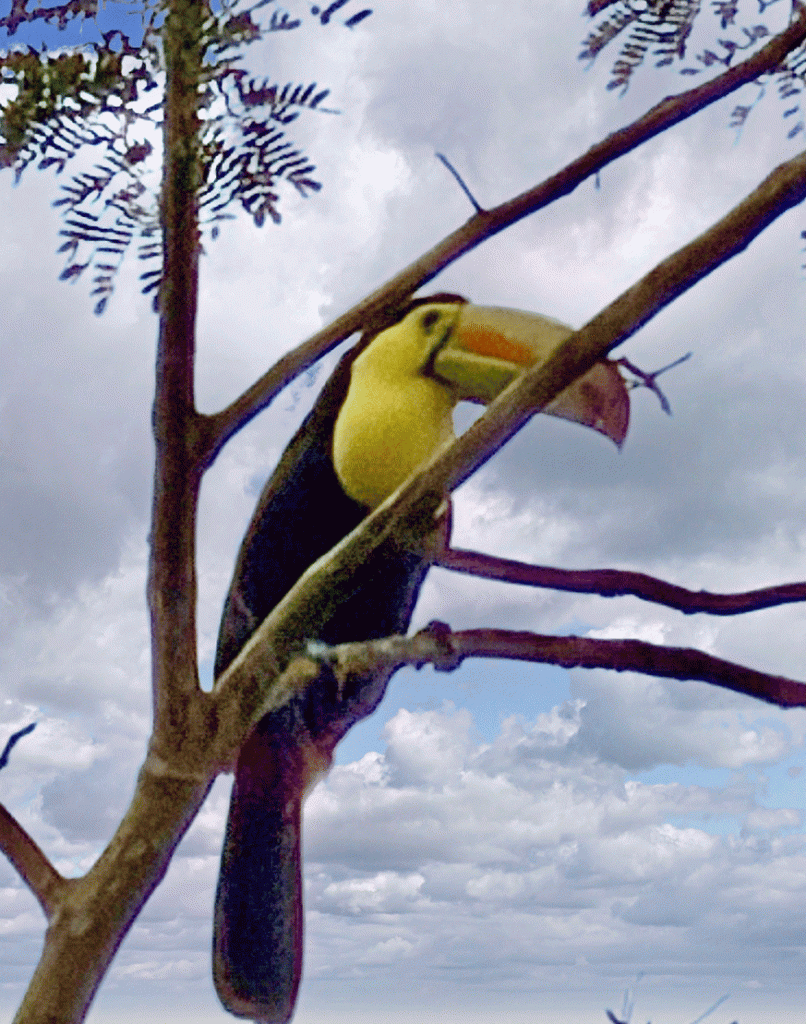
Here’s a Keel-billed Toucan that was high in the trees.
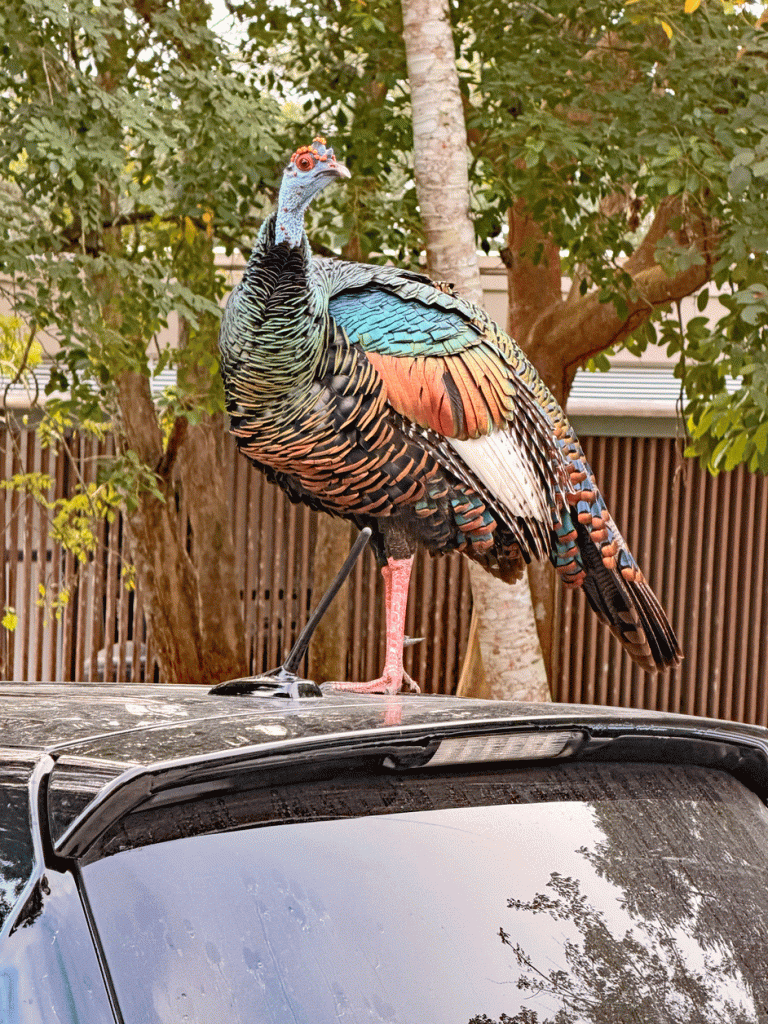
There were several Ocellated Turkeys around the parking lot. Hopefully its feet don’t hurt the car’s finish, but its raised height gives a better view of its beautiful feathers.
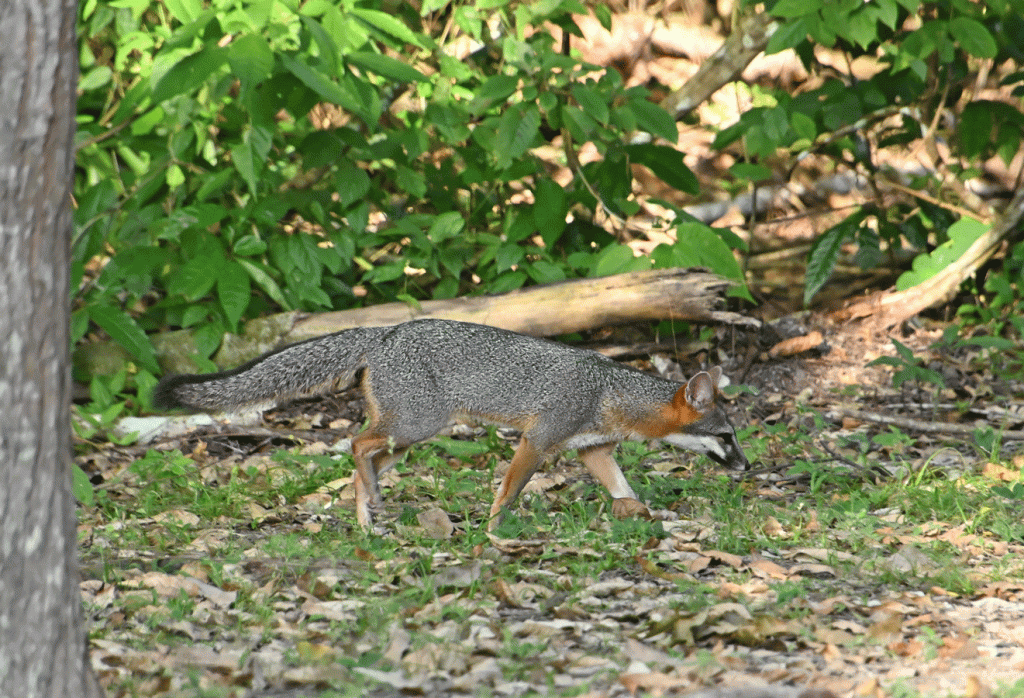
We watched a Gray Fox skirt around the parking lot. Gray Foxes climb trees with their semi-retractable claws. They are mostly nocturnal and are found throughout the US, Mexico and Central America.
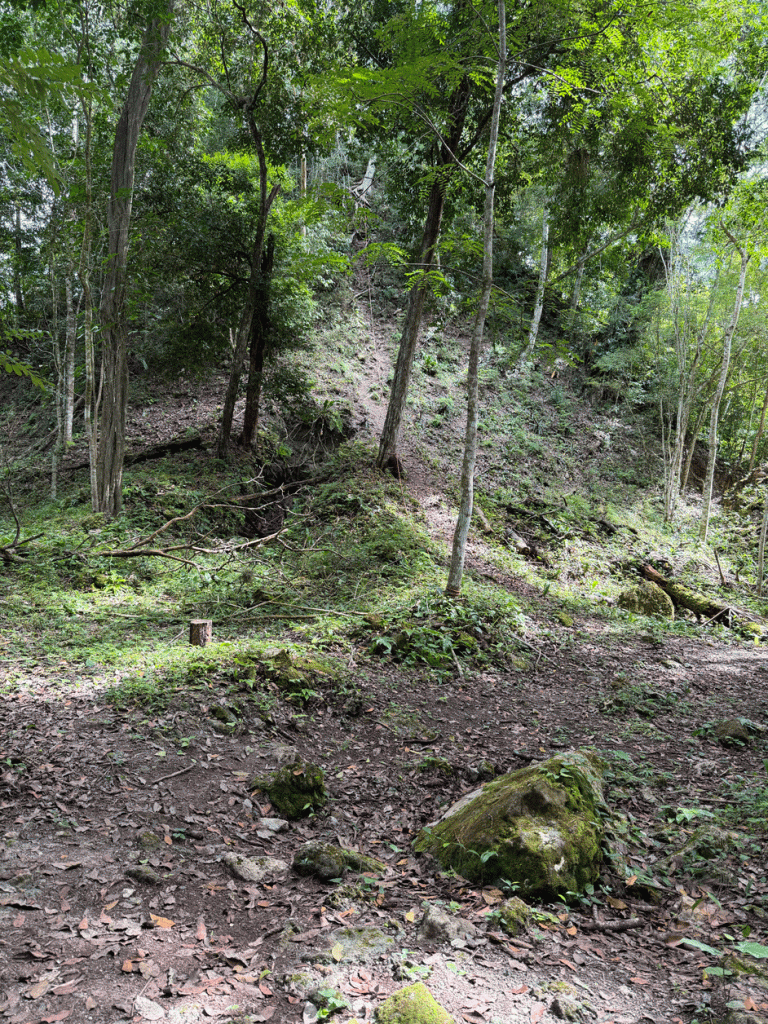
We walked down the wide trail that used to be a dirt airstrip, that was constructed around 1950 to support the archeological investigations.
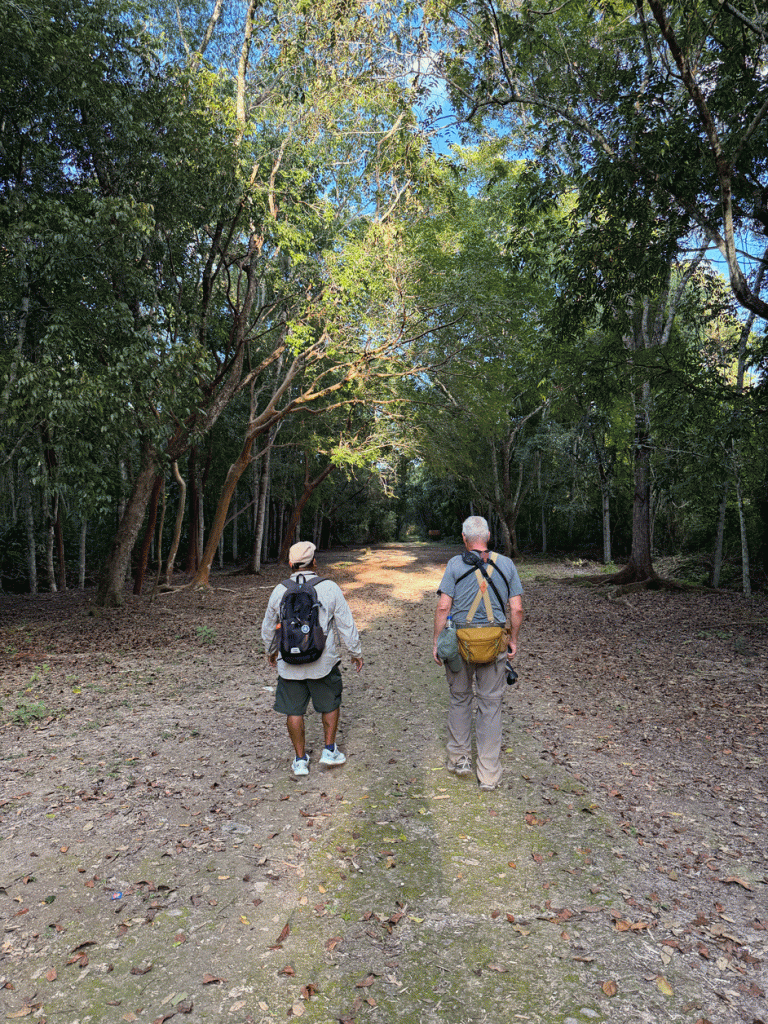
We continued down the trail, and a little bit past this sign. Bene told us about people who had gotten lost and died in the jungle, hence the signs.
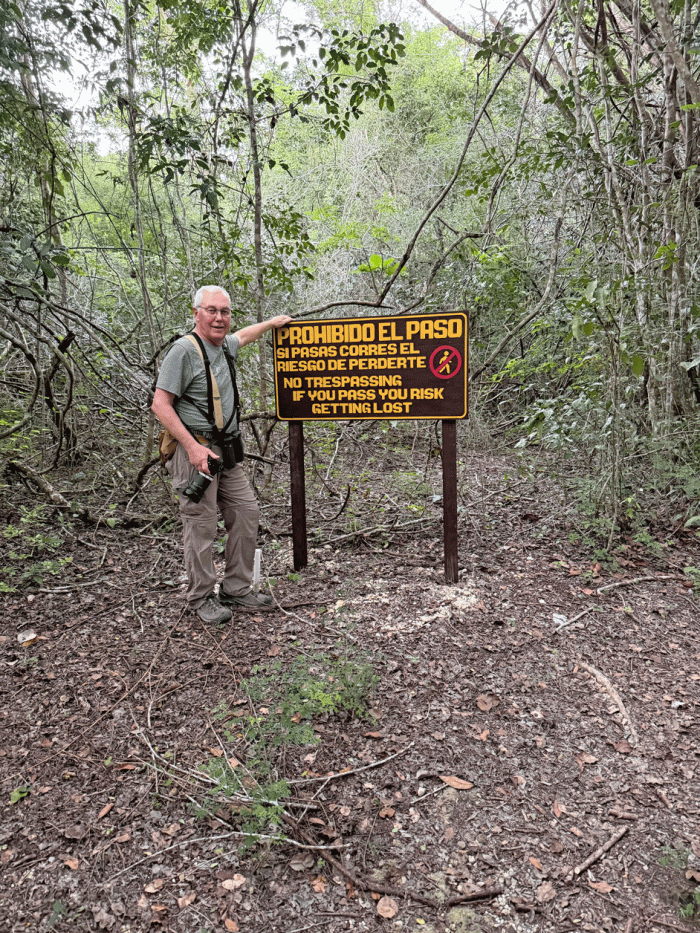
We back-tracked to a couple of reservoirs. In the photo below, Doug and our guide, Bene, are posing in front of an ancient reservoir, which was dug out of the limestone and lined with clay for waterproofing. Scientists are currently studying the Maya reservoirs and the systems that were in place to store potable water. This understanding could be applied to modern constructed wetlands.

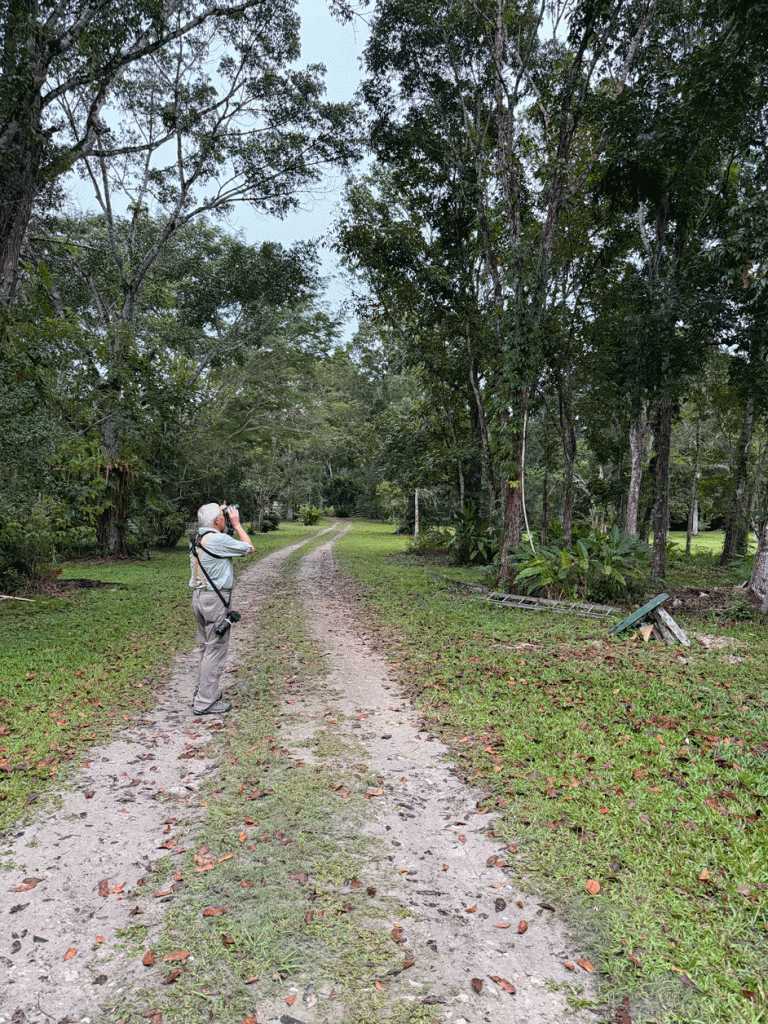
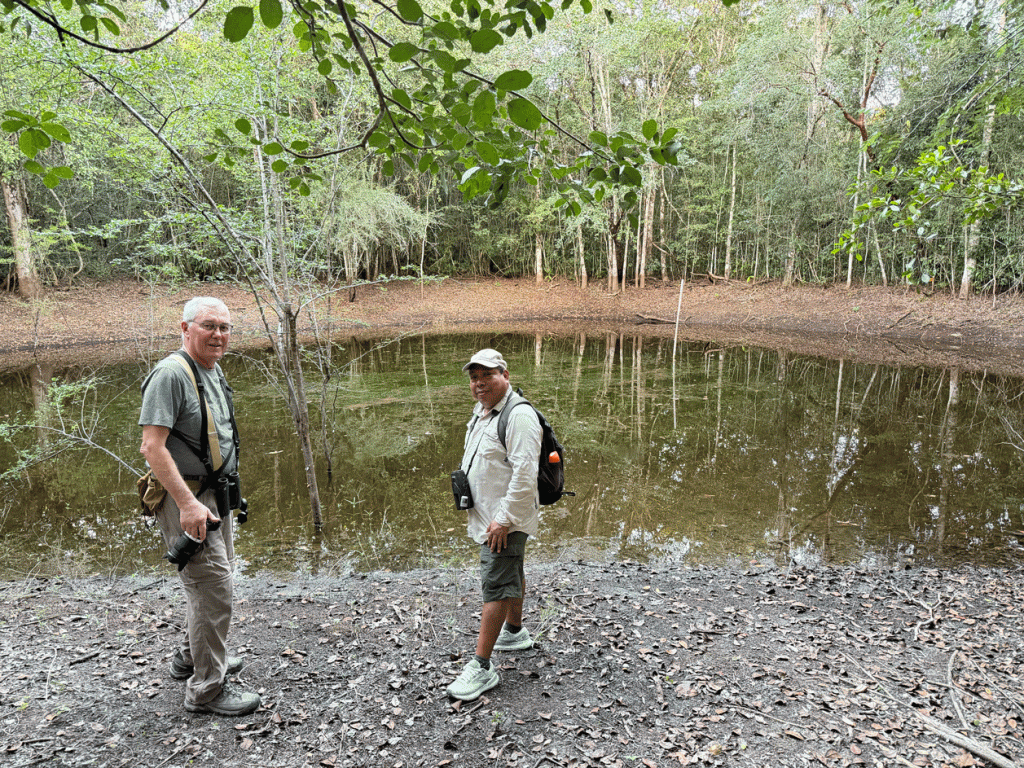
We waited by another reservoir for it to get dark. While we waited, we heard the whistled song of Thicket Tinamous. Wendy heard one whistle close to her, but hidden in the undergrowth. She whistled back and it responded and they had a short “conversation,” but the tinamou stayed hidden in the thicket. Doug turned up the volume of his hearing aids and heard them too. We never saw the large ground-dwelling bird.

As the sun set, we noticed some bird activity. Through our binoculars, we watched several Common Pauraques, as they hunted insects in the low-light. We were also able to hear a couple of Yukatan Poorwills.
The next day was our tour of Tikal, with some birding along the way. Near the entrance to Group G, we were lucky to discover a mixed flock that included some Ochre-crowned Greenlets, a new bird for us.

We accessed the inside courtyard by going through a narrow opening, visible in the photo below.
The opening led to a tunnel that turned a corner. The photo below was taken just before we exited.
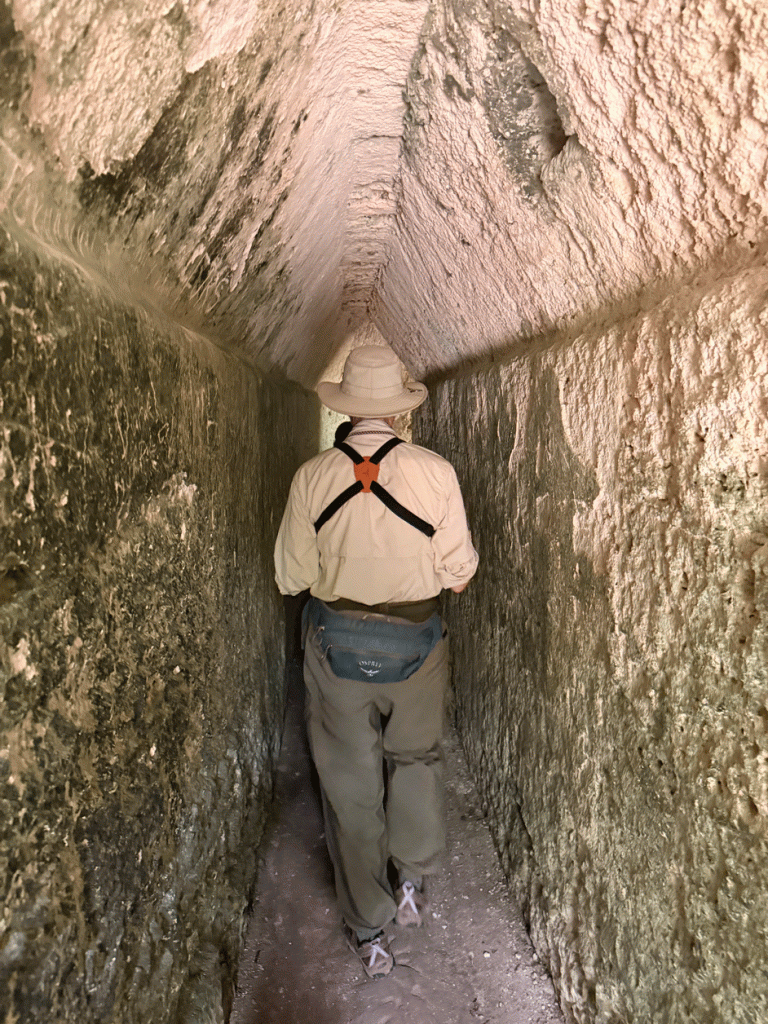
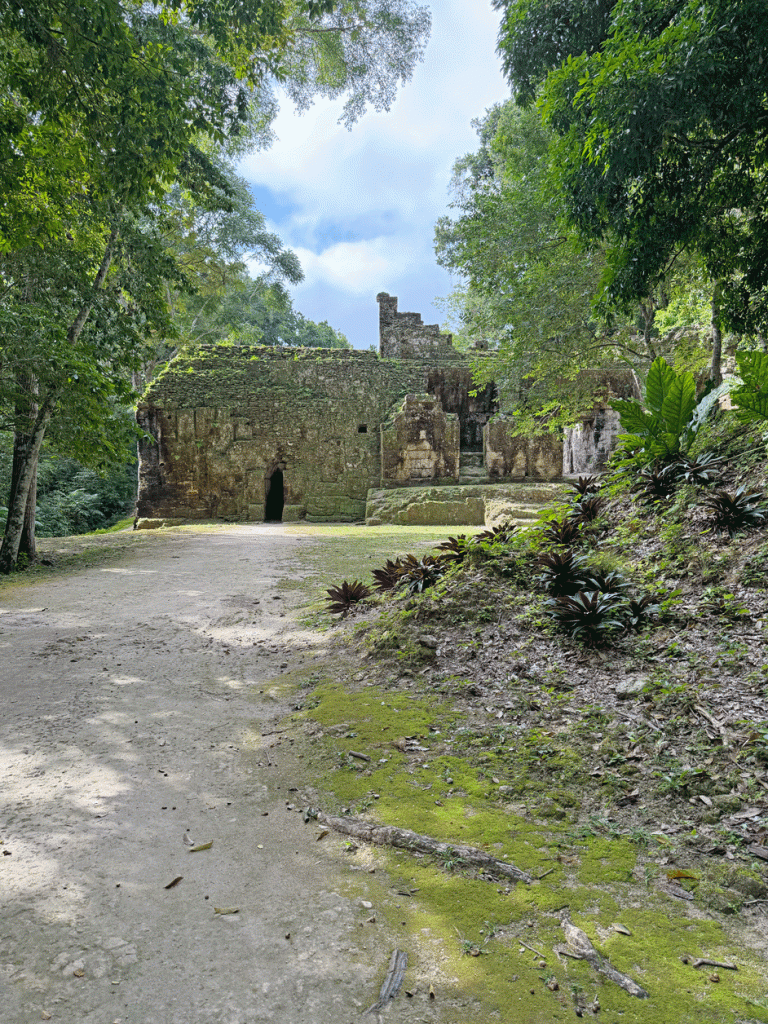
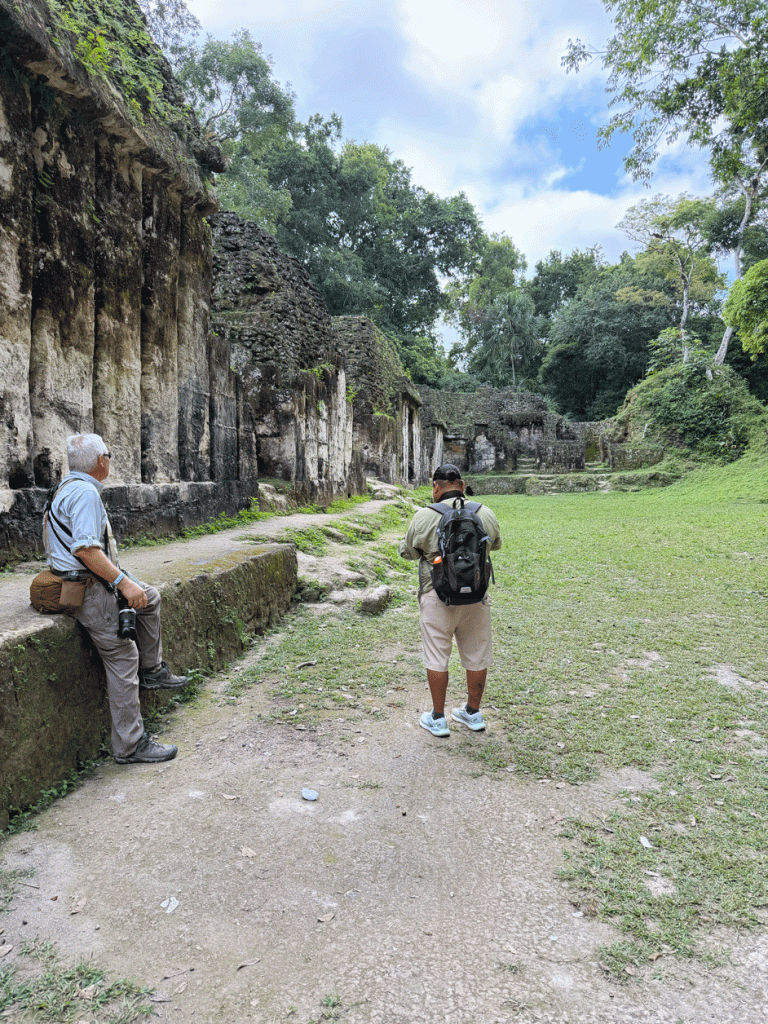
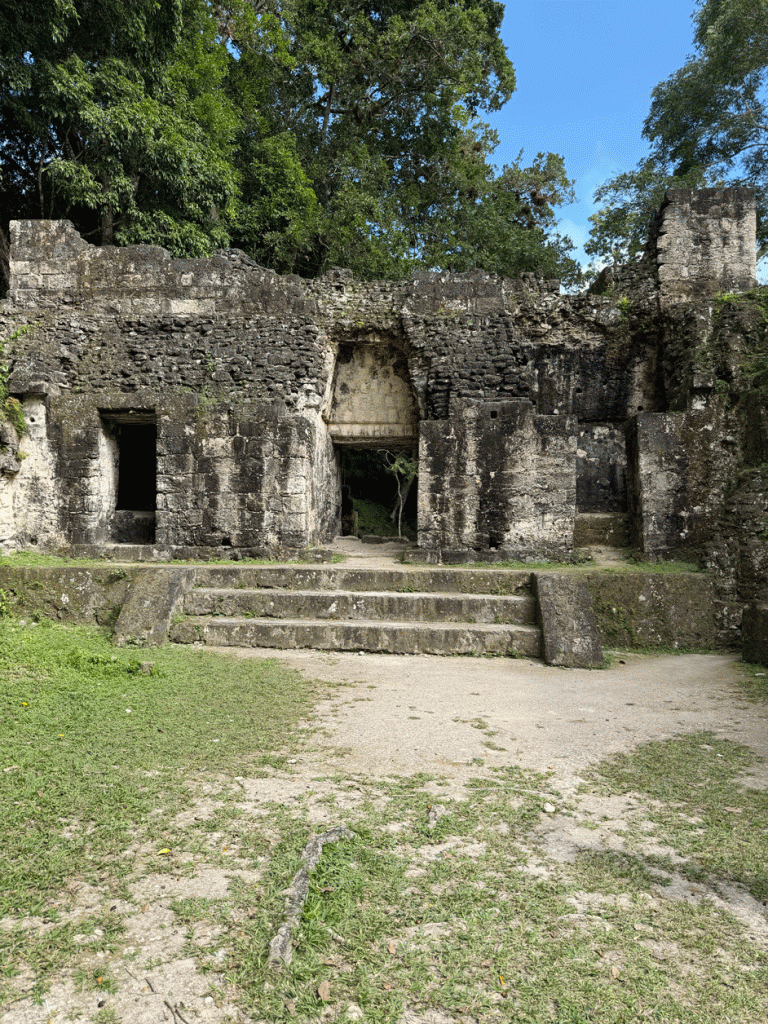
This is inside the courtyard of Group G, aka The Palace of Grooves. Bene tried to call in a bird with the speaker on his phone, but no bird responded. It felt like a special place that we had all to ourselves.
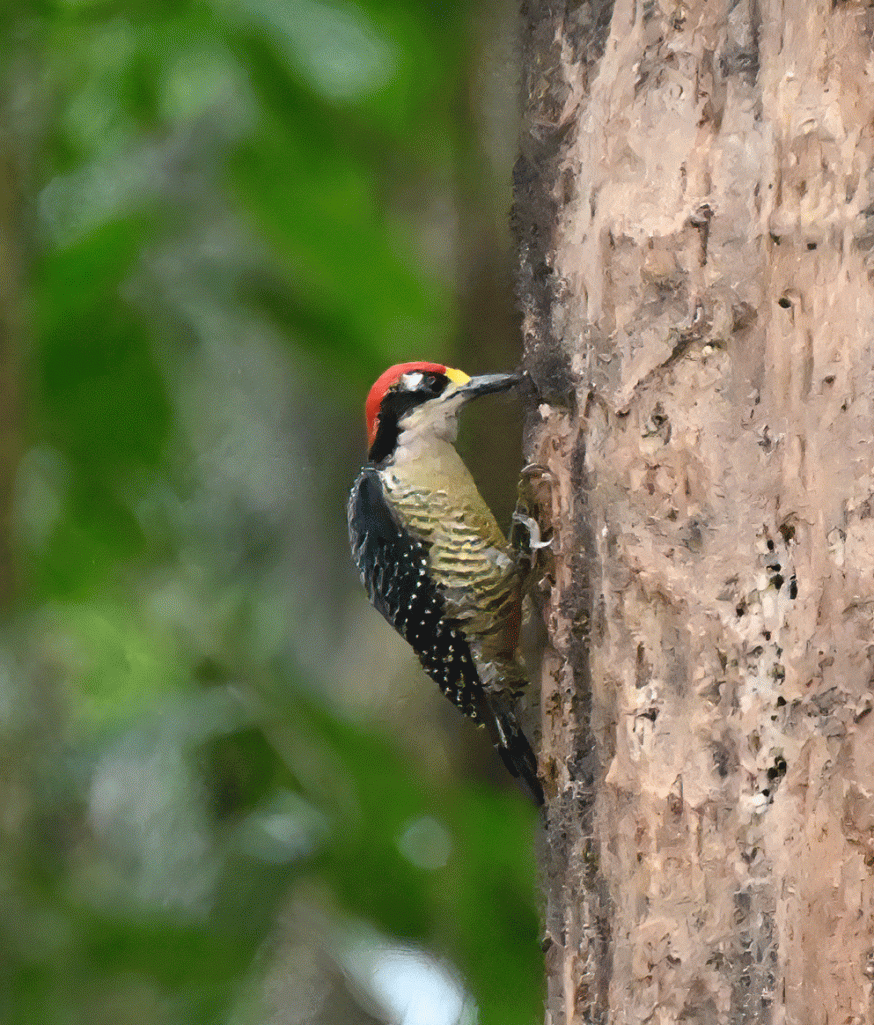
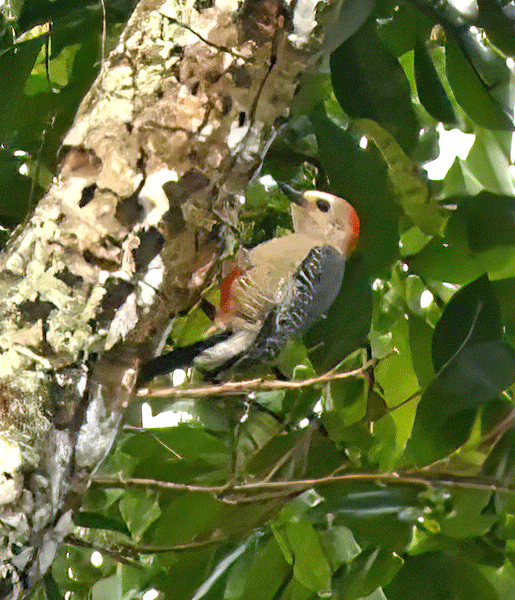
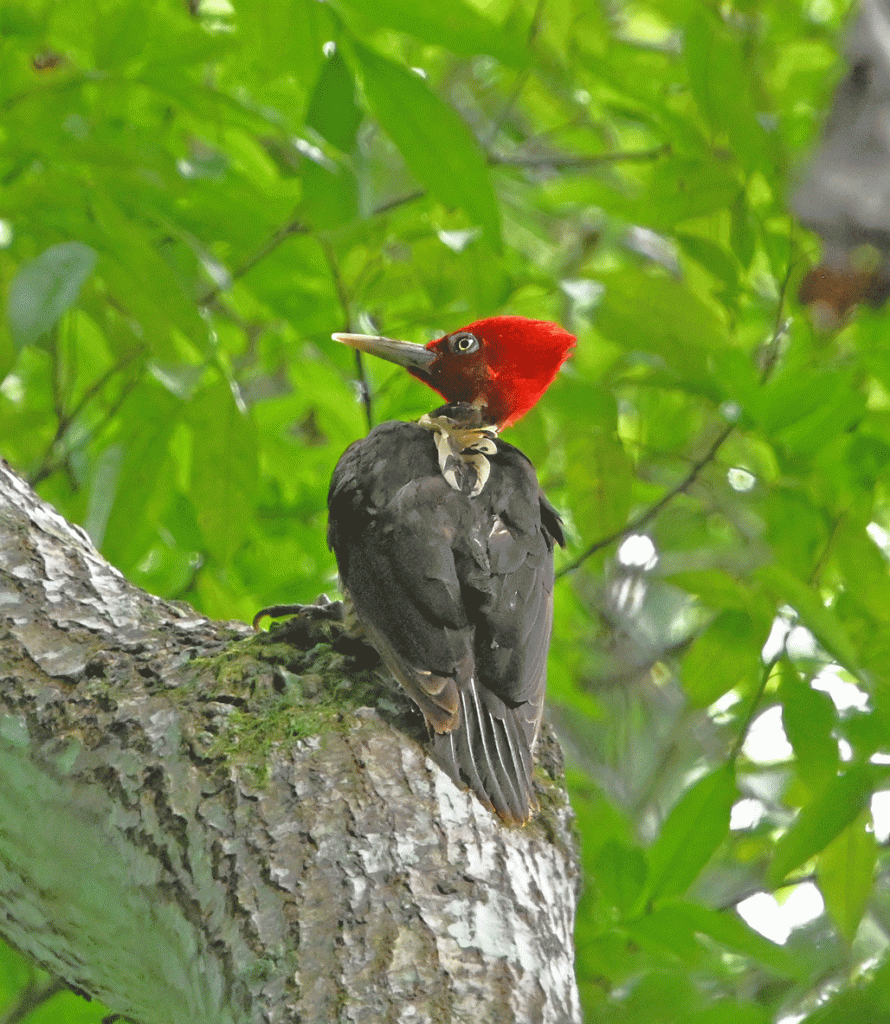
We continued along a jungle path and saw this Pale-billed Woodpecker. The white “V” on its back distinguishes it from the more common Lineated Woodpecker. They look a little bit like the Pileated Woodpecker that live near our home in BC, but they are of a different genus.
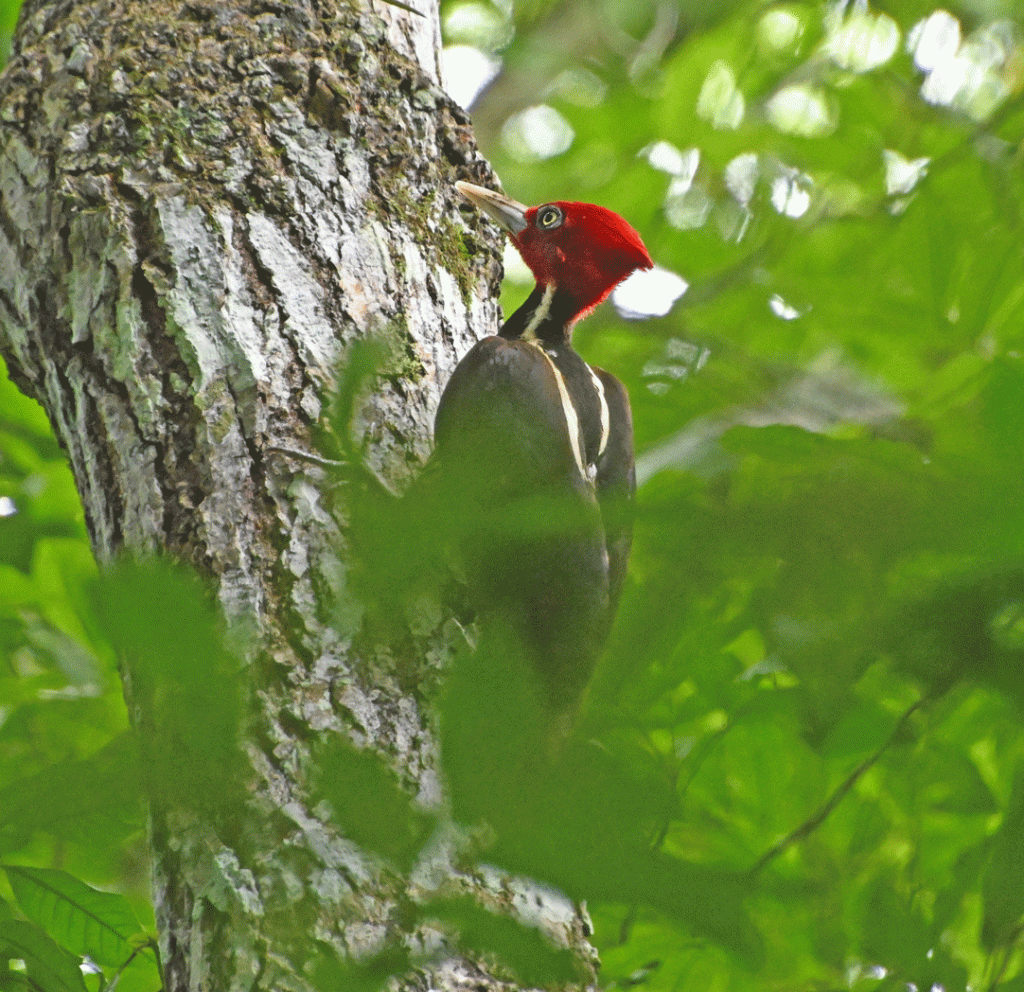
Here’s another view of the Pale-billed Woodpecker.
This was our first view of Temple I.
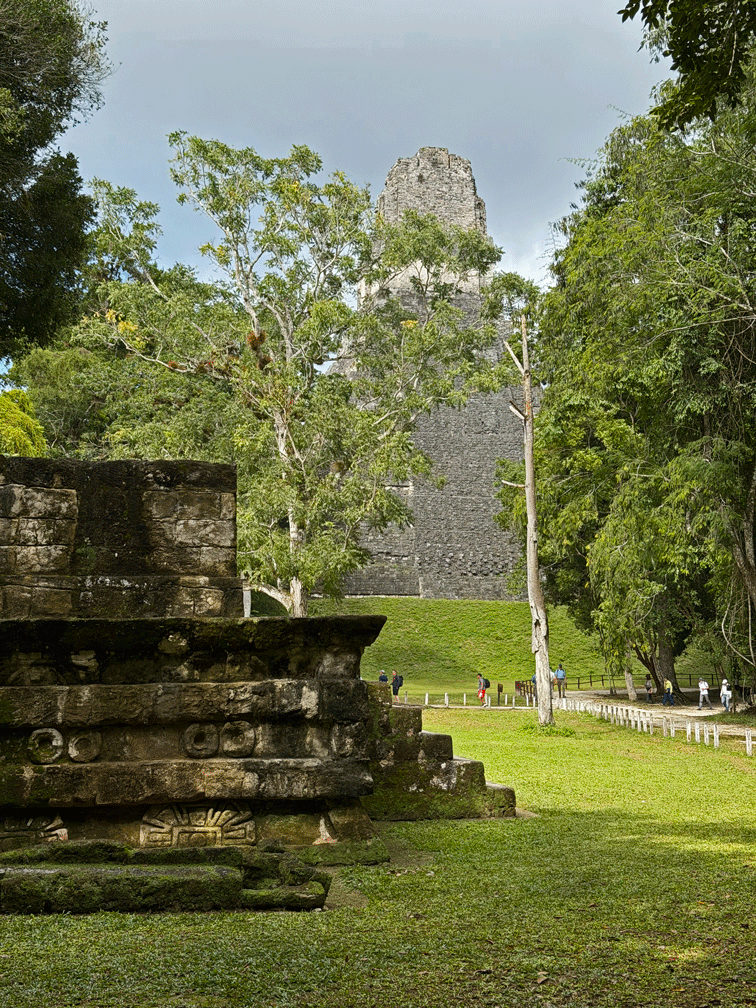
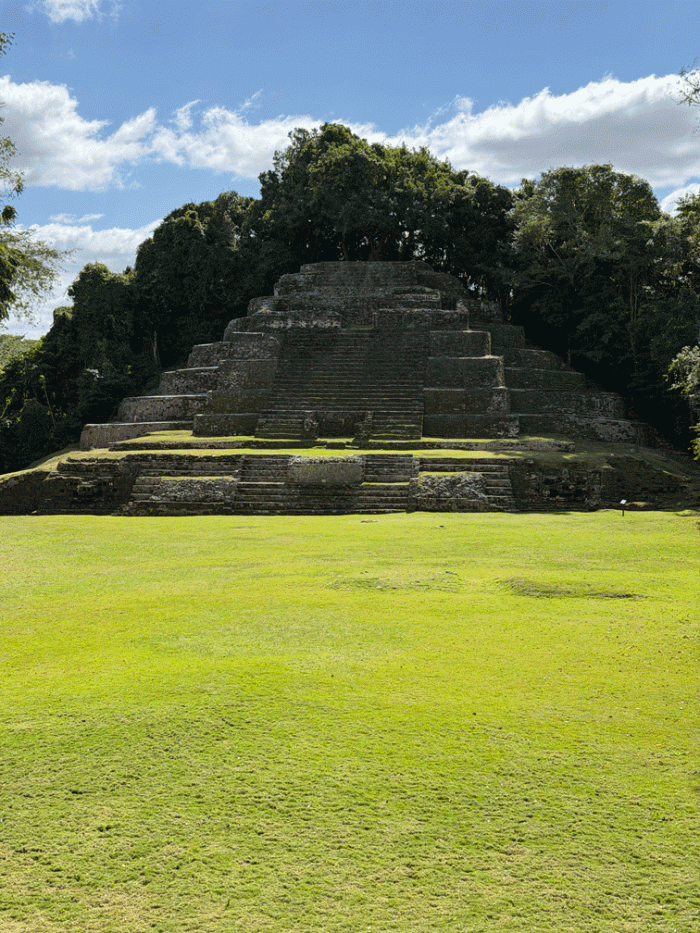
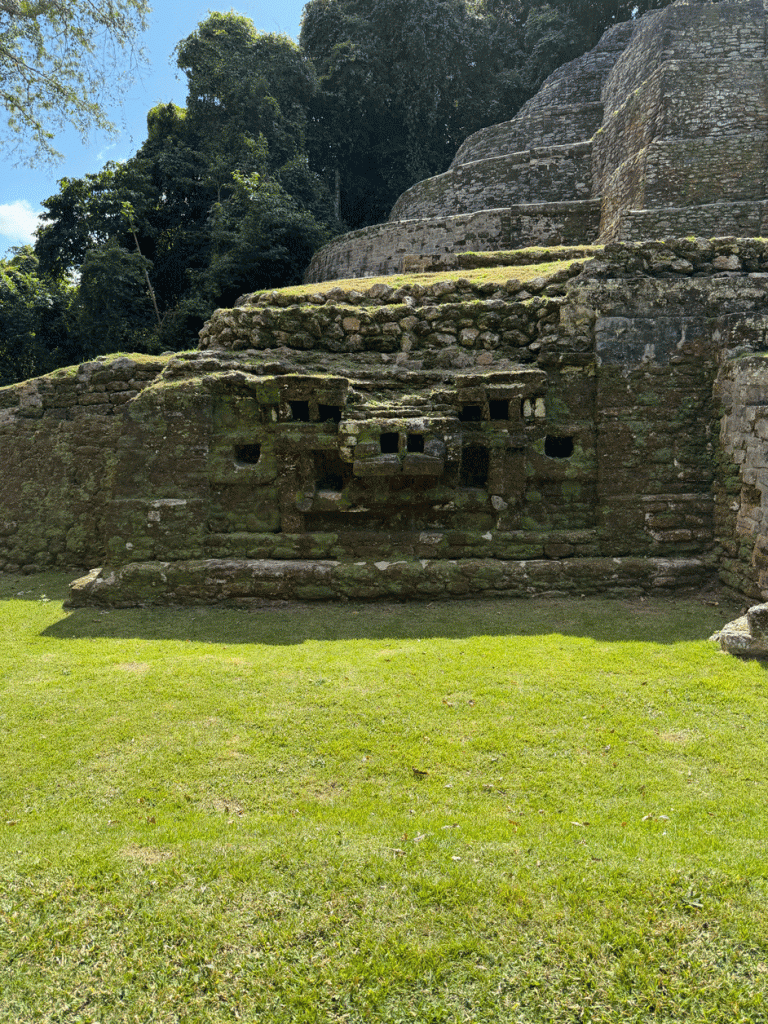
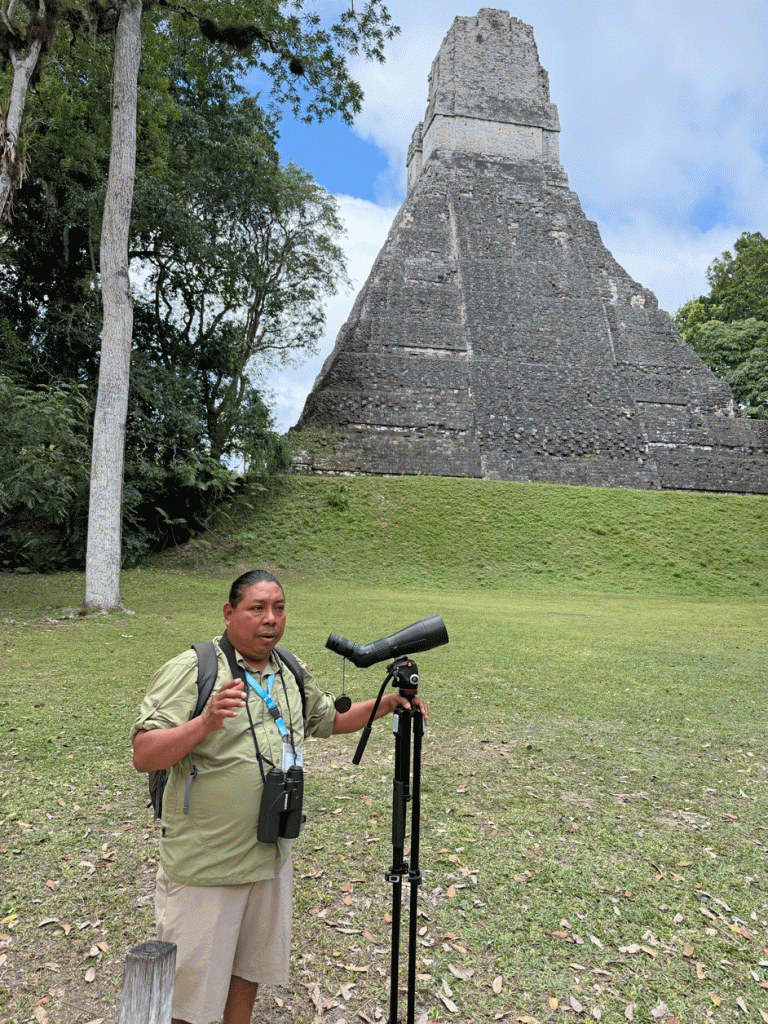
Temple I was the first temple to be excavated. It’s also known as the Temple of the Great Jaguar because of a jaguar carving on one of its lintels. It was built around AD 700 by the descendent of Jasaw Chan K’awiil, and serves as the powerful ruler’s tomb, who probably planned the building long before his death. The temple has nine stepped levels and has a funerary shrine on the top.

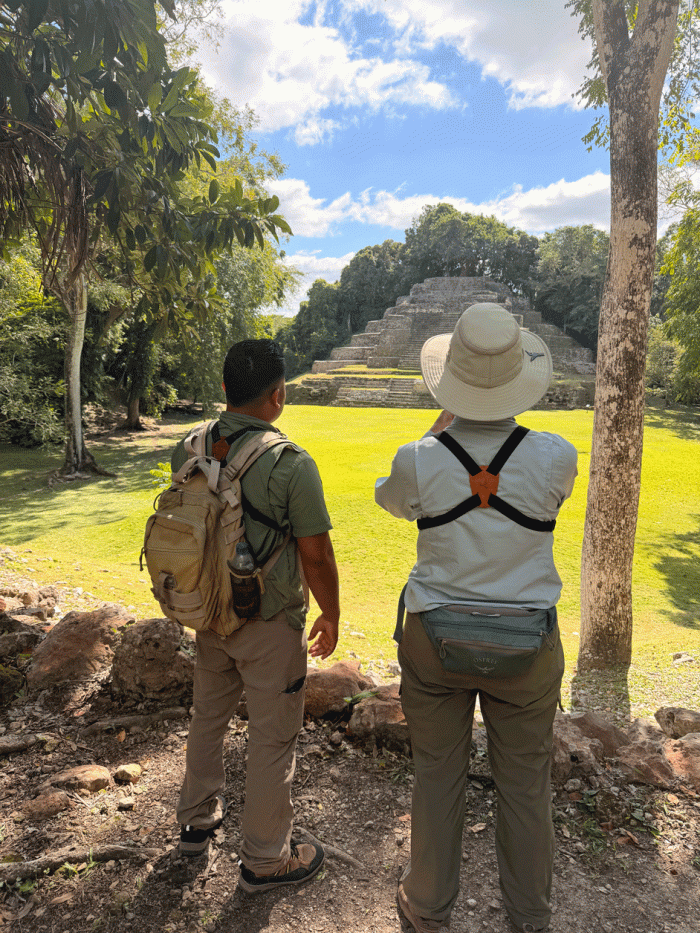
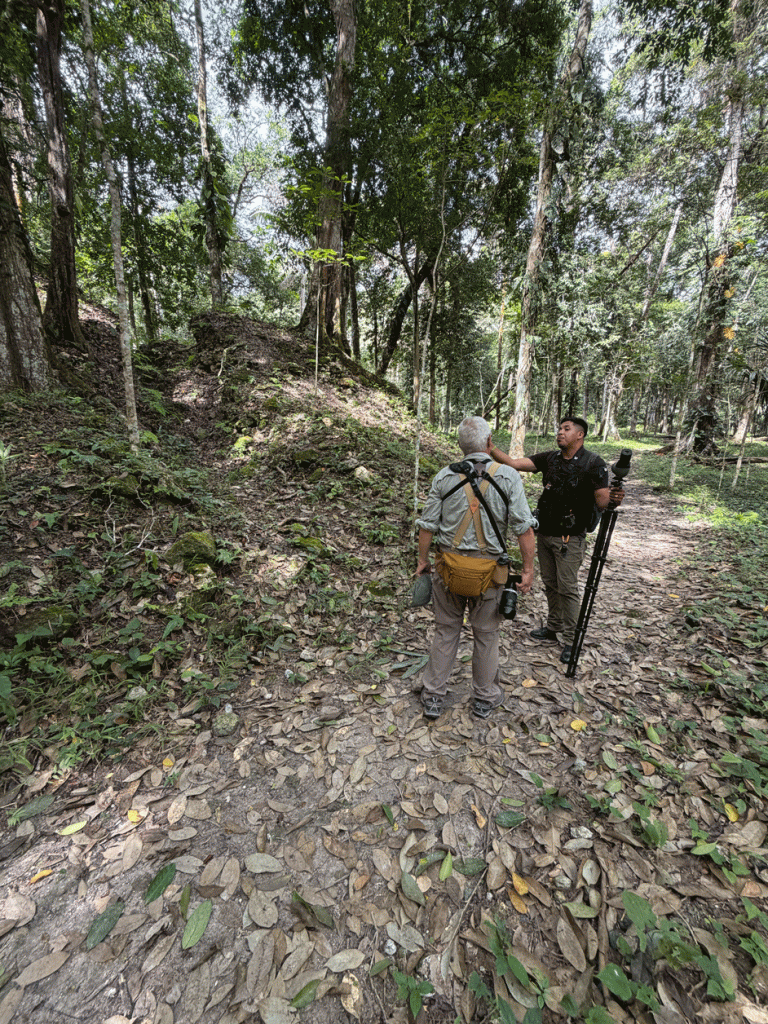
In the photo below, our guide Bene, is explaining the history. Bene was proud of his Mayan roots, and his first language is one of the several Mayan languages. He is the typical height of people of his descent.
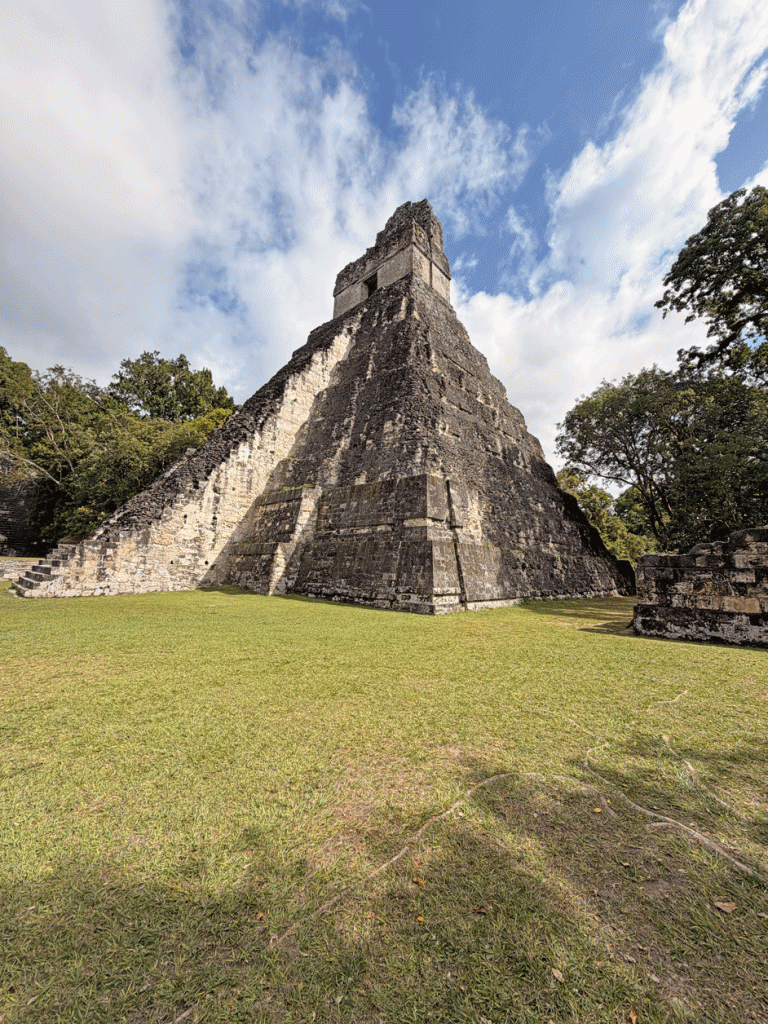
This is a photo of Temple I taken from the Great Plaza. Notice how the bottom steps are squared. The archeologists realized when they got down to this level that they had removed more material on the upper steps than they should have. The next photo shows the matching temple, that was excavated with lessons learned from this one.
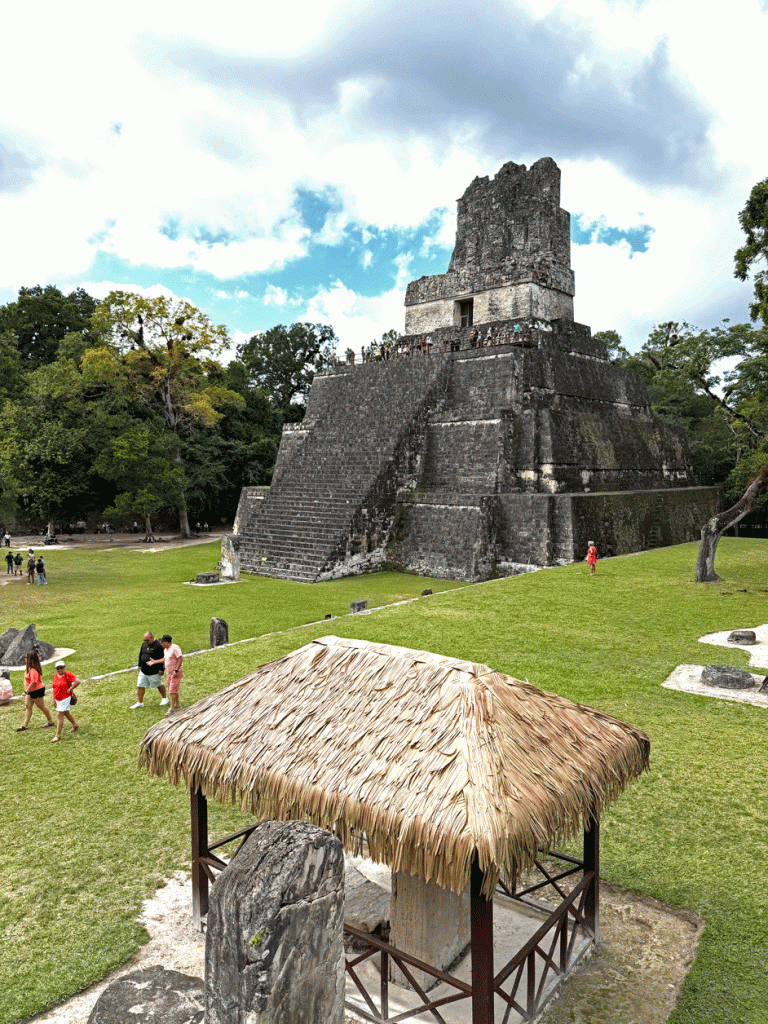
This is a view of the Great Plaza. Temple II is a matching structure to Temple I and built by Jasaw Chan K’awiil in honour of his wife. The excavation of this temple preserved the front steps. Temple I is out of view on the left. The small roofs protect stelae.
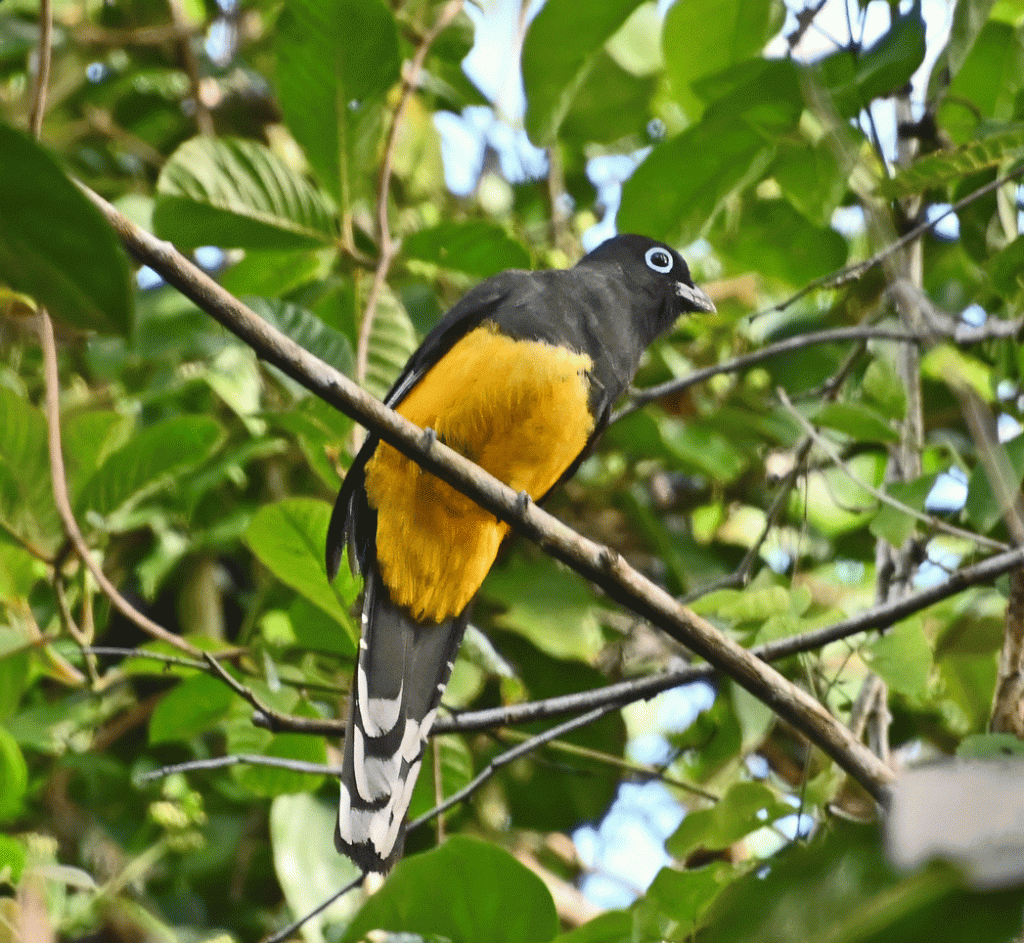
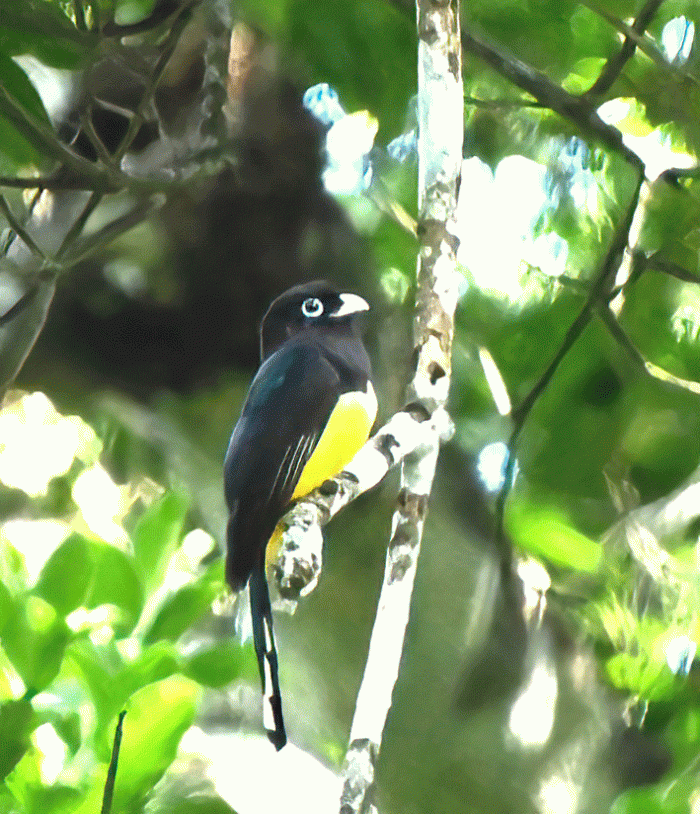
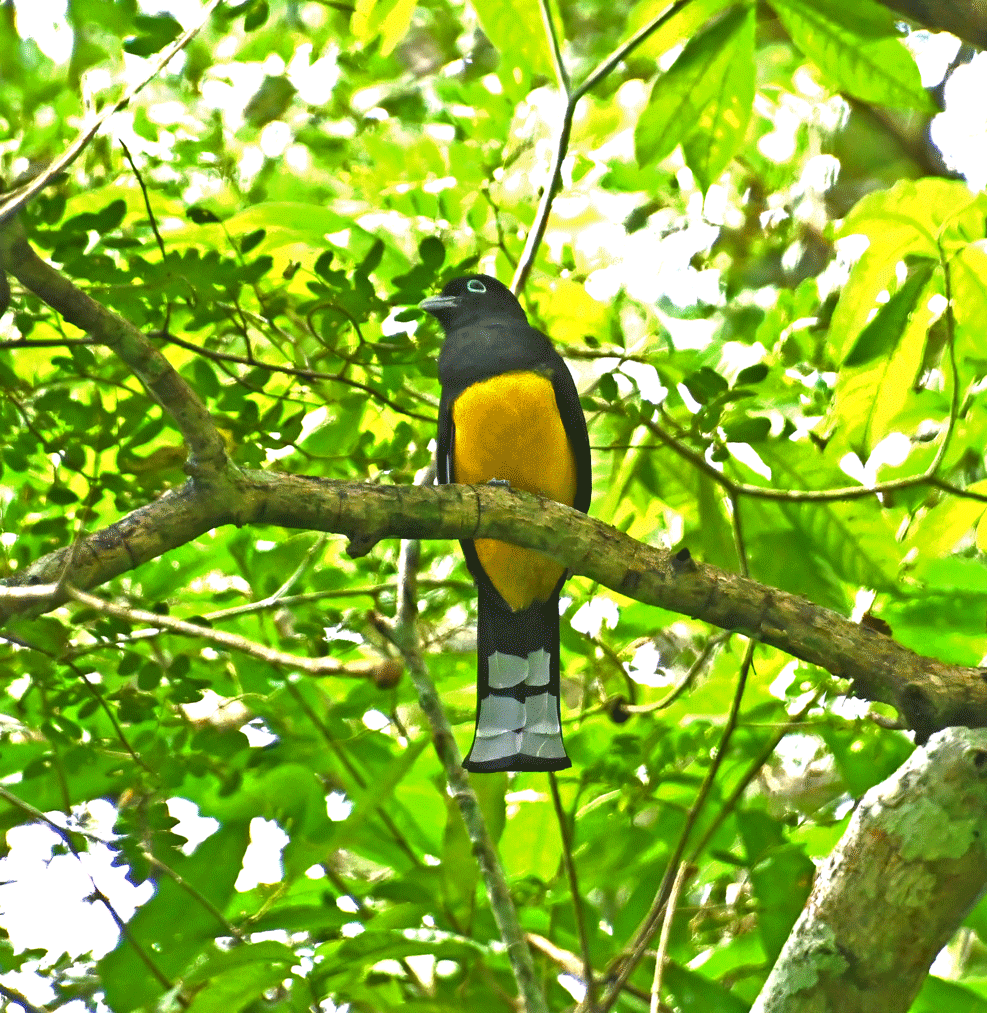
This Black-headed Trogon was in the trees near the Great Plaza. This species has earned the award of “most photographed” of our whole trip, because of its bright colouring and its habit of sitting still for long periods of time.
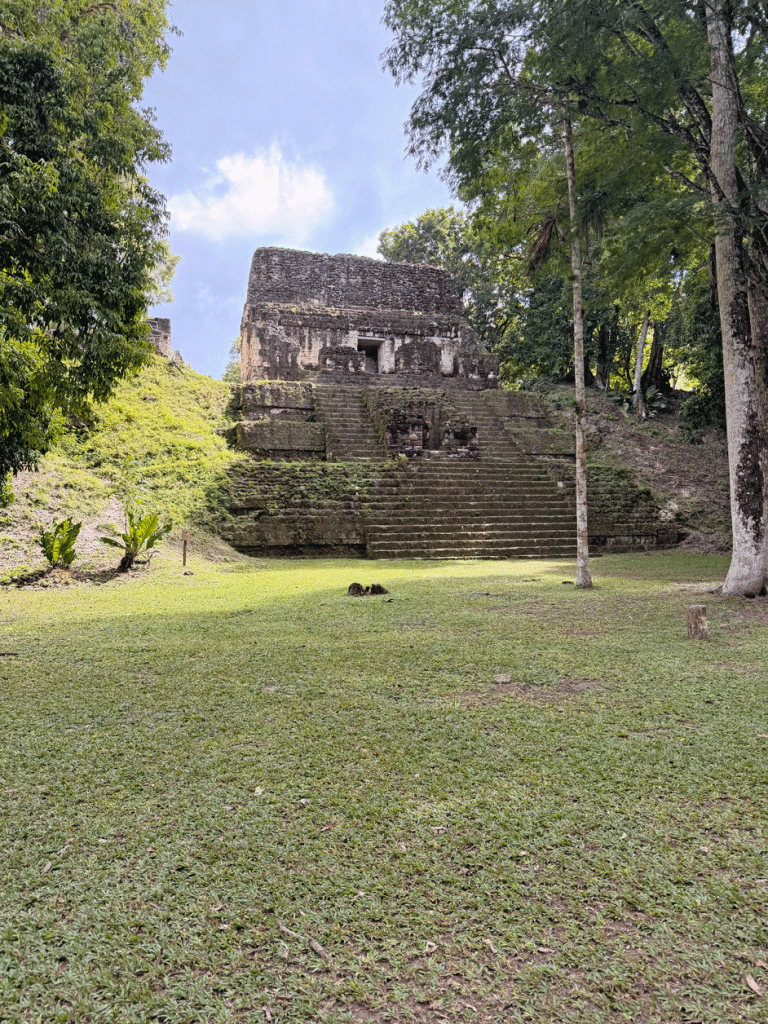
This is one of the structures in the “Lost World,” a complex that contained some of the oldest structures in Tikal. Bene explained the astronomical significance of each structure; which one was lined up with a solstice or an equinox, but the explanation is too complex for this blog.
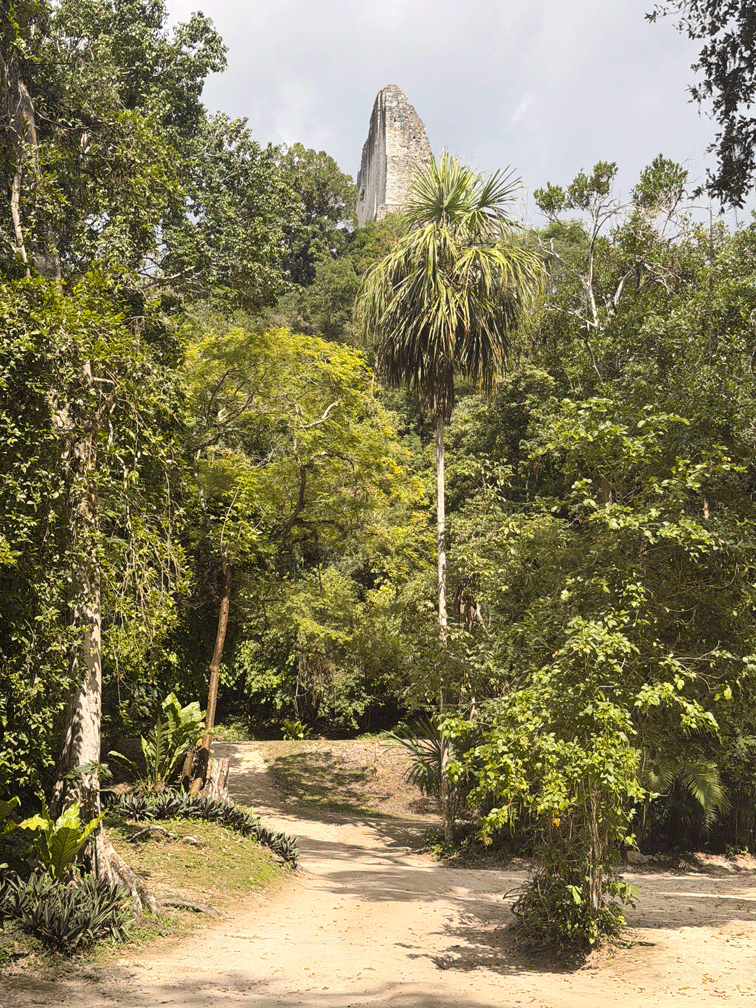
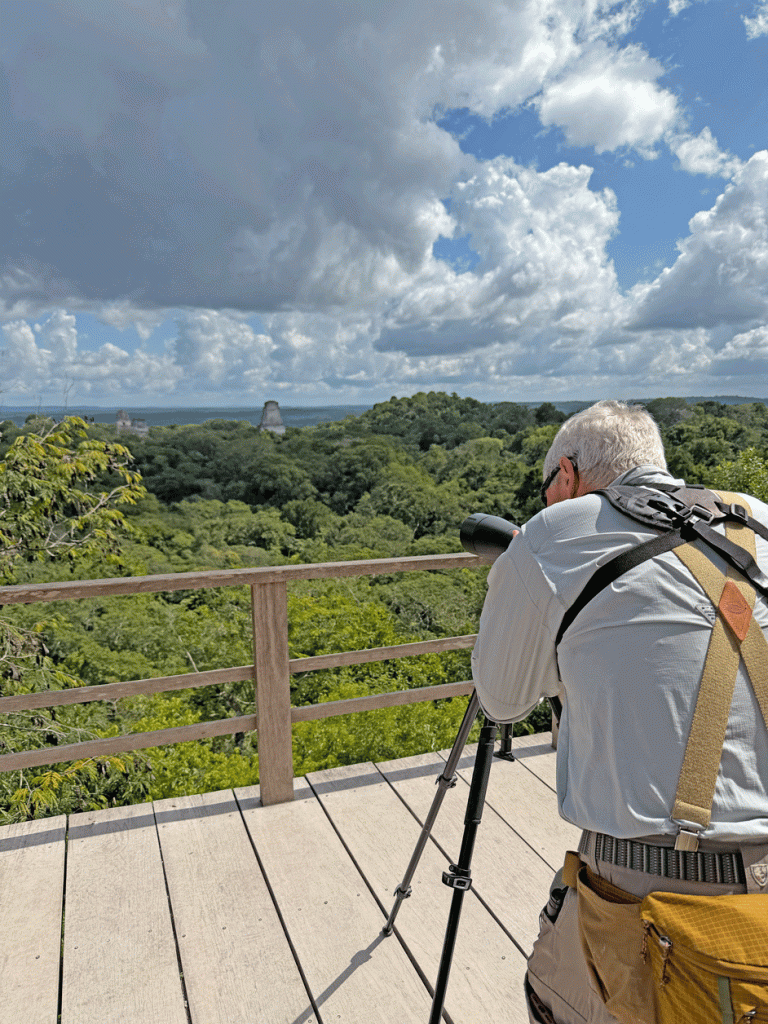
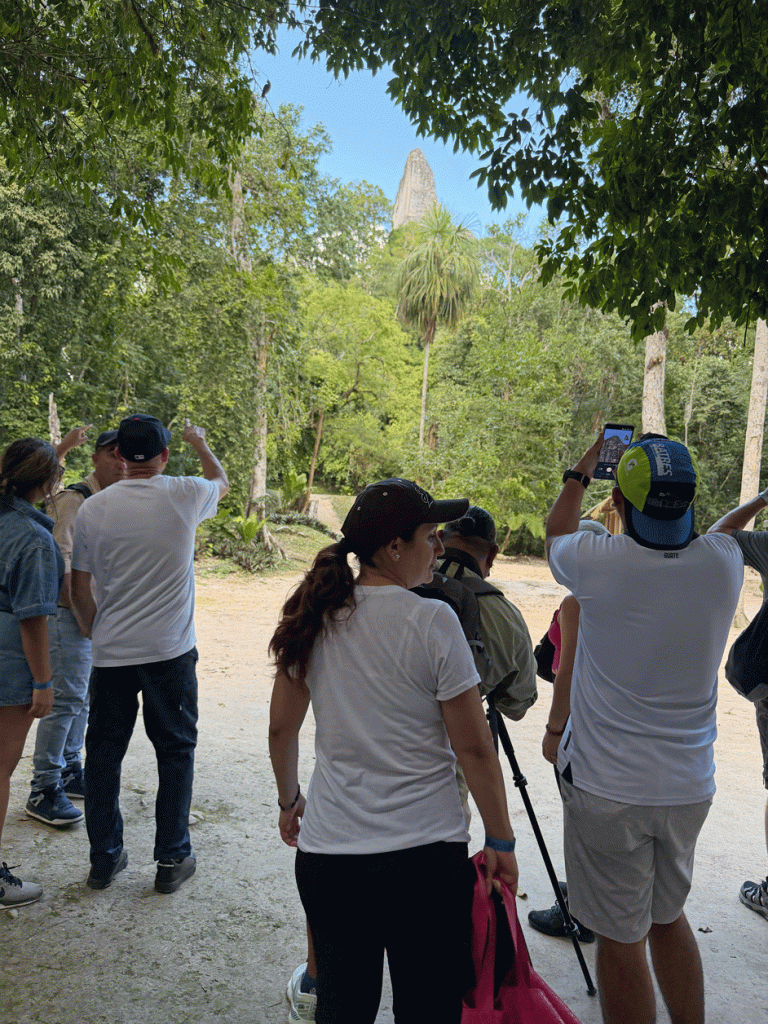
This was our first view of Temple IV, the tallest-known structure built by the Maya. We set up the scope here in hopes of seeing a Orange-breasted Falcon. We didn’t see it on our first pass, but we came back to this same spot to see the falcon that was perched near the top.
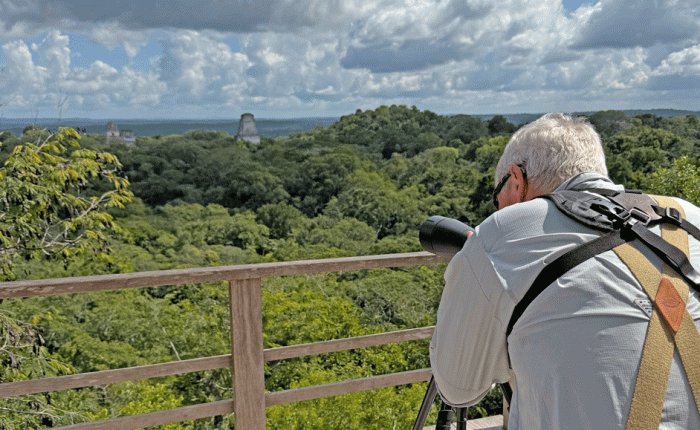
Temple IV had wooden steps built on one side, so we could access the platform below the final spire. Here is the view above the canopy, looking south towards Temple I and II on the left, and Temple III on the right. Temple III is only partially restored and is closed to the public.
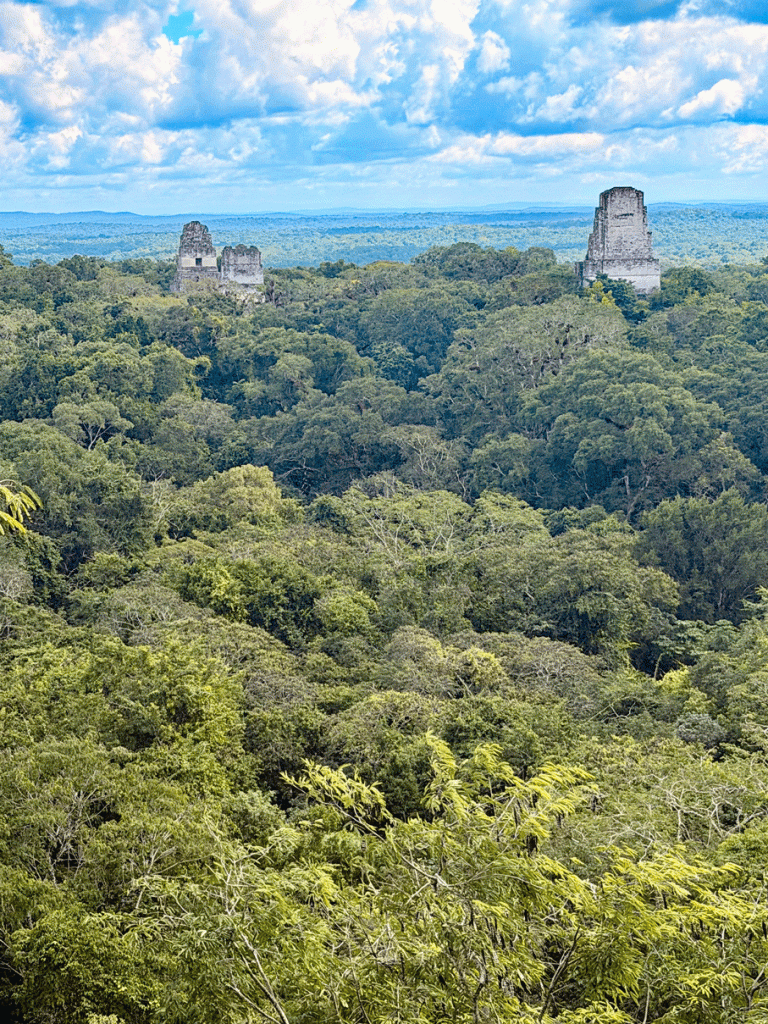
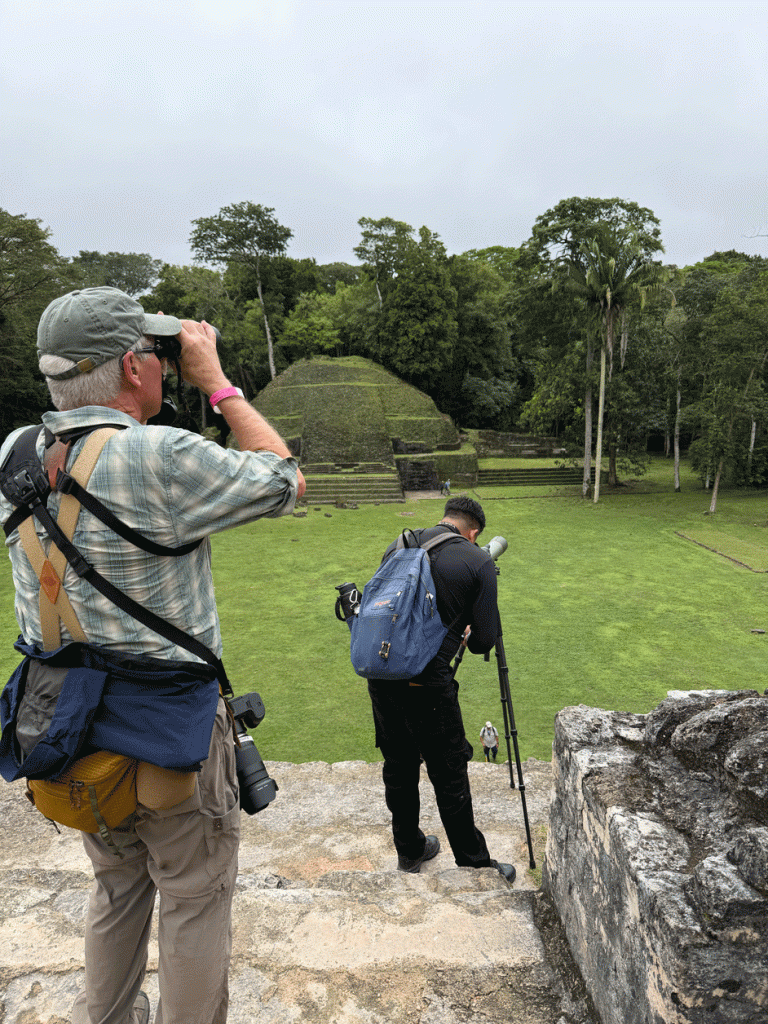
We set up the ‘scope and scoured the tree tops for falcons. We found a couple, but they were Bat Falcons, not the rare Orange-breasted Falcon we were hoping for. And then we heard a falcon calling right near us! And a falcon flew by us and out of sight. Another guide, who knew we were looking for it, saw the bird land on the tower above us. We moved to the staircase and could see the Orange-breasted Falcon perched on the side of the temple. We were blocking the stairway so we couldn’t stay long.
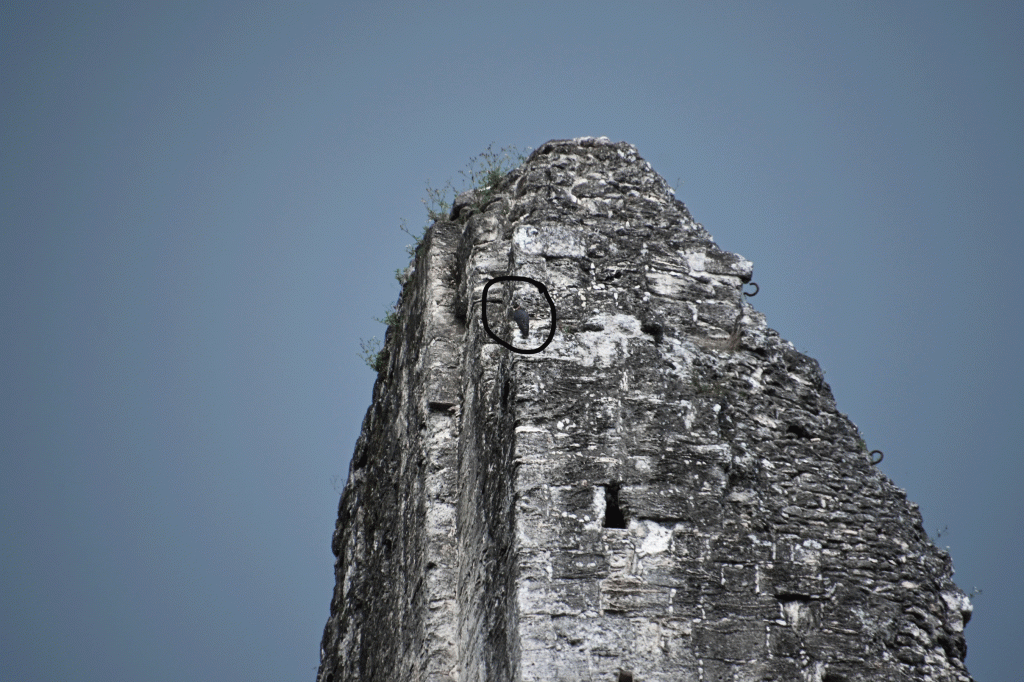
So we went back down to the spot we had checked out before. This is a photo of the top of Temple IV that Doug took with his 400 mm lens. The falcon is circled near the top.
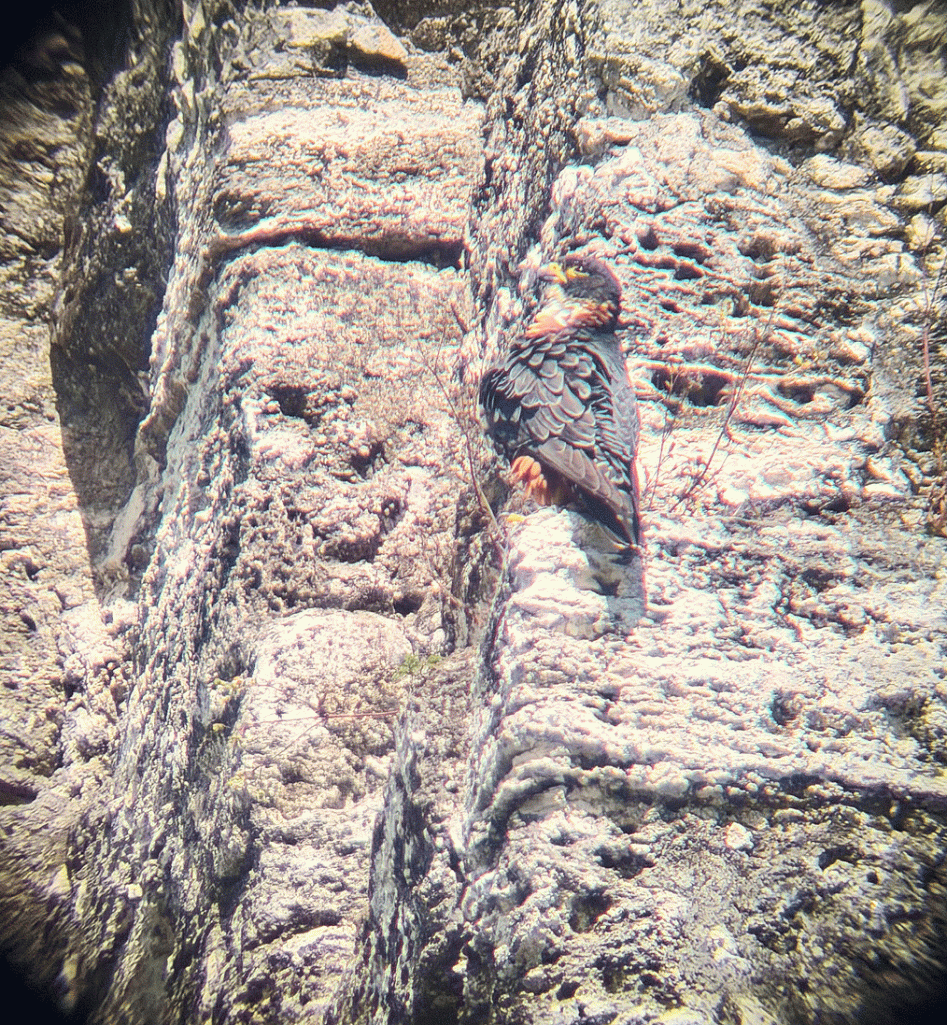
Here’s what the falcon looked like through the scope. One of the other guides, Erdozaín, was an expert at taking cell phone photos through a ‘scope and was able to get this shot with Doug’s phone.

Orange-breasted Falcons are considered “Near Threatened” because of their need for a specialized habitat of towering cliffs surrounded by mature tropical forests. The species treats the temple tower as a cliff and breeds in Tikal. Orange-breasted Falcons are skilled hunters, preying on swifts, swallows, parakeets and bats in flight. They dive at high speed, but can’t land on the ground because they need a drop in order to take off.
We invited other tourists to look through our ‘scope, and soon a small crowd was gathered. At least fifty people saw the falcon through the ‘scope. There was a short rain shower while we there, but we stayed dry under the tree.
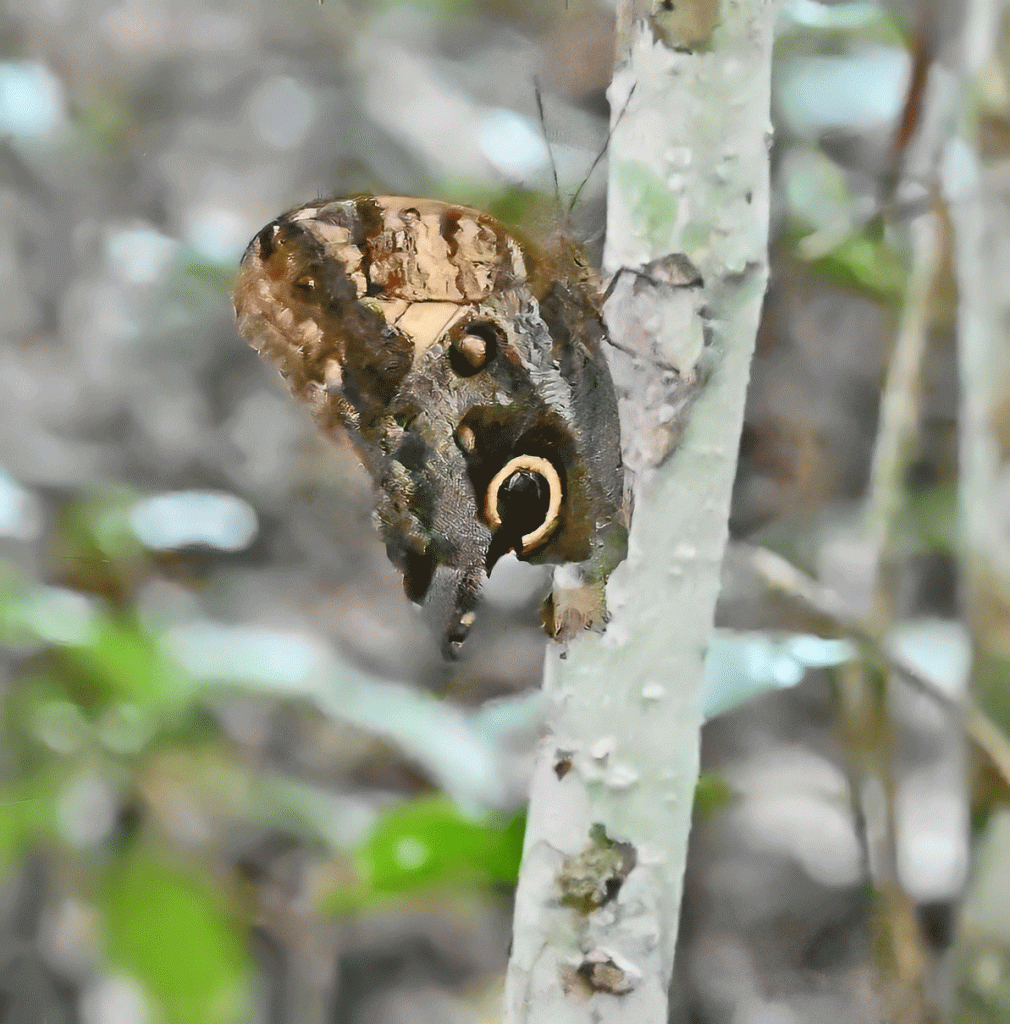
After the excitement, we headed for lunch. Bene took us on a “short cut” down a jungle path. We saw a cool butterfly. It’s an owl butterfly known as forest giant owl (Caligo eurilochus). It’s the largest species of butterfly in the Americas and has up to a 20 cm (8″) wingspan. Owl butterflies are named for the huge owl-like eyespots on the underside of their wings, that can confuse predators.
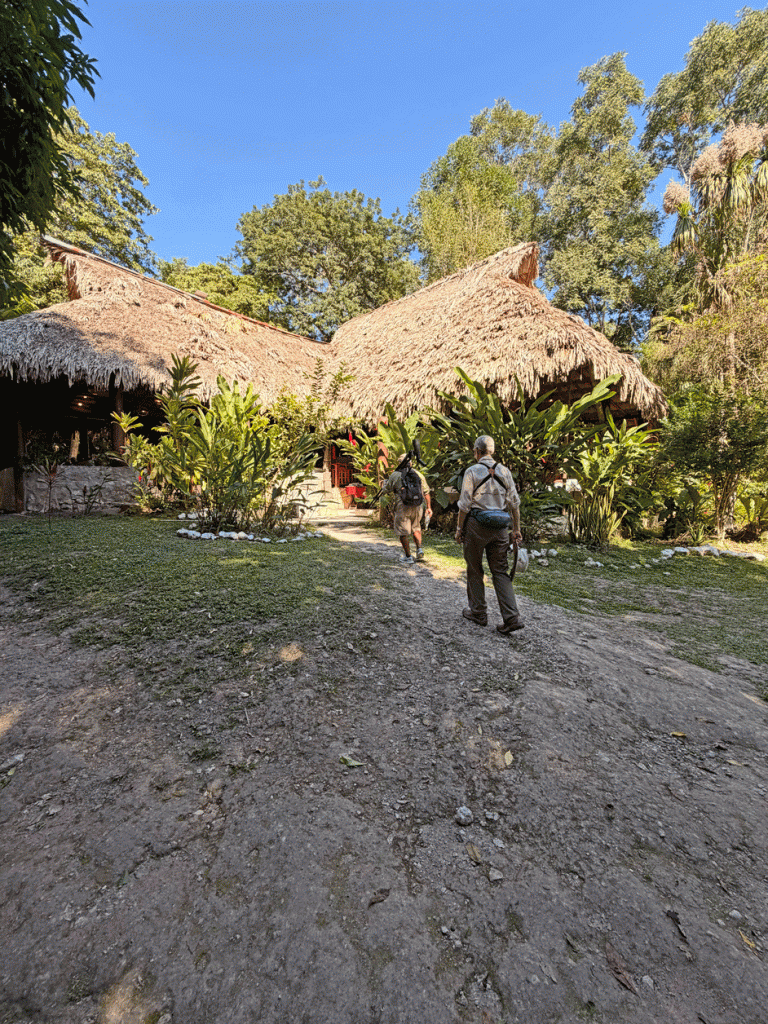
The trail brought us to a clearing and a restaurant, seemingly in the middle of the jungle.
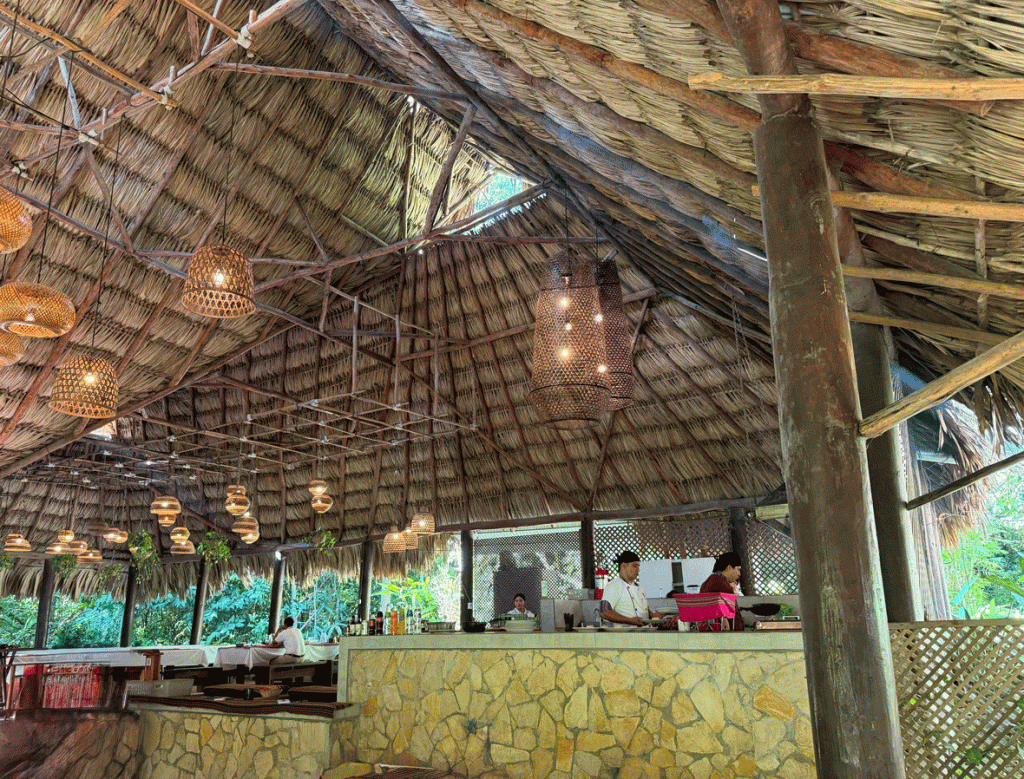
Here’s the interior of the open-air restaurant. The restaurant did a good business, especially with large tour groups. Our lunch was delicious.
We had a relaxed afternoon at Jungle Lodge, and had a dip in the pool, which cooled our core and allowed us to be more comfortable throughout the night.

In the morning, a new driver picked us up at our hotel in Tikal, and we drove east towards the Belize border, with a quick stop at El Remate lakeshore to look for birds.

The Maya site of Yaxha was up a rough road off the highway. Unlike Tikal, Yaxha was situated near a lake. Here’s one of the welcoming signs at the park that is at the lake level. Yaxha was occupied from BC 400 to 1450 AD.
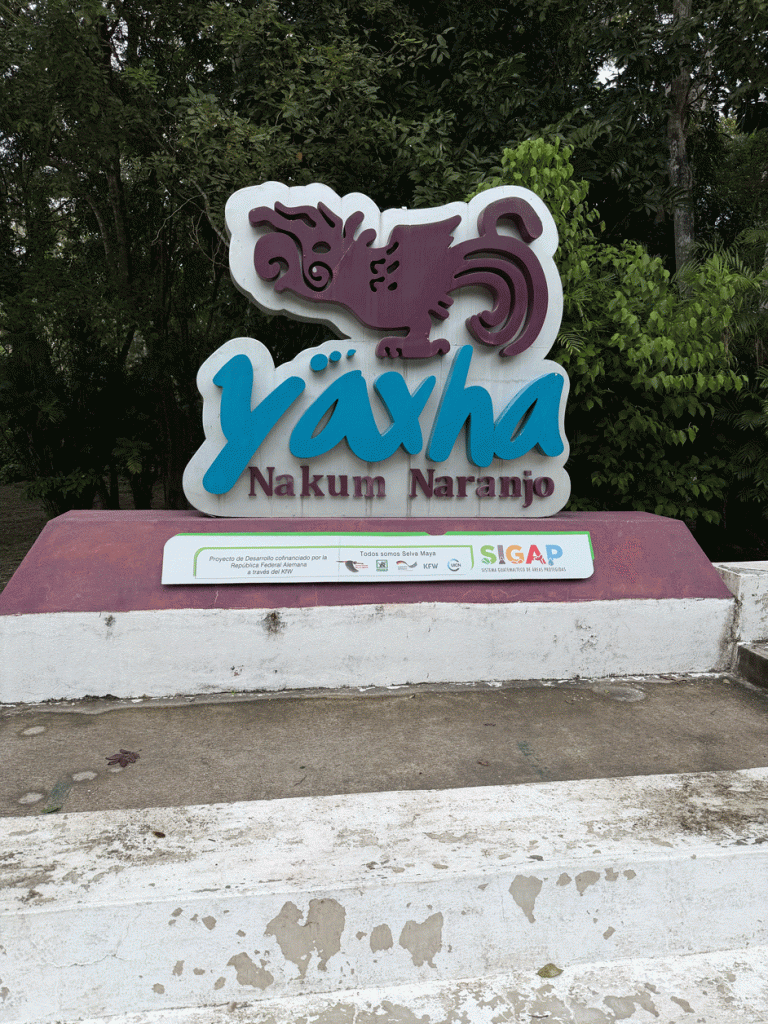
Our driver drove us up to the main site that was at a higher elevation. It was nearing noon when we started birding, so the birds were relatively quiet and we didn’t get any photos. We walked around the site and took more photos of ruins, but have only included a few here.
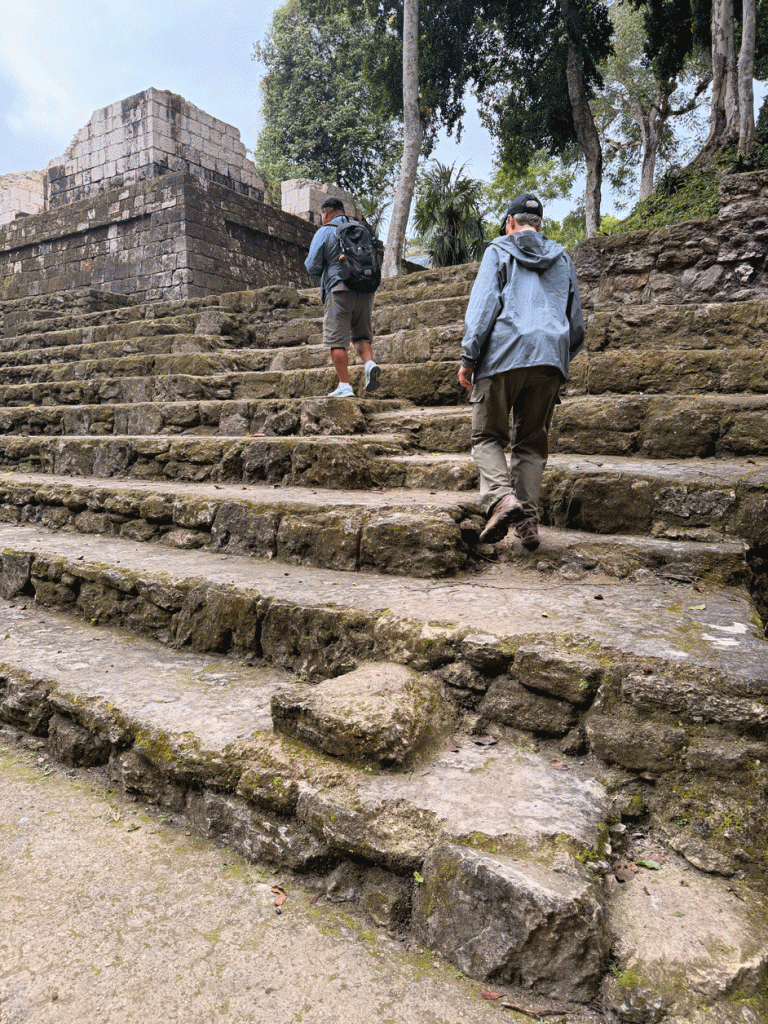
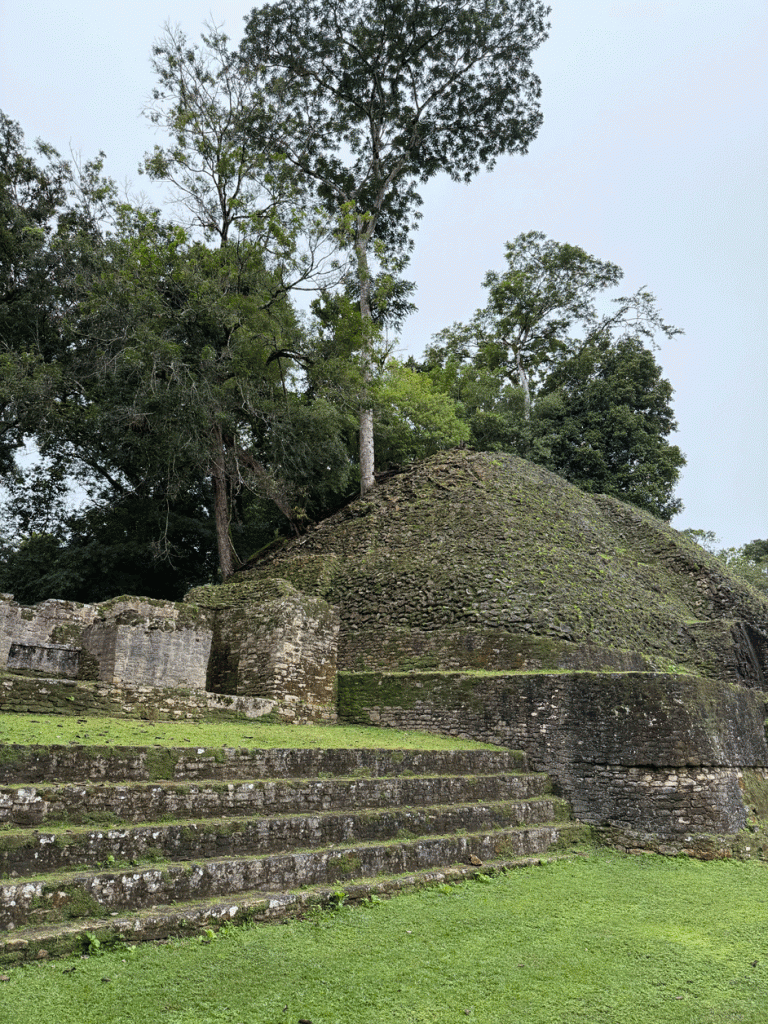
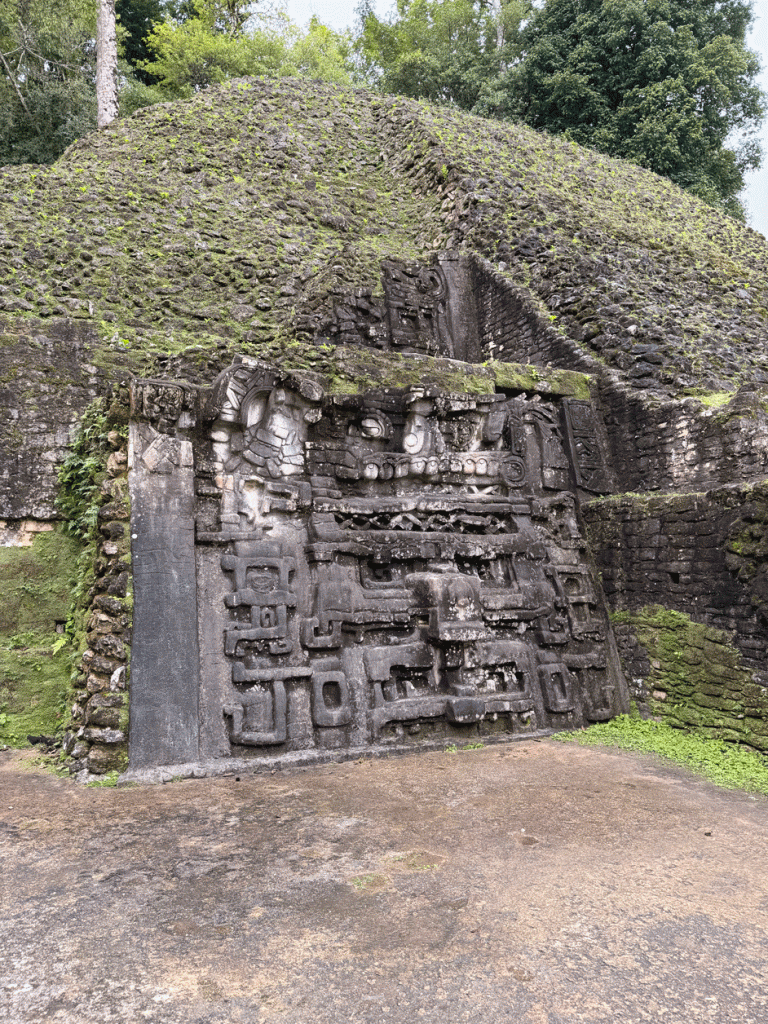
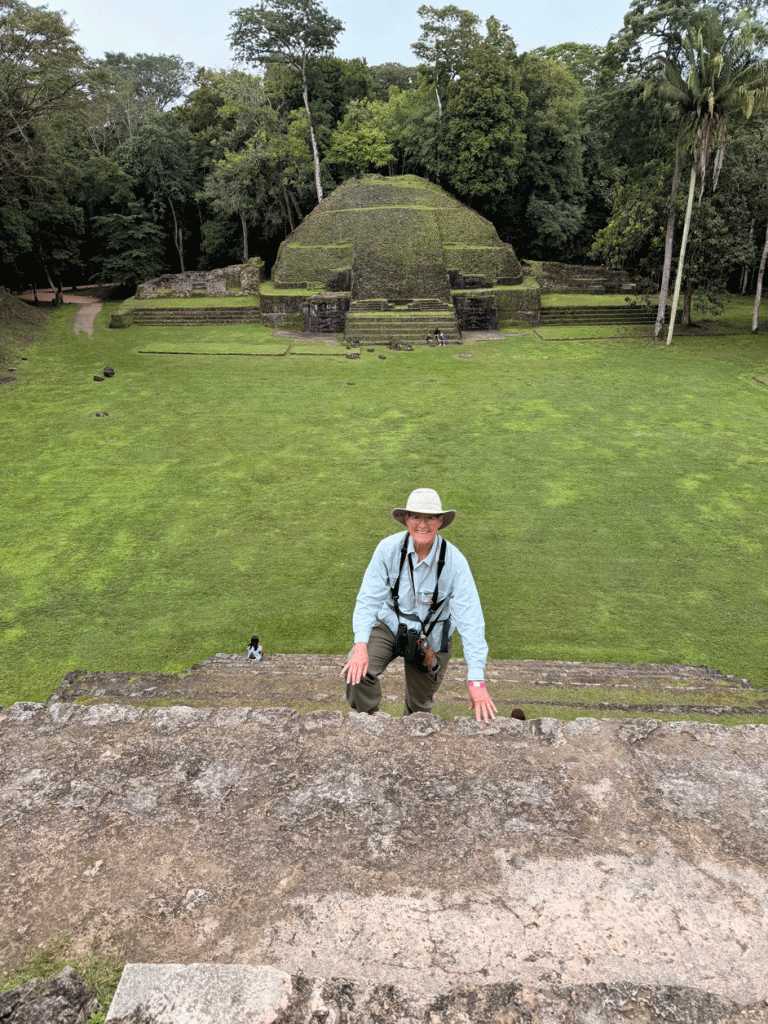
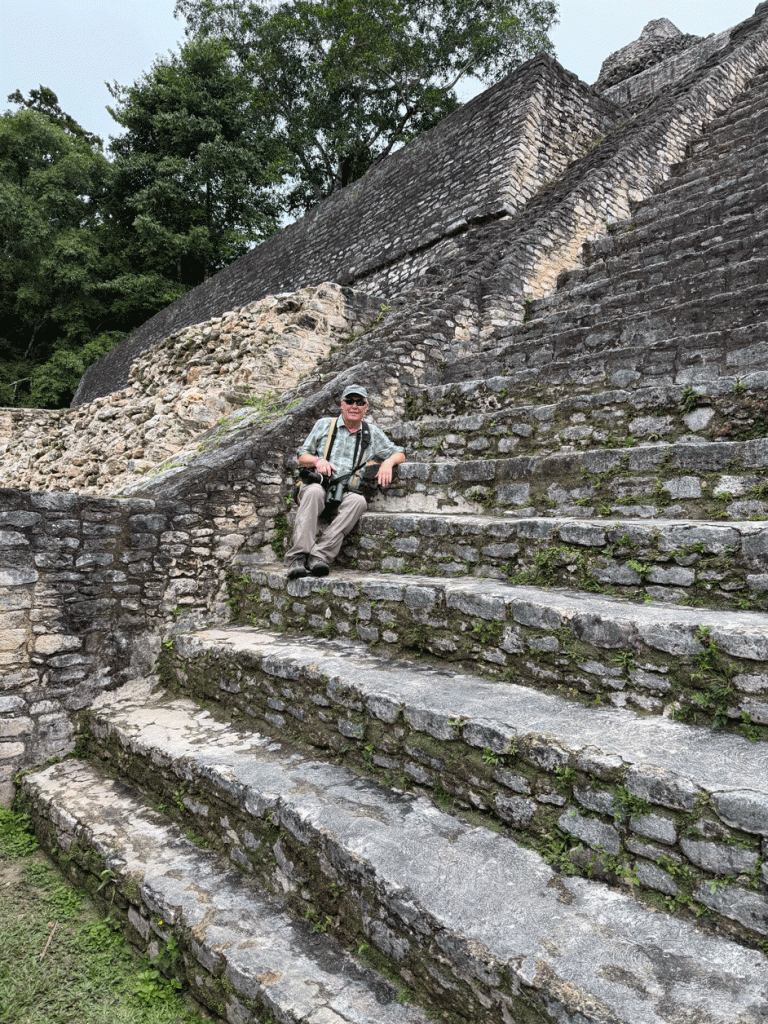
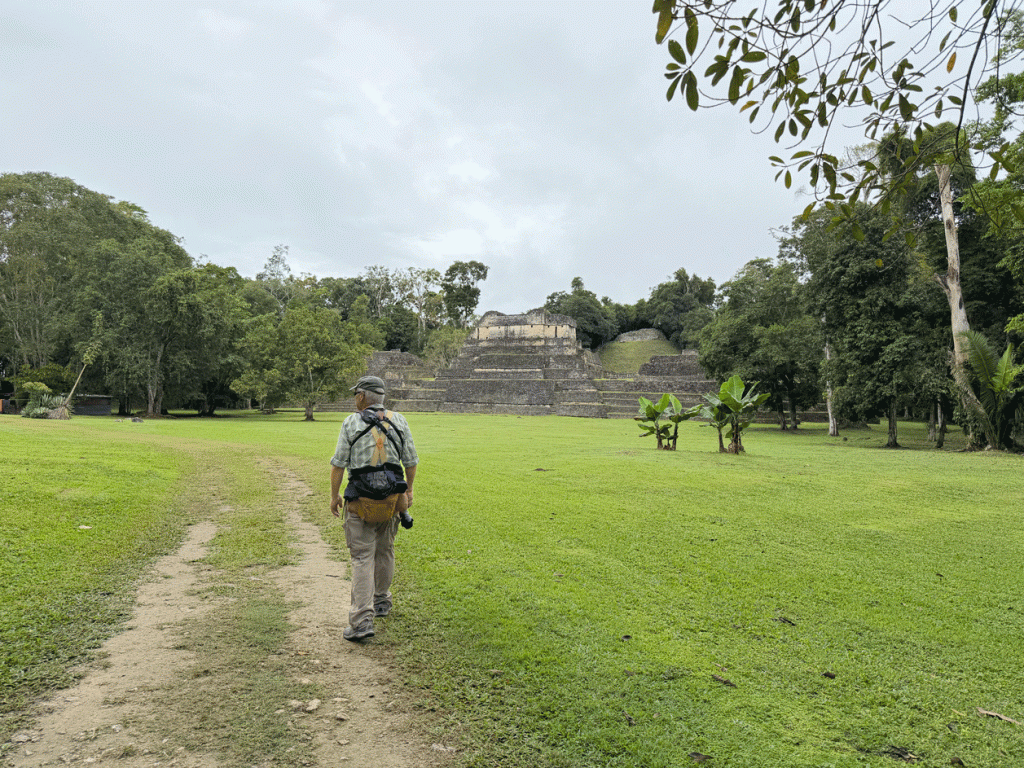
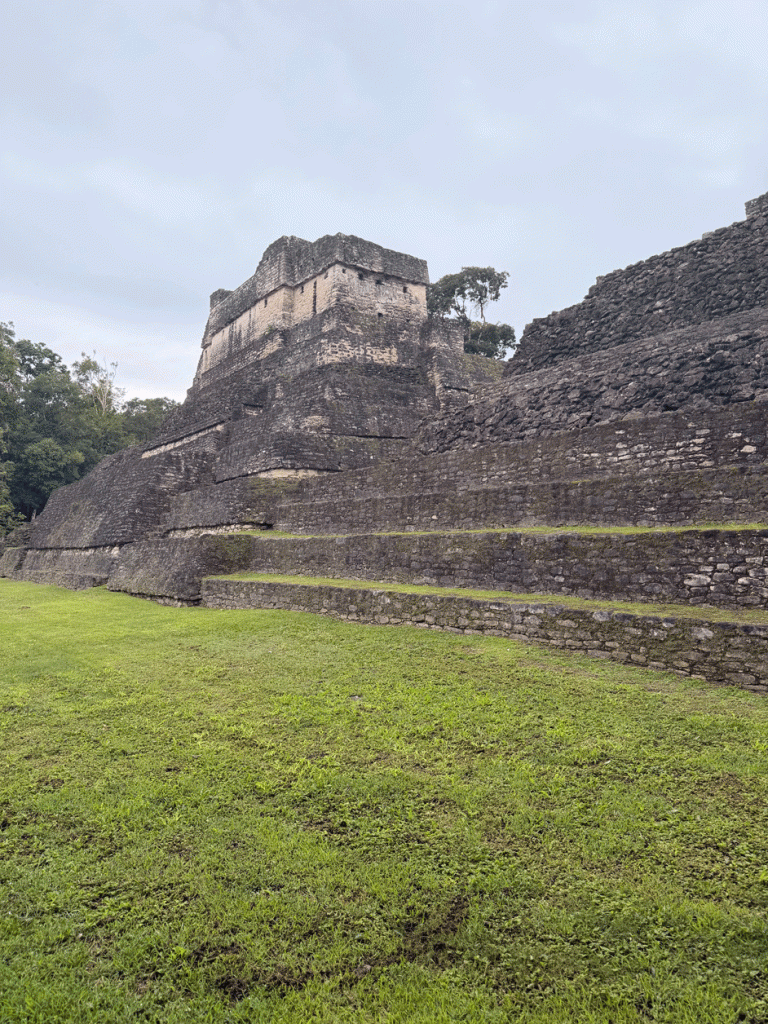
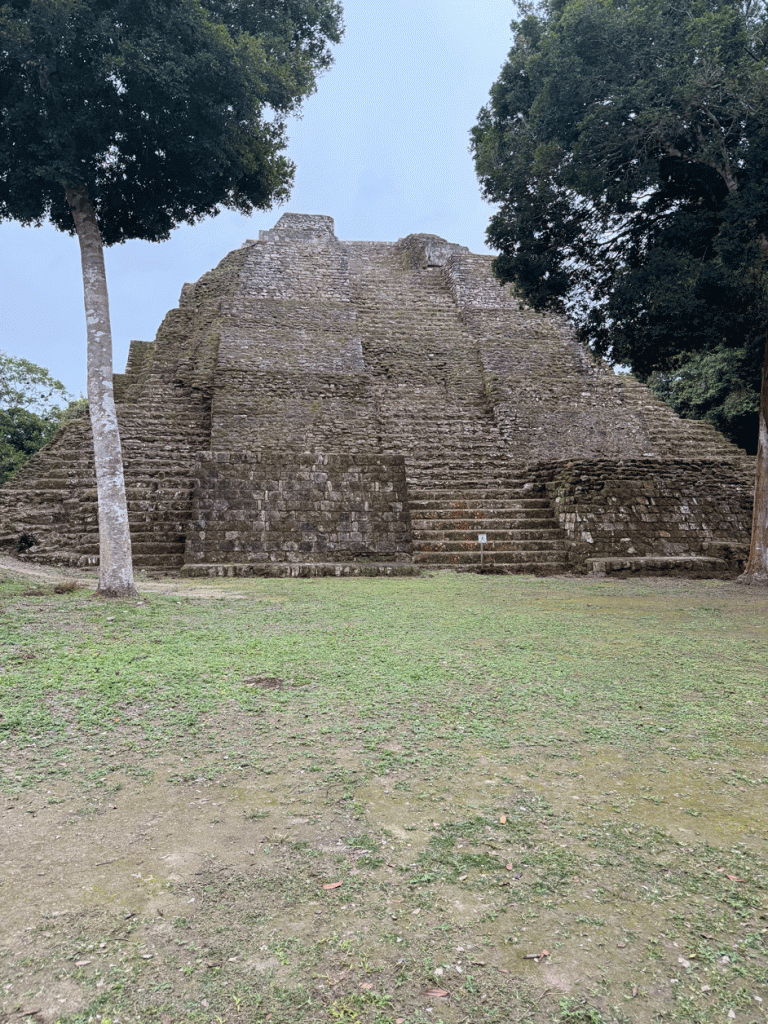
While the temples at Yaxha were interesting, they didn’t have the grandeur of Tikal. But we almost had the whole place to ourselves. This is near the North Acropolis.
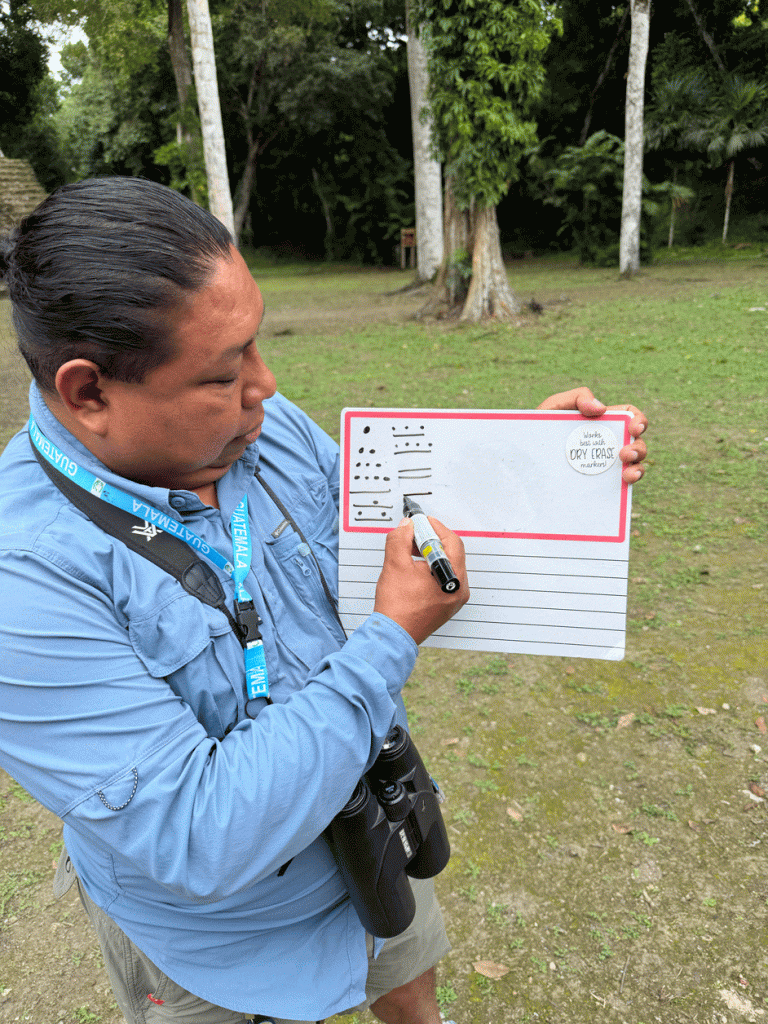
We didn’t argue when Bene said, “Sit down, I want to teach you something.” He got out his white board and marker and told us about the Mayan numbering system. It was base 20, and used only 3 characters (a dot = 1, a bar = 5 and a shell = 0). Numbers were stacked vertically, rather than written horizontally.
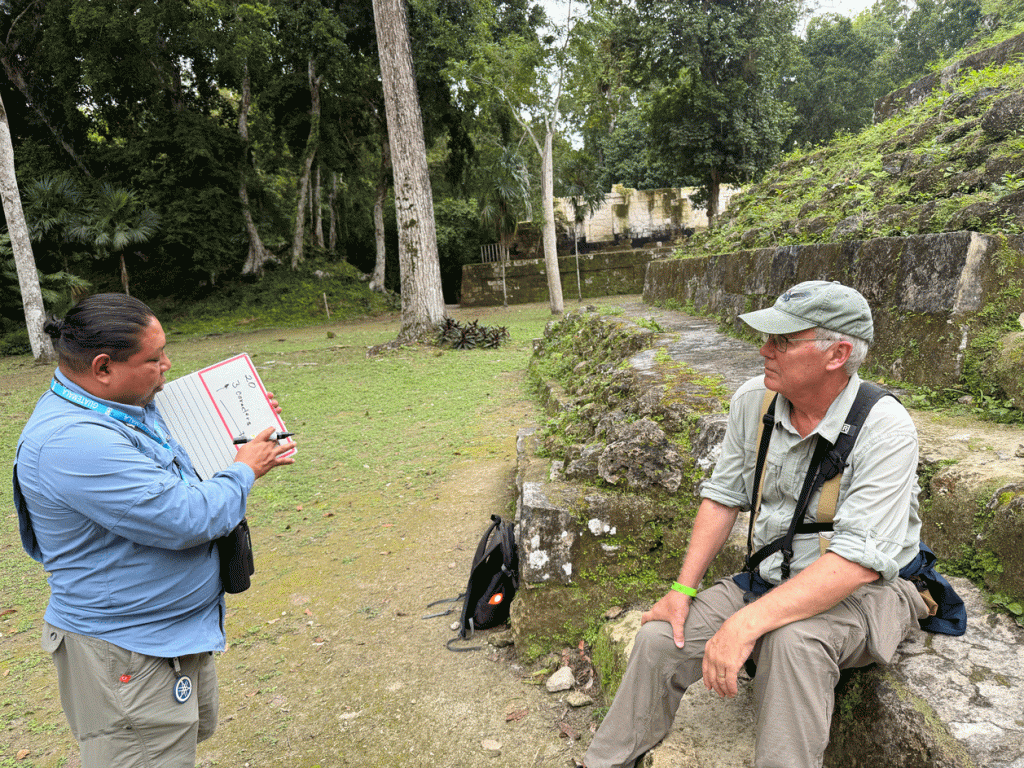
On the board below, Bene has written the numbers from 1 to 10 and is starting to do 11. After nineteen, numbers were written vertically in powers of twenty. He quizzed us on larger numbers. It was an interesting exercise, like a brain teaser.
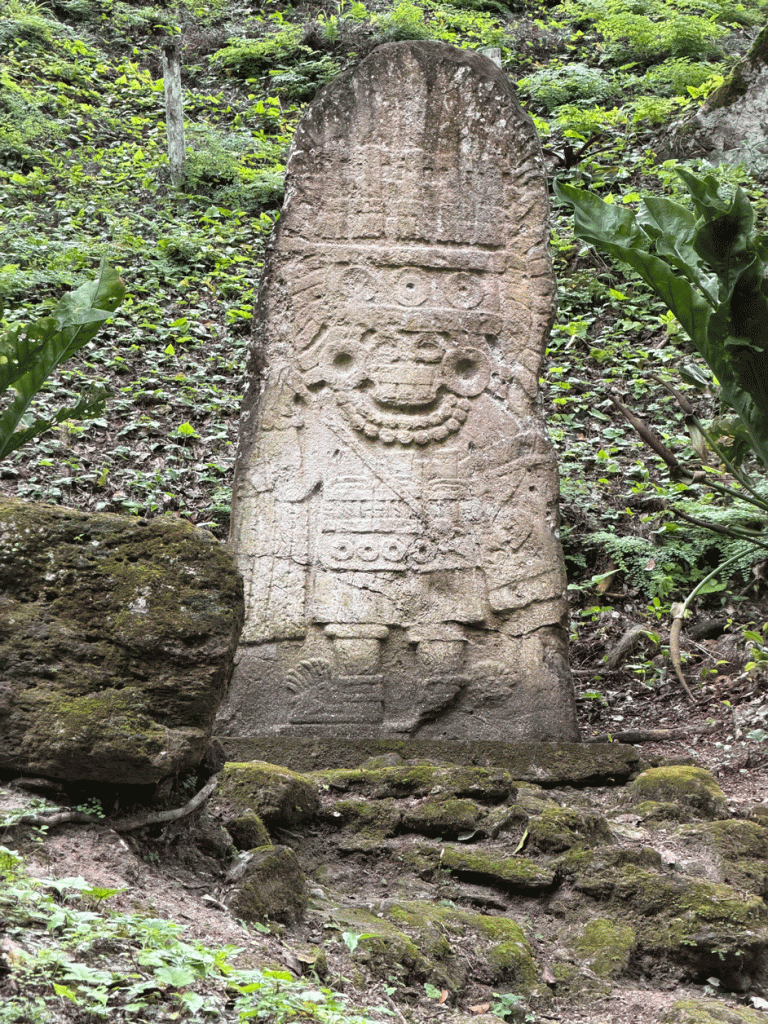
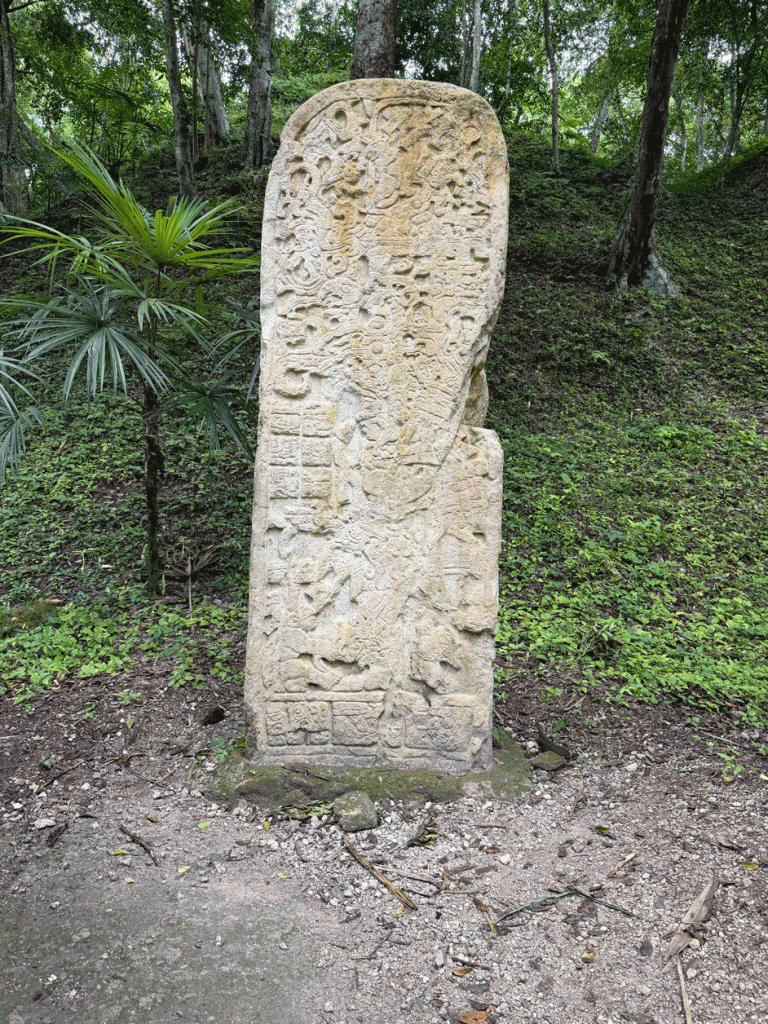
Here are some stelae. The one on the left has a “monkey face” carved in it.
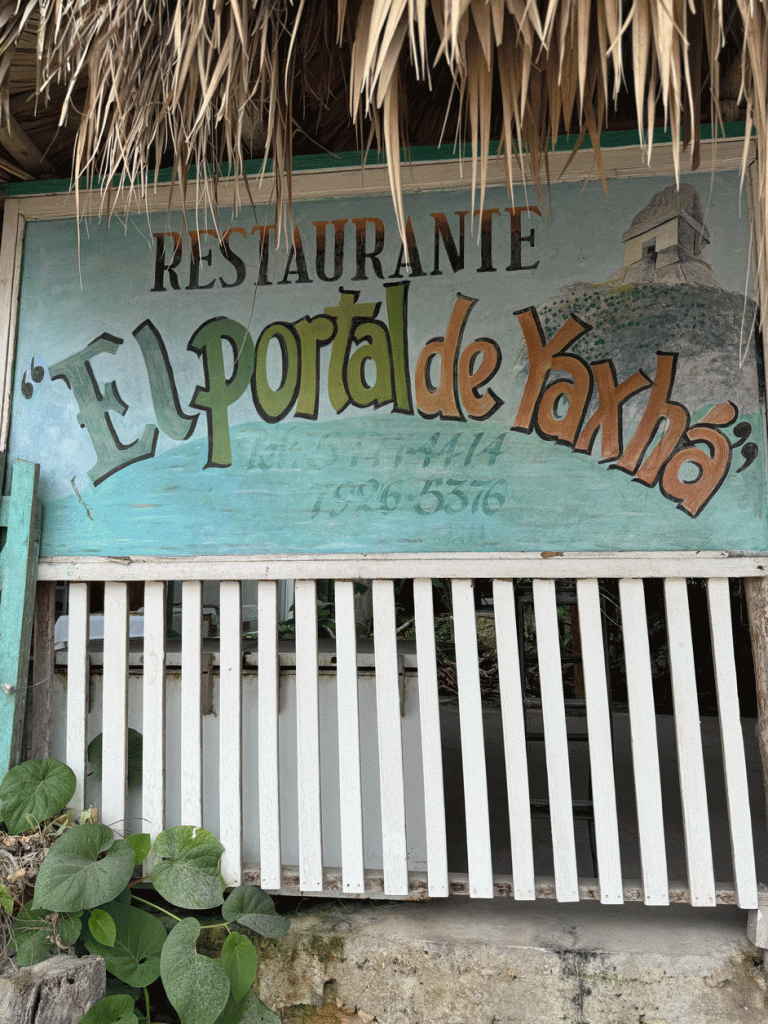
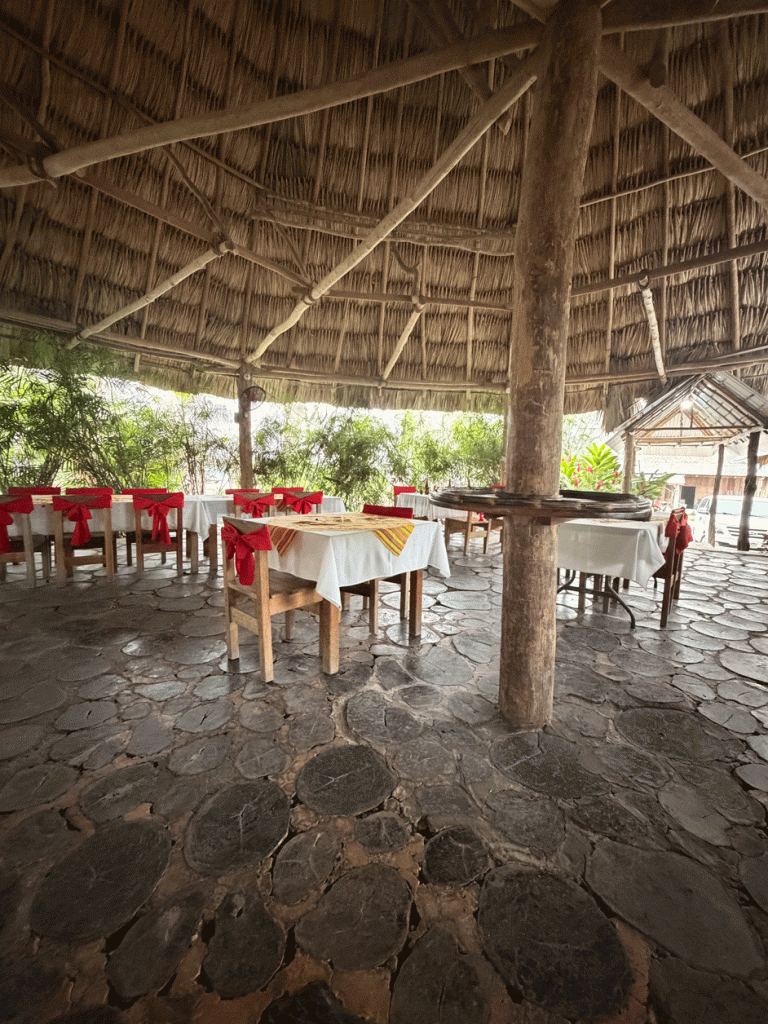
We reached the open-air restaurant for our final lunch in Guatemala, about 3:00. It was in a small community on the highway just outside of Yaxha and didn’t look like much from the street, but served excellent food.
It rained for the rest of the day. We made it through the border into Belize without difficulty and met our new driver. He delivered us to our hotel in Belize City by about 7 that night.

The plan was to fly out the next morning, but when we got up, we had a message that our flight was cancelled due to the bad weather in Dallas / Ft. Worth. We were scheduled on a flight the next day and were able to book another night in the same hotel room.

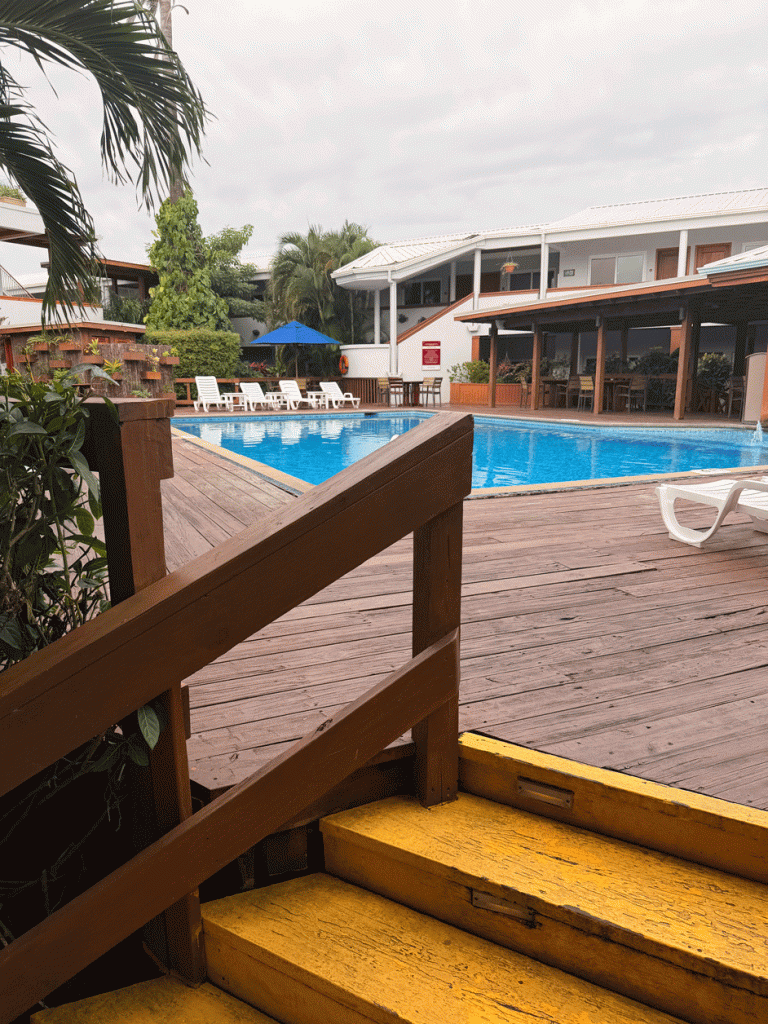
The pool was just outside our hotel room door, but it was a cool day, so we didn’t swim or even lounge by the pool. We took short walks around the hotel, napped, and Wendy worked on her journal.
It was an uneventful trip home to our place near Tucson.

It’s taken awhile to get all the blogs in our January 2026 in Belize / Guatemala series posted, but while we are doing all the work that goes into the blog, we are remembering and reliving our experiences. We saw so many birds and so many ruins and ate so much good food. It was an amazing trip, probably our best ever.

Our main guides (Hugo and Bene) were personable, had good English and were strong birders. We also had several days with two guides; in Las Guacamayas, Lamanai, and the boat trip in Crooked Tree. Wendy especially liked being able to learn to differentiate the bird calls and songs with help from the guides.

We booked our customized trip through Birdwatching Belize which is associated with Birding Expeditions Guatemala. They arranged all our accommodations, guides and drivers. Highly recommended. http://www.birdwatchingbelize.com

Here are some of our statistics:

  • Nights in Belize: 10
  • Nights in Guatemala: 4
  • Maya sites visited: 5

Birding Statistics:

  • eBird Checklists in Belize: 40
    • Species: 197
  • eBird Checklists in Guatemala: 18
    • Species: 180
  • Life birds
    • Wendy: 49
    • Doug: 47
January 2026 in Guatemala – Part 1 (5)

January 2026 in Guatemala – Part 1 (5)

This is Part 1 of our trip to Guatemala, but actually Part 5 of the whole trip (Belize and Guatemala). It will cover our visit to Las Guacamayas Biological Station and Jungle Lodge.

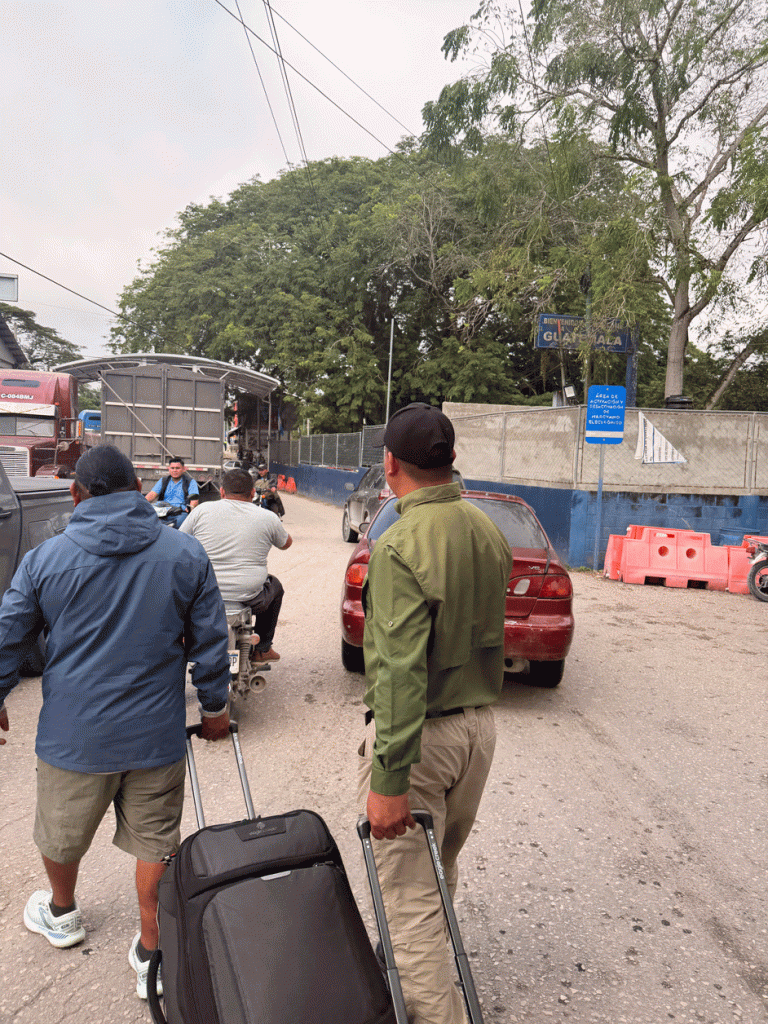
A driver met us at Black Rock Lodge and drove us through San Ignacio to the border of Guatemala which was about a half hour away. We paid an exit tax to leave Belize, got our passports stamped and then walked across the border. Our new guide and driver somehow maneuvered their way into the busy section between the two border control buildings. It was great to be met with “Wendy? I’m your guide Bene. We’ll take your bags,” in the middle of all the confusion. We worked our way across the street and Bene helped us get in the proper line to get our passports checked. A long line of tourists were having their passports stamped as they were exiting Guatemala.

Once we were through with the formalities, we quickly loaded into a 4-wheel drive truck that was parked in a rough parking area. The next challenge was getting back into the line of traffic between the trucks. Within a few minutes we made our first “technical stop” (as our guide liked to call it) to cover the luggage in the back of the pickup with a tarp in preparation for the rough road ahead and use a washroom. The first couple of hours of our five hour drive to Las Guacamayas Biological Station were on paved roads, but potholes dominated so it was bumpier than the gravel roads that came next.

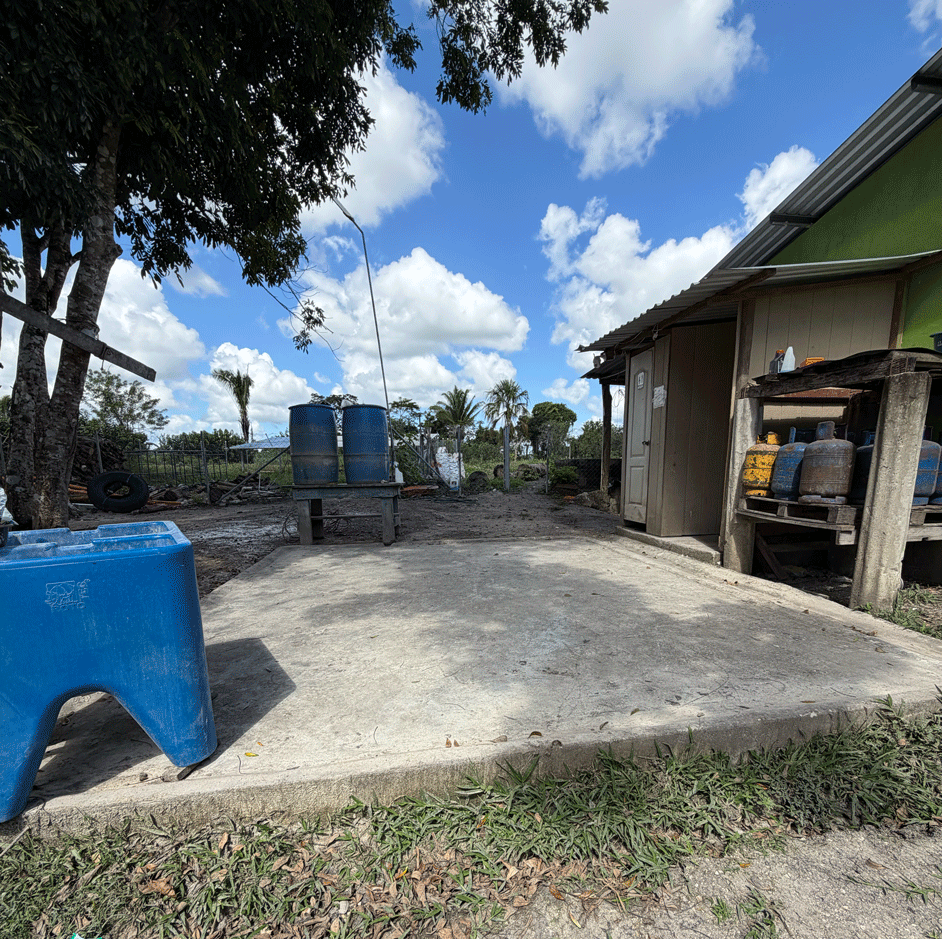
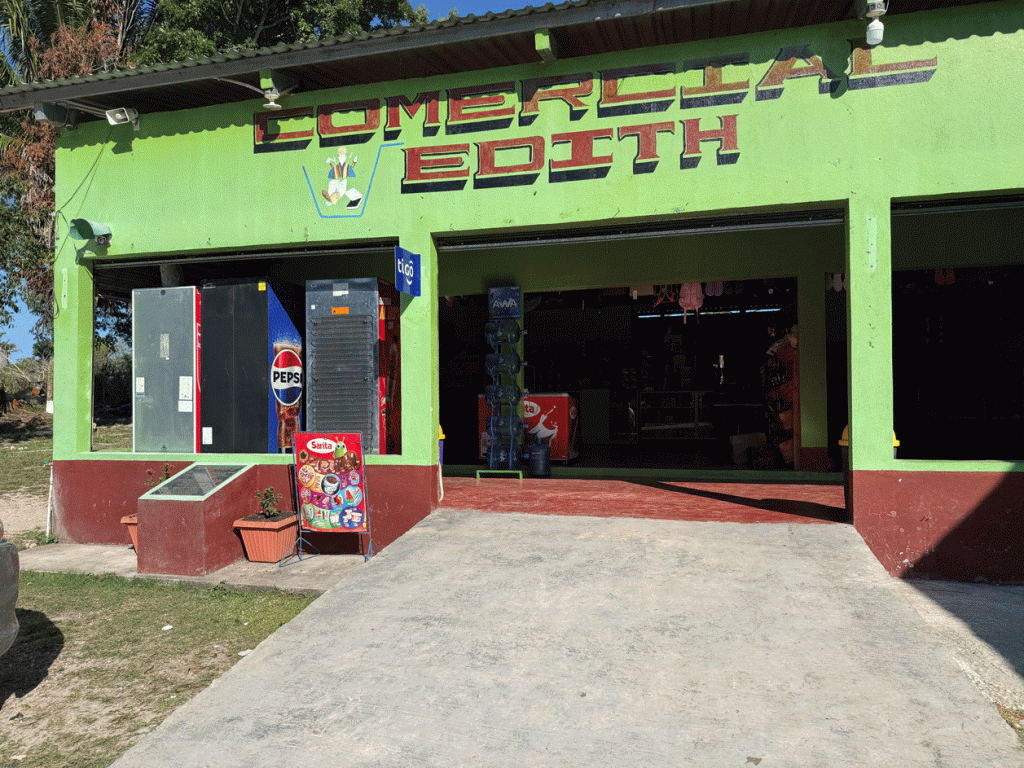
This was the last flush toilet along our route in a small village of San Andres. According to the commemorative plaque, the water system was constructed in June of 2024. Our guide paid 2 Quetzals (about 25 cents) at “Comercial Edith” for Wendy to use the facilities. (Two days later, on our way out, we saw a truck being loaded with bags and bottles of fresh water here.) We still had almost two more hours in our journey to the biological station.

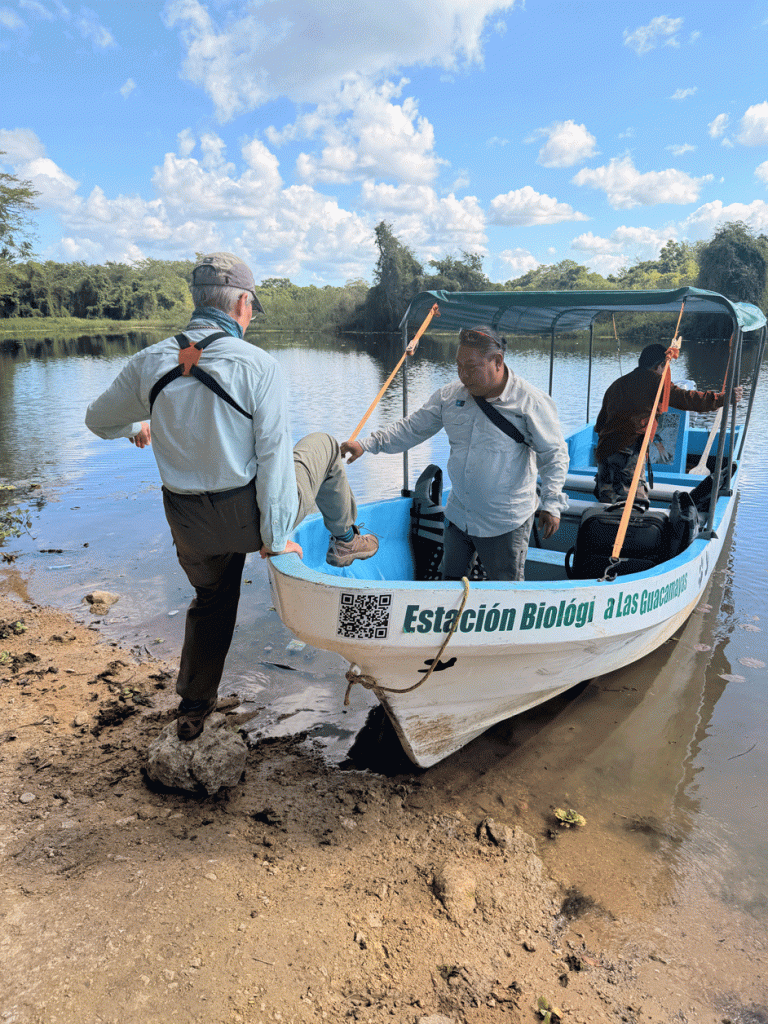
We reached the village of Paso Caballos about 2 o’clock. There was a short rough road that led to the river bank. Here Wendy is getting into the boat that will take us on our last part of our journey.

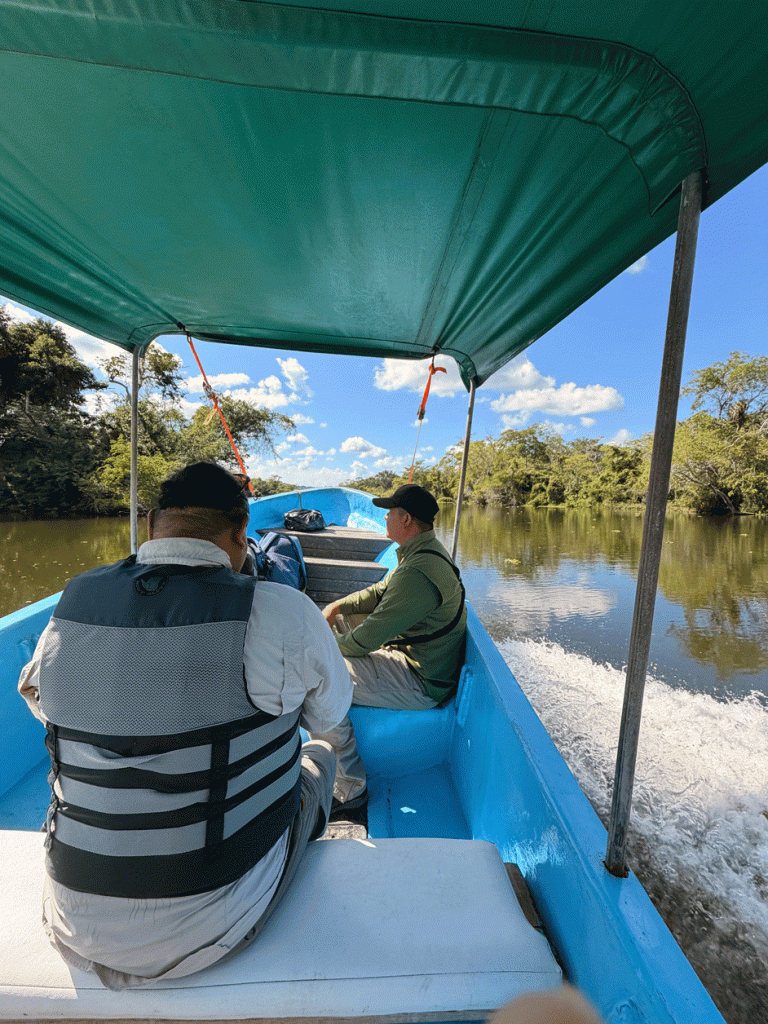
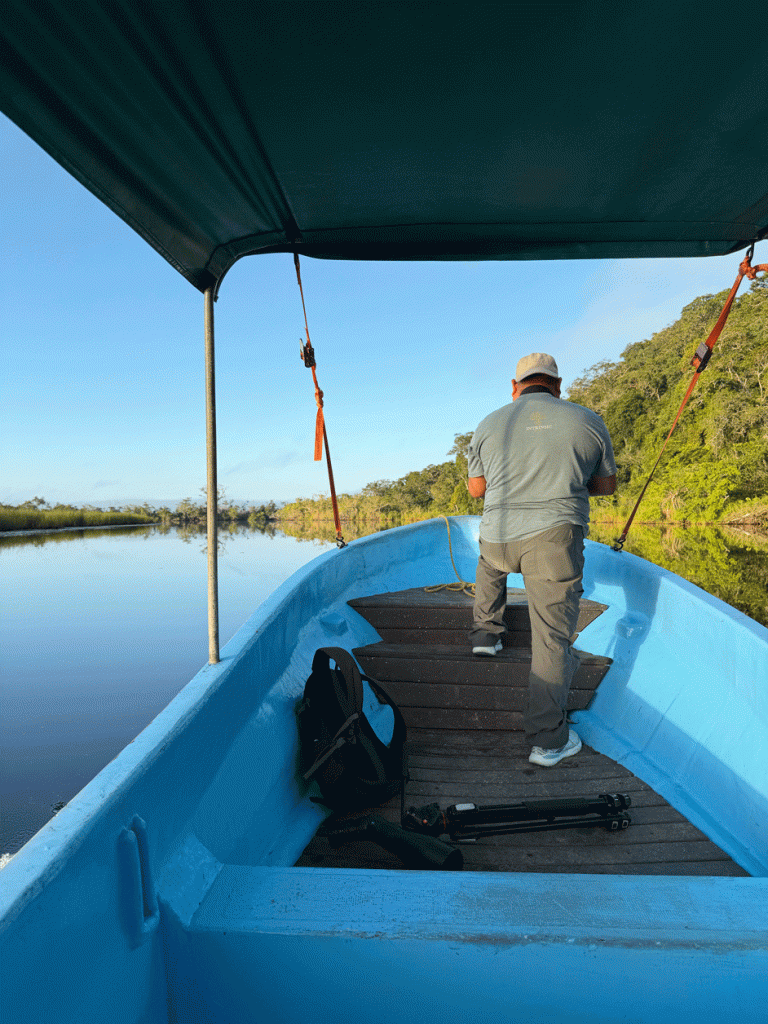
It was a calm fifteen minute boat ride down the slow moving San Pedro River. Our assistant guide, sitting in the front on the photo below, was known as “Beto.” He was multi-talented, working as a birding guide, driver, and boat captain for us.

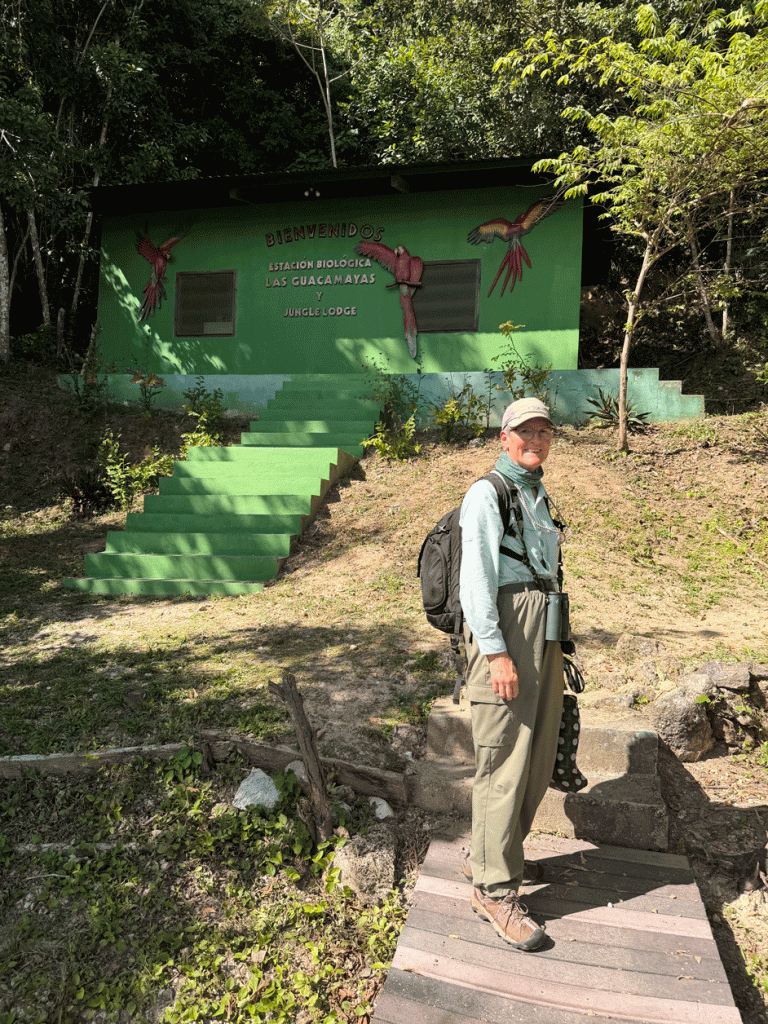
We arrived at the Biological Station of Las Guacamayas and Jungle Lodge about two o’clock. The biological station is in Laguna Del Tigre (Jaguar Lagoon), the largest national park in Guatemala and part of the Maya Biosphere Reserve.

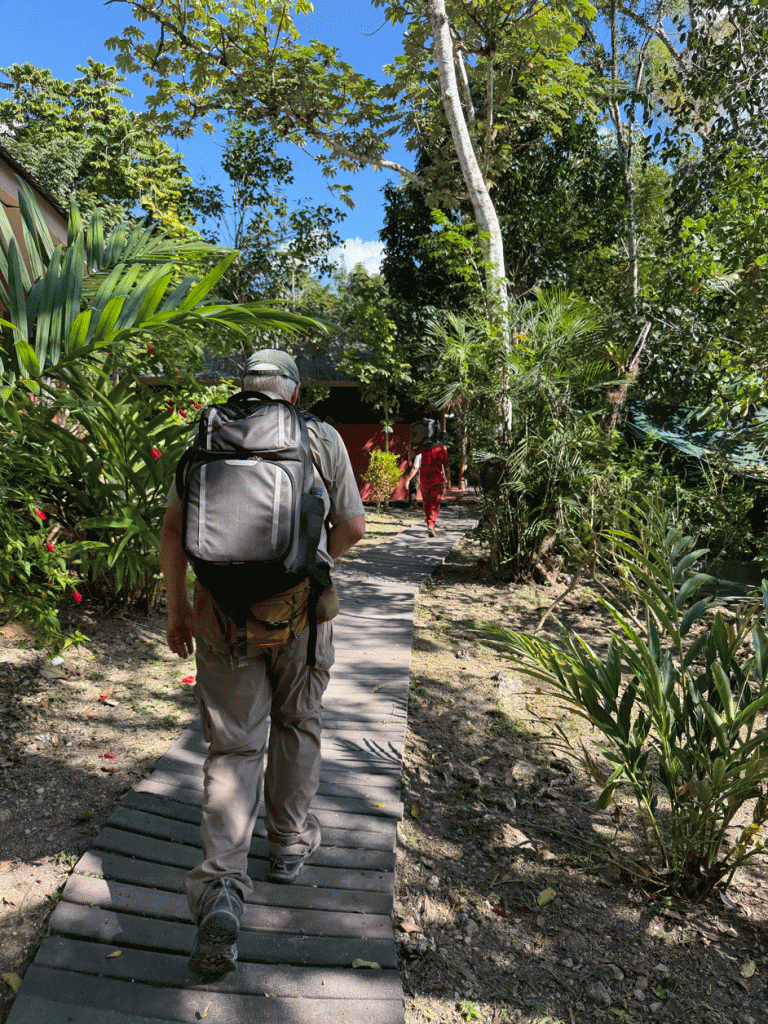
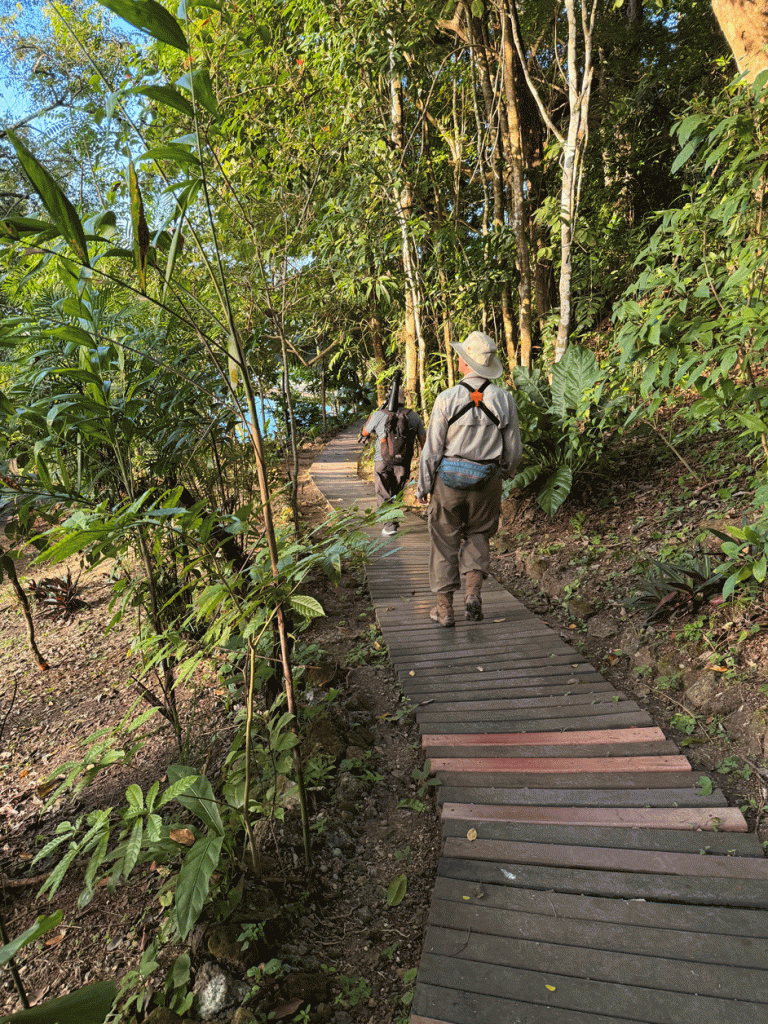
This is the boardwalk to our room.

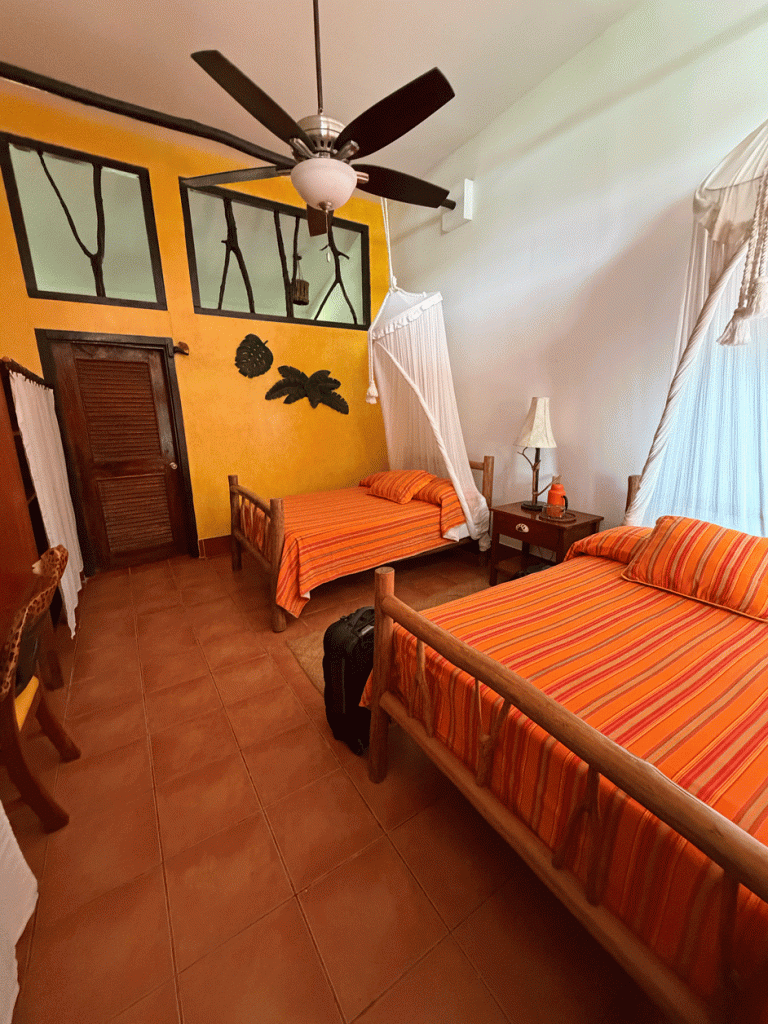
The room was very tastefully furnished and had a mini-split air conditioner. The air conditioner was operational when the generator was on, which was usually in the evening. We never needed the bug curtains.

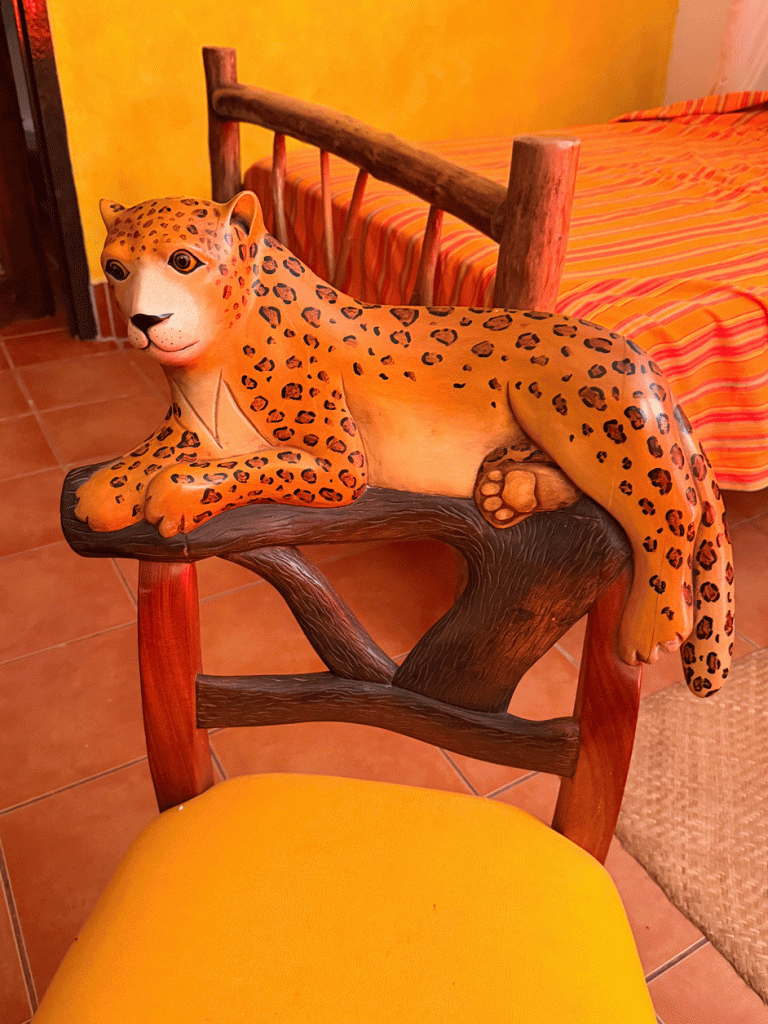
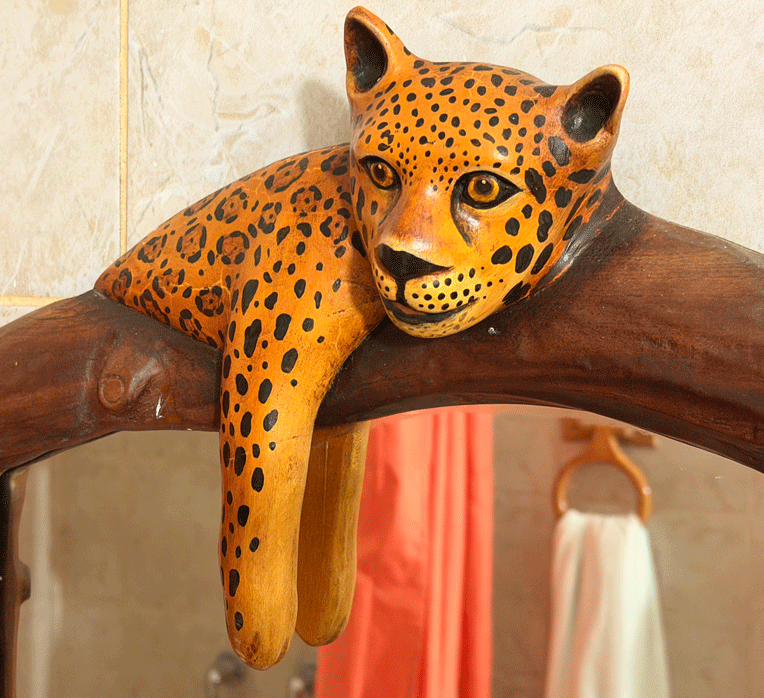
We had the “Jaguar” room, with jaguar accents on the chair and bathroom mirror.

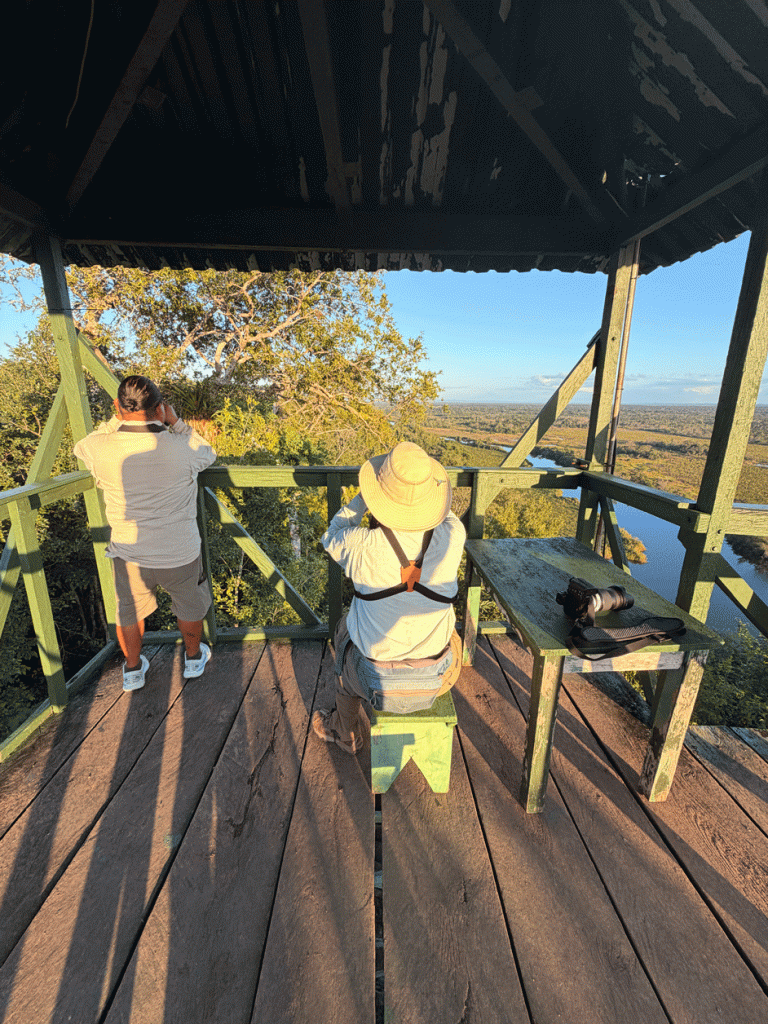
After a late lunch and a short rest, we headed out to bird around the grounds and up a trail to the limestone cliff above the station. At the top, there was a lookout platform that allowed us to be at the same level as the canopy. The tree that Wendy and our guide, Bene are looking at had several warblers in it, although they were still hard to photograph. We saw an American Redstart, Magnolia Warblers, and a Black-throated Green Warbler. The mixed flock also included White-browed and Blue-gray Gnatcatchers.

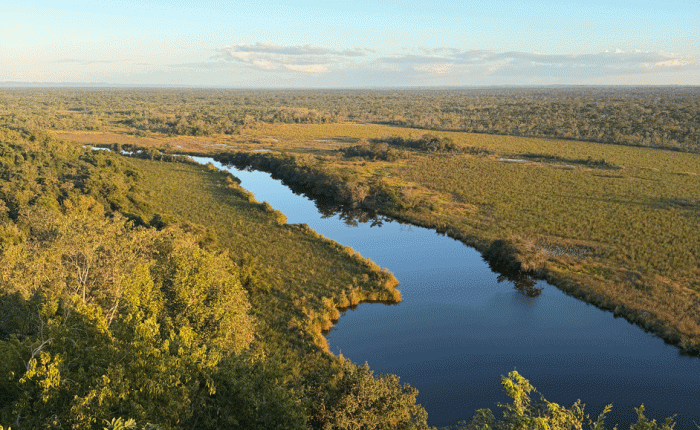
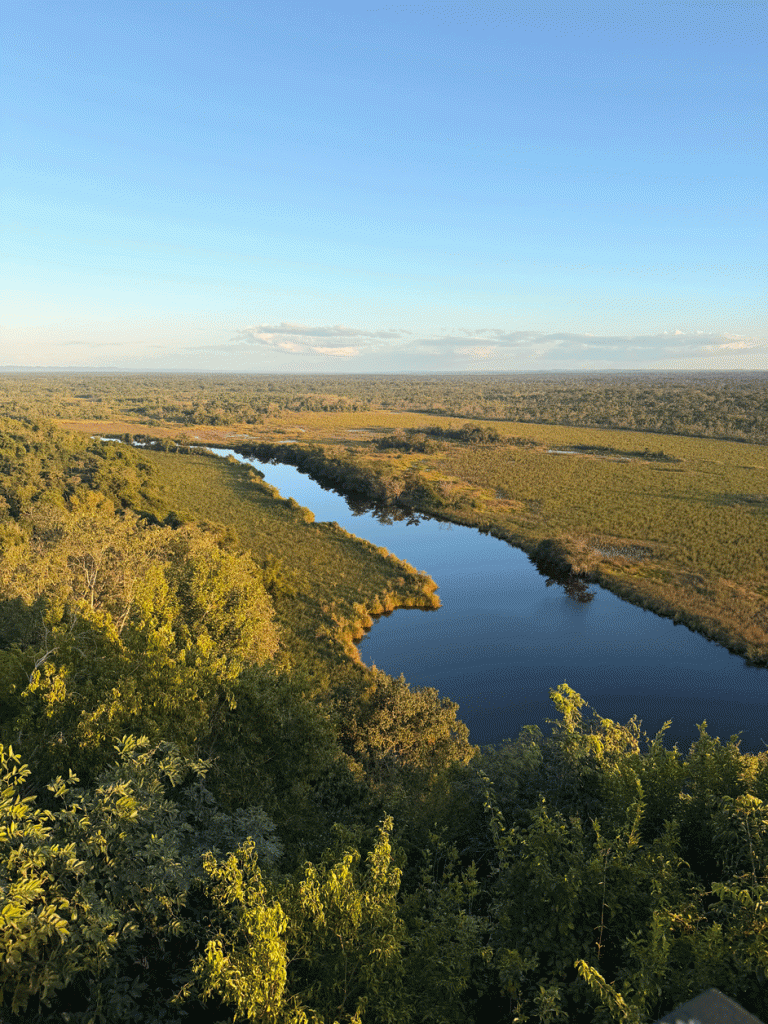
Here’s the view to the east from the lookout.

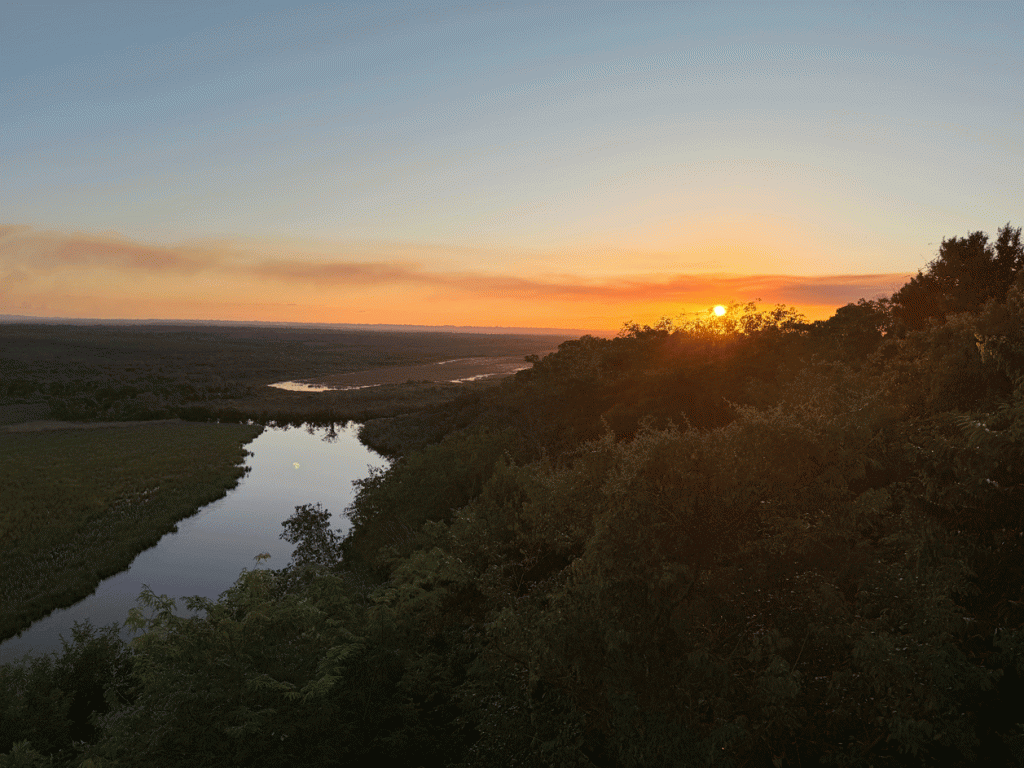
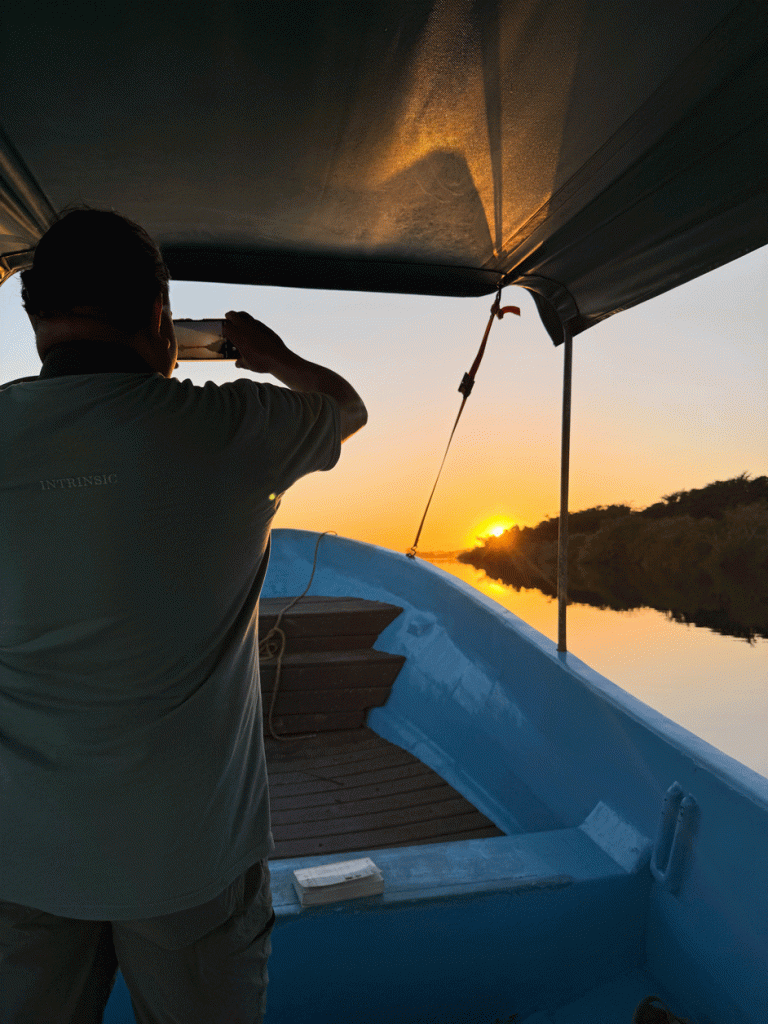
We stayed until sunset. There was smoke in the air from some burning that (we hope) was outside of the park (probably clearing jungle for a field.)

We returned to the lodge just as it was fully dark, and our dinner was ready. At 8:30 pm, we went for a night boat ride. The guides would shine lights into the jungle along the shoreline. If “eye shine” was detected, the captain would stop the boat and maneuver it so we could see the bird. We mostly saw Little Blue Herons and Snowy Egrets. The “night birds” included a Common Pauraque, a Mottled Owl and a rare Spot-tailed Nightjar.

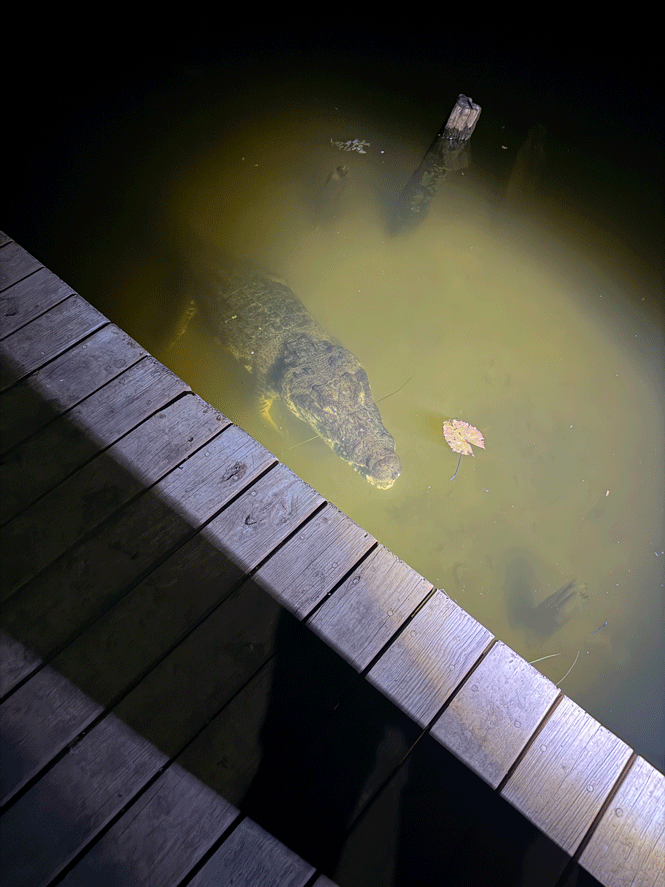
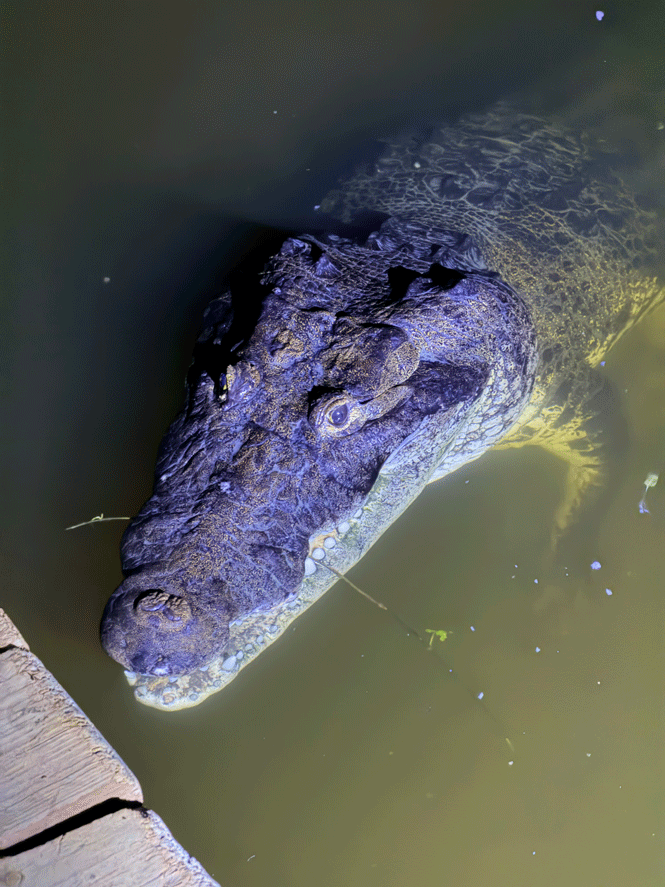
We had a good view of the resident crocodile from the dock. They call him “Bobby” and we think he is a Morelet’s Crocodile. They don’t feed him, but he will respond and come when the water is slapped with a paddle, if he’s in the area. He was about 3 metres long (10 feet), which is about as big as this species gets.

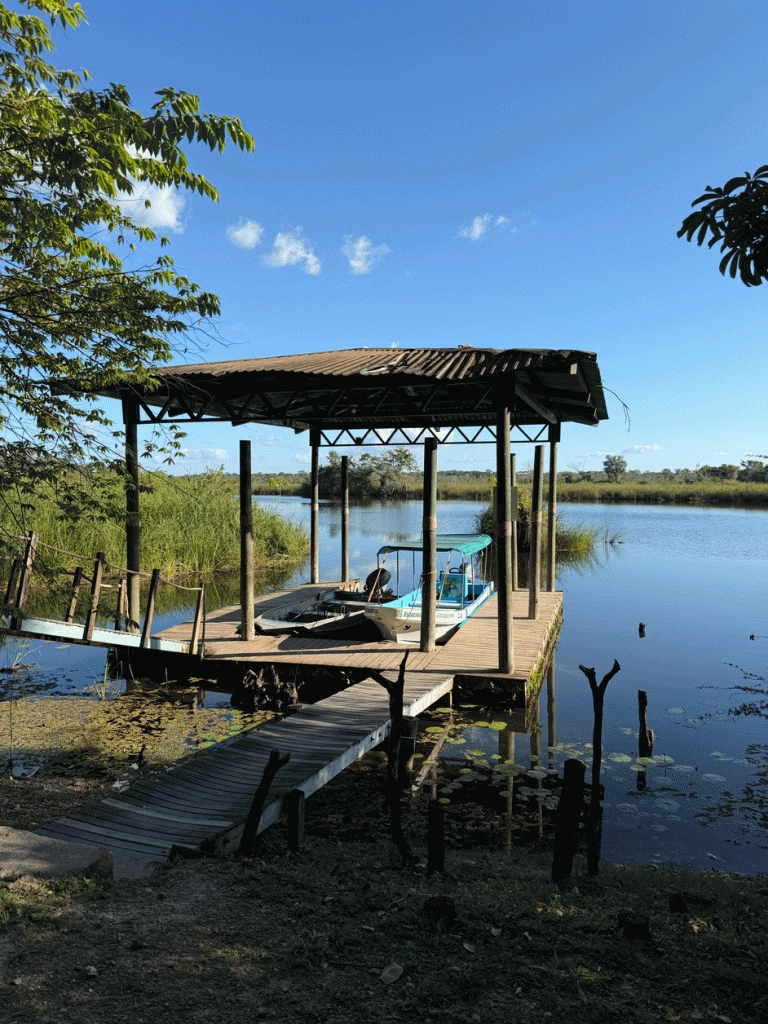
The next morning, we headed down to the dock again.

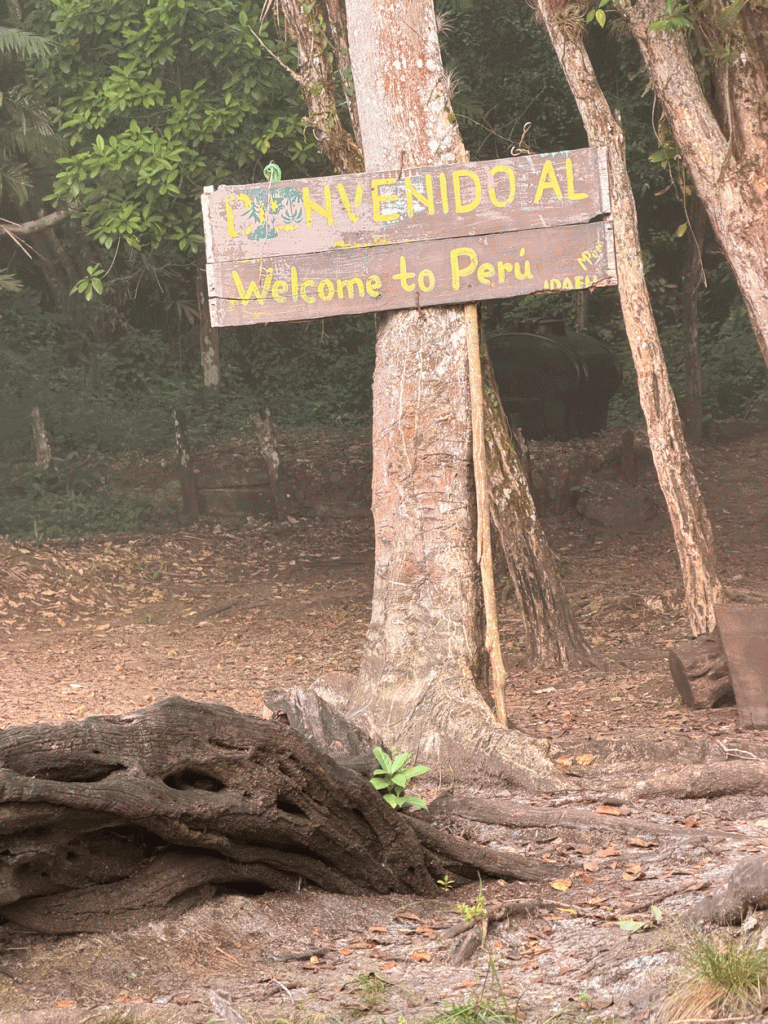
This time, the boat took us west, to the beginning of the trail to El Perú, an archeological site for an ancient Maya city. Our goal, however was to bird along the 2 kilometres (1.2 miles) of road to the Ranger station.

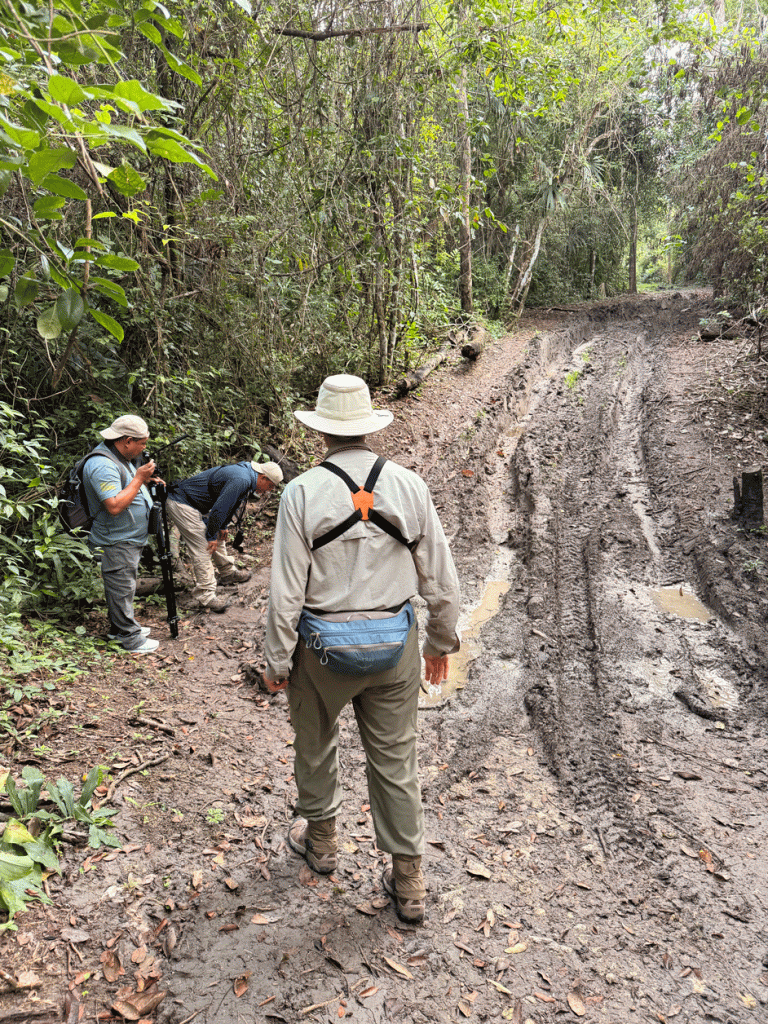
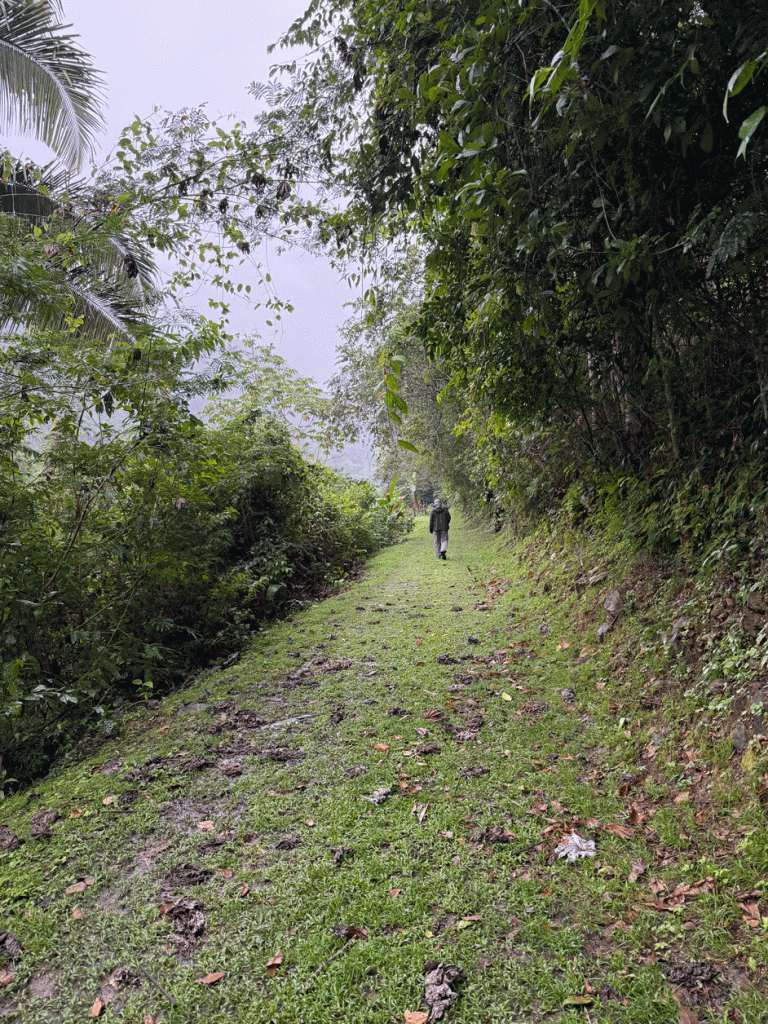
The trail / road had muddy sections. Here Beto (the assistant guide) is looking at a jaguar print in the mud. The road is used by the rangers to ferry their supplies to their camp, as well as by soldiers who are stationed farther up the road closer to the Mexican border. We could mostly walk around the worst sections.

We saw or heard over fifty species on our walk. The new ones for us were: Yellow-billed Cacique, Stub-tailed Spadebill, Tropical Royal Flycatcher and Northern Barred Woodcreeper.

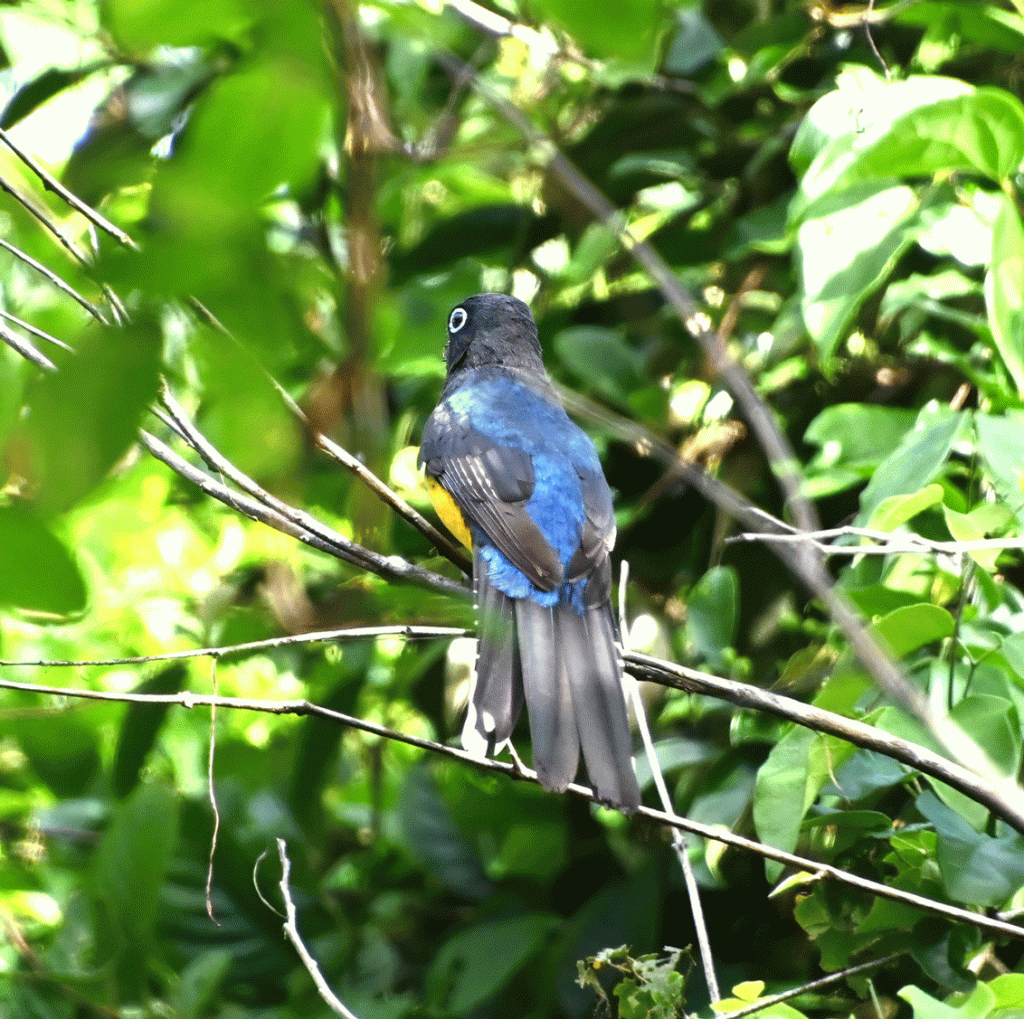
Here’s another couple of photos of a Black-headed Trogon (previously seen in Lamanai – Part 3 blog post). Doug likes the subtle colouring of this trogon’s back best.

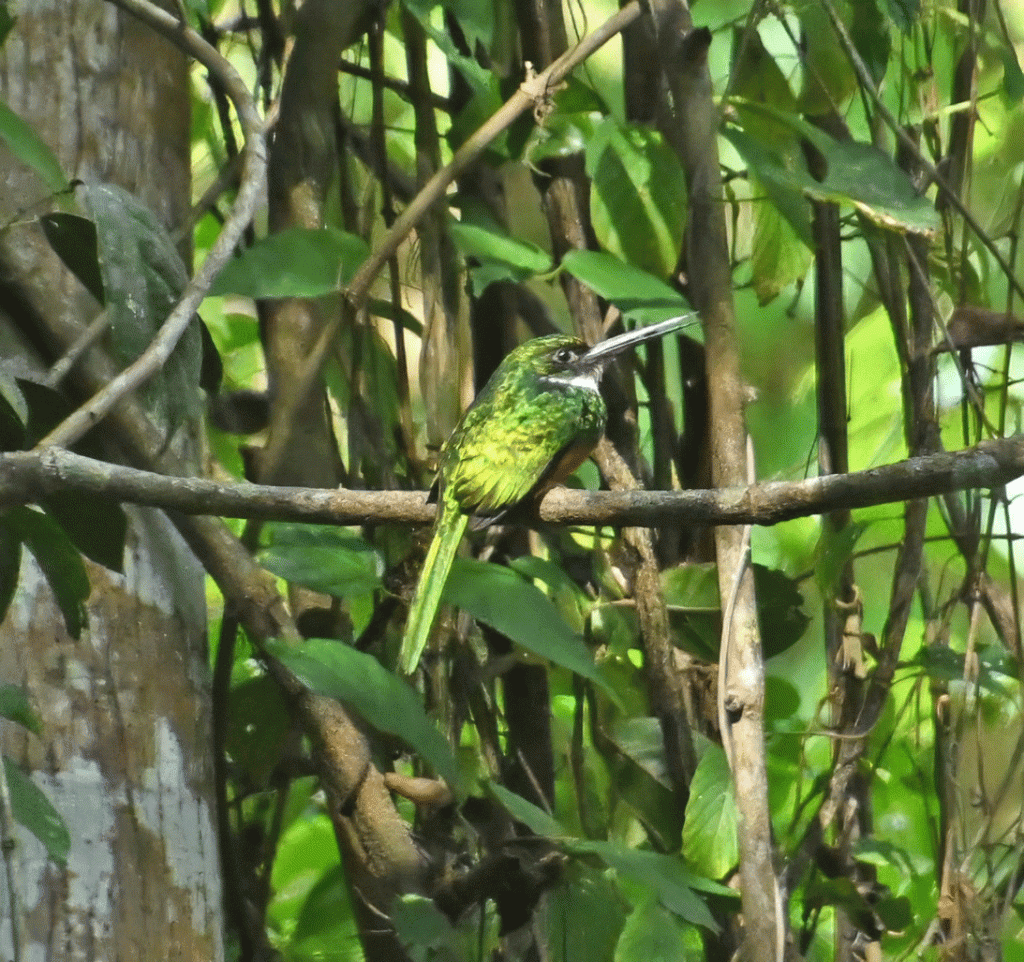
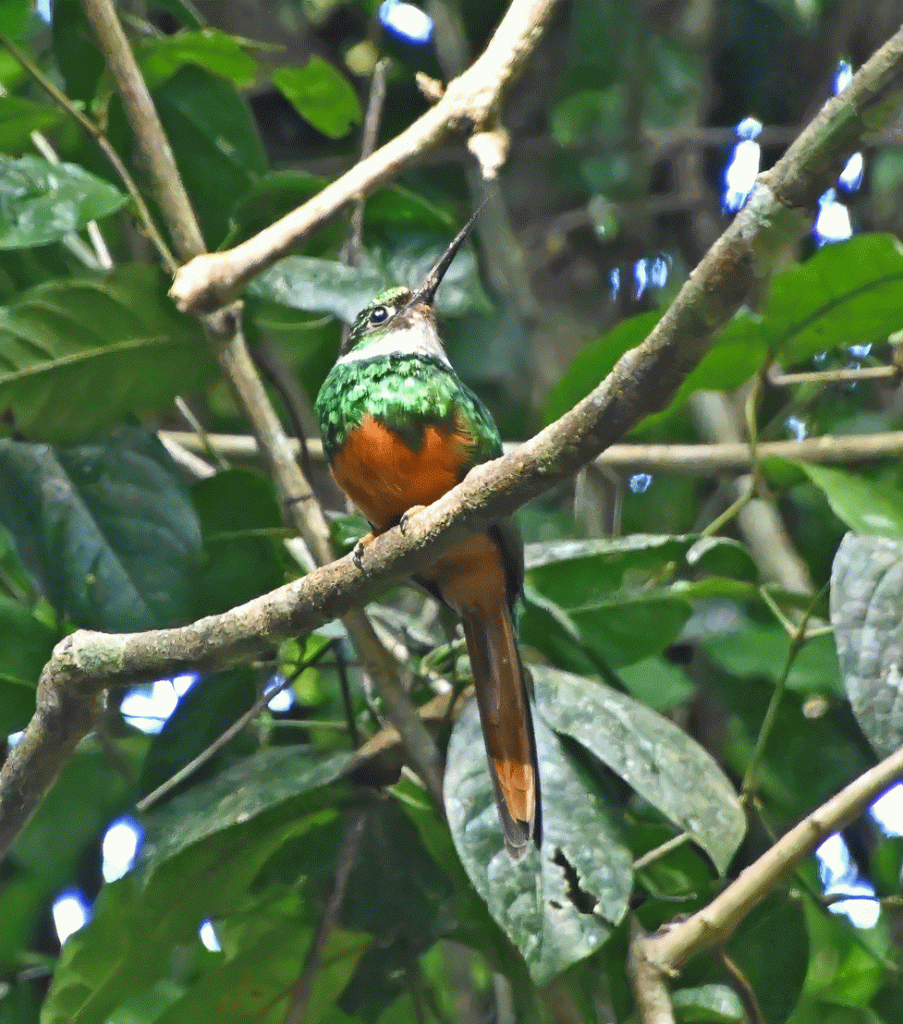
We were really lucky to get good views of this Rufous-tailed Jacamar. This handsome bird looks like a giant hummingbird. Jacamars eat flying insects, especially butterflies, dragonflies and wasps. After a jacamar has caught an insect, it beats it several times against a branch. That action stuns it and removes wings to make it easier to swallow.

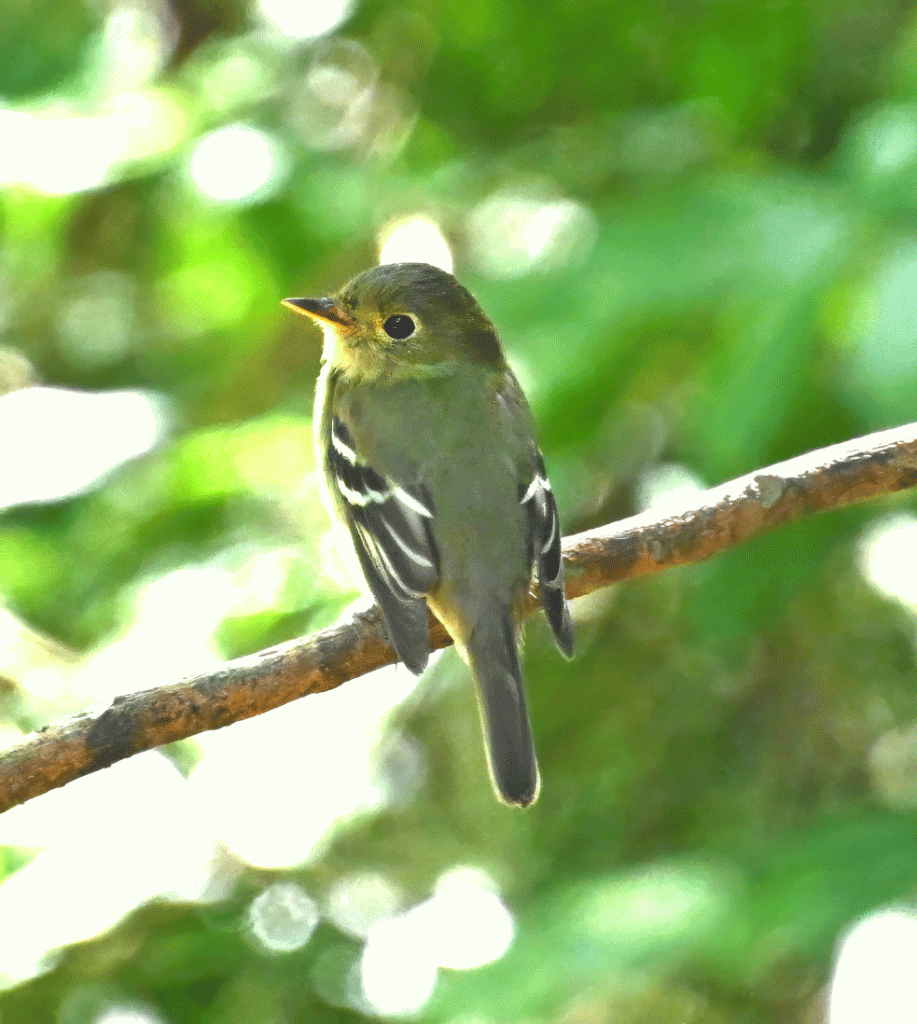
Here’s a Least Flycatcher. We saw several on the trip. Least flycatchers, as you might guess from their name are the smallest of the Empidonax (empid) family. Because their primary feathers on their wing are short, it makes their thin tail seem longer. They foraged close to the ground, which made them easier to photograph.

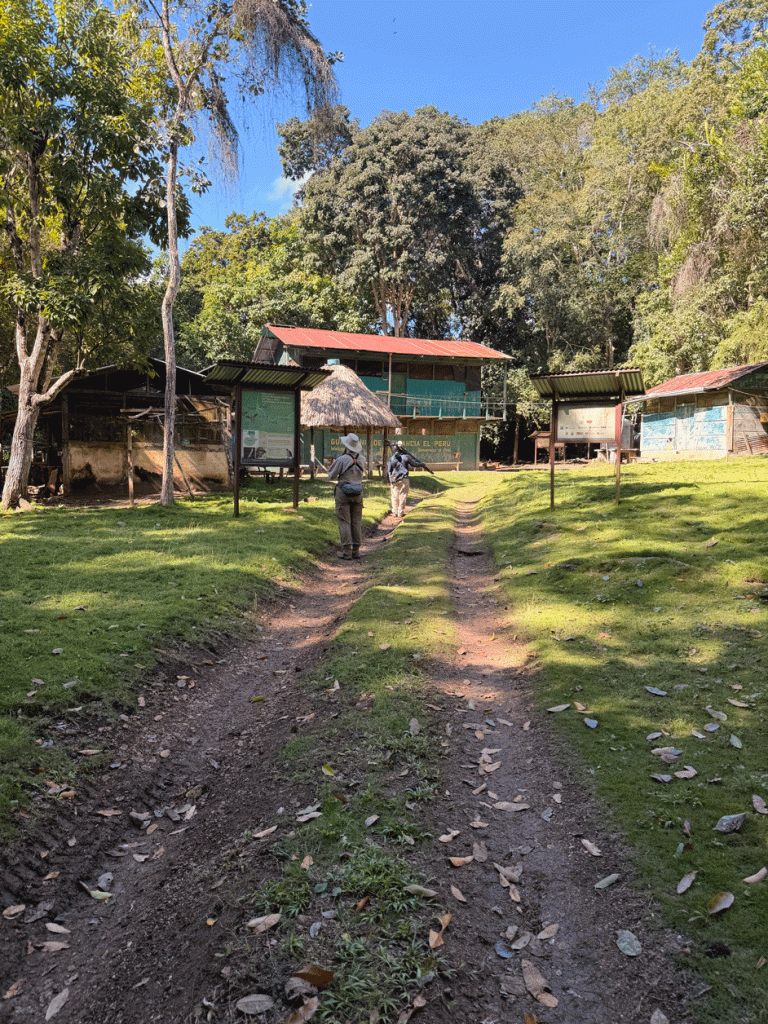
Here’s a view of the ranger station/camp. It was fairly basic. The rangers had to bring in all their supplies, although they had a small garden. They cooked over wood fires, and collected rain water. However, there were solar panels behind the main building, perhaps to allow enough electricity for communication.

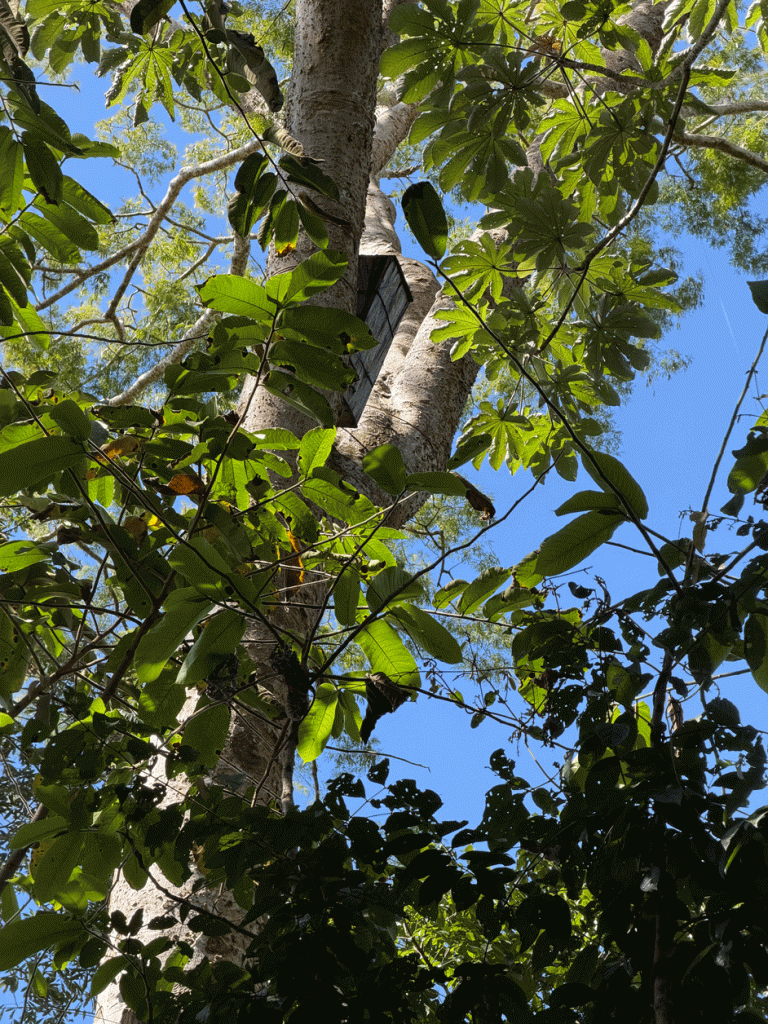
Part of the ranger’s job was to protect the Scarlet Macaw nesting sites. Here is an artificial nest box, high up in a tree. This area is a vital nesting ground for Scarlet Macaws, and includes a large number of the kind of trees that they prefer.

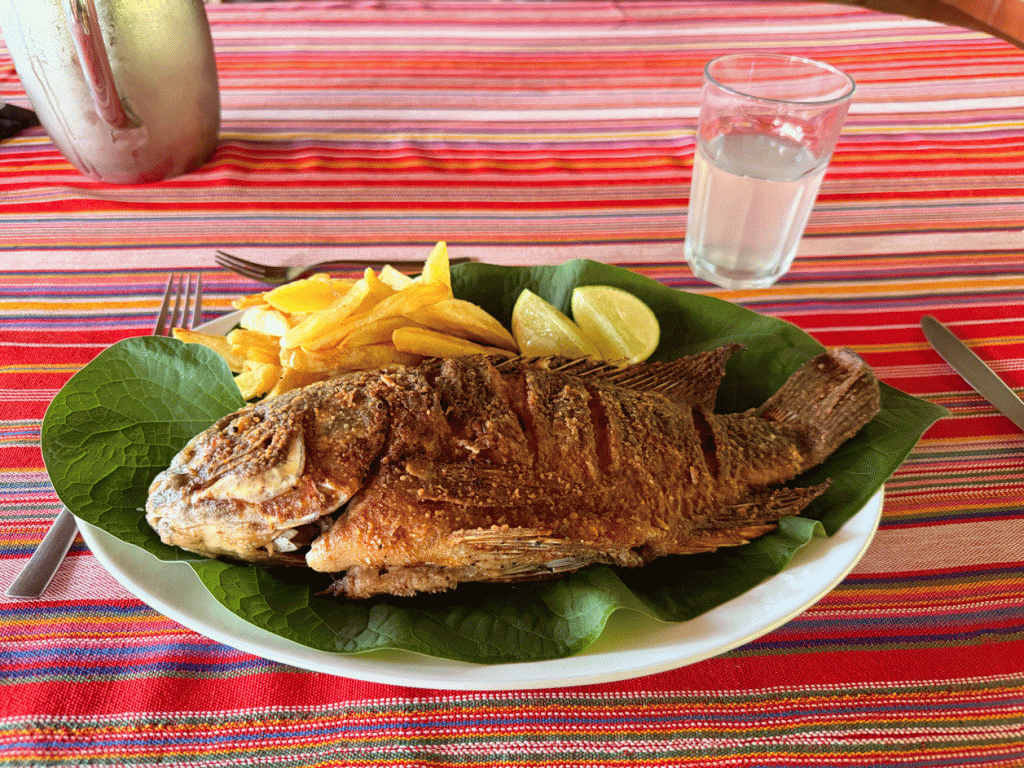
We got back to the biological station in time for lunch. This lunch was a whole tilapia each, served with french fries, lemon and lemonade.

We went out in the boat again that afternoon along the San Pedro River. We saw thirty species, including a better view of the Yellow-billed Cacique, a “life bird” from this morning.

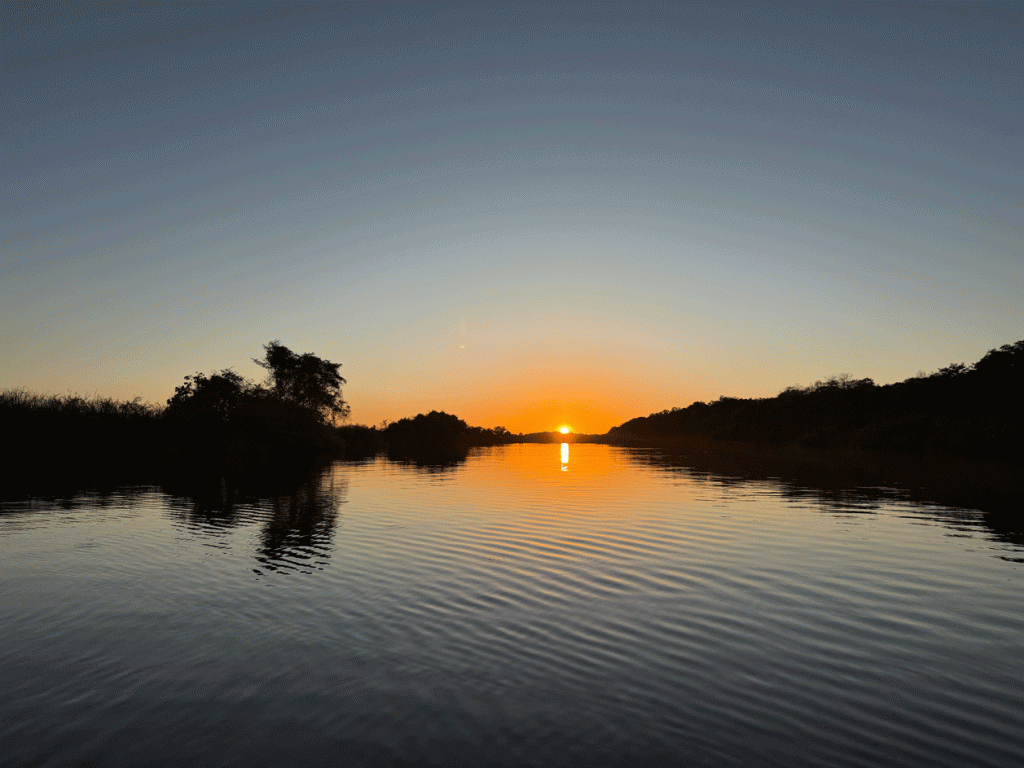
We had another good view of the sunset, then continued birding in the darkness and heard both the Great Tinamou and the Thicket Tinamou.

Our visit to Las Guacamayas Biological Station and Lodge was memorable. A small team of people kept everything running smoothly. The food was authentic and tasty. The birding opportunities were varied, from the feeders and trail near the lodge and the longer jungle trail reached by boat, to the river excursions, both in daylight and darkness. We saw 138 species around the lodge, as well as the stops along the road that were in the Laguna Del Tigre National Park. Included in that total were eight “lifers.”

Our next, and final post will be about our visit to the Maya sites of Tikal and Yaxha, both national parks in Guatemala.

January 2026 in Belize – Part 4

January 2026 in Belize – Part 4

Our final blog post about Belize will be about our visit to the Green Hills Butterfly Ranch, Black Rock Lodge and Caracol Maya site.

From the Crooked Tree Wildlife Sanctuary, we drove out to the Northern Highway, heading south. Luckily our driver has good eyes and noticed a large bird flying nearby. We stopped the car and walked across the road to scan the field. Soon, the huge bird was flying in our view. Wendy was so surprised when she saw it before the others, she couldn’t say “Jabiru,” just “large white bird.” Luckily everyone had a chance to see it. It was gone too quickly for a photo, but it was unmistackable.

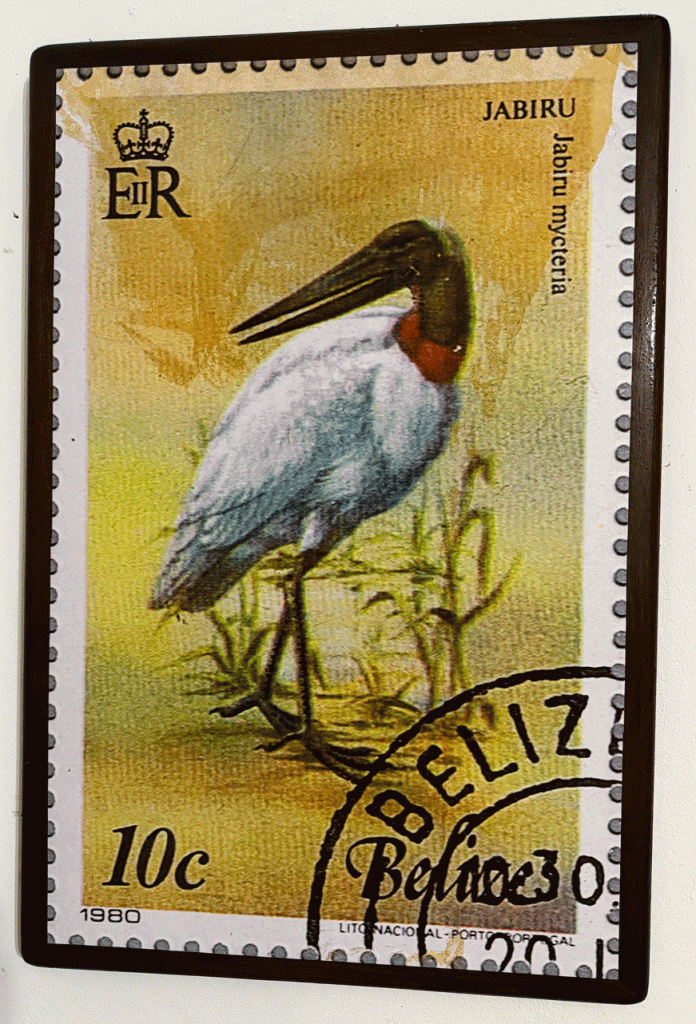
Here’s a poster of a Jabiru from our dining room at Bird’s Eye Lodge. They are huge, massive-billed storks that range in size from 90 – 130 cm (37 – 52″). Sometimes, if the water is low, there are several Jabirus in the shallow water near the lodge, but not this year. We were worried that we might not get a chance to see one. It was another “life bird” for the trip.
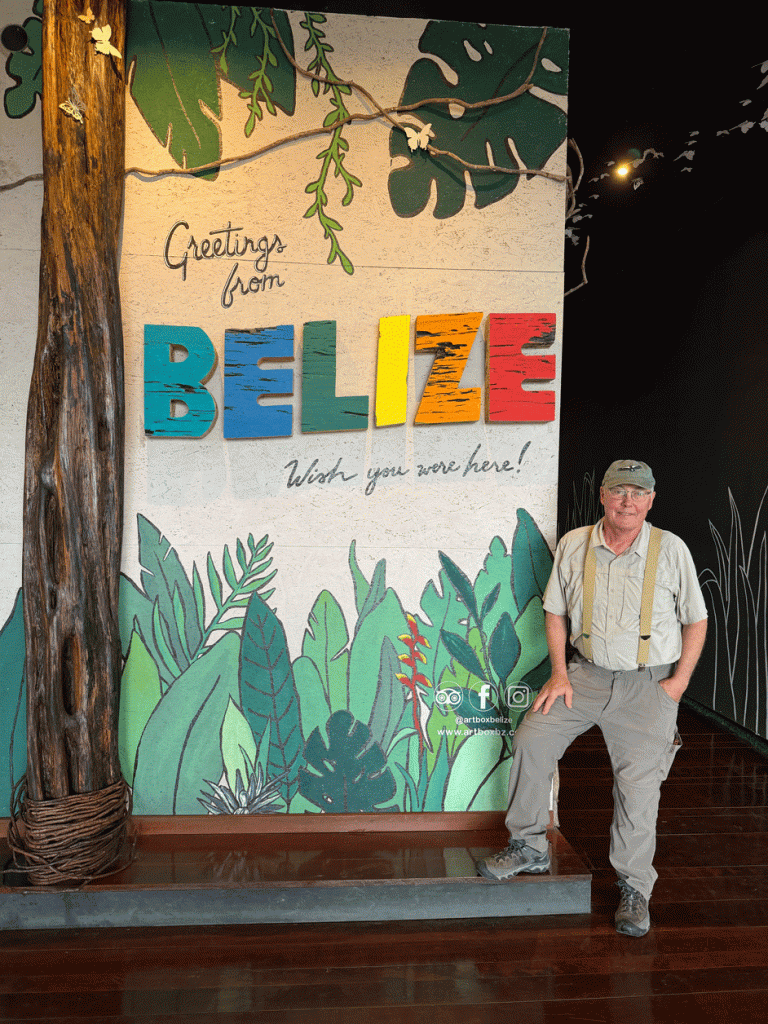
After the excitement, we continued south, then bypassed Belize City and joined the Western Highway at Hattiville. By mid-morning we were in Belmopan, the capital of Belize. We stopped at the Art Box, a cafe and gift shop, with unique decor. Here’s Doug posing by their mural.

We continued west, soon reaching the Green Hill Butterfly Ranch. We weren’t there to see butterflies, however. They also had extensive feeders for hummingbirds and we got the best views of hummingbirds of the whole trip.

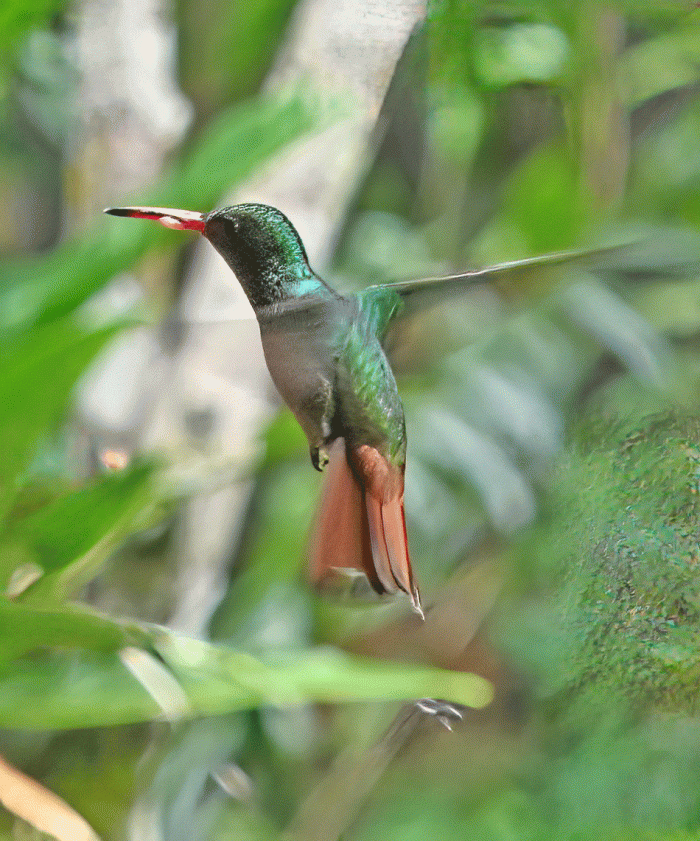
This one is a Rufous-tailed Hummingbird. They were quite common and we saw them at every place we stayed. They would feed on flowers as well as visit feeders.

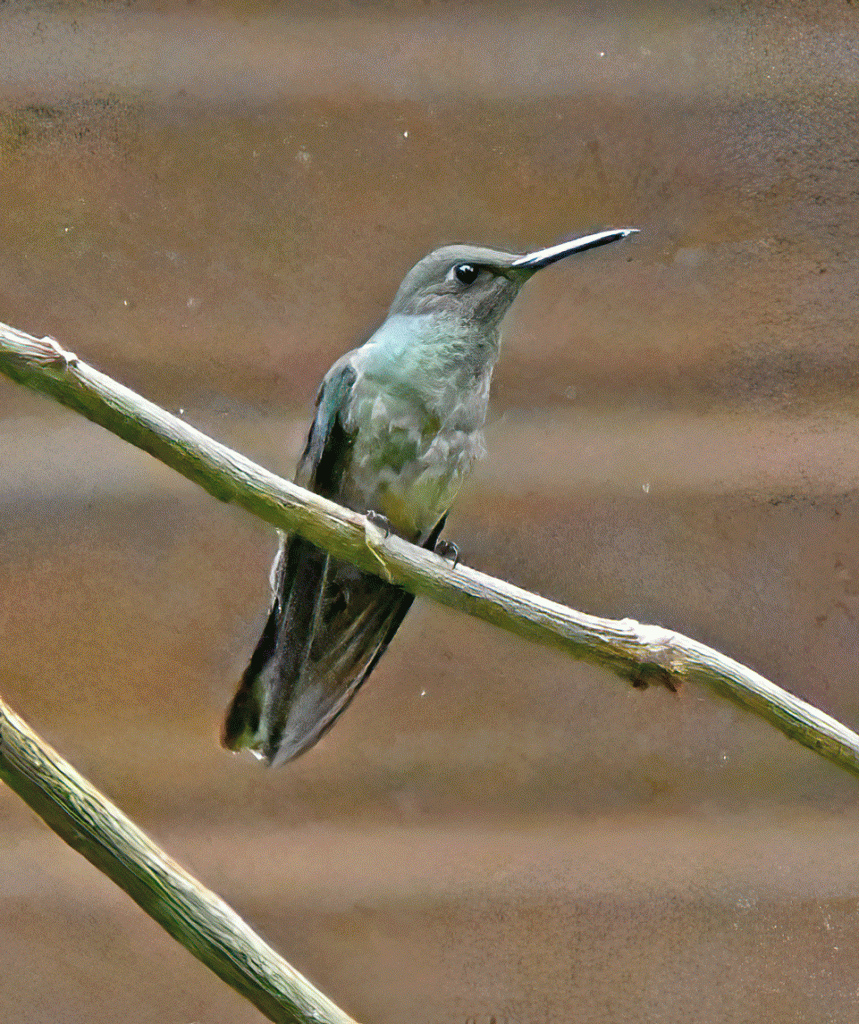
We only saw a Scaly-breasted Hummingbird at the Butterfly Ranch. This rather large, dullish green hummingbird has a mottled breast that is not obviously scaly.

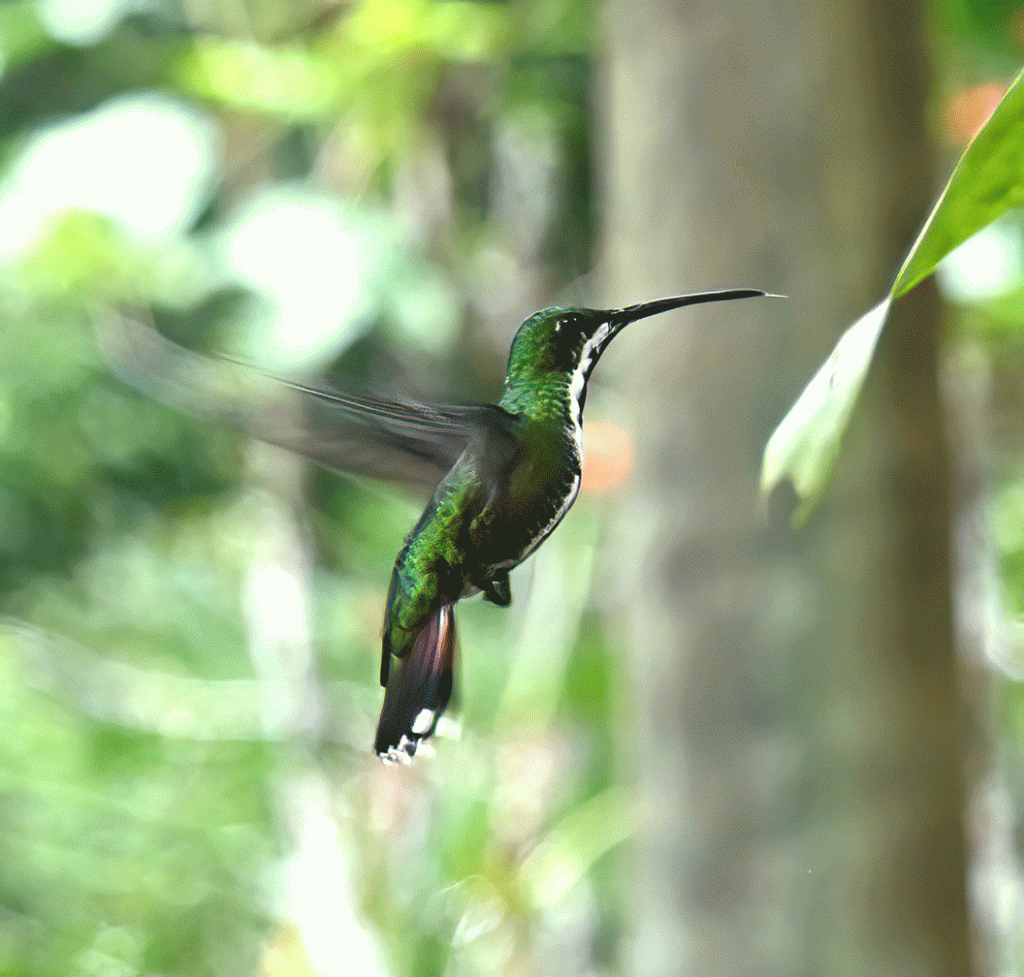
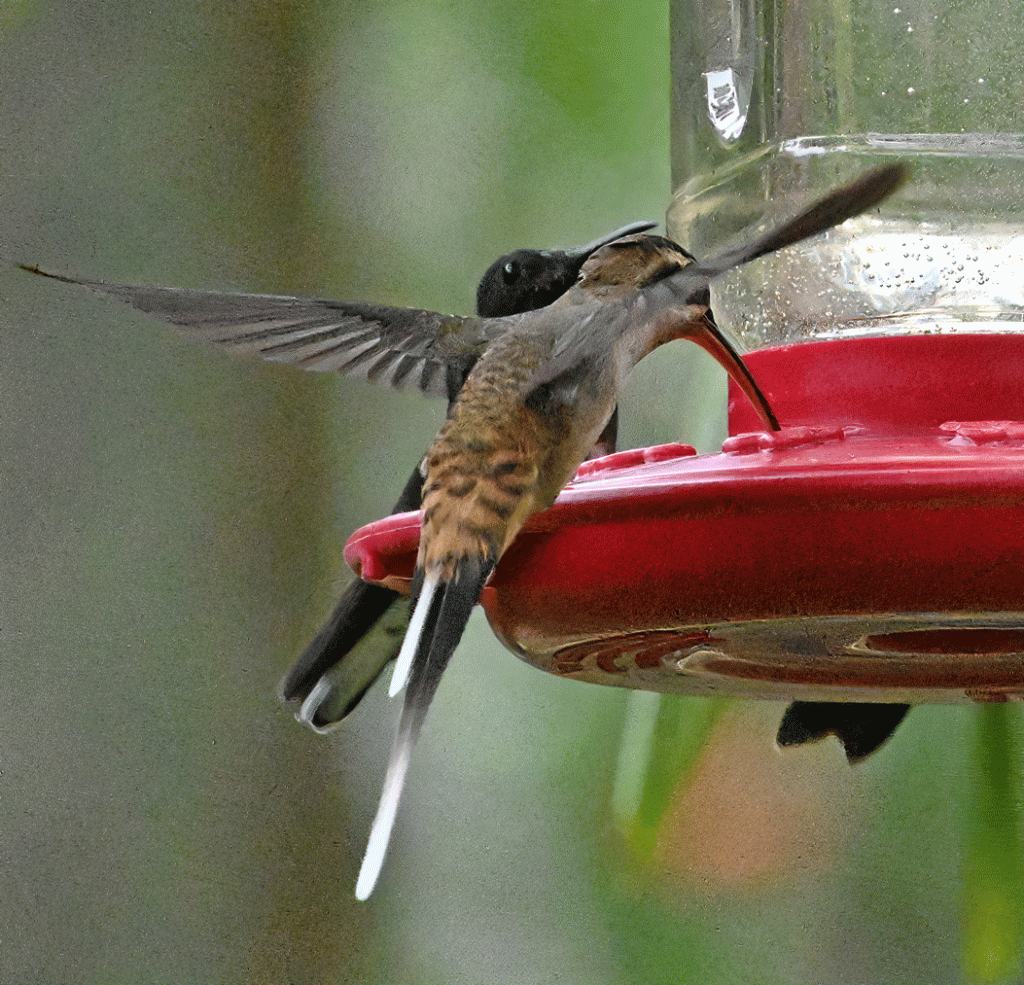
We saw five more species of hummingbirds at the Butterfly Ranch, but their names didn’t end in “hummingbird.” We saw a “mango”, two species of “hermits,” some “jacobins,” an “emerald,” and some “sabrewings.” All the different names for all the species make it difficult to look them up by searching “hummingbird” unless you look them up by family (Trochilidae).

This Green-Breasted Mango belongs to the Anthracothorax genus, commonly called “mangos.” Mangos are medium-sized hummingbirds that have stout bodies, slightly curved bills and broad, metallic tails.

“Hermit” hummingbirds have less vibrant, more camouflaged plumage and most of them have long-decurved bills. This one is a Long-billed Hermit.

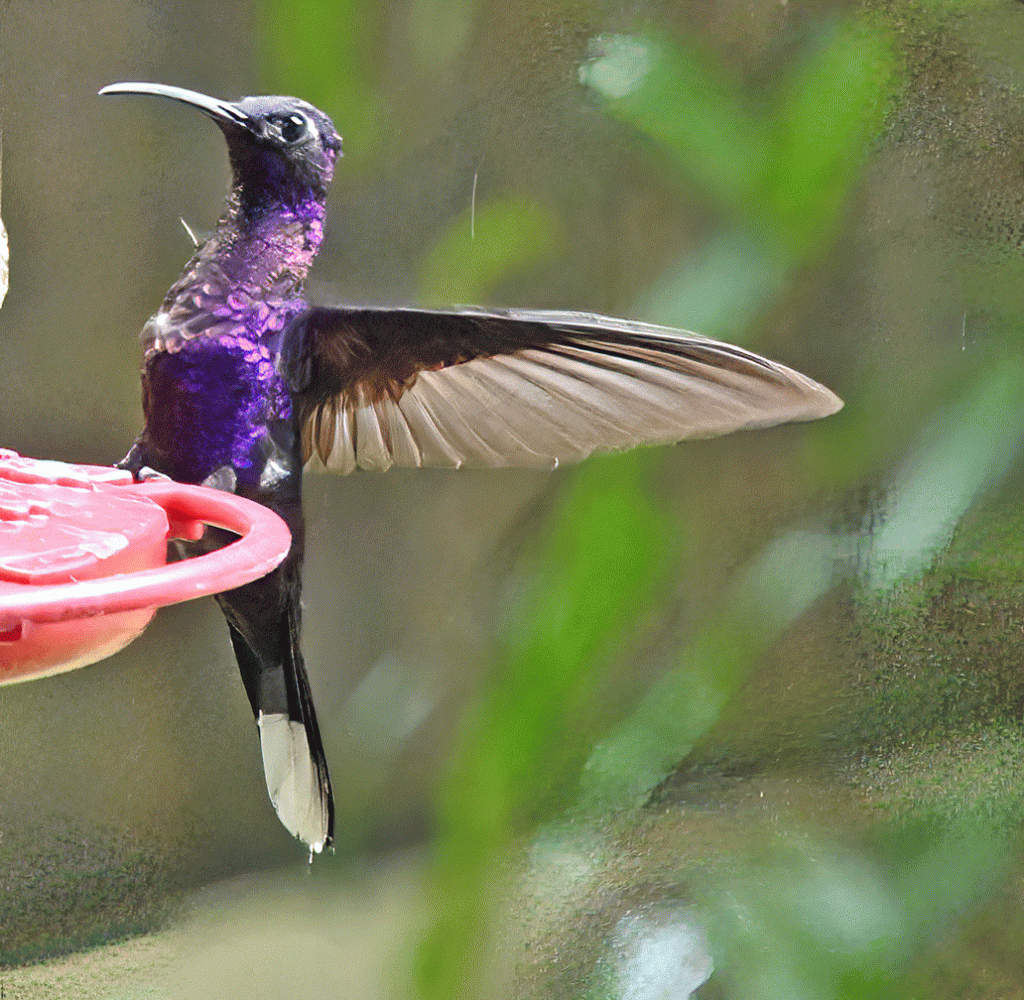
“Sabrewings” get their name from the shape of the male’s outer wing feathers which are flattened and curved resembling a sabre. This one is a Violet Sabrewing.

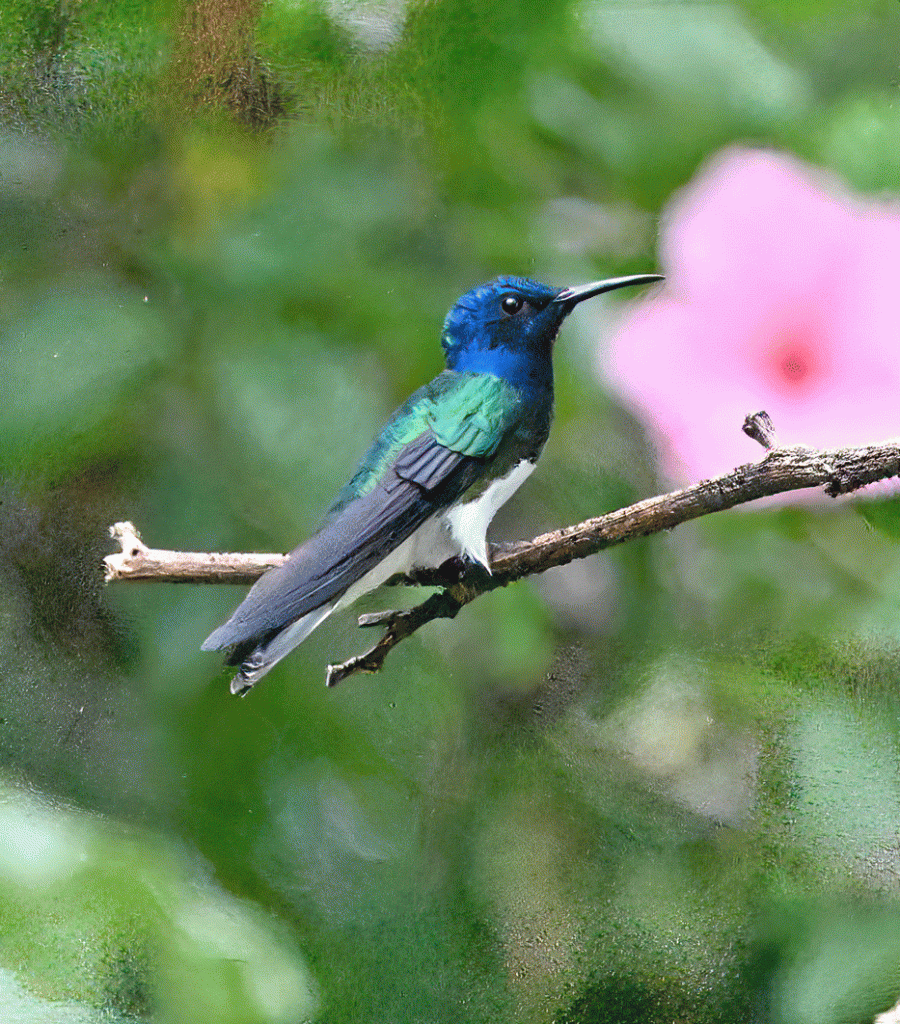
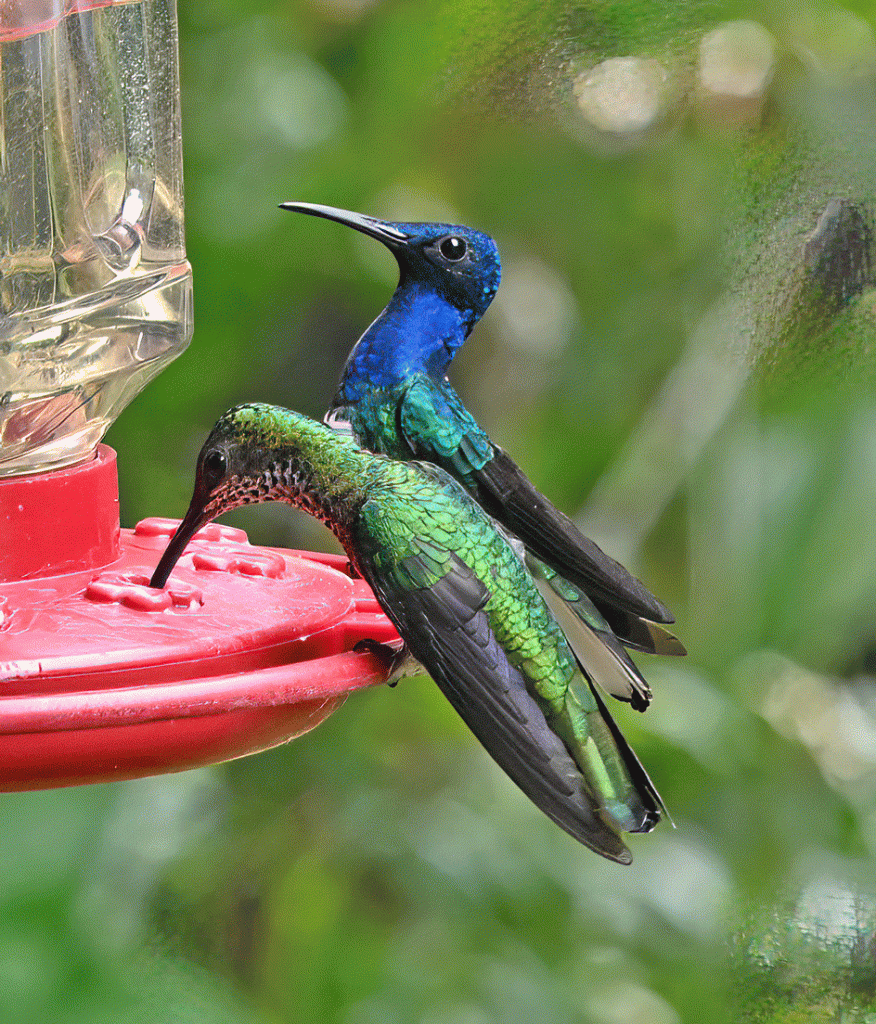
These are White-necked Jacobins. They are very agile and are also very territorial. Wherever we see them, they push their way to the feeder. The male (with the blue head) has a white patch on the back of his neck which is not visible in the photos below. The female is a brilliant green with an interesting patterned neck. We saw them at four locations on our trip.

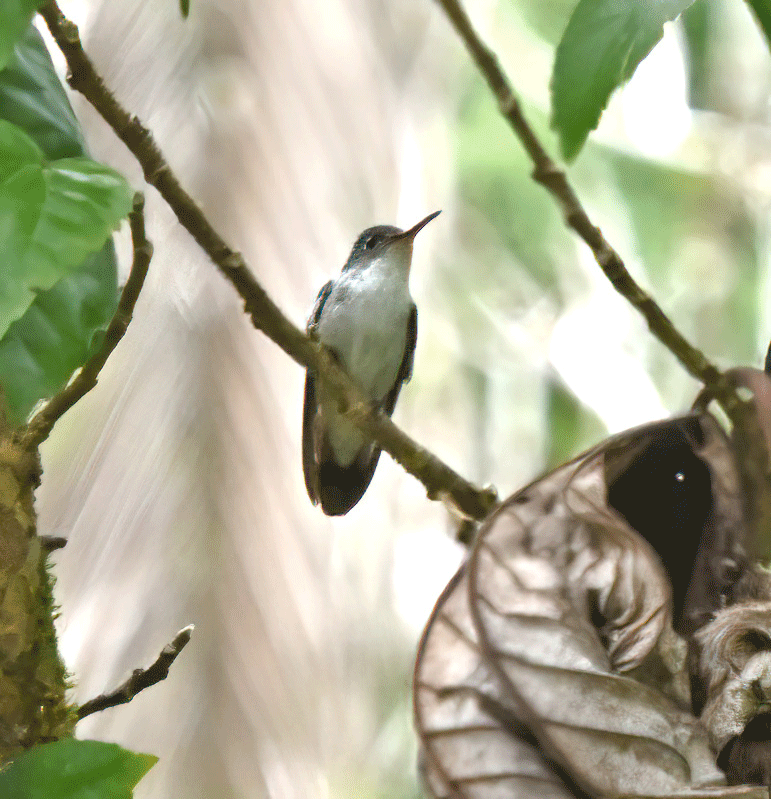
The only hummingbird at this location that we hadn’t seen before was the White-bellied Emerald. (After this sighting, we saw the species four different times.) Both sexes of this small and rather plain hummingbird look “female-plumaged.”

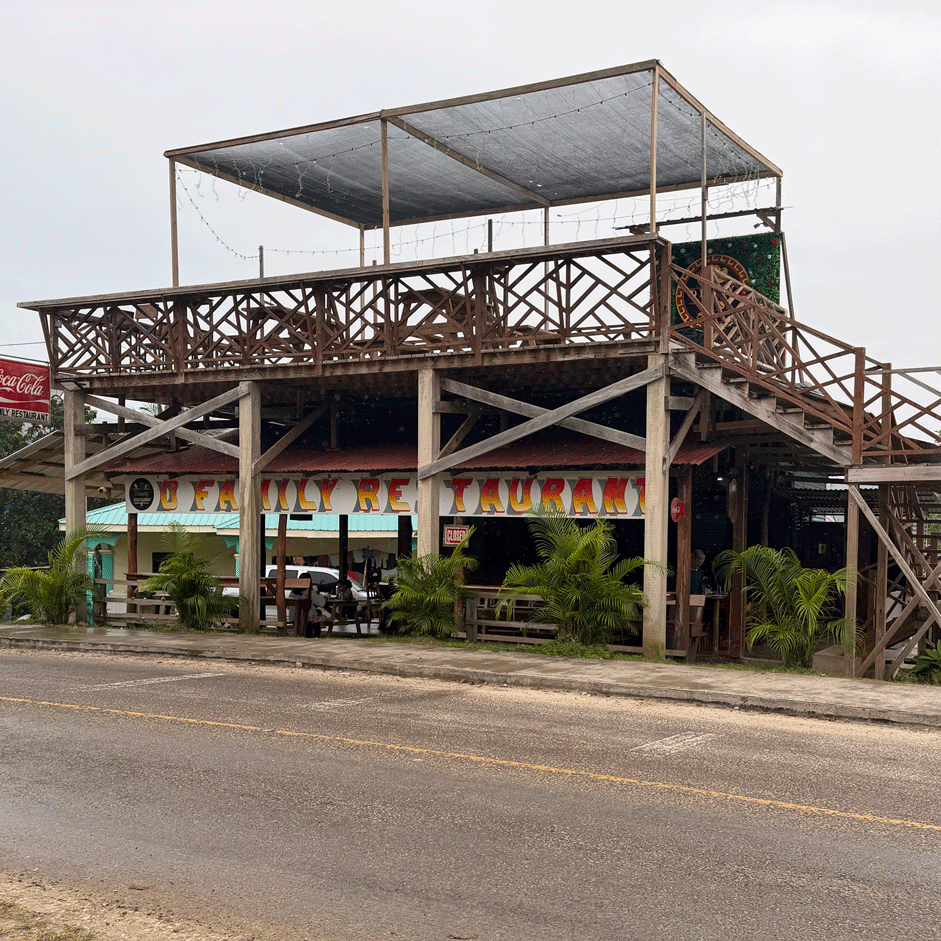
After the Butterfly Ranch, we stopped for lunch at “D Family Restaurant.” Unfortunately the weather was cool, so we didn’t eat on the upper deck.

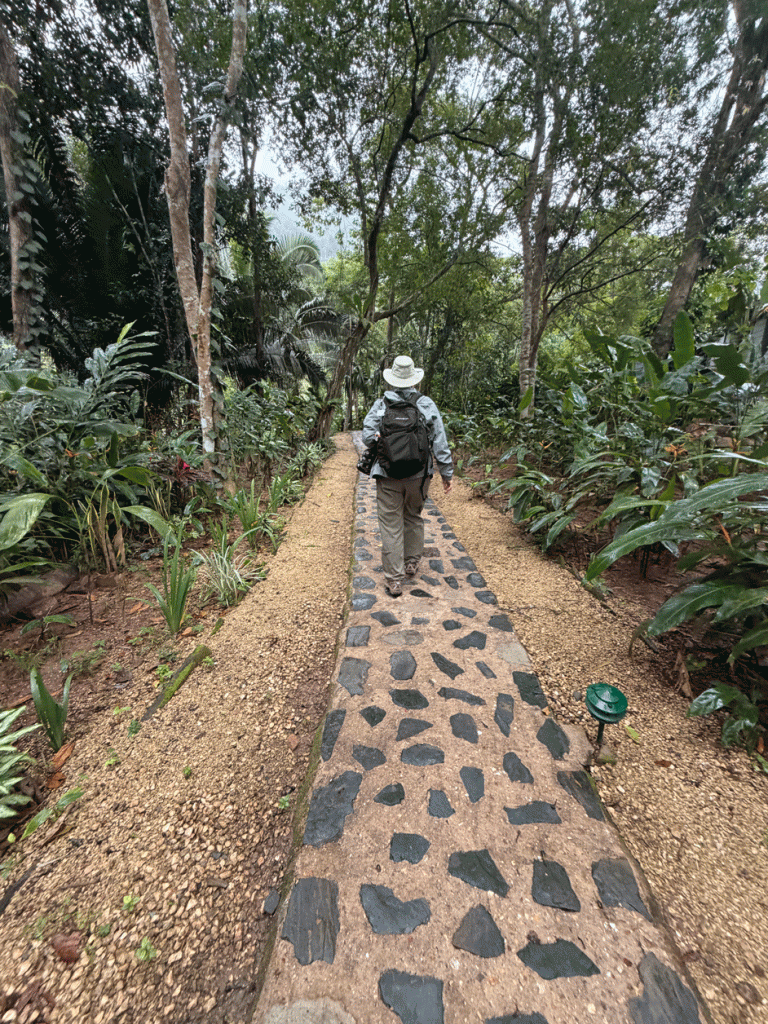
We drove up an eleven kilometre (7 mile) dirt road reaching the secluded Black Rock Lodge shortly after 1 o’clock, just as it started to rain.
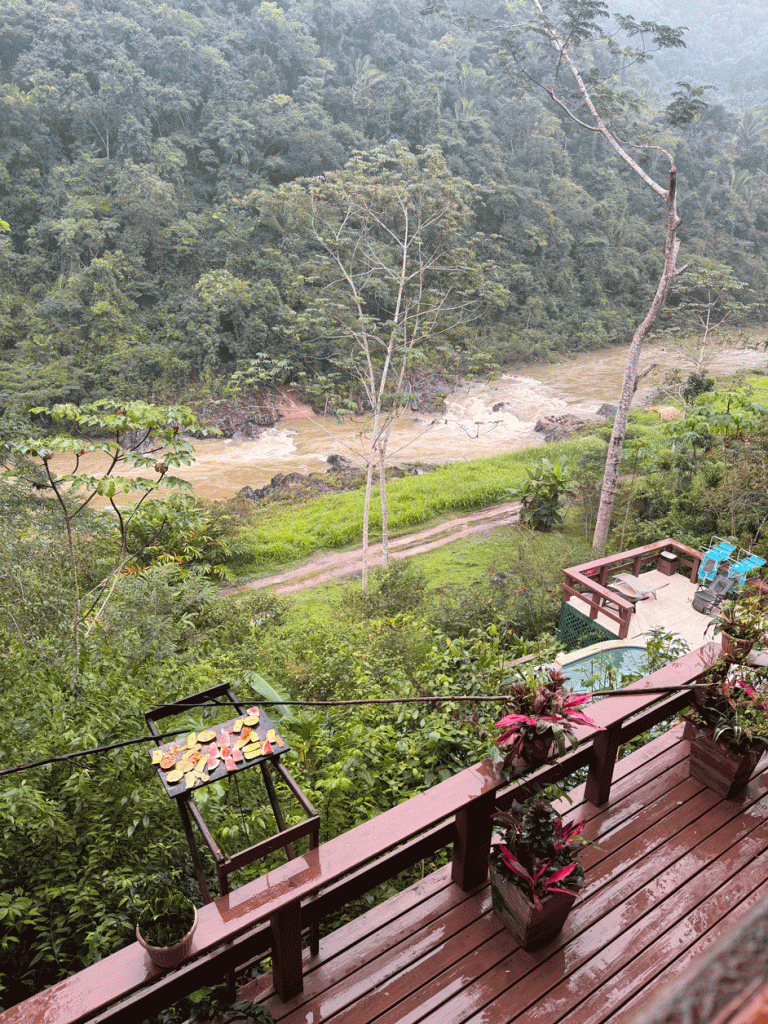
Here’s the view looking down from the restaurant, towards the Macal River. In more pleasant weather, people float down the river in tubes, and swim in the outdoor pool.

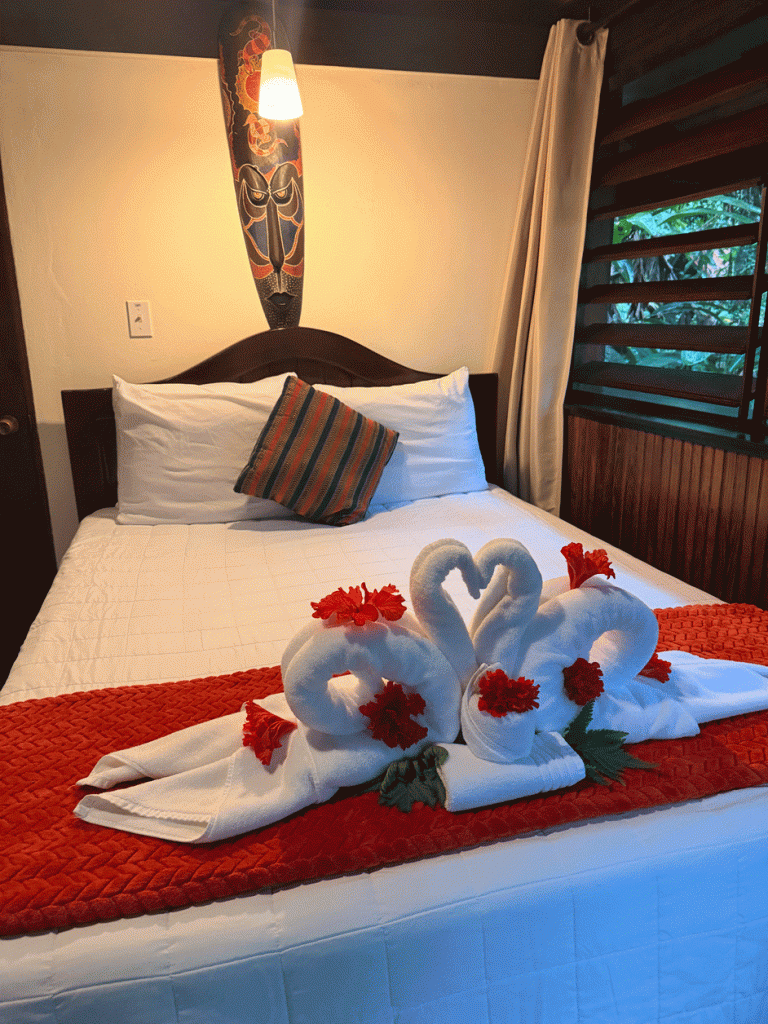
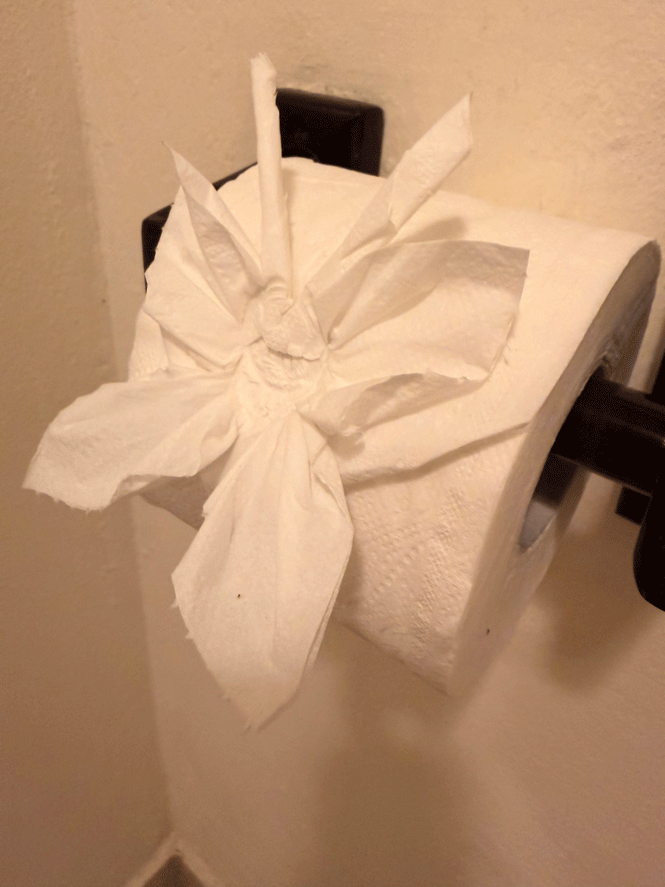
Here’s a view of half of our room. It was one of 20 cabins on the property. The toilet paper decoration in this room was unique, so Doug had to take a photo.

Around 4 o’clock the rain had let up enough for us to contemplate a walk. We walked along a road that headed upstream to the tubing area. It looked down on the lodge’s farm. The lodge is totally off-grid and relies on solar and hydro-power.

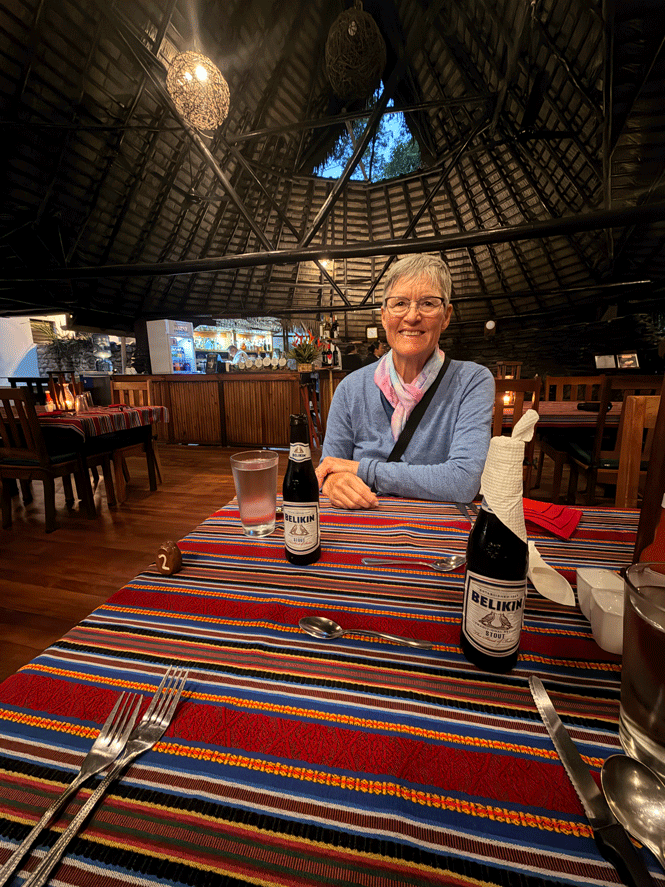
Wendy put on several layers of clothing to enjoy “Happy Hour” at the restaurant, since it was open to the outdoors. Belikin stout was our favourite beer of the trip, and available throughout Belize.

The next morning before it was light, we stopped at the staff parking lot to see a Spectacled Owl. The lodge provided us with a packed breakfast.

We drove the winding newly-paved road through the Mountain Pine Ridge Forest Reserve and stopped at the Guacamallo Bridge over the Macal River. From this vantage point, we saw a pair of distant Scarlet Macaws. They were even with the bend in the river. seen in the photo below. We got the ‘scope on them, but they were still very, very small. At the moment Wendy was looking at them through the scope, they took off from their perch and flew directly towards us, staying in “scope view” for a good distance. Soon they flew right over us. These were the only Scarlet Macaws that we saw on the trip, although we heard them in one other location. They are a “sensitive” species and will be hidden to the public from our eBird checklist. Scarlet Macaws are threatened by poaching for the illegal pet market.

There were several other birds that were much closer, however. We got a much better view of a Blue Bunting. The other little birds included the ever-present Morelet’s Seedeaters and Melodious Blackbirds, a Green-backed Sparrow and a couple of Blue-Black Grosbeaks.

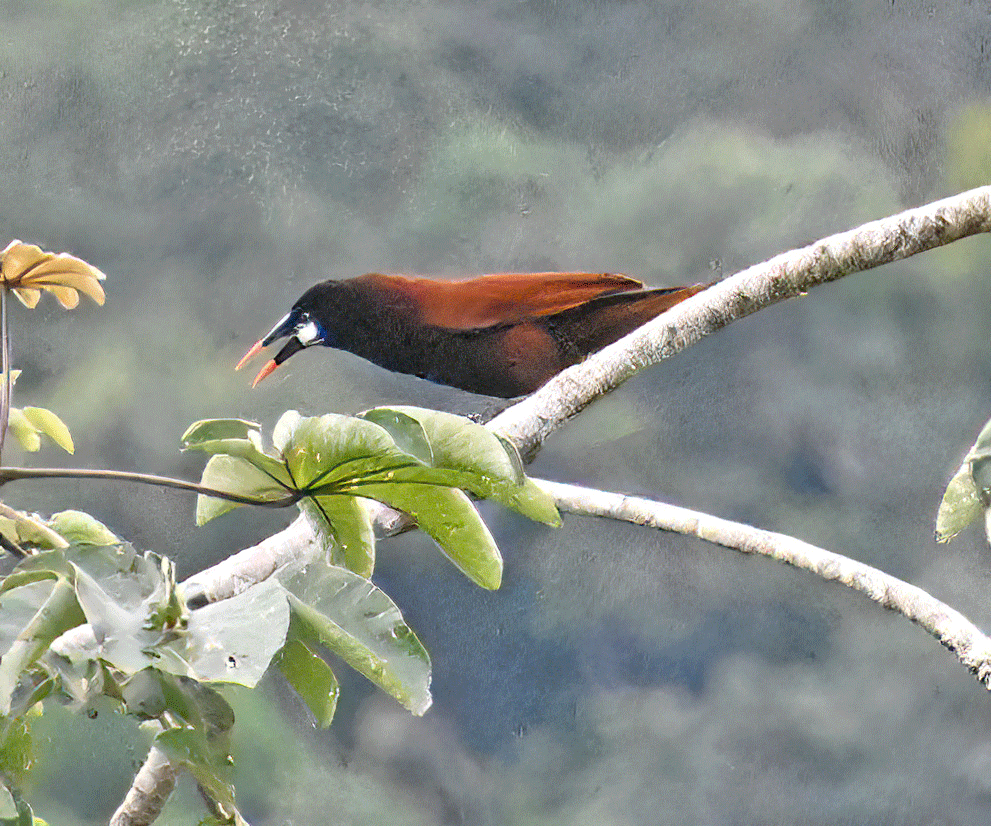
Bigger birds included common Brown Jays and spectacular Montezuma Oropendolas. The Montezuma Oropendola (photo below) has a very memorable song that sounds like water being poured from a bottle, which we heard often throughout the trip, but this was our best view of its ornate face. Oropendolas nest in colonies of large pendulous nests, which gives the species their name.

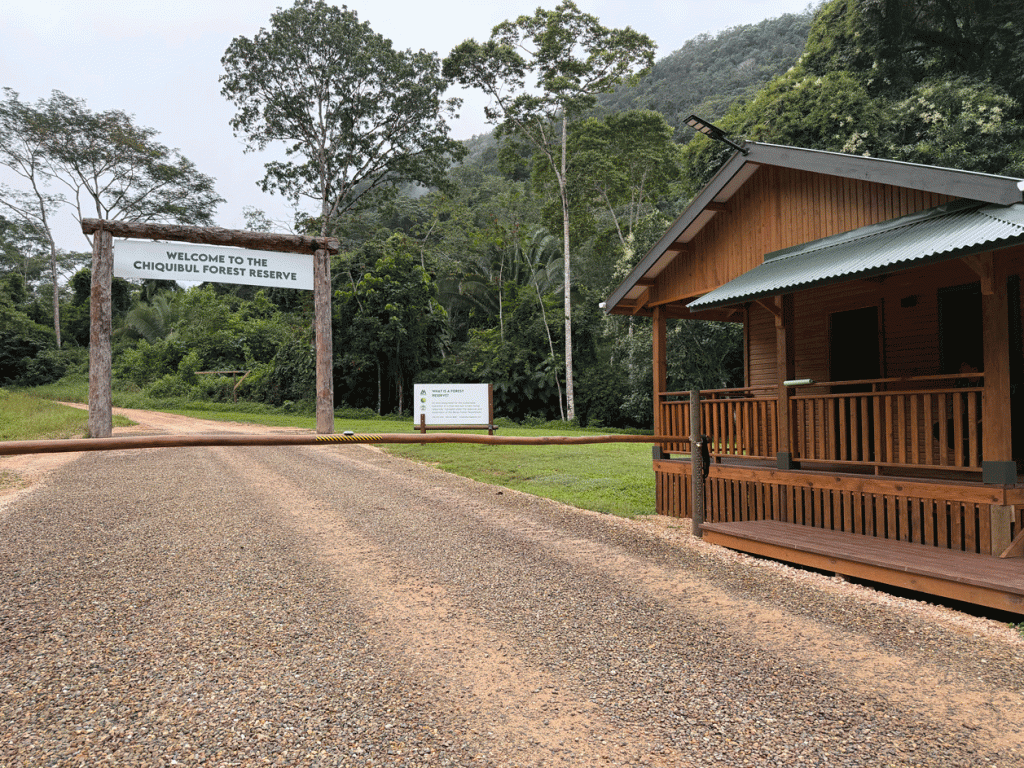
We stopped a few minutes up the hill at the Chiquibul Forest Reserve Ranger Station. All the forest reserves have manned gates to restrict access and keep records of comings and goings. We didn’t come to go into the reserve. Our guide worked at the station sometimes when the guiding was slow, so he knew that we would be able to use the washroom there.

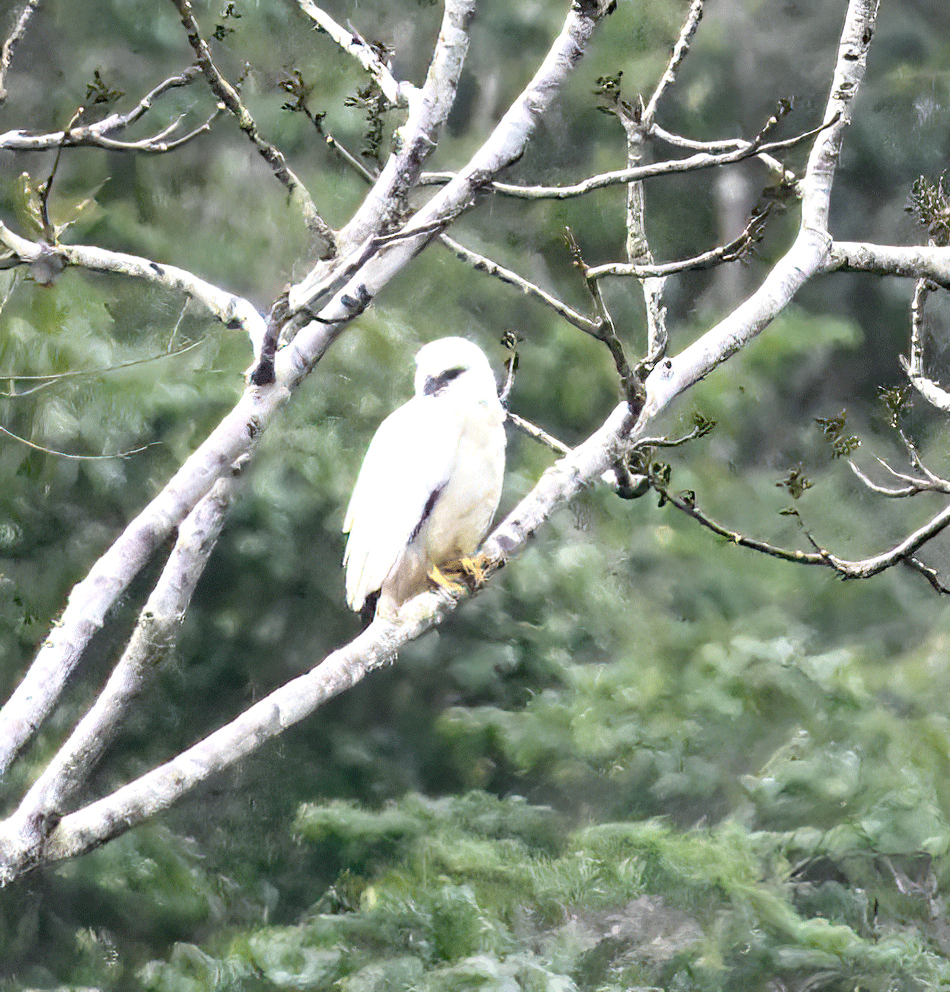
As a bonus, we saw two “life birds,” a White Hawk on a far hillside and an Acadian Flycatcher.

Doug took long distant “doc shots” of the White Hawk on the hillside from the ranger station, but luckily, just around the corner, a White Hawk was perched close to the road, so he could got a better picture.

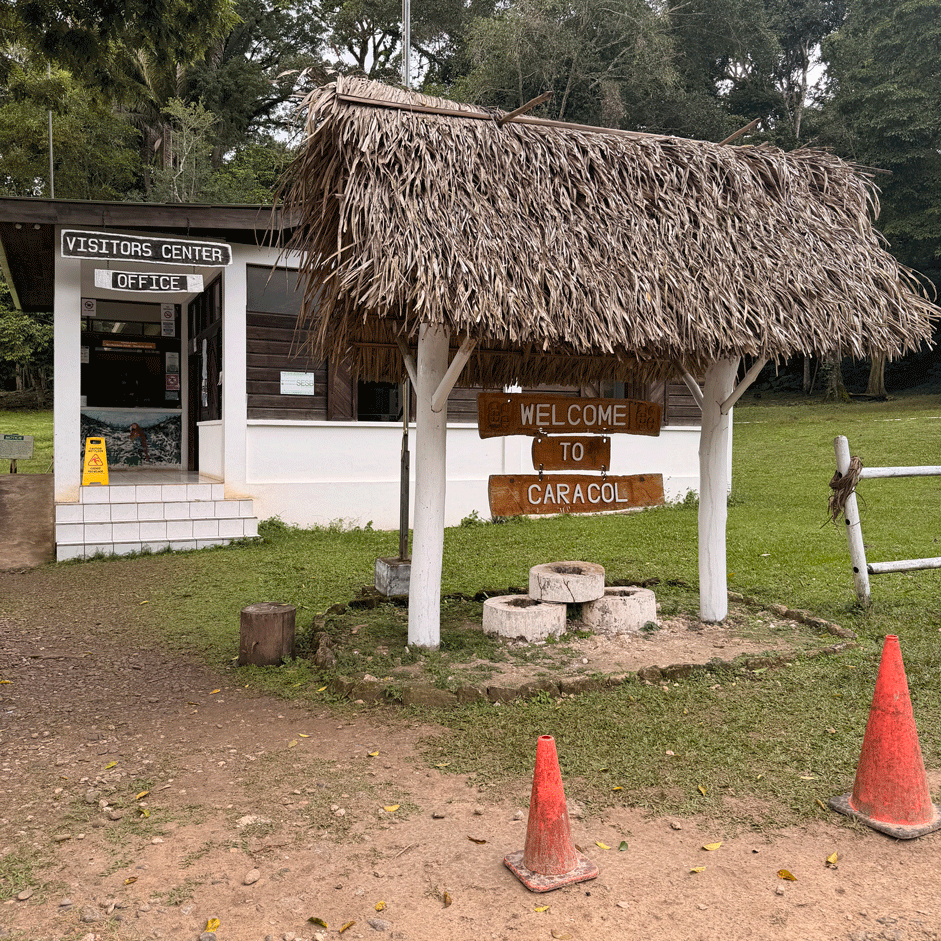
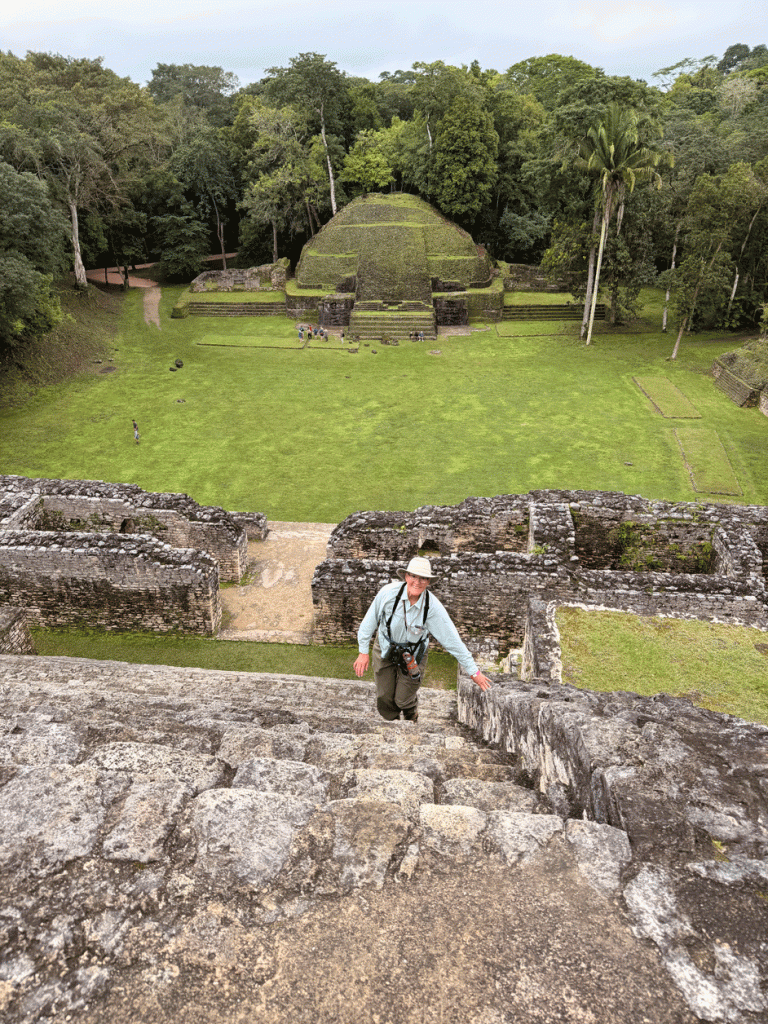
We drove about another half hour on the newly paved road and reached the Caracol Maya site. Caracol was once home to as many as 150 000 people and was continuously occupied from at least 600 BC to almost AD 1100. It is believed that there are over 35 000 buildings on the site although only some of them have been excavated.

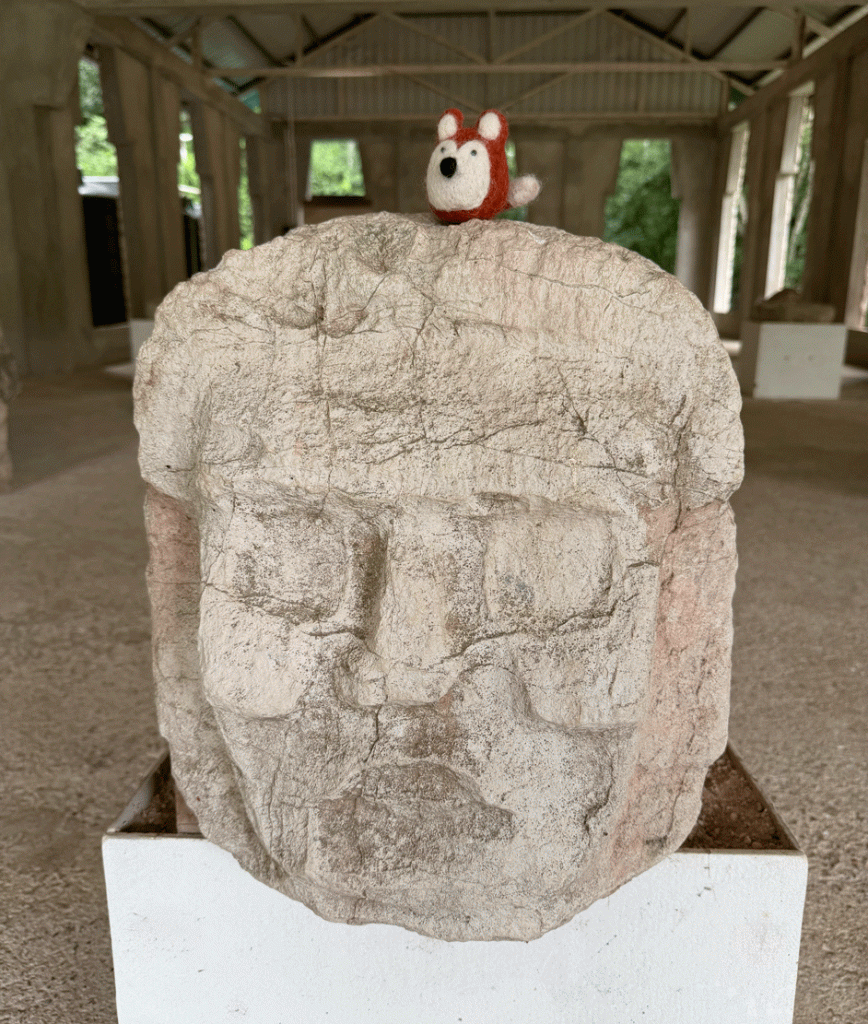
Near the visitor centre is a covered ramada that houses original artifacts. Here’s our fox mascot (travelswithafox.blog) on a Maya stone head.

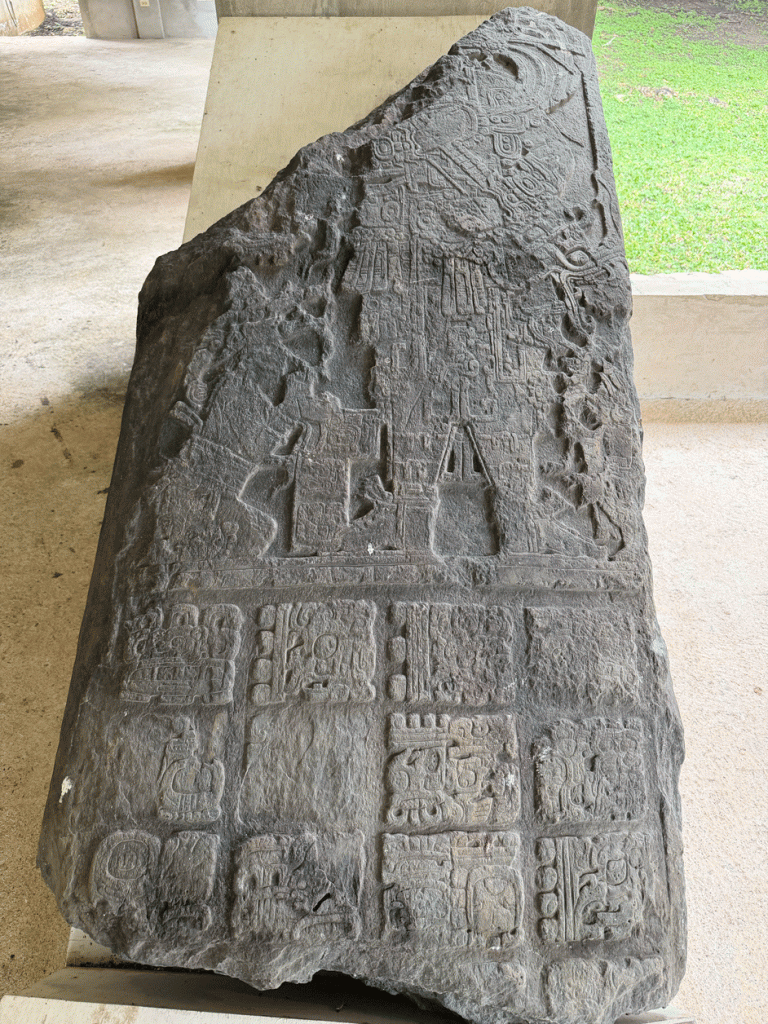
The bottom section of this stela shows a person kneeling in front of a king. The bottom part of the king’s scepter is also visible.

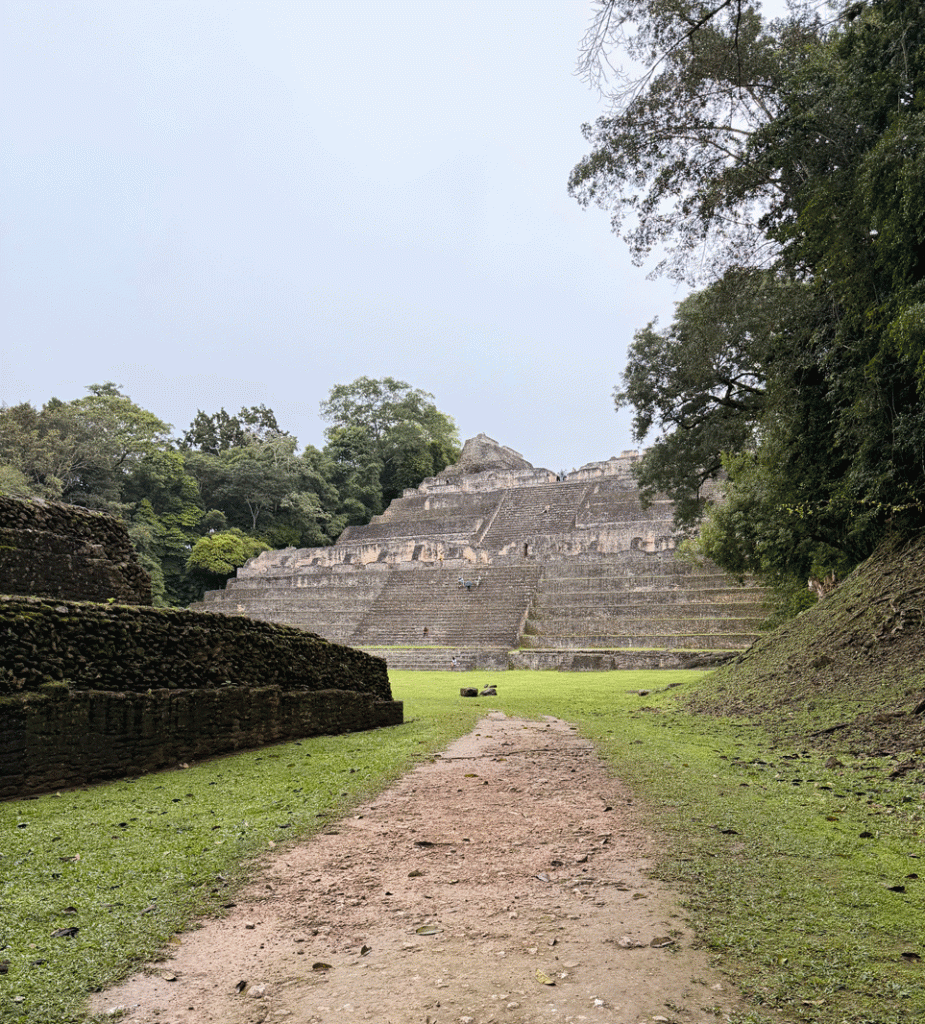
This was our first view of the B Plaza and the highest structure, “Caana,” also known as “Sky Palace.” It’s hard to grasp the scale because the top is barely in view from here.

On the left is one of the first structures we walked to, at the entrance to the B Plaza. It’s somewhat pyramidal in shape with “wings.” The photo on the right shows the decorative detail.

This same “pyramid” structure is behind Wendy as she starts the climb up the highest structure “Caana.” At this point in the climb. she is even with the height of the smaller structure and is on her second flight of stone steps.

There was a narrow flat area with some walls for rooms, then the steps began again. Here Doug is resting before talking the next section. The steps were far enough apart to be a comfortable seat, but were a long stretch for a step.

Here’s the view looking down from those same steps Doug had been sitting on. The rooms are visible on the level below.

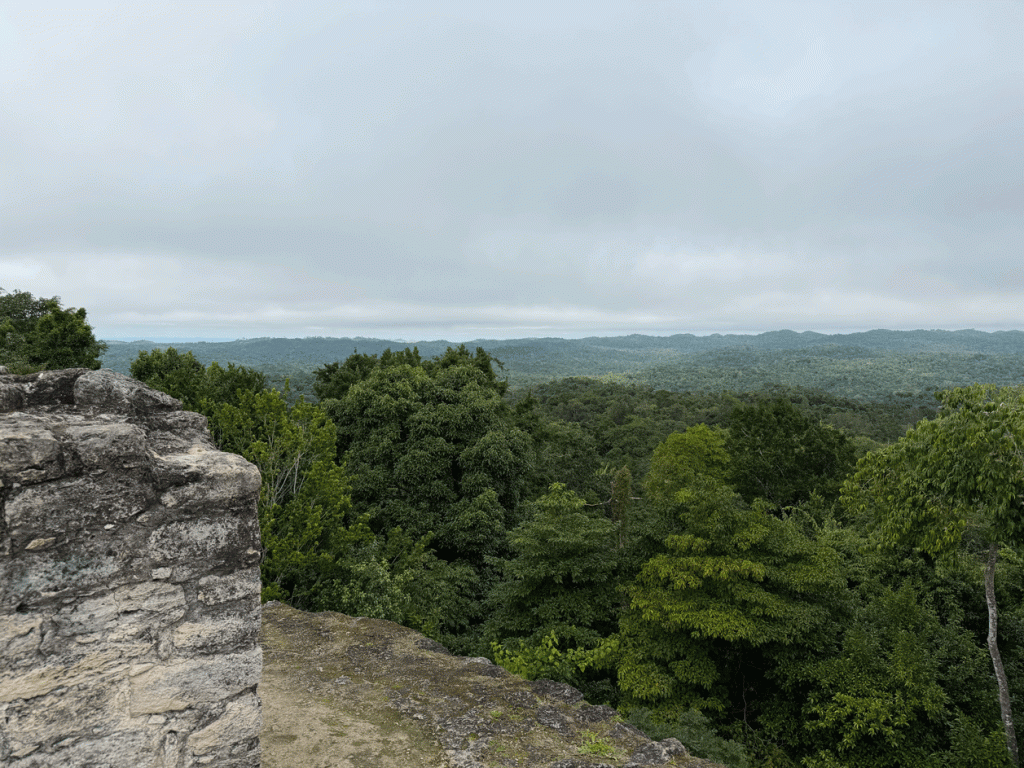
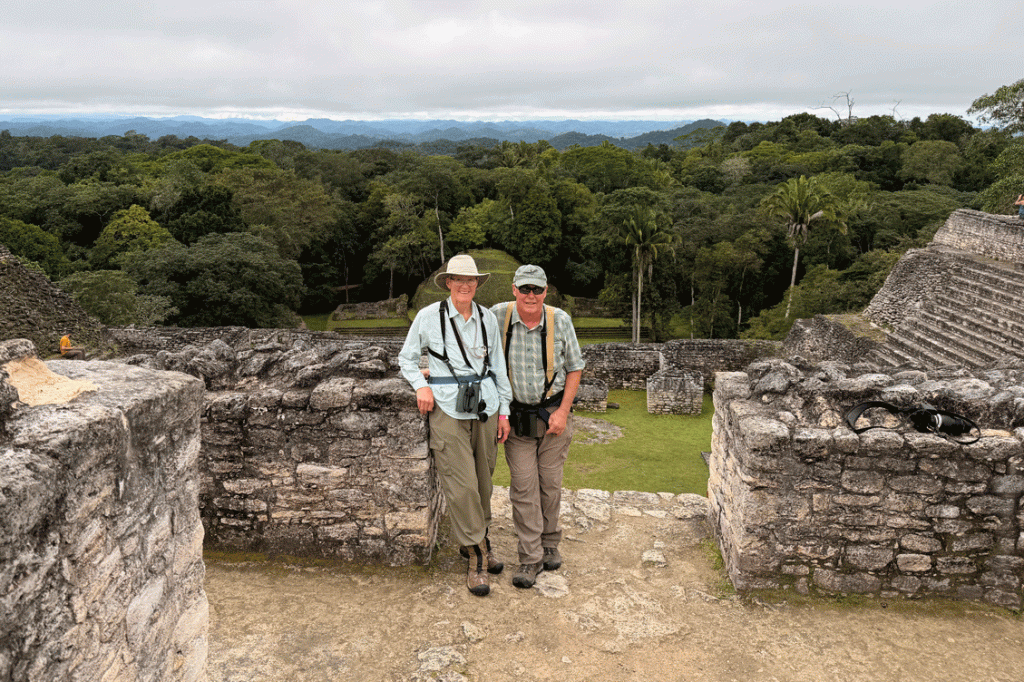
We reached a plaza level, then climbed another set of stairs and finally reached the top of the more than 40 metre (140 foot) pyramid. This is the view out over the jungle.

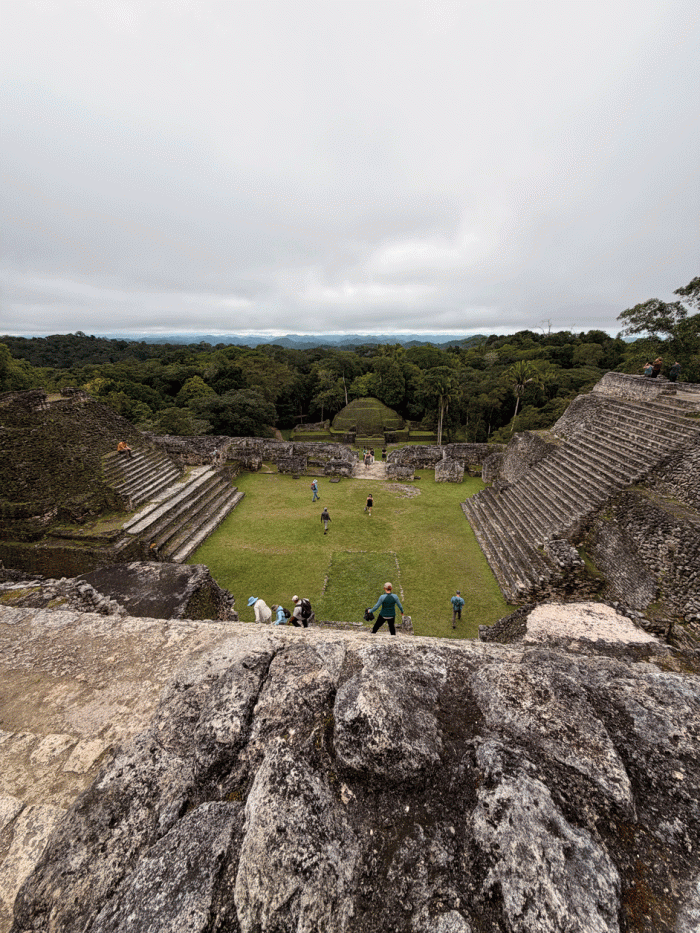
This is the view from the top looking down into the courtyard below. The smaller “pyramid” structure is behind us in the photo below.

We forgot to take a photo of the plaza area on the way up. The stairs where the photo of Wendy climbing was taken are out of view below the plaza area. It was easiest to walk diagonally downwards down these steep steps. Once we were at the plaza level, we watched others climb the temples on the right or left.

Our guide carried the scope all the way to the top where we saw some very distant parrots. Here Hugo is at a lower level and hoping to see a Barred Forest-Falcon, a bird that we only heard.

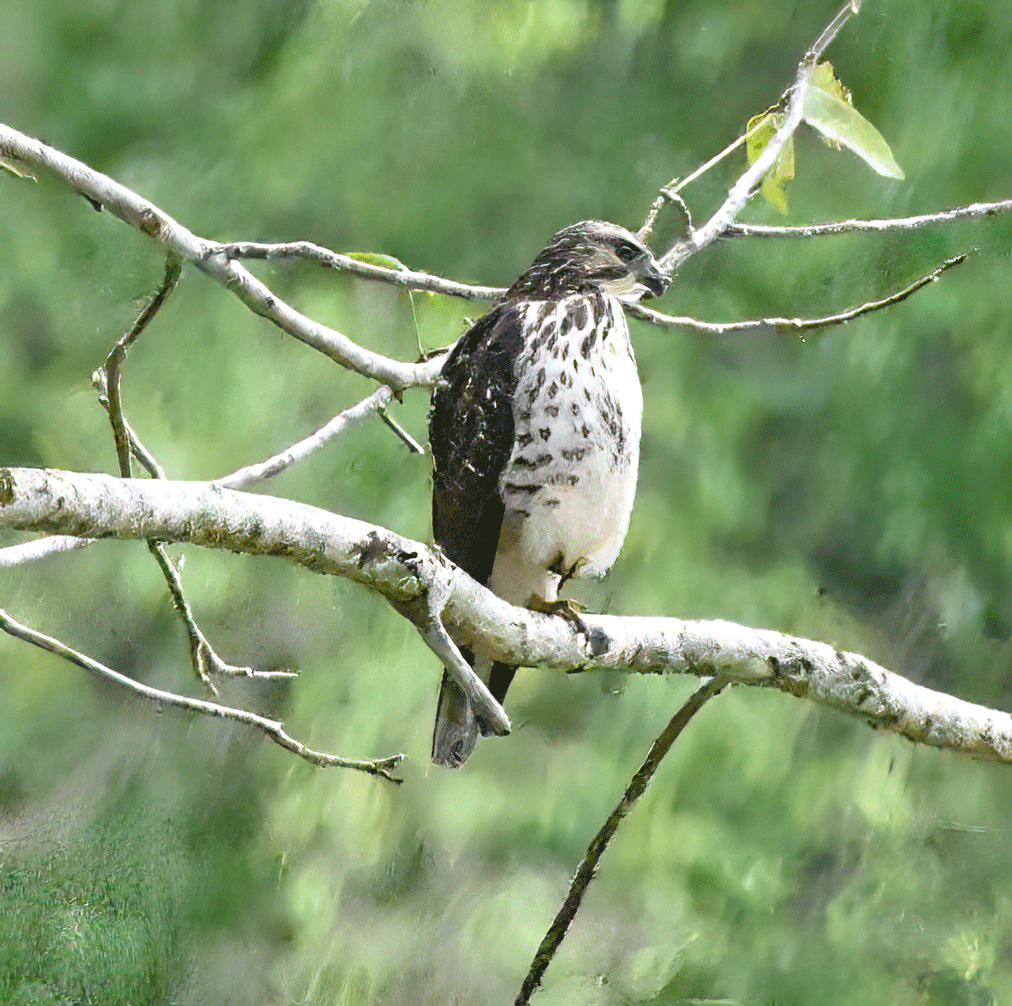
We continued our tour through the trails to other sections of the site. Here’s a juvenile Broad-winged Hawk that was perched on the edge of the forest. Broad-winged Hawks winter in Central America and spend their summers in the eastern part of the US and Canada. They are a bit smaller than a Red-tailed Hawk.

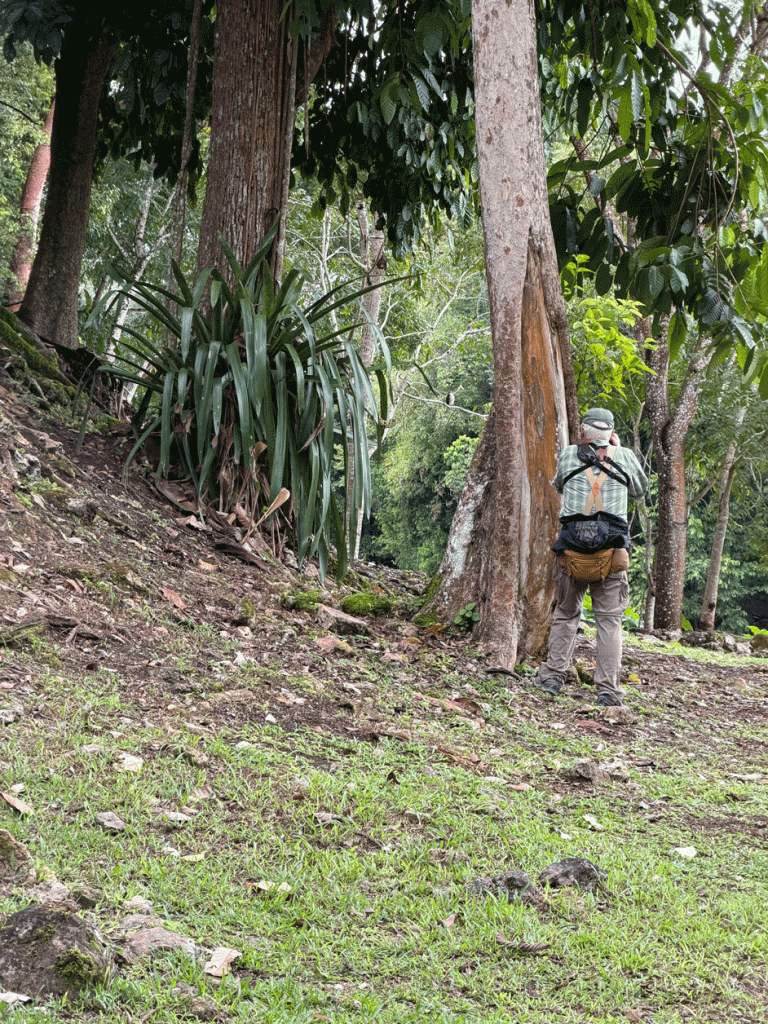
If you look closely to the left of the tree that Doug is standing beside, you might be able to see the hawk perched on a horizontal branch. Doug walked up to the tree, blocking the hawk’s view of him, so he could get closer for a photo.

Here are some other birds that we saw at Caracol. This is a Black-cheeked Woodpecker. Its big black mask, and white patch behind its eye are distinctive. This was the only one that we saw on the whole trip.

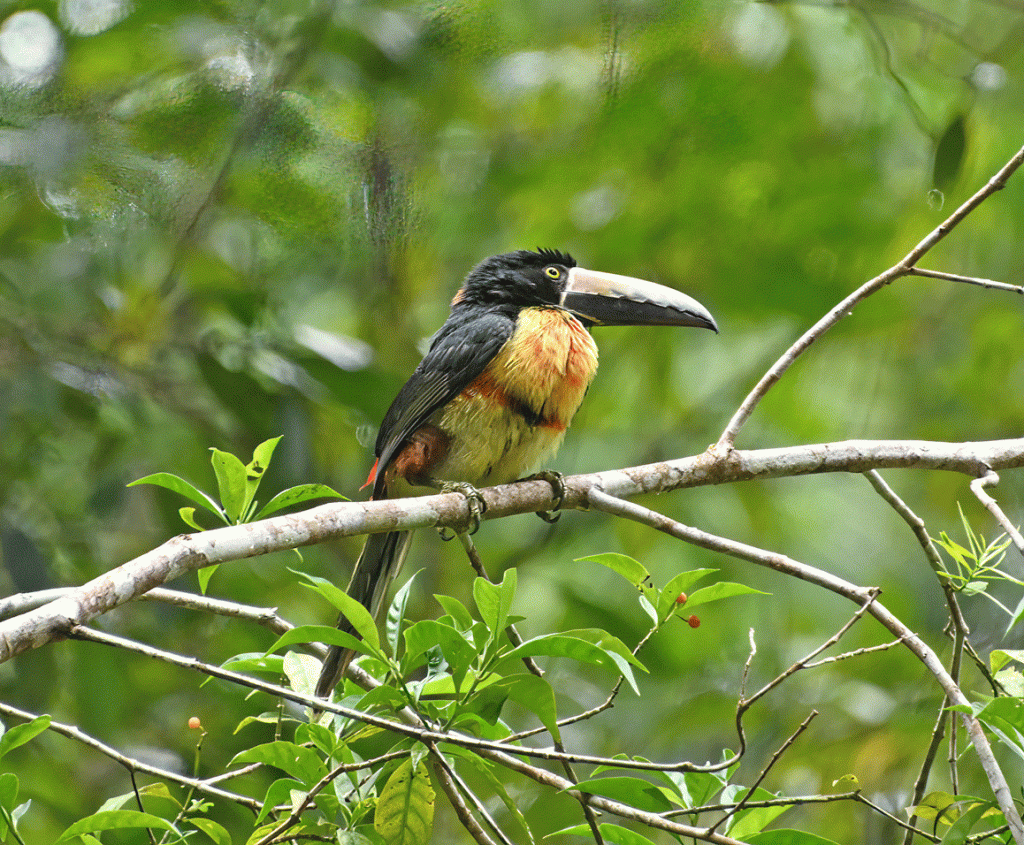
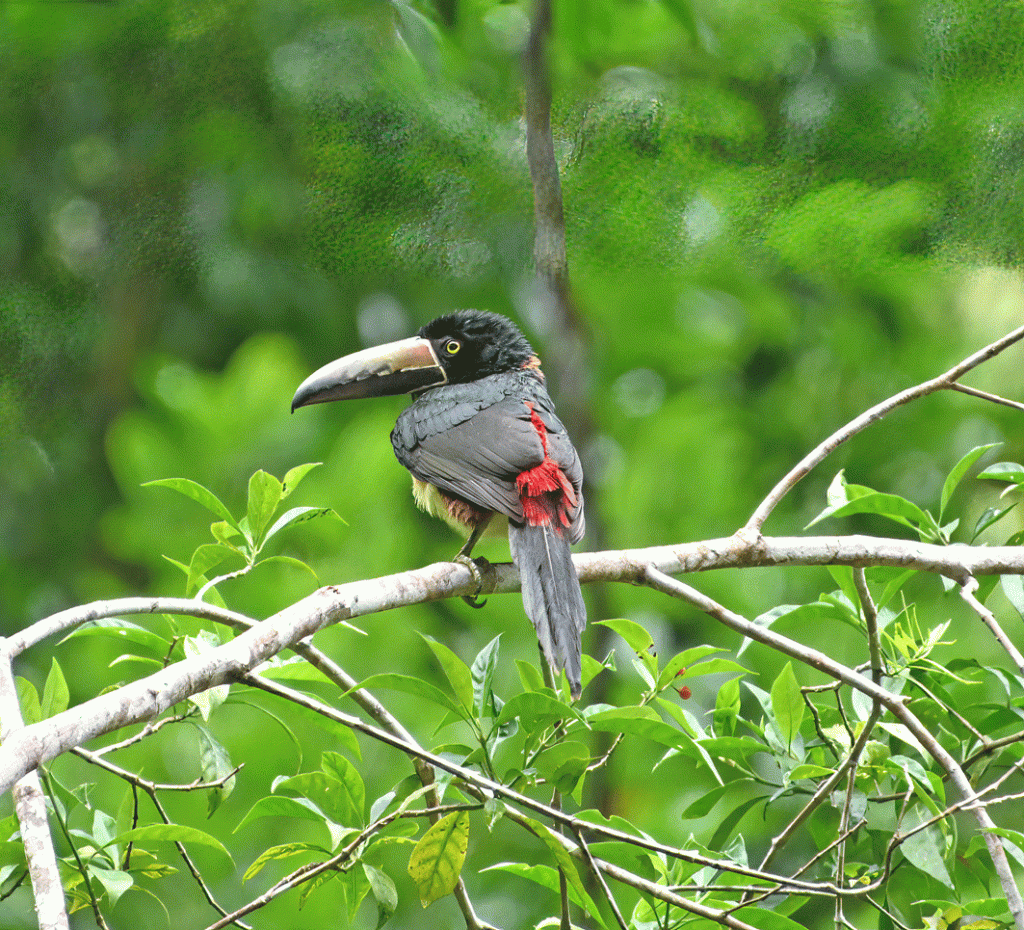
This is a Collared Aracari, a kind of toucan; front view and back view. Notice the serrated pattern on its big bill. They mostly eat fruit, but also consume insects, eggs and small animals.

These are two views of the Central Acropolis. Excavations are still continuing at Caracol and once it has been fully excavated it may be larger than nearby Tikal in Guatemala.

We finished our day in Caracol with a picnic lunch near the visitor centre. It took us about two hours to get back to Black Rock Lodge. We said good-bye to Hugo, because the rest of our trip would be in Guatemala where we would meet our new guide.

We saw 197 species of birds in Belize, including several life birds. We visited three districts in Belize: Belize, Orange Walk and Cayo. We also visited three Maya sites: La Milpa, Lamanai and Caracol.

Part 4 and 5 of the trip will be posted soon.

January in Belize – Part 3

January in Belize – Part 3

This post will be about the Lamanai Maya Site, and our visit to Crooked Tree, including a birding expedition by boat.

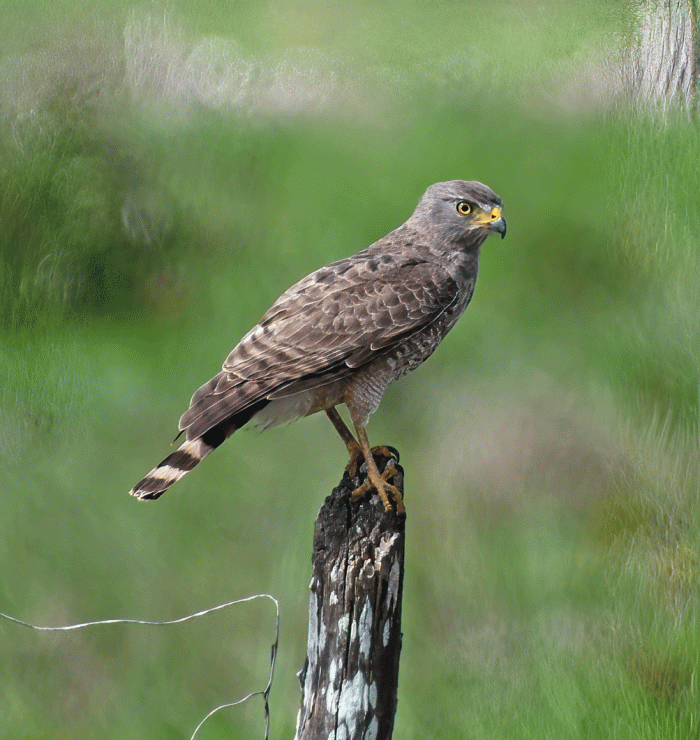
We left La Milpa Field Station and back-tracked to the town of San Felipe, and turned right to head southeast towards the Lamanai Archaeological Reserve. Along the way, we stopped when we saw interesting birds. Here is the well-named Roadside Hawk. This hawk was quite common along the roadsides, on power poles, wires and posts out in fields. This streaky individual is a juvenile. Its broad banded tail distinguishes it from other juvenile hawk species.

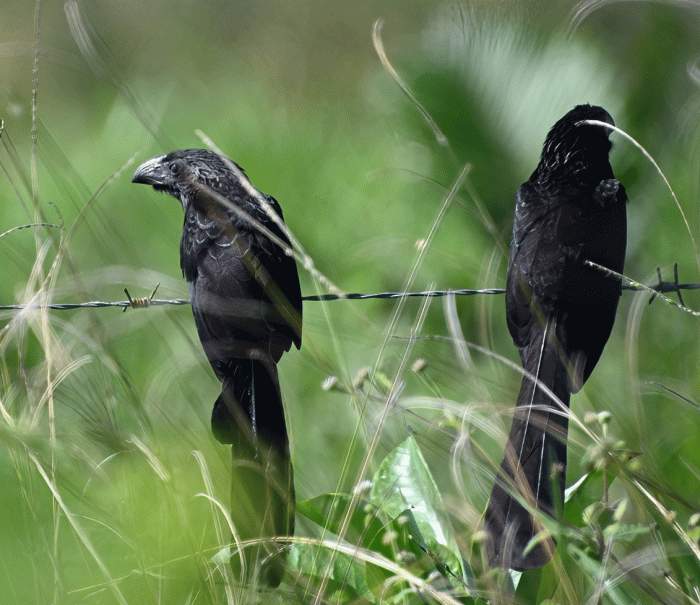
We also saw several Groove-billed Anis on this day and over sixty throughout the trip. At first glance, they reminded us of Great-tailed Grackles with their long floppy tails, but their strange-looking heads make them very unique. This species of cuckoo is often found in groups, awkwardly crashing around.

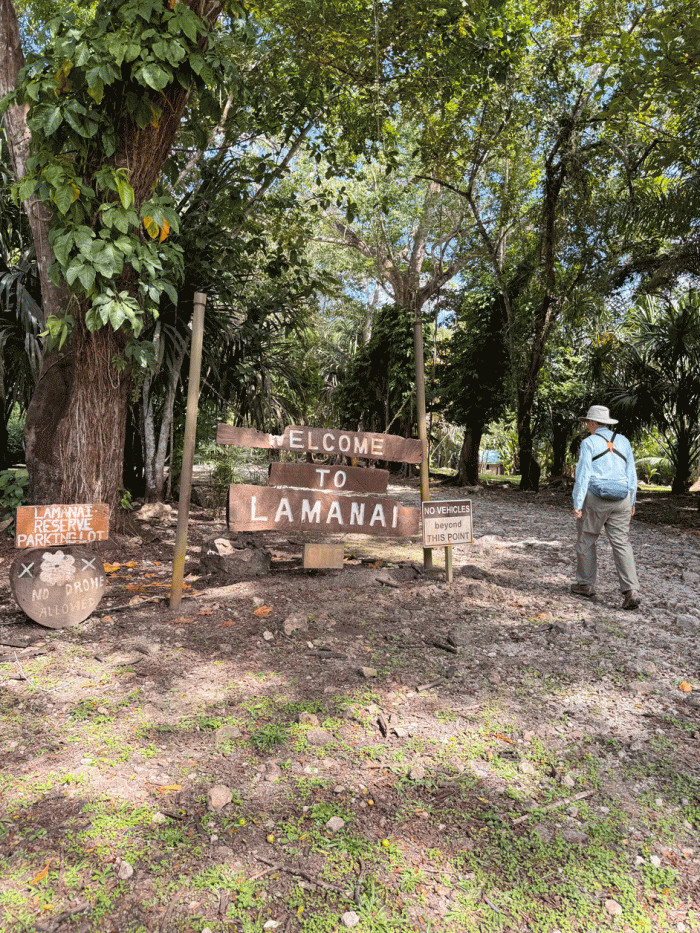
Here is the entrance to the Lamanai Maya site if you arrive by car. Most visitors arrive by boat, since the site is along the New River Lagoon. It is a popular tour for cruise ships, so we were happy that there wasn’t a ship in port the day we visited.

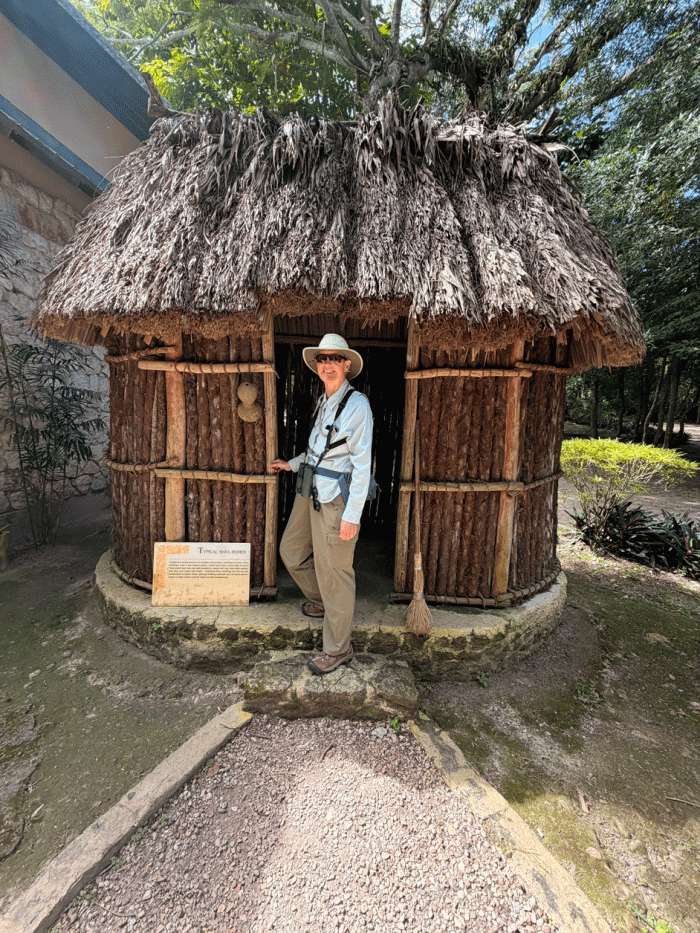
This is a small version of a typical Maya home that would have been constructed outside the central section. The pole walls would have been daubed or coated with clay, then whitewashed with lime.

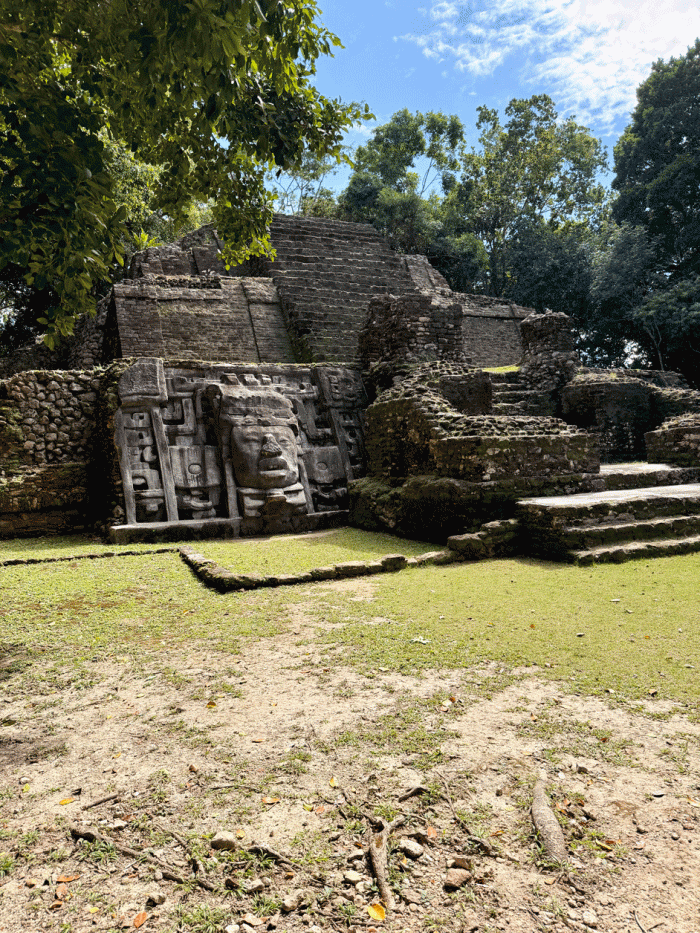
Lamanai is Belize’s longest-occupied Maya site. Archeologists have found signs of continuous occupation from 1500 BC until AD 1700. This one is known as the Mask Temple. It is the smallest of the three excavated pre-Columbian temples.

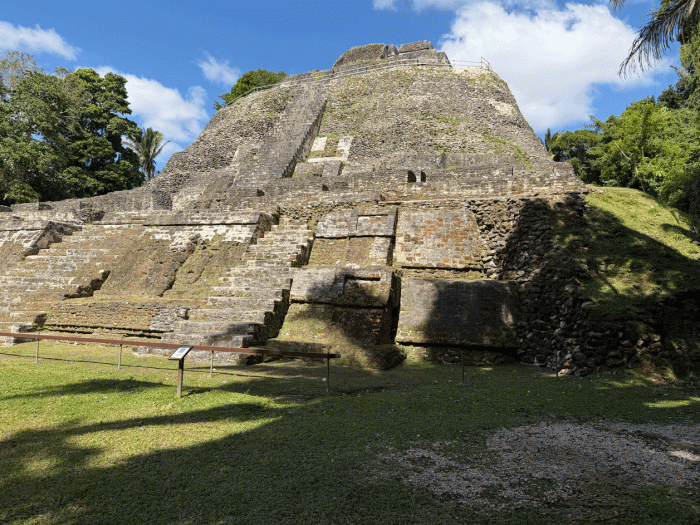
This massive structure is known as the High Temple. Its 33 metres (108 feet) high overlooks the canopy and could have been used as a lookout and a celestial observatory. If you look closely you can see the railing near the top. There is a staircase around the back that visitors can climb if they choose. We stayed on the ground and continued our search for birds in the mid-day heat.

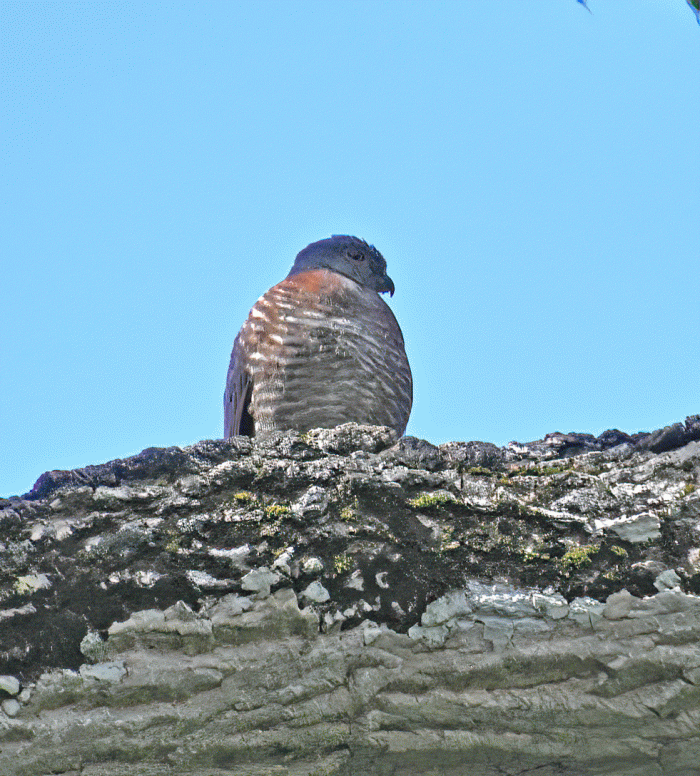
Beside one of the temples, perched high in a tree was a Double-toothed Kite. The two tooth-like notches on its upper beak (double tooth) can still be seen in this “zoomed in” photo. It uses its teeth for dismembering its insect or lizard prey.

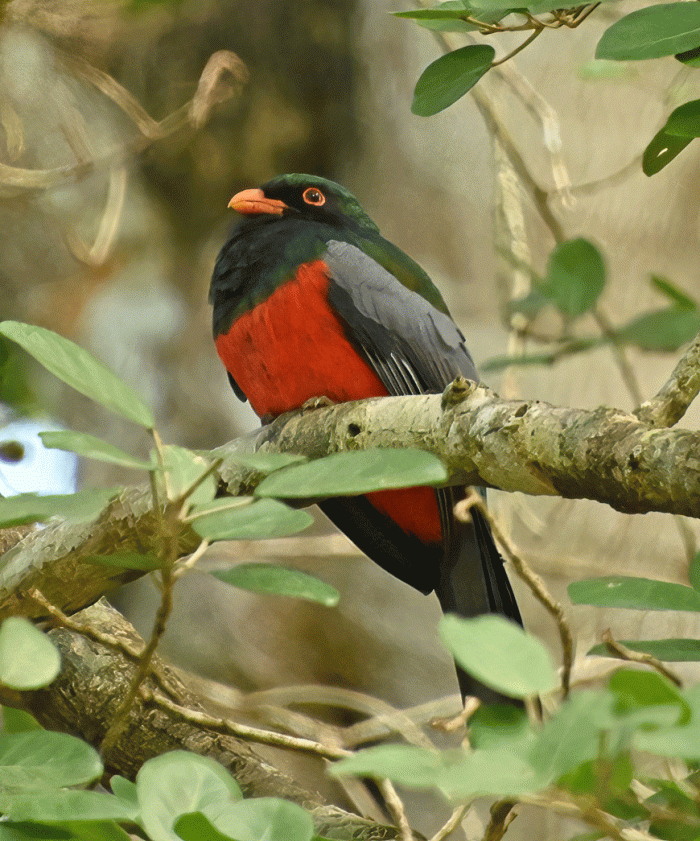
Nearby to the kite was a Slaty-tailed Trogon. Several species of trogons have red bellies, but the Slaty-tailed doesn’t have a white strip on its belly and has an entirely dark gray undertail. This one is a male because he has an orange eye-ring and orange bill.

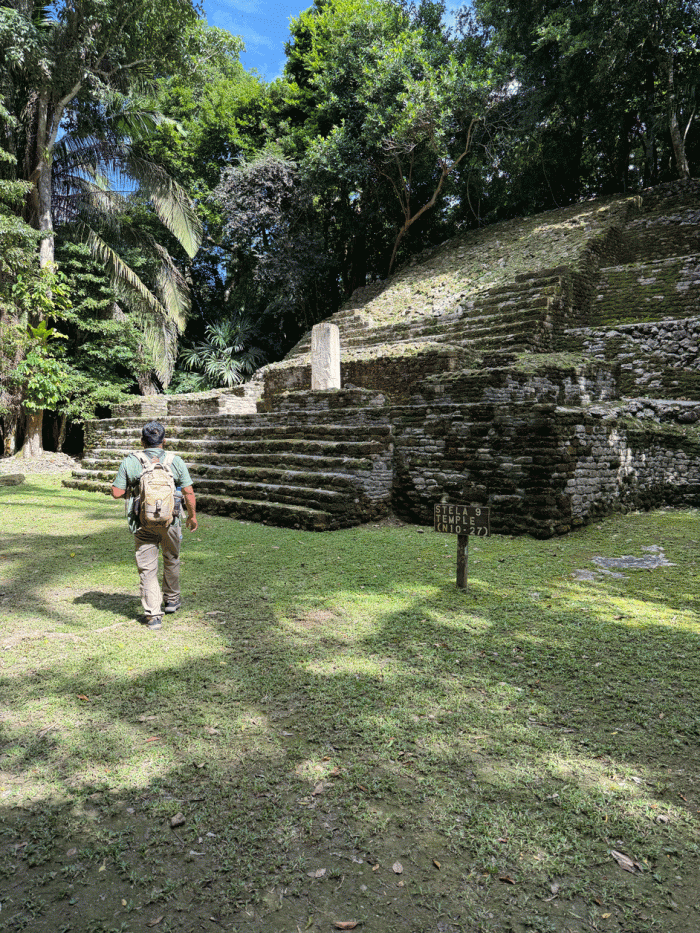
After the bird excitement, we climbed to a higher level of the Stela 8 Temple.

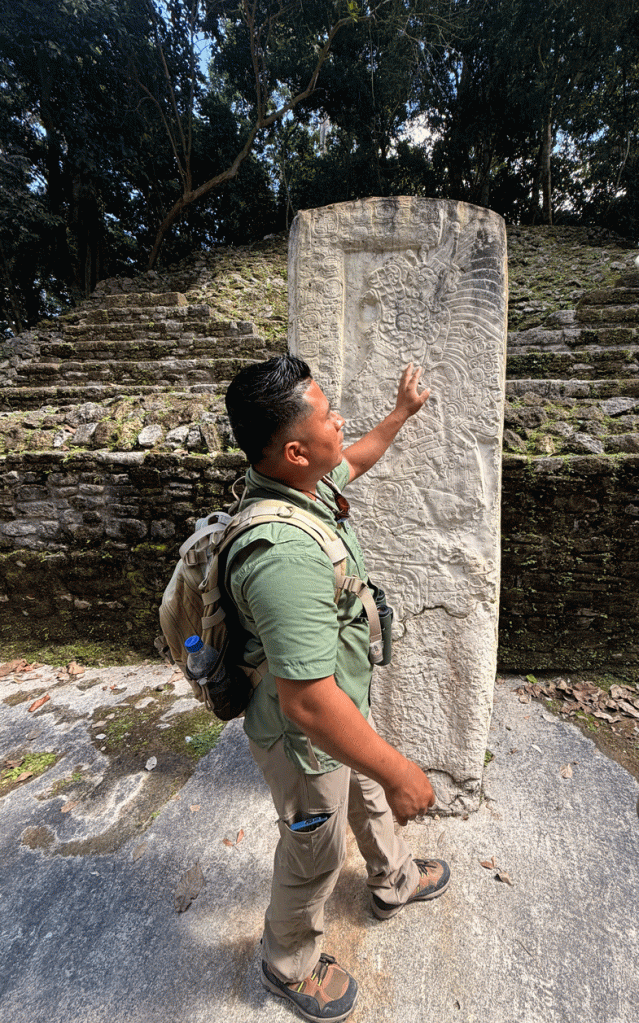
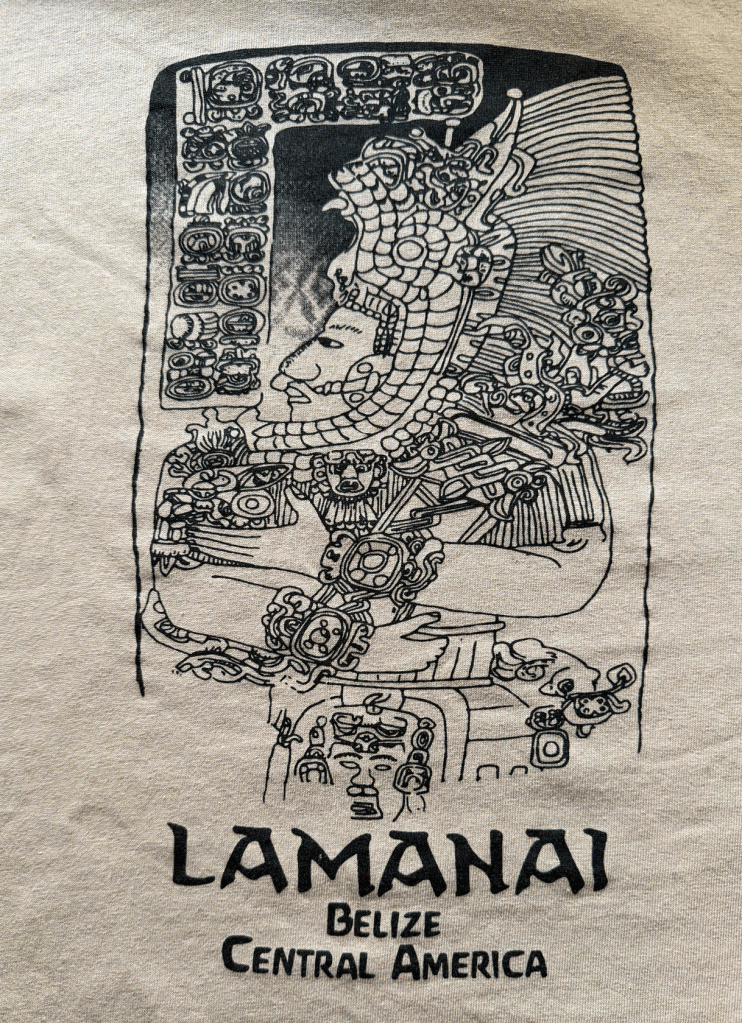
Our local guide, who was an expert on the archeology as well as being a bird guide, explained the Stela to us, on a replica stela. Wendy bought a t-shirt with the stela design, which is easier to see the details. Many stelae that we saw had an image of a king with a headdress, facing left and holding a decorated staff. The image is surrounded by hieroglyphic text.

Our first view of the Jaguar Temple was awe-inspiring.

The Jaguar Temple is a stepped pyramid and while the exposed structure is shorter than the High Temple, a significant amount of the temple is still underground. The back has been overtaken by the jungle.

This is one of the jaguar masks made of carved stone that are on each side of the structure. The spaces then made niches to leave offerings to the Jaguar God.

On our way back to the entrance on trails through the jungle, Wendy was looking more closely at a mahogany tree and noticed a a bird climbing the trunk. She alerted the guides and we all had good looks at a Ruddy Woodcreeper, a new bird for us.

A few minutes later, we came across a “mixed flock.” There were so many birds, is was hard to know which one to focus on. The “sentinel” of the flock was a Black-throated Shrike-Tanager, a bird we had never seen before. A Shrike-Tanager will give alarm calls when a hawk or other predator is around. When our guides heard its call, they knew the flock would be near. The “life-birds” that were part of that flock were: Worm-eating Warbler, Green-backed Sparrow and Blue Bunting. Having two birding guides was really helpful!

Close to the exit, we had a good view of a Black-headed Trogon. (Another life bird) This medium-sized trogon has a complete blue-gray eye-ring; with females having a yellow belly and males an orange one. Like the Slaty-tailed trogon that we saw earlier in the day, these trogons dig their nests in arboreal termite nests.

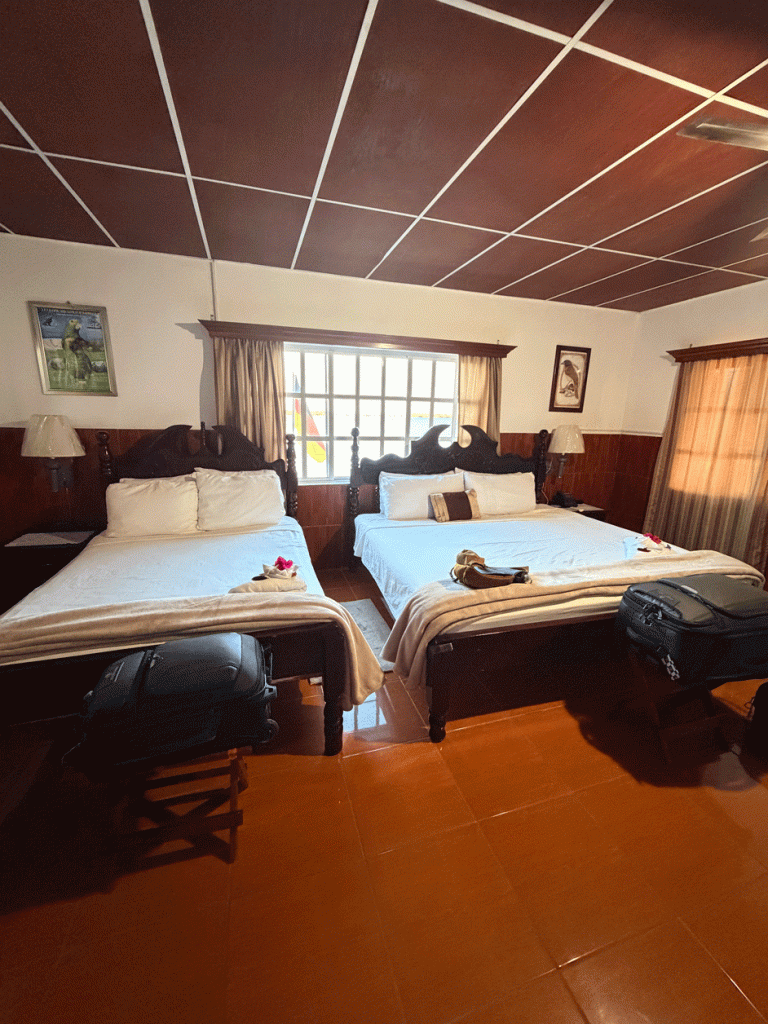
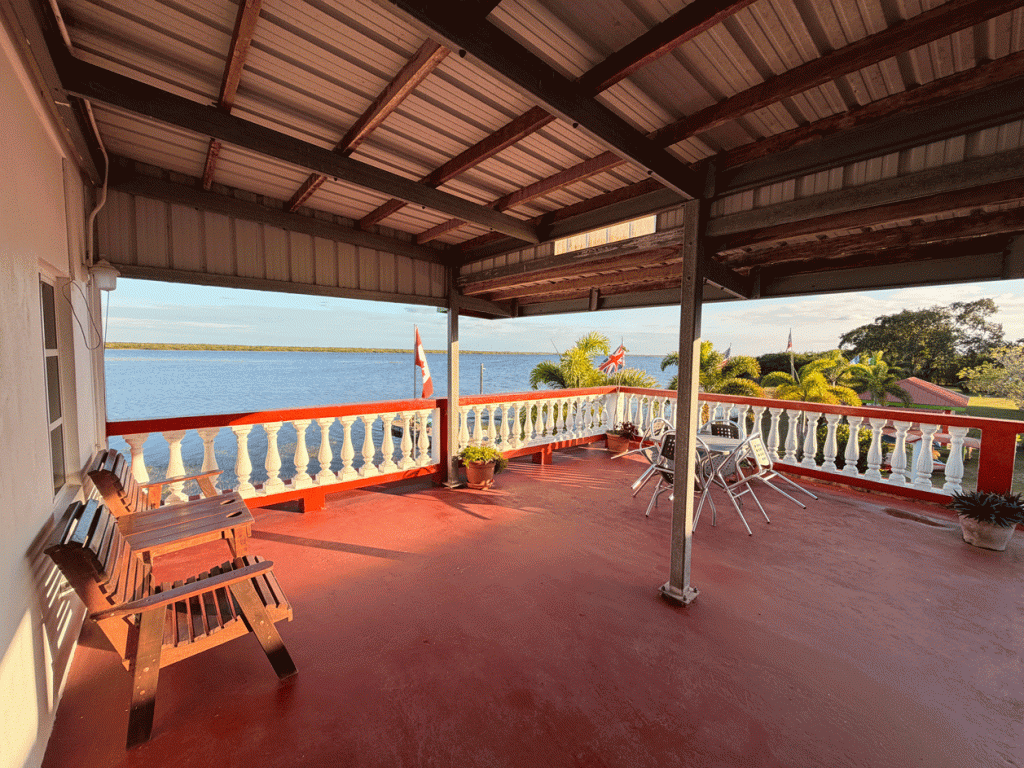
We had a few hours of driving to get to our next hotel. The Birds Eye View Lodge was on the shores of the Western Lagoon in the Crooked Tree Wildlife Sanctuary. Here’s a view of our air-conditioned room and the deck immediately outside our door.

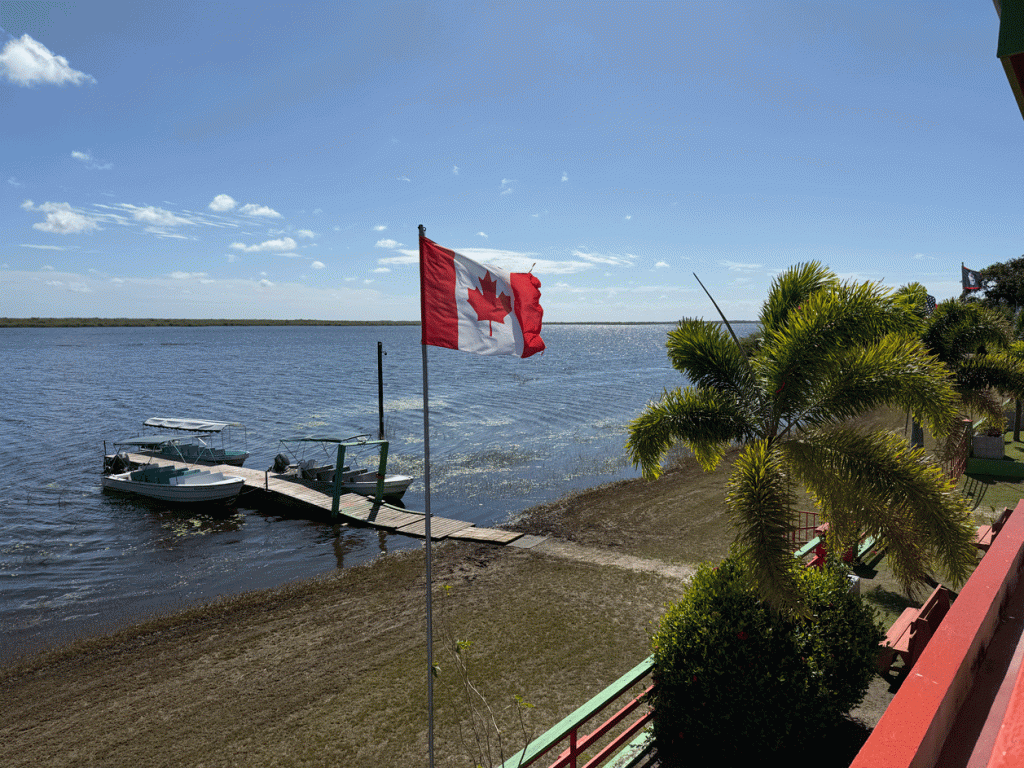
This is a view down to the boats from the deck outside our room. It was nice to see a Canadian flag, that was raised for us as well as another couple of Canadians in another group.

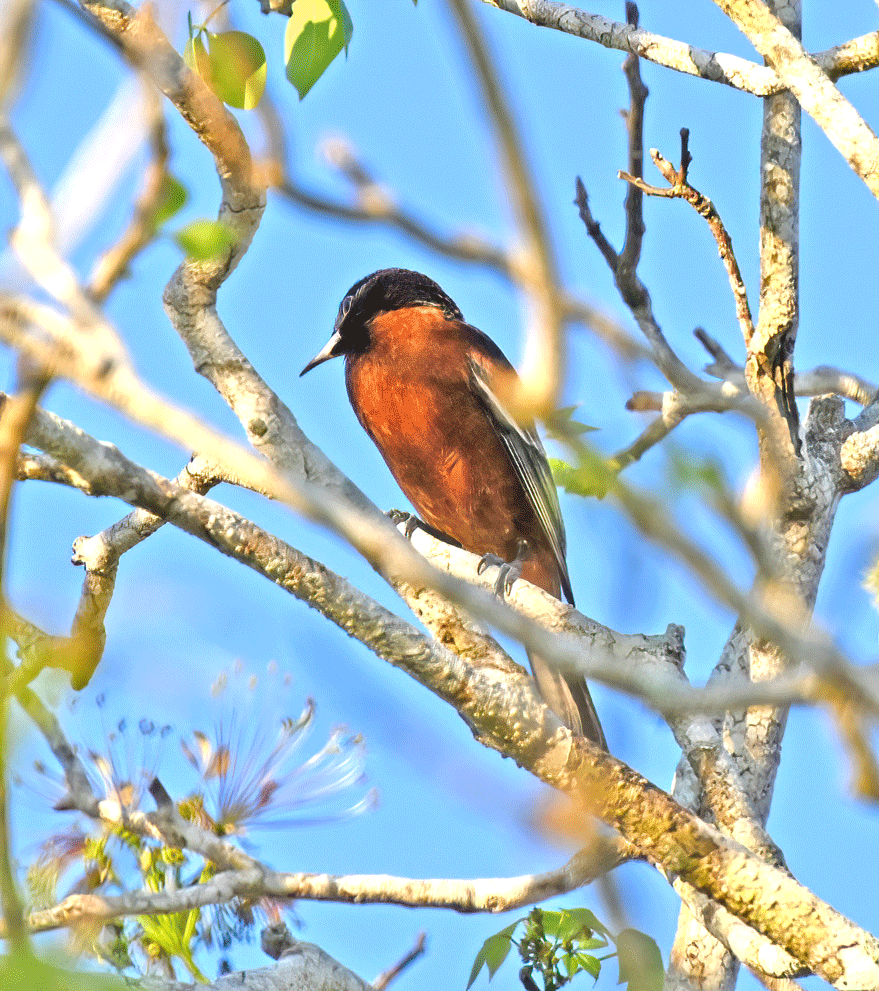
We birded in the grounds of the hotel a number of times. Here’s a male Orchard Oriole.

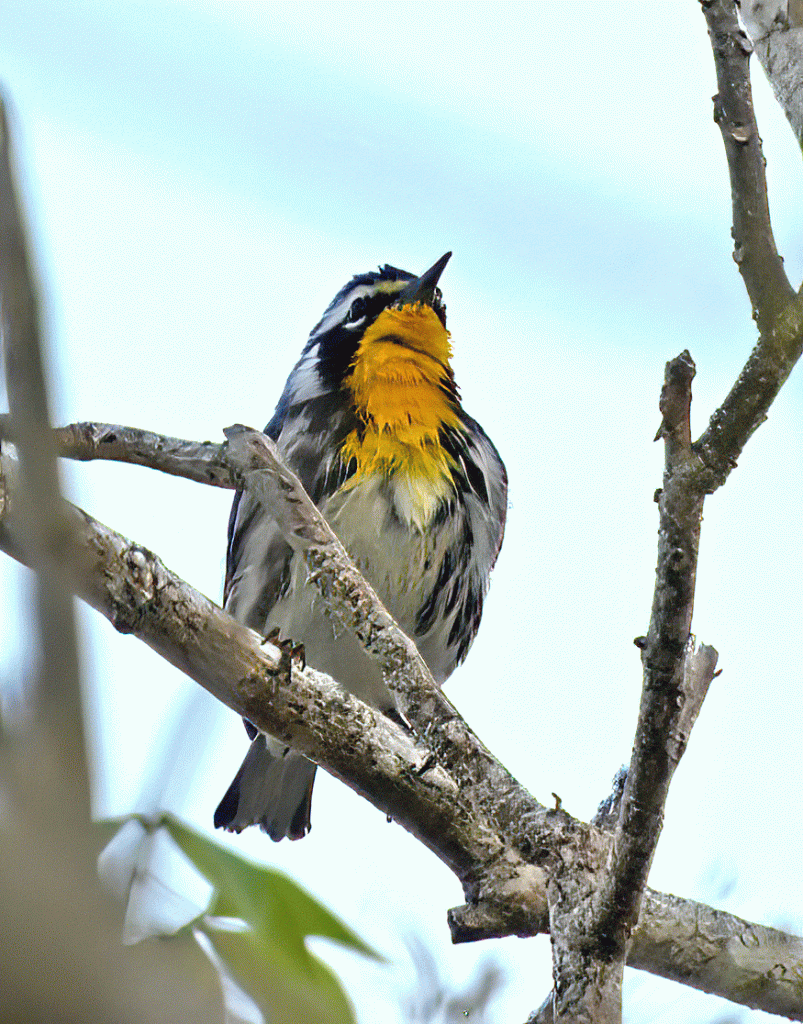
Nearby in the same tree, was this Yellow-throated Warbler. He’s looking a little dishevelled because he has just taken a bath.

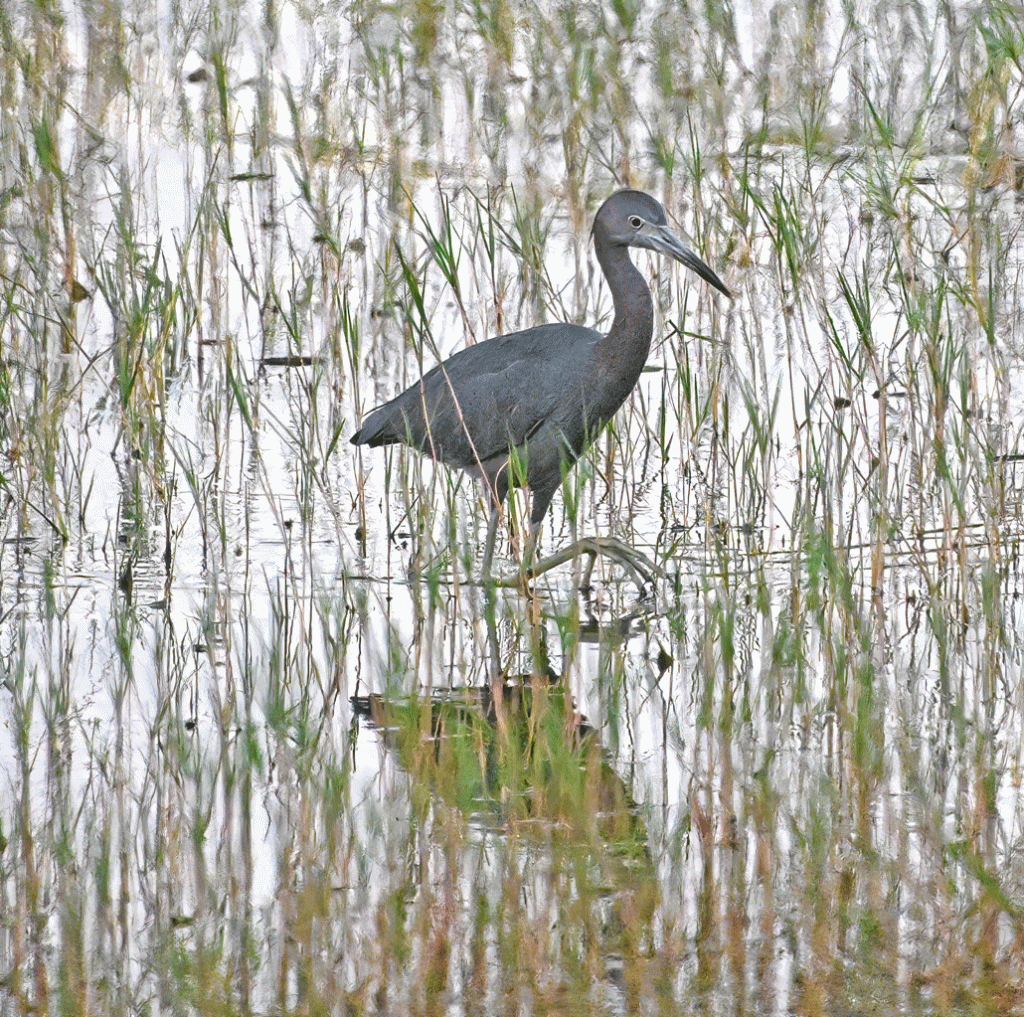
We saw many Little Blue Herons throughout the trip, but this one was probably the closest. It was in the shallow water near the boats. A juvenile Little Blue Heron is all white, which makes us look carefully in order to not confuse it with a Snowy Egret. A Little Blue Heron would never be confused with a Great Blue Heron, but now you know why the Great Blue can’t just be called a Blue Heron.

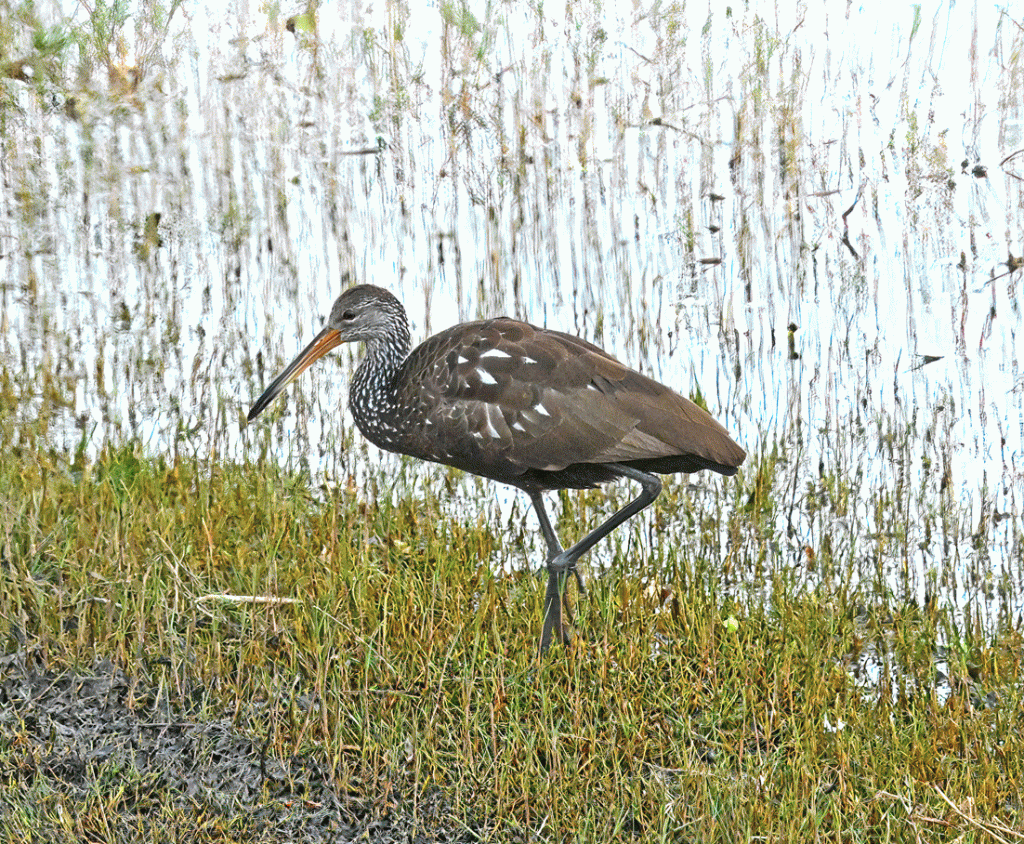
There were several Limpkins along the shore of the lagoon. They loved feeding on snails, which is almost all they eat.

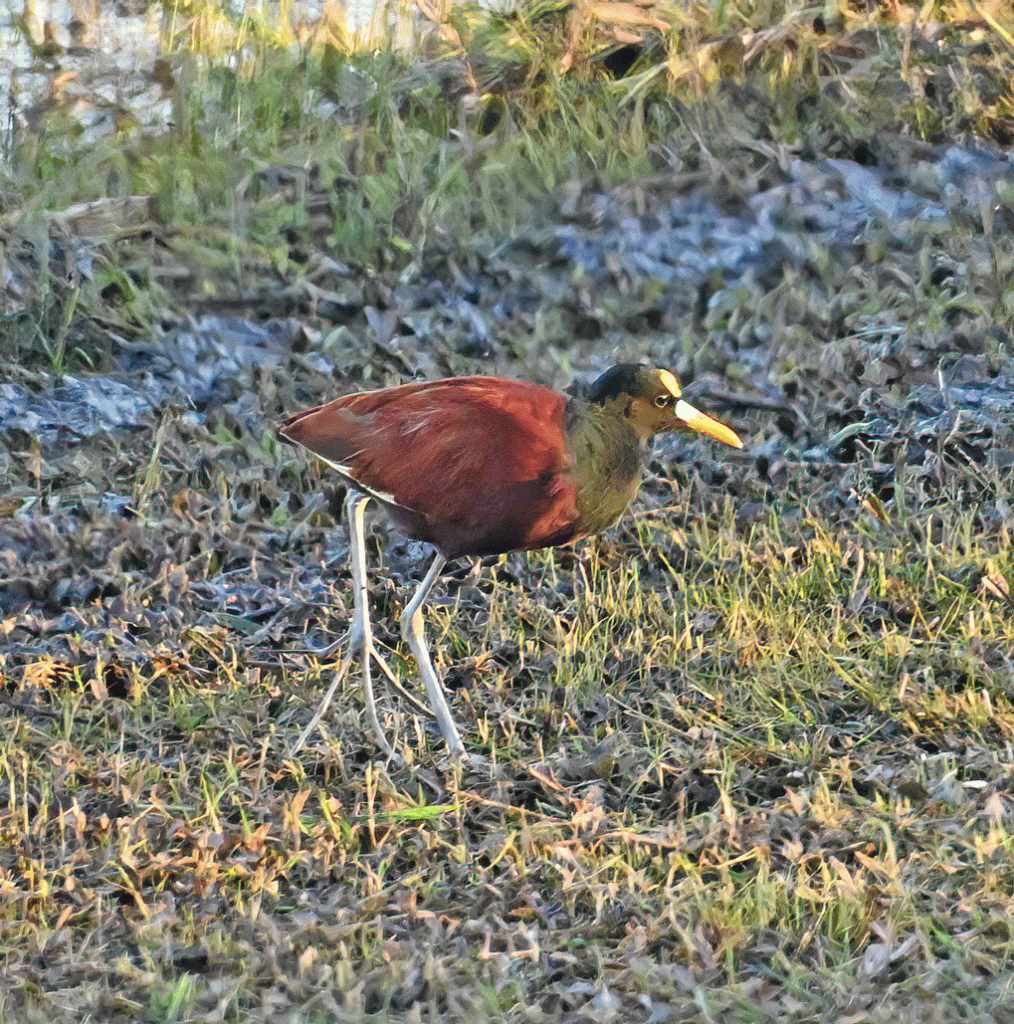
This is a Northern Jacana which was walking along the bank of the lagoon, which allows a view of its huge feet. Their feet displace their weight so they can walk along lily pads and other floating vegetation. On our boat trip the next day, we saw over 120 of them.

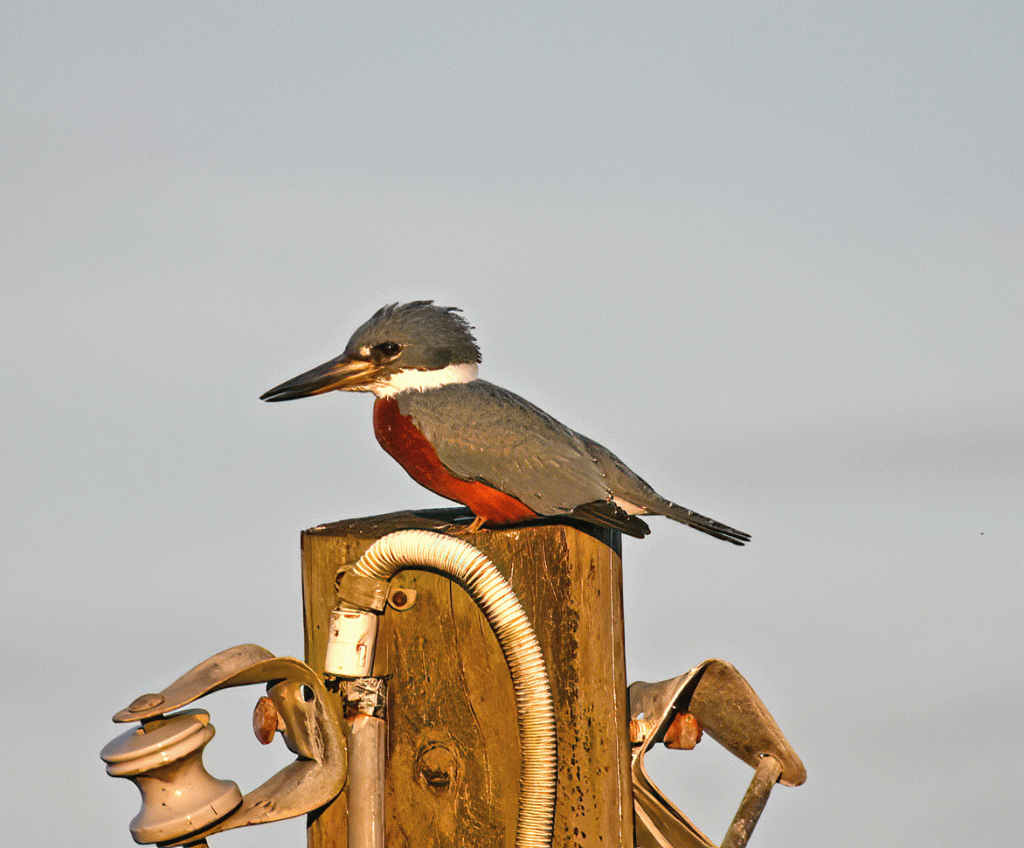
This Ringed Kingfisher perched close to shore. It’s the largest kingfisher in the Americas. This one is a male because his breast is entirely red, while the female has a blue-gray band bordered in white.

The next morning before breakfast, we took a boat tour. Here’s Doug as we wait in the early morning light. Some other groups piled twelve people into their boat, while we had a boat for ourselves, and our guide. The captain was also a birding guide, so it made for a very successful trip.

Here are a couple of Snail Kites, an adult male on the left and a juvenile on the right. Their bill is adapted for opening snails, which they feed on exclusively.

This is a Black-collared Hawk. Its black collar is tucked under his chin. It perches near water and swoops down to snatch fish or frogs. It was a new bird for us.

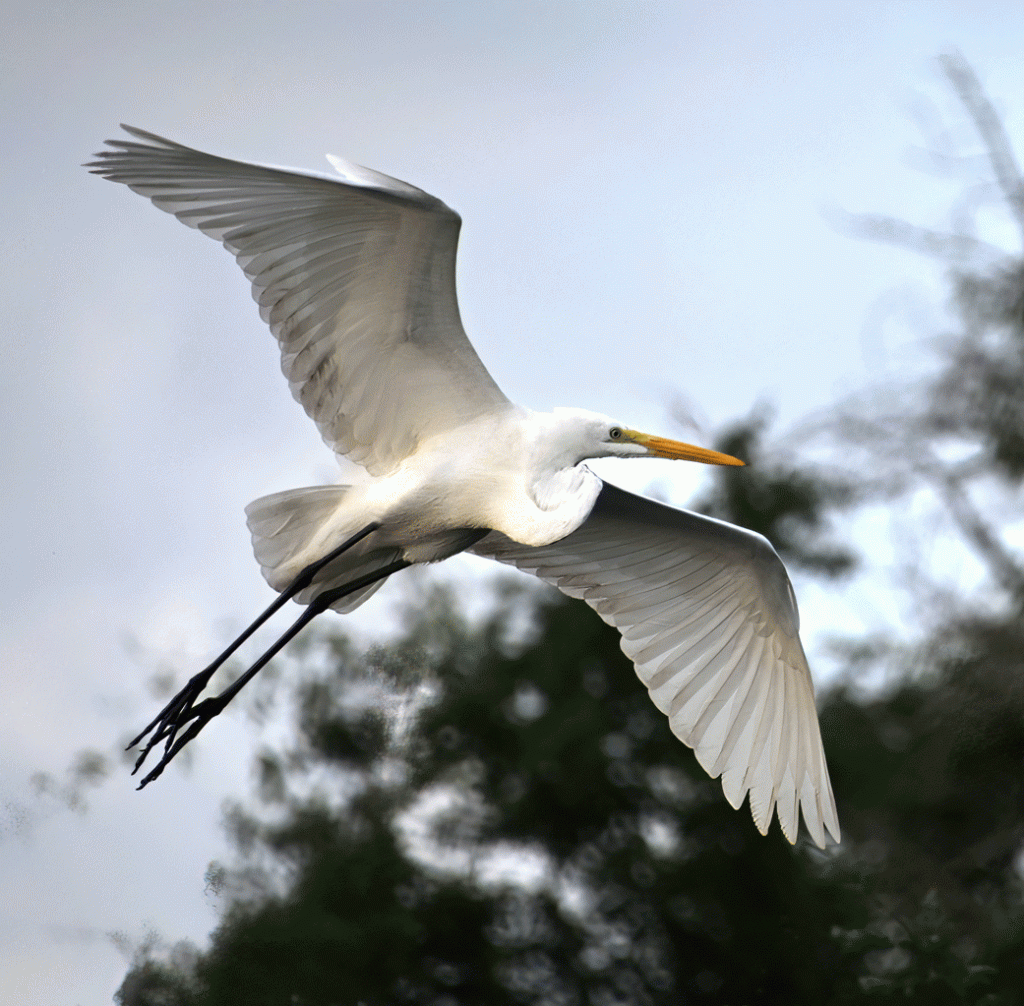
This is a Great Egret which we see often in SW Arizona. They were also very plentiful on this trip, and we recorded over 20 of them on eleven checklists.

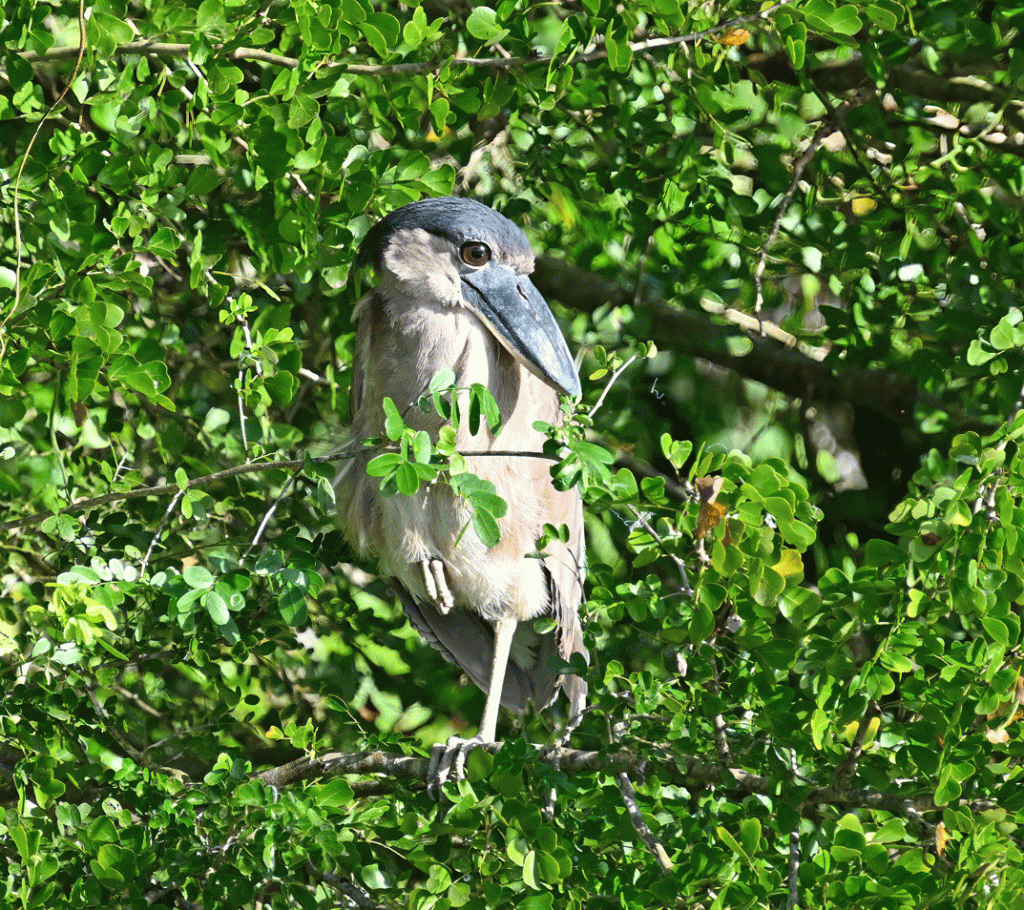
This awkwardly cute bird is a Boat-billed Heron. This species spends the daytime roosting in trees and comes out at night to feed along the edges of lakes and rivers.

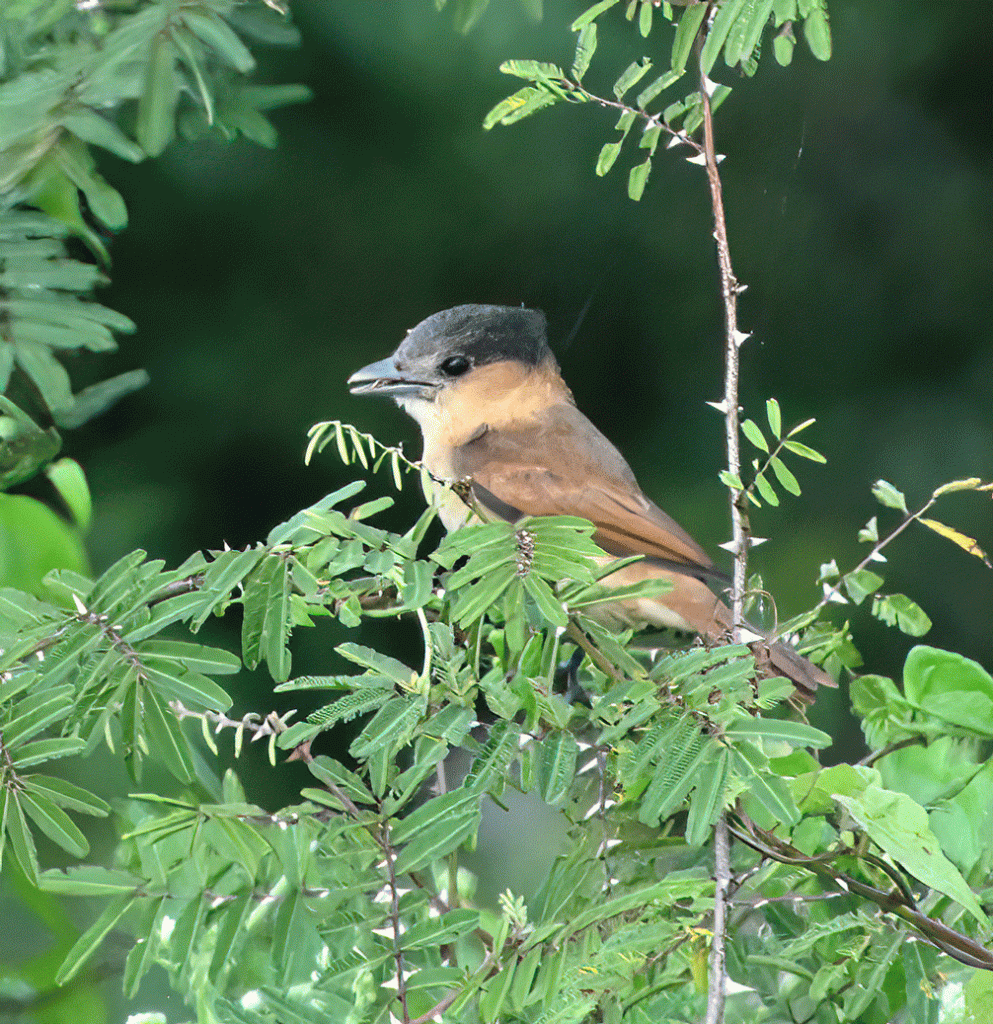
We saw this female Rose-throated Becard along the edge of the lagoon, which was quite wonderful, because we’ve only seen them high in the treetops before. As is common in many birds, it’s the male colouring that gives the species its name.

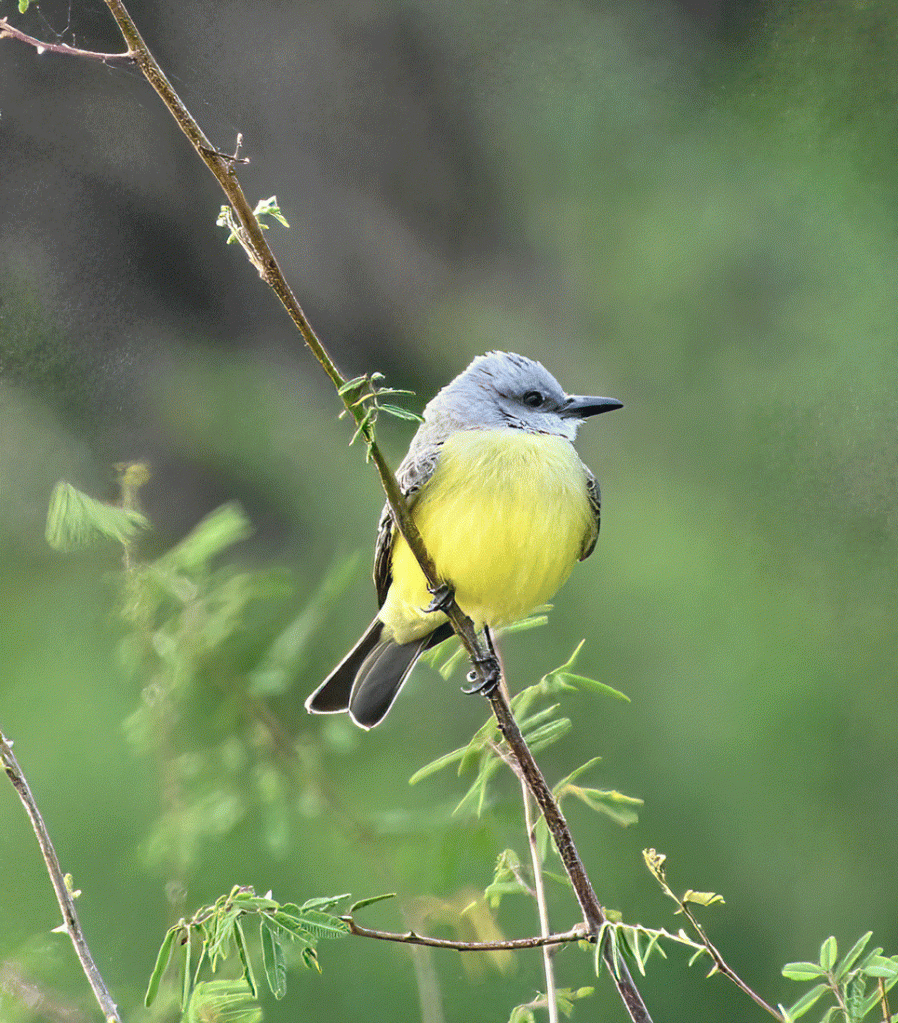
We’re thinking this is a Tropical Kingbird. Our guides wouldn’t say for sure unless they heard the bird vocalizing because there was a chance it could be a Couch’s Kingbird. The two species look almost identical and their ranges overlap from Texas to Belize. However, every bird that vocalized was a Tropical Kingbird, so our probability it quite high.

This is a Yucatan Woodpecker, that was a long way up in a tree. This woodpecker is endemic to the area and looks like a smaller version of a Golden-fronted Woodpecker which we have seen before in Texas. Luckily it has quite a different call. This one was a “life bird” for us. The other “life birds” on the boat trip were Black Catbird, Ruddy Crake and Gray-throated Chat.

Our captain steered the boat out of the lagoon through shallow water, until we reached a slightly deeper slow-moving river. Here is a view that looks like we are heading for land. We were confident that he knew the channel.

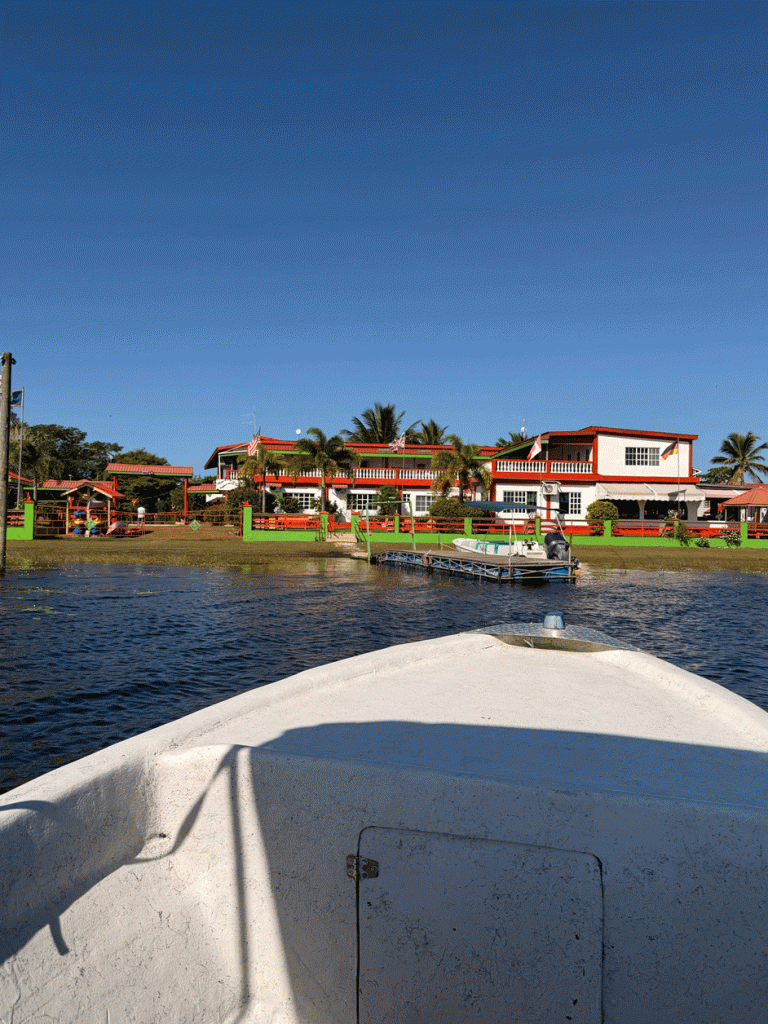
Here’s a view of the main lodge building. There is another building out of view on the left. Our room was above the restaurant on the right.

Later on the same day of the boat trip, we went to the farmland near to the lodge and saw a Yucatan Flycatcher and a flock of Yucatan Jays, both species that only live in this area and were new birds to us.

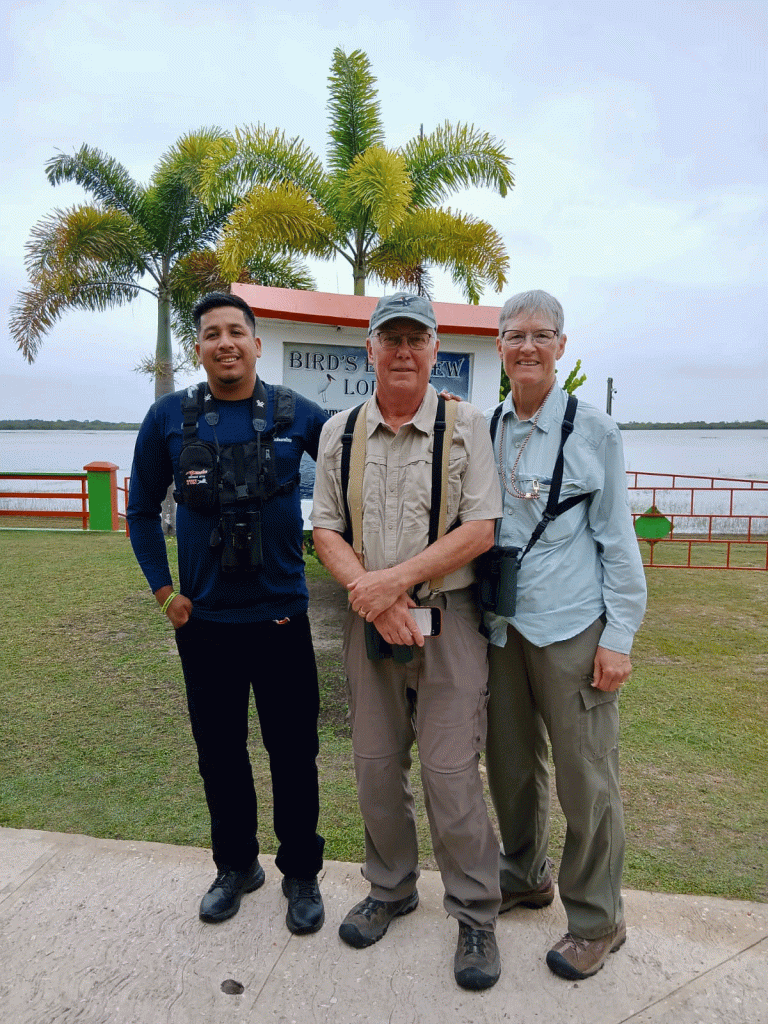
Here we are with our guide, Hugo. He spoke good English and also his native Spanish, but his most admiring quality was his love and knowledge of birds. He made sure we had a good look at every new species. Hugo also drove us, so he had some long days of concentration.

This post (January 2026 in Belize – Part 3) covered two days of our ten day birding tour. We have six more days to record: two more in Belize and then four in Guatemala.

January 2026 in Belize – Part 2

January 2026 in Belize – Part 2

This post will be about the our next few days in Belize and includes photos from the La Milpa Field Station and the La Milpa Maya archeological site, along with some birds we saw.

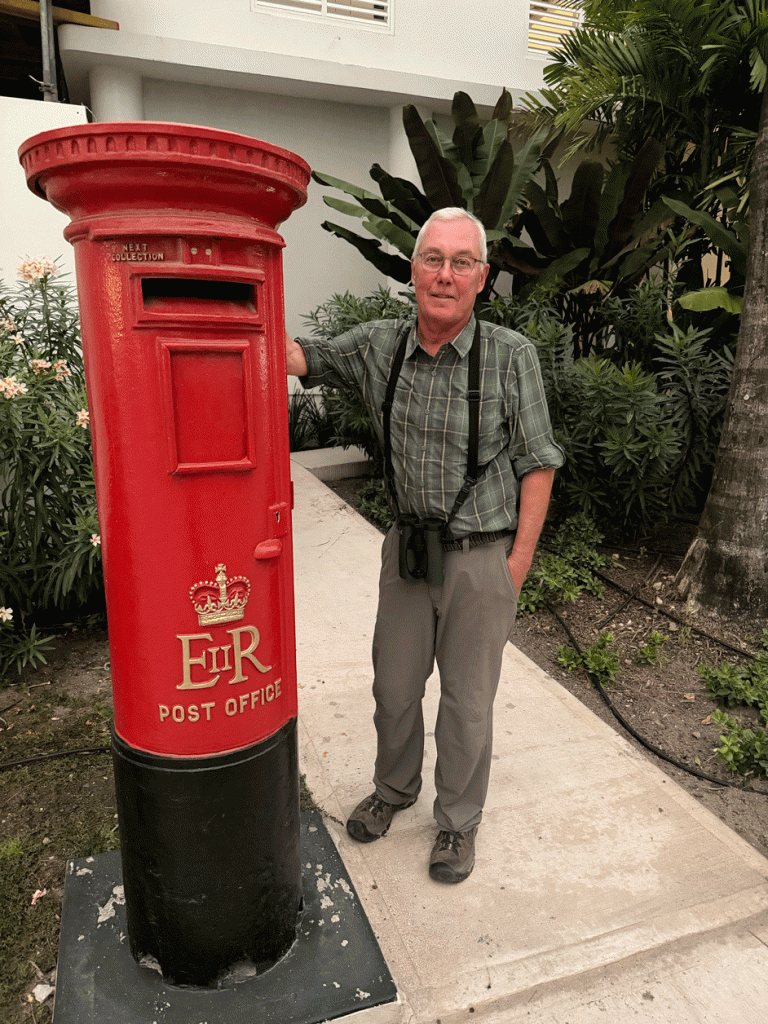
This photo of the English style mailbox in Belize City should have been included in the previous post. One of the reasons we chose to visit Belize is because the official language is English. Belize was formerly a crown colony known as British Honduras. Internal self-government was granted in 1964, with the renaming to Belize in 1973. Belize achieved full independence in 1981. It was pleasant to be able to talk in English with the hotel staff.

It took most of the day to drive from Belize City to La Milpa Field Station in the Rio Bravo Conservation and Management Area. We drove north up the Philip Goldson Highway to Orange Walk Town, then west and southwest to San Filipe where we turned and followed the road that hugged the Mexican border at one point. We birded the rice fields close to the Mennonite Communities near Blue Creek Village. Near the rice fields we had a good view of a Laughing Falcon and a quick view of a Gray-crowned Yellowthroat, both new birds for us.

We arrived at La Milpa Field Station in the mid-afternoon. Here’s a view of our cabana. The cabanas were set up like duplexes, with a wrap around porch. They were modern versions of the traditional hut, and had screen windows, but the roof was made of thatch only.

In the photo below, Wendy is walking towards the restaurant. The open section on the left was for outdoor dining, and it was attached to the main building.

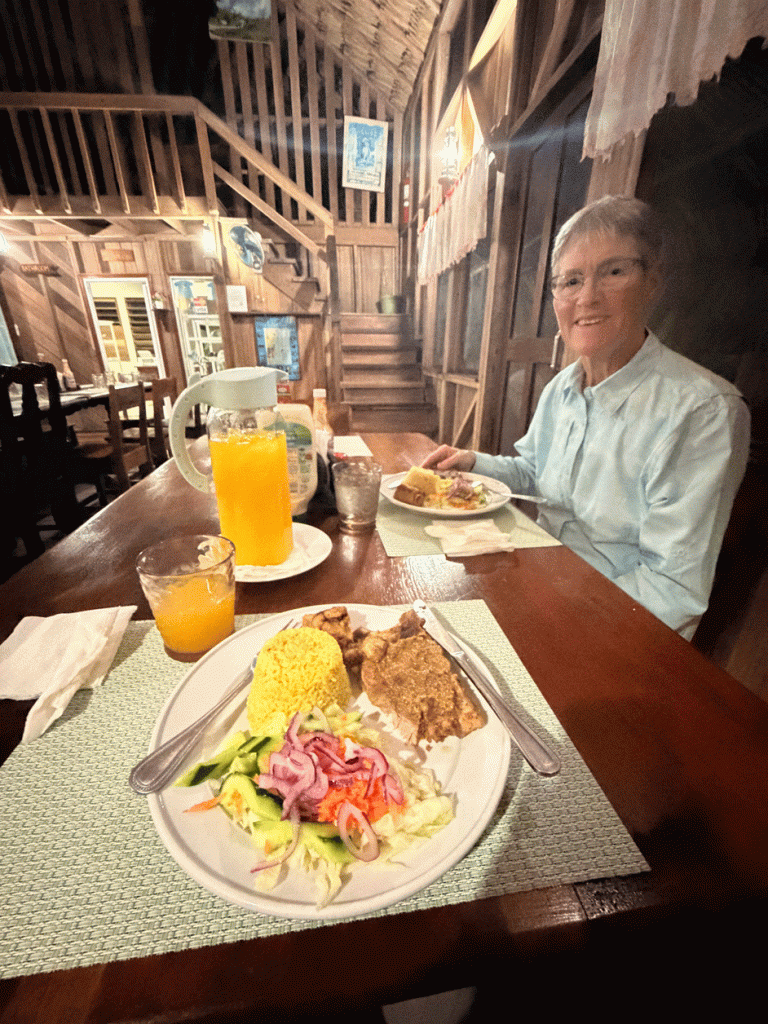
Here’s a photo of the restaurant interior, and a good view of our dinner. Fresh-squeezed juice was served at every meal, and could be orange, watermelon, papaya, or various combinations. Everyone was served the same dinner, and they accommodated my need for no garlic. (A woman in the other group that was there at the same time had a special meal for her diet.)

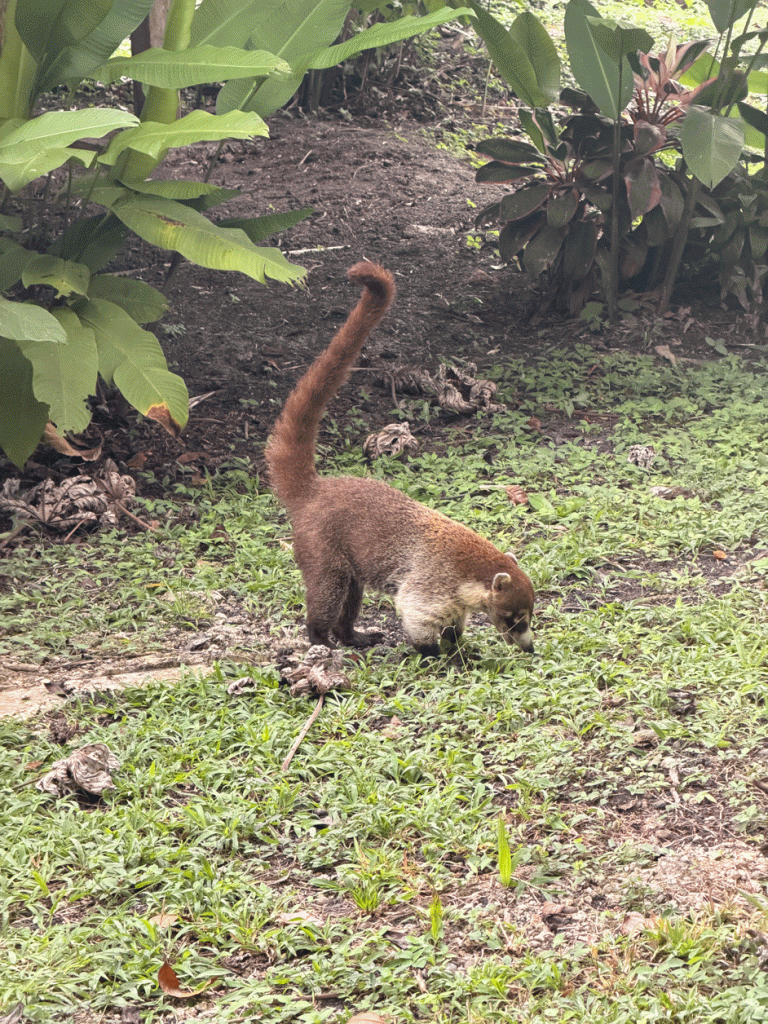
There were coatimundis roaming the grounds. Coatimundis are related to racoons and use their snouts to sniff out food on the forest floor. When they climb trees, their semi-prehensile tail helps keep them balance.

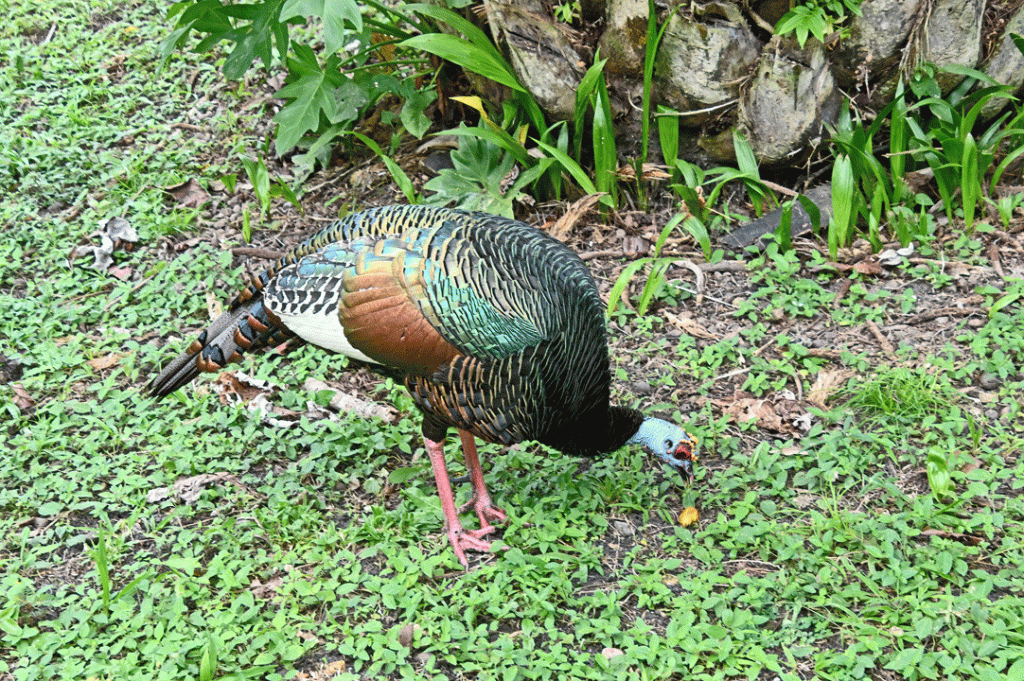
Ocellated Turkeys were also everywhere around the cabins. We had hoped to see this beautiful bird and it turned out it wasn’t hard at all. The species is considered rare, but they were plentiful in this protected area. They are threatened by habitat loss from logging and agriculture and hunting pressure.

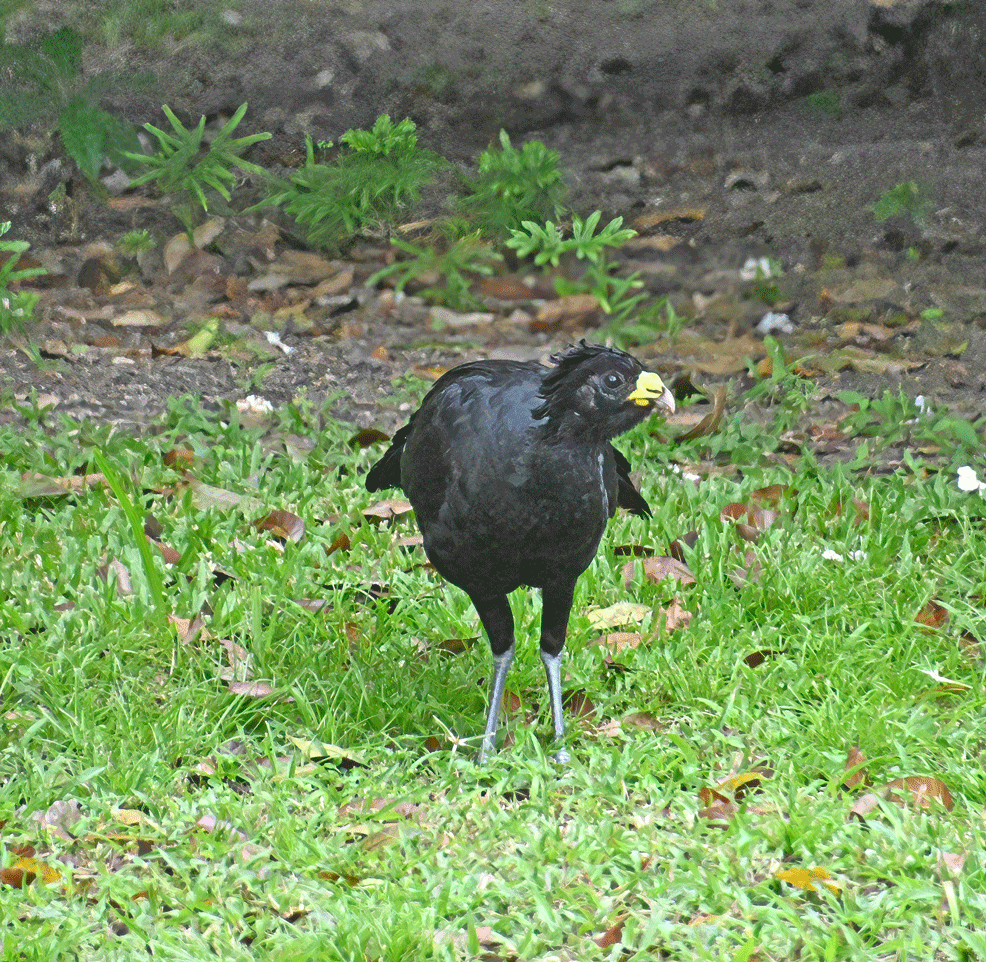
This is male Great Curassow, that roamed the areas of the field station on the edge the forest. This species is also rare and found usually in protected parks or very remote areas.

We birded around the grounds a number of times, and added Olive-throated Parakeet, Yellow-winged Tanager and Northern Schiffornis to our life list of bird species seen.

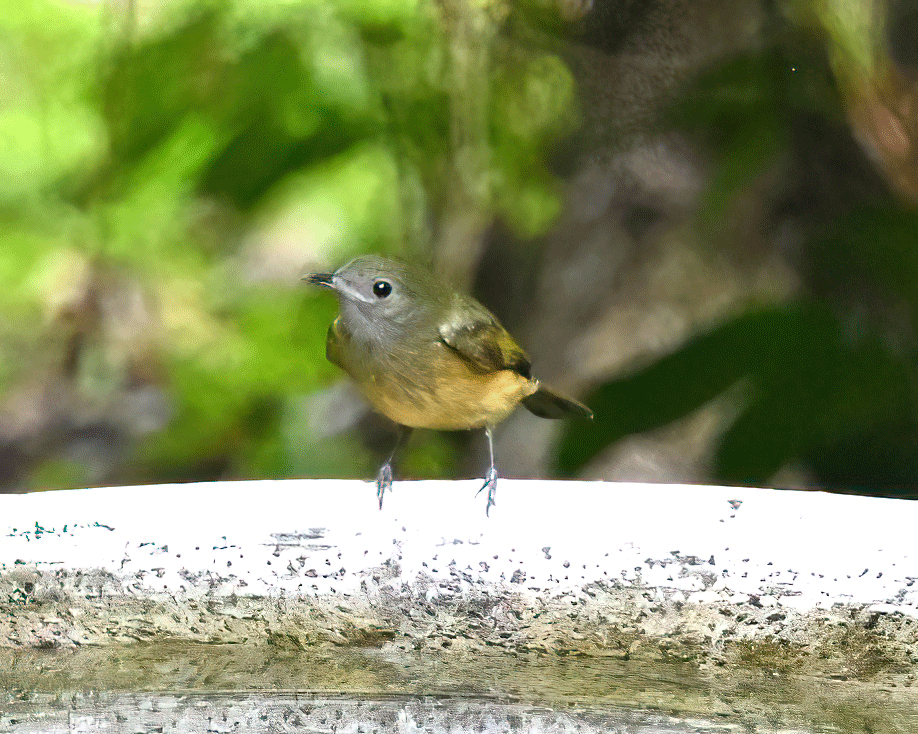
Most of the birds were high up in the canopy or low in the thick underbrush, but this Lesser Greenlet was cooperative at the water dish.

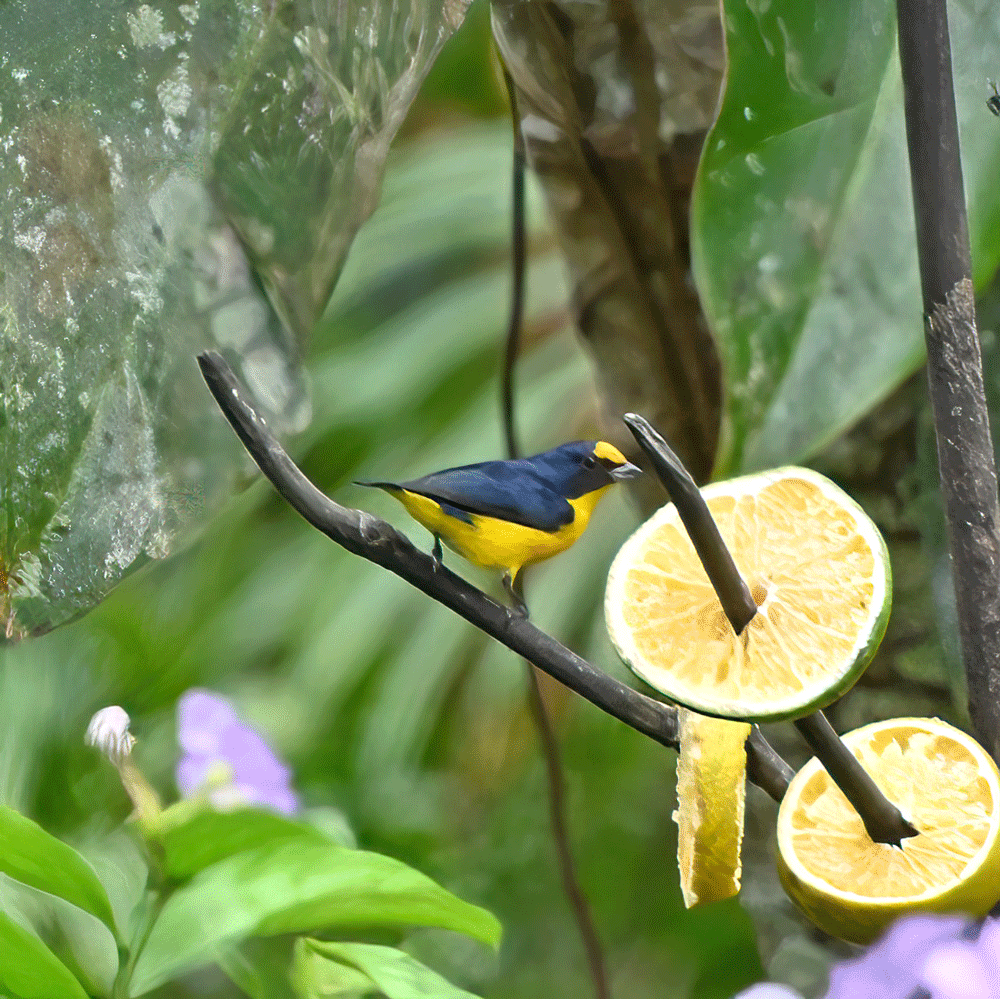
This is a male Yellow-throated Euphonia. (There was a photo of a greenish female in the previous post.) They feed on fruit in forests and also visit feeders. The small species (5 – 11cm / 2 – 4.5″) is common throughout Belize.

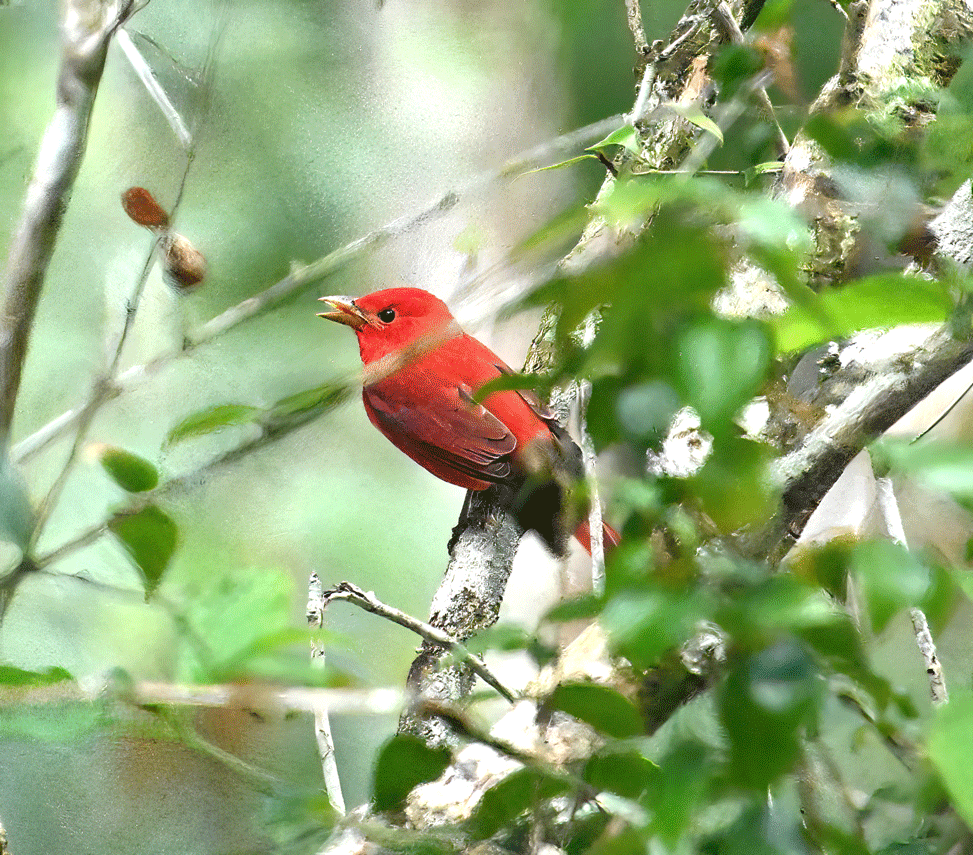
We saw many Summer Tanagers throughout our trip, but this one at La Milpa Field Station was the first. We saw it several times in the few days we were there. Its distinctive “pituk” call drew our attention.

This White-whiskered Puffbird was a bit of a surprise, because they usually stay in the humid forest. Our guide’s cabin was right on the edge of the clearing for the field station and he saw it from his porch as we were getting ready to leave. He came to find us and luckily he was able to relocate it so we got a good view. Puffbirds will perch for a long time and are difficult to see unless they move as they feed.

Just up a rough road from the Field Station, is the trail to the La Milpa Archeological Site. La Milpa was the third largest Maya site and almost 50 000 people lived there at its height between AD 400 and 830. Most of the site is not excavated, and is visited mostly by birders nowadays.

The mounds are man-made structures that are being taken over by the jungle. We saw or heard sixteen species in this area, including an Ivory-billed Woodcreeper, Chestnut-colored Woodpecker, and Black-cowled Oriole (new birds for us). We saw a couple of Slaty-tailed Trogons as well.

There is a fallen stela in front of this temple. Some of the markings were barely visible. Seeing this Maya site was a good way to start are trip since the other four sites had more restoration.

People have climbed up this temple with the aid of a climbing rope, which is just barely visible in the photo below.

In the photo below, our guide, Hugo is explaining the trench that is visible on the left. He told us that looters dug through the centre of this tomb in the 1970s, and he hopes that missed treasures that were buried on a different axis.

We spent two nights at the La Milpa Field Station. The next blog post, January in Belize – Part 3 will be about our trip to Crooked Tree including a stop at the Lamanai Maya Site.

January 2026 in Belize: Part 1

January 2026 in Belize: Part 1

We travelled to Belize and Guatemala on the last two weeks of January as a celebration of our fiftieth wedding anniversary last August. This post is about the first two days that we had on our own in Belize City, before our birding tour began. It includes more photos of meals than usual, so you might not want to read it on an empty stomach.

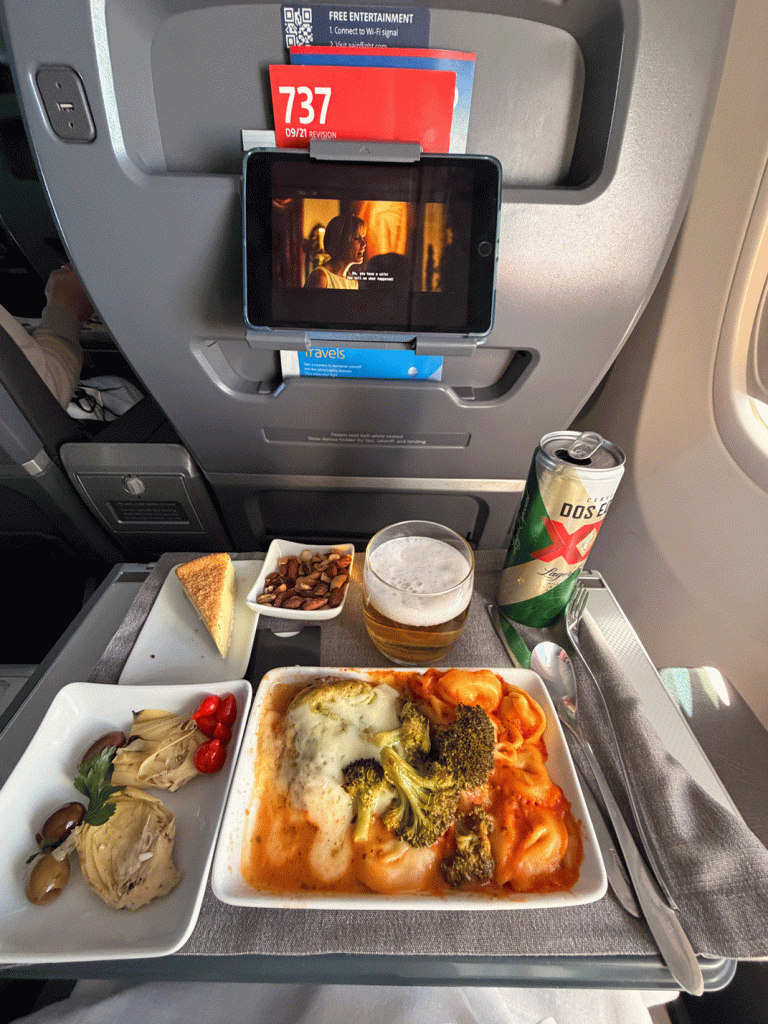
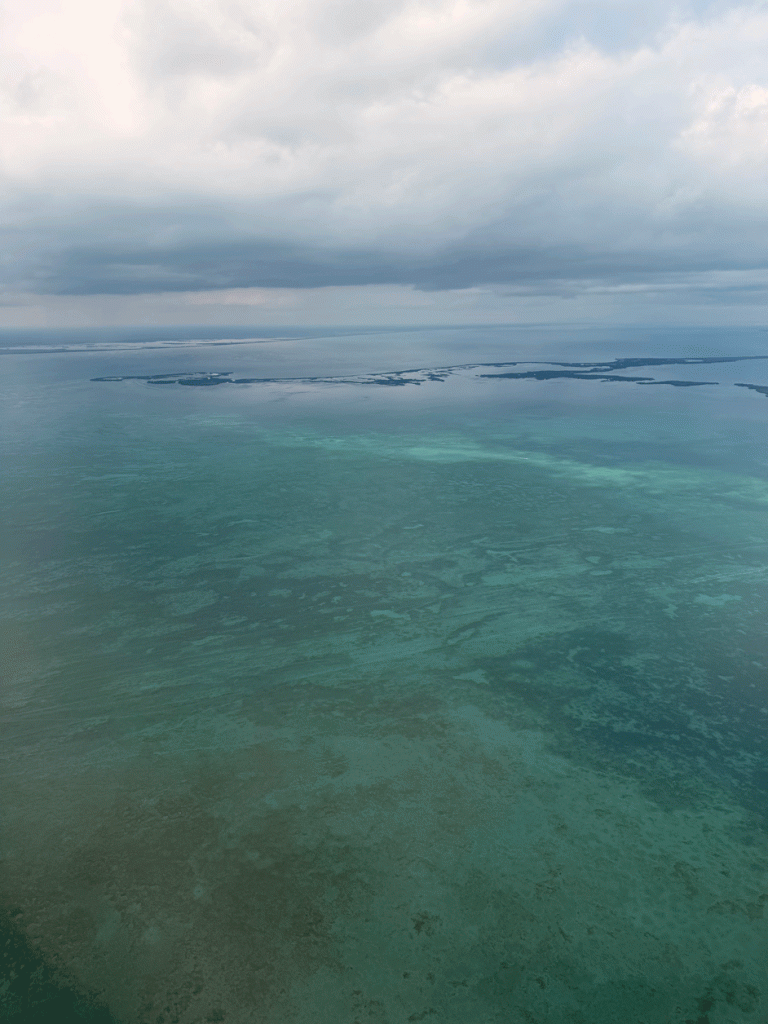
Doug enjoyed his meal on the flight from Dallas/Ft. Worth to Belize City. Here’s his view as the plane approached the airport in Belize.

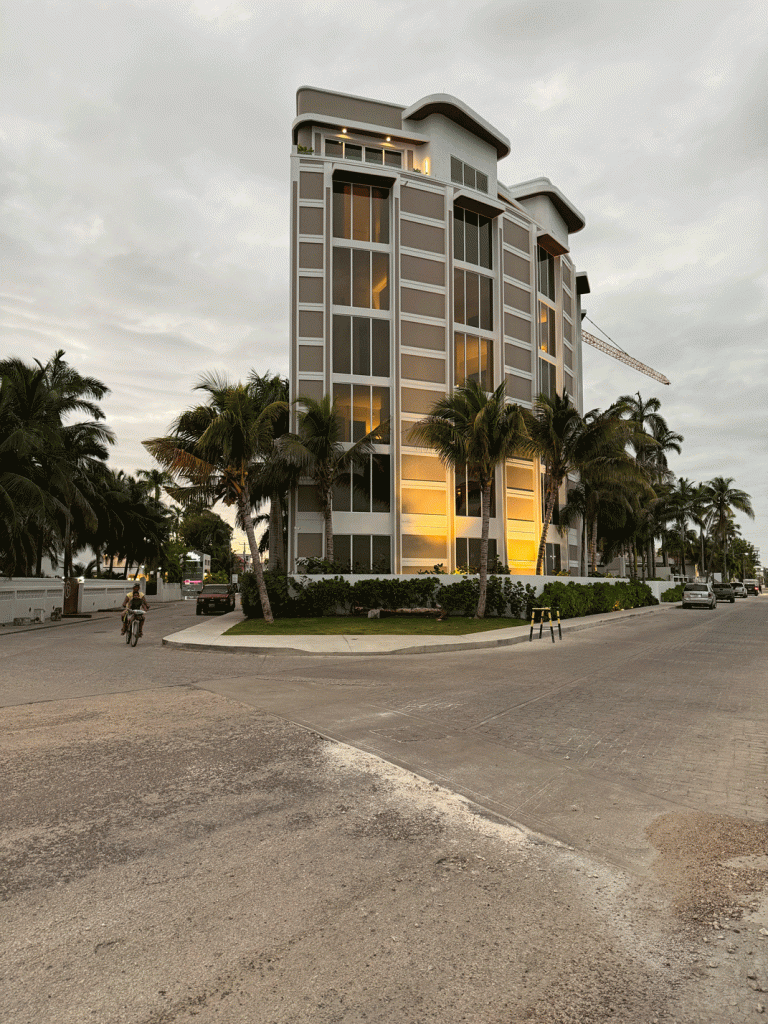
We stayed at the Ft. George Hotel. Our room was on the fifth floor on the far left (curtains open) in the photo below.

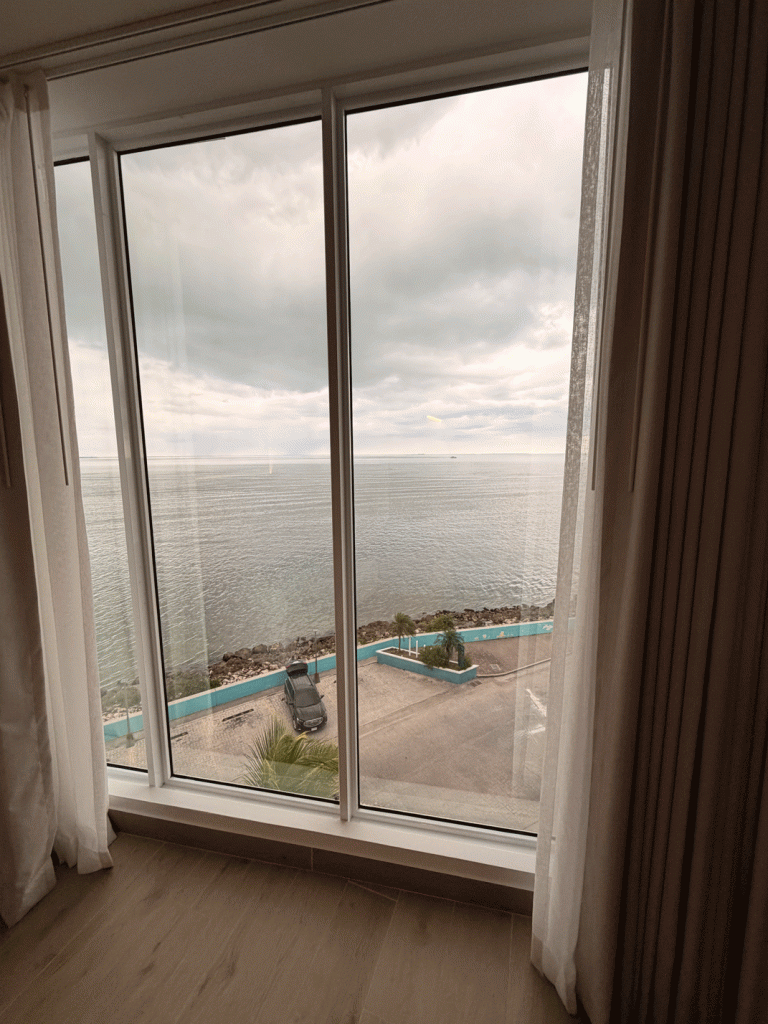
Here’s the view from our hotel room window. We could birdwatch from the window, and saw Royal Terns, Laughing Gulls and a Reddish Egret along with numerous Brown Pelicans.

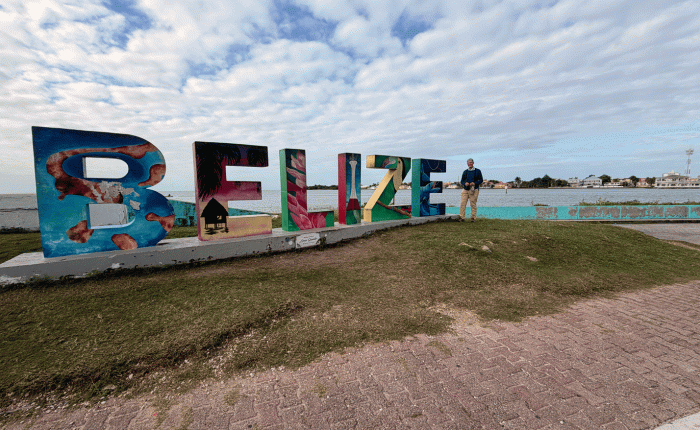
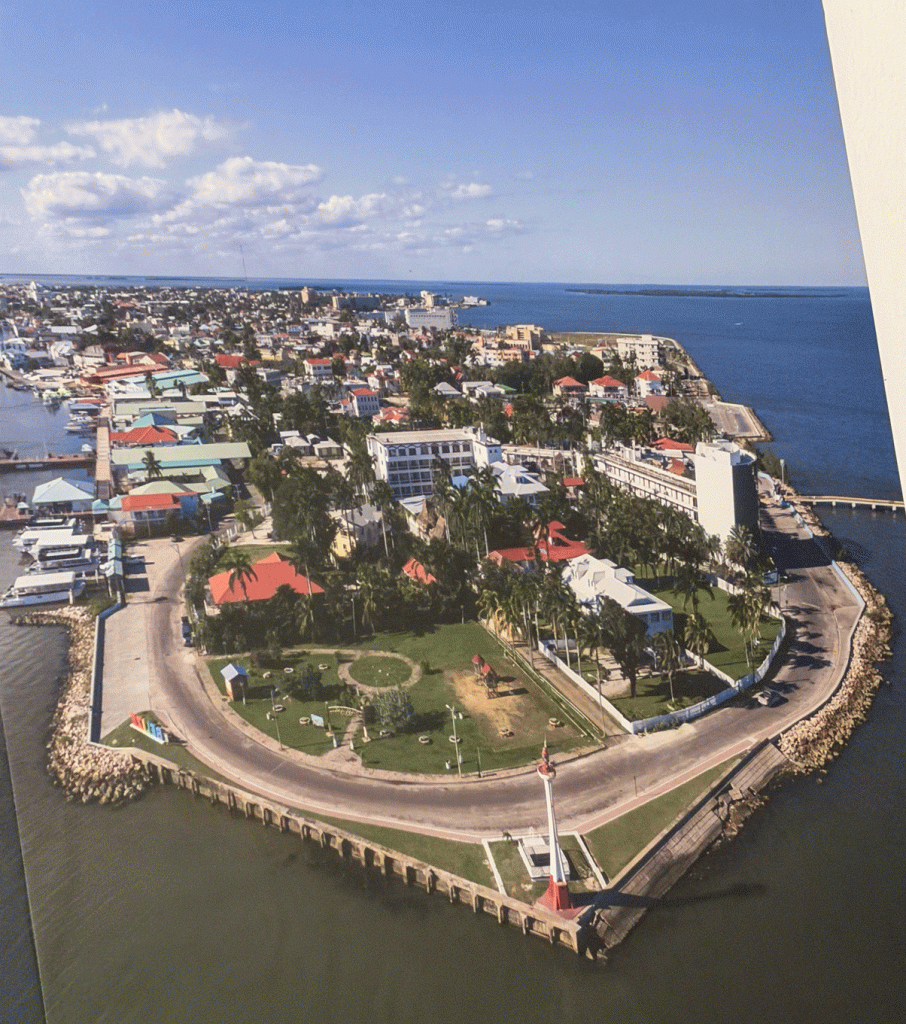
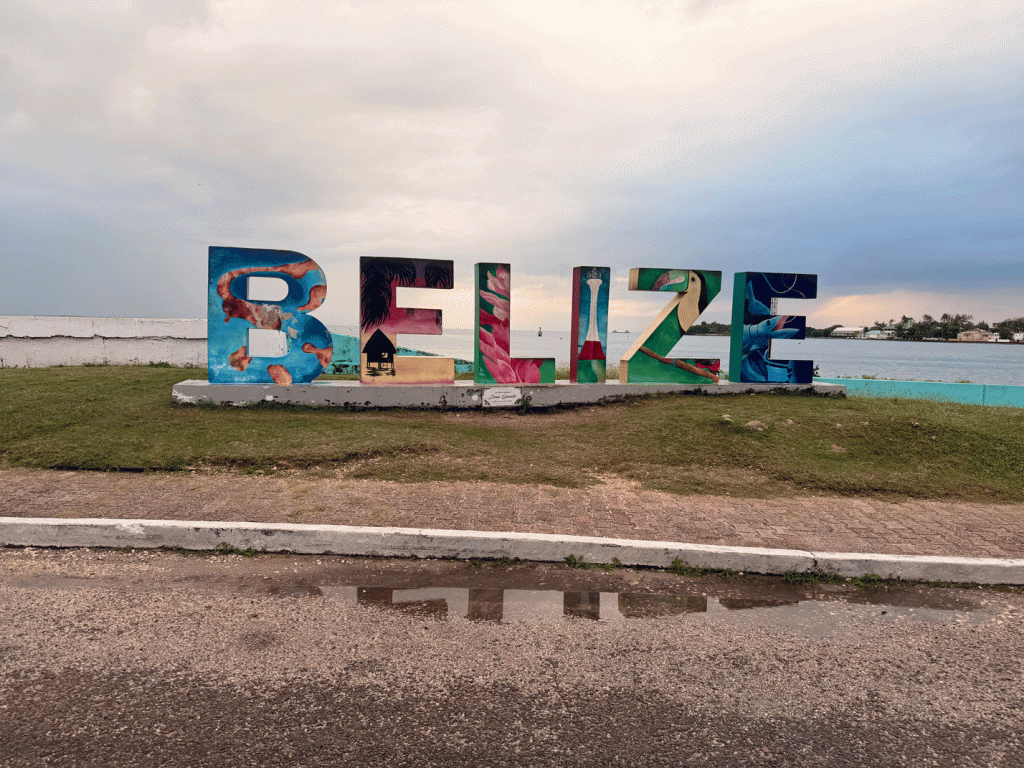
This is a photo of an aerial view poster of the section of Belize City where we stayed. The tower of the Fort George Hotel is on the right, The lighthouse in the middle and the Belize sign along the shore on the left. Just past the water taxis, on the shoreline with the red roof, is Martha’s Cafe which is featured later in this post.

We were lucky to find a time when the Belize sign was uncrowded. The letters are about 2 metres (6 feet) high.

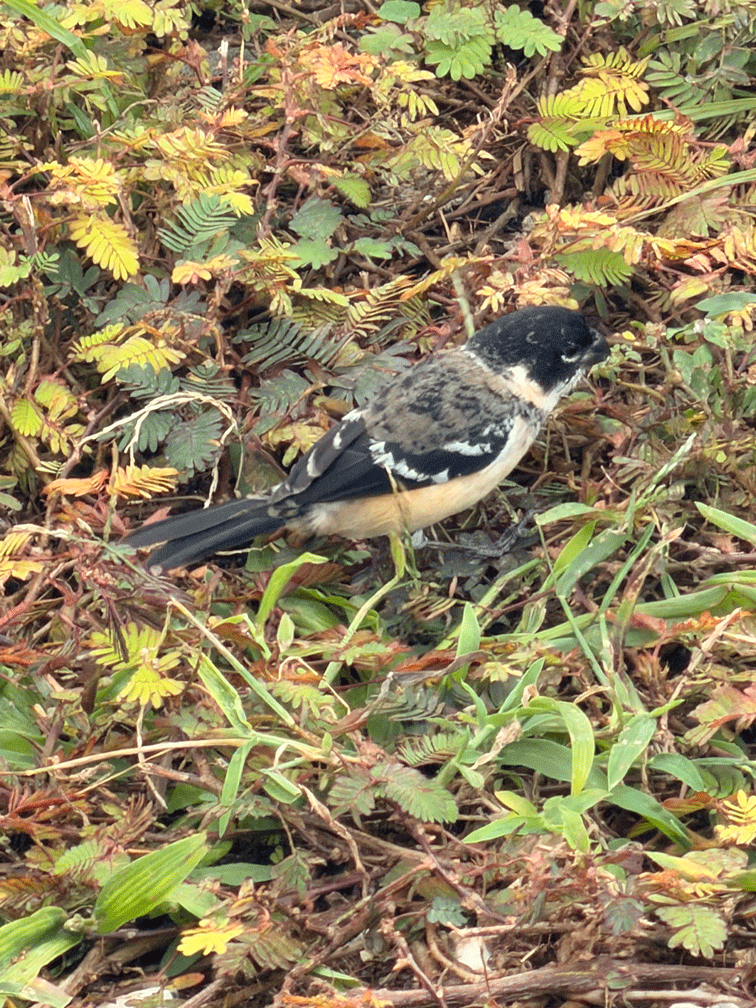
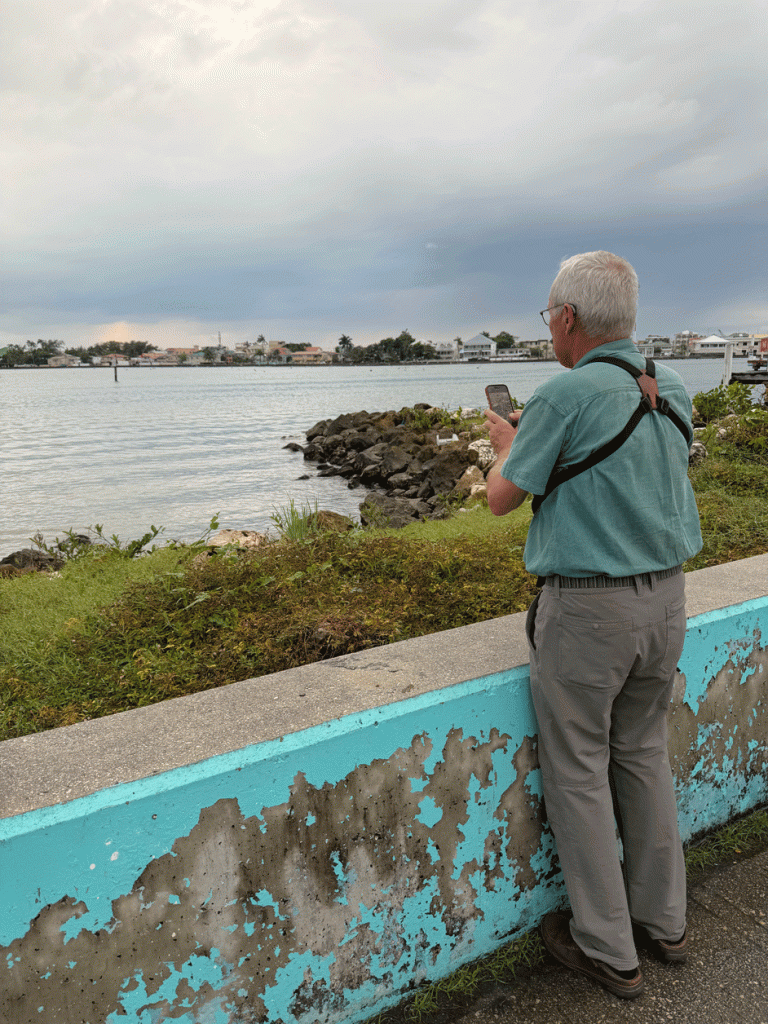
When we were planning for the trip, Doug decided that he really wanted to have a good look at a Morelet’s Seedeater. We had previously seen them along the Rio Grande in Texas, but we had brief and distant views. He was very excited when the seedeaters were foraging just below the sea wall. He took the photo of the little bird with his cell phone. Throughout the trip, we saw about forty of this species and they were included in eleven checklists, so they were a pretty common bird, but it was a good start to the trip.

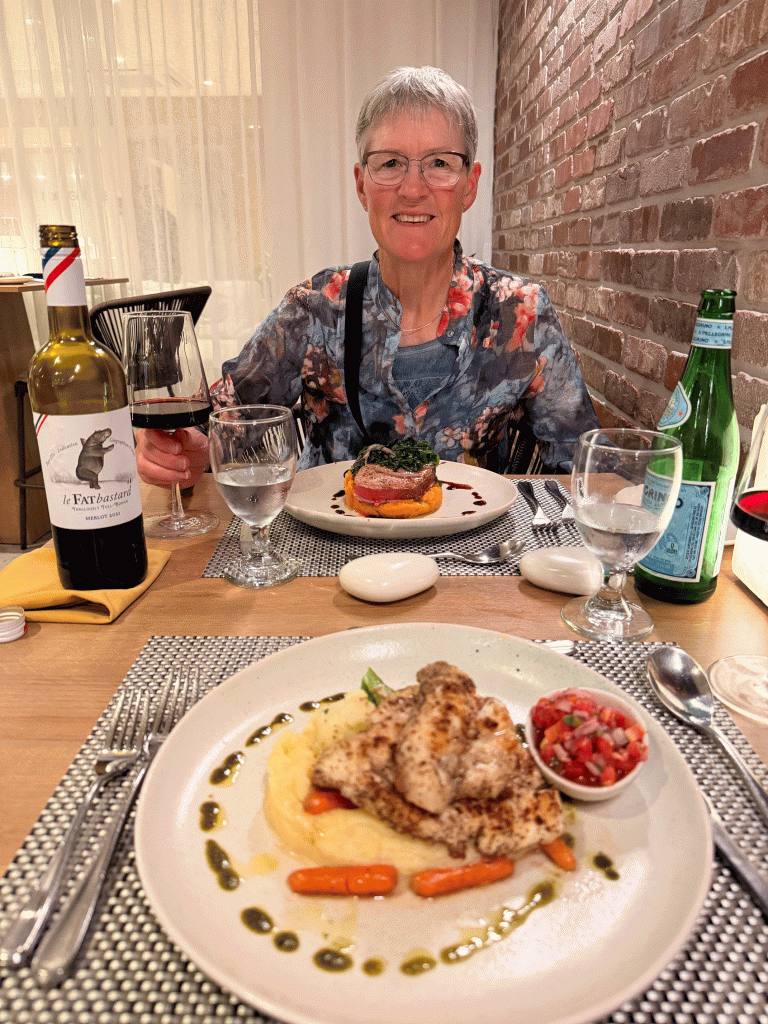
We had one “special” dinner to celebrate our 50th (again!) on our first day in Belize at the fancy restaurant at the Fort George Hotel. Doug enjoyed a snapper fillet with truffle mashed potatoes and Wendy had pepper crusted Ahi tuna. For breakfast, we ate in the glass ceilinged section of the same restaurant (The Tree House.)

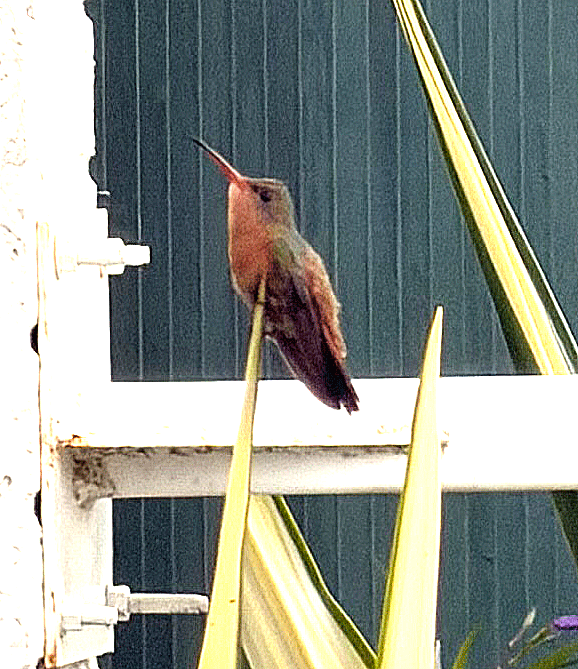
That afternoon, we walked to Martha’s Cafe, just past the Belize sign. We saw a Cinnamon Hummingbird on the way, and it was the only time we saw that species on the trip, so the iPhone photo will have to do.

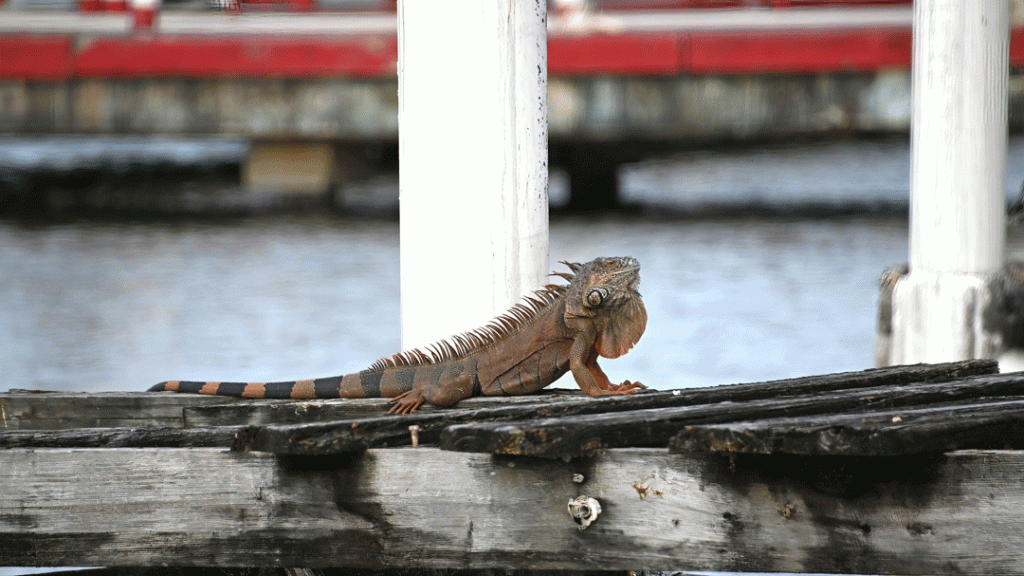
This Green Iguana hung out on a wharf near to shore. It was over a metre (40″) long.

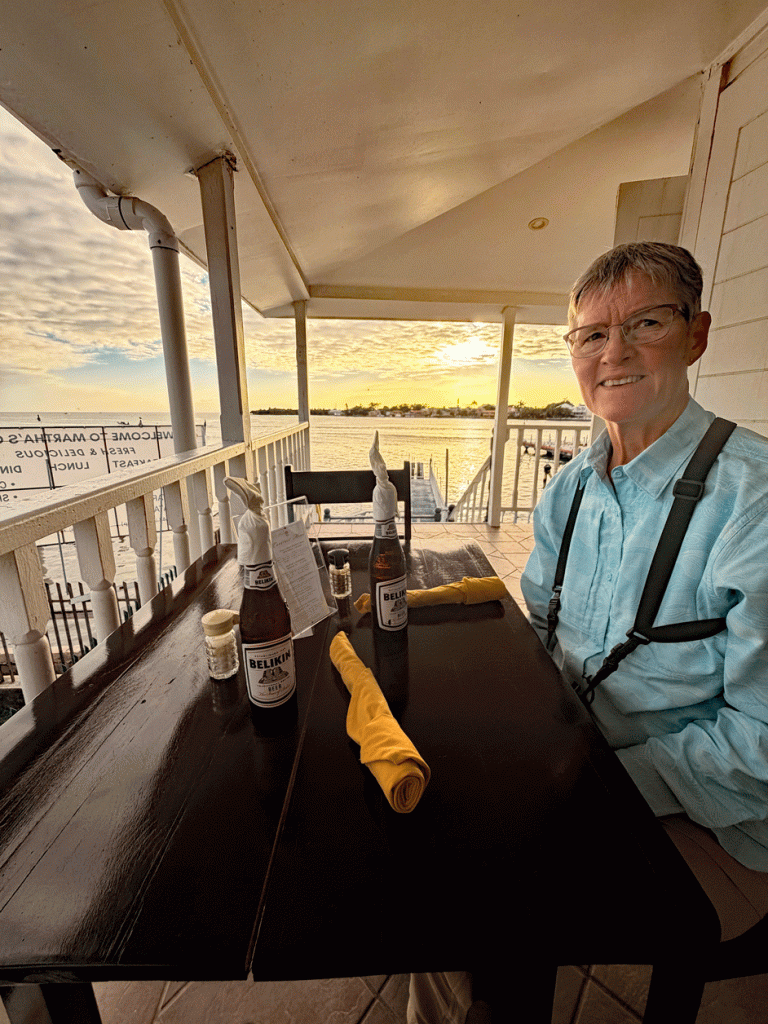
At 4:30 in the afternoon, we had the choice of tables at Martha’s Cafe. We enjoyed the local Belikin beer on that night and on several occasions throughout our trip. It was standard practise to drink from the refillable bottle, which was cleaned then presented with a napkin cover.

We finished our dinner just as the sun was setting, so we had time to walk back to our hotel before it got completely dark.

We enjoyed our dinner so much we chose to go back to Martha’s Cafe for breakfast. We ordered a typical Belizean breakfast that included scrambled eggs with vegetables mixed in, refried black beans, fruit (cantalope, watermelon, papaya, or mango), and Johnny cakes (like a baking powder biscuit). We didn’t really realize that we would be eating something similar for the rest of the trip. Luckily, we enjoyed it and all the variations we were served.

We ate on the porch of Martha’s Cafe. Here’s what the interior looks like.

Since we had arrived a day early for our birding tour, we arranged to go to the Belize Zoo on our extra day. Here is Wendy with our guide, Cairo at the entrance. The Belize Zoo was founded in 1983 by Sharon Matola who was left with some wild animals that that she had been caring for that were part of a natural history documentary. She decided to start a zoo. It has become a wildlife rescue, rehabilitation and education faculty. It was about a forty-five minute drive from our hotel.

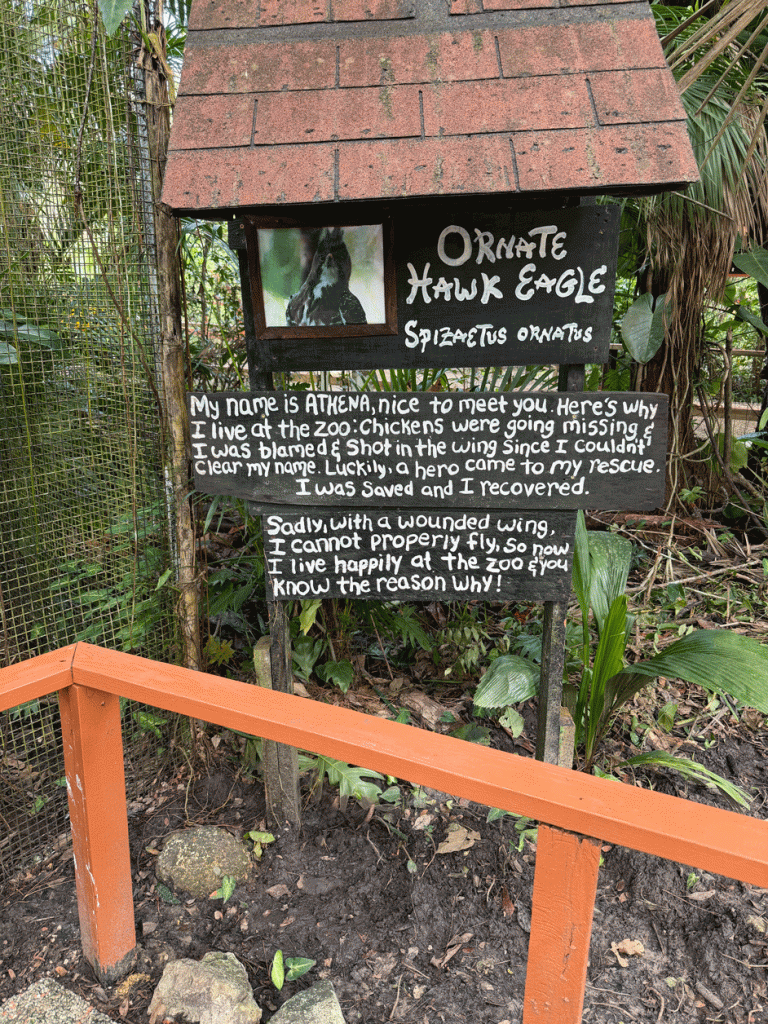
The signs are quirky and most of them explain why the animal is at the zoo, while others focus on how important it is to protect wildlife. All the animals in the zoo have been rescued, orphaned, injured or abandoned and are native to Belize.

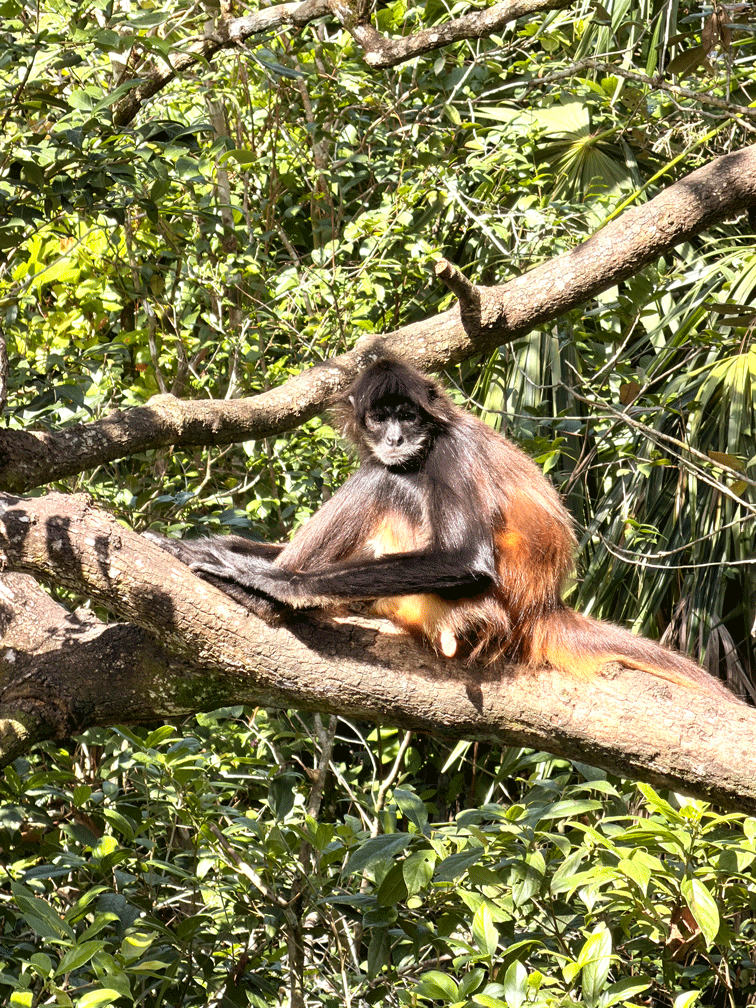
Here’s a spider monkey. We saw many of this species throughout our trip, but these were the closest. Spider monkeys move through the forest by swinging, while howler monkeys climb.

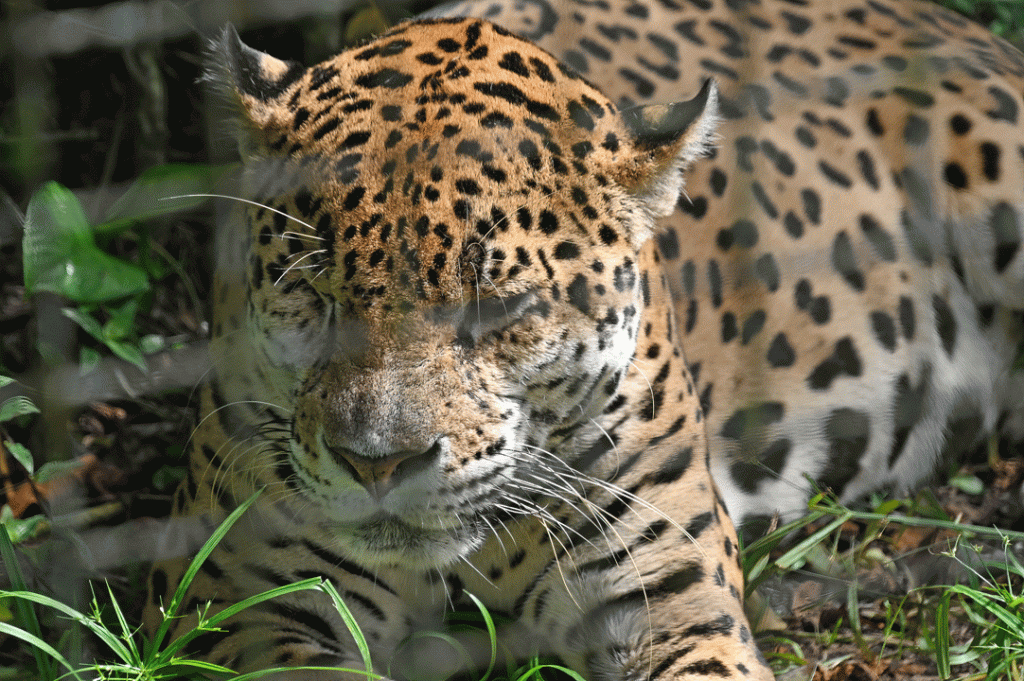
The jaguar is the iconic mammal in Belize, but they are very difficult to see in the wild. This old cat is blind in one eye and didn’t seem to mind the people passing on the path in front of him.

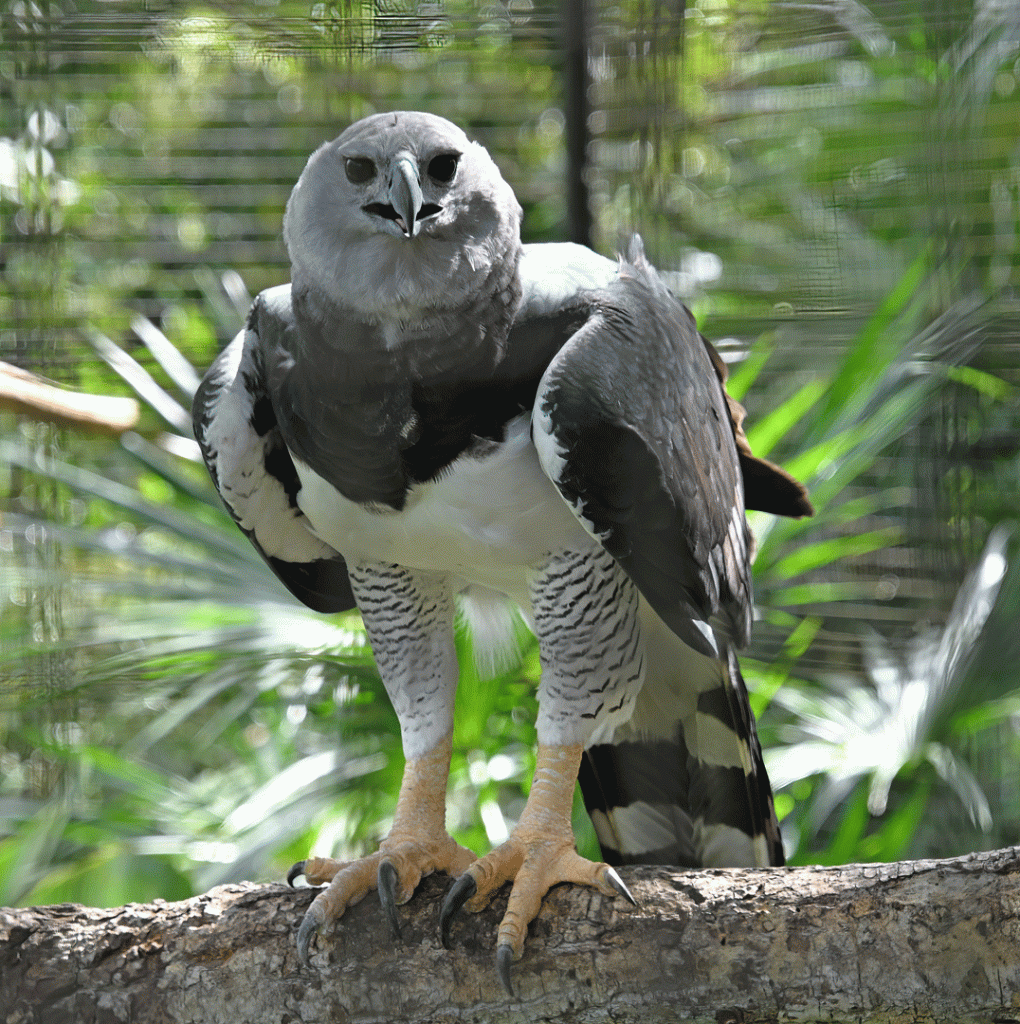
We may never see a Harpy Eagle in the wild, but they had two at the zoo. It is a massive bird of prey and lives in mature forest in specific areas of Central and South America.

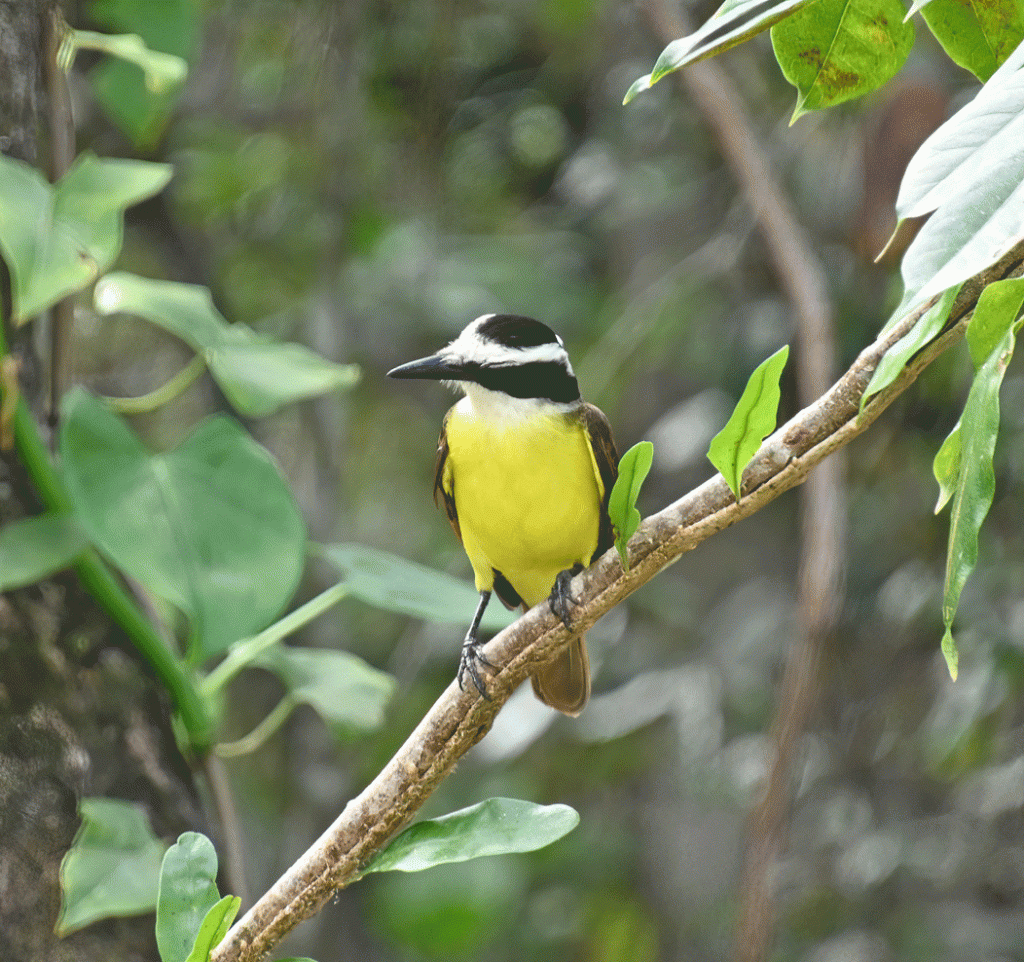
The zoo was also a great place to see wild birds. Since the trails criss-crossed throughout the jungle habitat there was more opportunity to be closer to a bird. Below is a Great Kiskadee, which we saw or heard over a dozen times in our time in Belize and Guatemala, but this was the best photo that Doug obtained of the species. Its “kis-ka-dee” call is loud and distinctive.

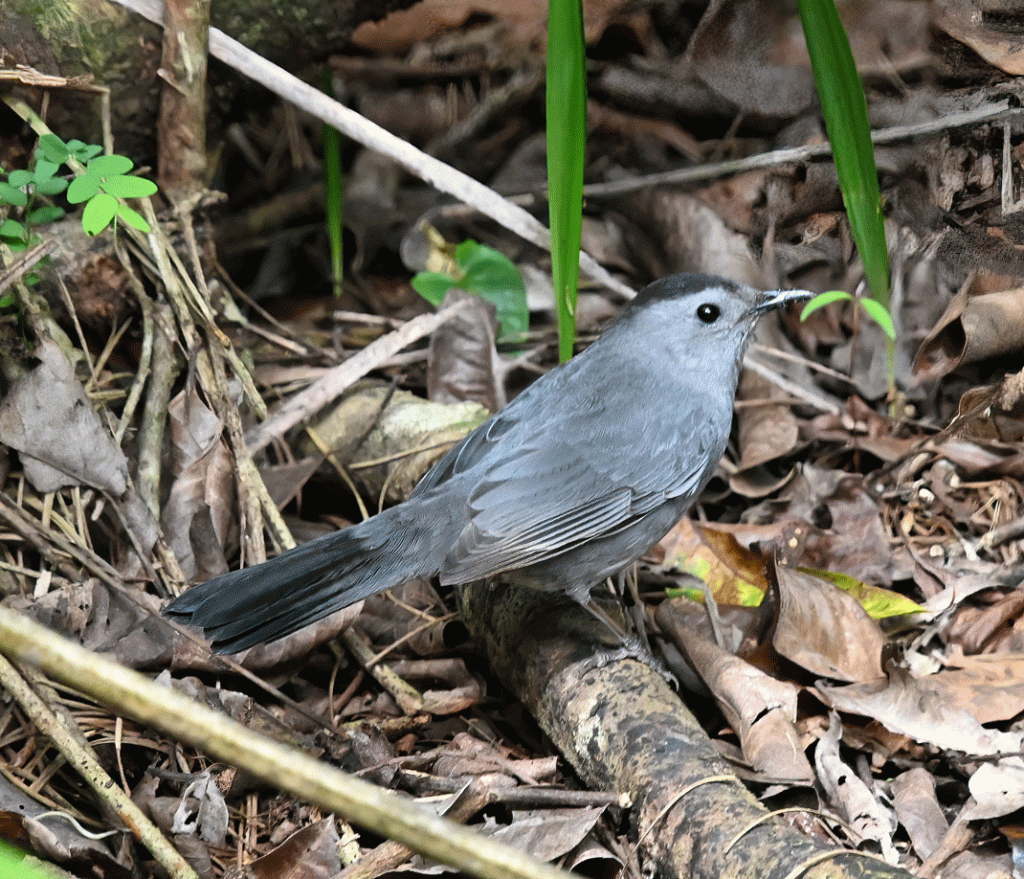
Another bird that we saw frequently throughout the trip was the Gray Catbird. Gray Catbirds spend the summer in many parts of the US and Canada (including around our community in British Columbia). They don’t sing when they’re in their winter home, but they do make a cat-like sound: “MeeUrr.” They like to hide in thick undergrowth so this view at the zoo was one of our best of the trip.

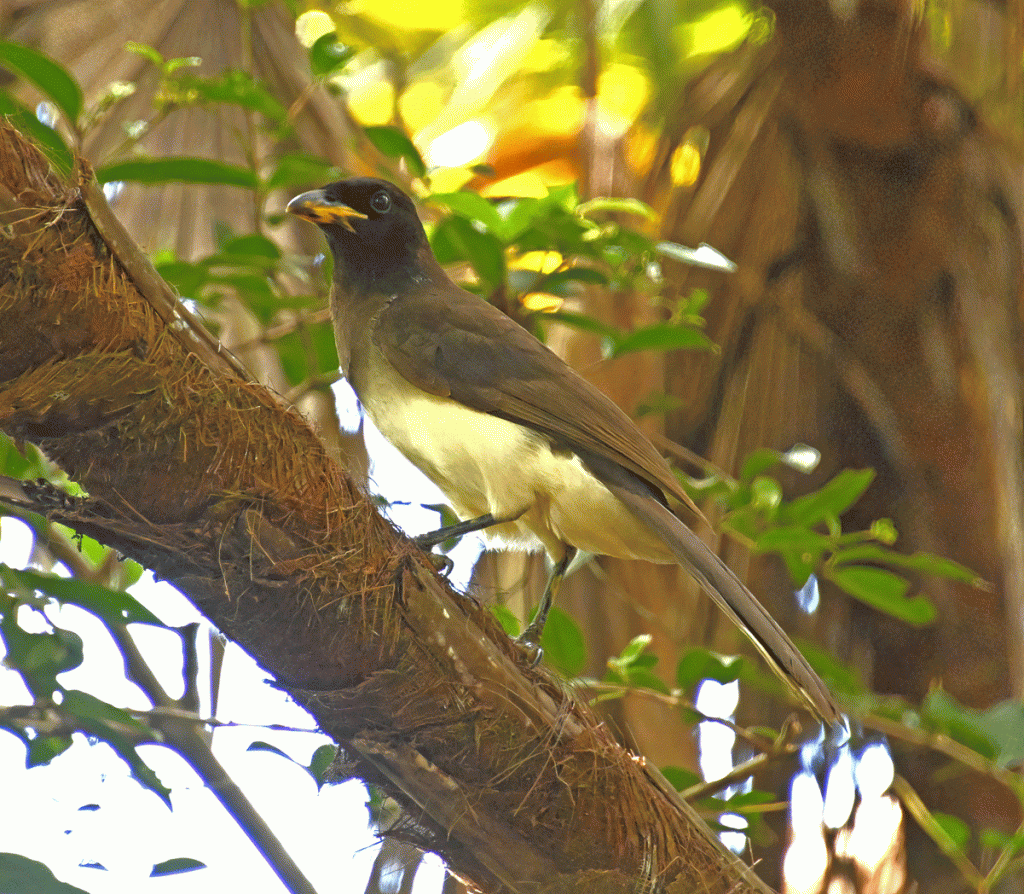
We saw over forty Brown Jays throughout our tour. They have a raucous call, “kleer, Kleer, kleer” and are often in groups. These wild Brown Jays at the zoo seemed to be used to being around people.

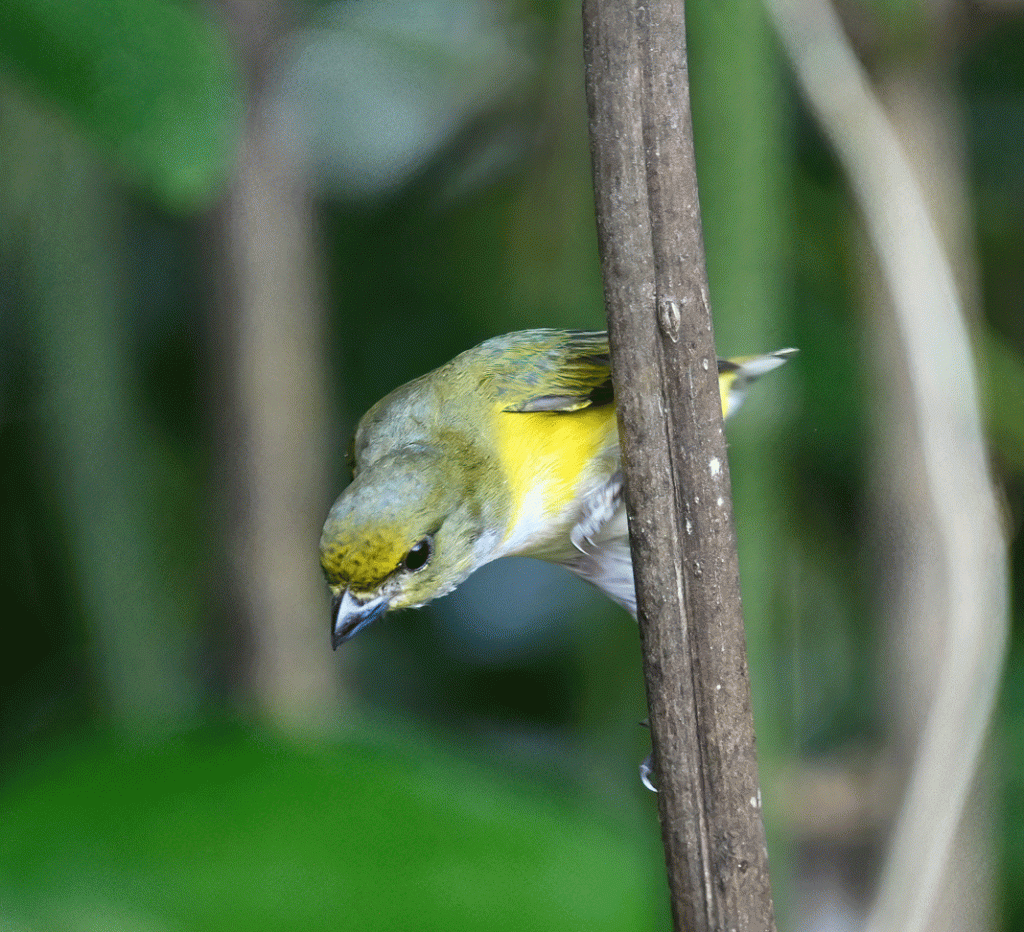
This is a female Yellow-throated Euphonia, a tiny tropical finch. There was a male nearby, and our guide was surprised that they were the same species, because the male’s plumage is so bold with a dark blue top and bright yellow underside.

If you look really closely, you can see a tiny bit of pink on this male Rose-throated Becard. This species is one that we have seen in Arizona and in Texas, but they are usually high up in the canopy, so seeing this one so close was a treat. The rainforest birds of this species are dark slaty gray and may not show a pink throat patch, making them look appreciatively different from the ones we have seen in Arizona.

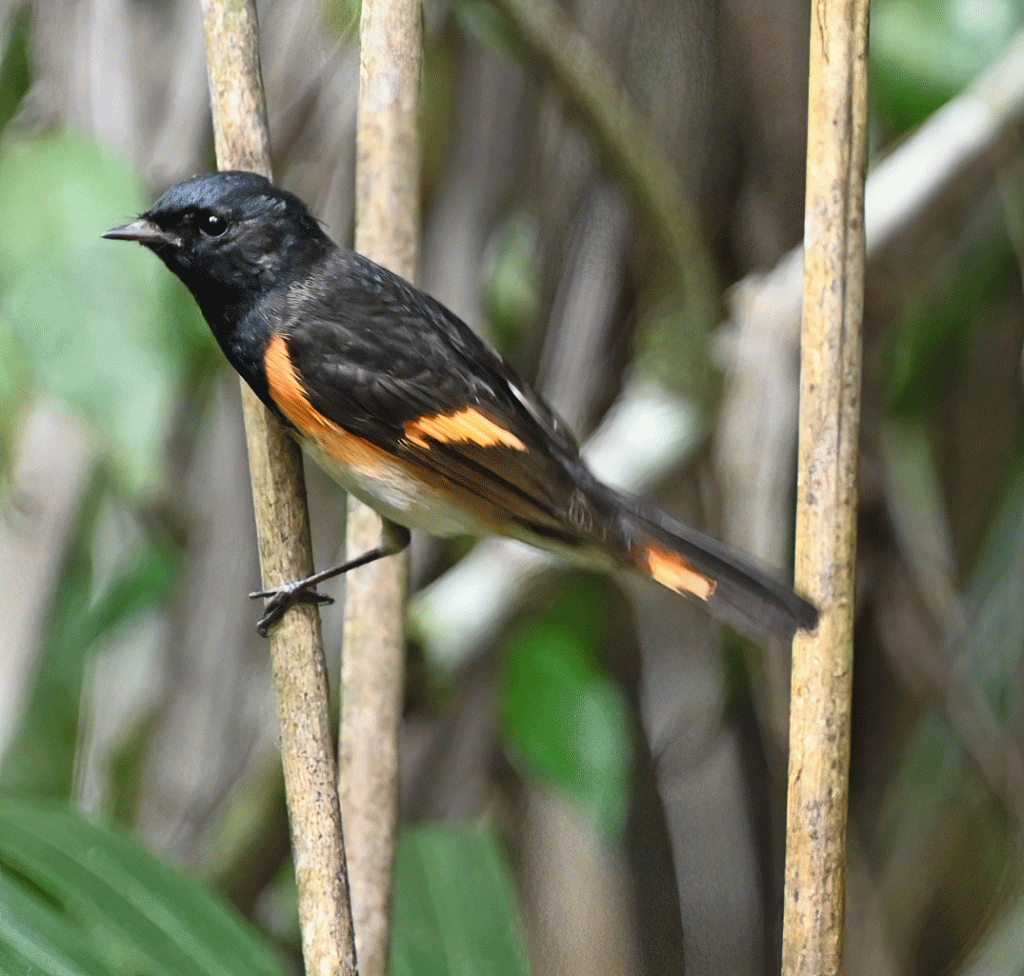
We saw many warblers throughout the trip that spend their winters in the tropics. American Redstarts seemed to be everywhere, and we saw or heard over fifteen individuals in the two weeks. This male at the zoo was probably the most cooperative however. The American Redstart is not actually red, but it’s named after a similar European species that has a redder tail.

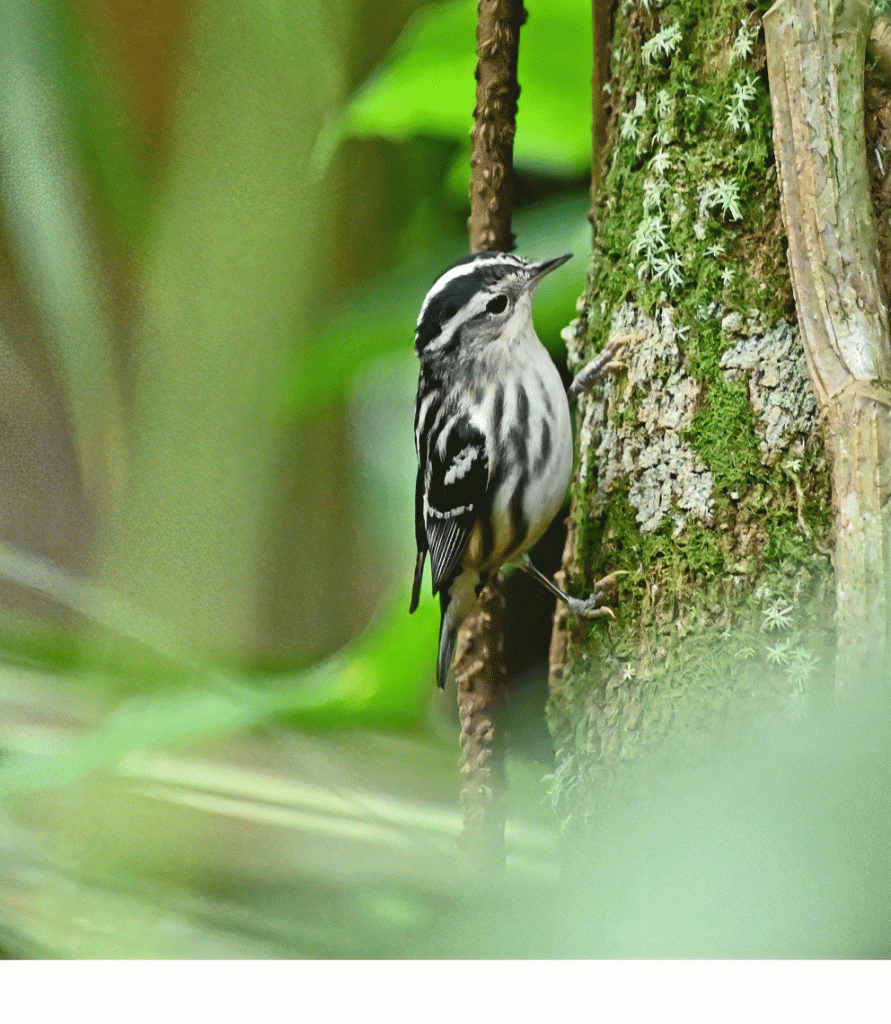
Black-and-White Warblers are rare in Arizona and never get to our place in BC, so we were excited to see this one at the zoo. This species also was quite common in the other locations that we birded, although we never got bored of watching its “trunk-creeping” behaviour.

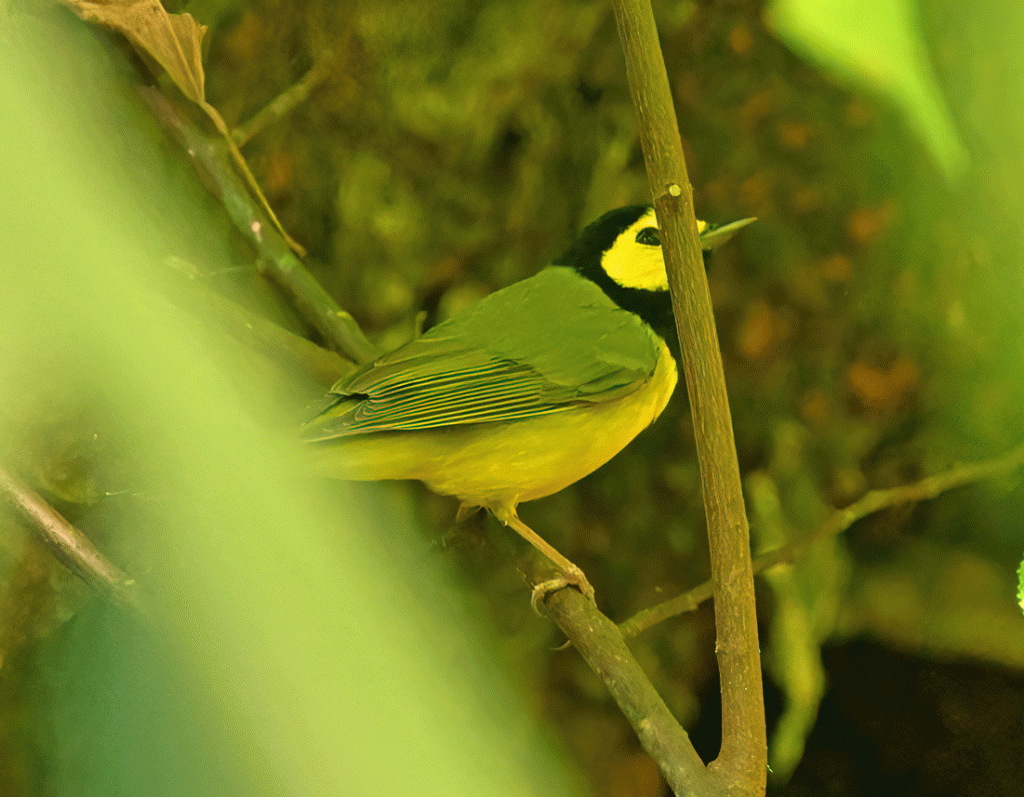
Our guide, who was not a birder, was really good at finding birds and he pointed out this one to us. It was the first Hooded Warbler that we had ever seen. We saw and heard them as many times as the Black-and-White over the length of the trip, but this view might have been one of the best. Hooded Warblers like to forage in the undergrowth and lower foliage; flitting around, making a photo difficult.

We also saw and heard a Spot-breasted Wren, another life bird. It was really near the trail and we saw it through our binoculars, but sadly, no photo. We heard their distinctive call many times during the rest of the trip, but we never got as good a look as the one in the zoo. So if you are a birder with some free time in Belize City, the zoo is a great place. Actually anyone who appreciates wildlife would find it interesting.

This blog (January in Belize: Part 1) recounts our first two days in Belize. We expect there will be three more for Belize and two or three for Guatemala, to be posted soon.