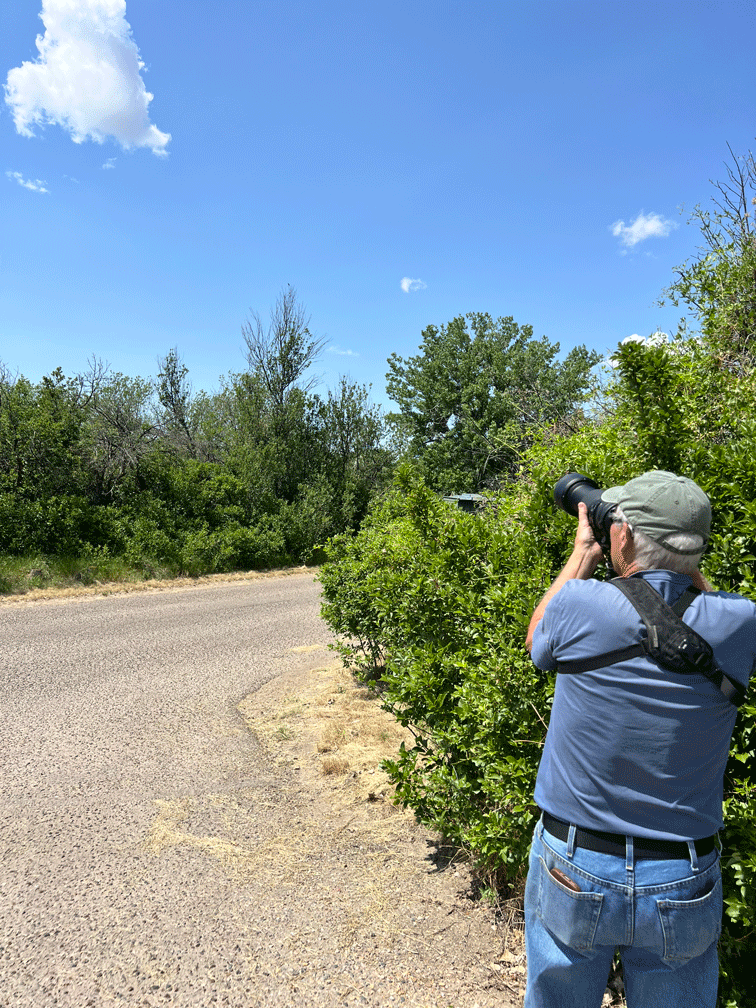
In the middle of June we took a short trip to Cypress Hill Interprovincial Park, which is on the border of Alberta and Saskatchewan. On the way there, we stopped in Medicine Hat, a city about a half hour west of the park, because a rare bird had been seen there regularly. We got information from a local birder who assured us that we would be able to turn our Fifth-wheel trailer around. Luckily, the biggest parking lot had plenty of room, so we didn’t worry about taking up ten spaces. It was hot and in the middle of the weekday, but that worked for us. The Indigo Bunting was known to hang around the smaller parking lot, so we walked the trail over to the area. As soon as we got close, we could hear it singing. Wendy spotted it on the top of tree.
It was a pretty distant view, but it definitely was a male Indigo Bunting. This species is usually found in Eastern Canada and the US in the summer.

We got to the park later that day and set up camp in the Lakeview campground at Elkwater Lake. The next morning, we birded on the “Soggy Bottom” trail, in hopes of seeing a Baltimore Oriole. We didn’t see one there, but we met a naturalist who had seen one at another part of the lake. On our way back to the truck, we had a short view of an American Bittern flying, something we had never seen before. Usually bitterns stay hidden in the reeds.

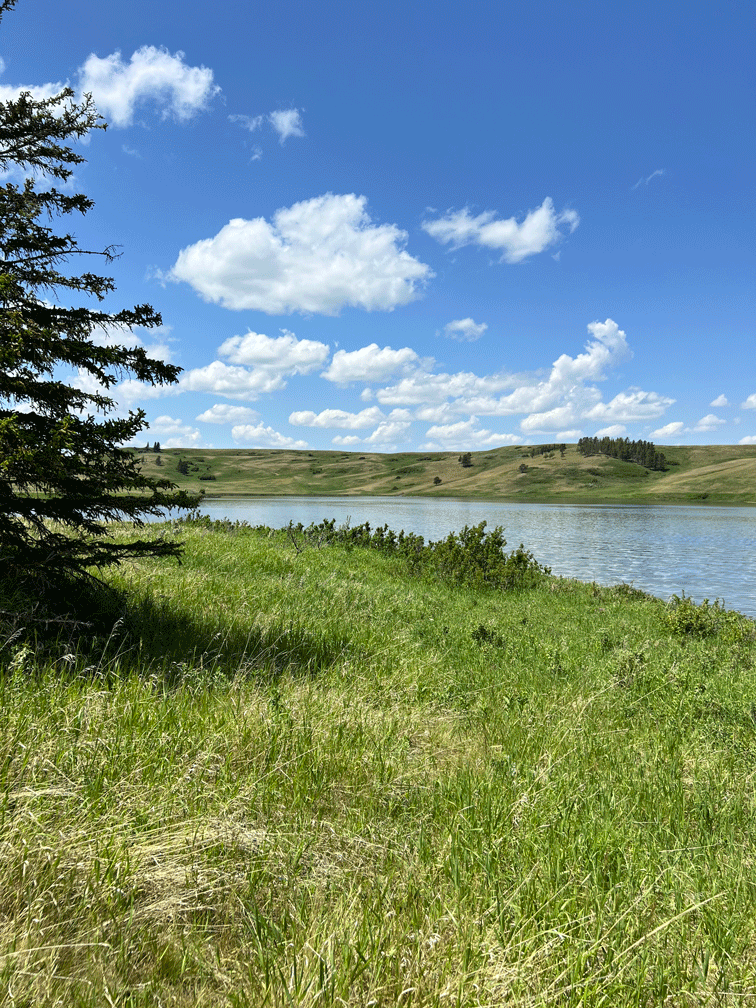
Here’s a view of Elkwater Lake from the West Central Day Use area, where we went next.

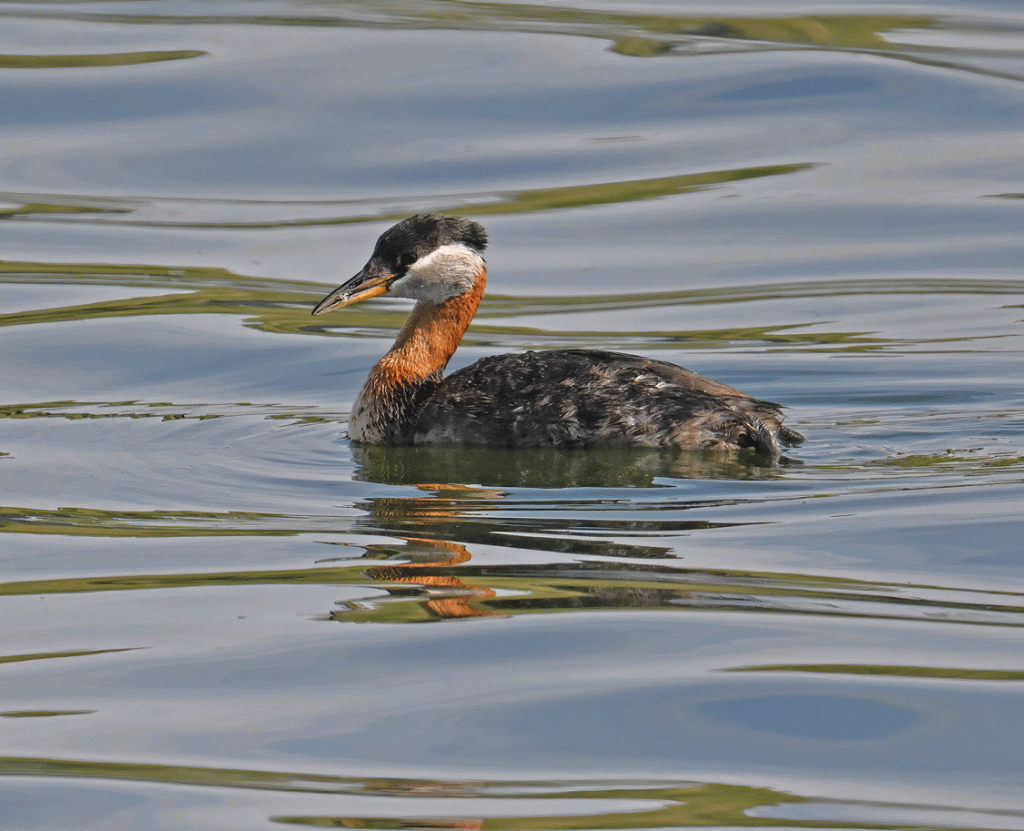
There were several Red-necked Grebes in the lake, and this one happened to be quite close to shore. Red-necked grebes build a floating nest of plant material, and we saw some nests with our binoculars.
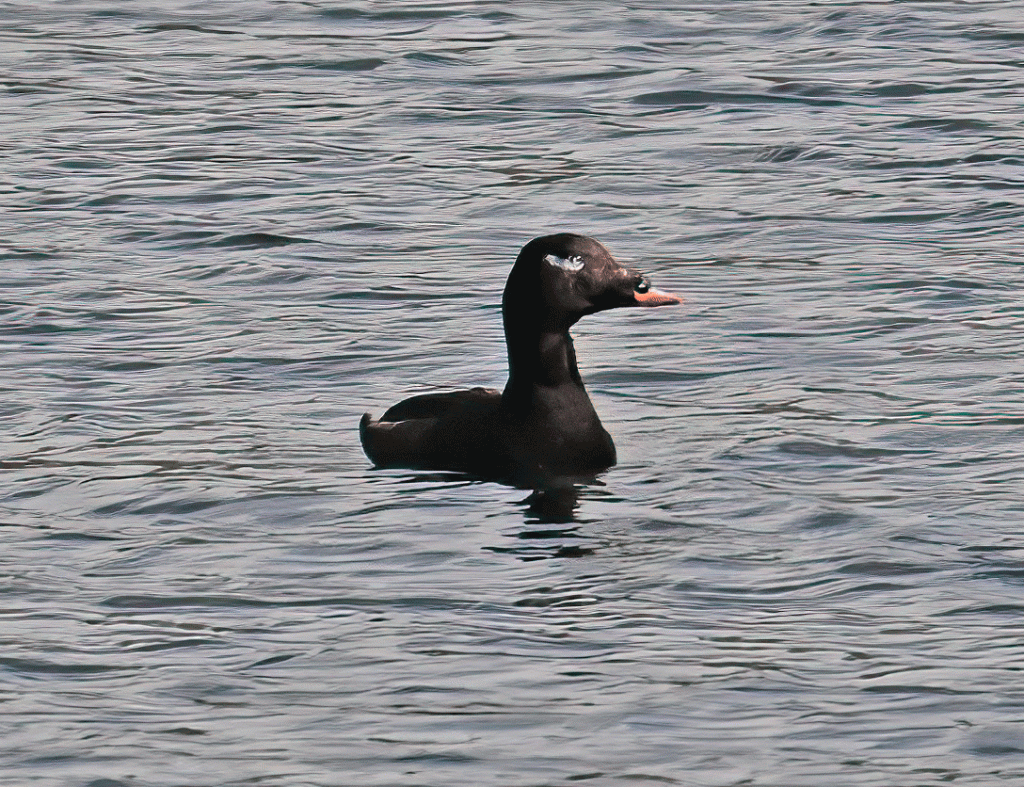
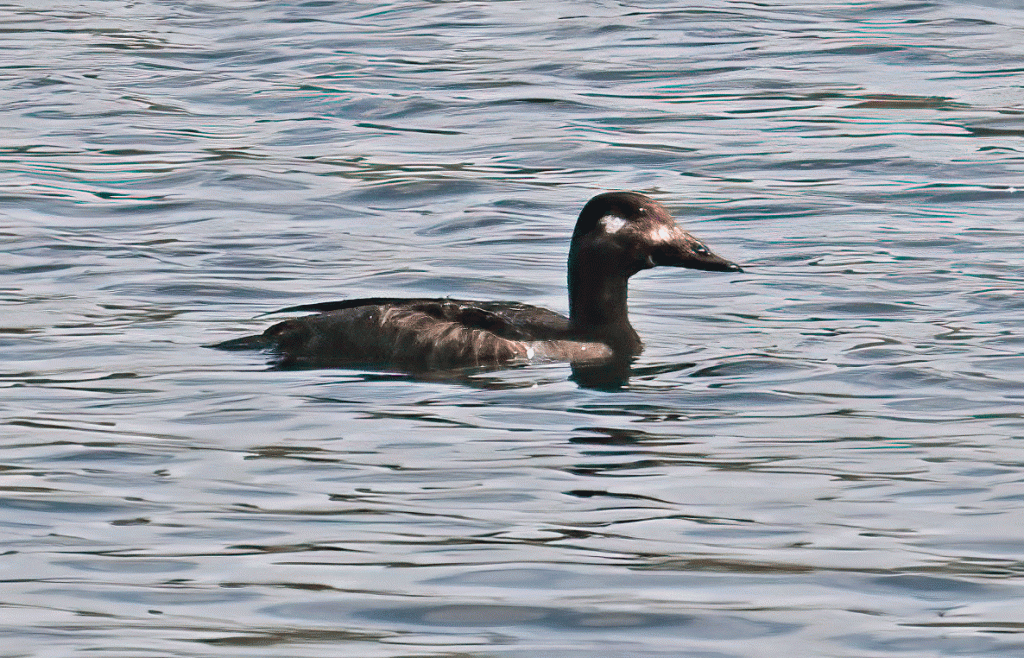
There was also a pair of White-winged Scoters that came close to shore. The male is on the left, with a knob on his bill and a pink bill tip. The photo doesn’t show the white patch on the wing very well, but when they fly it shows up from a long distance. We didn’t see an oriole, however. So we left to go somewhere else.
We drove to Reesor Lake, where we saw the expected American White Pelicans and some Canada Geese. (no photos) We worked our way back, birding in other areas and seeing nothing special, and then looked again at the West Central Day Use area on Edgewater Lake for the elusive Baltimore Oriole. The skies darkened and we just made it back to the truck before the downpour.

It was really comfortable to wait out the thunderstorm in our Redwood for the rest of the afternoon. After dinner we walked from our campsite to the boardwalk.
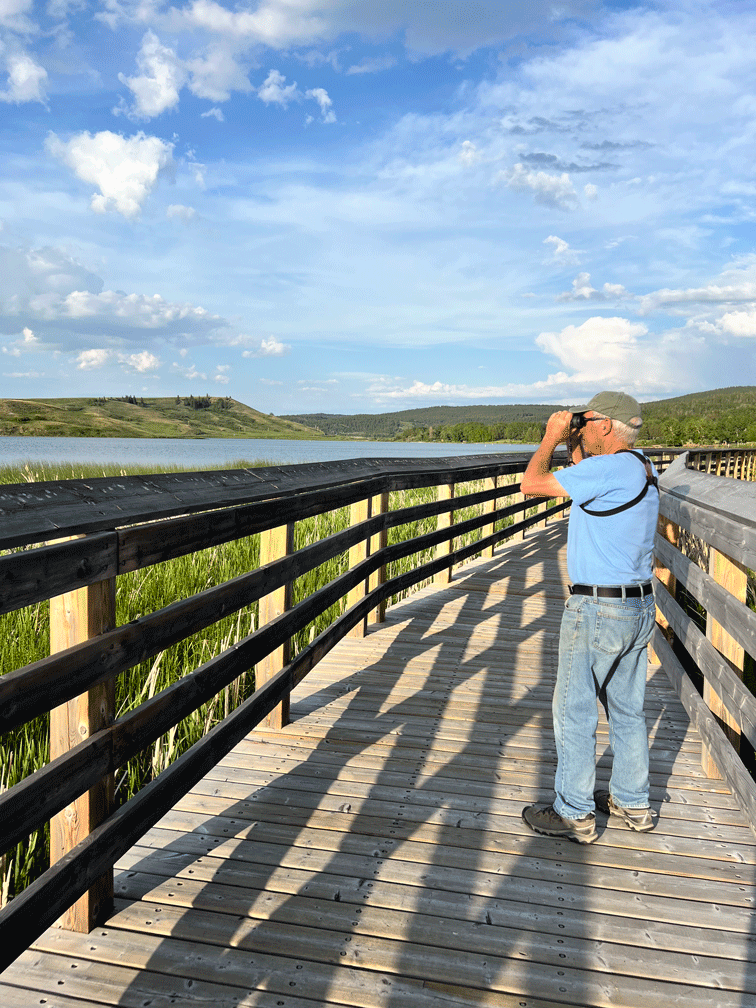
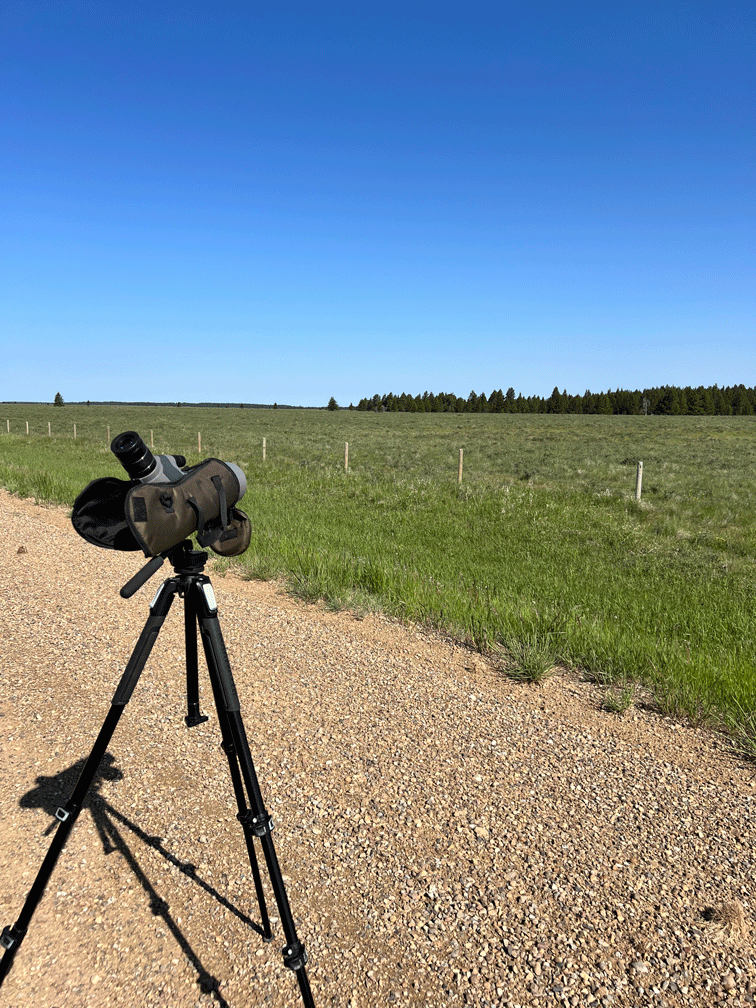
The next day, we went looking for grassland birds, up on the plateau on Township Rd 80, which is one of the borders of the park. We heard several Sprague’s Pipits and caught a few in our binoculars at a great distance. Sparrows (Savannah, Baird’s and Vesper) would pop up onto fenceposts or bushes, but as you can see in the photo below, the bushes were small and a long way from the road.
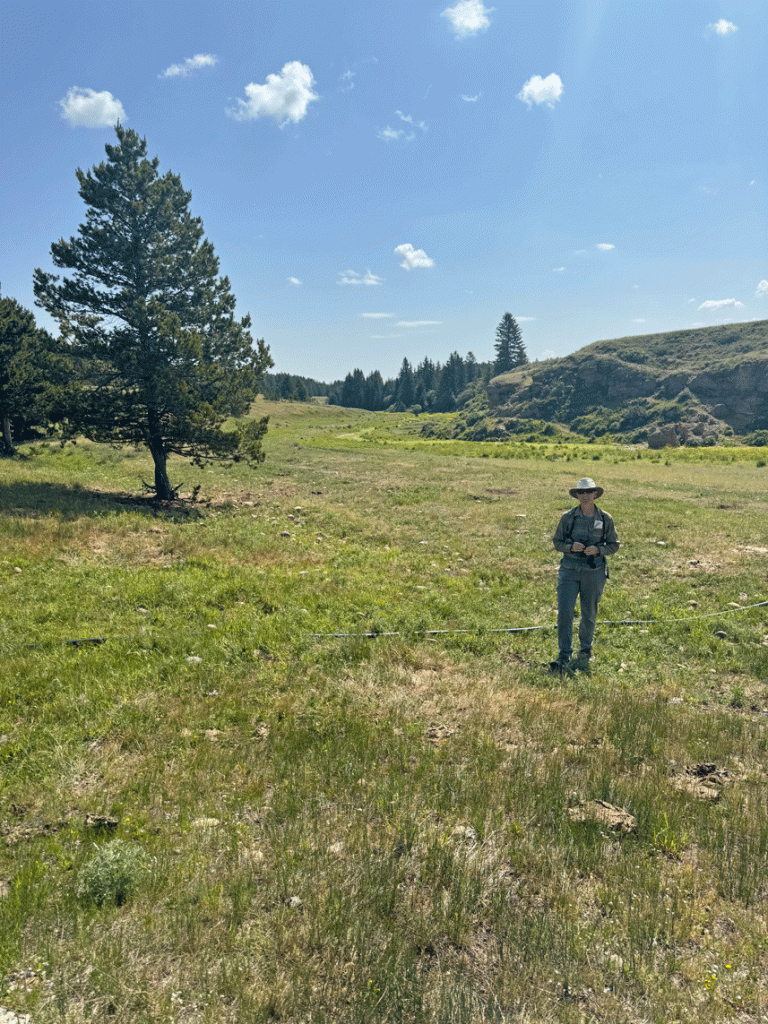
The local birder that we had been in contact with gave us directions to his “secret spot,” at the headwaters of Battle Creek. The small cliffs of conglomerate were interesting, but coming from mountainous BC, we were underwhelmed. It was a unique spot, however.

Here’s a view looking east. We had hoped that the water might have attracted some interesting birds, but the only shorebird was a Killdeer.
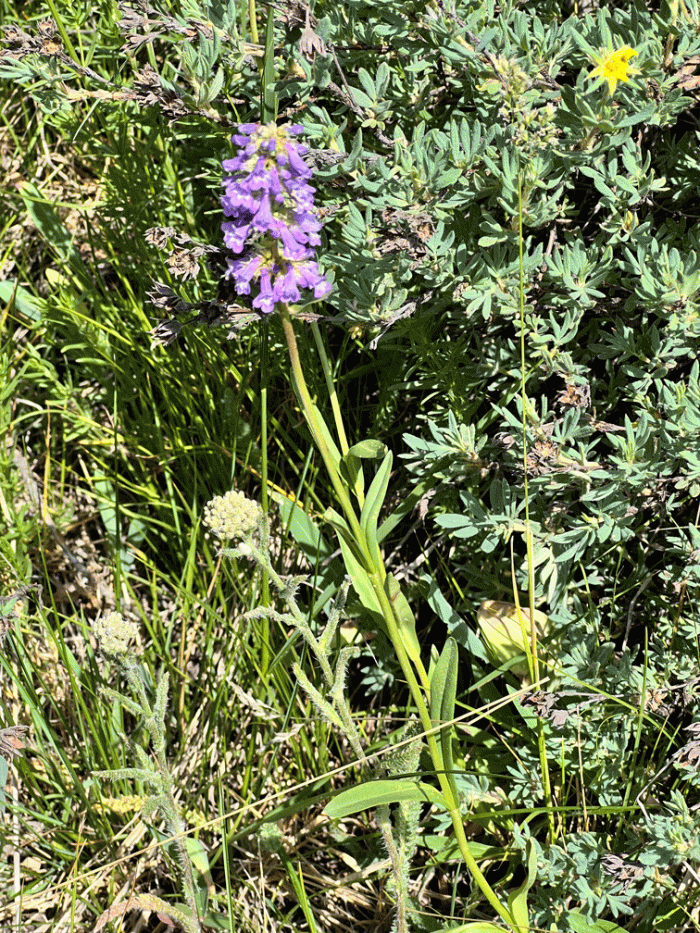
There were some wildflowers, including this purple Speedwell.
After that short walk, we drove to Spruce Coulee. We wandered the campground hoping to see or hear the Ovenbird that had been reported, but no luck. As we were leaving the parking area, starting our lunch, a Sharp-tailed Grouse crossed the road right in front of us. We scrambled for our binoculars and camera, but it disappeared into the underbrush, so there’s no photo of our “life bird.” While we were out of the truck however, we could hear an Ovenbird singing loudly. We never saw the bird, but we got a good recording of its song.
Next, we drove back to Elkwater Lake, past our campground to the Firerock Campground that is closer to the lake. We pulled into an empty site and looked into the bay. When we first arrived, we could see plenty of birds, especially Canada Geese and White-winged Scoters. This photo was taken after a jet ski disturbed them all and they tucked themselves in closer to the opposite shore.
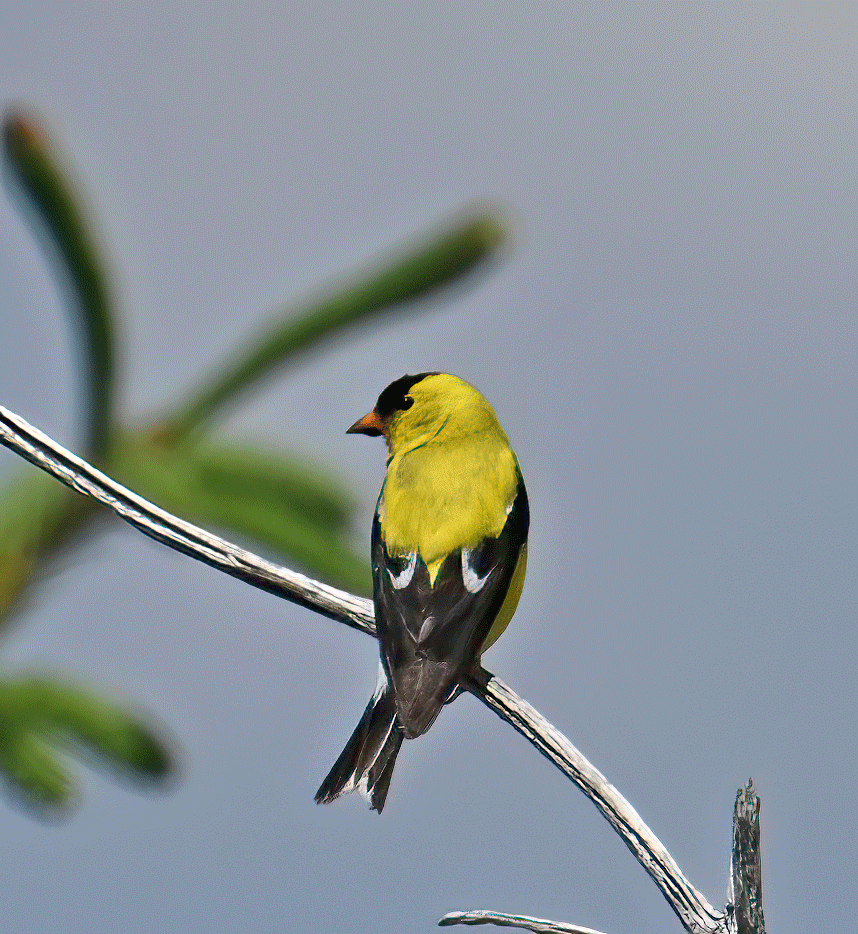
There were a couple of American Goldfinches perched in the bushes near the shore. This is a photo of a male.
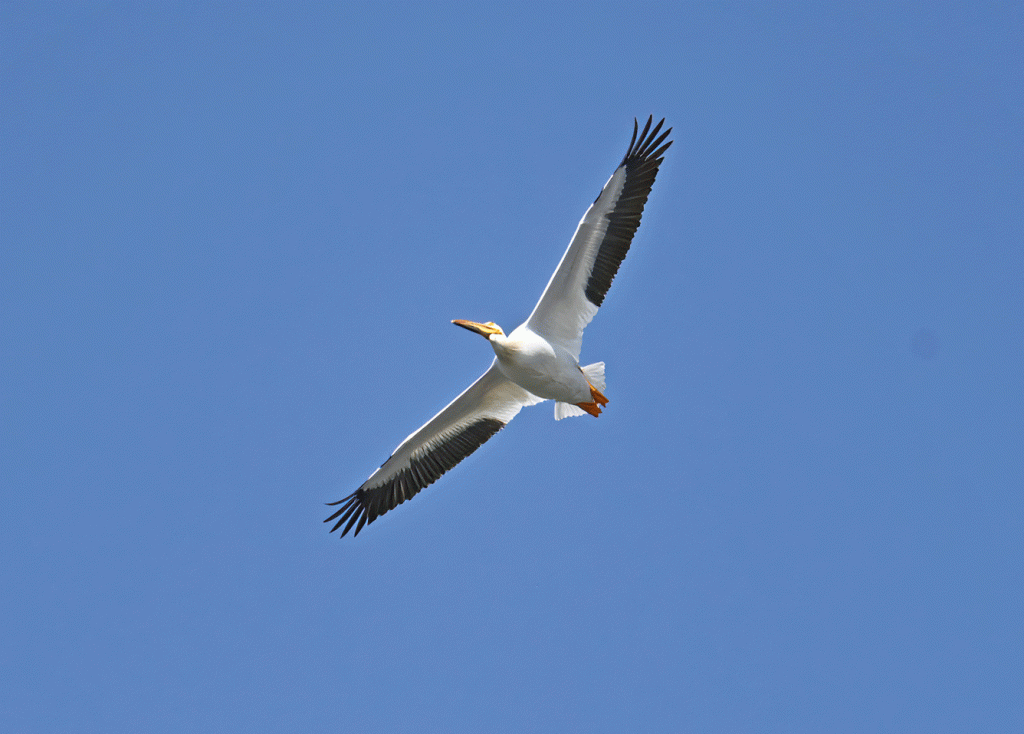
A half dozen American White Pelicans flew over.
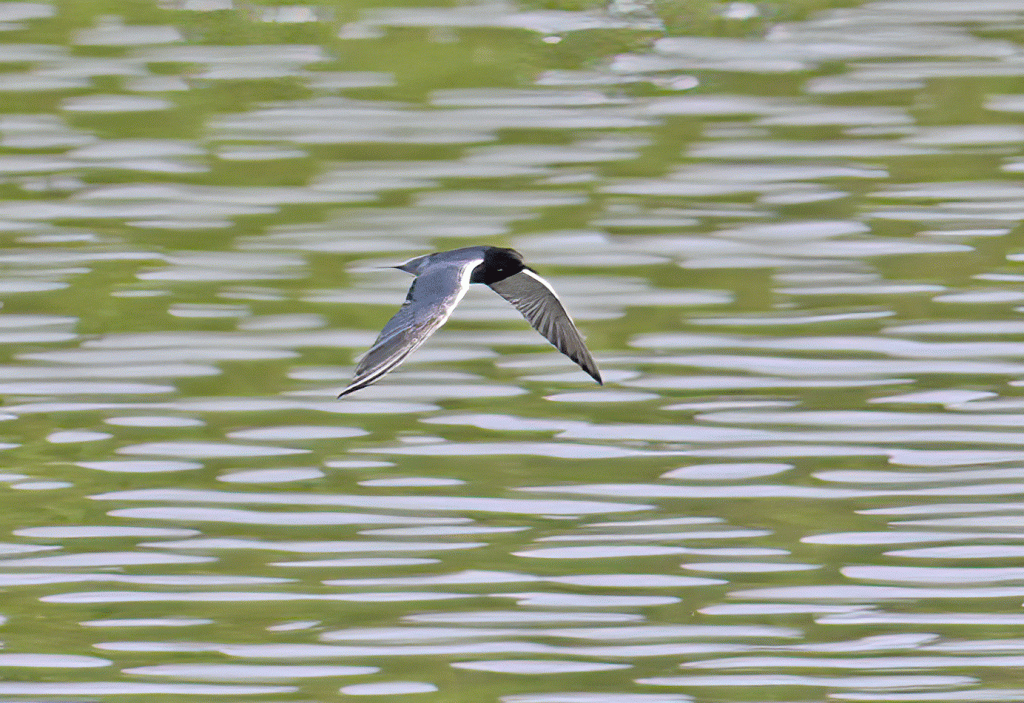
We got a good view of a Black Tern. We saw several flying over the lake in the time we were there, but this one was the one of the closest. Its grey wings look silvery in the afternoon light.
One Caspian Tern flew over the point, and luckily it kept circling until Doug could get a good photo. We had missed seeing one when we were in Texas where they winter, so we were happy to see one in migration. Caspian Terns are the largest tern in North America and are about the size of a Ring-billed Gull. The photo clearly shows its dark red bill with a dusky tip.

On our last full birding day in the area, we covered a lot of ground. We started the day heading down Highway 41 towards the US border crossing at Wildhorse. It’s a pretty lonely highway, so it was fine to stop by the side of the road when we saw birds. At one spot there was a coulee (a gentle ravine) and a Northern Harrier and Short-eared Owl were hunting there. We had seen a Short-eared Owl once before in Hawaii. The Sibley Guide to Birds says, “…essentially the nocturnal equivalent of a Northern Harrier. Often seen in daylight, especially early and late.” It was interesting that we saw the two species hunting in the same area.
We continued down the highway almost to the border and turned onto an unpaved road. There was a bushy section around a communications tower that was full of birds, including a Brown Thrasher. We heard it singing, then it popped out for a just a moment so we got a good look at it. It wasn’t a rare bird for this area but it was important to us because we had tried at least six times to see this species in Arizona where it had been reported. Our “nemesis bird” was finally found! It was also a “life bird.” We birded the fields nearby and saw other typical birds for the region: Western Meadowlarks, Yellow-headed and Red-winged Blackbirds and Common Grackles; nothing spectacular.
It was still early in the day, so we drove about an hour and a half east and then north to Pakowki Lake. Pakowki Lake is an endorheic lake (also known as a sink lake.) Water collects within the basin with no evident outlet. The water levels in Pakowki Lake can vary greatly from year to year, depending on precipitation levels. We birded near the causeway where Highway 885 crosses an “arm” of the irregular shaped lake.
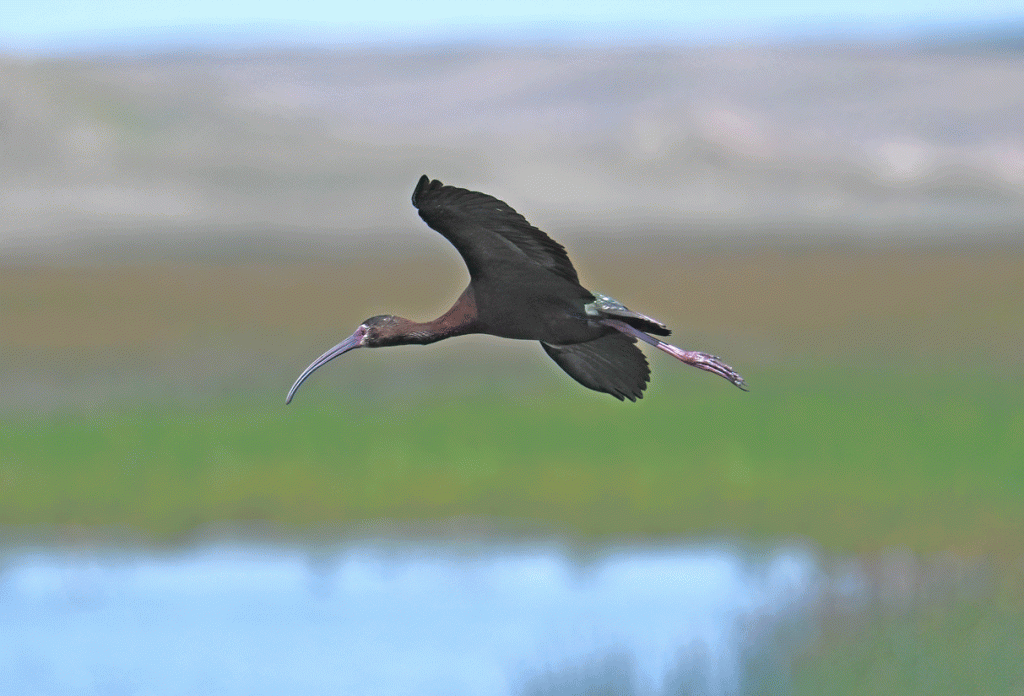
There were many species of ducks: Blue-winged and Cinnamon Teal, Northern Shovelers, Redheads, Mallards and Ruddy Ducks as well as other species that enjoy the shallower water: Black-necked Stilt, Wilson’s Snipe, Willet, Greater Yellowlegs and White-faced Ibis. Here’s a flying White-faced Ibis. The white on its face is just a border around its reddish face, and the facial colouring develops only in breeding season (March to August).
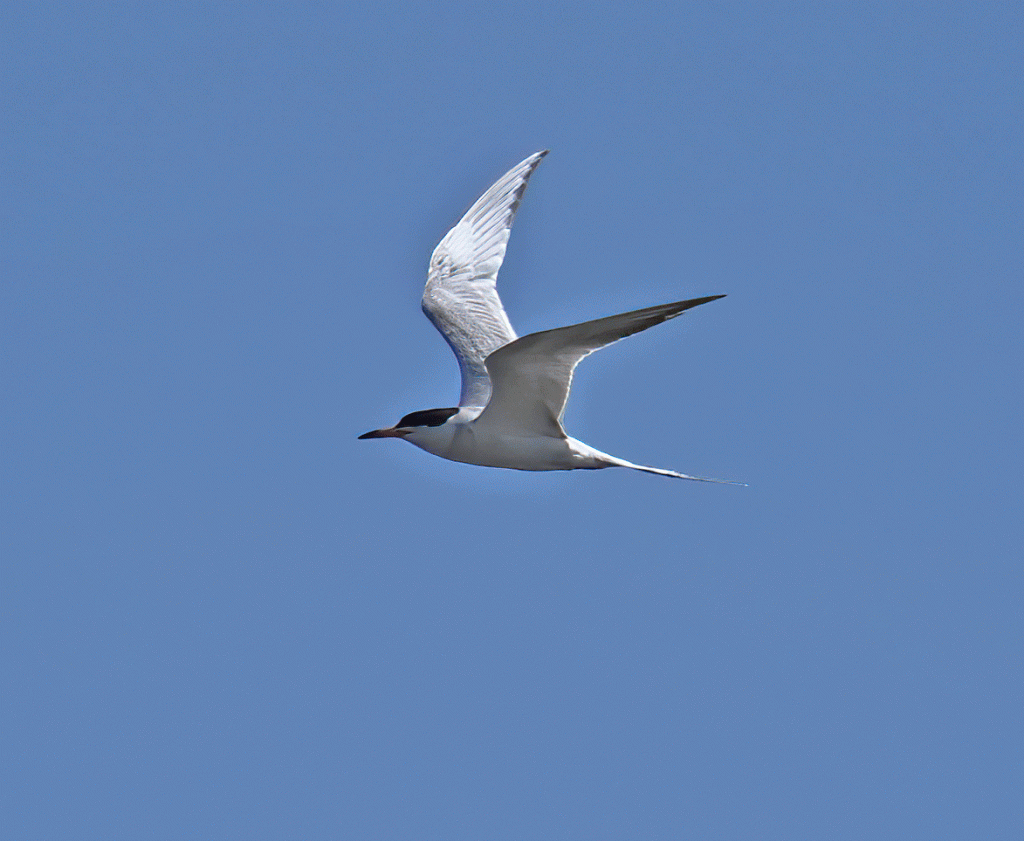
We saw a Franklin’s Gull and a Ring-billed Gull, and three species of terns: Black, Caspian and Forster’s. Here’s a view of a Forster’s Tern, a tern is quite a bit smaller than a Caspian. The large orange bill with a black tip is distinctive.
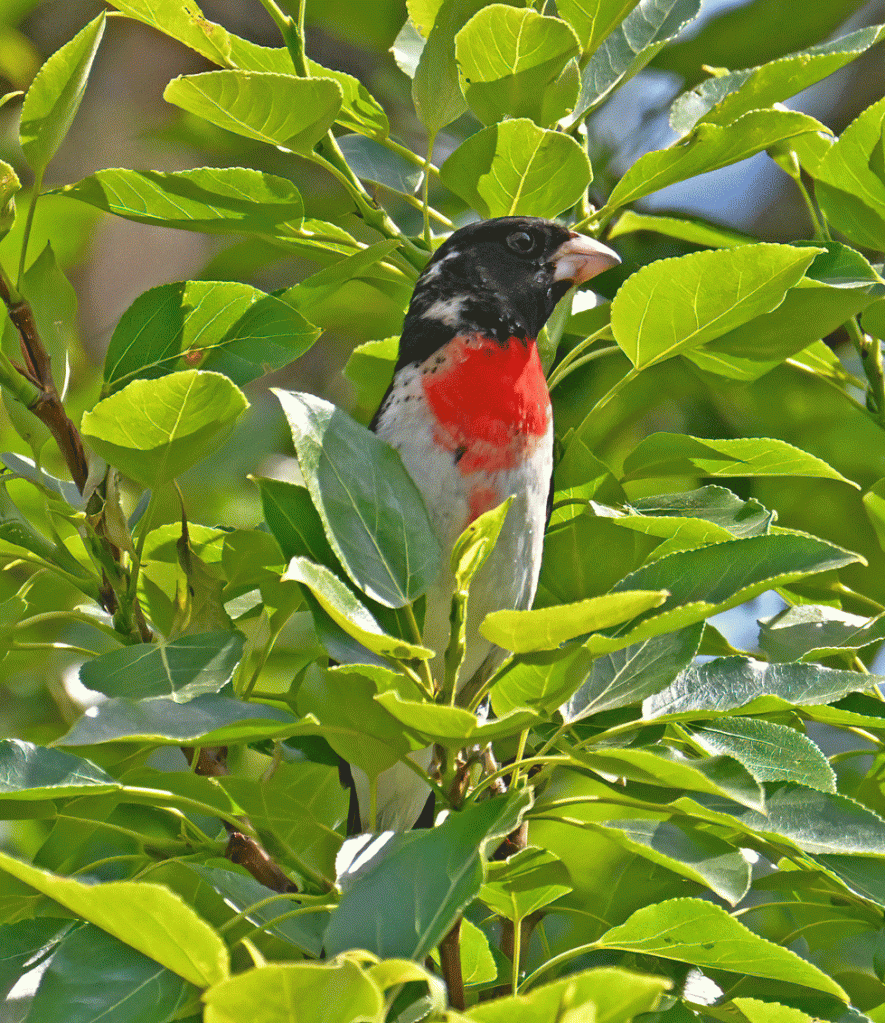
We got back to our trailer by mid-afternoon, and Wendy decided to go for a walk to try to see the elusive Baltimore Oriole nearby. She started up the road towards the Beaver Creek Campground and saw an interesting bird perched high in a fir tree. A male Rose-breasted Grosbeak! She phoned Doug and kept an eye on the bird. Luckily it hung around in the area, even moving closer when Doug arrived with his camera. We had only seen the species before in the tropics.
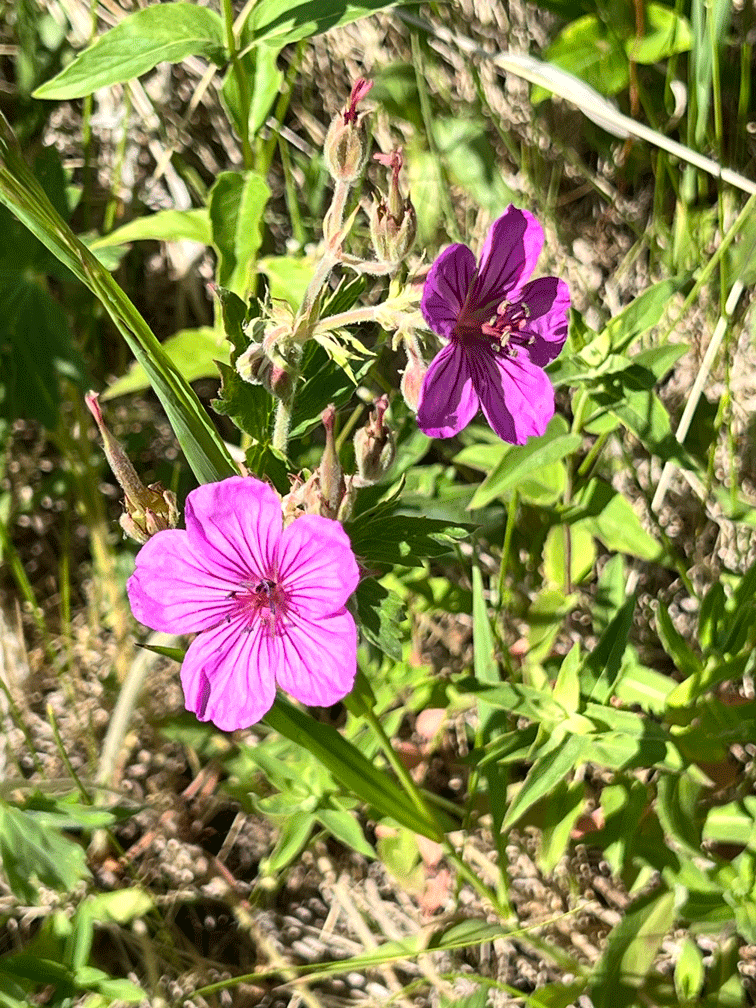
We walked a little farther to the lower slopes of Mt. Baldy. No oriole but beautiful views of this small species of geranium.

The next day we headed home keeping our eye out for Gray Partridges. Gray Partridges were introduced from Europe for hunting and are well-established, especially in agricultural fields and edges. A pair flew across the road in front of us and their bright orangey tails helped us make the identification. Another life bird for the trip!
It’s now September as this post is being published. The rest of the summer has been busy enough that there seemed to always be something more interesting to do than work on the computer. No promises when there will be another post… maybe this September, maybe not until December. Until then, keep smiling.
 Travels with a Fox
The indigo bunting is stunning. All the photos are great. I was in the Cypress Hills last summer. Such beautiful country. Maxine
LikeLike