April 2024 in Texas – Part 3

April 2024 in Texas – Part 3

On April 4, we decided to stay close to our casita for the morning. We walked over to Bentsen Rio Grande Valley State Park, about five minutes from the RV Resort gate. First we walked to an overlook of the river and saw Anhingas, Great Egrets, Double Crested Cormorants and a Least Grebe. Continuing on, we saw a several Great Kiskadees and two of them were building a nest.

Near the washrooms we caught a glimpse of an oriole as it moved from tree to tree. We were able to track it down and confirm that they were two Altamira Orioles. Here’s a photo of a first year individual. An adult would be a deeper orange. Altamira Orioles have a very limited range in the US. Another life bird!

We walked farther to the hawk watch tower and saw some distant unrecognizable birds. It was a long walk, so we didn’t bring our scope. We could hear Olive Sparrows in the underbrush below the structure, so we focused on trying to see one.

And we did catch our first sighting of an Olive Sparrow, a rather drab bird. It’s a secretive bird that also has a limited range in the US.

It’s always nice to see a Greater Roadrunner, especially when it’s running along the road!

That afternoon, we drove to Weslaco to the Frontera Audubon Center. It was like being in the tropics, yet we were in an urban area.

We got a good view of a Golden Fronted Woodpecker. The orange-yellow nape (back of neck) and the yellow in front of the bill along with the all-white rump and all-black tail distinguish it from other woodpeckers. It sounds a bit like a Gila Woodpecker that is very familiar to us in Arizona.

A Green Jay is another one of the birds that is only seen in the US in Southern Texas. They are more common in Mexico and down as far as Honduras. This individual is not as green as others we saw. The blue colour we see on a bird is a structural colour, created by the way the light waves interact with the feathers. All the other colours of light are absorbed by the melanin layer which allows our eyes to see only blue.

We also had our first look at a Long-billed Thrasher, a bird we had only heard for the first time earlier in the day.

And there also were Plain Chachalacas, which acted very much like the Gray-headed Chachalacas that we saw on our trip to Panama. They are noisy turkey-like birds.

We also saw a Buff-bellied Hummingbird and a Carolina Wren at the Frontera Center, both “life birds” for us. A good day for us!

There are two more blog posts to finish up this trip, and they will be posted soon.

April 2024 in Texas – Part 2

April 2024 in Texas – Part 2

On April 3rd we started our day at the South Padre Island Birding and Nature Center, which was about an hour and a half from our casita in Mission, TX. The Birding and Nature Center has raised bayfront boardwalks to allow visitors to get closer to the birds and natural wildlife in the Laguna Madre Coastal area.

They also have alligators that you can observe from a safe distance.

We were happy to see a Mottled Duck for the first time, because they are only found along this coast and in Florida. The male looks very similar to a female Mallard, but darker. It reminded us of a Mexican duck, but the two species have different ranges.

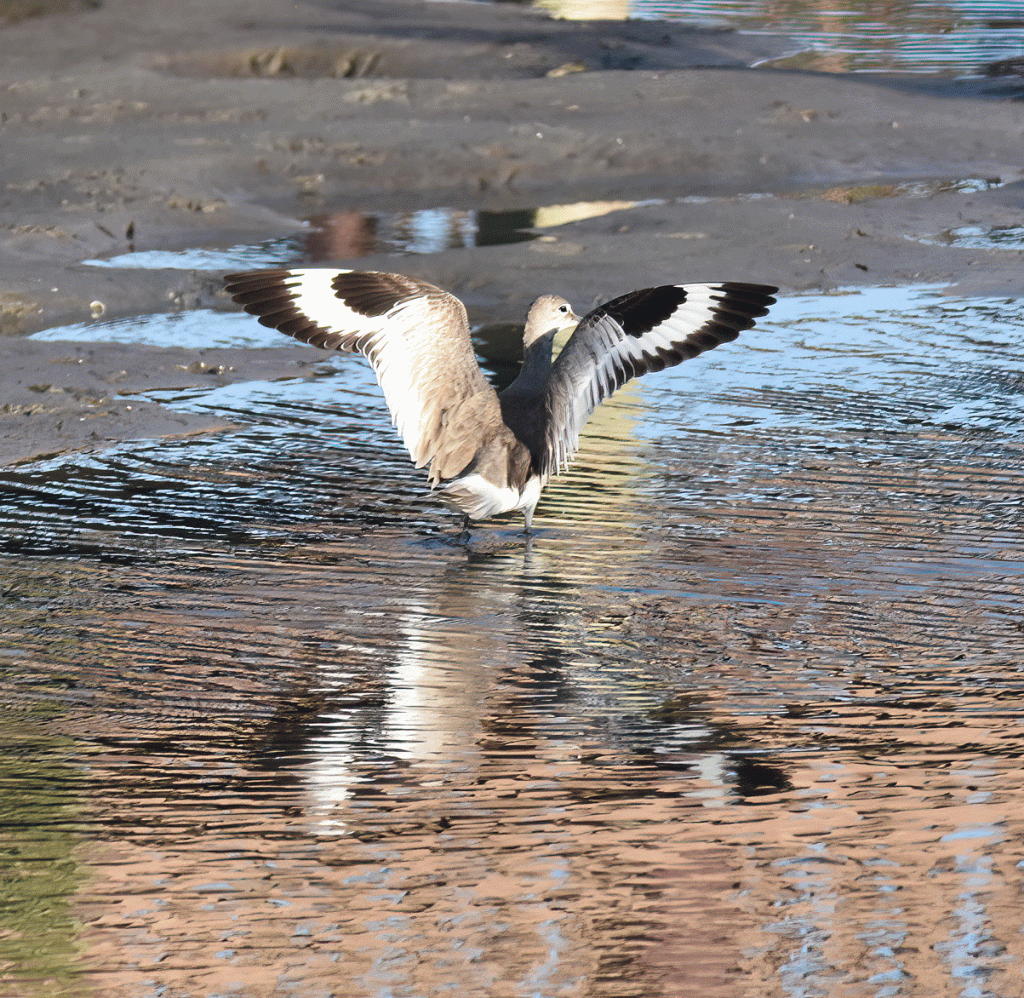
We saw several Willets, and learned about their distinctive wing patterns.

This juvenile Yellow-crowned Night Heron was quietly sitting in the shrubbery, not drawing attention to itself.

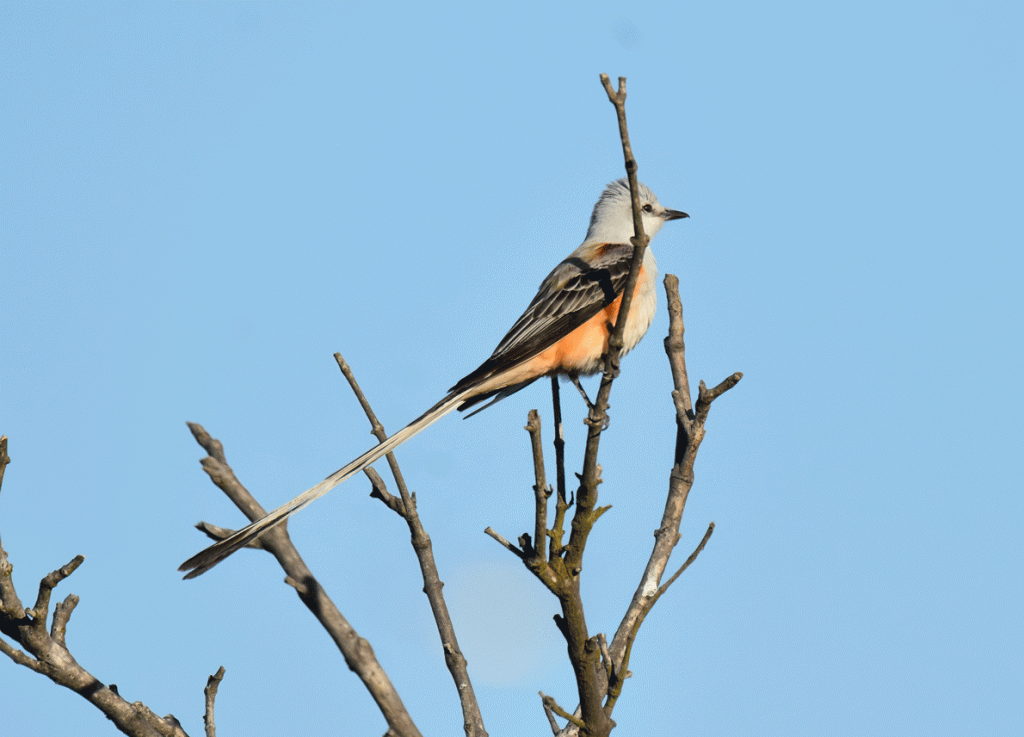
Most of the Scissor-tailed Flycatchers that we had seen before this visit were flying near the roadsides as we drove along. It was nice to get a good view of one on a perch.

Next we explored the mudflats a few minutes north of the Birding Center. The tide was out so there was lots of space for shorebirds. We had walked at least a hundred metres from the high tide mark to reach the spot in the photo below.

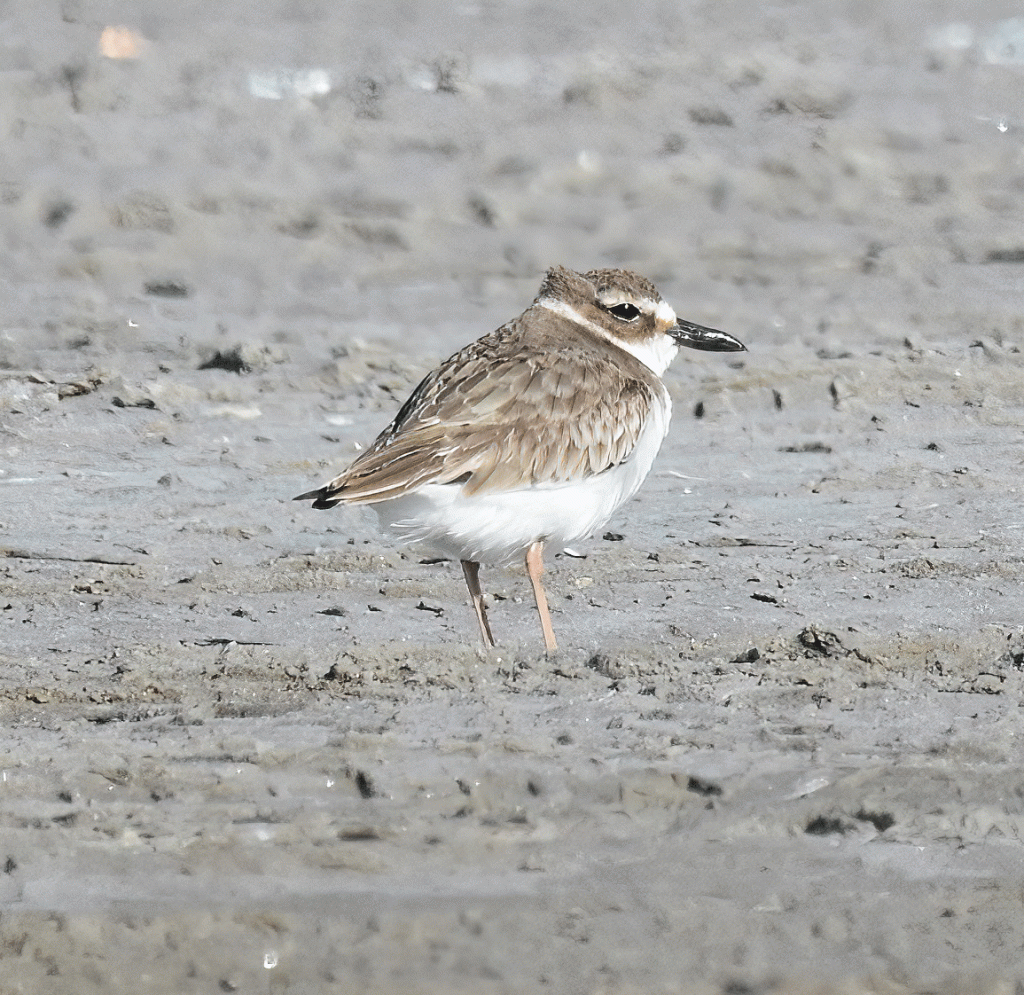
We saw some Wilson’s Plovers that allowed Doug to get within range of his telephoto lens. Its large black bill is diagnostic. It usually faced away from us so it was hard to see the black band across its breast.

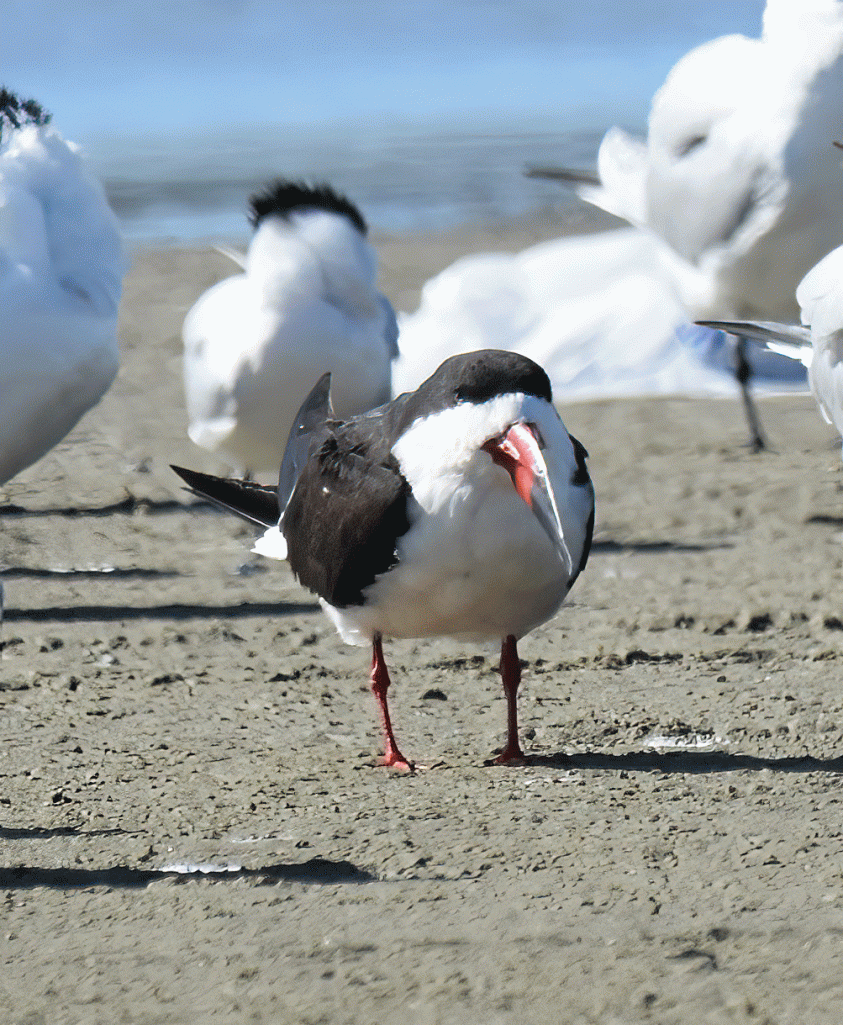
There was a large flock of at least seventy Black Skimmers that were resting on the shore. This unusual bird has an oversized bill, with the lower part being much longer than the upper mandible. It feeds by “skimming” for small fish close to the surface of the water.

Occasionally the whole flock would be disturbed and lift off, circle around and land in a new spot. The photo shows a mixture of mostly Black Skimmers and Royal Terns with some Laughing Gulls and Caspian Terns as well.

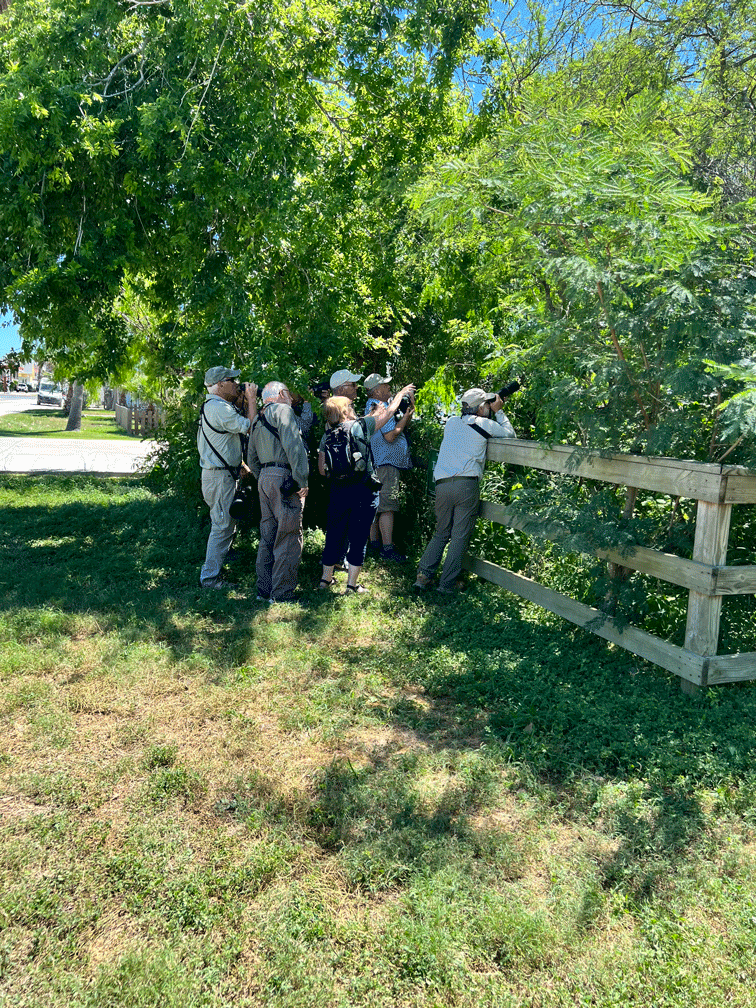
We met some other birders as we were leaving who told us about another good spot on the island. The previous few days had been really windy and many birds were resting and refuelling at The Valley Land Fund Lot, so we headed there. The Valley Land Fund is dedicated to conserving the unique habitats of the Rio Grande Valley. One lot on the south side of the street was left wild. Someone was observant enough to notice a “biggish blob” on a branch and to figure out it was a Least Bittern. Here’s a photo of people trying to see it. Later it woke up, and if you stood in the right spot you could see most of the bird, but it was mostly obscured by branches.

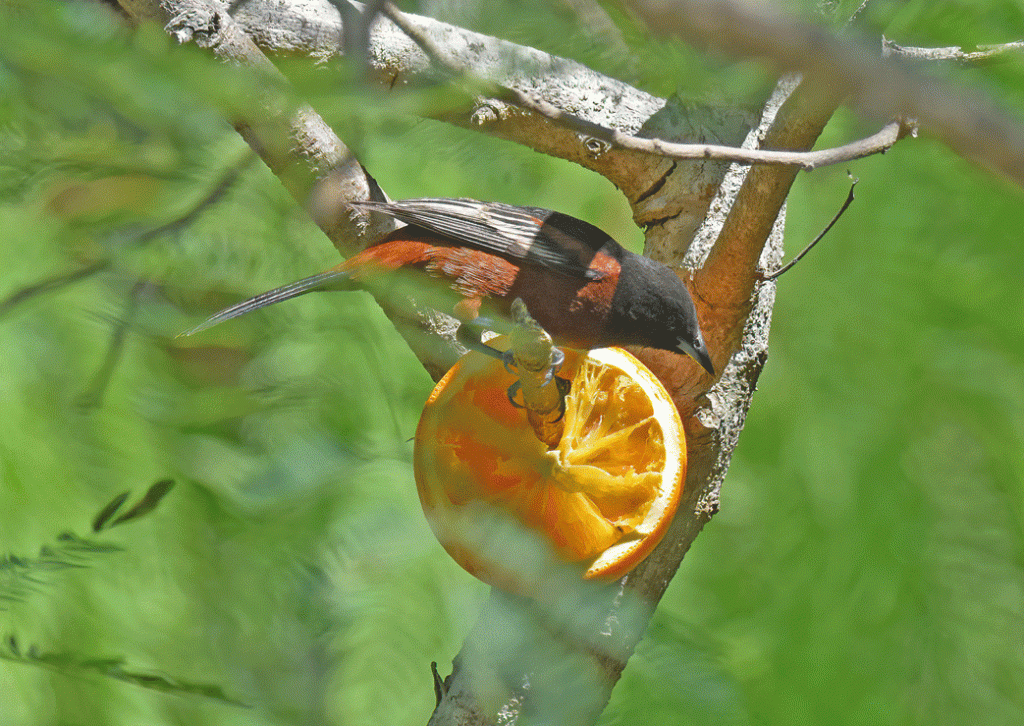
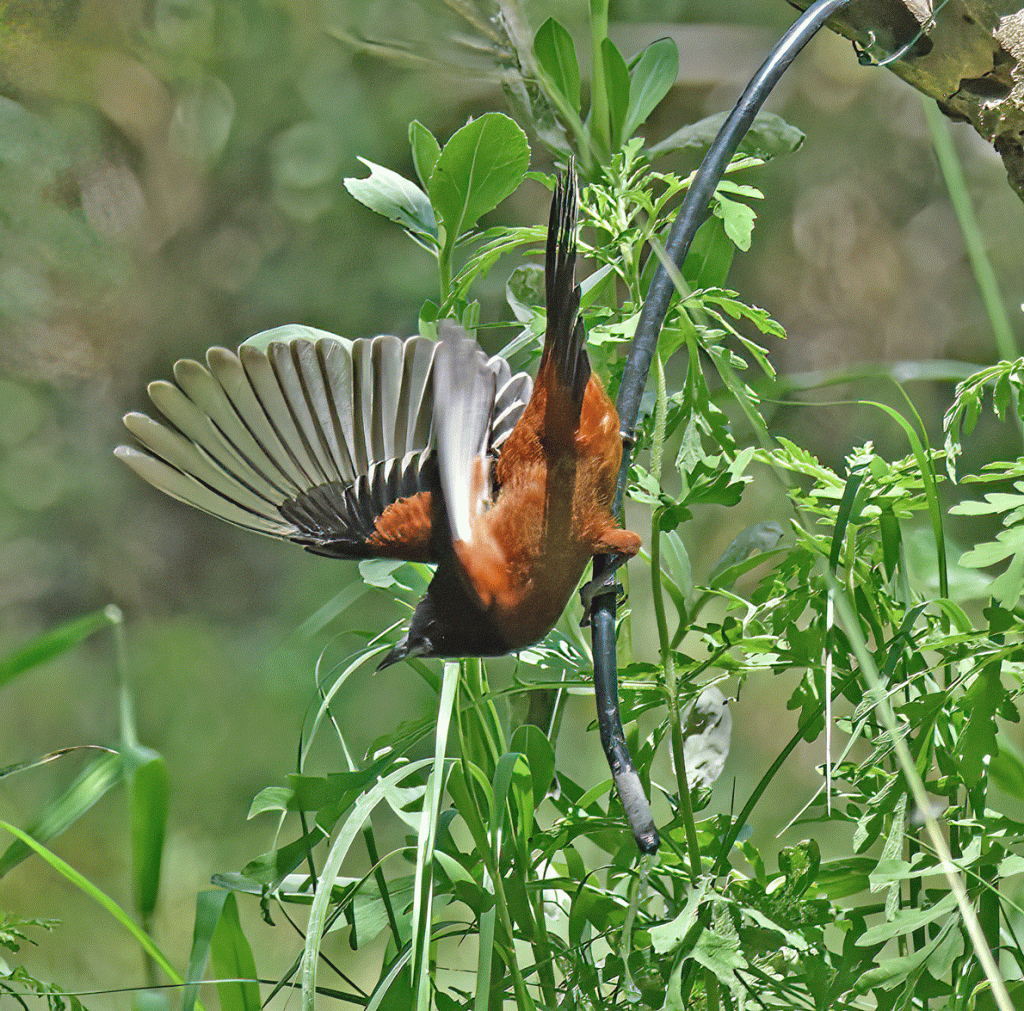
The lot on the other side of the street had been set up with feeding stations. Here are two photos of an Orchard Oriole.

We got some good views of a Nashville Warbler. Later in the spring, Nashville Warblers will be near our house in BC.

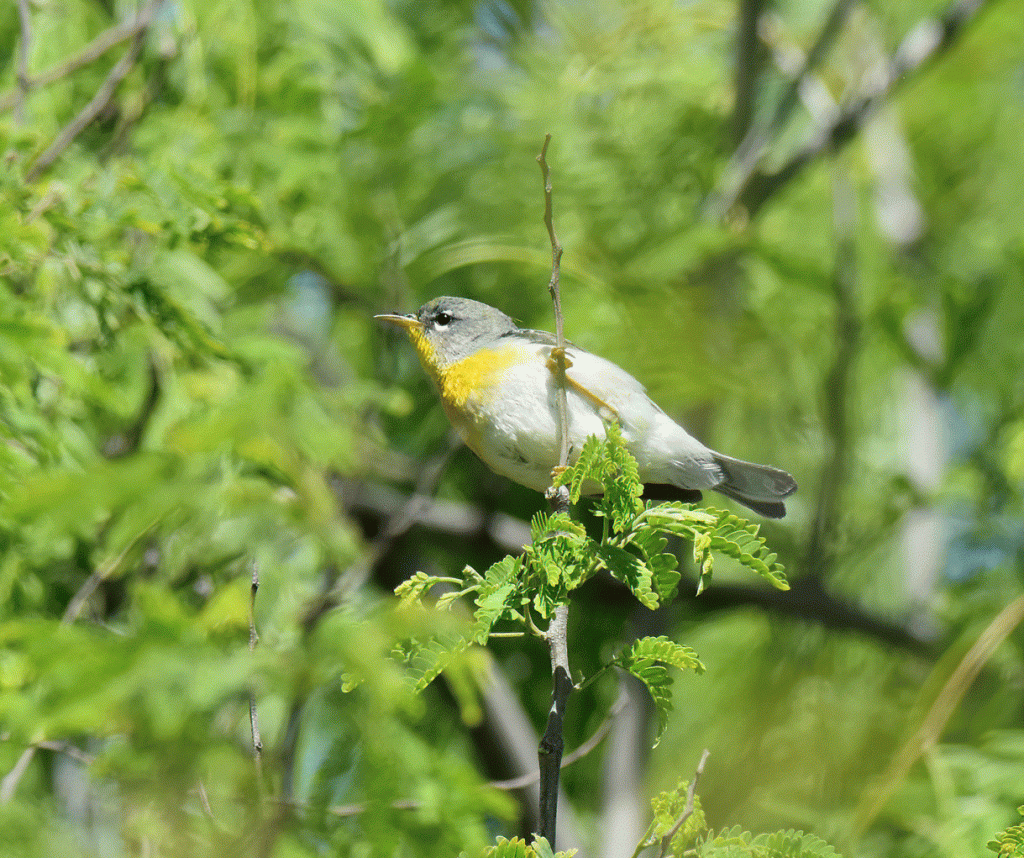
We also saw a Northern Parula, a warbler that we had seen several times as a rarity in the Tucson area. This time the parula was in its normal range.

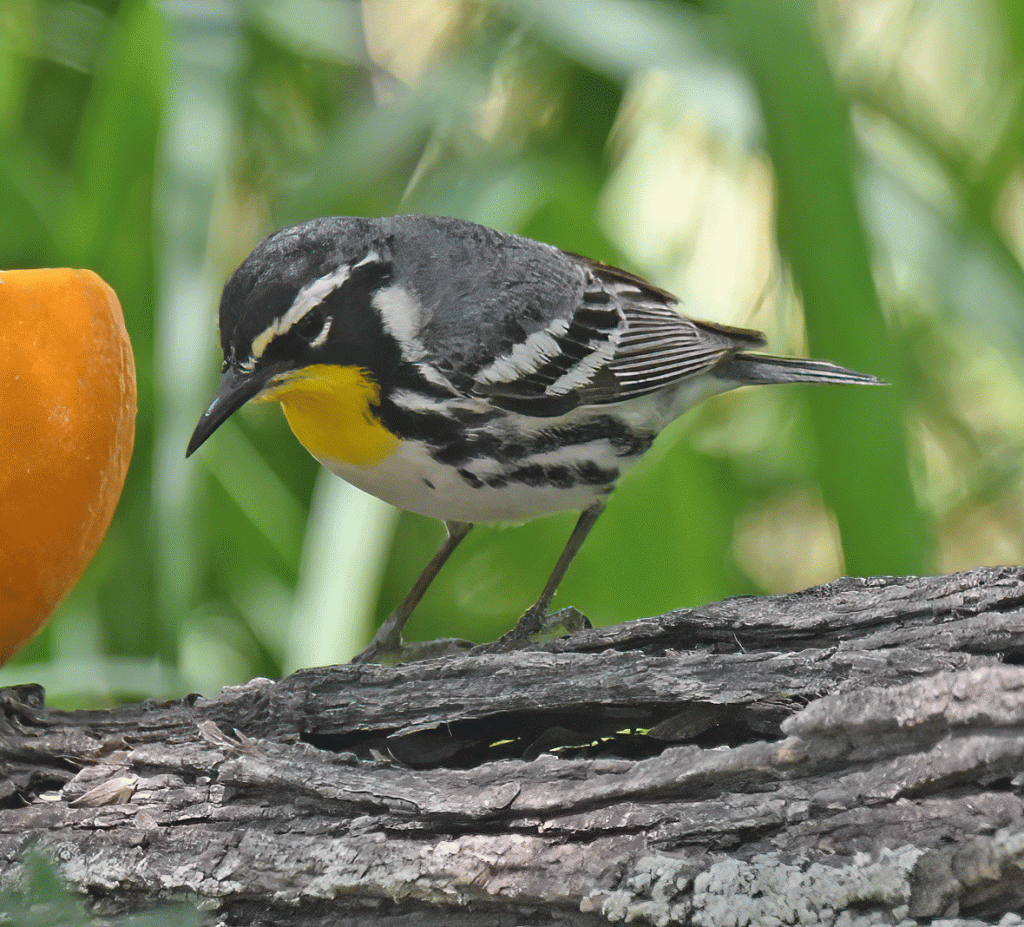
We’d seen a Yellow-throated Warbler once before in the Tucson area, again as a rarity. Like the Northern Parula, it is usually found in the eastern US and SE Canada in the breeding season.

But this Black-throated Green Warbler was a first for us. Even though its yellow head is quite prominent, it has a slight tinge of green on its back which is used in its name. Black-throated Green-backed Yellow-headed Warbler would just be too much!

There was also a Summer Tanager hanging out near the oranges.

This is an Indigo Bunting, an easy bird to identify from its name.

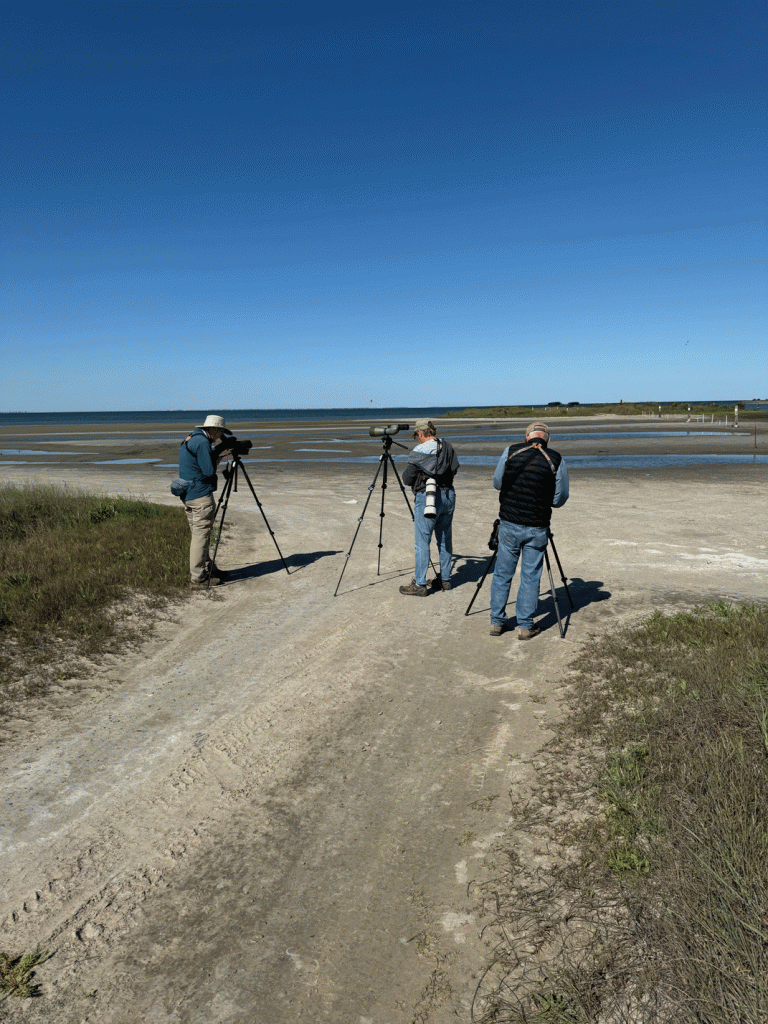
We spent over two hours at the Land Lots, so we took a break for lunch. Thanks to Mary for this photo of Rich, Wendy and Doug.

This whole blog post was about just one day! That day on South Padre Island, TX, we saw over sixty species, with six “life birds.” There will be three more posts about our trip to Texas to be posted soon!